December 24th 2017: Ian Middlemist

Ian - March 17Isaiah 9:1-7

The Saviour came into the world in obedience to the Father’s will. He sent His Son to save sinners. Praise the Saviour for His obedience.

We must consider other aspects of reasons for Christ’s coming. Sometimes we have a crisis in the business of it all, it can become all too much. The Saviour never once had such a crisis. His will was always united to the Father’s. The Saviour set His face towards the cross to save sinners and bring light to a dark world.

Why Christmas? Whys this glorious birth?

  • To redeem sinners
  • To bring light into a dark world.

‘The saying is trustworthy and deserving of full acceptance, that Christ Jesus came into the world to save sinners, of whom I am the foremost.’ (1 Timothy 1:15).

In Christ’s first coming He is implementing a rescue plan conceived even before the world begun. Jesus was to come to save sinners. To do this He had to remove sin which came in, like an unwelcome virus, infecting mankind.

How can sin be eradicated? We need to begin with Old Testament. We see in Isaiah 9 the Lord was already addressing this through the Old Testament sacrificial system. One of the main themes in the epistle to the Hebrews is the numerous priests who, from generation to generation, placed burnt offerings as a sacrifice for sin, ‘The former priests were many in number, because they were prevented by death from continuing in office, but he holds his priesthood permanently, because he continues forever.’ (Hebrews 7:23-24).

All of the Old Testament sacrifices would not put away a single sin, yet this was a God-given requirement for people of Israel, showing the enormity of the disease. A better sacrifice offered in a better tabernacle was necessary – a truly perfect sacrifice offered in the tabernacle of heaven. ‘For Christ has entered, not into holy places made with hands, which are copies of the true things, but into heaven itself, now to appear in the presence of God on our behalf.’ (Hebrews 9:24). Sins are crucified and buried in Christ.

Christmas is a time to remember past events but it is right to remember the second coming of Jesus Christ. It is wonderful that we can anticipate the return of the Saviour who was wounded for our transgressions. ‘For all have sinned and fall short of the glory of God, and are justified by His grace as a gift, through the redemption that is in Christ Jesus.’ (Romans 3:23). We can thank God, as redeemed sinners, we can look forward to meeting Him who is to change all things. There is hope.

The apostle Paul says he is the worst sinner, guilty of blasphemy, guilty of persecuting the church. He sees his own sin in the light of God’s holy law and realises even if he were the only sinner in the world, Christ would still have had to shed His blood for his sin. If Christ can save Paul, He can also save you and me – hell-deserving as we are. We need to ask Jesus for the gift of redemption and grace.

Christ also came to bring light into a dark world, ‘I have come into the world as light, so that whoever believes in me may not remain in darkness.’ (John 12:46).

‘If I had not come and spoken to them, they would not have been guilty of sin, but now they have no excuse for their sin.’ (John 15:22).

Bright light is a mixed blessing. Switch a light on and it frees us from the impression of darkness which brings fear. But it also reveals ugly flaws and imperfections. Since the fall of Adam God sent prophets who exposed, with precisions, the darkness of sin. As powerful as these prophecies were, the prophets were still sinners. However eloquently they spoke, it was still on a hazy canvass. Christ exposes sin but He delivers us from sin. 700 years before Christ’s birth Isaiah says, ‘The people who walked in darkness have seen a great light; those who dwelt in a land of deep darkness, on them has light shone.’ (Isaiah 9:2).

It is so fitting the birth of Jesus Christ was heralded by bright light. The shepherds saw the glory of the Lord, the star directed the magi. There is still more glorious light, ‘Jesus spoke to them, saying, “I am the light of the world. Whoever follows me will not walk in darkness, but will have the light of life.”’ (John 8:12).

Just before His death Jesus said the light is among you for just a little longer. We are to walk in the light. When this light was lifted up to Golgotha, the light of God’s love shone brightly in the darkness. We take light for granted until we are without it. Praise God that the light has come and shone into our hearts.


December 17th 2017: Alan Davison

alan davison-dec17Matthew 1:18-25: Joseph, the forgotten man

When reflecting on the Christmas story, Joseph is usually in the background, in a supporting role. However, if we look at the scriptures, Mary and Joseph have equal billing in the Nativity story. Here in Matthew the focus is on Joseph. Luke’s focus is on Mary. The Roman Catholic tradition of focusing on Mary has contributed to the general forgetfulness of Joseph. Here in Matthew’s account of the Nativity, God’s story is from Joseph’s perspective. Joseph was a carpenter living a fairly normal life. Other than the Nativity and visit to Jerusalem when Jesus was 12, there is no other mention of him. He had a humble station in life and yet the Holy God dealt with him directly.

As a carpenter Joseph would have had a busy life of hard, manual labour. He was engaged to be married to Mary, everything seemed set for the rest of his life. He was betrothed – effectively married, underlying the seriousness of the relationship. May became pregnant by the Holy Spirit. Joseph, in his human nature, must have thought this incredible. He probably thought the worst, that Mary had been unfaithful. Deuteronomy 22 warns of falsely accusing a woman of adultery. If, however, this was true, an adulteress would have been stoned to death. This was the potential threat hanging over Mary. However, more likely, it would have ended in divorce (Deuteronomy 24:1).

Joseph could have formally divorced Mary. But instead he wanted to put her away secretly, to save her from public embarrassment. Joseph is to be commended here. He did not have a knee-jerk reaction to Mary’s pregnancy. He wanted to protect both Mary and himself. Yet it’s a wrong decision, even if made for the right reasons. ‘But as he considered these things, behold, an angel of the Lord appeared to him in a dream, saying, “Joseph, son of David, do not fear to take Mary as your wife, for that which is conceived in her is from the Holy Spirit.”’ (Matthew 1:20). Joseph still considers what to do when God intervenes to reveal exactly what is going on. As human beings we can be easily confused and distracted by what we see. God in His grace intervened in Joseph’s life.

God then reassures Joseph. An angel says, ‘Do not be afraid.’ This phrase occurs throughout scripture (e.g. shepherds, Mary). Jesus repeatedly had to tell people not to be afraid (e.g. disciples on the boat in Lake Galilee). God always reassures His people. Joseph here is going to be told the reason for Mary’s pregnancy, which is the will of God. The Holy Spirit is the agent of God’s creativity, particularly in the creation of new life. Isaiah 11:1-2, Isaiah 42:1.

As well as being told by the angel of Mary’s pregnancy, Joseph was probably told by Mary herself. Presumably he did love Mary. Any doubts about her truthfulness would be removed. The angel now goes on to offer an explanation about what is happening. God is under no obligation to do this but issues commands in a loving manner (Matthew 1:20). Joseph is to take Mary as his wife, to continue the marriage. Joseph is part of the lineage of David, born into the people of God. Any sons of his would be legally considered to be sons of David, thus fulfilling the prophecy that Jesus would come from David’s line.

 ‘She will bear a son, and you shall call his name Jesus, for he will save his people from their sins.’ (Matthew 1:21). For God to reveal a child’s name would reveal something special and the role for them. Here, even before Jesus was born, God is saying He will save people from sins. Isaiah prophesies the role of Jesus’ life. When Jesus came to earth He was Immanuel, God with us. We are separated from God by our sin, but Immanuel, God is with us.

God remains in control throughout. Having been reassured and given an explanation, Joseph obeys. He didn’t pause to consider any more. He acts and obeys. It is not just blind servitude. God has explained to Joseph what is going on. His own knowledge of the scriptures would have directed his way as well. Joseph kept Mary a virgin after marriage. There was no doubt Jesus was born of the Holy Spirit. Joseph follows God’s guidance to the letter.

What does all of this mean for us? God intervened in Joseph’s life. Even as believers we can find it difficult to follow God’s will. After intervening God then reassures Joseph. Because God is with us we too know things will work out. God didn’t reveal everything to Joseph, but he knew it would all be OK. God gave Joseph everything he needed, enough so he could make the right decisions.

Sometimes, life can overwhelm us. The temptation is to despair but God guides us step by step. Sometimes we just need to get on with the work. God will never overburden us. Joseph obeyed. Quite simply, that’s all we need to do. God is sovereign. He knows what is best for us. God wants us to enjoy our lives. We only really do that when we trust the future to God. This Christmas, may we, like Joseph, find the time to pause and consider things. Simply trust Him for tomorrow, as Joseph did.


December 10th 2017: Norman Rees

norman rees-dec17Luke 2:7 “And she brought forth her firstborn Son, and wrapped Him in swaddling cloths, and laid Him in a manger, because there was no room for them at the inn.”

Caesar Augustus declared all to be registered, to go to the place of their birth. Picture the scene of Jesus’ birth. His mum and step-dad Joseph were brought up in Nazareth. The Holy Ghost came upon Mary in a miraculous way, according to God’s great plan, planned in eternity. God knew we’d be cursed and Jesus would come and save millions. Jesus Himself would leave heaven, leave communion with the Father. Jesus, at the right hand of the Father, would come into this world as a baby. Miraculous! He would be born and conceived in the womb of a virgin. The Holy Spirit came upon this young girl, who asks, ‘How can this be?’ Jesus was born of the Holy Spirit. Mary was a godly young woman, blessed to be the mother of the Son of God – but not worshipped. He was her Saviour, “My soul magnifies the Lord, and my spirit has rejoiced in God my Saviour.” (Luke 1:46-47).

So Mary and Joseph took the long, arduous journey of some 80 miles from Nazareth to Bethlehem, travelling on a rough, dangerous road. They were registered in Bethlehem as Caesar Augustus had decreed. They had to go according to the law of the land, but more importantly, ordained by God and prophesied by Micah.

Mary and Joseph wouldn’t have been on their own. Quite a few were also travelling from Nazareth to Bethlehem. Finally, towards evening time, as they came towards Bethlehem they saw an inn. Surely this would be somewhere to stop, to have a warm meal and a room? The innkeeper may have heard of Mary’s pregnancy and thought she may have been an adulteress. Mary may have been shamed and shunned simply because God worked in her life. However, the innkeeper pointed them to a little shelter, less than a stone’s throw. Mary and Joseph made a place there, where Jesus was born and laid in a manger. Here Joseph would have held the very Son of God. Staggering! God the Son being taken out of the womb of a virgin. How they must have praised God!

Jesus could have come down from heaven in all His glory and splendour, bringing sinners unto Himself. He could have come down with angels and a great cry of triumph. But He humbled Himself, He took on flesh. He came as a baby, totally dependent on His mother. The Son of God.  It blows your mind! That was His first Advent. He will return.

Everyone born of a woman is a sinner. We have inherited Adam’s genes. Christ lived a life without sin. He came to live a perfect life. At the end of His 33 years He was rejected. He came to bring the gospel, heal the sick, bring life abundantly, raise dead sinners to life. He was mocked and put to death. He was beautiful, perfect, spotless – He was killed in the most cruel way – the death of thieves and robbers, nailed to a cross after being beaten. Nails were driven into Hs hands. The nails were probably about 4 to 5 inches long, with the top of the nail about 1 ½ inches across. The nails were driven into His hands and feet as they lay Him down on the ground on a cross, before lifting Him up. Psalm 22. He dragged the cross, a spectacle for all to look at as they mocked Him. They put a reed in His hand. God turned His face away from His Son. His wrath was poured upon His Son so we might live forever, our sins washed away.

After the taxation was over people would have made their way back to their home. Joseph was warned to escape to Egypt, eventually returning to Nazareth. We can be so caught up with the things of Christmas we forget why we’re here, why Christ came. There was no room in the inn but room in a cattle shed. There is no room in the hearts of many people yet they celebrate Christmas. What has the birth of Christ have to do with Santa, reindeer, crackers and snow? Nothing at all. Let’s get our minds focused on why Jesus came. Let’s go again to Bethlehem and see the Lord who was born to save our souls. Oh that we might not stop talking about Jesus, like the shepherds. One day He’s coming again. Praise God. We’ll see Him glorious and holy. Christ Jesus came into this world to save sinners. Do we love Him because He first loved us?


The Light of the World has Come


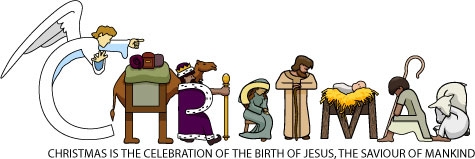
christmas-clipart-religious-2

When I think about Christmas, I realise that I came into the world having nothing to do with my birth. I showed up without planning it. When Jesus came into the world it was the most dangerous mission ever undertaken by a Baby. He came knowing the battles He would face and knowing the ultimate end of His life on earth would be a week like no other in human history. He came to live, die and be raised to life again in the greatest drama mankind has ever seen.

Rome was a corrupt government morally and spiritually; its sins were shamelessly committed for all to see. The death of innocents in the Coliseum was a major form of entertainment. Its emperors wanted to be worshipped and their gods were evil creations. Rome spread the darkness of paganism in every place that they had influence.

Herod, was an infamous madman and was made king by the Roman Senate, which proclaimed him “King of Judea.” Once in power, he immediately killed forty-five of the wealthiest citizens and confiscated their property for his own use. He was incurably ill, nearly 70-years-old, and insane in Matthew chapter 2 when the Magi came looking for Jesus. While the killing of all the male babies in Bethlehem under two years of age shocks us, it was typical of Herod. He had slaughtered his sons and executed his favourite wife, Mariamne. Even the good guys, the religious Pharisees, would be enemies of Jesus. His message would unsettle and irritate them until they would finally conspire and bring about His execution in the most agonising way possible – crucifixion.

The world was dark when Jesus was born in Bethlehem, amongst the immoral Romans, heinous Herod and self-important religious leaders, it wasn’t a place we would have chosen to enter. Yet, Jesus came into that world voluntarily.

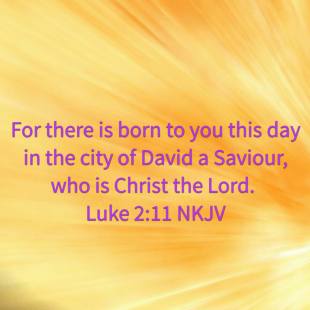
Luke2.11.jpg

It was a wicked world that received the Baby in Bethlehem; but because of His willingness to enter our darkness, the angels were able to announce: “Today in the town of David a Saviour has been born to you; he is Christ the Lord” (Luke 2:11). Christmas means that God was willing to come into a dark place and bring the light of salvation and because of Him, salvation is available to all of us.

            Robert Robinson was an English clergyman who lived in the 18th century. Not only was he a gifted pastor and preacher, he was also a highly gifted poet and hymn writer. However, after many years in the pastorate his faith began to diminish. He left the ministry and moved to Paris where he indulged in an ungodly lifestyle.

            One night he was riding in a carriage with a Parisian socialite who had recently been converted to Christ. She was interested in his opinion on some poetry she was reading:

“Come thou Fount of every blessing,
Tune my heart to sing thy grace,
Streams of mercy never failing,
Call for hymns of loudest praise.”

When she looked up from her reading, the socialite noticed Robinson was crying. “What do I think of it?” he asked in a broken voice. “I wrote it. But now I’ve drifted away from him and can’t find my way back.”

            “But don’t you see?” the woman said gently, “The way back is written right here in the third line of your poem: ‘Streams of mercy never failing.’ Those streams are flowing even here in Paris tonight.” That night Robinson recommitted his life to Christ.

            For the wanderers like Robinson, for the religious like Nicodemus the Pharisee, for the Roman collaborators like Matthew the tax collector, and for all of us, salvation has come. Jesus has entered our unlit world to bring the light of salvation to everyone who will believe. This can be the most wonderful Christmas ever for those who realise that “streams of mercy” are still flowing because of that first Christmas.

December 3rd 2017: Paul Daniel

Paul Daniel-Dec17Matthew 1:17-25

What’s appropriate at Christmas time? What is Christmas all about? It is a time of year of watching cute Christmas films, trees and Christmas decorations. There are Christmas films being released. Perhaps a surprising one is a new war film of the 9/11 events. Christmas is more like the war film than the cute Christmas films.

This is a story of when God Himself comes to this earth in flesh. Mary conceives, the conception is from the Holy Spirit (v.18). This reminds us Jesus was born without sin, therefore, He will war against sin. He took on flesh – God came down out of heaven to take on flesh. This is the nitty gritty of the Christmas story, the real nativity.

We love opening gifts, it’s wonderful. There are things we want, things we desire in this world. Sometimes we may receive things we don’t need. But what we really need is a Saviour to save us from death, destruction and sin. That is what all of us will have to face. Adam and Eve brought death into this world. Adam lived and died. You and I live and die – which is why this message of a Saviour is wonderful. It brings us hope. Jesus was born into this world to be a Saviour.

We are to remember what the significance of the story is – at Christmas we focus on the birth, the little baby. But do you see in verse 21 Jesus will save His people from their sin? “She will give birth to a son, and you are to give Him the name Jesus, because He will save His people from their sins.” (Matthew 1:21). This is not just about a baby but what that baby will do. He will fulfil all righteousness and save His people from their sins. This is about a Saviour. It’s a humbling reminder that Jesus came to save sinners.

Look back at your life and all the things you’ve done – your achievements but also your failures, the times you’ve not done what is right – when you’ve hurt the people you love most. Then look at this verse. You’re reminded, if you’re a Christian, at one point in time you were not saved. But Christ came and made you aware your sin deserved hell. By His grace you turned and now follow Him. Jesus went to war for you. Because of your own sin there was nothing you could do, ‘As for you, you were dead in your transgressions and sins.’ (Ephesians 1:1). But Jesus came to save you, not people, but His people. Not everyone will be saved – only those who come to Him and ask for forgiveness.

Once upon a time, when you lived your life your own way, God in His goodness and justice could have left you like that – doing exactly what you wanted – and you wouldn’t have been saved. But in His mercy and love He came to you and made you aware of His love for you, ‘The virgin will conceive and give birth to a son, and they will call Him Immanuel (which means ‘God with us.)’ (Matthew 1:23).

What is more important, the gift or the giver? Children get excited about the gift. But the giver is more important, the relationship is more important. What is the purpose of having your sin forgiven? Christmas is all about God being with us and us being with God. There is a time coming when, if you’re one of God’s people, you will be with God. Jesus was with us, died on the cross, then was absent for 3 days before He rose again and appeared with His followers, then left. There is a time coming when we will be with God. Revelation 21 speaks of God dwelling with man, ‘And I heard a loud voice from the throne saying, “Look! God’s dwelling place is now among the people, and He will dwell with them. They will be His people, and God Himself will be with them and be their God. He will wipe every tear from their eyes. There will be no more death.” (Revelation 21:3-4).

That is where the Christian story started and is heading to. As Christians we are looking forward to a time when we will see Jesus and live with Him in perfection and glory forever. Are you looking forward to seeing your Saviour, talking to Him, being with Him forever? The gates of heaven are open. If you know your sin brings death and destruction and know Jesus died for you, if you confess your sin and repent, then nothing condemns you, you are welcomed into heaven.

There’s a certainty about Salvation. You’ll be with Jesus. The doors are open if you’re a Christian. But on that final day when Jesus Christ comes and His people will live with Him forever, the doors are also going to be shut. When He comes to judge the living and the dead, and make everything right, the doors will be closed. No-one else will ever be able to go in there again. There is only a certain amount of time for people to come to the Saviour, to put their trust in Jesus. For one day the door will be closed.

As God came to be with us and us with Him, share the gospel message – not in our own strength but asking in His Spirit – to change the hearts of children, parents and loved ones. The time is coming when Jesus Christ is coming again, when He will open and close the doors. Let’s get people ready. Let’s remind them of this wonderful, miraculous birth.


November 19th 2017: Ian Jones

Ian Jones-November 17John 4:43-54: Jesus heals the Nobleman’s Son

We remember those in the Bible we hear a lot about – Abraham, Sarah, Ruth, yet we may forget about those we hear least about, like Elkanah and Malon. What about the nobleman here in John’s gospel? He is only mentioned in John’s gospel.

Jesus had been in Judea and left for Galilee, ‘he left Judea and departed again for Galilee.’ (John 4:3). There was growing opposition from the Pharisees. Jesus, however, didn’t take the normal route around Samaria but went through Samaria because He needed to meet with the woman at the well (John 4). Jesus spent two days here before He left (John 4:43).

Jesus went to Cana, Galilee (John 4:46). John reminds us this was the place whChrere Jesus turned water into wine at the wedding. This marked His great Galilean ministry, which lasted over 16 months. Matthew, Mark and Luke record this but John only records the feeding of the 5,000 and the healing of the nobleman’s son.

Who is this nobleman? He was called a nobleman because he served in the king’s palace. He has a son in Capernaum who was very sick. We expect a man of his position to have sought the very best medical help. However, his son’s sickness got gradually worse. He heard that Jesus was in Galilee and went to implore Him to heal his son, ‘When this man heard that Jesus had come from Judea to Galilee, he went to Him and asked Him to come down and heal his son, for he was at the point of death.’ (John 4:47).

Straight away we have an important lesson. Why do so few people have no need of Christ? Why do so few read the Bible? If people have no need of Christ then hearing about Him will have no effect on their lives. If the nobleman didn’t have a sick son, he would have no interest in seeing Jesus. This is the way God works in his life. Hearing Jesus had come out of Judea into Galilee, perhaps the nobleman had heard reports of Jesus turning water into wine, or other reports of Jesus’ healing ministry. This gave him the reason to come to the Lord Jesus Christ.

Whatever our needs are in life today, none can be compared to our greatest need to come to Christ. The Lord may work in a physical or spiritual way to bring them to Christ. It’s wonderful to see how the Lord brings us to Christ and works in people’s lives, in the lives of people who had no interest in Christ, yet come to Him. This is what we pray for as a church, for others to come as we have come. As God’s word is preached people may be reminded of their true position – sinners before God – and have a need for their sins to be forgiven, to be restored in fellowship with Christ.

What is even more amazing about this nobleman is that nothing will stop him from coming to Christ. He has a sick son at the point of death yet he went to Christ and implored Him to come to heal his son. It doesn’t matter how far away you are when a loved one is dying, you will want to be with them. The noble man had servants of his own he could have sent to Jesus whilst he stayed at home with his son in those valuable moments. Yet he left his son to go to Jesus Christ, to implore him to heal his son who was at the point of death. The distance would have been about 25 miles and would have taken 4-6 hours travelling. It was a long journey for him, he might never see his son alive again. He would do everything possible to save his son.

Are we willing to do everything possible to bring others to the Lord Jesus Christ, to bring Christ to others? It is easy to sit back and relax. Here we find an encouragement. Are we coming to God in prayer about those who are facing a lost eternity? Are we praying that Christ would restore them and give them life as He has given life to us? The noble man went on that journey to bring Christ to his son. Are we seeking to bring Christ to others?

What did this noble man think about on the journey? He may have wondered what Jesus would say to his request. However, Jesus’ response was not what he wanted to hear, ‘So Jesus said to him, “Unless you see signs and wonders you will not believe.”’ (John 4:48).  This would have been a shock to the nobleman. Jesus was not only speaking to him but also to the crowds. When a person comes to Jesus they do not always hear what they want to hear (like the rich young man who asked what he must do to inherit eternal life).

What does the nobleman do when he hears something he doesn’t want to hear? Does he go home? No, because he had a great need. He wasn’t going to give up lightly, ‘The official said to Him, “Sir, come down before my child dies.”’ (John 4:49). Again Jesus’ response is not what he wants to hear, ‘Jesus said to him, “Go; your son will live.”’ (John 4:50). He had been asking Jesus to come and heal his son but the Lord Jesus says, ‘Go.’ This man only had faith that his son would only be made well if the Lord came to his home to heal him. He didn’t have the faith of the centurion.

The Lord does an amazing work – He gives the nobleman the faith so he trusts Christ at His word, ‘The man believed the word that Jesus spoke to him and went on his way.’ (John 4:50). We can make excuses not to believe in the Lord Jesus Christ, as the crowd was doing. They wanted proof but the Lord Jesus wanted them to believe first in Him rather than have miracles. What is holding us back from believing in the very word of God? God asks us to simply believe in Him, believe the word of God is true. The nobleman turned and went on his way home, when he was met by one of his servants who told him his son lived. What joy! What confirmation.

God creates a need for us to come to the Lord Jesus Christ. He gives us faith to believe in the Lord Jesus Christ. Then, as we walk in faith He gives us confirmation of what we believe. He establishes our faith. He strengthens us in various ways.

Jesus had it that the nobleman’s servant met him. That’s what God does as we walk by faith, as we go through various trials, he establishes us. The Lord doesn’t just leave us when we come to Him. There is confirmation. Twice the nobleman believed; initially, when the Lord told him to go, and again at the end, when he and all his household believed, ‘And he himself believed, and all his household.’ (John 4:53). This is important – the nobleman went on to tell others what had happened.

This was the second sign that Jesus did when he came out of Judea and into Galilee. Both miracles are very similar, they both have people who have great need and who show persistence leading to great faith.

November 12th 2017: Lawrence Mitchell

On Remembrance Sunday we listened to a Remembrance poem written by Philip Hancock and read out by John Hancock. Before observing two minutes silence in honour of those who have given their lives in battle and those who continue to serve today, we listened to a prayer written by Private William Evans, an uncle of Pearl and Alec Davies, who died serving his country 100 years ago in the Great War.

Our service was led by Lawrence Mitchell who preached on 2 Timothy 2:4

‘No man that warreth entangleth himself with the affairs of this life; that he may please him who hath chosen him to be a soldier.’ (2 Timothy 2:4 KJV).

‘No soldier gets entangles in civilian pursuits, since his aim is to please the one who enlisted him.’ (2 Timothy 2:4 ESV).

Paul is reminding Timothy he is chosen by God to be a soldier. God Himself, as the Bible tells us in Exodus, is a great God, a mighty God. He is a God of grace and mercy. Exodus tells us God is a God of war. He was against the sins of the nations and had to punish them. God was for the children of Israel and wanted them to walk in His light. There are many battles and wars in the Old Testament. Prayers were said before going into battle. God is a God of war but He is also a God of holiness. He guided those who sought Him in prayer. Sometimes, the people would send singers before they would fight. We read of this in Judges and the Psalms. God gave victory as the people honoured Him.

Today we are going to think of a different battle.

We are called as sinners to the Saviour. He chose us before the foundations of the world. He chose men to be converted. We are called by God’s grace, it is not of us. Paul talks here to Timothy, saying he’s been chosen by God to be a soldier. Paul led this young man to God. It’s wonderful to pray for someone to come to Christ and see this happen. God is able to save, God is able to subdue, God is able to keep.

Paul says to Timothy he’s now a son in the faith and gives him a charge, ‘This charge I entrust to you, Timothy, my child in accordance with the prophecies previously made about you, that by them you may wage the good warfare, holding faith and a good conscience. (1 Timothy 1:18-19).

Paul warns Timothy about being entangled by the things of this world, ‘No soldier gets entangles in civilian pursuits, since his aim is to please the one who enlisted him.’ (2 Timothy 2:4). Paul encourages him to endure by trusting in the Lord and believing in His promises. Paul not only tells us of the choices God has made, but how we can be entangled, mixed up in the wrong things of life. Paul is instructing his young son in the faith.

Paul also brings the message not only to Timothy but to all of us; we are encouraged to endure, ‘Thou therefore endure hardness, as a good soldier of Jesus Christ.’ (2 Timothy 2:3 KJV).

‘Share in suffering as a good soldier of Christ Jesus.’ (2 Timothy 2:3 ESV). Paul says we must endure hardship that we come across in this life. Timothy was a great minister to Paul. The young convert brought blessings to Paul. The younger can bring blessing to the older. It’s a humbling yet blessed experience.

God’s soldiers are enveloped. There is a way out of the hardness, the disappointments and difficulties, the darkness of the tunnel. There is light for the true believer. Endure the hardness for God will guide and bless.

As soldiers of Christ we can, as John Wesley says, arise and put our armour on. We are chosen, guided, used and blessed. This is all of God, not of us.


November 5th 2017: Gareth Edwards

20991230_1910562232550470_632853575_oExodus 10: 21-29      The Darkness of Disobedience

‘Then the LORD said to Moses, “Stretch out your hand toward heaven, that there may be darkness over the land of Egypt, a darkness to be felt.”’ (Exodus 10:21).

Like plague three and six, this plague comes without warning as Moses does not speak to Pharaoh in advance of the event. This plague strikes at the very heart of the Egyptian belief system. Their chief deity, the creator-god, was Amon-Ra, the sun god of whom Pharaoh was an incarnation. In the famous Egyptian writings The Book of the Dead it is said of Amon-Ra “I am he among the gods who cannot be repulsed.” But here he is repulsed and his life-giving rays, as the Egyptians believed, are extinguished replaced by darkness which spoke of death, judgement and hopelessness. Yahweh extinguishes all trace of Amon-Ra and pharaoh, the so-called incarnation of this deity, is defeated.

Pitch Darkness:

As Moses stretches out his hand to the heaven a terrifying darkness engulfs Egypt. The intensity of the darkness is shown by three things:

  • It was so dense that it could be felt or it seems you could touch it (v21)
  • It was ‘pitch darkness’ (v22) literally ‘dark darkness’ or the deepest sort of darkness they had ever experienced.
  • They could not see one another nor even move it was so dark (v23). It was so dark it appears they couldn’t even find or light torches or candles.

They could not see an inch in front of their noses and it was as if they had all been struck blind. This terrifying state of affairs lasted for three days signifying it was no momentary experience or passing inconvenience. This all-embracing darkness would have filled them with a sense of doom as it spoke of judgement, curse and death.

Yet, where the Israelites lived there was light (v23). When it turned night in Goshen the Hebrews were able to light torches and candles in their homes. In the Old Testament light signifies God’s covenant blessing such as prosperity, peace and justice. Whilst the Egyptians were engulfed in fearful darkness, the Israelites rejoiced in the light.

Applications:

The terrible spiritual darkness which sin brings to men is matched by the darkness of God’s judgement against sin. ‘The fifth angel poured out his bowl on the throne of the beast, and its kingdom was plunged into darkness.’ (Revelation 16.10). In their sin men are blind to the truth and condemned to an eternity of darkness.

The darkness when Christ hung upon the cross symbolises His taking the penalty of our sin upon Himself as He is judged in our place. Consequently, we now rejoice in the light of the gospel in the grace of God in the Lord Jesus Christ.

Animals for Sacrifice:

Such is the terror of this plague Pharaoh recalls Moses and says all the Israelites can go to worship the Lord in the wilderness. However, he is still not willing to fully submit to the Lord’s demands. He says the Israelites must leave behind all their livestock. Knowing they could not survive for long without their animals it would compel them to return.

Perhaps Pharaoh thought they could capture and sacrifice wild animals, but the principle that sacrifice had to cost the one offering it had been established in Eden and remained central to the worship of God throughout Israel’s history. ‘Then Ornan said to David, “Take it, and let my lord the king do what seems good to him. See, I give the oxen for burnt offerings and the threshing sledges for the wood and the wheat for a grain offering; I give it all.” But King David said to Ornan, “No, but I will buy them for the full price. I will not take for the LORD what is yours, nor offer burnt offerings that cost me nothing.” So David paid Ornan 600 shekels of gold by weight for the site.” (I Chronicles 21: 23-25).

Moses replies they need their animas to undertake sacrifices God requires but they don’t yet know how many will be needed. Perhaps God will require them to sacrifice all their animals and so Moses insists they will not leave a living thing behind, not even a single hoof!

Applications:

The amazing thing about God’s grace is that at Calvary the sacrifice was made by the Lord who paid such a high price that we might be forgiven. It cost Him everything and us nothing.

However, in response to the extravagance of God’s grace we are to surrender all to Christ, withholding nothing but presenting ourselves as living sacrifices in His service. ‘I appeal to you therefore, brothers, by the mercies of God, to present your bodies as a living sacrifice, holy and acceptable to God, which is your spiritual worship. Do not be conformed to this world, but be transformed by the renewal of your mind, that by testing you may discern what is the will of God, what is good and acceptable and perfect. (Romans 12:1-2).

Romans 12-2

Angry Finale:

Once again we are told God hardened Pharaoh’s heart. Even this great calamity does not bring the king to his knees in repentance. Even the demonstration of God’s sovereign power vanquishing Amon-Ra does not cause him to capitulate.

There is no mention this time of Pharaoh asking Moses to intercede before the Lord on his behalf. Instead, there are vindictive words and angry threats. Pharaoh throws Moses out with a warning ringing in his ears that the next time Pharaoh sees him hen will have him killed.

Pharaoh’s reply (v29) is full of confidence. Yet, Pharaoh is right; a time is soon coming when Moses will not see him ever again. There will be one more encounter with Pharaoh after which the Israelites will leave Egypt for good. Pharaoh has had his last chance and before long the final judgement of God will devastate his household and the land.

Applications:

It is amazing how those who face the direct and indirect consequences of their sin can blame God for their sufferings. Deep seated hostility to the Lord is found in many a heart despite the Lord’s goodness in His common grace and in affording people the opportunity to repent.

We are reminded that when Jesus was verbally abused He did not reply in kind and when falsely accused He offered no defence as He willingly accepted the punishment due for the guilt of our sin.


October 29th 2017: Alun Johnson

Alun Johnson - Oct 17

Acts 2:14-41

Acts – the clue is in the title. It’s about the Acts of the Apostles, what the early church leaders did, about the early church being set up and spreading. It’s about Christianity on the march. Is our Christianity on the march today? Do others in the community see us as being insular? Christianity on the march suggests action – getting out there. The early Christians did not consider it an action not to march. Jesus Christ said, “Be not afraid, but speak, and hold not thy peace.” (Acts 18:9).

  • What does a Christianity that is on the march do?

We live in a society that is hostile to Christ and the gospel. How do we march? Acts 2 tells us exactly how. Acts chapter 1 links to the end of the gospels. After Jesus’ ascension the disciples are to be witnesses to the ends of the earth but they stay in Jerusalem. Why? Because they are constantly in prayer, waiting for the Holy Spirit. ‘And, while staying with them he ordered them not to depart from Jerusalem, but to wait for the promise of the Father, which, he said, “You heard from me; for John baptised with water, but you will be baptised with the Holy Spirit not many days from now.”’ (Acts 1:4-5).

Chapter 2 is the Day of Pentecost. 120 disciples were altogether in one place. Here we see the wonderful miracle of tongues of fire and the other wonder of wonders, Galileans speaking in other languages. They were filled with the Holy Spirit. There was a mixed reaction to this. Jews from all known corners of the world were there. Some utterly amazed, others made fun of them, saying they were drunk. It’s here Christianity begins its march.

‘But Peter, standing with the eleven, lifted up his voice and addressed them: “Men of Judea and all who dwell in Jerusalem, let this be known to you, and give ear to my words.’ (Acts 2:14) Peter stands up. This is a very different Peter we see to the Peter of Matthew 26:74 ‘The he began to invoke a curse on himself and to swear, “I do not know the man.” It is also a very different group of disciples compared with the disciples in this chapter of Matthew. There has been a dramatic change. This is not a Peter who is terrified of what others think of him. He shows remarkable authority. He is standing up physically and spiritually. He sought out Jews who had been mocking them and says, ‘For these people are not drunk, as you suppose, since it is only the third hour of the day.’ (Acts 2:14). It’s customary for Jews not to drink on the Sabbath or during festivals. They would fast, having not eaten or drunk. It was only 9 a.m.

What has brought about this change in Peter and the other apostles? ‘This Jesus God raised up, and of that we are all witnesses.’ (Acts 2:32). These disciples had seen Jesus being crucified on a Roman cross and being brought back to life three days later. Jesus had beaten death, proving He was really who He said He was. The disciples were transformed by the resurrection of Jesus. We serve a risen Saviour. We trust in Christ who lives forever more. As Christians we are going to be resurrected one day because of what Jesus has done. ‘But in fact Christ has been raised from the dead, the firstfruits of those who have fallen asleep. For as by a man came death, by a man has come also the resurrection of the dead.’ (1 Corinthians 15:20-21). This is also seen in 1 Thessalonians 4:16

These disciple weren’t only able to stand up for Christ in front of hostile Jews, Peter and the other disciples stood because they were all filled with the Holy Spirit (Acts 2:4). The resurrection and ascension of Jesus meant that His promise of the gift of the Holy Spirit would be fulfilled. Peter stood because he was filled with the Holy Spirit. Do we have God in us? Do we crave to be filled by the Holy Spirit in such a way that we can stand for the cause of the cross, whatever the cost?

  • Christianity that is on the march has confidence in the Bible (Acts 2:16-21)

The scriptures prophesied what was seen. Peter quotes Joel, ‘”And in the last days it shall be, God declares, that I will pour out my Spirit on all flesh.”’ (Acts 2:17). God’s plan for the world is much bigger than you or I think. It includes not just Jews but Gentiles as well. This would have been a very big deal for the crowd. Peter is showing he has confidence in the Bible. He knows he is part of the purpose and promises of God as prophesied in the Old Testament. They have God on their side. They are living out the very purpose of God. They are part of something huge – the outpouring of the Holy Spirit, as prophesied in the Old Testament.

Peter trusts the Bible. Do we have the same trust in the scriptures? Are we confident that the Bible is the inherent word of God and that we are in the Bible? ‘By grace you have been saved – and raised us up with him and seated us with him in the heavenly places in Christ Jesus.’ (Ephesians 2:6). Fantastic! See also John 17:20.

There are over 300 Old Testament prophecies about Jesus Christ, some in minute detail. Jesus fulfilled everyone to the letter. We need to tell people about them. Do we spend time meditating on it? Does it pepper our conversation? Do we live by it?

  • Christianity on the march makes much of the death, resurrection and reign of Christ (Acts 2:22-36).

Peter talks about the historical Jesus, but he is not merely giving a history lesson. There’s one pronoun repeated time and time again here. ‘You.’ Peter makes it personal to his listeners. He’s telling them ‘You saw Jesus yourselves, you put Him to death. Peter is not being subtle! He means for his listeners to see the horror of what they have done. The death of Jesus is not an awful accident. The key phrase is in verse 23, ‘This Jesus, delivered up according to the definite plan and foreknowledge of God, you crucified and killed by the hands of lawless men.’ God meant for the death of Jesus to happen. Jesus’ death was purposed by God. Christianity on the march makes much of the death of Jesus Christ; it is God’s answer to the world’s greatest problem – sin. Without sin being forgiven we can never be with God. But, the fantastic thing is sin can be forgiven because God planned for Jesus to die as an atoning sacrifice for our sins. “For God so loved the world, that He gave His only Son, that whoever believes in Him should not perish but have eternal life.” (John 3:16). Do we make much of the death of Christ?

Christianity on the march also makes much of the resurrection of Jesus. ‘God raised Him up, loosing the pangs of death, because it was not possible for Him to be held by it.’ (Acts 2:24). It is plainly obvious that Peter is at pains to prove that the resurrection of Jesus really did happen and it was also prophesied in the scriptures. Christianity is on the march because the resurrection of Jesus really did happen.

Peter also quotes Psalm 110 in which David points prophetically to Jesus’ resurrection, ‘The Lord says to my Lord: “Sit at my right hand until I make your enemies your footstool.”’ (Psalm 110:1) The climax can be seen in Acts 2:26, ‘Let all the house of Israel therefore known for certain that God has made him both Lord and Christ, this Jesus whom you crucified.’ Christianity is on the march here because God’s plan goes beyond the resurrection of His Son. Peter answers the question of verse 12, ‘What does this mean?’ by showing that Jesus of Nazareth is God’s own answer to the problem of sin and death.

Jesus ascended and poured out His Holy Spirit. Do we have the same confidence? Do we believe in the reign of Jesus Christ? ‘Therefore God has highly exalted Him and bestowed on Him the name that is above every name, so that at the name of Jesus every knee should bow, in heaven and on earth and under the sun, and every tongue confess that Jesus Christ is Lord, to the glory of God the Father.’ (Philippians 2:9-10).

  • Christianity is on the march because it tells the world to repent (Acts 2:37-41).

Peter, filled with the Holy Spirit, convicts His listeners of their sin and need for righteousness. Peter had just called the listeners murderers. They were not offended. By the Holy Spirit they feel the need of an answer, asking “Brothers, what shall we do?” (Acts 2:37). They know they are in trouble. In order for us to be saved from our sin we need to see our sin and need. The answer is not popular. Our message is the same as Peter’s, “Repent and be baptised every one of you in the name of Jesus Christ for the forgiveness of your sins, and you will receive the gift of the Holy Spirit.” (Acts 2:38).The people needed to repent. Nobody wants to be told they are wrong, they are sinners. Repentance shows a change of heart. From the mess of our lives we can receive forgiveness of sins and the gift of the Holy Spirit.
Acts 2-38

Do we ache for the lost to be saved? Do we warn people and plead with them? ‘Save yourselves from this crooked generation.’ (Acts 2:40).

What is the result? ‘So for those who received his word were baptised, and there were added that day about three thousand souls.’ (Acts 2:41). Isn’t that what we want – 3,000 added to our number this day!


 

October 22nd 2017: Andy Christofides

Andy Christofides-Oct 2017One life, what’s it all about?

For our Mission Sunday morning service Andy spoke on three points about heaven:

Where is heaven?
What’s it like?
What’s the key to the door? How can I be sure of going there?

Where is heaven?
In 2010 55% of people in the UK believed in heaven. 95% of people in South Africa believed in heaven. Belinda Carlisle once sang that ‘heaven is a place on earth.’ It’s not! People tend to believe it’s ‘up there somewhere.’ It’s not so much ‘up there,’ it’s a real location. The Bible explains heaven is the unreached presence of God. Sometimes, a little bit of heaven impinges on earth. The shepherds on the hillside saw and heard an angelic choir as God burst in. Heaven appeared briefly when the disciples witnessed Jesus’ transfiguration, then disappeared again. There will come a time when the trumpet will sound and His glory will appear. Heaven is the immediate presence of God.

What is heaven like?
In John 14 Jesus Christ speaks a little about heaven, ‘Do not let your hearts be troubles. You believe in God; believe also in me.’ (John 14:1). Trust in God, give Jesus the same amount of trust. When the Apostle Paul thinks of his troubles, he thinks of them as being light and momentary, not worth comparing to eternal glory. Troubles are very real to us but there’s something coming far better for the believer that wipes it all away. Keep your eyes fixed on the Lord Jesus Christ.

Jesus calls heaven ‘My Father’s House.’ It’s a lovely phrase. It’s a place where families get together – one dwelling place. We are all together, there are no divisions, we all get along. “My Father’s house has many rooms; if that were not so, would I have told you that I am going there to prepare a place for you?” (John 14:2). The King James Version states, “In my Father’s house are many mansion.” It is spacious. All have a place to dwell. It’s a great truth. There are some pretty great mansions on earth with spectacular views, but these are nothing compared to what we will have in heaven.

When Paul writes to the Corinthians he quotes Isaiah, “What no eye has seen, what no ear has heard, and what no human mind has conceived – the things God has prepared for those who love Him,” (I Corinthians 2:9). Those who love Him  – that’s the key to entering heaven.

Paul also writes (in the third person, although he is speaking of himself), ‘I know a man in Christ who fourteen years ago was caught up to the third heaven. Whether it was in the body or out of the body I do not know – God knows. And I know that this man … was caught up to paradise and heard inexpressible things, things that no one is permitted to tell.’ (2 Corinthians 12:2 &4). Paul had a glimpse of the third heaven – the dwelling place of God. He saw and heard inexpressible things. What will heaven sound like? The sounds of heaven will be far superior to anything we’ve ever heard.

Heaven is a place prepared for us, “My Father’s house has many rooms; if that were not so, would I have told you that I am going there to prepare a place for you?” (John 14:2). Everything is prepared, nothing will be out of place.

Our body is just a shell. I’m an eternal soul. I’m spirit. My body can move. I’m the bit that thinks, communicates ideas, thoughts and soundwaves. When I die my body goes into the ground but my spirit lives on. When Christ returns I get a new body.

Jesus Christ had a physical resurrected body. He could eat and drink. He could appear and suddenly disappear; at the Ascension He was talking to the disciples then disappeared. So our resurrected bodies will be physical, spiritual bodies, able to move around freely, travelling great distances.

Revelation 21 is highly symbolic of something wonderful. It’s a parallel to Revelation 7:16-17, ‘Never again will they hunger; never again will they thirst. The sun will not beat down on them,’ nor any scorching heat. For the Lamb at the centre of the throne will be their shepherd; ‘He will lead them to springs of living water.’ ‘And God will wipe away every tear from their eyes.’” We will never again hunger or thirst. Eating and drinking will have no side effects. There will be feasting. There will be no sorrows, no painful memories of things that happened on earth. The judge of all the earth will have done right. There will be no sin in heaven.

Isaac Watts writes,

Sin, my worst enemy before,
Shall vex my eyes and ears no more;
MY inward foes shall all be slain,
Nor Satan break my peace again.

Heaven will have mansions of glory and endless delight. Heaven’s gates are always open and light always shines. Heaven is home. It’s there we will be satisfied.

How do we get there?
Thomas asked Jesus “How can we know the way?” To which He replied, “I am the way and the truth and the life. No one comes to the Father except through me.” (John 14:6).

‘I am’ is ego-centric. Too many people make the fundamental mistake of wanting to reform their own lives. It won’t get you to heaven. Going to church is very good, something you should do – but it won’t get you to heaven. Even going twice to church, attending mid-week meetings, reading the Bible and praying is all great – but it won’t get you to heaven. In every other religion it’s what you have to do. Even in some churches! There are some parents who believe that because they are Christened they will go to heaven. Or they may think that because they have family who believe they are Christians so this gives them access to heaven. Some say they believe in God – even demons believe in God – and tremble!

Jesus is the one who gets you to heaven. He is the door, the gate to the sheepfold. It’s not what you do that gets you to heaven. If you want to get to heaven, it happens through Jesus Christ, He is the only way. He is the only one who has dealt with the problem – sin. Our concern ought primarily to be God. “Love the Lord your God with all your heart and with all your soul and with all your strength and with all your mind and love your neighbour as yourself.” (Luke 10:27). Love God. He is your creator.

When things go wrong people shake their fists at God and blame Him. Yet when things go right it’s all ‘me’. God sent His Son Jesus, the second person of the Triune God, to deal with sin. Why? So we can go to heaven. Why? Because He loves us. God sent Jesus to earth. He lived a perfect life. He met God’s demands. He’s our representative. He went to Calvary, laid down His life. Isaiah foresaw this 700 years earlier, ‘But He was pierced for our transgressions, He was crushed for our iniquities; the punishment that brought us peace was on Him, and by His wounds we are healed.’ (Isaiah 53:5). When Jesus went to Calvary He took on Hell. It’s love. ‘But God demonstrates His own love for us in this: While we were still sinners, Christ died for us.’ (Romans 5:8). He died the death for us. Because He did nothing wrong, death is conquered.

Jesus Christ is the only one who has dealt with the problem. All I need to do is rest in His finished work.

Will you be there? If you are not sure, why not? The door is wide open. Faith implies repentance, repentance implies faith. The good news is God wants us in heaven. What do you want for eternity?