February 18th 2018: Owen Jones

Owen Jones-Feb18Ephesians 5:32 ‘A man shall leave his father and mother and hold fast to his wife, and the two shall become one flesh.’
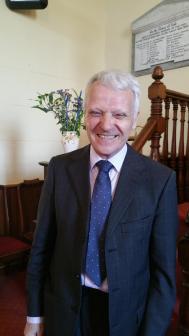
There is a mystery in the mystical union we have with Christ. There are metaphors that make the mystery a little clearer. In days gone by, when romance was in the air a couple could be referred to as ‘courting.’ Today, ‘being an item’ is often used. We are more than an item. The relationship between the church and the Lord Jesus Christ is an unbreakable union, it is already in being. Every believer becomes part of the bride, the wife. God speaks about us as the bride, the wife. Psalm 45. Every truly born-again believer is ultimately joined in unity with Christ. This presents the loveliest picture of two being one.

How should we look right now and on that future day? We see the bride united as: a faithful wife, a fruitful wife and as a beautiful, breathing-taking wife.

United as a faithful wife:
Paul uses beautiful illustrations – the wife is like the church that gives in, ‘Wives, submit to your own husbands, as to the Lord.’ (Ephesians 5:22). Marriage teaches us at least one thing – giving. Wives submit to husbands, but the bigger picture is lives in submission to Christ. It is part of the creation ordinance and now part of the new creation. When the local church gives in to community and no longer has the Bible at its centre it ceases to be what it once was. Submit to one another in reverence to Christ. Give in to every word because Jesus tells you. As the church submits to Christ, wives submit to husbands. ‘A man shall leave his father and mother and hold fast to his wife, and the two shall become one flesh.’ (Ephesians 5:32). Husbands, measure the giving. Who is giving more – her or him? Christ gave Himself up for the church. Giving up – true love – is demonstrated at Calvary. Like Hosea, the prophet. God told Hosea to love his wife as the Lord loves the Israelites. The husband gives his name to his wife, she happily accepts it. They are legally one. How faithful are we to Him, to each other?

United as a fruitful wife:
The spiritual illustration. Remember the higher principal – your union is with Christ. The church is mysteriously joined to Him as a faithful and fruitful wife. The fruit? Holiness. If you are in Christ that’s the fruit you’re going to bear, ‘But the fruit of the Spirit is love, joy, peace, patience, kindness, goodness, faithfulness, gentleness, self-control; against such things there is no law.’ (Galatians 5:22-23). It’s all on the one tree, always in blossom, always in season. Jesus said, ‘By their fruits you will know them.’ (Matthew 7:20). The fruit of intimacy, close fellowship, produces its own fruit. As we read His word, He comes to us.

Some marriages fail because couples no longer have anything to say to each other. How long has it been since you talked to the Lord? Couples can live separate lives under one roof. Start talking to one another again. When was the last time you heard the Lord Jesus Christ speak to you?

What about the fruit of increase, the great commission, the bride increasing from the nations? The preaching of the gospel works in people’s hearts and lives, something is being conceived. There’s a birth, an increase.

We also need to know and produce the fruit of Christ’s likeness. Do you think in the same way as Christ thinks? When you speak do others hear the voice of their Saviour? You and I begin to look like the ones we love. When God breathed life into us He breathed knowledge, love and righteousness. In regeneration, He renews that which had been erased at the Fall.

United as a beautiful wife:
This is a profound mystery. There’s no need for make-overs. Why? The marriage day is fully realised in the future (Revelation 19:7), but something is happening now. All the wrinkles and the lines are gone. Jesus must be the centre stage – the wedding day of the Lamb. But look at His Bride, ‘It was granted her to clothe herself with fine linen, bright and pure – for the fair linen is the righteous deeds of the saints.’ (Revelation 19:8). All the tears, all the sorrows cease to be. Let us rejoice and give Him the glory. The Bride has prepared for this day. How? She is dressed in fine linen. Everything we do now prepares us for that holy day (Ephesians 5:26). Then we get married, there’s a new home (Revelation 21:1-3). There’s an RSVP, ‘And the angel said to me, “Write this: Blessed are those who are invited to the marriage supper of the Lamb.”’ (Revelation 19:9). You are the Bride but you’re invited to be there as a guest. It’s a dual picture.

You will never look as good as you will on that day.

The sands of time are sinking;
the dawn of heaven breaks;
the summer morn I’ve sighed for,
the fair sweet morn awakes;
dark, dark, hath been the midnight,
but dayspring is at hand,
and glory, glory dwelleth
in Emmanuel’s land.

The King there in His beauty
without a veil is seen;
it were a well-spent journey,
though trails lay between:
the Lamb with His fair army
on Zion’s mountain stands,
and glory, glory dwelleth
in Emmanuel’s land.

O Christ, He is the Fountain,
the deep sweet Well of love!
The streams on earth I’ve tasted;
more deep I’ll drink above:
there to an ocean fullness
His mercy doth expand,
and glory, glory dwelleth
in Emmanuel’s land.

The bride eyes not her garment,
but her dear bridegroom’s face;
I will not gaze at glory,
but on my King of grace;
not at the crown He giveth,
but on His piercèd hand;
the Lamb is all the glory
of Emmanuel’s land.

Ann Ross Cousin (1857)

There will come a day when every eye will be upon Him, when you will behold Him. Are you preparing yourself in acts of righteousness?


February 11th 2018: Dave Evans

Dave Evans -Feb 18Philippians 1:27 – 2:15

There is something special about the Christian life, the way we’re called to behave. This passage is broken into various exaltations:

1:27   ‘Let your manner of life be worthy of the gospel.’                  2:4      ‘Let each of you look not only to his own interests.’
2:12    ‘Work out your own salvation.’
2:14    ‘Do all things without grumbling or disputing.’

In the very centre of the whole section the Apostle sets before us the very foundation of why we should behave in this way, ‘Have this mind among yourselves, which is yours in Christ Jesus.’ (Philippians 2:5). Paul is pointing us to the Lord, our Saviour, and His behaviour. Paul reminds us that our Christian life isn’t something that’s simply outward. Our thoughts and actions work themselves out in our outward behaviour.

In verses 5-8 we read of our great example. We must always be clear that the gospel in not just simply Jesus as our example, it is clear the gospel begins with the Lord Jesus Christ as the Saviour of sinners, ‘She will bear a son, and you shall call His name Jesus, for He will save His people from their sins.’ (Matthew 1:21). Until we have committed ourselves to Him for forgiveness He can never be an example to us. But having become Christians, knowing the forgiveness of sinners, Jesus then becomes the supreme example of behaviour. His mindset is to be our mindset, our foundational attitude, our whole approach to the Christian life.

Verses 6-11. What do we see of the mind of Christ in these verses? Our Lord’s humility, His amazing self-denial, is exhibited in these verses. Firstly, in verse 6, ‘He was in the form of God.’ We see the great, permanent, unchanging nature of Jesus. Paul is saying the Lord Jesus Christ has always been in the form of God, that He is divine in every way, the co-equality of our Saviour.

It’s only when we realise how high He is we realise the depth of His humility. Equality with God was His by right but He did not cling to it, He made Himself of no reputation. When the plan of salvation was made in eternity, He took the form of a servant and came in the likeness of man. It’s staggering! The Lord of glory should become a man, a God-Man, who walked among the people of this earth. He came to be born as a bond servant – born in a stable into a humble life. This is no other than the Lord of glory! The Lord Jesus Christ, though He became a man, did not cease to become God (verse 8). He set aside so much of what was His by right yet He was ever God.

What did He give up? In heaven Jesus had no guilt, no burden of sin, but in becoming the God-Man He took upon Himself the burden of guilt. He gave up the riches which were His. His outward earthly life reflected the depths to which He humbled Himself. He was dependent on friends and disciples to give Him a place to sleep. He remained truly divine, became a servant so that our salvation might be possible. He humbled Himself and became obedient to the point of death on the cross.

It’s a staggering thought that the gospel takes the Lord of glory to the cross to die an agonising death in our place. The cross was horrific, a death reserved for slaves, rebels, the most  vile of criminals. It was the cruellest of deaths at that time. No Roman would talk about it, such was the horror. Our Saviour’s sufferings go deeper; He not only suffered physically but also He suffered God’s judgement. In those three hours of darkness God poured out His wrath on His Son. He bore all that, humbled Himself so that we might be forgiven. Have we come to realise for ourselves what the Lord Jesus Christ has done for lost sinners? Do you see He died for you sin so we could escape the awfulness of Hell and judgement?

The promise of Scripture is all who come to Him will be saved. This humility is our example, our standard. That’s a staggering thought for us. If Christ could humble Himself in such a way, how willing must we be as believers to humble ourselves in our Christian walk, that we exhibit the humility of Christ in our life? Loot to the Lord Jesus Christ, the great standard. May we be those that follow His example and glorify Him.

January 28th 2018: Ian Jones

Ian Jones-March 2016

Luke 4: 18-19

“The Spirit of the Lord is upon me, because He has anointed me to proclaim good news to the poor. He has sent me to proclaim liberty to the captives and recovering of sight to the blind, to set at liberty those who are oppressed, to proclaim the year of the Lord’s favour.”

Jesus returns to Nazareth not long after healing the nobleman’s son. We cannot be absolutely sure of the timing of this event; if Jesus returned to Nazareth it did not happen at the beginning of His Galilean ministry. So why did Luke place it here, not in chronological order? It may be to help people to understand the purpose of Jesus’ ministry, what kind of people He is intending to reach. It also pictures how He would be received – initially people would be glad but then many would reject Him. It is the same today.

Jesus returns to Nazareth, the place where He grew up and attended the synagogue regularly. Did He look forward to going home? We’re not told. But we’re told He returned in the power of the Holy Spirit and the news of this went out throughout the region (verse 14). Many ordinary people were greatly affected by His ministry – the news spread of His miracles and teachings. Luke is setting the scene. When Jesus left Nazareth He was unknown, now He had become widely known. He was very popular, everyone was speaking about Him.

On the Sabbath everyone went to the synagogue and read. Jews living outside of Jerusalem only went to the temple on special feast days. However, the synagogue was like our local church, the place where people attended on a regular basis. There would have been two scripture readings – one of law and one from the prophets, and a time of prayer and praise to God. Jesus was given the opportunity to give a reading. The attendant gave Him the book of Isaiah so He could read from that. He read from Isaiah 61. He would have read and then sat down, the congregation would stand. Everyone’s eyes were fixed on Jesus, waiting for Him to start teaching once He had sat down (verse 21). Probably everyone was wondering what He was going to say. All were waiting for Him to speak. They were hoping He was going to be their Messiah. He had performed so many miracles, given great teachings. Was He the one they were waiting for? The Isaiah reading related to the Messiah. They waited expectantly.

Yet Jesus does not begin by reminding them of their golden days, of their past. Nor does He make promises about a better future to come. He spoke about that day, ‘today.’ Scripture would be fulfilled in their hearing. The focus is upon them – how they will receive this word. You can imagine them whispering how good it was. Their initial response was they spoke well of Him and marvelled at His words. They recognised Him as Joseph’s son. But Jesus knew deep down what they were thinking (verse 23). Their expectation of Him being their Messiah was that He should do more miracles in Nazareth than anywhere else – they would have special privileges because He was from their hometown. But Jesus also revealed a prophet is not received in their hometown (verse 24), giving the examples of Elisha and Elijah.

God is sovereign. He can choose who He will save. He will show mercy to whom He likes. That may include Jews, it may include Gentiles. The people then became angry. They tried to kill Him by taking Him out of the village to throw Him off a precipice. He walked away. Whether He returned to Nazareth we’re not told.

The initial amazement and enthusiasm was followed by rejection. How often is this repeated throughout scripture? We see it in the rich young ruler who ran to Jesus asking what he could do to inherit eternal life, but he later walked away sad because he didn’t hear what he wanted to hear.

This is not always the case, some do go on to receive salvation. How is it some follow Him? Verse 18 answers this, “The Spirit of the Lord is upon me, because He has anointed me to proclaim good news to the poor. He has sent me to proclaim liberty to the captives and recovering of sight to the blind, to set at liberty those who are oppressed, to proclaim the year of the Lord’s favour.” Jesus’ purpose, His mission – He’s been anointed to preach to them. Jesus came for the poor, the broken-hearted, the captive, the oppressed. He spoke to everyone but only certain kinds of people would follow Him. Who are the broken-hearted, who are the blind, the captives? It’s easy to think they are the people who were physically healed by the presence of Him. This is not the case. The Bible not only refers to people who have no money but also those who are looked down on in society, those who are seen to be humble.

The broken-hearted are those who have been through some crisis. The heart is the seat of emotion. The term relates to spiritual, not physical. The blind see and understand things of God. These people recognise sin has come into this world and affected this world. It has affected their own lives too. Others in the world may not see that. They recognise that they have been brought low, maybe through a series of events. They see themselves having no worth. They recognise God has brought them to a point when they see themselves as sinners. Their lives are filled with sadness, broken lives filled with sin. They are glad to hear the gospel and come to the Lord Jesus Christ.

Jesus didn’t come to walk around Galilee to see, talk and heal people for temporary help. His ministry is far greater. He has come to restore people to God, to give people eternal life. This is the good news! The Lord came not only to those who need to be saved but also to those who have back-slidden. Friends, here is a wonderful message. May this be an encouragement to turn to Him and keep following Him.


January 21st 2018: Alan Davison

Alan Davison - sept 17

Do not work for the food that perishes, but for the food that endures to eternal life, which the Son of Man will give to you. For on him God the Father has set his seal.
John 6:27

So many activities in church revolve around food, when we look at the Scriptures a lot of what Jesus did revolved around food. It was an intimate occasion when people would speak with one another, when they would have fellowship. Jesus accepted various invitations to eat at people’s homes. Food is also used metaphorically in our language e.g. we ‘chew’ over ideas, we ‘ruminate’ over ideas. Perhaps it is not a surprise Jesus uses food as a metaphor to get across a spiritual meaning. There are repeated references by Jesus that He is the bread of life. People misunderstood what Jesus is saying. In today’s focus verse Jesus talks about 3 types of food: perishing food, preserving food and provided food.

Do not work for the food that perishes, but for the food that endures to eternal life, which the Son of Man will give to you. For on him God the Father has set his seal.

Perishing food

Jesus is speaking metaphorically. It’s a rebuke to the people who are listening to Him (verse 26). The vast majority had a fixation on food and its physical pleasure. Many must have been fed on the hillside the previous day and wanted more. Possibly they fed on the highest quality food they had ever experienced. They wanted physical food. This is not what Jesus meant. We do labour for food that perishes, it’s a necessity for life (Genesis 3:19). However, Jesus wants the people to stop thinking about their stomachs and focus on eternal destiny (v.28-29). The crowd still think they can do something, that their own labour will get them into heaven. Jesus was fulfilling Old Testament scripture: Isaiah 64:1-6.

Prevailing food: ‘Do not work for the food that perishes, but for the food that endures to eternal life, which the Son of Man will give to you.’

The first food Jesus mentioned was perishing food, it goes off, it won’t last. Prevailing food just doesn’t last, it endures for everlasting life. It does something wonderful for the people who receive it. It prevails because it achieves something. This food that prevails is different food for different people at different times in their lives. Today, a balanced diet means different things to different people. Different people have to have different diets, depending on what they need. Professional sports people have tailored diets which meet their needs; rugby forwards have different diets to rugby backs.

This also parallels our own spiritual lives. Paul said as you grow in faith you need solid food as you develop and seek godly lives. What is spiritual food? Jesus said, “I am the living bread that came down from heaven.” (John 6:51). The people were shocked. They did not understand. They hadn’t seen the spiritual implications (verse 52).

Jesus wants us to rely on Him. His care will continue throughout our lives, supplying everything we need as we grow in faith. Jesus is directing people away from themselves, not to rely on their own work. Jesus, on the cross, paid the penalty of death on our behalf. God’s wrath is dealt with. We also see God’s love, the glorious transaction, we receive His perfect righteousness in return.

Provided food: “Do not work for the food that perishes, but for the food that endures to eternal life, which the Son of Man will give to you. For on him God the Father has set his seal.”

His life, His righteousness. Jesus is going to give us the food we need. Jesus wants us to desire this food. We don’t work for it, this is grace, undeserved favour. Salvation is by grace. It’s all of Christ and nothing of me. Reject the food that perishes, reject our own works. Jesus Himself is the food that prevails, provided at such a great expense to Himself. He is the only way we can be good enough to stand in the presence of the Father. Give thanks to our Saviour.


January 14th 2018: Gareth Edwards

Gareth Edwards-Jan18

Exodus 12:14-28: ‘Remember, Remember.’

It’s because we are so forgetful that God reminds us: Nehemiah 4:14, 2 Timothy 2:8, Ecclesiastes 12:1, Isaiah 46;9 are all calls to remember. One of the things God wanted Israel to remember was the exodus from Egypt, how God delivered them from captivity in Egypt. Even before it actually happened, God commanded the Israelites to annually observe the feast. Later, entire Psalms would be written to remind them of their bondage e.g. Psalms 78 and 106.

Most of all, the remembrance was to be a twin feast: Passover and the Feast of Unleavened Bread. Three times in this passage God tells Moses this was to be an annual feast. They were never to forget the salvation God had given them. Jesus gave us a remembrance feast when he celebrated the Passover feast. Every time we celebrate the Lord’s Supper we do so in response to the Lord’s command, “Do this in remembrance of me.” (1 Corinthians 11:24). The Israelites sacrificed with the death of a lamb. Jesus inaugurated a new feast in remembrance of His death – as the Lamb of God. Sinners are saved by the broken body and shed blood of Christ. We must never forget the salvation God has given us.

What were the Israelites to remember? Salvation from sin. God had delivered them from the land of Egypt out of bondage where they had been slaves for 400 years. As they celebrated the Passover Feast they were to eat bitter herbs – a reminder of the bitter experience in Egypt. The unleavened bread was used to show they were leaving in a hurry, to remind them they fled from Egypt. Most importantly was the slaughter of the lamb, the blood sprinkled on door posts and lintels (Exodus 12:22). The final plague of 10 causes Pharaoh, at long last, to release the Israelites. When they celebrated Passover they commemorated their deliverance. The lamb was a sacrifice – deliverance from sin.

Passover was not just deliverance but also propitiation – God’s just anger turned away because of the penalty of that sin, death, had been paid by another. Passover was a double blessing: deliverance and propitiation. We are reminded that we are all sinners and all face the wrath of God. The destroyer who came to Egypt that night lays claim to us – there is no one righteousness, no, not one. All are under the sentence of death. We are in bondage to sin and we face the wrath of God because of that sin. But a sacrifice has been made through the shedding of the precious blood of the Lord Jesus Christ. We are delivered from bondage to sin and saved from the condemnation it brings. We are saved from the power and guilt of sin. As we partake of the bread and wine we remember that God, in His love and mercy, sent His only begotten Son to break sin’s bondage, to turn away the holy, just wrath of God against us, that we may know forgiveness and blessings of eternal life.

We are saved for sanctification in order to be holy. Passover was followed by the Feast of Unleavened Bread which lasts for a full week. There were strict instructions. The Israelites were not to eat anything with yeast. Yeast was a symbol of the corrupting power of sin (1 Corinthians 5:6-8). When the Israelites ate the unleavened bread they were reminded of the need to keep themselves pure, clean. God wanted more than to just get His people out of Egypt, He wanted Egypt out of them. He was saving them to holiness. During the Feast of Unleavened Bread every trace of leavened dough was to be removed. People would sweep their houses to make sure there was no leavened dough at all in the house. In spiritual terms the Israelites were not to bring with them any corrupting influences of Egypt.

What are we to remember as we come to the bread and wine? We are sinners saved by grace. We have been saved for a purpose. We are not meant to carry on sinning. Romans 6. God’s purpose in bringing salvation is to save. The power of sin has been broken. You have been freed from the power and penalty of sin. God wants us to remember we are sanctified. He calls us to be holy. Even a small sin is dangerous. Like yeast, it wants to spread. God has a zero tolerance when it comes to sin. God delivered us from bondage to rid ourselves of sin, not to indulge it.

We are saved to obedient working. Israel bowed its head in humble adoration (Exodus 12:27). They worshipped God and praised Him for the deliverance they were about to experience (Exodus 12:28). The theme of the whole book of Exodus is obedient worship. God saved His people for His glory so they would obediently serve Him. This worship and obedience proceeded their deliverance – it’s before the deliverance takes place. Prior to the exodus they give obedient worship as they trust in God.

We trust and obey God, the God of covenant faith who keeps His promises. The experience of the fullness of our salvation we will only now in heaven. Bring saved to be sanctified, we should do whatever God tells us to do with willing hearts. Submit to the lordship of the Saviour.

The Christian life consists of many things but essentially two things: getting down on our knees to worship God and getting up on our feet to worship Him.

Remember, remember. As we partake of the bread and wine we remember we are sinners, but praise God, a Lamb has been sacrificed and the blood shed at Calvary. We are delivered from the power of sin and saved from the wrath of God against sin. We are blessed beyond all imagination. We are saved to live lives to the glory of God, turning away from sin. We do that because our lives are now taken up with the obedient worship of God. Give Him all the glory, all the honour and all the praise!


January 7th 2018: Gerald Tait

Gerald Tait January 18Travelling into 2018 with Jesus

This weekend is the peak weekend for holiday bookings and travel. Everyone wants a good deal. What do travel agents attempt to do? Well, they say they know the way, how to get to our chosen destination. They attempt, through brochures, to tell the truth – although not always. Some people have arrived at their holiday destination to find it’s a building site! Travel agents also say they will give you life like you’ve never had it before. Does any of this ring a bell? Jesus said to him, “I am the way, and the truth, and the life.”’ (John 14:6). There won’t be any messing about there.

As we step into 2018 I want to offer encouragement to you through the triology of Psalms 22, 23 and 24, what may be described as God’s travel brochure in the scriptures.

Psalm 22: God’s travel brochure.
Psalm 22 is a description of the Crucifixion. It is not pleasant reading. This is also described in Isaiah 53. But wait a minute … it was written in 1,000 BC, yet crucifixion was invented by the Romans 700 years later. ‘And we have the prophetic word more fully confirmed, to which you will do well to pay attention as to a lamp shining in a dark place, until the day dawns and the morning star rises in your hearts, knowing this first of all, that no prophecy of Scripture comes from someone’s own interpretation. For no prophecy was ever produced by the will of man, but men spoke from God as they were carried along by the Holy Spirit.’ (2 Peter 1:19-21). Because the prophecies of the Old Testament are true it helps to prove scripture given and written under inspiration of God.

Psalm 23: We know the way.
Psalm 23 shows us an amazing companion, an amazing courier – the best companion to go forward into the New Year. Trust in Him. Jesus is ‘The way, and the truth, and the life.’ (John 14:6). Jesus says He will send a comforter to us in the Holy Spirit. ‘And I will ask the Father, and he will give you another Helper, to be with you forever, even the Spirit of truth.’ (John 14:16). The Greek word for comforter is ‘paraclete,’ the one who comes alongside, who travels along with you. The Lord Jesus Christ will journey into 2018 with us, whatever our circumstances.

In Psalm 23 we are surrounded, enveloped by God. He is beneath us in green pastures. As a shepherd David constantly led his sheep to green grass. Jesus is beside us, by still waters. Our shepherd is with us. The paracelete is with us. Jesus is before me. There is a table. It was the custom in those days when you stayed with someone they prepared a meal for you. It was a special time. One problem of today is people do not eat together. But here a table is prepared – a banquet. There is a banquet in the church –communion. At the moment there’s an enemy trying to distort the Christian faith. One of them is marriage being attacked. We are in the presence of our enemies but the Saviour is with us. Whatever encompasses us in 2018, we have a table set before us as the Lord will bless us abundantly. Goodness and mercy follows us. In front of us, beyond us – it is not just there, it is also in the distance, is the home of the Lord, where we are going to. What an encouragement for 2018.

To offer life: Psalm 24.
Jesus said to him, “I am the way, and the truth, and the life.”’ (John 14:6). The life that Jesus offers is not a normal life because normal life has a beginning and an end. Jesus offers eternal life. As the Ark of the Covenant had journeyed through the desert and was then brought finally on a cart into Jerusalem, Psalm 24 may have been written as they came in. Who can go there? ‘He who has clean hands and a pure heart, who does not lift up his soul to what is false and does not swear deceitfully.’ (Psalm 24:4). Who can have clean hands, a pure heart and be vindicated? Jesus’s sacrifice can cleanse us. You can’t get a special deal on Christian faith. ‘Come, everyone who thirsts, come to the waters; and he who has no money, come, buy and eat!’ (Isaiah 55:1). Salvation is free, you cannot buy it with money. Why? You could never bring enough! The Christian life wasn’t purchased with silver or gold but with the precious blood of the Lord Jesus.

There is a chant, ‘Lift up your heads, O gates!’ (Psalm 24:7). It is a psalm of ascent. You can hear them from a distance. It is a wonderful picture of movement into the presence of the Lord.

As we step out into 2018 we have an amazing travel guide, a wonderful companion in a life we’ve never had before. We may have to learn to walk again, to alter our attitude, but wherever we are, let’s go together as a church.


December 31st 2017: Reverend Dr. Gareth Edwards

Gareth Edwards Dec17

How should a believer celebrate the coming of a New Year?

We shouldn’t celebrate in the way others do – with drunken revelry. Is there a particular Christian way of marking the beginning of a new year?

The Jews of the Old Testament marked the beginning of a new year (which would be September in our calendar), in the following way:

‘And the LORD spoke to Moses, saying, “Speak to the people of Israel, saying, In the seventh month, on the first day of the month, you shall observe a day of solemn rest, a memorial proclaimed with blast of trumpets, a holy convocation. You shall not do any ordinary work, and you shall present a food offering to the LORD.”’ (Leviticus 23:23-25).

What we see in these verses is different to the drunken foolishness of New Year celebrations. For the Jews, the New Year was marked by the blowing of trumpets all day. What does it signify about our marking of the New Year?

  1. It is a day with God. ‘The LORD spoke to Moses, saying, “Make two silver trumpets. Of hammered work you shall make them, and you shall use them for summoning the congregation and for breaking camp. And when both are blown, all the congregation shall gather themselves to you at the entrance of the tent of meeting. But if they blow only one, then the chiefs, the heads of the tribes of Israel, shall gather themselves to you. When you blow an alarm, the camps that are on the east side shall set out. And when you blow an alarm the second time, the camps that are on the south side shall set out. An alarm is to be blown whenever they are to set out.”’ (Numbers 10:1-6).

Here, we can see Moses was commanded by God to make two silver trumpets. They had a dual purpose – to sound the alarm in times of danger, particularly in wanderings in the wilderness. The second purpose was to call the people together; one blast was to call the leaders to come to the tent of meeting, two blasts was to call the whole congregation of Israel together before the lord. It was a call to come and worship and offer up sacrifice. The sound of trumpets became synonymous with the voice of God.

There is an on-going call to start the year in the worship of God, to have a day of solemn rest, a holy occasion. No work is to be done, it is a Sabbath day, a day given over to God, to worship God.

So, for the Jews, it was a day to be spent in the presence of the worship of God. Start the year as you mean to go on. Get your priorities right from day one. The priority at the top of the list it to make it a year lived with God and for God. Give the worship of your life to God. Re-dedicate your life to Jesus Christ, your Saviour. Be determined to carry on.

The pattern of the Old Testament worship had a rhythm of worship that infiltrated every aspect of their lives. This should be true of you and I. We don’t follow the same rituals of temple worship, they merely pointed to Christ, to the anointed. But woven into every aspect of our lives must be the worship of the Lord. There is growing secularisation in our land. We are told we can worship, don’t allow this to infiltrate outside. Worship is not what happens in a particular building, but given over to our lives in everything we do every day. We offer ourselves, as Paul says, as a living sacrifice. There is to be a rhythm of worship in our lives, every day: prayer every day, the Word every day, Christ every day.

So how does the believer start a New Year? Start the New Year as he means to go on – worshipping the Lord with all his being, all he possesses, all his abilities, honouring Christ.

  1. The New Year is a day of joy, the Feast of Trumpets. It is a solemn day, but solemn doesn’t mean joyless. It was a day of joy, ‘On the day of your gladness also, and at your appointed feasts and at the beginnings of your months, you shall blow the trumpets over you burnt offerings and over the sacrifices of your peace offerings. They shall be a reminder of you before your God: I am the LORD your God.’ (Numbers 10:10). The sound of the trumpets is a sound of joy, ‘Blessed are the people who know the festal shout, who walk, O LORD, in the light of your face.’ (Psalm 89:15). This Feast of Trumpets began a season of joyful celebration and was quickly followed by two other important feasts; nine days later was the Day of Atonement and then the Feast of Tabernacles. These feasts were celebrations of the joy of salvation – that God would provide sacrifice that would take away their sins.

The Feast of Trumpets began a month of joyful celebrations of God’s goodness to His people. It there any greater joy than beginning the year with Jesus Christ as your Saviour? Is there anything you can add to that to mark the start of the New Year? There is nothing better than the knowledge that our Saviour died for us, granted us His righteousness so we are acceptable with God, knowing we are certain that through Christ we are eternally secure in the everlasting arms of our God. There is nothing that can bring more joy to the soul than that. By His suffering on the cross we begin every year in fellowship with God and with His people. So it’s with joy we mark the passing of the old year and the beginning of a New Year. There is joy of salvation in our hearts. We know that everything up to this point the Lord has provided for us He will continue to provide – every hour of every day through 2018 that God has ordained for us. The start to a New Year is a day of joy.

We are also told the Feast of Trumpets was also a memorial day, a memorial proclaimed with blasts of trumpets. A memorial is not just looking back and being thankful. In looking back in thankfulness we can look forward in anticipation of future blessings.

During this day of the Feast of Trumpets the law, the Torah, was publically read to remind the people of the covenant God had made with His people. The reading of the Torah reminded them how God had promised covenantal faithfulness, how God had committed Himself to them. As they looked back they saw How God had kept His covenant, even though there were many occasions when they had failed to keep the covenant. As they looked back so they looked forward knowing that covenantal grace would be there in the days ahead.

How thankful are you for God’s covenantal faithfulness? Have you thanked Him? God knows our hearts and minds, yet surely we need to express our thankfulness day by day. As we give our thankfulness so we can remind ourselves of His faithfulness. As we give our thanks to Him so we are encouraging ourselves to be confident in Him for all that is to come. Look back in thankfulness but forward in confidence – not confidence in ourselves but in assured confidence in the God of covenantal grace. We have confidence based on our experience of His grace in the past. He has never left or forsaken us. He is always true to His word and His promises.  He is immutable – He never changes. We change, He does not change. We may not be able to keep our promises but He does. There are no circumstances that can overtake Him. He knows the whole of history to come. There is nothing that can cause Him to fail in keeping His promises. He doesn’t change His mind. He is constant, consistent and never changes.

Remember all that is past and trust God for all that is to come.

How does a believer celebrate the New Year? Marking the passing of one year and the beginning of a New Year in the worship of God, in the joy of His blessings, knowing His covenantal faithfulness to us. We are the children of the living God, united in faith, assured of the love of our Father and the abundance of His grace. Worship and rejoice in His covenantal faithfulness. Let’s shout out the praise of our Lord.

December 25th 2017: Gareth Edwards

gareth-e-sept-2016In 1647 Christmas Day was not celebrated. No church bells rang, no services were held. Christmas was not to be celebrated by an Act of Parliament for a few years. Why? Was it because M.Ps were against the gospel? Because there was no love for Jesus Christ in the land? Perhaps a great disaster had struck in the land so Christmas was cancelled? No. The people who passed this Act of Parliament loved Jesus Christ with all their hearts. So why then? The people were concerned to underline the importance of Sunday worship. Over the centuries the church had added saint feasts, there was concern to point out the only command is to worship the Lord on the Lord’s Day. They wanted to establish the Lord’s Day as a worship day for the nation.

The people were also concerned that Christmas was celebrated with drunkenness, gluttony and little or no reference to the birth of Jesus Christ. They thought it such a travesty that they cancelled the celebrations. Perhaps we should cancel Christmas? After all, isn’t it true that Christmas is nothing more than an excuse for gluttony, revelling and with little thought of Christ? An increasing number of children do not know Christmas is anything to do with the birth of Jesus Christ.

What about us? How much are we conscious we gather because of the birth of a Saviour? What is wrong with the nativity scenes that are presented to us? It is highly unlikely Jesus was born in a stable. It is not likely animals were present. One thing in the usual nativity scenes in Christmas cards and presented to us is definitely not part of the nativity – the wise men weren’t there. Herod slaughtered boys up to two years old. The wise men would have taken a substantial time to travel to Herod. We are not told the wise men found Jesus in Bethlehem – they came to a house where the young child lay.

Our Christmas is so full of different ideas and notions and bear little or no relation whatsoever to the birth of Jesus. Let’s cancel it. We don’t need a special day of giving thanks to God … But perhaps Christmas is worthwhile, worth keeping if we, like the wise men, come to worship. If that’s our true motivation.

The wise men brought three gifts. The gold symbolised the kingship and royalty of Jesus, King of Kings and Lord of Lords. Frankincense is a very aromatic spice used in the temple as part of worship of God. The priests prepared it. The wise men brought frankincense to one who will be the great High Priest of His people, representing His people before God, bringing sacrifice for the atonement of sin. Myrrh is associated in the New Testament with the death of the Saviour. It was part of the preparation of herbs and spices of Jesus’ body by the women. He came to die. Myrrh is a symbol of death. Perhaps Christmas should be celebrated if it’s us coming to worship the King of Kings, the great High Priest, the Lamb of God. If that’s why we gather, then certainly it is right we do so. But how sad so many are careless they celebrate what they do not understand or know, they reduce worship of the King of Kings to nothing more for indulgence.

Perhaps too, Christmas is worth keeping because God has given us, in Him, the gift that really matters. There are presents you can open anytime, not waiting for a certain day, presents offered by God. Angels spoke of them. Presents embodied in the baby. He is the gift, ‘For God so loved the world that He gave His only begotten Son that whoever believes in Him should not perish but have everlasting life.’ (John 3:16). This is God’s gift. It brings us joy. There is a difference between great joy and great fun. For most, Christmas is just great fun. But at some point the laughing stops. But joy continues. There is a difference between great happiness and joy. Happiness depends on circumstances. But circumstances can change. Adverse things can overtake us and our happiness is spoilt. Great joy, deep satisfactions of the soul, is knowing God, having contentment which means we know it is well with our souls and nothing can change that. The laughing may stop but the joy goes on, knowing God’s presence because a baby was born to die for our sins. It’s not only joy, it is peace, that peace with God, being made right with God. God was justly at war with us because of our sin. He shed the blood of His only Son to bring peace.

God’s gift in the person of the Lord Jesus Christ is so we can enjoy every moment of every day. It is worth celebrating Christmas if it’s thanking God for His great gifts to us. We can show the concern of 1647 but maybe we don’t have to cancel Christmas if we truly come to worship the King, trusting in Him as the sacrifice offered for our sin, thanking God for joy unspeakable and peace which passes all understanding that He has given us – Jesus Christ.

May this day be a blessed day as we spend it having fun, being happy, but full of joy and peace in Christ Jesus, our Saviour. Amen.


December 24th 2017: Ian Middlemist

Ian - March 17Isaiah 9:1-7

The Saviour came into the world in obedience to the Father’s will. He sent His Son to save sinners. Praise the Saviour for His obedience.

We must consider other aspects of reasons for Christ’s coming. Sometimes we have a crisis in the business of it all, it can become all too much. The Saviour never once had such a crisis. His will was always united to the Father’s. The Saviour set His face towards the cross to save sinners and bring light to a dark world.

Why Christmas? Whys this glorious birth?

  • To redeem sinners
  • To bring light into a dark world.

‘The saying is trustworthy and deserving of full acceptance, that Christ Jesus came into the world to save sinners, of whom I am the foremost.’ (1 Timothy 1:15).

In Christ’s first coming He is implementing a rescue plan conceived even before the world begun. Jesus was to come to save sinners. To do this He had to remove sin which came in, like an unwelcome virus, infecting mankind.

How can sin be eradicated? We need to begin with Old Testament. We see in Isaiah 9 the Lord was already addressing this through the Old Testament sacrificial system. One of the main themes in the epistle to the Hebrews is the numerous priests who, from generation to generation, placed burnt offerings as a sacrifice for sin, ‘The former priests were many in number, because they were prevented by death from continuing in office, but he holds his priesthood permanently, because he continues forever.’ (Hebrews 7:23-24).

All of the Old Testament sacrifices would not put away a single sin, yet this was a God-given requirement for people of Israel, showing the enormity of the disease. A better sacrifice offered in a better tabernacle was necessary – a truly perfect sacrifice offered in the tabernacle of heaven. ‘For Christ has entered, not into holy places made with hands, which are copies of the true things, but into heaven itself, now to appear in the presence of God on our behalf.’ (Hebrews 9:24). Sins are crucified and buried in Christ.

Christmas is a time to remember past events but it is right to remember the second coming of Jesus Christ. It is wonderful that we can anticipate the return of the Saviour who was wounded for our transgressions. ‘For all have sinned and fall short of the glory of God, and are justified by His grace as a gift, through the redemption that is in Christ Jesus.’ (Romans 3:23). We can thank God, as redeemed sinners, we can look forward to meeting Him who is to change all things. There is hope.

The apostle Paul says he is the worst sinner, guilty of blasphemy, guilty of persecuting the church. He sees his own sin in the light of God’s holy law and realises even if he were the only sinner in the world, Christ would still have had to shed His blood for his sin. If Christ can save Paul, He can also save you and me – hell-deserving as we are. We need to ask Jesus for the gift of redemption and grace.

Christ also came to bring light into a dark world, ‘I have come into the world as light, so that whoever believes in me may not remain in darkness.’ (John 12:46).

‘If I had not come and spoken to them, they would not have been guilty of sin, but now they have no excuse for their sin.’ (John 15:22).

Bright light is a mixed blessing. Switch a light on and it frees us from the impression of darkness which brings fear. But it also reveals ugly flaws and imperfections. Since the fall of Adam God sent prophets who exposed, with precisions, the darkness of sin. As powerful as these prophecies were, the prophets were still sinners. However eloquently they spoke, it was still on a hazy canvass. Christ exposes sin but He delivers us from sin. 700 years before Christ’s birth Isaiah says, ‘The people who walked in darkness have seen a great light; those who dwelt in a land of deep darkness, on them has light shone.’ (Isaiah 9:2).

It is so fitting the birth of Jesus Christ was heralded by bright light. The shepherds saw the glory of the Lord, the star directed the magi. There is still more glorious light, ‘Jesus spoke to them, saying, “I am the light of the world. Whoever follows me will not walk in darkness, but will have the light of life.”’ (John 8:12).

Just before His death Jesus said the light is among you for just a little longer. We are to walk in the light. When this light was lifted up to Golgotha, the light of God’s love shone brightly in the darkness. We take light for granted until we are without it. Praise God that the light has come and shone into our hearts.


December 17th 2017: Alan Davison

alan davison-dec17Matthew 1:18-25: Joseph, the forgotten man

When reflecting on the Christmas story, Joseph is usually in the background, in a supporting role. However, if we look at the scriptures, Mary and Joseph have equal billing in the Nativity story. Here in Matthew the focus is on Joseph. Luke’s focus is on Mary. The Roman Catholic tradition of focusing on Mary has contributed to the general forgetfulness of Joseph. Here in Matthew’s account of the Nativity, God’s story is from Joseph’s perspective. Joseph was a carpenter living a fairly normal life. Other than the Nativity and visit to Jerusalem when Jesus was 12, there is no other mention of him. He had a humble station in life and yet the Holy God dealt with him directly.

As a carpenter Joseph would have had a busy life of hard, manual labour. He was engaged to be married to Mary, everything seemed set for the rest of his life. He was betrothed – effectively married, underlying the seriousness of the relationship. May became pregnant by the Holy Spirit. Joseph, in his human nature, must have thought this incredible. He probably thought the worst, that Mary had been unfaithful. Deuteronomy 22 warns of falsely accusing a woman of adultery. If, however, this was true, an adulteress would have been stoned to death. This was the potential threat hanging over Mary. However, more likely, it would have ended in divorce (Deuteronomy 24:1).

Joseph could have formally divorced Mary. But instead he wanted to put her away secretly, to save her from public embarrassment. Joseph is to be commended here. He did not have a knee-jerk reaction to Mary’s pregnancy. He wanted to protect both Mary and himself. Yet it’s a wrong decision, even if made for the right reasons. ‘But as he considered these things, behold, an angel of the Lord appeared to him in a dream, saying, “Joseph, son of David, do not fear to take Mary as your wife, for that which is conceived in her is from the Holy Spirit.”’ (Matthew 1:20). Joseph still considers what to do when God intervenes to reveal exactly what is going on. As human beings we can be easily confused and distracted by what we see. God in His grace intervened in Joseph’s life.

God then reassures Joseph. An angel says, ‘Do not be afraid.’ This phrase occurs throughout scripture (e.g. shepherds, Mary). Jesus repeatedly had to tell people not to be afraid (e.g. disciples on the boat in Lake Galilee). God always reassures His people. Joseph here is going to be told the reason for Mary’s pregnancy, which is the will of God. The Holy Spirit is the agent of God’s creativity, particularly in the creation of new life. Isaiah 11:1-2, Isaiah 42:1.

As well as being told by the angel of Mary’s pregnancy, Joseph was probably told by Mary herself. Presumably he did love Mary. Any doubts about her truthfulness would be removed. The angel now goes on to offer an explanation about what is happening. God is under no obligation to do this but issues commands in a loving manner (Matthew 1:20). Joseph is to take Mary as his wife, to continue the marriage. Joseph is part of the lineage of David, born into the people of God. Any sons of his would be legally considered to be sons of David, thus fulfilling the prophecy that Jesus would come from David’s line.

 ‘She will bear a son, and you shall call his name Jesus, for he will save his people from their sins.’ (Matthew 1:21). For God to reveal a child’s name would reveal something special and the role for them. Here, even before Jesus was born, God is saying He will save people from sins. Isaiah prophesies the role of Jesus’ life. When Jesus came to earth He was Immanuel, God with us. We are separated from God by our sin, but Immanuel, God is with us.

God remains in control throughout. Having been reassured and given an explanation, Joseph obeys. He didn’t pause to consider any more. He acts and obeys. It is not just blind servitude. God has explained to Joseph what is going on. His own knowledge of the scriptures would have directed his way as well. Joseph kept Mary a virgin after marriage. There was no doubt Jesus was born of the Holy Spirit. Joseph follows God’s guidance to the letter.

What does all of this mean for us? God intervened in Joseph’s life. Even as believers we can find it difficult to follow God’s will. After intervening God then reassures Joseph. Because God is with us we too know things will work out. God didn’t reveal everything to Joseph, but he knew it would all be OK. God gave Joseph everything he needed, enough so he could make the right decisions.

Sometimes, life can overwhelm us. The temptation is to despair but God guides us step by step. Sometimes we just need to get on with the work. God will never overburden us. Joseph obeyed. Quite simply, that’s all we need to do. God is sovereign. He knows what is best for us. God wants us to enjoy our lives. We only really do that when we trust the future to God. This Christmas, may we, like Joseph, find the time to pause and consider things. Simply trust Him for tomorrow, as Joseph did.