
 Having spent several hours over several days writing this up, hopefully this is an accurate account of Dr. Beeke’s thoughts on Revelation chapter 20.
You can listen to Dr. Beeke preaching on this by clicking on the following link: https://youtu.be/7Jm6Ulrv2h0
Revelation 20
A great classical score has certain themes. Sometimes the theme is only vaguely suggested at the start but as the piece progresses the theme recurs and recurs, until eventually all the themes comes together in a final movement, a great and grand finale. The book of Revelation is like that; it progresses like a symphony, it’s not a linear history but a series of parallel visions, certain themes keep reappearing as the book unfolds. In chapters 20-22 the themes from previous chapters are taken up and they are brought to a grand finale, a marvellous conclusion. Chapter 20, the theme of the millennium, which means 1000 years, begins to summarise all the prior themes and thereby serves as the beginning of the final movement of this book. Before we enter into the exposition of the individual verses it is important to note that it is impossible to detail every phrase in one sermon. A global view will be given of the three millennial views, then what I think is the preferred view, then I will go from the great millennium to the great white throne.
There are three great views in millennial thinking:
Pre-Millennialism
This view teaches that Christ will come again, establish His Kingdom on earth and then He will reign here literally in His own person for a 1000 years. That will be a golden age of peace, lasting until a final rebellion and Judgement day.
There are several problems with this position. They emerge when we compare scripture with scripture. First, pre-millennialism tends to view God’s kingdom as primarily physical and national. Scripture, however, views the kingdom primarily as spiritual and universal, much as the New Testament views other Old Testament prophetical terms, such as Abraham’s seed in John 8, the tabernacle of David in Acts 15 or Jerusalem in Revelation 21. The second problem is that pre-millennialism tends to view Christ’s kingdom as still to come, rather than as a present reality, whereas John 18:36 and Matthew 12:28 testified that the kingdom is already present in New Testament times. Third, pre-millennialism tends to separate the major events of eschatology by many years, while Matthew 13, 24 and 25 sees all the major events of the last times as transpiring in rapid succession. Fourth, pre-millennialism says that Christ will physically return to earth a thousand years before the end of the world. But Acts 3 and Hebrews 10 teaches that Christ will be heaven until the end of time.
Post-Millennialism
This view says that before Christ comes again basically the world or large segments of it will be won for Christ through conversion of the Gospel. During this time sin and conflict will be gradually be defeated and righteousness and peace will reign throughout the world. This present time will then culminate in a golden age of success in missions and in the transformation of society as a whole. It is called post-millennialism because the golden age comes first and then Christ returns.
But there are problems, maybe not quite as serious, but still problems with this view as well as with pre-millennialism. First, like the pre-millennial view, post-millennialism errs in picturing God’s kingdom as primarily temporal and physical, rather than spiritual. It is seen as in the future rather than something that’s already been inaugurated. Second, post-millennialism views the last years of this world with extreme optimism. Now it’s one thing to be an optimistic amillennial but it’s another thing to be a very optimistic post-millennial. However, scripture says that though there may be encouraging times of revival near the end of the world, I believe there will be, the last days will largely be times of unbelief Luke 18 says, self-centredness 2 Timothy 3 says, worldliness Matthew 24 says, worship of the anti-Christ 2 Thessalonian 2 says, and great tribulation, Matthew 24. Thirdly, post-millennialism tends to view the present age as smoothly transitioning into the coming age, whereas Matthew 24 and 2 Peter 3 testify to a great catastrophe, a tremendous intervention of God, a passing away of the old heavens and earth and the establishment of a new heaven and a new earth.
Amillennialism
This view is held by most reformed Christians. It teaches that the millennium is not a future earthly kingdom. Rather, the millennium is a symbolic description of the spiritual kingdom of God that is now present since Christ’s death and resurrection and the sending of the Spirit in Pentecost and the churches missionary advance and heavenly reign, even as the church suffers persecution and waits for Christ’s return and the judgement day. This view is normally called amillennialism, which is not an accurate description because the prefix ‘a’ means ‘no’ as in ‘no-millennium.’ Amillennialists do believe in a millennium. So the position could better be called ‘inaugerated’ millennialism – millennialism that’s already begun. Inaugerated millennialism believes that the millennium is not an exact period of a 100 years but is symbolic of a long period of time, much like all the other numbers in apocalyptic literature are not to be taken as literal numbers but symbolic as periods of time. And so inaugurated millennialism believes that the millennium began particularly the outpouring of the Holy Spirit on the day of Pentecost, where the nations received the gospel and it was then expanded to all the nations on the globe, so that we live now in the millennium, in the gospel age, until Christ returns in the clouds. That view is a bit difficult for us to grasp because we live 2000 years beyond the outpouring of the Holy Spirit. We’re prone not to understand the incredible magnitude of divine intervention on the day of Pentecost and the inauguration of the gospel going out to the ends of the earth. But imagine that you were an Israelite, a Jew in that day, who was used to the idea that the gospel was confined to that little pinprick on the globe, of little, tiny Israel. Suddenly, the gospel goes out to the ends of the earth and becomes a worldwide phenonamen. Thousands upon thousands are gathered in from all the nations. You would then begin to realise what a traumatic event this millennial day displays. And so, with due respect to those who hold different views, we do believe that the book of Revelation, including this most highly debated section of chapter 20, favours an inaugerated millennnial interpretation. Here are some reasons why:
First, the New Testament teaches that God’s promises to Israel have already found partial fulfilment in the church as a spiritual, international kingdom. And yet they will be fulfilled in ultimate glory, rather than in a nationalistic, earthly reign of Christ. This can be read in many places, just two texts to support this are Luke 17: 20 and 21, Acts 15: 13 – 18.
Secondly, scripture indicates that Christ’s coming in glory, the resurrection of both the righteous and the wicked, judgement day and the end of this age will all take place together in rapid succession, as opposed to transpiring over a period of a 1000 years. Read Matthew 25:31-46 and 1 Thessalonians 4.
Third, we need to remember that Revelation is a book of symbolic visions. And so we must interpret numbers, such as 1000, and images, such as binding with a chain and sealing in a pit in chapter 20, as symbols – the same way we interpret chapters 4-19 with all of its numbers and symbols. This is apocalyptic literature. This is not inconsistent with the literal interpretation of God’s Word in general but it is only the recognition that certain parts of scripture have a certain genre, like parts of Daniel, parts of Revelation which are apocalyptic and therefore, are not to be taken literal number manner.
Fourthly, Revelation follows a cyclical structure. The best ground-breaking work here is William Hendriksen’s, ‘More than Conquerors’, where he shows seven different major cycles throughout the book of Revelation. Chapter 19 ends the 6th cycle, the cycle of the conquest of Babylon and culminates in the destruction of the wicked. Chapter 20:1-10, like chapter 12, steps back to consider the era between Christ’s first and second comings before moving ahead to judgement day and eternity in verses 11 – 15. In each cycle you find John goes back to the beginning of the inaugurated millennium, the New Testament age, and then goes forward to the judgement day and then goes back again. Just in this seventh cycle there is a quick movement from the beginning of the inaugurated age to the judgement day. The last two chapters are the grand finale of what takes place on the day of judgement.
In Revelation 20:1-10 we are presented with three major truths about the millennium:
- Verses 1-3: Satan is bound for 1000 years – for a long period of time.
- Verses 4-6: the saints reign for 1000 years – or a long period of time.
- Verses 7-10: at the end of a 1000 years Satan is let loose for a short time.
There are three themes to develop here:
The binding of Satan (verses 1-3):
Revelation 20:2 describes Satan as that dragon, that old serpent which is the devil. So John reminds us that the opposition they face from the forces and powers against them is as old as the world itself, as old as Genesis 3. That reminds us as well that we are all tempted by Satan during times of opposition and persecution. When we are most weak the devil attacks us most fiercely, insinuating that we are just hypocrites, not Christians at all perhaps. And when we’re facing intense opposition, we may be tempted that what we’re going through is unique to ourselves. What an encouragement at the beginning of Revelation 20, this grand chapter about the millennium, that we are immediately reminded that the devil is an ancient serpent and so if you are being harassed by Satan, there are seasons in a believers’ life when that becomes particularly intense, be encouraged that you are not alone, you are facing nothing new. There is no trial that can come upon you that other believers have not already faced and God will, with the trial, provide you with a way of escape so that you may be able to bear it. And so we need to get things into proper perspective, when things in our lives are unravelling or we’re going through major life changes, or we’re down and discouraged about developments or unanswered prayers, we need to remember that Satan is an old serpent, an ancient enemy and we are participating in a world-old, age-old conflict. That’s where you get a lot of help from the Puritans, who have written classics on how to fight against Satan, such as ‘Precious Remedies against Satan’s Devices’ by Thomas Brooks. The better we know the Lord, the more intense Satan will be fighting against us and we need to know his devices and know how to defeat him. In this New Testament age, even though we’re in the inaugerated millennium, John tells us immediately that it doesn’t mean that Satan has entirely disappeared; Satan’s devices are antiquarian, they go all the way back to the Garden of Eden. We face a foe as old as the serpent itself. And yet we are told in verses 1-3 that Satan is bound and thrown into the pit or he’s locked away for the duration of the millennium. So how are we to understand these two truths? Satan is still active and yet Satan is bound and thrown into the pit? Let me try to illustrate this: when you go to a zoo you are glad that the animals there are behind cages or are in enclosures. That’s very comforting when you are looking at a lion. That’s the picture we’re given in verses 1-3. In this gospel age Satan is bound, he’s behind bars but he’s still there. He’s on a chain, confined to a pit. But a lion in a cage can still be dangerous even though he is caged. Similarly, in these gospel days God has seized Satan, thrown him into the abyss where he remains under lock and key to this very day, while yet remaining dangerous. When we read the news and see what is going on around us, Satan appears to be very active. How can he be bound? He is bound in the sense that if you tie up a dog in your back yard and you give him a certain amount of room and activity, a certain scope in which he can be active, he cannot go beyond the lead. He can wreak havoc only within the radius of the lead. Since the gospel has come in through the death and resurrection of Christ and the Spirit has been poured out, Satan can no more confine the gospel to that little pinprick on the globe, to Israel, now the gospel has gone to all nations. Satan cannot reverse that, he’s bound, he’s within a radius. He’s chained, like Bunyon said, when Christian was walking along the way and saw two lions in the way and wanted to turn around and run away. But as he got closer he saw that they were both chained and that there was a narrow way between them. So it is the believer in the New Testament age. Satan cannot go beyond the permitted distance that God has granted him and that is a powerful comfort for us. He cannot deceive the nations anymore (verse 2-3) God has spread the gospel. Satan is bound, but not in every way – there is still much that he can do, he is still dangerous, still to be feared, but he’s not in control. He is chained. Thanks be to God. Hallelujah! Before our Lord’s coming the devil held sway over the nations. Before Jesus came the Gentiles, with rare exceptions, were held in utter darkness. But now that Christ has risen Satan’s power over the world has been curtailed and defeated. What a victory! It’s hard to understand but it is so real in the New Testament age. We take our privileges for granted. We take the freedom we have for granted. Every one of us probably has 5 or more Bibles in our own home, we’re just filled with books that can make us wise to salvation, we forget that for the most part for the history of the world most believers didn’t even have their own Bible. We are the privileged age where Satan is chained and his radius is less than before, even though he rages with his demons. If you go to someone’s house and ring the doorbell and you are greeted by someone with a ferocious looking dog, who is barking his head off at you, you won’t want to go into the house. When the person says, ‘It’s all right, I’ve got him’ and you can see the chain and the person controlling the dog, you may have a little bit of fear still but you walk into the house. That’s what Revelation 20:1-3 is telling us – it’s a comforting way of Jesus saying to us, ‘It’s all right, I’ve got Satan. In the future I will let him loose for a little season but right now, I’ve got him. Now is the time to evangelise, when Satan is bound. Now is the time to convert the Gentiles. Now is the time to bring the gospel to everyone. Yes, the devil’s a frightening sight, but don’t you worry, I’ve got him. You go off and bring the gospel to every neighbour, to everyone whose providence crosses your path. Remember Satan is chained.’ What an encouragement for evangelism. The millennium is not just some future golden age but as the whole gospel era in which we are now living – and so we go out with courage, we go out remembering Satan is chained, the victory for the church is sure.
The reign of the Saints (verses 4-6)
This vision parallels the previous vision in verses 1-3. The binding of Satan and the reigning of the saints happened at the same time. But in what sense can we say the saints are reigning in this gospel age? This is probably the most difficult part to grasp. The key to interpreting this section lies in verse 5 and grappling with the phrase ‘first resurrection.’ The reign of the saints, seems in these verses, to be synonymous with the first resurrection. So this first resurrection cannot be the resurrection of the body because John says, in verse 4, he only sees the souls of the martyrs. So this first resurrection is a resurrection of the soul not of the body. The second resurrection is the resurrection of the body. So the first resurrection is a spiritual, heavenly resurrection.
Now there are two ways we can understand what the reign of the saints means in terms of a spiritual resurrection:
First, John could be referring here to what we call the intermediary state between that and the return of Christ. The Bible speaks seldomly of this intermediary state. Between now, when you and I die, and the end of the world is just a moment compared to eternity. A thousand years to God are like one day in His sight. Therefore, the Bible does not focus on that little blip of time when eternity is stretching out before us. Don’t waste your time, use all your time to serve the Lord, preparing for that eternity. Prepare to meet your God.
John may be speaking here about this intermediary state. The reason why this is a preferred interpretation is because John is a pastor at heart and he is writing to people who need pastoral comfort right now. Believers have been persecuted, been martyred all around them. Many have lost their loved ones to Rome’s cruel regime. Some of them themselves will face martyrdom, some will be beheaded for the sake of Christ because they refuse to bow and worship Caesar. These suffering saints may be tempted to ask the question, ‘Is it really worth it to follow the Lord Jesus Christ?’ And so John is saying, in effect, ‘Let me show you the state of the faithful departed – those brothers and sisters of yours who have been beheaded because they refused to compromise – they are seated on thrones of glory with Christ. They have never been as alive as they are now, reigning with Christ in glory, waiting for His coming, awaiting the resurrection of their body, when body and soul will be reunited to glorify the King forever.’
The second possibility is that the reign of the saints could refer to a present reality. It is possible to understand the first resurrection not in terms of the intermediary state – what happens to the soul, which goes back to God immediately after death before the body is returned to the soul –but in terms of Jesus’ resurrection and our resurrection to new spiritual life through regeneration. Paul said that in Ephesians 2, ‘But God, who is rich in mercy, for His great love wherewith He loved us, even when we were dead in sins, has quickened us together with Christ (by grace ye are saved) and hath raised us up together, and made us sit together in heavenly places in Christ Jesus: That in the ages to come He might shew the exceeding riches of His grace in His kindness toward us through Christ Jesus.’ (Ephesians 2:4-6 KJV)
Paul is saying to ordinary Christians that we were once dead in sin but God has quickened us through Christ’s resurrection. God has raised us from the dead and made us alive in Christ. And likewise, just as God raised Christ up to heaven to be seated at His right hand, so we are also raised up with Christ, and mystically and spiritually are seated in heavenly places with Him – and sometimes in our condition when we may have communion with Him in those special moments in our life when we have felt in fellowship with the Father and the Son. So it is possible to understand the first resurrection in terms of new birth, in being raised from death unto life. John says in effect those who have known the second birth will never know the second death. If you are born again, nothing in this world can harm you in an ultimate sense, for you are born again, you are preserved and you will be kept for the second resurrection. You see, what John is saying is what Jesus already said, ‘Fear not them which kill the body but rather fear him which is able to destroy soul and body in Hell.’ John is saying, ‘Saints of God do not be afraid or intimidated by Nero or Rome, but fear the Living God. Remember, you’ve been resurrected from the dead, you’ve been born again by the Spirit. Even if they kill your body, they can’t destroy your soul. You are more than conquerors through Christ who loved you. So how do you interpret this – as the resurrection of the soul going to the Saviour or the resurrection of the new birth? Both are possible, both are very encouraging to the believer today.
The loosing of Satan (verses 7-10):
This vision fills out what we saw in verse 3 regarding Satan’s ‘little season.’ He’s bound captive for a 1000 years and then released sees for a little season. That also agrees with other portions of Scripture. That’s important because people who embrace the pre-millennial interpretation, for example, base almost their entire pre-millennial theology on these few verses without cross-reference. You need to understand Revelation 20 in the context of the whole book, indeed of the whole Bible. So it is critical when you find parallel passages to bring those into our interpretation. In fact, Revelation as a whole capitalises on the Old Testament. I’ve recently preached through the Book of Revelation and was amazed to understand, as I searched it out, what many others have pointed out, especially recently, on some very good commentaries in the last 20, 30, 40 years. Almost every secret to unlocking the book of Revelation, from chapters 4-19, you can find the seeds of that interpretation by its references back to Old Testaments texts. That is the case, here as well. In 2 Thessalonians 2, for example, we’re told that a principal of lawlessness, the mystery of iniquity (verse 7) is already at work. The man of lawlessness, that man of sin, Paul says in verse 3, who is the final embodiment of evil, has not yet arrived, something is restraining him. Lawlessness is on a chain. Satan is bound, same idea. Some believers in Thessalonica were so disturbed by reports of the return of Christ that Paul had to say to them, ‘No. Christ is not coming yet. The Gospel must first be preached to the ends of the earth. The Gentiles need to be gathered in.’ But when that which restrains and curtails the power of Satan is removed and the man of lawlessness returns there will be a falling away, an apostasy. Satan will be loosed.
So, to summarise, verses 7-10 are saying that at the end of this age, when the church has completed its mission and the gospel has gone to the ends of the earth, the Lord will grant the Devil a short time, exactly how short we do not know, the numbers are symbolic, a short time to rally the wicked for a final assault on the people of God. 2 Thessalonians 2, Revelation 11, Revelation 16 and here in Revelation 20 – the same thing. And so the sequence of chapters 20 and 21 also correspond to Ezekiel’s visions of the spiritual resurrection of Israel and its reunification under the Davidic King in the new covenant, Ezekiel 36 and 37. To be followed by the attack, Ezekiel 38-39, of an international enemy against the peaceful people and church of God. That will ultimately lead to the return of God’s glory to a new temple, Ezekiel 40-48. So Ezekiel 36-48 has a parallelism with Revelation 20 and that attack is summarised here and also in previous cycles of the book of Revelation.
So, what’s the summary of all this? Well, let me give you three thoughts.
First of all, this last vision of Revelation is a picture of the church now, moving to the end of the age. It’s a beautiful picture. Verse 9 says the church is both the camp of the saints about and the beloved city to come. We need to hold on to that truth. We must remember, this vision for now shows there is neither room for defeatism nor triumphalism to our attitude to this world and the age in which we live. On the one hand John is saying we are pilgrims, we are campers journeying to the beloved city. We are in camp for a time as we journey to the beloved city. Now there’s something fragile, something vulnerable about a camp. But that is what the church is like in the world. That is also how the church will appear at the end of the age. And yet, despite being a camp, the Lord of glory will preserve the church as an indestructible city whose foundations as builder and maker is God.
Secondly, there is a great disparity between the 1000 years of gospel advance and the short season of Satan’s activity. That’s one of the reasons we are told that the gospel’s advance is a thousand years and Satan’s release is a short time – so that the church should not be pessimistic overall about her future, even if she is facing decline in her present. For a thousand years the gospel will advance, nation after nation will fall to the good news, myriads of people from all nations gather into the church. It’s happening even now. Satan is bound, he can’t stop it, no matter how much he rages! But he will be released and he will do much damage for a short time. It will be only brief, thank God.
Thirdly, in the process of Satan’s release, John says there will be a marvellous interruption. In his vision, as Gog and Magog gather to battle against the saints, fire came down from God out of heaven and devoured them. And the Devil that deceived them was quickly cast into the lake of fire and brimstone where the beast and false prophet are and is tormented day and night forever and ever. And so, we can thank God. We can be optimistic, inaugurated millennials, thanking God that Satan will be destroyed, thanking God for the great reassurance that all the forces marshalled against the church will, one day, be destroyed. Satan, the beast, the false prophet, all who worshipped him, will be overthrown and tossed into the lake of fire. The gates of hell shall not prevail against the church of God.
Now, all of this leaves us with two conclusions. First, though the church suffers on earth, Christ’s kingdom is already here. Satan is defeated once and for all at the cross, at the empty tomb, on the day of Pentecost. Still Christians live with the paradox, the paradox of their conquering Satan spiritually even as he sometimes seems to be conquering us physically. John is saying the outward man perishes to his persecutors, while the inward man, like Paul says to the Corinthians, is being renewed day by day. John is comforting his fellow, suffering believers by saying that the worst thing this world can inflict upon us, which is death, can only usher us into the heavenly company of the saints who reign on high with Christ. Let us not fear for the church or for ourselves; we belong to Christ in life and in death. We have a comfort that goes beyond both. Our only comfort in life and death is that we don’t belong to ourselves but we do belong to Jesus Christ.
Secondly, though Christians should not expect all the nations to get better and better until the coming of Christ, we should pray and labour to bring the lives of people and nations under the power of the gospel with all our mind, looking to God’s grace so that we may walk in the light of God’s Word, being prepared for Christ’s return. So whatever time we have left in this world our lives are just to be dedicated to pray and act, to labour incessantly for reformation and revival, even as we remember that Christ’s return will be a cataclysmic reversal of all this world has ever known.
And so, the book of Revelation warns us that at the end of the age the godly will become more godly, even as lawlessness and rebellion against God will spiral out of control and the ungodly will become more ungodly. So we prepare ourselves with the hope that is realistic, idealistic and optimistic, looking forward to the ultimate future of the church.
And you see, then John transitions from this millennium age and brings us straight to the great white throne. In the last five verses of this chapter John presents us with the solemn application to the first ten verses – we all must appear before the great white throne.
In these last five verses John presents us with 3 things: he presents us with the judge on this throne, the judged before the throne and then the judgement from this throne ‘I saw a great white throne,’ says John, ‘and Him who sat on it, from whose face the earth and the heavens fled away. And there was found no place for them.’ That just underlines what Matthew 25: 31 and 32 says, ‘When the Son of Man comes in His glory, and all the holy angels with Him, then He will sit on the throne of His glory. All the nations will be gathered before Him, and He will separate them one from another, as a shepherd divided His sheep from the goats.’
Now, notice John says that the one who sits on the throne is a man. That means His judgement is humane, no-one will be able to say on that day that He doesn’t know what it’s like to be a human. He took our nature on Himself. He was touched by our infirmities, He was tempted in every point like we are, yet He was without sin. He’s almighty God, He’s omniscient God. As God-Man He is perfectly suited to be our judge. Then John says He is seated on a great white throne. Every one of these words is important, every one of these words is symbolic. Let me give you several quick ways. First, in scripture a throne speaks of great judgement: Psalm 9, ‘He has prepared His throne for judgement.’ There is no throne of judgement as great as God’s and we must all appear before that throne. It is appointed unto man once to die, after that, the judgement, the great judgement. As automatic as it is that you and I must die, so you and I must appear before the great throne of judgement.
Second, a throne speaks of great authority. I saw Him that sat upon it, the appointed one, the anointed one, the qualified one, the one of whom Psalm 2 says, ‘Yet I have set My King,’ God says, ‘upon my holy hill of Zion.’
Third, this throne speaks of great royalty. It’s the throne for a king and Christ judges as part of His kingly office. He’s a one man, supreme court, final judgement rests with Him. His word cannot be appealed, His word cannot be annulled, His word cannot be bribed. He is the great king upon the great white throne of royalty.
Fourth, this throne implies a great summons. You and I are royally summoned on the last day to the royal throne of judgement. That summons will go to every person who has ever lived: boy and girl, teenager, senior. Every single person shall stand before the throne of summons.
Fifth, it is a throne that speaks of great condemnation. If you’re not in Christ on that day, the day of judgement will be a day of condemnation – you will be consigned to everlasting damnation where there is weeping and gnashing of teeth. And you will cry out to the rocks and to the hills, ‘Fall on us and hide us from the face of Him that sitteth on the throne and from the wrath of the Lamb.’ Jonathan Edwards said, using powerful imagery, ‘when all the bodies are resurrected on that day and all the souls will re-enter their own unique bodies, which will be recognised and yet be given immortal qualities, as Paul says in 1 Corinthians 15, he said the souls of believers will take wings and fly to quickly go back to their bodies so they can have their longing fulfilled and they can praise God in soul and body. But the wicked shall reluctantly, forcibly be compelled to have their souls re-enter their bodies where their whole man will suffer in everlasting condemnation.
Sixth, a throne speaks of great glory. Christ says in Matthew 25, ‘When the Son of Man shall come in His glory, and all the holy angels with Him, then shall He sit upon the throne of His glory.’ It is called the throne of glory of the Lord Jesus Christ. He who hung upon the cross as a criminal has the last word. He who hung there will now sit on the throne of glory, His work finished, His victory sure. Every knee shall bow before His throne. Every tongue shall confess ‘He is Lord!’
But praise be to God. Seventhly, this throne is also a great throne of grace. On that throne justice and mercy and grace meet together. As Acts 5:31 says that on this throne of grace, Jesus Christ receives the bankrupt sinner. Come now to the throne of grace to find grace and mercy to help in times of need.
Verses 12 -13 then go on to talk about the judged before the great white throne, ‘And I saw the dead, small and great, standing before God, and books were opened. And another book was opened, which is the Book of Life. And the dead were judged according to their works, by the things which were written in the books.’ Notice what it says: ‘small and great stand before God.’ The books are open: the book of gospel, the book of conscience, the book of God’s memory and also the book of life for the believer. Thanks be to God. For every single person their bodies will be returned to their souls, not with someone else’s body, the body here we have now will be transformed. Everyone will come before God and everyone, the Bible says in five different places, will give a report to God of all the things they’ve done in the body according to their works.
Now, we understand that of the ungodly. Scholars, pastors, theologians, have long debated, ‘Will that also happen with the godly?’ Will they have to rehearse their sins before the great judge? There are different opinions on that. One opinion says absolutely not. Sins have been cast behind the back of God into the sea of eternal forgetfulness. The other opinion is this: five times the New Testament says that we will give an account of all our works, it says all men. And all men means all men. Therefore, also the godly will give an account of their sins but they will do so entirely wrapped up in the context of grace so that God gets magnified all the more. As one of the old Puritans said, ‘Because of the context of sin from which they’re saved, they will have a greater, more profound joy in heaven than the angels who have never sinned.’ So, is it possible that the memory of our sins will not depart from us so that the magnitude of God’s grace will be ever with us, but our sins will never bother us anymore, they will be so completely forgiven, so completely triumphed and trumped by the grace of God that they will only serve to the magnification of the grace of God?
Understanding this great throne of judgement should motivate us to bring the gospel to the lost as well. Knowing that we have friends and relatives that are still unsaved and have to appear before the great tribunal of Christ, how can we not speak with them? How can we not pray for them?
Finally, the judgement from the great white throne. Everyone shall come before the Lord Jesus Christ and at the closing of this chapter, John paints this picture graphically. It’s a great day, the great day! You and I can have great days, but this is the great day, when the judge is on the throne and there is righteous judgement for everyone gathered before the throne. What will happen?
Well, first there will be great surprises on that great day. ‘But the day of the Lord will come as a thief in the night.’ (2 Peter 3:10). ‘But of that day and hour knoweth no man, no, not the angels of heaven, but my Father only. But as the days of Noah were, so shall also the coming of the Son of Man be. For as in the days that were before the flood they were eating and drinking, marrying and giving in marriage, until the day that Noah entered into the ark, and knew not until the flood came and took them all away; so shall also the coming of the Son of Man be.’ (Matthew 24: 36-39). ‘In a moment, in the twinkling of an eye.’ (1 Corinthians 15:52). What a surprise. It will be like the days of Noah when the flood came, the days of Lot when Sodom and Gomorrah were destroyed, Jesus says. So will this great day come, great surprises on a great day.
Second, there will be great sounds on this great day. A great noise, a great shout, a great sound of the great last trumpet. The heavens and earth will add to this noise. They are consumed with fire. There will be no doubt in anyone’s mind that this is the end and this is the day of judgement.
Third, Christ will come with a great host of attendants and with great glory. He will come with thousands upon thousands of holy angels, the souls of just men made perfect.
Fourth, He will come, as verse 11 tells us, with a great renewal. The earth and the heaven will flee from His face in the new creation, the universe will be renewed but not replaced. Scripture teaches a meltdown of the elements but not their elimination. Not creation itself but the defects of the old order are removed to make place for the new creation, so that when Christ comes on the clouds there will be a dissolution of the elements with great heat, 2 Peter3, there will be regeneration, a renewal of all things, Matthew 19, Acts 3. Deliverance from the corruption of bondage, Romans 8:21.
Fifth, there will be a great gathering on the great day around the great throne. Every person from Adam to the end of the age will be present, no-one excused. Then there will be the great judgement before the great white throne and the great King upon the throne. Man’s judgements and God’s judgements in this world will pale in comparison to this final judgement. It will be the judgement of all judgements, the final word of all words. This judgement will have great jurisdiction. In this world a court has a limited jurisdiction. Courts, countries have their limitations. But the great throne presides over all the inhabitants of the earth. There is this great jurisdiction and God will bring in great witnesses in this judgement. God Himself says, ‘I will be a witness against the ungodly in that day.’ He says in Malachi 3:5 ‘I will come near to you in judgement. I will be a swift witness against … those who fear not me.’ If you say, ‘But I’m not as bad as my neighbour, I’m going to be OK in the end because I do the best I can,’ my friend, you will be laid in the balances on the great day and no-one will stand before Him. You won’t have one answer upon a thousand questions. Your conscience will smite you and accuse you, as Romans 1 says, Christ and the gospel will testify against you and the very blood of Calvary will witness against us if we do not surrender in repentance and faith, here in this life, to the great King of Kings.
Finally, there will be a great separation. As the great King pronounces His judgement and says to His own, ‘Come ye blessed of my Father, inherit the kingdom, prepared for you from the foundation of the world,’ (Matthew 25:34). His sheep will enjoy perfect blessedness for all eternity. But the goats will also be judged by their works. God’s people judged by their works – their works will give evidence of their sanctification, which will evidence their justification, which will evidence their election. Their good works will testify that the work of God’s grace in them is true. But the wicked, the ungodly, who have not fled to Christ, whose sins are not covered with the blood of Christ, their works will condemn and destroy them. And so our eternal destiny does not depend upon the perfection or the number of good works but our eternal destiny will be visible by the fruits, ‘Ye shall know them by their fruits.’ (Matthew 7:16) which are the fruits of good works which will give evidence that we’ve been sheltered and saved by the blood of Christ. And all of this shall happen, says John, from the great white throne. White – a symbol of righteousness, a symbol of holiness, a symbol of purity. All of this judgement shall be perfectly righteous, perfectly holy and perfectly pure. And all shall be well for those who are sheltered under the bloody righteousness of the Lord Jesus Christ.
And so, there is one questions I leave you with. Do you have the bloody passport of the righteousness of Christ to stand before the great white throne?
Only by that blood we shall enter in. Our works are just a confirmation that we’ve been saved by that blood. Outside of the blood there is no salvation.
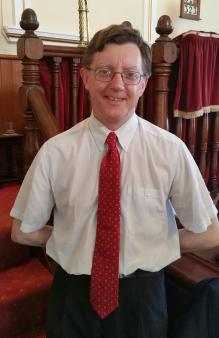 This morning service was led by Alan Davison of Carmarthen Evangelical Church who preached from Hosea chapter 3.


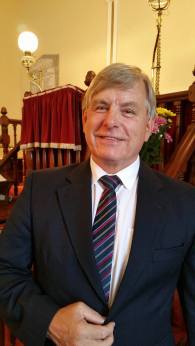




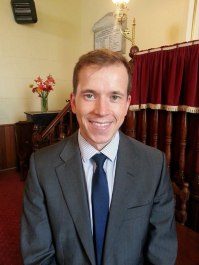 Morning worship was led by Aaron Davies-Whitfield who preached from Philippians chapter 2 verses 17-18 which he titled “A life poured out.”
 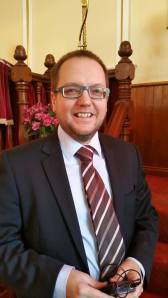 Our morning service was led by Ian Middlemist who preached on John 4: 15-26, Jesus talking with the Samaritan woman.
 It was lovely to welcome so many visitors to our service this morning, when our guest speaker this morning was Lawrence Mitchell, who preached on John chapter 12, focusing on verse 34, “Who is the Son of Man?” This is a title used throughout the Scriptures, as well as the Son of Abraham and the Son of David. He is the Messiah of Israel and the world. He is the Son of God and we rejoice in that. “For God so loved the world that He gave His only begotten Son, that whosoever believes in Him shall not perish but have everlasting life” (John 3:16). We believe in His deity, in the Trinity. In the previous chapter the Pharisees decided to put Him to death. The Council that met, the Sanhedrin, was made up of 71 mature men, yet they did not understand Jesus. They should have known and loved Him but it was the exact opposite. Jesus stood in their midst. They were afraid of their positions, of losing out. Throughout history many have tried to destroy the gospel, but it is an eternal gospel. When Paul stood before the Council he preached on the Resurrection; he was not afraid of offending them, he was willing to exalt and honour the Word of God. The Lord Jesus Christ was the source of the message that was preached and is preached.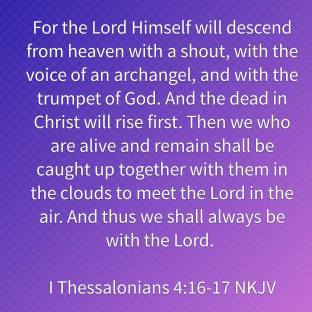
 Penuel Baptist Chapel, Roch