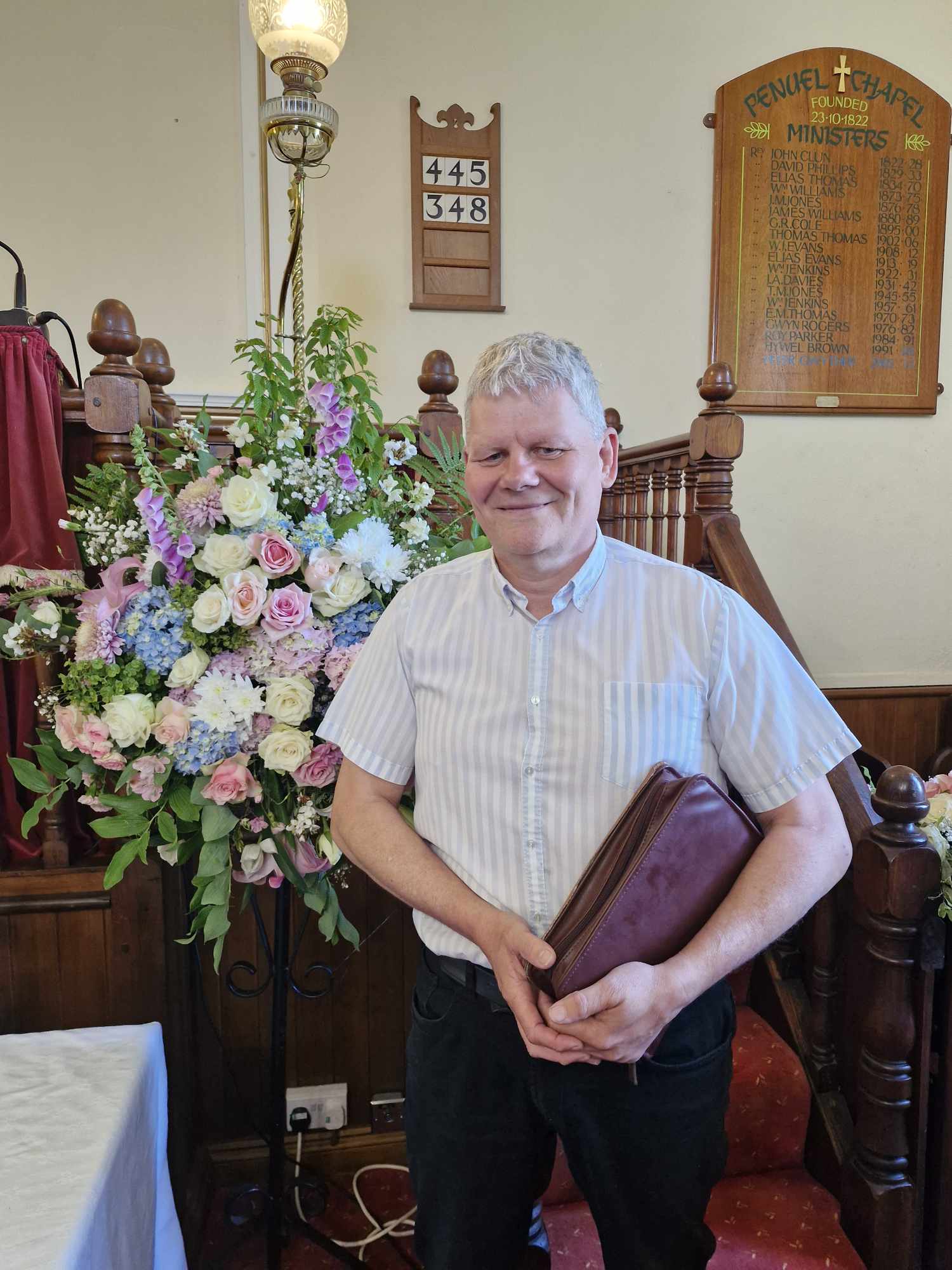
April 27th 2025: Rhodri Brady

April 27th 2025: Rhodri Brady

Matthew 28:1-10.
The focus for our thoughts today comes in verse 8:

“So they went out quickly from the tomb with fear and great joy, and ran to bring His disciples word.”

The women hurried from the tomb with fear, but also with great joy! The Bible does not present us with false or two-dimensional characters. The Lord shows forth people in all their complexities of character. We have in verse 8 two features which all humans express and which are sometimes set in opposition. The women were afraid, but they also displayed great joy too. The fear they had was only part of what they expressed, for the joy formed the greater part of their emotional experience.

            It is a truism to say that everyone fears. Fear is part of the fallen nature, and part of this fallen world. But what do we do with our fear? Fear is a reality. The Bible does not skate over this aspect of human experience. But it does address this and demonstrates how we should act when afraid. The key point in this event is, of course, the resurrection. How did the resurrection affect and energise these women? Surely the news from the angel caused their joy! How then does the resurrection affect us? These women were left scarred by the arrest, the crucifixion, and the death of the Saviour, but now they were joyful and yet with fear. Our text therefore has these two themes: fear and joy, so let us consider each characteristic in turn.

Fear.

            The resurrection left these women fearful and yet joyful, so let us start by considering their fear. Jesus truly died. He was wrapped in a linen cloth and placed into a newly hewn out tomb. A huge stone was rolled over the entrance to block the way. Nothing happened on the Saturday following Christ being placed in the tomb, but then on the first day of the week there was an earthquake which was not natural, but supernatural. An angel came and rolled back the stone and sat on top of it. The angel’s appearance was “like lightning” and his raiment was “as white as snow” and as a result of this “the guards shook for for fear of him, and became like dead men” (Matthew 28:3,4). The angel then spoke to the women telling them not to be afraid, declaring that Jesus was now risen from the dead, and instructing them to inform the other disciples of this glorious truth (Matthew 28:5-7). From these details recorded in Matthew 28:1-10 we can see a great contrast. Whilst the guards: “shook for fear of him, and became like dead men,” the women, by contrast, “went out quickly from the tomb with fear and great joy, and ran to bring His disciples word” (Matthew 28:4,8). The guards only had fear, but the women had fear and yet “great joy” too.

            We must acknowledge the presence of fear. Both the guards and the women had fear. We are not talking about ‘holy fear’ here but the type of fear which all humans experience as a result of sin and the fall of this world. Matthew uses the same Greek word for fear in speaking of the guards and the women here. We see this type of fear expressed by the Israelites when the Lord came down on the mountain of Sinai in Exodus 20. God is awesome. No doubt His angels are fearful too. We learn this from a number of appearances of angels in the Old Testament. Now when the Lord descended on mount Sinai the people were afraid and distanced themselves from the Lord. But Moses went up into the mountain and into the cloud. What do we do when we are afraid? Do we run away from God and seek to dispel the fear by distractions? Or do we embrace the Lord even though we are fearful?

            In the New Testament, the priest Zacharias was sceptical when he met with Gabriel who announced that Elizabeth would have a son, but Mary accepted the word brought to her by the same angel. Both were, no doubt, afraid, but Zacharias withdrew and Mary embraced that which was spoken to her. In another event we read that Jesus drove out many demons from the man who dwelt among tombs in the region of the Gadarenes, but those who witnessed this amazing event were afraid and asked the Lord to depart from their place (Mark 5:15,17). Fear causes many to withdraw and retreat or to push the Lord away. Some are anxious about coming into a place of Christian worship. Their fear keeps them away. Often, in their fear, people look to sources of comfort other than the Lord, but this is a grave mistake. Some look to drink to quash their fears. But turning to drink leads us ultimately away from the Lord. Others turn to food as a comfort or to exercise, or to work, or to cleaning the house, or even to entertainments. All of these things are distractions to blot out or push away the fear we have. All of these things are fine in and of themselves, but are terrible as means to deal with fear.

            Note that the guards were so afraid that they “became like dead men.” This statement does not just mean that they became immobile and fell to the ground, it suggests their spiritual state too. In our estrangement from God, the apostle Paul describes unbelievers as “dead in trespasses and sins” (Ephesians 2:1,5), and the posture of these guards intimate the state of their hearts. What do we do with our fear and in our fear? We ought to run as fast as we can to the Lord!

Great joy.

            The resurrection left these women fearful and yet joyful, so let us now consider their great joy. The word in Greek is ‘mega’ and the idea is that their joy exceeded their fear. They had ‘mega’ joy! These women would have heard the Lord Jesus preach on many occasions and their hearts would have been greatly warmed. For instance, in the sermon on the mount the Lord said that the ‘poor in spirit’ would be blessed and such would be possessors of the kingdom (Matthew 5:3). These women were probably very ‘poor in spirit’ and so would have been encouraged by such words. Perhaps, also, they would have heard from Peter the events surrounding the great storm on the sea of Galilee. The Lord was asleep in the boat and the storm that arose was fearful and not a natural one. They may have heard Peter tell about his fears in such a perilous situation, and yet Jesus was asleep! And then Peter would have related that this ‘Man’ Jesus spoke to the ‘weather’ and the ‘weather’ obeyed His command. Such, surely, would have elicited much joy among these women? And yet this incredible Man, their Saviour, died!

            The disciples all accepted that Jesus was the fulfilment of the prophecy of Moses concerning the coming prophet, but they had ignored or neglected the prophecies of the Messiah’s death (Psalm 22 and Isaiah 53). They wanted a victorious warrior king, and what kind of king wins by dying? And yet these women now had “great joy” because they had heard that Jesus was now alive.

            Joy is one of the fruits of the Spirit and so is something all Christians must experience. We ought to be possessors of this “great joy,” but we must also recognise that we cannot manufacture this out of thin air. We are utterly dependent upon God who is our joy and our strength (Nehemiah 8:10). If we are lacking in joy the only answer is to seek the Lord in His word. The truths of God invading the heart lead to great joy! He is alive! He who did miracles, taught wonders, and who died, is alive forever more and reigns in heaven! He has reserved a place for us if we believe and He is coming again! Let your joy be full in the Lord.
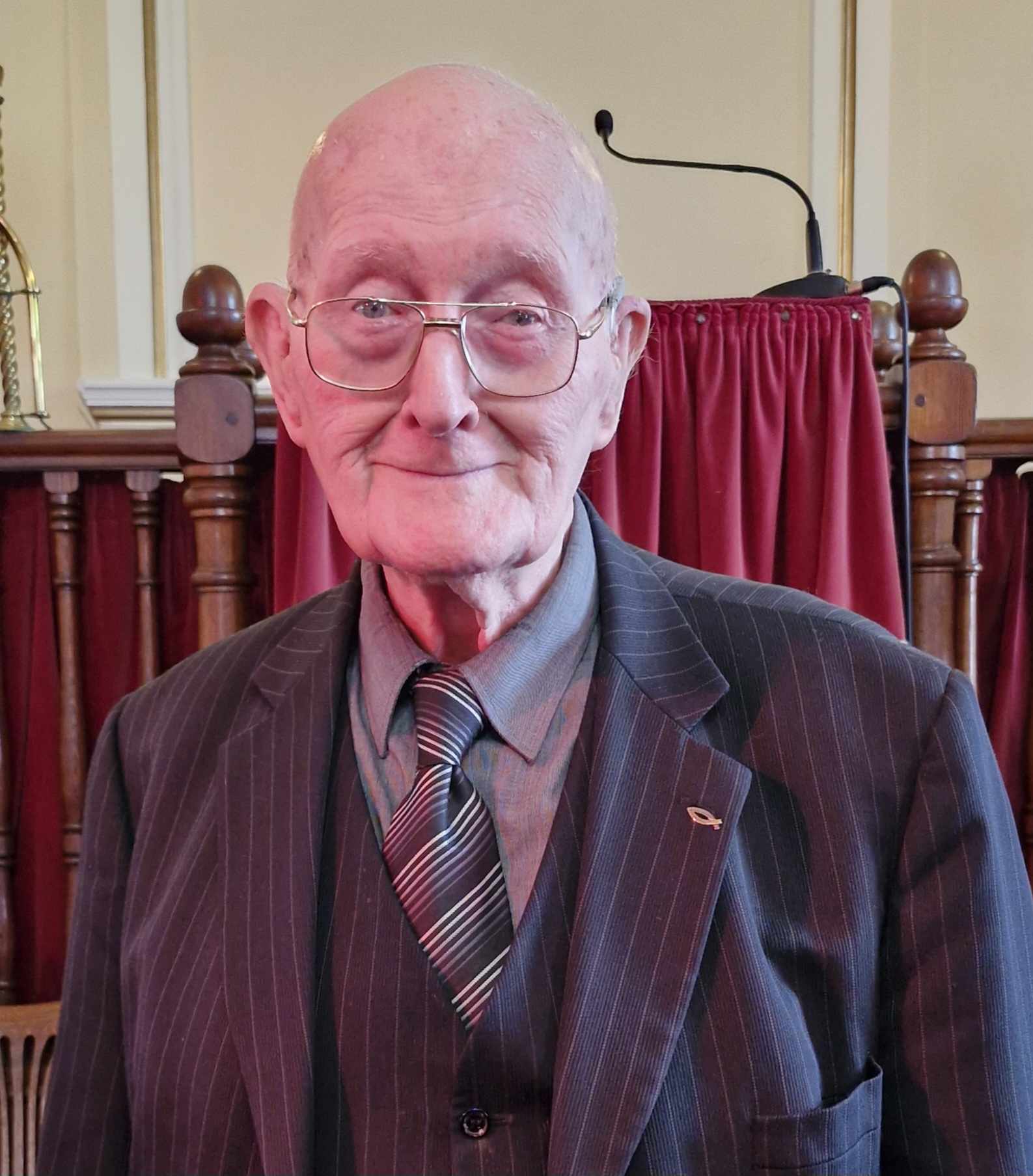
April 18th 2025 – Good Friday: John Scanlon

Mark 15:20-37.

There are seven distinct sayings of the Lord Jesus upon the cross of Calvary.

“Father, forgive them, for they do not know what they do.” (Luke 23:34)
“Assuredly, I say to you, today you will be with Me in Paradise.” (Luke 23:43).
“Woman, behold your son!” … “Behold your mother!” (John 19:26,27).

My God, My God, why have You forsaken Me?”  (Matthew 27:46).
“I thirst!” (John 19:28).
“It is finished!” (John 19:30).
“Father, ‘into Your hands I commit My spirit.’” (Luke 23:46).

These sayings are the heart-wrenching words of our Saviour as He was dying upon the cross and bearing our sins. The four gospels record extensive details and proofs of what the Lord went through both in His ministry and in His death and resurrection. The resurrection was proof of the success of what Christ achieved on Calvary. These various sayings also give us more detail about the type of character we have in Jesus Christ. He demonstrated incredible compassion when He asked the Father to forgive His persecutors. He showed immense patience and love for the thief who repented at the last moment of his life. He was keen to show love for His mother and made provision for her by giving her to John’s care. His cry of dereliction leads to our understanding of what was truly going on in His death. When He cried “it is finished” we learn that He had done all that the Father sent Him to do. And then just before He breathed His last breath we learn that He was always in command, even over His very death.

            From around 9 AM in the morning until 12 PM the first three sayings of our Lord were uttered. Then from 12 PM to 3 PM in the afternoon there was great darkness, and at the end of this time we hear the Lord cry out: “My God, My God, why have You forsaken Me?” The darkness was no eclipse nor any natural event. It was supernatural. The time of Passover was at the time of a full moon so there was no way that the darkness was caused by an eclipse. One minute the crowds and the authorities were mocking the dying Saviour, and the next it was deep darkness. There was also surely a quietness as a result of this darkness, so that the only sound to be heard was the cry of those on the cross. We are reminded of the ninth plague in Egypt when all of Egypt was in such a darkness that people could not see their hands in front of their face, a darkness that was restricted to Egypt and was not experienced by the Israelites. This was a supernatural darkness too, and it signalled judgment. Here too as Jesus Christ was dying, the darkness surely signals judgement. At the time, nobody knew how long this darkness would last. The darkness experienced then was also greatly symbolic, given to impress upon us this truth that Christ Jesus was under the judgment of God.

            God is light and in Him there is no darkness (1John 1:5). God is utterly pure! Sin is often referred to in Scripture as ‘darkness.’ People (fallen sinful people) prefer darkness to light because they prefer sin. We know that generally speaking thieves operate at night under the cover of darkness. The revelry of people is a night-time affair. Vice and wickedness are done during the dark hours when light is rare. So darkness signifies the time and occasions of sin. Now on the cross Jesus no longer enjoyed the light of God the Father. In Scripture hell is pictured as a place of eternal fire, but it is also described as a place of “outer darkness,” or extreme darkness (Matthew 8:12; 22:13; 25:30). Now it is in this deep darkness that we hear the Saviour cry out: “My God, My God, why have You forsaken Me?” This was a terrible darkness. In Gethsemane the Lord Jesus was troubled greatly and sweat drops of blood. But here on the cross He cries out in deepest agony as the divine judgement fell fully upon Him.

            Some people ask this question: was Jesus Christ really forsaken by God? How could a Father forsake His Son? Now Psalm 22 clearly prophesies the very details of Christ’s crucifixion. There is no doubt at all that Jesus uses the words of Psalm 22:1 as He cried out in agony. Some thought that He was calling for the help of Elijah but these words of Psalm 22:1 show clearly that Jesus Christ was truly forsaken by God. Still some question this. How can such a thing be? We know that Jesus was forsaken by men. He was forsaken by the Jews who called for His death. He was forsaken by Judas Iscariot the traitor. He was even forsaken by His own disciples when they ran away at His arrest. He even predicted this during the teaching He gave before He died (John 16:32). All through these experiences of being forsaken the Lord Jesus knew the presence of His Father. Twice we hear the Lord Jesus say “I am not alone” and that He was “with” the Father (John 8:16; 16:32). But forsaken of God on Calvary? Surely not! Some say. Well, He was forsaken of God. That is what these words “My God, My God, why have You forsaken Me?” really mean! But if you are unsure then consider this. In the first saying the Lord prays Father, forgive them, for they do not know what they do” and in the last He prays Father, into Your hands I commit My spirit.” In the second, third, fifth and sixth sayings He addresses others or makes statements. But in the central saying (the fourth) He does not speak of His Father but cries out My God, My God, why have You forsaken Me?” Does this fact not demonstrate that He was forsaken by the Father? Christ Jesus was always with His Father and His Father was always with Him, but during these hours of darkness on the cross He was forsaken by the Father. In the holy Trinity Father, Son and Holy Spirit are bound in a perfect harmony, but amazingly on the cross we have the great mystery that God is forsaken of God!

            Why was our Lord forsaken by His Father? The only answer can be found (for example) in Psalm 22:3. The Lord is holy and cannot look upon sin. Habakkuk 1:13 tells us this: You are of purer eyes than to behold evil, and cannot look on wickedness.” But Christ who was spotless and pure and “knew no sin” was made “sin for us” (2Corinthians 5:21). He “bore our sins in His own body” (1Peter 2:24), and He “became a curse for us” by being nailed to the tree (Galatians 3:13). All our sin was laid on the spotless Saviour and He bore it all away. That is why he cried out “My God, My God, why have You forsaken Me?”

            Christ Jesus did not die as a martyr for a cause. Neither did He die as an example for others to follow. He died as our substitute. He died in our place. And all of this was prophesied 700 years before this time:

Surely He has borne our griefs and carried our sorrows; yet we esteemed Him stricken, smitten by God, and afflicted. But He was wounded for our transgressions, He was bruised for our iniquities; the chastisement for our peace was upon Him, and by His stripes we are healed. (Isaiah 53:4,5).

At that moment when there was no light and all was dark because God could not look upon the sin, Christ was bearing our sin and enduring the wrath of God. But then there came a point at which our Saviour could cry out: “it is finished!” This signifies the point at which our Lord had paid the price for sin in full. He bore the wrath of God fully and no more need be done. Christ Jesus did what no one else could do or could have done.

There was no other good enough
To pay the price of sin,
He only could unlock the gate
Of heav’n and let us in.

Never speak of what you have done. Only speak of what the Saviour has done for you!

February 9th 2025: Alan Davison

Luke 10:25-37

Introduction.

            It is a truism that we do not like to be inconvenienced. There are certain things in life which are dramatic and introduce great change. Things like redundancy, bereavement, terminal illness, grief and so on. But what about those things which are simply inconveniences? These irk us. Someone once said that “an itch is worse than a pain.” In many ways this parable that the Lord taught was something of an irritant to the lawyer’s world view. There are some things that are not too great an issue but which nevertheless irritate us and we cannot handle them.

            For our purposes we need to consider the whole context of this passage first before we focus on the text of Luke 19:25. In the secular world this parable of the Good Samaritan has come to stand for the act of doing good to others in need in a random fashion, or the doing of good deeds from a desire to be compassionate. But what the Lord was teaching goes much deeper than these basic views.

            In Luke 10:25 the lawyer asks the Lord Jesus: “what shall I do to inherit eternal life?” This man was a lawyer in Israel, and so was very much concerned with the Torah, the Law. Now the Lord Jesus sought to point the lawyer back to the Torah (verse 26). And then in response in verse 27 the lawyer quotes two passages, one from Deuteronomy 6:5 and the other from Leviticus 19:18:

You shall love the Lord your God with all your heart, with all your soul, and with all your strength. (Deuteronomy 6:5).

… you shall love your neighbour as yourself: I am the Lord. (Leviticus 19:18b).

The Lord Jesus responded to this by saying “You have answered correctly; do this, and you will live,” (verse 28). Here is a classic statement of the covenant of works. To our minds it looks very much like a salvation by works. Right at the end of the parable the Lord Jesus adds these concluding words: “You go, and do likewise,” (verse 37). These things are impossible for fallen human beings to do. The only one who could keep the law in perfection was the Lord Jesus. So by emphasising the need for obedience to the law, the Lord Jesus was leading the lawyer to the point of realisation that he was incapable of keeping it and needed a Saviour.

            But knowing that he could not do these commands, the lawyer sought to “justify himself,” (verse 29), and so asks the question “and who is my neighbour?” (verse 29). He was, in effect, seeking a loophole. Something lower in standard that he could keep. By asking this question he wanted an escape route. If his neighbour could be defined in narrow terms then that would go a long way to him being able to keep these commands.

            One thing the lawyer knew well from his recollection of the law was that the two commands, to love the Lord wholeheartedly, and to love one’s neighbour as oneself, were inseparable. He probably thought that he was keeping the first commandment pretty well (i.e. to love God), by his observance of the ceremonial laws. But in order to “justify himself,” he wanted to narrow down the commandment to love his fellow man into something manageable.

Text focus.

            Now the text we shall consider is found in verse 25, which reads as follows:

And behold, a lawyer stood up to put him to the test, saying, “Teacher, what shall I do to inherit eternal life?”  (Luke 10:25).

For our purposes we shall home in on what the lawyer asks under three headings as follows:

[1] What shall I do?

[2] To inherit.

[3] Eternal life.

[1] What shall I do?

            This is the age old problem that mankind faces. What should I do? Well, the Lord made it very plain in the Old Testament, and especially in the Law, that there are certain over-arching rules which must be kept fully always. The book of Deuteronomy stresses this point and repeatedly states that obedience is required for blessing. The Israelites were to keep all the laws, statutes, and precepts, if they wanted to life in the land of promise and be blessed. God’s law is perfect, holy, good, spiritual, and right (see Romans 7). And it is incumbent upon all to do all that God requires (Micah 6:8).

            But the great problem is that no one can keep these laws. None have done so. Israel, given so much blessing and advantage by the Lord as His chosen vine failed repeatedly. We know from the New Testament that the law was added as a school master to lead us to Christ (Galatians 3:24,25). Its main purpose was to convict us of sin. By looking at the law, and by trying to keep it, in our failure we are brought to see our great need of mercy from the Lord. For the Christian the law is now a promise. It is no longer “thou shalt” as an imperative, but “thou will” as a promise. Through faith in Christ and His righteousness freely given by grace to us, we are enabled to live as Christ in this world. We are not perfect, but we press on and keep walking by faith in Him (Galatians 2:20). In this way the law is a blessing to the believer, for through it we see Christ, an in it we see how we can live by faith in Him.

            The priest and the Levite were very much concerned with keeping the ceremonial law. They were concerned that if they went to the wounded Jew they would become defiled and would no longer be able to minister. Their problem was that they had split the two great commandments into separate parts. They would have been made ceremonially unclean in handling the man, but there was provision in the law for them to become clean again. In treating the man they would have been keeping the second great commandment to love their neighbour. Perhaps they had limited their thoughts to the first great commandment saying ‘God must come first” but the Lord Jesus made it clear elsewhere that these two commandments (to love God and to love our neighbour) were actually inter-twinned and inseparable.

On these two commandments hang all the Law and the Prophets. (Matthew 22:40).

There is no other commandment greater than these. (Mark 12:31).

If we focus on one or the other, we are out of balance. When we love the Lord we ought as a consequence to love our fellow man. No man can truly love God if they hate or ignore their fellow man (1John 4:20). We must always be wary of diluting these commands, of bringing them down to our level so as to keep them in our own strength. Keeping these is only possible for us fallen human beings by faith in Christ and with the aid and power of the Holy Spirit.

            Now the priest and the Levite were keen to keep the law as best they could but they were only seeking to follow the letter of the law and not the heart or spirit of it. Samaritans were considered to be ‘mongrels’ by Jews. They were an impure mix of races and not pure Jews of the twelve tribes of Israel. They were also idolaters. Jeroboam I at the division of the kingdom of Israel instituted two false calves for the Israelites in the north to worship. But despite their mixture and their distorted practices, they still had access to the word of God. It is possible that the Lord Jesus was alluding to an incident recorded in 2Chronicles 28. In this chapter Israel had defeated Judah and had taken captive 200,000 “women, sons, and daughters,” together with “much spoil,” and brought them into Samaria (2Chronicles 28:8). These captives were going to be forced into slavery in Samaria. But then all of a sudden we read that a prophet called Oded came and spoke to the people at Samaria (2Chronicles 28:9).  He remonstrated with the people at Samaria who had wanted to make these captives into slaves (2Chronicles 28:10). Oded implored the people to return these captives because of the wrath of God which was upon them (2Chronicles 28:11). At this point some of leaders of Ephraim take this advice on board and declared that these captives were no to bring the captives into Samaria to be slaves (2Chronicles 28:12,13). Consequently the armed men (who presumably were guarding the captives) left the captives and the spoil “before the leaders and all the assembly” (2Chronicles 28:14). And then we read these words:

Then the men who were designated by name rose up and took the captives, and from the spoil they clothed all who were naked among them, dressed them and gave them sandals, gave them food and drink, and anointed them; and they let all the feeble ones ride on donkeys. So they brought them to their brethren at Jericho, the city of palm trees. Then they returned to Samaria. (2Chronicles 28:15).

Here we have an account of Samaritans aiding weak and troubled Jews. Just like the Good Samaritan in Jesus’ parable, they clothed them, dressed them, fed them, and even anointed them to tend to their needs. Note here that this action was all as a response to the word of God through the prophet Oded.

            It is possible, then, that our Samaritan in the parable was someone who depicted for us as having acted out of response to hearing God’s word. We do not have such in the text of Luke 10, but the text from 2Chronicles 28 leads us to think that the Lord intended this lawyer to think along these lines. It was God who motivated the good Samaritan.

[2] To inherit.

            It is interesting that the lawyer does not speak of earning or of gaining eternal life but refers instead to the idea of inheriting it. How does one inherit something? Well, it certainly does not come to a person by right, or through effort, or by means of works. An inheritance is a gift. It is something received and not earned. The key point (generally speaking) is that the one inheriting is somehow related to the donor or benefactor. Now believers inherit on account of their adoption into the family of God. Consider these words from Peter:

Blessed be the God and Father of our Lord Jesus Christ, who according to His abundant mercy has begotten us again to a living hope through the resurrection of Jesus Christ from the dead, to an inheritance incorruptible and undefiled and that does not fade away, reserved in heaven for you, who are kept by the power of God through faith for salvation ready to be revealed in the last time. (1Peter 1:3-5).

God the Father has begotten us again and has adopted us into His family to a living hope and to an inheritance described as being “incorruptible,” “undefiled,” which “does not fade away,” and which is “reserved in heaven” for us. It is a sure and certain inheritance. And we also learn too that we are “kept by the power of God through faith” for this inheritance. There is a sure and certain inheritance reserved for believers, and believers are kept or preserved for this too. All of grace!

[3] Eternal life.

            In one way or another humanity struggles with its mortality and hankers after eternal life in one form or another. Many in the secular world merely speak about their ‘legacy’ hoping that their name, achievements or fame may live on after they are gone. The Egyptians were keen on immortality and so they built impressive tombs for the afterlife. But the Bible has a very clear definition of eternal life. It is not just a matter of prolonging life on earth, but rather a quality of life. In John 10:10 the Lord speaks about coming to give life in “abundance.” A life that is over and above the norm and the experience of life here on earth. Resurrection life is much more than life perpetuated. New birth is the start of this eternal life. Our Lord and Saviour made reference to this the night before He died:

And this is eternal life, that they may know You, the only true God, and Jesus Christ whom You have sent.  (John 17:3).

Now the Samaritan spent some time with the wounded man and then after leaving told the inn keeper that he would return with further payment to cover all that was needed. He sought for the man not only to be tended, but to be healed, and to make a full recovery. Perhaps him telling the inn keeper that he would return was to ensure that the wounded man was properly cared for. It rather reminds us too of the Lord’s promise to return for us at His second coming. In the rescue and recovery of this wounded Jew we can see our salvation. It is noteworthy that the Lord Jesus was actually called a “Samaritan” by some (perhaps just before this parable) (John 8:48).

            The new born life is a life in Christ and expressive of Christ’s life (Galatians 2:20; Philippians 1:21). To smile when you have a hard time at work, or to not yell back when someone viciously berates you is of the way of Christ and His righteousness. These attitudes are not self-imposed or drummed up but come from the indwelling Spirit as we feed on Christ. A person who truly knows God and loves Him will live a life of pleasing and beauty. Again it is not by self but through faith in Christ and with the aid and power of the Holy Spirit.

            When the Lord concluded His parable He asks the lawyer: “Which of these three, do you think, proved to be a neighbour to the man who fell among the robbers?” (verse 36). The lawyer could not bring himself to say “the Samaritan,” but instead said “the one who showed him mercy” (verse 27). He accepted the parable, but only grudgingly. The Lord Jesus was saying to this lawyer: “you copy this good Samaritan.” Why? Well because he fulfilled the law. He loved God and out of his love for God he cared fully for the wounded man.

Conclusion.

            What shall we conclude? Looking at the lawyer and the Samaritan we see two different approaches. Both believed in God. Both wanted to honour the Lord. But the lawyer wanted to operate on his own terms, for he sought to “justify himself.” In contrast, the Samaritan demonstrated the life of God. In like manner we should love God wholeheartedly and show such devotion by loving all mankind and being a good neighbour to all we come across.

January 19th 2025: John Funnell

To watch this service click on the link to our YouTube channel: https://youtu.be/4sQAq9URbww?feature=shared

Mark 14: 32-42

Who here has a problem with sin?
Who here, when you sin, feels dirty afterwards?
Who gets themselves upset and depressed when they sin?
 Who enjoys the feeling of shame and guilt after sin?

Today, I am going to teach you a method that will help you stop sinning. I do this because I really love you. I do not want you to have shameful feelings. I pray you will leave here living in the joy of living a holy life.

You won’t be perfect; that will be in heaven. To do this, turn with me to Mark 14:32-42. Jesus prays in Gethsemane. Throughout Mark’s gospel, he likes to make comparisons between extreme examples, to make the point. He pairs significant events – people and places in Jesus’ ministry. For example, he does this with the young woman who died at 12 years of age and the woman who bled for 12 years. There’s a comparison to be made there. We see the same things between the disciples and the Pharisees. They both made mistakes and the point between the comparison is the truth between them. Mark also compares different miracles, healing and feeding, and how Jesus controls the natural world. Mark pairs everything off so we can gain further wisdom from the comparisons.

Today’s comparison is between Jesus Himself and the three disciples, “And he took with him Peter and James and John, and began to be greatly distressed and troubled. (v.33). Peter, James and John. We know that Jesus is about to be arrested, brutally murdered by the state for the sin of the world. As God, Jesus knew what was going to happen. As a man, Jesus was utterly terrified. Jesus was absolutely terrified about what was coming – the cross. Jesus is actually overwhelmed. What do you do, as a Christian, when you are overwhelmed? Pray. Jesus needed trusted friends to watch – Peter, James and John. Interestingly, these are the same three He chose to watch the Transfiguration. These three had seen the glory of Jesus, where He shone like the sun. Surely these men, who had seen the transfiguration, would stand firm for their Saviour. However, they did not, “Watch and pray that you may not enter into temptation. The spirit indeed is willing, but the flesh is weak.” (v.38). They let their Saviour down – they fell asleep.

Compare this account of the disciples’ failure to what Jesus did: The disciples fell asleep, Jesus stayed awake. Jesus fought temptation. He could have run away, never to be arrested, never to face the cross. But in love, He stayed in Gethsemane to be arrested. He fought the temptation to flee until His flash started to break down. In Luke’s account, chapter 22, Jesus fought to this extent until His capillaries burst, until He sweat drops of blood. Never question His love for you. He left heaven to allow His flesh be broken. What a Saviour! Such love!

This torture was in utter contrast to the disciples, who gave into their sinful flesh and went to sleep, letting their Saviour down. Jesus’ pain, however, was not in His fight against the flesh. As God, Jesus cannot sin. His fight, His torment in the Garden of Gethsemane was caused by His requirement to embrace sin for our atonement. Jesus, the author of creation, eternally one with God the Father and Spirit, in perfect triune holiness, pure love, was about to take unto Himself the sins of the world. Your sin. My sin. On Him. He was about to be treated as if He had committed every act of violence, every act of hate, every act of perversion that every human being has ever done. The vilest thing, the violinist thought you have ever had. In love for you, Jesus said, ‘Give it all to me.’

The consequences of this meant He had to break the eternal bond with the Father as He turned His face away. Jesus’ pain wasn’t fighting against the temptation to sin, it was fighting the temptation, as a holy God, to flee from sin. Jesus, the eternal Son of God, because of your sin and because of my sin, later cried out on the cross, “Eloi, Eloi, lema sabachthani?” which means, “My God, my God, why have you forsaken me?” (15:34). What a thing for Him to have to say. In the greatest act of love, by taking unto Himself our sin, the Son had to receive the wrath of His Father that we and other Christians justly deserve.

The perfect Lamb of God, on Calvary’s hill, took an eternity of wrath. He took the holy fire that purges all evil, for the faithful. Aren’t you grateful to be among the faithful? He took the judgement we deserve so we don’t have to face it. Hallelujah! Can you imagine the holy Lamb of God fighting against His calling to take unto Himself the sins of the world?

What we reach here is not just Jesus praying in the garden, but a divine conflict. Jesus is praying in Gethsemane. ‘Gethsemane’ means ‘olive press,’ the place where olives were crushed, squeezed by opposing forces, so what is inside can be squeezed out to make oil. Under this moment of divine pressure, as Jesus is crushed, we see love being poured out. He pleaded with His Father to let this cup pass, but then He cries out, because He loves us and He loves Hi Father, ‘‘Not my will, but thine be done.’

The cry if the Christian is, ‘Not my will, but thine be done.’ This simple prayer can help you to stop sinning. My dear friends, when you are having your time of prayer as a church, with your bibles open, you are not committing an outward sin. When you are praying, you are not searching for something online you shouldn’t be watching or lying to a loved one. When you are in the presence of God, His holiness makes you so aware of your sinful nature you are less likely to sin. You are less likely to commit outward, public sins. Temptation is a killer. ‘The wages of sin are death.’ When you are tempted, put down immediately what is leading you astray and pray to the Father, ‘Not my will, but thine be done.’

When you say this prayer, be reminded of Jesus’ prayer in Gethsemane. In His fight Against temptation, He took you sins because He loves you. He put it to death. So should you. That sin you are about to commit, He would have taken to the cross. ‘‘Not my will, but thine be done.’  

It is not that easy. Life is hard. We live in a world filled with temptation. We can’t just say a few words and all this temptation will go away. It is too hard. Every day we fall into sin. How can we stay awake if the disciples who saw the Transfiguration couldn’t keep watch for even one hour? My answer is quite simple and beautiful. It is grace. Jesus, here in Gethsemane, is being pressed in divine conflict, in mental anguish. His body is breaking down. His only comfort is to plead with His Father. Yet, He breaks this time of prayer to see the disciples are OK, “And he came and found them sleeping, and he said to Peter, “Simon, are you asleep? Could you not watch one hour?” (v.37). Isn’t that profound! Jesus is preparing to go through Hell. Hell for Peter’s sin. Hell for James’ sin. Hell for John’s sin. Yet, He stops His prayer time with His Father to make sure they are O.K.

What a God we serve. As our mediator, He does the same for each of us today. We get the same treatment as Peter, James and John. We too are His disciples. He will wake you up from your sleep. Jesus is unchanging. He breaks time with His Father to see you are OK. In love, He will get you back on track. That is overwhelming. That is grace. What a Saviour we come to worship. ‘Not my will but thine be done.’

December 29th 2024: John Scanlon

Matthew 1:18-25, Isaiah 9:1-7

To watch this service, click on the link to our YouTube channel: https://youtu.be/yRjw7mmbT7E?si=FJD9nnVdIivUKO3M

One advantage of old age is that I can remember incidents which happened long ago. I can remember my first day at school, Easter 1935, but yesterday’s breakfast, I can’t remember! There is one particular memory that stands out for me – September 29th 1936. We lived in this terraced house, in an area where there was almost 100% unemployment. I was 5 ½  years old and I had been playing out in the backyard with my younger brother Tom. Eventually, father called us in for bed. We were washed and changed in the kitchen and sent straight upstairs to bed. We weren’t allowed in the front room. My mother was ill. My father brought us a single bed downstairs so he could watch over her. In those days doctors and nurses cost money. We usually depended on neighbours for help or we managed on our own. Father had been unemployed for as far back as I can remember. He spent his days looking for work. We lived in a slum. There was no garden so we were unable to grow food. The only grass we saw was on the flagstones between the pavement. Times were hard.

The next morning I got up and I had the biggest surprise ever.my mother was sitting up in bed. Beside her was a brand new baby boy. I had a baby brother! I spent the whole of that morning standing on the front door stop telling everyone who passed by, neighbours and strangers, ‘I’ve got a new baby brother!’ As a 5 year old boy, the street I lived in was my whole world. I spread the news. As my mother was weak and tired, so my father brought the whole thing to a close.

My brother grew up having a normal childhood. 88 years ago I announced the birth of a baby to all concerned. But there was another baby born; His birth was foretold old as far back as Genesis 3:15. Perhaps the most wonderful proclamation of this birth is,

For unto us a Child is born,
Unto us a Son is given;
And the government will be upon His shoulder.
And His name will be called
Wonderful, Counsellor, Mighty God,
Everlasting Father, Prince of Peace.”

Isaiah 9:6

This baby brought with Him something needed from the dawn of creation, from the fall of grace of Adam and Eve in the garden. He brought salvation. The five names given to him in this prophecy are distinctive. He is named wonderful, showing He is awesome, God in flesh, a miracle worker, full of wonder. Counsellor shows He advises us in all things by the love He has for us. Mighty God reflects He is the divine one. Everlasting father shows He is the provider, protector and disciplinarian. Prince of Peace shows He gives divine peace and calm to all who trust in Him.

On a dark cold night, shepherds were exposed to all kinds of dangers. Then, good news came. The angel of the Lord came upon them and the glory of the Lord shone around them and they were sore afraid. The shepherds were accustomed to a quiet life. They made the journey to where this great event took place. There, an essential part of this nativity scene, they saw the Prince of Peace. When Isaiah uttered this prophecy, about 3000 years ago, the nation was suffering. Yet, Isaiah held hope for the people. This light is Jesus who said, “I am the light of the world.”

The Hebrew word for peace, Shalom, was known well enough and used as a greeting. Finally, on that first Christmas Day, peace came. The shepherds were ceremoniously unclean, the nobodies of their day. Who would believe the testimonies of shepherds, the forgotten of men? But God often uses the forgotten. Just imagine peace- no more war, no more killing. But there was still no more peace. One day a Roman legion came to Bethlehem so that boys aged 2 years and under would be slain. For hundreds of broken, bleeding hearts the cry goes on, ‘The angel was wrong. There is no peace on earth.’ But the peace that Jesus brings is a peace that passes understanding. It is not a political peace, it is peace with God.

Sin separates man and God. Sin is the greatest disturber. It constantly troubles the heart. It is the source of all disorder. Jesus came to restore order to the heart of man. Jesus came to redeem, to save His people from their sins. Not only does Jesus give peace with God but He gives the peace of God. (Philippians 4:7).

How can we find this peace? It doesn’t come through the world of men. Jesus said, “My peace I give unto you, not as the world giveth.” The peace of God is a gift. You need to accept it in humility and in thanksgiving. (Isaiah 26:23).  This peace is God’s gift in response to repentance in faith, For He Himself is our peace, who has made both one, and has broken down the middle wall of separation.” (Ephesians 2:14).

The peace of God is God Himself. The coming of God to this world must never be forgotten. He lived and died for us. The wisdom and love of God is brought home to us and we read His word. He was born and died for us on a Roman cross. The greatest act of love this world has known! This is the good news that needs to be told.

December 1st 2024: Gaius Douglas

Click on the link to watch this service on our YouTube channel: https://youtu.be/9cy-EKKPIS4?si=DgV0AKErFFaXokGx

Luke 1:26-38 God’s Interventions

God intervenes in the affairs of the world all the time. This world is upheld by Him. You and I are here this morning because we are upheld by His gracious hand. Nothing can happen without God ordaining it, without God allowing it. (Jeremiah 23:20). We are constantly surrounded by His divine interventions. He intervenes in a miraculous way. If you know the Lord Jesus Christ as your Saviour, you have made a profession of faith. God has intervened in your life, saving you from darkness into His marvellous light. We give Him the glory.

  1. Divine intervention – He speaks with authority.

We see God’s intervention and authority in the gospels. He says, ‘Go,’ ‘Come unto Me,’ ‘Go into the world,’ ‘Follow Me.’ When judged by Pilate, He says, “You could have no power at all against Me unless it had been given you from above.” (John 19:11). He has intervened in your life. God the Father sent the Son. We see the Spirit of God working and moving in this world, bringing the word of God to our soul. It reveals to us, For God so loved the world that He gave His only begotten Son, that whoever believes in Him should not perish but have everlasting life.” (John 3:16). He gave His begotten Son. Rejoice that our salvation is based on the finished work at Calvary’s cross by the Lord Jesus Christ. Rejoice every day – you have been saved.

Salvation is of the Lord. Appreciate God uses whom He will. We are called for a purpose. He has called us. God has chosen us in Christ, to take the word of God and take it to others. The Spirit of God reveals God’s word. He wants you to take this word to all around us.

  • When God speaks every human being needs to listen.

The angel Gabriel came to a house in Nazareth. He spoke to a young lady. He brought a message that would change this young woman’s life forever. Do we appreciate our lives have been changed forever? We find a wonderful verse in Isaiah 55:11,

So shall My word be that goes forth from My mouth;
It shall not return to Me void,
But it shall accomplish what I please,
And it shall prosper in the thing for which I sent it.”

It will accomplish what He pleases. It will prosper where He sends it. Regardless of what we may do, God continues to work by His Spirit, changing lives. He continues to work in your life, bringing you to a greater appreciation of who God is.

“This is the word of the Lord to Zerubbabel:
‘Not by might nor by power, but by My Spirit,’
Says the Lord of hosts.”

(Zechariah 4:6).

How wonderful!

The angel spoke to Mary. She listened. Are you listening? Mary was engaged. It was a contractual agreement. She was at home, probably thinking of the time when she would be officially married to Joseph, having a new home. Maybe she was a little anxious as well as happy. It is a life-changing situation going into something you have never experienced before. Mary was looking forward to life with Joseph, then the angel intervened. All of a sudden, her world was turned upside down. She considered the greeting from the angel. What an amazing message! All of a sudden, the almighty God was speaking and something was happening in Mary’s heart. The saving of our souls is a miracle of grace. We are bought with a price and now belong to God.

We read of the miracle of Elizabeth’s pregnancy – how she was barren and conceived in her old age. This message would have impacted Mary’s life. “For with God nothing will be impossible.” Are you challenged? Nothing will be impossible? Do you and I believe it?

On hearing this word, Mary willingly agreed and submitted to God. We hear these wonderful words, “Behold the maidservant of the Lord! Let it be to me according to your word.” (Luke 1:38). Mary’s response is an indication that the Spirit of God was at work in her life. We have in us the gift of the Holy Spirit. 1 Corinthians 6:19-20 reminds us that we are the temple of the Holy Spirit. What impact is that having on you each day?

The Holy Spirit has many functions and activities, “And when He has come, He will convict the world of sin, and of righteousness, and of judgment,” (John 16:8). God has given every human being a conscience. Every human has some knowledge of Him. The Spirit of God is moving, convicting the world of sin, of righteousness and judgement. The Spirit of God has convicted us we were sinners and needed salvation. He has called each of us to follow, to leave and follow.

Mary rejoiced. When God speaks, He expect a response from you and me. Will you follow Me? Will you go for Me?

  • When God speaks He expect me to respond.

Mary’s willingness to obey brought the blessing of God’s salvation to all human beings. His song shows a willingness to obey she willingly said, “Behold the maidservant of the Lord! Let it be to me according to your word.”(v.38).

We are called of God, individually. He has been speaking, sharing with you. Will you go for Him?

The angel said, ‘Leave the impossibilities to God.’ Mary said, “My soul [magnifies the Lord.” (v.46). She was not only rejoicing for herself but that God would bring blessings to you and me. She was going to enjoy the food of the land.

“If you are willing and obedient,
You shall eat the good of the land;

Isaiah 1:19).

For 30 years the Lord Jesus Christ lived in her home. She cared for Him and loved Him. She had the enjoyment of the very best of heaven. She and Joseph had responsibility for caring for the Son of God. She was also blessed to be an instrument in Jesus’ first act of public service (Marriage at Cana). When they ran out of wine she knew who to go to. Where do you go to? We see her faith in God, her Saviour. Led by the Spirit of God, she said to the servants, ‘Whatever He says, do.’ That’s faith! That is the authority God has given you and me. We are servants of the living God. He is the Saviour of our souls and has brought us life.

At the foot of the cross we see Mary standing next to John, the disciple Jesus loved. She looked up at God, her Saviour, the one who she nursed and cared for (Isaiah 49). This was her son. But He was more than her son, He was her God and Saviour. She felt the pain, not only as a mother but as a servant of God. She would have remembered when He said, ‘Do you not know I must be about My Father’s business.’

Has your life been changed? God has intervened in your life and mine. He has saved our souls, blessed us with eternal life. I am looking forward to sharing His glory. The same God who spoke to Mary and Joseph is speaking to you, saying, ‘Will you follow me?’ Will you be obedient to His calling? All He wants to hear is, ‘I will go for You.’ May that be your answer today. May God bless you.

September 15th 2024: John Mann

To watch this service, click on the link to our YouTube channel: https://youtu.be/ME3DlIYJ57A?si=KGP0pLDYEsGPSivD

1 Samuel 21:1-9 Faith in difficult times

Liars need good memories! Having lied once, the second time is easier, the third one easier still. David, God’s chosen king, is finding life difficult. Saul has become very jealous of David and has sought to take David’s life. David is finding the way hard and it is damaging his integrity. Fear is chipping away at David’s principles. His walk with God is compromised.

Sadly, lying is becoming a habit. David is seeking to escape from Saul. As he plans his escape his says to his friend Jonathan, If your father misses me at all, then say, ‘David earnestly asked leave of me to run to Bethlehem his city, for there is a yearly sacrifice there for all the clan.’” (1 Samuel 20:6). It is a blatant lie, a total fabrication. He is concocting a false alibi. In so doing, he makes Jonathan complicit in the deceit as well. The world would say, ‘The end justifies the means. Needs must, a white lie causes no harm.’ But the Bible is very clear – we are to be truthful at all times, even those times when we find the going difficult.

David escapes under rives in the town of Nob, where the Tabernacle has been established and where the priests are there to carry out their daily duties. He arrives not far short of destitute – virtually nothing and no one with him. He hopes to find some assistance in the Tabernacle. Ahimelech is a friend, but he is anxious. He knows Saul is out for David’s blood. It is also the Sabbath day. David would not normally travel alone on this day. David senses Ahimelech’s mind. He is afraid he won’t give him the help he needs so he invents a pack of lies, “The king has charged me with a matter and said to me, ‘Let no one know anything of the matter about which I send you, and with which I have charged you.’ I have made an appointment with the young men for such and such a place. Now then, what do you have on hand? Give me five loaves of bread, or whatever is here.” (v2-3). He says he is on a hush-hush mission. David comes to the priest for support and food.

Fear has lowered his standards. Desperation and deception have overcome his faith and his trust in God. On many occasions God has proved His faithfulness to David: spared him from harm, protected his life. This is the man who took on and defeated Goliath, the ten foot giant. God had appointed Samuel to anoint him to be the king of Israel. You would think David would feel untouchable, knowing that he is under the protection of the sovereign God. But he is suffering from spiritual amnesia. God’s goodness has become a dim and a distant memory. He is depending on own initiative and his own ingenuity to see him through this difficult time. He has decided to go it alone without seeking God’s help. He resorts to deception and lies.

We cannot justify David’s actions, but we are in no position to criticise. We have all felt the heat and burden of the day in our Christian lives. Do I deal with anxiety any better than David when the pressure is on? Does fear and anxiety get to me? Where is my first port of call when things get difficult? Is it the throne of grace?

We can learn from David’s failure. We go through the trials. If we turn to the Lord, we can find Him closer than ever. He is our God. He is faithful, shaping us more into the likeness of the Lord Jesus Christ. Count it all joy, my brothers, when you meet trials of various kinds, for you know that the testing of your faith produces steadfastness. And let steadfastness have its full effect, that you may be perfect and complete, lacking in nothing.” (James 1:2-4). That is God’s invitation as He takes us through difficulties. It is always for our good. When the Lord leads us down difficult paths, it is always for our own good and blessing. There may be torrents of hardship, floods of sadness, but God will always keep our heads above water and be with us. We won’t be completely consumed. If there are hardships that come your way, we need to look to Him, the Father of all mercies and the God of all comfort.

“But the Helper, the Holy Spirit, whom the Father will send in my name, he will teach you all things and bring to your remembrance all that I have said to you. Peace I leave with you; my peace I give to you. Not as the world gives do I give to you. Let not your hearts be troubled, neither let them be afraid.” (John 14:26-27). These are the promises of Jesus Himself. Every promise is a blessing to us, and we should hold onto them.

David’s circumstances were desperate and he had legitimate concerns. He fell into the trap of falling away from the Lord. Thankfully, God never took His eyes from David, or from us. David is hungry but all Ahimelech has is the holy bread of presence. The loaves were renewed every Sabbath day, but they were only to be eaten by Aaron and his sons, the priests. The bread also pointed forward to God’s great provision, that of satisfying our spiritual hunger. Jesus said to them, “I am the bread of life; whoever comes to me shall not hunger, and whoever believes in me shall never thirst. 36 But I said to you that you have seen me and yet do not believe. 37 All that the Father gives me will come to me, and whoever comes to me I will never cast out. 38 For I have come down from heaven, not to do my own will but the will of him who sent me. 39 And this is the will of him who sent me, that I should lose nothing of all that he has given me, but raise it up on the last day. 40 For this is the will of my Father, that everyone who looks on the Son and believes in him should have eternal life, and I will raise him up on the last day.” (John 6:35-40).

In Bible times bread was the staple diet of the people for physical existence and well-being. Without the bread of life, Jesus, there is no possibility of spiritual life. He is fundamental and essential to our eternal existence. If we refuse to feed on Him by faith, then we starve ourselves of life and we will be afflicted, as David was. Are you feeding upon the bread of life, the Lord Jesus Christ? Are you looking to Him for your spiritual and eternal well-being?

David’s need is legitimate; he is suffering from real hardship and is desperate. He requires assistance. God had made provision for such circumstances. Compassion and kindness is more important than the law. The law was an incentive to lead them in God’s ways, but not a set of handcuffs to bind the people. There was no allowance which permitted anyone but Aaron and his sons to eat the bread. But the spirit of the law allows love and compassion.

One Sabbath he was going through the grainfields, and as they made their way, his disciples began to pluck heads of grain. 24 And the Pharisees were saying to him, “Look, why are they doing what is not lawful on the Sabbath?” 25 And he said to them, “Have you never read what David did, when he was in need and was hungry, he and those who were with him: 26 how he entered the house of God, in the time of Abiathar the high priest, and ate the bread of the Presence, which it is not lawful for any but the priests to eat, and also gave it to those who were with him?” 27 And he said to them, “The Sabbath was made for man, not man for the Sabbath. 28 So the Son of Man is lord even of the Sabbath.” (Mark 2:23-28).

The Levitical law gave Jesus the right to pick the grain for those who were hungry and in need. God makes provision for all our needs. He provides that spiritual help and strength in times of difficulty. Jesus came to be the instigator and fulfiller of the new covenant. Praise God the Lord Jesus came and did what we could not do for ourselves. All that the Lord does is to reveal our sin and show us the need for salvation. Jesus came to obey the law for us. It frees us from the condemnation of sin. We are a privileged people. God has drawn us, opened our eyes to see the need for salvation.

For David, in his desperate situation, he was entitled to eat of the bread from the Tabernacle. But, as a result of David’s deceit, if we read on, so much grief and tragedy resulted. For us, as believers, obedience to God’s law is important. But now, it is written on our hearts. Jesus has fulfilled that law. We should have a desire and honour to please Him.

We cannot use grace as an excuse to live our lives as we please. God’s commandments show He wants us to live in accordance to His ways. He wants us to be good ambassadors for the Lord Jesus Christ. We are saved by grace, through faith in the Lord Jesus Christ. We should long to walk in God’s ways. We should have total reliance on the promises of God.

For unbelievers, failing to trust in the Lord Jesus Christ, their situation is even more desperate than David’s. They are eternal souls are in grave danger. God says you are invited, welcome to eat of the bread of life.

Satan is the father of lies. He will whisper deceit into our minds. Don’t believe this nonsense that you can get by on your own. None of us are good enough to come into the presence of a holy, righteous God, unless we are covered in the righteousness of the Lord Jesus Christ. Are you clothed in garments of salvation?

Believe on the Lord Jesus Christ and you shall be saved. Look only to the one who says, “I am the bread of life; whoever comes to me shall not hunger, and whoever believes in me shall never thirst.  If we are children of the living God we have that wonderful, eternal future that lies before us, when we will see Him, our Saviour, face to face.

June 2nd 2024: Children’s Anniversary Service Chris Jenkins

“And they were bringing children to him that he might touch them, and the disciples rebuked them. 14 But when Jesus saw it, he was indignant and said to them, “Let the children come to me; do not hinder them, for to such belongs the kingdom of God. 15 Truly, I say to you, whoever does not receive the kingdom of God like a child shall not enter it.” Mark 10:13-15

I’ve borrowed this photograph from the wall next door. It’s a black and white photo showing the Sunday School here at Penuel long, long ago. How we would love to see so many children gather here each week to hear the good news about Jesus and His love for each one of us.

Today, we are looking at a scene from the Bible, in Mark chapter 10. In this story it was one of those busy days when people crowded around the Lord Jesus, asking Him questions. Jesus had been answering some very important questions. Sometimes He answered them from the Old Testament part of the Bible. Sometimes He answered them with His own words, which are also the Word of God.

The grown-up talk was suddenly interrupted by children’s voices. The disciples looked and saw them coming, running, skipping and jumping. Some of the grown-ups were carrying babies.

“Surely they were not coming to Jesus?” they thought. “We have been talking about such important matters. They must not interrupt.” Perhaps they even spoke to one another about it, saying, “We mustn’t allow those children to bother Him. He has had such a busy day. He won’t want to see children.”

The disciples quickly decided to do something about it. One may have said, “Stop right here, you must not bother Jesus. Jesus is too busy.” Another may have said. “He hasn’t time to be bothered with children. Take your babies away. You must go now.”

Quickly the Lord Jesus stepped out from the crowd. He spoke sharply to the disciples. “Let the children come to Me.” Jesus demanded. “Do not turn them away. The Kingdom of Heaven is for those who come to Me, as they have come. Whoever does not receive the Kingdom of God as a little child receives it shall not enter in.”

The Lord Jesus loves children, they are very, very important to Him. He wants you to come to Him. Of course, you cannot run to Him as these children did. You come to Him asking Him to forgive your sin and take charge of your life. He wants you to come, for He loves children very much. Indeed, when He died on the cross, He was dying for boys and girls as well as for grown-ups.

The disciples stood back. They watched as the Lord Jesus reached out toward the little ones. He picked them up in His loving arms.  Others crowed around Him. Mothers may have held out their babies close to him to touch them. What a welcome! Those children could see that Jesus, the Son of God, loved them. The disciples didn’t think they mattered, but the Lord Jesus did.

The joy of knowing Christ as our Saviour

Most of you know my love of playing sport, especially when I was younger. Rugby was my main sport and I used to train nearly every day, focused on the game on Saturday, to score the perfect try. When this happened there was an instant joy, but it faded over time.

But when you accept the Lord as your saviour there will be a joy that never fades. It is an everlasting joy. That is why it is so important to meet – to be reminded of this at Sunday services, Bible study and prayer meetings, Good News Clubs and chapel Youth Clubs. We can encourage, support and pray for each other. You too, can know that you are special to Him if you come to Him and trust Him as your Saviour. He says, “Let the children come to Me.” Will you accept this invitation?

The need of a Saviour

God created a perfect world for us to live in. However, when Adam and Eve disobeyed God, they brought sin into the world. Does anyone know what sin is?

Yes, that’s right – everything we think, say or do that breaks God’s law.

Each of us has sinned. Each of us is in need of a Saviour. Many people think doing good deeds is enough to get us into heaven. But heaven is God’s home. It is a perfect place and we are imperfect. There is now way we can get to heaven by being good and helping others. Of course, those things are important, but we need to know Jesus and accept Him as our Saviour.

So, how do sinful people have a relationship with a perfect, pure God and get to live one day in heave, a perfect place with no sin? Well, God had a rescue plan!

God the Father sent His only Son Jesus into this world. The Lord Jesus lived a sinless perfect life. He came to share the good news of the Kingdom of God with people. He then suffered and died on the cross of Calvary for our sins, taking the punishment we deserve. On the third day He rose again, conquering death. Later, He went back to heaven, where He now lives. All this is true, historical fact which you can read about in the Bible. Every word of the Bible is true.

Jesus came to bring light into the world, to save us from the darkness of sin. In John chapter 3, verse 16 Jesus says, “For God so loved the world that He gave His only begotten Son that whoever believes in Him shall not perish but have everlasting life.” Do you believe that?

I’m so glad Jesus said “whoever believes in Him.” That means He is speaking to me, and to you too. He loves everyone and wants everyone to have a special relationship with Him, to trust Him and put Him first in our lives.

This means that anybody who believe and trusts in God and turns away from their sin and repents, will be accepted by Jesus. They will be saved. John chapter 3 verse 17 says, “For God did not send His Son into the world to condemn, but that the world through Him might be saved.”

Lasting joy can be yours if you know the Lord as your Saviour. If you do not know Jesus as your Saviour, as the light who shines in the darkness and takes away sin, you can know Him right now. After the service, you are welcome to ask any of the people who love coming to Penuel each week, and they would love to tell you more about Jesus.

April 28th 2024: Sam Pritchard

Philippians 4:1-7

Christianity engages your heart and mind. It is what we see in Philippians 4 – the reality and truth of who Jesus is changes our whole being. The power of Christ transforms us. Christianity changes us. In this passage of scripture we read the phrase, ‘In the Lord.’ I have four simple points for this. Christianity Engages all of us. We need to respond with heart and soul:

  1. Stand firm in the Lord.
    “Therefore, my brothers, whom I love and long for, my joy and crown, stand firm thus in the Lord, my beloved.” (Philippians 4:1). Resist the issues, resist the lies, resist the sins of the world. Chapter 4 begins with ‘therefore.’ ‘Therefore’ what? Paul says, “But our citizenship is in heaven, and from it we await a Savior, the Lord Jesus Christ, 21 who will transform our lowly body to be like his glorious body, by the power that enables him even to subject all things to himself.” (Philippians 3:20-21). Verse 1 is in light of that – the power of Jesus Christ, the Saviour who is coming again, who will renew our bodies, the Saviour who has accomplished all at the cross. Stand firm in this Saviour.

People often say Paul is a genius, but a little bit cold, someone who doesn’t engage with his emotions. This is absolutely false. Never let our minds be full of theology and our hearts empty. Paul longs for his brothers (v1). Because of what he knows about Jesus Christ, this has changed the way he thinks of other Christians. We should pray to see more of Jesus and become more like Jesus. Paul is filled with a great love for these people. Paul’s message to those he loves is to stand firm. We too are to stand firm – in work, in schools, in every situation.

There will be resistance to the gospel but stand firm in the gospel, stand firm in the Lord. When the waters of life are raging stand firm in the Lord, in His promises, in His truth, in what He has done. Be rooted in the Lord. Are you standing firm in the Lord?

  •  Agree in the Lord.
    “I entreat Euodia and I entreat Syntyche to agree in the Lord.” (v.2). Paul says we, as Christians, should agree in the Lord. In verse 2 we read of two ladies who clearly had had a disagreement. Paul is aware of this. This disagreement among Christians has become well-known. It is dark and depressing when Christians bear bad witness to the Lord Jesus Christ. Paul urges them to agree in the Lord.

Paul doesn’t take a side, or even address what they’re arguing about. He simply says, ‘Agree in the Lord.’ Reconcile with one another. Paul speaks to address this disunity. Paul is not saying everyone should think the same way or dress the same way. As Christians, we disagree with all sorts, such as what colour the church is painted, theology, baptism, the way the Lord is going to come again. These are secondary issues. We can have different opinions. Paul is seeking to remind these women that what unites them in Jesus Christ is greater than what divides us. Our desire is to be united in the truth of the gospel, in the reality of the deity of Christ. Present the gospel and live for Jesus Christ.

Paul continues to talk about these women, “Yes, I ask you also, true companion, help these women, who have laboured side by side with me in the gospel together with Clement and the rest of my fellow workers, whose names are in the book of life.” (v.3). Although the two women had had such a public disagreement in the church, they are faithful Christians. It shows me as a Christian, I can make mistakes. We can slip, stumble and have disagreements. It is a reminder for all of us to look within. These are not godless women but faithful servants of Jesus Christ, who are not perfect. We all fail. We can say the wrong thing, wish we had been softer in our language.

Paul mentions in verse 3 a man called Clement. Can you imagine what it would be like to be mentioned in the Bible? Have you been mentioned in a book? Clement has made it! But there is a better book Clement has been mentioned in, “Clement and the rest of my fellow workers, whose names are in the book of life.” It doesn’t get better than that! If your name is in there, you are safe, you are kept, you are redeemed, part of His chosen people. Agree in the Lord because we are accepted in the Lord, because we are all in the same book of life.

  • “Rejoice in the Lord always; again I will say, rejoice.” (v4).

This is an incredibly famous verse. Did you know Christians can be joyful! For some Christians the joy is almost lost it is so deep. They have engaged their heads but not necessarily their heart. There is a joy in the Christian faith. When was the last time you rejoiced in the Lord, in who He is?

How are we to ‘rejoice always?’ Jesus wept over Jerusalem. He cried in the Garden of Gethsemane. He was not happy all the time but had joy in the Lord at all times. There is a clear difference. How can I rejoice in great grief? Remember the context Paul is writing in – he was probably in chains, writing to many Jews who had been scattered, who had been persecuted for believing in Jesus Christ. Yet to those people Paul says, ‘Rejoice always.’

If your joy comes from your job and you retire or lose your job, your joy is broken. Our joy is in something imperishable, rooted in the Lord. If your happinesses found in material things, you are in for a hard time. But if your source of joy stems from the fact that you are a child of the King, you have joy forever more. You will always have a rejoicing hope. Rejoice in the Lord because there is always something to praise God for.

  • “Guard your hearts and your minds in Christ Jesus.” (7b)

This is what we ought to do – to engage our heart and head. Both reason and intellect, and emotion must all be guarded. Do not be anxious about anything, but in everything by prayer and supplication with thanksgiving let your requests be made known to God.(v6). Nothing is too small or too big to bring to God. There is a difference in general anxieties in life and clinical anxiety. We, as Christians, worry so much about so little because we have forgotten how big God is. Magnify your view of Jesus Christ, in the light of who He is, in what hope we have. And the peace of God, which surpasses all understanding, will guard your hearts and your minds in Christ Jesus.” (v.7). Go to Him first, turn to Him in everything, whatever you are struggling with. Go to Jesus Christ and pray. You can pray to God about everything. You can request of God. That’s amazing! Turn to him. Pray to God and our God responds.

And the peace of God, which surpasses all understanding, will guard your hearts and your minds in Christ Jesus.” (v.7). Because we are in Jesus Christ we can know and experience the peace of God. You can’t have peace from God if you are not trusting in Jesus. You can know the boundlessness of God’s peace. In the painful moments we can have peace with God. Come to Jesus and you will never have to worry how God sees you, you will never have to worry about what happens when you die. You can have peace. Jesus Christ will keep you safe. Our mind and heart is to be fixed on the Saviour. Do everything in the Lord.

December 25th 2023: Jonathan Scott

To watch this service, click on the link to our YouTube channel: https://youtu.be/0FsiA2UcxAU?feature=shared

I want to welcome you here on this most special of Days, which we remember and celebrate the birth of our Lord Jesus Christ. What do you enjoy about Christmas? Is it receiving gifts, having nice things to eat, being on holiday from school or work with your family? These are special things to look forward to. But I want to tell you this morning of the greatest gift ever given, a gift foretold for centuries and is still the greatest gift 2000 years after it was given to us.

The First Christmas an angel appeared to some shepherds and said ‘I bring you good tidings of great Joy.’ (Luke 2: 10-11). The announcement must have come as a surprise to the shepherds. They were afraid; they did not fully understand all that it meant, that the saviour is born. Here is the most important event in the history of the world so far, and they were the first to know that the Saviour had come. What a privilege.

This is a story of a baby born in the most lowly of stables, despite being the King of Kings . He is the One who can save each and everyone of us in more ways than one. The prophet Isaiah foretold this 700 years before the birth,

For to us a child is born,
    to us a son is given;
and the government shall be upon
 his shoulder,
    and his name shall be called
Wonderful, Counsellor, Mighty God,
    Everlasting Father, Prince of Peace.
Of the increase of his government and of peace
    there will be no end,
on the throne of David and over his kingdom,
    to establish it and to uphold it
with justice and with righteousness
    from this time forth and forevermore.
The zeal of the Lord of hosts will do this.

(Isaiah 9 verse 6-8).

God made lots of promises throughout the Bible about the Saviour coming. For hundreds of years God’s messengers, the prophets, had spoken about the Saviour, whom God would send into the world. Can you guess how many promises there were? 50, 100, 200, 300? The answer is more than 300 promises about the Saviour and what He would do. God had even given 30 specific promises about the events of Jesus’s death on the cross and how He would rescue His people from their sins. The Bible says, “When the fullness of time has come, God sent forth His son.” (Galatians 4:4).

At exactly the right time in History, not a year too soon or too late God, sent His son into the world. He waited for everything to be ready for His promises to be fulfilled. For centuries God had been preparing the hearts of His People for the coming Messiah, Jesus.

Very often we do not prepare to celebrate Christmas as we should; we are in such a hurry there are so many things to be done at the last moment. God was not in a hurry. He chose the century, the year, the month and even the day when the Lord Jesus would be born. He had prepared everything with much care.

It is mentioned even back to Genesis about the promise that the saviour is coming, and here in Isaiah 9 we see this lovely promise of God that His son will be born who is,

‘Wonderful, Counsellor, Mighty God,
    Everlasting Father, Prince of Peace.’

Not only is it promised that the babe is to be born, but it is promised of who He is to be born to. Isaiah 7: 14 reads, Therefore the Lord himself will give you a sign. Behold, the virgin shall conceive and bear a son, and shall call his name Immanuel.” A wonderful miracle was going to happen in the body of a young lady, who had never been together with a man. No other baby was ever born like this one. Joseph was not the father of Lord Jesus Christ, God is His Father. The Son of God, who had always been with the Father in heaven, became Man. The Holy spirit worked in a mighty way, so that Mary would be the mother of this baby, who is God and Man in one person. He is Immanuel, which means God with us. We are not able to understand such a mystery, that the Son of God should live in the womb of Mary, before being born that first Christmas. Yet finally, when everything was ready, the promised Saviour was born. Every one of the promises concerning His birth, life, ministry and death were fulfilled exactly as God had said.

The Birth of Jesus Christ: Luke 2:1-7

In those days a decree went out from Caesar Augustus that all the world should be registered. This was the first registration whenQuirinius was governor of Syria. And all went to be registered, each to his own town. And Joseph also went up from Galilee, from the town of Nazareth, to Judea, to the city of David, which is called Bethlehem, because he was of the house and lineage of David, to be registered with Mary, his betrothed, who was with child. And while they were there, the time came for her to give birth. And she gave birth to her firstborn son and wrapped him in swaddling cloths and laid him in a manger, because there was no place for them in the inn.

The Shepherds and the Angels: Luke 2:8-20

And in the same region there were shepherds out in the field, keeping watch over their flock by night. And an angel of the Lord appeared to them, and the glory of the Lord shone around them, and they were filled with great fear. 10 And the angel said to them, “Fear not, for behold, I bring you good news of great joy that will be for all the people. 11 For unto you is born this day in the city of David a Saviour, who is Christ the Lord. 12 And this will be a sign for you: you will find a baby wrapped in swaddling cloths and lying in a manger.” 13 And suddenly there was with the angel a multitude of the heavenly host praising God and saying,

14 “Glory to God in the highest,
    and on earth peace among those with whom he is pleased!”

15 When the angels went away from them into heaven, the shepherds said to one another, “Let us go over to Bethlehem and see this thing that has happened, which the Lord has made known to us.” 16 And they went with haste and found Mary and Joseph, and the baby lying in a manger. 17 And when they saw it, they made known the saying that had been told them concerning this child. 18 And all who heard it wondered at what the shepherds told them.19 But Mary treasured up all these things, pondering them in her heart. 20 And the shepherds returned, glorifying and praising God for all they had heard and seen, as it had been told them.”

Many People were surprised by the place chosen by God for the birth of the Saviour. The people must have thought that the most important person in the history of the world should be born in a palace and surrounded by rich people. But no, the promised Saviour was born in a dark stable which was used to keep animals. Mary took the little baby, wrapped Him in cloth and laid Him in a manger (which was an animal feeding trough). The stable was a dirty place and didn’t smell nice either. The Lord Jesus was born in complete poverty.  The One who had created the universe, the King of Glory, humbled Himself as a little baby, who was weak and dependent upon His mother. God became Man, for Jesus Christ is fully God and Fully Man. Why was this necessary? Why did he come?

The Bible tells us that He came to save us from our sins (1 Timothy 1:15). We had disobeyed God and the only way that we could be saved from our sin was that the Son of God became Man and that He should die and rise again for us on the cross at calvary.

News spread over the countryside by the angel to the shepherds that the Saviour had been born in Bethlehem. People were so excited to see the Saviour, the shepherds went at once to see the baby. Are we so excited every day to get up and see and worship our saviour? We all go through seasons when we feel closer to God or feel more distant. It is important to note that this is not just a story that is told at Christmas time. It is completely true. It is important to look further than just to Bethlehem and the Saviour being born in a manger.

The Lord Jesus didn’t remain a little baby. He grew up and became a man. He was perfect, the only one who never sinned. He always obeyed His heavenly father. He would be conqueror over death and would conquer God’s enemy Satan.

God kept His promise. One day on the cross He took the punishment for our sins. He paid for us in full, not with gold or silver, but with His own precious blood. His life. We do not deserve such love. When the Lord Jesus died on the cross and rose again, He won the victory over Satan. If you are trusting in the Lord Jesus Christ as your Saviour, you can take this promise for yourself.

Summary

From Isaiah delivering the promise of God, that the Saviour is coming, to Jesus being the fulfilment of this promise in being born in as a baby in Bethlehem, all the way to dying on the cross for our sins, this story we hear every Christmas time is about the greatest gift that we could ever receive: Jesus Christ our Saviour, the King of Kings and Lord of Lords. This Christmas, if you haven’t come to know Jesus as your Lord and Saviour I would urge you to listen to these words from John 3:16, “For God so loved the world, that he gave his only Son, that whoever believes in him should not perish but have eternal life.”

Take the words from Isaiah earlier of God being with us (Immanuel). If you accept Jesus as your Lord and Saviour, the babe that was born in Bethlehem will be your Saviour and He will be with you until the end of this age helping and guiding you through each and every situation. Please let the best gift this Christmas be that you accepted the baby that was born in the manger as your Lord and Saviour, knowing His love that He has for you, and you can share eternity with Him.


For those of us here, who have already accepted the Lord Jesus as our Saviour and received the greatest gift of all, your salvation, why not take a moment today to remember the goodness of God in that He kept His promises that He would send a Saviour, therefore we can trust Him to keep the other promises He has given to those who have trusted in Him – that He will never leave or forsake you? He truly is Immanuel, God with us, until we are finally home with Him for eternity.

The first Carol we sang this morning was, ‘O come all Ye faithful.’ It is my favourite carol because of the words in the chorus, ‘O come let us adore Him.’ For all that He has done for us, it has got to be our pleasure to do exactly that. Come and adore him for the rest of our days. We have done that throughout this morning, but my challenge is to you and me, Knowing the truth that the greatest gift has been given to us, and that He is with us in every situation, now can we adore Him each and every day of the coming Year ahead? Because He deserves all our adoration.