


‘I, even I, am He who blots out your transgressions for My own sake;
and I will not remember your sins.’
Isaiah 43:25
We were blessed to sit under the ministry of Matthew Maxwell-Carr from Hill Park Church, who preached on the theme of forgiveness.
God offers forgiveness to the world through Jesus Christ. It is the message of salvation, the message of the righteousness of God.
- Who forgives sins?
- What is the forgiveness of sin?
- Why does God forgive sin?
Evidently sin can be forgiven. At the end of the day it doesn’t matter how much sin we’ve accumulated or what the world thinks of us, there is forgiveness, there is hope.
The judgement of God is upon us, sin needs to be forgiven. God promises He will never remember our sins. This is the message of the gospel, of forgiveness.
Who forgives sin?
The Lord God, ‘I, even I’. Have you put your trust in other ways? Some people can’t forgive themselves – they may go to a psychiatrist or psychologist who says, ‘Don’t feel guilty!’ But they have no power or authority to forgive sin. People march themselves down to the River Ganges to cleanse themselves, but that doesn’t work. A guilty conscience will hunt you down but thanks be to God, He can forgive you, heal you.
The only one with authority to forgive sin is God. ‘I am the first, I am the last; and beside me there is no God.’ (Isaiah 44:6) He alone has the power. This is why, when Jesus came into this world, they called Him a blasphemer. Even the whole Old Testament sacrificial system didn’t do away with sin. The author of Hebrews tells us those animal sacrifices had to be repeated again and again, year in, year out. Sin was never dealt with properly. Then Christ came. Once. For all. He has offered the final sacrifice. This alone can deal with sin, deal with a guilty conscience.
Some people just come before God and forget the cross. They forget God is a righteous judge; sin has to be dealt with and paid for otherwise God would be unjust. The only way is the way of the cross, He is the propitiation of our sins. Jesus is the propitiation; upon the cross God poured out His wrath on His only begotten Son, sin has been paid for. Justice has been paid for. So now, when you come to God through the cross, there is forgiveness. Apart from this, apart from the cross, there is no forgiveness. This is why the Apostle Paul can say, ‘Who shall lay any thing to the charge of God’s elect? It is God that justifieth.’ (Romans 8:33)
Heaven holds nothing against you, you have every right as a forgiven person to go in peace. He will watch over you and protect you. You are forgiven by the only one who has the authority to do the impossible thing, by way of the cross.
What is the forgiveness of sin?
According to God, forgiveness is a blotting out, a wiping away.
‘As far as the east is from the west, so far hath He removed our transgressions from us.’ Psalm 103:12
‘Who is a God like unto thee, that pardoneth iniquity, and passeth by the transgression of the remnant of his heritage? He retaineth not His anger forever, because He delighteth in mercy. He will turn again, He will have compassions upon us; He will subdue our iniquities; and thou wilt cast all their sins into the depths of the sea.’ Micah 7:18-19
‘And from Jesus Christ, who is the faithful witness, and the first begotten of the dead, and the prince of the kings of the earth, unto Him that loved us and washed us from our sins in His own blood, and hath made us kings and priests unto God His Father, to Him be glory and dominion forever and ever. Amen.’ Revelation 1:5-6
Christ blots out our iniquities and washes them away. People must realise they’ve broken God’s law and hang over the gates of Hell. Every moment of our life has never been anything but sin. When have you ever loved your neighbour as yourself? Every single one of us has dishonoured God’s authority. The shed blood of Christ completely blots out all your sin. ‘I will not remember your sins.’ He extinguishes your sins from His memory.
What happens when your conscience is cleared? The guilt is gone and taken away forever. If God has wiped away your sins, no matter how bad they were, then you ought to forget them too. You ought to believe the Word of God. The biggest sin is the sin of unbelief, it remains in our hearts and minds. You must not allow the Devil to set you on a guilt trip. Refuse to condemn yourselves.
‘There is therefore now no condemnation to them which are in Christ Jesus, who walk not after the flesh, but after the Spirit.’ Romans 8:1
God holds nothing against you, so you have no right to condemn yourself. You are not the judge! Strive, by the spirit of God, to forget our past and move on. Get on with life and live for God’s glory. He has called us to peace and we ought to live in peace. The Lord completely justifies and vindicates you. You have received the righteousness of God by faith. You are absolutely blameless in the sight of God, that’s the forgiveness of sin.
Why does God forgive sin?
He doesn’t do it primarily for our sake. That will help unburden your soul! ‘I, even I, am He who blots out your transgressions for My own sake;
and I will not remember your sins.’ He does it for His own sake, for His glory, the revealing of His kindness. Our forgiveness is a means to an end. We are forgiven to glorify God and reveal how tremendous He is. A forgiven sinner knows how wonderful God is. Because God forgives primarily for His sake, in as much as you live in the light of His forgiveness, that is how much you glorify Him. We’re a washed people, you’ve been set apart as Holy. Don’t hold things against others, or yourself, this dishonours God. When you condemn yourself or others you make it all about you. It’s not about you, it’s all about Him. He forgives you, be at peace. Instead of spending your life in bitterness and worry, spend it in praise and glory to His name.


 It was lovely to welcome so many visitors to our service this morning, when our guest speaker this morning was Lawrence Mitchell, who preached on John chapter 12, focusing on verse 34, “Who is the Son of Man?” This is a title used throughout the Scriptures, as well as the Son of Abraham and the Son of David. He is the Messiah of Israel and the world. He is the Son of God and we rejoice in that. “For God so loved the world that He gave His only begotten Son, that whosoever believes in Him shall not perish but have everlasting life” (John 3:16). We believe in His deity, in the Trinity. In the previous chapter the Pharisees decided to put Him to death. The Council that met, the Sanhedrin, was made up of 71 mature men, yet they did not understand Jesus. They should have known and loved Him but it was the exact opposite. Jesus stood in their midst. They were afraid of their positions, of losing out. Throughout history many have tried to destroy the gospel, but it is an eternal gospel. When Paul stood before the Council he preached on the Resurrection; he was not afraid of offending them, he was willing to exalt and honour the Word of God. The Lord Jesus Christ was the source of the message that was preached and is preached.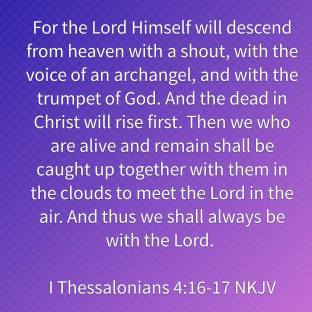

 Our worship was led by Gaius Douglas who preached from 2 Timothy chapter 3. Gaius challenged us by asking what we are doing for the Lord. Are we warning the people of the dangers? The God of eternity, who stepped into time and in the person of His Son died for our sins. Are you concerned for the people of Pembrokeshire, those heading for a lost eternity?
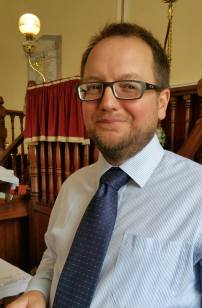 This morning’s service was led by Ian Middlemist who preached on Acts chapter 2 verses 37-38. Here Peter considers the person and work of Jesus Christ. He is not preaching to the marginalised, he is preaching to those who have crucified Jesus (v 36). He speaks to them directly, telling them they have killed Jesus. He accuses them of being complicit in killing a man – the Saviour, the one whom God had accredited as being the Lord of all, the Prince of Life. There is an element that each one of us placed those nails into Jesus’ hands. We are guilt of sin.
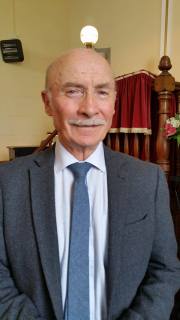 Worship was led by Norman Rees of Bethany Free Church, Clarbeston Road, Haverfordwest, who preached Genesis chapter 32.
  Worship was led by Gareth Evans of Port Talbot, who preached on Romans chapter 8 verses 18-27 – one of the most famous chapters in Scripture and one of the great theological chapters of the apostle Paul – from suffering to glory, from sin to holiness.
 Penuel Baptist Chapel, Roch