September 29th 2024: Bernard Lewis

To watch this service click on the link to our YouTube channel: https://youtu.be/QdrJah7oGCc?si=l0EKm9Rs6kr4Z8hV

1 Corinthians 1:10 – 2:5 Our Unchanging Message

I want just to focus on our unchanging message. We must never compromise the truth, but there must be a willingness to be all things to all men, “but we preach Christ crucified, a stumbling block to Jews and folly to Gentiles,” (1:23), “For I decided to know nothing among you except Jesus Christ and him crucified.” (2:2).

We live in a world that seems to have lost its moorings. Here in Wales we know the reality of churches closing. Some churches remain closed after Covid. Some men leave the ministry after moral collapse. It seems the foundations are being destroyed. Paul tells us to follow the example of Christ, who does not change. The gospel message does not change. Paul is confident we can go back to the Lord Jesus Christ and the truth of His word. We are not alone. He will never forsake us and will fulfil His purposes.

God’s unchanging purpose is still that lost sinners might be saved, “Where sin increased, grace abounded all the more.” (Romans 5:20b). The church exists for the glory of God and the salvation of sinners. How do we achieve our purpose? By never changing the message, showing there is a Saviour who can take the broken pieces of our lives and use them to His glory.

The unchanging pressure

 “For Jews demand signs and Greeks seek wisdom,” (1:22).

Every culture has its own form of opposing the gospel. Every generation has its own ways of saying, ‘We don’t want that! Do it this way.’ When Paul wrote to the Romans he said, ‘Don’t let the world squeeze you into its mould,’ “Do not be conformed to this world, but be transformed by the renewal of your mind, that by testing you may discern what is the will of God, what is good and acceptable and perfect.” (Romans 12:2). Throughout history God’s prophets have faced the same pressures (Isaiah, Amos). Throughout history people have said, ‘Don’t rock the boat. Don’t cause a disturbance.’ Jesus Himself faced pressure. When He fed 5000 people He began to show that people’s lives had to be changed. We are told in John 6, ‘Many turned away from them.’ Jesus actually said to His disciples, ‘Will you also turn away?’ People are compromising the truth, even within conservative evangelical churches. Are you going to turn away?

People compromise the truth because of the pressure of tolerance. It is not easy. The Christian Institute remind us regularly that there is pressure to ban so-called conversion therapy. If that comes in, in effect every preacher who declares that we are sinners and fallen short of the glory of God, that we need to change our ways, that we need to repent, everyone prepared to do that faces the risk of being arrested. Why? Because it goes against the flow. Friends, it is tough. In our day and age, Christianity is no longer the mainstream. The Christian principles are no longer the undergirding principles. We are supposedly those with hate speech.

How do we respond? With the unchanging message, “but we preach Christ crucified,” (1:23), “For I decided to know nothing among you except Jesus Christ and him crucified.” (2:2). Paul says this is his uncompromising, unchanging commitment. He will do things God’s way. Paul knew that his responsibility was to preach the Lord Jesus Christ. The One he had persecuted was the One he was to honour. He would not go in his own strength. The message was Christ – Christ crucified, dead, buried, risen, ascended into heaven, and the Holy Spirit.

Friends, we must remind ourselves constantly that we worship God in Trinity: Father, Son and Holy Spirit. The Trinity has one purpose – that God will be glorified, and sinners may be saved. God sent His Son. The Son came in obedience to the Father. The Son and the Father have sent the Spirit in order that God’s truth might go into our world. Paul was sent to preach Christ, but he was sent to preach in the power of the Spirit.

We live in a day when people are concerned to preach the word, but there is not that same emphasis in preaching through the Spirit. Without the work of the Spirit we will not understand. Paul and the other apostles knew the pressure of being told to tone it down. Obey the Lord rather than man.

“For I decided to know nothing among you except Jesus Christ and him crucified.” (2:2). Paul made a conscious decision. He faced this pressure. Paul loved his people, the Jews. His heart’s desire for Israel was they would be saved. He was prepared to lose his own salvation so that his own people might be saved. He knows he cannot succumb to pressure.

What is Paul committed to? “For I decided to know nothing among you except Jesus Christ and him crucified.” (2:2). Paul uses his words carefully. He uses the name of Jesus and the title of Christ. He calls Him Jesus because He came to save. “For God did not send his Son into the world to condemn the world, but in order that the world might be saved through him.” (John 3:17). Do you believe this? We have the solution to put this world right. This world will never be perfect until the Lord Jesus Christ returns. But every time there has been revival there has been a restoration of order within the wider culture. Jesus saves immediately, but He saves ultimately. He saves eternally. Therefore, when Paul says, ‘I’m going to preach Jesus Christ and Him crucified,’ he is saying, ‘There is a way to be saved.’

You will never find peace until you find it in the Lord Jesus Christ.

Christ is His title – the One anointed by God, set aside by God. The apostles faced pressure and the judgement the Jewish leaders wanted to out on them. They were told not to preach, but they turned around and said, “And there is salvation in no one else, for there is no other name under heaven given among menby which we must be saved.” (Acts 4:12). There is no other way to be saved but through Christ. He is the one that God has appointed.

The message is not only Jesus is Saviour, the only means of salvation, but it is Jesus Christ and Him crucified. He is the substitute, the only substitute. Writing 700 years before, Isaiah could say,

But he was pierced for our transgressions;
    he was crushed for our iniquities;
upon him was the chastisement that brought us peace,
    and with his wounds we are healed.”
(Isaiah 53:5).

My brothers and sisters in Christ, as the Holy Spirit deals with you, are there times that you feel so horribly filthy and think, ‘How can I call myself a Christian?’ Satan will use your conscience, and he will condemn you. But I want to say to you, ‘Look to the cross.’ Christ is no longer on the cross. He died and was buried. On the third day He arose. Death is conquered. The price has been paid. He ascended into heaven and is now seated at the right hand of God and continues to intercede for His people.

The letter to the Corinthians is a tragic letter. It shows us a church that was in a right mess. Paul deals with the different issues. But before he finishes his letter, as Paul draws things to a summary, he takes the Corinthians back to this glorious truth, “Now I would remind you, brothers, of the gospel I preached to you, which you received, in which you stand, and by which you are being saved, if you hold fast to the word I preached to you—unless you believed in vain. For I delivered to you as of first importance what I also received: that Christ died for our sins in accordance with the Scriptures, that he was buried, that he was raised on the third day in accordance with the Scriptures, and that he appeared to Cephas, then to the twelve.” (1 Corinthians 15).

The message has not changed. He lived in our place. He died for our sins. He bore our sins. He was raised. God in Trinity, Father, Son and Holy Spirit, was active in the resurrection of the Lord Jesus Christ. This is the unchanging message. This is the message 21st century Britain needs to hear.

The people in Corinth had been born into the immorality of Corinth. Corinth had a notorious reputation. Paul lists sins that will keep us out of heaven,  Or do you not know that the unrighteous will not inherit the kingdom of God? Do not be deceived: neither the sexually immoral, nor idolaters, nor adulterers, nor men who practice homosexuality, 10 nor thieves, nor the greedy, nor drunkards, nor revilers, nor swindlers will inherit the kingdom of God.  (1 Corinthians 6:9-10). Sin will keep us out of heaven. Sin will keep us out of the true church of the Lord Jesus Christ. Paul wrote a similar list to the Galatian church. But notice, Paul doesn’t stop there. He says, “And such were some of you.” (1 Corinthians 6:11). He is saying, ‘You were caught up in the immorality of Corinth.’ Today, people are up in the immorality of the 21st century.

Paul preaches the glorious message of the gospel. Do you understand the gospel? My sin, your sin, has been dealt with by the Lord Jesus Christ. You have been made holy, declared not guilty in the presence of God. Why? Because of the Lord Jesus Christ and Holy Spirit. When the Holy Spirit begins His work, He will often make you feel very uncomfortable, ashamed and broken. He is showing you your sin. But when you understand your sin, He will show you that it has been put on Him. He has died in your place.

In the compromise and the pressure of the 21st century, don’t compromise on this. Hold fast to it. Tell Roch, tell Haverfordwest, tell Pembrokeshire, tell the nations of the world that we have peace with God through our Lord Jesus Christ. To Him be all the glory and praise.
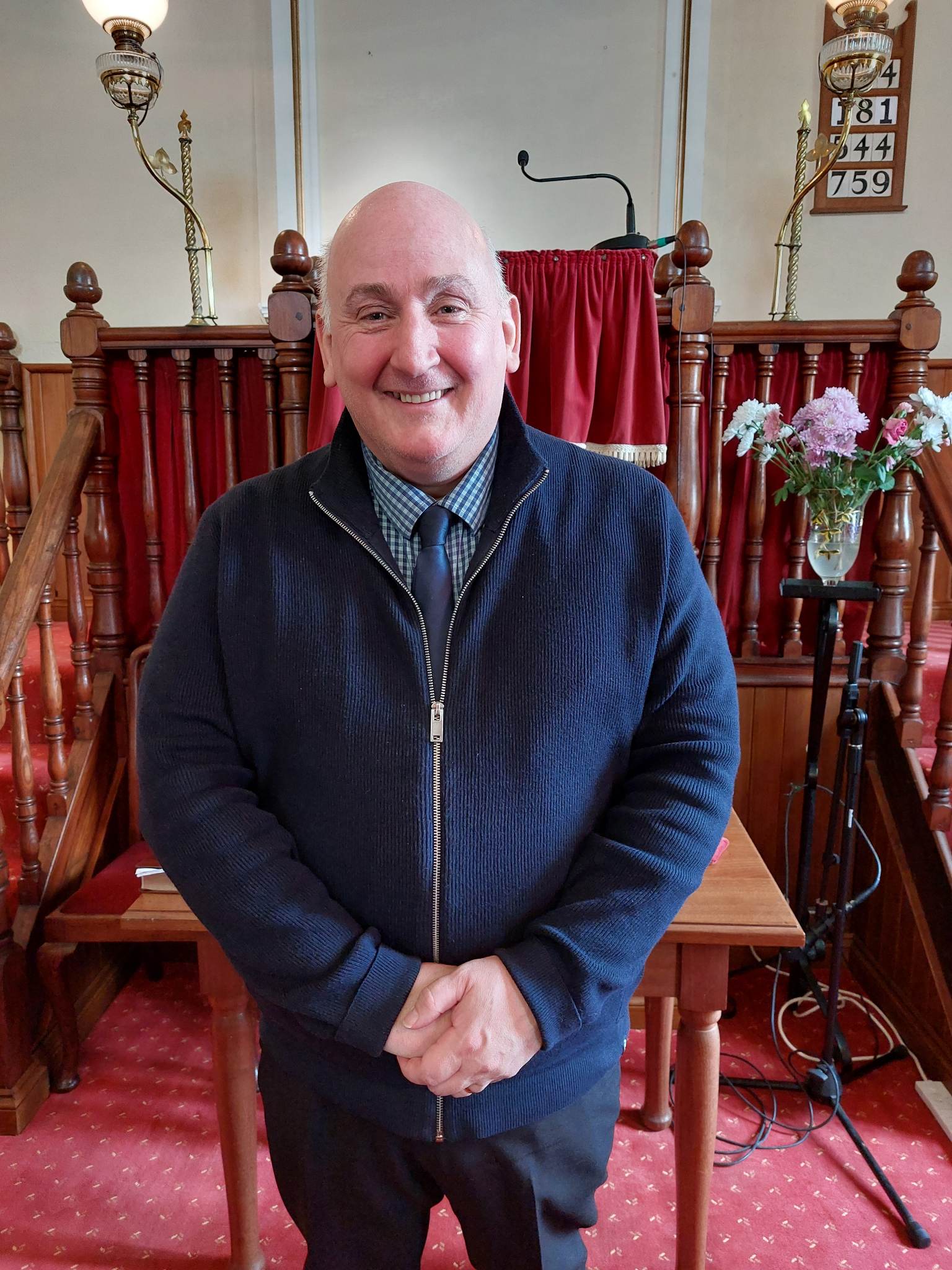
May 14th 2023: Andy Pitt

Matthew 10:1-15.

Introduction

              The passage we read comes at a transition point in the life of the disciples. Shortly after the pandemic hit we decided to do ‘live’ preaching online. I turned up at the church with another friend who was technically minded, and whilst we ‘socially distanced’ I started preaching. After about five minutes he began waving his arms at me, but I was in full swing, so I wondered what he wanted. Eventually I stopped to see what he was concerned about and then he said, “We haven’t gone live yet!” I was preaching to thin air! But that phrase, “We haven’t gone live yet” is relevant here. Up to this point the disciples had yet to ‘go live,’ but now they were to be sent and commissioned. They had been with the Lord for the best part of three years, they had heard His authoritative teaching, they had seen all the miracles He had done, and they had left all to follow Him, but they had yet to minister themselves. It was now time ‘to go live.’


We shall look at this passage with four key themes in mind:


1. The disciples were “sent out” (verse 5) with a divine commission.

2. They were given the same message that Christ originally preached (verse 7), so they had a clear message.

3. They were equipped and given authority (verses 1 and 8), because they had confirming credentials.

4. They were enabled and empowered to go (verses 9 to 15) so they had a confident faith & a settled contentment.

  1. A divine commission

The Lord calls to Himself the twelve disciples. Notice the transition between verses 1 and 2. In verse 1 we read that He calls “the twelve disciples to Himself, and then we find them referred to in verse 2 as “the twelve apostles.” They are no longer merely ‘disciples’ who were learning from Him, but were now ‘apostles’ which term means ‘sent’ or ‘commissioned.’ The Lord also, “Gave them authority to drive out impure spirits and to heal every disease and sickness” (verse 1). And so, He commissions them, giving them a precise mission. They were sent with His authority and were given supernatural powers. Now these apostles were unique. They were enabled to heal the sick and cast out demons but not all have been called in this way (1Corinthians 12:29,30). However, all Christians have been called and commissioned. So, what principles can we learn from this commissioning?

              These twelve apostles were sent out from their comfortable situation into a world of need. They were sent by the Lord and so were not individuals choosing to make a mark. We need to recognise the call of God, for every Christian has been called and commissioned. We are all called:

  • of Jesus Christ. (Romans 1:6).
  • to be saints. (Romans 1:7; 1Corinthians 1:2).
  • according to his purpose. (Romans 8:28).
  • sons of the living God (Romans 9:26).
  • into the fellowship of His Son, Jesus Christ our Lord. (1Corinthians 1:9).
  • to peace. (1Corinthians 7:15).
  • each one. (1Corinthians 7:17).
  • in the grace of Christ. (Galatians 1:6).
  • to liberty; only do not use liberty as an opportunity for the flesh, but through love serve one another.  (Galatians 5:13).
  • in one hope of your calling. (Ephesians 4:40).
  • in one body. (Colossians 3:15).
  • by our gospel, for the obtaining of the glory of our Lord Jesus Christ. (2Thessalonians 2:14).
  • with a holy calling, not according to our works, but according to His own purpose and grace which was given to us in Christ Jesus before time began. (2Timothy 1:9).
  • out of darkness into His marvellous light. (1Peter 2:9).
  • to His eternal glory by Christ Jesus. (1Peter 5:10).

The call upon these twelve disciples was specific. And our calling is specific too. But the precise details of what we are called to do is individual and must be worked out by faith as we walk with Christ in fellowship with one another. We are all commissioned of the Lord (Matthew 28:18-20).

              They were sent to a specific location. They were told not to go to the Gentiles nor to the Samaritans but only to “the lost sheep of Israel” (verses 5 and 6). There was a good reason for this; the Lord wanted the nation He had chosen to hear what the Messiah had come to say. We read in John chapter 1 that “He came to His own, and His own did not receive Him” (John 1:11). There would be time for the Gentiles to hear too, but now whilst He was on the earth He wanted Israel to hear His message.

              Now we, of course, are sent into the whole world with the one message of the gospel. We are not to be ashamed of the gospel as Paul tells us, for “it is the power of God to salvation for everyone who believes,” but we note with Paul that it was “for the Jew first and also for the Greek” (Romans 1:16). This is why the Lord sent the twelve out to “the lost sheep of Israel” first (verse 6). After the resurrection, the Lord spoke of the church being a witness “in Jerusalem, and in all Judea and Samaria, and to the end of the earth” (Acts 1:8). This is our mission field. To us individually we ought to start with our family and colleagues first, them to our neighbours and neighbourhood, and then out to the wider community (Pembrokeshire). In my home church we live in an area of 8,000 people. 45% of these are Muslims, although not all practising Islam. 30% of all are under the age of 20. We have got to know our community. The Lord trained the disciples over the three years and showed them their mission field. Do we know ours? The Lord was very clear about where the apostles were to go. He did not just leave them to get on saying “off you go,” but told them precisely where to go and how to go about this. Have we asked the Lord about our local mission field? To whom are we sent?

  1. A clear message

              The apostles were told to proclaim, “The kingdom of heaven has come near” (verse 7). Compare this with Matthew 4:17 where the Lord began His preaching by saying, “Repent, for the kingdom of heaven has come near.” They were also given authority (verse 1) as we too have been through the Lord’s great commission (Matthew 28:18,19). Our authority comes from the word of God. Our message must be the same. When I was at grammar school as a young boy we had strict teachers, so when a supply teacher came to sit in for one of our teachers who was elsewhere, we played up and gave them a hard time. The regular teachers had an air of authority about them which the supply teachers did not. Our only authority comes from the Lord and from what He says. If we stick to His message (the Bible) and speak from this, whether people hear or not, we will exercise authority.

              We are to preach “Christ crucified,” and we must not boast in anything “except in the cross of our Lord Jesus Christ” (1Corinthians 1:23; 2:2; Galatians 6:14). What is the message preached in your pulpit? What message do you proclaim? We do not need psychology, philosophy, politics, economics nor any other slant. The message must be the same as that which the Lord delivered, and which He called His apostles to deliver. There is salvation in, “No other name under heaven given among men by which we must be saved,” namely, Jesus Christ our Lord (Acts 4:12).

              But we are to preach to those to whom we have been sent. That is, to the people amongst whom we live and move. We must be careful that we are not preaching to those who ‘know the jargon.’ It is very easy to simply speak in language that the people around us cannot understand. The message can be lost amidst ‘doctrine and theology.’ That is not to downplay doctrine and theology. These are vital. But we are in a time when people know nothing of our doctrine and theology. It isn’t that they know little of it, they know nothing at all. Our message must be the same as Christ. It can only be from the word of God. But we need to speak clearly to the people, explaining the gospel in language they can grasp. We must still preach the word:

  • 28 Come to Me, all you who labour and are heavy laden, and I will give you rest. 29 Take My yoke upon you and learn from Me, for I am gentle and lowly in heart, and you will find rest for your souls. 30 For My yoke is easy and My burden is light.” (Matthew 11:28-30).
  • But God demonstrates His own love toward us, in that while we were still sinners, Christ died for us. (Romans 5:8).
  •  that if you confess with your mouth the Lord Jesus and believe in your heart that God has raised Him from the dead, you will be saved. 10 For with the heart one believes unto righteousness, and with the mouth confession is made unto salvation. (Romans 10:9,10).
  • Christ Jesus came into the world to save sinners. (1Timothy 1:15).

But are we speaking in ‘jargon’ or in language for the intellectual? People who come to our services express themselves in their own language, not in the language many reformed evangelical believers have learned. One woman said simply, “I want to know how to be clean, to be clean on the inside.” Later on, when she was converted she used terms such as ‘conviction of sin’ and ‘saved by grace’ and so on, but these were not the phrases she knew when she was seeking. Are we learning the language of our culture so that we can deliver the true gospel to be understood? We must stick with the revealed word of God. But we must reach out to a world that has no knowledge of God and His word. How are we doing?

  1. Confirming credentials

              Jesus knew that the apostles (and us) would hear responses such as, “Who do they think they are telling us what is true and right?” Now for these apostles the Lord gave them ‘confirming credentials,’ the signs and wonders. This was vital in the early days of the church. People ought to hear the message of God and repent, but these ‘confirming credentials’ were given to aid in their belief. What about today? Well, the whole point here is not so much the spectacle as the fact that God was compassionate for the people. He healed their sick and raised their dead. Apart from the fact that these were wonders proving His deity and demonstrating clearly the power of His word, they were done from love and in great compassion. Now we may well not be able to do such miracles. The Spirit of God knows how to dispense His gifts to His people and not all have such gifting (1Corinthians 12:29,30). But we can certainly go to the lost in compassion and love. We need to remember that on the night before He died the Lord taught the disciples how to serve by washing their feet and He said these words:

By this all will know that you are My disciples, if you have love for one another. (John 13:35).

A true and real love and devotion to the Lord as the centre of one’s life demonstrated by outward love for others is our confirming credential. We make a grave mistake if we think that a signs and wonders ministry is essential, for many saw these miracles but were not saved at all (Matthew 7:21-23). If people can see Christ in, and amongst us, and see His love displayed as it was whilst He was on earth, then we will be doing the Father’s will. The Lord says to us: “freely you have received, freely give,” (verse 8) and since we stand by grace and have been given an abundance, who are we to deny those around us? Let us have true compassion on the lost by taking this gospel to them seeking that they truly grasp it, never forgetting that these are our fellow men and women made in the image of God, but in great need (spiritually as well as physically). The most forgiving, gracious, and merciful people on this earth ought to be believers! Freely we have received! Oh what immense and abundant blessings we have been given! Let us spread abroad the great gifts and blessings of the Lord to a lost world.

              Now some focus on what is known as ‘the social gospel.’ They do a lot of good things and help people out in their physical needs. This is a good thing to do. But it is not the ministry of Christ. Christ came to save sinners. Christ came to give His life a ransom for many. He came with compassion and He healed and delivered, yes indeed, but His prime focus was upon the salvation of lost souls. We cannot walk by anyone in physical need (James 2:14-17). We ought to do what we can for them. But the most important thing is to speak out the gospel. Physical needs are seen and apparent, but everyone (despite how they appear) is in grave spiritual need. The rich and the great people among us are dead in trespasses and sins and are like lepers or paraplegics in a spiritual sense. We cannot see this easily, but it is a far more grave problem than those of a physical nature, (sickness, homlelessness, troubles). All need to repent of their sin and lost state because all are sinners who stand condemned and there is only One Saviour (John 14:6; Acts 4;12).

  1. Confident faith & a settled contentment

              Now the apostles were commissioned to go to the lost sheep of Israel but without money and without taking spare clothes (verses 9 and 10). The Lord says to them, “A worker is worthy of his food,”  and they were to seek worthy lodgings where peace might reside (verses 10 to 13). If any would not receive them they were to “shake off the dust” from their feet (verse 14), for such a place would stand condemned (verse 15).

              There are two main thoughts in these closing words of our passage. First the Lord will provide. The Lord gives the apostles specific instructions about how they were to travel, what they would eat and where they might lodge. All of this was in His care. We too have the same promise (Matthew 6:33). That does not mean we should not work but that we should recognise that all our provision and supply is in the hands of the Lord.

The second main thing is knowing when to walk away. Here the apostles were told to make inquiries about whom would be “worthy” in any given place and to remain there until they left (verse 11). But some of the houses would not be worthy and so the apostles were told to leave with their peace unreceived. Now we walk between taking the gospel to those who will not want to hear it but given time may well come to faith in Christ, and those who will never hear. How do we know the difference? We are to be merciful and forgiving, but there comes a time when we must walk away. One man gave me this advice in my early days, “Don’t waste time with time wasters.” This is a matter for discernment. There are those who join for an easy ride. They get attention and physical benefits (if we are caring and compassionate) but that is all they want. We must be patient and merciful, but we must be persuasive and firm too. Our mission is to call people into the ark of Christ. Noah was a preacher of righteousness (2Peter 2:5) and he built the ark for the saving of his household (Hebrews 11:7). We too are calling people into Christ and we work for the salvation of souls. Those who simply want the physical and temporal blessings will never come into the ark. So, ask the Lord for discernment as you seek to preach and live out the gospel in a compassionate and loving way.

  • We have been commissioned with a divine calling.
  • We have a divine message we dare not change but must seek to explain with clarity.
  • We seek to come in compassion as well as truth, for Christ came to save sinners.
  • We have been given all that is needed to carry out our commission for God is with us (Immanuel).