Good Friday 2017: Rev. Dr. Gareth Edwards

Isaiah 53. Mark 15:15-20

Easter - crosses

In the past few weeks we have seen again the suffering of the people of Syria. We’re moved to sadness seeing the plight of men, women and children as evil men inflict untold misery. It moves Donald Trump into action, it moves the world to condemn. Yet when it comes to watching the suffering of our Saviour, the world, even perhaps you and I, remain unmoved. Why? Because we are responsible for this suffering. To be moved would be to acknowledge our guilt. It is right that the world is moved to tears by the people of Syria, but, oh how we should be moved by the tears of Christ.

The verses in Mark 15:15-20 fulfil the prophecy of Isaiah 53. We must consider the awful reality of the Saviour’s sufferings and repent.

Isaiah 53-5

Isaiah tells us, ‘by His stripes we are healed.’ (Isaiah 53:5). The Saviour had already suffered; His face had been beaten beyond recognition ‘And some began to spit on Him and to cover His face and to strike Him, saying to Him, “Prophesy!” And the guards received Him with blows.’ (Mark 14:65). Now He is scourged. This was common practice so the person being crucified was weakened before the crucifixion. Many died at this stage. Jesus would have been stripped and forced to bend over and flogged with a whip of thongs, to which were attached metal and bone. In Jewish law a man could only receive 40 lashes, but in Roman law there was no limitation. Jesus would have been whipped until the flesh was removed from His back. Unimaginable pain and suffering.

What was the purpose? The Romans weren’t concerned with God’s purpose. Jesus was so brutally beaten and whipped as punishment for your sin and mine. ‘Then I will punish their transgression with the rod and their iniquity with stripes.’ (Psalm 89:32). By His suffering our sin is forgiven. As horrendous as this description of the Lord’s suffering is, it doesn’t tell us of the depth and anguish of His soul as He bears the wrath of God against your sin and mine. Each stroke was blow from God for a punishment for my sin. The healing was only made possible because of the great sufferings of Christ, ‘by His stripes we are healed.’

This picture of Christ’s mutilated body should cause us great sorrow. We take sin so lightly, we excuse it. We see its true significance here. Sin is an affront to God’s nature, the most sickening sight. It must be punished. Every fibre cries out justice for your sin and mine. It demands the sufferings of hell. The Lord Jesus Christ suffered hell for your sin and mine. We must despise sin and repent of it. Trust in Christ and receive the forgiveness His sufferings alone can bring.

Isaiah also says Christ was, like a lamb that is led to the slaughter.’ (Isaiah 53:7). The Lord had been bound and led around all night, dragged from one place to another. Here again, in Mark 15, we see Him being dragged around by the soldiers, first led to the barracks, ‘And the soldiers led Him away inside the palace (that is the governor’s headquarters), and they called together the whole battalion.’ (Mark 15:16). They spitefully abused, mocked and spat at as they degraded Him. Then they dragged Him out to be crucified, ‘And when they had mocked Him, they stripped Him of the purple cloak and put His own clothes on Him. And they led Him out to crucify Him.’ (Mark 15:20). This glorious Lord subjected Himself to be led about like a common criminal. He willingly submits. Why? Because He willingly agreed to do His Father’s will, to submit to God’s punishment for your sin and mine, ‘like a lamb that is led to the slaughter.’

Isaiah 53-7

Jesus did not resist or reject because, in love, He was going to die for me and you. What great love Christ has for us that He could endure such treatment. It’s impossible for us to see our Saviour’s willingness to die for us not to render ourselves completely to Him. He loved me so shouldn’t I love Him with all my heart, all my being, all my life? Should I not worship Him, praise Him, serve Him and love Him?

The Saviour’s experience reflects the reality of sin in hell. There is no freedom in hell, no possible escape. The opportunity for freedom lies this side of the grave. It is Good Friday because it’s the day in which the hope of Salvation came to those in bondage and set them free to serve Him. The Lord was bound so that we might go free.

‘He was despised and rejected by men.’ (Isaiah 53:3). We have already seen in Mark 14:65 that Jesus had already been mocked by the soldiers of Herod, He was now treated with contempt by the Roman soldiers. This was prophesied in Mark 10: 33-34, ‘See, we are going to Jerusalem, and the Son of Man will be delivered over to the chief priests and the scribes, and they will condemn Him to death and deliver Him over to the Gentiles. And they will mock Him and spit on Him, and flog Him and kill Him. And after three days He will rise.’ The Romans despised the Jews, so when the Roman soldiers had the opportunity they took great delight in ridiculing them. Now, even though Jesus was innocent, they call out the whole cohort, about 600 men, to mock Jesus. They dress Him as an emperor and mock Him as if He is a king. Mixed in with this sport was further cruelty as they force a crown of thorns on His head. They spit their revulsion in His face, then they put His own clothes back on Him and take Him to be crucified. ‘He was despised and rejected by men.’

The young Campbell Morgan, after passing his doctrinal exams to become a minister, then had to preach a trial sermon. After being told he was not successful, he wrote to his father one word, ‘Rejected.’ His father’s immediate response: ‘Rejected on earth. Accepted in heaven.’ Campbell Morgan went on to become a great evangelist. We are only accepted in heaven because Christ was rejected on earth. Those who mocked Jesus as the King of the Jews will have to face Him as the King of Glory. One day they will bow the knee and be filled with awe and fear at His appearance. And so it will be for all those who mock Christ today. What degradation that Jesus endured – not only physically assaulted but psychologically abused as well. He emptied Himself of all majestic glory in paying the price for our sin. Again we see that the penalty of sin is extreme – because sin is extreme. It’s the extreme rejection of the goodness of God. It justly deserves the wrath of God. The terrifying thing is those who despise and reject Christ today will be despised and rejected by God for all eternity. What a terrible fate! If men would just humble themselves before the Lord they will know the love and acceptance of God for eternity.

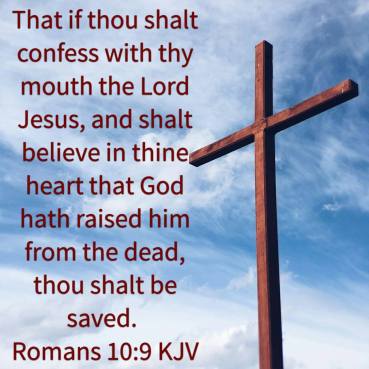
Romans 10-9 KJV

In Christ’s suffering we see how real our sins are, for His punishment is the punishment of our sin. We see in Christ’s suffering the greatness of His love for us. He willingly bore the torture of punishment that we might be forgiven.

Gaze upon Him and marvel that for us, He died. ‘Truly, truly I say to you, whoever hears my word and believes Him who sent me has eternal life. He does not come into judgement, but has passed from death to life.’ (John 5:24).
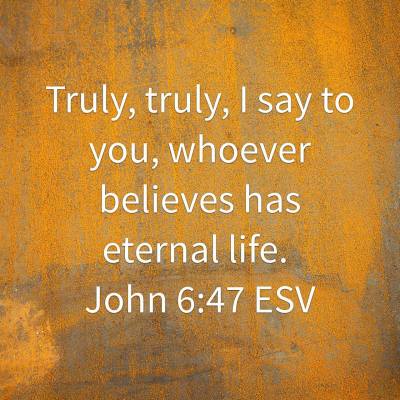
John 6-47

9th April 2017: Gaius Douglas

Luke 19: 11-27

A survey carried out by the BBC and reported on this morning’s news has suggested ‘a quarter of people who describe themselves as Christians in Great Britain do not believe in the resurrection of Jesus.’ Furthermore, ‘exactly half of all people surveyed did not believe in the resurrection at all.’ This brings to mind Romans 10:9 

Romans 10-9 KJV

‘Occupy till I come.’ On the authority of the Word of God, if Christ is was not raised from the dead then there is no life. Some people can take a bit of the Bible and not accept it. You cannot do any work for the Lord Jesus Christ if you don’t believe in the Bible. You can’t be a Christian if you believe in only parts of the Bible. The Word of God is living. If you know Christ, you are indwelled by the Father, Son and Holy Spirit. Jesus said to Philip, ‘Have I been so long time with you, and yet hast thou not known me, Philip? he that hath seem me hath seen the Father; and how sayest thou then, Shew us the Father?’ (John 14:9).

In the parable in these verses the nobleman, before travelling to a far country, ‘called his ten servants, and delivered them ten pounds, and said unto them, ‘Occupy till I come.’ (Luke 19:13). The number 10 in the Bible speaks of God’s authority. ‘I am the LORD, and there is none else, there is no God beside me.’ (Isaiah 45:5). This is the God we serve. Not even Satan in all his power can do anything to you without God allowing it.

“Occupy till I come.” (Luke 19:13) Are you occupied? Are you looking forward to the Lord Jesus Christ, to seeing Him, to His coming? In the very last prayer in the Bible we read, ‘Even so, come, Lord Jesus.’ (Revelation 22:20). When Paul introduces the remembrance of the Lord we again read, ‘For as often as ye eat this bread, and drink this cup, ye do shew the Lord’s death till He come.’ (1 Corinthians 11:26). He is coming! Whether we are looking forward to it or not, He will come to receive us to Himself. He has redeemed us, not for this world, but for Him. Wonderful! We shall be like Him forever. Pray the reality of His coming will take us away from our circumstances. The cry of our heart should be, ‘Even so, come, Lord Jesus.’ (Revelation 22:20).

‘Occupy’ is not a passive word, it is active. We are doing something for Him. In this parable the nobleman chose ten servants. He gave them a £1 each and said, ‘Go and do something with it.’ Nine of them used their initiative, one of them did not. One of them thought, ‘There’s a risk. Let me weigh up the master’s character – he’s an austere man.’ Are you frightened of your Saviour? If so, you don’t know Him. The servant wrapped up the coin he had been given and put it away, making sure no-one touched it. In the past many kept the Bible under lock and key so the masses could not read it. So often we keep the Word of God under lock and key.

What has Christ done to your soul? He has saved it by grace – not because of anything you and I deserve – it’s for His glory. He saved us because He loves us, He bore our punishment and redeemed us. Now He wants us to do something for Him – to occupy till He comes.

The Lord gave the ten people in this parable something to do. He had redeemed them and brought them into newness of life. He gave them something and wanted them to do something for Him. Occupy. Do we take an interest in the Word of God? If Christ has done something in your heart you should be able to say, ‘I love the Lord Jesus.’ So many of us are like the last servant, we wrap up the Word of God and blend into this world. There was a time when Peter blended into the people, when he denied the Lord. So often we just want to blend into the world, we don’t want to be different. If you say, ‘I can’t testify for the Lord,’ you don’t know the Lord. The Spirit of the Lord is there to give you the words. If you love Him, don’t wrap Him up. The Spirit of God gives you the liberty to tell others about Jesus Christ.

The Lord says to this servant that he was one of his. He wasn’t lost. Which of the servants are you like? If you want to be like the first servant, pray. So many of us are like the last servant – we don’t want to stand out, we’re not occupied. The Lord used the servant’s own words to condemn that man. ‘And he saith unto him, “Out of thine own mouth will I judge thee, thou wicked servant. Thou knewest that I was an autere man, taking up that I laid not down, and reaping that I did not sow: Wherefore then gavest not thou my money into the bank, that at my coming I might have required mine own with usury?”’ (Luke 19: 22-23)  (ursury – interest).

When the Lord sends us into His vineyard, He sends us where He has already sown, ‘Lift up your eyes, and look on the fields; for they are white already to harvest.’ (John 4:35). We are to reap. We just need to open our mouths and say, ‘Jesus loves you.’

Christ has gone out of His way for you. He gave His life for you. What are you going to give Him? What are you doing to tell others that Jesus saves? What are you doing to save them from hell? He says ‘Occupy till I come.’

The servant lost the joy of his salvation. When we miss opportunities we lose something of this joy. Psalm 51 was a psalm written by David after he had committed the sin of sending Uriah into battle, after sleeping with Uriah’s wife. The Lord was angry with David. David cried, ‘Restore unto me the joy of thy salvation; and uphold me with thy free spirit.’ (Psalm 51:12). This man had lost something of the joy of his salvation. We are told in Philippians 4:4, ‘Rejoice in the Lord always.’ If we’re not rejoicing in the Lord we will struggle to tell others about Jesus. We are not living in the blessings that He’s bestowed upon us. Jesus doesn’t want us to lose the joy of salvation. Hopefully, the last servant went away realising what he had done so he might enjoy the blessings and bounty of Christ. The Lord gave equally to all His servants. When we get to glory we will all be equal. Those who are barely saved are brought in. His grace has saved us and He will never take away that salvation. If the Lord gives us a testimony and we don’t use it He will take it away and give it to someone else, He takes away and gives to those who will make use of it, not someone who will hide it. The joy and testimony will diminish   – but Salvation remains.  The challenge is ‘What are we doing with the £1?’ What are we doing with what God has put in our hearts?


April 2nd 2017: Matthew Maxwell-Carr

Looking at Christ produces radiance on the face because it brings rest on the heart. Just by looking at Christ rest comes immediately. A look at Christ does something to the heart and you’re not ashamed anymore because you don’t fear God will fail you or let you down. The biggest battle you and I face now is the battle with sin – the sin of all sins  is unbelief. It’s so natural to disbelieve and doubt because we’re sinners. Daily, how do we deal with this? Read the Bible? Pray? Look to Him is the answer, fix your eyes on Jesus Christ. He’s the answer to everything we need. A look at Jesus cures it all. This is what it means to walk in the power of the Holy Spirit. Paul directs us to the Holy Spirit, to walk in the Holy Spirit, to live by faith in Jesus Christ. He emits the Holy Spirit.

Paul says ‘the fruit of the Spirit is love, joy, peace, longsuffering, kindness, goodness, faithfulness, gentleness, self-control.’ (Galations 5:22). These are all divine qualities. The Lord puts us all through trials and difficulties. The Lord wants us to have divine peace – peace in the midst of the storm. Keep your eyes on Jesus to have divine peace.

In Numbers 21: 4-9 we read  how the people were discouraged because they took their eyes off Christ, And the people spoke against God and against Moses: “Why have you brought us up out of Egypt to die in the wilderness? For there is no food and no water, and our soul loathes this worthless bread.” (Numbers 21:5). When the Israelites took their eyes of Christ this affected their relationship with God and with Moses. Their ingratitude is seen in their complaining and worry. Can you identify with that? I can! ‘So the LORD sent fiery serpents among the people, and they bit the people, and many of the people of Israel died. Therefore the people came to Moses, and said, “We have sinned, for we have spoken against the LORD and against you; pray to the LORD that He take away the serpents from us.” So Moses prayed for the people. Then the LORD said to Moses, “Make a fiery serpent, and set it on a pole; and it shall be that everyone who is bitten, when he looks at it, shall live.’ (Numbers 21: 6-8). Here we see the antidote to the problem. How does God deal with this? ‘… when he looked at the bronze serpent, he lived.’ (Numbers 21:9). The people had venom coursing through their bodies. The pole reminds us of Christ lifted up. Moses lifts the serpent up, those who look at it live. Look and live. That is the Christian life. Every look at Jesus Christ produces life. You are saved by faith alone, by resting in Jesus Christ. Look and you will live. It seems ridiculous to us that looking at a serpent could bring life, but that is the way of God.

2 Chronicles 12 is a chapter well worth reading. It is very encouraging. Here we see that to win victory all that was needed was praise. The people had tambourines out and were marching. The Lord Himself defeats the enemies – just because the people gave praise. We read in verse 5 that Jehoshaphat pleads to God because they are in difficulty. In verse 12 they cry out, ‘We do not know what to do, but our eyes are upon you.’ Let the Lord move you by the Spirit. Trust in Him.

‘You will keep him in perfect peace, whose mind is stayed on you, because he trusts in you.’ (Isaiah 26:3). You, me – we don’t keep ourselves in peace, perfect peace is from the Lord. Our responsibility – ‘whose mind is stayed on you.’ Stay your mind on the Lord Jesus. Trust in Jesus every moment of your life.

‘Come to Me, all you who labour and are heavy laden, and I will give you rest. Take My yoke upon you and learn from Me, for I am gentle and lowly in heart, and you will find rest for your souls.’ (Matthew 11: 28-29). Rest isn’t our focus, peace isn’t our focus, our focus is Jesus. He will sort the rest and peace out. The human condition is unrest. Jesus Christ is the medicine.

‘But immediately Jesus spoke to them saying, “Be of good cheer! It is I; do not be afraid.” (Matthew 14:27). In our Christian life Jesus wants us to be fearless. As Jesus walked on the sea the storm raged. Peter experiences the supernatural, keeping his eyes on Jesus. Jesus was the focus. ‘So He said, “Come.” And when Peter had come down out of the boat, he walked on the water to go to Jesus.’ (Matthew 14:29). When Peter looked at Christ the power of the Holy Spirit supported Peter so he could do the supernatural. But then everything goes wrong, ‘But when he saw that the wind was boisterous he was afraid; and beginning to sink he cried out, saying, “Lord, save me!”’ (Matthew 14:30). Peter saw the wind. He turned his eyes away from Jesus and this produced unrest in his heart. He cried out to the Lord to save him. He still had a little bit of faith. Even when we fail, Jesus still comes. ‘And immediately Jesus stretched out His hand and caught him, and said to him, “O you of little faith, why did you doubt?”’ (Matthew 14:31). Why do we doubt? Things get on top of us because we are fallen, sinners. Look at Jesus and He will conquer unbelief and unrest. He will sort everything out, we just need to look to Him.

Paul says whatever is not of faith is sin. Look to Jesus and H e will help you sort out all the rubbish. ‘I have been crucified with Christ; it is no longer I who live, but Christ lives in me; and the life which I now live in the flesh I live by faith in the Son of God, who loved me and gave Himself for me.’ (Galations 2:20). This hits the nail on the head. The great apostle Paul lived his life by faith in the Son of God who loved him and gave His life for him. Look to Jesus.

March 26th 2017: Ian Middlemist

Ian March 26th 2017Matthew 13:24-43

We live in a quick fix world, wanting solutions at our fingertips. In Matthew chapter 11 people wanted to know if Jesus really was the Messiah when there were so many being faced. In verse 35 Matthew links the parables to the prophet; we are to know God through the teaching of the parables, ‘This was to fulfil what was spoken by the prophet: “I will open my mouth in parables; I will utter what has been hidden since the foundation of the world.”’ (Matthew 13: 35).
In this passage we have three parables of encouragement:
in times of trouble (The parable of the Weeds)
when there is little growth (The Parable of the Mustard Seed)
when the good work seems to be hidden (The Parable of the Leaven).

  • The Parable of the Weeds (Matthew 13: 24-33 & 36-43).

In this parable we see the challenge of troubles. Matthew probably refers to a weed that resembles wheat and is very plentiful today in Israel, the seed of wild rice grasses. The difference between the weed and wheat is only noticeable when they mature. When the servants first notice the weeds they question the quality of the seed. When they are told it’s been planted by the enemy they want to get rid of it. The master wants to restrain the servants, letting both plants grow together. Over time they will be identifiable. Today we have the church against the world. Later Jesus will send His reapers, His angels. Jesus identifies Himself as the sower, the enemy is the devil and the field is the world. Some teach we should welcome all into the church, we shouldn’t be worried about purity, church discipline is not to be thought of too much. This is entirely unscriptural. Jesus teaches how important church discipline is. Jesus says there is to be no immediate judgement. A premature judgement will ruin the crop. God’s way is to have the gospel preached to an unbelieving world whilst the enemy does his work. God has permitted the church and evil to grow together. A harvest will come at the end of the age, when there will be eternal judgement, ‘The Son of Man will send his angels, and they will gather out of his kingdom all causes of sin and all law breakers, and throw them into the fiery furnace. In that place there will be weeping and gnashing of teeth.’ (Matthew 13:41-42). However, be encouraged, ‘Then the righteous will shine like the sun in the kingdom of their Father. He who has ears, let him hear.’ (Matthew 13:43).

  • The Parable of the Mustard Seed (Matthew 13: 31-32): Smallness

The second parable is about the smallness of the kingdom, when there seems to be little growth. The mustard seed is small, we feel ourselves so small, wanting to be bigger. We may look to super churches, wanting our own church to be bigger. However, small things can have a big impact. Jesus encourages His disciples by telling them the kingdom will grow. Size is not important but growth. From small beginnings there is growth, just as Daniel saw the kingdom’s growth to include many nations. Christ’s kingdom is such; we may have small beginnings but there is always growth when you have the Holy Spirit. Here is a living seed, very small, but awakened. It grew. We may feel our days are small, this cuts our desire to preach the gospel, reduces our resolve to move forward. It can narrow our vision, we become satisfied with our smallness. But Jesus says there will be growth. Our God is gracious, be encouraged. He will build His church. We must keep on preaching the gospel, believing others will be saved. Expect growth because Jesus has determined there will be growth. Be encouraged!

  • The Parable of the Leaven (Matthew 13:33) Hiddenness

This parable has caused a lot of controversy; in the Old Testament leaven was associated with evil. Many have taken this parable as corruption of the church, and that a new, pure church needs to be started. However, there is only one church – God’s people redeemed by Christ. The world encapsulates false churches and we must have nothing to do with them. Part of the challenge of living with the weeds is to be discerning. The New Testament church remains under the Lordship of Jesus Christ. There will be no corruption of the true church. Biblical symbolism does not always have the same meaning in all circumstances. Look at the context.

Jesus is encouraging His disciples here. In this parable there is a small amount of leaven, of yeast. There is a lack of outward and obvious success. The woman in this parable hid the leaven in the mixture. The word of God is within, we are to hide the word of God in our hearts. We must seek the Holy Spirit deep down in our hearts, keep it treasured. The word of God must change us from within. Don’t be concerned for outward success, seek from within. Is there a work of grace going on in our hearts?

The three parables are parables of encouragement. There is no quick fix, no sweeping away of unbelief. In spite of smallness, Christ’s kingdom will come on earth. None will be able to stop its flow, until the end of the age when there will be righteous judgement.


March 17th 2017: Ian Middlemist

Ian - March 17Joshua 6: The ‘Battle’ of Jericho

The gospel message can be summed up in the words, ‘In my place condemned He stood; sealed my pardon with His blood.’  He’s done it all for us! We find that in the history of God’s people, from Adam and Eve being provided with garments, the provision of the Ark for Noah, the rescue of Lot, God providing for Joseph, Jacob and family, to the land given to the Israelites, as promised.

The amazing thing in Joshua 6, the Battle of Jericho, is that there was no battle! God gave Jericho into Joshua’s hands. In the New Testament, in Hebrews, we read the wall of Jericho fell down by faith, it was the Lord who did it all, ‘By faith the walls of Jericho fell down after they had been encircled for seven days.’ (Hebrews 11:30).

Joshua 6 is a wonderful narrative of a great victory – the grace of God working and the powerful judgement of the Lord. Jericho was not a particularly large city, about 7 acres in total. It was a strong fortress. It was shut up, secure, no-one could go in or out, ‘Now Jericho was shut up inside and outside because of the people of Israel. None went out, and none came in.’ (Joshua 6:1).

This was a classic siege. Jericho was on the road to the mountains. It geographically affected the tactics; if Israel was to capture the hill country, it needed to defeat Jericho. Joshua’s strategy began and ended with the Lord. Yes, there were armed men, but they were followed by priests carrying huge trumpets, not swords. The trumpets were the ones used to announce the year of Jubilee throughout the land – the presence of God’s kingdom. The Ark of the Covenant was prominent as they were marching, behind which were armed men and the people. The people’s whole focus was centred on the power and presence of God.

When we think of the cross of Jesus Christ, how could a man, bleeding and dying, destroy the dark powers of Satan? How could the cross destroy sin and death? In Joshua 6 we see an example in what God does again and again in the history of redemption. Our weapons are not swords, it is our humble Christian testimony of our broken and fragmented lives lived in unity with Christ. Our great weapon is prayer. God takes the foolish things of this world and confounds the mighty and strong.

The salvation of Rahab. How was Rahab delivered? ‘But Rahab the prostitute and her father’s household and all who belonged to her, Joshua saved alive. And she has lived in Israel to this day, because she hid the messengers whom Joshua sent to spy out Jericho.’ (Joshua 6:25). She was saved because she hid the men who Joshua had sent. She didn’t merit salvation, ‘You see that a person is justified by works and not by faith alone. And in the same way was not also Rahab the prostitute justified by works when she received the messengers and sent them out by another way.’ (James 2:24-25). Rahab demonstrated her faith in the amazing promise the spies had brought her. She was brought out with her faith (Joshua 6:23).

Because she was unclean she was set outside the camp, then brought back in because she was now clean, fully part of the people of God. In chapter 2 it seems as if the spies knocked on a door and there, by chance, stood Rahab. Rahab herself explained that this wasn’t the situation (Joshua 2:10). She had heard of Yahweh, the eternal God of great deeds. The citizens of Jericho had heard of what the Lord had done but only Rahab believed and wanted a sure sign. She pleaded for God to have mercy on her.

David, in Psalm 51, also pleads for mercy, ‘Have mercy on me, O God, according to your steadfast love; according to your abundant mercy blot out my transgressions. Wash me thoroughly from my iniquity, and cleanse me from my sin!’ (Psalm 51:1-2). Rahab’s family was the only family to turn in faith, that He might show mercy on them. If you appeal to God’s grace you can be saved, the arms of the Lord will welcome you. Rahab received mercy from a gracious God.

There is something deeply disturbing about what happened to the city of Jericho. The people were slaughtered – women and children. Only gold and silver were taken out for the treasury of the Lord. The scriptures have set this up – it’s not covered up, it’s spelt out in detail. It’s a totally righteous judgement. Jericho was ‘shut up’ (Joshua 6:1). If the city opened up its gates and pleaded for mercy, then mercy it would have received. But the people’s hearts were hardened and would have nothing to do with God. The worst judgement – hell’s eternal agony for all who reject Him. When we see our Saviour crying out, ‘My God, My God, why have you forsaken me?’ (Matthew 27:46), we begin to appreciate the depth of the righteousness of God.

When Christ comes, this is how it will be: when Jesus heals He restores. He will utterly destroy everything that stands in His way. The wall of sin is broken down by the cross. We live in gospel days. Today is the day of salvation. But death is near. People are interested in the materialistic things of this world, but the judgement of God is coming, there is no escape. We long for our friends to take hold of the promises of God. We must pray that they might be rescued from the coming judgement.


12th March 2017: Pete Hilder

John 6: 1-40

Pete Hilder - March 2017The miracle of the feeding of the 5,000 is in all four gospels. Here, in John 6, we read of three miracles: Jesus feeds the 5,000, Jesus walks on water and is verse 21 the disciples were teleported to their destination. The disciples had rowed for hours, making little progress, then Jesus teleports their boat, ‘Then they were glad to take him into the boat, and immediately the boat was at the land to which they were going.’ (John 6:21). The disciples had experiences three miracles, now the crowd expected one.

As they arose the next day the crowd wondered where Jesus was. Only one boat had left and that just had the disciples in. Where did Jesus go? Knowing the disciples were in Capernaum, the crowd decided to go travel there in boats. They put effort in to find Jesus. ‘When they found Him on the other side of the sea, they said to Him, “Rabbi, when did you come here?”’ (John 6:25). This may have had a tinge of annoyance. They wanted Jesus as their king but He had wandered off. ‘Perceiving then that they were about to come and take Him by force to make Him king, Jesus withdrew again to the mountain by Himself.’ (John 6:15). Jesus, in His answer, doesn’t seem to be very impressed, ‘Jesus answered them, “Truly, truly, I say to you, you are seeking me, not because you saw signs, but because you ate your fill of the loaves.”’ (John 6:26). They were seeking Him but their motives were wrong; they wanted an experience. They wanted more of what they had. We can be like that – searching for the experience. Jesus uses the bread as a spiritual picture, ‘Do not work for the food that perishes, but for the food that endures to eternal life, which the Son of Man will give to you. For on Him God the Father has set His seal.’ (John 6:27).


If you wanted bread today you would need money. The people talk about labouring for God, ‘Then they said to Him, “What must we do, to be doing the works of God?”’ (John 6:28). Jesus says no-one can earn this blessing. ‘Jesus answered them, “This is the work of God, that you believe in Him whom He has sent.”’ (John 6:29). God requires us to believe, we can’t earn this bread. We must trust in the Son. It is a gift we cannot buy.


Today, there is a best before date’ on a packet of bread. We check the label to see if it’s fresh and will taste good. Jesus says, ‘Do not work for the food that perishes, but for the food that endures to eternal life, which the Son of Man will give to you (v.27). Jesus speaks of a different bread, a bread that endures, it goes on for eternity, never needing to be replaced. But the crowd aren’t satisfied, ‘So they said to Him, “Then what sign do you do, that we may see and believe you? What work do you perform?”’ (John 6:30).  They want a guarantee. We can’t have a guarantee for a loaf of bread from a baker. The people wanted proof. They want heavenly bread that Moses gave, ‘Our fathers ate the manna in the wilderness, as it is written, “He gave them bread from heaven to eat.”’ (John 6:31). They had their own idea of how they wanted God to save them. We can be just like this ourselves, wishing we could have seen miracles during Jesus’ time. We want stipulate the way we want God to provide for us.

The manufacturer and the brand name. May be sometimes we go somewhere and have a really nice slice of bread or cake and we want the recipe or want to know what shop it came from. Jesus is saying to the people, ‘you’ve got the wrong manufacturer.’ ‘Jesus said to them, “Truly, truly, I say to you, it was not Moses who gave you the bread from heaven, but my Father gives you the true bread from heaven.”’ (John 6:32). It wasn’t Moses who gave the bread, but God. We need to realise there’s something far more special and wonderful to get right with God. ‘This is the bread that came down from heaven, not like the bread the fathers ate, and died. Whoever feeds o this bread will live forever.”’ (John 6:58). Ultimately, the bread of Moses did not save the people. We are to take the real heavenly bread – Jesus’ bread – the brand name we’re after. Jesus says, ‘I am the bread of life; whoever comes to me shall not hunger, and whoever believes in me shall never thirst.’ (John 6:35). He is the food we need for our souls.

Most of us have bread every day. If we lives in a less well-off culture we’d probably eat more bread, but we have more choice. Bread is a staple food. It equals life. This is the case spiritually speaking, it doesn’t cost anything, it endures. If we don’t have this bread we will starve. There is no other way of feeding our souls and sustaining a spiritual life. We must receive this bread.

What are the benefits of this bread? If you look at the details on the packet, you see the goodness and energy it provides. The benefits of Jesus’ bread is far more, it has wonderful spiritual benefits.

  • You shall not go hungry if you receive Jesus Christ. Spiritually speaking you won’t require anything else (v.35)
  • You will never thirst. (v. 35)
  • You’ll never be driven away from God, you’ll be welcomed in. (v. 37)
  • You’ll never be lost, you’ll be saved, secure. (v.39)
  • You’ll be raise up on the last day, it leads to the resurrection.

(v. 39)

  • You will have eternal life (v.40).

Isn’t this the quest of humanity? It is freely offered to you, a bread that gives eternal life. It has unique benefits, nothing else comes close.

Perhaps you’ve been let down. Sometimes food looks great but it lets us down, it hasn’t lived up to our expectations. But this bread has the name of the Father and the Son on it. He guarantees it. Jesus Christ, the bread of life, fulfils all of the above. Nobody can snatch us away, God is all powerful to do the things He has promised.


5th March 2017: Alan Davison

Luke 3:23 – 4:15: Satan tempts Jesus

alan davison march 17In our culture family trees are very popular. The Bible uses genealogies a lot. They were very important to the Jews; even in the time of Jesus, Salvation was thought to be dependent on being a Jew.

The temptation of Christ, as well as His baptism, are very important aspects of the gospels, being recorded in three of the synoptic gospels.. Luke alone inserts this genealogy between the baptism of Jesus and His temptation. Luke wants to make the point that Adam was the son of God. He did not have biological parents, therefore we can genuinely think of him as a son of God. Jesus is referred to as the last Adam, ‘And so it is written, “The first man Adam became a living being.” The last Adam became a life-giving spirit.’ (1 Corinthians 15:45-56 NKJV). We see both Adam and Jesus were tempted by Satan. Jesus overcomes but Adam fell.

At the beginning of Luke 4 Jesus is led into the wilderness by the Holy Spirit. The Spirit leads Jesus in His ministry, not into temptation. The Holy Spirit is present with Jesus during the temptations. It comes immediately after His baptism, where the Spirit is also present. There is a parallel in our own lives; we have a spiritual feeling that uplifts us. Satan attacks but the Holy Spirit is always present to help us.

The temptations are recorded in a different order in Matthew and Luke, but this is not important. What is important in both gospel records have the same details, are upheld and complement each other.

‘Being tempted for forty days by the devil. And in those days He ate nothing, and afterward, when they had ended, He was hungry.’ (Luke 4:2). 40 days is the practical limit for human endurance to go without food. Jesus responds with scripture to all of the temptations. He specifically quotes from Deuteronomy (the repetition of the law, used to explain laws to the lay men).

‘And the devil said to Him, “If you are the Son of God, command this stone to become bread.”’ (Luke 4:3). At first glance the temptation is about food, but it’s really about trust. Adam was tempted by food, this also was really about trust. Jesus’ trust is in the Father is being tested here, “If you are the Son of God.” Jesus, of course, responds with scripture, But Jesus answered him, saying, “It is written, ‘Man shall not live by bread alone, but by every word of God.’ (Luke 4:4). In the Garden of Eden, Eve did not quote exactly what God said, she didn’t fully trust in God but listened to Satan. Jesus’ response allowed no manoeuvre for Satan. Jesus was never really alone, neither are we.

Then the devil, taking Him up on a high mountHolyain, showed Him all the kingdoms of the world in a moment of time. And the devil said to Him, “All this authority I will give You, and their glory; for this has been delivered to me, and I give it to whomever I wish. Therefore, if You will worship before me, all will be Yours.”’ (Luke 4:5-7). Satan offers Jesus authority over all the kingdoms of the world. At the start of Job, notice that Satan cannot act until God allows him to. Satan opposes God. He is a powerful being – don’t underestimate him but don’t overate him. Satan offers Jesus absolute political and military authority. Many of Israel would have been happy with this but it would elevate Satan above God. Jesus rebukes Satan before quoting scripture. He will not only trust God the Father, but all the glory goes to the Father. ‘And Jesus answered and said to him, “Get behind Me, Satan! For it is written, ‘You shall worship the LORD your God, and Him only you shall serve.”’ (Luke 4:8). The coming of Jesus has changed the balance of power forever. Jesus gave power and authority to His disciples. We too can submit to God, in the name of Jesus, and have power over Satan. ‘Therefore submit to God. Resist the devil and he will flee from you.’ (James 4:7).

In Revelation 20 we read a long description of Satan’s efforts to rally against God, but it is all over in 2 verses (Revelation 20:9-10). Satan is so easily dealt with. For us, as believers, worshipping anything but God doesn’t make sense. To serve God is to be absolutely committed to Him and Him alone. Anything else is spiritual adultery.

‘Then he brought Him to Jerusalem, set Him on the pinnacle of the temple, and said to Him, “If you are the Son of God, throw yourself down from here. For it is written, ‘He shall give His angels charge over you, to keep you,’ and, ‘In their hands they shall bear you up, Lest you dash your foot against a stone.”’ (Luke 4:9-11). Satan’s final attempt – he offered Jesus a good reputation. He wants Jesus to put Himself first, even finding the nerve to quote a scripture. Satan quotes from Psalm 92: 11-12 ‘For He shall give His angels charge over you, to keep you in all ways. In their hands they shall bear you up, lest you dash your foot against a stone.’ However, when quoting, Satan deliberately leaves out the words, ‘In all ways.’ This changes the context of what he is quoting. Psalm 91 speaks of walking along a path, being supported as a friend would, giving you a shoulder to lean on. This psalm actually speaks of God’s care and attention, abiding in God’s will and not seeking our own way. We should seek for what God wants us to do.

God makes clear the sanctity of life. We do not deserve certain things. ‘Surely for your lifeblood I will demand a reckoning; from the hand of every beast I will require it, and from the hand of every man. From the hand of every man’s brother I will require the life of man. “Whoever shed’s man’s blood, by man his blood shall be shed; for in the image of God He made man.”’ (Genesis 9:5-6). Pride leads to destruction. ‘By pride comes nothing but strife, but with the well-advised is wisdom.’ (Proverbs 13:10). Strife comes because of our pride.

 The word ‘tempt’ could also be translated as ‘test.’ Jesus rejects the temptation, ‘And Jesus answered and said to him, “It has been said, ‘You shall not tempt the LORD your God.”’ (Luke 4:12). Jesus will not test His Father. Satan then retreats but seeks an opportune time to return again, ‘Now when the devil had ended every temptation, he departed from Him until an opportune time.’ (Luke 4:13). When we are tempted we too are to turn to the scriptures, to God. He provides His own way. We may also have opportunities to receive accolades and awards, but He alone is worthy to receive honour. Give glory to God. It is also good to have a good reputation but we ought to take care less we become proud.

Our original father, Adam, failed at the first temptation. We are all sinners because Adam sinned first. But Jesus resisted every temptation. He did so by using things which are available for us to use – He used the scriptures. Praise His Name.

26th February 2017: Ian Middlemist

ian-feb-17Ian preached from Matthew 14:22-33, Jesus walks on water.
There is no safety net in the Christian life, only eyes fixed upon Jesus Christ will save us. Ian gave three points on this scripture:

  • The Christ of Creation
  • A power to bestow
  • A faith to grow.
  • The Christ of Creation:

The disciples have been sent out after a great things has taken place – the feeding of the 5,000. Crowds were wanting the Saviour’s attention but He wants to withdraw, by himself, to pray. So the disciples were told to go out into the boat on the Sea of Galilee. A storm arose. There was a previous occasion, in Matthew chapter 8, where there was another storm. The storm here is very different. In chapter 8 the disciples were afraid for their lives. Here, in chapter 14 they are not so afraid of dying. In chapter 8 Jesus is in the boat. Here, initially, Jesus is nowhere to be seen. In chapter 8 all the disciples are named as being ‘of little faith.’ Here, in chapter 14, Peter receives special attention. Whilst all the disciples are important, there are times when Jesus’ focus is on one only. The Saviour is capable of dealing with the whole as well as the individual. He wants to do a work in our life, He cares about you.

In the storm, during the fourth watch, between 3 and 6 a.m., is often when the greatest trials take place; our struggles are often in the middle of the night. The night hours just seem to go on and on. The disciples had been struggling in the middle of the Sea of Galilee. God doesn’t let us rest, there is always more to be done – to teach us more and more lessons because of His great love for us. What brought fear to the disciples? ‘But when the disciples saw him walking on the sea, they were terrified, and said, “It is a ghost!” and they cried out in fear. (Matthew 14:26). The disciples thought this was a ghost but it was none other than the great I am.

They were terrified, shaken to the core because of the ‘ghost’ they saw on the water. We are reminded of Psalm 77:16 ‘When the waters saw you, O God, when the waters saw you, they were afraid; indeed, the deep trembled.’ The forces of nature are putty in God’s hands, they are under His sovereign authority.

  • A power to bestow:

Jesus reveals Himself, ‘But immediately Jesus spoke to them, saying, “Take heart, it is I. Do not be afraid.’ (Matthew 14:27). Jesus reveals Himself as a man of peace (Take heart), a man of power (I am), and a man of potential (Do not be afraid).

As we look on, Peter sees his great Saviour. Peter comes naturally to Jesus, wanting to follow his master’s footsteps. He sees the impossible taking place. He is quick thinking and wants to move. ‘And Peter answered Him, “Lord, if it is you, command me to come to you on the water.”’ (Matthew 14:28). He has no doubt that this is Jesus. What Peter is saying is rather, ‘Since it is you …’ He wants to follow His master. Jesus, after all, has told His disciples to do what He does. Peter now takes those first baby steps out of the boat. His eyes are fixed n Jesus, trusting in Jesus that He would keep him afloat. He too, keeps us afloat. What a miracle for Jesus to talk on water, but mightier still to make Peter walk on water. Do you see what great things Jesus will do for those who trust in Him? He will enable us to do those things that we once thought were impossible. He will carry us through the most trying times. Don’t be afraid, He will carry us through. Come to Jesus Christ, don’t hesitate. Give your life to Him.

  • A faith to grow:

We are not intended to walk on water, we are meant to walk on solid ground. We are designed to be on solid ground. Right now, God wants us to be in Penuel, serving Him. This is without doubt where we are meant to be this morning. The thrill of the Christian life is here in Penuel. Peter steps forward, walks on water but then gets into difficulty. Great difficulties will take place when we take our eyes off Jesus. Peter was easily distracted and became afraid – just as we become distracted. We need to fix our eyes on Jesus. Life can be so hard sometimes; we have immense challenges to face. These are the storms of life the scriptures speak of again and again. We need to fix our eyes upon Jesus. This is why coming to church is so good. Don’t be distracted by your circumstances. The trials of life are so tied to the power of Jesus Christ. Peter’s weak flesh gets the better of his willing spirit. Jesus sets His face towards Jerusalem, let’s fix our eyes afresh on Jesus.

We are constantly a mixture of belief and doubt. Jesus is my all, then He’s a big part of my life and then a small part of my life. The over-riding message of the New Testament is Jesus has got us safe and sound. We are precious to Him, even when we doubt He will never leave us, He will never let us go, He will never let us sink. Peter was rescued. Peter learns the message:

fix you eyes on Jesus,
He’s got you, even when you’re sinking.

We are also like Peter; we believe. His faith was small but he did believe. We’re safe because we have a Saviour. Jesus reaches out His hand and takes hold of us every single day. He will give us strength to perform great things in life – to say no to sin and to preach the gospel people aren’t interested in – not because we’re great, but because Jesus Christ alone is great and cares for us.


19th February 2017: Gerald Tait

geralt-tait-feb-17We recently welcomed Gerald Tait to take our morning service, when he preached from Luke 2:39-52, which he called ‘The eloquence of silence.’

Following on from the birth of Jesus there is silence until His ministry begins, except for one brief glimpse here. This silence must be respected. The gospels are a presentation of Jesus. Palestine was different in those days to what it is now. Jesus’ family chose to live in Galilee, in Nazareth, that the Old Testament scripture might be fulfilled – He would be a Nazarene. Nazareth had no major roads, it stood in the shelter of the hills where flowers bloomed. Jesus grew here as a child. This influenced Him. He talked about the countryside on many occasions.

This one glimpse of Jesus’ life is like a beacon. The family travelled about 80 miles for the Feast of the Passover in March / April. Thousands of people made a simple booth, a shelter to sleep in. The feast lasted 7 days. They went to the temple and offered sacrifices. Many bought 2 pigeons, unable to buy a lamb. Families reunited to worship in the temple. They would have experienced the wonderful singing of the Levitical choir. In these surroundings the boy Jesus is 12 years old. The service of Bar Mitzvah would have happened, when a boy becomes a man, when he becomes emancipated, no longer under his parents’ control. The interesting thing, when Jesus was found, He was subservient to them, He still obeyed them. His parents missed Him and searched for Him. The last place they looked for Him was God’s house. ‘And he said to them, “Why were you looking for me? Did you not know that I must be in my Father’s house?” (Luke 2: 49). Isn’t it true of us, when we are lost, often the last place we go to is God’s house?

Jesus then went back to Nazareth, to this quiet place. ‘For He shall grow up before Him as a tender plant.’ (Isaiah 53:2).

The eloquence of silence proves authenticity. The story would never have been invented like this; in a fictional world Jesus would have grown up in a palace. The silence stops invention.

It all clicks into place. It’s another 16 years until Jesus comes on to the scene again. John the Baptist prepare the way for Jesus. They grew up as cousins. There comes a time when Jesus comes alongside John and asks him to baptise Him in the Jordan. The silence gives a platform for the great announcement from heaven. When Jesus came out of the water, the heavens break open, ‘And the Holy Spirit descended in bodily form like a dove upon Him, and a voice came from heaven which said, “You are My beloved Son; in You I am well pleased.”’ (Luke 3:22). What could our heavenly Father be well pleased with? The silence of these years prove Jesus’ humility and dignity.

‘Therefore we also, since we are surrounded by a great cloud of witnesses, let us lay aside every weight, and the sin which so easily ensnares us, and let us run with endurance the race that is set before us, looking unto Jesus, the author and finisher of our faith, who for the joy that was set before Him endured the cross, despising the shame, and has sat down at the right hand of the throne of God.’ (Hebrews 12:1-2). Don’t be distracted by the things of this world. Listen and look for Jesus, who will be a blessing to you. His ministry will lift you up, He will lift the broken reed. The greatest discovery we can make is that He is always there to receive us. If we love and know the Lord Jesus He will become such a reality to us that we will hear His voice wherever we are.

On the transfiguration the silence was broken again. From the silence and eloquence of that, we come to the majesty of God. Listen to Him.

12th February 2017: Mike Viccary

Mike preached from Isaiah 2:1-5. He began by saying that Isaiah is known as the fifth gospel. It is not just a collection of sermons. The opening chapter brings Isaiah’s message to the kings of Judah and Jerusalem.

The prophet begins his message on what we would call a bit of a ‘downer.’ He has the Lord in a courtroom scene. The Lord has a word against the people. He sets the word quite sharply. Mankind is in a desperate state because he does not know God. We were created to be in a relationship with God. The prophet goes on to talk about man’s lost state, a degenerative condition. The implications of sliding into sin has an effect on the nation. The nation is also under condemnation; we have a terrible picture of Zion as a little shack in a vineyard. ‘Daughter Zion is left like a shelter in a vineyard, like a hut in a cucumber field, like a city under siege.’ (Isaiah 1:8). People don’t know God and are falling into sin. ‘Bring no more vain offerings; incense is an abomination to me. New moon and Sabbath and the calling of convocations – I cannot endure iniquity and solemn assembly. Your new moons and your appointed feasts my soul hates; they have become a burden to me; I am weary of bearing them.’ (Isaiah 1:13-14). Mankind’s condition is centred in greed and rebellion. It is a lost condition. These people are outside God’s care and concern. In John 3:36 we read, ‘Whoever believes in the Son has eternal life; whoever does not obey the Son shall not see life, but the wrath of God remains on him.’  The Lord is inflicting judgement on those outside of His love. ‘Therefore the Lord declares, the LORD of hosts, the Mighty One of Israel, “Ah, I will get relief from my enemies and avenge myself on my foes.”’ (Isaiah 1:24).

Isaiah chapter 1 is all about the lost state of man. In chapter 2 Isaiah speaks about the second coming of Jesus, the day of the Lord (Isaiah 2:10-21). In Isaiah 2:10 we see an appeal to enter into the rock – an appeal to put their trust in Christ, ‘Enter into the rock and hide in the dust from before the terror of the LORD, and from the splendour of his majesty.’ The terror of His majesty will be such an awesome occurance people will be throwing their silver and gold away to flee the terror of God. ‘In that day mankind will cast away their idols of silver and their idols of gold, which they made for themselves to worship, to the moles and to the bats, to enter the caverns of the rocks and the clefts of the cliffs, from before the terror of the LORD, and from the splendour of his majesty, when he rises to terrify the earth.’ (Isaiah 2:20-21). This image is also seen in Revelation. It is a righteous revenge (Isaiah 2:12-18).

Woven throughout these passages in chapters 1 and 2 are the promises of God. ‘Come now, let us reason together, says the LORD: though your sins are like scarlet they shall be white as snow; though they are red like crimson, they shall become like wool.’ (Isaiah 1:18).

So the contest of this is that man is lost, judgement is sure, God has a plan.

‘It shall come to pass in the latter days that the mountain of the house of the LORD shall be established as the highest of the mountains, and shall be lifted up above the hills; and all the nations shall flow to it and many peoples shall come and say: “Come, let us go up to the mountain of the LORD, to the house of the God of Jacob, that he may teach us his ways and that we may walk in his paths.” For out of Zion shall go the law, and the word of the LORD from Jerusalem. He shall judge between the nations, and shall decide disputes for many peoples; and they shall beat their swords into plowshares, and their spears into pruning hooks; nation shall not lift up sword against nation, neither shall they learn war anymore. O house of Jacob, come, let us walk in the light of the LORD.’ (Isaiah 2:2-5).

‘But in these last days he has spoken to us by his Son, whom he appointed the heir of all things, through whom also he created the world.’ (Hebrews 1:2)

‘But understand this, that in the last days there will come times of difficulty.’ (2 Timothy 3:1).

We are in the period of the last days. Isaiah 2:2-5 points to the gospel age, the days in which we live. God has set His blessing upon the mountain and his house. God has set His blessing upon us but we must not be proud, we should have the mind of Christ, we ought to be servants. The Lord spoke about Himself as being lifted up, ‘And as Moses lifted up the serpent in the wilderness, so must the Son of Man be lifted up.’ (John 3:14). He was pointing to the cross. Christ is the suffering servant. We are children of God, yet we should be humble servants. The kingdom of God has come in Christ (Isaiah 2:3-5).

What is it like to live in the gospel age? Isaiah 2:3 we are told to ‘Come.’ If you’re someone who says ‘Come’ you are inviting someone to an event. ‘Come, behold the works of the LORD, how he has brought desolations on the earth.’ (Psalm 46:8). For us, this event is Christ crucified. It’s a celebration, there’s enthusiasm. In this gospel age many people will say, ‘Come.’ There’s an excitement and joy, there is no time to wait or delay, there is an urgency. ‘The Spirit and the Bride say, “Come.” And let the one who hears say, “Come.” And let the one who is thirsty come; let the one who desires take the water of life without price.’ (Revelation 22:17). There is a sense of welcome. Do we go out and invite people into chapel? We may welcome them when they’re inside, but what about outside? We have a great gospel and a great Saviour. We should be enthusiastic and welcoming about saying, ‘Come!’ We need, as a church, to be much more inviting by being out in the world.

‘Let us.’ (Isaiah 2:3). This is corporate, not just individuals, but the whole church. It’s our job to go into all the world and preach the gospel. There’s a sense of inclusiveness. All of us are created by God in His image. There is unity in that there is only one way of Salvation. This is our one hope. We all have different talents and gifts – with the aim of getting others to know who Christ is. We are in the world as salt and light.

We need to be forgiving. There should be a humility about us. Christ came down from heaven and mixed with sinners, with the outcasts. You and I are ambassadors and ought to be representing Him in the world. We’re to be heavenly minded, to go up and think about heavenly things.

The people were called to the mountain of the Lord’s house (Isaiah 2:2). We need to tell people about this wonderful person we love – Immanuel, God with us. God has come down and is ready to receive man. You and I are also a temple of God. We are inviting people to come to the house of God – to Christ Jesus Himself – it is not a place.

He will teach us His ways (Isaiah 2:3). Even in the difficulties, He is the one who will teach us. ‘It is written in the Prophets, ‘And they will all be taught by God.’ Everyone who has heard and learned from the Father comes to me.’ (John 6:45).

God’s word will go forth from Jerusalem. You and I have been commissioned to take it out. If we do not do it, God will find a way. It is His mission.  He will teach us His ways. Spend more time with Christ. After Pentecost nothing could stop the disciples, they could not stop speaking of Christ.

So what’s it like in the gospel age?
Come – the central important thing – to the Lord Jesus Christ. Come because He is going to teach us. He will judge and make us right. Come let us go to the house of the Lord Jesus Christ. We invite people to come because we know He has done wonders for us. Follow the Lord, let us walk in the light of the Lord.