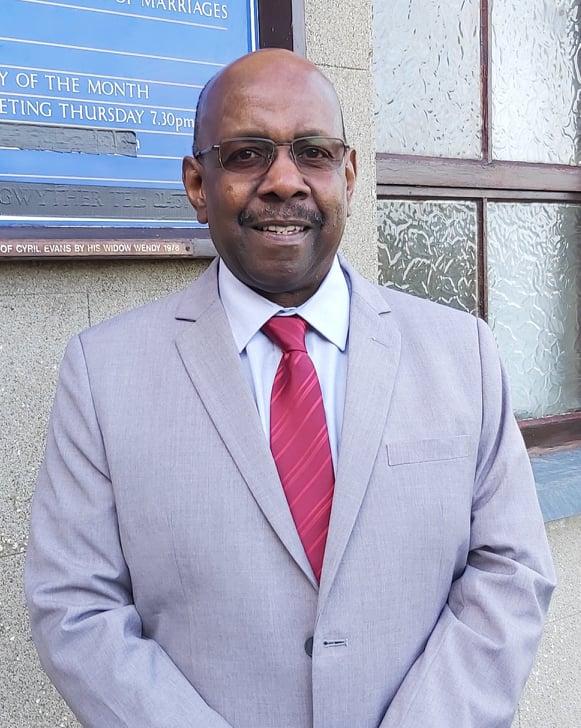
November 14th 2021: John Mann

1 Samuel 3:11 – 4:11

To watch this service, click on the link to our YouTube channel: https://youtu.be/hwXDavv0rik

1 Samuel 3:11 – 4:11

I love the Old Testament accounts and exploits of God’s people. Here, the nation of Israel is in a state of apostasy. We read at the end of the book of Judges, “In those days there was no king in Israel. Everyone did what was right in his own eyes.” (Judges 17:6).

Today, people do what is right in their own eyes. God remained faithful to the Israelites, despite their foolishness. “Then the Lord said to Samuel, “Behold, I am about to do a thing in Israel at which the two ears of everyone who hears it will tingle.” (1 Samuel 3:11). Eli’s sons, Hophni and Phinehas, the priests of the day, were wicked men. God pronounced a curse on the house of Eli because of his disobedience and his failure to control his sons (v.14).

Eli’s two sons are about to suffer the judgement of God. Poor Samuel was tasked with bearing bad news, telling Eli of God’s judgement. Even in this situation, the sovereign goodness of God works in His people. Eli came to acknowledge, even through his discipline, even through this difficult situation, that the sovereign goodness of God works ultimately for the good of His people. “So Samuel told him everything and hid nothing from him. And he said, “It is the Lord. Let him do what seems good to him.” (v.18).

There is an application for us already, at the start of this passage; God is always working out His overall plan to do us good, to work out His set purposes according to His constant grace and mercy. God is faithful. There are no accidental incidents on our lives. Our lives are ordained according to the set purpose of our sovereign God. Very often we may not fully recognise it. God is faithful and He is working our His purposes.

Fear of Eli’s response made Samuel initially shy away from giving Eli this message. But he realised it had to be declared openly and fully as it had been given to him, no matter what Eli’s response would be. The gospel of salvation is very often an offence to sinners. It exposes the condition of their hearts. It lays bare the corruption that lies within everyone of us. The doctrine of hell is an offence to sinners. The idea of eternal punishment goes against what they feel to be true of themselves. Preaching the full gospel in our day can often be a hard undertaking. It is not always easy to proclaim the full truth that God has entrusted to us. The gospel very often is watered down, even in the established church.

Eli indicates how seriously we must take God’s instructions, “And Eli said, “What was it that he told you? Do not hide it from me. May God do so to you and more also if you hide anything from me of all that he told you.” (1 Samuel 3:17). God will deal severely with those who do not preach truthfully, honestly and boldly. I believe that Samuel learned an important early lesson – it is not our place to edit the word of God or choose those things we feel are more acceptable, but to tell it as it is and leave God to deal with the reactions that come from it.

God blesses Samuel’s response, “And Samuel grew, and the Lord was with him and let none of his words fall to the ground.” (1 Samuel 3:19). God helps us to see that in our day, the words that are preached do not fall to the ground. We are promised God’s word will not return to Him void. That is the assurance we should have. Jesus said, “And when they bring you before the synagogues and the rulers and the authorities, do not be anxious about how you should defend yourself or what you should say, for the Holy Spirit will teach you in that very hour what you ought to say.” (Luke 12:11-12). Warning people of coming judgement and hell takes great wisdom and tact. Jesus said, “Behold, I am sending you out as sheep in the midst of wolves, so be wise as serpents and innocent as doves.” (Matthew 10:16). We have to be truthful and speak of judgement and hell. Our witness must be urgent and not compromised. But it also has to be with love and tears.

God continued to use Samuel, “And all Israel from Dan to Beersheba knew that Samuel was established as a prophet of the Lord.” (1 Samuel 3:20). Strangely, after being called by God, Samuel takes a back seat and is not mentioned in chapters 4-6, which switch to God’s sovereignty and His gracious dealings with His rebellious people. God’s grace was seen on countless occasions. Samuel did not go on holiday or take a sabbatical; he would still have been preaching. Sadly, the people weren’t listening or responding to God’s word. But God was still at work, working out His purposes.

The Israelites are about to engage in battle with the Philistines. The battle commences, the Philistines are victorious. In the wake of this stinging defeat the Israelites come up with the bright idea of getting the Ark of the Covenant, “And when the people came to the camp, the elders of Israel said, “Why has the Lord defeated us today before the Philistines? Let us bring the ark of the covenant of the Lord here from Shiloh, that it[ may come among us and save us from the power of our enemies.” (1 Samuel 4:3).

When the Ark of the Covenant arrived, the Israelites gave a great shout, “As soon as the Ark of the covenant of the Lord came into the camp, all Israel gave a mighty shout, so that the earth resounded.” (1 Samuel 4:5). The Philistines shake in their shoes. The wonders of what God had done in Egypt have reached their ears, now this God had come to the Israelites. However, the Philistines’ morale is restored (v.9). The battle continues, but this time the Israelites are not just beaten but thrashed (v.10). Hophni and Phinehas died. It’s a bloodbath, gruesome, awful.

The Israelites were on the receiving end. Why? Because they had taken the Ark of the Covenant into battle. They didn’t so much want God as the box that He was in. They have rejected God and gone their own way. They are facing an enemy and are going in their own strength, led by Hophni and Phinehas, who dishonoured the name of Yahweh. The called for the ‘magic box’, a talisman. Their faith is no more than superstition. God will not be manipulated or manoeuvred.

Sadly, even within churches of our day, people want to use the name of Jesus as a means to an end. With so-called faith they expect to get what they want from God – their health and their wealth. Their hearts have little consideration for the glory of the name of Jesus. Their lives do little to honour His name, but they still expect an answer when the battle heats up, when opposition comes or when they face difficulties.

Remember what Jesus said, “On that day many will say to me, ‘Lord, Lord, did we not prophesy in your name, and cast out demons in your name, and do many mighty works in your name?’ And then will I declare to them, ‘I never knew you; depart from me, you workers of lawlessness.” (Matthew 7:22-23).

Our God is not a God who operates at our beck and call. We can’t manipulate or mould God into our way of thinking. This is our sovereign God who is awesome in His majesty. He cannot, and will not, be trifled with. This is the reality of many today, who think God is there for their convenience, when it suits them.

What a god of grace He is. When His people oppose Him, when they blaspheme the name of Jesus, when they scorn and criticise, God, in His grace and mercy, withholds His hand of judgement, causes the sun to shine on the righteous and the unrighteous. He sends rain on the just and the unjust. Our God is a God of remarkable grace and patience. I believe it is only when people of our day seek God as He really is, in all the wonder of His being, in all the purity and perfection and the awesomeness and power of our God, that our nation will ever change and be lifted out of the pit that it has put itself in.

34,000 soldiers lay dead on a gruesome, blood-filled battlefield. The enemies rejoice. Often, the church seems so weak against the enemy. It appears it is all over for the Israelites. But that is to forget God is working through all circumstances. He foretold the deaths of Hophni and Phinehas (chapter 2). Now God is bringing His judgement to pass. But even in this disaster, God was working out His purpose for His chosen people. God always keeps His word and His intentions are always carried out. Jesus said, “And I tell you, you are Peter, and on this rock I will build my church, and the gates of hell shall not prevail against it.” (Matthew 16:18).

There are battles in the life of the church, in our own personal lives. We may feel the battle is lost, we may feel discouraged, until God reminds us not to lose sight of His sovereignty and purposes. God uses our circumstances, even the enemy against us, to remove the dross and refine us. Eli is feeling the discipline and judgement. But God’s promises are true and will always come to pass. There has been a great battle and a great defeat, but this is not the end.

Two thousand years ago, on a hill outside of Jerusalem, another battle was fought, a greater battle. It appeared there that the enemy had the upper hand, it seemed that Satan had achieved his ultimate purpose – to destroy God’s Messiah, along with His plan of salvation.

The enemies of God were rejoicing as they stood at the cross and saw what was happening, as they mocked and scorned, convinced that their victory was complete. The hero of the church was captured, humiliated, hanging on a Roman cross. It appeared this gruesome, blood-soaked battlefield was the end, not only of the Lord Jesus Christ but also His church. But God’s plan was being fulfilled and His purpose was being carried out. Out of this apparent defeat came a glorious and final victory – the enemy of our souls destroyed forever. Sin destroyed forever. Death destroyed forever. Pain, suffering, illness, conflict, sadness, loneliness, crying, weeping, all ultimately destroyed forever.

This was no defeat. At Calvary it was a glorious victory. We are told to never judge by appearances. It appeared it was all over for the Israelites. But God had not deserted them. He was ordering events, guiding circumstances, controlling the outcome, in order that their future might be more certain, that they might know a stronger future, that they might be drawn ever closer to Him, that their future might be more faithful, that their walk with Him might be deeper and closer.

There may be times when we appear to be losing the battle. There may be times when our enemy seems to be winning. There are times when we lose some battles, when we foolishly rely upon our own strengths, thinking we can make it by our own resources. We find, to our own cost, that our strength is completely insufficient. There are times when we lose these battles. But God is always in control. We lose some battles, but the war is already won. The Lord Jesus Christ has triumphed on Calvary and those who are in Him, who are in Christ Jesus, looking alone to Him for their salvation, are safe and secure, because we are lon the victory side.

God hadn’t finished with the Israelites, this wasn’t the end. God hasn’t finished with us. If you are believing and trusting in the Lord Jesus Christ, knowing the difficulties, knowing the battles, feeling the weakness, God hasn’t finished with you yet. His perfect, gracious, unstoppable intention was to lead His people, the Israelites, to a greater knowledge of Himself. His unstoppable intention in your life and mine is to lead us on to a greater Christ-likeness in this life, but then, ultimately, to perfect Christ-likeness in eternity.

So, when you are feeling the heat of the battle, look to Christ because He hasn’t finished with us. We are still on the victory side and the best is yet to come.

November 7th 2021: Gaius Douglas

2 Timothy 1:8-12

You can view this service on our YouTube channel: https://youtu.be/QAcJNtmLy1w

“Therefore, do not be ashamed of the testimony of our Lord, nor of me,” (2 Timothy 1:8).

The last time I spoke about being a living example of our great Lord and Father, of our Lord Jesus Christ. This morning, the one main question I would like to ask is, ‘What may cause us to be ashamed of the testimony of our Lord Jesus Christ?’ We will explore:

The uncertainty which may cause us to feel ashamed or embarrassed;
the food that will enable us to thrive or fail;
how can I be bold for Christ?

The uncertainty which may cause us to feel ashamed or embarrassed:

The word ashamed means to be embarrassed, to feel guilty about something. Have you ever been embarrassed about the Lord Jesus Christ? There are times in our lives when we’ve experienced it. When I was younger, at about 15, I was already taking Sunday School classes and preaching at youth camps. I began preaching just before I was 21. I remember being invited to preach at a day event in London. In the afternoon I was invited to an open-air outreach at Kew Gardens. I felt nervous at the thought of speaking out in the open, to non-believers, being judged. I was not ashamed but embarrassed to share in public. Giving out tracts was challenging. Then, I was called upon to speak to everyone. I spoke on John 3:16. Over the years I continued to speak at open-air missions, but it was never easy.

Paul is saying to Timothy, ‘Do not be ashamed of the testimony of Jesus Christ, wherever you are, in whatever circumstances. Paul says in Romans 1:16, “For I am not ashamed of the gospel of Christ, for it is the power of God to salvation for everyone who believes, for the Jew first and also for the Greek.” Paul, as soon as he was taken out of prison, began preaching again. If we were told not to preach, what would you do? Continue to preach God’s word because it is the power of God! Because we are in Christ, we have to stand up for God’s word. Paul says, “Do not be ashamed.”

One of the reasons we may be ashamed is our uncertain foundation. We are reminded in Isaiah 28:16, Behold, I lay in Zion a stone for a foundation, a tried stone, a precious cornerstone, a sure foundation; Whoever believes will not act hastily.” We are built on the foundation of Christ, the solid rock, an unshakeable foundation. What an awesome foundation we have – built on Jesus Christ, the rock! Christ is the only one who has changed you and brought you to His salvation. We are saved by grace. We are living stones. How precious! He is the source of your life and my life. He is the strength of your life and mine.

“Fear not, for I am with you;
Be not dismayed, for I am your God.
I will strengthen you,
Yes, I will help you,
I will uphold you with My righteous right hand.”

Isaiah 41:10

How can we be ashamed! What a gospel, what a hope!

“The Lord is my light and my salvation; Whom shall I fear?
The Lord is the strength of my life;
Of whom shall I be afraid?

Psalm 27:1

The Lord is my rock and my fortress and my deliverer;
My God, my strength, in whom I will trust;
My shield and the horn of my salvation, my stronghold.

Psalm 18:2

How blessed we are! We exercise our faith in Him. “For I am not ashamed of the gospel of Christ, for it is the power of God to salvation for everyone who believes, for the Jew first and also for the Greek.” (Romans 1:16). It is important to stand up for Jesus whenever we can.


Food that will either cause our testimony to thrive or hinder

This is really dependent on how we are feeling and with whom we are mixing. The Corinthians were tainted by men’s philosophies and mixing it with the Word of God. They denied the Resurrection. We have to be very careful what we say. We must never deny the power and authority of God, that we do not nod in agreement to things which go against God’s Word. When we start mixing with people who want nothing to do with Christ, don’t be deceived.

What should we do to thrive? Abide in Me, and I in you. As the branch cannot bear fruit of itself, unless it abides in the vine, neither can you, unless you abide in Me. “I am the vine, you are the branches. He who abides in Me, and I in him, bears much fruit; for without Me you can do nothing. (John 15:4-5).

If you want to live for Christ, to glorify Him, to be a living example, you have to abide in Christ, to live for Him, to stay close to Him, to feed upon His word. Abide in Him. “Taste of Him, Oh, taste and see that the Lord is good; Blessed is the man who trusts in Him! (Psalm 34:8).

“Like an apple tree among the trees of the woods,
So is my beloved among the sons.
I sat down in his shade with great delight,
And his fruit was sweet to my taste.”

Song of Songs 2:3

This is where we feed, that we might not be ashamed of the gospel of Christ.

Matt Redmond: Abide in Me https://youtu.be/D1nuDXZrp9k

How can I be bold in Christ?

Because I am abiding in the One who will never let me go, who will never leave me or forsake me, who will never turn away from me, who is the same yesterday, today and forever. That love, that abiding, is based on the finished work of Calvary’s cross, when He took my sin, when He bore my sorrows, when He bore my shame, so that I will not be ashamed of His word.

He now says, ‘Stand firm in the liberty of the Word I have given you, of the gospel of Jesus Christ.’ Paul unashamedly says, I am not ashamed, for I know whom I have believed and am persuaded that He is able to keep what I have committed to Him until that Day.” (2 Timothy 1:12). Very shortly, he was going to be beheaded. You can imagine him saying, unashamedly before Nero, ‘I know whom I have believed and am persuaded that He is able to keep the salvation that He has given to me, to keep the faith that He has given to me, and I will not let Him down.’ And unashamedly he would walk out before Nero, before all those, and he would say to Timothy, ‘Do not be ashamed of the testimony, do not be ashamed of me, do not be ashamed of the gospel of Jesus Christ.’

Let me tell you something, we have got to stand up for the gospel of the Lord Jesus Christ. The world hates the Lord, and it is going to hate us. But the Word is the very power unto salvation to any who believe. If you believe and trust Him, it is the power that upholds you, it is the power that keeps you, it is the power that drives you, it is the power that is going to take you right up to glory.

His love will never let you go. Be assured, if you know and love the Lord Jesus Christ, He is encouraging you to abide in Him, to trust in Him, to feed upon Him, to live in Him.

October 31st 2021: Ian Middlemist

You can view this service on our YouTube channel: https://youtu.be/t6N6c5-jETw

Romans 3:21-31

A man kneels before a woman, a little box in his hand. A secret is to be revealed. An announcement is to be made. Our God reveals to us, like a secret, that He loves us beyond measure. We treat it like a secret, but it never is. He loves His people so much that He is willing to send His only Son for them. In due course He would be revealed – the Lord Jesus Christ. I wonder if you ever doubt that God loves you? That you are loved beyond all measure? Is it time for that secret to be revealed to you?

I see, in our reading this morning in Romans chapter 3, ‘previously, presently and meanwhile.’

Previously.
We read that God had passed over sins. I am praying that you will receive an assurance of the love of God that your sins are forgiven. The cross alone is where we receive that forgiveness. We need to understand a few things about how justice works. We need to be forgiven of our sins. It is God’s justice that must be satisfied. The payment is to be made to God. Christ gives us the sacrifice that satisfies the justice of God. He has never ignored sin. The opening chapters of this book proves that beyond measure. Our great concern this morning should not be how happy we can be, but the righteousness of God. It is supremely seen in the cross of Jesus.

How is it that sinners before Jesus Christ could be dealt with in any gracious way with God? Justified by his grace as a gift, through the redemption that is in Christ Jesus, 25 whom God put forward as a propitiation by his blood, to be received by faith. This was to show God’s righteousness, because in his divine forbearance he had passed over former sins.” (Romans 3:24-25). You and I need to know that the God who has justified us, is just, that He is perfectly righteous – always has been and always will be.

Is the cross the only way that anyone can be right in God’s sight? Yes! So how did God deal with sin before the cross? What did believing people in the Old Testament have to look to? We can see the wondrous cross of Jesus today. They didn’t have that. They did have a system of sacrifices though. On the Day of Atonement, the High Priest would enter into a secret place – one person on behalf of others. They would represent those who believed in the Lord. It was concerned with making atonement between holy and unholy.

We need atonement. The High Priest enters into the Holy of Holies. He was appointed by God. There, he would take the blood of an animal, symbolically, so that humans would not be killed. The animal’s blood would be sprinkled on the mercy seat. At that moment, sins were atoned, wiped away. We need our sins to be wiped away in God’s justice system.

This sacrificial system was to satisfy the consciences of the believers in Old Testament times. No animal is sufficient to pay the price of a human being. No animal could possibly match-up in God’s sight. The perfect human sacrifice offering still had to come. So, God, in the Old Testament, is seen as waiting, anticipating a better sacrifice. Therefore, He was satisfied to deal with sinners in the Old Testament times in grace and mercy. God knew a better sacrifice was coming, a human being who was perfect. I don’t know how much the Old Testament believers knew of this. It was still quite secretive to them. But God knew, and that’s what mattered. That’s all that matters to us today. God is just.

That was previously. Let’s come to ‘meanwhile.’ Now. God shows us His righteousness. We come to the present day. The cross is essential, and always has been essential, to deal sufficiently with our present-day problem, with our concern. What is the problem, our concern? We could say that the problem we have is that we are sinners. In one sense, that is the problem; we have broken God’s law. As soon as you were conceived you started to add to the record of wrongs, because you have not been righteous. We are all utterly and completely lost. We cannot cover over our sins ourselves. We can’t redefine what sin is.

Propitiation is about the appeasement and satisfaction of God and His righteousness. Our great problem is not only sin. The great issue in this letter is that God is rightly angry with our sin. Propitiation, as the means of atonement, is all about the removal of God’s wrath. God Himself provided for His wrath. He offered up His own beloved Son on the cross. He provided from within Himself. The cross, the sacrifice, covers our sins. God has done that which He was always willing to do. John 3:16.

God makes atonement for you and I. His justice is now satisfied. His wrath is utterly removed forever because of the cross of Jesus. It is a perfect sacrifice and complete. Why? Because it came from God. It wasn’t human intervention. We need to repent of our sins. We first and foremost need to bring them to the cross of propitiation. We need to focus on God, not our sins. When we come to the communion table don’t focus on sins but the cross of Jesus.

We know we are justified. Do you know you are saved by the love of God? Saved from the wrath of God? It is impossible not to be a sinner. Paul says throughout this letter, up to this point, “For all have sinned and fall short of the glory of God,” (Romans 3:23). You can’t ignore it. It is the glory of God we need to be concerned with. Are you saved? Do you have that assurance? Where do you receive that assurance? Look at Him. Place your faith afresh in Him. See the crucifixion of Jesus.

God the Father provided Him for you, a public demonstration of the love of God. The believers of olden time waited. The sacrifice was hidden away. We are about making public that which has been revealed to us. He was “put forward” (v25). It is a public presentation. Have you ever wondered why God chose the means of crucifixion to pay the blood price for our sins, why it didn’t take place in the Holy of Holies? Why, on a Roman cross, Christ dies, naked and utterly humiliated? Why was He placed so high? For all to see. He had nails through His hand and feet, with His feet just out of reach so no-one could touch or feel the victim.

God publicly displayed the crucified Son for all to see. It was a public declaration that your sins are atoned for. We can walk with Him in purpose and grace. God’s Son was crucified for you. It is a decisive demonstration. He did it! What was required, occurred. It was His initiative, so you can trust it. He decided the plan of salvation for you. He did it!

October 24th 2021: Roger Thomas

You may view this service on our YouTube channel: https://youtu.be/88omF4CHocA

2 Kings 5:1-19: The Healing of Naaman

This account happened about 850 years before the birth of Jesus Christ, during the times of the kings of Israel, with Israel in the North and Judah in the South. Naaman was commander of the army of the King of Syria (v1). Syria was to the north-east of Israel. Naaman was highly respected by the king. Why? He had defeated the enemies of Syria. But behind this military success was God. God rules over the nations.

Naaman was a mighty man of valour, strong and brave. However, at some point he caught leprosy, a serious illness, incurable at the time. With time, the body deteriorates, the flesh is eaten away.

During this time, the Syrians had gone out on raids and took captive a young girl who became a servant of Naaman’s wife. Here we see God at work, drawing Naaman into a relationship with Himself. Through these things that had happened, in God’s over-arching providence, He was drawing Naaman to Himself. In verse 3 the young girl says, “Would that my lord were with the prophet who is in Samaria! He would cure him of his leprosy.” Samaria was the northern capital of Israel. This young girl, a prisoner, shows no bitterness. There is love towards her captors. Her faith is very strong. She believes, through Elisha, Naaman could be healed from this disease. She is so gracious and confident.

Naaman’s wife shares this with Naaman, and he, in turn, shares it with the king. The king tells Naaman to go and gives him a letter to give to the king of Israel, saying, “When this letter reaches you, know that I have sent to you Naaman my servant, that you may cure him of his leprosy.” Naaman goes to Samaria, taking the letter. He goes with his chariots and servants. He also takes 340 kg of silver, 68kg of gold – a huge amount, and 10 changes of clothing. This was a substantial gift, telling us how rich Naaman was.

In Samaria, Naaman sees the king, who read the contents of the letter (v6). The response of the king was that Naaman was asking him to do the impossible. Panic set in; he is dealing with a powerful king. Notice, he doesn’t think about Elisha or about God. The prophet Elisha hears the king’s response and sends a message to him, saying, “Why have you torn your clothes? Let him come now to me, that he may know that there is a prophet in Israel.” (v8).

Naaman comes to Elisha in Samaria, the same city. Naaman, a mighty man of valour, stood at the door of Elisha’s house, a very humble house. He stood outside with chariots, servants and gifts. Instead of going out, Elisha sends a messenger (v10), telling Naaman to go and wash in the River Jordan 7 times, and he would be healed. Naaman was a very proud man; success had made him proud. He had expected to see Elisha. Instead of doing what Elisha told him to do, he travelled back to Syria, hundreds of miles away. He despises Israel and wants to wash in the rivers at home. God uses the servant (v13) who knows that because Naaman has been asked to do something so simplistic, he finds it insulting. He encourages him to do as the prophet says.

Naaman then travels to the River Jordan and dips himself 7 times. After the 7th occasion his flesh was restored, like that of a little child (v14). Not only did Naaman have physical cleansing, but he also had spiritual cleansing of his sins. The outward cleansing was pointing to a spiritual cleansing of the heart; his soul had been cleansed of its sins. How do we know? By the spiritual fruit we can see in his life (verses 15-18). He went back to Elisha and notice four things:

  1. He now has faith, “Then he returned to the man of God, he and all his company, and he came and stood before him. And he said, “Behold, I know that there is no God in all the earth but in Israel,” (v.15). He believes the God of Israel is the true and only God. That’s faith!
  2. He wants to give a gift he has brought with him to Elisha. He feels great gratitude to Elisha, “So accept now a present from your servant.” (v.15). But Elisha refuses. He presses upon Elisha to receive the gift, but Elisha continues to refuse.
  3. Naaman wants to worship God and asks Elisha for two mule loads of earth so he can build an altar in Syria to offer burnt offerings, “If not, please let there be given to your servant two mule loads of earth, for from now on your servant will not offer burnt offering or sacrifice to any god but the Lord.” (v17).
  4. Notice there is conviction of sin, “In this matter may the Lord pardon your servant: when my master goes into the house of Rimmon to worship there, leaning on my arm, and I bow myself in the house of Rimmon, when I bow myself in the house of Rimmon, the Lord pardon your servant in this matter.” (v18).

There was a great friendship between Naaman and the king. When the king went to worship Rimmon, the king would lean on him and Naaman would worship Rimmon too. Naaman says when he returns, he will bow down to Rimmon, not to worship, but in respect for the king. He asks Elisha for forgiveness for that, for God’s forgiveness. Elisha says, “Go in peace.”

We see the fruit. Naaman hasn’t just been cleansed physically, but also spiritually. Naaman has come to know God personally. Let’s apply this to ourselves. Have we each come to know God personally, the God of the Bible, the only God? Have we had a spiritual cleansing from God? Each of us needs forgiveness. Before God we are sinful. We need spiritual cleansing.

How do we have our sins washed away? There is a Jordan we need to wash in. We need to immerse ourselves in the Lord Jesus Christ. We need to believe the gospel, the Good News about Jesus Christ, the Son of God. 2,000 years ago, in order that you and I could have spiritual cleansing, God came down to Earth as a man. Jesus Christ lived a perfect life, He never sinned. He kept the commandments of God. On the cross He took all our sins upon Himself. He suffered the punishment of our sin, He suffered our hell, on the cross of Calvary. He shed His blood. He died paying that penalty. He was buried and on the third day God rose Him from the dead. That’s the Good News. That is what God did for me and you in order that we might have our sins cleansed.

But we have a responsibility – we have to believe that message. We have to believe each fact of the gospel – that Jesus is God’s Son, that He was sinless, that He kept the law, that He took our sin upon Himself, that he suffered our penalty, that He died, that he was risen from the dead. We have to believe that message.

We have to ask God to forgive us, to cleanse us, based on the work Jesus Christ did on the cross. When we believe that message, when we believe the gospel, and only then, God will forgive us our sins. God will wash our sins away through the blood of Jesus Christ. When we believe that message we become joined to Christ. We become a child of God and God comes to live in us by the Holy Spirit.  

When we believe this message God cleanses us from our sins. He comes to live in us by the Holy Spirit. We come to know God, become a child of God. The Holy Spirit changes us and makes us more Christ-like, creating fruit in us – worship, praise of God, thanksgiving, conviction of sin and repentance. We don’t want to live the ways we used to live, we want to live the way God wants us to live.

When we leave this world God, through death or when Christ returns, He will take us to be with Him in heaven and with all the saints, for eternity. Have we gone to the Jordan? Have we believed the gospel? Have we believed in Jesus Christ?

October 17th 2021: Gaius Douglas

You may view this service on our YouTube channel: https://youtu.be/XYEJ-zKgmow

1 Timothy 4:12-16.

This is a wonderful book. I am truly blessed reading the Word, ready to minister at any time. This passage of scripture is about being a living example. We have just heard about the statement of Faith (https://www.youtube.com/watch?v=Nxq0BG5K5p8&t=229s ). Do we believe in the basic principle the Lord Jesus has died and is coming back? Do we believe this is the Word of God, from Genesis to Revelation? Yes! Whether we accept it is another matter. Whether we walk in the ways of it is a different matter.

God has revealed His truth to us. We don’t always want to believe what it says. Isaiah says we have turned ourselves to our own ways. Paul is writing to Timothy, his son in the faith. He says, ‘I want you to be a living example to the church.’ Paul was writing from a place called Macedonia and he had placed Timothy, a young pastor, in the church there in Ephesus. Paul wrote a letter to the Ephesians. I believe it is the second to last letter he wrote.

Paul has very little negativity, if any at all, to the church at Ephesus. He commends their faith. He blesses them for what they stand for. He rejoices in what they stand for. We also know, in Revelation 2, it is the first letter from the Spirit of God. The Spirit of the Lord speaks to the church of the Ephesians and commends them for their conduct and their walk. But one thing He had against them; they have lost their first love.

Paul instructed Timothy to go to this church because it had doctrinal issues. They had issues where their conduct within the church was not according to scripture. Timothy, this young pastor, was half Greek and half Jew. His grandmother and mother were Jews. We read in second Timothy that his grandmother Lois and his mother Eunice brought him up in the truth of scripture. They taught him the truth of scripture. I rejoice in the fact that I had a mother who loved the Lord so much that she spent day and night teaching me scripture, being an example in keeping with God’s Word. We should relish being an example to our children and grandchildren, to be an example to others, to live a life which is in keeping with God’s Word. It is such a blessing when this happens.

Paul wants Timothy to be an example to the believers. We can’t be an example to others if we can’t show love to one another. How can I share the gospel if I hate my brother? How can I share the gospel if I shake someone’s hand, but my heart is far from them? Paul wants Timothy to be a living example. But Timothy is young and there were elders who looked down on him, thinking of him as a young whippersnapper telling them what to do. Paul says look to the one who is the example. Paul writes, “Be imitators of me, even as I am of Christ.” (1 Corinthians 11:1). In Ephesians he says be an example of God.

Who are you imitating? Who are you following? Who am I following? Do I go out and out to tell others I belong to Christ? Who are you? Do you belong to Christ? Are you following Him? The Lord Jesus Christ says, “Follow me and I will make you.” He was and will always be the living example (John 6:38, John 12, John 4:34). It was always about God the Father, never about Him. He went to a wedding feast. He should have been the guest of honour but He was not. He sat there because He was doing the will of the Father. He never sought fame for Himself. How many Christians like a pat on the back? We are the body of Jesus Christ. We are members of the body of Jesus Christ, that wonderful body, paid for at such a great price.

Paul wants Timothy to go and be a living example in word, in deed, in manner of life, in conversation. In all of these things follow Him, not me. Jesus Christ delighted to do the will of the Lord God. (John 17, Psalm 40). This is what he wants us to do.

Titles associated with Jesus.

When we look at the gospel of John, chapter 6, He says, ‘I am the living bread, eat of me.’ What have we been feeding on this morning? Are we waiting to come to chapel to delight the Lord, to meet with other Christians? We have the capacity to delight the Lord in whatever we are doing, living for Him. Jesus delighted the Lord wherever He went. What are you feeding on? In the wilderness the Lord provided bread from heaven for the Israelites. After a while they got fed up with it. Are you fed up because you think the way of God isn’t relevant today?

He is not only bread to feed on, He is also the living water. Jeremiah was told to eat the bread and it sufficed him. Ezekiel was told to be a living example, doing many things for God, to show the people what God was telling them. The Lord says, ‘Eat of me, you will never hunger. Drink of me, you will never thirst.’

He is the living Word. He says ‘I will provide you with a Word which will sustain you, which will keep you. In Hebrews 4:12 we read, “For the Word of God is living powerful, and sharper than any two-edged sword, piercing even to the division of soul and spirit, and of joints and marrow, and is a discerner of the thoughts and intents of the heart.” I believe this with all my heart and with all my soul. It has sustained me throughout my life, forever and ever because it is the Word of God. And it is able to do the same for you. The way of God sustains us forever. You can live in the power, the strength that is here, in the Bible.

Christ gives us a new name. We have a new name, a new title, a new calling. We belong to Christ. The salvation we have Christ has given us. He has breathed into us eternal life. Man became a living soul (Genesis 1:7). We read in Ephesians 2:1, God has breathed into us and we are living souls. Are you alive this morning? Why? Because you have confessed Christ as your Saviour.

Because He lives, we are to be a living testimony in our home, on the phone, in our community. He continues to transform us every day. We are temples of the Holy Spirit of God. We are redeemed by His precious blood. We are no longer our own, we are alive to God.

Paul wants Timothy to be a living example to the church, “In word, in conduct, in love, in spirit, in faith, in purity.’ (1 Timothy 4:12). This is your life. How am I meant to live when I leave this church? When we go out, there will be challenges. We are fighting a battle against the world, flesh and the Devil. But God has given us the power, the ability, the wisdom and His Word. He has given us the armour. He says, ‘Put on the armour of God that you will be able to stand, that you will be able to fight all the things that will come against you which will take you away and prevent you from being a living example for me, for my glory, for my praise.’ Amen.

October 10th 2021: Norman Gilbert

You may view this service on our YouTube channel: https://youtu.be/F14W2BQOy1w

Philippians 1:3-8 Characteristics of a Christian

In this passage of scripture we see something of the characteristics of what should be seen in a Christian’s life: thankfulness, joy, perseverance in our Christian walk of faith with Christ.

Joy should be evident in the life of a Christian, as well as thankfulness. Paul is saying we are a people who are thankful. Paul’s letter to the Philippians is filled with thanks and joy. Paul is in prison, in terrible conditions. He has people who have been undermining his teaching, yet he wants people to be thankful and full of joy. He is a man of prayer. If people don’t talk to the Father, there is a breakdown in communication. Paul is thankful for the church at Philippi – it displays something of the goodness of God (v3).

Paul was the instrument God used to establish the church at Philippi. He preached and sowed the seed, God gave the increase. He opened the heart of Lydia, the young lady who was possessed by a demon and the prison officer. When Paul ponders and reflects on the church at Philippi he rejoices and gives thanks to God, who works on the heart. God, by His Holy Spirit, begins to work in a person’s heart. God is merciful and gracious.

Paul gives thanks to God for mercies (v3-4). Paul remembers the goodness this church has done for him. He remembers the love they have expressed towards him. They were only displaying the love the Lord Jesus Christ had shown them. James reminds us that, ‘Every good and every perfect gift is from above, and comes down from the Father of lights, with whom there is no variation or shadow of turning.” (James 1:17). Everything which takes places, which shows the mercy of God, is because of the love He bestows on upon people.

Our thanks should always start God-wards. Paul, even in the hardships he has known, he was able to give joyful thanks. He remembers that God has moved these people in Philippi. It does his heart good. When he prays, he prays with thankfulness and joy (verse 4). Here is a man who is joyful, who speaks about a personal God, ‘My God,’ (v.3).

Martin Luther stated, ‘Christianity is a matter of personal pronouns.’ We personally know Jesus Christ died for my sins. Paul, in prison, in horrendous conditions, gives praise and thanks to God. As insignificant as he may seem in prison, he knows the Creator of this world is concerned with him and the church at Philippi. He is in a privileged position. He has a personal God. Right at the start of scripture, in Genesis, God says, “I will be your God and you will be My people.”

We enter into the family of God by personal experience and personal faith in Jesus Christ.  Paul, in this letter, says it is about a personal relationship with Jesus Christ. There should be joy and rejoicing in all our circumstances. Circumstances do not blur our view of Jesus Christ because the joy that God gives us is not a natural joy. It is a fruit of the Spirit, because of what He has done within our hearts.

Paul, when he thinks of the Philippian church, is full of joy and thankfulness. From the first days till now, Paul thanks God for the fellowship – real sharing and partnership, real interaction. Although not a rich church, they supported him and prayed for him. Paul now sees there is perseverance with this church. His confidence is that God, who began a good work, will complete it until the day of Jesus Christ. Paul’s fellowship was in the gospel (v5). God’s work began even before the foundation of this world. This church in Philippi began before the world began.

To encourage us, when we are feeling we are treading on water, remember the work He began, He will complete (v6). Only the grace of God gets us through difficult times. We are going to be kept to the end if we have got faith in Jesus Christ. The work which God began will be complete. We are kept by the power of God. The sheep He calls are the sheep He keeps, “My sheep hear my voice, and I know them, and they follow me.” (John 10:27). We trust Him for today and leave tomorrow in His hands. He keeps us to the day of Jesus Christ. There is a day coming when Jesus Christ will return.

He holds them in His heart (v7). There is a solidarity. They are one in the gospel. Paul says there is one church. He wants to rejoice in the goodness of God to them. Paul longs for them and has a deep affection for them (v8). He says there may be dark days ahead, but God is in control (Philippians 4:6). God knows the future (4:11). Whatever state we are in, God is the preserver and the protector. He is in control. We are not to be anxious about tomorrow.

Paul is writing a personal letter to the church at Roch. This year has been so hard. It has been the hardest time for many of us in our lifetime. Pray we will be those who trust in God, who are able to manifest the joy that can only be found in Jesus Christ – a joy and peace to those who put their faith in Him.

September 19th 2021: John Mann

You may view this service on our YouTube channel: https://youtu.be/svsV6pckGeE

2 Kings 5:1-16: Naaman healed of leprosy.

Naaman was commander of the army of Syria. He was a great man in the eyes of his master, and highly regarded because through him, the Lord had given victory. He was a valiant soldier, but he had leprosy. Here we have this picture of this great Syrian military commander, Naaman, who had won many victories and had received many accolades from his own king and from his peers. He was a man of great standing, of respect, probably of great wealth. He is serving Syria, a pagan country, a place of many gods but nevertheless a godless place, a country of ignorance, superstition and idol worship. Syria was a country that sought to further its own success and its own progress at the cost of others. It was a dark land of spiritual blindness.  Naaman served that country with great commitment, with great energy and with great determination. That is why he had risen to his position.

Despite all of his privileges, despite his position, despite his great power and his prominence, Naaman had a great and awful problem. He is afflicted with a serious, life-threatening condition. He is a leper, in days when leprosy had no cure.

As we look at this country of Syria, what does it remind you of? Well, I believe it presents a clear picture of our world today and our own nation today, with its many idols, religions, philosophies and gods. Syria was a place where the one, true, living God has been largely rejected and ignored. It was a godless place in many ways, a place that sought to promote its own success by its own philosophies and ideas. That is what sin has done to the nations of the world – turned God’s perfect creation into a ruined place of ugly rebellion and hatred.

In the eyes of his peers Naaman has everything that the world desires, everything that it holds dear, everything that 21st century Wales would long after – an impressive life, presence, charisma, wealth, success, authority, influence and position. But just like Naaman, they have a problem, a far more serious, not just life-threatening problem. A soul threating problem. Spiritual lepers afflicted with the disease of sin that will take not only their physical life but their eternal souls.

Naaman was a man of great power but he was absolutely powerless when it came to saving himself and taking away this awful disease that he was suffering from. So, it is true with those suffering this spiritual leprosy. Healing is outside our own hands, outside of our own power. There is nothing we can do to solve the problem of our sin in and of ourselves. The outcome is inevitable – spiritual and eternal death unless we can be saved from this awful disease.

What a sad picture Naaman presents. Apparently, he has everything the world desires but in reality, he has nothing of any lasting value and all that he does have will one day be taken from him. Apparently, the name Naaman means ‘beautiful, gracious, well-formed.’ In days when names that were given to children meant something, the likelihood is that he may well have been a handsome and striking man. But in time the ravages of leprosy would change that. His features would be eaten away. He would be left disfigured and decaying, an ugly sight, eventually an outcast of society.

Again, we have a picture of what sin does to us. People created in God’s image but yet disfigured, blemished, spoiled by this disease of sin. Outcasts from the presence of God who created us.

Verse 2 introduces us to a second person and the contrast between Naaman and this second person could not be greater – a captive a young girl from Israel who served Naaman’s wife. Naaman was fighting against Israel, God’s people. Naaman was a man who was at enmity with God, yet he was still under God’s control. God had given him the victory. From amongst the very people that Naaman was fighting against, the Israelites, a saviour is brought to heal him of his problems. That is the grace of God. By nature, we are at enmity with God. There was a time, certainly in my life and maybe in yours, when the Lord Jesus Christ meant nothing to you. I can say from my own experience that I was at enmity with God. Yet the one who I was at enmity with came to save me, to free me, to free all of us all. That’s the grace of God. God sent the very one we are opposing, against whom our rebellion is aimed, to be the one who will free us from sin and death.

Did you notice the great contrast between Naaman, this great man, this commander of notoriety, and this young, un-named, insignificant girl who possesses none of the privileges that Naaman had? She’s a servant girl at the beck and call of her masters, brought from the freedom of her homeland to a place of captivity. She may be even an orphan, maybe orphaned by the armies of Naaman himself. The biggest contrast between them is one that elevates this slave girl far above this commander of the armies of Syria; she knows and she trusts the God of Israel. This is an encouragement for us. I know I am nothing in the eyes of the world, but I know the living God. In His eyes I am His servant, I have been called and have the privilege to be used by Him. If you are trusting in the Lord Jesus, you are a servant of the living God, there to be a blessing and of use in God’s service.

In verse 3 we see that God uses this young girl. She says to her mistress, “If only my master would see the prophet who was in Samaria, he would cure him of his leprosy.” God is working His sovereign purposes, not only in the life of Naaman, but also in the life of Israel and in the life of this young servant girl. In His grace and mercy, He is bringing these circumstances together to fulfil His own sovereign purpose. The Lord is ordering these events in accordance with His own will.

The people, as they were prone to do, were going through a period of apostasy and rebellion against God. Their disobedience has once again led them to be disciplined and judged by God. Discipline came at the hand of the Syrian army, led by Naaman. When we wander away from God, when we turn our backs upon His ways, God will use circumstances to discipline us, to show us the error of our ways, but always for good. Our God is good. When He disciplines us, it is with the purpose of drawing us back to Himself, to the place of blessing.

Naaman, the instrument in God’s hands, brought God’s punishment to the people of Israel. His mind is set on victory, serving his own nation. But as we read, God had used him, God had given him these victories. God is using even a pagan leader of the army for His own purposes, and ultimately for Naaman’s good. God has His hands upon this man, He’s drawing Him to Himself. This young, captive girl is placed in his household to serve Naaman’s wife. You may be passing through difficulties now, but you are being used by God to make you more dependent upon Him, to draw you ever closer to Him.

This young girl must have been experiencing grief, fear and anxiety. She’s been made captive. She may even have been asking the question, ‘Why is God allowing these things to happen to me?’ Yet it doesn’t prevent her from trusting God or telling others about the God she worships and serves. So, she stands firm and speaks confidently about the love and the power of her God. This young girl is very gracious and compassionate. Why should she show concern for the one who had dragged her away from her own land and made her a captive? Why desire good for one who had done so much ill? Well, it’s God’s grace working in her and through her. She is confident that God is more than able to deal with this situation that Naaman has found himself in. She doesn’t say the prophet might heal him, or it’s possible. Her words are, ‘If only he would go, he would heal him of his leprosy.’

Are we gracious, are we loving to those who may oppose us, who may criticise us, who make fun of us because of our faith in the Lord Jesus Christ? Do we deal with them graciously and compassionately? Do we boldly and confidently tell them about the salvation that they can find in the Lord Jesus Christ? Do we tell them that if you come to Christ, it is not a case that He might save you but that He will save you. ‘Everyone who calls upon the name of the Lord shall be saved.’

In verse 4 we see, perhaps, an even more amazing turn of events. Naaman went to his master and told him what the girl from Israel had said. Can you believe it? This battle-hard, self-confident, powerful soldier is listening to the likes of this young servant girl. Why would he do that? Firstly, it is direct revelation from God Himself. Naaman’s mind is opened by the power of the Holy Spirit to respond to the witness of this young girl. The Lord Jesus Himself said, “No-one can come to the Father unless the Father who sent me, draws him.” Salvation is by grace. We have nothing to offer. It is all of His doing, all of His grace.

I wonder if they had already seen the peace of God is this young girl’s heart? I wonder if they had already heard testimony from her lips of other great things that God had done? That is how God most often chooses to work, isn’t it? Through the testimony of others, through His Word, by the hearing of God’s Word – whether through the preaching of the Word, or through the testimony of His people – that’s how others are drawn, through the Holy Spirit.

Then, the story begins to unfold. In verse 5 Naaman, in his search for healing, departs with cartloads of money and treasure, and a letter from his king, which almost commands the king of Israel to do something about this man’s leprosy. That’s quite amazing, in light of what leprosy was in those days. Naaman presents himself and his payment for services rendered. He goes to the very king that he’s been fighting against, the one who felt the full force of his power and authority. He seeks to buy him off with the gifts that he has to offer. He goes to a person who has no reason whatsoever to help him.

Sadly, that’s what many people do in their attempt, their search for a cure for spiritual leprosy. It’s how many people try to make themselves right with the eternal God. They go to Him with their offerings of good deeds: money to charity, money for the church, loaded down with commendable actions. They unwittingly try to buy off the God of creation that they might be made right with Him. They go to the eternal God who has no reason whatsoever to help them. He has no reason to help us, other than He is a God of love, a God of grace and a God of mercy. We have nothing to offer, we have no gifts.

Look at the king of Israel’s response in verse 7. Compare the king of Israel to this young servant girl. He is fearful, he doesn’t know what to do. He’s concerned for his own well-being. What a difference between someone who is walking closely with the Lord and this king who has turned his back on God’s ways. That’s where we find ourselves if we wander away from God, where our faith in the Lord Jesus Christ is not where it ought to be. We find ourselves fearful, anxious and afraid. Yet, when we are walking close with the Lord, then we are more like this young girl: gracious, bold and confident.

Thankfully for Naaman, help is at hand in the person of God’s prophet Elisha. Elisha makes himself known; he makes the first move so that Naaman will see the power of God. Then he waits for Naaman’s response. That’s what God says to all of us. That’s what God is saying to the nation of Wales. ‘I’m available. I’m willing to meet with you. I have made the first move. I have opened up the way for you to come. I sent My Son to die on Calvary, to take your place. Now, what’s your response? Will you come?’

In verse 9 we see Naaman does go. He turns up with all his finery, his wealth, his chariots, his entourage. But Elisha is unmoved. He is unimpressed. He doesn’t even get out of his chair to go to the door. I believe that Elisha is presenting a picture of God’s response to us if we turn up with all our own good deeds, and everything that we’ve done, everything that we’ve given. Can I say this reverently, when we do that, when we think that our own attributes will save us, God doesn’t even get out of His chair and go to the door. We cannot approach him because we are corrupted by our sin.

God’s holiness and man’s sinfulness are incompatible. God’s perfection excludes our imperfection. Because perfection cannot change, our imperfection, our leprosy, has to be removed before we meet with this great and glorious God.

Elisha makes another move. He sends his servant. That’s what God did, didn’t He? He sent His Son as a servant. He didn’t come to be served but to serve and to give His life as a ransom for many. Elisha sends his servant with this instruction, ‘Go wash yourself in the Jordan seven times and your flesh will be restored and you shall be clean.’ Now Naaman is unimpressed. You can imagine his reaction, ‘I beg your pardon, go and wash. Do you know who I am? I’m the leader of the armies in Syria. We have conquered many nations. Haven’t you and Elisha heard what I have done? He will meet me where I am, or he won’t meet me at all.’ That’s Naaman’s response. And Naaman, we read, went away angry.

We see his response and second great mistake – pride. How many people when hearing the gospel go away angry, indignant, ‘who are you calling me a sinner and telling me I need to be saved? Haven’t you heard what I have done, don’t you know me? I am as good as the next man.’ That’s the response of humankind. The problem is we are as good as the next man – we are all sinners who have fallen short of the glory of God. That’s our problem.

Paul writes to the Romans, ‘There is none righteous, no not one.’ Many people say to the eternal God today, ‘You accept me as I am, or I won’t come at all. God says, ‘Your way isn’t good enough. It’s my way – the way of humility. It’s my way of cleansing or you remain a spiritual leper.’ It’s God’s way or no way. Jesus said, “I am the way, the truth and the life.”

The Jordan River presents God’s way, that is cleansing by the power and in the blood of the Lord Jesus Christ. Naaman wanted to reject the means that he was being given. What is he, at this point, turning his back on? The glorious blessing of eternal life where all pain and suffering will be taken away, where our sin will be dealt with forever (Revelation 21:3-4).

Verse 13. Naaman’s servants said to him, “My father, it is a great word the prophet has spoken to you; will you not do it? Has he actually said to you, ‘Wash, and be clean’?” Do you thank God for His servants that He sent and told you about the Lord Jesus Christ? Salvation is easy and straightforward, ‘Believe on the Lord Jesus Christ and you shall be saved.’ Naaman’s servant tell him to do as he says – wash and you will be clean. Thank God for those who came to you with the simplicity of the gospel and drew you towards the wonderful grace of the Lord Jesus Christ, telling you, ‘You are not required to do anything, great or small. All you have to do is put your faith in the Lord Jesus Christ.’

Naaman is persuaded and he turns and dips himself in the Jordan seven times, as the man of God had told him (verse 14). Complete obedience at last. He didn’t go and give himself once, or three times, or five times. Seven times he did it. We read his flesh was restored and became clean, like the flesh of a young child. Naaman left all of his offerings behind him, and he went in obedience to the man of God. He washed and he was cleansed. This is a picture of being born again in the Lord Jesus Christ. Washed. Cleansed. Made new. A new creation in the Lord Jesus Christ. Born again of the Spirit of God. It’s only when we are born again, cleansed in the blood of the Lord Jesus Christ, that we can know fellowship in God.

No-one can stand before God, or speak with Him, or know His forgiveness, or experience heaven until they have been washed clean. Have you been to Jesus for the cleansing power, are you washed in the blood of the Lamb?

September 12th 2021: Pete Hilder

Matthew 6:19-24

Everyone has opinions, whether it’s morals, politics, films, tv or books. We look for reviews, for holidays, purchases online. As Christians we are to review things, for example, at the end of the day in prayer, at the end of the year. Covid pauses us to review and reconsider our time and money, our commitment. There are all sorts of things we review and assess. Maybe we go to church and review the service over lunch or review the minister! But God has a different plan when we come to worship Him. He wants to review us, to assess us, to look at us and tell us about what He thinks. Maybe you’ve come this morning to have a look and see what you think. God has come and He is going to have a look at you and tell you what He thinks.

In this passage of scripture there are three pictures, three reviews or assessments, which God brings before you and which Jesus brought to the hearers of this sermon on the very first occasion, and He desires to do so again this morning.

There are three questions for each picture. He wants to know where you are, how you are and who you are living for.

The first review: Jesus, the doctor
“Do not lay up for yourselves treasures on earth, where moth and rust destroy and where thieves break in and steal, but lay up for yourselves treasures in heaven, where neither moth nor rust destroys and where thieves do not break in and steal. For where your treasure is, there your heart will be also.” (Matthew 6:19-21)

Jesus is ready and waiting for us. He is the greatest doctor who wishes to review us and our health. He has a question for us. If you went to a doctor and he asked, ‘Where is your heart?’ you’d be worried! But our heart can be in many different places. Is your heart in a good place or a bad place? You can know because your heart is where your treasure us.

What is your treasure, your most prized possession? Is it your bank balance, job, status, family? Where do we spend our time and energy? Jesus is telling us there is a danger – our heart could be in the wrong place. There is a danger to us of hell, judgement, being destroyed. Dr. Jesus is concerned for physical and spiritual health. He identifies a couple of dangers for us. Your heart could be in a place of danger and destruction if it is placed in the wrong place. The other danger is our heart could be stolen. Jesus is offering us something different – placing our treasure in heaven.

Jesus has not lost one of those who have entrusted themselves to Him. He wants us to place our hearts in a safe place, in heaven, to entrust ourselves to Him. He is already preparing our inheritance. Jesus is 100% reliable and true. His concern is full and true. His way is a way of life to the full.

The second review: Jesus, the optician

“The eye is the lamp of the body. So, if your eye is healthy, your whole body will be full of light, but if your eye is bad, your whole body will be full of darkness. If then the light in you is darkness, how great is the darkness! (Matthew 6:22-23).

This time we have the review of the optician. The greatest one who we need to see is Jesus, who is available at all times. How healthy are your eyes? Your heart is important but so are your eyes. That first time you need glasses, you put them on and you’re amazed. Suddenly the world opens back up again. The eye is the lamp of the body. It has great purpose – to shine light. Jesus says it is possible that your lamp is a lamp of darkness. We have many different ways that things enter us. We can be very careful about what we put into our mouth to eat.

How careful are you with what you let into your eyes? Are you filling your eyes with things which are darkness? God’s Word is a testimony of Him. The light of God’s Word is granted to you. God’s concern is so many of us are filling our lives with not seeing Him. So many are in darkness, they choose the darkness. You have a choice when you see an optician – whether to listen and act on what they say or not. Jesus, the optician, is perfect. He has seen the impact of those who reject Him (Genesis 3:6). Sin came into the world through the eye. The same happened with Lot’s wife; she looked back and longed for the world. Job made a covenant with his eyes.

God wants us to have life to the full. But without receiving Jesus Christ as Lord, we face the outcome of death. Solomon wrote, “The eye is not satisfied with seeing (Ecclesiastes 1:8). But Jesus contrasts those very words saying, “Blessed are those who hunger and thirst for righteousness, for they shall be satisfied.” (Matthew 5:6). Jesus wants us to enjoy the blessings which are there for those whose lives will be filled with light. What are you filling your life with? We should be filling our lives with Jesus. “Finally, brothers, whatever is true, whatever is honourable, whatever is just, whatever is pure, whatever is lovely, whatever is commendable, if there is any excellence, if there is anything worthy of praise, think about these things.” (Philippians 4:8). Fill ourselves with these things, the gifts that are there for those who follow Him.

The third review: Visiting the Master
“No one can serve two masters, for either he will hate the one and love the other, or he will be devoted to the one and despise the other. You cannot serve God and money.” (Matthew 6:24).

The thought of this puts a shudder down my spine. This is a picture of more than just your master in work. It is a 24/7 commitment. Who is your master? There are two but you can only have one – God or money and possessions. Materialism is one of the great ‘gods’ of our age. We find ourselves not living for God, the Master, but living for someone else.

A squirrel will be busy storing up treasure – nuts for what is to come. Winter. Imagine that a squirrel comes to your garden, bored with collecting nuts and instead collects pebbles to store. What happens when winter comes? He dies. He hasn’t followed his maker’s design. We have a winter – a time of judgement. Maybe the squirrel decides to collect nuts and pebbles. What happens when winter comes? He still dies! The first commandment states we are to have no other gods, “You shall have no other gods before me.” (Exodus 20:3). These are testing words. Are our hearts wholly devoted to the Lord our God or are we storing up other treasures, serving other masters, filling our lives with darkness? God is not that cruel boss who is looking to pick all your faults. His concern is to bless us, to draw us back. We thank Him that He calls us back again. Jesus promises, “Ask, and it will be given to you; seek, and you will find; knock, and it will be opened to you.” (Matthew 7:7). He calls us to build our life on the rock, to have life for eternity.

It is very interesting that the rest of Matthew 6 is about anxiety and worry. So often, when we are taken up the things of this world, we become anxious and worried. God has presented to us everything, the way to live, to have peace, to store up treasure in heaven. Jesus states it very clearly at the end of this chapter, “For the Gentiles seek after all these things, and your heavenly Father knows that you need them. But seek first the Kingdom of God and His righteousness and all these things will be added unto you.” (Matthew 6:32). Amen.

September 6th 2021: Bernard Lewis

Daniel 6:1-24

This is a message that is relevant for us all and a help to us in our Christian lives. This passage of scripture, Daniel in the Lion’s den, suffers from familiarity. We are going to see Daniel as an historic man, seeing the experience of his life. We will also see him as a fellow man, a fellow believer, like us, whom we can learn lessons from and help us to approach our life. Thirdly, we see Daniel as what theologians call a type of Christ. There is only one Christ but in the Old Testament we see pictures of Christ in well-known people, such as Joseph. We see Daniel as a type of Christ, as lone who did his people good and remained faithful in difficult situations.

1 Corinthians 11 tells us to, Be imitators of me, as I am of Christ.” (1 Corinthians 11:1). Be imitators of Daniel, as he was of Christ, as he was in preparation for Christ. David lived and prepared for the coming of the Lord Jesus Christ (1 Corinthians 11). We see a picture of the Lord Jesus Christ in the Old Testament and see Him there in the life of Daniel as he faced the trials and pressures of his life.

“But grow in the grace and knowledge of our Lord and Saviour Jesus Christ. To him be the glory both now and to the day of eternity. Amen.” (2 Peter 3:18). Both Peter and Paul are saying, ‘Look, I want you people to change and become more like the Lord Jesus Christ.’ I want to show you Daniel as a picture of the Lord Jesus Christ, as an example of how we can live our lives in a hostile world.

We are shocked when trials come but we should not be surprised. Daniel was a man who knew real trials. The first thing I want to show you is Daniel and the Lord Jesus Christ were unique men (Daniel 6:3). Daniel had been in exile since his teenage years. Even as a teenager he stood out. Friends, our Lord Jesus Christ is a unique man. Daniel was different but he was tempted in all points, like we are, yet he stood against the crowd. The Lord Jesus Christ, even in his first sermon, taught with authority, and not as one of the Scribes or Pharisees. As Christians, we are to be different, we are to be unique, we are to stand out from the crowd.

Daniel, in verses 4 and 5, is described as faultless. “He was faithful and no error or fault was found in him.” We see what made Daniel unique. Although, now in his seventies, he has remained faithful to his God. He has remained a prayerful man, a faithful servant of Babylon, the Medes and Persians. Some Christians give the impression we should stand out against the government of our land. Daniel is a refugee, yet he remains faithful to his God and to his earthly rulers. (Hebrew 4). The same thing is true of our Lord Jesus Christ. He Himself said, as people accused Him, “What is it you accuse me of? Who can actually charge me with sin?

For us, this may seem a very high bar. How can we, who are born in sin and shameful iniquity, holy people, be faultless? We can’t. Sin dwells within us. But God says to each of us as Christians, “Be holy, even as I am holy.” I don’t believe that we, as evangelicals, preach this enough. We preach the grace of our Lord Jesus Christ. We are saved entirely by the grace of the Lord Jesus Christ, not works, lest any man should boast. It is the gift of God. Friends, I want to do nothing to undermine the fact that we are saved completely, utterly, and entirely by the work of the Lord Jesus Christ. But the same Lord Jesus Christ said to His disciples, “If you love me you will keep my commandments.” We are to be holy people.

Daniel was an opposed man. He was unique, he was faultless, but people didn’t like it. Daniel and the Lord Jesus Christ both had an effect on people that may seem strange. In the world we have different parties which are opposed to each other. In verses 6-7 we read, “O these administrators and satraps went as a group to the king and said: “May King Darius live forever! The royal administrators, prefects, satraps, advisers and governors have all agreed that the king should issue an edict and enforce the decree that anyone who prays to any god or human being during the next thirty days, except to you, Your Majesty, shall be thrown into the lions’ den.” (Daniel 6:6-7).

The people, because of the reality of human nature, were opposed to each other. When someone gains promotion, others want to cut them down (known as ‘Tall Poppy Syndrome in Australia). We find the same thing in the day of the Lord Jesus Christ. The Jewish leaders came together, with the authority of Rome, to cut down the Lord Jesus Christ. Daniel knew exactly the same thing. Have you ever known that experience in life? You are doing all you can to help people and even though you’re giving yourself to the Lord Jesus Christ, people want to cut you down.

David was an orderly man, “Now when Daniel learned that the decree had been published, he went home to his upstairs room where the windows opened toward Jerusalem. Three times a day he got down on his knees and prayed, giving thanks to his God, just as he had done before.” (Daniel 6:10). The law of the country had changed. It didn’t ruffle him one iota. Our Lord Jesus Christ was exactly the same. In Luke 4 we see He went to the synagogue, as was his custom. He had a pattern to His life because it would give Him time in God’s presence. David had a pattern to his life. Three times a day he turned to Jerusalem to pray. He was an exile. He was looking not simply to Jerusalem but to the God of Jerusalem. He had not forgotten the covenant promise of God.

Notice how David prayed. He got down on his knees. I’ve never placed a lot of emphasis on my position in prayer. But it is interesting to look at David, and also the apostles in Acts 9, the Lord Jesus Christ in the Garden of Gethsemane on His knees, humbled in the presence of God. I’m not going to tell you how to pray, but do you see the order, the discipline?

David was a humiliated man. Notice how Daniel is described, “Then they said to the king, “Daniel, who is one of the exiles from Judah, pays no attention to you, Your Majesty, or to the decree you put in writing. He still prays three times a day.” (Daniel 6:13). What a disgrace. This man, like Joseph in Egypt, who had done so much for the Babylonians and the Medes, is described as ‘an exile,’ a refugee, an asylum seeker. This man was used of God

Jesus Himself was humiliated. There were times when Jesus could do no miracles in His own land. But friends, let me take you to Calvary, through the prophet Isaiah, He was despised and rejected by mankind, a man of suffering, and familiar with pain. Like one from whom people hide their faces he was despised, and we held him in low esteem.” (Isaiah 53:3) The Lord Jesus Christ, the King of glory, the man who, on two occasions, had heaven opened up and the glory of heaven revealed as God spoke and said, ‘This is My Son.’ He was despised and rejected. Friends, it hurts when people turn round and say, ‘Holy Joe,’ ‘Do-Gooder.’ We will be humiliated if we follow the Lord Jesus Christ. People will look down their noses at us.

David was a buried man, in the hope that he would never rise again. A stone was brought and placed over the mouth of the den, and the king sealed it with his own signet ring and with the rings of his nobles, so that Daniel’s situation might not be changed.” (Daniel 6:17). In reality, the lion’s den was the grave of the victims; no-one came out alive (Daniel 6:24). The Lord Jesus Christ, when He was buried, His opponents wanted an assignment of soldiers to guard the tomb. The authority of Rome was given to Jewish leaders and they sealed the tomb. David, like the Lord Jesus Christ, was buried in the hope they would never rise.

The king goes back to the tomb the following morning and he asks, ‘Are you ok?’ “Daniel answered, “May the king live forever! My God sent his angel, and he shut the mouths of the lions. They have not hurt me, because I was found innocent in his sight. Nor have I ever done any wrong before you, Your Majesty.” (Daniel 6:21-22). God sent an angel to close the mouth of the lion. He didn’t take Daniel out of the den. Remember, in the Garden of Gethsemane an angel came and comforted Jesus. On Resurrection morning an angel came and tolled away the stone. Sadly, as Christians, we have no real sense of the spiritual world around us. Friends, we live in two worlds – the physical and the spiritual world. There are angels that God uses according to His purpose.

The king was overjoyed and gave orders to lift Daniel out of the den. And when Daniel was lifted from the den, no wound was found on him, because he had trusted in his God.” (Daniel 6:23). Nothing had happened to Daniel. But I want to take you to the tomb of Joseph of Arimathea. I want to take you to the Upper Room a week later. That week later, after Jesus had risen from the dead, He held out His hands and He said, ‘Behold My Hands. Behold My side.’ Daniel was buried but he rose unharmed. Jesus was buried and the only scars that will be seen in heaven are the scars that bore your sin and my sin.

David was an ascended man. The Lord Jesus ascended, “After he said this, he was taken up before their very eyes, and a cloud hid him from their sight.” (Acts 1:9). Revelation tells us, “At once I was in the Spirit, and there before me was a throne in heaven with someone sitting on it. And the one who sat there had the appearance of jasper and ruby. A rainbow that shone like an emerald encircled the throne.” (Revelation 4:2-3).

Friends, today we worship a crucified, risen, ascended, glorified Saviour. Why? Because He was despised and rejected, a man of sorrows and acquainted with grief. Friends, do you know Him? Do you love Him? Is He your Saviour? Has He gone to the cross, the grave, in your place? Many of you have nodded, saying ‘Yes, you do know Him.’ Are you walking in His ways? Are you prepared to be different? Are you prepared to be holy? Are you prepared to let God give a new order to your life? Can you cope with the humiliation? Are you prepared to be buried in order that one day you will be raised and enjoy eternity with Him? We used to sing, ‘Dare to be a Daniel, dare to stand alone.’ Will you stand alone with your God?

August 29th 2021: Phil Swann

Psalm 121

This is a ‘Song of Ascents,’ one of a group of psalms (psalms 120-134), clustered together. They are short and often extremely heart-warming. Some people say that these are an ascending series of ideas about God, which is an interesting theory. Others have suggested that the songs were written for pilgrims travelling to Jerusalem. Another idea is these psalms were part of temple worship in Jerusalem; a verse would be sung on one step, then they would go up a few more steps and sing another verse and stop, and so on. The truth is, we don’t know. What we do know is there’s truth to enable us to understand who God is, who we are and, most importantly, how we may know Him, and as a result of knowing Him, how we may live.

Psalm 121 is the most well-known psalm of ascent, often used in times of crisis. The word ‘help’ is used throughout. ‘Help’ is a word that needs no explanation; we all know what it means to ask for help. The Psalmist lifts his eyes to the hills as he thinks about the need for help in his life. There is interesting discussion as to what this means. Is it just a poetical phrase that I’m in a situation which is so overwhelming, my human resources have been so exhausted, and I’m looking to bigger things and higher places? Others have suggested that David’s thoughts are turning to Jerusalem. Mountains and Jerusalem often go together. What we certainly know is that David is not in a good place.

Where does my help come from? Maybe you have experienced times when you have asked a similar question. How am I going to get through this? Maybe there are times when you have felt overwhelmed and devastated by what is going on around us in life? This is no lightweight psalm. It is going to the heart of human experience. It is for those times when we are in need and genuinely out of our depth, during deeply unsettling times, having a devastating, horrible experience.

Even asking for help is a humbling experience. To ask for help is to acknowledge our need. There are experiences in life when God, in His providence, allows us to feel completely and totally out of our depth. They are painful experiences. David speaks words of deep testing and pain. Where does my help come from? They are words of desperation. God, in His providence and in His goodness, may allow us to experience such devastation so that we may see who He is more clearly, and experience His help and grace more deeply.

During the Pandemic, where, in the middle of it all, do you turn for help? Incidents of alcohol, smoking and Netflix subscriptions have increased during this time. It seems that these are often the ways of coping as we try to find ways of coping. Let me be bold this morning and ask you personally, ‘Where do you go to for help when you are overwhelmed?’

Wonderfully, this psalm invites us to turn to God for help. In verse 2 David’s testimony in the midst of his distress is that, “My help comes from the Lord, the Maker of heaven and earth.” (Psalm 121:2). This is a wonderful statement. It is always the experience of the Christian, in that whatever difficulty they face, they are always able to turn and seek the help of their heavenly Father. Help is promised here to the Christian, and crucially it is help from the Lord. We care for one another, but here David speaks of specific help coming from the Lord.

This Psalm encourages us to explore who the Lord is. Many of the psalms do this. The very first psalm, which in a way is a template of how we should read the psalms, tells us “But whose delight is in the law of the Lord, and who meditates on his law day and night.” (Psalm 1:2) For David, the phrase ‘The Lord,’ acts as a trigger to think and remember who the Lord is. Here, (Psalm 121:2) the Lord is described as the maker of heaven and earth. This is a recurring theme in many of these psalms of ascendance e.g., Psalm 124 and Psalm 134.

Interestingly, David could have written many things about the Lord, but why home in on this? He wants us to remember our helper is not weak, neither is His help something that we should doubt. We should have confidence in Him that He can help us. He is never threatened by the things that threaten us. He is the maker of heaven and earth. This speaks of His authority and power. The one whom we are invited to trust in is almighty.

If you are not a Christian, how do you discover who God is? When you look at scripture you are pointed to the Lord Jesus Christ. Jesus is both man and God. We see so much in Jesus. He is the one who has all wisdom – what a comfort that is when we are in need. We see in Jesus Christ one who has all compassion and mercy towards us as sinners. It is in Christ we see the reality of the love of God enduring forever as He is patient with us, even in our rebellion. His truth, love and power are seen ultimately in the greatest thing He did for us as sinners, in His death upon the cross and by His resurrection from the dead. We must stress His resurrection. For it is in that wonderful news that he was raised on the morning of the third day, that our confidence to seek help from God is made most clear.

This psalm points us to specific help. What is the help the Lord offers David and which David rejoices in and sings about in this psalm? There’s a word which dominated this psalm, ‘Watch.’ It is found in verses 3,4,5,7 and 8. The Lord continually watches over His people. This may seem a little intimidating; He knows everything about us. But the direction in which this psalm is going is one who is our carer and protector. Here, the news in this psalm is that God sees our lives, our distresses, and concerns, and He is watching over us, committing to us. He is Immanuel, God with us. He has come to us as one of us. He understands. Your life, with your troubles and distresses, as a child of God, matters to God.

If we try to limit God’s interest in us to the times when we mess up, we fail to do justice and we fail to be honest to the wonderful picture that scripture presents us of our Father in heaven (Luke 12, Psalm 17). God loves us and cares for us. This is not because we are special or better than others, it is because the Lord is good. He delights in us. He cares for us. He will not allow your life, as a Christian, to fall into absolute chaos. He is totally committed to you. He is the God who sees us, who will never neglect His care towards us. His commitment to you is total and enthusiastic. We may seek to support one another, but there are times when we fail and get tired. God never slumbers or sleeps. It doesn’t matter what time of day it is, where you are, the Lord is always with you. He will keep you. The things in life we think can harm us most, illustrated here by the sun and the moon, cannot. The Lord sets a limit to which disaster touches our lives. Central to that limit is the news that we will not be overwhelmed.

This psalm, which brings rich encouragement and comfort to Christians over many generations, over many centuries, is offered to us today for our comfort and encouragement. It is a wonderful thing to be a Christian, to know that the maker of heaven and earth is the one from whom our help ultimately comes. It is wonderful to know that He is always with us, He will never forget us and He will watch over our coming and our going, both now and evermore.

A Christian always has somewhere to turn. There is always an ear that is open. There is always a heart that is inclined towards them. There is always help. It’s a wonderful thing to be a Christian, to be found today in Jesus Christ, with access to the help of the maker of heaven and earth.

Are you a Christian? Is this help really your help? This is the help of the Christian. It is the comfort of the Christian. But are you a Christian today? You may be very little, very young, a lot older and a lot bigger, but it makes no difference. The invitation goes out repeatedly from scripture to us all. It is for us to come and put our faith and trust in Jesus Christ, to become a disciple of Christ, a follower of Christ, and in coming to Him, to receive grace and mercy and love from God. Understand, that the one who sees your life, in all of its chaos, in all of its hypocrisy, in all of its needs and its fears and confusion, is the same one who invites you today to forgiveness, to life, to joy and to freedom in Jesus.

Where does your help come from in this uncertain and dangerous world? Do you feel yourself to be overwhelmed by life? Well, there is a God in heaven who is, indeed, the maker of heaven and earth, who cares profoundly and deeply for each one of us. In His Son, Jesus Christ, by His death and resurrection, offers us new life. He invites you and He invites me to come to Him today and to receive His help.