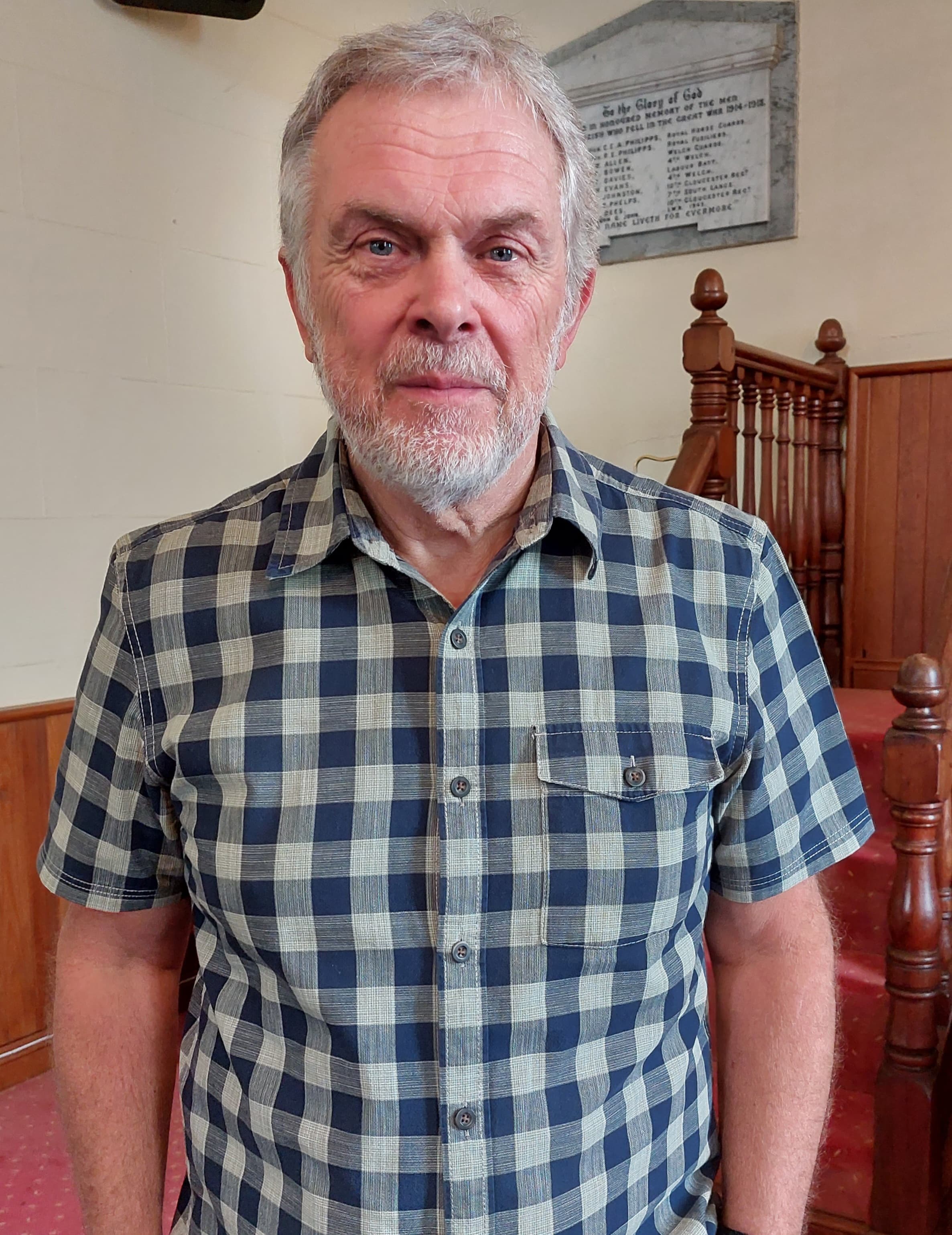
July 3rd 2022: Alan Davison

Luke 6: 20-38

The Bible has several inconvenient truths, some notable in declaration of Jesus Christ Himself. We often talk of potential persecution for proclaiming the Word of God. For example, people are forced out of jobs for insisting on Biblical truths. This is passage of scripture we find difficult. It is challenging and so we tend to skip over it.

“But I say to you who hear, Love your enemies, do good to those who hate you.” (Luke 6:27). This short little phrase causes us to baulk. ‘Love you enemies.’ This can cause us to hesitate. The rest of the sentence goes on to say what Jesus means.

Who is my enemy?

I’m a nice person who gets on well with others.  If possible, so far as it depends on you, live peaceably with all.” (Romans 12:18). Jesus’ statement is emphatic. We will have enemies, but Jesus expects us to love them. Verses 27-28 gives us some characteristics of those who will be enemies, “But I say to you who hear, love your enemies, do good to those who hate you, bless those who curse you, pray for those who abuse you.” (Luke 6:27-28).

Jesus Himself told His disciples, “If the world hates you, know that it has hated me before it hated you.If you were of the world, the world would love you as its own; but because you are not of the world, but I chose you out of the world, therefore the world hates you. (John 15:18-19). So, if we’re not hated to some degree, we need to ask ourselves, why?

“Bless those who curse you.” To curse, in this context, is ‘to doom someone by dragging them down.’ It is an ancient version of gaslighting, speaking ill of them behind their backs. Such a situation can bring the gospel into disrepute. Jesus says, ‘Love your enemies.’

No-one interrupts Jesus to ask Him, ‘Who is my enemy?’ We are not to make someone our enemy but behave in a neighbourly fashion towards them (Parable of the Good Samaritan). Jesus doesn’t talk about us being offended, wounded. Jesus tells us to deal with them in love.

Why should I love my enemies?

Jesus says so. Jesus really means this because He lived out this principle in His own life (the injustice of Gethsemane). Ultimately, this was for the sake of the Father. Jesus never compromised justice or truth. We also see Jesus standing up for others (e.g., the adulterous woman).

The apostle Paul writes about our responsibility, “Be imitators of me, as I am of Christ.” (1 Corinthians 11:1). There is no arrogance or pride. Paul points to Jesus.

“Be merciful, even as your Father is merciful.” (Luke 6:36). As children of God, we are to show mercy to others. We should want to imitate Him. Jesus says that’s what we ought to do and Jesus Himself lived out this principle.

How do I show love?

“But I say to you who hear, love your enemies, do good to those who hate you, bless those who curse you, pray for those who abuse you.” (Luke 6:27-28). When someone hates us we are to do good to them. The ‘Golden Rule’ states, “And as you wish that others would do to you, do so to them.” (Luke 6:31). Other cultures at the time also stated this in the negative – ‘Don’t do something to someone else you wouldn’t want done to you.’ It’s a worldly view.

Jesus goes much further. He instructs us to actively seek the good in others. We are to be motivated by a desire to please our heavenly Father. When someone harms us or tries to taint our reputation, we are to bless them, to seek their good, to witness God’s love to them. When people spitefully use us, we are to pray for them – that God would work in their hearts, and they would become a true witness of the love of God.

“To one who strikes you on the cheek, offer the other also, and from one who takes away your cloak do not withhold your tunic either. Give to everyone who begs from you, and from one who takes away your goods do not demand them back.” (Luke 6:29-30). To strike is to smite. The word is nuanced with striking to offend. The intention is to humiliate.

But love your enemies, and do good, and lend, expecting nothing in return, and your reward will be great, and you will be sons of the Most High, for he is kind to the ungrateful and the evil. Be merciful, even as your Father is merciful.” (Luke 6:35-36). Jesus did not think in terms of the moment. His primary focus was on the heavenly eternity. The focus is on God Himself, on how He acts. We are joint heirs with Christ, despite us once being His enemies. This fallen life means we will have enemies, those who oppose us in some way. But if we’re firm in standing on God’s truth, doing good to those who hate us, we do all these things by looking to Jesus. The world seeks to remove enemies by destroying them. God seeks to adopt us and treat others in the way He has treated us, in love and mercy.

June 26th 2022: Ian Middlemist

To watch this service, click on the link to our YouTube channel: https://youtu.be/uZdzHJOczJI

The Reasoning of our Hearts.

An argument arose among them as to which of them was the greatest. 47 But Jesus, knowing the reasoning of their hearts, took a child and put him by his side 48 and said to them, “Whoever receives this child in my name receives me, and whoever receives me receives him who sent me. For he who is least among you all is the one who is great.”

49 John answered, “Master, we saw someone casting out demons in your name, and we tried to stop him, because he does not follow with us.” 50 But Jesus said to him, “Do not stop him, for the one who is not against you is for you.”

Luke 9: 46-50:

We’re not engaging in a dialogue here. I’m speaking to you. Yet you have many thoughts, many tensions in you, pulling you this way and that, all the time. There are times when we dialogue, when we discuss. It is a great way of working through our problems. This is such an important discipline. God has created human beings with dialogue as a means of growth. The Holy Spirit ministers to us through His Word, the scriptures. He does not minister to us through our feelings, but through the powerful application of the truth of His Word in our lives. Does your thinking align with the scriptures?

There is this dialogue that is going on between Jesus and His disciples – two dialogues are taking place: between the disciples, as an argument arose (v.46) and a dialogue within themselves, within each of them. Jesus may not have actually heard what the disciples say to each other. In Matthew’s account they come to Him and ask, “Who is the greatest in the kingdom of heaven?”  (Matthew 18:1)

In Mark’s account, Jesus asks them the question, “What were you discussing on the way?” But they kept silent, for on the way they had argued with one another about who was the greatest.” (Mark 9: 33b-34). He is drawing out what is in their mind. What is implicit in Matthew and Mark is made explicit in Luke’s account. Jesus knew the reason of their hearts. He knew what was going on inside their minds and inside their hearts. Jesus knows what’s going on inside your thoughts and minds today, also. What is going on in your heart today?

Whilst the disciples had their open dialogue, there’s an internal dialogue and it led them to think firstly, that they were great. Secondly, to ignore children. Thirdly, to reject the outsider doing good.

Who is the greatest?

Luke clearly highlights the disciples’ worldly attitude in contrast to Jesus’ just previous prediction of His own death. The disciples were ignorant of what Jesus meant. Jesus knew their jealous thoughts. The question in verse 46 has to do with rank. How on earth did they get themselves into this position? Perhaps we’re not that far from it? The disciples arguing becomes an ugly position. How were they great in Jesus’ eyes? In chapter 6:12-16, Jesus chose them. They were in His presence whilst the Lord Jesus did amazing things. In chapter 9 the disciples are now being used by God’s hand to do amazing things. In chapter 6, only after an entire night of prayer, Jesus names these twelve.

We are not like other people; we are the people of God. Amazing! In chapters 6-8, the twelve have been eye-witnesses to His majesty in the most powerful teaching that came directly from heaven. At the start of chapter 9 the disciples are commissioned by Jesus to go out and do acts of power. All of this might have gone to their heads. As we know, when someone gets a status in society, it so often goes to their heads.

Are you a dog person or a cat person? Or neither? The master pets the dog, makes a fuss of the dog, gives him treats. The dog wags his tail and says, ‘My master must be god’ and worships the owner and is loyal to him. The master pets and cuddles the cat. The cat purrs and enjoys receiving gifts. The cat says, ‘I must be god.’  That seems to be the way cats respond to being made a fuss of, of being chosen. The cat responds by thinking he must be god, the dog responds by thinking the owner must be god.

How perverse our human nature is. God gives us the attention and love. He showers blessings on us all the time and we start to think, ‘I must be god because He loves me so much’ We must be good because He loves me so much.’ How wrong we are. The Christian must never say, ‘God loves me because I’m deserving of it.’ We must never allow our thoughts to go there. God loves our sinful selves. Our satisfaction is not found in the fact that we are chosen, or special in any such way. Our satisfaction is found in the love of God, in Him, not in our status or position.

Children – the company you keep.

Who do I not want to keep company with? The culture of the time was different to ours. In our day, children are very important. Scripture Union have a campaign – 95% of under 18s don’t go to church. We should be concerned, praying, and reaching out. On the other hand, our society has great care for children. We see great carelessness about parenting. It is very different to the way children were treated in the disciples’ day. Children were seen as a waste of time back then. We see in Luke 18, the disciples sending the children away from Jesus because they thought Jesus was too important to talk to children.

The disciples thought greatness was something to do with the company you kept. The child was loved, I’m sure, but powerless and unimportant in that society. So, why spend any time with a child? Jesus says, “Whoever receives one such child in my name receives me.” (Matthew 18:5)

Peter, James and John thought that being on the mountain top meant that they were now greater. They were completely wrong. Jesus wasn’t saying you find greatness in being kind to children, but how they relate to God the Father. You can’t think highly of yourself and highly of Jesus. Greatness is a gift. Those who’ve received this gift will think lowly of themselves and will think highly of the lowly. They’ll lift them in their thoughts. This isn’t to say that the lowly and children are to be thought of as sinless, or to be mimicked. God has gifted you and all the people here today with experience. That’s important. We adults have responsibilities, God-given responsibilities. You cannot think highly of yourself and highly of Jesus. These disciples thought highly of themselves because of who they spent time with: Moses, Jesus and Elijah. We are to be humble before the Lord.

Verses 49-50: Here we see another man casting out demons. How the disciples react to him has a bearing on how they see themselves and how they see the Saviour as great. Their reaction to this outsider has a bearing on how their hearts were doing. It exposes the reasoning of their hearts.

John and co have known encouragement and the power of God through their own fingertips. John and co have gone on the mountain top and they have witnessed the Saviour’s transfiguration. John and co were chosen. Now someone else is doing similar work, doing work John and co. have been doing. How dare he! He wasn’t one of the elite, the twelve squad. The man is claiming to have the same power. He clearly wasn’t from within their camp. We might have the same thoughts.

These disciples thought exorcism was their exclusive ministry, only for the 12 squad. How do you feel when others succeed? This comes up in the church quite a lot. How do we feel when others are promoted, and we don’t get the acknowledgement we deserve? How do we feel when someone has been around less than we have, and they’ve been promoted? This can happen in the workplace and the church. Not only within ourselves but as we consider the outsider church. What statements do we make about the outsider when they are demoted, when they’re humbled? Do we rejoice a little bit?

I really don’t think John was expecting Jesus to respond like this. When John approaches Jesus saying, ‘This guy is casting out demons,’ perhaps he thought Jesus would tell him off. Jesus responds completely opposite, ‘This guy isn’t in the 12 squad but he’s doing a good thing. Don’t stop him.’ His rule is simple – whoever is not against you is for you. Have an open heart. Let them be blessed. Be thankful for that blessing if it is from God. The fact that they don’t come from our camp doesn’t make a difference. If they are doing God’s work, do not stop him. How many experienced Christians have tried to stop others from making progress, simply because they are not from our camp? See the danger of this. Take it seriously. If the gospel is being preached, we must say, ‘Hallelujah,’ especially in these days It may not be from our tradition but thank God the gospel is being preached. (Numbers 11).

Paul says, “What then? Only that in every way, whether in pretense or in truth, Christ is proclaimed, and in that I rejoice.” (Philippians 1:18). Paul is not being careless. He’s seeking a desire for the gospel to be preached. Let’s pray for the gospel to be promoted from wherever.

In these three instances, the reasoning of the disciples’ hearts was exposed. He who is least among you, he is the greatest. The disciple who is prepared to identify with the lowly, to receive them, to minister the kindness of the gospel to them, that’s what the Christ-like mind says. Because Christ directs his heart to the lowest place of all. He directs His gaze, his vision to the cross. That’s how willing He was to be humbled.  

In Luke chapter 2, in the infant account we read, “Behold, this child is appointed for the fall and rising of many in Israel, and for a sign that is opposed (and a sword will pierce through your own soul also), so that thoughts from many hearts may be revealed.”(Luke 2:34-35).

This is the ministry of the Lord Jesus. He is revealing our hearts. Are you someone who keeps company with children? You understand, when I speak about children now, that I’m not just talking about children, I’m talking about anyone who society thinks, ‘that person’s a waste of time.’ Are you someone who’s told the outsider to stop? Let’s seek to turn away from such reasoning in our own hearts. Let’s be humble before the Lord. Let’s exalt the name of Jesus Christ in our midst.

June 19th 2022: Andy Christofides

To watch this service, click on the link to our YouTube channel: https://youtu.be/nDbTMR8g1B8

“And someone said to him, “Lord, will those who are saved be few?” And he said to them, “Strive to enter through the narrow door. For many, I tell you, will seek to enter and will not be able. When once the master of the house has risen and shut the door, and you begin to stand outside and to knock at the door, saying, ‘Lord, open to us,’ then he will answer you, ‘I do not know where you come from.’ (Luke 13:23-25)

The book ‘Practical Religion,’ by J.C. Ryle won my heart and challenged me, as it looks at the practical side of being a Christian. One of the first chapters brings us to Luke chapter 13. Jesus was heading towards Jerusalem. There was a lovely turning point in Luke’s gospel where, at last, the disciples have understood who Jesus is. That great declaration has been made, “You are the Christ, the Son of the living God.” (Matthew 16:16). Jesus told them that His Father in heaven had revealed that to them. If you understand who Jesus is, it’s a miracle. You might say, ‘He’s a great man, a great teacher,’ but it is only the Spirit of God can convince you He’s the Creator of the universe. It was a shock to me, it came suddenly to me at the age of 19.

His disciples had got the point that He is the Son of God. Jesus Christ is the second person of the one Triune God, one being but mysteriously three persons, distinct in their persons, yet one in their essential essence. It’s the Father who sent the Son and the Son who came in the power of the Holy Spirit. It’s the Son who died on the cross, not the Father. It’s the Spirit who oversees it all. It’s the Son who rose from the dead. It’s the Lord Jesus Christ who is reigning and will return one day. Are we ready for that day?

Why did Jesus ever come to this planet? From the point where the disciples understand who He is, He starts to teach them why He has come; He is going to die. Jesus set His face like a flint towards Jerusalem.

As He is on His way to Jerusalem with the disciples, there is a crowd around them. Someone asks a theological question of interest then melts back into the crowd. We don’t know who he was or what he was about. ‘Lord,’ he says, ‘are there few who will be saved?’ We hear nothing more about this man.

Many people want to speak about points of theology. On many occasions they are a smokescreen, a distraction from the one thing that’s necessary. There are different points of view, for example on dress codes, of what the preacher should wear to church. Is it a key issue? The question here is a good one, ‘Are there few who will be saved?’ But Jesus takes the opportunity to address the whole crowd, not just the one man. The punch line is this, whether there are few or many who will be saved, you make sure you are saved.

Strive to enter through the narrow door.Strive! There is a time coming when many will try but will not be able to.

In these three verses there is a door, a command and a prophecy.

A door. Jesus says, “Strive to enter.” There is a door. Here is the door which we can go through and enter eternal life. Is there a time when you went through the door of life eternal? Once I’ve gone through that door it guarantees I’m going to enter a glorious place called heaven. I’ll have eternal life, I have peace with God, my sins that are many have been forgiven. Why have I done the things I’ve done? We’ve all got a problem. We sin because we are sinners. Some say babies are born neutral. But they are born with a bias, wanting their way. This leads to sin. We have to teach children to do the right thing. It’s a wonderful thing for fathers and mothers to train children in the way of the Lord. When we go through this particular door, sin, which is such a burden, is rolled away.

It’s a narrow gate that leads to heaven. Sin is a problem. It’s a deep chasm, a vast gulf. But the good news from Jesus isthere is a door! What an amazing thing in such a world as this, with war, economic chaos and where anything goes, there is a way back to God. Sin is the barrier. God is holy beyond our imagination, heaven is pure. There is no way we can get there ourselves, but thank God there is a door and Jesus is the door:

I am the door. If anyone enters by me, he will be saved and will go in and out and find pasture.” (John 10:9)

“Jesus said to him, “I am the way, and the truth, and the life. No one comes to the Father except through me.” (John 14:6)

“Therefore, since we have been justified by faith, we have peace with God through our Lord Jesus Christ. Through him we have also obtained access by faith into this grace in which we stand, and we rejoice in hope of the glory of God. Not only that, but we rejoice in our sufferings, knowing that suffering produces endurance, and endurance produces character, and character produces hope, and hope does not put us to shame, because God’s love has been poured into our hearts through the Holy Spirit who has been given to us.” (Romans 5).

This morning, you’ve come into the chapel. How did you come in? I came in through the front door. Straight forward. What’s the way to heaven? There’s a door. Jesus says there’s a difficulty with the door. It’s narrow and you couldn’t take a bag through it. You have to go one by one. To get to heaven you have to renounce sin. When you trust in Jesus and go through Him, He counts you as righteous because He sees His Son covering you. In actual fact you are still a sinner – a saved sinner. Because you have new life, you desire new things, to please God. Little by little, He transforms us. You leave your desires to sin at the gate. You can’t go through that gate with your sin, your own agenda, what you want – what university you want to go to, what kind of job you want, what husband or wife you want, what house you would like to have. You leave that at the gate. You go through alone and Jesus meets you. You put everything in His hands and ask, ‘Lord, who do you want me to marry? What university do you want me to go to? What job do you want me to have? Where do you want me to live? You put everything into His hands. You walk with Him.

It’s a narrow door. You go through one by one, leaving self and sin, the worldliness of my agenda. Through that door is Jesus. We should commend Jesus to people. The early church was a beacon. See how they loved one another. After all Paul says about the gospel to the Corinthians and the gifts of the Spirit, he says he will now show the most excellent way – love. ‘Love one another as I have loved you.’ Notice this, it’s only attached to this – ‘by this shall all men know that you are my disciples if you love one another.’ The world needs to see that Christianity actually works. Love is the outwards expression of the reality of truth. Despite our differences, it’s a command of the Lord Jesus to love one another.

Jesus is the only door. There is no other way. He is the only way to heaven. It’s Jesus or not at all. It’s not religion that gets you there. It’s not church-going that gets you there. It’s not morality. It’s not doing good – life by human standards. Why? Because God’s standards are perfection, purity. His righteousness is beyond our imagination. Human morality is like stinking rags. What gets us to heaven? Is it my repentance? Is it my turning from sin to God? No. Is it my faith that gets me there? No. It’s not my faith. It’s not my works that gets me to heaven. It’s Jesus. Jesus. Jesus only. He died that we might be forgiven. There was no other good enough to pay the price of my sin. Have you gone through the door, trusting His redeeming blood? Don’t think your works get you through.

Zechariah 13:1 is a lovely prophecy, On that day there shall be a fountain opened for the house of David and the inhabitants of Jerusalem, to cleanse them from sin and uncleanness.” Zechariah is looking forwards to Calvary. We’re looking back on Calvary. That fountain was opened up. Same Old Testament. It certainly saved us who go back to it. The door is wide open now. At some point it will be closed. We are all encouraged to come.

Many of the most unlikely candidates have gone through that gate. A man called Manasseh, in the Old Testament, was a wicked, wicked man. Totally amoral. He even offered his own children as living sacrifices to the false god Molech. What a dastardly, evil, wicked man. But late in life he saw the door and he went through it. Saul of Tarsus, a wicked man who persecuted the church, approving of people being stoned to death, went through the door. It’s amazing.

Here’s a question, not ‘Lord, Lord, are there few who will be saved’? but ‘Lord, what must I do to be saved?’ Believe on the Lord Jesus Christ.’ Open the door and you shall be saved. Not ‘Are there few or many?’ but ‘What about me?’

What a privilege it is to have a door at all. For the angels who fell and were cast down to Earth, including the prince of demons, the arch angel, glorious in beauty, there is no door. But for us there is a door.

Are you saved? Have you been trough the door? If you are saved and have been through the door, be thankful. Thankful has ‘full’ on the end. Be full of thanks. Does my life express that I’ve been through the door? Am I full of thanks to Him? Does my love overflow to my fellow believer and to the world around about me? Focus on the door. Go forward in confidence in Him. Be thankful.

If you’re not a Christian, don’t hang around. Jesus says, ‘Strive to enter.’ Don’t say, ‘I tried’ and it didn’t work. If you knew there was a million pound behind a certain door, you wouldn’t try and give up, you’d try again. Jesus says, ‘Strive.’

Jesus expands on this. The time is coming and many will try and won’t be able to because that door will be shut. It’s not shut now. It’s open. Strive to enter through the narrow gate.

June 12th 2022: Adrian Brake

If you would like to watch this service, please click on the link to our YouTube channel:
 https://youtu.be/akEFKsKQDxc

Philippians 1: 12-14

Nowhere, in all its 66 books, does the Bible ever say that when someone becomes a Christian all their problems disappear. Quite the opposite.  The apostle Paul warns that it is through many tribulations that we must enter the Kingdom of God. Jesus said to the disciples, In the world you will have tribulation. But take heart; I have overcome the world.” (John 16:33b). Jesus Christ was a ‘man of sorrows.’ If we are His disciples and follow Him and walk in His footsteps, we too will be people of sorrows. Paul says Christ suffered and was glorified. He says we shall reign with Christ and be glorified with Him if we also suffer with Him.

We live in a fallen world, a world that groans under the curse. On day, God will remove all that but for now we are impacted by the effect of the Fall. But, whilst also giving us a helpful does of reality saying there is suffering for the people of God in this world, the suffering anyone of God experiences, the Bible also gives us things to help to anchor us. Our troubles have a shelf-life; they are the troubles of this world and will not follow us into the world to come.

The Bible assures us God is in control, even of His people’s sufferings. God will not abandon us to our sufferings. He is present with us. He has purposes in people’s sufferings. God redeems the suffering of His people for a glorious purpose. God, through suffering, works to bring about great and precious fruits.

You have a painful experience of one kind or another, in ways which we cannot understand at the time. But we live by faith in God’s promises and God brings out of that painful experience something that is for the individual’s own benefit.

But I want to bring to you something perhaps we don’t often think about – God uses an individual believer’s painful experiences to benefit somebody else. He uses suffering and the anguish that we go through, to bless and to profit another person, to bring them to faith in our Saviour. Our suffering in this world can create gospel opportunities that wouldn’t be there otherwise. Our painful experiences can actually be used and be instrumental, in God’s hands, in people’s conversions. Do you want to be an evangelist? Perhaps, even a difficult experience may make you one.

Philippians chapter 1 is an example of a trial with an evangelistic purpose.

I want you to know, brothers, that what has happened to me has really served to advance the gospel, so that it has become known throughout the whole imperial guard and to all the rest that my imprisonment is for Christ. And most of the brothers, having become confident in the Lord by my imprisonment, are much more bold to speak the word without fear.” (Philippians 1:12-14).

Paul says, ‘I want you to know brother, the things which have happened to me, happened for the furtherance of the gospel. What happened to Paul? He is speaking of the opposition he had encountered in his ministry, and the suffering that that had brought upon him.

Interestingly, in 2 Corinthians 12, Paul catalogues for the believers there, everything he had suffered, simply for being a servant of Christ. One thing he mentions here, and in Philippians, he was imprisoned, in confinement. When Paul wrote this letter he was under house arrest, confined, unable to leave because of his preaching the gospel. He refused to deviate from his task of declaring Jesus to be the Messiah, the Saviour of sinners.

Paul was confined, in a home. He would have been guarded 24/7 by Roman soldiers. Not just any Roman soldiers, the palace guard, who were amongst Caesar’s premier soldiers, the elite. This gives an indication of how much of a threat Paul was regarded in the world of his day. He had the top men guarding him, really tough men. It is possible he was actually chained to them, or that may be a metaphor to speak of his confinement.

The Philippians have heard of this. Paul had a good relationship with this church. He was involved in planting that church (Acts 16). He had maintained a good relationship with them. That comes out in the opening verses of the chapter (verses 3, 4 & 7).

He evokes God as a witness, For God is my witness, how greatly I long for you all with the affection of Jesus Christ.” (Philippians 1:8). Paul had a close relationship with this church, Therefore, my beloved and longed-for brethren, my joy and crown, so stand fast in the Lord, beloved.” (Philippians 4:1). He loved them deeply. Why? He had fellowship with them in the gospel, “for your fellowship in the gospel from the first day until now,” (Philippians 1:5). He saw in the Philippians a passion for Jesus Christ. He was drawn to them. Don’t you feel that when you see people with a passion Christ? You want fellowship with them. These were people who had come to know, love and serve Jesus Christ.

He speaks in verse 7 that they themselves may have suffered for the gospel. They were dear to him, and he was dear to them. They had supported his itinerant ministry. When most other churches had left him to his own devices, the Philippian church had invested in Paul, showing how serious they were about the gospel. Despite being poor believers materially, they supported and provided for him.

They had head Paul was in a serious condition, confined whilst he awaits a verdict about his future, will he live of will he die, will he be executed or set free? He is in a very difficult position. The Philippians have sent to Paul a man to help, Epaphroditus, later mentioned in the book, “Yet I considered it necessary to send to you Epaphroditus, my brother, fellow worker, and fellow soldier, but your messenger and the one who ministered to my need,” (Philippians 2:25). He has a gift from the Philippians. No doubt, Epaphroditus came not only with a gift and prayer, but also to find out more to give news back to the Philippians, to inform their prayer, “But I want you to know, brethren, that the things which happened to me have actually turned out for the furtherance of the gospel,” (Philippians 1:12).

Paul says it has been a major step forward for the work of God. They might have thought it was a disaster; the gospel had benefitted immensely from Paul’s travels. Having seen Paul’s fruitfulness in planting churches and encouraging people, all of a sudden Paul can’t get out to preach in the market place and the synagogue. He is stuck in this accommodation, under house arrest. Surely, the work of the gospel was being curtailed. Were the enemies of the gospel succeeding? But Paul says, ‘If only you knew! In ways which you couldn’t have anticipated, God has turned the table on His enemies.’

In verses 13 and 14 Paul explains two ways in which his confinement under house arrest has been beneficial to the gospel, how it has created opportunities for people to hear and know Christ, which would not have happened otherwise.

Firstly, “So that it has become evident to the whole palace guard, and to all the rest, that my chains are in Christ,” (Philippians 1:13). The people guarding Paul, and others, have come to hear that he is there because of his testimony to Jesus Christ. There were 6 hour shift patterns for the guards, so Paul saw many soldiers in a 24 hour period. As they were with him, he talked to them of Jesus Christ. He preached the gospel to the palace guard and to all the rest. It seemed these soldiers had spoken to other people. The soldiers were passing the message on. “All the saints greet you, but especially those who are of Caesar’s household.” (Philippians 4:22).  Paul gives greetings to the Christians in Philippi, but especially to those of Caesar’s household. It would seem people in Caesar’s household had come to faith in the Lord Jesus Christ. It would appear that it was Paul’s confinement that was instrumental in this.

Caesar’s household would never turn up at the synagogue or the market place to hear Paul preach. So, what does God do? He takes Paul and puts him in their midst. He puts Paul in Caesar’s household – in confinement with access to those prison guards. Paul had a ‘captive audience!’ Comically really. They thought he was captive, but they were captive because they had to be there and they had to listen to what Paul way saying. Paul had a captive audience in the Roman army, in the palace guard, who then spreads it. If Paul was going to get the gospel message to Caesar’s household, it would only happen by him becoming their prisoner. Paul would never have had the opportunity to witness to them, to declare Christ, in any other way. Paul’s confinement was by God’s sovereign appointment. By God’s sovereign appointing, Paul gets this opportunity to witness into the heart of the enemy. It would have been a difficult experience, but it was a trial with an evangelistic purpose.

This was one way in which Paul had a difficult experience which turned out to benefit others and to create gospel opportunities. It gave him access to places he wouldn’t have had access to otherwise.

Secondly, Paul writes, “And most of the brothers, having become confident in the Lord by my imprisonment, are much more bold to speak the word without fear.” (Philippians 1:14). Paul was in Rome, under house arrest. There was already a church in Rome, but it seems there was much timidity, and they were intimidated into silence. But Paul says, through his confinement, something wonderful has happened; they have become confident by his chains. His imprisonment had made them much more confident and much more bold to speak the word of God without fear. How would that have happened? They would have seen the way God was upholding the apostle Paul. Under house arrest, Paul couldn’t leave, but he could have people coming to him. Some of these brethren, no doubt, would have come in to speak to Paul and pray with him. They would have seen in Paul, Jesus Christ upholding him, Paul knowing the peace of God that passes all understanding, guarding his heart and mind. They would have seen it was not easy serving Christ, but they would have seen in Paul, God’s protecting hand. They knew that if God was going to be with them like He was with Paul, then they too could speak the word boldly, without fear. Through Paul’s suffering, people would have seen in him the power of God – not for great miracles but through him being sustained. Previously, the church was not doing its job because of fear. Now, the church was emboldened and empowered. The gospel is now being spread in Rome.

They could have thought, how is the gospel going to get in greater power to Rome? Many might have thought the answer would have been to invite Paul to speak in the synagogue and in the market place, invite him to address people there. But no. God sits Paul in one room, for people to find him there. How is the gospel going to get out that way? Well, Paul will get access to people in that place he wouldn’t get access to otherwise, and the emboldened church, though seeing what has happened, will get the gospel out. Through Paul’s difficult experience, gospel opportunities were created.

There’s a very important statement Paul makes, And see, now I go bound in the spirit to Jerusalem, not knowing the things that will happen to me there,” (Acts 20:22). Paul’s final words to Ephesus. At a later date, the Spirit has told Paul he will suffer. He then says, “But none of these things move me; nor do I count my life dear to myself, so that I may finish my race with joy, and the ministry which I received from the Lord Jesus, to testify to the gospel of the grace of God.” (Acts 20:24). Paul was single-minded. He had a ministry given to him by the Lord – to tell others the good news of sins forgiven by Jesus Christ. He is prepared to lay down his life for that. He knew there was trouble ahead. But he knew he had a commission. He didn’t cling to his life. Paul would literally be a living sacrifice. He offered himself a living sacrifice to God.

Being fruitful in our witness to the Lord will inevitably bring pain and heartache. Sometimes, God leads us into difficult experiences to create gospel opportunities. For example, in one sense it’s sobering and in another sense it’s thrilling, to think that God is at work through everything. Could it be that, perhaps, at some point the Lord will take us into hospital with a serious illness? It would be very painful and difficult. Or it could be a loved one in hospital with a serious illness, which would be very painful and difficult. But in that hospital are other patients and medical staff, who would never think of darkening the doors of the church. Patients and medical staff who, if a tract came through their door, would throw it straight in the bin. But God has a magnificent purpose, to take a person and bring them into the Kingdom. But how on earth are they going to come under the gospel if they will not come to a church? Or they will not receive literature, or come to a church fun day or anything like that? How are they to get the gospel? Could it be through a believer going into the same ward as them? Or a believer being one of their patients? Or through a believer going in visiting and having opportunity with other patients and medical staff? A difficult experience, creating a gospel opportunity. The Lord, in redeeming that painful experience, brings about the birth of a brother and sister into the family of God.

The story of Romanian evangelical priest Richard Wurmbrand is a stirring one. Boy, did he suffer. But boy, was he fruitful! Who knows, in time to come, the way things are going in our nation, we might find ourselves in prison for the cause of Christ, and gain access in that way, into places we wouldn’t have had otherwise?

Through the difficult experiences of Paul, and of us, people see the truth of God displayed. They see a reality, not just words spoken on a Sunday. They see the reality of God in a person’s life, in a believer’s life, as they suffer. They see not just sorrow and pain, but peace, anchored and sustained by the keeping power of God. People say, ‘I don’t understand it. I see other people suffering with the same condition, but there’s something different about you, in the way that you are able to go through this.’ It can make people sit up and think. Perhaps the Lord will use it. A gospel opportunity.

In the first three centuries there was great persecution brought upon the church of the Lord Jesus Christ in the Roman Empire. Many believers were martyred in horrendous ways. But there are documented examples of people who attended the executions, the burnings and giving to the lions, who were utterly amazed at the grace God gave believers as they went through that. And some of those watching, actually came to faith in Christ because of it, who were then themselves executed.

Who knows that God may use our lives in that way, sending difficult experiences so that we become a stage for God to demonstrate His power, even in people’s suffering, that it may turn other people’s hearts? Our challenge is this – and it is very much something we work towards – can we really say, to any measure with Paul, ‘Take my life.’ Or are we, ‘No, Lord. I’d love to be a witness for you, I’d love to be involved in evangelism, telling others about Jesus, but not through a difficult experience that will be a gospel opportunity, out of which will come a new brother and sister in the family of God.’

Are we willing, in light of what God has done for us, to offer ourselves to Him in that way? Did not Jesus give His life so that we might come to know Him? Christ suffered incredibly for our salvation. We are to practice Christ-like selflessness and sacrifice for the good of one another. Difficult experiences are part and parcel. We can’t escape them. But isn’t it good to think how the Lord can redeem them?

May God help us in these days and give us our Christ-like perspective. We are here for Him, for the work of the gospel. May we give our lives, whatever happens, in His service.

June 5th 2022: Alun Johnson

To watch this service, click on the link to our YouTube channel:
https://youtu.be/ZgMe-wH_eEk

Psalm 23

I wonder if you’ve ever found life hard? Some people have been dealt a really difficult hand of cards. Life doesn’t seem to work; everything seems a struggle. Russell Brand, who I do not agree with most of what he says, made an insightful tweet when he said, “Society is collapsing and people are starting to recognise that the reason they feel like they’re mentally ill is that they’re living in a system that’s not designed to suit the human spirit.” In other words, human beings aren’t designed for modern life. It’s not just on an individual level; as a nation, Covid 19 Pandemic raised the level of difficulty in our lives. In recent days, in Ukraine, millions are caught up in a senseless war.


The 21st century Christian life is becoming difficult for us. Places of work can be difficult for faithful Christians. We are being increasingly marginalised for being a Christian. Afghanistan is number one on the Open Doors watch list of persecuted churched. It says, ‘With the Taliban in power, it has never been more dangerous to be a secret Afghan believer.’ For persecuted Christians in places such as North Korea, South Sudan, Somalia, life often hangs by a thread.

If you don’t believe in the God of the Bible, know Him personally through Jesus Christ, then your source of help will be different to Christians. You may look at self-help or book a holiday. These might help in some way. However, in many ways, these might only be good for a short-term solution. The Christian, in contrast, has Psalm 23. What a refuge this is in a time of trouble. The Christian has the person Psalm 23 talks about. Not anything, in all the world, not even death itself, can shake the shelter that this person provides.

Psalm 23 is very well known. The words are familiar, but are the truths equally known? Psalm 23 is a psalm of confidence. There’s lots of imagery, lots of comforting pictures being painted: green pastures, quiet waters, a cheering banqueting table, but our greatest focus should be on the great person mentioned here. He is pictured firstly as a shepherd, then a host.

The Shepherd
Apparently, the ten million sheep in this country account for ½ of the entire UK flock. A quad-biking, whistle-blowing shepherd today is very different from the shepherds of the Ancient Middle East. However, whether ancient or modern, the relationship between the shepherd and the sheep is the same. They are totally dependent on the shepherd for food, water and protection. Without the shepherd, the sheep would not last long. It was in this sense that ancient near-eastern societies saw their own kings. It was not uncommon for them to be referred to as shepherds of their people. The kings would shepherd their people by ruling justly and wisely. It is very interesting that David, the shepherd turned king, saw God as his own king and shepherd.

The picture we get of God here is fantastic. He is a protecting God, He is a caring God, He is a sacrificial God, He is a providing God. He is not distant. Here, David is speaking of the Lord in such a personal way. Here is a God, even though He transcends the universe, has dealings with David on an individual level.

At the start of the Psalm, God is called the Lord, or Yahweh. This is the name He gives when He passes in front of Moses on Mount Sinai (Exodus 34:6). Here is a God who is a covenant-making God who maintains love to thousands and forgives wickedness, rebellion and sin. Here is a God who is not leaving the nation of Israel to their own devices, to die out in the desert. He is shepherding them to the Promised Land.

The Lord is my shepherd. Here, I think, is another level of relationship – God is not just the God of Israel, but here is a God who deals with individuals. David goes on to say, ‘I shall not be in want.’ The result of God’s care for him is he has everything he needs.

Verses 3 and 4 expand on God’s care for His sheep.

“He restores my soul;
He leads me in the paths of righteousness
For His name’s sake.

Yea, though I walk through the valley of the shadow of death,
I will fear no evil;
For You are with me;
Your rod and Your staff, they comfort me.”

Psalm 23:3-4

God acts. He proves it by what He does. Do you see how complete God’s provision is? In these pastures the sheep would have food, water and rest. In the pastures and watering holes sheep would not need to move to have what they need to be sustained.

‘He restores my soul.’ This is not only physical rest but spiritual rest too. In his life, God is leading David along straight paths. The idea of ‘Paths of righteousness’ continue that picture of ease. In his life, God is leading David along right paths, straight paths, not crooked ones. The language of covenant – that agreement, that relationship between God and Man – comes again through that phrase, ‘For His Name’s sake.’ God has bound Himself to His people and to the individuals who are part of God’s people (Exodus 3:12). What is fabulous is that God’s care for David is not limited to the green pastures but also to dark valleys too. The shadowy ravines – even there – there is a close relationship between David and His Lord.

‘Your rod and Your staff, they comfort me.’ The shepherd would have had that rod to fight off predators. It was also divine protection and sustenance, and also divine disciple. What amazing trust in the Lord. It begs the question, ‘What about us?’ Think how much light we have with New Testament scriptures. John 10 – the shepherd being spoken of here is Jesus Christ. Jesus says, I am the good shepherd. The good shepherd gives His life for the sheep. (John 10:11). Do you believe that He lay down His life for you? Do you know Him? If so, then Psalm 23 is for you!

Have you noticed in John 10, before that great statement, Jesus says, “I have come that they may have life, and that they may have it more abundantly.” (John 10:10b). The life of the Christian is the best life. Jesus really is all that you and I will ever need. Paul writes, “I have learned in whatever state I am, to be content.” (Philippians 4:11) Wow! What a statement! When we know Jesus, nothing in the world can get close to Him. There really is no-one like Jesus.

Other scriptures speak of Jesus the Shepherd, such as Isaiah 40:11,

“He will feed His flock like a shepherd;
He will gather the lambs with His arm,
And carry them in His bosom,
And gently lead those who are with young.”

He tends His sheep. He gathers them. Notice the verbs. This isn’t sentimental rubbish. This person is also the sovereign Lord, who comes in power. He knows exactly how to deal with His sheep, which is why life with Jesus has soul restoring green pastures and quiet waters. Therefore, for the Christian, they are not floundering around in the darkness. Even when death is close by, they fear no evil because Jesus is with them. Do you love Jesus more than anything else in this world? Life is hard, it really is. But hold onto Him, knowing that He is holding onto you.

The Host

This Psalm just gets better and better as you go through it. If you thought that the metaphor for the Lord as the shepherd was a rich image, then how about the picture painted in verses 5 and 6 of the host?

You prepare a table before me in the presence of my enemies;
You anoint my head with oil;
My cup runs over.”

Psalm 23:5

I wonder if, as evangelical Christians, we’ve forgotten that David’s experience of His Lord was like being at a banqueting table? For David, with his God, he was having the time of his life. What is our experience of our Lord? Is life with our Lord like being at a feast or a lavish celebration, or is it rather dull and  dour, a kind of spiritual drudgery? David is a guest at the Lord’s table. He is an honoured guest, having his head anointed with oil.

The table is prepared in the presence of David’s enemies. It suggests that the Lord has brought before David his own enemies, his vanquished enemies, to watch in envy as he sits down to his meal. What a lavish banquet this is. His cup overflows, blessings are piled on David’s life. He is receiving more than enough on his life. David has God Himself. For David it is only the Lord who truly satisfies. It fills him to bursting. Is it possible for it to get better for David? Yes! It does. It’s not a temporary measure,

“Surely goodness and mercy shall follow me
All the days of my life;
And I will dwell in the house of the Lord
Forever.”

Psalm 23:6

Quite a statement! God’s overflowing blessings to David will follow him all the days of his life. It will never leave him alone. It gets better again. It’s one thing to go for a meal, but another to stay for ever, And I will dwell in the house of the Lord forever.” David’s confidence swells up to eternal life. The blessings never end.

Compared to the Christian, David, along with all Old Testament believers of Hebrews 11, only saw from a distance, what we have. David’s experience of his Lord is multiplied to us this side of Calvary. We also are invited to a table. We are also given a cup that overflows. We also are going to an eternal hope.

At the table of the Lord’s Supper, we are continuing that Last Supper that Jesus had with His closest friends. As the disciples reclined with Jesus at the table in such an intimate setting, we too, as we celebrate the Lord’s Supper, do something similar. We are celebrating the fact that Jesus’ substitutional death on the cross was so effective, so powerful, so complete, that the dividing wall between a sinful man and a holy God was completely knocked down. In faith we can step into the Holy of Holies and enjoy an intimate relationship with the one true and living God.

We can know God as our friend. In a way, it’s almost as if we are feasting with Him in the presence of our vanquished enemies. You know, Christians, we have vanquished enemies? We have three of them: sin, death and hell. Our sins, not in part, but the whole, are nailed to His cross, and we bear them no more. Praise the Lord! Praise the Lord, o my soul! Death, the grave, have no victory, no sting because Jesus lives in the power of an endless life. He has broken the power of death once and for all. For the Christian, there is no fear of hell. Jesus has already told us in John 14, ‘Don’t let your hearts be troubled, trust in God, trust also in Him.’ In His Father’s house there are many rooms and right now, He is preparing a place for us. That is where we’re heading.

Does the Christians cup overflow? Yes! Why should it surprise us at what the Lord has done? Perhaps because we’ve normalised the blessings that we have received. Perhaps we’ve become used to the fact that we’re saved? It’s a terrible thing but it’s easy to do.

Brothers and sisters in Christ, do you ever sit down and think about what you are and what you have? Does it not make us absolutely in awe? We’re saved! We’ve been washed, we’ve been sanctified, we’ve been justified in the name of the Lord Jesus Christ and by the Spirit of our God, and now there is no condemnation for those who are in Christ Jesus. It is all of Him. It’s all Jesus’ work, which means whatever accusation Satan throws at me, nothing will ever change my standing before God. Which is why the Christian can sing with David,

“Surely goodness and mercy shall follow me
All the days of my life;
And I will dwell in the house of the Lord
Forever.”

Psalm 23:6

In Christ, God’s treatment of His own is constant: goodness and love, goodness and love, goodness and love to the end. Remember, the Christian has been adopted into God’s family. If you’re in the family, you never have to leave. When this passing world is done, we will continue to live in the house of the Lord forever. Hallelujah!

I absolutely love 1 Corinthians 13:12, For now we see in a mirror, dimly, but then face to face. Now I know in part, but then I shall know just as I also am known.” This is just spectacular. Of course, our cup overflows. This Psalm is the experience of those who can truly say that the Lord is my shepherd.

If you’re not a Christian here, do you want the Lord to be your shepherd? Do you want Him to be with you through the valley of the shadow of death? Do you want your cup to overflow? Do you want God’s goodness and love to pursue you all the days of your life? Do you want to dwell in the house of the Lord forever? You can have it all! Amen.

May 30th 2022: Ian Middlemist

Ephesians 2:11-22

The purpose of the Church.

You can look at taller buildings using an electric drone. Gou can see on screen what the drone is looking at, see how it is looking up there. How is the church looking from up there today? How is it looking from God’s perspective? How is our heavenly Father looking at us today? What do you think of when you think of the church? You can go on a computer and zoom in on Google Earth, zoom into London, into Canary Wharf, into the Bishops Gate area and see enormous, magnificent office blocks made out of glass. Bishops Gate was largely obliterated in the Blitz. There’s a large church – St. Helens. When you see it from the office blocks it looks tiny. Some of those office workers, on their breaks, high up, can look at the little church down there and wonder why it’s there. Worshippers can look up today and ask how they fit in. I encourage you today to raise your vision to God’s perspective. Hi is the one who has created the church for His own glory.

The church is a heavenly assembly.
The church is an earthly assembly.
The church is for the glory of God.

The church is a heavenly assembly.
The New Testament translation of church is ‘ecclesia.’ It actually means an assembly. We’re assembling today. Assemblies in schools haven’t happened for the past two years because of Covid. Schools can now come together, one school, one message. The New Testament has two kinds of assemblies, one is in heaven and one is on earth.

The universal church gathers in heaven, the local church gathers on earth. The Church is fundamentally a gathering. This must be first in our thinking. The local Church is equally important, but the invisible, universal church must come first.

When you become a Christian you become part of the universal church. You didn’t join the church. Scripture invites us to see things from His perspective. Jesus Christ has joined not just individuals to Himself, but a people, all invited to Him. When Adam and Eve sinned, the immediate effect was division occurred. Their relationship and communion with God was broken. They became afraid of Him, uncomfortable before Him. They hid, hoping to disappear from the face of the planet. The relationship suffered. God seeks out that unity between human beings. Because of this rebellion there was no harmony. But God came through His Son, to have a people He will cleanse and purify. Today, He is calling a people out of this world, out of dominion of Satan and death, to be His people in oneness.

He has raised us up with Him, “raised us up with him and seated us with him in the heavenly places in Christ Jesus,” (Ephesians 2:6). Upon saving us, He has given us a place in God’s heavenly throne room.

“12 remember that you were at that time separated from Christ, alienated from the commonwealth of Israel and strangers to the covenants of promise, having no hope and without God in the world. 13 But now in Christ Jesus you who once were far off have been brought near by the blood of Christ. 14 For he himself is our peace, who has made us both one and has broken down in his flesh the dividing wall of hostility 15 by abolishing the law of commandments expressed in ordinances, that he might create in himself one new man in place of the two, so making peace, 16 and might reconcile us both to God in one body through the cross, thereby killing the hostility. (Ephesians 2:12-16).

What are the two groups? The Jewish and the Gentile groups. God is uniting these two groups through the finished work of Jesus Christ on the cross. United together, one in the glory of heaven. If you’re sitting with Christ in heavenly places, you are also seated with the heavenly assembly.

The earthly assembly.
This is the local church. God’s purpose is that His heavenly church, one in the Spirit of God, show up on earth through the existence of local churches. God has declared us righteous in heaven, seated with the saints. It’s real, in the here and now. He has declared us righteous for the here and now. Earth, this globe, this time – May 2022, matters to God. We are not merely to be thinkers of how we live out our lives, we’re doers and need to get on with it. Our God acts in this world. Look at Jesus Christ Himself – how God demonstrated His love, not merely by making declarations of His love. But Jesus became a man, entered into this world, came in flesh.

As soon as a Christian becomes a member of the heavenly assembly, they want to become part of the earthly assembly. They want to become part of the local church. They want to be with other Christians, wanting to be in a local church. We put on the heavenly, we get involved. We’re putting on the new self, working it out with other Christians. The glory that is done to the Lord will be revealed to the world through His church. Membership in the universal church must become visible in the local church. Committed Christians, committed to one another. The ideas of a Christian who doesn’t want to become part of the church is impossible.

The purpose of the Church.
Some will emphasise that the church is heavenly; what matters is we’re walking with Jesus, trying to do our best. Others will say that the church needs to be active. The Protestant Reformation say it was possible for someone to be part of the visible, local church without being part of the church of Jesus Christ. These days, we seem to emphasise the local church.

We’re united with all churches, one with other churches. The church is universal. The Almighty God has created the church. He has brought it into existence. What is the purpose of the church? We’re here today for the glory of God. So easily we can be caught up with the concerns of the day – evangelism, bank accounts, so much so we forget we’re here for the glory of God. We’re here today to glorify Him and Him only.

The church is not ultimately for seekers. It doesn’t exist for those enquiring about the gospel. Jesus did pay attention to the needs of crowds and unbelievers. He teaches them (John 6). There’s a danger we become more and more like the world if we exist to be attractive to the world.

The church doesn’t exist to be more attractive for the disciple either. It doesn’t exist for the Christians. The church doesn’t exist for you. We’re not to go around taking surveys for our needs. We’re not to ignore people’s needs but our goal and purpose is for the glory of God.

Our God has come down to us and reached us, lifted us up to the heavenly places. All of our needs are found in Him. We’re here for Him. The church exists in the people of God. Lour primary occupation is the glory of God.

What a wonderful thing it is to be part of the church. It’s our joy to discover that. It’s wonderful to be built on the sure foundation of Jesus Christ. We have a church that is firm and secure. None can destroy His church. Praise His Name.

May 22nd 2022: James Sibley

To watch this service, click on the link to our YouTube channel: https://youtu.be/Oaab9zFVohc

Ruth chapter 3: Finding Rest

We are going to consider what it means to find true rest. What does it mean to rest in your everyday life? Is it to do nothing? I can only have restful rest if I can fully switch off. For rest to be restful, you have to know that things are being taken care of. True rest comes from a settled security, knowing that things are ok, things are taken care of.

As we look at rest in this chapter, let’s recap what has taken place. The book of Ruth opens with Naomi and Elimelech, her husband and their two sons in Bethlehem. There’s a famine in that land. Whether rightly or wrongly, they go to the land of Moab to look for food. While they are there, their two sons get married to women from Moab. In time, Elimelech and both of their sons pass away. So, we are left with Naomi, Ruth and Orpah, her two daughters-in-law. In time, Naomi hears that the famine has stopped in Bethlehem, her homeland. She makes the decision to return. She sets out on her journey with her two daughters-in-law following after her. She then decides to send them back, telling them that there is no point in them coming with her. Orpah returns back to her homeland in Moab. Ruth, after whom the book is named, decides that she wants to leave her homeland, wanting to commit her future to her mother-in-law, as well as to Naomi’s God. She says in chapter 1, “You God shall be my God.”

In chapter 2, these two widows are in a very vulnerable position, with no-one to help them, no-one to look after them. In that time and culture, it was a difficult position to be in. We see that Ruth seeks to go out to find food and sustenance for Naomi and herself. God’s sovereignty leads her into the fields of Boaz. As the harvest goes on, she is able to collect lots of food. This leads to where we are now, in chapter 3.

Chapter 3 opens with Naomi now turning to Ruth saying, My daughter, should I not seek rest for you, that it may be well with you?” (Ruth 3:1). Naomi wants to find rest for Ruth. The harvest is drawing to an end. Whilst their most immediate need for food has been met, there is still a question mark over their situation that Ruth and Naomi find themselves in. What are they going to do when the food runs out? Where would their long-term security come from? What if another famine came? What would they do?

Previously in the book it was Ruth who had taken the initiative but now Naomi steps in, looking to find rest for her daughter-in-law. Now that the harvest is drawing to a close, they are able to direct their energies elsewhere, to this deeper need, the need of rest, the need of long-term security for themselves.

Before, when Ruth was working in Boaz’s fields, they had a brief interaction. But it seems that no further meetings had taken place between Ruth and Boaz. We often like to romanticise the book of Ruth, of their eyes meeting across the field as they progressively fall in love. But that doesn’t seem to actually happen in reality; it seems they haven’t communicated since that first interaction. Boaz gives no indication of realising what is about to unfold. He doesn’t seem to realise that he was able to offer Ruth and Naomi long-term security. It might be that Ruth was still in mourning. The text does not make this clear.

Naomi makes this proposal, “Is not Boaz our relative, with whose young women you were? See, he is winnowing barley tonight at the threshing floor. Wash therefore and anoint yourself, and put on your cloak and go down to the threshing floor, but do not make yourself known to the man until he has finished eating and drinking. But when he lies down, observe the place where he lies. Then go and uncover his feet and lie down, and he will tell you what to do.”  And she replied, “All that you say I will do.” (Ruth 3:2-5).

Naomi’s proposal is to get Boaz to resolve their situation by providing for Ruth a home and a family. The way that Naomi has planned for this to happen is for Ruth to sneak into the threshing floor, to uncover Boaz’s feet and then for her to wait and see what Boaz would say. Ruth readily agrees to this plan, which might be a little bit surprising because this is a bold plan. It’s a potentially dangerous plan. It’s a reputationally risky plan.

The threshing floors in those days were places where all the people who had land would go and thresh out their crops. They were owned by the whole community and the times of threshing were community affairs. We see Boaz there, eating and drinking with the other people. With eating and drinking, no doubt lots of dodgy activities took place. Remember, this was the time of the Judges, when so many people were far away from the Lord. They were doing what was right in their own eyes. It is safe to assume that these things took place at the threshing floor as well. It would have been easy for a man like Boaz to take advantage of a woman like Ruth, putting herself in such a vulnerable position.

Is what Naomi was doing foolish? No. Naomi has seen enough of Boaz, of his kindness and generosity that he showed to Ruth and herself to know that she can trust him, to know that Ruth can trust him. Naomi has come to recognise that God is at work in that situation, that God has been leading them to where they are. So, in reality, this is a bold act of faith, trusting that God is in control and trusting that Boaz will seek to do the right thing.

Ruth follows Naomi’s proposal; she went down to the threshing floor and did everything her mother-in-law told her to do, So she went down to the threshing floor and did just as her mother-in-law had commanded her. And when Boaz had eaten and drunk, and his heart was merry, he went to lie down at the end of the heap of grain. Then she came softly and uncovered his feet and lay down. At midnight the man was startled and turned over, and behold, a woman lay at his feet! He said, “Who are you?” And she answered, “I am Ruth, your servant. Spread your wings over your servant, for you are a redeemer.” (Ruth 3:6-9).

Ruth follows Naomi’s’ proposal almost exactly. But instead of just identifying herself as Naomi told her to, and then waiting for Boaz to tell her what to do, Ruth, through her actions and words, makes a proposal of her own. When asked who she was, Ruth says, “I am Ruth, your servant. Spread your wings over your servant, for you are a redeemer.” (Ruth 3:9). She uncovers his feet and asks him to spread a corner, or the wing, of his garment over her. No doubt, Boaz would have understood this for what it was – a request for Boaz to redeem her, to marry her. This also refers back to chapter 2:12, where Boaz says to Ruth, “The Lord repay you for what you have done, and a full reward be given you by the Lord, the God of Israel, under whose wings you have come to take refuge!” Boaz said that to Ruth in chapter 2, now Ruth says to Boz, in chapter 3, ‘You cover me with your wings, with the wings of your garment.’ Ruth is asking Boaz to be the answer to his own prayer, to provide safety and security for her and her family.

As Naomi knew, these guardian redeemers had a moral and a legal obligation to step in and help family members who were in trouble, through buying their land, through marrying them and raising up a family through them. Ruth waits, no doubt with baited breath, for Boaz’s response. How would he respond to such a brave proposal, from one coming from a foreigner, from a widow, from someone who had nothing, in a vulnerable position? Well, he responds, “May you be blessed by the Lord, my daughter. You have made this last kindness greater than the first in that you have not gone after young men, whether poor or rich.11 And now, my daughter, do not fear. I will do for you all that you ask, for all my fellow townsmen know that you are a worthy woman.” (Ruth 3:10)

Boaz responds, as he so often has, with words of blessing, talking about her kindness and her character. He responds with a promise, “do not fear. I will do for you all that you ask.”  The message from Boaz is that the rest which Ruth and Naomi are looking for is coming.

But there’s a problem here, “And now it is true that I am a redeemer. Yet there is a redeemer nearer than I.” (Ruth 3:12). But Boaz reiterates the promise, “Remain tonight, and in the morning, if he will redeem you, good; let him do it. But if he is not willing to redeem you, then, as the Lord lives, I will redeem you. Lie down until the morning.” (Ruth 3:13).

This matter will be taken care of. Boaz promises that it will be taken care of. Ruth knows that this matter will be resolved. She can trust Boaz. She lays down to rest for the night, knowing that when morning came, this would be taken care of. When morning came, Boaz even made sure that Ruth’s reputation was protected, making sure she left before it got light, making sure that no-one knew she has been there in case they thought anything untoward had taken place. So, Ruth leaves in the morning, returning to Naomi.

Ruth could have returned battered, bruised, abused and with nothing but instead Boaz sends her home with a promise and a pledge to that promise, “Bring the garment you are wearing and hold it out.” So she held it, and he measured out six measures of barley and put it on her. Then she went into the city. 16 And when she came to her mother-in-law, she said, “How did you fare, my daughter?” Then she told her all that the man had done for her, 17 saying, “These six measures of barley he gave to me, for he said to me, ‘You must not go back empty-handed to your mother-in-law.’” (Ruth 3:15-17). Ruth tells Naomi how it went, showing that Boaz had promised that he would resolve the situation, showing her that he had sent her back with a gift to share with her mother-in-law. What is this gift? A pledge, a promise, a tangible reminder of the promise that Boaz has made that he will resolve their situation.

Seeing all this, Naomi knows that her plan has worked, that God has been faithful. And so she says, “Wait, my daughter, until you learn how the matter turns out, for the man will not rest but will settle the matter today.” (Ruth 3:18). At this point, the chapter comes full circle. The chapter starts with Naomi saying to Ruth that she must find rest for her, and it finishes with her telling Ruth that Boaz will not rest until the matter is resolved. Rest is coming because Boaz will not rest until it is sorted.

Now, to us. I’m sure that some of us here this morning are in verse 1, seeking rest. We are aware of our need for rest. Not just the kind of rest that a good night’s sleep will provide, or even a nice holiday. We are longing for the kind of rest that comes only from being settled, being secure, having a firm foundation on which to live our lives. Some of us are feeling like life, that satisfaction, are slipping through our fingers. Here is a message that Ruth points us to – apart from Jesus, no true and lasting rest can be found. Rest is only found in Him. He says, “Come to Me, all who are weary, all who are heavy laden and I will give you rest.”

How does Jesus give rest? He is gentle and humble of heart. His heart for His people, His welcome, in the way He deals with our sins and our guilt, providing acceptance and forgiveness and love, give rest. It is in the hope that he gives us of life eternal. Only this, which only he can give, can give us true rest. Only knowing, that no matter what happens, even if we die, we will go to heaven and be with Him. Only that can give us this kind of rest in this life. The curse of sin is toil, but the blessing of Jesus is true rest. This is rest – to know we are loved, we are forgiven and accepted, to know that it is not about our performance, trying to win His love, rather it’s about Him, His love for us, what He’s done for us.

Another thing that gives us rest is knowing that Jesus does not change as we change. In our sufferings and in our struggles, He is always the same. He is constant in His love for us, constant in His presence with us, constant in both His power and His goodness. He is working in us, working for us. Apart from Christ, there is no rest. Apart from Jesus, we are all in judgement, stuck in sin. Apart from Jesus we have no solid foundation to live this life and no hope in death.

How can we find rest in Jesus? How do we get the rest that Jesus offers? We just come to Him. He invites us through His word to come to Him. Here’s the great difference between Jesus and Boaz – did you note the elaborate preparation that Ruth underwent before she went to see Boaz? She washed, she put on perfume, put on her best clothes and then she went. We don’t need any elaborate preparation to come to Jesus. We don’t need to sit and work at making ourselves beautiful before we come to Jesus. All that He requires is for you to feel your need for Him. He gives it all. We just go to Him, come to Him with our needs, with our thirst, with our hunger, with our sickness, with our sin, with our burdens, with our weariness. All of this we bring to Him, for Him to deal with, for Him to give us rest.

We find more than rest in Him, we find that He makes us lovely, pleasing to Him. One day we’ll be glorified in heaven, with Him. Do you desire rest? Do you feel the weight of weariness? Come to Him. Trust in His life, in His death, in His Resurrection. All of these He did for us so that we can know true rest, rest that comes from forgiveness, acceptance and hope of life eternal.

Ruth didn’t know exactly how rest was going to come to her. This passage ends with still not knowing whether Boaz or this unnamed man will redeem her. Even though rest is coming, there are still so many things that remain uncertain before her, whereas for us it is clear. This rest is only found in trusting Jesus Christ. This life on earth has many uncertainties but in all of this we can be certain of one thing – that Jesus Christ never changes. A firm foundation never changes.

We have rest in Christ – not the full rest of heaven – that is still to come. One day we will know true and full eternal rest, free from sin, free from suffering. But until then we know the rest that comes from His gentleness with us, and the love and acceptance that he gives to us. So, we need not fear. This has all been dealt with. As sure as the Lord lives, He will bring this to completion. The writer to the Hebrews says, ‘Our forerunner Jesus is in heaven, so we will go there to be with Him.’

In Jesus we have rest from trying to do things in our own strength. We can turn to Him. Some of us can find ourselves feeling exhausted in our Christian life because we forget our justification. We forget that our standing before God comes from Jesus Christ. Rest only in Him. God declares us righteous because of what Jesus did in His righteous life and in His death on the cross. That alone is our standing before God. Jesus has already died for our sins. That should bring rest to us.

Life will not be easy but in Christ we can find rest. Rest is a conscious part of your walk with God, coming to Him for rest. We can do that as we come to God in prayer. Unload yourself to Him. Pray, and in your heart, cast your cares onto Him, as Peter says. Ask Him to spread His wings over you and to give you rest and security in the midst of life’s storms. In all of this, remember that just as Boaz sent Ruth back to Naomi, full, so Jesus has not left us empty on earth alone. He has left us with the Spirit, with the Comforter, with the one who reminds us of our adoption as God’s children, as a deposit and a pledge of the life to come. The Spirit is within us to prepare us for eternity, to remind us that’s where we are heading, and to bring our progress in the Christian life to completion.

So, we can rest in Jesus because He did not rest until the work of dealing with sin and death was done. The good work that he has started within us, He will bring to completion. So, rest. Stop striving. Stop struggling. Rest in Him.

May 15th 2022: Andy Pitt

To watch this service click on the link to our YouTube channel: https://youtu.be/93a2Rn_ljjU

1 Peter 5:6-7

This is a letter Peter writes to struggling Christians. It is encouraging as many of us are struggling Christians. Whatever goes on in your life, if you’re the Lord’s, you’re being kept.

There’s a lovely phrase in Psalm 121 that says, ‘the Lord is your keeper.’ I want to encourage you this morning, whatever is going on in your life, whatever is going on in your heart, if you are the Lord’s, you are being kept. That’s the theme of this letter; Peter wants to encourage the struggling believers. The opening part of this letter is a reminder of the glorious hope that we in Christ possess. It’s a hope the world doesn’t understand unless there is divine revelation. It’s a hope that experiences the very real peace of God.

If you’re a Christian this morning, you’re being kept and will know the peace of God because you’re His. Even in darkness, we still possess this hope. God has a plan for His people and church, for you and me.

This is a letter. In chapter 5 Peter turns his attention to the local church, more particularly, to the elders (verse 1). For those who have been called to shepherd a flock of God, it’s a tremendous challenge to be the example to the flock. To see examples of shepherding, we look to the example of the One who the Shepherd. Jesus says, “I am the good shepherd.”

Leadership. I despair sometimes with all the books and seminars on leadership. I try to keep it simple. If I want to understand and seek examples of shepherding, leadership, of humility, then I just focus on the Lord Jesus Christ. I look to Jesus. How did He lead? He led by serving. As a pastor, I try to lead by serving. How do you do that? Not wishing to see one’s name up in the frame, or to see one’s name up in lights. There’s only one star in the local church and His name is the Lord Jesus Christ. The heart is for Christ to be seen, for Christ to be known, for Christ to receive all the praise, all the honour and all the glory. That Christ may be seen in you and me. That’s really challenging.

Christ humbled Himself, Humble yourselves, therefore, under the mighty hand of God so that at the proper time he may exalt you, casting all your anxieties on him, because he cares for you.” (1 Peter 5:6-7). Cast all your anxieties on Him. We can only dare to begin to think about casting our anxieties on Him if we understand humility. The text is in the context of humility.

We read on, “When the chief Shepherd appears, you will receive the unfading crown of glory. Likewise, you who are younger.” So, we have the leaders in the church, now we have those who are younger. So, if you are a leader and you are young, then you’ve got both barrels here. You who are younger, be subject to the elders. Clothe yourselves, all of you, with humility toward one another, for “God opposes the proud but gives grace to the humble.” (1 Peter 5:5).

Clothe yourselves, all of you. God’s Word is for everyone. How do we clothe ourselves? With humility toward one another. Christ was the supreme example; He led by serving, He humbled Himself. Those who want to lead for Christ, they lead by serving, humbling themselves. Those who are in subjection to the local leadership in the local church, who want to learn and to grow, unless there’s a teachable spirit, unless there’s true humility, they’re not going to learn. So many young Christians are not willing to humble themselves, not willing to possess a teachable spirit so they can grow and learn. Through older, more mature believers who are living the life, knowing they have a hope, knowing they are being kept, serving others, we can learn from them. We’re only going to learn if there’s humility.

Humble yourselves, therefore, under the mighty hand of God,” (1 Peter 5:6a). Isaiah says, ‘I am a man of unclean lips. I dwell amongst a people of unclean lips. Here I am. Send me. Use me.’ Here I am, available.

What Christ wants from His people today are ‘Fat’ Christians: faithful, available, teachable. That’s what God requires. Is that you? To be ‘fat’ needs humility. By coming to church, by coming to prayer meetings, by serving the community, is showing humility to a certain extent. But are we willing to be what He calls us to be? There’s a lot of action going on. Sometimes, it’s not what we do, it’s who we are.

Humble yourselves, therefore, under the mighty hand of God so that at the proper time he may exalt you,” (1 Peter 5:6). Christ humbled Himself. Yet through His humbling of Himself, He does so in order that we can be exalted. That’s the real heart of God. He humbled Himself so that in due time we might be lifted up – lifted up from sorrow and shame.

Humble yourselves, therefore, under the mighty hand of God so that at the proper time he may exalt you,” (1 Peter 5:6).

What’s the proper time? In God’s time! Nothing happens with God by accident. Everything is planned. Every detail in your life and mine is ordained by God. But what God calls you to be is people that are humble before Him. When we think of humility we think of meekness. Jesus was meek. The world thinks meekness is weakness. But weakness is power under control. Christ entered time and space. He became a man, the Word became flesh and tabernacled amongst us. He then lived a perfect life. He lived and fulfilled the law in all its detail. Jesus lived a life of submission to the Father. That’s how we’re being called to live here. Peter reminds believers that we need to be living that kind of life and being that kind of person that God call us to be – humble people, knowing the mighty hand of God. If we’re humble, we still may have problems, we still may have persecution. This word is a word for those who are up against it, for their love of the Lord.

‘Said the Robin to the Sparrow,
“I should really like to know why these anxious human beings
rush about and worry so.”
Said the sparrow to the robin,
“Friend, I think that it must be, that they have no heavenly Father
such as cares for you and me.”

That’s a chorus you can sing to ‘What a friend we have in Jesus.’

Before you think, ‘I’ve lost the plot!’ turning to a rhyme about sparrows and robins, listen to the words of the Lord Jesus, “Therefore, I tell you, do not be anxious about your life, what you will eat or what you will drink, nor about your body, what you will put on. Is life not more than food and the body more than clothing? Look at the birds of the air. They neither sow nor reap nor gather into barns and yet your heavenly Father feeds them. Are you not of more value than they?”

Friends, ‘I think that it must be that they have no heavenly Father such as cares for you and me.’

You are more precious than the birds of the air. You have a living soul. You are unique. There’s only one of you in the whole of creation. We’re made in the image of God, in His likeness. “Let us make man in our own image.” (Genesis). The Holy Spirit, the Son of God and God the Father were all actively involved in designing and creating you and me. And He set and placed eternity in the hearts of men and women, of boys and girls. But that image of God is distorted by sin – by our sinfulness, our fallenness.

Yet God has a made a way, a plan from before the foundation of the world. His plan involved a Man, His beloved Son – begotten not created – the Lord Jesus Christ. He is the Word who took on flesh and became a man, but He was a God-Man. He went to the cross not just to deal with our sin, but also our anxieties and doubts, our sicknesses, our diseases. All these things were laid on Him. So, by faith in Him, by trusting in Him and His finished work on the cross, we have hope. One day there will be no more sickness, no more sorrow, no more dying. All this will be swept away. We’ll be with Him, we shall see Him, we shall know Him, we shall be like Him. We’ll be the exact representation of Him, as He is the exact representation of the Father (Hebrews 1). When the Father looks into your heart, as a Christian, what does He see? He sees His Son, clothed in His righteousness, clothed in His perfection.

‘Casting’ is a little verb that’s on-going. If you humble yourselves under the mighty hand of God, there’s no ‘golden buzzer.’ When He looks into you and me, He knows our sinfulness, our dilemmas, our anxieties and our cares. He knows. Casting means ‘to hurl’ everything upon him. It’s not just a one-off casting. Are you possessed with fear and anxieties? Is there trouble anywhere? Cast it, take it to the Lord in prayer. Tell Him. If I am casting everything upon Him, bringing everything to Him in prayer, every promise He’ll fulfil. He can also trace the smallest creature He has made, tenderly He, loves them all. He sits upon the circle of eternity, He who rules the universe. This sovereign, ruling, reigning God says, ‘Humble yourselves, clothe yourselves with humility, casting all your cares, all your anxieties, on Me.’

Part of our sinfulness is we try to sort things out ourselves. It’s part of living in a fallen world. If we adopt those principles that are worldly and sinful – that we are able, that we should be ourselves – we will end up with all sorts of problems, void of any peace and sense of hope. God says, ‘Humble yourself. Casting all your care, all your anxieties on Me.’ Why? He’s strong enough. He’s big enough. He is willing. He is able. Cast all your anxieties on Him because He cares for you.

The Lord Jesus says, And which of you by being anxious can add a single hour to his span of life?  28 And why are you anxious about clothing? Consider the lilies of the field, how they grow: they neither toil nor spin, 29 yet I tell you, even Solomon in all his glory was not arrayed like one of these. 30 But if God so clothes the grass of the field, which today is alive and tomorrow is thrown into the oven, will he not much more clothe you, O you of little faith? 31 Therefore do not be anxious, saying, ‘What shall we eat?’ or ‘What shall we drink?’ or ‘What shall we wear?’ 32 For the Gentiles seek after all these things, and your heavenly Father knows that you need them all. 33 But seek first the kingdom of God and his righteousness, and all these things will be added to you.” (Matthew 6:27-33). Why? Because He cares.

The last two years have been particularly hard for many, many people: lockdown, the Pandemic, the accelerating cost of living. There’s a lot of anxiety and anxiousness in the world, even among His people. It would be easy to stick to focusing on what we can do to fix things. Yet, God says, “I care so much for you, just come to Me as you are.’ Humble yourself. Turn to Him. That’s the first step of humility. Say, ‘Lord, I need you.’ Come to Him as you are.

God wants you to come by faith and He lifts His arms as you come closer. Draw near to Him and He draws near to us. He’s standing here this morning and He wraps His arms around you and gives you a ‘heavenly cwtch.’ He wants to remind you how much He cares for you.

In the midst of pain, in the midst of sorrow and anxiety, we don’t always see what’s happening. God whispers into our heart, ‘Humble yourself, come to me, casting all your anxieties on Me because I care for you.’

When the days are dreary and the nights weary, I know my Saviour cares. May we humble ourselves, casting all our anxieties on Him because He cares for you.

May 12th 2022: Chris Rees

To watch this service click on the link to our YouTube channel: https://youtu.be/fnQl2eSxmCo

“By faith Abel offered to God a more excellent sacrifice than Cain, through which he obtained witness that he was righteous, God testifying of his gifts; and through it he being dead still speaks.” Hebrews 11:4

I wonder if you’ve ever met someone who just can’t stop speaking? Maybe there have been a number of preachers, over the years, who have come into the pulpit and I know what you’re thinking, ‘Please come to an end! It’s time to wind up, it’s time to finish.’ Some people just don’t know when to stop. I will take you this morning, to one who wasn’t a preacher, who was a Christian and not even death could stop him speaking. Even as we’ve come here today, he has something to say to us.

In our lives, the one thing we soon realise is our life will soon be gone. Our memories will be gone even faster. Some of us can be forgotten even in life. We will certainly be forgotten in death. But what we have here in Hebrews 11 verse 4, is a man who, even when he was dead, the memory of him and what he has taught is for us, even this day.By faith Abel offered to God a more excellent sacrifice than Cain, through which he obtained witness that he was righteous, God testifying of his gifts; and through it he being dead still speaks.” (Hebrews 11:4)

 What we have here is something that perhaps we need to learn – a great lesson:
 
1 – How Abel worshipped God – that is what he still speaks and teaches us this day. He teaches us what we need to know this day.

2 – We are accepted with God and how to be accepted with God.

3 – You can have a life that can be lived which can actually, in some sense, be remembered. What we do by faith is utterly and vitally important.

What happens here in Hebrews is very simple. The letter is written to those who would become Christians. They were Jewish Christians who had learnt about the Lord Jesus. They must have come to a point where they believed that He was the Son of God. We know from the letter they have almost certainly believed and trusted in Him in that moment for their sins to be forgiven.

We know from Hebrews chapter 10, as the writer tells us, that now is a new and living way by which we can come to God –through the veil of His body which was broken on that tree. These people who believed in the Messiah came to know Jesus Christ, believed in a new way of worship – by that blood which was once shed. Remember what Jesus said? ‘I will destroy the temple. In three days, I will build it again.’ They came to know that, and as they came to know that their worship had changed.

But they were beginning to go back to their old worship: the ritual, the religion, the temple, the sacrifice, the priesthood. Now, you know what people say – it doesn’t really matter how we worship – a big thing this day. Well, I have news for you – you can either do it right or you can do it wrong. That’s what you’ve got in this verse. There are those of you this day who will say, ‘Well, it doesn’t really matter because we all worship the same God. In this lesson, first of all, you find it in verse 4, it’s simply this: that “By faith Abel offered to God a more excellent sacrifice.”

Chapter 11 of Hebrews is the great chapter of the Bible that concerns faith and the need of it. There are 39 examples given, of not great men or of great acts, but of what people did in their life by faith. There’s a verse, you know it off by heart, and there’s never a sermon I preach without quoting it!

“For God so loved the world that He gave His only begotten Son, that whoever believes in Him should not perish but have everlasting life.” (John 3:16)

“Most assuredly, I say to you, he who believes in Me has everlasting life.” (John 6:47)

Faith is utterly vital for your Christian life. Abel had it. Cain did not. There’s not much we know about them. We know that Cain was the elder brother and Abel the younger. What happened on this occasion it that they went to worship. I believe that they went to the same place of worship. Can you imagine that? Two people coming to the same place to worship God, two people coming to worship the same God. Yet, one gets it right and the other gets it wrong.

What happens simply is this; Cain offers his first fruits of the ground. I must admit, at one time I felt sorry for Cain. What else was he supposed to bring? He was a tiller of the ground. That was is job. Abel was a keeper of sheep. Perhaps you think that Abel was in a better position than Cain. But listen very carefully. It is not the offering that makes the worshipper accepted, but the worshipper which makes the offering accepted. Here, the difference between them is this – by faith Abel offered his gift.

In the world in which we live, people think they can worship God as they can, in whatever way they can. Yet, I want to show you from Cain’s life that what he did was not adequate because it was lacking this vital ingredient. Faith. People have said, ‘Well, if I was born in the Middle East, I would be a Muslim. It’s only because now I am living in this country that I am now a Christian.’ You can worship God in this world in many different religions, as many people do. But it’s not going to help you one bit, even if you worship God in a Christian country, and you come knowing the good news of the gospel, knowing the good news, “Behold the Lamb of God who takes away the sin of the world.” (John 1:29). People have come being brought up in a place of worship, they’ve heard the gospel, they’ve sung the hymns. Yet unless you do it by faith, you won’t be accepted.

Abel comes in his worship by bringing the first fruit of the first offering of his flock. He was coming in a trusting, obedient way. In Genesis 3, on the day that Adam and Eve fell, God came to them and ministered to them in the garden. God made coverings for them of skins for tunics. At that moment, death enters into the world. A sacrifice had taken place. So it was, when Abel came bringing a lamb from his flock, he did it in the realisation, in the greater need that he had, in the belief, in trusting.

It’s like in the New Testament when the Lord Jesus Christ said, ‘Two men went up to pray. One was a Pharisee who says to God, ‘I thank you that I’m not like other men, I’m not like this man here.’ The other man, a Publican, simply won’t raise his head, and said, ‘Lord, have mercy upon me.’ You see, when Abel was coming with his sacrifice, he came with a heart of trusting and believing. It is the lamb, which from the very beginning, was to point to the sacrifice to come, knowing atonement had to be made, mercy from God. That’s what Abel did.

There are two mistakes people make in how they come to worship. Firstly, they make the mistake of Cain – giving his work to God, worshipping God as Creator, but not as Redeemer. It is all about the things of this earth and creation – the sun and the sea and all the rest of it. Very good. We have to do that. But the reality is, it’s a mistake to think that you could offer to God anything that could be pleasing to Him – your works, your charity, your goodness, your religion, your ritual, offering yourself as if that’s acceptable. A big mistake. You’re trusting in yourself and what you have done.

There is another mistake that people make – there will be those who have known the gospel, actually sung hymns about the cross and about the Lamb of God, spent their life singing about ‘the old rugged cross, the emblem of suffering and shame, and I love that old cross where the dearest and best for a world of lost sinners was slain.’

Then you ask them are they going to heaven, and they don’t know, they hope so. You ask, ‘What’s that about? They take the things of the death of the Lord Jesus Christ, and some today in various places of worship will be doing a ritual. They have not come to worship trusting and believing that at one time, in one place, at Calvary, that there was a Lamb that was slain so that sins could be forgiven.

To have faith is how you worship. Jesus said, ‘You come to me, you come to My Father.’ What you do this morning has great significance and how you do it. What you do, do it in His Name. You’ve offered prayers in Jesus’ name. They’re not great prayers, they’re not good prayers, but you’ve bowed your head and in Jesus’ name you believe that He’s heard you. You’ve confessed your sins before the Lord Jesus Christ, believing that he can forgive you. You’ve opened God’s Word, you’ve heard it, you’ve listened to it. What you’ve done, you’ve done simply by faith. That’s powerful.

What Abel did, even though he’s dead, still speaks. Because he’s shown us this day that there is a way by which you can come and worship God. There’s a right way and a wrong way to worship. You’ve got to have faith. You’ve got to have faith in that blood of our Lord and Saviour Jesus Christ.

Then there is something else which we have to learn: “Through which he obtained witness that he was righteous, God testifying of his gifts.” (Hebrews 11:4b) That’s the second great lesson. If you want to know what the Bible is all about, and you want to know the message that God has for you, it couldn’t be clearer or plainer. This book is telling you the wonderful news about someone like you and me, who is wrong before God but can be right before God. Aren’t you happy that you didn’t have to look very far in God’s word to find it? You’ve only come to the fourth chapter and it’s as clear as crystal on the page. It starts here. What Abel does is the theme which is throughout Scripture itself – how human beings are made right with God. By faith, Abel offered a sacrifice of one of his lambs from the flock. He does it in such a way, as one version puts it, ‘he received approval.’ He obtained witness that he was righteous. That is the great theme of the book.

When you read Romans chapter 1 it says, “For I am not ashamed of the gospel of Christ, for it is the power of God to salvation for everyone who believes, for the Jew first and also for the Greek. For in it the righteousness of God is revealed from faith to faith; as it is written, “The just shall live by faith.” (Romans 1:16-17) In this great message is the news that you and me really need. God had actually given witness to this. What Abel did, God gave him witness. People have said, ‘What is that witness?’ What happened when Abel gave his offering and Cain gave his offering? There’s a tradition that says that when Abel did it that fire came from heaven. We don’t know. We do know of two occasions when fire came down from heaven (when Elijah was on the mountain, and in the temple with Solomon).

But I will tell you this – there is a witness, there really is. Turn to Romans 3:21, “But now the righteousness of God apart from the law is revealed, being witnessed by the Law and the Prophets.”  There is a God who gives witness. You can be right with God. You need to believe God’s Word. God has given witness: by law, by the prophets. It tells us in Isaiah 53.

It’s the teaching of the book. Abel’s offering testifies to that – how one is approved and accepted by God. He was no longer in the bad books with God.

“Therefore, having been justified by faith, we have peace with God through our Lord Jesus Christ.” (Romans 5:1) You could be in this place, where everyone is friendly here at Penuel; you have a cup of tea after and a sandwich, but the reality is maybe you’re not one of them, you feel different, on the outside. You don’t feel accepted. One of the reasons is simply this; it’s not that these people here don’t accept you. It is because you’re not accepted by God. The reason is very simple. You’re lacking a vital ingredient, where, by faith you know that your sins are forgiven. This is utterly vital for one’s life.

Cain was not accepted. In Genesis, Cain was first. Abel was second. Here, in Hebrews chapter 11, verse 4, Abel is first and Cain is second. Cain’s offering was not accepted. God did not respect Cain and his offering. If you don’t know what it is to be right with God, and accepted by God, then listen very carefully because there is a Cain in everyone of us.

You’ve got to come to a place where you accept God’s, ‘No’ on your life. That what you’ve brought, what you’ve done, what you’ve achieved, what you are – there’s a negative to it. Real trouble. Such is our human nature in that everything changes. Have you ever noticed when things begin to change around in your life? Now Abel is first and Cain is not. All that took place – the hatred, the killing – why did that happen? It’s simply because one was accepted, and one was not.

If you don’t accept God’s ‘No’ in your life, there’s big trouble. That is the world we live in, a world of division. If you’re not accepted, that puts a whole load of emotion in your life, that somehow things are not right. In our relationships at work, someone gets a promotion and all of a sudden, they are first. At that particular moment, you’re threatened. You don’t feel as adequate as you once were. You haven’t got an assurance. Instead of seeing them as a friend, you seem them as a threat. You can see it any farm around here. You’ve got one farmer here, next door there is a farmer with a bigger combine harvester, bigger fields. Next thing, he’s not just your neighbour, he’s a threat. Have you ever met someone in life who’s not assured about their position? It’s hard work, isn’t it. They’re not firmly convinced that they’re loved in a family, and they’re not loved at home, they’re not appreciated in their work and their work is not acknowledged. You know what happens! All the undercurrents which take place, all the uncertainties which happen, the troubles and arguments.

There is nothing better than being accepted by God. When you’re accepted by Him, whatever else is taking place is of no significance to you. But beware! Sin lies at the door. What sin was that? An offering. Sin desires to rule over you. Although he is dead, Abel still speaks. It was a great gift that was given to him. He obtained it. He didn’t do it, he just received it as he came asking for the mercy, as he came with a sacrifice for his sins.

Thirdly, there’s something else. It’s very encouraging. “God testifying of his gifts; and through it he being dead still speaks.” (Hebrews 11:4c). So, Abel is still speaking today. And what he’s speaking to us this day is something I find encouraging – because there’s not anything more depressing than realising that your life will soon be forgotten and you’ll be forgotten in a moment. Don’t think for a second whatever you’ve lived for will carry on. Don’t believe any will you’ve written will be followed. All your desired and plans, that moment is gone. It’s depressing. In ten, twenty years, no-one will be thinking about you and me. But this man, even though he’s dead, he still speaks. People ask, ‘How come?’ Well, firstly, his name is written in God’s book and because it’s in God’s book, from the dawn of creation till now, we are hearing of what Abel did. What he did by believing in God is still being spoken about and we’re learning from it.

 Someone else has said it’s because ‘your brother’s blood cries from the ground.’ (Revelation 6). But could it not also be this – because of faith there is something that has taken place that lasts longer than any life which is lived without faith?

It’s really interesting to hear someone speak about someone who has passed away who is a believer. They didn’t just go to church, they didn’t just say their prayers, they were believers! You’ll be surprised of grandparents and great grandparents – there’ll be something recorded of where they went and what they did. It may be very small, but it is remembered.

You have a 200th anniversary. 200 years ago, there were those who came to this spot, and they believed that there was a way to worship God -only one way – by coming and praying, living their lives before Jesus. And you know something? They built this place. And for 200 years there’s people in this community who haven’t got a clue about various things, but they say, ‘There’s a place of worship there.’ There were people who believed God. Their testimony still speaks. Even when you see churches which are closed and derelict in our nation, you can’t help but think of that time when people who worshipped God in Spirit and in truth.

I can see on that wall the giving for the preaching of God’s word. Amazing, isn’t it? People’s names are still there. You can read them. One has given £5. And it says they gave £5 for the preaching of the gospel of the Lord Jesus Christ. What they did then still speaks this morning, 8th May 2022, in this place of the same truth.

I want to encourage you. There’s something that you desperately need to do by faith. Let’s worship God. It was Luther who said, ‘When Abel was alive, he couldn’t teach one person how to worship God by faith. But since he’s dead, he’s been teaching the whole world.’

May 1st 2022: Norman Gilbert

To watch this service, click on the link to our YouTube channel: https://youtu.be/8rpcdjCusVg

Philippians 4: 1-13: Being Content

We live in an age which promotes discontent; adverts show we shouldn’t be content with what we’ve got, we should want more. Scripture commands us to be content, “Keep your life free from love of money, and be content with what you have, for he has said, “I will never leave you nor forsake you.” (Hebrews 13:5). Often, the more we have, the more we want. The media shows us what it’s like to be in a war situation. We look at the tragedy of people’s lives in the Ukraine. You would think we would be thankful for what we have got.

The apostle Paul established a church in Philippi. A cross-section of people were converted – the Philippian jailor, the lady who was possessed. But there was also Lydia, a lady of means. She had a business and a property which was big enough to house a church to get thing going in the area.

Now, Paul is writing this epistle back to the church. He knows the majority are poor; they are less able to give than others but give more than most. He doesn’t give the impression he is sucking up to them and needs support. He thanks for sending Epaphroditus to help and support practically. He has learnt and he wants them to learn to be content. He doesn’t want them to be envious. Envy is discontent with what we have in our own situation. We are bombarded to become envious. We should be those that realise we have the most important thing in life – newness of life in Christ Jesus.

Despite them being very supportive, Paul wants the Philippians to be very careful to be content with what God has done for them. If anyone is in a situation that isn’t conducive to contentment it is Paul. He is in prison. Most of the time he is chained to a guard. Paul sees this situation as an opportunity to witness to that man. He sees the situations that God has put him in as opportunities to witness for the Lord Jesus Christ. The situation in Ukraine has touched our hearts. Here is a real need. The people in Philippi gave to Paul, providing for him. He is thankful for this. But he wants them to understand that whatever his situation, he is content.

In verse 9, Paul speaks of the need of following his example, “What you have learned and received and heard and seen in me—practice these things, and the God of peace will be with you.”

In verse 10, Paul is not writing for more gifts. He is stressing that in his situation, as bad as it sounds, he is content. Paul had to learn the lesson of being content. It is easy to be content when everything is rosy in the garden. We learn when the hardships come. Paul has learnt to be content, that he has enough. In our materialistic, Western society it is important to learn this lesson of contentment.

“For the sake of Christ, then, I am content with weaknesses, insults, hardships, persecutions, and calamities. For when I am weak, then I am strong.” (2 Corinthians 12:10).

At times we may feel weak, but the apostle says when we feel weak, we cast ourselves upon the grace of God. It is then we actually feel stronger. The circumstances in Paul’s life, which were not conducive to contentment, actually were the means of strengthening him in his faith. They were teaching him that God is supreme and sovereign and Lord of our life. Paul has known what it is to go through hardships, and he’s learnt to be content. This is about true faith that works out in action.

Paul gets though difficulties in life because he has peace from God, “And the peace of God, which surpasses all understanding, will guard your hearts and your minds in Christ Jesus.” (Philippians 4:7). God is in control of all things.

 “Do not be anxious about anything, but in everything by prayer and supplication with thanksgiving let your requests be made known to God. (Philippians 4:6). In our situation, if we believe in the sovereignty of God, why should we be anxious? He works out all things in this world for the good of His people. The more we learn of the sovereignty of God, the more we should be content.

We have people who have tremendous knowledge of scriptures. We have got everything at our fingertips. Yet people can react to situations in a confused way, in a panic. Paul believed he had God to order and provide for all his needs. It’s not easy to trust God when everything is going wrong. People in Ukraine have found their homes suddenly gone. Careers gone. All they have is a suitcase. How would we react if this happened to us? As Christians, what God has blessed us with, we can bless others with. If we have the means, it is more blessed to give than to receive. The Church at Philippi was not wealthy, but they supported the apostle Paul in the best way they could. They were seeking to bless by giving, thanking God for all that He had done. Jesus says it is not impossible, but it is hard for a rich person to enter the Kingdom of heaven. It is hard because there is so much that draws us away from God.

Sometimes, God puts us through difficult times to teach us to be content, to show us that our joy, our contentment and fulfilment is not governed by circumstances. Our circumstances do not govern how we feel.

True contentment is found in Jesus Christ. We are surrounded by pain and loss, but our contentment is to be found in Christ alone. Paul says circumstances no longer contribute to his contentment. He has come to faith, he has had difficulties, I know how to be brought low, and I know how to abound. In any and every circumstance, I have learned the secret of facing plenty and hunger, abundance and need.” (Philippians 4:12).

Some of us, perhaps more than others, have know a difficult upbringing. But God has a purpose. Some may have had a good upbringing in life but may have a hard time now. But if we know Jesus Christ, it doesn’t matter if it’s hard times or easier times. If we know Jesus Christ, we can know peace in our hearts. He has come to remove hostilities. God sent His Son to take the punishment I deserve. We are adopted into the family of God, taken from a dire situation, and brought into the family of God.

By God’s grace, He changes people’s lives. We are justified by faith alone. We are legally put right, the debt is paid. We have broken God’s law, we deserve judgement, yet the price has been paid through Jesus Christ. By faith in Him we are justified and accepted. Once sin has been removed, we believe He rules our lives, therefore, we are content with our lot. We are able to submit to His will. Christians are to rest in Him, whether we are wealthy or not. We learn to rest in the providences of God. Believe God provides.

Normally, God works through normal people in normal situations. God in heaven oversees everything, even in the war in Ukraine. Internationally, He has control. Yet, He has control of the minute details in our lives too. (Story of Ruth – everything was in God’s control). “And we know that for those who love God all things work together for good, for those who are called according to his purpose.” (Romans 8:28).

“Not that I am speaking of being in need, for I have learned in whatever situation I am to be content.” (Philippians 4:11). Paul was content and satisfied with a little food, a little clothing and somewhere to sleep. Paul was a man who was confident God would supply all his needs. Be thankful for what God has given us. We find Christians complaining ‘We haven’t got what we want.’ Yet, we have what we need. Paul believed there was a purpose for hard times. Paul was close to death, in poverty, yet all the time he was happy. He believed that there was a purpose behind his affliction. If God was sending hard times, there was a purpose.

“I can do all things through him who strengthens me.” (Philippians 4:13). Paul is telling us God gives us the strength to cope where we are, in every situation we find ourselves in. God won’t call you to do what you can do on your own. He calls us to do what we cannot do without His aid.

The Christian joy of contentment is independent to happenings of life. Contentment is learnt in the school of God’s providences. Whatever is happening in your life, in my life, we are where we are by God’s appointment. We are given the abilities to cope with what God has given us to go through.

“It has always been my aim, and it is my prayer, to have no plans with regard to myself, well assured as I am, that the place where the Saviour sees meet to place me must ever be the best place for me.” Robert Murry McCheyne

The Bible teaches us to be content with what we have, where we are. God puts people across our path to develop us and to cause us to rest on Him.

Pray to God to help us to be content in all things, that we learn that our content is based on what Christ has done for us. Christ has died for us and adopted us into His family. By faith in Him, by confessing our sins, by turning away from that way of life, as we seek and follow Him, that brings contentment in life.