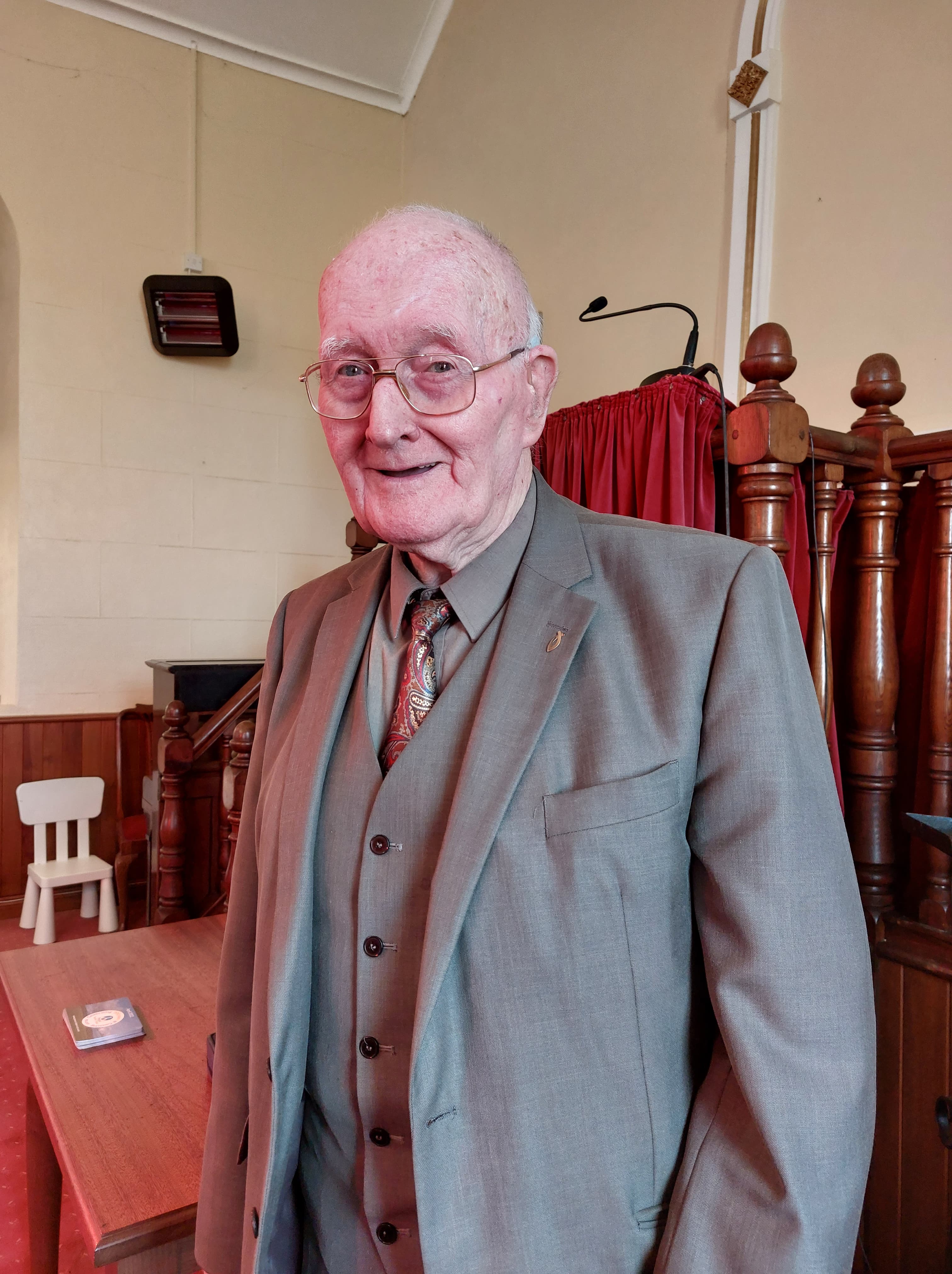
October 8th 2023: Steffan Jones

To watch this service, click on the link to our YouTube channel:
https://youtu.be/GxAKJn3cqjo?si=LCqVKDFGyYcoWIaz

2 Corinthians 9:10-15

The Bible is full of instructions about giving thanks. In the Old Testament people sometimes used stones. There were established regular feasts and festivals. Pentecost acknowledged the first fruits. Harvest is an especially important time of year. This summer there were lots of concerns about the rainfall in August and how it would affect silage. People prayed for sunny weather and we had an Indian summer. In our reality, children go to Tesco and don’t know where vegetables and fruit comes from. Also, we’re living in an increasingly secular society, where God is being squeezed out. To thank God for harvest is becoming alien.

Last summer, I had the privilege of visiting America, linked to churches in New England. Boston has a common with a significant mural as a thanksgiving to God, thanking Him for Ether and the discovery of anaesthetic, which could transform the medical world. Whilst there, I also saw the Pfizer headquarters which states, “Science will win.” 150 years ago the Boston people wanted to acknowledge God, but in those 150 years God has been forgotten and science is the answer! It is important for us, as much as possible, to be reminded of God’s goodness to us.

  1. We have a go to supplies all our needs.

Now may He who supplies seed to the sower, and bread for food, supply and multiply the seed you have sown and increase the fruits of your righteousness.” (2 Corinthians 9:10). People give praise to the deliverer, to the farmer, to the factory worker. It is right to do so, but we need to go deeper, to the source behind the sower, behind the bread maker. We need to go to the one who provided the seed, the grain, the wheat. The most fundamental problem of our society is the lack of awareness of God, the One who provides blessings, “Oh, give thanks to the Lord, for He is good! For His mercy endures forever.” (Psalm 118:1).

What is the first thing you do when you wake up in the morning? Do you stop and pause to acknowledge the God who gave you that new morning? All that we have is from the One that provides for all our needs. God deserves all the glory (Matthew 5). Stop and acknowledge the many material blessings: family, food, health, a chapel, harvest and so much more. Pray if you haven’t got those blessings, pray to the God who gives the seed. He knows what you require. Trust He will supply your daily needs. Be satisfied and content.

  • The God who enables generosity.

The context of this letter is important. The apostle is a middle-man. He is writing to the Corinthians to pave the way for a generous gift the Corinthians have pledged to the Macedonians. He establishes the principle of this in verse 11, “While you are enriched in everything for all liberality, which causes thanksgiving through us to God.” It is a reminder that the generosity you receive from others is from God also. All that you have has been given to you to help others. It is not just wealth for yourself and your own comfort. Use it to bless others.

When you receive gifts from others, don’t just thank them, thank the One who enabled them to do this. Go to the sauce. They only had the means to bless you because God gave them the means. If someone is kind to you, God has prompted that kindness. None of us has the inclination to do this as we are – we want to live lives of comfort. When anyone displays kindness, we give God the glory, whether unbelievers or believers. When unbelievers give, it is God’s common grace. When believers give, they are displaying the fruit of the Spirit. If the Lord has given to you, will you use that to bless others? When you receive, will you thank them and the One who enriched them.

  • God has given an indescribable gift.

Paul tells the Corinthians that the people of Macedonia are praying for them, “And by their prayer for you, who long for you because of the exceeding grace of God in you.” (2 Corinthians 9:14-15). As the Christians in Macedonia think about the church in Corinth, they are grateful for gifts, but more, they experienced the surpassing grace of God. You’ve known grace that surpasses all human blessings. Paul speaks of surpassing greatness, even greater than physical blessings. God is so gracious. God is so kind. The greatest act of all was God sending His Son to be the Saviour of the world. It is beyond our means to express it in words. It is a grace that transcends all human understanding.

“Thanks be to God for His indescribable gift!” (2 Corinthians 9:15). What is this gift? Back in eternity the Son of God was with the Father. He was God Himself. He had divine nature Himself. He created everything. The Word of God did not consider equality something to be grasped. He laid aside it all to become a servant. The Son of God appeared as a man, to live in this world not demanding to be served, but to serve. He was obedient to sinful parents. He was obedient to the terrible dictatorship (giving to Caesar). He was tempted to be frustrated with people, but He lived a life of purity and holiness. He went to the cross, obedient to death. He died for your sin and mine, taking on the penalty of our sins so we might be loved, accepted and approved. He took the darkness of judgement upon Himself so we might have light of life.

The Spirit was sent as a gift after the resurrection. The Spirit comes into the souls of His people, awakening us. We have the gift of everlasting glory, worship and praising Him for all eternity. That’s the gift! The gift of the Son to be our Saviour, the gift of the Holy Spirit, the gift of forgiveness of sins. It is an indescribable gift. We need all of eternity to explore this gift.

Have you trusted in Jesus for your salvation and everlasting life? As we live our lives, remember we have a God who supplies all our needs. He is the one who enriches us and others to be kind. He is the one who gives surpassing grace and an indescribable gift. It’s a gift you need, a gift the village of Roch needs, a gift that Pembrokeshire and beyond needs. He offers that gift, will you receive it?

July 16th 2023: Paul Daniel

Judges 7

Yesterday was the Wimbledon Ladies Final. The loser described this as the worst day ever, but the winner described it as the best day ever. Here we see an example of two extremes – from worst to best. You could tell it all over their faces. Here in the book of Judges, you have the best on show – God’s salvation is at work and on display. The worst is also on show, we see God’s people and how quickly they abandoned the Lord, and the consequences that came. The book of Judges follows Moses and Joshua. The people of Israel receive rest but they also turn and see other gods and start worshipping them. Then, God gave them over to oppressors. They cry out to God, who raises a judge. This cycle of rest, refusing God, oppression, a cry out and God who raises a judge, is a pattern that repeats itself over and over.

Who does God raise up? Gideon. Who is Gideon? Now the angel of the Lord came and sat under the terebinth at Ophrah, which belonged to Joash the Abiezrite, while his son Gideon was beating out wheat in the winepress to hide it from the Midianites. (Joshua 6:11). In one sense, Gideon is a nobody who God has made into a somebody. God uses people like Gideon to bring glory to himself. God uses people even like Gideon, who isn’t unsure of himself – he asks God for reassurance. God comes down to his level and goes gives him reassurance.

Verses 1 to 8. What is power?
Here, we have the very powerful presence of the Midianites. Numbers is power. Military is power. Others view power as how much money you have. The Israelites had been oppressed for seven years, weak and hiding in caves. They have lost a sense of God’s power. Power, we see is the Lord in control. Gideon has managed to amass a large, great army. Now God is going to show what real power is, “The Lord said to Gideon, “The people with you are too many for me to give the Midianites into their hand, lest Israel boast over me, saying, ‘My own hand has saved me.’ Now therefore proclaim in the ears of the people, saying, ‘Whoever is fearful and trembling, let him return home and hurry away from Mount Gilead.’” Then 22,000 of the people returned, and 10,000 remained.” (v.2).

God says Gideon has got too many men. Power is not needing a really big army. With the Lord it is different. 22,000 men was too many. Those who were afraid could go back, leaving 10,000 men. There were still too many men, And the Lord said to Gideon, “The people are still too many. Take them down to the water, and I will test them for you there, and anyone of whom I say to you, ‘This one shall go with you,’ shall go with you, and anyone of whom I say to you, ‘This one shall not go with you,’ shall not go.” (v.4). The numbers needed to go down even further. God told Gideon to take them down to the river and separate them even more. Eventually, 300 men were left, who God would use to save them from the Midianites.

The Lord is always in control. The Lord was the one who gave them over to their oppressors, and it is the Lord who will save them from the oppressors. The army is whittled down to 300. Gideon does not even know how many Midianites he is facing. It shows us that there is nothing too hard for our God. He knows everything. God is not someone who we can quantify. He is beyond all that. People want evidence – the evidence is in creation. We need faith.

Do you believe that God has a purpose and a plan for you? He calls you to come and serve Him, to follow Him. Don’t put God in a box. Scripture shows that God surpasses what the world expects. If we put God in a box, into some kind of framework, into a meeting that starts at a certain time and finishes at a certain time, is that who the Lord is? You can’t put God in a box.

Jesus Christ shows us who God is. Jesus is the unexpected. He did things that people had never seen and heard before. That’s power! That same power is available to you if you are a Christian. What is power? It is the way the Lord works.

Verses 9 to 14. What is endurance?
Is 300 enough? The Lord knows Gideon is weak, But if you are afraid to go down, go down to the camp with Purah your servant. (v.10). Here are two resources that God gives Gideon. Firstly, he gives him Purah, a servant. Gideon was not alone. God gave him Purah to go with him. Secondly, God also gives Gideon His word in a dream. “When Gideon came, behold, a man was telling a dream to his comrade. And he said, “Behold, I dreamed a dream, and behold, a cake of barley bread tumbled into the camp of Midian and came to the tent and struck it so that it fell and turned it upside down, so that the tent lay flat.” And his comrade answered, “This is no other than the sword of Gideon the son of Joash, a man of Israel; God has given into his hand Midian and all the camp.” (vs 13-14). As Purah and Gideon overhear the conversation, Gideon learns he is going to overturn the Midianites.

What reassurances does God give His people today? Others, His church, and his Word. They go hand in hand. You can’t have one without the other. You can’t say you are a Christian and not need other Christians, you can’t say you are a Christian and not need God’s word.

Assurance goes further. Assurance causes Gideon to act and worship God. It builds more assurance, and he stops doubting. It helps him to move forward. We have His Holy Spirit living inside of us. In Gideon’s anxiety, he was asked not to look at himself, but to look at the Lord. Anxiety is huge, but there is a principle here. When we struggle, we are not to focus on ourselves because we are powerless. We are to look to the Lord. Our greatest anxiety is death, but Jesus defeated death. Faith – moving forward with the assurance that God gives. Turn more to God’s word. Talk more to God’s people. Use the resources God has given us.

Verses 15 onwards. What is confidence?
Here is the master plan of how to have confidence and defeat the enemy: trumpets, jars and torches! The Midianites were defeated with trumpets, jars and torches! It is the Lord’s plan. The Lord is the one who is doing it. It is incredible what each man held in his position around the camp. The weakest battle plan ever, yet it results in triumph.

The cross of Jesus looks like the weakest plan and yet it results in triumph. Jesus hanging on the cross, dying – yet three days later He was raised to life. Do you, as Christians, ever doubt you can know God and be forgiven? God uses nobody’s like a Gideon. God used Gideon to bring glory to himself.

This story is not about Gideon. Look what happens, 22 Then the men of Israel said to Gideon, “Rule over us, you and your son and your grandson also, for you have saved us from the hand of Midian.” 23 Gideon said to them, “I will not rule over you, and my son will not rule over you; the Lord will rule over you.” 24 And Gideon said to them, “Let me make a request of you: every one of you give me the earrings from his spoil.” (For they had golden earrings, because they were Ishmaelites.) 25 And they answered, “We will willingly give them.” And they spread a cloak, and every man threw in it the earrings of his spoil. 26 And the weight of the golden earrings that he requested was 1,700 shekels[b] of gold, besides the crescent ornaments and the pendants and the purple garments worn by the kings of Midian, and besides the collars that were around the necks of their camels. 27 And Gideon made an ephod of it and put it in his city, in Ophrah. And all Israel whored after it there, and it became a snare to Gideon and to his family.” (Judges 8:22-27).

After all that happened, Gideon does not want to rule over the Israelites – God will. But then how he acts becomes a snare. The book of Judges shows us faith and works go hand in hand. Yes, we are God’s people, but look at what God’s people do – they look to other gods. Judges shows us God is patient with His people. He is gracious despite our lack of love for him. God deliverers his people when they do not deserve it.

Were it not for God’s patience and mercy, we would be somewhere else this morning and have a different eternity. God alone rescues people like you and me. We don’t bring anything to the table. He alone is worthy of our worship. We are not always who we say we are, but look to the Lord and His goodness.

The cross is not just about forgiveness. In the messiness of Christian life and when we turn to other things we know are not good for us, Romans are reminds us, “There is now no condemnation for those who are in Jesus.” Israel had no king. We live in a time when leaders make decisions, people talk of the right of ‘I’ and the right of ‘me.’ In all the messiness, God is still the same yesterday, today and forever. God is patient, wanting everyone to come to repentance. God still wants to save people like you and me.

July 2nd 2023: John Funnell

To watch this service, click on the link to our YouTube channel: https://youtu.be/Cz4WW2SFNro

Luke 15:11-32: The Parable of the Lost Son

This parable was written with God’s grace and love for us. It is masterfully told by our Lord. There are three characters to think about. We read of the Father, the loving provider, who represents God. There is a son who disgraces his father by asking for his share of the inheritance early, which, in this culture was an outrageous event, and would have been seen as the son wishing his father dead. The Father obliges and the son leaves to chase the pleasures of this world. This parable reminds us that this life choice never works for anyone. When we take ourselves away from the Father, any trial that comes our way breaks us.

A famine comes, And when he had spent everything, a severe famine arose in that country, and he began to be in need. (Luke 15:14). The son, who was prospering, becomes a slave to sin. He hires himself out to a citizen of the world, “So he went and hired himself out to one of the citizens of that country, who sent him into his fields to feed pigs.” (v.15). Look how the world treats him – he ends up rock bottom, feeding pigs, which were unclean to Jews, “And he was longing to be fed with the pods that the pigs ate, and no one gave him anything.” (v.16). He was not only feeding the pigs, they were eating better than he was. The world may lead you away from God, but temptations leave you rock bottom.

The son decides to return home, coming back on his own terms, merely as a servant. To his surprise, as he repents from his worldly sin, he sees his dad waiting for him with open arms. The son is welcomed back, not merely as a servant but loved as a son, “But the father said to his servants, ‘Bring quickly the best robe, and put it on him, and put a ring on his hand, and shoes on his feet.” (v.22). Not only that, he was given a sacrifice to atone for his sin – a prize calf, a rejection of the golden calf of this world, “And bring the fattened calf and kill it, and let us eat and celebrate.” (v.23).

Such celebrations upset the third character in this story, the other son, “But he was angry and refused to go in. His father came out and entreated him,” (v.28). He is jealous of his sibling’s treatment and said, ‘Look, these many years I have served you, and I never disobeyed your command, yet you never gave me a young goat, that I might celebrate with my friends.” (v.29). He makes the mistake of seeking a similar reward, but out of obedience. Both boys have no understanding of how God works. One thought he had to reach rock bottom to receive grace, the other thought he could earn it.

Jesus makes it clear that God’s love for you is freely an offer for you right now, regardless of where you are at. Jesus loves you all so much, He has done it all for you already. You don’t have to reach rock bottom to receive God’s love because Jesus, on the cross, hit rock bottom for you. Jesus says you can turn back to him right now. You can repent of your sin right now. Whatever is weighing you down, whatever shameful secrets you hold onto, God says, ‘Come to me.’ When you do, you will find the Father is already waiting for you with open arms, running towards you to clothe you in the robe of righteousness of the Son.

The generosity of our Father doesn’t stop there. It gets better! Brilliant! The Parable of the Lost Son links it to the wider narrative, “He also said …” (v.11). This parable is linked to what has gone on previously: the Lost Coin and the Lost Sheep. Both parables end in the same way – a party in heaven, “Just so, I tell you, there will be more joy in heaven over one sinner who repents than over ninety-nine righteous persons who need no repentance.” (v.7), “Just so, I tell you, there is joy before the angels of God over one sinner who repents.” (v.10), “And bring the fattened calf and kill it, and let us eat and celebrate.” (v.23).

What is Jesus telling us here? He is reminding us that when we turn away from the ways of the world and repent, heaven has a party. When TJ gets baptised this afternoon, it will not just be the people here rejoicing, heaven has a party. Millions of angels will be rejoicing.  

I have strong links to Romania. Romania and Roch are bookends of our continent! Christians in Romania have suffered Muslim oppression, then atheist oppression and now cultural oppression from Wokeism of secular Europe. They never talk of the day they came to faith; when giving their testimony they tell of the day of their repentance and fell into the warm embrace of their loving Father. That is what we see in the parable. We see the amazing truth of God’s grace. We don’t have to earn our salvation, we don’t have to reach bottom. He will always welcome us if we turn to Him because He is gracious. Heaven has a party. The angels rejoice.

If heaven is willing to have a party, just for you, when you repent, you can know that God will never ever let you go. Jesus wants you to bask in the love of Himself. Jesus also wants you to rest in the blessed assurance He will never let you go. The precious Lamb of God was slain for each of you. In heaven, the victory party has begun. Your other option is to spend the week living in the filth of condemnation. It’s an easy choice. God has brought each of you here today to hear this. Today is the day of salvation. Turn from your guilt, turn from your lies and darkness, come to the truth, come to God. He is waiting with open arms. Come to God before this window of grace closes.

June 18th 2023: John Mann

“10 Concerning this salvation, the prophets who prophesied about the grace that was to be yours searched and inquired carefully, 11 inquiring what person or time the Spirit of Christ in them was indicating when he predicted the sufferings of Christ and the subsequent glories. 12 It was revealed to them that they were serving not themselves but you, in the things that have now been announced to you through those who preached the good news to you by the Holy Spirit sent from heaven, things into which angels long to look.” 1 Peter 1:10-12.

Peter wrote to a church very much under persecution. This is summed up in verse 6, “In this you rejoice, though now for a little while, if necessary, you have been grieved by various trials.” These are a people passing through difficult times, suffering for doing good. That’s the kind of world they lived in, and we live in too. In chapter 4 they suffer for being a Christian. We know a little of that, some suffer greatly. Peter’s purpose is to emphasise the greatness of our salvation. What a privilege, what a joy and what a blessing it is to belong to Christ. Peter says it is of greater value than this world has to offer. Nothing in this world comes even close.

Is your heart rejoicing in the knowledge that you know Christ as your personal Saviour? Salvation overrides everything else. It is our priority to glorify God and enjoy Him forever. Our life is the opportunity God gives to us to know Christ as our Saviour. Does your relationship with Jesus out-do all earthly pleasures? If we are without knowledge and understanding of God’s saving grace, of the need for forgiveness, then we are missing the whole purpose of what we are here for and we remain in darkness of sins. Peter wants us to rejoice in what the Lord Jesus has done.

Our salvation is all of God’s grace – no merit of our own, no self-achievement. Salvation is by faith in Jesus Christ – faith which is in Christ alone, faith which leans fully on Him. We don’t see Him but it’s the faith that saves. It’s the faith that inspires love, so real it outweighs any adversaries. When we go through difficulties and face opposition, we can always rejoice! It’s a joy the world knows nothing about. We have the joy of knowing we have a Saviour we can turn to. We are wealthy beyond measure. Are you building up heavenly credit? Are you seeking righteousness, storing up treasures in heaven?

Salvation. God planned it from the beginning. He gave us His Word, He gave us the Bible, He gave us prophets. All this leads to His Son, our Saviour and what He did for us on the cross at Calvary. Are you amazed at God’s salvation, what He has done for you, a sinner saved by grace?

The prophets were amazed, even though they were proclaiming something they didn’t fully understand, yet it excited them with great anticipation. The prophets were people who believed the words God gave them. They proclaimed the coming of a Messiah with passion. It was often at great cost to themselves, yet they were excited. They foresaw and understood there was a great salvation coming. Do you search the scriptures as intently as the prophets did?

Does His Word excite us and fill us with a great sense of wonder so we long to know more? The prophets believed there was a Messiah to come in the future. They knew God the future. The full implication what God would do intrigued them and filled them with wonder and amazement. They couldn’t contain their anticipation. They knew it was by grace. They knew God would send His Son and for him there would be sufferings (Isaiah 53). He suffered for the sake and sins of others. Isaiah, who didn’t know the full implication, by the Holy Spirit, presented what the Lord Jesus would do for you and me.

Salvation is God’s doing. He implemented it and completed it (Isaiah 53:10). That is how great this salvation is. It was His will to crush the Lord Jesus Christ and cause Him to suffer in our place. The prophets knew salvation would come through faith in Jesus Christ. They anticipated that great day when the Messiah would come, “It was revealed to them that they were serving not themselves but you, in the things that have now been announced to you through those who preached the good news to you by the Holy Spirit sent from heaven, things into which angels long to look.” (1 Peter 1:12).

That day has now come. The prophets foresaw these things. The apostles preached these things. In our day, preachers still proclaim the Word of God. We know how the Lord Jesus Christ suffered for our sakes. The gift of salvation is given, it is nothing of ourselves, so we cannot boast. “For it is by grace you have been saved, through faith—and this is not from yourselves, it is the gift of God – not by works, so that no one can boast.” (Ephesians 2:8-9). We have this great privilege of hearing the gospel preached week by week. We have God’s gift of faith to believe in Christ. We have glorious hope in Him. Peter wants us to remember the wonder of salvation.

Just like the prophets, we don’t fully understand. We know more than the prophets; we know of the cross of Jesus Christ and His love for sinners. We anticipate that great day when we will know fully, and stand in God’s presence and see our Saviour face to face, and know more and more each day.

It isn’t just the prophets – even the angels long to look into these things. The angels are unable to fully comprehend how it feels for a sinner to be saved by grace. They long to look into this wonderful prospect of sinners being saved by grace. Angels dwelt in the presence of God and understood His holiness and saw His glory (Isaiah 6). They were messengers that God sent (Hebrews 1). They are privileged personal instruments from Him. They are given an awesome presence of their own.

 Angels are perfect beings, free from corruption that blights us. Angels knew the work of Jesus at His incarnation. Angels were involved in the temptation of Jesus (Mark 1). They were involved in His miracles (Mark 5). They were involved in His Resurrection. This is the privilege and blessing of the angels. Angels were involved in His person and glory (Revelation 22). These holy angels, who behold His glory, who carry out His bidding, still cannot fully understand our salvation by grace and long to look into these things. If they are amazed, how much more should we be filled with a sense of joy, a sense of blessing and wonder of the One who saved us? Do we long to know more, to lean forward and marvel?

What a great God we serve and worship. Are we filled with a sense of privilege? Freely we have been saved through faith in Jesus Christ. It is all in Him and by Him. Without Him there would be no salvation, we would still be under the condemnation of a holy God. Are we filled with that same sense of wonder at God’s grace and mercy in saving our eternal souls? Do we express our eternal thanksgivings (Psalm 126).

Peter’s challenges exhort us to never under-value our salvation, to never lose sight of the wonder and glory and grace of the gospel. This gospel doesn’t discriminate – it is free to all who will believe in the Lord Jesus Christ alone for forgiveness of sins. Peter is writing to Gentiles and people of all nations. Jesus said, “I am the way and the truth and the life. No one comes to the Father except through me.”  (John 14:6). Praise God! Anyone who calls upon the name of the Lord will be saved.

May 7th 2023: Ian Jones

To watch this service, click on the link to our YouTube channel: https://youtu.be/bjalsdNO5I4

“Surely goodness and mercy shall follow me
    all the days of my life,
and I shall dwell
in the house of the Lord
    forever.

Psalm 23:6

The last verse is important; we recognise when David wrote these words it was in relation to how he saw his life – from two different perspectives. Today, many people only view their lives from one perspective – what this world offers them. They will spend all their time and energy on this. For example, focusing on their career, family or hobbies. It takes up all of their time. Going to church will only be relevant to them at certain times – for funerals, weddings, when times are hard. When times are better, they forget about God.

David was very different. He walked by faith, not by sight. His first perspective was how he could relate to this world. He also had this other perspective, in relation to eternity. Friends, how do you see life? Is it from only a single perspective? Are you willing to give up everything so that you might serve Him? (Parable of the precious pearl of great value). You may be like the rich young ruler who felt the way of eternal life was too costly. Sadly, he turned and walked away from the Lord Jesus.

The first five verses of this psalm all relate to this world, how Christ looks after people. In verse 1 we see the Lord is our Shepherd. David gives the explanation of this in the verses that follow. These are verses which speak of how the Lord blesses us in our lives. Even as we approach death, we have nothing to fear.

But the last verse is linked with the world and all eternity. David is now taking us from this world to now focus on eternity. If Christ is my Shepherd in this life, He will be my Shepherd for all eternity. Wonderful! People at their wedding promise to love one another, but this is ‘til death to us part.’ But David reminds us that if Christ is my Shepherd, He will be with us forever more. Death will not part us.

Mary Magdalene was so distressed on seeing the empty tomb. She thought the man she met was the gardener, but when He says her name she realises it is the Lord. Her immediate response is she wanted to hug Him, to hold onto Him. The encouragement is, if you love the Lord, He promises He will always be with us.

Shepherds in this country use sheepdogs. When David was around, in the Middle East, shepherds went ahead to lead the sheep. Today, sheepdogs chase the sheep in a certain way as they respond to the shepherd’s whistle. God has two wonderful sheepdogs, one called goodness and one called mercy. Goodness is God giving us what we don’t deserve but mercy is God not giving us what we deserve.

“Surely goodness and mercy shall follow me
    all the days of my life.”

David looks back over his life, his experiences, and says with absolute confidence it is the Shepherd’s provision which has led him and kept him close to Him all the days of his life. Here we find God’s commitment, His goodness and mercy. It is easy to speak of when there’s a lot to be joyful about, but it is much harder to speak about when things are difficult. But even then, God’s goodness follows us. James writes, Count it all joy, my brothers, when you meet trials of various kinds, for you know that the testing of your faith produces steadfastness. And let steadfastness have its full effect, that you may be perfect and complete, lacking in nothing.”  (James 1:2-4). Count it all joy that God is working His good in us through these trials.

Joseph was sold as a slave in Egypt, then went to prison. Later on, when God revealed to him the purpose of all of this, he could say to his brothers, As for you, you meant evil against me, but God meant it for good,” (Genesis 50:20a). Friends, God’s goodness keeps us close to Him.

Imagine if God’s judgement followed us all the days of our lives, knowing we’re sinners. But God’s mercy follows us every day. It helps us to keep close to Him. He is full of mercy, full of grace, full of truth. We are reminded of God sending His Son to die for us. Sin has been paid for. If I sin against God, I know He will forgive me and restore me if I repent. He is willing to forgive all who come to Him in repentance and faith in Jesus Christ.

What effect should this have on us? How do others relate to us? What do we leave behind in our footsteps? Am I good to the Lord’s people?

“I shall dwell in the house of the Lord forever.

Here is a man who is coming to the end of his life and sees death approaching. He doesn’t want to cover up death. Here is a person who does not fear what lies beyond the grave. He looks forward to eternity. Here is a content, happy sheep. This sheep is coming home to the house of the Lord, heaven above. He is going to be with God in glory. There will be no more pain, no more suffering, no more tears. The wanderings of this world will be no more.

It’s a picture of our life; whilst we’re in this world the Lord has saved and protected us through times of joy, suffering and temptation, bringing us closer to Him. Now, it’s a reminder, our home is not in this world but in glory forever more. Death will come. If we know and love the Lord Jesus Christ, we will be taken up with Him forever more, in glory.

Oh, what joy lies before us. We will really appreciate what Christ has done for us when we reach heaven. To cross the finishing line is our focus. “Surely goodness and mercy shall follow me all the days of my life.”

Lastly, what about those who want to be their own shepherd in this life, to captain their own ship? There’s a place prepared for them too, which is the exact opposite. Jesus spoke more of hell than heaven. We need to warn people. The gospel message is very serious. It is the way to salvation. Rejecting this leads to a time of punishment. Friends, may I encourage you, if you’ve not done so, to come to the Shepherd. There is only one way of salvation – through Jesus Christ.

April 30th 2023: Gareth Evans

To watch this service, click on the link to our YouTube channel: https://youtu.be/930h1aAZaA4

Isaiah 55

Have you ever been to a busy market place where vendors are shouting at you to buy their wares? They may have a roll of fake goods. In a sense we see here the voice of God calling people to come to buy from Him, through grace, the way of salvation. From this passage of scripture we can learn four things:

  1. Verses 1-3, 6-7: Come. There is an urgent invitation. God is telling us what we must do in order to come to Him. God is summoning us to come to Him. The Almighty God is calling little me to come to Him. God is going to summon us to come back to Him.
  2. Verses 2-5, 7: A precious promise. This is a picture of what God does for unbelievers. God will satisfy our hunger for Him. There is a promise of free and wonderful salvation. 700 years before Christ, He is already talking of the promise of the gospel.
  3. Verses 10-11: The method God uses when reaching out. He will do this by the preaching of the Word.
  4. Verses 12-13: The glorious destiny. There will be a wonderful glory, a momentous event when God’s people are joined to be with Him.

  1. An Urgent Invitation

Isaiah the prophet speaks the Word of God. You can’t think of any richer food than wine or milk. There is nothing richer in God’s gospel, the promise of eternal life. There is a three-fold repetition – come, come, come. You must come. It’s not a suggestion, it’s a command. ‘Incline your ear’ make sure you are hearing properly. Lean forward because your life depends on this message of the gospel. God is speaking to us.

The price for the goods has already been paid. He is concerned for our eternal welfare. All of this urgency is shaped by you and I coming to the cross of the Lord Jesus Christ, repenting of sins and believing and trusting in Him. The problem God is addressing, why it’s so urgent, is to be seen in verse 2,

Why do you spend your money for that which is not bread,
    and your labour for that which does not satisfy?
Listen diligently to me, and eat what is good,
    and delight yourselves in rich food.”

Don’t waste your life on things that don’t matter. In our brevity of life be prepared to meet with God. Unless you come in God’s way to God, you’ll shatter your soul’s health. Don’t pour your time into things that don’t matter; it can’t satisfy you or save you. Isaiah is challenging us to think of the end of life in this world, for us to prepare to meet with God.

It’s a free offer,

“Come, everyone who thirsts,
    come to the waters;
and he who has no money,
    come, buy and eat!
Come, buy wine and milk
    without money and without price.”
(Isaiah 55:1)

It’s an interesting call – you don’t have to pay for it, it’s not ours to pay. Your poverty of soul you bring to Christ, knowing He has paid the price already. The gospel is not free, pardon is not free. In the Lord Jesus Christ, God has already paid the price at the cross in the suffering of His Son (Isaiah 53). He has purchased it by His own blood. It is free for us today because it has cost Him everything. Philippians 2 is a wonderful hymn of praise. The gospel offers satisfaction for us today. People live as in the days of Noah, but one day God will call time on the world and then we’ll answer to God. Come to Him. Come to Jesus Christ for a heart renewed, in order to be united with God through Him.

It’s also an universal offer, “Come, everyone who thirsts … he who has no money. Who is invited to come? All who are thirsty, who have no money. In other words, you come to the point where you’re bereft of any other method of saving yourself or finding yourself at peace with God. You’ve failed to find another way. You realise that in your sins you are without hope, you realise you’re lost. Come as you are, recognising your needs.

  • A Precious Promise.

There’s a precious promise in verse 2,

Why do you spend your money for that which is not bread,
    and your labour for that which does not satisfy?
Listen diligently to me, and eat what is good,
    and delight yourselves in rich food.”

You’ve recognised Him as the only way. The promise of life to us has been bought and paid for by the Lord Jesus Christ. He has the authority to give eternal life to those who come to Him. Think of these words. Just come. Don’t be held back by your guilt from the past. The only way to rid yourself of that guilt is to come to the Lord Jesus Christ. Get yourself to Jesus today. He will abundantly pardon those who come to Him. Why delay the loving heart of Christ?

  • A Wonderful Method.

God uses a wonderful method,

“For as the rain and the snow come down from heaven
    and do not return there but water the earth,
making it bring forth and sprout,
    giving seed to the sower and bread to the eater,
11 so shall my word be that goes out from my mouth;
    it shall not return to me empty,
but it shall accomplish that which I purpose,
    and shall succeed in the thing for which I sent it.”
(Isaiah 55:10-11).

The whole of verse 10 is taken up with an illustration so we can understand verse 11. This book, what do you think of it? Paul, in speaking to Timothy says that the Word of God is useful for all things “All Scripture is breathed out by God and profitable for teaching, for reproof, for correction, and for training in righteousness, (2 Timothy 3:16). It is primarily through the Word of God that people are transformed. The promise of mercy, the promise of a pardon, the promise of salvation will never fail to bring a harvest. That’s the promise of God.

Listen to the public Word of God, to the Word being preached. Come prepared; ask the Lord to make the most of everything the preacher says. Come to respond. Be serious about being a pleaser of God. You want your life to be an act of worship to God. The way of God is the voice of Jesus Christ. He speaks. Listening to His voice new life the dead receive.

  • A Glorious Destiny.

There’s a glorious destiny for the Christian,


“So shall my word be that goes out from my mouth;
    it shall not return to me empty,
but it shall accomplish that which I purpose,
    and shall succeed in the thing for which I sent it.

12 “For you shall go out in joy
    and be led forth in peace;
the mountains and the hills before you
    shall break forth into singing,
    and all the trees of the field shall clap their hands.
13 Instead of the thorn shall come up the cypress;
    instead of the brier shall come up the myrtle;
and it shall make a name for the Lord,
    an everlasting sign that shall not be cut off.”

(Isaiah 55:11-13)

It maybe you have been wandering away and He is calling you back. The joy that you taste here when you read the gospel, when this world come to an end, all things will forever be correct and right – as God intended from the beginning. The curse that fell on the world because of the Fall (Genesis 3), will one day be undone,


13 Instead of the thorn shall come up the cypress;
    instead of the brier shall come up the myrtle;
and it shall make a name for the Lord,
    an everlasting sign that shall not be cut off.”

(Isaiah 55:13)

The one who became a curse for us on the cross will have made His blessings flow. The curse will be eliminated entirely. “Behold, the dwelling place of God is with man. He will dwell with them, and they will be his people, and God himself will be with them as their God.” (Revelation 21:3). Here, we have a foretaste of heaven: a new creation, a new forever home. It is a wonderful thought. Who would not want that? Who can reject the love of Jesus Christ in light of all He has promised? Jesus Christ continues to offer the urgent invitation, hope of glory. This is the gospel age – salvation offered to all. Will you answer, will you respond to this urgent invitation, this precious promise? Will you trust it, because at the end of it all, there’s a glorious destiny for the Christian? Will you inherit eternal life by coming to God, by responding to His gracious invitation?

“Come, everyone who thirsts,
    come to the waters;
and he who has no money,
    come, buy and eat!
Come, buy wine and milk
    without money and without price.”
(Isaiah 55:1)

April 3rd 2022: John Scanlon

To watch this service, click on the link to our YouTube channel:    https://youtu.be/7mRnvNumJD4

Luke 19:1-10

I’ve never been to Jericho, but it must have been an interesting city. It is mentioned quite a lot in scripture: in Joshua 6 we read of the walls of Jericho falling down, of David saying, “Wait at Jericho until your beards have grown, and then return.” (2 Samuel 10:5), in the New Testament Parable of the Good Samaritan. We cannot say how many times the Lord Jesus went to Jericho. We know this was His last visit to Jericho. The people might have listened more if they knew it was His last visit. We are very much in the same position. Opportunities pass us by. We do not know our day of visitation.

Here is the Lord Jesus walking into the city of Jericho. He has been hailed with a peal of praise as He has just healed Bartimaeus, whose sight was restored by the grace of God. As He entered the city the place was full of people full of anticipation at the great day of Pentecost, all hoping to glance a glimpse of the man who had healed Bartimaeus.

We are all familiar with the story of Zacchaeus. Luke has faithfully recorded highlights of what was being carried out, for there was so much going on. As John tells us And truly Jesus did many other signs in the presence of His disciples, which are not written in this book; but these are written that you may believe that Jesus is the Christ, the Son of God, and that believing you may have life in His name.” (John 20: 30-31).

Luke tells us of a blind man who cried out for mercy and Jesus restored his sight. This is itself a great miracle. If Jesus had any intention of entering Jericho unannounced, this man and his gratitude had changed all that. As Jesus now enters Jericho, he would touch only one man – a tax collector. So, the crowd gather. Then someone comes along who wanted to see what was taking place. He sticks out from the crowd. He tries to push though to find a place but nobody gives way to him. This man is Zacchaeus.

Zacchaeus. We all know him. All that we know is recorded in these ten verses. He is a tax collector. He is a Hebrew. His name, Zacchaeus, means pure. Maybe, when his parents gave him this name, they hoped he would grow up pure. But he was crooked, the biggest rogue in the city! He had made loads of money and was chief among the tax collectors.

We all want to have more, but there is no satisfaction in this. Zacchaeus didn’t just want to be first, he was first. He was wealthy. Many people want to be rich, but it can be very lonely at the top. Zacchaeus had power, he had influence, he had wealth. It reminds us of one of the churches in Revelation. The word of God goes on to say in spite of all he had, Zacchaeus wanted more, He wanted to see Jesus.

Zacchaeus was arrogant, but underneath all that veneer there was a heart that sought reality. He was a soul needing to be redeemed. He couldn’t remain happy. He realised late that the true things of life are not material. Perhaps, he thought he would find a new life if he found Jesus.

But Zacchaeus had two problems: he was too small, and the crowd was too big. He couldn’t see Jesus. He was a little man in a big crowd. He couldn’t see over the crowd, he couldn’t see through the crowd, so he couldn’t see Jesus. I have heard of unbelievers who have been given a Bible and upon reading it ask, ‘Why does this book tell us different stories to what people preach?’ In other words, people don’t practice what they preach. Their own lives do not reflect the love of Jesus as much as they should.

How many Zacchaeus’ are out there and want to see Jesus, but can’t see because we get in the way? We are told to walk in the light, but not in someone else’s light, casting a shadow, when they themselves are looking for Jesus.

Zacchaeus must have been made of stern stuff. If there wasn’t a way through or a way over, then there’s a way round. He couldn’t see Jesus, so he ran further and found a sycamore tree. He waited for Jesus to come. When Jesus came, He looked up and saw him. That wasn’t part of Zacchaeus’ plan. It wasn’t what he was hoping for. We need to be careful when we are looking for God, for before you know it, He finds you. You can find yourself alone with God.

In no time at all, Jesus looks up and sees him. It is as if the whole of Jericho was waiting to see what Jesus, the son of a carpenter, the Son of God, would say to the biggest rogue in the city. Everybody was waiting. You could almost hear what they were thinking, ‘Go on Jesus, let him have it! Tell him what a terrible man he is. Condemn him for his wickedness and greed.’ What kind of people were these inhabitants of Jericho? They had just heard of a blind man being healed. They stood waiting, expecting to see more. They were anticipating entertainment. What they were about to witness was a miracle – a man who had been obsessed by world wealth about to be transformed. The love of money would be replaced by the love of Jesus Christ.

Jesus does not confront Zacchaeus. He lets him off the hook and simply says, “Zacchaeus, make haste and come down, for today I must stay at your house.” (Luke 19:5b). What about sin? What about repentance? What about conviction? What about restitution? There is no mention. Jesus calls him by name and invites Himself to dinner. There is a chief sinner in Jericho who needs to be saved. Jesus did not come to condemn. He seeks him in love and a miracle takes place. We need more of the Spirit of God. When Jesus preached the gospel, He administered grace to the hearer and He moves in the love of God. Most times, when Jesus went fishing, He came home with a catch.

The crowd called Zacchaeus a sinner. We are all sinners. If were are not lost, we will never be found. Zacchaeus says, “Look, Lord, I give half of my goods to the poor; and if I have taken anything from anyone by false accusation, I restore fourfold.” (Luke 19:8). I shouldn’t think he would have had much of his wealth left after that.

Salvation is more than an external transaction. When people are truly saved they are a new creation, new creature in Christ Jesus. They have a new set of values. Their priorities change. Their very reason for living changes. Zacchaeus revealed by his testimony that a transformation had taken place. He began with an act of benevolence in giving half his goods to the poor. Then he showed his willingness to make restitution to those he had wronged. He has learnt that to have your sins forgiven is more valuable than gold. Zacchaeus found forgiveness of sins. A free gift. There is a price to be paid for it; it is Jesus doing the paying. The Lord said, “Today salvation has come to this house, becausehe also isa son of Abraham;for the Son of Man has come to seek and to save that which was lost.” (Luke 19:9-10).

For as much as Zacchaeus was a son of Abraham, this wasn’t what the crowd had told him. They called him was a sinner. The Son of Man came to seek and save the lost. We are told that it was Zacchaeus doing the seeking, who sought Jesus. But we know it is God who is seeking the lost. The Son of God has come. He seeks diligently and when He finds, He saves. Who did He come to save? The word of God tells us He came to save the lost. There is something final about the word ‘lost.’ There is hope for the sinner, for Jesus has come to seek and to save. It doesn’t matter how lost a person is, or how immoral or deceitful he might be, because God in Christ, has come to seek the lost and to save them. That has got to be good news!

March 13th 2022: Paul Daniel

To watch this service, click on the link to our YouTube channel: https://youtu.be/X9d2b0EO1wI

Acts 26: How Christians ought to respond when asked about their faith

What are we here for? Penuel Chapel has been around for 200 years. Here in Acts chapter 26, as Luke writes his account and the explosion of the gospel, he writes different accounts of how people speak about Jesus. Paul, in presenting the gospel 2,000 years ago, is no different to presenting the gospel today. We are called today to present the gospel, to tell people. As we look at Acts chapter 26 we see Paul behaves very godly in the way he speaks.

Godly evangelism is patient. Are you a patient person? We live in this culture of everything being fast-paced. We order something today, it arrives tomorrow. Paul had been in prison for two years for preaching the gospel. Felix didn’t know what to do with him, so he left him in prison. Here, two years later, in chapter 26, we have an account of what Paul said when he was given the opportunity to speak to King Agrippa, “So Agrippa said to Paul, “You have permission to speak for yourself.” Then Paul stretched out his hand and made his defence,” (Acts 26:1).

King Agrippa, a Jew has been called because Felix didn’t know what to do with Paul. When Paul is given the opportunity to speak he says, “I consider myself fortunate that it is before you, King Agrippa, I am going to make my defence today against all the accusations of the Jews,” (Acts 26:2).

How would you feel if you had been put in prison for two years for something you hadn’t done, and when you are finally given an opportunity to speak and give a defence for yourself, what would you do? What does Paul do? He starts talking about the gospel. He tells King Agrippa he wants him to listen to him really patiently, that he is fortunate he can present his defence to him. Pauls asks King Agrippa to listen to him patiently. The fruit of the Spirit is patience. God Himself is patient. The New Testament reminds us that God is patient, and with the Lord, “one day is as a thousand years, and a thousand years as one day.” (2 Peter 3:8). So, this is two days ago. When the first church started, that’s two hours ago!

Paul is patient. He’s been in prison for two years. How patient was God with us? Think of the many times you’ve heard the gospel, of the many times you would come to chapel, to youth club or the times a friend would come and talk to you. How patient is God with us. As Christians, we are to be renewed in the image of God, to reach people with the good news of Jesus. Here Paul takes the opportunity to say to King Agrippa what Jesus had done for him. King Agrippa was a Jew so Paul talks to him in a way he would understand. King Agrippa knows the history. What kind of nation do we live in now? Penuel is celebrating its 200th anniversary year. What kind of nation was Penuel 200 years ago? Nations change. We might have to approach people in a completely different to even 30 years ago, therefore we need to be even more patient.

What does Paul want? His freedom or King Agrippa’s freedom? Even though Agrippa is religious, he needs the forgiveness of sins. Even when Festus says, “Paul, you are out of your mind; your great learning is driving you out of your mind,” (Acts 26:24b), Paul politely responds saying, “I am not out of my mind, most excellent Festus, but I am speaking true and rational words.” (Acts 26:5). You see the work of God and the Holy Spirit in Paul’s life. He is patient and understands.

Be ready to go, to be on standby all the time, wherever God has placed you. Be ready to give a reason for the hope we have. As we come week in, week out, being shaped by the Holy Spirit, in the image of our Creator, we are called to be patient, to be gentle, to know what to say in different circumstances. So, when you have an opportunity to speak about your faith, be on standby, be ready to be godly, ready with a reason for the hope we have. My friends, as we come week in and week out, we learn more about God’s Word. We’ve been shaped by the Spirit, we’ve been shaped by God’s Word. We’re being remade in the image of our Creator to be more like Him. Be patient. Be gentle. Know what to say in different circumstances, so that when you’re getting your haircut and you’re having a conversation which may become deep and meaningful, you’re ready and you’re alert. When someone pops round for a cup of coffee, and they are worried about something, they want to talk to you because they trust you because you know you’re going to listen because you’re alert. They know you want an opportunity to speak into their lives and say something of what it means to not be anxious and put your trust in Jesus.

I wonder what Paul was doing for the two years whilst he waited in prison? Godly evangelism is patient.

Godly evangelism is God’s message to all of us. Paul starts telling Agrippa about his conversion on the road to Damascus, when he was ready to persecute Christians, he meets God. This is his story. Godly evangelism starts with us. God came to Paul. God came to save him. Paul was elite, but even he needed to meet Jesus. He followed the law to the letter, but even he needed Jesus. Paul himself was a sinner who needed saving, “I myself was convinced that I ought to do many things in opposing the name of Jesus of Nazareth.” (Acts 26:9).

Saul was convinced, obsessed as a Pharisee, that he was right and everyone else was wrong. He realised he himself was opposing God. Sometimes, we can give off the wrong impression of what it is to be a Christian. We can sometimes forget what we are living for and saved from. It is God’s message to all of us. As Saul meets Jesus He says, “But rise and stand upon your feet, for I have appeared to you for this purpose, to appoint you as a servant and witness to the things in which you have seen me and to those in which I will appear to you,delivering you from your people and from the Gentiles—to whom I am sending you to open their eyes, so that they may turn from darkness to light and from the power of Satan to God, that they may receive forgiveness of sins and a place among those who are sanctified by faith in me.’” (Acts 26:16-18).

God’s message is for all of us. Jesus Christ says, Saul, Saul, why are you persecuting me?” (Acts 26:14b). Christ says He wants Paul to take the good news of the gospel to the ends of the Earth. He says, ‘I am going to send you so you can go and share this message so that blind eyes can be opened, so people can receive forgiveness of sins. So, Paul was there to tell them God’s message. This was Jesus’ message. This was Paul being an ambassador. This was Paul taking the only message he could have.

There is no other variation, no other gospel under which men and women, boys and girls can be saved. There is no other name under heaven in which there is salvation, “For the king knows about these things, and to him I speak boldly. For I am persuaded that none of these things has escaped his notice, for this has not been done in a corner.” (Acts 26:26). This is transparent. Jesus Christ was put on a cross. It was witnessed. Jesus Christ died. It was witnessed. He really did die. They really did put His body in a tomb. And many saw the risen Jesus – the same Jesus with holes in His hands and feet, His scars. This is truth, an historical account. Paul says to King Agrippa, ‘You can see for yourself.’

Isn’t it wonderful that here, in the year 2022, we are able to pray for people and want to do Godly evangelism? We can invite people to examine the message for themselves. 2,000 years ago, there was no printing press. We have Bibles, the gospel, literature, tracts, all forms of opportunities. There is the internet: YouTube, Facebook, Instagram, TicTok. There are different opportunities, different means that God has given the Church so that His message can go to the ends of the Earth, not in a corner.

Paul is communicating God’s message that He wants to go out. In Acts 17:1 the Bereans were pouring over Scripture. We need to be more like the Bereans; they were asking questions, looking intently into scripture. We need to be like the Bereans. We need to show that there is absolute trustworthiness in this gospel message, by making sure it is God’s message, not ours. Look at the small details. Go back to basics. When we package the gospel message we can distort it, give a distorted view. We need to be careful that what we present is Jesus Christ and Christ crucified. When we present Him to the world so they can turn from darkness to light, you can never be disappointed with that. For all of us, all of us, have fallen short. All of us have sinned. Godly evangelism is patient. Godly evangelism is for everyone.

Godly evangelism persuades people to follow Jesus. Paul here is trying to persuade King Agrippa, “And he made from one man every nation of mankind to live on all the face of the earth, having determined allotted periods and the boundaries of their dwelling place, that they should seek God, and perhaps feel their way toward him and find him. Yet he is actually not far from each one of us, for “‘In him we live and move and have our being’; as even some of your own poets have said,“‘For we are indeed his offspring.’” (Acts 26:26-28).

Anyone can come to church. Anyone can wear the right clothes. Anyone can say the right things. This is not just information; it is the gospel that transforms. We commit to following Jesus and being obedient and, just like Paul, we want people not just to come to church but to follow Jesus. Imagine you package up the gospel message and the impression that someone gets is that being a Christian, being in heaven is about one really long church service. It isn’t though, is it! It’s about being with God, it’s about being with Jesus.

Paul is trying to persuade Agrippa. When King Agrippa says, ‘If you think you’re going to persuade me in such a short time,’ Paul responds, “Whether short or long, I would to God that not only you but also all who hear me this day might become such as I am—except for these chains.” (Acts 26:9). Paul says, ‘However long it takes, that you would be persuaded by God to follow Him.’

If you’re not somebody who is a Christian, I can’t convert you. I can give you all this information and I can say that God wants you to follow Him, but I can’t do it. You need God to persuade you. The Bible says if you seek God with all your heart, mind, soul and strength, you’ll find Him. He will not turn you away.

For those of you who have got friends or family who are still in the dark, still outside the Kingdom, He wants you to try and persuade them. He wants to work in you and through you. When it is a struggle, you need to pray for them – short or long.

You may say, ‘I’d love to reach people with the gospel. I’d love to be patient. I’d love to share the message of the gospel as God intended. I’d love to persuade people, but I haven’t got any friends. Well, we need to get some friends, to be more friendly.

We could say, ‘Well, I’m not as patient as I’d like to be and sometimes, I can be sharp with my words, and it comes out all wrong. The Bible says we have to be careful about our tongue and pray for self-control.

You may say, ‘I know I should share the gospel but I actually I’m cold in my faith. When I come to church, and I come to weekly meetings I don’t feel that close to the Lord. Pray that God would make our calling and election sure and that we would grow to love him more.

Some of us will say, ‘I’d love to share the gospel but I’m just too busy. Remind yourself that God says, ‘Don’t store for yourself treasure on earth where moth and rust are going to destroy.’ (Matthew 19:21a). Store for yourselves treasure in heaven.

Some might say,’ I struggle to share the gospel because I’ve lost my confidence, you need to remember that Jesus Christ died for you, and He died for us whilst you were still a sinner.

Some will say, ‘Sometimes I feel as if I’m looking around at my friends and the world and I’m convince that actually they’ve got greater problems, that they need friends, or food, or money.’ Praying for common grace is really important, that our friends do have everything they need. We need to pray for common grace that they would be looked after, that they would have shelter, clothes and help. We need to pray for common grace.

But common grace and saving grace are two different things. My friends, we must try and persuade people to follow Jesus. God has promised an eternity for those who follow Him and those for those who don’t. Paul had met with the risen Lord Jesus Christ. He was convinced he needed to be patient with people and to take every opportunity as he ought.

When God says in His Word, one day He will make everything new, God’s people will live with Him and be with Him forever. He calls us now, as Christians, to go into all the world. You don’t have to go far, go into Roch. God calls people to be patient with them and to share God’s message with them, to try and persuade them. Keep praying, whether it’s short or long, that they would come and put their trust and faith in Jesus. Pray that, as verse 18 says, that they would come and find a place amongst those who are sanctified. Wouldn’t that be wonderful! Wouldn’t it be wonderful if your neighbour, your work colleague, your granddaughter, your grandson, your children, parents, might come and put their faith in the Lord Jesus Christ? Despite whatever may happen to them in this life, that they had a place set apart for them and God will make everything new.

December 12th 2021: Ian Middlemist

To view a recording of this service, click on the link to our YouTube channel: https://youtu.be/qGVI5Y_FSP4

Hebrews 2:5-18

At this time of year a lot of discussion is taken up with the ‘what’ of Christmas – what happened? There are a lot of descriptions of the manger, animals, wise men, location and historical events surrounding our Saviour’s birth. We, as Christians, must focus our thoughts on the ‘why’. Why was the Saviour born? It is not always easy to stop and consider why. Sometimes, in the middle of a crisis, e.g., a business crisis, we think, ‘Is it really worth it?’ In the busyness of things we need to stop and consider the purpose of Christmas, the purpose of the Incarnation. Jesus never stopped and panicked whether it was worth it or questioned the purpose of His ministry on earth. He was, and always will be, united with the Father. Jesus came to save sinners and to be made like us.

Jesus came to save sinners. In the Saviour’s first coming, Jesus, God the Father and God the Holy Spirit, implemented this rescue plan. This rescue plan had been conceived in the mind of the Triune God before human beings ever stepped onto the face of this planet. Jesus didn’t come to promote holiday Christmas cheer after a tough year. He didn’t come to boost end of year sales. He didn’t come to serve as the central figure on a nativity scene. He came to save sinners. To save sinners He had to deal with the heart of the matter – sin. The dawn of man’s history, like this unwanted virus, affected single person. Sin has infected every single one of us. God was revealing His plan for salvation, bit by bit, through the Old Testament sacrificial systems – a sacrifice, a separation, a holy one, a Lamb.

One of the main themes of Hebrews is the Old Testament sacrificial laws and an emphasis on the labours of the priests. Hebrews 7 – the former priests were many in number because they were prevented by death from continuing in office. Already the writer is emphasising the priests were many because their offices were limited. Morning and evening priests placed these burnt various offerings for sin, burnt offerings in particular, on the altar. The fire there was never to go out, it was perpetual thing that needed to be preserved. “For it is impossible for the blood of bulls and goats to take away sins.” (Hebrews 10:4).

The Old Testament sacrifices were just a shadow of what was yet to come. They would never wholly fulfil God’ plan. Something better was needed. When a truly perfect sacrifice was offered, on the tabernacle of heaven, sin was finally dealt with. Christ suffered and died the eternal death on the cross, once, for all, to put away sin, by the sacrifice of God. Our sins have been buried finally and completely in Jesus’ death. So fully has Christ purged the sins, “So Christ, having been offered once to bear the sins of many, will appear a second time, not to deal with sin but to save those who are eagerly waiting for him.“ (Hebrews 9:28). There are no further sacrifices, Christ has done it all.

As we approach the Second Coming of the Lord Jesus, what are your thoughts? Are you dreading His coming? We, in our sin, have fallen short of God’s requirements (Romans 3). But believers, because of Christ’s incarnation, are not dreading the Saviour’s return because Christ has done all to redeem us. There shouldn’t be any fear; we are looking forward to the Saviour’s return. Jesus Christ has saved us. He is my friend. Christ came to earth for sinners. He is the one who is able to save to the uttermost. Christ can save you. No matter how hell-worthy you are, Christ came to save you. Christ came to save sinners.

Christ came to be like His people. “Since therefore the children share in flesh and blood, he himself likewise partook of the same things, that through death he might destroy the one who has the power of death, that is, the devil.” (Hebrews 2:14). It is the message of the Incarnation, so He could be the appropriate Saviour for you, the appropriate friend in heaven. The baby in the manger had the same human nature as you and I, yet without sin! Jesus was born perfect. He is the conceived message of hope for imperfect people.

Wrapped in swaddling cloths, God teaches us we cannot solve our problems ourselves. We cannot attain perfection and peace by our own strength. We need a brother. In Christ, God has done this. He’s done that which we are incapable of achieving. We are incapable of being righteous, as God requires. We are incapable of entering heaven on our own rights. In the words of the church father, Irenaeus, “When He became incarnate, and was made man, He commenced afresh the long line of human beings, and furnished us, in a brief, comprehensive manner, with salvation; so that what we had lost in Adam – namely, to be according to the image and likeness of God – that we might recover in Christ Jesus.”

Sin is not how we are meant to be. His death would accomplish true healing in every way for us. Because He is like us, Christ also sympathises with us in our weakness, with all the pain and miseries that comes from living in this world. Our bodies groan. When His bodily strength was spent, He slept. Christ slept. The body that God prepared for the Son meant He experienced all that it means to be human, with heart-broken grief, with tears, He wept. Our Saviour was tempted to sin, as we are, with the full force of hell. We draw great encouragement from Christ, His steadfastness in the face of temptation, “Since then we have a great high priest who has passed through the heavens, Jesus, the Son of God, let us hold fast our confession,” (Hebrews 4:14).

As Christians, we look back over this year, we look back on the struggles. It can cause us to despair at times. But at such times we really can look to Christ. Our salvation doesn’t depend on our performance, but wholly and solely on the Lord Jesus Christ, on His obedience. He came to be made like us so that He could raise us up to be with Him in glory. We are born in Adam, but in God’s redemption we have been placed in Christ. As we glimpse at the manger, the birth of Christ, we can say, ‘This is my brother, this is He who is my flesh, my blood.’ As He grows and matures and continues to do the will of God, He grows in obedience.

When we see Christ seated at the right hand of the majesty on high, we can also say, ‘This is my brother, this is my flesh, this is my blood.’

Because of the incarnation, believers can say of Christ, what Adam said to Eve, “This is bone of my bone and flesh of my flesh.” Such is the unity we have, all because of Christmas, all because of Christ entering into this world, not as an angel, but as a human being just like us. He is not ashamed to call us brothers. Why would we be ashamed of Him?

It is wonderful that the Son of God became man. It is mysterious. It is mind-blowing! We must not forget the reason Christ came – He came to save sinners and He came to be made like us. The question for us is not, ‘Are you good enough for heaven?’ It is rather, ‘Are you sinful enough to go to heaven?’

(Illustration story of Samuel Colgate, founder of the Colgate business empire, who spoke out at an evangelistic meeting regarding the congregation’s response to receiving a sinner into membership).

Today, we praise God that Jesus Christ was born into this world to save all sinners, sinners of all types, like you and me, and to be lour faithful High Priest.

September 19th 2021: John Mann

You may view this service on our YouTube channel: https://youtu.be/svsV6pckGeE

2 Kings 5:1-16: Naaman healed of leprosy.

Naaman was commander of the army of Syria. He was a great man in the eyes of his master, and highly regarded because through him, the Lord had given victory. He was a valiant soldier, but he had leprosy. Here we have this picture of this great Syrian military commander, Naaman, who had won many victories and had received many accolades from his own king and from his peers. He was a man of great standing, of respect, probably of great wealth. He is serving Syria, a pagan country, a place of many gods but nevertheless a godless place, a country of ignorance, superstition and idol worship. Syria was a country that sought to further its own success and its own progress at the cost of others. It was a dark land of spiritual blindness.  Naaman served that country with great commitment, with great energy and with great determination. That is why he had risen to his position.

Despite all of his privileges, despite his position, despite his great power and his prominence, Naaman had a great and awful problem. He is afflicted with a serious, life-threatening condition. He is a leper, in days when leprosy had no cure.

As we look at this country of Syria, what does it remind you of? Well, I believe it presents a clear picture of our world today and our own nation today, with its many idols, religions, philosophies and gods. Syria was a place where the one, true, living God has been largely rejected and ignored. It was a godless place in many ways, a place that sought to promote its own success by its own philosophies and ideas. That is what sin has done to the nations of the world – turned God’s perfect creation into a ruined place of ugly rebellion and hatred.

In the eyes of his peers Naaman has everything that the world desires, everything that it holds dear, everything that 21st century Wales would long after – an impressive life, presence, charisma, wealth, success, authority, influence and position. But just like Naaman, they have a problem, a far more serious, not just life-threatening problem. A soul threating problem. Spiritual lepers afflicted with the disease of sin that will take not only their physical life but their eternal souls.

Naaman was a man of great power but he was absolutely powerless when it came to saving himself and taking away this awful disease that he was suffering from. So, it is true with those suffering this spiritual leprosy. Healing is outside our own hands, outside of our own power. There is nothing we can do to solve the problem of our sin in and of ourselves. The outcome is inevitable – spiritual and eternal death unless we can be saved from this awful disease.

What a sad picture Naaman presents. Apparently, he has everything the world desires but in reality, he has nothing of any lasting value and all that he does have will one day be taken from him. Apparently, the name Naaman means ‘beautiful, gracious, well-formed.’ In days when names that were given to children meant something, the likelihood is that he may well have been a handsome and striking man. But in time the ravages of leprosy would change that. His features would be eaten away. He would be left disfigured and decaying, an ugly sight, eventually an outcast of society.

Again, we have a picture of what sin does to us. People created in God’s image but yet disfigured, blemished, spoiled by this disease of sin. Outcasts from the presence of God who created us.

Verse 2 introduces us to a second person and the contrast between Naaman and this second person could not be greater – a captive a young girl from Israel who served Naaman’s wife. Naaman was fighting against Israel, God’s people. Naaman was a man who was at enmity with God, yet he was still under God’s control. God had given him the victory. From amongst the very people that Naaman was fighting against, the Israelites, a saviour is brought to heal him of his problems. That is the grace of God. By nature, we are at enmity with God. There was a time, certainly in my life and maybe in yours, when the Lord Jesus Christ meant nothing to you. I can say from my own experience that I was at enmity with God. Yet the one who I was at enmity with came to save me, to free me, to free all of us all. That’s the grace of God. God sent the very one we are opposing, against whom our rebellion is aimed, to be the one who will free us from sin and death.

Did you notice the great contrast between Naaman, this great man, this commander of notoriety, and this young, un-named, insignificant girl who possesses none of the privileges that Naaman had? She’s a servant girl at the beck and call of her masters, brought from the freedom of her homeland to a place of captivity. She may be even an orphan, maybe orphaned by the armies of Naaman himself. The biggest contrast between them is one that elevates this slave girl far above this commander of the armies of Syria; she knows and she trusts the God of Israel. This is an encouragement for us. I know I am nothing in the eyes of the world, but I know the living God. In His eyes I am His servant, I have been called and have the privilege to be used by Him. If you are trusting in the Lord Jesus, you are a servant of the living God, there to be a blessing and of use in God’s service.

In verse 3 we see that God uses this young girl. She says to her mistress, “If only my master would see the prophet who was in Samaria, he would cure him of his leprosy.” God is working His sovereign purposes, not only in the life of Naaman, but also in the life of Israel and in the life of this young servant girl. In His grace and mercy, He is bringing these circumstances together to fulfil His own sovereign purpose. The Lord is ordering these events in accordance with His own will.

The people, as they were prone to do, were going through a period of apostasy and rebellion against God. Their disobedience has once again led them to be disciplined and judged by God. Discipline came at the hand of the Syrian army, led by Naaman. When we wander away from God, when we turn our backs upon His ways, God will use circumstances to discipline us, to show us the error of our ways, but always for good. Our God is good. When He disciplines us, it is with the purpose of drawing us back to Himself, to the place of blessing.

Naaman, the instrument in God’s hands, brought God’s punishment to the people of Israel. His mind is set on victory, serving his own nation. But as we read, God had used him, God had given him these victories. God is using even a pagan leader of the army for His own purposes, and ultimately for Naaman’s good. God has His hands upon this man, He’s drawing Him to Himself. This young, captive girl is placed in his household to serve Naaman’s wife. You may be passing through difficulties now, but you are being used by God to make you more dependent upon Him, to draw you ever closer to Him.

This young girl must have been experiencing grief, fear and anxiety. She’s been made captive. She may even have been asking the question, ‘Why is God allowing these things to happen to me?’ Yet it doesn’t prevent her from trusting God or telling others about the God she worships and serves. So, she stands firm and speaks confidently about the love and the power of her God. This young girl is very gracious and compassionate. Why should she show concern for the one who had dragged her away from her own land and made her a captive? Why desire good for one who had done so much ill? Well, it’s God’s grace working in her and through her. She is confident that God is more than able to deal with this situation that Naaman has found himself in. She doesn’t say the prophet might heal him, or it’s possible. Her words are, ‘If only he would go, he would heal him of his leprosy.’

Are we gracious, are we loving to those who may oppose us, who may criticise us, who make fun of us because of our faith in the Lord Jesus Christ? Do we deal with them graciously and compassionately? Do we boldly and confidently tell them about the salvation that they can find in the Lord Jesus Christ? Do we tell them that if you come to Christ, it is not a case that He might save you but that He will save you. ‘Everyone who calls upon the name of the Lord shall be saved.’

In verse 4 we see, perhaps, an even more amazing turn of events. Naaman went to his master and told him what the girl from Israel had said. Can you believe it? This battle-hard, self-confident, powerful soldier is listening to the likes of this young servant girl. Why would he do that? Firstly, it is direct revelation from God Himself. Naaman’s mind is opened by the power of the Holy Spirit to respond to the witness of this young girl. The Lord Jesus Himself said, “No-one can come to the Father unless the Father who sent me, draws him.” Salvation is by grace. We have nothing to offer. It is all of His doing, all of His grace.

I wonder if they had already seen the peace of God is this young girl’s heart? I wonder if they had already heard testimony from her lips of other great things that God had done? That is how God most often chooses to work, isn’t it? Through the testimony of others, through His Word, by the hearing of God’s Word – whether through the preaching of the Word, or through the testimony of His people – that’s how others are drawn, through the Holy Spirit.

Then, the story begins to unfold. In verse 5 Naaman, in his search for healing, departs with cartloads of money and treasure, and a letter from his king, which almost commands the king of Israel to do something about this man’s leprosy. That’s quite amazing, in light of what leprosy was in those days. Naaman presents himself and his payment for services rendered. He goes to the very king that he’s been fighting against, the one who felt the full force of his power and authority. He seeks to buy him off with the gifts that he has to offer. He goes to a person who has no reason whatsoever to help him.

Sadly, that’s what many people do in their attempt, their search for a cure for spiritual leprosy. It’s how many people try to make themselves right with the eternal God. They go to Him with their offerings of good deeds: money to charity, money for the church, loaded down with commendable actions. They unwittingly try to buy off the God of creation that they might be made right with Him. They go to the eternal God who has no reason whatsoever to help them. He has no reason to help us, other than He is a God of love, a God of grace and a God of mercy. We have nothing to offer, we have no gifts.

Look at the king of Israel’s response in verse 7. Compare the king of Israel to this young servant girl. He is fearful, he doesn’t know what to do. He’s concerned for his own well-being. What a difference between someone who is walking closely with the Lord and this king who has turned his back on God’s ways. That’s where we find ourselves if we wander away from God, where our faith in the Lord Jesus Christ is not where it ought to be. We find ourselves fearful, anxious and afraid. Yet, when we are walking close with the Lord, then we are more like this young girl: gracious, bold and confident.

Thankfully for Naaman, help is at hand in the person of God’s prophet Elisha. Elisha makes himself known; he makes the first move so that Naaman will see the power of God. Then he waits for Naaman’s response. That’s what God says to all of us. That’s what God is saying to the nation of Wales. ‘I’m available. I’m willing to meet with you. I have made the first move. I have opened up the way for you to come. I sent My Son to die on Calvary, to take your place. Now, what’s your response? Will you come?’

In verse 9 we see Naaman does go. He turns up with all his finery, his wealth, his chariots, his entourage. But Elisha is unmoved. He is unimpressed. He doesn’t even get out of his chair to go to the door. I believe that Elisha is presenting a picture of God’s response to us if we turn up with all our own good deeds, and everything that we’ve done, everything that we’ve given. Can I say this reverently, when we do that, when we think that our own attributes will save us, God doesn’t even get out of His chair and go to the door. We cannot approach him because we are corrupted by our sin.

God’s holiness and man’s sinfulness are incompatible. God’s perfection excludes our imperfection. Because perfection cannot change, our imperfection, our leprosy, has to be removed before we meet with this great and glorious God.

Elisha makes another move. He sends his servant. That’s what God did, didn’t He? He sent His Son as a servant. He didn’t come to be served but to serve and to give His life as a ransom for many. Elisha sends his servant with this instruction, ‘Go wash yourself in the Jordan seven times and your flesh will be restored and you shall be clean.’ Now Naaman is unimpressed. You can imagine his reaction, ‘I beg your pardon, go and wash. Do you know who I am? I’m the leader of the armies in Syria. We have conquered many nations. Haven’t you and Elisha heard what I have done? He will meet me where I am, or he won’t meet me at all.’ That’s Naaman’s response. And Naaman, we read, went away angry.

We see his response and second great mistake – pride. How many people when hearing the gospel go away angry, indignant, ‘who are you calling me a sinner and telling me I need to be saved? Haven’t you heard what I have done, don’t you know me? I am as good as the next man.’ That’s the response of humankind. The problem is we are as good as the next man – we are all sinners who have fallen short of the glory of God. That’s our problem.

Paul writes to the Romans, ‘There is none righteous, no not one.’ Many people say to the eternal God today, ‘You accept me as I am, or I won’t come at all. God says, ‘Your way isn’t good enough. It’s my way – the way of humility. It’s my way of cleansing or you remain a spiritual leper.’ It’s God’s way or no way. Jesus said, “I am the way, the truth and the life.”

The Jordan River presents God’s way, that is cleansing by the power and in the blood of the Lord Jesus Christ. Naaman wanted to reject the means that he was being given. What is he, at this point, turning his back on? The glorious blessing of eternal life where all pain and suffering will be taken away, where our sin will be dealt with forever (Revelation 21:3-4).

Verse 13. Naaman’s servants said to him, “My father, it is a great word the prophet has spoken to you; will you not do it? Has he actually said to you, ‘Wash, and be clean’?” Do you thank God for His servants that He sent and told you about the Lord Jesus Christ? Salvation is easy and straightforward, ‘Believe on the Lord Jesus Christ and you shall be saved.’ Naaman’s servant tell him to do as he says – wash and you will be clean. Thank God for those who came to you with the simplicity of the gospel and drew you towards the wonderful grace of the Lord Jesus Christ, telling you, ‘You are not required to do anything, great or small. All you have to do is put your faith in the Lord Jesus Christ.’

Naaman is persuaded and he turns and dips himself in the Jordan seven times, as the man of God had told him (verse 14). Complete obedience at last. He didn’t go and give himself once, or three times, or five times. Seven times he did it. We read his flesh was restored and became clean, like the flesh of a young child. Naaman left all of his offerings behind him, and he went in obedience to the man of God. He washed and he was cleansed. This is a picture of being born again in the Lord Jesus Christ. Washed. Cleansed. Made new. A new creation in the Lord Jesus Christ. Born again of the Spirit of God. It’s only when we are born again, cleansed in the blood of the Lord Jesus Christ, that we can know fellowship in God.

No-one can stand before God, or speak with Him, or know His forgiveness, or experience heaven until they have been washed clean. Have you been to Jesus for the cleansing power, are you washed in the blood of the Lamb?