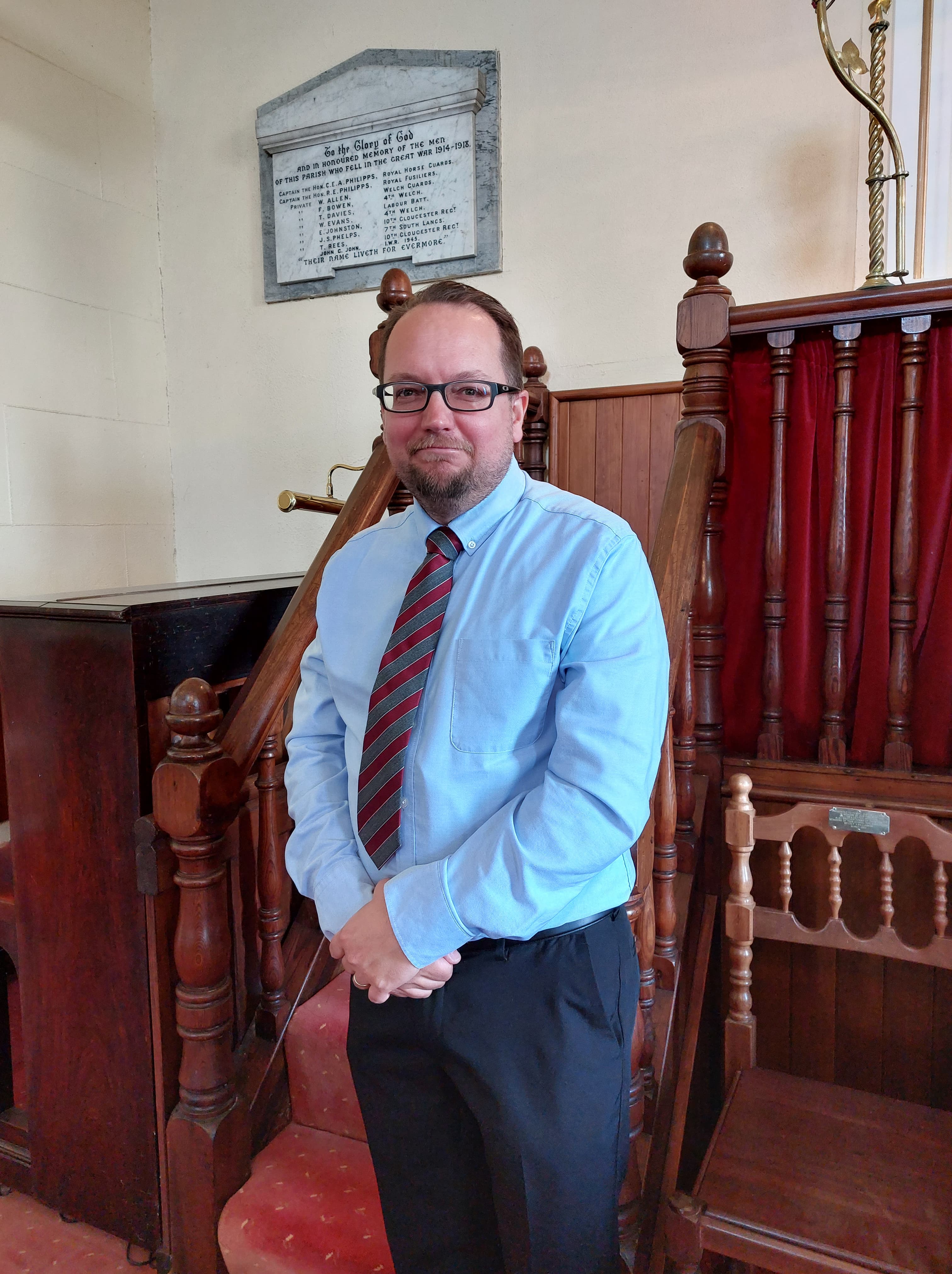
January 28th 2024: Jonathan Scott

Mark 2

Have you ever thought about what it would be like to be blind? Could you imagine what it would be like doing ordinary, day-to-day activities, perhaps relying on other people.

There was a lady called Helen Keller who was born in 1880 in Alabama in U.S.A. At 18 months old, following an illness, she lost not just her sight but her hearing as well. Imagine living your whole life with these disabilities. However, despite all of this she became a best-selling author and a great example of courage and achievement in the face of adversity. On one occasion she said these words, The only thing worse than being blind is having sight but no vision.”

As an individual or as a church we must take care not to have sight (physical sight) but no vision. You may be saying what does that mean to have vision? To have spiritual vision is different to mission. Mission is the over-arching goal in a church or as an individual which, to me, is simply said by Matthew 28, which is Jesus’ commission to us, “Then Jesus came to them and said, All authority in heaven and on earth has been given to me. Therefore go and make disciples of all nations, baptizing them in the name of the Father and of the Son and of the Holy Spirit, and teaching them to obey everything I have commanded you. And surely I am with you always, to the very end of the age.”

That is our Mission. However, our spiritual vision is our roadmap of what we are doing as a church or as an individual to reach that Goal. Let me put it this way. If you were on a football team and you all had the goal of winning the game (mission) that would be great. But if the coach didn’t tell you that you had to score any goals or what net you had to kick the ball towards and for all the team to work together to reach that goal then you would never, as a team, get anywhere near winning.

This is what Helen Keller is saying, you can have that mission, and everyone knows what that is. But without that vision and clear roadmap as a church to get there, it is worse than being blind. Otherwise, we will go all in different directions and not end up getting to the end goal which is to spread the gospel to all people. It is also spiritual Vision to have faith and listen to Jesus, to be able to allow Him to guide you in what He wants from you as a church or as an individual.

There are many ways in which that vision can be enacted in a church or as an individual. We need God’s help and guidance to know what the vision is through prayer and the Holy Spirit. By listening to this we can find out what this vision is for all of us.

In the passage we just read from Mark 8, Jesus talks to His Disciples and warns them to watch out for the leaven of the Pharisees and the leaven of Herod. Leaven is not merely yeast but a small amount of dough left over from a previous batch of bread which can be added to make new bread. Today, many people still use this way of baking bread, called sourdough starters. This is how bread was leavened in the ancient world, a small lump from the old batch could make a new lump of dough rise and puff up. The work of the leaven in the bread was considered as an illustration of pride and ultimately sin. The presence of a little of the old can corrupt the larger amount of the new.

Take heed, we are in the world but not of the world. A little amount of corruption can affect much, Jesus is warning against this in this passage. These verses are implying that Jesus’ disciples, as well as us, are at risk of the same defiling attitudes that have led the Pharisees and Herod astray. Jesus warns the disciples of this, but they are so caught up on other things they ignore Jesus’ warning.

Mark Chapter 8 verse 17 speaks of the blindness of the Disciples. Jesus asks why they are concentrating on the physical bread and tells them that they have ‘eyes but fail to see and ears but fail to hear’. They were beside Him when He fed the 4,000 and had all that food left over. However, they forgot so quickly and didn’t think to put their trust in the Lord Jesus for all their needs, which He can supply in abundance. Are we sometimes like the disciples, so caught up in day to day things that we don’t take notice of Jesus and what He says?

Jesus says to his disciples in verse 17 ‘Do you not yet perceive or understand?’ He rebukes them as He knew they had the capacity to understand but they hadn’t applied themselves. They were following but not growing. We need to make sure that we are growing in Jesus, not just merely attending on a Sunday. We need to fix our eyes on Him and apply ourselves to grow in grace.

2 Peter 3:18 says, But grow in the grace and knowledge of our Lord and Saviour Jesus Christ. To him be the glory both now and to the day of eternity. Amen.” The disciples couldn’t apply what Jesus was saying spiritually; they only thought about their stomachs. We have all been there. They thought about bread for the stomach not bread for the soul.

But if we did listen and see what He wants us to do, then we can fulfil that. It’s an attitude that we must learn to master. If we listen to Jesus, we can find out exactly what He wants from us as individuals and as a church.

The second verse of the hymn Be Thou My Vision, reads:
‘I ever with thee, and thou with me, Lord;
thou my great Father, and I thy true son;
thou in me dwelling, and I with thee one.’

If we have God with us and dwelling within us, God will guide us on the path He has set out for us for now and evermore.

In Mark Chapter 2, where Jesus heals the Paralytic, I wonder if you noticed the 4 characters? They all had different reactions to Jesus and this miracle.

These Characters were:

  1. Teachers of the Law – thinking Jesus is blaspheming. How can he do that? Forgive Sins? Hes not God! (6-7)
  2. Crowd – Amazed! Never seen anything like this! Praised God (12b)
  3. 4 Friends – Had a huge faith – They Stopped at nothing to get their friend to Jesus. (4)
  4. Paralysed Man – Got up and walked! (12a)

As we look deeper into this passage, let me ask 2 questions:

  1. How did each character respond to Jesus?
  2. Did they have true spiritual vision like we spoke about earlier?

Teachers of the Law— How did they respond to Jesus?

Firstly, they didn’t respond well to Jesus at all. They rejected him and hurled insults at Him. They accused him of ‘blaspheming’. But the major thing to remember here is that these teachers of the law were eyewitnesses of this account. Not that they heard about it and didn’t believe, they were right there in the house. Rhey were firsthand eyewitnesses and yet they still rejected what happened. Were they Blind? Well, the answer to that is simply Yes. They looked but didn’t see! Or didn’t want to see for that matter.

Someone once said to me, ‘The mind is like an umbrella they both work best when they’re ope. These teachers had their minds shut to everything other than what they deemed as important.

So did the teachers of the law display true spiritual vision. Well, the answer is no to this question. They followed traditions and they had put these in the way of their relationship with God.

I think that we have to be careful that tradition doesn’t get in the way of our relationship with God. We should be guided by the Holy Spirit and open our eyes to what the Lord is guiding us to do. We also need to be very careful to not end up in the same trap as the teachers of the law – that we have done things in church for so long, we carry on doing it just because we have always done it. Then we close our eyes to what is actually happening in front of us or to God’s guidance and miss an opportunity to be blessed by God or to spread the gospel.

Crowd — How Did they Respond to Jesus?

They saw this miracle happen right in front of them and rejoiced. They seem to have responded correctly to Jesus and this miracle. They rejoiced and said ’We have never seen anything like this!’

However, under the surface the question still, is whether they actually followed Jesus or if they just liked watching miracles and went along to see it but didn’t go any further. Are we sometimes like this, where we go to Jesus, maybe on a Sunday and say all the right things and worship God, but then don’t do anything else. I know I certainly get this way at times.

So Did the crowd have true spiritual vision? Well, that is questionable. As they praised God, did they have any vision to then go out and spread the gospel amongst all nations. They realised it was something they had never seen before, but I don’t think it went any further than that.

The paralysed Man — How Did He Respond to Jesus?

There is how he responded before the miracle. He responded with faith to Jesus and did everything that was asked. He didn’t question anything, he just did it. Do we do all that Jesus says or asks? What would we do in that situation? What was the reward for doing everything Jesus asked? He was blessed and healed, and I imagine overjoyed. He is no longer paralysed and His sins were forgiven.

Did he display true spiritual vision? Yes, I think when Jesus says In verse 5, ‘When Jesus saw their faith’ He meant all of them. They all persevered and headed towards the goal to get to Jesus.

The Fourth Characters are the Four Friends of the paralysed man. Without his 4 friends having faith, he would have got nowhere close to Jesus.

The 4 friends had loving faith, practising faith, undeniable willingness to go any lengths for the sake of their friend and that their belief was that Jesus was worth every effort. How did they react to Jesus? They reacted to Jesus before the event. Their faith was so strong they let nothing get in their way. Not even a huge crowd that blocked every entrance to where Jesus was in the house. Not even a roof got in the way of getting to Jesus.

So did these friends display true spiritual vision? Definitely. They had a goal (mission) to bring this man to Jesus to be healed. They believed wholeheartedly that Jesus was the only one who could do so. Their vision was to try every way to get to Jesus to get the man healed. However, there was a difference between these friends and the teachers of the Law. They didn’t even need to see the miracle. They believed as they reacted before everything took place. However, the leaders didn’t believe, or didn’t want to believe, even when they saw the miracle. The friends were open-minded and let their faith in God guide them to who can help, the only one who can help – Jesus.

The other thing to say is that there is a cost to following Jesus. The first cost we see is to the person who opened their house to Jesus. We don’t know who this person was. There is one thing for sure, he ended up getting a roof repair after opening his home to Jesus! Do we think of what the cost is opening our home to Jesus?

But is Jesus really worth all that effort that these friends went to? Should we put as much effort in? It does seem like a lot of work. Jesus performed a miracle in front of their eyes and healed their friend. I think that would be well worth it, don’t you?

Jesus Talks about the cost of following Him. He says, ‘Take up your cross and follow me.

Follow me and become fishers of men.” Following Jesus, is not without consequence and certainly requires a lot of effort on our behalf.But think of it this way:Is it worth a man to inherit the world but lose his soul?

So, what to do next? Well first you need to think who are you going to act like? Which one of the 4 characters? Are you going to act like the crowd, where we are rejoicing with seeing the miracle but once it’s over they didn’t go much further, they actually just liked watching miracles.

Are you going to act like the teachers of the law? Reject Jesus, be so caught up with your own agendas that you miss the miracle happening before your very eyes and be completely blind to Jesus.

Or are you going to be more like the 4 friends and the Paralysed Man who broke down every barrier and jumped over every hurdle to get to Jesus.

Remember what Helen Keller said at the beginning?The only thing worse than being blind is having sight but no vision.”

In this case the 4 friends, they had a mission to get this man to Jesus. Although their roadmap (vision) changed, they couldn’t get through the crowd, they thought, ‘So let’s go through the roof.’ They didn’t let things like that get in the way or deter their faith to be guided to Jesus – unlike the teachers of the law who let things get in the way and were spiritually blind. Or the disciples who

were concentrating so hard on the menial day to day things that they were blind and forget what Jesus had done for them. He can do immeasurably more than what we can ask for and provide abundantly for all of our needs.

Let us take the example of the 4 friends and the paralysed man into our lives. Let us trust in the Lord Jesus and have faith in Him that He will lead and guide us in the right ways. Let us not have our own agendas or traditions which get in the way of listening or seeing Gods vision for us as individuals and as a church. There may be speed bumps in the way (just as the 4 friends had), but If we are true to our faith, despite any speed bumps or blockers that are put in the way, and if we have true spiritual vision, the Lord will Guide us in the path ahead and towards the goal of making disciples of all nations and having more people come to know Jesus as their Lord and Saviour. He will be with us always until the very end of the age.

October 8th 2023: Steffan Jones

To watch this service, click on the link to our YouTube channel:
https://youtu.be/GxAKJn3cqjo?si=LCqVKDFGyYcoWIaz

2 Corinthians 9:10-15

The Bible is full of instructions about giving thanks. In the Old Testament people sometimes used stones. There were established regular feasts and festivals. Pentecost acknowledged the first fruits. Harvest is an especially important time of year. This summer there were lots of concerns about the rainfall in August and how it would affect silage. People prayed for sunny weather and we had an Indian summer. In our reality, children go to Tesco and don’t know where vegetables and fruit comes from. Also, we’re living in an increasingly secular society, where God is being squeezed out. To thank God for harvest is becoming alien.

Last summer, I had the privilege of visiting America, linked to churches in New England. Boston has a common with a significant mural as a thanksgiving to God, thanking Him for Ether and the discovery of anaesthetic, which could transform the medical world. Whilst there, I also saw the Pfizer headquarters which states, “Science will win.” 150 years ago the Boston people wanted to acknowledge God, but in those 150 years God has been forgotten and science is the answer! It is important for us, as much as possible, to be reminded of God’s goodness to us.

  1. We have a go to supplies all our needs.

Now may He who supplies seed to the sower, and bread for food, supply and multiply the seed you have sown and increase the fruits of your righteousness.” (2 Corinthians 9:10). People give praise to the deliverer, to the farmer, to the factory worker. It is right to do so, but we need to go deeper, to the source behind the sower, behind the bread maker. We need to go to the one who provided the seed, the grain, the wheat. The most fundamental problem of our society is the lack of awareness of God, the One who provides blessings, “Oh, give thanks to the Lord, for He is good! For His mercy endures forever.” (Psalm 118:1).

What is the first thing you do when you wake up in the morning? Do you stop and pause to acknowledge the God who gave you that new morning? All that we have is from the One that provides for all our needs. God deserves all the glory (Matthew 5). Stop and acknowledge the many material blessings: family, food, health, a chapel, harvest and so much more. Pray if you haven’t got those blessings, pray to the God who gives the seed. He knows what you require. Trust He will supply your daily needs. Be satisfied and content.

  • The God who enables generosity.

The context of this letter is important. The apostle is a middle-man. He is writing to the Corinthians to pave the way for a generous gift the Corinthians have pledged to the Macedonians. He establishes the principle of this in verse 11, “While you are enriched in everything for all liberality, which causes thanksgiving through us to God.” It is a reminder that the generosity you receive from others is from God also. All that you have has been given to you to help others. It is not just wealth for yourself and your own comfort. Use it to bless others.

When you receive gifts from others, don’t just thank them, thank the One who enabled them to do this. Go to the sauce. They only had the means to bless you because God gave them the means. If someone is kind to you, God has prompted that kindness. None of us has the inclination to do this as we are – we want to live lives of comfort. When anyone displays kindness, we give God the glory, whether unbelievers or believers. When unbelievers give, it is God’s common grace. When believers give, they are displaying the fruit of the Spirit. If the Lord has given to you, will you use that to bless others? When you receive, will you thank them and the One who enriched them.

  • God has given an indescribable gift.

Paul tells the Corinthians that the people of Macedonia are praying for them, “And by their prayer for you, who long for you because of the exceeding grace of God in you.” (2 Corinthians 9:14-15). As the Christians in Macedonia think about the church in Corinth, they are grateful for gifts, but more, they experienced the surpassing grace of God. You’ve known grace that surpasses all human blessings. Paul speaks of surpassing greatness, even greater than physical blessings. God is so gracious. God is so kind. The greatest act of all was God sending His Son to be the Saviour of the world. It is beyond our means to express it in words. It is a grace that transcends all human understanding.

“Thanks be to God for His indescribable gift!” (2 Corinthians 9:15). What is this gift? Back in eternity the Son of God was with the Father. He was God Himself. He had divine nature Himself. He created everything. The Word of God did not consider equality something to be grasped. He laid aside it all to become a servant. The Son of God appeared as a man, to live in this world not demanding to be served, but to serve. He was obedient to sinful parents. He was obedient to the terrible dictatorship (giving to Caesar). He was tempted to be frustrated with people, but He lived a life of purity and holiness. He went to the cross, obedient to death. He died for your sin and mine, taking on the penalty of our sins so we might be loved, accepted and approved. He took the darkness of judgement upon Himself so we might have light of life.

The Spirit was sent as a gift after the resurrection. The Spirit comes into the souls of His people, awakening us. We have the gift of everlasting glory, worship and praising Him for all eternity. That’s the gift! The gift of the Son to be our Saviour, the gift of the Holy Spirit, the gift of forgiveness of sins. It is an indescribable gift. We need all of eternity to explore this gift.

Have you trusted in Jesus for your salvation and everlasting life? As we live our lives, remember we have a God who supplies all our needs. He is the one who enriches us and others to be kind. He is the one who gives surpassing grace and an indescribable gift. It’s a gift you need, a gift the village of Roch needs, a gift that Pembrokeshire and beyond needs. He offers that gift, will you receive it?

April 7th 2023 – Good Friday: John Scanlon

Matthew 27: 27-46

To watch this service, click on the link to our YouTube channel: https://youtu.be/53IMrkxSip0

Imagine a spaceship hovering over a planet in which people can beam down. The spaceship can move from place to place in a flash – the ultimate form of travel. You can end up not only in another place but also another time. Imagine something went wrong and we do not know where we are or in what time we are. We start to look for familiar landmarks. As we walk along, we find ourselves on a hill facing a bright sunset. You can see three crosses – no people, nothing else, no signs of activity. Absolute silence. But in your mind’s eye, as you move forward, you get the feeling that you have just missed something. You draw nearer, looking for clues as to what you’ve missed. You see marks on the crosses – nail holes. There are patches of blood stains on the ground. You realise you have missed a barbaric form of death by crucifixion by the Romans. You now know where you are and the time frame. You have perceived from the blood on the ground the life that ran out of three men.

In times past, life wasn’t so precious. The death penalty was given for offences today we would consider quite mild. 250 years ago, in this country, a boy would be sentences to death for poaching a rabbit to feed his family. The scene we are standing at is a sight of battle, battle against sin. The one who died at the end of the fight was the victor. Greater love has no one than this, than to lay down one’s life for his friends. (John 15:13). If we’re not familiar with the gospel, we can wonder, ‘What does this mean?’ Can it be that one of the men who died was innocent of any crime and died in the place of someone else, that He laid down His life for others? If so, which one was it? Who benefitted from this unselfish act?

In the gospel we find the incredible but true story of how mankind had become so sinful down through the years, that our just God could not look upon us because of the terrible state we were in. A righteous God demanded that a penalty should be paid to atone for our sins, And according to the law almost all things are purified with blood, and without shedding of blood there is no remission.” (Hebrews 9:22). A righteous God demands a penalty of death. For the wages of sin is death, but the gift of God is eternal life in Christ Jesus our Lord. (Romans 6:23).

We learn from this that there is hope. Jesus has paid the just penalty for our sins. In the shedding of blood, He has purchased our forgiveness. The forgiveness of sin is extended to all who repent. But we can’t do what we like. This isn’t just saying sorry, expressing regret or putting on a sad face. Only in true repentance can we reap the benefits of what Christ has done on that cross. Repentance means a complete turnaround from your own way of life, following a different path. It means having in our hearts a saving faith in the Lord Jesus Christ. John 3:16 tells us, For God so loved the world that He gave His only begotten Son, that whoever believes in Him should not perish but have everlasting life.” The whole idea of redemption was not an afterthought; it was planned from the foundation of the world. Its fulfilment was announced by Jesus in His final breath when He cried out, “It is finished.”

We are told in the gospel that it went dark for three hours. In this modern world we don’t know what real darkness is like. Imagine what it would have been like before God said, ‘Let there be light.’ Jesus is the Light of the world. When that darkness came as Jesus was crucified, I believe it was the time when Jesus was dead. There was no light anymore.

There were three crosses. Three crosses, three men. Two of the men were thieves, one on either side. They had received the death sentence, which means they were not just pick-pockets. They had been caught, tried and sentenced. The poor man who hung in the middle was ridiculed. We know very little about these thieves. We assume they were both guilty of their crimes. But we see one difference between them – one continued to curse Jesus. He was angry and wanted to blame everyone else for what he had done and showed no regret for what he had done.

The other one thief was different. He had been just as evil but he admitted he was getting the punishment which he deserved, But the other, answering, rebuked him, saying, “Do you not even fear God, seeing you are under the same condemnation? And we indeed justly, for we receive the due reward of our deeds; but this Man has done nothing wrong.” (Luke 23:40-41).

What had happened to this man? How did he have this change of heart? He was stuck on a cross in full view of everybody else. Somehow, he knew that no matter what he did, nothing would change. He had come to realise that he had brought all this suffering on himself. But within his heart a miracle had taken place. He saw himself as a sinner; he saw the terrible condition of his soul and he could no longer face up to being the man he was. On that day, the Holy Spirit reached out and touched the heart of that man. The miracle of repentance. He felt a burning need for the cleansing of his soul, so he turned to God – to the pitiful bleeding wreck next to him on the cross. He recognised Him for who He really was and said, “Lord, remember me when You come into Your kingdom.” (Luke 23:42). Those words were welcomed by the man next to him who said, “Assuredly, I say to you, today you will be with Me in Paradise.” (Luke 23:43). There was no baptism, no Sunday School – only repentant faith was needed.

Three men hung side by side that day. The one on the left died in his sins. The one on the right died free from sin. The one in the centre died for the sins of others. One died in love, one died in despair, one died in faith. In the centre was our Saviour, paying the price for us in the deepest of love, dying on our behalf. On the left of Him stood the man who had no regrets for his sins. He cursed those around him as if they were to blame. He did not care about his past, his present or his future. He was heading for the deepest hell. There are far too many in this world who are in the same state. On His right was a man who saw the error of his ways, who freely confessed his sin, and in true repentance had been welcomed into the Kingdom of God.

Let me ask you today, what about you? Where do you stand? Are you standing on the left of Jesus with unrepentant sin and no care for the future, seeing nothing wrong with the life you’ve led, content to walk on the broad road that leads to destruction? Or do you stand on the right with those who acknowledge their sinful state and throw themselves on the loving mercy of a God, in Jesus Christ?

The choice is yours. It serves no purpose to say, ‘I’ll have to think about it,’ or ‘Maybe next week I’ll start going to church and start reading the Bible.’ You fail to realise that nobody can say how much time they have in this world. Today is the day of salvation. The repentant thief knew that his time was coming to an end and he needed to put it right. Could Jesus have rejected him? Could the man have been told, ‘No, your sins are too many and too great to forgive? Never! In Luke 19 Jesus Himself tells us, “For the Son of Man has come to seek and to save that which was lost.” (Luke 19:9). This man was lost – to himself, to the crowd, to the world – but not to God, in Jesus Christ. In His agony and suffering, Jesus reached out to this thief, who was now a child of God. He brought another sheep into the fold, then brought him into heaven. Hallelujah!

We hope that these fictious time travellers would seek a signpost to show them which way to go next. After all, they had been lost once. The cross they saw before them would point the way to God. Anyone who needs to find their way home must look to that cross, to the One who not only knows the way, but He is the Way. He is still reaching out to us, still waiting for us. Follow that sign.

March 12th 2023: Paul Daniel

To watch this service, click on the link to our YouTube channel: https://youtu.be/WIPdbbdB3KI

Psalm 1

The first psalm sets the tone of how we are to read the psalms, in your walk with God, in your experiences, your emotions, your knowledge and your worship. It’s the gateway to the psalms.

Have you ever had an argument with your husband or wife? Sometimes, we are told that we do things, but we tend to do easy things. We tend to put off the more difficult things and don’t want to do them. Easy things we like, we’ll do without question. There are things that are hard to do, and we put them off.

If you’re a Christian, do you really want to be a committed Christian? There are degrees of being committed as a Christian. You might be a Christian but are you committed to being one? Being a Christian is a gift of salvation. Once you’ve been saved, are you committed to your walk with Jesus?

Psalm 1 sets the tone of what it looks like to be a follower of God. The follower of God is fully committed,

Blessed is the man
    who walks not in the counsel of the wicked,
nor stands in the way of sinners,
    nor sits in the seat of scoffers;”
(Psalm 1:1)

This person is wholly committed to following the Lord. It’s a challenge to us. How committed are we? Is our Christian life deliberate? We can be passive as we listen to preaching and join in singing. Do we engage? What do I need to repent of, to delight in the law of the Lord, day and night? As we come to Psalm 1, what does the Christian life look like to be blessed? God wants us to be a happy believer. It’s a psalm about being blessed. If you’re a committed Christian, in the sense that you are wholly committed to the Lord, you will find blessing. But the reverse is also true. If you’re a Christian and not fully committed to the Lord, you will probably find yourself in paths that are not going to be blessed and take away your blessing of salvation.

Psalm 1 was written in the context of an Israelite worshipping the Lord. What does God say in the Old Testament about following Him? “See, I am setting before you today a blessing and a curse:the blessing, if you obey the commandments of the Lord your God, which I command you today, and the curse, if you do not obey the commandments of the Lord your God, but turn aside from the way that I am commanding you today, to go after other gods that you have not known.” (Deuteronomy 11: 26-28) That was the pattern for Israel, if they followed the Lord they would be blessed, that they would be rescued from Egypt. They were told that if they followed the Lord and obeyed His command, that is the path that leads to blessing. But if you don’t do that, it’s going to end up badly.

We see in Ephesians 1 the New Testament context for us, Christians today, who have every spiritual blessing in Christ, Blessed be the God and Father of our Lord Jesus Christ, who has blessed us in Christ with every spiritual blessing in the heavenly places, even as he chose us in him before the foundation of the world, that we should be holy and blameless before him.  In love he predestined us for adoption to himself as sons through Jesus Christ, according to the purpose of his willto the praise of his glorious grace, with which he has blessed us in the Beloved. In him we have redemption through his blood, the forgiveness of our trespasses, according to the riches of his grace, which he lavished upon us, in all wisdom and insight.”  (Ephesians 1:3-4). Extraordinary!

As New Testament Christians we’ve been spiritually blessed with every spiritual blessing. You’ve got it all! You might not have the sort of career or house you’ve always wanted, but if you are a Christian you have been blessed with every spiritual blessing. You have redemption. You have been forgiven. You have God living in you. You are truly blessed.

When we look at Psalm 1. The first question we ask, in the context of being a New Testament Christians, is ‘Are you happy? Are you blessed?’

The world tells us that we are happy if I …. It’s conditional. Sometimes, it’s an economical term; it’s a relative measure – I’m happy compared to my neighbours because I have more than them. For us, what does it mean to be blessed?

“Blessed is the man
    who walks not in the counsel of the wicked,
nor stands in the way of sinners,
    nor sits in the seat of scoffers;”
Psalm 1:1

God is completely happy in Himself: Father, Son and Holy Spirit. When we listen to God, this is what it looks like to be blessed. To be blessed is to consider the company we keep, the direction of that company and the environment. If we persistently keep the company of the ‘counsel of the wicked,’ standing in the way of sinners, sitting in the seat of scoffers, there is a direction of travel here. To walk – that’s a kind of dabbling a little. Then standing – mixing with. Then to sit is to get cosy with it.

To follow the path of the ungodly – standing, mixing and sitting – there’s a direction to the path. There’s a cosiness to the direction of unhappiness. The path of being blessed is staying well away from what is evil and wicked, running a mile away from it. Instead, to be blessed is,

“but his delight is in the law of the Lord,
    and on his law he meditates day and night.”
(Psalm 1:2)

My friends, we can sometimes look at the world and think that what it means to be truly happy, to be truly better, is to maybe have what they have, or maybe what the tv adverts say you should have because it’s good for you. But to be truly blessed is to delight in God and His ways. God is the Creator is the one who made us, the one who loves us. God is the one who wants to protect us. He sent His Son to do just that. If you do that, look at what happens,

“He is like a tree
    planted by streams of water
that yields its fruit in its season,
    and its leaf does not wither.
In all that he does, he prospers.”

(Psalm 1:3)

Yes, we are thinking of the Old Testament here, where there was a blessing followed by obedience. But what does it look like for Christians today? If we look at the imagery we see a tree that looks healthy; it’s planted by a stream of water, it yields it’s fruit in season and grows as it should. There are signs of life.

For today, there’s a sign of life, health, stability. When Israel was not being obedient, they were full of problems. When they repented, they had a period of peace and blessings. When we’re Christians we want the things of God, we cling to the promises of God, who is able to provide all things.

Secondly, we see that stepping away from God leads to chaos,

“The wicked are not so,
    but are like chaff that the wind drives away.”
(Psalm 1:4)

It’s an image of wheat and chaff. When the wheat is thrown into the air the chaff falls away and the wheat falls down. The chaff in the wind goes all over the place. When you step away from God there is chaos. It’s not the same picture you see in verse 3, where there is a picture of stability, of health and of order. Consider what the world takes offence at, what churches sometimes do. Stepping away from God’s will leads to chaos. It is chaos when God’s ways and God’s laws start being re-written. It is chaos when God’s plan, the Creator’s plan, starts to be re-read and re-ordered in many different ways.

The law of the Lord is for everyone. When you tinker with God’s Word it says it will affect the next generation and the generation after that. Whatever we decide, whatever we teach, stepping away from the Lord can lead to chaos. Don’t’ step away from God’s Word.

Finally, as a Christian, are you aware that there is no in-between, no grey area?
 
“Therefore the wicked will not stand in the judgment,
    nor sinners in the congregation of the righteous;
for the Lord knows the way of the righteous,
    but the way of the wicked will perish.”
(Psalm 1:5-6)

It’s God’s way or it’s chaos. There is no opinion. It is God’s Word. God very clearly defines for us His Word. Nothing is subjective. There is no philosophy that we’re meant to listen to. There’s no politics. There is no opinion. God is the one we need to listen to. The righteous will be watched, the righteous will assemble. If you are a Christian you have this wonderful inheritance, this wonderful hope that we are heading to. We are going to be with Jesus Christ, we are going to see Him face to face. We will have that ultimate blessing of no more pain, no more mourning, no more sickness, no more death.  We will be with Him.

The ungodly, the unrighteous, will not stand. This is why we have to take the message of the gospel to the ends of the earth. There are no ‘what-if’ scenarios. Either you walk with the Lord or you don’t. It’s why, when churches are looking for a pastor or calling a pastor, it’s not whether you like him or not, or whether he does this or is able to do that. Those things matter but it’s not what it’s all about that. What matters is that the church asks someone to come who is going to preach the word of the Lord in a way that people will listen. This is what it means to be blessed, to meditate on the Lord both day and night. It’s getting somebody who can teach and when they teach, we listen. He’s going to be able to teach not just in here, but out there as well because you want everybody to hear the Word of the Lord.

When we come to church we don’t sit on top of the Word, we sit under the Word. In Titus chapter 2 Paul talks to younger men and older men, younger women and older women, to the whole congregation, about what can often happen as we grow in our Christian walk. As we get older we can start to get grumpy and stop wanting to listen. Keep listening. He says to the women things like ‘don’t drink too much, don’t slander, don’t gossip.’ He talks about things that you and I are very prone to, which leads us to start challenging God’s word. We say, ‘Well, actually I’m a Christian but I don’t want to submit to these particular things.’ My friends, there are no grey areas.

To be blessed is to be obedient to God’s Word, to be in that path where God calls us, where we find peace, contentment and joy. The Christian life is not an easy life. But when you start to see those signs in your Christian life where things are not going maybe as well as they should, in the sense where something in your own Spirit does not sit right, God is asking you to deal with it. Come to Him, do not ignore it. Work out whether it’s because it’s external, whether it’s actually something to do with others – that we’re standing in the wrong place, or where we’re sitting where we shouldn’t be.

There are common things that you and I do, as Christians, which eat away at that blessedness that we’ve been given. There are certain things that we might experience as Christians, that often happen, which take away that joy that we’ve been given. We have every spiritual blessing in Jesus Christ, why would you want to move away from that? Sometimes, it comes down to our attitude. “Who is wise and understanding among you? By his good conduct let him show his works in the meekness of wisdom.14 But if you have bitter jealousy and selfish ambition in your hearts, do not boast and be false to the truth. 15 This is not the wisdom that comes down from above, but is earthly, unspiritual, demonic. 16 For where jealousy and selfish ambition exist, there will be disorder and every vile practice. 17 But the wisdom from above is first pure, then peaceable, gentle, open to reason, full of mercy and good fruits, impartial and sincere. 18 And a harvest of righteousness is sown in peace by those who make peace.” (James 3:13-18).

When you find, as a Christian, you are slightly unsettled, when there’s something eating at you and you don’t feel peace or joy and you’re restless, it becomes an obsession and you’re troubled by it. Just ask this, is it your attitude coming from heaven? Is your attitude out of purity? Is your attitude after this wonderful peace that you can have from God Himself? We sometimes lose that joy, that blessedness, because our attitude is not from heaven but from a selfish heart.

Then, there’s anger. Anger takes away that blessedness and joy. Listen to James again, “What causes quarrels and what causes fights among you? Is it not this, that your passions are at war within you?” (James 4:1) James talks about quarrels and fights. When we argue and when we fight, James says it comes from our desires that battle within us. Is it the other person or the frustration that comes from within? Often or not, the reason we get angry is not because what someone else has said but because we’re frustrated with our own inability. God calls us and challenges us when we’re unsettled and fired up, just don’t look at the other person, look at yourself.

Anger and anxiety grates at you. It troubles you. You can’t have that sense of joy of the Lord that is yours. Philippians 4 reminds us to, “Rejoice in the Lord always; again I will say, rejoice. Let your reasonableness be known to everyone. The Lord is at hand; do not be anxious about anything, but in everything by prayer and supplication with thanksgiving let your requests be made known to God. And the peace of God, which surpasses all understanding, will guard your hearts and your minds in Christ Jesus.” (Philippians 4:4-7).

God wants to bless us. Yes, we’re anxious and worried, but God says to come to Him. You have received every spiritual blessing. Pray with thanksgiving, and God’s peace will guard you. My friend, when we find ourselves walking away from that path of blessing, that spiritual blessing in Christ, it unsettles us. If it doesn’t unsettle us, we might have walked too far. What are we called to do? We are called to come back, look at our hearts, then look to the Lord.

The Lord Jesus Christ left glory. He lay aside His own happiness. He put that aside so that He could go to the cross for you. When He went to that cross for you and me, He went so that you and I would be fully blessed. He did it so that we could be one with the Lord. He did it so we could be one with each other. Sometimes, how pathetic I can be, and how pathetic you and I, as Christians, can be. We forget that God sent His Son in order to bless us. He wants us to keep staying close to Him, both day and night. He doesn’t want us to dabble and to go back. He doesn’t want us to get angry and troubled, to fall out and to overthink anything. He wants us to stay close to Him. When we stay close to Him we will find that peace, joy and contentment. One day, it will be complete and we will stand in the assembly of the righteous.

October 2nd 2022: Colin Jones

Texts: Habakkuk 1:2-5,12-15; 2:3,4,18-20; 3:17-19.

Brief background.

            Habakkuk is a book which displays something of what we may feel but might be afraid to express. He asks the question we might not wish to ask. Habakkuk was contemporary with Jeremiah, Ezekiel, and Zephaniah. Everything in the world of that time was undergoing change. Assyria had been the great super-power during the days of Isaiah and Hezekiah where the Lord wonderfully brought about a great defeat for Assyria at Jerusalem (Isaiah 37). But in 626 BC Nabopolassar, the king of Babylon, rebelled against Assyria’s dominance. In 612 BC Nineveh was destroyed, and by 609 BC Assyria was no more. Thus, Babylon became the super-power of the time. It was this regime which took Judah captive and by 586 BC the Babylonian ruler, Nebuchadnezzar, had taken Jerusalem and the nation was no more (until the exile).

Where is God when trouble abounds?

            The central feature of this book is the question of why things go wrong (from our perspective) and how we should view them correctly. The Scriptures are blunt and openly honest. We do not read sanitized versions of the people that God had dealings with. Abraham was a man of faith and the friend of God, but he treated Sarah, his wife, in a very poor way on two occasions. David was a man after the Lord’s own heart and yet he committed murder and adultery. Jeremiah is open too with the Lord, expressing his concerns about what was happening, and on one occasion he stated that the Lord had “deceived” the people (Jeremiah 4:10). But even though Jeremiah speaks to the Lord in such ways, there was no lightning bolt from the Lord! The former prophet Elijah after the contest at Mount Carmel despaired when he heard of Jezebel’s threats and ran for his life to the wilderness. The Lord made him sleep, then eat, and then sleep again before taking him to Mount Horeb where He spoke not in thunder nor lightning, but in a still small voice (1Kings 19:1-18).

            The Scriptures are an incredible record of how God is patient and caring for His people. God has no need to justify Himself and His actions, for He is good and always does good (Psalm 119:68). But even though He does not need to explain anything, He does explain much to us. Often not in the ways we might expect, but always in the ways which are good for us. God even tells us the end of the story in the book of Revelation.

A look at the texts.

            In Habakkuk 1:2-4 the prophet seems to be saying that they were going through tough and terrible times and the Lord seemed not to be concerned, but rather He appeared to be paralysed. There was “violence” and “iniquity” but the Lord did not seem to want to save nor to hear. There was “strife” and “contention” and the law seemed powerless whilst the wicked continued and the righteous were treated badly. We too have had tough times in recent years with the pandemic and with economic hardship so that some are saying “where is God in all this difficulty?” Some ask why God does not intervene? The Lord had defeated Egypt in rescuing Israel from bondage and He had defeated Assyria during the reign of Hezekiah, so where is He now?

            In Habakkuk 1:5f the Lord answers, but not as expected. He is raising up the Babylonians (Habakkuk 1:6). Assyria were described as the Lord’s “rod” of His wrath (Isaiah 10:5-12) to deal with Israel, but they overstepped the mark so now the Lord was raising up the Babylonians to correct them. Now, it would seem, the Babylonians appear to be worse than the Assyrians (Habakkuk 1:7,8).

            In Habakkuk 1:12,13 the prophet appeals to the character of God. He is eternal and He is pure so why does He allow the wicked to prosper and say nothing when they treat the righteous so badly? We can imagine Habakkuk saying something along these lines: “Israel was more righteous than the Assyrians but they seemed to win out generally, and now the Babylonians have arisen and they are worse than the Assyrians and yet they will win out – how can this be? We might ask similar questions: “Why is Putin still in power?” “Why do the wicked prosper and get richer and good people suffer?”  “Surely the God who is good, holy, and just can see these wicked things happening so why does He not act?”

Babylon – a picture of the world.

            The first mention of an empire comes in Genesis 10 and 11 where we read of Nimrod, the mighty hunter against the Lord, who built Babel the beginning of his kingdom. This rebellion was a direct challenge to the command of the Lord. God wanted mankind to spread out across the globe (Genesis 9:1-7) but Nimrod led a rebellion so that they could make a name for themselves. They built their own way, their own religion, their own systems, and all so that they could glory in themselves. Well God confused their languages so that their project came to an end – although the Lord allowed Nimrod to build further cities.

            We do not read again of Babylon until their resurgence during the time of Hezekiah (Isaiah 39). When Babylon regained power during the ministry of Jeremiah and Ezekiel, we find Daniel and his friends in captivity. The first way in which Babylon exerted its pressure upon the people of God came with the food they were eating. This was in order to undermine their trust in God, for He had told them what foods they could and could not eat in the Law. What were the exiles to do? Well in Daniel chapter 1 we find that Daniel refused to compromise on this issue and God gave him favour. Then the stakes were raised, for in Daniel chapter 3 the challenge to the people of God was to compromise in worship. Shadrach. Meshach, and Abednego refused to bow down to the golden statue the king had made, and so were thrown into the fiery furnace. But wonderfully we discover that there were actually four people to be seen in the flames, and none were burned up even though the fire was fierce and at its top heat. Babylon’s challenge to the people of God began small (concerning food) and then got more serious (whom should we worship). And then in Daniel 6 we find that persecution for Daniel comes in connection with his inner practice of praying. They could not fault Daniel in any way save in connection with His faith. The king’s advisers convince the king to make life impossible for Daniel – you cannot pray to anyone except the king! What would Daniel do? Well he continued his normal practice and for this was thrown to the lions. The angel prevented the lions from harming Daniel, but they were still ravenous for they consumed others thrown into the same pit after Daniel was lifted out. Or we could point to Psalm 137 where the captors ask the captive exiles to sing a song for them. The exiles could not because all their songs were of Jerusalem and this was now gone. Babylon’s final end is pictured in Revelation 14:8 – fallen!

God’s answer.

            What does God say to Habakkuk in reply to his question as to what was going on?

First answer.

            The Lord’s first answer comes in Habakkuk 2:3

“For the vision is yet for an appointed time; but at the end it will speak, and it will not lie. Though it tarries, wait for it; because it will surely come, it will not tarry.”

The vision is not for now. Habakkuk must wait. It will all occur just as God has planned. It is “in My time and not your time” says the Lord. How we want an instant answer! But God says “I know what I am doing, and I know when is the right time to act.” All God’s times are right. He sent His Son into the world at the right time. All our times are in His hand.

            In 2Peter 3:8,9 the apostle tells us that with the Lord a day is as a thousand years and He is not slow concerning that which He has promised. All will come about just as He has planned. The Lord has a much broader agenda than Habakkuk (and we) realise. You, Habakkuk, are looking at things from the point of view of Habakkuk. The Lord is looking at things from not just a heavenly perspective but from a whole world view point. There are many more people to consider! There are still people to gather in, and so the Lord continues to uphold the universe allowing the wicked a time because He has people who are yet to be born for whom He has died and will bring to glory.

            God is working in our lives through these difficult times for our good and for our sanctification. What did we learn through the pandemic? Some began to see the vital importance of fellowship because they had missed it so much during the lock-down. The Lord is also sifting through times of trouble and difficulty. Many people did not come back to some churches after the pandemic and some churches closed. There is a separating of the wheat from the chaff going on. How serious are we in following the Lord? We are to heed these words of Paul:

“rejoicing in hope, patient in tribulation, continuing steadfastly in prayer.” (Romans 12:12).

When it seems that the Lord is not delivering then keep trusting and keep believing.

Second answer.

            The second answer comes in Habakkuk 2:4b: “But the just shall live by his faith.” These words have been world-shattering. The reformer Martin Luther sought peace and a right relationship with God through all the means he could see from his Roman Catholic environment, penances, indulgences, pilgrimages and so on. He tried all sorts of works-based means to get himself accepted by God, to try and demonstrate his righteousness before God, but then he came across these words and everything changed. This Scripture, for him, was one of the greatest gifts that God could give. It was this text that released him from all his efforts at gaining salvation.

            The wonderfully unique thing about the gospel is that it is all through grace and not by self-effort nor by works. Every other religion, world view, system of thought or so-called ‘faith’ requires a person to do something by their own effort, or to offer something from their own means. Christ has done everything necessary so that when the Lord was asked by some of His followers: “what shall we do, that we may work the works of God?” the Lord replied by saying: “this is the work of God, that you believe in Him whom He sent” (John 6:28,29).

            We must live by faith and not by sight (2Corinthians 5:7). The clamour of man to prove his worth or to demonstrate his value is all a waste of time because of sin. In Habbakuk we hear these words:

“But the Lord is in His holy temple. Let all the earth keep silence before Him.” (Habakkuk 2:20).

There is no argument nor persuasion against the Lord. Mankind must be silent before Him for he can do nothing and offer nothing which will be acceptable to God. One Man alone did all that was necessary and that was Christ Jesus, the Son of God. He gives to us His righteousness and so we are now “just” and we continue in this by faith in Him.

            Now such a view is generally unacceptable to people. When the Lord Jesus pointed out this teaching that we can live only by faith and trust in Him, and that to live we must feed on Him for we can nothing to make ourselves presentable, many of His followers left Him (John 6:66). He then asked His disciples if they too were going to leave, Peter replied: “Lord, to whom shall we go? You have the words of eternal life. Also we have come to believe and know that You are the Christ, the Son of the living God” (John 6:68,69).

            This may be a “hard saying” (John 6:60) but it is the best, the only, and the surest way to find peace and true satisfaction. “The just shall live by his faith.”

Third answer.

            The third answer comes in Habakkuk 3:17-20. Habbakuk imagines the worst possible situation that he could think of:

“Though the fig tree may not blossom, nor fruit be on the vines; though the labour of the olive may fail, and the fields yield no food; though the flock may be cut off from the fold, and there be no herd in the stalls.”  (Habakkuk 3:17).

He imagines a situation of abject and complete famine so that everything fails. What then? Well even though the worst possible thing could come about in God’s plan:


“Yet I will rejoice in the Lord, I will joy in the God of my salvation.The Lord God is my strength; He will make my feet like deer’s feet, and He will make me walk on my high hills.” (Habakkuk 3:18-20).

He will rejoice in the Lord (cf. Philippians 4:4). Notice how he reminds himself of the character of God for He is the covenant keeping God of all power and strength. Look to what he knows the Lord will do for him too (“he will make …”). Even in the direst and most dark of circumstances Habakkuk has come to know that the Lord God is still on the throne, and He is still for His people. God will not abandon them, and He will never leave them even though He may have to chastise them for their sanctification.

By way of application.

            How should we face adversity (in whatever form it may come)? Trust fully in the Lord. The just (those given righteousness from Christ) live by faith in the Lord Jesus. God is faithful. We can trust in Him. Consider His character and attributes. Moses requested a view to see God (Exodus 33:18), but the Lord said He could not see Him and live, so He placed him in the cleft of the rock and passed by covering Moses with His hand enabling Moses to see His back (Exodus 33:2-22). And then when the Lord passed before Moses He proclaimed:

“The Lord, the Lord God, merciful and gracious, long-suffering, and abounding in goodness and truth, keeping mercy for thousands, forgiving iniquity and transgression and sin, by no means clearing the guilty, visiting the iniquity of the fathers upon the children and the children’s children to the third and the fourth generation.” (Exodus 34:6,7).

This is God. He abounds in mercy and grace. He is patient beyond human imagining. He is good, true, and righteousness, so that no sin will be left that is not dealt with. The Lord promised Noah that He would never again flood the earth and He has kept this promise. But we know in reality that sometimes harsh and difficult times will come. The world as a whole may never be flooded again but what of the floods in various places and at various times? Assyria was bad, Babylon was worse, but God is always good. These difficulties are sent to chastise us as Hebrews 12:7-11 tells us. Let us therefore consider the good and faithful God and seek to learn what it is that God is teaching us through such difficulties.

            In Hebrews 12:2 we are exhorted to look to the Lord Jesus:

“… the author and finisher of our faith, who for the joy that was set before Him endured the cross, despising the shame, and has sat down at the right hand of the throne of God.” (Hebrews 12:2).

We can face the trials and tribulations to come if we:

Nourish ourselves on the Lord and all He has provided us (He will not forsake us).

Nourish ourselves on the future that God has promised us in glory.

We may grow old and get weaker, but the Lord never leaves His people. We may have to suffer but the Lord has gone before us as our Pioneer. Remember that He has prepared a place for us in glory to be with Him forever (John 14:2; 17:24).

July 10th 2022: Paul Daniel

To watch this service, click on the link to our YouTube channel: https://youtu.be/3lyINvNoBtk

Colossians 1:1-23

Whilst on holiday, my family and I recently visited a cathedral. My children were shocked, especially when a chap started playing the organ. They had never seen or heard anything like it. The grand piano didn’t look special, but its volume and grandness made my children stand in awe. When we walked into the cathedral, the place was very different to going to church on a Sunday, where they run in, listen, go to Sunday School and have squash afterwards. Their experience was very different as they stood in awe, never having seen anything like this before.

Are you glad that you are here – because you stand in awe of the God who wants to speak to you, the God whose hands flung stars into space, the God who knows each and every one, who wants to meet with us? Is that your prayer this morning, your expectation? Are you really glad to be here because you want to meet with God?

Can you imagine the church at Colosse receiving this letter? What was it going to say? It starts off like this, To the saints and faithful brothers in Christ at Colossae,” (Colossians 1:2a There’s a church there being born because Epaphras has taken the gospel to them and they’ve come to put their faith in the Lord Jesus Christ. Then, Paul writes this letter to the church and addresses them and says, To the saints and faithful brothers in Christ at Colossae,” (Colossians 1:2a). This tells us they are Christians, faithful brothers and sisters in Christ, and they’re in Colosse.

Here is a group of Christians, they’ve been saved by God, they’ve heard the gospel. They are in Christ, and they’re also in Colosse. They are in Christ but are also in Colosse, in the world, a fallen world. There is a great tension in the Christian life; we are in Christ but also in the world, a place we’re called to live. This great rescue brings across many challenges. The Christian life is not a walk in the park. You’ve got to go through the week but after all the battles done, you get to church on Sunday, to meet with God. It’s almost as if you’re being re-armed, fed, ready to go on. The tension of living in the ‘now and not yet.’ So, this morning, are you glad to be here? Do you want to meet with God? Do you want to stand in awe of what God’s word says? Will you be changed by it? God wants to prepare you for this week ahead.

We have been rescued from darkness, He has delivered us from the domain of darkness and transferred us to the kingdom of his beloved Son,” (Colossians 1:13). What a profound verse. He has rescued us from the domain of darkness. Only God can do that. He has rescued you, brought you into the light, into the Kingdom, through the Lord Jesus Christ in whom we have redemption, the forgiveness of sins.

Consider the cross. Consider what Jesus Christ has done. He came, was put on a cross. Darkness came over the land and He bore our sins so that we can be redeemed,  so that we could be saved. He’s done that because we can’t do that ourselves. Sinners can’t save themselves. That’s why Jesus Christ came into this world. “For God so loved the world that he gave his only Son, that whoever believes in him should not perish but have eternal life.” (John 3:16). Darkness leads to death, to judgement. “For the wages of sin is death, but the free gift of God is eternal life in Christ Jesus our Lord.” (Romans 6:23). The Bible reminds us that you are loved, that I am loved. We stand before a God who has loved us with an everlasting love. He has chosen us before the foundation of the world. He set His love upon you. He knows you. He has called you out of darkness. Wonderful! You didn’t want to be rescued. You didn’t want to choose Him. But He showed you mercy and compassion. You didn’t deserve to be rescued, but God doesn’t want anyone to perish.  He wants everyone to come to repentance.

People would rather say there’s no problem with the dominion of darkness because it means they’re in charge and can do whatever they want, when they want. The world says, ‘My freedom is what matters.’ The gospel is here because God wants us to reason with people. It’s not that we can pluck them out of darkness, but God wants us to reason with people. When we start reasoning with people, we see what it actually means to live in the dominion of darkness.

When you go and do things you think will make you happy, following your own rules, it doesn’t satisfy. Because it’s darkness, it’s difficult to know what’s right and what’s wrong. We need to pray for people, to pray for our world, to pray for our communities. When they’re stuck in the dominion of darkness they don’t know God. We need to pray for mercy. We need to pray for the work of God’s Spirit. We need to pray that the Holy Spirit would come and illuminate their hearts and their minds, so they begin to see God’s ways are His best ways.

My friends, do you find it comfortable talking to people about the gospel? Are you comfortable telling people about your experiences, about how you became a Christian, about the things you thought would satisfy you but they really didn’t? Are you willing to speak up? Are you willing to confront? Are you willing to have a gentle word, so that they really would be rescued from the dominion of darkness, brought into the kingdom of the Son He loves?

It’s a rescue. There’ a destination to the darkness. There is a darkness forever. We are reminded that there’s an eternity. Heaven is real. Hell is real. We have this wonderful opportunity to keep on going, witnessing to our friends and family, inviting them, reasoning with them about the hope that they too can have, coming out of the darkness into the kingdom of the Son.

On the front page of most of the newspapers this morning you’ll see an article. You’ll see a lovely picture and it says something like this, ‘The star of Centre Court.’ The star of centre court is Elena Rybakina. Born in Russia, then changed nationality to Kazakhstan. However, her picture is not on the cover of any newspaper. It’s not a picture of the winner of Wimbledon women’s final. It’s a picture of Kate Middleton. It’s political. The politics of what goes on the front page of the newspapers. It’s almost as if they’re trying to avoid the truth. Are we going to do that as God’s people or will we love people and do the most we can, in the power of the Spirit?

In prayer and petition, will we speak the truth? We know what it’s like to be plucked out of the dominion of darkness by God’s mercy and grace. We know the joy of being brought into the light, standing in awe of God, who wants to know us. We’ve been rescued from the dominion of darkness. Don’t we want others to be rescued from the dominion of darkness? Let’s pray for them. Let’s pray for God’s Spirit to come in power. Let’s plead with God, as maybe others too pleaded for our hearts, that God would do a work and He would bring that work to completion.

Reconciliation from God. “And you, who once were alienated and hostile in mind, doing evil deeds, he has now reconciled in his body of flesh by his death, in order to present you holy and blameless and above reproach before him,” (Colossians 1:21-22). Amazing! ‘Once you were’ – that’s the gospel. You were nowhere near God – alienated from God. Going to church doesn’t make you a Christian, it doesn’t make you any more special. But look what He has done: He has reconciled you, by Christ’s physical body, through death, to present you holy. Now, because of what He’s done, you’re seen as holy. You have the joy of having your sins cleansed, to have the guilt removed. You know that you stand right with God. God doesn’t count your sin against you. You now have a new position before God. You are seen as His child. You belong to Him. You begin to come to know God.

Once you’ve experienced His grace, everything changes. You want to open your Bibles, you want to know more about it. You want to search, to ask questions that you’ve never asked before because you belong to Him. You want to know what His purposes are, what His plans are. Then you come under His care, the author of creation.

Knowing all of this, do you love God’s rescue plan? Do you hate the darkness, knowing that is where you’ve been plucked from? You know sin is lethal, bringing death and destruction. Do you hate the darkness? As a child of God, nothing will separate you from the love of God. As you hear God’s word, you pray God’s Spirit will make you more like Him each day.

There is something profound in Paul’s letter to the Colossians. Think about this rescue and reconciliation; how God in His wisdom, planned before the foundation of the world to send His Son into the world, planned for you to be chosen, sitting here listening to the gospel, planned for you to one day be with God in glory.

Think of this grand master plan of rescue and reconciliation, of being God’s people. Paul, with all the letters he wrote, and with all the doctrinal elements, with all the grand statements, what does he say about this great rescue plan? Just three words, “And be thankful.” (Colossians 3:15b). Isn’t that staggering! It’s almost an understatement. ‘And be thankful.’

Are you truly glad to be here? That you have been rescued from darkness? You were not looking for a rescue, were it not for the grace and the mercy of God. He chose you. He saved you. He’s cleansed your sin. He’s removed your sin as far as the east is from the west. Are you ready today, despite all the scars of last week, to get going again? Are you ready this week to listen to God’s word and see your need to be more like Jesus? God loves you and wants the best for you. This week, will you go out in God’s strength and witness to others, praying for the work of the Spirit and their lives too, that they too will be rescued, that they too will find a relationship with God?

May 30th 2022: Ian Middlemist

Ephesians 2:11-22

The purpose of the Church.

You can look at taller buildings using an electric drone. Gou can see on screen what the drone is looking at, see how it is looking up there. How is the church looking from up there today? How is it looking from God’s perspective? How is our heavenly Father looking at us today? What do you think of when you think of the church? You can go on a computer and zoom in on Google Earth, zoom into London, into Canary Wharf, into the Bishops Gate area and see enormous, magnificent office blocks made out of glass. Bishops Gate was largely obliterated in the Blitz. There’s a large church – St. Helens. When you see it from the office blocks it looks tiny. Some of those office workers, on their breaks, high up, can look at the little church down there and wonder why it’s there. Worshippers can look up today and ask how they fit in. I encourage you today to raise your vision to God’s perspective. Hi is the one who has created the church for His own glory.

The church is a heavenly assembly.
The church is an earthly assembly.
The church is for the glory of God.

The church is a heavenly assembly.
The New Testament translation of church is ‘ecclesia.’ It actually means an assembly. We’re assembling today. Assemblies in schools haven’t happened for the past two years because of Covid. Schools can now come together, one school, one message. The New Testament has two kinds of assemblies, one is in heaven and one is on earth.

The universal church gathers in heaven, the local church gathers on earth. The Church is fundamentally a gathering. This must be first in our thinking. The local Church is equally important, but the invisible, universal church must come first.

When you become a Christian you become part of the universal church. You didn’t join the church. Scripture invites us to see things from His perspective. Jesus Christ has joined not just individuals to Himself, but a people, all invited to Him. When Adam and Eve sinned, the immediate effect was division occurred. Their relationship and communion with God was broken. They became afraid of Him, uncomfortable before Him. They hid, hoping to disappear from the face of the planet. The relationship suffered. God seeks out that unity between human beings. Because of this rebellion there was no harmony. But God came through His Son, to have a people He will cleanse and purify. Today, He is calling a people out of this world, out of dominion of Satan and death, to be His people in oneness.

He has raised us up with Him, “raised us up with him and seated us with him in the heavenly places in Christ Jesus,” (Ephesians 2:6). Upon saving us, He has given us a place in God’s heavenly throne room.

“12 remember that you were at that time separated from Christ, alienated from the commonwealth of Israel and strangers to the covenants of promise, having no hope and without God in the world. 13 But now in Christ Jesus you who once were far off have been brought near by the blood of Christ. 14 For he himself is our peace, who has made us both one and has broken down in his flesh the dividing wall of hostility 15 by abolishing the law of commandments expressed in ordinances, that he might create in himself one new man in place of the two, so making peace, 16 and might reconcile us both to God in one body through the cross, thereby killing the hostility. (Ephesians 2:12-16).

What are the two groups? The Jewish and the Gentile groups. God is uniting these two groups through the finished work of Jesus Christ on the cross. United together, one in the glory of heaven. If you’re sitting with Christ in heavenly places, you are also seated with the heavenly assembly.

The earthly assembly.
This is the local church. God’s purpose is that His heavenly church, one in the Spirit of God, show up on earth through the existence of local churches. God has declared us righteous in heaven, seated with the saints. It’s real, in the here and now. He has declared us righteous for the here and now. Earth, this globe, this time – May 2022, matters to God. We are not merely to be thinkers of how we live out our lives, we’re doers and need to get on with it. Our God acts in this world. Look at Jesus Christ Himself – how God demonstrated His love, not merely by making declarations of His love. But Jesus became a man, entered into this world, came in flesh.

As soon as a Christian becomes a member of the heavenly assembly, they want to become part of the earthly assembly. They want to become part of the local church. They want to be with other Christians, wanting to be in a local church. We put on the heavenly, we get involved. We’re putting on the new self, working it out with other Christians. The glory that is done to the Lord will be revealed to the world through His church. Membership in the universal church must become visible in the local church. Committed Christians, committed to one another. The ideas of a Christian who doesn’t want to become part of the church is impossible.

The purpose of the Church.
Some will emphasise that the church is heavenly; what matters is we’re walking with Jesus, trying to do our best. Others will say that the church needs to be active. The Protestant Reformation say it was possible for someone to be part of the visible, local church without being part of the church of Jesus Christ. These days, we seem to emphasise the local church.

We’re united with all churches, one with other churches. The church is universal. The Almighty God has created the church. He has brought it into existence. What is the purpose of the church? We’re here today for the glory of God. So easily we can be caught up with the concerns of the day – evangelism, bank accounts, so much so we forget we’re here for the glory of God. We’re here today to glorify Him and Him only.

The church is not ultimately for seekers. It doesn’t exist for those enquiring about the gospel. Jesus did pay attention to the needs of crowds and unbelievers. He teaches them (John 6). There’s a danger we become more and more like the world if we exist to be attractive to the world.

The church doesn’t exist to be more attractive for the disciple either. It doesn’t exist for the Christians. The church doesn’t exist for you. We’re not to go around taking surveys for our needs. We’re not to ignore people’s needs but our goal and purpose is for the glory of God.

Our God has come down to us and reached us, lifted us up to the heavenly places. All of our needs are found in Him. We’re here for Him. The church exists in the people of God. Lour primary occupation is the glory of God.

What a wonderful thing it is to be part of the church. It’s our joy to discover that. It’s wonderful to be built on the sure foundation of Jesus Christ. We have a church that is firm and secure. None can destroy His church. Praise His Name.

May 12th 2022: Chris Rees

To watch this service click on the link to our YouTube channel: https://youtu.be/fnQl2eSxmCo

“By faith Abel offered to God a more excellent sacrifice than Cain, through which he obtained witness that he was righteous, God testifying of his gifts; and through it he being dead still speaks.” Hebrews 11:4

I wonder if you’ve ever met someone who just can’t stop speaking? Maybe there have been a number of preachers, over the years, who have come into the pulpit and I know what you’re thinking, ‘Please come to an end! It’s time to wind up, it’s time to finish.’ Some people just don’t know when to stop. I will take you this morning, to one who wasn’t a preacher, who was a Christian and not even death could stop him speaking. Even as we’ve come here today, he has something to say to us.

In our lives, the one thing we soon realise is our life will soon be gone. Our memories will be gone even faster. Some of us can be forgotten even in life. We will certainly be forgotten in death. But what we have here in Hebrews 11 verse 4, is a man who, even when he was dead, the memory of him and what he has taught is for us, even this day.By faith Abel offered to God a more excellent sacrifice than Cain, through which he obtained witness that he was righteous, God testifying of his gifts; and through it he being dead still speaks.” (Hebrews 11:4)

 What we have here is something that perhaps we need to learn – a great lesson:
 
1 – How Abel worshipped God – that is what he still speaks and teaches us this day. He teaches us what we need to know this day.

2 – We are accepted with God and how to be accepted with God.

3 – You can have a life that can be lived which can actually, in some sense, be remembered. What we do by faith is utterly and vitally important.

What happens here in Hebrews is very simple. The letter is written to those who would become Christians. They were Jewish Christians who had learnt about the Lord Jesus. They must have come to a point where they believed that He was the Son of God. We know from the letter they have almost certainly believed and trusted in Him in that moment for their sins to be forgiven.

We know from Hebrews chapter 10, as the writer tells us, that now is a new and living way by which we can come to God –through the veil of His body which was broken on that tree. These people who believed in the Messiah came to know Jesus Christ, believed in a new way of worship – by that blood which was once shed. Remember what Jesus said? ‘I will destroy the temple. In three days, I will build it again.’ They came to know that, and as they came to know that their worship had changed.

But they were beginning to go back to their old worship: the ritual, the religion, the temple, the sacrifice, the priesthood. Now, you know what people say – it doesn’t really matter how we worship – a big thing this day. Well, I have news for you – you can either do it right or you can do it wrong. That’s what you’ve got in this verse. There are those of you this day who will say, ‘Well, it doesn’t really matter because we all worship the same God. In this lesson, first of all, you find it in verse 4, it’s simply this: that “By faith Abel offered to God a more excellent sacrifice.”

Chapter 11 of Hebrews is the great chapter of the Bible that concerns faith and the need of it. There are 39 examples given, of not great men or of great acts, but of what people did in their life by faith. There’s a verse, you know it off by heart, and there’s never a sermon I preach without quoting it!

“For God so loved the world that He gave His only begotten Son, that whoever believes in Him should not perish but have everlasting life.” (John 3:16)

“Most assuredly, I say to you, he who believes in Me has everlasting life.” (John 6:47)

Faith is utterly vital for your Christian life. Abel had it. Cain did not. There’s not much we know about them. We know that Cain was the elder brother and Abel the younger. What happened on this occasion it that they went to worship. I believe that they went to the same place of worship. Can you imagine that? Two people coming to the same place to worship God, two people coming to worship the same God. Yet, one gets it right and the other gets it wrong.

What happens simply is this; Cain offers his first fruits of the ground. I must admit, at one time I felt sorry for Cain. What else was he supposed to bring? He was a tiller of the ground. That was is job. Abel was a keeper of sheep. Perhaps you think that Abel was in a better position than Cain. But listen very carefully. It is not the offering that makes the worshipper accepted, but the worshipper which makes the offering accepted. Here, the difference between them is this – by faith Abel offered his gift.

In the world in which we live, people think they can worship God as they can, in whatever way they can. Yet, I want to show you from Cain’s life that what he did was not adequate because it was lacking this vital ingredient. Faith. People have said, ‘Well, if I was born in the Middle East, I would be a Muslim. It’s only because now I am living in this country that I am now a Christian.’ You can worship God in this world in many different religions, as many people do. But it’s not going to help you one bit, even if you worship God in a Christian country, and you come knowing the good news of the gospel, knowing the good news, “Behold the Lamb of God who takes away the sin of the world.” (John 1:29). People have come being brought up in a place of worship, they’ve heard the gospel, they’ve sung the hymns. Yet unless you do it by faith, you won’t be accepted.

Abel comes in his worship by bringing the first fruit of the first offering of his flock. He was coming in a trusting, obedient way. In Genesis 3, on the day that Adam and Eve fell, God came to them and ministered to them in the garden. God made coverings for them of skins for tunics. At that moment, death enters into the world. A sacrifice had taken place. So it was, when Abel came bringing a lamb from his flock, he did it in the realisation, in the greater need that he had, in the belief, in trusting.

It’s like in the New Testament when the Lord Jesus Christ said, ‘Two men went up to pray. One was a Pharisee who says to God, ‘I thank you that I’m not like other men, I’m not like this man here.’ The other man, a Publican, simply won’t raise his head, and said, ‘Lord, have mercy upon me.’ You see, when Abel was coming with his sacrifice, he came with a heart of trusting and believing. It is the lamb, which from the very beginning, was to point to the sacrifice to come, knowing atonement had to be made, mercy from God. That’s what Abel did.

There are two mistakes people make in how they come to worship. Firstly, they make the mistake of Cain – giving his work to God, worshipping God as Creator, but not as Redeemer. It is all about the things of this earth and creation – the sun and the sea and all the rest of it. Very good. We have to do that. But the reality is, it’s a mistake to think that you could offer to God anything that could be pleasing to Him – your works, your charity, your goodness, your religion, your ritual, offering yourself as if that’s acceptable. A big mistake. You’re trusting in yourself and what you have done.

There is another mistake that people make – there will be those who have known the gospel, actually sung hymns about the cross and about the Lamb of God, spent their life singing about ‘the old rugged cross, the emblem of suffering and shame, and I love that old cross where the dearest and best for a world of lost sinners was slain.’

Then you ask them are they going to heaven, and they don’t know, they hope so. You ask, ‘What’s that about? They take the things of the death of the Lord Jesus Christ, and some today in various places of worship will be doing a ritual. They have not come to worship trusting and believing that at one time, in one place, at Calvary, that there was a Lamb that was slain so that sins could be forgiven.

To have faith is how you worship. Jesus said, ‘You come to me, you come to My Father.’ What you do this morning has great significance and how you do it. What you do, do it in His Name. You’ve offered prayers in Jesus’ name. They’re not great prayers, they’re not good prayers, but you’ve bowed your head and in Jesus’ name you believe that He’s heard you. You’ve confessed your sins before the Lord Jesus Christ, believing that he can forgive you. You’ve opened God’s Word, you’ve heard it, you’ve listened to it. What you’ve done, you’ve done simply by faith. That’s powerful.

What Abel did, even though he’s dead, still speaks. Because he’s shown us this day that there is a way by which you can come and worship God. There’s a right way and a wrong way to worship. You’ve got to have faith. You’ve got to have faith in that blood of our Lord and Saviour Jesus Christ.

Then there is something else which we have to learn: “Through which he obtained witness that he was righteous, God testifying of his gifts.” (Hebrews 11:4b) That’s the second great lesson. If you want to know what the Bible is all about, and you want to know the message that God has for you, it couldn’t be clearer or plainer. This book is telling you the wonderful news about someone like you and me, who is wrong before God but can be right before God. Aren’t you happy that you didn’t have to look very far in God’s word to find it? You’ve only come to the fourth chapter and it’s as clear as crystal on the page. It starts here. What Abel does is the theme which is throughout Scripture itself – how human beings are made right with God. By faith, Abel offered a sacrifice of one of his lambs from the flock. He does it in such a way, as one version puts it, ‘he received approval.’ He obtained witness that he was righteous. That is the great theme of the book.

When you read Romans chapter 1 it says, “For I am not ashamed of the gospel of Christ, for it is the power of God to salvation for everyone who believes, for the Jew first and also for the Greek. For in it the righteousness of God is revealed from faith to faith; as it is written, “The just shall live by faith.” (Romans 1:16-17) In this great message is the news that you and me really need. God had actually given witness to this. What Abel did, God gave him witness. People have said, ‘What is that witness?’ What happened when Abel gave his offering and Cain gave his offering? There’s a tradition that says that when Abel did it that fire came from heaven. We don’t know. We do know of two occasions when fire came down from heaven (when Elijah was on the mountain, and in the temple with Solomon).

But I will tell you this – there is a witness, there really is. Turn to Romans 3:21, “But now the righteousness of God apart from the law is revealed, being witnessed by the Law and the Prophets.”  There is a God who gives witness. You can be right with God. You need to believe God’s Word. God has given witness: by law, by the prophets. It tells us in Isaiah 53.

It’s the teaching of the book. Abel’s offering testifies to that – how one is approved and accepted by God. He was no longer in the bad books with God.

“Therefore, having been justified by faith, we have peace with God through our Lord Jesus Christ.” (Romans 5:1) You could be in this place, where everyone is friendly here at Penuel; you have a cup of tea after and a sandwich, but the reality is maybe you’re not one of them, you feel different, on the outside. You don’t feel accepted. One of the reasons is simply this; it’s not that these people here don’t accept you. It is because you’re not accepted by God. The reason is very simple. You’re lacking a vital ingredient, where, by faith you know that your sins are forgiven. This is utterly vital for one’s life.

Cain was not accepted. In Genesis, Cain was first. Abel was second. Here, in Hebrews chapter 11, verse 4, Abel is first and Cain is second. Cain’s offering was not accepted. God did not respect Cain and his offering. If you don’t know what it is to be right with God, and accepted by God, then listen very carefully because there is a Cain in everyone of us.

You’ve got to come to a place where you accept God’s, ‘No’ on your life. That what you’ve brought, what you’ve done, what you’ve achieved, what you are – there’s a negative to it. Real trouble. Such is our human nature in that everything changes. Have you ever noticed when things begin to change around in your life? Now Abel is first and Cain is not. All that took place – the hatred, the killing – why did that happen? It’s simply because one was accepted, and one was not.

If you don’t accept God’s ‘No’ in your life, there’s big trouble. That is the world we live in, a world of division. If you’re not accepted, that puts a whole load of emotion in your life, that somehow things are not right. In our relationships at work, someone gets a promotion and all of a sudden, they are first. At that particular moment, you’re threatened. You don’t feel as adequate as you once were. You haven’t got an assurance. Instead of seeing them as a friend, you seem them as a threat. You can see it any farm around here. You’ve got one farmer here, next door there is a farmer with a bigger combine harvester, bigger fields. Next thing, he’s not just your neighbour, he’s a threat. Have you ever met someone in life who’s not assured about their position? It’s hard work, isn’t it. They’re not firmly convinced that they’re loved in a family, and they’re not loved at home, they’re not appreciated in their work and their work is not acknowledged. You know what happens! All the undercurrents which take place, all the uncertainties which happen, the troubles and arguments.

There is nothing better than being accepted by God. When you’re accepted by Him, whatever else is taking place is of no significance to you. But beware! Sin lies at the door. What sin was that? An offering. Sin desires to rule over you. Although he is dead, Abel still speaks. It was a great gift that was given to him. He obtained it. He didn’t do it, he just received it as he came asking for the mercy, as he came with a sacrifice for his sins.

Thirdly, there’s something else. It’s very encouraging. “God testifying of his gifts; and through it he being dead still speaks.” (Hebrews 11:4c). So, Abel is still speaking today. And what he’s speaking to us this day is something I find encouraging – because there’s not anything more depressing than realising that your life will soon be forgotten and you’ll be forgotten in a moment. Don’t think for a second whatever you’ve lived for will carry on. Don’t believe any will you’ve written will be followed. All your desired and plans, that moment is gone. It’s depressing. In ten, twenty years, no-one will be thinking about you and me. But this man, even though he’s dead, he still speaks. People ask, ‘How come?’ Well, firstly, his name is written in God’s book and because it’s in God’s book, from the dawn of creation till now, we are hearing of what Abel did. What he did by believing in God is still being spoken about and we’re learning from it.

 Someone else has said it’s because ‘your brother’s blood cries from the ground.’ (Revelation 6). But could it not also be this – because of faith there is something that has taken place that lasts longer than any life which is lived without faith?

It’s really interesting to hear someone speak about someone who has passed away who is a believer. They didn’t just go to church, they didn’t just say their prayers, they were believers! You’ll be surprised of grandparents and great grandparents – there’ll be something recorded of where they went and what they did. It may be very small, but it is remembered.

You have a 200th anniversary. 200 years ago, there were those who came to this spot, and they believed that there was a way to worship God -only one way – by coming and praying, living their lives before Jesus. And you know something? They built this place. And for 200 years there’s people in this community who haven’t got a clue about various things, but they say, ‘There’s a place of worship there.’ There were people who believed God. Their testimony still speaks. Even when you see churches which are closed and derelict in our nation, you can’t help but think of that time when people who worshipped God in Spirit and in truth.

I can see on that wall the giving for the preaching of God’s word. Amazing, isn’t it? People’s names are still there. You can read them. One has given £5. And it says they gave £5 for the preaching of the gospel of the Lord Jesus Christ. What they did then still speaks this morning, 8th May 2022, in this place of the same truth.

I want to encourage you. There’s something that you desperately need to do by faith. Let’s worship God. It was Luther who said, ‘When Abel was alive, he couldn’t teach one person how to worship God by faith. But since he’s dead, he’s been teaching the whole world.’

November 14th 2021: John Mann

1 Samuel 3:11 – 4:11

To watch this service, click on the link to our YouTube channel: https://youtu.be/hwXDavv0rik

1 Samuel 3:11 – 4:11

I love the Old Testament accounts and exploits of God’s people. Here, the nation of Israel is in a state of apostasy. We read at the end of the book of Judges, “In those days there was no king in Israel. Everyone did what was right in his own eyes.” (Judges 17:6).

Today, people do what is right in their own eyes. God remained faithful to the Israelites, despite their foolishness. “Then the Lord said to Samuel, “Behold, I am about to do a thing in Israel at which the two ears of everyone who hears it will tingle.” (1 Samuel 3:11). Eli’s sons, Hophni and Phinehas, the priests of the day, were wicked men. God pronounced a curse on the house of Eli because of his disobedience and his failure to control his sons (v.14).

Eli’s two sons are about to suffer the judgement of God. Poor Samuel was tasked with bearing bad news, telling Eli of God’s judgement. Even in this situation, the sovereign goodness of God works in His people. Eli came to acknowledge, even through his discipline, even through this difficult situation, that the sovereign goodness of God works ultimately for the good of His people. “So Samuel told him everything and hid nothing from him. And he said, “It is the Lord. Let him do what seems good to him.” (v.18).

There is an application for us already, at the start of this passage; God is always working out His overall plan to do us good, to work out His set purposes according to His constant grace and mercy. God is faithful. There are no accidental incidents on our lives. Our lives are ordained according to the set purpose of our sovereign God. Very often we may not fully recognise it. God is faithful and He is working our His purposes.

Fear of Eli’s response made Samuel initially shy away from giving Eli this message. But he realised it had to be declared openly and fully as it had been given to him, no matter what Eli’s response would be. The gospel of salvation is very often an offence to sinners. It exposes the condition of their hearts. It lays bare the corruption that lies within everyone of us. The doctrine of hell is an offence to sinners. The idea of eternal punishment goes against what they feel to be true of themselves. Preaching the full gospel in our day can often be a hard undertaking. It is not always easy to proclaim the full truth that God has entrusted to us. The gospel very often is watered down, even in the established church.

Eli indicates how seriously we must take God’s instructions, “And Eli said, “What was it that he told you? Do not hide it from me. May God do so to you and more also if you hide anything from me of all that he told you.” (1 Samuel 3:17). God will deal severely with those who do not preach truthfully, honestly and boldly. I believe that Samuel learned an important early lesson – it is not our place to edit the word of God or choose those things we feel are more acceptable, but to tell it as it is and leave God to deal with the reactions that come from it.

God blesses Samuel’s response, “And Samuel grew, and the Lord was with him and let none of his words fall to the ground.” (1 Samuel 3:19). God helps us to see that in our day, the words that are preached do not fall to the ground. We are promised God’s word will not return to Him void. That is the assurance we should have. Jesus said, “And when they bring you before the synagogues and the rulers and the authorities, do not be anxious about how you should defend yourself or what you should say, for the Holy Spirit will teach you in that very hour what you ought to say.” (Luke 12:11-12). Warning people of coming judgement and hell takes great wisdom and tact. Jesus said, “Behold, I am sending you out as sheep in the midst of wolves, so be wise as serpents and innocent as doves.” (Matthew 10:16). We have to be truthful and speak of judgement and hell. Our witness must be urgent and not compromised. But it also has to be with love and tears.

God continued to use Samuel, “And all Israel from Dan to Beersheba knew that Samuel was established as a prophet of the Lord.” (1 Samuel 3:20). Strangely, after being called by God, Samuel takes a back seat and is not mentioned in chapters 4-6, which switch to God’s sovereignty and His gracious dealings with His rebellious people. God’s grace was seen on countless occasions. Samuel did not go on holiday or take a sabbatical; he would still have been preaching. Sadly, the people weren’t listening or responding to God’s word. But God was still at work, working out His purposes.

The Israelites are about to engage in battle with the Philistines. The battle commences, the Philistines are victorious. In the wake of this stinging defeat the Israelites come up with the bright idea of getting the Ark of the Covenant, “And when the people came to the camp, the elders of Israel said, “Why has the Lord defeated us today before the Philistines? Let us bring the ark of the covenant of the Lord here from Shiloh, that it[ may come among us and save us from the power of our enemies.” (1 Samuel 4:3).

When the Ark of the Covenant arrived, the Israelites gave a great shout, “As soon as the Ark of the covenant of the Lord came into the camp, all Israel gave a mighty shout, so that the earth resounded.” (1 Samuel 4:5). The Philistines shake in their shoes. The wonders of what God had done in Egypt have reached their ears, now this God had come to the Israelites. However, the Philistines’ morale is restored (v.9). The battle continues, but this time the Israelites are not just beaten but thrashed (v.10). Hophni and Phinehas died. It’s a bloodbath, gruesome, awful.

The Israelites were on the receiving end. Why? Because they had taken the Ark of the Covenant into battle. They didn’t so much want God as the box that He was in. They have rejected God and gone their own way. They are facing an enemy and are going in their own strength, led by Hophni and Phinehas, who dishonoured the name of Yahweh. The called for the ‘magic box’, a talisman. Their faith is no more than superstition. God will not be manipulated or manoeuvred.

Sadly, even within churches of our day, people want to use the name of Jesus as a means to an end. With so-called faith they expect to get what they want from God – their health and their wealth. Their hearts have little consideration for the glory of the name of Jesus. Their lives do little to honour His name, but they still expect an answer when the battle heats up, when opposition comes or when they face difficulties.

Remember what Jesus said, “On that day many will say to me, ‘Lord, Lord, did we not prophesy in your name, and cast out demons in your name, and do many mighty works in your name?’ And then will I declare to them, ‘I never knew you; depart from me, you workers of lawlessness.” (Matthew 7:22-23).

Our God is not a God who operates at our beck and call. We can’t manipulate or mould God into our way of thinking. This is our sovereign God who is awesome in His majesty. He cannot, and will not, be trifled with. This is the reality of many today, who think God is there for their convenience, when it suits them.

What a god of grace He is. When His people oppose Him, when they blaspheme the name of Jesus, when they scorn and criticise, God, in His grace and mercy, withholds His hand of judgement, causes the sun to shine on the righteous and the unrighteous. He sends rain on the just and the unjust. Our God is a God of remarkable grace and patience. I believe it is only when people of our day seek God as He really is, in all the wonder of His being, in all the purity and perfection and the awesomeness and power of our God, that our nation will ever change and be lifted out of the pit that it has put itself in.

34,000 soldiers lay dead on a gruesome, blood-filled battlefield. The enemies rejoice. Often, the church seems so weak against the enemy. It appears it is all over for the Israelites. But that is to forget God is working through all circumstances. He foretold the deaths of Hophni and Phinehas (chapter 2). Now God is bringing His judgement to pass. But even in this disaster, God was working out His purpose for His chosen people. God always keeps His word and His intentions are always carried out. Jesus said, “And I tell you, you are Peter, and on this rock I will build my church, and the gates of hell shall not prevail against it.” (Matthew 16:18).

There are battles in the life of the church, in our own personal lives. We may feel the battle is lost, we may feel discouraged, until God reminds us not to lose sight of His sovereignty and purposes. God uses our circumstances, even the enemy against us, to remove the dross and refine us. Eli is feeling the discipline and judgement. But God’s promises are true and will always come to pass. There has been a great battle and a great defeat, but this is not the end.

Two thousand years ago, on a hill outside of Jerusalem, another battle was fought, a greater battle. It appeared there that the enemy had the upper hand, it seemed that Satan had achieved his ultimate purpose – to destroy God’s Messiah, along with His plan of salvation.

The enemies of God were rejoicing as they stood at the cross and saw what was happening, as they mocked and scorned, convinced that their victory was complete. The hero of the church was captured, humiliated, hanging on a Roman cross. It appeared this gruesome, blood-soaked battlefield was the end, not only of the Lord Jesus Christ but also His church. But God’s plan was being fulfilled and His purpose was being carried out. Out of this apparent defeat came a glorious and final victory – the enemy of our souls destroyed forever. Sin destroyed forever. Death destroyed forever. Pain, suffering, illness, conflict, sadness, loneliness, crying, weeping, all ultimately destroyed forever.

This was no defeat. At Calvary it was a glorious victory. We are told to never judge by appearances. It appeared it was all over for the Israelites. But God had not deserted them. He was ordering events, guiding circumstances, controlling the outcome, in order that their future might be more certain, that they might know a stronger future, that they might be drawn ever closer to Him, that their future might be more faithful, that their walk with Him might be deeper and closer.

There may be times when we appear to be losing the battle. There may be times when our enemy seems to be winning. There are times when we lose some battles, when we foolishly rely upon our own strengths, thinking we can make it by our own resources. We find, to our own cost, that our strength is completely insufficient. There are times when we lose these battles. But God is always in control. We lose some battles, but the war is already won. The Lord Jesus Christ has triumphed on Calvary and those who are in Him, who are in Christ Jesus, looking alone to Him for their salvation, are safe and secure, because we are lon the victory side.

God hadn’t finished with the Israelites, this wasn’t the end. God hasn’t finished with us. If you are believing and trusting in the Lord Jesus Christ, knowing the difficulties, knowing the battles, feeling the weakness, God hasn’t finished with you yet. His perfect, gracious, unstoppable intention was to lead His people, the Israelites, to a greater knowledge of Himself. His unstoppable intention in your life and mine is to lead us on to a greater Christ-likeness in this life, but then, ultimately, to perfect Christ-likeness in eternity.

So, when you are feeling the heat of the battle, look to Christ because He hasn’t finished with us. We are still on the victory side and the best is yet to come.

October 31st 2021: Ian Middlemist

You can view this service on our YouTube channel: https://youtu.be/t6N6c5-jETw

Romans 3:21-31

A man kneels before a woman, a little box in his hand. A secret is to be revealed. An announcement is to be made. Our God reveals to us, like a secret, that He loves us beyond measure. We treat it like a secret, but it never is. He loves His people so much that He is willing to send His only Son for them. In due course He would be revealed – the Lord Jesus Christ. I wonder if you ever doubt that God loves you? That you are loved beyond all measure? Is it time for that secret to be revealed to you?

I see, in our reading this morning in Romans chapter 3, ‘previously, presently and meanwhile.’

Previously.
We read that God had passed over sins. I am praying that you will receive an assurance of the love of God that your sins are forgiven. The cross alone is where we receive that forgiveness. We need to understand a few things about how justice works. We need to be forgiven of our sins. It is God’s justice that must be satisfied. The payment is to be made to God. Christ gives us the sacrifice that satisfies the justice of God. He has never ignored sin. The opening chapters of this book proves that beyond measure. Our great concern this morning should not be how happy we can be, but the righteousness of God. It is supremely seen in the cross of Jesus.

How is it that sinners before Jesus Christ could be dealt with in any gracious way with God? Justified by his grace as a gift, through the redemption that is in Christ Jesus, 25 whom God put forward as a propitiation by his blood, to be received by faith. This was to show God’s righteousness, because in his divine forbearance he had passed over former sins.” (Romans 3:24-25). You and I need to know that the God who has justified us, is just, that He is perfectly righteous – always has been and always will be.

Is the cross the only way that anyone can be right in God’s sight? Yes! So how did God deal with sin before the cross? What did believing people in the Old Testament have to look to? We can see the wondrous cross of Jesus today. They didn’t have that. They did have a system of sacrifices though. On the Day of Atonement, the High Priest would enter into a secret place – one person on behalf of others. They would represent those who believed in the Lord. It was concerned with making atonement between holy and unholy.

We need atonement. The High Priest enters into the Holy of Holies. He was appointed by God. There, he would take the blood of an animal, symbolically, so that humans would not be killed. The animal’s blood would be sprinkled on the mercy seat. At that moment, sins were atoned, wiped away. We need our sins to be wiped away in God’s justice system.

This sacrificial system was to satisfy the consciences of the believers in Old Testament times. No animal is sufficient to pay the price of a human being. No animal could possibly match-up in God’s sight. The perfect human sacrifice offering still had to come. So, God, in the Old Testament, is seen as waiting, anticipating a better sacrifice. Therefore, He was satisfied to deal with sinners in the Old Testament times in grace and mercy. God knew a better sacrifice was coming, a human being who was perfect. I don’t know how much the Old Testament believers knew of this. It was still quite secretive to them. But God knew, and that’s what mattered. That’s all that matters to us today. God is just.

That was previously. Let’s come to ‘meanwhile.’ Now. God shows us His righteousness. We come to the present day. The cross is essential, and always has been essential, to deal sufficiently with our present-day problem, with our concern. What is the problem, our concern? We could say that the problem we have is that we are sinners. In one sense, that is the problem; we have broken God’s law. As soon as you were conceived you started to add to the record of wrongs, because you have not been righteous. We are all utterly and completely lost. We cannot cover over our sins ourselves. We can’t redefine what sin is.

Propitiation is about the appeasement and satisfaction of God and His righteousness. Our great problem is not only sin. The great issue in this letter is that God is rightly angry with our sin. Propitiation, as the means of atonement, is all about the removal of God’s wrath. God Himself provided for His wrath. He offered up His own beloved Son on the cross. He provided from within Himself. The cross, the sacrifice, covers our sins. God has done that which He was always willing to do. John 3:16.

God makes atonement for you and I. His justice is now satisfied. His wrath is utterly removed forever because of the cross of Jesus. It is a perfect sacrifice and complete. Why? Because it came from God. It wasn’t human intervention. We need to repent of our sins. We first and foremost need to bring them to the cross of propitiation. We need to focus on God, not our sins. When we come to the communion table don’t focus on sins but the cross of Jesus.

We know we are justified. Do you know you are saved by the love of God? Saved from the wrath of God? It is impossible not to be a sinner. Paul says throughout this letter, up to this point, “For all have sinned and fall short of the glory of God,” (Romans 3:23). You can’t ignore it. It is the glory of God we need to be concerned with. Are you saved? Do you have that assurance? Where do you receive that assurance? Look at Him. Place your faith afresh in Him. See the crucifixion of Jesus.

God the Father provided Him for you, a public demonstration of the love of God. The believers of olden time waited. The sacrifice was hidden away. We are about making public that which has been revealed to us. He was “put forward” (v25). It is a public presentation. Have you ever wondered why God chose the means of crucifixion to pay the blood price for our sins, why it didn’t take place in the Holy of Holies? Why, on a Roman cross, Christ dies, naked and utterly humiliated? Why was He placed so high? For all to see. He had nails through His hand and feet, with His feet just out of reach so no-one could touch or feel the victim.

God publicly displayed the crucified Son for all to see. It was a public declaration that your sins are atoned for. We can walk with Him in purpose and grace. God’s Son was crucified for you. It is a decisive demonstration. He did it! What was required, occurred. It was His initiative, so you can trust it. He decided the plan of salvation for you. He did it!