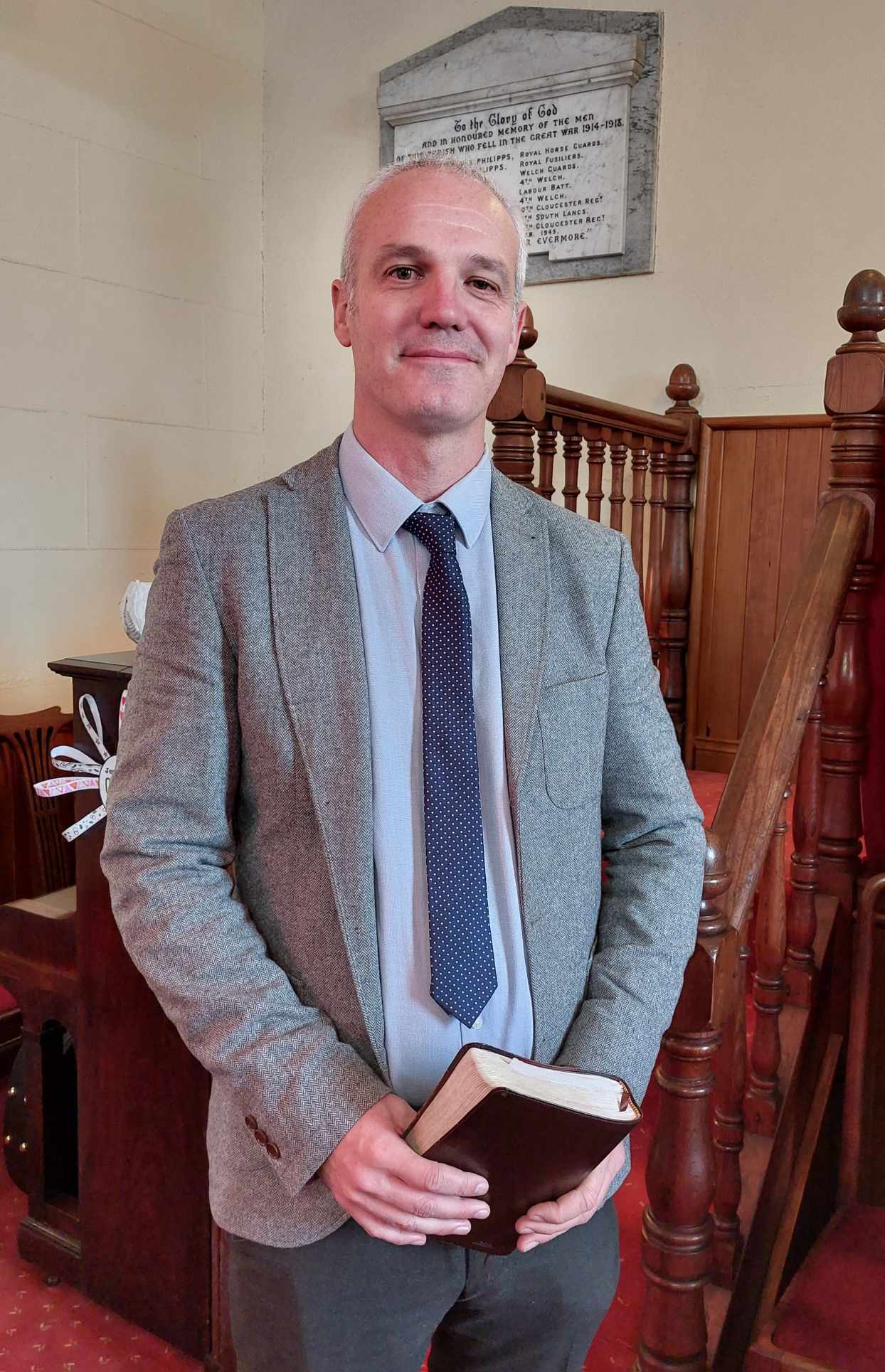
September 7th 2025: Nathan Munday

Genesis 40.

Introduction.

            I wonder if you were aware how often the phrase “third day” comes in this passage? This is a key thought which leads us directly to the gospel. I remember when I was young my first ever novel was by Alexandre Dumas entitled ‘The Count of Monte Cristo.” It speaks of a man by the name of, Edmond Dantès, who is falsely accused of treason. Imprisoned he does not waste the opportunity to get ready, to learn patience, and to plot an escape, and he declared: “God has sustained me” in the afflictions of his imprisonment.

            In this sermon we shall confide our thoughts to the two men imprisoned by Pharaoh, the chief butler and the chief baker. We are presented with two men, two dreams, and two destinies. The setting is in a place of darkness where there is no hope. And into this dire setting the Lord sends His servant Joseph, for it was Joseph alone who could interpret the dreams and show them the way out. We shall consider these two men and their experiences under three headings:

[1] Rebellion.

[2] Revelation.

[3] Reward.

[1] Rebellion.

            These men were not simply household servants, (butler and baker), as may be imagined in some grand household of old, for they are both termed “chief” in their respective positions. In modern terms we might liken them to a high cabinet position in the government (home secretary, or foreign secretary perhaps). In verse 1 we learn that both had “offended” Pharaoh, although we are not told how. This word “offended” is more often translated as “sinned.” They had both sinned against Pharaoh. Both the chief butler and the chief baker were responsible for ensuring that Pharaoh had all he needed and was not given anything bad or offensive. These two were Pharaoh’s closest advisers. It might have been tempting, for example, for the chief butler to squeeze more grapes into the wine diluting it down. This suggestion is not in our text. We have no idea what it was that offended the Egyptian king. Perhaps it was a coup attempt? But the fact that it is not detailed means that we can apply this to all offence or sin against God, for just as these two sinned against Pharaoh, we too have become an offence against God.

            Both the chief butler and the chief baker deserved to be in the prison. Joseph did not deserve to be there. And by nature we are all revolutionaries and rebels. Does not mankind shake his fist against God? Are not many so indifferent to Him that they could not care? Are not all rebels before the Lord? What of Frank Sinatra’s most famous song “I did it my way”? Isn’t this our way too? We like to think that as people we can chart our own course, but such thinking is all wrong. We either live life God’s way or we live it in some fashion according to mere men. There is no third or neutral way. David declared that we were born in sin (Psalm 51:5). We know that we are guilty before God. We are in the same boat that these two men found themselves in. In the same way the two thieves on either side of our Lord as He hung on the cross were thoroughly guilty deserving of death. From Luke’s account we hear one of these thieves blaspheming the Lord as He was there on the cross. The other thief answered in rebuke and pointed out that they were both guilty whereas concerning the Lord Jesus he stated “but this Man has done nothing wrong” (Luke 23:39-41). After this he then asks the Lord to remember him when He would come into His kingdom, to which the Lord replied “assuredly, I say to you, today you will be with Me in Paradise” (Luke 23:42,43).

            Sin always leads to misery. Nothing good comes from sin. In fact the very wages of sin is death. Far too often we think that the world revolves around us and we feel aggrieved when things do not go our way. Now imagine the International Space Ship. What would happen to it if a needle pierced the outer casing through to the interior? Surely if it is not attended to quickly the end result will be the utter destruction of the whole ship? Heaven is a glorious and wholly pure place. It is impossible for even the tinniest of sins to be found there. Nothing can pierce into heaven to bring destruction. The thought is laughable because God inhabits heaven. The problem of sin is a grave one (excuse the pun). If we are to enter heaven (the place where God dwells in eternity) then we cannot bring our sin with us. It must be removed. Both the thieves were guilty. Both of Pharaoh’s close advisers were guilty. One thief was brought into glory with the Saviour and one was left to pay for his own sins. In the same way one of Pharaoh’s two advisers was restored to his former position and one was hanged.

[2] Revelation.

            The dreams of both men were simple and straight forward enough. The great problem was that neither man understood what they meant. It is very clear from the text that these dreams were supernatural somehow. Both men appeared very sad as a result of these dreams, a fact which Joseph noted. But then into this sad and desperate situation comes Joseph, God’s man. Now Joseph acknowledges that revelation must come from God (“do not interpretations belong to God?” Genesis 40:8). We are not told how Joseph received this revelation. Earlier encounters with this man Joseph show that he was a man of God who could receive revelation. Now Joseph does not hold back on the truth here. To one man (the chief butler) the news is good news, but to the other (the chief baker) the news is bad news. As ministers of the gospel, and as born again believers who must pass on the truth, we cannot simply tell people the good news. The bad news that sin must be paid for must be delivered as well as the good news that Christ has made the way of redemption and forgiveness.

            Now in both dreams we have this recurring phrase “within/are three days” (Genesis 40;12,13,18,19). Both are told that “within three days” they will each be lifted up (Genesis 40:13,19). The word “three” comes five more times in the passage so that this repeated theme is surely significant (Genesis 40:10,12(x2),13,16,18(x2),19). Thus day three is the key date. We are alerted to the fact that our Saviour rose from the dead on the third day (1Corinthians 15:4)! On the third day one would be lifted up to be restored and the other would be lifted up to his death. Now in all of this we can see the Lord’s kindness. There were three days for the chief baker to prepare himself for what was to come. Time is short. In many ways life on earth is a bit like life on the Titanic – the ship that was doomed on its maiden voyage. We think we have plenty of time but we do not! We have but a short time to prepare ourselves to meet with the Lord. How much better if we do it now? The Old Testament is not without witness to this idea of three days or of life being restored on the third day. Consider Jonah who was in the belly of a great fish and was vomited up on the third day (Matthew 12:40). Or what about the prophecy found in Hosea 6:2: “after two days He will revive us; On the third day He will raise us up, That we may live in His sight”?  These all point to the greatest lifting up of all time! On the third day Christ arose from the grave! This is good news! This has changed the world. The good news is not: ‘copy Jesus and be like Him,’ as many may say, but hear the word of life and be born again for Christ is risen! It is not ‘try your best’ but realise your sinful state and know that Christ has done what you could not and has given you life! Believe on the Lord Jesus Christ and you will have everlasting life. We have been restored by all that Christ has done. We are being restored as we seek Him and walk in His life. We will be restored when Christ comes again to judge the living and the dead. We do not yet have our resurrection bodies but we are new creatures and the old has passed away. The story of these two close advisers to Pharaoh pictures mankind teetering on the brink of eternity. There are but three days! It was Joseph (a type of Christ) who observed the sadness of these two men and brought hope.

[3] Reward.

            God is kind. It was Pharaoh’s birthday and so there was a celebration or feast. For these two close advisers there is triumph and there is tragedy. For you and I death will result in this same outcome: triumph or tragedy. Now Pharaoh granted pardon to one of his subjects (the chief butler), but how? We are not told, but he was restored to his former position. The chief baker, however was hanged as an example to all. Both of the thieves who died besides the Lord Jesus had an opportunity to turn from their wicked ways towards the Saviour in their midst, but only one entered Paradise. Now in verse 13 we find that the chief butler did not remember Joseph when he had been restored. But the greater Joseph (our Lord Jesus) remembers us! What makes you consider the Lord Jesus Christ? Are you for or against Him? What do you think of the Lord Jesus Christ? Make no mistake He is the revealer of truth and he is the Saviour of the world (exclusively). Do not rely on ‘cultural Christianity’ which is all the vogue today. Christ was lifted up as the spotless Lamb of God even though considered a rebel and a criminal. He died to save us from sin and He rose to bring in new life. What think ye of Him? Our reaction to Him is determinative for our destiny.

            It is very interesting that in the narrative of the four gospels no one dies in the presence of the Lord Jesus. Mary and Martha said that if the Lord had been with them and their brother Lazarus, he would not have died. But the Lord Jesus responded to these sorrowing sisters by saying that He is the resurrection and the life (John 11:25). Christ is life! Take hold of Him. Listen to the third verse of Hark the Herald:

Hail the heaven-born Prince of Peace!
Hail the Sun of Righteousness!
Light and life to all he brings,
risen with healing in his wings.
Mild he lays his glory by,
born that we no more may die,
born to raise us from the earth,
born to give us second birth.

Part of this comes from Malachi:

But to you who fear My name The Sun of Righteousness shall arise With healing in His wings … (Malachi 4:2).

May you know the healing of your soul unto life!
November 5th 2023: James Allan

To watch this service, click on the link to our YouTube channel: https://youtu.be/Qb0m20IdcH4?si=aExYp83juHq8zf0M

Psalm 113
Mark 14:26, “And when they had sung a hymn, they went out to the Mount of Olives.”

This is a very short verse, which might seem incidental. The Lord Jesus Christ, on the Thursday afternoon and evening, before the Friday on which He was crucified, said many things to His disciples. If you want to get the fullest description in the gospels of what He said, the best chapters to go to are John chapters 14-17. Jesus was there in that upper room with His disciples. In Mark’s gospel we have the record of the institution of the Lord’s supper. After that, we have this little verse, “And when they had sung a hymn, they went out to the Mount of Olives.” The gospel writer Mark is known for being brief. He has been described as ‘the gospel writer in a hurry.’ He doesn’t give us long details but he gives us this detail – after the Passover meal had been eaten, they sang a hymn and went out to the Mount of Olives.

The Lord Jesus Christ had been with His disciples and then He goes out into the night. We look at the familiar events that follow. Jesus speaks about Peter’s denial, they go to Gethsemane and we know about the agony of Gethsemane. Then comes His betrayal, His arrest, His trail before the Jerusalem council, His delivery to Pilate, being beaten before Pilate delivers Him to be crucified. He is mocked and then crucified. Though all that was ahead of Jesus, and before they left that place, what did they do? They sang a hymn.

What was the hymn in Jesus’ mind as He faced all of that? We don’t know what this hymn would have sounded like that the 12 men sang (Judas had departed). But we can think about what they sang. There are two Jewish sources from the second century, both of which set out the proceedings of the Passover meal. They tell us that before the meal was eaten, a family would sit down and sing Psalms 113 and 114. Then after the meal they would sing psalms 115-118 and they would sing Psalm 118 twice.

Some of you might be wondering if these sources are from the second century, this event in Mark was two centuries before, so how do we know Jesus sang these psalms? The rabbis of the second century were writing down the oldest traditions, what had been the tradition for many, many years. So, we can be quite certain that the songs Jesus sang, the Psalms Jesus sang before He went out into the darkness of that night, were psalms 113-118. They are known as the Egyptian Hallel, or the Egyptian Hallelujah. They remember the account of Israel leaving Egypt, making their way as the Lord brought them out. That makes perfect sense. It’s the Passover meal, these are the Passover psalms.

With this background, I want us to look at Psalm 113 and the Lord Jesus Christ singing this psalm. Here was a psalm prepared for Him. Luke 22:22 says, “For the Son of Man goes as it has been determined, but woe to that man by whom he is betrayed!” Everything about these events is determined. Richard Dawkins described the Bible as ‘a complete hotch-potch of books.’ In other words, it’s incoherent. The longer I’ve been a Christian, the longer I’ve been a pastor, the longer I’ve had the privilege of every day being able to study God’s Word in order to preach it, my breath is taken away by this book, which is one coherent whole – from beginning to end. From the very beginning God says, ‘Let there be light,’ and yet there is no sun until day 4. The light is the glory of God. The book begins with creation, light yet there is no sun. How does the book end? With no need for any sun because the glory of God is the light. The Bible begins with a wedding and ends with the marriage supper of the Lamb. There are so many themes, but sometimes there are things like this as well, that takes your breath away.

As we go through this psalm, think of the Lord Jesus Christ singing this psalm. Think about the significance of Him singing it. This psalm was written for a specific occasion. It is a psalm sung for generations by Jewish families, yet one night came, 2000 or so years ago, when it was sung by the Lord Jesus Christ. At that moment, this psalm was prepared for Him. For hundreds and hundreds of years it had been sung, but it was prepared for this moment. “And when they had sung a hymn.” Think of this through that lens. The psalm begins,

“Praise the Lord!
Praise, O servants of the Lord,
    praise the name of the Lord!”
Psalm 113:1

If you consider yourself to be on the Lord’s side, to be His servant, here is a call for you. Praise Him! Praise the name of the Lord. There is significance in a name. The name of God reveals who He is. A name tells you something of what a person does. In Hebrew Bibles, there are names of God. The one where you see Lord in capital letters in the Old Testament, it’s the name YAHWEH, the name the Lord reveals to Moses at the burning bush. It shows the self-existence of God. He is the God who is with us. It’s the covenant name of God, the God who promises to be with Israel. To praise the name of God is to praise Him for everything you know to be true about him. You know that He is holy, praise Him for that. You know that he is eternal, praise Him for that. You know that He is faithful, praise Him for that. Praise Him for His love. Praise Him for His grace. Praise Him for everything you know to be true Him.

Blessed be the name of the Lord
    from this time forth and forevermore!
Psalm 113:2

It is a call to worship but you were called to worship in a great congregation. Think of the congregation who sit in Penuel. Think of congregations who have sat here before. Go back to before there was ever a church in Roch. You are part of a congregation that is ‘from this time forth and forever more.’ You are joining a congregation where the praise will never cease.

From the rising of the sun to its setting,
    the name of the Lord is to be praised!
Psalm 113:3

Praise God everywhere. Wherever the sun rises, there the Lord is to be praised. That is our glorious future. You might be despondent today when you see the state of this world, but the Bible tells us this is not how things will always be. A day will come when the Lord Jesus Christ will return for judgement, and for His people. He will return and those believers who have died will rise to be with Him. Those who belong to Him will go to Him. He will set up a Kingdom which will be forever, where the name of the Lord will be praised everywhere. In the new heavens and the new earth, the name of the Lord is to be praised.

What is the significance of the Lord Jesus Christ singing these words?

The Lord is high above all nations,
    and his glory above the heavens!
Psalm 113:4

That’s who God is. He is above everything. We are the pinnacle of God’s creation, we are made in the image of God, made to know Him, to be in a relationship with Him. Yet we are in the category of created things. God is above all things. He is high above all nations. The heavens declare His glory, but His glory is above the heavens. In Romans chapter 1 we see His eternal power and divine nature.

Who is like the Lord our God,
    who is seated on high,
Psalm 113:5

Are you still looking through the lens of Jesus Christ singing these words on the night in which He went out, would be arrested and the next day crucified? Generations had sung this psalm at a Passover meal. “Who is like the Lord our God?” He is! For the first time ever, a real man is singing this psalm who really is like God. The writer of Hebrews tells us, “He is the radiance of the glory of God and the exact imprint of his nature, and he upholds the universe by the word of his power. After making purification for sins, he sat down at the right hand of the Majesty on high, (Hebrews 1:3). He is the exact imprint of His nature. Whatever is true of God is true of the Lord Jesus Christ. The Son of God isn’t like God – He is God.

What does this God who is above all things do?

who looks far down
    on the heavens and the earth
Psalm 113:6

That is a comfort. The God of scripture is involved in creation. He looks far down on the heavens and on the earth. How low does he go? Here is the answer. As far as Mark chapter 14. He took to Himself human flesh, human nature. He became like us. The Lord Jesus Christ, the Son of God, at the Incarnation, remained what He always was. He did not cease to be the Son of God. He continued to do what Hebrews 1:3 says, to “uphold the universe by the word of his power.” He retains His divine nature, yet He took to Himself something He did not have before – human nature. He retains that human nature now, in heaven.

When the Lord Jesus Christ took to Himself human nature, in His ministry He did all things according to His human nature. That is why we read of Him being tired, being hungry, being thirsty. He was made like us in every way, yet without sin. How low would He go? He went that low. He took to Himself human nature. He would go all the way of Philippians 2. In Philippians chapter 4 we are told of two women who are not agreeing with each other, they are arguing with the church. Paul encourages them to agree in the Lord. Is there a problem with unity in the church in Philippi? It seems perhaps there was some disunity. So, Paul encourages them, “Do nothing from selfish ambition or conceit, but in humility count others more significant than yourselvesLet each of you look not only to his own interests, but also to the interests of others. Have this mind among yourselves, which is yours in Christ Jesus,who, though he was in the form of God, did not count equality with God a thing to be grasped but emptied himself, by taking the form of a servant,[c] being born in the likeness of men. And being found in human form, he humbled himself by becoming obedient to the point of death, even death on a cross.” (Philippians 2:3-8). He humbles Himself to the point of death.

Is your mind blown by the scriptures here? Here is Psalm 113, sung for hundreds and hundreds and hundreds of years. And we read in Mark 14 of Jesus singing a hymn. What hymn was it? Here is the beginning of it.

“Praise the Lord!
Praise, O servants of the Lord,
    praise the name of the Lord!”
Psalm 113:1

He sings it. It describes Him. It describes the God who looks far down on the heavens and the earth. We see how low He goes – to the Incarnation. He goes to Philippians chapter 2. He goes to the cross. What does it all bring about?

He raises the poor from the dust
    and lifts the needy from the ash heap,
Psalm 113:7

The poor from the dust. That’s where we’re all going. You’ve been to funerals and heard those words, ‘Dust to dust.’ What does Jesus do? He raises people from the dust. What else does He do? He raises people from the ash heap, from the rubbish dump. Your life is rubbish. God is clean. He knows all about me. I know the real me, how I can assassinate a person with my words. Maybe your life is rubbish? Jesus died on a rubbish dump. But God looks down to take people from that rubbish dump. Where does he put them?

to make them sit with princes,
    with the princes of his people.
Psalm 113:8

Isn’t that remarkable? You come to the conclusion that you are a sinner. Under the conviction of sin, under a miracle of grace, you see you need Him. Jesus makes them sit with princes. One day we will reign with Him. We are heirs with Christ. What an incredible thought! This God has sent His son, the Son of God has come (Colossians 2), gone to the cross to take all the wrath you and I deserve. At the end of two Corinthians chapter 5 Paul says Christ became our sin bearer. We became the righteousness of God for stop He sees us dressed in His righteousness.

He brings blessing to the sorrowful people.

He gives the barren woman a home,
    making her the joyous mother of children.
Praise the Lord!
Psalm 113:9

The barren woman was under a double curse. Not only was she heading to the grave herself, back to the dust, she doesn’t know the joy of bringing new life into the world. What will life be like for her? For those who follow Christ, they will lack nothing. They may lack things in this world, but nothing can take their inheritance away. Nothing can strip from them the blessing that they have in eternity.

“In my Father’s house are many rooms. If it were not so, would I have told you that I go to prepare a place for you?  3 And if I go and prepare a place for you, I will come again and will take you to myself, that where I am you may be also. (John 14:2-3). In the old Authorised version it says ‘In my Father’s house are many mansions.’ I used to like that. ‘Mansion’ came from a Latin word ‘mansio’ which simply meant a dwelling place. It also means the same in Greek. It’s a room in the Father’s house. Jesus has a building project going on, enough rooms for all His people. You are going to live with Him. That’s the joy of eternal life. God will dwell with His people. You could lose everything in this life and have nothing in the life to come, or you could have nothing in this life and God in the life to come. You could be a millionaire in this life, but money doesn’t help you when there’s a bereavement or a terminal illness. Do you know the blessing of life with God forever more?

May 7th 2023: Ian Jones

To watch this service, click on the link to our YouTube channel: https://youtu.be/bjalsdNO5I4

“Surely goodness and mercy shall follow me
    all the days of my life,
and I shall dwell
in the house of the Lord
    forever.

Psalm 23:6

The last verse is important; we recognise when David wrote these words it was in relation to how he saw his life – from two different perspectives. Today, many people only view their lives from one perspective – what this world offers them. They will spend all their time and energy on this. For example, focusing on their career, family or hobbies. It takes up all of their time. Going to church will only be relevant to them at certain times – for funerals, weddings, when times are hard. When times are better, they forget about God.

David was very different. He walked by faith, not by sight. His first perspective was how he could relate to this world. He also had this other perspective, in relation to eternity. Friends, how do you see life? Is it from only a single perspective? Are you willing to give up everything so that you might serve Him? (Parable of the precious pearl of great value). You may be like the rich young ruler who felt the way of eternal life was too costly. Sadly, he turned and walked away from the Lord Jesus.

The first five verses of this psalm all relate to this world, how Christ looks after people. In verse 1 we see the Lord is our Shepherd. David gives the explanation of this in the verses that follow. These are verses which speak of how the Lord blesses us in our lives. Even as we approach death, we have nothing to fear.

But the last verse is linked with the world and all eternity. David is now taking us from this world to now focus on eternity. If Christ is my Shepherd in this life, He will be my Shepherd for all eternity. Wonderful! People at their wedding promise to love one another, but this is ‘til death to us part.’ But David reminds us that if Christ is my Shepherd, He will be with us forever more. Death will not part us.

Mary Magdalene was so distressed on seeing the empty tomb. She thought the man she met was the gardener, but when He says her name she realises it is the Lord. Her immediate response is she wanted to hug Him, to hold onto Him. The encouragement is, if you love the Lord, He promises He will always be with us.

Shepherds in this country use sheepdogs. When David was around, in the Middle East, shepherds went ahead to lead the sheep. Today, sheepdogs chase the sheep in a certain way as they respond to the shepherd’s whistle. God has two wonderful sheepdogs, one called goodness and one called mercy. Goodness is God giving us what we don’t deserve but mercy is God not giving us what we deserve.

“Surely goodness and mercy shall follow me
    all the days of my life.”

David looks back over his life, his experiences, and says with absolute confidence it is the Shepherd’s provision which has led him and kept him close to Him all the days of his life. Here we find God’s commitment, His goodness and mercy. It is easy to speak of when there’s a lot to be joyful about, but it is much harder to speak about when things are difficult. But even then, God’s goodness follows us. James writes, Count it all joy, my brothers, when you meet trials of various kinds, for you know that the testing of your faith produces steadfastness. And let steadfastness have its full effect, that you may be perfect and complete, lacking in nothing.”  (James 1:2-4). Count it all joy that God is working His good in us through these trials.

Joseph was sold as a slave in Egypt, then went to prison. Later on, when God revealed to him the purpose of all of this, he could say to his brothers, As for you, you meant evil against me, but God meant it for good,” (Genesis 50:20a). Friends, God’s goodness keeps us close to Him.

Imagine if God’s judgement followed us all the days of our lives, knowing we’re sinners. But God’s mercy follows us every day. It helps us to keep close to Him. He is full of mercy, full of grace, full of truth. We are reminded of God sending His Son to die for us. Sin has been paid for. If I sin against God, I know He will forgive me and restore me if I repent. He is willing to forgive all who come to Him in repentance and faith in Jesus Christ.

What effect should this have on us? How do others relate to us? What do we leave behind in our footsteps? Am I good to the Lord’s people?

“I shall dwell in the house of the Lord forever.

Here is a man who is coming to the end of his life and sees death approaching. He doesn’t want to cover up death. Here is a person who does not fear what lies beyond the grave. He looks forward to eternity. Here is a content, happy sheep. This sheep is coming home to the house of the Lord, heaven above. He is going to be with God in glory. There will be no more pain, no more suffering, no more tears. The wanderings of this world will be no more.

It’s a picture of our life; whilst we’re in this world the Lord has saved and protected us through times of joy, suffering and temptation, bringing us closer to Him. Now, it’s a reminder, our home is not in this world but in glory forever more. Death will come. If we know and love the Lord Jesus Christ, we will be taken up with Him forever more, in glory.

Oh, what joy lies before us. We will really appreciate what Christ has done for us when we reach heaven. To cross the finishing line is our focus. “Surely goodness and mercy shall follow me all the days of my life.”

Lastly, what about those who want to be their own shepherd in this life, to captain their own ship? There’s a place prepared for them too, which is the exact opposite. Jesus spoke more of hell than heaven. We need to warn people. The gospel message is very serious. It is the way to salvation. Rejecting this leads to a time of punishment. Friends, may I encourage you, if you’ve not done so, to come to the Shepherd. There is only one way of salvation – through Jesus Christ.

February 13th 2022: Gaius Douglas

To watch this service, click on the link to our YouTube channel: https://youtu.be/94-YJLx3iCc

11 Let us therefore be diligent to enter that rest, lest anyone fall according to the same example of disobedience. 12 For the word of God is living and powerful, and sharper than any two-edged sword, piercing even to the division of soul and spirit, and of joints and marrow, and is a discerner of the thoughts and intents of the heart. 13 And there is no creature hidden from His sight, but all things are naked and open to the eyes of Him to whom we must give account.” Hebrews 4:11-13

Hebrews was written to the Hebrew Christians who had, not long ago been saved. When Pentecost happened, when the Spirit of God came down, 3000 souls were saved. The word of God spread from place to place. God was doing a mighty work – taking His Word, by His Spirit, to men and women all over the region. The first Christians, in the main, were Jews, they were Hebrews. They had to leave behind their own religion. They were being taught something new.

In Hebrews chapters 3 and 4 we see something that was happening to them. Something had occurred in their lives which, for many of them, was a new experience. At the same time, they were being dragged back into their old religion, into Judaism. One of the things that we must remember at all times, is that scripture is given by the inspiration of God, All Scripture is breathed out by God and profitable for teaching, for reproof, for correction, and for training in righteousness,” (2 Timothy 3:16). It is given to us that we may be complete. I love that word, ‘complete.’ In Colossians we read that as believers in Christ we are complete in Him.

This was the Hebrews dilemma – should they go to go back to Judaism, go back to the synagogue, to the temple, to something that was quite safe. One of the things they were experiencing when they came to know Christ as their Saviour was persecution. They were being thrown out of their families, they were being asked to leave. This still happening today. Many who turn to Christ will be turned out of their families, will not be spoken to. The writer of the Hebrews is encouraging them to pursue the new Christian doctrine, follow Christ, but in following it, you will suffer persecution. When we stand up for Him we will suffer; we will be called names. But we take those names and we take those who call us and we give thanks to God that we are able to stand up for Him and to suffer for Him.

Paul confirms and encourages the Hebrew Christians and Christians today, ourselves. He writes in Galatians 6:17, “From now on let no one cause me trouble, for I bear on my body the marks of Jesus.If you go back to the Book of Acts chapter 9 you will read about the conversion of Paul. From day one of his conversion until the day he died, Paul suffered persecution. Being a Christian is not an easy life. The Hebrew Christians had to make a choice – safety and miss out on the joy of Christ and the blessings of eternal salvation or go back. My friends, from time to time, are you encouraged to go back? There is a lot to drag us back because it’s safe. But the writer of Hebrews is saying, ‘Go forward.’

Being in Christ is far higher, far more exalted than anything we can experience in this life. There is no greater than Christ Himself, the hope of glory. The Hebrew Christian in chapters 3 and 4 were reminded by the writer that their forefathers, when they left Egypt, went on a wilderness journey. In that journey many died because of unbelief and disobedience. They do not enter the rest God promised them. What was that rest? That rest was the Promised Land, Canaan. But that was an earthly rest. The writer in chapters 3 and 4 is gently drawing them to a rest which is far greater, far more precious. The writer of Hebrews wants them to focus on the rest of Christ, eternal rest in Christ, a heavenly rest which is something far better. He refers to what David says,

“Today, if you will hear His voice:
“Do not harden your hearts, as in the rebellion,
As in the day of trial in the wilderness,
When your fathers tested Me;
They tried Me, though they saw My work.”

Psalm 95: 7b-9

David was speaking of that eternal glorious rest, “And I shall dwell in the house of the Lord forever.” (Psalm 23). My final resting place is in Christ, in glory. Are you resting in Christ? I am resting in the finished and completed work of Christ. I am resting in all that He has promised. I belong to Him. Today may be my last day, your last day. Are you resting in Him to such an extent that nothing else matters? Eternal rest. Eternal love. To be in His presence. What greater joy, what greater blessing.

Secondly, I want to share some thoughts on the application to you and me. “God is love,” (1 John 4:8). If anyone asks you what God is like, He is love. We see in God the Son, whom He sent to become our Saviour, we see God manifest in flesh, God revealed in flesh, the love of God being shown and demonstrated. We hear His word,

For God so loved the world that He gave His only begotten Son, that whoever believes in Him should not perish but have everlasting life.” (John 3:16) Rejoice! Jump up and celebrate! Christ in us, the hope of glory. We can enjoy the rest of being in the presence of God. The writer of Hebrews was encouraging them to hold on to the truth of the word of God. My dear friends, I am encouraging you to hold on and pursue this life.

There’s a word in Scripture I love. It’s repeated time and time again. It’s the word ‘forever.’ Being in the presence of the Lord, something I’m enjoying now, something I will go on enjoying forever. “Before long, the world will not see me anymore, but you will see me. Because I live, you also will live.” (John 14:19). I will never die because Christ lives. I’m alive, alive forever more. We have a home, we have a hope that is steadfast and certain because of the One who has gone through the curtain, who died on Calvary’s cross, who has given life – a ransom for many. What a wonderful experience, what a wonderful sight it was to believers on Christ when they heard the words, “He is not here, He is risen!”

One day He is going to stand and come for His own and bring them to glory. What a glorious prospect is yours and mine. We can rest in that certain hope. How blessed. This glorious word of God, “God is living and powerful, and sharper than any two-edged sword, piercing even to the division of soul and spirit, and of joints and marrow, and is a discerner of the thoughts and intents of the heart.” (Hebrews 4:12).

Are you aware, am I aware of and appreciate the power and majesty of God? If we believe that God owns everything, the breath I breathe this morning, my children He has lent to me, they belong to Him? Where are you resting? In your home? But that’s only a temporary residence. Where is your home? Heaven! We must be diligent in the rest which is ours now. We need to work at it. “Therefore, my dear friends, as you have always obeyed—not only in my presence, but now much more in my absence—continue to work out your salvation with fear and trembling,” (Philippians 2:12). What does it mean to ’work out your own salvation with fear and trembling’? It doesn’t mean to attempt to deserve salvation on the grounds of what you do. There are many who try and work their way into heaven, trying to be a good person. Who saved you? Jesus. We’ve been saved by the grace of God, “For by grace you have been saved through faith. And this is not your own doing; it is the gift of God, (Ephesians 2:8).

It is only by the grace of God. We can’t make atonement for our past sins. the Bible says, “Their sins and their lawless deeds I will remember no more.” (Hebrews 10:17)

“I have swept away your offenses like a cloud,
    your sins like the morning mist.
Return to me,
    for I have redeemed you.”

23 Sing for joy, you heavens, for the Lord has done this;
    shout aloud, you earth beneath.
Burst into song, you mountains,
    you forests and all your trees,
for the Lord has redeemed Jacob,
    he displays his glory in Israel.”

Isaiah 44:22-23

“Fear not, for I have redeemed you;
I have called you by your name;
You are Mine.”

Isaiah 43:1b

When the writer of Hebrews says to ’work out your own salvation with fear and trembling’? he means to break off from your sins. For the Hebrew Christians, it meant don’t turn back to Judaism, don’t look back. To us it means don’t turn back to the things that were holding you from Christ. Many of the things that you and I do so often take us away from Christ. We belong to Him,

Your body is the temple of the Holy Spirit who is in you, whom you have from God, and you are not your own?” (1 Corinthians 6:19). We belong to Christ. The writer of Hebrews was saying to the Hebrew Christians, ‘I want you to enjoy the rest of Christ, the glory and the wonder, the power and the majesty of God. For the word of God is living and powerful, and sharper than any two-edged sword, piercing even to the division of soul and spirit, and of joints and marrow, and is a discerner of the thoughts and intents of the heart. (Hebrews 4:12). Trust in it.

This Word changes and transforms. It renews. It rejuvenates. It takes us out of ourselves and brings us into the very presence of God. Let us come boldly to the throne of God. This is the power, this is the wisdom, this is the majesty, this is the glory of God.

It is a life-giving word, the source of all things. It has the keys of life and death. Satan, with all his powers, cannot do anything to you without God’s permission. Death has been defeated. How blessed we are! His word gives light to the repentant sinner. This word causes the devil to tremble, it causes demons to flee. It heals the sick. It gives sight to the blind.

God alone upholds this universe. He is the one to whom you and I have to give an account to. To the believers in Christ, God will honour us for the works we have done in His Name, for His glory and praise, not the works we decide to do for a pat on our back. There are many, many, many things that men and women of God do that we never hear of, but God does. To the unrepentant sinner, to those who have turned away, we read,

“To the unrepentant sinner, “Because I have called and you refused,
I have stretched out my hand and no one regarded,
25 Because you disdained all my counsel,
And would have none of my rebuke,
26 I also will laugh at your calamity;
I will mock when your terror comes,
27 When your terror comes like a storm,
And your destruction comes like a whirlwind,
When distress and anguish come upon you.”

Proverbs 1:24-27

We read in Revelation 20 of the white throne judgement, where those who have refused God, who have rejected Him, who have refused His word, will be cast into the lake of fire.

My dear friends, heaven is my home.  Where do you stand? Do you know Him as your Saviour? Do you trust Him? Are you resting in Him? Are you rejoicing in Him? Praise the Lord!  

September 12th 2021: Pete Hilder

Matthew 6:19-24

Everyone has opinions, whether it’s morals, politics, films, tv or books. We look for reviews, for holidays, purchases online. As Christians we are to review things, for example, at the end of the day in prayer, at the end of the year. Covid pauses us to review and reconsider our time and money, our commitment. There are all sorts of things we review and assess. Maybe we go to church and review the service over lunch or review the minister! But God has a different plan when we come to worship Him. He wants to review us, to assess us, to look at us and tell us about what He thinks. Maybe you’ve come this morning to have a look and see what you think. God has come and He is going to have a look at you and tell you what He thinks.

In this passage of scripture there are three pictures, three reviews or assessments, which God brings before you and which Jesus brought to the hearers of this sermon on the very first occasion, and He desires to do so again this morning.

There are three questions for each picture. He wants to know where you are, how you are and who you are living for.

The first review: Jesus, the doctor
“Do not lay up for yourselves treasures on earth, where moth and rust destroy and where thieves break in and steal, but lay up for yourselves treasures in heaven, where neither moth nor rust destroys and where thieves do not break in and steal. For where your treasure is, there your heart will be also.” (Matthew 6:19-21)

Jesus is ready and waiting for us. He is the greatest doctor who wishes to review us and our health. He has a question for us. If you went to a doctor and he asked, ‘Where is your heart?’ you’d be worried! But our heart can be in many different places. Is your heart in a good place or a bad place? You can know because your heart is where your treasure us.

What is your treasure, your most prized possession? Is it your bank balance, job, status, family? Where do we spend our time and energy? Jesus is telling us there is a danger – our heart could be in the wrong place. There is a danger to us of hell, judgement, being destroyed. Dr. Jesus is concerned for physical and spiritual health. He identifies a couple of dangers for us. Your heart could be in a place of danger and destruction if it is placed in the wrong place. The other danger is our heart could be stolen. Jesus is offering us something different – placing our treasure in heaven.

Jesus has not lost one of those who have entrusted themselves to Him. He wants us to place our hearts in a safe place, in heaven, to entrust ourselves to Him. He is already preparing our inheritance. Jesus is 100% reliable and true. His concern is full and true. His way is a way of life to the full.

The second review: Jesus, the optician

“The eye is the lamp of the body. So, if your eye is healthy, your whole body will be full of light, but if your eye is bad, your whole body will be full of darkness. If then the light in you is darkness, how great is the darkness! (Matthew 6:22-23).

This time we have the review of the optician. The greatest one who we need to see is Jesus, who is available at all times. How healthy are your eyes? Your heart is important but so are your eyes. That first time you need glasses, you put them on and you’re amazed. Suddenly the world opens back up again. The eye is the lamp of the body. It has great purpose – to shine light. Jesus says it is possible that your lamp is a lamp of darkness. We have many different ways that things enter us. We can be very careful about what we put into our mouth to eat.

How careful are you with what you let into your eyes? Are you filling your eyes with things which are darkness? God’s Word is a testimony of Him. The light of God’s Word is granted to you. God’s concern is so many of us are filling our lives with not seeing Him. So many are in darkness, they choose the darkness. You have a choice when you see an optician – whether to listen and act on what they say or not. Jesus, the optician, is perfect. He has seen the impact of those who reject Him (Genesis 3:6). Sin came into the world through the eye. The same happened with Lot’s wife; she looked back and longed for the world. Job made a covenant with his eyes.

God wants us to have life to the full. But without receiving Jesus Christ as Lord, we face the outcome of death. Solomon wrote, “The eye is not satisfied with seeing (Ecclesiastes 1:8). But Jesus contrasts those very words saying, “Blessed are those who hunger and thirst for righteousness, for they shall be satisfied.” (Matthew 5:6). Jesus wants us to enjoy the blessings which are there for those whose lives will be filled with light. What are you filling your life with? We should be filling our lives with Jesus. “Finally, brothers, whatever is true, whatever is honourable, whatever is just, whatever is pure, whatever is lovely, whatever is commendable, if there is any excellence, if there is anything worthy of praise, think about these things.” (Philippians 4:8). Fill ourselves with these things, the gifts that are there for those who follow Him.

The third review: Visiting the Master
“No one can serve two masters, for either he will hate the one and love the other, or he will be devoted to the one and despise the other. You cannot serve God and money.” (Matthew 6:24).

The thought of this puts a shudder down my spine. This is a picture of more than just your master in work. It is a 24/7 commitment. Who is your master? There are two but you can only have one – God or money and possessions. Materialism is one of the great ‘gods’ of our age. We find ourselves not living for God, the Master, but living for someone else.

A squirrel will be busy storing up treasure – nuts for what is to come. Winter. Imagine that a squirrel comes to your garden, bored with collecting nuts and instead collects pebbles to store. What happens when winter comes? He dies. He hasn’t followed his maker’s design. We have a winter – a time of judgement. Maybe the squirrel decides to collect nuts and pebbles. What happens when winter comes? He still dies! The first commandment states we are to have no other gods, “You shall have no other gods before me.” (Exodus 20:3). These are testing words. Are our hearts wholly devoted to the Lord our God or are we storing up other treasures, serving other masters, filling our lives with darkness? God is not that cruel boss who is looking to pick all your faults. His concern is to bless us, to draw us back. We thank Him that He calls us back again. Jesus promises, “Ask, and it will be given to you; seek, and you will find; knock, and it will be opened to you.” (Matthew 7:7). He calls us to build our life on the rock, to have life for eternity.

It is very interesting that the rest of Matthew 6 is about anxiety and worry. So often, when we are taken up the things of this world, we become anxious and worried. God has presented to us everything, the way to live, to have peace, to store up treasure in heaven. Jesus states it very clearly at the end of this chapter, “For the Gentiles seek after all these things, and your heavenly Father knows that you need them. But seek first the Kingdom of God and His righteousness and all these things will be added unto you.” (Matthew 6:32). Amen.

February 25th 2018: Paul Daniel

Paul Daniel-feb 18Philippians 3: 1-15

It is crucial to repeat messages. Even Paul said, right at the beginning of this chapter, “To write the same things to you is no trouble to me.” Have you ever been conned? We live in a society where we shop online. People put reviews online, sometimes complaining because they don’t want anyone else to get conned. When you look at this chapter, it’s all about Paul writing to the Philippians to safeguard them from being conned. It’s a joy to him to remind them.

C.S. Lewis said Jesus is either a liar, a  lunatic or Lord. If He really is who He says He is, you can’t afford to ignore Him, “I am the way, and the truth, and the life. No one comes to the Father except through me.” (John 14:6). When you consider what Jesus says, is He trying to con people into following Him? Paul is trying to safeguard the people into following Jesus, not being conned by others. Jesus fulfilled all righteousness. He died on a cross, not because He was guilty, but so others could be forgiven of their sin. He rose three days later and later appeared to others before ascending into heaven. Today, there is a God-Man in heaven who intercedes on our behalf. Paul wants to make sure people don’t get confused. The moment you think you can’t get conned is the moment the devil begins his work. It is necessary to repeat the gospel message.

Paul warns us to watch out for legalism. Listen to Paul. He was circumcised on the eighth day as God’s law required. He was chosen by God, part of Israel, of the tribe of Benjamin. He was a Hebrew of Hebrews, full of tradition, wanting to do everything in every area of his life. He was a Pharisee, one of those who would take God’s word so seriously, they started making their own laws. He was righteous under the law. Paul wanted the people to listen to him. All his qualities and heritage (verse 7), he counted as loss, as rubbish. Here is the one person you think ought to listen to, yet he says all his achievements are worthless because he knows that those things can’t make you righteous before God. He knows if you try and work so hard to keep the law, you are under a curse. No-one is justified by works. Achieving all these things, as impressive as they are, doesn’t deal with sin – separation from God. The wonder of the gospel – none of us deserves anything but God’s judgement and curse – but Christ comes to redeem us, to buy us back by becoming a curse for us. When He hangs on the cross He deals with all that stands against us.

How do you measure yourself? We measure ourselves often by what people say. The real measure is what people can’t see or can’t hear – when no-one’s eyes are on us, what we think inside our minds. It’s all the hidden sins. God sees and hears everything. Do we measure ourselves by what we portray ourselves to be? God sees us as sinners who have broken His law and are under a curse. Yet He still loves us, sent His Son for us, and is still willing to keep us. All that we are and all that we’re not, and all that we’d like to hide, God still loves us. Let’s not con ourselves and be conned.

What does Paul want to do when he sees all his achievements as rubbish? He wants to count everything else as loss, he wants to know Christ, to know his Saviour. Nothing else compares, “But whatever gain I had, I counted as loss for the sake of Christ.” (Philippians 3:7). It’s a really hard thing to say that you count everything as loss. Knowing Jesus is worth more than my health, my house, bank balance, friends, my reputation, anything else. In the context of eternity, all that we strive for lasts a short time. Knowing Christ, being with Him for ever and ever, is our desire. Stop investing in yourself, don’t rest in earthly achievements. Pursue Christ and His kingdom. Seek Him. Be satisfied in Jesus and in Jesus alone. Don’t think you can find life and eternity and resurrection apart from in Jesus, in Christ. Don’t be conned, don’t miss out. Paul doesn’t want anyone to miss out (verses 11-15). He’s pressing on to what lies ahead. We want to see Jesus. We need to hear the gospel and share the gospel. We want people to come to Jesus and put their faith in Him.

October 22nd 2017: Andy Christofides

Andy Christofides-Oct 2017One life, what’s it all about?

For our Mission Sunday morning service Andy spoke on three points about heaven:

Where is heaven?
What’s it like?
What’s the key to the door? How can I be sure of going there?

Where is heaven?
In 2010 55% of people in the UK believed in heaven. 95% of people in South Africa believed in heaven. Belinda Carlisle once sang that ‘heaven is a place on earth.’ It’s not! People tend to believe it’s ‘up there somewhere.’ It’s not so much ‘up there,’ it’s a real location. The Bible explains heaven is the unreached presence of God. Sometimes, a little bit of heaven impinges on earth. The shepherds on the hillside saw and heard an angelic choir as God burst in. Heaven appeared briefly when the disciples witnessed Jesus’ transfiguration, then disappeared again. There will come a time when the trumpet will sound and His glory will appear. Heaven is the immediate presence of God.

What is heaven like?
In John 14 Jesus Christ speaks a little about heaven, ‘Do not let your hearts be troubles. You believe in God; believe also in me.’ (John 14:1). Trust in God, give Jesus the same amount of trust. When the Apostle Paul thinks of his troubles, he thinks of them as being light and momentary, not worth comparing to eternal glory. Troubles are very real to us but there’s something coming far better for the believer that wipes it all away. Keep your eyes fixed on the Lord Jesus Christ.

Jesus calls heaven ‘My Father’s House.’ It’s a lovely phrase. It’s a place where families get together – one dwelling place. We are all together, there are no divisions, we all get along. “My Father’s house has many rooms; if that were not so, would I have told you that I am going there to prepare a place for you?” (John 14:2). The King James Version states, “In my Father’s house are many mansion.” It is spacious. All have a place to dwell. It’s a great truth. There are some pretty great mansions on earth with spectacular views, but these are nothing compared to what we will have in heaven.

When Paul writes to the Corinthians he quotes Isaiah, “What no eye has seen, what no ear has heard, and what no human mind has conceived – the things God has prepared for those who love Him,” (I Corinthians 2:9). Those who love Him  – that’s the key to entering heaven.

Paul also writes (in the third person, although he is speaking of himself), ‘I know a man in Christ who fourteen years ago was caught up to the third heaven. Whether it was in the body or out of the body I do not know – God knows. And I know that this man … was caught up to paradise and heard inexpressible things, things that no one is permitted to tell.’ (2 Corinthians 12:2 &4). Paul had a glimpse of the third heaven – the dwelling place of God. He saw and heard inexpressible things. What will heaven sound like? The sounds of heaven will be far superior to anything we’ve ever heard.

Heaven is a place prepared for us, “My Father’s house has many rooms; if that were not so, would I have told you that I am going there to prepare a place for you?” (John 14:2). Everything is prepared, nothing will be out of place.

Our body is just a shell. I’m an eternal soul. I’m spirit. My body can move. I’m the bit that thinks, communicates ideas, thoughts and soundwaves. When I die my body goes into the ground but my spirit lives on. When Christ returns I get a new body.

Jesus Christ had a physical resurrected body. He could eat and drink. He could appear and suddenly disappear; at the Ascension He was talking to the disciples then disappeared. So our resurrected bodies will be physical, spiritual bodies, able to move around freely, travelling great distances.

Revelation 21 is highly symbolic of something wonderful. It’s a parallel to Revelation 7:16-17, ‘Never again will they hunger; never again will they thirst. The sun will not beat down on them,’ nor any scorching heat. For the Lamb at the centre of the throne will be their shepherd; ‘He will lead them to springs of living water.’ ‘And God will wipe away every tear from their eyes.’” We will never again hunger or thirst. Eating and drinking will have no side effects. There will be feasting. There will be no sorrows, no painful memories of things that happened on earth. The judge of all the earth will have done right. There will be no sin in heaven.

Isaac Watts writes,

Sin, my worst enemy before,
Shall vex my eyes and ears no more;
MY inward foes shall all be slain,
Nor Satan break my peace again.

Heaven will have mansions of glory and endless delight. Heaven’s gates are always open and light always shines. Heaven is home. It’s there we will be satisfied.

How do we get there?
Thomas asked Jesus “How can we know the way?” To which He replied, “I am the way and the truth and the life. No one comes to the Father except through me.” (John 14:6).

‘I am’ is ego-centric. Too many people make the fundamental mistake of wanting to reform their own lives. It won’t get you to heaven. Going to church is very good, something you should do – but it won’t get you to heaven. Even going twice to church, attending mid-week meetings, reading the Bible and praying is all great – but it won’t get you to heaven. In every other religion it’s what you have to do. Even in some churches! There are some parents who believe that because they are Christened they will go to heaven. Or they may think that because they have family who believe they are Christians so this gives them access to heaven. Some say they believe in God – even demons believe in God – and tremble!

Jesus is the one who gets you to heaven. He is the door, the gate to the sheepfold. It’s not what you do that gets you to heaven. If you want to get to heaven, it happens through Jesus Christ, He is the only way. He is the only one who has dealt with the problem – sin. Our concern ought primarily to be God. “Love the Lord your God with all your heart and with all your soul and with all your strength and with all your mind and love your neighbour as yourself.” (Luke 10:27). Love God. He is your creator.

When things go wrong people shake their fists at God and blame Him. Yet when things go right it’s all ‘me’. God sent His Son Jesus, the second person of the Triune God, to deal with sin. Why? So we can go to heaven. Why? Because He loves us. God sent Jesus to earth. He lived a perfect life. He met God’s demands. He’s our representative. He went to Calvary, laid down His life. Isaiah foresaw this 700 years earlier, ‘But He was pierced for our transgressions, He was crushed for our iniquities; the punishment that brought us peace was on Him, and by His wounds we are healed.’ (Isaiah 53:5). When Jesus went to Calvary He took on Hell. It’s love. ‘But God demonstrates His own love for us in this: While we were still sinners, Christ died for us.’ (Romans 5:8). He died the death for us. Because He did nothing wrong, death is conquered.

Jesus Christ is the only one who has dealt with the problem. All I need to do is rest in His finished work.

Will you be there? If you are not sure, why not? The door is wide open. Faith implies repentance, repentance implies faith. The good news is God wants us in heaven. What do you want for eternity?

Sunday Morning: 19th June 2016

Gaius-june16.jpgOur worship was led by Gaius Douglas who preached from 2 Timothy chapter 3. Gaius challenged us by asking what we are doing for the Lord. Are we warning the people of the dangers? The God of eternity, who stepped into time and in the person of His Son died for our sins. Are you concerned for the people of Pembrokeshire, those heading for a lost eternity?

We live in perilous times but it doesn’t matter where we are, God has His people everywhere. Yet there are those who say they believe in God but do not believe in the Word of God. True Christians stick to the Word of God, no matter what.

God has given us the greatest teacher of all, the Holy Spirit. Can you discern what is true and what is not? We need to be discerning. In the Scriptures we read about the hinderer. There is no mention of the ‘hinderer’ but we come across the word ‘resist’ –“Resist the devil and he will flee from you.” There is a devil who is there to hinder us, to blind our eyes, to say there is no God. Satan sows the thoughts of confusion in our hearts.

2 Corinthians 4: 3-4 tells us there is spiritual blindness to those who are unsaved, even to those who are saved.

In our church today there are those who are masquerading as Christians. They are there to deceive, to falsely proclaim the Gospel. The devil masquerades as the angel of light. In 2 Corinthians chapter 11 verse 14 we read, “For Satan himself transforms himself unto an angel of light.” Arm yourselves with the mighty arm of God.

Exegesis allows the Word of God to lead you. However, there are those who call themselves ‘liberal’ Christians, those who dismantle the Word of God to make it socially acceptable to man, not God.

Isaiah chapter 59. When was the last time you quarrelled with God, when you questioned God? Psalm 121 tells us that God is listening to us, He will preserve us, He is concerned for us. In 1 Thessalonians 5:17 we are told to “Pray without ceasing.” The Lord has not stopped praying for us.

We live in perilous times, heed the Word of God. Be witnesses for God, tell others what God has done for you. When was the last time you told others what God has done for you? If you know Christ, tell others. Stand firm for Christ.


Sunday 22nd November – Morning Serivce

Gareth Nov 2015Last Sunday Reverend Doctor Gareth Edwards preached from 1 Peter chapter 3 verse 18. The Christians of the time knew great suffering and Peter encouraged them to think of Christ’s suffering. The Christians suffered unjustly, following in the steps of their Lord. He also suffered unjustly. Peter encouraged them to look to Jesus for hope, comfort, joy and strength. He died for the forgiveness of our sins and we will share in His Glory. The suffering of Christians can never compare to the depth of the suffering of Christ. Christ’s suffering was sufficient suffering, it was substitutionary suffering and it was successful suffering.

Sufficient Suffering:
Christ suffered once for sin. This draws a contrast with the Old Testament sacrificial system which offered daily sacrifices – for centuries blood flowed. In Passover alone a quarter of a million sheep would have been sacrificed. But Christ suffered once, one sacrifice. Once does not require any repetition; it is valid for ever. Jesus gave out His triumphant cry, “It is finished!” Hebrews 10: 11-16. Christ offered a single sacrifice for sin and sat down at the right hand of God. In His death Christ satisfied the righteousness of God. He paid in full, completely cleansing the sin of those who believe in Him. There is full atonement. His suffering was more than enough for our salvation. He purchased forgiveness for us. He alone draws us into a living relationship with our maker. Acts 4:12 It doesn’t matter how great your sin has been – Jesus’ death is sufficient enough to wash away your guilt. Don’t beat yourself up, you need to trust in Him.

Substitutionary Suffering:
1 Peter 2:24 Christ Himself bore our sins in His body on the tree. He is the righteous one, He takes our place. 2 Corinthians 5:21 Our salvation depends on two things: Jesus’ ability to pay for our sins and His willingness to pay. He demonstrated this with His voluntarily giving on the cross on our behalf. He died at the hands of men who falsely accused Him, He died for sinful men who deserved to be condemned by Him. He unjustly suffered for us who deserve eternal condemnation. Christians suffer unjustly but it is nothing compared to the suffering of Christ. His suffering was in our place. He substituted Himself for me. The penalty for our sin, which is death, has been paid by the Saviour because of His infinite love for us. We died 2000 years ago in the person of Jesus Christ. His finished work is the basis of our salvation. In His suffering Jesus took my place, my place personally. He has a personal interest in the salvation of each one of us because He has a personal love for each one of us. Do you know Him? No matter what you suffer it is nothing compared to Christ’s death. We can’t share the glory and blessings unless we take Him to be our Saviour.

Successful Suffering:
Jesus is the one who introduces us to God. Hebrews 6:19-20. He makes the way open to us to God the Father. At His death the thick veil that guarded the Holy of Holies, that symbolised that men could not have access to God, was torn from top to bottom. Christ had gone to God the Father, He made the way possible to God. He clothes us in righteousness and presents us. Hebrews 10:19-22.The Saviour’s sufferings were not in vain. Through His blood we have atonement. Jesus’ mission was an unqualified success. We have been inducted into the same fellowship with God the Father that Jesus, as the perfect God-Man, enjoys. Let us not be slow to approach Him in prayer. We are to make the most of our access to God, there is no limitation. It is open access every minute of every day because Jesus was completely successful in His sufferings. Those who trust in Jesus Christ as their Saviour will be in heaven for eternity. We are fully forgiven and have eternal fellowship with our God. Nothing can change that.