April 20th 2025: Easter Sunday – Gaius Douglas

1 Corinthians 15: 1-4.

The gospel in a nutshell: “Christ died for our sins” must be the declaration of every believer in the Lord Jesus Christ. Anyone who does not believe this and the facts recorded in our text cannot be called a ‘Christian.’

[1] He died.
At the cross there were four people standing there. These were: Jesus’ mother Mary, Mary’s sister, Mary the wife of Clopas, and Mary Magdalene (John 19:25). As they stood there and watched what was going on, Mary the mother of Jesus might have cast her mind back to what Simeon said in the temple when Jesus was presented at eight days old for circumcision: “a sword will pierce through your own soul” (Luke 2:35). Imagine her feelings at this time. Later on the risen Christ would join two disciples on the road home to Emmaus as recorded in Luke 24. One of these was named “Cleopas” and this was probably the husband of the Mary who is referred to as “the wife of Clopas” in John 19:25.

So we have these two disciples trudging the seven miles home from Jerusalem. They were discussing all that had happened and were trying to ‘work it all out,’ with their reason. At this point the risen Christ (unbeknown to them) came alongside them. In the course of their conversation with the Lord He “expounded to them in all the Scriptures the things concerning Himself” (Luke 24:27). Then after He went to their house for a meal and He revealed Himself in the breaking of bread, we read that “their eyes were opened and they knew Him” (Luke 24:30,31). Jesus then vanished from sight but even though they had travelled the seven miles home, nevertheless we read that “they rose up that very hour and returned to Jerusalem” (Luke 24:33).

It seems clear that being with the risen Christ empowered them to rise up and head straight back to Jerusalem! They had an energy from having their eyes opened and have recognised that Jesus was risen. Christ died for sins. They felt forlorn at His death but now they are excited with strength renewed like the eagles. Paul was led by the Spirit of God to write these words in 1Corinthians 15:1-4. Christ is central to Scripture from Genesis to Revelation. He is the author and finisher of our faith, the altogether lovely one, the alpha and omega, the resurrection and the life. Is He your Saviour? Is He your beloved One?

Christ died for our sins. He willingly sacrificed Himself. He laid down His life for us. No one took the Lord’s life from Him, for He laid it down of His own will (John 10:18). The Lord Jesus came to do the Father’s will. He came not to do His own will but the will of the Father. He willingly went to Calvary and He willingly paid for sins. John 3:16 teaches us that the Father sent the Son so that whosoever believes will never perish.

Christ was buried. He had literally died and He was placed in a tomb as a corpse. All our sins were taken by Him and paid for, and so our sins have been buried too. But death had no power of the Lord Jesus! So on the third day He rose again having fully satisfied all that the Father gave Him to do. In Romans 6:23 we learn that the wages of sin is death and that the free gift of God is eternal life. The Lord Jesus bore our guilt and the penalty of our sins. He paid the debt He did not owe, and He bore my sins on the tree. Now, since He paid in full, sin and death no longer has any grip over Him. So He lives! I am alive eternally because of Him (if I believe truly). The Lord Jesus shared our likeness for the purpose of destroying him who had the power of death (the devil) (Hebrews 2:14). The devil is the enemy of souls. He hates us. He was determined to bring us down to hell. But the Lord Jesus paid the penalty for sins and in the process destroyed the one who had power over death. Death is therefore no more to be feared. The Lord defeated sin, He conquered the devil, and He has overcome the world.

Paul writes a bit later in 1 Corinthians 15 that if Christ is not risen, then faith is of no account and we are still in our sins. But the facts of the matter are clear. Christ did die for sins. He was buried. He did rise. So our faith is true. We believe in Christ for salvation. We believe His death was sufficient to pay for sins. We believe that He was raised from the dead for our justification. These are sure and certain truths. Christ ascended into heaven and is seated at the right hand of the Father, and one day He will return to receive His people into glory.

[2] The vital importance of Scripture.
The Spirit of God stresses here the importance of Scripture. We are told that Christ died for our sins “according to the Scriptures” (1Crinthians 15:3). And we are also told that His burial and resurrection on the third day was “according to the Scriptures” (1Corinthians 15:4). The Scriptures are vital. What Scriptures is Paul speaking of here? It was the Old Testament for much of the New Testament was still to be written. Psalm 22 which records much prophecy of Christ’s work on Calvary was written about a thousand years before His death. In Psalm 16:10 we read a prophecy of Christ’s resurrection. Seven hundred years before the first advent of Christ Isaiah records another detailed prophecy of the Lord’s work on Calvary in Isaiah 53.

We cannot do anything except through Scripture. We must do all “according to the Scriptures.” The word of God is truth. The Scriptures tell us all about Christ. The Scriptures are the very word of God to us. Peter’s first sermon makes use of important Scriptures. Paul quotes the Scriptures in his letters. When Jesus met the two disciples on the road to Emmaus He pointed to the Scriptures. It is not ideology, nor opinion, nor what man has made up. The Scriptures are that which we have “received.” They are not man-made but detail the very words of God.

[3] The importance of the resurrection.
Why is the resurrection so central? Well we have noted already that if Christ is not risen then faith is of no value and we are still in our sins. Without the resurrection we have no good news, no gospel. Christ Jesus is alive! But all other gods, and all other ‘pretenders to truth’ are dead. But what of all those who have died? If Christ is not risen then these have died in vain. If we have a hope only in this life we are of all people to be pitied.

The night before He died, the Lord Jesus told His disciples not to be afraid. He said they were not to be troubled for the Father’s house has many mansions or rooms (John 14:3). He then said that he was going to prepare a place for His disciples and that he would return or come again so that His disciples could be with Him. Because He paid for sins in full, and because He is faithful, the resurrection guarantees the fulfilment of His promises. What about all those who have ‘fallen asleep’? I once knew a pastor who purchased an area in a cemetery for all his congregation so that when the Lord returned they could rise all together!

In 1 Corinthians 15:42 we read that the “body is sown in corruption” and that “it is raised in incorruption.” The Lord said the night before He died: “because I live, you will live also” (John 14:19). In 1Thessalonians 4:13-18 we learn that the dead in Christ will rise first when the Lord returns and that living believers will be caught up in the air to be with the Lord forever. The resurrection proves who Christ is and that he has power to save. The resurrection is a guarantee that the bodies of believers will be raised anew. We will have new resurrected bodies when Christ returns. Christ described Himself as “the resurrection and the life” to Martha Lazarus’ sister (John 11:25). Was He late in coming to Lazarus? Never! He is the resurrection and He is the life.


February 4th 2024: Ian Jones

Matthew 20:1-11

Jesus told this parable towards the end of his ministry. We often hear children say, ‘It’s not fair!’ Jesus tells a parable about a landowner who seems unfair when it comes to paying his workers. We see God’s justice and fairness in relation to the promises He makes.

This parable is about a landowner who needs workers for his vineyard. The landowner goes to the marketplace early in the morning to find workers. When they agree to work for a denarius a day, he sends them to work. Later, he sends other workers into his vineyard, promising to give them what is right. He returns again to the marketplace, and again. When there is only one hour of work to go, when it is so late in the day (v6), he goes back and asks those who are still standing there and invites them into the vineyard.

When paying the labourers, they are paid in an unexpected way – those who were hired last were paid first. This was not the normal practise. Imagine how the workers who had worked all day felt. They expected to be called first. It would have been considered by them as being disrespectful to pay others first. They didn’t say anything, but when they also received a denarius each, they complained. We are drawn into this situation, to see these workers receive their wage and see how they felt.

The disciples were drawn into thinking about the situation. Why shouldn’t the workers be paid more for working longer? Why should they all be paid the same? The landowner responds, Friend, I am doing you no wrong. Did you not agree with me for a denarius?(Matthew 20:13). He gives a good reason why he has paid them all the same wage. It might not seem fair, but he has done nothing wrong. He can do what he wants with his own money.

What was the purpose of this parable? Jesus is speaking to His disciples. In the previous chapter they had experienced a rich young ruler who wanted assurance of eternal life (Matthew 19:16). To see this man, who they thought highly of, walk away, had a major effect on the disciples. The man was very rich, seeking to keep the law. Even harder, Jesus then said in verse 24 how hard it is for the rich to be saved. Peter then asked, ‘Who can be saved? ’Jesus’ response is, “With man this is impossible, but with God all things are possible.” (Matthew 19:26).

Peter then says, “See, we have left everything and followed you. What then will we have?” (Matthew 19:27). Peter is comparing himself with the rich young ruler. His attitude is, ‘What’s in it for us? We’ve left everything to follow you.’ He was thinking of the sacrifices he has made: a fishing business, his family and home. He has spent his time learning from Jesus. He wants to know should he carry on or be like the rich young man and walk away.

Christians today can ask, ‘What can I expect from coming to church? What can I expect from reading my Bible? What can I expect from the pain and suffering I go through for the Lord Jesus Christ?’ Jesus gave an answer to Peter’s question, “28 Jesus said to them,“Truly, I say to you, in the new world, when the Son of Man will sit on his glorious throne, you who have followed me will also sit on twelve thrones, judging the twelve tribes of Israel. (Matthew 19:28). Yes! There was something in it for Peter. He and the other disciples would judge along with Christ. Verses 29 shows there is a reward for all of us, And everyone who has left houses or brothers or sisters or father or mother or children or lands, for my name’s sake, will receive a hundredfold and will inherit eternal life. (Matthew 19:29).

Then Jesus gives a warning in verse 30, “But many who are first will be last, and the last first.” He is challenging Peter and the disciples about what they thought about the rich young ruler. Jesus tells the parable to explain what he means. We read the same words in chapter 20, “So the last will be first, and the first last.” (Matthew 20:16). This is a reversal of the order that is expected. The Kingdom of heaven is different from what we expect in this world.

Let us consider what God has done in our salvation.

For many are called, but few are chosen.” (Matthew 22:14). It is very clear that this parable is all about our salvation. The landowner is God, the marketplace is the world, the workers in the vineyard are Christians serving God and the idle in the market place are unbelievers. We see God’s compassion for the lost, His desire that all may enter His kingdom.

We need to be reminded of God’s love for us. He will call all, throughout the day. He promises if they come into His vineyard they will receive a wage – eternal life. He doesn’t speak of an hourly rate, in other words, working for our salvation. He talks of one wage for all, which is not dependent on what they do or how long they work. All who come into God’s kingdom receive eternal life. If you are a child of God and have repented of your sin, you will receive eternal life.

It also reminds us that all who enter the Kingdom have been called by God, who have come through the lord Jesus Christ. There are idlers found in the world, but not in the vineyard. They workers in the vineyard gladly work for the landowner, to serve him. If we are a Christian today, we will serve the Lord in what a way He has called us to do.

The landowner calls people at different times of the day. God calls people at different times in their lives. Some were called as a child, others when they are older, some at the end of their life (think of the thief on the cross). This parable is a picture of salvation.

Which group are you in? Do you grumble or are you full of joy? How do you value your salvation? Do you come to read your Bible with great joy?

December 18th 2022: Gaius Douglas

To watch this service, please click on the link to our YouTube channel: https://youtu.be/n0stMwafNwQ

“Seek the Lord while he may be found;
    call on him while he is near.”

Isaiah 55:6

Some say that this is no Christmas verse, but I tell you, every verse of the Bible is a Christmas verse. The true message of Christmas is to celebrate the birth of our Lord Jesus Christ. We celebrate God’s gift to the world, God’s gift to you and me. We can never truly celebrate His birth unless we know Him as our Saviour and our Lord. He is the most wonderful gift.

For God so loved the world that he gave his one and only Son, that whoever believes in him shall not perish but have eternal life. (John 3:16). God sent His most wonderful gift, the Lord Jesus Christ. Do you know the Lord Jesus Christ as your Saviour? Are you rejoicing in Him? If so, you have something so precious, so holy! He is precious to me. This gift is so precious, more precious than any earthly gift because it is eternal.

Some people say Christians need to lighten up, to lay off and let them celebrate with family and friends, especially as we are experiencing hard times – the cost of living, heating. Tesco says they’re the joy of Christmas! Others say, ‘You Christians say God has given us freedom of choice, so we can choose whether we celebrate Jesus or not! Some say, ‘If God’s gift is available 24 hours a day, 365 days of the year, we have 361 days to consider – leave us alone for the 4 days we celebrate Christmas. People haven’t got 361 days. We don’t know what’s going to happen tomorrow. Today may be your last day on earth. Do you know Christ as your Saviour? What is important is knowing Him, receiving Him as your Saviour and Lord.

Christmas is all about love, “For God so loved the world that he gave his one and only Son, that whoever believes in him shall not perish but have eternal life. 17 For God did not send his Son into the world to condemn the world, but to save the world through him.” (John 3:16-17). Are you saved this morning? He came to seek and save those who are lost.

“And we have seen and testify that the Father has sent his Son to be the Saviour of the world. (1 John 4:14). ‘Of the world!’ Believe that and receive it. Every man, every woman, every boy and every girl are accountable to God this morning. God left the heavens, His eternal throne, and came down into this world. He became man, He became sin for us, and He went to Calvary’s cross and there He died. He humbled Himself. He became obedient unto death, even the death of the cross. God now has exalted Him and given Him a name which is above every other name. At the name of Jesus, one day, every knee will bow.

Today is the accepted time. Today is the day of salvation. Today is the important day, not tomorrow. Today is the day you can receive the preciousness of the gift and receive Christ as your Saviour and Lord. Those of us who truly believe that the Lord Jesus Christ is our Saviour, love Christmas. I love Christmas! I look forward to it. It’s a time of giving and remembering God’s precious gift. It is the greatest gift you’re able to receive. When we’re giving gifts to each other, we are sharing of God’s bounty, remembering the greatest gift God has given us. ‘All good gifts around us’ He has given. The gift of God is God’s gift to us; He loves us and wants us to enjoy the gift of eternal life through Jesus Christ, our Lord.

We also have the gift of life. We are all breathing. That’s God’s good gift to you and me. You’re alive this morning. Are you thankful and appreciative? He has given you breath so you can sing His praises, so you can rejoice in Him and share His gladness with others. How ungrateful we are that we don’t always give Him thanks for it. How ungrateful we will be, even on Christmas Day – God willing, if our lives are spared – we have all these wonderful things around us, and we are not willing to give Him thanks for them.

He has invited mankind to, “Seek the Lord while he may be found; call on him while he is near.” (Isaiah 55:6). He will not always be there. God has appointed a time for each of us to receive Him as Saviour and Lord. He is coming again. There will come a time when it is too late. He calls, He pleads, He encourages us. He shares His gift with us. We celebrate Christmas after Christmas after Christmas – and we still say no to Him. We are still rejecting Him.

“Because I have called and you refused,
I have stretched out my hand and no one regarded,
25 Because you disdained all my counsel,
And would have none of my rebuke,
26 I also will laugh at your calamity
.”
 (Proverbs 1:24-26a)

Christmas is a happy time but also a serious time. God is reminding us of the preciousness of His gift. He is asking you to seek Him, but if you refuse Him, The wages of sin is death, but the gift of God is eternal life in Christ Jesus our Lord.” (Romans 6:23). My dear friends, there are two sides to the story: God has given us a gift, the Lord Jesus Christ, but if you refuse this gift, you have chosen death, you have rejected His Son. “The wages of sin is death.” We were born in sin, heading for a lost eternity. God came into this world through the person of His Son. He has shared His love with us. By rejecting Him He says, the same God who came to save is the same God who will judge. He will cast those who refuse Him into the lake of fire.

He has invited us. He wants us to come to Him. This Christmas, He wants you to appreciate His kindness, His truth, His love. But if your refuse Him, He will reject you. He knows everything you are experiencing in your life. As a man He lived in Nazareth. He had a family, went to a wedding, ate with Publicans and sinners, healed people, was homeless, rejected – even by his brothers. So don’t say He doesn’t know what we’re going through.

He loves us with such an everlasting love. God sent Him as our Saviour. You can enjoy the Christ of Christmas only if the Christ of Christmas is in your heart. You can enjoy Christmas! Many people don’t enjoy the Christ of Christmas. There is an opportunity this Christmas. God wants you to enjoy it, to enjoy His Son.

You can have a Christ-centred Christmas or a self-centred Christmas. Which will it be? One of the sad things is, for many people, this is their last Christmas. But if you know Christ as your Saviour you have an eternity to live with Him. You will be with Christ, which is far better. You can either receive Him this Christmas or reject Him. “The wages of sin is death.” Being separated from God. When He conquered sin, hell and death, we read that the Lord Jesus Christ say, ‘Because I live, you will also live forever.’ My dear friends, I’m rejoicing in the fact that I will never die. If you know Christ as your Saviour, you can rejoice. It is Christmas every day of my life because He is the Christ in Christmas. He is the Christ of Christmas. Regardless of what people may say, without Christ there is no Christmas. May God bless you.

February 20th 2022: Graham John

To watch this service, click on the link to our YouTube channel:   https://youtu.be/qqzMD9Sfoks

Matthew 7:1-14

Life is full of choices. This morning, you have already decided what time to get up for church, what to wear, what time to eat, what time to leave the house. There are other decisions we make, more inward decisions. In what spirit will I come? Will I come expectantly or out of tradition? Some decisions have very little impact, others are huge decisions; will I get married, have children, what career will I choose? The ultimate choice is whether to accept Jesus Christ and His Kingdom because that determines our eternal life.

In this passage of Scripture, Jesus says, “Enter by the narrow gate. For the gate is wide and the way is easy[a] that leads to destruction, and those who enter by it are many. For the gate is narrow and the way is hard that leads to life, and those who find it are few.” (Matthew 7:13-14). These words come towards the end of the Sermon on the Mount. There, Jesus describes the Christian lifestyle, our relationships with other people. Then, He says to us, like a jury, have you reached a verdict at which you’re agreed. This choice will not only affect the last of days but eternity. The Lord says to us, ’Will you be my disciple or will you follow other gods and reject me?’

Jesus speaks of two ways: one broad, full of people, but it leads to destruction. The other, the gate of heaven found on earth, is narrow, sparsely populated, but it leads to life. In just a few words here, Jesus tells us the characteristics of a life that’s going to hell and a life that’s going to heaven. Jesus urges us to make the correct decision, to enter in at the narrow gate.

How do you identify the road to heaven and the way to hell?

The road to hell is broad. It is spacious and roomy. It does not have many boundaries. It is popular and permissive, under no obligation to Jesus. You can believe in a way completely contrary to the Sermon on the Mount. You needn’t forgive or pray. Here, people are utterly worldly, consumed by their own little kingdom. That is life on the broad road. Most follow the herd, like cattle. Even people of reputation and learning are on this broad road. There are many companions because it is agreeable to everyone’s sinful inclination. It is attractive. However, people bump into one another and hurt one another. Little children need boundaries unless they grow into spoiled adults. When we live without boundaries in our own personal world, our freedom means that others are hurt. Your freedom to hate means there are always disputes, there are always family quarrels. Others get trampled upon. That’s life on the broad road.

In contrast to that, the road to eternal life is narrow. The gate is narrow, and the way is hard that leads to life. The way of true life is narrow, says the Lord. Not narrow-minded, but narrow. Those who find it are few. It is narrow, confined. There are boundaries to this road. It is a road where honesty, integrity, integrity, compassion, pity, self-control, self-restraint, mercy and forgiveness are the order of the day. It’s a road where unrestrained lust is forbidden, as are swearing, cursing, retaliation and hatred. You are called on to pray, to give, to fast, to seek God’s kingdom first, not your own. In faith you are to look to Him for all physical needs. It’s a road where you’ll be misunderstood, spoken evil of. People will falsely say all kinds of evil against you.

Because it’s a narrow road there are more laws to keep on this road; not only laws that affect your outward life, but laws that are addressed to your inner life. The world of thoughts are addressed here, of motives and attitudes. Often, we break those standards, certainly if we try to keep them in our own strength. But there is mercy and forgiveness for us from the Lord who died for us at the cross. There is encouragement to press on, not in our own strength but in the power of the Holy Spirit.

We can be encouraged by companions on the road, by others who have gone before us. The Lord Himself exemplifies what life on this road means. He was obedient to His Father on this road. We find it’s a road of denying yourself, being pure in heart, being a peacemaker, being persecuted for righteousness’ sake. Because we have an expert with us, we can do far more. Jesus is an expert in living this life of obedience. If we keep close to Him, we will still fail but we’ll end up living a life which people on the broad road will be jealous of. Some may say, ‘I wish I had your faith.’

The Christian life depends on whether you’re on the inside or the outside. On the outside it looks confined, like a Tardis. From inside, the Christian life is fellowship with the infinite eternal God. It’s about learning about His plans, the unity of His work down and across the ages. From inside you can know forgiveness and offer forgiveness to those on the outside and those on the inside with you.

A narrow gate implies believing definitive truths, not vague ideas about God and life. People on the narrow road believe the gospel. It is universally applicable across the world. It is everlasting. It applies across the world to all sinners, always. There is no liberty to change it to our own ideas. It never changes to fit people. Christ changes people so they love this gospel out.

The narrow road means few people find this road. Unless a person is changed by the Spirit of God, they won’t be attracted to these things. They won’t love the Lord Jesus Christ. They won’t love His word, His people, His gospel. They will never find this road attractive. The few across the world, down the ages, who find this road, will eventually add to a great host. After this I looked, and behold, a great multitude that no one could number, from every nation, from all tribes and peoples and languages, standing before the throne and before the Lamb, clothed in white robes, with palm branches in their hands, (Revelation 7:9).

There are many temptations to forsake the narrow road. Sometimes, the two roads seem to run parallel and close to each other. “But as for me, my feet had almost stumbled, my steps had nearly slipped.” (Psalm 73:2). You may be the only Christian in your family, your group, at work, but that’s not a reason to join the broad road – rather it’s a reason to encourage others to get off the broad road and join those who are on the narrow road. A disciple of Christ should never pin their hopes on large numbers.

Where will these two ways take you?

The broad road leads to the worst place of all – certain destruction. The worst way to die is to die Christless. Jesus warns us to beware of going to destruction. Before getting there, you look like your sins. Sin changes us, our attitudes and appearance. Notice, there is no third destination, which means you have to make a choice. To enter the narrow gate, you need to repent, to trust Christ

How do you get through the gate that leads to life?

On the broad road there is easy access; you don’t have to make any effort to find it. People are on the broad road by nature. They may be unaware they’re on the broad road. The gate to life, however, is small, narrow. Because it is small you have to make an effort to find it. You need to seek it. We must exert ourselves. Christ call us through it. He said to Thomas, “I am the way, and the truth, and the life. No one comes to the Father except through me.” (John 14:6). No-one can enter unless they repent.

Jesus speaks of Himself as the gate, “But he who enters by the door is the shepherd of the sheep. To him the gatekeeper opens. The sheep hear his voice, and he calls his own sheep by name and leads them out.” (John 10:2-3). “Truly, truly, I say to you, I am the door of the sheep.All who came before me are thieves and robbers, but the sheep did not listen to them.I am the door. If anyone enters by me, he will be saved and will go in and out and find pasture” (John 10:7-9). Shepherds were gates. At night-time they would gather the sheep into a pen and lie down across the entrance so that wild animals couldn’t enter in, and the sheep couldn’t wander out. They were the gates. Jesus says, ‘I am the gate.’ We have to come to Christ and accept Him as our Saviour and Lord. And that is harder the longer you spend on the road. It is narrow because there is only one way to be saved. No-one who sincerely seeks Christ will fail to find it. The narrow road leads to life, to Christ. Jesus says, All that the Father gives me will come to me, and whoever comes to me I will never cast out.” (John 6:37). So let us trust Him this morning. Seek Him, to enter the narrow gate so that we may know everlasting life ourselves

January 23rd 2022: Dave Evans

To watch this service on our YouTube channel, please click the following link: https://youtu.be/HBqEpbGoUFE

John 20:30-31

Church attendance is in decline. We hear a lot about faith, yet it can often be faith without no outward focus, faith in some unknown force or faith in ourselves. Sometimes it can be faith in a philosophy or in a set of beliefs. Sadly, many who take the name of Christian only have some vague things, with no focus or reality about it. Many seem to think that as long as they have faith, everything will be well. John gives us the answer to where true faith needs to find its focus.

Now Jesus did many other signs in the presence of the disciples, which are not written in this book; but these are written so that you may believe that Jesus is the Christ, the Son of God, and that by believing you may have life in his name.” (John 20:30-31).

John begins his gospel with a great declaration, In the beginning was the Word, and the Word was with God, and the Word was God.” (John 1:1). John then unfolds for us all that it means. Although John has 21 chapters, and chapter 21 is full of Resurrection appearances, he almost seems to come to a climax in the final verses of chapter 20. Thomas wasn’t present when the disciples saw the risen Jesus in the upper room, so refused to believe it and because of that he is known as ‘doubting Thomas.’ Yet that is not where John ends the passage. Thomas is no different from the other disciples when they heard the Resurrection news. Yet John points us to one of the greatest confessions of faith in the New Testament, from Thomas, an assertive statement of Thomas’ faith, ‘My Lord and My God.’

After this, John writes, Now Jesus did many other signs in the presence of the disciples, which are not written in this book; but these are written so that you may believe that Jesus is the Christ, the Son of God, and that by believing you may have life in his name.” (John 20:30-31).

John tells us here what is to be the great foundation of our faith; faith is to be that which is based on this foundation alone – that Jesus is the Christ, and He is the Son of God. The One whose life John has set out in his gospel is no other than the Messiah – the One who would fulfil all His Father’s purposes. He is the One who has been appointed to fill the plan of salvation. This anointed One was the perfect man, the Son of God, equal with the Father. This is John’s great conclusion he wants us to come to. He declares the claims are true. The evidence is overwhelming, even though it’s impossible to write everything Jesus said and did. In spite of that, John is saying, ‘All I have written gives clear evidence that Jesus is the Christ and Son of God.’

What signs have been written? John uses the word ‘sign’ more than any other gospel writer. A sign is a miracle of divine majesty, a declaration of who Jesus is, a signpost to look beyond the miracle to the One who stood before them.

Peter wrote, “Men of Israel, hear these words: Jesus of Nazareth, a man attested to you by God with mighty works and wonders and signs that God did through him in your midst, as you yourselves know,” (Acts 2:22).

As Jesus performs these miracles, He pointed the crowds to the truth beyond the miracle. When Jesus multiplied the loaves and fishes, the people simply wanted their bellies full. But Jesus pointed out it was Him they needed to feed upon.

John 9:35-41, “Jesus heard that they had cast him out, and having found him he said, “Do you believe in the Son of Man?” 36 He answered, “And who is he, sir, that I may believe in him?” 37 Jesus said to him, “You have seen him, and it is he who is speaking to you.” 38 He said, “Lord, I believe,” and he worshiped him. 39 Jesus said, “For judgment I came into this world, that those who do not see may see, and those who see may become blind.” 40 Some of the Pharisees near him heard these things, and said to him, “Are we also blind?” 41 Jesus said to them, “If you were blind, you would have no guilt; but now that you say, ‘We see,’ your guilt remains.”

Jesus here is pointing out to the man and the Jewish leaders that there was a spiritual sight that was needed. The man worships Him. Here is a silent declaration that He is the Son of God.

As Jesus was about to raise Lazarus from the dead, he declared, I am the resurrection and the life. Whoever believes in me, though he die, yet shall he live, 26 and everyone who lives and believes in me shall never die.” (John 11:25-26).

There are many prophecies that John and other gospel writers record to point us to this great truth – that Jesus is the anointed One. John, more than any other writer, points to Jesus as the Messiah. In John 4 we read of Jesus’ meeting with the woman of Samaria, “But the hour is coming, and is now here, when the true worshipers will worship the Father in spirit and truth, for the Father is seeking such people to worship him. 24 God is spirit, and those who worship him must worship in spirit and truth.” 25 The woman said to him, “I know that Messiah is coming (he who is called Christ). When he comes, he will tell us all things.” 26 Jesus said to her, “I who speak to you am he.” (John 4:23-26).

The Lord Jesus Christ, again and again, as He interacted with the Jewish authorities, they saw the realities of His claims, even though they opposed Him and refused to accept Him. In John 5 we have the healing of the man at the pool of Bethesda, after he is healed the Jews challenged the Lord Jesus Christ. They were persecuting Jesus because He was doing these things on the Sabbath. But Jesus answered them, “My Father is working until now, and I am working.” (John 5:17) John writes, “This was why the Jews were seeking all the more to kill him, because not only was he breaking the Sabbath, but he was even calling God his own Father, making himself equal with God.” (John 5:18)

The Jews saw what Jesus was claiming, yet they rejected Him. In these two verses John seems to sum up, the facts speak for themselves, “Now Jesus did many other signs in the presence of the disciples, which are not written in this book; but these are written so that you may believe that Jesus is the Christ, the Son of God, and that by believing you may have life in his name.” (John 20:30-31). There is no greater fact than the fact of the Resurrection. What mere man would make this claim – put me to death and in three days I will rise again. Here is a claim that would make Him or break Him. As we read the gospels, we find the truth shines out from the page, ‘He is not here, He is risen.’

The gospel writers and the apostle Paul made this great claim. A man like Paul was writing when multitudes were still alive who had witnessed these things. Remember what Paul could write, For I delivered to you as of first importance what I also received: that Christ died for our sins in accordance with the Scriptures, that he was buried, that he was raised on the third day in accordance with the Scriptures.” (1 Corinthians 15:3-4).

John says the evidence is clear. So why does John write in this way? “but these are written so that you may believe that Jesus is the Christ, the Son of God, and that by believing you may have life in his name.” (John 20:30-31). John is writing first of all to believers. How often we feel the pressures that come upon us as believers, which challenge our faith. We have to wrestle with our own doubting and unbelieving hearts. We have to confront Satan’s lies and insinuations. We live in a day and age where there is rampant unbelief around us. The pressure is to conform, to fit in with the world’s views, and our faith can be shaken at times. Satan, just as he did in the garden, he whispers in our ear, ‘Did God really say that? Is the gospel really true? Do you really need to make such a stand?’

When we face such problems, when we face such challenges, John’s exhortation to us is to come back to the gospel, come back and read of the life of your Lord and Saviour, consider again the evidence, read the gospel, gaze into the Saviour’s face, and go on believing. See Him again in all His glory and all His majesty. Follow the signs once more which will take you back to the foundation of your faith. It will remind you of the great truth that Paul declared that there is no other foundation than that which has been laid, Jesus Christ. Here is the foundation which will support you through all the different trials and challenges of life. Here is a foundation to rest upon.

Like the disciples, we can be slow to believe at times. But just as the Lord dealt gently with Thomas and the disciples, so He promises to deal gently with us and raise us up again. Why is it so important that we should consider John’s gospel? “these are written so that you may believe that Jesus is the Christ, the Son of God, and that by believing you may have life in his name.” (John 20:30-31).

When we meet with unbelievers, they want to know, ‘Why do you make so much of the Lord Jesus Christ? Why is He so important? Why do you go on about Him?’ Well, it is for this reason: that it is only in Jesus Christ, it is only in this foundation, it is only in His Name – which means all that He is and all that he has done – that you can find peace with God and life everlasting. Here is the source of true love, life everlasting, life with God, life which brings peace with God, life which brings forgiveness of sin and the prospect of heaven rather than hell. So, that’s why we preach the gospel, that’s why we beseech men and women and boys and girls, to come back to this gospel, to this foundation, to consider the evidence.

We pray that God will open blind eyes, as the Saviour opened blind eyes, that we may see the truth of His words, “I am the way, the truth and the life. No man comes to the Father but by Me.” For those of us who are believers, those of us who are in local churches, this is an exhortation to the whole church. Do you want to go on knowing God’s blessing? Do you want to know what it is to continue with a living witness to the Saviour? Then, we must listen to these words written in one of the commentaries I was reading. “When the church continues to accept Jesus as the divinely appointed and qualified one, that is, as the Christ, the fulfilment of all the Old Testament hopes and promises, when it continues to recognise Him as the Son of God, in the most exalted sense of the term, it will then continue to have life, everlasting life in His name.”

History tells us when churches gave up this truth, they died. Here is the reason for so many empty chapels – people cease to believe that Jesus is the Christ, the Son of God, and that by believing we may have life in His Name. God grant that we may be a people who go on believing, who go on proclaiming the greatness of our Saviour and of His word. Amen.

January 21st 2018: Alan Davison

Alan Davison - sept 17

Do not work for the food that perishes, but for the food that endures to eternal life, which the Son of Man will give to you. For on him God the Father has set his seal.
John 6:27

So many activities in church revolve around food, when we look at the Scriptures a lot of what Jesus did revolved around food. It was an intimate occasion when people would speak with one another, when they would have fellowship. Jesus accepted various invitations to eat at people’s homes. Food is also used metaphorically in our language e.g. we ‘chew’ over ideas, we ‘ruminate’ over ideas. Perhaps it is not a surprise Jesus uses food as a metaphor to get across a spiritual meaning. There are repeated references by Jesus that He is the bread of life. People misunderstood what Jesus is saying. In today’s focus verse Jesus talks about 3 types of food: perishing food, preserving food and provided food.

Do not work for the food that perishes, but for the food that endures to eternal life, which the Son of Man will give to you. For on him God the Father has set his seal.

Perishing food

Jesus is speaking metaphorically. It’s a rebuke to the people who are listening to Him (verse 26). The vast majority had a fixation on food and its physical pleasure. Many must have been fed on the hillside the previous day and wanted more. Possibly they fed on the highest quality food they had ever experienced. They wanted physical food. This is not what Jesus meant. We do labour for food that perishes, it’s a necessity for life (Genesis 3:19). However, Jesus wants the people to stop thinking about their stomachs and focus on eternal destiny (v.28-29). The crowd still think they can do something, that their own labour will get them into heaven. Jesus was fulfilling Old Testament scripture: Isaiah 64:1-6.

Prevailing food: ‘Do not work for the food that perishes, but for the food that endures to eternal life, which the Son of Man will give to you.’

The first food Jesus mentioned was perishing food, it goes off, it won’t last. Prevailing food just doesn’t last, it endures for everlasting life. It does something wonderful for the people who receive it. It prevails because it achieves something. This food that prevails is different food for different people at different times in their lives. Today, a balanced diet means different things to different people. Different people have to have different diets, depending on what they need. Professional sports people have tailored diets which meet their needs; rugby forwards have different diets to rugby backs.

This also parallels our own spiritual lives. Paul said as you grow in faith you need solid food as you develop and seek godly lives. What is spiritual food? Jesus said, “I am the living bread that came down from heaven.” (John 6:51). The people were shocked. They did not understand. They hadn’t seen the spiritual implications (verse 52).

Jesus wants us to rely on Him. His care will continue throughout our lives, supplying everything we need as we grow in faith. Jesus is directing people away from themselves, not to rely on their own work. Jesus, on the cross, paid the penalty of death on our behalf. God’s wrath is dealt with. We also see God’s love, the glorious transaction, we receive His perfect righteousness in return.

Provided food: “Do not work for the food that perishes, but for the food that endures to eternal life, which the Son of Man will give to you. For on him God the Father has set his seal.”

His life, His righteousness. Jesus is going to give us the food we need. Jesus wants us to desire this food. We don’t work for it, this is grace, undeserved favour. Salvation is by grace. It’s all of Christ and nothing of me. Reject the food that perishes, reject our own works. Jesus Himself is the food that prevails, provided at such a great expense to Himself. He is the only way we can be good enough to stand in the presence of the Father. Give thanks to our Saviour.


Good Friday 2017: Rev. Dr. Gareth Edwards

Isaiah 53. Mark 15:15-20

Easter - crosses

In the past few weeks we have seen again the suffering of the people of Syria. We’re moved to sadness seeing the plight of men, women and children as evil men inflict untold misery. It moves Donald Trump into action, it moves the world to condemn. Yet when it comes to watching the suffering of our Saviour, the world, even perhaps you and I, remain unmoved. Why? Because we are responsible for this suffering. To be moved would be to acknowledge our guilt. It is right that the world is moved to tears by the people of Syria, but, oh how we should be moved by the tears of Christ.

The verses in Mark 15:15-20 fulfil the prophecy of Isaiah 53. We must consider the awful reality of the Saviour’s sufferings and repent.

Isaiah 53-5

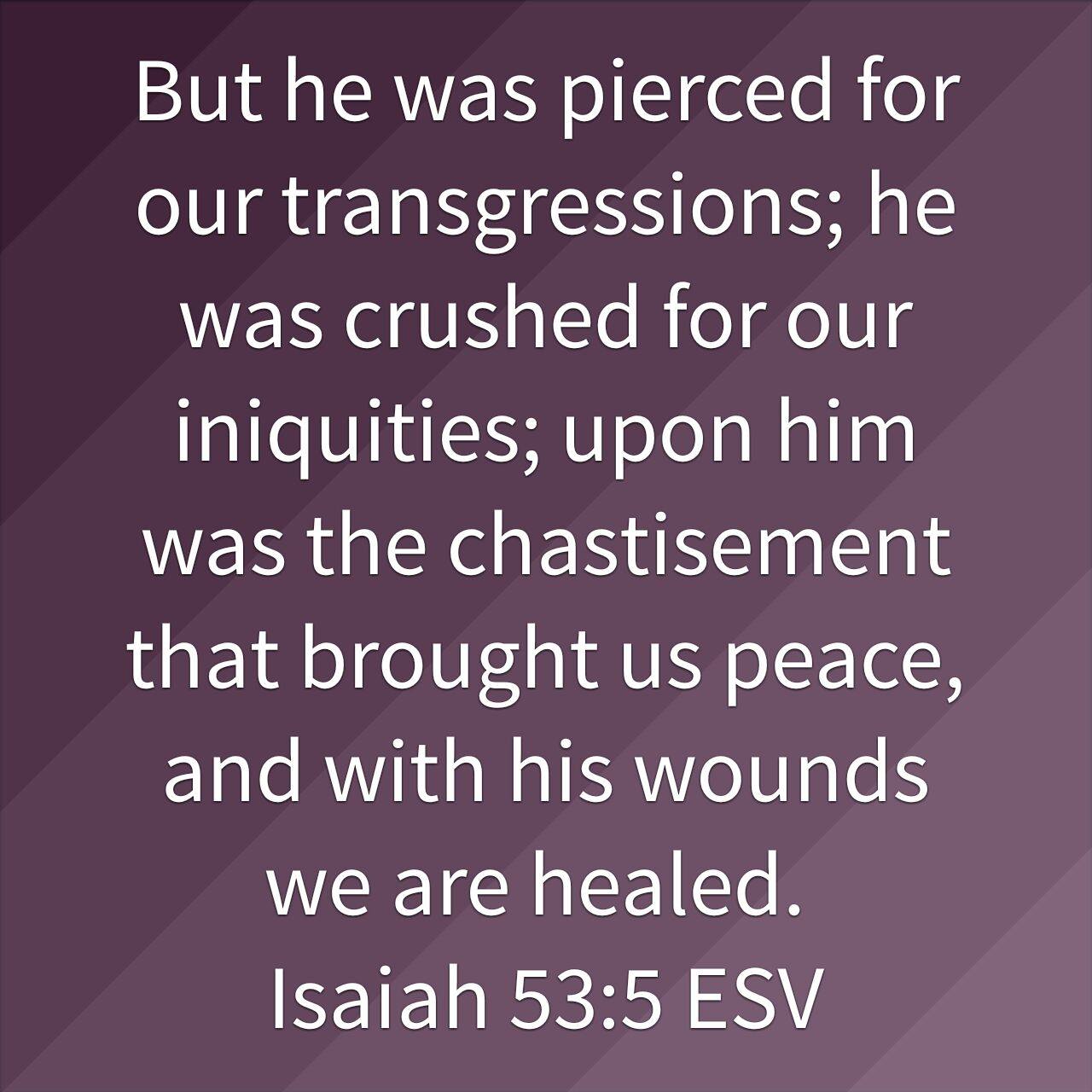
Isaiah tells us, ‘by His stripes we are healed.’ (Isaiah 53:5). The Saviour had already suffered; His face had been beaten beyond recognition ‘And some began to spit on Him and to cover His face and to strike Him, saying to Him, “Prophesy!” And the guards received Him with blows.’ (Mark 14:65). Now He is scourged. This was common practice so the person being crucified was weakened before the crucifixion. Many died at this stage. Jesus would have been stripped and forced to bend over and flogged with a whip of thongs, to which were attached metal and bone. In Jewish law a man could only receive 40 lashes, but in Roman law there was no limitation. Jesus would have been whipped until the flesh was removed from His back. Unimaginable pain and suffering.

What was the purpose? The Romans weren’t concerned with God’s purpose. Jesus was so brutally beaten and whipped as punishment for your sin and mine. ‘Then I will punish their transgression with the rod and their iniquity with stripes.’ (Psalm 89:32). By His suffering our sin is forgiven. As horrendous as this description of the Lord’s suffering is, it doesn’t tell us of the depth and anguish of His soul as He bears the wrath of God against your sin and mine. Each stroke was blow from God for a punishment for my sin. The healing was only made possible because of the great sufferings of Christ, ‘by His stripes we are healed.’

This picture of Christ’s mutilated body should cause us great sorrow. We take sin so lightly, we excuse it. We see its true significance here. Sin is an affront to God’s nature, the most sickening sight. It must be punished. Every fibre cries out justice for your sin and mine. It demands the sufferings of hell. The Lord Jesus Christ suffered hell for your sin and mine. We must despise sin and repent of it. Trust in Christ and receive the forgiveness His sufferings alone can bring.

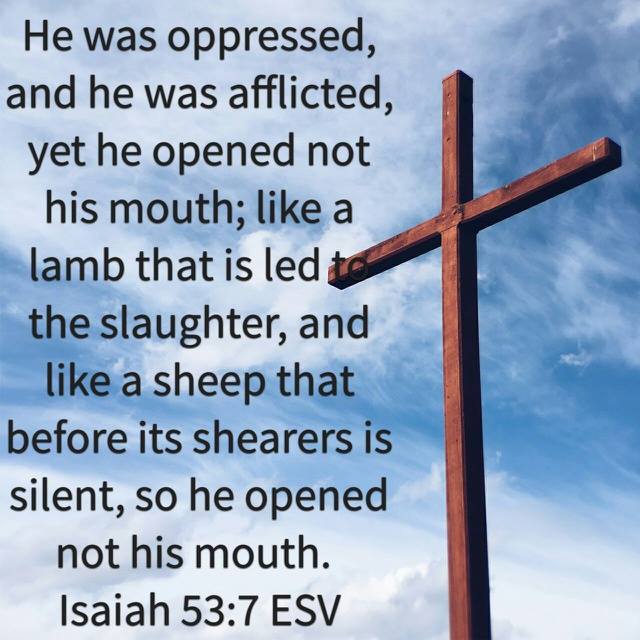
Isaiah also says Christ was, like a lamb that is led to the slaughter.’ (Isaiah 53:7). The Lord had been bound and led around all night, dragged from one place to another. Here again, in Mark 15, we see Him being dragged around by the soldiers, first led to the barracks, ‘And the soldiers led Him away inside the palace (that is the governor’s headquarters), and they called together the whole battalion.’ (Mark 15:16). They spitefully abused, mocked and spat at as they degraded Him. Then they dragged Him out to be crucified, ‘And when they had mocked Him, they stripped Him of the purple cloak and put His own clothes on Him. And they led Him out to crucify Him.’ (Mark 15:20). This glorious Lord subjected Himself to be led about like a common criminal. He willingly submits. Why? Because He willingly agreed to do His Father’s will, to submit to God’s punishment for your sin and mine, ‘like a lamb that is led to the slaughter.’

Isaiah 53-7

Jesus did not resist or reject because, in love, He was going to die for me and you. What great love Christ has for us that He could endure such treatment. It’s impossible for us to see our Saviour’s willingness to die for us not to render ourselves completely to Him. He loved me so shouldn’t I love Him with all my heart, all my being, all my life? Should I not worship Him, praise Him, serve Him and love Him?

The Saviour’s experience reflects the reality of sin in hell. There is no freedom in hell, no possible escape. The opportunity for freedom lies this side of the grave. It is Good Friday because it’s the day in which the hope of Salvation came to those in bondage and set them free to serve Him. The Lord was bound so that we might go free.

‘He was despised and rejected by men.’ (Isaiah 53:3). We have already seen in Mark 14:65 that Jesus had already been mocked by the soldiers of Herod, He was now treated with contempt by the Roman soldiers. This was prophesied in Mark 10: 33-34, ‘See, we are going to Jerusalem, and the Son of Man will be delivered over to the chief priests and the scribes, and they will condemn Him to death and deliver Him over to the Gentiles. And they will mock Him and spit on Him, and flog Him and kill Him. And after three days He will rise.’ The Romans despised the Jews, so when the Roman soldiers had the opportunity they took great delight in ridiculing them. Now, even though Jesus was innocent, they call out the whole cohort, about 600 men, to mock Jesus. They dress Him as an emperor and mock Him as if He is a king. Mixed in with this sport was further cruelty as they force a crown of thorns on His head. They spit their revulsion in His face, then they put His own clothes back on Him and take Him to be crucified. ‘He was despised and rejected by men.’

The young Campbell Morgan, after passing his doctrinal exams to become a minister, then had to preach a trial sermon. After being told he was not successful, he wrote to his father one word, ‘Rejected.’ His father’s immediate response: ‘Rejected on earth. Accepted in heaven.’ Campbell Morgan went on to become a great evangelist. We are only accepted in heaven because Christ was rejected on earth. Those who mocked Jesus as the King of the Jews will have to face Him as the King of Glory. One day they will bow the knee and be filled with awe and fear at His appearance. And so it will be for all those who mock Christ today. What degradation that Jesus endured – not only physically assaulted but psychologically abused as well. He emptied Himself of all majestic glory in paying the price for our sin. Again we see that the penalty of sin is extreme – because sin is extreme. It’s the extreme rejection of the goodness of God. It justly deserves the wrath of God. The terrifying thing is those who despise and reject Christ today will be despised and rejected by God for all eternity. What a terrible fate! If men would just humble themselves before the Lord they will know the love and acceptance of God for eternity.

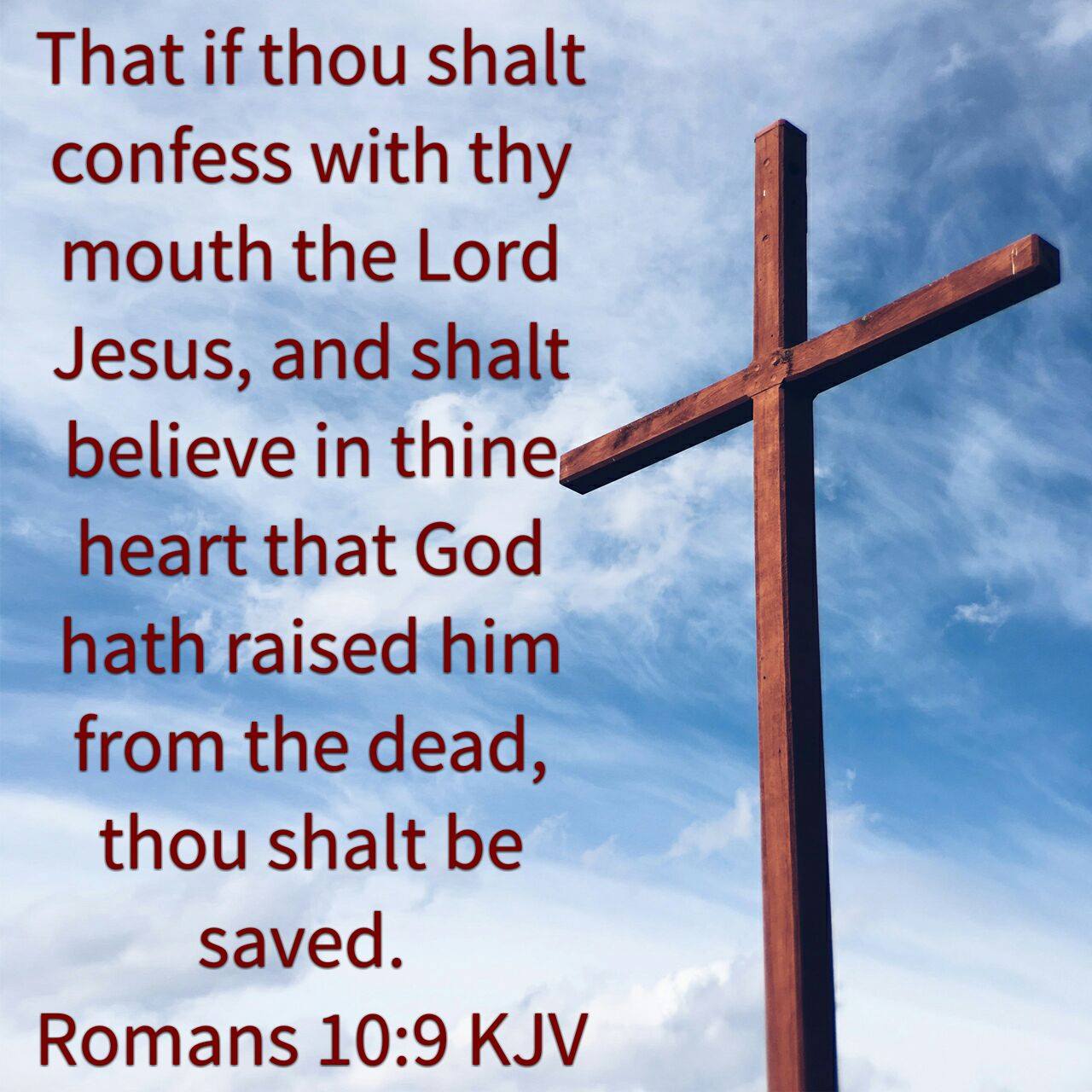
Romans 10-9 KJV

In Christ’s suffering we see how real our sins are, for His punishment is the punishment of our sin. We see in Christ’s suffering the greatness of His love for us. He willingly bore the torture of punishment that we might be forgiven.

Gaze upon Him and marvel that for us, He died. ‘Truly, truly I say to you, whoever hears my word and believes Him who sent me has eternal life. He does not come into judgement, but has passed from death to life.’ (John 5:24).

John 6-47