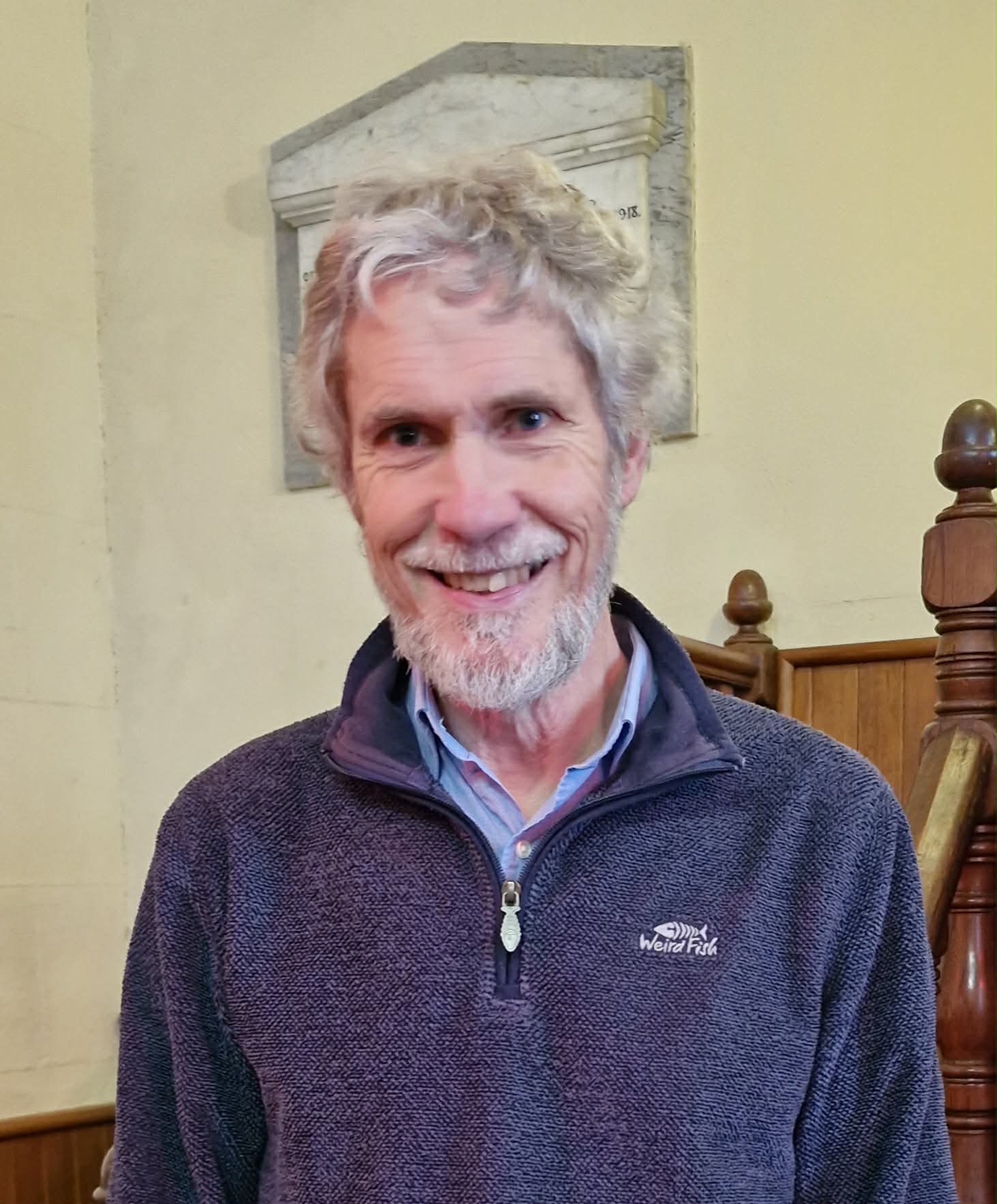
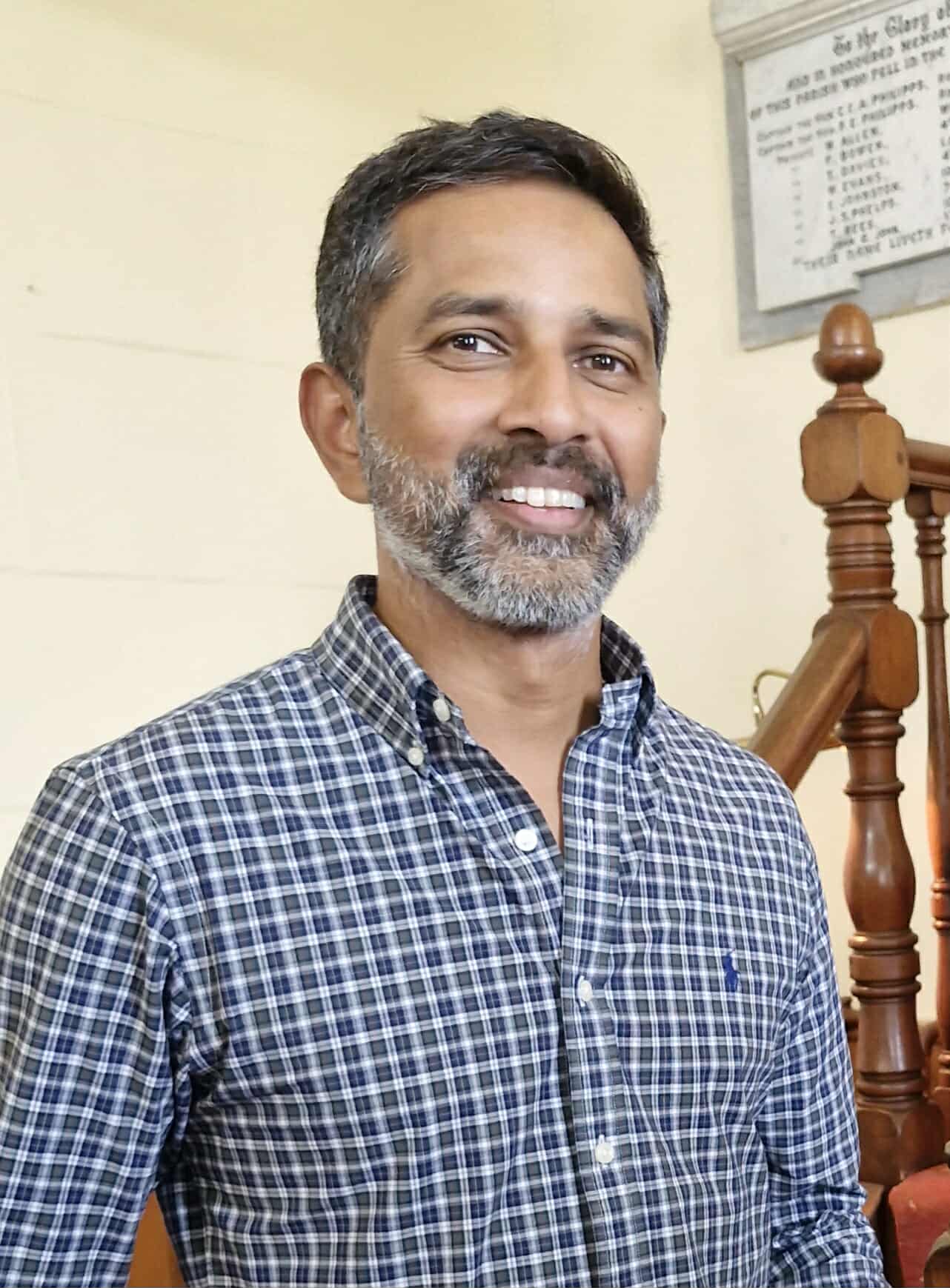
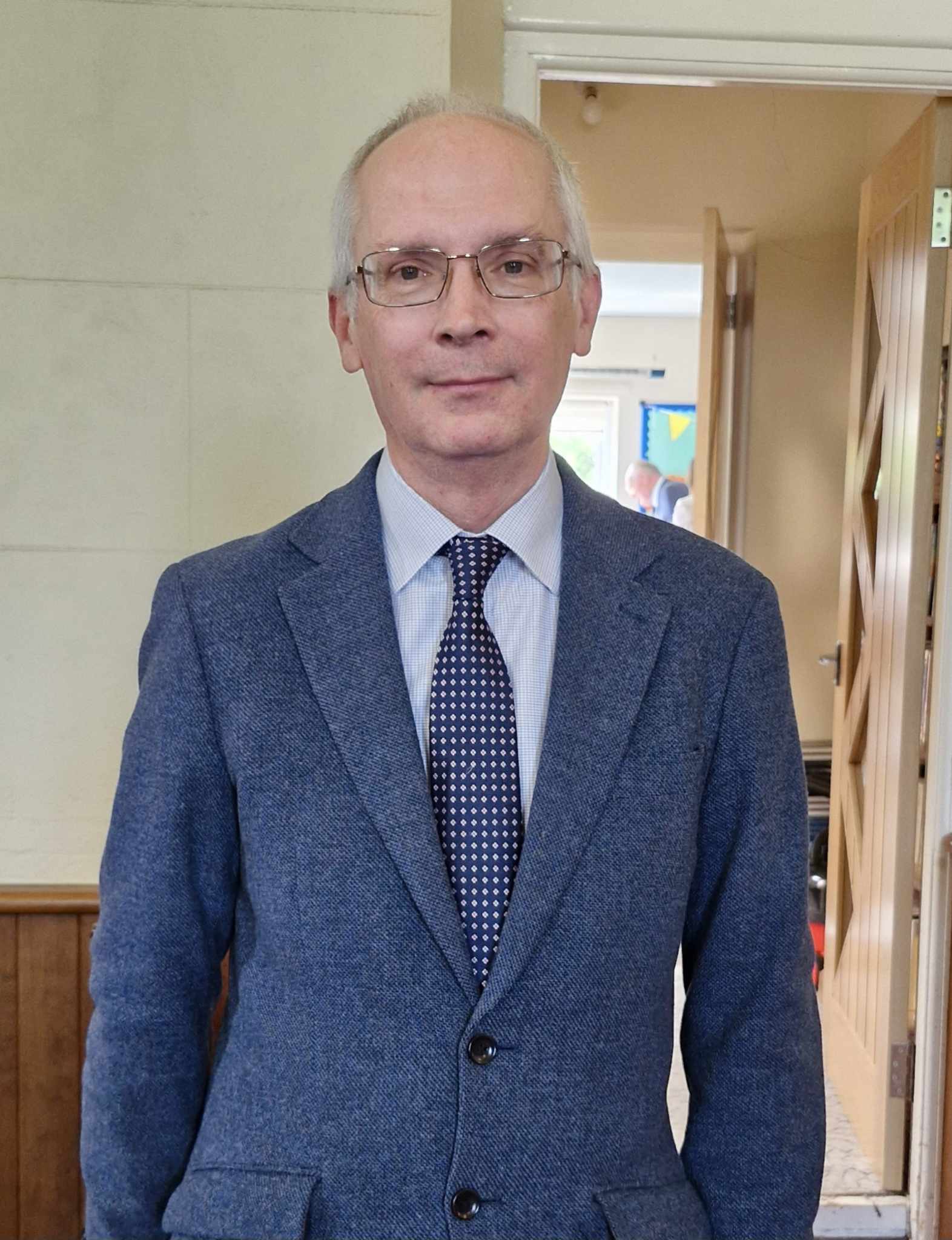
September 21st 2025: Jeremy Bailey

Isaiah 42:1-17

           The first word in our text is “behold.” It comes the idea of gazing intently upon someone or something. This is essentially the main point of the passage and of our message today. Do you remember when you were first saved and entered into the way of Christ? You could not get enough of this wonderful Jesus! Before you conversion you never gave Him a thought, but now you love Him and you begin to love what He loves. You love the brethren and the church, then you begin to develop a great love for the Bible.

            But then there is this great difficulty. The Bible is made up of 66 different books and some of them, like Isaiah, are quite long. Maybe as a young believer you started with the New Testament. I was encouraged to read Mark’s gospel to start with. It’s all about Jesus. Its quite short. It is dynamic with things happening straight away or immediately. The other gospels gather attention next because they too are about Jesus. Then we look at the letters which explain things concerning Jesus and the gospel. This is a message for and to all of the world not just to a single nation (Israel). Even if we are unsure about the teaching of Revelation at least we come to know the certainty of Christ coming back once more.

            What about the Old Testament? To many it is just ‘old’ and so not so important as the New Testament. But we do know differently don’t we? All Scripture is God-breathed and God has spoken through the prophets o old. Isaiah is made up of 66 chapters and in a way it is a mini Bible. There are some difficult and tough parts, but it is all about Jesus too! We learn this from what Jesus said to the disciples after the resurrection (see Luke 24:26,27,44-46). Whilst the New Testament announces the arrival of Jesus Christ and concerns His appearing, ministry, and the implications of all He did, the Old Testament prepares the way and continually points towards the first advent of Christ. There is much in the Old Testament which describes both the Person and the work of Christ. In Isaiah we have a number of ‘Servant Songs’ of which our passage is one example. And in it we get a glimpse of the nature and work of the prophesied Messiah.

            Now in our text we see three wonderful pictures of Christ. First, He is a great King. Before Isaiah 6 we have a series of sermons from the prophet, but then in chapter 6 we are hear of the death of king Uzziah. Wonderfully, it was at this very point in time that Isaiah “saw the Lord sitting on a throne, high and lifted up” (Isaiah 6:1). When a monarch dies there is a great period of uncertainty. How will the successor to the throne act? What will their reign be like? Isaiah might have thought that the next king would not be as good as Uzziah? But Isaiah is given this vision of a King who would never die and is way above all others. The apostle John quoted from Isaiah and identified this One whom the prophet saw with the Lord Jesus (John 12:37-41).  Second, from Isaiah 35 to 55 the focus is upon the coming One as “the Servant of the Lord.” Chapter 42 begins with the Father speaking of His Son. Our Lord and Saviour did not come to rule as an earthly king but came as a servant and to give His life as a ransom for many (Matthew 20:28; Mark10:45). Third, in the last section, from chapter 56 up to chapter 66, we see the promised Messiah depicted as the One who conquers.

            In our passage we have Christ as the “Servant of the Lord.” How can we be sure that this is a picture of the Lord Jesus? After healing a man with a withered hand on the sabbath, the Pharisees wanted to destroy Him (Matthew 12:13,14). And when Jesus knew of their plots He withdrew from that place but continued to heal many warning them not to make Him known, and then Matthew comments that Christ’s actions were prophesied of by Isaiah quoting our passage of Isaiah 42 (Matthew 12:15-21). So Jesus Christ is clearly “the Servant of the Lord” as depicted in Isaiah.

            I want to draw from Isaiah 42 three themes in relation to this “Servant of the Lord.”

[1] The Servant of the Lord and His commission.

            God the Father invites us to consider, or to “behold,” this delightful One known as “the Servant of the Lord.” We are to think deeply, to gaze intently, and to meditate thoughtfully on this dear One. Now God has many servants at His disposal. There are the angels, for example, who do His will (Psalm 104:4). There are His people called to various tasks. But the work of saving people form their sins and disaster was so special and intricate a task, that He was never going to trust it to men nor to angels. Men, of course, were discounted because of being sinners. Angels are mightily powerful but only His Son could do this vital task. Salvation is of such importance that only the Son of God was called upon to carry out this mission. ?

            Do you struggle with difficulties? Are you depressed and set about with anxious thoughts? Are you suffering grave temptations that are difficult in your life at this time? Our great problem is that we focus on the problem. We look to ourselves, our condition, our troubles, when all we really need to do is to “behold” the Lord’s Servant,Jesus Christ.

            There is a tiny village chapel like Penuel near to Colchester in Essex. It is sited on a high hill near to a road called ‘artillery street.’ In 1850 there sat a young man in the pews by the name of Charles Haddon Spurgeon. He couldn’t get to his normal place of worship due to the snow, so he ended up in this little chapel. The man due to speak was taken ill, and so one of the church members got up to preach. His text was:

Look to Me, and be saved, all you ends of the earth! For I am God, and there is no other. (Isaiah 45:22).

The man speaking was not particularly gifted but he pressed his text earnestly upon the congregation and even pointed directly to Spurgeon saying ‘young man you look particularly miserable, look to Christ.’ It was at this point that Spurgeon came to faith in the Lord, merely by looking with intent at the Saviour. As an aside there was a young man in our church called ‘Jonathan’ who had Down’s Syndrome. The young people used to leave after the third hymn for their youth teaching and as he was leaving he looked back at us in the congregation and said ‘cheer up!’ Sometimes Christians can look and appear so dour!

            In the New Testament we see the Lord Jesus calling Nicodemus to do what the Israelites did in the wilderness when they were plagued by snakes. Do you remember that incident? It is recorded in Numbers 21:7-9. The people had sinned and were plagued by snakes. After praying the Lord told Moses to make a bronze pole with a snake on it. The people were told to look to the pole and they would be healed. The Lord Jesus made reference to this and transferred the focus to Himself:

14 And as Moses lifted up the serpent in the wilderness, even so must the Son of Man be lifted up, 15 that whoever believes in Him should not perish but have eternal life. (John 3:14,15).

Look to Jesus! The Father sent the Son and upholds the Saviour who died for sins. The Holy Spirit honours the Saviour and convicts sinners of their need applying all that the Lord Jesus gained to those who look to Him. This is a work of the blessed trinity, Father, Son,and Holy Spirit. Have you looked to the Saviour?

[2] How the Servant of the Lord carried out His task.

            The Lord Jesus Christ carried out His wonderful work of salvation with modesty and with gentleness. He did not shout out in the street (Isaiah 42:2). The Lord was not given to raising His voice, except briefly in regard to the Pharisees upon whom He pronounced several woes (Matthew 23). For the vast majority of His life He lived quietly as a carpenter in Galilee. When He began His ministry there was no fanfare or trumpeting, and there was marketing or publication. He simply went and preached the good news. He was especially gentle in His dealings and interactions with people. He was no ‘pushover,’ but He was never belligerent nor bombastic, demanding to be heard. He understood the people and their need. He did not ‘pull His punches,’ and always spoke the truth. To the woman of Samaria He pointed out her condition in sin, but He was always gentle leading people to see the truth and their need of Him. Matthew 11:28-30 records how He issued a general call for all who were burdened and laden down to come to Him. In Isaiah 42:3 we read these beautiful words:

A bruised reed He will not break, and smoking flax He will not quench; He will bring forth justice for truth. (Isaiah 42:3).

You often see reeds by the riverside bent over after a violent storm and rain. It is a simple matter to just break the bent reed as you pass by on your walk. Naturally the reeds are not easy to break due to the fibrous nature and structure. But if the reed is bent over by some violent force it becomes a lot easier to break off. We do not use candles very often but when they get down to the very bottom and the wick is sputtering and barely glowing it is a simple thing to lick your fingers and snuff the dying embers out. Now these two illustrations are pictures of fallen human beings. We can barely stand up among the forces that buffet us,and there are but the dying embers of life left. Hebrew is a very different language to English. The negative is put here to imply the opposite positive. In saying that this Servant of the Lord will not break a bruised reed and will not quench a smoking flax, the Lord is really saying that He would restore structure and bring back to life. The Lord will cup His hand around the smouldering wick and will gently blow upon it to fan the flames back to life! The Lord knows us. He knows our frame. He knows we are weak and frail. He knows we sometimes are clinging to life. Well He is gentle and incredibly loving! What-is-more, he is our Creator and knows what to do!

[3] The people to whom the Servant of the Lord came.

            Those who are not yet saved are bruised and smouldering. But even the saved are still bruised and still struggle with life ‘going out’ like a smouldering wick. We are works in progress. Our justification is secured, but we are in need of sanctification and ongoing repair. We mentioned Spurgeon’s conversion a moment ago. He was very miserable as a teenager and needed to hear the Lord’s call. He was, it seems, a very religious person, but he needed to be bruised before he came to faith. Mankind is very proud. If all is going well and there are no problems in view then what need does he have of God? He may be very successful in career, in family, in relationships and so on, so what need is there of God? He has great need, of course, but he is unaware of it and does not see his need. The Lord allows us to be bruised by the world, by our sin, and even by Satan’s misdemeanours. He does this to bring us to see our lost and hopeless condition. We are bruised and in need of repair. Think too of the prodigal son (Luke 15). He had to be brought to a point when he came to his senses and saw his desperately low condition, before he returned to his father. Man is bruised so that he can be led back to the Lord.

            Now even as Christians we are sometimes bruised and sometimes become like a smouldering wick. But why is this? It is so that we would value Christ even more. It is so that our hold of the things of this world will become lighter. It is so that we might become more holy, more like Christ, and more alive! See how the ‘giants of faith’ in Scripture were sometimes bruised. Peter was bruised by the Lord and made to see his over confidence in himself. David was bruised too. He was made to see the wickedness of his actions and brought to deep and sorrowful confession (see Psalm 38 and Psalm 51). Paul too was bruised. He had his ‘thorn in the flesh’ which the Lord would not remove to keep the apostle humble and trusting. Those whom Jesus has saved may be bruised at times, and this in order for them to gaze deeper into the Lord’s face. Even little children are forgetful of their parents until they fall and graze their knees. But them as they pour out their tears they look into the face of their mum or dad in hope that all will be made better. How much more will a bruised saint gaze into the face of Jesus who died for them? Remember this above all else. We have a Saviour who was “wounded for our transgressions,” and who was “bruised for iniquities,” (Isaiah 53:5). His bruising was for our salvation. Our bruising is for His glory and to make us more like Him.

June 22nd 2025: Paul Daniel

Philippians 4:4-8

How many of you are hot and bothered with the heat? It may be one of those weekends when you may not want to do anything because it is too hot. Have you ever been anxious about anything? Being anxious is a very human response to some situations. Anxiety can become intensive and lead to distress. Some form of stress is good for you, to push yourself for example when exercising. Anxiety and stress are very much part of our daily life.

The apostle Paul says, Rejoice in the Lord always; again I will say, rejoice. (v4). We can say that can be difficult. How can we rejoice when things that are beautiful are broken in this world? We read powerful words in Psalm 46. In times of trouble, if you were an Israelite what would life have been like? They had many difficulties, but they saw God at work: in the Flood God preserved His people, in slavery God rescued His people. Throughout the whole of history we see God is faithful to His people. He has a gospel. God has been faithful to His Word.

When you are concerned or worried about something we have the same God; He is the same yesterday, today and forever. Paul writes to the church in Philippi reminding them to stand firm, to be strong in the Lord. Throughout all of history God is faithful and in control.

Rejoice in the Lord always; again I will say, rejoice. (4:4). There were big distractions 2000 years ago. There were false teachers and plenty of things to distract God’s people. Paul says not to be distracted but to stand firm in the Lord Jesus Christ. Sometimes, in Christian life, there are many things that distract us and unsettle us. They unsettle our mind and our walk with the Lord. One thing that unsettles people is God’s people! (opening 4 verses). Someone can say something that they shouldn’t say (James). How silly it is when Christians get into all sorts of tiffs and arguments. The Lord Jesus Christ died for us! Sometimes, we don’t hear what other people are saying and make assumptions.

Do you know what the smallest muscle in the human body is? It is the stapedius, a 1 mm tiny muscle inside your ear which controls volume levels. Just us the tongue is so important, this muscle is so important. As Christian brothers be unified, don’t mis-hear. Jesus Christ has come to unite us to Him and to one another.

We face Christian hardship, but Paul says not to be anxious, “Do not be anxious about anything, but in everything by prayer and supplication with thanksgiving let your requests be made known to God.” (v6). Things can come our way unexpectedly. We may have unexpected troubles. There are difficulties in the Christian life. Some churches will promote a gospel that says if you’re a Christian everything will go well with you. No! Difficulties will come (Jesus – Parable of the Sower). The Christian life does not get easier, it can get more difficult. In our growth in godliness there is growth in our sensitivity to sin. It is different for all of us. We respond in different ways but Paul says, “Rejoice in the Lord always; again I will say, rejoice. (v4). He talks about being gentle and reasonable. There is a harshness in our world. But God sent His Son to forgive us of our sin, to cleanse as, to soft and our hearts and give us a hope that will never disappoint us, to give us a destination – heaven.

We are waiting for the Lord Jesus Christ to return. Before that glorious day, Paul says, “Do not be anxious about anything, but in everything by prayer and supplication with thanksgiving let your requests be made known to God.” (v6). Here is a prayer, probably the most underutilised prayer of a Christian. When we pray we are being listened to in the throne room of heaven. The Lord Jesus Christ is interceding for us. We access God who is capable of the impossible. You have access to God. He can do the impossible because He raised Jesus Christ from the dead. As you are praying, present your requests with thanksgiving.

As you grow in grace, see how God has kept you and answered your prayers. He is faithful to His people and never forsakes them. When you pray it is a reminder of all God has done in your life and this helps you to rejoice. There is no Christian who has everything sorted. None of us are perfect. Yet, all of us can be rejoicing through what God has done so far in our lives. We are justified, reconciled, received the gift of the Holy Spirit, been given brothers and sisters in Christ. He says He will be with us. People can let us down, even those closest to you. But you have the Lord Jesus Christ who is closer than a brother.

What happens when you present your prayers with thanksgiving?  And the peace of God, which surpasses all understanding, will guard your hearts and your minds in Christ Jesus.” (v7). This peace transcends all understanding. It’s a picture of being guarded. You have a Protector, a shield, strength. It is a picture of peace.

There are times when God takes you through difficulties and times when He takes you out of them. My encouragement is to keep going. In this world people expect everything to be fixed right now. My friends, we have a wonderful hope we are looking to. Sometimes we get distracted, but Paul says our attitude in the midst of difficulties should be, Finally, brothers, whatever is true, whatever is honourable, whatever is just, whatever is pure, whatever is lovely, whatever is commendable, if there is any excellence, if there is anything worthy of praise, think about these things.”  (v8).

What is the Christian attitude meant to be? It should be deliberate.  All you have to do is come to the Lord Jesus Christ and follow Him. The Christian attitude is meant to be deliberate, “If there is anything worthy of praise, think about these things.”  (v8b). We must actively seek ‘whatever is true, whatever is honourable, whatever is just, whatever is pure, whatever is lovely, whatever is commendable.’

Sometimes, we do the opposite for example how much time do we spend on social media? It can be a window into coveting what everyone else has. If there is something that is not good for us, then stop. When we are aware of something that is not good for us, we need to stop. We have on-demand television. This can dull our senses. Are we aware of the things that drag us down? Paul says we must focus on what is true, honourable, just, pure, lovely and commendable.

What you have learned and received and heard and seen in me – practice these things, and the God of peace will be with you.” (v9). Paul follows Jesus. Be more like Jesus Christ. This will be better for our mind, better for our body, better for our soul, and better for our friends. How can we do this? The Holy Spirit helps us. We need to be obedient to the word of the law. Be under the word of God.

What is the answer, the response to a Christian life of hardship? Go and tell others what God has done for you. 2000 years ago many people had difficulties. They looked to Jesus. These words were written for them and for us.

Paul ends, “And the God of peace will be with you.” (v9b). God’s peace in an uncertain world. He gives His peace and we can ask for more. When you are anxious, when you are worried, when you are going through difficulties, remember the words of Jesus Christ, “Seek first the kingdom of God and his righteousness, and all these things will be added to you.” (Matthew 6:33).

July 28th 2024: JP Earnest

1 Timothy 1

1 and 2 Timothy and Titus are often referred to as pastoral epistles. Paul gives practical, warm pastoral advice to churches in his care. Paul had visited Ephesus during his second missionary journey and spent considerable time there during his third missionary journey. In Acts 20 we read, Pay careful attention to yourselves and to all the flock, in which the Holy Spirit has made you overseers, to care for the church of God, which he obtained with his own blood. I know that after my departure fierce wolves will come in among you, not sparing the flock; 30 and from among your own selves will arise men speaking twisted things, to draw away the disciples after them. (Acts 20:28-30).

Paul is an apostle so he is writing very publicly as well, through the Holy Spirit – not just to the church in Ephesus, but churches everywhere. Chapter one shows us what a spiritual healthy church looks like. It is:
1.  A gospel church,
2. A prayerful church,
3. A governed church.

A gospel church should:

  1. Preach the gospel,
  2. Personify the gospel,
  3. preserve the gospel.
  1. A gospel church should preach the gospel (verse 1-11).

False teachers were going to sneak in and act like savage wolves. They were enticing people away with unbiblical teaching. Paul says, As I urged you when I was going to Macedonia, remain at Ephesus so that you may charge certain persons not to teach any different doctrine, nor to devote themselves to myths and endless genealogies, which promote speculations rather than the stewardship from God that is by faith.” (v3-4).

Deviating from gospel truth will hinder them with their walk with the Lord. It would not bring unity but division and leave the gospel in the shadows. Paul encourages Timothy and emboldens him to preach the gospel, to warn the false teachers, to avoid controversial speculations and ignore unhelpful things. The reason Paul says this to Timothy is because of love, The aim of our charge is love that issues from a pure heart and a good conscience and a sincere faith. (v5). The love Paul is commending here is love for the Lord, love for one another, love for the lost. Those who embrace the Lord will love the gospel. Gospel love comes from a cleansed love.

By contrast, we read in verse 6, “Certain persons, by swerving from these, have wandered away into vain discussion.” People from church should not be characterised by this. Timothy is to restore these backsliders.

The gospel is the good news about Jesus Christ. The bad news is God is 100% perfect but you and I have not lived up to His standards. God, in His perfect heaven, cannot allow anyone not perfect in His heaven. We have broken His law and deserve His punishment. We have sinned. The wages of sin is death. It is what we deserve. However, the good news is Jesus. He left heaven, lived a perfect life, and died on the cross to take the punishment we deserve. If we trust in Him, we will be saved from sin, saved from death, saved from hell. Have you done that? Do you know Jesus Christ as your Saviour?

The wannabe teachers (v2) want to be prominent amongst the people. But Paul says, Now we know that the law is good, if one uses it lawfully.” (v.8). These would be teachers had failed to appreciate God’s law. They had practises that were contrary to the gospel. The fake teachers wanted to take people to the Old Testament to fulfil rituals of the Old Testament. They wanted to be teachers of the law but they didn’t understand it. God’s law has the purpose of revealing sin in the hearer, so we won’t trust in our own efforts to remove sin but look to Jesus Christ. Paul reminds Timothy, the Ephesian church and us, to keep the main thing the main thing – the gospel.

2. A gospel church should personify the gospel (verses 12-17).

The greatest demonstration of the gospel is the transformed person of the believer (v.12-13). Paul was bad news to the church but through Jesus he was changed, a new creation. This changed life is through the gospel. It is not initiated through us (v.14). God had done it, “The saying is trustworthy and deserving of full acceptance, that Christ Jesus came into the world to save sinners, of whom I am the foremost. (v.15). Paul considered himself to be the worst of the worst. Yet even he received mercy (v.16). Is that your testimony today?

Paul goes on to say that he is an example; if God in His grace and mercy can save the likes of you and me and Saul of Tarsus, he can save anyone on condition they believe on the Lord Jesus Christ. When they faithfully demonstrate a changed life, it will commend the gospel. The gospel is to be lived out by us, personified by us. This is the glorious gospel from God. Paul ascribes all glory and honour to God.

3. A gospel church should preserve the gospel (18-end of chapter).

For Timothy and us, we need to wage war against false teachers who will do much harm to the church (v.18). They must fight the good fight. There is no place for complacency. It is only from God that strength comes, and from Him alone. Some were turning to their own reasoning and made a shipwreck of their Christian life (v.19).

There needs to be an active response, not a passive response to false teaching. Paul gives 2 examples – he kicked two men out of the church who had departed from the gospel. Out of love, difficult things had to be done. Why did Paul take such drastic action? To preserve the gospel, to protect the flock, so that the two men might repent.

Some Christians start off well; they live the gospel but then deviate. They may go off to another church and are nowhere spiritually now. We are living in days when there is so much pressure on us to deviate from the gospel. There is pressure to water down the gospel. We are not to do that. We must remain faithful and preserve the gospel.

A healthy church is a gospel church. We all have a part to play. May the Lord help you and me, and corporately as a church, for the glory of God – to preach the gospel, to personify the gospel and to preserve the gospel.

June 29th 2024: Dafydd Williams

Mark 1:35 – 2:12 Jesus Forgives

Imagine being sent to prison; all you can see is bars and walls. One day, you are handed a document which says you are free to go. You see the signature; it belongs to a man who has come to visit you, but you don’t know him and wonder who he is. That is the sort of thing we see happening here in Mark 2 – free to go, your sins are forgiven.

In chapter one we see something of the identity of the Lord Jesus – who He is and how He came as saviour into the world. Jesus Christ is the one we need to get to know. Today, we’re going to see Jesus forgives.

Jesus speaks of forgiveness in a historical place called Capernaum. Everyone was squeezed into one home, ready to hear what Jesus had to say. Before this event, we see Jesus has healed many, doing incredible things. People want to see what Jesus will do next. But Jesus has other ideas. And he said to them, “Let us go on to the next towns, that I may preach there also, for that is why I came out.” (Mark 1:38). Jesus is carrying out His Great Commission. He came to preach the word. We are here today to open the word – it is a priority for us, it was a priority for Jesus.  We should listen to what God has to say. We must listen and respond.

As Jesus preaches to the crowd, there is a great unchanging truth: everyone’s greatest need is the forgiveness of sins. Mark describes a group of friends who bring a paralysed man to Jesus Christ. They can’t get through the crowds but make a hole through the roof (v.4). To get to Jesus, they must lower the mat the man lies on. The friends have a great desire to see Jesus. Nothing will stop them. Imagine four determined men making an opening in the roof.

The obvious thing Jesus would do would be to heal him. But what comes next is a shock, And when Jesus saw their faith, he said to the paralytic, “Son, your sins are forgiven.” (Mark 2:5). The first thing Jesus does is say, ‘Your sins are forgiven.’ That is the priority of Jesus Christ – forgiveness is the greatest need any human has. It is greater than the very pressing need of the man being paralysed. Do you agree this man’s greatest need was forgiveness? Maybe you are thinking of other priorities? Bills which need to be paid or maybe hospital needs. These are very important but just as Jesus sees this man, He also sees you. Your greatest need is the forgiveness of sins.

There is no lack of compassion of Jesus. He sees beyond that to a deeper problem – the need for forgiveness. His compassion goes beyond physical needs. Our greatest need is our sin to be forgiven. Forgiveness fixes our greatest problem – sin, rebellion against God – which cuts us off from a holy God. Without forgiveness we remain under the judgement of God. Never ending condemnation. It is serious. This is why Jesus says, ‘Your sins are forgiven.’ Jesus knows this is what the man needs more than anything else.

You may give the appearance of being a Christian but deep down you know your sins aren’t forgiven. We can know forgiveness when we have faith (v5). Faith for these four friends wasn’t some knowledge they had about Jesus, but active belief that Jesus could do something for their heartfelt needs. Faith is actively trusting. That is what these friends do. They wanted Jesus to heal their friend. They believed He was their only hope. Their motive was the physical healing of their friend.

It is important to remember at the start of Jesus ministry, they didn’t see the cross. But we have the whole story. We can see specifically faith is in Jesus Christ, faith in Jesus dying for us. True faith is in the wonderful person of Jesus Christ. These men believed in Him. In seeing their faith, Jesus forgives sins.

Do you have your faith in Jesus Christ? It is a question we all need to answer. If you have never come to Jesus Christ before, you can come to Him humbly and ask Him to forgive you. Your greatest need will be dealt with. Are your sins forgiven? Your answer is an eternal one.

The second truth we see here is that Jesus has the authority to forgive (verses 6-12). It is one thing to realise we need to be forgiven, but we cannot solve the problem by ourselves. Jesus has the authority and power to forgive sins.

The Scribes were not happy with what Jesus said, “Why does this man speak like that? He is blaspheming! Who can forgive sins but God alone?” (Mark 2:7). They misunderstood who Jesus was, so He revealed His identity as one who has authority to forgive sins.

“Which is easier, to say to the paralytic, ‘Your sins are forgiven,’ or to say, ‘Rise, take up your bed and walk’?” (Mark 2:9). This is not a trick question. On one level it is easy to say one thing but not to do it. Neither of these is easier to do and impossible for man to do. Jesus gives an answer to His own question, But that you may know that the Son of Man has authority on earth to forgive sins” – he said to the paralytic.” (Mark 2:10).

Here is the turning point. Jesus says He has all authority to forgive sins. To prove it, He says, I say to you, rise, pick up your bed, and go home.” (Mark 2:11). Jesus heals the man with His words. There were a lot of eyewitnesses who saw this amazing miracle. A man was physically healed. Such power was on display. Jesus shows His authority to reveal His identity. It is God Himself who has the authority to forgive sins.

Jesus has authority on earth. We can know forgiveness here and now. It Is achieved on the cross. His death means we can live. The saving work of Jesus Christ was finished at the cross. There is nothing we can add to what He has done. Everything needed has been done by Jesus Christ. You can have a wonderful assurance your sins are dealt with if you trust in Jesus Christ.

Maybe you are struggling with a family situation, school, or are a Christian questioning whether you are really saved. No matter how you are feeling, if you are a Christian, you have an eternity in heaven through faith in the Lord Jesus Christ. Does this leave you in awe and wonder, like the crowd? And he rose and immediately picked up his bed and went out before them all, so that they were all amazed and glorified God, saying, “We never saw anything like this!” (Mark 2:12). They were amazed. No one had ever seen anything like it before, or since. No one else has authority to forgive.

Jesus has victory over sickness and sin. He is God in flesh. This Jesus is who He claims to be – the man who is God. Our greatest need is the forgiveness of our sins. Come to Him in faith, humbly asking for forgiveness. You are all invited to respond to this Jesus. Do you know your sins are forgiven by Jesus? Jesus is the only one who can forgive you.

May 26th 2024: Tom Baker

Exodus 19:1-23, Revelation 5:11-14: Jesus, sat upon His throne.

Jesus lived amongst us, died for us, rose on the third day, ascended to the right hand of the father, and now sits in glory. We behold our God, sat upon His throne. The first commandment is, ‘You shall have other gods before me.’ Moses is trying to show us how the whole universe fits together. God is. In Exodus chapter 20 we see how God, the world, Jesus Christ, and the universe all fit together. What is the universe made of? It is all physical stuff, matter, forces, organised into systems, galaxies and so on. Everything spins properly. Yes, that is true – but what about the stuff that is not seen but equally matters – of heart, soul, beauty, joy, justice, love. How do those things make sense?

What is the centre of the universe, both visible and invisible? You are a body and soul, visible and invisible. What is the centre of reality that makes sense of everything, a focal point we should centre around? Day by day we search for this meaning of life, but don’t seem to find it. We ask, ‘What is the meaning of all this?’ As we scramble around in the dark God, in His mercy, speaks and shows us that’s at the centre of reality is Jesus Christ, sat on the throne. Everything is under His rule. Everything makes sense when Jesus Christ is sat on the throne. That is what God told His people as they gathered at the bottom of Mount Sinai. It is the same today. Everything only makes sense when Jesus is centre and focus, when Jesus is looked to.

We see in Exodus the Lord sits enthroned in glory. The Israelites life makes sense when they look up to Him. Exodus speaks to the people, I am the Lord your God, who brought you out of the land of Egypt, out of the house of slavery.” (Exodus 20:2) LORD in capital letters, is the original name of God, Yahweh, Jehovah. God is telling them His name, introducing Himself personally. ‘Your’ God. There is something very precious about that. The people of God can say ‘He’ is my God. He is the one who saves them out of Egypt (v.2).

He is the LORD, the sovereign One, the covenant-keeping God, “You shall have no other gods before me.” (v.3). He is bundling everything together in this vast universe and placing it all before His people – but none of it compares to Him. Egypt was full of gods for everything – rivers, crops, sun, health and well-being. Central in the worship of Egypt were man-made gods which had human features. All man-made systems of worship always end up being man-centred.

Far too often, the people of Israel looked far too ‘Egyptian.’ God is calling them to a greater experience of worship. God tells them they were made for more than crops, health – they were made for God, to look upwards. What about you? What have you dedicated your life to? You are made for God. The Lord deliverers His people from those gods. The plagues were specifically shown to humiliate these gods. God uses these to deliver people to Himself. God reigns and no one can take His throne. What are your gods compared to the God? They are nothing. The universe, and how we work and function properly, works when we are turned towards Him. God is to be central in our hearts.

God is to be central in all the universe. He is to be central in our hearts. “You shall have no other gods before me. (v.3). ‘Before me – ahead of me, greater than me. He has the only right to the throne of the universe. ‘Before me’ can also mean in front of me, in my presence. From the throne, as God looks out, He sees everything. He alone is God. Isaiah tells us repeatedly there is no one like the Lord; He alone created everything from nothing and sustains everything (Isaiah 45).

He is the righteous, just God, the only God who saves sinners. We are sinners. No one can take our sins away but the Lord (v.20). No one else has the right, the authority to do so. We are called to turn to Him and be saved. We are called to have our lives re-ordered around His throne. Our hearts are only ordered properly when He is centred, when He is our desire. We are to love Him with all our heart, but that is not our natural inclination. Our lives are disordered, a mess, because God is not central in it. We need our hearts to be turned to Him.

If your life is a mess and troubles you, the God who commands is the God who redeems. He rescued the Israelites out of Egypt tyranny. He can redeem you and bring you out of your other gods. He will keep you and change you. Take comfort in knowing though your life hasn’t been what it’s meant to be, there is a man whose life is exactly how it was meant to be. In all His life the centrality of God is everything. His life is a well-ordered life; everything is right about him.

How many times a day are you reminded of the sovereignty of God sat on his throne? For Jesus, it is constant. Jesus laid down His life so we can be forgiven of our sin, for failing to recognise the Lordship of God. Jesus is constantly reminded of the father’s glory. He died for sin. Then, by the power of H risen life, He can change our heart so we can love God. Putting your trust in Jesus means your life will be put right. Our hearts are to be centred on Jesus Christ.

Jesus Christ is not just to be centred in our hearts, but in the whole universe. God is present everywhere. He sees everything. Everything is before him, everything is in His sight. The whole universe combined cannot be compared to God. He tells us that we can now have Him. What a great, generous God. He will even give himself to us. No one else made everything and owns everything. No one else will or can give you His grace. No one else can treat you as fairly as God. No one else saves like Jesus saves. All of the universe declares that.

The destiny of the whole universe will be revealed; around His throne angels and every living thing and being will gather. He will reign forever and ever. And on that throne is Jesus Christ, the Lamb who was slain for sinners like us, so we can come to the throne, be washed and join in the praise of the whole universe. There, everything makes sense and fits together.

May 12th 2024: Robert Strivens

2 Peter 3:1-15: Godly living in the light of Christ’s return in glory and for judgement.

Therefore, beloved, since you are waiting for these, be diligent to be found by him without spot or blemish, and at peace.  And count the patience of our Lord as salvation” (v.14-15a).

These verses are a summary of what Peter wants us to learn. We are waiting for these things, and as we wait and look forward, we need to be careful, found in Christ, living in such a way that is holy and godly.

This chapter is first of all telling us that this world will come to an end (v.14). Essentially, Peter wants people to think of the end of the age and the new heavens and new earth (v.13). That is where he wants us to look; when this world, as we know it, will come to an end, and a new heaven and a new earth will take its place.

This is a fairly general letter, comforting people because they are being scoffed at (vs.3-4). People still do this today. Peter was writing to give comfort and assurance. When people laugh at us and don’t believe what we say, as believers, it can be unsettling. People question why this world will come to an end as there is no sign of this. Many doubt if it is really going to happen. Peter addresses this feeling of being unsettled. He reminds us of two vital things:

  1. the past
  2. to look forward

1.The Past

Look back (vs. 5-6). We are reminded that things have not always been like this, as they are today. There has been a beginning of all things; God created all things by His word (Genesis 1). There was a time when there was nothing but God. He created this world out of nothing (Hebrews 3). Peter is saying things had a beginning. We must be clear and not be taken up by evolutionary thought. From the word of God there was creation of this universe. It will keep going until He brings it to an end (v.7).

Things continue as they are because God maintains them by His word (Hebrews 1, Psalm 102). Peter is saying things appear to go on with no sign of judgement. But look, this world is maintained by God. Furthermore, he points out that there has been a great worldwide catastrophe in the past (v.6). Why is he pointing to the Flood? Because you cannot assume things will go on. Look to the past – the judgement for people’s wickedness.

Things had a start, a beginning, there was this great catastrophe. Things don’t continue without interruption. People should not assume things have always been as they are. This world will come to an end. Look back, then look forward (v.4).

2. Look forward.

See the promise of His coming (v.7), when Christ will return in judgement. The end of this world is coming. God is not slow to fulfil this promise (v.9). He gives an explanation, But do not overlook this one fact, beloved, that with the Lord one day is as a thousand years, and a thousand years as one day. (v.8). It is not some philosophical trick. It is a much more solid point. The Lord is patient (v.9). He is waiting. God is merciful and is waiting for all He has chosen to return to Him in repentance.

A time is coming when the Lord will return and judge the world. God is deliberately patient with sinful humanity. He is given opportunity for the church to give witness. He will return suddenly, without warning (v.10). This teaching is so clear in the Bible. We can’t work it out. Then, disaster will come for those who do not know the Lord (v.10). The world will come to an end – not by some man-made event, but by the act of God Himself. It is vital we grasp that.

What does that mean for a Christian today?

Our priorities for living.
 Peter draws conclusions for how we are to live today and every day (vs.12-13). A Christian is characterised by living a holy and godly life. This is the practical outworking of that doctrine. We know when God brings this universe to an end, we will have the home of righteousness. As we look forward to this great future, we should seek to live holy and godly lives. We are expecting to see the Lord in His glory, the return of the Lord Jesus Christ. This will be an extraordinary experience – Christ returning in glory to judge the world, to usher in new heavens and a new earth in which righteousness dwells. This should affect how we live – not just in outward appearance but in heart.

If we are born again of the Holy Spirit, we should walk in Christ’s way, seeking to live lives of holiness and godliness, rooted in the soil of true repentance of the saving grace of Jesus Christ. We should be trusting in what Christ has done on the cross. We contribute nothing at all. It all depends on Christ, who has successfully paid the price in full. That is the foundation. We seek, through the Holy Spirit, to live for Him.

Paul tells us in Colossians 3, “Put to death therefore what is earthly in you: sexual immorality, impurity, passion, evil desire, and covetousness, which is idolatry.” There is a great change in someone who repents. Peter says we are not perfect; we continue to sin and don’t live up to the standards of God. But we seek the Lord’s forgiveness. Sometimes, we backslide. Return to the saviour. Look to Him and ask Him to restore you. Remember what Jesus Himself said, Blessed are those servants whom the master finds awake when he comes. Truly, I say to you, he will dress himself for service and have them recline at table, and he will come and serve them.” (Luke 12:37).

Peter says we are to be actively looking forward to the Lord’s return (v.12). This is not just knowing it is true, but waiting, thinking about it. Are we thinking about it? This should be the major event on our horizon – greater than marriage, greater than the birth of a child, greater than retirement. How often do you reflect on this glorious fact of Christ’s return, of this universe being destroyed and a far better version coming, a time when sin will be no more, when there will be no more lying, theft, deception, adultery, pride, murder. All terrible consequences will be gone. There will be no more famine, ill health, poverty, sadness. All will be abolished. It is not fantasy, it is reality. It is God’s promise.

Is that where your heart is set – the new heavens and the new earth? We enjoy this creation but we are looking for an even better day, when Christ returns in glory. Are you waiting and looking forward? “Therefore, beloved, since you are waiting for these, be diligent to be found by him without spot or blemish, and at peace.(v.14). At peace. We live in a world where there is anything but peace. Do you know the peace of Christ? In this time of waiting, it is a time of salvation, “And count the patience of our Lord as salvation” (v.15a). Seek to witness and testify that others may know the saviour in this day of grace.

March 3rd 2024: Gareth Llewellyn

To view this service, click on the link to our YouTube channel: https://youtu.be/D-2Jy0JCCzY?si=_bID8knp3Eray_y5

Matthew 13:44-52

There is a monetary value on things. Each year Forbes produces a list of the most wealthy people. The richest man in the world is worth £173.57 billion. That is what the world aspires to – what we have is what we’re worth. We are worth much more than that. We define value as what we are willing to pay. Esau sold his birthright for a bowl of stew. In that moment, stew was more valuable.

What are you worth? Can we place a value upon you? If you live in the UK, you are in the top 15% of the world’s richest people. In Cambodia, Cameroon, Pakistan and Nepal, the national average wage for a year is less than £1500. In Sudan and Somalia it is less than £600 a year. If you are in Afghanistan, it is less than £300.

Socially, our value might be higher than what we have. We may have the respect of others; we might champion social injustices, environmental causes, community work, where people look up to us. What if you need assistance, how does community value you?

What value are you to God?
Jesus tells 3 parables about the Kingdom of God:

  • The Parable of the man who finds treasure buried in a field, who re-buries the treasure and sells all he has to buy the field, knowing that the treasure in the field is worth far more than the field itself.
  • The Parable of the merchant who searches for and finds a rare pearl and sells all he has to buy the pearl;
  • The Parable of the fishermen who, when they retrieve the net, keep hold of remarkable fish and get rid of the dross – those of no value, no worth.

I’ve heard these parables preached separately, but they are a group of three parables. It has often been suggested that they speak of finding Jesus and giving up everything to follow Him. But that is not the context when the three parables are put together. Something else is going on. We can’t be the fishermen throwing stuff away.

How are the parables connected? In verse 47 we read, ‘again.’ There is repetition. A different image is used to say the same thing: the one who is the owner of the field is Jesus, the merchant is Jesus, the fisherman is Jesus. Who is the treasure, the pearl, the fish? His lost people. Jesus is the one seeking. If you’re in Christ, you are the treasure, you are the pearl, you are the fish.

Treasure.
Our treasure is in the field that was owned by someone. Everything in it legally belongs to another man. The finder bought the field, selling everything he had to get it. He bought the field to obtain one treasure.
The field is the world. The treasure is us – those who believe in Christ for salvation. John 3:16. When Jesus died, He paid for those sins of the world. The debt is covered. But this only applies to the person who believes. Jesus joyfully went to the cross because he knew what was at the end of it – your salvation. It should bring joy to our heart. You are his treasure.

Pearl.
People will pay large amounts for something they value. The merchant goes to the jewellers. He knows what he is looking for – pearls. There, he finds the pearl he has been searching for. He gets the price. He goes and sells everything to get it. Here is the doctrine of adoption. It is up to God, in His sovereign choice, to save who He chooses. The merchant gave up everything for the Pearl, the one pearl he placed great value on. See the value Christ has on you.

Christ searches for you. He willingly exchanged all He had to pay for you. It cost Jesus His blood. But more than that, He left the throne of eternity, and came to earth. One day we will find out what heaven is like and never want to leave. Jesus came to be born into shame and scandal, born to a teenage girl. He came into this world to be fed, to learn to walk and talk. He lived righteously. He died for us. He shed all his blood. When they pierced His side, water came out. All His blood had gone. His death paid for your life. That is what it cost Jesus to buy you. You are worth everything. You are worth dying for.

Christian, rejoice! Christ did everything for you. Sinner, realise He gave all for you. Consider the joy that Christ has when we are all gathered in. We are that pearl that he gave everything for.

Dragnet.
The gospel of Jesus is like the net – thrown far and wide. It brings all sorts of people to Jesus. Many seek out Jesus but fall away. People went to him for healing, they saw miracles. They were binge watching miracles. The Bible shows people followed Jesus for all sorts of reasons, but few were following for the right reason. Only those who truly believe are chosen by God. The Kingdom of God is only filled by those whom He has chosen. If you have confessed Jesus is Lord, you are chosen. But there are many who claim to follow Jesus but don’t.

You may go to church, you may go to prayer meetings, you may read your Bible, but are you trusting in Jesus? Ask yourself, ‘Am I truly trusting in Jesus?’ That is all that matters. What have you done with Jesus? You have been purchased at great cost by the blood of Jesus. If you are trusting in Jesus, then you are the treasure you are the pearl, you are the fish.

We are repeatedly told we are of great worth to God. You are loved by God regardless of your circumstances. Lost child of God, know your worth, put your trust in Him, confess your sins. Know your worth. Rejoice in your worth.

February 18th 2024: Rhodri Brady

2 Peter 1:16-21 The Inerrancy of Scripture

The inherent see of scripture means the Bible has no mistakes. It is completely accurate. This is something the apostle Peter emphasises.

  1. Inerrant Light

Peter speaks about the Bible as a prophetic message which is completely reliable, And we have the prophetic word more fully confirmed, to which you will do well to pay attention as to a lamp shining in a dark place, until the day dawns and the morning star rises in your hearts.” (v.19). You need to listen to the Bible. It can be relied on. It’s like a light shining in a dark place. In verse 20 Peter elaborates, “Knowing this first of all, that no prophecy of Scripture comes from someone’s own interpretation.” We need to think of the Bible in the right way; it’s not great ideas from men and women. Peter says, “For no prophecy was ever produced by the will of man, but men spoke from God as they were carried along by the Holy Spirit.” (v.21). Prophets, though human, spoke from God. God provides light. The Holy Spirit is that light. The biblical writers spoke from God as they were carried along by the Holy Spirit.

What are the implications of this?

  • Unblemished Word.

We need to come to the Bible in the right way. The authority of the Bible is speaking to us. We have to listen to it. It is from God. Peter says God wrote the bible, therefore, it is without error. It is true. God is good and does not make mistakes. We need to submit to the word of God because God wrote it. Whenever anyone says the Bible is wrong or contradicts itself, they’re saying God is wrong and they’re better than God. That’s blasphemous. Everything the Bible says is true – not some of it, but all of it! It is an unblemished word.

  • Flawless Revelation.

Remember, the apostle Peter tells us the Bible is completely reliable, it is God speaking. The people wrote as they were carried along by the Holy Spirit. The word of God is God -breathed. Listen to what the Holy Spirit says in His word. Anyone who says part of the Bible is true, is not trusting God.

Every word of God proves true;
    he is a shield to those who take refuge in him.” 
Proverbs 30:5

David loves the word of God so much he writes the biggest chapter in the Bible about the Bible. The whole of the Bible is true, even every dot on an eye. Matthew writes, “For truly, I say to you, until heaven and earth pass away, not an iota, not a dot, will pass from the Law until all is accomplished. (Matthew 5:18).

We can open the Bible and say all of the Bible is true. Jesus says to the Pharisees, “Have you not read …” everything we listen to is true. That is why in church the Bible reading is the most important of all. Something happens when we’re all together, listening to God’s word. We look to him.  “For I am sure that neither death nor life, nor angels nor rulers, nor things present nor things to come, nor powers, 39 nor height nor depth, nor anything else in all creation, will be able to separate us from the love of God in Christ Jesus our Lord.” (Romans 8:38-39).

The Bible is about the Lord Jesus, His salvation. It is true. Come to Him and He will give us rest. We can all come to Him. If we have an invitation to come, then we are meant to come. Peter preaches in Acts 3 saying, Repent therefore, and turn back, that your sins may be blotted out, 20 that times of refreshing may come from the presence of the Lord, and that he may send the Christ appointed for you, Jesus, 21 whom heaven must receive until the time for restoring all the things about which God spoke by the mouth of his holy prophets long ago.” (Acts 3:19-21).

No-one will be turned away, “All that the Father gives me will come to me, and whoever comes to me I will never cast out.” (John 6:37). Believe the promises of the Bible. When the Lord Jesus speaks, we can be confident. The message of salvation is true. The great hope in the inerrant word of God.

January 28th 2024: Jonathan Scott

Mark 2

Have you ever thought about what it would be like to be blind? Could you imagine what it would be like doing ordinary, day-to-day activities, perhaps relying on other people.

There was a lady called Helen Keller who was born in 1880 in Alabama in U.S.A. At 18 months old, following an illness, she lost not just her sight but her hearing as well. Imagine living your whole life with these disabilities. However, despite all of this she became a best-selling author and a great example of courage and achievement in the face of adversity. On one occasion she said these words, The only thing worse than being blind is having sight but no vision.”

As an individual or as a church we must take care not to have sight (physical sight) but no vision. You may be saying what does that mean to have vision? To have spiritual vision is different to mission. Mission is the over-arching goal in a church or as an individual which, to me, is simply said by Matthew 28, which is Jesus’ commission to us, “Then Jesus came to them and said, All authority in heaven and on earth has been given to me. Therefore go and make disciples of all nations, baptizing them in the name of the Father and of the Son and of the Holy Spirit, and teaching them to obey everything I have commanded you. And surely I am with you always, to the very end of the age.”

That is our Mission. However, our spiritual vision is our roadmap of what we are doing as a church or as an individual to reach that Goal. Let me put it this way. If you were on a football team and you all had the goal of winning the game (mission) that would be great. But if the coach didn’t tell you that you had to score any goals or what net you had to kick the ball towards and for all the team to work together to reach that goal then you would never, as a team, get anywhere near winning.

This is what Helen Keller is saying, you can have that mission, and everyone knows what that is. But without that vision and clear roadmap as a church to get there, it is worse than being blind. Otherwise, we will go all in different directions and not end up getting to the end goal which is to spread the gospel to all people. It is also spiritual Vision to have faith and listen to Jesus, to be able to allow Him to guide you in what He wants from you as a church or as an individual.

There are many ways in which that vision can be enacted in a church or as an individual. We need God’s help and guidance to know what the vision is through prayer and the Holy Spirit. By listening to this we can find out what this vision is for all of us.

In the passage we just read from Mark 8, Jesus talks to His Disciples and warns them to watch out for the leaven of the Pharisees and the leaven of Herod. Leaven is not merely yeast but a small amount of dough left over from a previous batch of bread which can be added to make new bread. Today, many people still use this way of baking bread, called sourdough starters. This is how bread was leavened in the ancient world, a small lump from the old batch could make a new lump of dough rise and puff up. The work of the leaven in the bread was considered as an illustration of pride and ultimately sin. The presence of a little of the old can corrupt the larger amount of the new.

Take heed, we are in the world but not of the world. A little amount of corruption can affect much, Jesus is warning against this in this passage. These verses are implying that Jesus’ disciples, as well as us, are at risk of the same defiling attitudes that have led the Pharisees and Herod astray. Jesus warns the disciples of this, but they are so caught up on other things they ignore Jesus’ warning.

Mark Chapter 8 verse 17 speaks of the blindness of the Disciples. Jesus asks why they are concentrating on the physical bread and tells them that they have ‘eyes but fail to see and ears but fail to hear’. They were beside Him when He fed the 4,000 and had all that food left over. However, they forgot so quickly and didn’t think to put their trust in the Lord Jesus for all their needs, which He can supply in abundance. Are we sometimes like the disciples, so caught up in day to day things that we don’t take notice of Jesus and what He says?

Jesus says to his disciples in verse 17 ‘Do you not yet perceive or understand?’ He rebukes them as He knew they had the capacity to understand but they hadn’t applied themselves. They were following but not growing. We need to make sure that we are growing in Jesus, not just merely attending on a Sunday. We need to fix our eyes on Him and apply ourselves to grow in grace.

2 Peter 3:18 says, But grow in the grace and knowledge of our Lord and Saviour Jesus Christ. To him be the glory both now and to the day of eternity. Amen.” The disciples couldn’t apply what Jesus was saying spiritually; they only thought about their stomachs. We have all been there. They thought about bread for the stomach not bread for the soul.

But if we did listen and see what He wants us to do, then we can fulfil that. It’s an attitude that we must learn to master. If we listen to Jesus, we can find out exactly what He wants from us as individuals and as a church.

The second verse of the hymn Be Thou My Vision, reads:
‘I ever with thee, and thou with me, Lord;
thou my great Father, and I thy true son;
thou in me dwelling, and I with thee one.’

If we have God with us and dwelling within us, God will guide us on the path He has set out for us for now and evermore.

In Mark Chapter 2, where Jesus heals the Paralytic, I wonder if you noticed the 4 characters? They all had different reactions to Jesus and this miracle.

These Characters were:

  1. Teachers of the Law – thinking Jesus is blaspheming. How can he do that? Forgive Sins? Hes not God! (6-7)
  2. Crowd – Amazed! Never seen anything like this! Praised God (12b)
  3. 4 Friends – Had a huge faith – They Stopped at nothing to get their friend to Jesus. (4)
  4. Paralysed Man – Got up and walked! (12a)

As we look deeper into this passage, let me ask 2 questions:

  1. How did each character respond to Jesus?
  2. Did they have true spiritual vision like we spoke about earlier?

Teachers of the Law— How did they respond to Jesus?

Firstly, they didn’t respond well to Jesus at all. They rejected him and hurled insults at Him. They accused him of ‘blaspheming’. But the major thing to remember here is that these teachers of the law were eyewitnesses of this account. Not that they heard about it and didn’t believe, they were right there in the house. Rhey were firsthand eyewitnesses and yet they still rejected what happened. Were they Blind? Well, the answer to that is simply Yes. They looked but didn’t see! Or didn’t want to see for that matter.

Someone once said to me, ‘The mind is like an umbrella they both work best when they’re ope. These teachers had their minds shut to everything other than what they deemed as important.

So did the teachers of the law display true spiritual vision. Well, the answer is no to this question. They followed traditions and they had put these in the way of their relationship with God.

I think that we have to be careful that tradition doesn’t get in the way of our relationship with God. We should be guided by the Holy Spirit and open our eyes to what the Lord is guiding us to do. We also need to be very careful to not end up in the same trap as the teachers of the law – that we have done things in church for so long, we carry on doing it just because we have always done it. Then we close our eyes to what is actually happening in front of us or to God’s guidance and miss an opportunity to be blessed by God or to spread the gospel.

Crowd — How Did they Respond to Jesus?

They saw this miracle happen right in front of them and rejoiced. They seem to have responded correctly to Jesus and this miracle. They rejoiced and said ’We have never seen anything like this!’

However, under the surface the question still, is whether they actually followed Jesus or if they just liked watching miracles and went along to see it but didn’t go any further. Are we sometimes like this, where we go to Jesus, maybe on a Sunday and say all the right things and worship God, but then don’t do anything else. I know I certainly get this way at times.

So Did the crowd have true spiritual vision? Well, that is questionable. As they praised God, did they have any vision to then go out and spread the gospel amongst all nations. They realised it was something they had never seen before, but I don’t think it went any further than that.

The paralysed Man — How Did He Respond to Jesus?

There is how he responded before the miracle. He responded with faith to Jesus and did everything that was asked. He didn’t question anything, he just did it. Do we do all that Jesus says or asks? What would we do in that situation? What was the reward for doing everything Jesus asked? He was blessed and healed, and I imagine overjoyed. He is no longer paralysed and His sins were forgiven.

Did he display true spiritual vision? Yes, I think when Jesus says In verse 5, ‘When Jesus saw their faith’ He meant all of them. They all persevered and headed towards the goal to get to Jesus.

The Fourth Characters are the Four Friends of the paralysed man. Without his 4 friends having faith, he would have got nowhere close to Jesus.

The 4 friends had loving faith, practising faith, undeniable willingness to go any lengths for the sake of their friend and that their belief was that Jesus was worth every effort. How did they react to Jesus? They reacted to Jesus before the event. Their faith was so strong they let nothing get in their way. Not even a huge crowd that blocked every entrance to where Jesus was in the house. Not even a roof got in the way of getting to Jesus.

So did these friends display true spiritual vision? Definitely. They had a goal (mission) to bring this man to Jesus to be healed. They believed wholeheartedly that Jesus was the only one who could do so. Their vision was to try every way to get to Jesus to get the man healed. However, there was a difference between these friends and the teachers of the Law. They didn’t even need to see the miracle. They believed as they reacted before everything took place. However, the leaders didn’t believe, or didn’t want to believe, even when they saw the miracle. The friends were open-minded and let their faith in God guide them to who can help, the only one who can help – Jesus.

The other thing to say is that there is a cost to following Jesus. The first cost we see is to the person who opened their house to Jesus. We don’t know who this person was. There is one thing for sure, he ended up getting a roof repair after opening his home to Jesus! Do we think of what the cost is opening our home to Jesus?

But is Jesus really worth all that effort that these friends went to? Should we put as much effort in? It does seem like a lot of work. Jesus performed a miracle in front of their eyes and healed their friend. I think that would be well worth it, don’t you?

Jesus Talks about the cost of following Him. He says, ‘Take up your cross and follow me.

Follow me and become fishers of men.” Following Jesus, is not without consequence and certainly requires a lot of effort on our behalf.But think of it this way:Is it worth a man to inherit the world but lose his soul?

So, what to do next? Well first you need to think who are you going to act like? Which one of the 4 characters? Are you going to act like the crowd, where we are rejoicing with seeing the miracle but once it’s over they didn’t go much further, they actually just liked watching miracles.

Are you going to act like the teachers of the law? Reject Jesus, be so caught up with your own agendas that you miss the miracle happening before your very eyes and be completely blind to Jesus.

Or are you going to be more like the 4 friends and the Paralysed Man who broke down every barrier and jumped over every hurdle to get to Jesus.

Remember what Helen Keller said at the beginning?The only thing worse than being blind is having sight but no vision.”

In this case the 4 friends, they had a mission to get this man to Jesus. Although their roadmap (vision) changed, they couldn’t get through the crowd, they thought, ‘So let’s go through the roof.’ They didn’t let things like that get in the way or deter their faith to be guided to Jesus – unlike the teachers of the law who let things get in the way and were spiritually blind. Or the disciples who

were concentrating so hard on the menial day to day things that they were blind and forget what Jesus had done for them. He can do immeasurably more than what we can ask for and provide abundantly for all of our needs.

Let us take the example of the 4 friends and the paralysed man into our lives. Let us trust in the Lord Jesus and have faith in Him that He will lead and guide us in the right ways. Let us not have our own agendas or traditions which get in the way of listening or seeing Gods vision for us as individuals and as a church. There may be speed bumps in the way (just as the 4 friends had), but If we are true to our faith, despite any speed bumps or blockers that are put in the way, and if we have true spiritual vision, the Lord will Guide us in the path ahead and towards the goal of making disciples of all nations and having more people come to know Jesus as their Lord and Saviour. He will be with us always until the very end of the age.