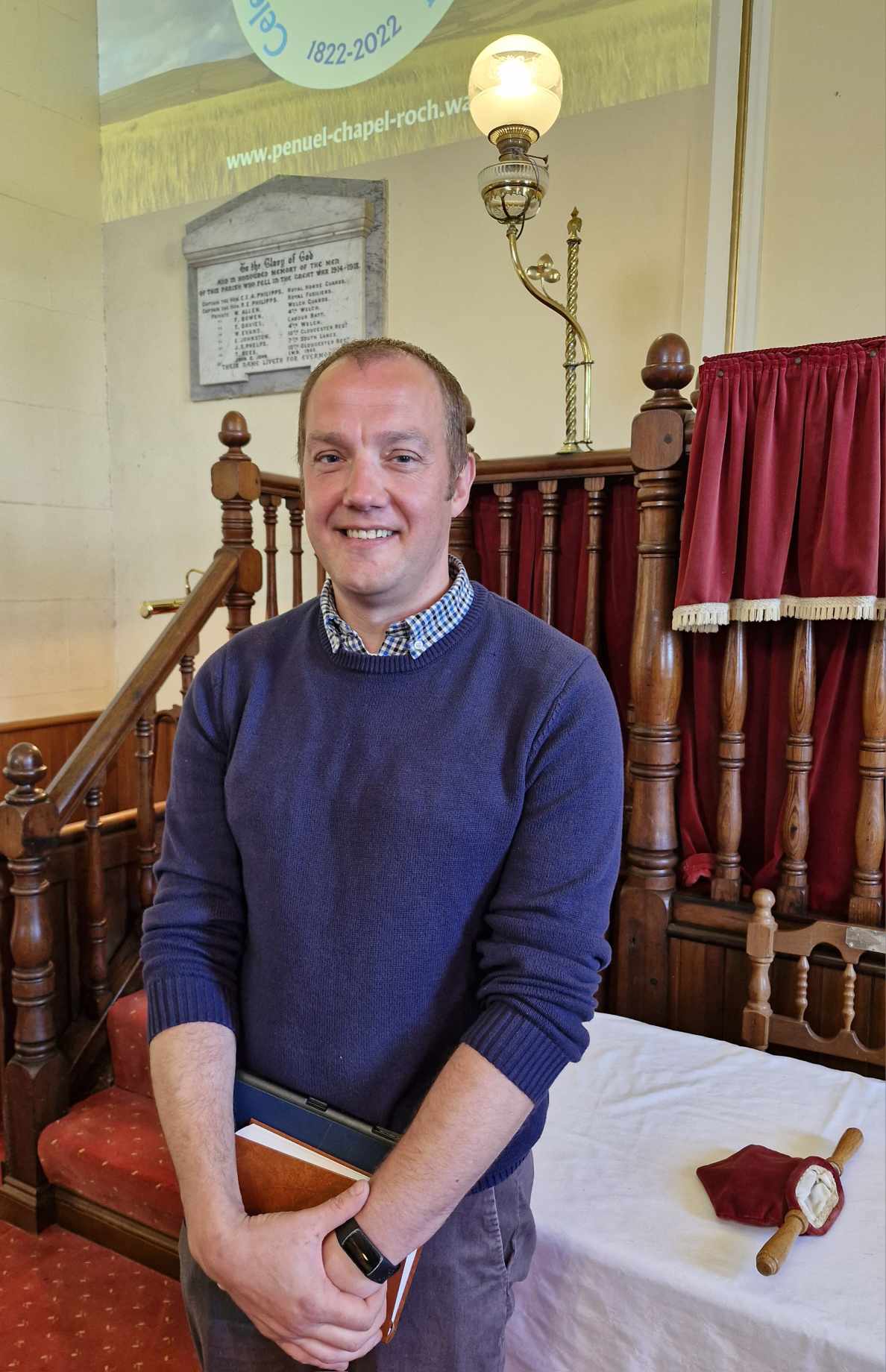
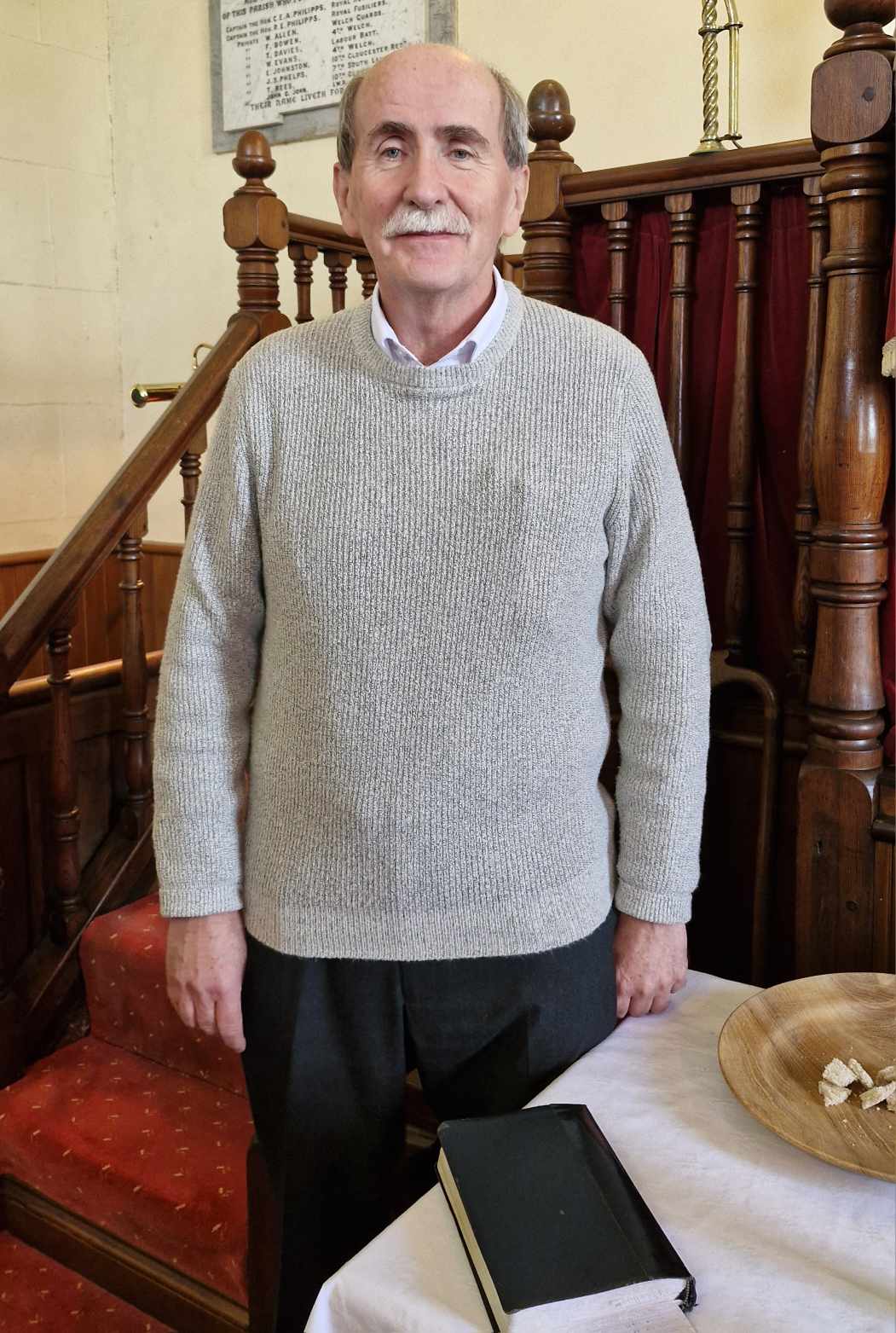
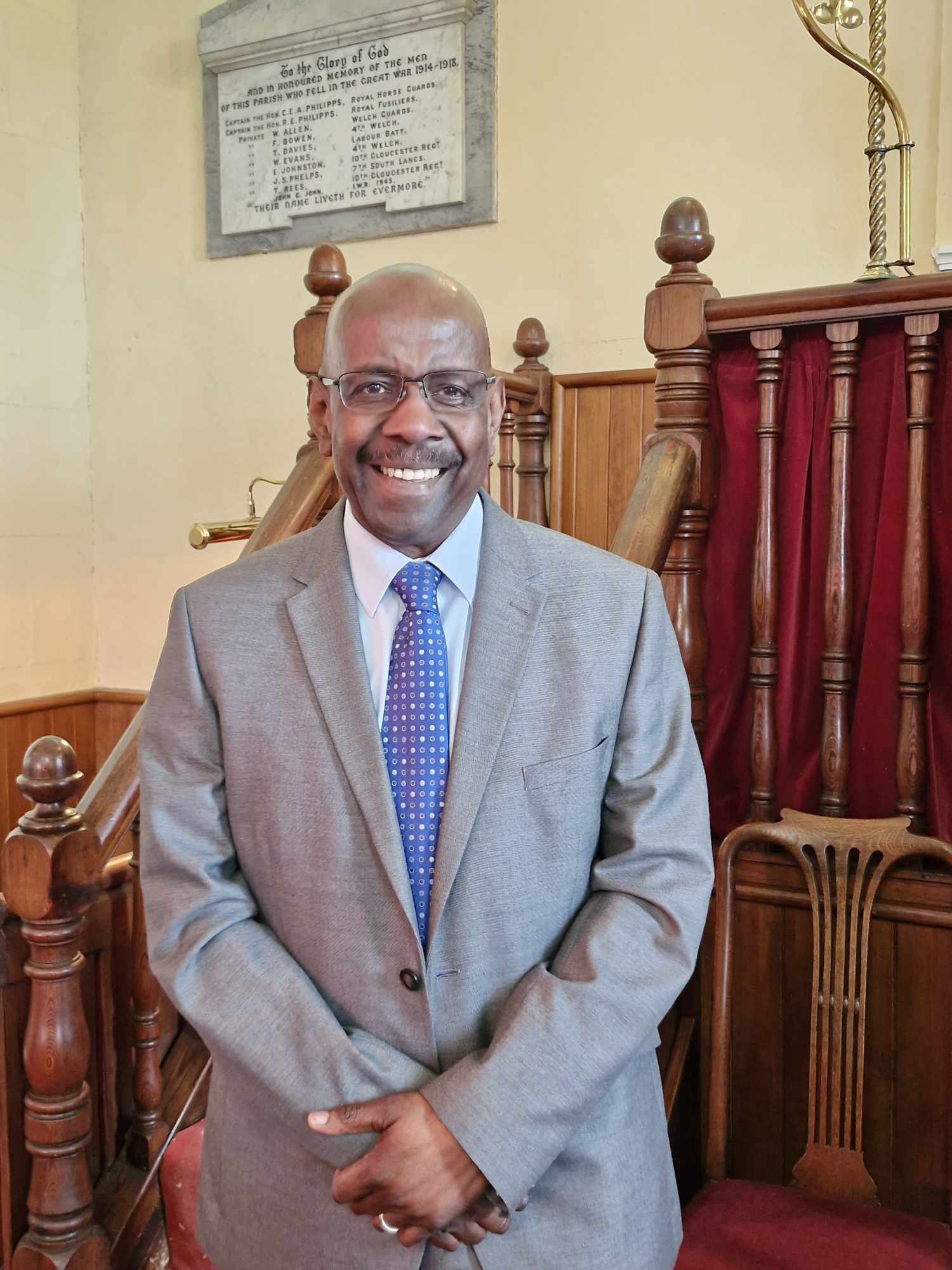
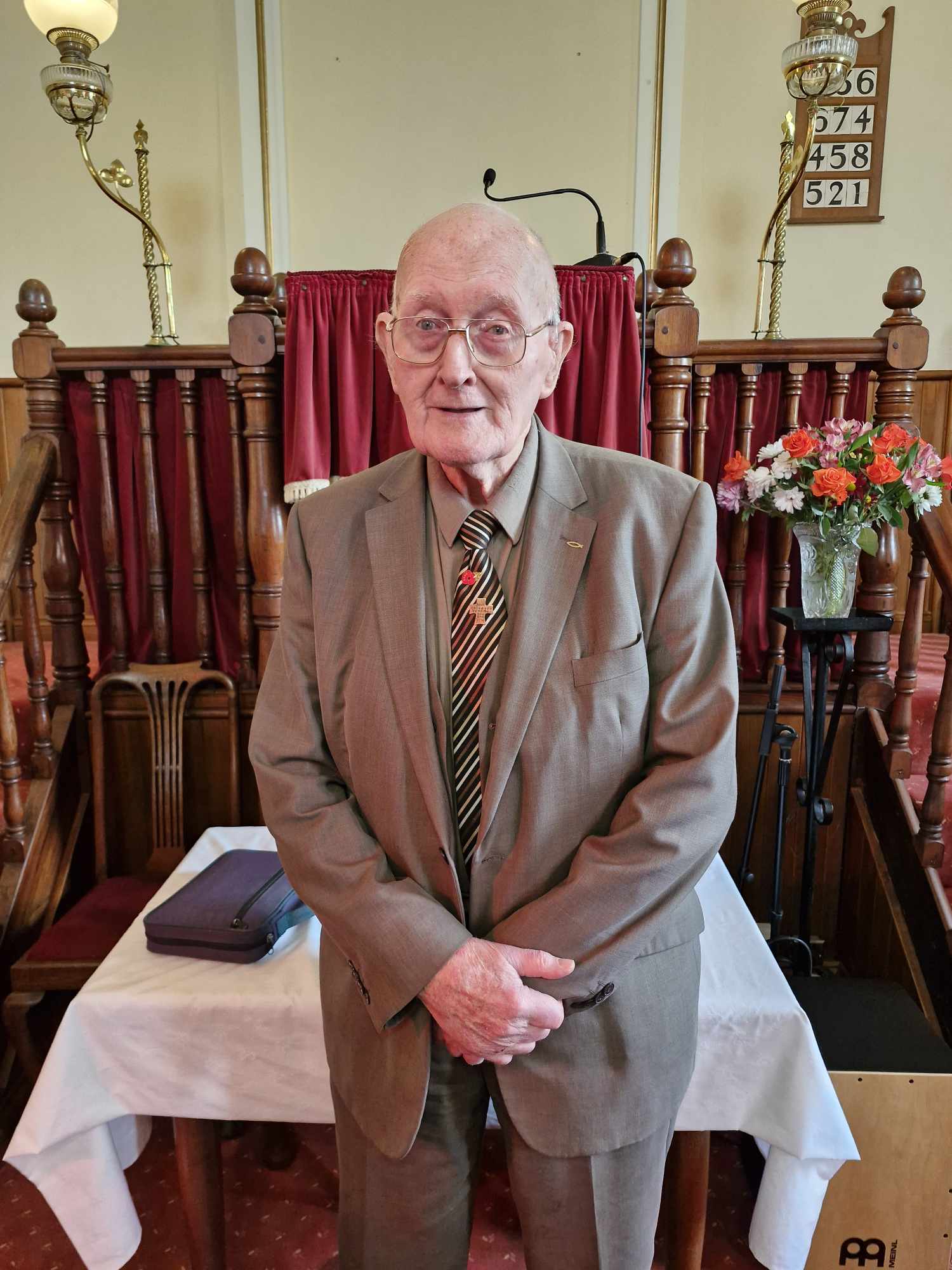
March 17th 2024: Graham John

To view this service, click on the link to our YouTube channel: https://youtu.be/m6QfyUJgrT4?si=ZyiHd4HXHhSYBFkr

Mark 14:1-11 Christian Devotion

I had a long-lasting friend in school who was nicknamed ‘the enthusiast.’ It was because an idea would grip him so powerfully that it would exclude all other things for a short while, until something else grabbed his attention. Once, when we were teenagers, he suggested making a lorry trip to India. If you gave a moment’s thought to it, and expressed grave doubts about its viability and success, he would put you down as a definite. If you said a firm no, he would put you down as a probable. He was a born optimist, a visionary, who was finally captivated by the Lord Jesus Christ.

Here, in the home of Simon the leper, was Mary, the sister of Martha and Lazarus, who was undoubtedly and enthusiastic for Christ. She was a disciple, a follower, a supporter, a fan. We have a flashback here to the Friday before Good Friday. We see her sacrificial love to the Lord Jesus Christ. In her devotion she gave sacrificially pure nard, which was one of the most expensive perfumes of the day, made from leaves of a plant only found in the foothills of the Himalayas. This display seemed very spontaneous but that couldn’t have been the case because of the cost of the perfume. The very cost meant she wouldn’t have had this to hand. It was the perfume of kings and queens. It probably had to be ordered for such an occasion. A lot of thought must have been behind this apparently impulsive act. It was carefully planned and considered. God loves a cheerful giver.

Marry poured out her heart in thanksgiving and gratitude to Christ. What form of devotion might you take? You have something far more precious than a year’s wage to give him. Paul encouraged Christians in the city of Corinth to increase the size of a gift they were given. Paul mentions examples of other Christian giving – the Christians in Macedonia. They gave themselves first to the Lord, then to others. God’s love is lavish, it is extravagant. Any giving of ourselves to Him will only be a pale reflection of His love for us in sending Christ to the cross. While we may suffer in some way, yet on the cross Jesus suffered for the sins of the world.

Mary’s act of considered devotion causes us to give ourselves to the Lord. The later you come to Christ, the more you regret you never came sooner. But it is never too late to come to Christ. In the planned giving of specific sacrifices, a Christian must actively and purposefully seek out ways in which to serve Christ. We need to follow Him as His disciple, even in moments when we don’t feel like it. Specific ways of sacrificing include my money, my energy, my thoughts, my mind. He longs for such sacrifices, yet He is not any the richer by receiving these things from us.

How can I practically give myself to Him, who is no longer on earth? His spiritual body is here – the Church. Give generously and show kindness. There are local needs in the local church, as well as the worldwide needs of the church. Mary’s example is an act of planned generosity and devotion to the Lord, who offers Himself as a sacrifice for all. His dedication works itself out in our lives. Do we ever take time in thinking how we may serve the Lord Jesus Christ? Do we plan and prepare to live out a life like this?

There is a deeper meaning of Mary’s gift; it was prophetic, She has done what she could; she has anointed my body beforehand for burial.” (v8). His cross had been prepared. His death was just a few days away. As He anticipate the form of His death and resurrection, Mary has done more in this act than she realises. Often God fulfils His purposes without people realising they are His instrument. They are unaware. Mary has done something she is unaware of – performing an anointing before His burial. Heaven and earth filled with a wonderful perfume. Jesus crucified for me is the power of the gospel – both its glory and attraction of the cross.

Christ encourages us in this example to see how He accepts our gifts and sacrifices. Jesus says she has done a beautiful thing. Praise from the King of Kings! Do you sometimes feel your sacrifices displeasing or overlooked by God? In the sacrifices of Cain and Abel, only one was offered by faith. By grace He accepts our gifts, even a cup of water offered in His name. It is possible for a believer to live a life that is pleasing to the Lord. He can look down with delight and pleasure, in the light of Calvary. Paul, in Romans 12, says, By the mercies of God, to present your bodies as a living sacrifice, holy and acceptable to God, which is your spiritual worship.” (v1b).

Notice how He defends us in the face of disapproval. We are told in a parallel passage in John chapter 12 that Judas points out the waste of the gift, but Jesus says Mary’s gift is timely. Judas, treasurer, champion of the poor. But Jesus says there will be many opportunities to help the poor. But there is something more pointed underneath these remarks. Cold, worldly hearts cannot understand this generosity. The zeal and faithfulness to the Lord Jesus Christ is often misunderstood by people of the world. They still mock Christ in His people. If a person devotes they’re time, they’re money, their heart to build up a business, the world considers them praiseworthy. Yet, they consider dedication to Christ as a waste.

Once a person sees the awful nature of their sin, together with the heights from which the Saviour came and the depths to which He descended for our sakes at the cross, their heart cries out, ‘What can I do to give back to Him? Call on the name of the Lord.

It is easier to be an admirer of Mary than a copier of Mary. Why was she so devoted? Possibly because she was a good listener. According to John’s gospel, the one who poured perfume over his head here had previously sat at His feet, listening to His words. She learned of God’s love in giving His only Son for this evil world. Have you heard his voice? If so, have you thoughtfully, purposefully, sacrificially given first yourself to Him, then your talents and your gifts, and the things that are special about you? Or do you sit on the sidelines with others and mutter, ‘Waste. Extravagant waste.’ May the Lord show us today the precious value of the Lord Jesus Christ.

March 10th 2024: Adrian Brake

To watch this service, please click on the link to our YouTube channel: https://youtu.be/nSKIvr3DsPk?si=qeBHG3DeGzd8S3fK

Luke 7:11-23 Jesus offers salvation before He brings judgement.

In verses 11-15 Luke records perhaps what was Jesus’ most remarkable miracle up to that point – raising a man to life. Since the creation of the world, approximately 4,000 years earlier, very few people had been raised from the dead. Nobody had been raised from the dead for 900 years. This was truly an extraordinary event. Nobody who was in that day would ever have been able to forget what they had seen. People could never have imagined in their wildest dream such a thing would happen. They had seen Jesus give sight to the blind, hearing to the deaf, speech to the mute, mobility to the paralysed, liberty to the demon-possessed. But to give life to the dead was something else altogether.

Those who had been raised in church are so familiar with the gospels, miracles no longer stun us as they should. Then He came and touched the open coffin, and those who carried him stood still. And He said, “Young man, I say to you, arise.” (Luke 7:14-15). Astonishing!

How could those who were privileged to be present keep quiet? Today, people would be tweeting within minutes and having selfies with the dead man. There was no social media then, but word of mouth was very effective in getting the news out. Therefore, it spread like wildfire throughout Judea and the surrounding regions. “And this report about Him went throughout all Judea and all the surrounding region.” (Luke 7:17).

“Then the disciples of John reported to him concerning all these things.” (v.18). Luke focuses on one man in particular, a man who had already been quite prominent in the gospel – John the Baptist – who was more than 150 miles away. How did he hear about the news? The disciples of John reported it to him. Disciples were people who followed you, recognised you as a prophet of God. John was recognised by many as a prophet. Israel hadn’t had a profit for 400 years.

How to John respond to what he had been told about Jesus? It’s perplexed him. He had a burning question. John was unsettled; he couldn’t rest until the question was answered. There was only one person who could answer this question, “And John, calling two of his disciples to him, sent them to Jesus, saying, “Are You the Coming One, or do we look for another?” (v.19). Why couldn’t John ask Jesus himself? Because John was in prison on the instructions of Herod Antipas. John had reprimanded Herod Antipas for his behaviour. Now Herod wanted to kill John but couldn’t because John was popular, and Herod Antipas didn’t want an uprising. John aas in lockdown but he was able to send messengers to Jesus to ask, “Are You the Coming One, or do we look for another?” (v.19).

The ’Coming One.’ God had told His people centuries before that He would send them a King, one who would deliver them from all enemies and bring blessings. He would set up a Kingdom that would never end. John the Baptist had come and said the prophecies were about to be fulfilled. John had said that He is coming, Jesus of Nazareth.

Yet, John, who had preached this to the people, now seems to have doubts and wants confirmation that Jesus is the Coming One. It is strange. John had been so sure. He had baptised Jesus. When Jesus came out of the water, John saw with his very own eyes the Holy Spirit descend on Jesus. He had told people, ‘This is the Messiah.’ (John 1:34). Yet here, John is unsure. This is the most important thing in all the earth – who is the Messiah, the one God gives as our saviour?

Why is John now uncertain? Some people say it is John’s disciples who have doubts, not John, who tells them to go and ask Jesus for themselves. But in verse 22, when Jesus answers the question, He tells the disciples to ‘Go and tell John the things you have seen.’ It is John who is uncertain.

In verse 24 the messengers come with a message from John. It is John who is second-guessing himself. Why is he uncertain?  It is understandable in Christian life to be uncertain. Have you ever felt as though, even though God is always with us, He seems far away? We can doubt and be uncertain. We should follow John’s advice and go to Jesus. Take our doubts to Jesus. Jesus doesn’t rebuke John, He ministers to him. We take our doubts to Jesus. Take them to the Lord. You’ll be welcomed and He will help.

In Luke chapter 3 we read of John the Baptist preaching. John the Baptist said the work of the Messiah would be, “Then he said to the multitudes that came out to be baptized by him, “Brood of vipers! Who warned you to flee from the wrath to come?” (Luke 3:7). John had never had PR training! Verse 9 continues, “And even now the axe is laid to the root of the trees. Therefore every tree which does not bear good fruit is cut down and thrown into the fire.” In verse 17 we read, “His winnowing fan is in His hand, and He will thoroughly clean out His threshing floor, and gather the wheat into His barn; but the chaff He will burn with unquenchable fire.”

The Messiah has come to cut down the trees that don’t bear fruit, and to throw the chaff into the fire. He has come to administer God’s wrath on enemies, to punish sin. He is come to bring devastating judgement upon sinners. It is about to happen now (v.9). The axe isn’t on the shelf – it’s already at the root. The winnowing fan is not on the shelf but in His hands. This is a clear message. John had had the message from God but it was also referenced in the Old Testament (Malachi 4).

When the Messiah comes there will be a devastating judgement for sinners. Then, John gets to hear Jesus is doing anything but judgement. Instead, He is healing the sick, raising the dead. John is expecting God’s wrath to be unleashed, yet Jesus is lavishing God’s love. This Saviour is bringing nothing but salvation. This is why John asks the question. Jesus answers with actions, “And that very hour He cured many of infirmities, afflictions, and evil spirits; and to many blind He gave sight.” (Luke 7:21). More healings! Then Jesus says, ‘There’s your answer.’ Jesus is saying, ‘Yes, I am the Messiah, the Coming One. The proof is what I am doing.’

John had got half the story, not all of it. When the Messiah comes He will unleash God’s wrath  on the ungodly.  But what John did not understand was that the Messiah would come twice. It is when Christ comes back that He will unleash devastating judgement. John had got the timing wrong. Jesus brought grace and salvation and healings (Isaiah 35). Before Christ brings judgement, He comes to offer salvation. Jesus is saying, ‘Now is the time for grace, now is the time for the offering of salvation.’ Now is the time for the first part of Old Testament prophecy to be fulfilled Later, the other part will come to pass.

One day there will be judgement. But God is so gracious, God is so merciful, that He holds back. He could do it now, but He holds back because He is patient with sinners. Now is the day of mercy, now is the day of salvation. “Jesus answered and said to them, “Go and tell John the things you have seen and heard: that the blind see, the lame walk, the lepers are cleansed, the deaf hear, the dead are raised, the poor have the gospel preached to them.” (v.22).

The chief characteristic of the Lord’s ministry is the poor will have the gospel preached to them. Jesus has come to warn people of what is to come. He offers salvation.

God is a merciful, patient God. He hates sin and those who do not repent will be punished with everlasting destruction. But God does not delight in wrath. He has a compassionate heart. Have we got the heart of God for sinners? Have we got compassion for the lost? Are we concerned for sinners?

We are working against the clock. We are still in the day of grace. But John was right. The day of judgement is coming. We don’t know when that will be. We have to seize the time and do what we can. Every day that passes is a day closer to judgement. There is no time to waste.

For those who do not know Christ, there is a warning. Now there is a welcome, but that won’t always be the case. Seek the Lord whilst He may be found. There is a time limitation on God’s offer of mercy. In 2 Corinthians, Paul says, ‘Now is the day of salvation.’ We must come. God’s patience does not last forever. We need to act. Christ is the Messiah, Jesus is the saviour, Jesus is the one who can save you. Come to Him while you may.

March 3rd 2024: Gareth Llewellyn

To view this service, click on the link to our YouTube channel: https://youtu.be/D-2Jy0JCCzY?si=_bID8knp3Eray_y5

Matthew 13:44-52

There is a monetary value on things. Each year Forbes produces a list of the most wealthy people. The richest man in the world is worth £173.57 billion. That is what the world aspires to – what we have is what we’re worth. We are worth much more than that. We define value as what we are willing to pay. Esau sold his birthright for a bowl of stew. In that moment, stew was more valuable.

What are you worth? Can we place a value upon you? If you live in the UK, you are in the top 15% of the world’s richest people. In Cambodia, Cameroon, Pakistan and Nepal, the national average wage for a year is less than £1500. In Sudan and Somalia it is less than £600 a year. If you are in Afghanistan, it is less than £300.

Socially, our value might be higher than what we have. We may have the respect of others; we might champion social injustices, environmental causes, community work, where people look up to us. What if you need assistance, how does community value you?

What value are you to God?
Jesus tells 3 parables about the Kingdom of God:

  • The Parable of the man who finds treasure buried in a field, who re-buries the treasure and sells all he has to buy the field, knowing that the treasure in the field is worth far more than the field itself.
  • The Parable of the merchant who searches for and finds a rare pearl and sells all he has to buy the pearl;
  • The Parable of the fishermen who, when they retrieve the net, keep hold of remarkable fish and get rid of the dross – those of no value, no worth.

I’ve heard these parables preached separately, but they are a group of three parables. It has often been suggested that they speak of finding Jesus and giving up everything to follow Him. But that is not the context when the three parables are put together. Something else is going on. We can’t be the fishermen throwing stuff away.

How are the parables connected? In verse 47 we read, ‘again.’ There is repetition. A different image is used to say the same thing: the one who is the owner of the field is Jesus, the merchant is Jesus, the fisherman is Jesus. Who is the treasure, the pearl, the fish? His lost people. Jesus is the one seeking. If you’re in Christ, you are the treasure, you are the pearl, you are the fish.

Treasure.
Our treasure is in the field that was owned by someone. Everything in it legally belongs to another man. The finder bought the field, selling everything he had to get it. He bought the field to obtain one treasure.
The field is the world. The treasure is us – those who believe in Christ for salvation. John 3:16. When Jesus died, He paid for those sins of the world. The debt is covered. But this only applies to the person who believes. Jesus joyfully went to the cross because he knew what was at the end of it – your salvation. It should bring joy to our heart. You are his treasure.

Pearl.
People will pay large amounts for something they value. The merchant goes to the jewellers. He knows what he is looking for – pearls. There, he finds the pearl he has been searching for. He gets the price. He goes and sells everything to get it. Here is the doctrine of adoption. It is up to God, in His sovereign choice, to save who He chooses. The merchant gave up everything for the Pearl, the one pearl he placed great value on. See the value Christ has on you.

Christ searches for you. He willingly exchanged all He had to pay for you. It cost Jesus His blood. But more than that, He left the throne of eternity, and came to earth. One day we will find out what heaven is like and never want to leave. Jesus came to be born into shame and scandal, born to a teenage girl. He came into this world to be fed, to learn to walk and talk. He lived righteously. He died for us. He shed all his blood. When they pierced His side, water came out. All His blood had gone. His death paid for your life. That is what it cost Jesus to buy you. You are worth everything. You are worth dying for.

Christian, rejoice! Christ did everything for you. Sinner, realise He gave all for you. Consider the joy that Christ has when we are all gathered in. We are that pearl that he gave everything for.

Dragnet.
The gospel of Jesus is like the net – thrown far and wide. It brings all sorts of people to Jesus. Many seek out Jesus but fall away. People went to him for healing, they saw miracles. They were binge watching miracles. The Bible shows people followed Jesus for all sorts of reasons, but few were following for the right reason. Only those who truly believe are chosen by God. The Kingdom of God is only filled by those whom He has chosen. If you have confessed Jesus is Lord, you are chosen. But there are many who claim to follow Jesus but don’t.

You may go to church, you may go to prayer meetings, you may read your Bible, but are you trusting in Jesus? Ask yourself, ‘Am I truly trusting in Jesus?’ That is all that matters. What have you done with Jesus? You have been purchased at great cost by the blood of Jesus. If you are trusting in Jesus, then you are the treasure you are the pearl, you are the fish.

We are repeatedly told we are of great worth to God. You are loved by God regardless of your circumstances. Lost child of God, know your worth, put your trust in Him, confess your sins. Know your worth. Rejoice in your worth.

February 25th 2024: Andrew Bowden

Psalm 100

The psalms are very personal, written after deep life experiences. We can relate to them. They are reassuring, soothing. Psalm 100 is one of the most uplifting psalms. It is a transforming psalm, all about worship. The world sees worship as boring, for ageing members, with long sermons, which are far-removed from their lives. That is how it is perceived by many. Yet, in this Psalm we see true worship is exhilarating. We look for something greater than ourselves to stand in awe of. We were made to stand in awe of something greater than ourselves – God. We were made by God for God. We are to be enraptured with God. There is none like him. We should be taken up altogether with him. God has made us for something greater than this life – Himself. God is greatly to be praised. We come to worship expecting something new, fresh, heavenly and glorious – God!

It is a misconception that worship is confined to a particular day: open doors, close doors, that’s worship. Yet, when we turn to a psalm like this and find worship is the believers’ life. We do all to the glory of God. Live in the spirit of worship.

We are to be joyful in God (verses 1-2),
Make a joyful noise to the Lord, all the earth!
   Serve the Lord with gladness!
    Come into his presence with singing!

 (verse 1-2). There is a note of gladness enjoy in God, all that He is and opened up to us in Christ. Gospel is a calling out of ourselves into Christ. The Philippians were repeatedly told to rejoice in the Lord. We are to be a joyful people. Pull writes quite personally; he renounced everything and rejoices in Christ Jesus, his Lord. Joy is a great characteristic of the believer in God. He is a God who has created beauty, the senses. He has made us for joy with him. He is a God who would have us rejoicing in him. Here we read of a joyful shout to the Lord. It’s an affirmation of joy that silence is every other voice of guilt and shame (Habakkuk 3). Here is a voice of affirmation that rises above other voices. Look up and see who God is. In trust all to him.

There is also a joyful service of the believer. Paul writes, “I appeal to you therefore, brothers, by the mercies of God, to present your bodies as a living sacrifice, holy and acceptable to God, which is your spiritual worship.” (Romans 12:1). His mercies towards us make us glad to serve Him. It is a matter of delight and joy. God has taken us to Himself, we live to please Him. When we serve the Lord gladly, we do all unto him.

In verse 2 we see a joyful song; we are to come with singing.
God rejoices over us with singing (Zephaniah 3:17).

In verse 3 we read,
“Know that the Lord, he is God!
    It is he who made us, and we are his;
    we are his people, and the sheep of his pasture.”

We are to be mindful of God. Yes, we are to be joyful in God, but there are certain things we ought to know about God. Get to know God better. We need a good dose of theology. There is none like Him, who is all-powerful. He is our maker. How we think determines how we feel (Philippians).

The most important thing about you is how you see God and relate to Him. We see here we have come from God, he has created us. We are a divine heir. This is where our beginning lies. We are designed, made by Him. He stamps individuality on everything he has made. God has not made you to be a cheap copy of someone else. You are uniquely made and fashioned by God. Do not compare yourself to others.

God made you to be you and providentially placed you where you are. He cares for us. We are the sheep of His pasture. He is our Good Shepherd, watching over us. We ought to be joyful and mindful. He will keep us. The older you get in life the more you marvel at the ways God has kept you. We ought to be thankful to God – that is how the Psalm ends.

In Thessalonians we read, “Give thanks in all circumstances; for this is the will of God in Christ Jesus for you.” (1 Thessalonians 5:18). Be appreciative through all things. See the hand of God in everything.

Matthew Henry was once robbed by a highway man. When he got home he thanked God it was the first time he had been robbed. Although everything had been taken, it was not much. He thanked God that he had been robbed and he was not the one who had been doing the robbing. He thanked God the highwayman took his purse and not his life. Be thankful! Be joyful each day in God, ever mindful of who and all He is. Be thankful to God in all that happens.

February 18th 2024: Rhodri Brady

2 Peter 1:16-21 The Inerrancy of Scripture

The inherent see of scripture means the Bible has no mistakes. It is completely accurate. This is something the apostle Peter emphasises.

  1. Inerrant Light

Peter speaks about the Bible as a prophetic message which is completely reliable, And we have the prophetic word more fully confirmed, to which you will do well to pay attention as to a lamp shining in a dark place, until the day dawns and the morning star rises in your hearts.” (v.19). You need to listen to the Bible. It can be relied on. It’s like a light shining in a dark place. In verse 20 Peter elaborates, “Knowing this first of all, that no prophecy of Scripture comes from someone’s own interpretation.” We need to think of the Bible in the right way; it’s not great ideas from men and women. Peter says, “For no prophecy was ever produced by the will of man, but men spoke from God as they were carried along by the Holy Spirit.” (v.21). Prophets, though human, spoke from God. God provides light. The Holy Spirit is that light. The biblical writers spoke from God as they were carried along by the Holy Spirit.

What are the implications of this?

  • Unblemished Word.

We need to come to the Bible in the right way. The authority of the Bible is speaking to us. We have to listen to it. It is from God. Peter says God wrote the bible, therefore, it is without error. It is true. God is good and does not make mistakes. We need to submit to the word of God because God wrote it. Whenever anyone says the Bible is wrong or contradicts itself, they’re saying God is wrong and they’re better than God. That’s blasphemous. Everything the Bible says is true – not some of it, but all of it! It is an unblemished word.

  • Flawless Revelation.

Remember, the apostle Peter tells us the Bible is completely reliable, it is God speaking. The people wrote as they were carried along by the Holy Spirit. The word of God is God -breathed. Listen to what the Holy Spirit says in His word. Anyone who says part of the Bible is true, is not trusting God.

Every word of God proves true;
    he is a shield to those who take refuge in him.” 
Proverbs 30:5

David loves the word of God so much he writes the biggest chapter in the Bible about the Bible. The whole of the Bible is true, even every dot on an eye. Matthew writes, “For truly, I say to you, until heaven and earth pass away, not an iota, not a dot, will pass from the Law until all is accomplished. (Matthew 5:18).

We can open the Bible and say all of the Bible is true. Jesus says to the Pharisees, “Have you not read …” everything we listen to is true. That is why in church the Bible reading is the most important of all. Something happens when we’re all together, listening to God’s word. We look to him.  “For I am sure that neither death nor life, nor angels nor rulers, nor things present nor things to come, nor powers, 39 nor height nor depth, nor anything else in all creation, will be able to separate us from the love of God in Christ Jesus our Lord.” (Romans 8:38-39).

The Bible is about the Lord Jesus, His salvation. It is true. Come to Him and He will give us rest. We can all come to Him. If we have an invitation to come, then we are meant to come. Peter preaches in Acts 3 saying, Repent therefore, and turn back, that your sins may be blotted out, 20 that times of refreshing may come from the presence of the Lord, and that he may send the Christ appointed for you, Jesus, 21 whom heaven must receive until the time for restoring all the things about which God spoke by the mouth of his holy prophets long ago.” (Acts 3:19-21).

No-one will be turned away, “All that the Father gives me will come to me, and whoever comes to me I will never cast out.” (John 6:37). Believe the promises of the Bible. When the Lord Jesus speaks, we can be confident. The message of salvation is true. The great hope in the inerrant word of God.

February 11th 2024: Paul Daniel

Philippians 2:1-11

As you travel, you keep an eye on what is going on. You notice changes. If you examine the difference in Wales between the 80s and now you will see many changes; the population has increased and there are many changes in churches. The number of churches has increased and there are different varieties of worship. There is natural growth. Have you thought about why churches rise and fall? There are different reasons for this. Sometimes, people leave and don’t come back. There is natural movement of people because of age or jobs. There is a difference in church. Sometimes, there’s a health change and you must move to be closer to hospital or family.

There is some rise and fall in churches. Disagreements also arise. There is a lack of unity. Scripture talks about this – our unity. It is such a joy, “So if there is any encouragement in Christ, any comfort from love, any participation in the Spirit, any affection and sympathy, complete my joy by being of the same mind, having the same love, being in full accord and of one mind.” There is a wonderful joy, a unity we share in our Lord Jesus Christ. Consider the alternative – no unity, no joy, because the Lord Jesus Christ didn’t come. Imagine the alternative. It is such a joy Jesus Christ has come, put His body on the cross. Sinners are welcomed into God’s family. The cross stands there as the only solution that can bring permanent peace and reconciliation.

Philippians 2 reminds us of the blessings of being a Christian Church in unity. We read in Acts of the Church in Philippi being born. Here we read of a slave girl, Lydia, and the gaoler, who were converted. Lydia opened her home up. Can you imagine the diversity in that house – a slave girl taken advantage of, Lydia, a businesswoman, and a jailer? Such incredible diversity. We hear in the news of all types of scandals. What might it have been like for a slave girl? It might have been a challenge. In Philippians 4 Paul writes to the church for people to agree with each other. They were tensions, little disagreements.

Unity is crucial. It is being paid for by Jesus with His precious blood. He humbled himself and was obedient, even to death. Strive for peace with everyone, and for the holiness without which no one will see the Lord.” (Hebrews 12:14). We are to strive for peace because Jesus Christ has shed His precious blood for the church. The very expensive price has been paid for by Jesus. There are expensive consequences if you are not in Jesus.

Invest in talking to one another, invest in relationships. Do we still talk to each other or email or text each other? Communication has changed. In one sense, we communicate more but have less deep and meaningful relationships. We need to invest in our relationships. Chapters like this reminders Jesus Christ has paid the ultimate price so we belong to each other.

  1. What is your outlook?

“Complete my joy by being of the same mind, having the same love, being in full accord and of one mind.” (Philippians 2:2). Paul says you need to have the same mind. We’re all different but we need to have the same love and be united in spirit and purpose. There is a diversity in our churches, but in this there is a oneness in attitude, a oneness in affection, a oneness in direction and cooperation. We see it in the Trinity; there is a oneness there.

It is this collective effort, where everyone has a part to play, we are all in a relationship to one another. We are to be of one mind, in unity, for the cause of the gospel. Time is precious. There is a world out there that does not know Jesus. Jesus Christ is coming soon. We are to work together, that we can see others come to know Him too.

  • Where is our humility?

“Do nothing from selfish ambition or conceit, but in humility count others more significant than yourselves.“ (Philippians 2:3). Each of us needs to be moved in humility. Others are more important than ourselves. We should have no selfish ambition or vanity. Each of us, no matter what position or role, should examine our own hearts. There should be a positive move to treat one another more importantly than ourselves – not because we’re told to but because we want to. It comes from the heart, from holiness. It is very much about our attitude to others to be humble. Where is our humility? Humility comes from reminding ourselves that every good thing comes from the Lord.

  • Do we consider the interests of others?

Let each of you look not only to his own interests, but also to the interests of others. (Philippians 2:4). Each of us should be concerned about the interests of others. What does that look like in church? The Lord Jesus Christ came, died, brought salvation, equipped us for every good work. We should use our gifts to serve one another. All are valuable. All are useful. We should be interested in what others have to say and do. It might not always be the right thing, but we need to listen.

Look for the interests of others, even if it seems insignificant. What did Jesus see in us? Something wonderful, attractive? No! Yet He loved us, came down, went to the cross and shed His blood for you and me. Be interested in Bethlehem, not just Jerusalem. Why shouldn’t we use the gifts that God has given us, to serve Him? We should have unity on our radar. We should not take unity for granted. I’m not talking about passive unity that we have, but active unity. Don’t take your unity for granted. Engage in relationships. Talk to one another. Remember Jesus Christ considered the interests of others.

What is the Lord asking you to do as an individual, as a corporate body? What does that unity look like? In the new heavens there will be people from every tribe and nation, giving Him praise, glory and honour.

February 4th 2024: Ian Jones

Matthew 20:1-11

Jesus told this parable towards the end of his ministry. We often hear children say, ‘It’s not fair!’ Jesus tells a parable about a landowner who seems unfair when it comes to paying his workers. We see God’s justice and fairness in relation to the promises He makes.

This parable is about a landowner who needs workers for his vineyard. The landowner goes to the marketplace early in the morning to find workers. When they agree to work for a denarius a day, he sends them to work. Later, he sends other workers into his vineyard, promising to give them what is right. He returns again to the marketplace, and again. When there is only one hour of work to go, when it is so late in the day (v6), he goes back and asks those who are still standing there and invites them into the vineyard.

When paying the labourers, they are paid in an unexpected way – those who were hired last were paid first. This was not the normal practise. Imagine how the workers who had worked all day felt. They expected to be called first. It would have been considered by them as being disrespectful to pay others first. They didn’t say anything, but when they also received a denarius each, they complained. We are drawn into this situation, to see these workers receive their wage and see how they felt.

The disciples were drawn into thinking about the situation. Why shouldn’t the workers be paid more for working longer? Why should they all be paid the same? The landowner responds, Friend, I am doing you no wrong. Did you not agree with me for a denarius?(Matthew 20:13). He gives a good reason why he has paid them all the same wage. It might not seem fair, but he has done nothing wrong. He can do what he wants with his own money.

What was the purpose of this parable? Jesus is speaking to His disciples. In the previous chapter they had experienced a rich young ruler who wanted assurance of eternal life (Matthew 19:16). To see this man, who they thought highly of, walk away, had a major effect on the disciples. The man was very rich, seeking to keep the law. Even harder, Jesus then said in verse 24 how hard it is for the rich to be saved. Peter then asked, ‘Who can be saved? ’Jesus’ response is, “With man this is impossible, but with God all things are possible.” (Matthew 19:26).

Peter then says, “See, we have left everything and followed you. What then will we have?” (Matthew 19:27). Peter is comparing himself with the rich young ruler. His attitude is, ‘What’s in it for us? We’ve left everything to follow you.’ He was thinking of the sacrifices he has made: a fishing business, his family and home. He has spent his time learning from Jesus. He wants to know should he carry on or be like the rich young man and walk away.

Christians today can ask, ‘What can I expect from coming to church? What can I expect from reading my Bible? What can I expect from the pain and suffering I go through for the Lord Jesus Christ?’ Jesus gave an answer to Peter’s question, “28 Jesus said to them,“Truly, I say to you, in the new world, when the Son of Man will sit on his glorious throne, you who have followed me will also sit on twelve thrones, judging the twelve tribes of Israel. (Matthew 19:28). Yes! There was something in it for Peter. He and the other disciples would judge along with Christ. Verses 29 shows there is a reward for all of us, And everyone who has left houses or brothers or sisters or father or mother or children or lands, for my name’s sake, will receive a hundredfold and will inherit eternal life. (Matthew 19:29).

Then Jesus gives a warning in verse 30, “But many who are first will be last, and the last first.” He is challenging Peter and the disciples about what they thought about the rich young ruler. Jesus tells the parable to explain what he means. We read the same words in chapter 20, “So the last will be first, and the first last.” (Matthew 20:16). This is a reversal of the order that is expected. The Kingdom of heaven is different from what we expect in this world.

Let us consider what God has done in our salvation.

For many are called, but few are chosen.” (Matthew 22:14). It is very clear that this parable is all about our salvation. The landowner is God, the marketplace is the world, the workers in the vineyard are Christians serving God and the idle in the market place are unbelievers. We see God’s compassion for the lost, His desire that all may enter His kingdom.

We need to be reminded of God’s love for us. He will call all, throughout the day. He promises if they come into His vineyard they will receive a wage – eternal life. He doesn’t speak of an hourly rate, in other words, working for our salvation. He talks of one wage for all, which is not dependent on what they do or how long they work. All who come into God’s kingdom receive eternal life. If you are a child of God and have repented of your sin, you will receive eternal life.

It also reminds us that all who enter the Kingdom have been called by God, who have come through the lord Jesus Christ. There are idlers found in the world, but not in the vineyard. They workers in the vineyard gladly work for the landowner, to serve him. If we are a Christian today, we will serve the Lord in what a way He has called us to do.

The landowner calls people at different times of the day. God calls people at different times in their lives. Some were called as a child, others when they are older, some at the end of their life (think of the thief on the cross). This parable is a picture of salvation.

Which group are you in? Do you grumble or are you full of joy? How do you value your salvation? Do you come to read your Bible with great joy?

January 28th 2024: Jonathan Scott

Mark 2

Have you ever thought about what it would be like to be blind? Could you imagine what it would be like doing ordinary, day-to-day activities, perhaps relying on other people.

There was a lady called Helen Keller who was born in 1880 in Alabama in U.S.A. At 18 months old, following an illness, she lost not just her sight but her hearing as well. Imagine living your whole life with these disabilities. However, despite all of this she became a best-selling author and a great example of courage and achievement in the face of adversity. On one occasion she said these words, The only thing worse than being blind is having sight but no vision.”

As an individual or as a church we must take care not to have sight (physical sight) but no vision. You may be saying what does that mean to have vision? To have spiritual vision is different to mission. Mission is the over-arching goal in a church or as an individual which, to me, is simply said by Matthew 28, which is Jesus’ commission to us, “Then Jesus came to them and said, All authority in heaven and on earth has been given to me. Therefore go and make disciples of all nations, baptizing them in the name of the Father and of the Son and of the Holy Spirit, and teaching them to obey everything I have commanded you. And surely I am with you always, to the very end of the age.”

That is our Mission. However, our spiritual vision is our roadmap of what we are doing as a church or as an individual to reach that Goal. Let me put it this way. If you were on a football team and you all had the goal of winning the game (mission) that would be great. But if the coach didn’t tell you that you had to score any goals or what net you had to kick the ball towards and for all the team to work together to reach that goal then you would never, as a team, get anywhere near winning.

This is what Helen Keller is saying, you can have that mission, and everyone knows what that is. But without that vision and clear roadmap as a church to get there, it is worse than being blind. Otherwise, we will go all in different directions and not end up getting to the end goal which is to spread the gospel to all people. It is also spiritual Vision to have faith and listen to Jesus, to be able to allow Him to guide you in what He wants from you as a church or as an individual.

There are many ways in which that vision can be enacted in a church or as an individual. We need God’s help and guidance to know what the vision is through prayer and the Holy Spirit. By listening to this we can find out what this vision is for all of us.

In the passage we just read from Mark 8, Jesus talks to His Disciples and warns them to watch out for the leaven of the Pharisees and the leaven of Herod. Leaven is not merely yeast but a small amount of dough left over from a previous batch of bread which can be added to make new bread. Today, many people still use this way of baking bread, called sourdough starters. This is how bread was leavened in the ancient world, a small lump from the old batch could make a new lump of dough rise and puff up. The work of the leaven in the bread was considered as an illustration of pride and ultimately sin. The presence of a little of the old can corrupt the larger amount of the new.

Take heed, we are in the world but not of the world. A little amount of corruption can affect much, Jesus is warning against this in this passage. These verses are implying that Jesus’ disciples, as well as us, are at risk of the same defiling attitudes that have led the Pharisees and Herod astray. Jesus warns the disciples of this, but they are so caught up on other things they ignore Jesus’ warning.

Mark Chapter 8 verse 17 speaks of the blindness of the Disciples. Jesus asks why they are concentrating on the physical bread and tells them that they have ‘eyes but fail to see and ears but fail to hear’. They were beside Him when He fed the 4,000 and had all that food left over. However, they forgot so quickly and didn’t think to put their trust in the Lord Jesus for all their needs, which He can supply in abundance. Are we sometimes like the disciples, so caught up in day to day things that we don’t take notice of Jesus and what He says?

Jesus says to his disciples in verse 17 ‘Do you not yet perceive or understand?’ He rebukes them as He knew they had the capacity to understand but they hadn’t applied themselves. They were following but not growing. We need to make sure that we are growing in Jesus, not just merely attending on a Sunday. We need to fix our eyes on Him and apply ourselves to grow in grace.

2 Peter 3:18 says, But grow in the grace and knowledge of our Lord and Saviour Jesus Christ. To him be the glory both now and to the day of eternity. Amen.” The disciples couldn’t apply what Jesus was saying spiritually; they only thought about their stomachs. We have all been there. They thought about bread for the stomach not bread for the soul.

But if we did listen and see what He wants us to do, then we can fulfil that. It’s an attitude that we must learn to master. If we listen to Jesus, we can find out exactly what He wants from us as individuals and as a church.

The second verse of the hymn Be Thou My Vision, reads:
‘I ever with thee, and thou with me, Lord;
thou my great Father, and I thy true son;
thou in me dwelling, and I with thee one.’

If we have God with us and dwelling within us, God will guide us on the path He has set out for us for now and evermore.

In Mark Chapter 2, where Jesus heals the Paralytic, I wonder if you noticed the 4 characters? They all had different reactions to Jesus and this miracle.

These Characters were:

  1. Teachers of the Law – thinking Jesus is blaspheming. How can he do that? Forgive Sins? Hes not God! (6-7)
  2. Crowd – Amazed! Never seen anything like this! Praised God (12b)
  3. 4 Friends – Had a huge faith – They Stopped at nothing to get their friend to Jesus. (4)
  4. Paralysed Man – Got up and walked! (12a)

As we look deeper into this passage, let me ask 2 questions:

  1. How did each character respond to Jesus?
  2. Did they have true spiritual vision like we spoke about earlier?

Teachers of the Law— How did they respond to Jesus?

Firstly, they didn’t respond well to Jesus at all. They rejected him and hurled insults at Him. They accused him of ‘blaspheming’. But the major thing to remember here is that these teachers of the law were eyewitnesses of this account. Not that they heard about it and didn’t believe, they were right there in the house. Rhey were firsthand eyewitnesses and yet they still rejected what happened. Were they Blind? Well, the answer to that is simply Yes. They looked but didn’t see! Or didn’t want to see for that matter.

Someone once said to me, ‘The mind is like an umbrella they both work best when they’re ope. These teachers had their minds shut to everything other than what they deemed as important.

So did the teachers of the law display true spiritual vision. Well, the answer is no to this question. They followed traditions and they had put these in the way of their relationship with God.

I think that we have to be careful that tradition doesn’t get in the way of our relationship with God. We should be guided by the Holy Spirit and open our eyes to what the Lord is guiding us to do. We also need to be very careful to not end up in the same trap as the teachers of the law – that we have done things in church for so long, we carry on doing it just because we have always done it. Then we close our eyes to what is actually happening in front of us or to God’s guidance and miss an opportunity to be blessed by God or to spread the gospel.

Crowd — How Did they Respond to Jesus?

They saw this miracle happen right in front of them and rejoiced. They seem to have responded correctly to Jesus and this miracle. They rejoiced and said ’We have never seen anything like this!’

However, under the surface the question still, is whether they actually followed Jesus or if they just liked watching miracles and went along to see it but didn’t go any further. Are we sometimes like this, where we go to Jesus, maybe on a Sunday and say all the right things and worship God, but then don’t do anything else. I know I certainly get this way at times.

So Did the crowd have true spiritual vision? Well, that is questionable. As they praised God, did they have any vision to then go out and spread the gospel amongst all nations. They realised it was something they had never seen before, but I don’t think it went any further than that.

The paralysed Man — How Did He Respond to Jesus?

There is how he responded before the miracle. He responded with faith to Jesus and did everything that was asked. He didn’t question anything, he just did it. Do we do all that Jesus says or asks? What would we do in that situation? What was the reward for doing everything Jesus asked? He was blessed and healed, and I imagine overjoyed. He is no longer paralysed and His sins were forgiven.

Did he display true spiritual vision? Yes, I think when Jesus says In verse 5, ‘When Jesus saw their faith’ He meant all of them. They all persevered and headed towards the goal to get to Jesus.

The Fourth Characters are the Four Friends of the paralysed man. Without his 4 friends having faith, he would have got nowhere close to Jesus.

The 4 friends had loving faith, practising faith, undeniable willingness to go any lengths for the sake of their friend and that their belief was that Jesus was worth every effort. How did they react to Jesus? They reacted to Jesus before the event. Their faith was so strong they let nothing get in their way. Not even a huge crowd that blocked every entrance to where Jesus was in the house. Not even a roof got in the way of getting to Jesus.

So did these friends display true spiritual vision? Definitely. They had a goal (mission) to bring this man to Jesus to be healed. They believed wholeheartedly that Jesus was the only one who could do so. Their vision was to try every way to get to Jesus to get the man healed. However, there was a difference between these friends and the teachers of the Law. They didn’t even need to see the miracle. They believed as they reacted before everything took place. However, the leaders didn’t believe, or didn’t want to believe, even when they saw the miracle. The friends were open-minded and let their faith in God guide them to who can help, the only one who can help – Jesus.

The other thing to say is that there is a cost to following Jesus. The first cost we see is to the person who opened their house to Jesus. We don’t know who this person was. There is one thing for sure, he ended up getting a roof repair after opening his home to Jesus! Do we think of what the cost is opening our home to Jesus?

But is Jesus really worth all that effort that these friends went to? Should we put as much effort in? It does seem like a lot of work. Jesus performed a miracle in front of their eyes and healed their friend. I think that would be well worth it, don’t you?

Jesus Talks about the cost of following Him. He says, ‘Take up your cross and follow me.

Follow me and become fishers of men.” Following Jesus, is not without consequence and certainly requires a lot of effort on our behalf.But think of it this way:Is it worth a man to inherit the world but lose his soul?

So, what to do next? Well first you need to think who are you going to act like? Which one of the 4 characters? Are you going to act like the crowd, where we are rejoicing with seeing the miracle but once it’s over they didn’t go much further, they actually just liked watching miracles.

Are you going to act like the teachers of the law? Reject Jesus, be so caught up with your own agendas that you miss the miracle happening before your very eyes and be completely blind to Jesus.

Or are you going to be more like the 4 friends and the Paralysed Man who broke down every barrier and jumped over every hurdle to get to Jesus.

Remember what Helen Keller said at the beginning?The only thing worse than being blind is having sight but no vision.”

In this case the 4 friends, they had a mission to get this man to Jesus. Although their roadmap (vision) changed, they couldn’t get through the crowd, they thought, ‘So let’s go through the roof.’ They didn’t let things like that get in the way or deter their faith to be guided to Jesus – unlike the teachers of the law who let things get in the way and were spiritually blind. Or the disciples who

were concentrating so hard on the menial day to day things that they were blind and forget what Jesus had done for them. He can do immeasurably more than what we can ask for and provide abundantly for all of our needs.

Let us take the example of the 4 friends and the paralysed man into our lives. Let us trust in the Lord Jesus and have faith in Him that He will lead and guide us in the right ways. Let us not have our own agendas or traditions which get in the way of listening or seeing Gods vision for us as individuals and as a church. There may be speed bumps in the way (just as the 4 friends had), but If we are true to our faith, despite any speed bumps or blockers that are put in the way, and if we have true spiritual vision, the Lord will Guide us in the path ahead and towards the goal of making disciples of all nations and having more people come to know Jesus as their Lord and Saviour. He will be with us always until the very end of the age.

January 21st 2024: Phil Meiring

Acts 16:11-40

Acts 16:30 – the ultimate question – “What must I do to be saved?”

At least forty times in the New Testament, being saved is used to describe someone becoming a Christian. There are other words and phrases used in the Bible which describe other important aspects of someone becoming a Christian, e.g. ‘born again,’ ‘adopted.’ But the word ‘saved’ is particularly fundamental to a right understanding of the message of the cross.

1.      Who can get saved?

This account clearly demonstrates that anyone can get saved. Anyone who recognises they are
a rebel before God. Lost. Come with me to a Roman colony in northern Greece and
let’s meet the three characters in our reading. They lived in a town called Philippi
situated on the chariot way between the Adriatic sea and the Aegean sea. It is
a thriving business centre.

You couldn’t get three more different characters than the three we meet here. Lydia
(Acts 16:14-15). Everything is packed into two verses. A woman, a
businesswoman, a worshipper of God. A non-dramatic conversion, “The Lord opened
her heart.”

A clairvoyant slave girl (Acts 16:16-18). A young slave girl. She knew exactly what the message
was all about, “These men are servants of the Most High God, who are telling
you the way to be saved.” On the street, the girl with the dark powers was
dramatically saved.

The jailor (Acts 16:19 onwards). This man would have looked quite at home outside a nightclub in
Haverfordwest. Arguably, his is the most dramatic conversion story of the
passage. Pagan to believer in a night! We are going to follow this guy’s story
more closely. Let’s climb in through his bedroom window.

v.27. The jailor is fast asleep. The moonlight illuminates the courtyard. It’s been a mad day
with some very odd customers to contend with – banged up but singing out loud
to God and praying – and no booze insight! Suddenly, his bed is shaking
violently. There’s a loud bang. He sits bolt upright in great fear. He rushes
over to the window and looks out across the yard toward the prison block. A
great cloud of dust is settling in the moonlight. He notices the prison door
hanging off its hinges and a heap of masonry.

Suddenly, his blood runs cold. The prisoners – they’ll all be gone. His heart begins
pounding as he leaps out to bed. He stumbles across the courtyard, over the
rubble and enters the prison building. It’s all deathly quiet and dark inside.
They must be gone. He draws his sword . . .

v.28. Some sweet words echo along the corridor, “Don’t harm yourself! We’re all here!”

v.29. The jailer calls his servant for a light. Shaking like a leaf, he stumbles into the cell
of Paul and Silas and falls at their feet. We don’t know, but he must have had
Paul and Silas with tears streaming down his face, thanking them.

v.30. Then, they all emerge into the moonlight. Does the jailer say, “Guys, I owe my life
to you! Tell me guys, what can I do for you?” No! He says, “Sir, what must I do
to be saved?”

Now, that is odd. This man has been saved from a beheading, suicide and an earthquake. What
more could he a man want to be saved from? But something else was surfacing in
his heart. It was deeply troubling him and it had been bothering him ever since
these two religious guys had first hit the town.

The jailer’s question is almost certainly a response to the message that Paul and Silas had
been declaring on the street, and to the unusual events of the night – guys singing
instead of cursing and guys who didn’t even ‘leg-it’ when the earthquake blew
off the jail door!

2.      What are we saved from?

From this chapter alone we cannot provide the answer. Clearly, the slave girl knew there
was something to be saved from and a ‘way to be saved’ (v.27). So, what was it?

A strap line for Paul’s message found in 1 Thessalonians 1:10, “Jesus who rescues us from
the coming wrath.” That’s what it is, “The coming wrath.”

God is not some philosophical concept simply to plug a gap in our consciousness. He is one
who made us, keeps our hearts beating this very minute, and has genuine
emotions toward us. God has feelings too. I put it to you, we need to be saved
from the consequences of the one emotion, wrath, and saved as a consequence of
the other emotion bound in love of God expressed in the Lord Jesus.

The jailor how to become aware that he was a condemned man, even though he had the key to
every cell in the block. The wrath of God was heading his way and God was on
his case. In that moment, the jailor felt his need to be saved.

I have deliberately introduced the idea that God has feelings and so it is important
that I clarify this understanding. Already you might be asking, God, got
emotions? Yes, because He is a person, but it is critical to the glory of God’s
Being that we recognise that His emotions are of an entirely different order to
those that we experience. There is some correspondence, but His responses out
of one who, unlike us, is perfect, holy and just in His character. The one who
is eternally unchangeable in attitude. God doesn’t have ‘mood swings’ like us. Emotions
with Him are not involuntary. He doesn’t ‘fall in love.’ He is love. His
feelings and actions towards His creation are consistent, predictable and
steadfast.

You might be wondering whether God ought to be angry. We sociate anger with someone who is
irritable or flies off the handle. This is not how it is with God. His anger is
a controlled consistent opposition of His holy nature to rebel mankind. It is a
must with God to express His divine justice. He has every right to be angry. Remember
this, there are times when human anger is a just and acceptable emotion to
express e.g. when a marriage relationship is violated or when a war crime is
committed.

The word ‘wrath’ is used 16 times in Paul’s letters and in the accounts of his ministry.
It was a word that galvanised his gospel preaching along with that of ‘love.’ Paul
sensed that not only is the anger of God something awaiting in the future but
it is very much how God feels toward all rebels right now. In his letter to the
Romans Paul says, “The wrath of God is being revealed from heaven against all
the godliness and wickedness of men.” (Romans 1:18). This is how God feels this
very morning about each and every rebel.

3.      How are we saved?

v.31. Paul gave the jailor the answer, “Believe in the Lord Jesus …” In verse 32 he
explains his answer not only to the jailor but to his wife and kids. Then, shortly
after midnight, not only is the jailor saved but all his family. Eternally
safe, never to have to suffer the wrath of God. But what’s more, totally
overjoyed at the experience of believing!

Simple. Turning away from my former life, resting in all that Jesus did at the cross.
Surely, you can’t get saved just like that. Yes, you can! It is simply resting
in what Jesus has done.

“For God so loved the world he gave his only begotten son that whoever believes in him shall not
perish but have everlasting life.” (John 3:16). Jesus and what He did was the
consequences of the extreme love of God. Love of immeasurable dimensions
(Ephesians 3:18).

Do you want to know how extreme the love of God was toward you and I? I’ll tell you.

i). When the eternal Son of God, Jesus, left home and joined us for 33 years. It wasn’t a
state visit. No red carpet. He came as a suffering servant. (Philippians
2:6-8).

ii). The minute He stepped out of heaven, the incarnation arrangement would become
permanent. The second person of the Trinity would take on our humanity and
become wedded to it forever. (1 Corinthians 15:28, 49).

iii). At the cross itself, the Son would face, on behalf of you and I, the fierce anger of
His dearly loved Father. This would be an awful and uniquely distressing event
within the Being of God, as Jesus was counted a sinner on our behalf. (Matthew
26:36, 27, 46).

Our rebellion could not be forgiven (washed away) simply on account of the enormous
and overwhelming love of God. Justice had to be done. His wrath had to be
satisfied. His love put His Son there at the cross and His wrath was poured out
on Him as He was counted the sinner, the rebel in our place. This is how your
penalty was paid. His wrath towards the rebel, rightly arising out of His holy
nature, was satisfied. The wrath and love of God collided at the cross.

Seeker:
“Believe in the Lord Jesus, and you will be saved.” This means turn from your
rebel ways and rest in what He has done for you. At that moment you will be
safe.

Believer: The
love and wrath of God are two wheels on the gospel chariot. If one comes off
there is no telling where the chariot will end up!


January 14th 2024: John Funnell

To watch this service, click on the link to our YouTube channel: https://youtu.be/ilygBBVmlEM?si=XE4Q2G9b2tTM4b3r

Back to the Future: Mark 3:1-6

Jesus, Son of God, entered the synagogue, meaning He went to church. Jesus went to church – even though He was under attack. The Pharisees were out to destroy him. He went to church. Church was his priority. There was someone in great need, a man with a shrivelled hand. He had a debilitating disease, with no help from the state, no social workers to visit him. We can assume he was actually impoverished – just the kind of person Jesus came for. The Pharisees were there, looking to catch Jesus out (v2). This is rather interesting; they wanted to see if Jesus would heal the man with a withered hand on the Sabbath.

Interestingly, even the Pharisees had faith Jesus could heal this man; they came to church expecting Jesus to heal him. Each week, we come to worship then go home. The box is ticked for another week. But do we come to church expecting the living God will join us here, stand in our midst and do mighty things in this church? Do we come believing that Jesus could work a miracle right here, that Jesus could save the lost in Roch? Are we praying for God to work in us as we gather?

The Pharisees hated Jesus. He was a threat to their authority. Yet, they show more faith than many of us. They came to the meeting expecting great things of Jesus. Do we? Jesus meets the Pharisees expectation. He calls the man with a shrivelled hand to come out in front of everyone and healed him. He healed him publicly.

Christianity is truth. It is well evidenced. We see this pattern right through the gospels. Everything is public. At His birth, shepherds gathered to see Him then ran off and told everyone. His miracles were public events. Jesus was dragged through the streets carrying His cross. He was mocked by the crowds. There were all real, historical events which people saw. True events. He was hoisted up high to die on a cross. He didn’t have the dignity of a private death. He was buried. Again, this was a public event. He even had guards. It was witnessed. Then He rose again and for 40 days He ate and drank with people. When He ascended this was witnessed. Everything He did was witnessed.

Jesus is the way, the truth and the life. Jesus is the Light of the world. In Him the reality of God is utterly exposed. Jesus is God revealed. Everything He did was public so that the truth can be seen for what it really is. There are no secret visions or hidden rituals as in other religions. Everything Jesus did was done in the light so it can be verified, so we can trust Him.

The man with a withered hand stood up. Please notice the change of wording; the man with the withered hand is now addressed as ‘the man.’ Why? Because God had already healed him of his affliction. He was no longer the man with a withered hand. Jesus said to the man, ‘Stretch out your hand.’ This would not have been possible with a weathered hand. The work of healing was already done (v5). The man’s hand had to be healed before he stretched it out.

We live in a broken world. Many of us have so much difficulty in our lives, which can weigh us down. Many of us are struggling with physical ailments. These often overwhelm us and confuse us. We try to overcome them by looking to the future, that one day it will all be fine. We push on and keep going. This is not the gospel. Such plodding on puts all that pressure on you to take the next step, to stretch out our hand to be healed by Jesus. That is not the gospel. It is self-help, relying on you to get yourself sorted. The Bible says He has done it! God came to earth; He took on flesh. Jesus came and lived the life we could not. He exchanged His perfection with our brokenness on the cross. By grace, we can now reach out to Him. We were healed before we even cried out His name. It is all of Jesus.

In Christ, our salvation is complete. All the work is done. We’re good to go. Christianity is not some blind faith of the future. Don’t plod for future hope. Don’t trust in your ability to plod. Christianity rests in the reality of what has already happened. History. Our faith is in the fact of what has already happened – His death and resurrection. Because He lives, I can face tomorrow.

Faith rests in fact, in what has already happened. The most proven fact in ancient history is His death on the cross. There are two Hebrew words in the Old Testament that perfectly describe what we see here in Mark 3. The first word is ‘kethim.’ It means what you can see, everything in front of you. As human beings we are limited in that we cannot see into the future. No-one knows what tomorrow brings. So, in Hebrew, the future is actually understood as what is being behind you, because you can’t see what is behind you. As human beings we have a God-given gift of memory, so that we are able to look back into the past. So, kethim is the word used in Hebrew for what we can see – which is the past. In the Hebrew mindset, the past is in front of us, it is what we can see.

The second Hebrew word is ‘achor,’ which means what we cannot see –which is what is behind us, which is the future. Therefore, the Biblical understanding of life is the past is in front of us because we can see it, and the future is behind us because we cannot see it.

Sadly, many Christians think that faith is all about taking a step forward into the darkness, into what you cannot see. Plodding forward in blind ignorance. That is not the gospel. Nowhere in the Bible are you called to take a step out in blind ignorance. The faith of the Bible is actually taking a step backwards, trusting in the kethim of what we can see before us, trusting in what God has already done for us.

It is like walking backwards on a straight road. In Abersychan there is an old train line. It is just a straight line for miles and miles and miles. I could walk down it backwards, quite comfortably, because I know looking forwards, seeing the line, it’s going to be straight for the next thousand steps. I don’t have to look behind me to see where I’m going. I’ve got all the information I need to walk backwards in front me. It’s even easier when the person who made that road, Jesus, is walking with you, saying, ‘carry on, there’s nothing behind you, keep going on.’

 You take a step back into the future, because you can look back into the past, trusting all that God has done for you to get you this far. The evidence is there, so you can trust Him when you step back.

As Christians our faith is not blind. Our faith is built on evidence of what really happened in history – the perfect life, death and resurrection of Jesus Christ.

In today’s scripture reading, the man’s withered hand was already healed before it was stretched out. He could not have stretched it out otherwise. The work was done. The man’s hand was not healed because he stretched it out, even if it was in obedience to Christ’s command. The man’s obedience was enabled because Christ had already healed him.

In the same way, in all the problems you face today, let me assure you that they are already dealt with. On the cross, Jesus paid the price for it all. Your problems are resolved. All you need to do is simply stretch out your hand to show the world that you have been publicly restored in Christ. By grace you have been saved. It is already done. Will you stretch out your hand in the grace of Jesus Christ?