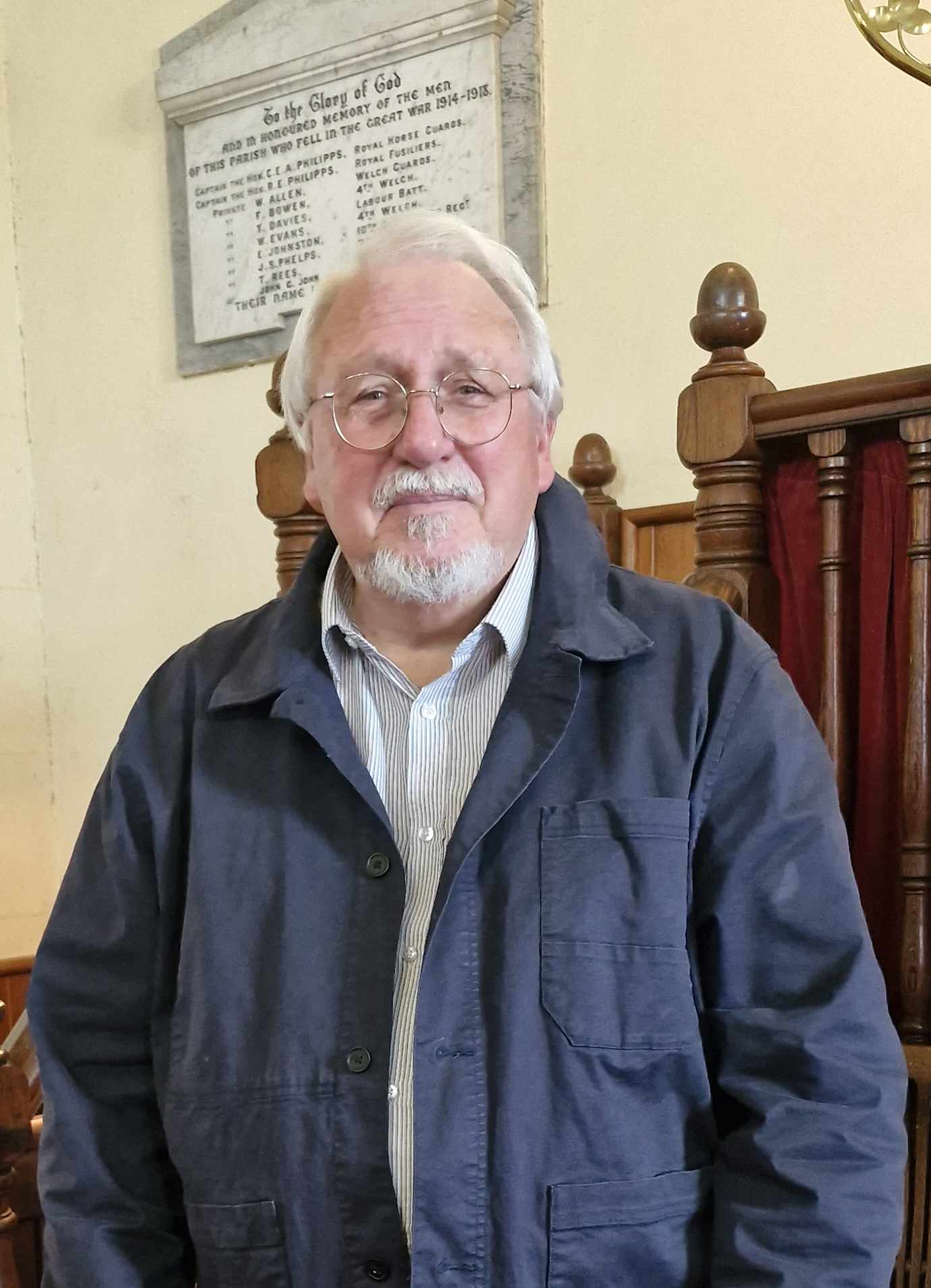
October 27th 2024: Andrew Bowden

To view this service, click on the link to our YouTube channel: https://youtu.be/MZdHLv3K8Us?si=HeCnGlkPQIKLpM02

“And you shall love the Lord your God with all your heart and with all your soul and with all your mind and with all your strength.’ 31 The second is this: ‘You shall love your neighbour as yourself.’ There is no other commandment greater than these.” Mark 12:30-31.

Our Lord encounters a barrage of questions from the religious establishment. Many are trite, trivial and show shear arrogance and impertinence of men questioning the second person of the Trinity. They have such a sceptical approach. The Bible begins with God questioning man and woman. Adam is asked, ‘Where are you in all this mess?’ There is nothing trivial about the question. We read the Lord will come to seek and save the lost. Christ will be the central figure in the answer, opening up the way in His sacrificial death. That is the gospel. He came to deal decisively with sin.

The second question is to Eve, ‘What is this you have done? Don’t you realise the ramifications?’ The answer from God is what He will do on the cross and Christ will say, “It is finished.”

In the setting here in Mark’s gospel There is formality and hypocrisy before all questions. They lost the essence of the law, which is love. There is a stark contrast of them being so hard-hearted and Jesus reaching out to all. We see grace personified in Jesus. The very one God raised up to be the mediator, in His very demeanour, is so approachable, tender and compassionate. Incredible!

A lawyer steps forward and says to Jesus, ‘Which is the greatest commandment?’ It is like saying, ‘Which of your children do you love the most?’ Jesus comes to the very heart of the law – love is the essence. “Love the Lord your God with all your heart and with all your soul and with all your mind and with all your strength.” We are looking at our love towards God and how we should love God. The word ‘love’ covers so many things. It is a love, first of all, which is personal – ‘love your God.’

The gospel is not about ritual and ceremony, rules, regulations and robes. The gospel is about a loving, living, dynamic relationship with God. God has made us and created us to respond to stimuli: a sunset, a meadow of spring flowers, crashing waves on a shore. We respond to beauty with awe. The whole earth is full of the glory of God. God is behind it all. If the dawn chorus only happened once a year, no one would go to bed! Yet the human heart does not respond to God with all, wonder and love. Yet we know we are made for something more. We are made to know God in a personal way. We should respond to Calvary and the cross. John 3:16. The love of God towards us, is demonstrated in a way which will stand for all eternity as a thing of wonder.

The response on our part is to take God at His word, (Isaac Watts, ‘When I Survey the wondrous cross). We should have a personal response of love and appreciation, where we love God above all. This is the first and greatest of all the commands, with all the intensity of our being. Is there anything greater than love? (1 Corinthians 13).

Love is not legalistic. Marriage can deteriorate to something functional, having all the passion of yesterday morning’s cornflakes! Remember when you first came to know the Lord, when the Lord’s day came round you came with joyful zeal. You had a passion for prayer, excitement of sharing everything with God. But the passion evaporates, There is no real fire. You have lost your first love. Where has it gone? Where is the love? “Love the Lord your God with all your heart and with all your soul and with all your mind and with all your strength.” We are to love with the entirety of our being because God has loved us, given His all for us. The only fitting response is our all – our talent, our time, our gifts, our resources – all used for His glory. Use everything to the glory of God and please Him above all else.

Paul addresses losing heart. The heart is all; it is where your deepest thinking goes on. The Christian life is not something imposed upon us. It is not outward but inward. Work out your salvation. It is God who is at work in you. When something is from the heart it is the driving force. How can anything material satisfy when there is a spiritual appetite for God and His word? Every breath we take is to make known the wonder of His Saviour. I praise my Maker while I have breath.

Live for Him. Breathe for Him with all your mind. Do you realise how heavenly a gift your mind is? Tozer writes, ‘There is an inner beauty in truth and a deliciousness in truth and she invites you, she beckons you into an enchanted world.’

We are so blessed with literature. There is so much available to us. We need to serve the lord with all our mind. Sing psalms and hymns which stretch us and our minds.

Love has another dimension. It is not just something that is vertical, it is horizontal. We are meant to be channels, conduits of the love of God, shown towards others. How can someone who has known such grace not, in turn, be gracious? How can somebody who has known such pardoning, such mercy, not in turn be merciful? How can someone who has come to adore the wonder and kindness of God not be good and kind in relating to others?

If we really love God we are meant to show the love of God. In the early church a people emerged who were wholesome, clean, attractive, principled and pure. That is what impacted the life of the early church. There was a spirit of love, compassion and grace.

October 20th 2024: Gareth Edwards

To view this sermon, click on the link to our YouTube channel: https://youtu.be/7DkcZC4Z5sc?si=XkutTVeIfvK1Dn5x

Luke 18:9-14 The Pharisee and the Tax Collector – which are you?

I want to take you back to school and exams. We looked forward to exam time! Probably not! A favourite way of phrasing a question was ‘compare and contrast.’ That is exactly what Jesus does in this parable; He compares and contrasts a Pharisee and a tax collector. Although it is a parable, it may be based on a real event. Whether it really happened or was a story, we know it is realistic. We have written examples of the prayers of some Pharisees which bear a remarkable resemblance to this Pharisee’s prayer. This is very realistic.

We see two men in the same place – the temple. They are both doing the same thing – praying. But that is as far as the similarity goes. These two men are poles apart. Which of these two men are we like? We may want to say we are not one or the other. But the truth is everyone of us is either one or the other.

First, let us look at the Pharisee. He is full of himself. Standing was a normal posture for prayer. But what is abnormal is the nature of this man’s prayer. He addresses God and initially refers to the Lord. But subsequently, he never refers to the Lord again. The Pharisee is talking to himself about himself. He is congratulating himself. There is no confession of sin, of seeking forgiveness. He stands in the presence of a holy God yet feels no sense of guilt. When Isaiah is in the temple and God’s presence is so real, Isaiah can only confess he is a man of unclean lips (Isaiah 6:1-5). In Luke 5:8 Simon Peter fell to his knees saying, “Depart from me, for I am a sinful man, O Lord.” In the presence of divine power, Peter can only humbly bow, acknowledging his sin.

This Pharisee, in his pride, praises himself for avoiding the vices so prevalent in others. Then he parades how devoted to his religion he is. The Old Testament only required fasting for one day a year, on the day of Atonement. But the Pharisee voluntarily fasted twice a week (Monday and Thursday). The law required certain crops to be tithed (Deuteronomy 14:22). But the Pharisees went further, even tithing the herbs from the garden. This went way beyond what was required and expected, in order to establish their righteousness and to parade their religious devotion. What the Pharisees said was no doubt true, but he does not see the sin in his heart undoes all his deeds. The Pharisee despises the tax collector and many others.

Pride is always a sin and a mistake. It is the deadliest of sins. We live in an age when we are told to love ourselves, we are not to be down on ourselves. That means we are encouraged to compare ourselves favourably to others. That increases our pride. There can be no pride when we compare ourselves to the righteousness of God. When we compare ourselves to the Lord Jesus Christ, to His perfect, sinless life, there can be no pride. There can be no pride in a Christian.

The deadliest form of pride is religious pride. It is the most deceptive lie. It is the cause of many being condemned to eternal damnation in hell. It is the most dangerous thing in the world to think we are acceptable to God because we go to church, we pray, read the bible, do good works and serve him. None of these compensate for the overwhelming sinfulness of our lives. We can never earn our salvation. Being proud is natural, the normal inclination of our hearts.

Let us consider the tax collector. He is also full, but not full of himself – he is full of repentance. This man knows and feels his sin. Whereas the Pharisee despised others, the tax collector despised himself and acknowledged he is a sinner. Tax collectors with doubly hated: They were regarded as collaborators with the Roman authority, and also regarded as thieves. Although despised by others as a traitor, none despised this man more than himself. He is ashamed of himself.

We see in the tax collector three things:

Firstly, He stands at a distance. He goes to the far corner of the temple, far away from the holy of holies, to pray. He does not come close to the presence of God. Secondly, he does not even lift up his eyes to heaven. Thirdly, he continually beats his chest as a demonstration of remorse for his sin. He knows he can do nothing other than hope that God would have pity on him, a sinner, “But the tax collector, standing far off, would not even lift up his eyes to heaven, but beat his breast, saying, ‘God, be merciful to me, a sinner!’”(v.13).

To be merciful is to be propitiated. It’s not a word that is familiar to people today. It is a Bible word which means to remove wrath, for god’s anger to be redirected away onto another. The tax collector knows he cannot escape God’s wrath. He can only hope God will lovingly turn His wrath away from him. He knows he does not deserve mercy but he asks for it anyway.

Have you felt the weight of your sin, the enormity of your rebellion against God? You must come under the conviction of your sin, acknowledge your sin. In Matthew chapter 5 Jesus said, “Blessed are the poor in spirit, for theirs is the kingdom of heaven.” This does not mean poor in material terms – blessed are those who know they are spiritually bankrupt before God. Jesus goes on to say, “Blessed are those who mourn, for they shall be comforted.” This refers to those who mourn deeply for their sin. They know the depths of the corruption that is theirs and they grieve how they have offended a holy God.

We must accept we are Pharisees by nature and justly the object of God’s wrath, that we are the tax collectors and sinners by nature and justly deserve God’s wrath, before we can even begin to hope that He will have mercy on us. We can have mercy because He showed no mercy to His beloved Son, the Lord Jesus Christ. He died in our place on the cross bearing the responsibility for our sin.

Jesus propitiated God’s wrath at Calvary. God’s just wrath against my sin was mercifully turned away from me and consumed Jesus in my place. My sin was paid in full at the Saviour’s death. God’s wrath burnt itself out on Jesus as He was condemned in my place. Our only hope of mercy is found in repenting of our sin and trusting in Jesus Christ alone. There can be no pride, only brokenness.

Jesus said it is the tax collector, not the Pharisee, who returns home from the temple justified – acquitted of all his sin, reckoned to be righteous. He is penitent therefore he is justified. He alone of the two is viewed as if he had never sinned at all. The Pharisee saw himself as being righteous but in fact was full of sinful pride, whilst the tax collector knew he was full of sin but he is declared righteous.

Here is the greatest contrast of all between the two men, a turning of the tables. The proud Pharisee is humbled whilst the humbled tax collector is exalted. That is God’s way. In James 4:6 we read, “God opposes the proud but gives grace to the humble.” God confounds human expectation. It is not the self-confident religious who is saved but the penitent sinner.

It is only safe for you and I to be on our knees, lest the wind of God’s wrath should blow us to eternal damnation. We have to stay on our knees, not just in prayer, but constantly remind ourselves, ‘on your knees.’

Each of us needs to be justified, to be declared righteous. This is only possible if we are clothed in the perfect righteousness of Christ. There is no other way to know forgiveness of sin except to take Jesus Christ as our Saviour. Will you repent of your sin and trust in Jesus Christ for salvation today? Now? Will you be on your knees now? You don’t have to do this physically. Be humbled before God, as you are convicted of your sin, and cry out, ‘God, be merciful to me, a sinner!’ The penitent sinner who humbly seeks God’s mercy will find it because of the life and death of Jesus.

We cannot earn mercy but we can receive it if we humble ourselves, confess our sin and depend totally on Jesus. Have you done so?

The Pharisee or the tax collector – which are you? It is for you and God. Make sure that if you are being a Pharisee, you are a tax collector humbled before God, trusting in Christ for forgiveness. It is the only way. May those of us who have been humbled by God’s grace be like the tax collector. May His continuing grace to us keep lest we stray to be a bit like the Pharisee.

October 13th 2024: Evan Millership

To watch this service, click on the link to our YouTube channel: https://youtu.be/mFtGTSmiAjA?si=hRzgjPisDUiKC27r

Colossians 2:6-15

Christmas is coming! Lights will be lit on trees. People will be busy getting presents for hundreds of family members. Maybe you are looking for offers, for Black Friday discount. Offers are everywhere. Everyone wants a deal. In the passage of scripture we are reading today, Paul is offering Jesus, 100% Jesus. Is 100% of what you need. That is what the whole book of Colossians is about. The church in Colossae was a young church. Some were saying Jesus is good, but we need more. Paul says no! His entire book of Colossians says you need Jesus and nothing else.

In Colossians chapter 2 Paul says that now you have come to the gospel, you need to be full in Jesus. I have 4 points for you: if you are following Jesus, you are: satisfied, set apart, liberated and encouraged.

  1. If you are following Jesus you are satisfied (verses 9-11).

Paul starts strong. He says Jesus is God. All of God is in Jesus. The whole fullness of the deity is in Jesus. That is who He is. Jesus is God made man. He is 100% God, 100% man. This is mind blowing but real. The great ‘I AM’ becomes a man. The one who cast the stars into space and named them – that is Jesus. Incredible! Paul goes on, because Jesus is the fullness of God, if you follow Him you have all you need.

“He is the image of the invisible God, the firstborn of all creation. 16 For by him all things were created, in heaven and on earth, visible and invisible, whether thrones or dominions or rulers or authorities—all things were created through him and for him. 17 And he is before all things, and in him all things hold together. 18 And he is the head of the body, the church. He is the beginning, the firstborn from the dead, that in everything he might be preeminent. 19 For in him all the fullness of God was pleased to dwell, 20 and through him to reconcile to himself all things, whether on earth or in heaven, making peace by the blood of his cross.” (Colossians 1:15-19).

In Colossians 2:9 Paul echoes what he has said in Colossians 1, For in him the whole fullness of deity dwells bodily.” He is the head of every power and authority. Paul says Jesus is above all of them. Why do you need anything else? Nothing compares to Jesus. This is the gospel. We forget about Jesus in our daily living. Jesus needs to be where we go to. Subtle steps lead us away from Jesus. I am a good cook, but the other day I cooked Spaghetti Bolognese and it was just OK. It ruined my evening. If I am really thinking about Jesus, who cares what a Bolognese tastes like when the God of the universe loves me? I was caught up in my pride.

Subtly and slowly our lives move away from God. Jesus is waiting for us to take us back to Him. He wants us to find all we need in Him. Jesus wants to give us Himself because it is the best thing you can find. C.S. Lewis states, “It would seem that Our Lord finds our desires not too strong, but too weak. We are half-hearted creatures, fooling about with drink and sex and ambition when infinite joy is offered us, like an ignorant child who wants to go on making mud pies in a slum because he cannot imagine what is meant by the offer of a holiday at the sea. We are far too easily pleased.” In Jesus we can be satisfied.

  • In Jesus we can be set apart (verse 11-12).

Paul talks about circumcision. To be circumcised means to be set apart. Physical circumcision is a physical sign. Paul says if you follow Jesus, you are also set apart. “Even as he chose us in him before the foundation of the world, that we should be holy and blameless before him.” (Ephesians 1:4). To be set apart for God is to be holy. If you follow Jesus you are set apart, part of a special group. It is not just a status. A Christian is a completely new being. Baptism is a public declaration that I follow Jesus. As you go through the waters of baptism you are killing the old self. Then, as you were raised up, you’re a new person in Jesus. It is a metaphor. Everything I loved before is second now to Jesus. Sometimes, it feels I’ve been baptised, set apart. But sometimes I feel do I have enough strength to get to heaven? Paul appears to hear these questions. He says the very power that raises Jesus from the dead and keeps Him in heaven is the same power that keeps the Christian for heaven.

  • In Jesus you can be liberated (verses 13-15).

When you were dead, God made you alive in Christ. If you do not follow Jesus, you are dead, as was everyone before they followed Jesus. But here, Paul tells us, while you were dead, God made you alive in Jesus. God forgave us all our sins. How? And you, who were dead in your trespasses and the uncircumcision of your flesh, God made alive together with him, having forgiven us all our trespasses, 14 by cancelling the record of debt that stood against us with its legal demands. This he set aside, nailing it to the cross.” (verses 13-14).

How do we live when we were enemies of God? Christ died in our place. Jesus is perfect. He died in my place taking all of the evil I do. Amazing! Every prideful thought, every hateful thought, every sin – past, present and future evil is nailed! Gone! He has taken these. Praise the Lord, oh my soul. Your sins, if you follow Jesus, do not exist! For the Christian, it is as if the God of the universe, the one who is sovereign over everything, has said, “Not guilty,” Because Jesus paid for it Himself. We are freed from our sins.

“He disarmed the rulers and authorities and put them to open shame, by triumphing over them in him.” (verse 15). Paul is writing from Roman times. If a Roman general had done well, he may have been given a triumph – a parade. This was praise for the general. The enemy leader would be dragged behind him in chains. When we apply it to this passage, death is a defeated enemy. He is not coming back.

  • In Jesus we can be encouraged.

Maybe you are thinking, ‘I’ve heard it all before.’ I say, ‘Hear it again.’ It echoes across every page of the Bible. This is the story. See what God has done, is doing, and will do. Look around the world, in the news, at work, in school – everything seems to be falling apart. Do I give up? Jesus is life. He has everything in hand. God is in control. The God who is in control has given Himself for us. He has set us apart and liberated us. If you follow Jesus, He says, ‘Mine.’

2 Corinthians 6 quotes God from the Old Testament. Paul says, “As God has said:

“I will dwell in them
And walk among them.
I will be their God …

“I will be a Father to you,
    and you will be my sons and daughters,
says the Lord Almighty.”


Be at peace, sons and daughters of heaven. Lift your eyes to heaven. Jesus is calling you home. If you don’t follow Jesus now, everything is waiting for you to follow Him. If you follow Him, be encouraged because heaven is waiting.

C.S. Lewis writes, “All their life in this world and all their adventures had only been the cover and the title page: now at last they were beginning Chapter One of the Great Story which no one on earth has read: which goes on for ever: in which every chapter is better than the one before.”

Jesus is all you need. 100%. There is nothing else that you need. Everything will die and pass away, but Jesus will remain. If you are not a Christian today, Jesus is offered to you. In Him you can be satisfied, set apart, liberated and encouraged.

If you are a follower of Jesus today, see that you are satisfied, set apart, liberated and encouraged.

September 29th 2024: Bernard Lewis

To watch this service click on the link to our YouTube channel: https://youtu.be/QdrJah7oGCc?si=l0EKm9Rs6kr4Z8hV

1 Corinthians 1:10 – 2:5 Our Unchanging Message

I want just to focus on our unchanging message. We must never compromise the truth, but there must be a willingness to be all things to all men, “but we preach Christ crucified, a stumbling block to Jews and folly to Gentiles,” (1:23), “For I decided to know nothing among you except Jesus Christ and him crucified.” (2:2).

We live in a world that seems to have lost its moorings. Here in Wales we know the reality of churches closing. Some churches remain closed after Covid. Some men leave the ministry after moral collapse. It seems the foundations are being destroyed. Paul tells us to follow the example of Christ, who does not change. The gospel message does not change. Paul is confident we can go back to the Lord Jesus Christ and the truth of His word. We are not alone. He will never forsake us and will fulfil His purposes.

God’s unchanging purpose is still that lost sinners might be saved, “Where sin increased, grace abounded all the more.” (Romans 5:20b). The church exists for the glory of God and the salvation of sinners. How do we achieve our purpose? By never changing the message, showing there is a Saviour who can take the broken pieces of our lives and use them to His glory.

The unchanging pressure

 “For Jews demand signs and Greeks seek wisdom,” (1:22).

Every culture has its own form of opposing the gospel. Every generation has its own ways of saying, ‘We don’t want that! Do it this way.’ When Paul wrote to the Romans he said, ‘Don’t let the world squeeze you into its mould,’ “Do not be conformed to this world, but be transformed by the renewal of your mind, that by testing you may discern what is the will of God, what is good and acceptable and perfect.” (Romans 12:2). Throughout history God’s prophets have faced the same pressures (Isaiah, Amos). Throughout history people have said, ‘Don’t rock the boat. Don’t cause a disturbance.’ Jesus Himself faced pressure. When He fed 5000 people He began to show that people’s lives had to be changed. We are told in John 6, ‘Many turned away from them.’ Jesus actually said to His disciples, ‘Will you also turn away?’ People are compromising the truth, even within conservative evangelical churches. Are you going to turn away?

People compromise the truth because of the pressure of tolerance. It is not easy. The Christian Institute remind us regularly that there is pressure to ban so-called conversion therapy. If that comes in, in effect every preacher who declares that we are sinners and fallen short of the glory of God, that we need to change our ways, that we need to repent, everyone prepared to do that faces the risk of being arrested. Why? Because it goes against the flow. Friends, it is tough. In our day and age, Christianity is no longer the mainstream. The Christian principles are no longer the undergirding principles. We are supposedly those with hate speech.

How do we respond? With the unchanging message, “but we preach Christ crucified,” (1:23), “For I decided to know nothing among you except Jesus Christ and him crucified.” (2:2). Paul says this is his uncompromising, unchanging commitment. He will do things God’s way. Paul knew that his responsibility was to preach the Lord Jesus Christ. The One he had persecuted was the One he was to honour. He would not go in his own strength. The message was Christ – Christ crucified, dead, buried, risen, ascended into heaven, and the Holy Spirit.

Friends, we must remind ourselves constantly that we worship God in Trinity: Father, Son and Holy Spirit. The Trinity has one purpose – that God will be glorified, and sinners may be saved. God sent His Son. The Son came in obedience to the Father. The Son and the Father have sent the Spirit in order that God’s truth might go into our world. Paul was sent to preach Christ, but he was sent to preach in the power of the Spirit.

We live in a day when people are concerned to preach the word, but there is not that same emphasis in preaching through the Spirit. Without the work of the Spirit we will not understand. Paul and the other apostles knew the pressure of being told to tone it down. Obey the Lord rather than man.

“For I decided to know nothing among you except Jesus Christ and him crucified.” (2:2). Paul made a conscious decision. He faced this pressure. Paul loved his people, the Jews. His heart’s desire for Israel was they would be saved. He was prepared to lose his own salvation so that his own people might be saved. He knows he cannot succumb to pressure.

What is Paul committed to? “For I decided to know nothing among you except Jesus Christ and him crucified.” (2:2). Paul uses his words carefully. He uses the name of Jesus and the title of Christ. He calls Him Jesus because He came to save. “For God did not send his Son into the world to condemn the world, but in order that the world might be saved through him.” (John 3:17). Do you believe this? We have the solution to put this world right. This world will never be perfect until the Lord Jesus Christ returns. But every time there has been revival there has been a restoration of order within the wider culture. Jesus saves immediately, but He saves ultimately. He saves eternally. Therefore, when Paul says, ‘I’m going to preach Jesus Christ and Him crucified,’ he is saying, ‘There is a way to be saved.’

You will never find peace until you find it in the Lord Jesus Christ.

Christ is His title – the One anointed by God, set aside by God. The apostles faced pressure and the judgement the Jewish leaders wanted to out on them. They were told not to preach, but they turned around and said, “And there is salvation in no one else, for there is no other name under heaven given among menby which we must be saved.” (Acts 4:12). There is no other way to be saved but through Christ. He is the one that God has appointed.

The message is not only Jesus is Saviour, the only means of salvation, but it is Jesus Christ and Him crucified. He is the substitute, the only substitute. Writing 700 years before, Isaiah could say,

But he was pierced for our transgressions;
    he was crushed for our iniquities;
upon him was the chastisement that brought us peace,
    and with his wounds we are healed.”
(Isaiah 53:5).

My brothers and sisters in Christ, as the Holy Spirit deals with you, are there times that you feel so horribly filthy and think, ‘How can I call myself a Christian?’ Satan will use your conscience, and he will condemn you. But I want to say to you, ‘Look to the cross.’ Christ is no longer on the cross. He died and was buried. On the third day He arose. Death is conquered. The price has been paid. He ascended into heaven and is now seated at the right hand of God and continues to intercede for His people.

The letter to the Corinthians is a tragic letter. It shows us a church that was in a right mess. Paul deals with the different issues. But before he finishes his letter, as Paul draws things to a summary, he takes the Corinthians back to this glorious truth, “Now I would remind you, brothers, of the gospel I preached to you, which you received, in which you stand, and by which you are being saved, if you hold fast to the word I preached to you—unless you believed in vain. For I delivered to you as of first importance what I also received: that Christ died for our sins in accordance with the Scriptures, that he was buried, that he was raised on the third day in accordance with the Scriptures, and that he appeared to Cephas, then to the twelve.” (1 Corinthians 15).

The message has not changed. He lived in our place. He died for our sins. He bore our sins. He was raised. God in Trinity, Father, Son and Holy Spirit, was active in the resurrection of the Lord Jesus Christ. This is the unchanging message. This is the message 21st century Britain needs to hear.

The people in Corinth had been born into the immorality of Corinth. Corinth had a notorious reputation. Paul lists sins that will keep us out of heaven,  Or do you not know that the unrighteous will not inherit the kingdom of God? Do not be deceived: neither the sexually immoral, nor idolaters, nor adulterers, nor men who practice homosexuality, 10 nor thieves, nor the greedy, nor drunkards, nor revilers, nor swindlers will inherit the kingdom of God.  (1 Corinthians 6:9-10). Sin will keep us out of heaven. Sin will keep us out of the true church of the Lord Jesus Christ. Paul wrote a similar list to the Galatian church. But notice, Paul doesn’t stop there. He says, “And such were some of you.” (1 Corinthians 6:11). He is saying, ‘You were caught up in the immorality of Corinth.’ Today, people are up in the immorality of the 21st century.

Paul preaches the glorious message of the gospel. Do you understand the gospel? My sin, your sin, has been dealt with by the Lord Jesus Christ. You have been made holy, declared not guilty in the presence of God. Why? Because of the Lord Jesus Christ and Holy Spirit. When the Holy Spirit begins His work, He will often make you feel very uncomfortable, ashamed and broken. He is showing you your sin. But when you understand your sin, He will show you that it has been put on Him. He has died in your place.

In the compromise and the pressure of the 21st century, don’t compromise on this. Hold fast to it. Tell Roch, tell Haverfordwest, tell Pembrokeshire, tell the nations of the world that we have peace with God through our Lord Jesus Christ. To Him be all the glory and praise.

September 27th 2024: Harvest Service Martin Williams

Psalm 24

This is a psalm of David. Most people believe the psalm was written when David brought the Ark to Jerusalem. This song begins and ends with a harvest theme. It is a psalm that points us to the Lord Jesus Christ. We are going to focus on 4 points:

  1. God owns this world.

The earth is the Lord‘s and the fullness thereof,
    the world and those who dwell therein,
for he has founded it upon the seas
    and established it upon the rivers.

This world and everything in it is all owned by God. This is because He created it. We have a God who created all. We are not here to celebrate by accident; the seasons are a result of an almighty, all gracious God, the one true living God. These two verses teach that the world is created by God’s handiwork. All things were created by Him. The New Testament reminds us in John chapter 1, “All things were made through him, and without him was not any thing made that was made. In him was life, and the life was the light of men.” We also read in Colossians 1, “For by him all things were created, in heaven and on earth, visible and invisible, whether thrones or dominions or rulers or authorities—all things were created through him and for him.

It is wonderful to remember we live in a world created by God and sustained by God. What an almighty God we have, an all-wise God, to create such complexity. He must be a beautiful God. We live in a fallen, cursed world. But even then, we can see such beauty, especially as we look around the Pembrokeshire landscapes. He is worthy to be worshipped. It was for His pleasure all things were created (Revelation 4).

  • The Psalmist then asks, ‘Who may come before this God?’

    “Who shall ascend the hill of the Lord?
        And who shall stand in his holy place?
    He who has clean hands and a pure heart,
        who does not lift up his soul to what is false
        and does not swear deceitfully.
    He will receive blessing from the Lord
        and righteousness from the God of his salvation.
    Such is the generation of those who seek him,
        who seek the face of the God of Jacob.

It is one of the most important questions any of us can ask. How may I draw near to this God and know Him?

“Who shall ascend the hill of the Lord?
    And who shall stand in his holy place?

Why is that place called a holy place? Because God dwells there! God is a God of absolute, inflexible holiness. God is light, in Him is no darkness. Our God is an all-consuming fire. That describes His holiness. If a sinner stood before Him, His holiness would consume us. Who will stand in this holy place? We are told exactly who can come,

“He who has clean hands and a pure heart,
    who does not lift up his soul to what is false
    and does not swear deceitfully.”

God will accept those with clean hands which show outward action, outward life – a life where there is no sinful action whatsoever. But we have stained hands. Outwardly, we have not lived a life in conformity to Lord God. We don’t have a wholehearted obedience. We don’t have clean hands by nature.

But it goes deeper – “He who has a pure heart.” Our God is a God who looks upon the heart (1 Samuel 16). Our hearts by nature are sinful, vile, evil. God requires truth, “He who has not lifted up his soul to an idol.” Lifting up your soul is to trust in God, but we have lifted up our souls to false gods and idols. What occupies your thoughts? What brings you the greatest joy? Is it family, work, your bank balance, your reputation? That is lifting up your heart to vanity. God requires you to worship Him and Him alone. We come to the conclusion, none of us could stand before this God in and of ourselves.

  • The Lord Jesus Christ is able to bring us to God.
    “He will receive blessing from the Lord
        and righteousness from the God of his salvation.”
    (v.5).

He.’ There is only One who could do this. None of us could, but there is one – the Lord Jesus Christ. God’s Son came into this world and said, “I delight to do the will of God.” Look at His life and see a life of sinless perfection. Here is a man with clean hands and a pure heart. He is one who completely and wholly kept the word of God. Even His enemies spoke of Him in this way.

The remarkable truth is when Jesus Christ honoured God’s law, He honoured it for you and me, in our place. In His life and death, He died as our representative. When He was in this world, as He rendered to the Father in wholehearted obedience, He was earning righteousness for all those who believe in Him.

We have broken the law, “The wages of sin is death.” The Lord Jesus Christ, upon Calvary’s cross, honoured to the law in another way. In His death He honours the law by bearing it’s just penalty for those who have broken it. He bore our curse, our debt, the judgement of God. On Calvary’s cross the Lord Jesus Christ endured the fire of God’s holiness. When Moses stood before the burning Bush he was not consumed. On the cross of Calvary, Jesus Christ was our burning bush, raging in His holy soul. Yet, He was not consumed. In His Life and in His death, He honours the Lord God for you and me.

When we come and wholly trust in the Lord Jesus Christ, we receive pardon for our sins. God cannot demand twice. The great transaction is done. We are then clothed in righteousness divine. God sees my sin has been pardoned. He sees me righteous as Jesus is, pure as Jesus is. The robe covers me completely. God sees me in Christ, righteous. In that way, I can approach God – something no Jew could do in the Old Testament, let alone the high priest once a year. But we can enter into the holiest through the Lord Jesus Christ – not once a year but every day. By myself, I cannot stand before God, but through Christ Jesus I can.

  • The triumph of all in Christ.

“Lift up your heads, O gates!
    And be lifted up, O ancient doors,
    that the King of glory may come in.
Who is this King of glory?
    The Lord, strong and mighty,
    the Lord, mighty in battle!
Lift up your heads, O gates!
    And lift them up, O ancient doors,
    that the King of glory may come in.
10 Who is this King of glory?
    The Lord of hosts,
    he is the King of glory!” Selah

We see in these final verses the entrance of Christ into heaven. The cry goes out twice. This tells us the everlasting doors will open for Christ twice. The first time has already happened,

“Who is this King of glory?
    The Lord, strong and mighty,
    the Lord, mighty in battle!”

This took place at the Ascension. The one who has gained a victory, triumphed in the battle. A mighty battle was fought at Calvary and He gained the victory. Now the triumph begins. The King of glory returns. He comes to reign, to intercede for His people.

But then in verses 9 to 10 we read of the ‘Lord of hosts,’ the Lord with a vast army coming in His train. When will this happen? There is a day coming when our Lord shall descend, when He will come for His people. He will come to bring them home – a harvest reaped (1 Thessalonians 4).

There is a day coming when they will be a shout from heaven. The king of glory is coming with a vast host of people, so numerous no man can count them. They will come in triumph. He will be bringing His harvest home. Will you be among that throng? Will you be there? I pray that each and every one will be. But if you are not sure, if you haven’t got clean hands and a pure heart, if you haven’t truly trusted in Jesus Christ, what do you need to do? My friends, simply this – turn your eyes upon Jesus and look full in His wonderful face. Turn from the life you are living and turn and trust in Him. Trust in Him alone.

Our Lord does not play hide and seek. He is freely available. If you want Christ, you can have Him, no matter how young or old you are. You can know the certainty you will be among the harvest on that great last day.

September 15th 2024: John Mann

To watch this service, click on the link to our YouTube channel: https://youtu.be/ME3DlIYJ57A?si=KGP0pLDYEsGPSivD

1 Samuel 21:1-9 Faith in difficult times

Liars need good memories! Having lied once, the second time is easier, the third one easier still. David, God’s chosen king, is finding life difficult. Saul has become very jealous of David and has sought to take David’s life. David is finding the way hard and it is damaging his integrity. Fear is chipping away at David’s principles. His walk with God is compromised.

Sadly, lying is becoming a habit. David is seeking to escape from Saul. As he plans his escape his says to his friend Jonathan, If your father misses me at all, then say, ‘David earnestly asked leave of me to run to Bethlehem his city, for there is a yearly sacrifice there for all the clan.’” (1 Samuel 20:6). It is a blatant lie, a total fabrication. He is concocting a false alibi. In so doing, he makes Jonathan complicit in the deceit as well. The world would say, ‘The end justifies the means. Needs must, a white lie causes no harm.’ But the Bible is very clear – we are to be truthful at all times, even those times when we find the going difficult.

David escapes under rives in the town of Nob, where the Tabernacle has been established and where the priests are there to carry out their daily duties. He arrives not far short of destitute – virtually nothing and no one with him. He hopes to find some assistance in the Tabernacle. Ahimelech is a friend, but he is anxious. He knows Saul is out for David’s blood. It is also the Sabbath day. David would not normally travel alone on this day. David senses Ahimelech’s mind. He is afraid he won’t give him the help he needs so he invents a pack of lies, “The king has charged me with a matter and said to me, ‘Let no one know anything of the matter about which I send you, and with which I have charged you.’ I have made an appointment with the young men for such and such a place. Now then, what do you have on hand? Give me five loaves of bread, or whatever is here.” (v2-3). He says he is on a hush-hush mission. David comes to the priest for support and food.

Fear has lowered his standards. Desperation and deception have overcome his faith and his trust in God. On many occasions God has proved His faithfulness to David: spared him from harm, protected his life. This is the man who took on and defeated Goliath, the ten foot giant. God had appointed Samuel to anoint him to be the king of Israel. You would think David would feel untouchable, knowing that he is under the protection of the sovereign God. But he is suffering from spiritual amnesia. God’s goodness has become a dim and a distant memory. He is depending on own initiative and his own ingenuity to see him through this difficult time. He has decided to go it alone without seeking God’s help. He resorts to deception and lies.

We cannot justify David’s actions, but we are in no position to criticise. We have all felt the heat and burden of the day in our Christian lives. Do I deal with anxiety any better than David when the pressure is on? Does fear and anxiety get to me? Where is my first port of call when things get difficult? Is it the throne of grace?

We can learn from David’s failure. We go through the trials. If we turn to the Lord, we can find Him closer than ever. He is our God. He is faithful, shaping us more into the likeness of the Lord Jesus Christ. Count it all joy, my brothers, when you meet trials of various kinds, for you know that the testing of your faith produces steadfastness. And let steadfastness have its full effect, that you may be perfect and complete, lacking in nothing.” (James 1:2-4). That is God’s invitation as He takes us through difficulties. It is always for our good. When the Lord leads us down difficult paths, it is always for our own good and blessing. There may be torrents of hardship, floods of sadness, but God will always keep our heads above water and be with us. We won’t be completely consumed. If there are hardships that come your way, we need to look to Him, the Father of all mercies and the God of all comfort.

“But the Helper, the Holy Spirit, whom the Father will send in my name, he will teach you all things and bring to your remembrance all that I have said to you. Peace I leave with you; my peace I give to you. Not as the world gives do I give to you. Let not your hearts be troubled, neither let them be afraid.” (John 14:26-27). These are the promises of Jesus Himself. Every promise is a blessing to us, and we should hold onto them.

David’s circumstances were desperate and he had legitimate concerns. He fell into the trap of falling away from the Lord. Thankfully, God never took His eyes from David, or from us. David is hungry but all Ahimelech has is the holy bread of presence. The loaves were renewed every Sabbath day, but they were only to be eaten by Aaron and his sons, the priests. The bread also pointed forward to God’s great provision, that of satisfying our spiritual hunger. Jesus said to them, “I am the bread of life; whoever comes to me shall not hunger, and whoever believes in me shall never thirst. 36 But I said to you that you have seen me and yet do not believe. 37 All that the Father gives me will come to me, and whoever comes to me I will never cast out. 38 For I have come down from heaven, not to do my own will but the will of him who sent me. 39 And this is the will of him who sent me, that I should lose nothing of all that he has given me, but raise it up on the last day. 40 For this is the will of my Father, that everyone who looks on the Son and believes in him should have eternal life, and I will raise him up on the last day.” (John 6:35-40).

In Bible times bread was the staple diet of the people for physical existence and well-being. Without the bread of life, Jesus, there is no possibility of spiritual life. He is fundamental and essential to our eternal existence. If we refuse to feed on Him by faith, then we starve ourselves of life and we will be afflicted, as David was. Are you feeding upon the bread of life, the Lord Jesus Christ? Are you looking to Him for your spiritual and eternal well-being?

David’s need is legitimate; he is suffering from real hardship and is desperate. He requires assistance. God had made provision for such circumstances. Compassion and kindness is more important than the law. The law was an incentive to lead them in God’s ways, but not a set of handcuffs to bind the people. There was no allowance which permitted anyone but Aaron and his sons to eat the bread. But the spirit of the law allows love and compassion.

One Sabbath he was going through the grainfields, and as they made their way, his disciples began to pluck heads of grain. 24 And the Pharisees were saying to him, “Look, why are they doing what is not lawful on the Sabbath?” 25 And he said to them, “Have you never read what David did, when he was in need and was hungry, he and those who were with him: 26 how he entered the house of God, in the time of Abiathar the high priest, and ate the bread of the Presence, which it is not lawful for any but the priests to eat, and also gave it to those who were with him?” 27 And he said to them, “The Sabbath was made for man, not man for the Sabbath. 28 So the Son of Man is lord even of the Sabbath.” (Mark 2:23-28).

The Levitical law gave Jesus the right to pick the grain for those who were hungry and in need. God makes provision for all our needs. He provides that spiritual help and strength in times of difficulty. Jesus came to be the instigator and fulfiller of the new covenant. Praise God the Lord Jesus came and did what we could not do for ourselves. All that the Lord does is to reveal our sin and show us the need for salvation. Jesus came to obey the law for us. It frees us from the condemnation of sin. We are a privileged people. God has drawn us, opened our eyes to see the need for salvation.

For David, in his desperate situation, he was entitled to eat of the bread from the Tabernacle. But, as a result of David’s deceit, if we read on, so much grief and tragedy resulted. For us, as believers, obedience to God’s law is important. But now, it is written on our hearts. Jesus has fulfilled that law. We should have a desire and honour to please Him.

We cannot use grace as an excuse to live our lives as we please. God’s commandments show He wants us to live in accordance to His ways. He wants us to be good ambassadors for the Lord Jesus Christ. We are saved by grace, through faith in the Lord Jesus Christ. We should long to walk in God’s ways. We should have total reliance on the promises of God.

For unbelievers, failing to trust in the Lord Jesus Christ, their situation is even more desperate than David’s. They are eternal souls are in grave danger. God says you are invited, welcome to eat of the bread of life.

Satan is the father of lies. He will whisper deceit into our minds. Don’t believe this nonsense that you can get by on your own. None of us are good enough to come into the presence of a holy, righteous God, unless we are covered in the righteousness of the Lord Jesus Christ. Are you clothed in garments of salvation?

Believe on the Lord Jesus Christ and you shall be saved. Look only to the one who says, “I am the bread of life; whoever comes to me shall not hunger, and whoever believes in me shall never thirst.  If we are children of the living God we have that wonderful, eternal future that lies before us, when we will see Him, our Saviour, face to face.

September 8th 2024: Nathan Munday

To watch this service, click on the link to our YouTube channel: https://youtu.be/HO0UbIf6xjY?si=hxiv_8smjlTiWIDX


John 7:37-52. John 8:12

Do you remember the light? It is so dark already! Come with me to Jerusalem, to a festival of remembrance, a week of people gathering from near and far to celebrate the longest festival in the Jewish calendar – the Feast of Tabernacles (7:2). The people are remembering a time of movement, (the tents), a time of salvation, (when they were saved), and a time of reliance on God. The festival was a time of celebration of God’s provision for Israel in the wilderness, the old desert, the Sinai desert, which was instrumental in their history.

In the gospel of John, the writer has been weaving the wilderness narrative. In chapter 6 the 5,000 had been fed, bread is provided, just like the manna was provided in the wilderness. Jesus then declares, “I am the bread of life.”

In John chapter 7:37-39 the Feast of Tabernacles is underway and they remember how God provided water in the wilderness. They perform a ceremonial water drawing. Jesus steps in again and says, “I am the one that will give living water.”

In chapter 8, Christ Jesus steps into the dark and says, “I am the light of the world. Whoever follows me will not walk in darkness, but will have the light of life.”  (John 8:12).

Come now with me to the scene. It is dark. It’s the end of the festival. We are in the court of the women. In the temple lots of people gathering. Along the walls there are chests with coins, maybe they are glimmering in the light of the great candelabras. There are lots of burning light, four huge lamps in that space. Imagine Jerusalem being in darkness, but the light is beaming out from the temple during the festival. People are dancing through the night with torches, trying to re-enact the time when God had been a pillar of fire for them, guiding them through their desert days. When the festival is nearing the end, the lights are being extinguished. Darkness ensues. Another festival over. But it is then, after the dark, Jesus proclaims, “I am the light of the world. Whoever follows me will not walk in darkness, but will have the light of life.” Remember this verse, in the dark, when you are dying, when the hopeless Red Sea of death is before you, when God is guiding us through the sea to the promised land.

John is shining a big spotlight on Jesus of Nazareth. Remember:
1. Who the Light is.
2. Why that Light was necessary.
3. What we are to do with that light.

  1. Let us remember who that light really is.

“I am.” Charged words! When we read these words we should remember the prophet Moses, who heard at the burning bush, ““I am who I am.” And he said, “Say this to the people of Israel: ‘I am has sent me to you.’” (Exodus 3:14). There is no other God. He simply is, was and will be. Hundreds of years later, the Israelites saw this God in action – the one who opened the sea, the same Lord who led them personally to a better land, a better country, the Promised Land. He reminded them throughout, “The Lord is my light and my salvation.” (Psalm 27:1). He is the one who provides light in the darkness. This is the God who saves people from oppression, from dark situations. Is that you this morning? This is God who deals with guilt – past, present and future. This is a God who led the people of Egypt.

But John goes further back at the end of his gospel, which is written so that we may believe in Him, “This is the disciple who is bearing witness about these things, and who has written these things, and we know that his testimony is true.” (John 21:24).

John mirrors the creation in his writing, “In the beginning was the Word, and the Word was with God, and the Word was God. He was in the beginning with God. All things were made through him, and without him was not any thing made that was made. In him was life, and the life was the light of men. The light shines in the darkness, and the darkness has not overcome it.” (John 1:1-5). The second person of the Trinity, who interrupted the darkness of the beginning of the book of Genesis, who is the same one who can interrupt your darkness here today. Jesus is the Light of the world. He is the light of everything. He is the true light, true light that lasts forever. John is saying that Jesus Christ is better than candles! He is what the candles are pointing to. Our life is like a flower that fades. Time is kicking. By nature, our life will run out. What happens then? Remember who He is – an answer to the darkness of life, to the end of life.

  • Remember why the light was necessary.

Before He came, there was death. He has power over death. He is the one man in history who stormed out of death. The bible tells us, our ancestors tell us, we fell. We need light. The world needs light. Pembrokeshire needs light. Habakkuk 3:3-4 talks of God’s splendour like sunrise. The prophet Malachi talks of the sun of righteousness, “But for you who fear my name, the sun of righteousness shall rise with healing in its wings. You shall go out leaping like calves from the stall.”  (Malachi 4:2). Malachi is talking about end times but also the experience of a Christian; when you are converted taken from one realm and put in another. You are no longer a creature of darkness, you are a creature of the day. If you are a Christian, you are already saved. You are being saved and will be saved at the end.

Reject Jesus and your doom is already written. When the Son comes back, are you a creature of night or walking in the day? By nature, we’re walking in the dark. But the good news of the gospel is that God interrupted that darkness. Salvation is of the Lord. God, in His mercy, calls you. Jesus of Nazareth interrupts. He strides into darkness and says, ‘I’m here.’

Paul calls us stars in the sky. Isn’t that lovely! The dust of earth, you and I, can come to know Him. He came to save. Remember why He came. It was for you, to led you out of darkness.

3. What are we to do?

When the people of Israel were slaves in Egypt, can you imagine them wanting to return there? But that’s what many people are doing. They have been told about the Light but reject Jesus. They will not follow Him or walk in that light. They do not want Jesus Christ to rule over them because they will have to change. Jesus says, “I am the light of the world. Whoever follows me will not walk in darkness, but will have the light of life.”  The first statement is stunning! He is the light of the world. The proof is in the whole story of Jesus Christ. There is an immediate consequence to Jesus’ words, “Whoever follows me will not walk in darkness.” What is He saying?

After the festival, turn to Chapter 9. He will give sight to the blind. Only God can do that. Chapter 11 – it gets better. Lazarus is raised from the darkness of death. Only God can do that. In chapter 13 we see He will wash the disciples’ feet. Then we hit the darkest point of the whole gospel in chapter 19. The very embodiment of light and life is arrested, beaten in my place, taken up a hill to the place of execution – the cruellest form of execution. He is stripped, nailed and lifted up on a Roman cross. Darkness. The sun disappears for three hours. This is a day of judgement. The Light takes our sin upon Himself. The Father turns His face away. Even the sun darkens as the Light of the World dies. He breathed His last that you might breathe forever. He is the great High Priest who goes into the holy place, but He is also the sacrifice.

Remember the one who was born into a dark world, who bore your darkness, who experienced my hell so I would never have to go there. But darkness could not hold Him. He was raised from the dark on Easter Sunday. “Whoever follows me will not walk in darkness, but will have the light of life.” What He has done for a Christian is guaranteed. A follower of Jesus lives.

Are you in the dark this morning? God Himself says, “I am the light of the world. Whoever follows me will not walk in darkness, but will have the light of life.”  (John 8:12).

I would rather look forward to a real land of light. We are heading to a new creation, when we will be face to face with Jesus. Will you know Him? Remember who Jesus is, why He came and to follow Him all the way. Are you following the Light today into the promised land? The lamb is the lamp. The glory of God gives light.

September 1st 2024: Phil Swann

To watch this service, please click on the link to our YouTube channel: https://youtu.be/Ena3qE3PDJI?si=7nA-cs8B1fF5hspv

John 9

This wonderful, dramatic account reminds us that the gospel of Jesus Christ calls us to a new life. Here is a man born blind, who, as a result of Jesus’ intervention, can now see. He is repeatedly referred to as the man who was born blind. The point is made, he is no longer blind – there is a radical transformation.

As we read this passage, we see that all is not well for this man as a result of what Jesus has done in his life. We can see a problem, difficulties. The two themes of Christ’s blessing and the challenge of living in the light of that, is a major theme in this chapter.

At the heart of the Christian gospel is the invitation for you and me to say, ‘Jesus is Lord.’ Against the backdrop of the New Testament, of the Roman Empire, there was huge pressure for people to say that Caesar was lord, to acknowledge him as the name above all names. The Christian gospel calls us not to acknowledge men but to acknowledge Christ, who is both God and Man. The phrase, ‘Jesus is Lord,’ is the reminder that we have come to Him in faith. We no longer live our lives serving Caesar, we say, ‘Jesus is Lord’.

In John’s gospel we see a lot of hostility towards Jesus (John 7:1, 19, 25). Chapter 8 ends with an assassination attempt. In Chapter 7 we see an attempt to physically arrest Jesus. Twice we’re told He is under official surveillance. In John’s gospel there is growing hostility towards Jesus. There is also increasing opposition to His teaching (7:15). List of all, we are told in chapters 7 and chapters 8 people say He is demon-possessed, that He is not the Christ.

Why was there such hostility towards Jesus, the friend of sinners? The great reason is His clear claim to be the Messiah. The religious authorities reject this. There is a long war against Jesus. When Paul writes to the Corinthians, in chapter 1 he reminds people, For the message of the cross is foolishness to those who are perishing, but to us who are being saved it is the power of God.” (1 Corinthians 1:18). He goes on to say, “I will destroy the wisdom of the wise, and bring to nothing the understanding of the prudent.” (1 Corinthians 1:19). The message of the gospel does that – it challenges, destroys the preconceptions that we have as human beings, about the world, life, ourselves, God. The gospel comes as an intrusion into that. Just as Jesus’ claim to be the Messiah is a massive intrusion into the established Jewish thinking of His day.

As we come to this chapter, we see Jesus responding to the need in this man’s life in a remarkable way. We see that this story is in four parts:

The healing by Jesus
The response of the neighbours
Interrogation by the Pharisees
The follow-up by our Lord and Saviour of this man.

It is a very moving account.

The healing by Jesus (v1-7)
 This man has only ever known blindness. The disciples, when they see him, ask a curious question, “Rabbi, who sinned, this man or his parents, that he was born blind?” (v.2). The assumption is he is blind because someone has sinned. But Jesus’ response tells them, Neither this man nor his parents sinned, but that the works of God should be revealed in him.” (v3.). Jesus then heals him. It is rather dramatic. The blind man is a new man. He is transformed, suddenly and wonderfully.

The reaction of the neighbours (v8-12).
 We see a very human response. They struggled to make sense of it. A conversation goes on. People ask, “How were your eyes opened?” (v.10). How is it that they saw him shuffling down the road that morning, blind, bow he sees?

Interrogation by the Pharisees.
This leads to the interrogation by the Pharisees. It’s unpleasant. The evidence appears compelling (v.15). But then we see the healing is denied. The Pharisees were divided amongst themselves. A consensus happens – they refused to accept Jesus of Nazareth had power to do these things. (v.16). They thought there must be another explanation (v18) and thought the man had not been blind and received his sight.

They then called for his parents. Maybe they had rejected him after birth (v.20). The parents do not rejoice that they a son has now received his sight; they just want to get away from the Pharisees. They were afraid of the religious authorities (v.22). The man is not only interrogated by the Pharisees and surrounded by the confusion of his neighbours, he is effectively rejected by his parents and finds himself in a very bleak situation.

When you pull these reactions together you see a pattern of what we often see from people when we seek to bring the news of Christ to them. When we seek to share the gospel, people may be confused. We may experience hostility from some. We may even experience rejection from some.

The fourth movement in this account is most wonderful and glorious. Jesus has been present at the beginning of the chapter. He heals the man then seems to disappear. It’s all about the man, his neighbours, the Pharisees and his parents. That’s the bulk of this chapter – until we read in verse 35 that the man had been thrown out of the synagogue. Being thrown out of the synagogue was a really serious thing, effectively becoming an outcast in the whole community. You are regarded as being unrighteous, a pariah. People would not have wanted to have had anything to do with you at all. You were little better than a leper. This man could see, but now he is incredibly lonely and facing the full rejection of the whole community.

Against that backdrop we read, “Jesus heard that they had thrown him out, and when he found him, he said, “Do you believe in the Son of Man?” (John 9:35). The phrase, ‘The Son of Man’ is an important one. It’s a phrase that has it roots in the Old Testament, particularly in the book of Daniel. One of the visions that Daniel sees is of Christ, the second person of the Godhead, in all His glory and He is referred to as looking like a son of man. When Jesus uses that phrase, He is using it in a theological way to speak of Himself as being the Messiah.

“Do you believe in the Son of Man?” What could make all the rejection that this man had gone through, worth it? The man expresses his ignorance (v.36). Jesus draws attention to Himself (v.37). The man came to believe in the Lord Jesus Christ (v.38).

What difference should this passage make to you and me? We see the centrality of Jesus. He is central to the blind man, to the neighbours, to the Pharisees, to us. When God is at work, Christ is always central. The Son was sent to do the will of the Father. In all the works of God that go on in the world, Jesus Christ is always at the centre. It is He who answers the disciples’ question about blindness. It is He who calls Himself the Light of the World (v.4). It reminds us that as long as it is day, we must do the work of Him who was sent. Jesus Christ is the centre of the purposes of God, who sent Him into the world with the fullness of the Spirit. It is Jesus who is the centre of everything.

In the church, in all that we do and in all that we seek to do, particularly in our relationship with the unbelieving world around us, we need to make sure that Jesus Christ is the centre of everything. Not just the centre in our praying and in the acknowledgement of the need of God’s blessing upon what we do, but to be the centre of all that we do. When we have opportunities to speak to people about our faith, we need to make sure they hear of Jesus Christ – why He came and what He’s done. We need to point people to Jesus Christ, the one who transforms life.

As well as the centrality of Jesus, we see the power of Jesus. If we would see life and growth in the church, if we would see change and impact into the communities around us, it will be because the focus is on Jesus – for that is where the power is. The power is the power of the Holy Spirit whose great passion is to glorify the Son

The healing of the blind man is utterly supernatural. This reminds us of the radical nature of Biblical Christianity. Paul says the Kingdom of God is not a matter of talk but power.For the kingdom of God is not in word but in power.” (1 Corinthians 4:20). That power is seen in bringing people out of the wisdom of this world to faith in Jesus Christ.

The message we have is proclaim Jesus Christ, who has been raised from the dead. It is ultimately a message of power. Coming to an awareness of the reality of sin is not natural. We need the power of God to do that. What can convince neighbours, friends, you, that you’re a Sinner? The power of God. The church is confident is always in the Holy Spirit. How can we imagine the community of Roch being saved? Humanly speaking, it can’t. But the church rests on the power of God, the power of the Holy Spirit, the power of the gospel. This is why we need a big vision. We must never be comfortable with the way things are.

We see power most clearly in the resurrection of Jesus Christ. The Christian’s life, having come to see and know Christ, is to be lived for the glory of God. “Jesus answered, “Neither this man nor his parents sinned, but that the works of God should be revealed in him.(v.3). To many, this statement is offensive to modern thinking. Why? Jesus is saying, ‘This man was born blind that one day the glory of god might be seen in his life.’ This is seen through his healing. It is being seen now as we recount these words 2,000 years later.

Our lives are to be lived for the glory of God. What is the glory of God? The glory of God is God being God – God doing what only God can do. God acting in ways that only He can act. This is to be seen in your life and in my life as Christians. This is why we are called to live now according to the word of God. We are to live lives which show the fruit of the Spirit. We are to live sacrificially, loving our enemies. We live following Jesus Christ, being more and more like Jesus Christ.

This passage ends on a most wonderful moment. The man who was being rejected by his parents, the religious leaders and confused neighbours, ends with the compassion of Christ. With almost total rejection, Jesus finds him and, in His hum humanity, Jesus didn’t know where he was. He looked for him and went to him in love and compassion. The question, ‘Do you believe in the Son of Man?’ Jesus is asking, ‘Was it all worth it?’

The answer is ultimately new life in Jesus Christ. He saw. His understanding was opened. Jesus tells him He is the Son of Man, the Messiah, Christ, and to worship Him, trust Him and come to Him.

Whatever might be the consequences for us living for Christ in this world, of acknowledging His centrality, His uniqueness, wherever His power may take us, He is always compassionate towards His people.

August 25th 2024: Jonny Raine

To watch this service, please click on the link to our YouTube channel: https://youtu.be/yUjwMO4jGIA?si=c7x7JB6JDFNcx2Hq

Isaiah 52:13 – 53

In a town there is a rule that every man must be clean shaven. Everyone who does not shave themselves must be shaved by the barber. There is only one barber in the town who only shaves people who do not shave themselves. This creates a problem for the barber. Who shaves the barber? The barber must be shaved but he cannot shave himself because the barber only shaves people who do not shave themselves. What can he do? The mathematician and philosopher Bertram Russell came up with that paradox.

A paradox is when two things are true but contradict each other, they don’t really go well together. They are against each other, but they are both true, so they have to go together. Sometimes, we find such profound things in the Bible that they fall into this category. The passage that we are looking at has 5 paradoxes – 5 pairs of things that are both true, but also go against each other.

Isaiah is in two halves. Isaiah chapter 40 onwards begins the second half. From chapter 40 onwards a figure is introduced, called the Servant. God’s servant was supposed to be Israel, God’s people in the first half of the Bible. They were supposed to be His servant for the nation, to take God’s blessing to the nations. But they failed in that because of their own sin. So, God is promising through this Servant figure in the second half of Isaiah, that He will send His own Servant who would both bring about the forgiveness for Israel for their own sin, but also bring God’s blessing to the nations. Who is this Servant? Jesus. Only Jesus could do what was needed. Only Jesus could bring about the forgiveness of sin for God’s people, not only to Israel but to all of the nations. Blessings are being included in God’s people through forgiveness. Only Jesus could fit the bill of the Servant of God. How He is going to do that, is what this Servant Song is all about.

In this Servant Song we have 5 contrasting images of this Servant, of Jesus.

  1. He will be elevated through degrading.

To elevate is to make much of. Think of the influencers in our society. When was the last time someone famous was ugly? The ugly ones are rare. Normally, people we lift up are attractive people. The path of elevation for the Servant is through degrading. In chapter 52:13-15 we see He Will be elevated but many will be appalled. He will be injured so much that His appearance will be disfigured. He will be exalted. He will be worshipped. But in order to get there He must go through a path of being beaten so badly that He will be barely recognisable. The paradox is that He will be elevated but it is through being degraded.

  • Power through rejection.

The second image takes this further. There will be power through rejection. We read in chapter 53 this question, “Who has believed our message?” The message is what we have just been told. Who is going to believe that paradox? That just doesn’t happen. This is followed by a parallel question, “To whom is the arm of the Lord being revealed?” In other words, how is God’s strength going to be shown? The arm of the Lord is His strength. Often, our power is in our arms. How is God’s strength going to be revealed through His Servant, because this doesn’t look like power?

If we think about those in our society who are the most powerful – the super wealthy, the tech world and industry, the business leaders in our world – they don’t get to these positions of power through rejection. Normally, they get to positions of power through being the most powerful person. They will have faced rejection at some point in the process, but the actual getting to the position of power requires being the popular person. Politicians have to have the support of the party and the support of the country. They have to be popular with the people in order to lead.

But the means of God’s power being exercised is through the One who will be despised and rejected (v.3). He will experience suffering. That’s how God’s power works. It is not on the surface level of just popularity. It is on a deeper level. There is nothing superficial about God’s power. It is not just about popularity or appearance.

This should help us share the good news about Jesus. It should give us confidence. We don’t have to have the nicest church building, the greatest marketing campaign. God’s power came through rejection – rejection of God’s Son.

  • Serving through substitution.

The Servant Song is like the holy part of Isaiah. Verse 4-6 is the holiest part. How will God save His people? One is going to die in place of another. He took our pain. He took our suffering (v.4). The suffering that Jesus endured was our suffering.

Why did He have to suffer? “He was pierced for our transgressions, he was crushed for our iniquities; the punishment that brough us peace was on him, and by his wounds we are healed.” (v.5). He had no sin, no iniquities, no transgressions. Our sin, our iniquities, our transgressions caused Jesus to suffer. It should have been our suffering. Yet Jesus took our sin upon Himself and suffered in our place.

For sin there is a punishment that is deserved. Only when that punishment is spent can peace with God finally be established. That peace is not brought about by us being punished for our own sin because we could not be punished enough. Jesus was punished on our behalf. Verse 6 explains this further. We have got lost, gone our own way. As we have wandered rebelliously away, that sin was laid on Jesus, the suffering servant. Jesus is our substitute. He stands in place of us and takes the punishment for us. He suffers for us. He pays for our sins because we cannot pay for them ourselves.

We have a choice. We can endure eternal punishment for sin we cannot pay for ourselves, or we can choose to have Jesus pay for our sin on our behalf, our substitute. If you have never made that choice, please, today accept Jesus has died for you so your sin can be forgiven. We can only be saved when we know Jesus died in our place.

  • Atonement through submission

For most people, if you knew you were going to suffer a violent and humiliating death, you would fight for an escape. Death is not good. Ever. But Jesus, as He faced death, did so knowing how painful it would be. But still He went willingly, submitting Himself to the cross.

Verse 7 foretells of Him,
“He was oppressed and afflicted,
 yet he did not open his mouth;
he was led like a lamb to the slaughter,
and as a sheep before its shearers is silent,
so he did not open his mouth.”

(Isaiah 53:7).

Being given over to death was like a lamb being given over to slaughter. We see the theme of sacrifice – the sacrifices that were made in the temple. We see the theme of substitution. For the Israelites in the first half of the Bible they needed a lamb to die for sacrifice in their place. Atonement is when sin is taken away and people are made right with God. Jesus made atonement for us. He was killed and buried, even though He was innocent. He did that willingly. Why? For the transgressions of His people. (8b).

  • Life through death.

According to the plan of the Father, in order to save His people, someone needed to die – one who would then rise again from death. At His ascension, He was lifted up from death to life and glory – all because He was willing to bring about forgiveness. He shares His life with all who will follow Him.

If Jesus has done all of that, how to be respond? We ensure the benefits of what Jesus has secured are for us. Have you truly accepted Jesus has died for you? Have you truly accepted that He bore your sin upon the cross and that you could be forgiven? If you have grown cold in your faith and have doubts, come back to the cross, to see what Jesus did on your behalf. Will you accept Jesus today and make this message your own? Will you come to Him and say, ‘Sorry God, I have done so much wrong. Will you please forgive me for my sins?’

The second response is to have such great joy and delight in your life in what has been done for you, that we let this dwell within our hearts. Are you filled with joy? You should be! Will it overwhelm us? It should do. A willing servant was able to go to the cross and die in our place for our forgiveness. That should fill us with a sense of joy and delight.

August 4th 2024: 202nd Anniversary Service – Adrian Brake

To watch this service, click on the link to our YouTube channel: https://youtu.be/Ge6UqVSRoNQ?si=xD0HcIfrWoBidqZw

2 Corinthians 5:17-6:2

We have great news to proclaim to a very unhappy world. We are all by nature separated from God, our Creator. It is only when we have a relationship with Him that we can know love, joy, peace and purpose. It is possible for sinners to come into a soul-refreshing relationship with an eternal God, and enjoy all the blessings the world craves but cannot get for themselves.

The Ministry of Reconciliation

The message God declares is not a message that church crafted over the centuries. It is something that has come directly from God. It is a message God wants us to hear. How are people going to hear it? We have to put our faith in Jesus Christ and what He has done for sinners. How can people hear about Jesus Christ? How is the world to know of the need, the way of reconciliation? God has given the news to His people and it is our responsibility to make it public (v19-20). This is true of all who follow the apostles. We have work to do, a task entrusted to us by God. Isn’t that amazing!

“Working together with him, then, we appeal to you not to receive the grace of God in vain.” (2 Corinthians 6:1). Only He can bring sinners to Himself, but He gives us a part in this work and the joy that comes from it. A joint enterprise with God! By His grace we are workers together with Him. We are ambassadors for Christ – only saying what God wants us to say, word for word. We simply say what God has said without fear or favour. Remarkable!

It is those who have been reconciled that God gives the message of reconciliation to. We have been where unrepentant sinners have been, and can say we wouldn’t want to be again out of fellowship with God, under His wrath. If anyone can understand the message of reconciliation it is us because we have tasted it firsthand. Also, we know the joy that could be theirs, if they would only come to Christ.

What qualification do we need to be an ambassador for Christ? Quite simply, ourselves. That we are reconciled. Once we are reconciled, we become reconcilers. How did Paul go about this work? What was his manner and motives?

Paul’s Manner.
Paul implored people. God chooses our voices, Therefore, we are ambassadors for Christ, God making his appeal through us. We implore you on behalf of Christ, be reconciled to God.(2 Corinthians 5:20). Paul implores the people. He begs them and presses upon them with all the force within him. Why was Paul so passionate? He implores them to be reconciled with God.

Paul was well aware he was working against the clock (2 Corinthians 6:1). There is a time when people will be reconciled. There is an acceptable time, a day of salvation, In a favourable time I listened to you,
    and in a day of salvation I have helped you.”

Behold, now is the favourable time; behold, now is the day of salvation.” 
(2 Corinthians 6:2).

That is good news! The door is open. You can be forgiven. But there is an implication – when there is a day when the door will be closed. We work against the clock. Now we have the freedom to preach the gospel. God’s door is open. If we call on the name of the Lord we shall be saved. But, when Christ comes, there will be no more opportunities. There is a time coming when those who are estranged now will be cast from the presence of the Lord. Do we ever think of that? If they do not come to Christ, they will go to hell and experience the full weight of God’s wrath. We have the message that can deliver them. With that in mind, Paul pleads with the people to repent.

Benjamin Franklin, one of the Founding Fathers of the United States of America, never did come, it seems, to real faith in the Lord Jesus Christ. He had a friendship with George Whitfield, the great evangelist. He liked to go and hear Whitfield preach the gospel of the Lord Jesus Christ. Someone once asked him, ‘Why do you keep going to hear him preach when you don’t believe what he says?’ His answer was, ‘I don’t believe what he says, but he does. I can see he that.’ When we speak of hell and heaven, a God we must come to for forgiveness, do we feel what we say? Are we imploring people to come to Lord Jesus?

Paul’s Motives.
So whether we are at home or away, we make it our aim to please him. 10 For we must all appear before the judgment seat of Christ, so that each one may receive what is due for what he has done in the body, whether good or evil.11 Therefore, knowing the fear of the Lord, we persuade others. But what we are is known to God, and I hope it is known also to your conscience.” (2 Corinthians 5:9-11).

Paul says he is motivated, driven because we must all appear before the judgement seat of Christ. Unbelievers will have to appear before the judgement seat of Christ and answer for their sins. What a devastating thing that will be. Paul says knowing what is coming to the ungodly, I must speak.

Also, Paul says, ‘We must all appear before the judgement seat of Christ.’ Paul says because of that, we make it our aim to be well pleasing to Him. Paul includes himself here. We will not appear before God for our sins to be judged if we are the disciples of Jesus Christ; our sins have already been judged in Jesus Christ at Calvary. Our sins deserve to be judged and they are judged. Our sins are punished. Our sins are answered for. The glory of the gospel is that Jesus Christ answered for them instead of us. God called His Son to account for our sins instead of us. We must not live in fear our sins will be judged at the end. They have been answered for through the shed blood of the Lord Jesus Christ.

But we will appear before Christ to answer for our service to Him. Your salvation is not in the balance. If we are trusting in Christ we will live with Him in glory. But we have to give an account of the use we have made of the gifts He gave us, of the opportunities that were given. We will have to give an account of what we have done with the life that He redeemed from the pit. It appears in scripture that there will be rewards. It seems the responsibilities we have in the new creation will be linked to our service here. Those who have served well for Christ on this earth will be given greater responsibility in the new heavens and the new earth. Those who have served Him poorly, I even shrink to say that, thinking of the opportunities I have let go of in my life to serve Christ, it seems will have lesser responsibility.

We will all be there, but we will have to answer for our service. Paul says knowing that he will have to give account, that his service will be assessed according to the gifts he has, according to the opportunities, according to what he could have done, he knows there will be some measure of accountability – so he makes it his aim to be well-pleasing to Him.

We will have to give an account to God of what we did with the opportunities that were presented to speak of our Lord Jesus Christ. We do not want this to become a great weight upon us. Ultimately, our service for Christ should be motivated by joy in what He has done for us. But we should be mindful in our living for Christ, that there is coming a day when we will have to give an account of our good works post conversion, which God prepared beforehand for us to walk in.

Paul is motivated by the love of Christ for the lost, For the love of Christ controls us, because we have concluded this: that one has died for all, therefore all have died.” (2 Corinthians 5:14). The love of Christ compels us. When I think of what Jesus Christ has done for me, how He suffered for me – perhaps that is what Paul is speaking of. Paul sees the love of Christ for His enemies. God, loving His enemies! Who does that? Who dies for sinners when they’re still rebelling against Him? Do I really love the lost? Am I really bothered about their eternal plight? Where is the love for sinners?

Isaiah writes,

How beautiful upon the mountains
    are the feet of him who brings good news,
who publishes peace, who brings good news of happiness,
    who publishes salvation,
    who says to Zion, “Your God reigns.”

 (Isaiah 52:7).

What an odd thing. Feet refer to a custom in old times when men were off to war. The people at home couldn’t keep up with what was going on until the end of the battle. When the battle was over, someone from each side was dispatched to send news home. People would see the messenger in the distance. They would look at his feet. If the nation had lost, they would prepare for judgement as they looked at the feet trudging towards them. Before they heard what the messenger was going to say, they could know by his feet.

If the side won, the messenger would be running, and people would be shouting for joy. When someone brings good news, feet are beautiful. Whose feet are beautiful in your sight? Whose feet are beautiful because they brought you glad tidings of good things? What are you going to do for that? The good news is life in Jesus Christ.

It is a privilege to be co-workers in Christ. That is our work. May God grant us love, passion and responsibility to do it. That is what Penuel, Roch has been doing for all these years. May the Lord give you what you need to keep going.