

October 9th 2016: Gaius Douglas

Our service was led by Gaius Douglas who preached on John 3:17, ‘For God did not send His Son into the world to, condemn the world, but that the world through Him might be saved.’

So often we hear things which are disappointing and we get upset. None of us like to hear we’re wrong, we’ve failed or it’s our fault. We may have received a letter after an interview telling us we have been unsuccessful. Criticism is hard.

When we read this verse we see a different approach; we see a God who does something different. He is different. He doesn’t write us off. The best example in scripture of this is the Lord Jesus Christ saying, ‘Have I not chosen you twelve, and one of you is a devil.’ (John 6:70). Judas Iscariot had an important position, he was treasurer. He even set out on one occasion to preach and to heal. Jesus never wrote off Judas Iscariot until the Passover. Yet still He knew Judas was a devil. All the way along the Lord showed His grace and mercy to Judas, even though He knew he was a devil. This shows that our God and Father will never write us off.

When we come to this verse it comes out of a conversation with Nicodemus, who wasn’t quite sure who Jesus was. Jesus’ wants to remind us that He is the Lord. Isaiah writes, ‘I am the Lord, and there is none else, there is no God beside me: I girded thee, though thou hast not known me.’ (Isaiah 45:5).

He is the one who breathed the breath of life into man. We are sitting here today because He has given us the ability to sit here and listen. We can do what we do because of God, the Alpha and Omega.

God didn’t send His Son to condemn the world. In this life we see He came in the likeness of simple men, He came in the likeness of sinful flesh. Are we aware of the wonder of who God is? God made us. The God who came from heaven was like one of us, He went through the same problems we are going through. He bore our sins and sorrows, ‘He is despised and rejected of men; a man of sorrows, and acquainted with grief: and we hid as it were our faces from Him, He was despised, and we esteemed Him not. Surely He hath borne our griefs, and carried our sorrows: yet we did esteem Him stricken, smitten of God, and afflicted.’’ (Isaiah 53:3-4).

He is hearing the comments others are saying, which we may not like. Jesus was despised and rejected by men, even His brothers and sisters didn’t believe Him. The people called Him a Nazarene because He lived in the poorest area. He was hated without cause. He knows what each of us is going through. We see an expression of great love and compassion. He came to us, bore our sin. We were headed for death, separation from God, yet Christ came to save us and take us out of our boxes, from our preconceived ideas, and be put in His box.

God has a path for each one of us to follow. People will despise us but God came for us. We need to trust in Him alone, to follow in His footsteps. Don’t worry about what others are saying about you. ‘The Lord is not slack concerning His promise, as some men count slackness; but is longsuffering to us, not willing that any should perish, but that all should come to repentance.’ (2 Peter 3:9).  He will never give up on us.

In John 8 we read of a lady caught in the act of adultery, brought to Jesus Christ by the scribes and Pharisees. She was condemned but the Lord said, ‘He that is without sin among you, let him first cast a stone at her.’ (John 8:7) We have to be careful what we are saying about others. How many stones have we been guilty of throwing? Matthew 7:1 reminds us, ‘Judge not, that ye be not judged.’ We should judge ourselves before we judge others.

We are still in a time of grace and love but one day He will return and judge. He is the judge of all the earth. We are sinners saved by the grace of God. Jesus had every right to cast us out and destroy us but He has saved us. ‘Go, and sin no more.’  (John 8:11). He came to save that the world through Him might be saved. ‘The thief cometh not, but for to steal and to kill, and to destroy: I am come that they might have life, and that they might have it more abundantly.’ (John 10:10)

Jesus came to reach the unloved, He came to heal. Trust in Him alone. God hears every prayer. One day He will deliver us all into His glory, into His kingdom.

‘Shew me thy ways, O Lord; teach me thy paths. Lead me in thy truth, and teach me: for thou art the God of my salvation; on thee do I wait all the day.’ (Psalm 25:4-5).

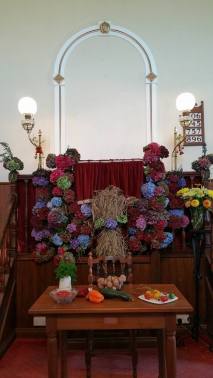
Harvest: Friday 30th September 2016

roger-thomas-sept-16-pulpit14536751_1757579351182093_1253927603_o14571995_1757579244515437_1264196090_o14536501_1757579394515422_2010155050_o14522479_1757579387848756_144387476_o14572543_1757579427848752_819412074_o
Our Harvest service was taken by Roger Thomas of Aberystwyth, who preached from John 15:8, ‘By this my Father is glorified, that you bear much fruit and so prove to be my disciples.’

At this time of year we thank God for His goodness throughout the year, but especially now. We are gathered to say thank you, ‘While the earth remains, seedtime and harvest, cold and heat, summer and winter, day and night, shall not cease’ (Genesis 8:22). God has kept His promise, He has been good to us.

The portion of scripture this verse comes from is part of the Parable of the Vine, spoken in the Upper Room the night before Jesus was betrayed.

Notice Jesus says, ‘By this my Father is glorified.’ Look at how Jesus refers to God as ‘my Father.’ He is saying He is God’s Son – one of the fundamentals of Christianity. Jesus is God’s Son. Millions of people believe in Jesus – He was a good man – however, few believe He was God’s Son. Muslims believe Jesus was a prophet but not God’s Son. We don’t all worship the same God. The Baptism of Jesus declares Jesus to be God’s Son, ‘And a voice came from heaven, ‘You are my beloved Son, with whom I am well pleased’ (Mark 1:11) The miracles of Jesus declare Jesus is God’s Son, ‘Believe me that I am in the Father and the Father is in me, or else believe on account of the works themselves’ (John 14:11). The transfiguration of Jesus declares Jesus is God’s Son, ‘And a voice came out of the cloud, saying, ’This is my Son, my Chosen One. Listen to Him!’ (Luke 9:35). His resurrection declares He is God’s Son, ‘(He) was declared to be the Son of God in power according to the Spirit of holiness by His resurrection from the dead, Jesus Christ our Lord’ (Romans 1:4). It is essential we believe this.

John 3:36 ‘Whoever believes in the Son has eternal life, whoever does not obey the Son shall not see life, but the wrath of God remain on him.’ If we reject God’s Son, we reject God the Father.  ‘No one who denies the Son has the Father’ (1 John 2:23).

‘By this my Father is glorified.’ This is our purpose in this world – to glorify God. To glorify God is to praise and to tell others how good God is, not to glorify ourselves or another person.  Matthew 5:16 ‘In the same way, let your light shine before others, so that they may see your good works and give glory to your Father who is in heaven.’

Romans 15: 5-6 ‘May the God of endurance and encouragement grant you to live in such harmony with one another, in accord with Christ Jesus, that together you may with one voice glorify the God and Father of our Lord Jesus Christ.’

The purpose of the church is to glorify God. Is this true of us? Do we live to glorify God? Are we seeking to glorify God? Psalm 90 tells us that it is the purpose of all creation to glorify God. The psalmist in Psalm 148 tells of the angels, sun, moon, stars and heaven itself all glorifying God. The psalmist calls on the earth to glorify God, including all creatures, even those in the depths of the oceans as well as the weather.

We are told that to glorify God we need to bear much fruit – to do good works and have a godly character. ‘And so, from the day we heard, we have not ceased to pray for you, asking that you may be filled with the knowledge of His will in all spiritual wisdom and understanding, so as to walk in a manner worthy of the Lord, fully pleasing to Him, bearing fruit in every good work and increasing in the knowledge of God’ (Colossians 1:9-10). ‘But the fruit of the Spirit is love, joy, peace, patience, kindness, goodness, faithfulness, gentleness, self-control; against such things there is no law’ (Galatians 5:22).

How do we bear this fruit? The Parable of the Vine answers this question. Jesus, as He walked, would often see something and use this to teach. He said, ‘I am the vine; you are the branches. Whoever abides in me and I in him, he it is that bears much fruit, for apart from me you can do nothing’’ (John 15:5) Here we read of the branches that bear fruit. The branches are Christians, people who believe the gospel.

‘If you abide in me, and my words abide in you, ask whatever you wish, and it will be done for you’ (John 15:7). The person who has faith in Christ and who also keeps His commandments is like the branch in the vine, which receives sap and nutrients from the vine and produces grapes. By being in Christ we receive grace and His grace enables us to do the good works. We need to be in Christ by faith, believing in the gospel of repentance. We cannot bear fruit without Jesus Christ. It is the only way to bear fruit. Jesus refers to Himself as the only true vine. There is only one vine that can enable us to live a godly, fruitful life – Jesus Christ. Is there fruit to be seen in our lives? Do we see a godly character, a life of godliness? Are we in Christ? Have we believed the gospel message?

Jesus is God’s Son. He was in heaven with His Father, three in one. We are sinful because of what happened in the Garden of Eden. God has given us His law, yet we can’t keep His law. We deserve to be punished, God has to punish us. Punishment is Hell. But God loves us and doesn’t want us to perish so He sent His Son into the world. He kept the law we broke. On the cross of Calvary He took all our sin upon Himself and suffered the punishment of our sins. He died, was buried and rose again on the third day. This is the gospel message. Go to God, confess your sins. Have we asked God to forgive all our sins?

If there is no fruit in our lives we don’t see a life of godliness but a life where we live for ourselves. We are not in Christ. ‘I am the true vine, and my Father is the vinedresser. Every branch in me that does not bear fruit He takes away, and every branch that does bear fruit He prunes, that it may bear more fruit’ (John 15:1-2).

‘If anyone does not abide in me he is thrown away like a branch and withers; and the branches are gathered, thrown into the fire, and burned’ (John 15:6). This speaks of separation, of judgement and eternal Hell.

It we see fruit in our lives it is evidence, ‘Therefore, if anyone is in Christ, he is a new creation. The old has passed away; behold, the new has come’ (1 Corinthians 5:17).

In the Parable of the Vine Jesus teaches us that God helps us to bear fruit. The Father actively works in us so we can bear more fruit. Our God prunes, cleanses the Christian. How does He cleanse us? ‘’Already you are clean because of the word that I have spoken to you’ (John 15:3). The word cleanses us. This is an encouragement to read the word of God.

Another way He cleanses us is through trials. God allows trials into our lives to change us, to drive us to God in prayer, ‘For the moment all discipline seems painful rather than pleasant, but later it yields the peaceful fruit of righteousness to those who have been trained by it’ (Hebrews 12:11). ‘Count it all joy, my brothers, when you meet trials of various kinds, for you know that the testing of your faith produces steadfastness. And let steadfastness have its full effect, that you may be perfect and complete, lacking in nothing’ (James 1:2-4).

‘By this my Father is glorified, that you bear much fruit and so prove to be my disciples.’ (John 15:8) Do we bear ‘much fruit’? Do we see a godly character in each other? If not, prayer is the answer. Read the word. Ask God for more of His Holy Spirit. Another blessing of being in Christ is answered prayer (verse 7).

In summary, we are to glorify God, bear fruit, indeed, much fruit, by being in Christ.

Why does bearing fruit glorify God? Through our character and deeds, the fruit shows people what God is like. So when people see our gentleness they see the gentleness of God. When they see the way we talk to others, how we behave, they see the character of God. Through God’s grace we become more godly. ‘By this my Father is glorified, that you bear much fruit and so prove to be my disciples.’ (John 15:8)


 

September 24th 2016: Alex Coblentz

We were delighted to share fellowship with Alex and Mary Nell Coblentz from French Camp ARP Church, Mississippi last Sunday. Alex preached a wonderful message of encouragement from Hebrews 10: 35, “Therefore do not throw away your confidence, which has a great reward.”

Alex began by asking us, ‘What kind of believers might the writer of Hebrews be talking to?’ We learnt that the writer is not speaking to a crowd of unbelievers, he writes to those of Jewish faith who had come to Christ, those who had received the knowledge of the truth.

Verse 26 of this chapter tells us ‘For if we go on sinning deliberately after receiving the knowledge of the truth, there no longer remains a sacrifice of sins.’ Don’t throw the knowledge of the truth away! Sadly, many have thrown away their confidence. People who have a Christian background but not had a full conversion fall away in a crisis, they throw it all away. Young and old are drawn away by distractions, away from the call of Christ. We who believe are often puzzled by people who throw away their faith. It is not logical. At heart it is a spiritual issue, a matter of rebellion. There is a warfare going on in the hearts of men and women. There is an enemy, the deceiver who continues to seek who he may devour. People have sold their inheritance in the gospel. There are many whose faith is not as deep as it should be. Some reject Christ because prayers are not answered, some look at suffering and question how a God in heaven could allow this to happen. They have trusted in a God of their imagination and find no conversion.

In Hebrews, the whole thrust of the epistle is to point us to Christ – a better covenant that is sealed not with the blood of rams or bulls but Christ’s blood on the cross. The writer of Hebrews pleads with us not to throw our confidence away as it has been purchased with the blood of Christ.

‘Therefore, brothers, since we have confidence to enter the holy places by the blood of Christ, by the new and living way that he opened for us through the curtain, that is, through His flesh, and since we have a great priest over the house of God, let us draw near with a true heart in full assurance of faith, with our hearts sprinkled clean from an evil conscience and our bodies washed with pure water. Let us hold fast the confession of our hope without wavering, for he who promised is faithful’ (Hebrews 10: 19-23). This is our confidence. Our confidence is not in the church, the pastor, pensions or anything else which is temporal. Christ has purchased for us the curtain of the holy of holies, symbolising our free access to God.

Interspersed with these great statements in Hebrews there are warnings:

  • ‘Therefore we must pay much closer attention to what we have heard, lest we drift away from it’ (Hebrews 2:1). As long as we are moored close to God we are secure in that relationship. If we neglect the reading of scripture and the assembly of saints then the mooring becomes adrift.
  • ‘Take care, brothers, lest there be in any of you an evil, unbelieving heart, leading you to fall away from the living God’ (Hebrews 3:12). Every one of us still has the flesh. We may have an unbelieving heart, even though we are redeemed. We need to exhort one another every day. Look to blessing of fellowship in the church.

‘We have this as a sure and steadfast anchor of the soul, a hope that enters into the inner place behind the curtain, where Jesus has gone as a forerunner on our behalf, having become a high priest forever after the order of Melchizedek’ (Hebrews 6:19). Jesus is our anchor. He has gone before us, lived the perfect life and shed His blood for us, was resurrected and we will follow Him in the resurrection. Jesus has gone ahead of us, He is our anchor within the veil. As we continue to fight the headwinds of life, Christ is our anchor who will hold us fast.

  • ‘Therefore do not throw away your confidence, which has a great reward’ (Hebrews 10:35). We should not throw away our confidence. In Jesus, our high priest, we should draw near to God with a true heart.

‘Let us draw near with a true heart in full assurance of faith, with our hearts sprinkled clean from an evil conscience and our bodies washed with pure water’ (Hebrews 10:22). We need to hold fast. What a wonderful salvation we have in Jesus Christ!

  • ‘And let us consider how to stir up one another to love and good works, not neglecting to meet together, as is the habit of some, but encouraging one another, and all the more as you see the Day dawning’ (Hebrew 10:24). The fellowship of believers is a means of grace. Come to know each other and love each other, encourage one another. Don’t live in an isolated eggshell. The neglect of fellowship is a sin of ownership. If we let down our guard we become vulnerable to the attacks of the enemy.
  • ‘For if we go on sinning deliberately after receiving the knowledge of the truth, there no longer remains a sacrifice for sins’ (Hebrews 10:26). The sin of going on sinning deliberately. This is a fearsome and solemn warning. The exhortation is before us. We know the difference between right and wrong. There is a hardness that enters in if we continue to sin. Cry out to the Lord to have mercy on us. Cast our anchor with Jesus, the author and finisher of our faith, the anchor of our souls.

‘But recall the former days when, after you were enlightened, you endured a hard struggle with sufferings, sometimes being publicly exposed to reproach and affliction, and sometimes being partners with those so treated’ (Hebrews 10:32). The people he is writing this to are not comfortable Christians; they are believers who have suffered for their faith. There were people who needed encouragement, people who were possibly tempted to throw away their confidence because of persecution. Yet, amazingly, even in persecution, they joyfully accepted this. They knew their treasure was in heaven. If we put our confidence in the one who is the anchor of the soul, then in the day of trial or judgement we will stand firm.

“Therefore do not throw away your confidence, which has a  great  reward.” (Hebrews 10:35). We have this confidence. Do not give up now. ‘For you have need of endurance, so that when you have done the will of God you may receive what is promised.’ The anchor of our soul is this faith, ‘the righteous shall live by his faith’ (Habakkuk 2:4).

We have two paths before us: ‘But we are not those who shrink back and are destroyed, but those who have faith and preserve their souls’ (Hebrews 10:39). We can shrink back, withdrawing from the challenges of life, things which intimidate us, hoping things out there don’t impact me or hurt me. The other option is the call to take a stand for Jesus. We live in a throw-away society, we don’t value things. But our faith is not disposable. God calls us to exercise a faith that will endure – no matter wat may come. God will carry us, preserve our souls to the day of glory. What a day that will be when we behold Him face to face and be like Him!


September 18th 2016: Gareth Edwards

Reverend Doctor Gareth Edwards, of Hill Park Baptist Church, preached on John 1:26, “Behold! The Lamb of God who takes away the sin of the world!” John 1:26

You may have had a hectic week and look back and feel exhausted by all you were required to do. All that takes place in here in John 1:19- 34 took place in a week. It begins with John the Baptist being quizzed by a deputation of Pharisees and ends with Jesus’ first miracle – turning water into wine. It was a week full of testimony to who Jesus Christ is. The question at the beginning is ‘Who is John the Baptist?’ but the question that is answered is ‘Who is Jesus Christ?’ John the Baptist plays a central role in that testimony, which can clearly be seen in verses 32-34. He has already baptised Jesus and come to realise that Jesus is the Messiah. John humbly points the deputation from Jerusalem away from himself and to the Messiah – the one who was in the midst but of whom they were ignorant. The next day John immediately identifies him as the Messiah.

In order to grasp John’s message we need to examine the key words and unpack the statement, “Behold! The Lamb of God who takes away the sin of the world!”  This will be done in reverse order: Sin, Lamb of God, Behold.

Sin:
It has been said that the heart of the human problem is the problem of the human heart. Jesus came into the world to address this problem – sin. Jesus came in order to take sin away. Today, sin is considered to be irrelevant. We may believe they are accountable to no-one but ourselves. If we believe God exists at all, then we may believe that He doesn’t have a right to condemn us because His role is to love and care for us. If we do acknowledge we have done wrong, we blame others for leading us astray or we blame our circumstances; we’re not guilty but victims.

The Bible doesn’t excuse our sin, it doesn’t allow us to escape the fact that we are accountable to God for our actions and our words. Romans 3:23 states, “For all have sinned and fall short of the glory of God.” In Romans 6:23 we read, “For the wages of sin is death, but the gift of God is eternal life in Christ Jesus our Lord.” This rebellion against God brings upon us the just sentence of death. This is the root of the whole problem of our world. All are sinners. As sinners we are justly condemned by God, subject to His holy wrath. John the Baptist tells us Jesus came to deal with the problem, to take away our sin. Do you recognise that you are a sinner? You may be someone of integrity, yet our sin is desperately wicked. The reality is that in what we do and what we say there is rebellion against God. It is no use burying our heads in the sand; we are sinners! Consequently, the Word of God tells us that the greatest priority is that our sin be taken away. Family problems, health problems, financial problems – they all pale into insignificance. We need our sin to be taken away, to know His forgiveness. We need to cry out for a Saviour to come, to rescue us. You desperately need a Saviour.

Lamb of God:
The people of Jesus’ day were steeped in the Old Testament and knew very well how lambs were used as sacrifices for sin. After sin came into the world we were alienated from God. It was God’s will that a lamb was as a sacrifice. In Genesis 4:4 and Hebrews 11:4 we read how Abel was considered righteous after offering a sacrificial lamb – the shedding of blood for life. Cain offered fruits of the soil, labours of his own hand, which God rejects. No amount of human effort had effect. Later, under the Law of Moses, a lamb was offered. We read in Leviticus 4:32 that a sinner brings a lamb and places his hands on the animal’s head to symbolise the transference for guilt.

In Hebrews 10 we learn that no amount of shedding of blood could take away sin. Only the Lamb of God truly cleanses us, the Messiah. Those who offered sacrifices in the temple looked forward to the one Lamb of God, whose death would take away their sins.

The people would have remembered how Abraham was commanded to sacrifice his much loved son Isaac. Abraham obeyed and took Isaac, who was probably in his late teens or early twenties. Isaac submits. They reach Moriah where they leave their servant behind. When Isaac asks where is the lamb Abraham replies that God will provide. Abraham was about to plunge the knife when God intervened. Abraham proved his faithfulness to God, or rather proved to himself his faithfulness to God. There, nearby, God provided a lamb caught in brambles – a substitute for Isaac. Now John describes Jesus as the Lamb of God – a substitute for you and me, for Isaac, for Abraham. ‘God demonstrates His own love toward us, in that while we were still sinners, Christ died for us’ (Romans 5:8).

In Exodus 12 God is going to send an angel of death to pass through Egypt. But the Israelites sacrificed a lamb and smeared its blood on doorposts as a sign to spare the Israelites and protect them. The lamb had to be perfect. So it is that Jesus Christ came, the real Passover, the perfect Lamb, who sacrificed His blood for us. Through the blood of the Lamb we are spared.

‘You were not redeemed with corruptible things, like silver or gold, from your aimless conduct received by tradition from your fathers, but with the precious blood of Christ, as of a lamb without blemish and without spot’ (1 Peter 1:18-19).

In Isaiah 53:5-7 the prophet foresaw the coming of the Lamb, a suffering servant, a sacrificial Lamb who will take away the sins of the people, ‘like a lamb led to the slaughter.’ Jesus was both innocent of the charges laid against Him, completely innocent of any wrong doing. Yet He goes to the cross like a man who endures what He deserves. Why? Because He has accepted the responsibility for your sin and mine. He stands in my place and yours. So in describing Jesus as the Lamb of God, John is saying Jesus is the fulfilment of the Old Testament passages of scripture.

In Egypt on Passover night there was death in every house. Can you think of what that would be like – if in every house in Roch someone had died? On Passover night there was either the death of a lamb or death of a first born babe. In payment for our sins there has to be death. Either our death or Jesus’ shed blood so we might be forgiven and have eternal life, an eternal relationship with God. It is amazing to think God provided His only Son to suffer in our place when we are so unworthy. It is amazing!

Look / Behold!
John the Baptist issues an invitation to all around him not simply to gaze on Jesus but to trust Him. John is saying,’ Here is the Saviour who can provide all your needs. Don’t look to me or yourselves for salvation, look to Him and Him alone. ’ It is only those who look to Jesus with believing eyes who will be saved.

The New Testament uses the term ‘all’ for inviting people to come. This means all types – male, female, rich, poor – Jesus offers salvation to all types of people. But it only has effect for those who repent of their sins and know that there is nothing they can do to help themselves. Have mercy upon me as a sinner. I take Jesus to be my Saviour. I hide in His death because He died for me and I trust in Him. Your wrath, Oh God, fell on Him at Calvary and as I trust in this I am hidden from that wrath. I will follow Him and serve Him.

‘Look!’ John says. He pleads for you to take Him as your Saviour. John has baptised Jesus in the Jordan. Jesus didn’t have any sin so why was He baptised? Just as He didn’t have to die for His sins, He died for ours. He was saying, ‘I am one of them, I am them.’ He carries those sins of ours throughout His perfect life. We watched as His sins were sealed behind the rock of death. He rose on the third day, minus sins, which are never to be seen again.

Have you looked to Him? Not just a passing glance. Have you looked and seen in Him the only hope of Salvation?

September 11th 2016: Aaron Davies-Whitfield

Worship was led by Aaron Davies-Whitfield who preached from Philippians 2: 19-24, which he entitled “Not my will, but Thy will be done.’ We find Paul is in a place of uncertainty. His letter is written from Rome when he was under house arrest, which can be likened to the bonds and chains of the gospel. Paul is facing possible execution. He truly was an incredible man of God, a giant in the faith. It is staggering how God changed this man, who was out to destroy the church but now he is willing to lay down his life for the church and Christ.

In verse 19 we read, ‘But I trust the Lord Jesus.’ Paul was so captivated by Christ, his every thought and deed were always attached to Christ. He was under house arrest by the wicked Emperor Nero, who prosecuted and martyred Christians in the most horrific ways. Paul does not say, ‘I trust – if the Emperor allows.’ No, he states, ‘I trust in the Lord Jesus.’ Our future must fall into that place, like Paul. When you come to acknowledge Him as Saviour, He is not only your Saviour, He is your Lord. You give your life to Him. Paul faces possible execution, yet Jesus is the one who holds Paul’s future. Notice, in verse 24, Paul write, ‘But I trust the Lord.’ His future was not bleak but wonderfully glorious because of Christ. Whatever comes our way, our future is glorious in Jesus.

Paul was a spiritual giant but he also had feelings. This mighty man of God needed to be encouraged. He says he hoped to ‘send Timothy shortly unto you, that I also may be of good comfort’ (verse 19). Paul was anxious for the Philippian Church. Notice his feelings were all encompassed in Christ. He was concerned but that didn’t waiver him, his trust was in Christ. We are reminded, ‘Trust in the Lord with all thine heart, and lean not unto thine own understanding. In all ways acknowledge Him, and He shall direct thy paths.’ (Proverbs 3:5-6). Paul was trusting in the Lord. Trust in Him, lean on Him when you don’t understand and He will direct your path.

I wonder how many people visited Paul when he was under house arrest? It’s a challenge to us. How do we feel about those who minister the gospel to us? Do we love and care for them? It’s not always easy to sit under preaching – sometimes it will rebuke and chasten. We don’t pick and choose, it’s His Word. There can be that in us that doesn’t receive the Word. Let the Spirit of God work in us. We need to humble ourselves. Love those, even in their faults.

Paul found no-one like-minded but Timothy, his son in the gospel. In verse 21 we read, ‘For they all seek their own interests, not those of Jesus Christ.’ Where is your heart today? What is your greatest ambition? What are your motives and desires? Where is Jesus in all these things? How sad Paul was surrounded by Christians but none of them sought Christ’s Will. When Christ came to this earth He thought nothing of His own will, He sacrificed everything for the gospel. He laid aside everything.

In the parable of the Good Samaritan the priest and the Pharisee walked passed the man who was beaten and left for dead. It was the Samaritan who stopped and helped. It’s a challenge but one to take on board.

As Christians we can be more mindful of seeking salary not a Saviour. If Paul came to the church this morning, what would he say of us? Everything in this world will fade away – our job, salary, even our families – but all done for Christ will last. Make His name great in our life and your name full of insignificance. ‘Seek first the kingdom of God and His righteousness.’

Looking at the churches around I see an absence of men in the gospel work. God is calling men to the work. The harvest is ripe but the labourers are so few. One of the reasons is we have too glamourous minds – certain things have to be in place before we consider God’s work. The ultimate questions is, ‘Has God called you?’ If God has called you, then He will provide. Men and women look to salaries and locations. In the New Testament, being a gospel church meant being in prison. Where is Christ in your life? We may not be called to preach the gospel but we are all called to live for the glory of God and make disciples, to follow Him whatever that means. Salary, reputation and comfort will all fall aside. We need to go wherever and to whoever if the Lord is calling. Jesus called the disciples – they did not know where they were going and they would lose their lives but they went willingly. ‘All seek their own interests, not those of Jesus Christ.’ We live in a world of ‘My, my, my, me, me, me’ but what about Jesus? In light of all He has done for you, He asks you to be willing to serve Him, He will do everything else. All Jesus is asking is for you to say, ‘I’ll go Lord.’ God is calling.

‘And I heard the voice of the Lord saying, “Whom shall I send, and who will go for us?” Then I said, “Here I am! Send me.” (Isaiah 6:8) God is calling you to something. He wants you to be a faithful witness to family and friends or even to the other side of the world. Seek Christ. Seek His will in your life. Surrender your will into His hands.

In verse 22 we read of Timothy, who we know was not a well man; he was a weak and fragile young man but he was willing to go, whatever the cost. When it came to conscription in the Great War men had to leave everything and go to war. We need to serve Christ, to take up the banner of the cross.

The church must go on, the gospel must carry on. But it needs labourers, people willing to forsake their wants for God’s wants.

‘So I will go wherever He is calling me
I lose my life to find life in Him
I give my all to gain the hope that never dies
I bow my heart, take up my cross, and follow Him.’

(From the hymn, ‘What Grace is Mine.’)

You may also like to listen to the hymn, “Here I am Lord’
which is based on Isaiah 6:8
https://youtu.be/EcxOkht8w7c

September 4th 2016: Paul David

Our service this morning was led by Paul David of Cosheston Mission Church who preached from Psalm 90. As this is a prayer of Moses, it is probably the oldest psalm. You can find a summary of the life of Moses in Acts chapter 7. He lived to what we would call today a great age – 120 years old. His life was conveniently split into 3 forty year periods. The first forty years he spent in Egypt, but his life changed dramatically in the next forty years when he fled from the palace to the desert of Midian to look after his father’s flock. At the age of eighty God sent a reluctant shepherd to deliver the Hebrews from slavery. Moses saw and did miracles. He struggled with people who rebelled against God. Moses was a man of God, a meek man who knew God face to face. He was a sinner, along with his generation, who were condemned never to enter Canaan.

We live in a culture which values positive attitudes, which likes to portray positive images. In bookshops you can find many self-help books which tell us that the solution to all our problems is inside us; if we think positive things it will turn out all right. It’s always great to meet people with a sunny disposition. However, in verses 3-11 Moses gives us a serious dose of realism. Our life is short, we live under God’s anger because we are sinners. When we are here on earth life is hard. We may begin with hope and optimism but this turns to disappointment. God is fully aware of our sin, it is no secret from God.

Life may be more comfortable for some than others. There will be trouble. Christians will suffer for their faith: John 15 “If they persecuted me, they will also persecute you.”

In this psalm we see a series of requests:

  • “So teach us to number our days,” (Verse 12). Moses considers the brevity of life. We all think we will lead a long life, we put off serious thoughts about the end of our lives, yet we are told, “But Beloved, do not forget this one thing, that with the Lord one day is as a thousand years, and a thousand years as one day. (2 Peter 3:8).

Moses asks for wisdom to see life as God sees it. Wisdom is seeing ourselves as we really are – sinners heading for a meeting with God. We need to see our sinfulness set against God’s purity.

  • “Make me glad” (verse 15). Why? Because there is more to life than can be seen. Moses knew there is spiritual life where spiritual prosperity can live alongside certain hope. This short journey on earth will end in paradise.
  • “Let your work appear to Your servants, And you glory to their children, And let the beauty of the Lord our God be upon us, And establish the work of our hands for us; Yes, establish the work of our hands” (verses 16-17). Moses wants us to work, just as we are encouraged to do so in Philippians 2. God working is us involves us working. He begins the work by saving us and continues the work by sanctifying us. A Christian’s nature is changed. As we grow in grace our lives should reflect Jesus Christ.

Moses never really had a true home, yet he learned an important lesson, “Lord, You have been our dwelling place in all generations.” (verse 1). Our permanent home is where the Lord is.

Paul David - sept 2016.jpg         psalm 90-12

August 28th 2016: Lawrence Mitchell

lawrence mitchell - august 2016Our Sunday morning service was taken by Lawrence Mitchell who preached from John 17 which he referred to as ‘The Heavenly Look’. Jesus lifted up His eyes to heaven. It is good to look up! When life is difficult you may look to Psalms such as Psalm 34: ‘They looked to Him and were radiant’ (Psalm 34:5).  Through the power of God and the spirit of God we are people who have been redeemed and can rejoice in Him.

The great prophet Isaiah said, ‘Lift up your eyes on high, And see who has created these things, Who brings out their host by number; He calls them all by name, By the greatness of His might And the strength of His power; Not one is missing.’ (Isaiah 40:26). Jesus lifted His eyes and spoke of these words. Isaiah says look to the creator, He wants us to look up and see the wonderful things God has done.

In the New Testament the disciples looked up to the Lord. In the Acts of the Apostles as they looked up to heaven they heard a message from God. We have a God who cares, a Saviour who loves. We need to look away from our circumstances and look to the Lord. The way is Christ alone. False religion changes the teaching of the Bible, changes direction. Look to the Lord. God said to the disciples He would come again. What a message, what a hope. No wonder Peter and Paul could teach on the Resurrection. They lifted up their eyes and saw the Saviour.

There was another occasion where Jesus lifted up His eyes – when Lazarus died. (John 11:41). Jesus told them to lift the stone. When the stone was removed Lazarus came forth. We have to move something out of the way to come to the Lord. Jesus then prayed to the Father, it was a prayer that others might follow. He made a personal call to Lazarus.

Stephen also lifted his eyes to heaven. He saw God and Jesus at the right hand of the Father. What a wonderful welcome into heaven.

In this great chapter, called ‘The High Priestly prayer of the Saviour’, we see the glory of Christ, the glory of God and the glory of believers. The glory of the Lord filled the tabernacle, the upper room and our lives today. Thank God for His glory and the fullness of His spirit. It was a happy day when we met the Saviour.  

August 21st 2016: Matthew Maxwell-Carr (afternoon)

14087366_1740074836265878_270299574_oDuring our Sunday afternoon meeting Matthew Maxwell-Carr asked us to consider a fresh understanding of God’s sovereignty. We can be quick to say God is in control of everything. However, being a sovereign implies being a ruler. God is the supreme ruler and only monarch of the universe.

‘Wherefore David blessed the Lord before all the congregation: and David said, ‘Blessed be thou, Lord God of Israel our father, for ever and ever. Thine, O Lord, is the greatness, and the power, and the glory, and the victory, and the majesty: for all that is in the heaven and in the earth is thine; thine is the kingdom, O Lord, thou art exalted as head above all. Both riches and honour come of thee, and thou reignest over all; and in thine hand is power and might; and in thine hand it is to make great, and to give strength unto all.’ 1 Chronicles 29:10-12

God is the supreme and only monarch of heaven and earth. Everything is under His authority. He lifts some up, He sets others down. Anyone in a position of authority should rule in God’s heart, everything belongs to God by right. In the New Testament He is called the King of Kings and Lord or Lords. There is only one King of Kings, one Lord of Lords, one God who is Father, Son and Holy Spirit.

Being the supreme ruler, God is sovereign over everything that happens in this kingdom. He rules over all that happens. It is amazing how many people do not understand this. God created everything so He rules over everything. He is involved in everything.

‘He watereth the hills from His chambers, the earth is satisfied with the fruit of thy works. He causeth the grass to grow for the cattle, and herb for the service of man: that he may bring forth food out of the earth.’ Psalm 104:13-14. We see it is God who brings forth the food for us.

Psalm 104: 27 reads ’These wait all upon thee; that thou mayest give them their meat in due season. Thou givest them they gather; thou openest thine hand, they are filled with good.’ All the animals of the world wait, it is God who provides for them, the Lord opens His hand and even those in the deepest depths of the sea have food. In verse 29 we are told all are thoroughly dependent on Him.

 Genesis 45 shows when Joseph reveals himself to his brothers who had sold him into slavery. We see Joseph’s love for his brothers. Verse 5 shows how Joseph attributes going into Egypt not to his brothers, but to God. ‘Now therefore be not grieved, nor angry with yourselves, that ye sold me hither: for God did send me before you to preserve life.’ And in verse 8, ‘So now it was not you that sent me thither, but God.’ This can be further illustrated in Genesis 50:18-20. God is in control of all aspects of our life. We must adopt a God-centred attitude to life. This is what Joseph did.

We read in Exodus 4 that Moses had been called by God to save the Israelites. Moses makes every excuse possible (verses 10-11). However, God is not having any of it! He’s the one who is in control and involved in everything.

2 Samuel 16 shows how God commanded David to be cursed. We don’t understand false accusations, but God allows it.

God is in control of everything, in every detail. Jesus ended up on the Cross because it was prophesied, ‘They pierced my hands and my feet.’ (Psalm 22:16). God created the greatest evil in humanity and turned it into good.

Ephesians 1:11 ‘In whom also we have obtained an inheritance, being predestined according to the purpose of Him who worketh all things after the counsel of His own will.’ Paul’s theology is God uses everything in the universe so it conforms to the counsel of His own will.

Romans 8:28 ‘And we know that all things work together for good to them that love God, to them who are the called according to His purpose.’ We have a confident knowledge!

Matthew 10:29-31 ‘Are not two sparrows sold for a farthing? And one of them shall not fall on the ground without your Father. But the very hairs of your head are all numbered. Fear ye not therefore, ye are of more value than many sparrows.’ Here Jesus picks something we see as worthless, insignificant – a sparrow. Yet not one sparrow moves outside of our Father. God is so involved in the life of every bird in this world but He cares for us so much more. Don’t be afraid, we are far more valuable. God is ultimately involved in even the most insignificant details in this world.

August 21st 2016: Matthew Maxwell-Carr (Morning)

 ‘I, even I, am He who blots out your transgressions for My own sake;
and I will not remember your sins.’
Isaiah 43:25

We were blessed to sit under the ministry of Matthew Maxwell-Carr from Hill Park Church, who preached on the theme of forgiveness.

God offers forgiveness to the world through Jesus Christ. It is the message of salvation, the message of the righteousness of God.

  • Who forgives sins?
  • What is the forgiveness of sin?
  • Why does God forgive sin?

Evidently sin can be forgiven. At the end of the day it doesn’t matter how much sin we’ve accumulated or what the world thinks of us, there is forgiveness, there is hope.

The judgement of God is upon us, sin needs to be forgiven. God promises He will never remember our sins. This is the message of the gospel, of forgiveness.

Who forgives sin?

The Lord God, ‘I, even I’. Have you put your trust in other ways? Some people can’t forgive themselves – they may go to a psychiatrist or psychologist who says, ‘Don’t feel guilty!’ But they have no power or authority to forgive sin. People march themselves down to the River Ganges to cleanse themselves, but that doesn’t work. A guilty conscience will hunt you down but thanks be to God, He can forgive you, heal you.

The only one with authority to forgive sin is God. ‘I am the first, I am the last; and beside me there is no God.’  (Isaiah 44:6) He alone has the power. This is why, when Jesus came into this world, they called Him a blasphemer. Even the whole Old Testament sacrificial system didn’t do away with sin. The author of Hebrews tells us those animal sacrifices had to be repeated again and again, year in, year out. Sin was never dealt with properly. Then Christ came. Once. For all. He has offered the final sacrifice. This alone can deal with sin, deal with a guilty conscience.

Some people just come before God and forget the cross. They forget God is a righteous judge; sin has to be dealt with and paid for otherwise God would be unjust. The only way is the way of the cross, He is the propitiation of our sins. Jesus is the propitiation; upon the cross God poured out His wrath on His only begotten Son, sin has been paid for. Justice has been paid for. So now, when you come to God through the cross, there is forgiveness. Apart from this, apart from the cross, there is no forgiveness. This is why the Apostle Paul can say, ‘Who shall lay any thing to the charge of God’s elect? It is God that justifieth.’ (Romans 8:33)

Heaven holds nothing against you, you have every right as a forgiven person to go in peace. He will watch over you and protect you. You are forgiven by the only one who has the authority to do the impossible thing, by way of the cross.

What is the forgiveness of sin?

According to God, forgiveness is a blotting out, a wiping away.

‘As far as the east is from the west, so far hath He removed our transgressions from us.’ Psalm 103:12

‘Who is a God like unto thee, that pardoneth iniquity, and passeth by the transgression of the remnant of his heritage? He retaineth not His anger forever, because He delighteth in mercy. He will turn again, He will have compassions upon us; He will subdue our iniquities; and thou wilt cast all their sins into the depths of the sea.’ Micah 7:18-19
‘And from Jesus Christ, who is the faithful witness, and the first begotten of the dead, and the prince of the kings of the earth, unto Him that loved us and washed us from our sins in His own blood, and hath made us kings and priests unto God His Father, to Him be glory and dominion forever and ever. Amen.’ Revelation 1:5-6

Christ blots out our iniquities and washes them away. People must realise they’ve broken God’s law and hang over the gates of Hell. Every moment of our life has never been anything but sin. When have you ever loved your neighbour as yourself? Every single one of us has dishonoured God’s authority. The shed blood of Christ completely blots out all your sin. ‘I will not remember your sins.’ He extinguishes your sins from His memory.

What happens when your conscience is cleared? The guilt is gone and taken away forever. If God has wiped away your sins, no matter how bad they were, then you ought to forget them too. You ought to believe the Word of God. The biggest sin is the sin of unbelief, it remains in our hearts and minds. You must not allow the Devil to set you on a guilt trip. Refuse to condemn yourselves. 

‘There is therefore now no condemnation to them which are in Christ Jesus, who walk not after the flesh, but after the Spirit.’ Romans 8:1

God holds nothing against you, so you have no right to condemn yourself. You are not the judge! Strive, by the spirit of God, to forget our past and move on. Get on with life and live for God’s glory. He has called us to peace and we ought to live in peace. The Lord completely justifies and vindicates you. You have received the righteousness of God by faith. You are absolutely blameless in the sight of God, that’s the forgiveness of sin.

Why does God forgive sin?

He doesn’t do it primarily for our sake. That will help unburden your soul!  ‘I, even I, am He who blots out your transgressions for My own sake;
and I will not remember your sins.’ He does it for His own sake, for His glory, the revealing of His kindness. Our forgiveness is a means to an end. We are forgiven to glorify God and reveal how tremendous He is. A forgiven sinner knows how wonderful God is. Because God forgives primarily for His sake, in as much as you live in the light of His forgiveness, that is how much you glorify Him. We’re a washed people, you’ve been set apart as Holy. Don’t hold things against others, or yourself, this dishonours God. When you condemn yourself or others you make it all about you. It’s not about you, it’s all about Him. He forgives you, be at peace. Instead of spending your life in bitterness and worry, spend it in praise and glory to His name.  


Morning Worship: Sunday 24th July 2016

Aaron2Morning worship was led by Aaron Davies-Whitfield who preached from Philippians chapter 2 verses 17-18 which he titled “A life poured out.”  

The philosophy of the world that we find ourselves in is ‘Drink and be merry for tomorrow we die’ – accumulate all you can and enjoy life to the full, become successful, seeking wealth, fame and popularity, for who knows what tomorrow brings. That’s the philosophy of a world without God. However, there is a wonderful contrast in the Bible. Jesus said, ‘If any man will come after me, let him deny himself, and take up his cross, and follow me’ (Matthew 16: 23-25).

How different the mentality and position of Christians. Our lives are to be lives of not drinking in but pouring out for the Lord Jesus Christ. Here, Paul is telling the Philippians that his life is poured out. Paul is under house arrest in Rome. He has already suffered much for the Lord Jesus Christ: he has been beaten, mocked, kicked out of churches, his name has been shunned and ridiculed, he has been shipwrecked – all for Jesus Christ. We must pay attention to his words, of the words of a man who has forsaken all and taken up his cross for the Lord.

We first read of a drink offering in Genesis 35: 14. A drink offering has value; it is not water, it is wine – something that takes time and toil. As the wine was poured on the burnt offering it would produce a wonderful fragrance, a sweet smell to the Lord. Our lives are not the main sacrifice, they will never come up to the great sacrifice of Jesus Christ. He alone was the only one worthy to take our place on the cross. He was spotless, pure and without blemish. Our lives, in comparison to what He has done, seem so insignificant. Yet, when we offer ourselves to Him it comes as a sweet fragrance.

Paul was beheaded under the reign of Nero. We have seen a lot on the news of terrorism. The path of Christ is totally different. We don’t seek to destroy life but to save souls, to change people by God’s grace. We don’t go around with swords and explosives but with the Word of God. There may come a time of persecution. Christianity and Christ is everything – it’s all or nothing. There is no compromise, no sitting on the fence. The greatest status anyone can ever have is that you are saved and serving Him.

Today’s baptisms speak of our old life dying, our old life being crucified with Christ and a new life starting. Your life is no longer your own. Christianity is, ‘I do everything for Jesus.’ He is our Lord.

The philosophy of the world is ‘I am the master of my future. For those in Christ it is the complete opposite; He is the Master of our lives, the captain of our Salvation. He is the Lord.

Christianity is not forced on you. Paul says, ‘Present your bodies as a living sacrifice, holy, acceptable unto God’ (Romans 12:1). We were once slaves to sin and the culture of the world, now we come and offer our lives to Him. Present our lives as an offering, as a sacrifice, as a drink offering.

Isaiah 53 tells us ‘He poured out His soul unto death.’ What is a sacrifice today? It is sacrificing your time, your gifts, the things God has given you. Give your gifts to His glory. Give money – there is a part we must give to the work of God, a tenth. It must come from the heart, be something that you gladly want to give to the work of God. Give yourself. Give Him your heart.