26th February 2017: Ian Middlemist

ian-feb-17Ian preached from Matthew 14:22-33, Jesus walks on water.

There is no safety net in the Christian life, only eyes fixed upon Jesus Christ will save us. Ian gave three points on this scripture:

  • The Christ of Creation
  • A power to bestow
  • A faith to grow.
  • The Christ of Creation:

The disciples have been sent out after a great things has taken place – the feeding of the 5,000. Crowds were wanting the Saviour’s attention but He wants to withdraw, by himself, to pray. So the disciples were told to go out into the boat on the Sea of Galilee. A storm arose. There was a previous occasion, in Matthew chapter 8, where there was another storm. The storm here is very different. In chapter 8 the disciples were afraid for their lives. Here, in chapter 14 they are not so afraid of dying. In chapter 8 Jesus is in the boat. Here, initially, Jesus is nowhere to be seen. In chapter 8 all the disciples are named as being ‘of little faith.’ Here, in chapter 14, Peter receives special attention. Whilst all the disciples are important, there are times when Jesus’ focus is on one only. The Saviour is capable of dealing with the whole as well as the individual. He wants to do a work in our life, He cares about you.

In the storm, during the fourth watch, between 3 and 6 a.m., is often when the greatest trials take place; our struggles are often in the middle of the night. The night hours just seem to go on and on. The disciples had been struggling in the middle of the Sea of Galilee. God doesn’t let us rest, there is always more to be done – to teach us more and more lessons because of His great love for us. What brought fear to the disciples? ‘But when the disciples saw him walking on the sea, they were terrified, and said, “It is a ghost!” and they cried out in fear. (Matthew 14:26). The disciples thought this was a ghost but it was none other than the great I am.

They were terrified, shaken to the core because of the ‘ghost’ they saw on the water. We are reminded of Psalm 77:16 ‘When the waters saw you, O God, when the waters saw you, they were afraid; indeed, the deep trembled.’ The forces of nature are putty in God’s hands, they are under His sovereign authority.

  • A power to bestow:

Jesus reveals Himself, ‘But immediately Jesus spoke to them, saying, “Take heart, it is I. Do not be afraid.’ (Matthew 14:27). Jesus reveals Himself as a man of peace (Take heart), a man of power (I am), and a man of potential (Do not be afraid).

As we look on, Peter sees his great Saviour. Peter comes naturally to Jesus, wanting to follow his master’s footsteps. He sees the impossible taking place. He is quick thinking and wants to move. ‘And Peter answered Him, “Lord, if it is you, command me to come to you on the water.”’ (Matthew 14:28). He has no doubt that this is Jesus. What Peter is saying is rather, ‘Since it is you …’ He wants to follow His master. Jesus, after all, has told His disciples to do what He does. Peter now takes those first baby steps out of the boat. His eyes are fixed n Jesus, trusting in Jesus that He would keep him afloat. He too, keeps us afloat. What a miracle for Jesus to talk on water, but mightier still to make Peter walk on water. Do you see what great things Jesus will do for those who trust in Him? He will enable us to do those things that we once thought were impossible. He will carry us through the most trying times. Don’t be afraid, He will carry us through. Come to Jesus Christ, don’t hesitate. Give your life to Him.

  • A faith to grow:

We are not intended to walk on water, we are meant to walk on solid ground. We are designed to be on solid ground. Right now, God wants us to be in Penuel, serving Him. This is without doubt where we are meant to be this morning. The thrill of the Christian life is here in Penuel. Peter steps forward, walks on water but then gets into difficulty. Great difficulties will take place when we take our eyes off Jesus. Peter was easily distracted and became afraid – just as we become distracted. We need to fix our eyes on Jesus. Life can be so hard sometimes; we have immense challenges to face. These are the storms of life the scriptures speak of again and again. We need to fix our eyes upon Jesus. This is why coming to church is so good. Don’t be distracted by your circumstances. The trials of life are so tied to the power of Jesus Christ. Peter’s weak flesh gets the better of his willing spirit. Jesus sets His face towards Jerusalem, let’s fix our eyes afresh on Jesus.

We are constantly a mixture of belief and doubt. Jesus is my all, then He’s a big part of my life and then a small part of my life. The over-riding message of the New Testament is Jesus has got us safe and sound. We are precious to Him, even when we doubt He will never leave us, He will never let us go, He will never let us sink. Peter was rescued. Peter learns the message:

fix you eyes on Jesus,
He’s got you, even when you’re sinking.

We are also like Peter; we believe. His faith was small but he did believe. We’re safe because we have a Saviour. Jesus reaches out His hand and takes hold of us every single day. He will give us strength to perform great things in life – to say no to sin and to preach the gospel people aren’t interested in – not because we’re great, but because Jesus Christ alone is great and cares for us.
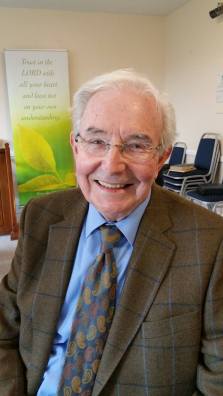
 

19th February 2017: Gerald Tait

geralt-tait-feb-17We recently welcomed Gerald Tait to take our morning service, when he preached from Luke 2:39-52, which he called ‘The eloquence of silence.’

Following on from the birth of Jesus there is silence until His ministry begins, except for one brief glimpse here. This silence must be respected. The gospels are a presentation of Jesus. Palestine was different in those days to what it is now. Jesus’ family chose to live in Galilee, in Nazareth, that the Old Testament scripture might be fulfilled – He would be a Nazarene. Nazareth had no major roads, it stood in the shelter of the hills where flowers bloomed. Jesus grew here as a child. This influenced Him. He talked about the countryside on many occasions.

This one glimpse of Jesus’ life is like a beacon. The family travelled about 80 miles for the Feast of the Passover in March / April. Thousands of people made a simple booth, a shelter to sleep in. The feast lasted 7 days. They went to the temple and offered sacrifices. Many bought 2 pigeons, unable to buy a lamb. Families reunited to worship in the temple. They would have experienced the wonderful singing of the Levitical choir. In these surroundings the boy Jesus is 12 years old. The service of Bar Mitzvah would have happened, when a boy becomes a man, when he becomes emancipated, no longer under his parents’ control. The interesting thing, when Jesus was found, He was subservient to them, He still obeyed them. His parents missed Him and searched for Him. The last place they looked for Him was God’s house. ‘And he said to them, “Why were you looking for me? Did you not know that I must be in my Father’s house?” (Luke 2: 49). Isn’t it true of us, when we are lost, often the last place we go to is God’s house?

Jesus then went back to Nazareth, to this quiet place. ‘For He shall grow up before Him as a tender plant.’ (Isaiah 53:2).

The eloquence of silence proves authenticity. The story would never have been invented like this; in a fictional world Jesus would have grown up in a palace. The silence stops invention.

It all clicks into place. It’s another 16 years until Jesus comes on to the scene again. John the Baptist prepare the way for Jesus. They grew up as cousins. There comes a time when Jesus comes alongside John and asks him to baptise Him in the Jordan. The silence gives a platform for the great announcement from heaven. When Jesus came out of the water, the heavens break open, ‘And the Holy Spirit descended in bodily form like a dove upon Him, and a voice came from heaven which said, “You are My beloved Son; in You I am well pleased.”’ (Luke 3:22). What could our heavenly Father be well pleased with? The silence of these years prove Jesus’ humility and dignity.

‘Therefore we also, since we are surrounded by a great cloud of witnesses, let us lay aside every weight, and the sin which so easily ensnares us, and let us run with endurance the race that is set before us, looking unto Jesus, the author and finisher of our faith, who for the joy that was set before Him endured the cross, despising the shame, and has sat down at the right hand of the throne of God.’ (Hebrews 12:1-2). Don’t be distracted by the things of this world. Listen and look for Jesus, who will be a blessing to you. His ministry will lift you up, He will lift the broken reed. The greatest discovery we can make is that He is always there to receive us. If we love and know the Lord Jesus He will become such a reality to us that we will hear His voice wherever we are.

On the transfiguration the silence was broken again. From the silence and eloquence of that, we come to the majesty of God. Listen to Him.

12th February 2017: Mike Viccary

Mike preached from Isaiah 2:1-5. He began by saying that Isaiah is known as the fifth gospel. It is not just a collection of sermons. The opening chapter brings Isaiah’s message to the kings of Judah and Jerusalem.

The prophet begins his message on what we would call a bit of a ‘downer.’ He has the Lord in a courtroom scene. The Lord has a word against the people. He sets the word quite sharply. Mankind is in a desperate state because he does not know God. We were created to be in a relationship with God. The prophet goes on to talk about man’s lost state, a degenerative condition. The implications of sliding into sin has an effect on the nation. The nation is also under condemnation; we have a terrible picture of Zion as a little shack in a vineyard. ‘Daughter Zion is left like a shelter in a vineyard, like a hut in a cucumber field, like a city under siege.’ (Isaiah 1:8). People don’t know God and are falling into sin. ‘Bring no more vain offerings; incense is an abomination to me. New moon and Sabbath and the calling of convocations – I cannot endure iniquity and solemn assembly. Your new moons and your appointed feasts my soul hates; they have become a burden to me; I am weary of bearing them.’ (Isaiah 1:13-14). Mankind’s condition is centred in greed and rebellion. It is a lost condition. These people are outside God’s care and concern. In John 3:36 we read, ‘Whoever believes in the Son has eternal life; whoever does not obey the Son shall not see life, but the wrath of God remains on him.’  The Lord is inflicting judgement on those outside of His love. ‘Therefore the Lord declares, the LORD of hosts, the Mighty One of Israel, “Ah, I will get relief from my enemies and avenge myself on my foes.”’ (Isaiah 1:24).

Isaiah chapter 1 is all about the lost state of man. In chapter 2 Isaiah speaks about the second coming of Jesus, the day of the Lord (Isaiah 2:10-21). In Isaiah 2:10 we see an appeal to enter into the rock – an appeal to put their trust in Christ, ‘Enter into the rock and hide in the dust from before the terror of the LORD, and from the splendour of his majesty.’ The terror of His majesty will be such an awesome occurance people will be throwing their silver and gold away to flee the terror of God. ‘In that day mankind will cast away their idols of silver and their idols of gold, which they made for themselves to worship, to the moles and to the bats, to enter the caverns of the rocks and the clefts of the cliffs, from before the terror of the LORD, and from the splendour of his majesty, when he rises to terrify the earth.’ (Isaiah 2:20-21). This image is also seen in Revelation. It is a righteous revenge (Isaiah 2:12-18).

Woven throughout these passages in chapters 1 and 2 are the promises of God. ‘Come now, let us reason together, says the LORD: though your sins are like scarlet they shall be white as snow; though they are red like crimson, they shall become like wool.’ (Isaiah 1:18).

So the contest of this is that man is lost, judgement is sure, God has a plan.

‘It shall come to pass in the latter days that the mountain of the house of the LORD shall be established as the highest of the mountains, and shall be lifted up above the hills; and all the nations shall flow to it and many peoples shall come and say: “Come, let us go up to the mountain of the LORD, to the house of the God of Jacob, that he may teach us his ways and that we may walk in his paths.” For out of Zion shall go the law, and the word of the LORD from Jerusalem. He shall judge between the nations, and shall decide disputes for many peoples; and they shall beat their swords into plowshares, and their spears into pruning hooks; nation shall not lift up sword against nation, neither shall they learn war anymore. O house of Jacob, come, let us walk in the light of the LORD.’ (Isaiah 2:2-5).

‘But in these last days he has spoken to us by his Son, whom he appointed the heir of all things, through whom also he created the world.’ (Hebrews 1:2)

‘But understand this, that in the last days there will come times of difficulty.’ (2 Timothy 3:1).

We are in the period of the last days. Isaiah 2:2-5 points to the gospel age, the days in which we live. God has set His blessing upon the mountain and his house. God has set His blessing upon us but we must not be proud, we should have the mind of Christ, we ought to be servants. The Lord spoke about Himself as being lifted up, ‘And as Moses lifted up the serpent in the wilderness, so must the Son of Man be lifted up.’ (John 3:14). He was pointing to the cross. Christ is the suffering servant. We are children of God, yet we should be humble servants. The kingdom of God has come in Christ (Isaiah 2:3-5).

What is it like to live in the gospel age? Isaiah 2:3 we are told to ‘Come.’ If you’re someone who says ‘Come’ you are inviting someone to an event. ‘Come, behold the works of the LORD, how he has brought desolations on the earth.’ (Psalm 46:8). For us, this event is Christ crucified. It’s a celebration, there’s enthusiasm. In this gospel age many people will say, ‘Come.’ There’s an excitement and joy, there is no time to wait or delay, there is an urgency. ‘The Spirit and the Bride say, “Come.” And let the one who hears say, “Come.” And let the one who is thirsty come; let the one who desires take the water of life without price.’ (Revelation 22:17). There is a sense of welcome. Do we go out and invite people into chapel? We may welcome them when they’re inside, but what about outside? We have a great gospel and a great Saviour. We should be enthusiastic and welcoming about saying, ‘Come!’ We need, as a church, to be much more inviting by being out in the world.

‘Let us.’ (Isaiah 2:3). This is corporate, not just individuals, but the whole church. It’s our job to go into all the world and preach the gospel. There’s a sense of inclusiveness. All of us are created by God in His image. There is unity in that there is only one way of Salvation. This is our one hope. We all have different talents and gifts – with the aim of getting others to know who Christ is. We are in the world as salt and light.

We need to be forgiving. There should be a humility about us. Christ came down from heaven and mixed with sinners, with the outcasts. You and I are ambassadors and ought to be representing Him in the world. We’re to be heavenly minded, to go up and think about heavenly things.

The people were called to the mountain of the Lord’s house (Isaiah 2:2). We need to tell people about this wonderful person we love – Immanuel, God with us. God has come down and is ready to receive man. You and I are also a temple of God. We are inviting people to come to the house of God – to Christ Jesus Himself – it is not a place.

He will teach us His ways (Isaiah 2:3). Even in the difficulties, He is the one who will teach us. ‘It is written in the Prophets, ‘And they will all be taught by God.’ Everyone who has heard and learned from the Father comes to me.’ (John 6:45).

God’s word will go forth from Jerusalem. You and I have been commissioned to take it out. If we do not do it, God will find a way. It is His mission.  He will teach us His ways. Spend more time with Christ. After Pentecost nothing could stop the disciples, they could not stop speaking of Christ.

So what’s it like in the gospel age?
Come – the central important thing – to the Lord Jesus Christ. Come because He is going to teach us. He will judge and make us right. Come let us go to the house of the Lord Jesus Christ. We invite people to come because we know He has done wonders for us. Follow the Lord, let us walk in the light of the Lord.


5th February 2017: Dave Norbury

david-norbury-feb-17What is so wonderful about the gospel we believe?

  • It is rooted in history.

Many of the people who stood under the cross of Jesus rubbed their hands – they had captured the troublemaker. Yet in Isaiah 53, written 700 years before, this event is predicted and described in detail. Our message is rooted in history, in an event that really happened. ‘And they made his grave with the wicked and with a rich man in his death, although he had done no violence, and there was no deceit in his mouth. Yet it was the will of the LORD to crush him; he has put him to grief; when his soul makes an offering for guilt, he shall see his offering; he shall prolong his days; the will of the LORD shall prosper in his hand. Out of the anguish of his soul he shall see and be satisfied; by his knowledge shall the righteous one, my servant, make many to be accounted righteous, and he shall bear their iniquities. Therefore I will divide him a portion with the many, and he shall divide the spoil with the strong, because he poured out his soul to death and was numbered with the transgressors; yet he bore the sin of many, and makes intercession for the transgressors.’ (Isaiah 53:9-12).

The gospel is for the very worst of people. The two robbers crucified on either side of our Lord were genuinely the sort of people you should fear, the very worst of people. They too, reviled Jesus, mocking and humiliating Him. ‘And the robbers who were crucified with him also reviled him in the same way.’ (Matthew 27:44). Yet what we find Jesus tells one, ‘Truly, I say to you, today you will be with me in Paradise.’ (Luke 23:43). Amazing!

Jesus Christ takes the very worst of people and makes them secure in heaven. He came into the world to save sinners. Hypocrisy sets you above people to look down, but you and I have wickedness within our hearts which is equally detestable. ‘For all have sinned and fall short of the glory of God.’ (Romans 3:23). This gospel isn’t restricted to the kind and good, it’s for everyone who is a sinner, everyone – the worst of the worst. And Jesus demonstrates it in His last moments of His life on the cross.

  • The gospel is about miraculous change.

During the crucifixion there was darkness between 9 and 12, but at 12 one of the robbers had changed completely. ‘One of the criminals who were hanged railed at him, saying, “Are you not the Christ? Save yourself and us!” (Luke 23:39). God has changed him. It’s almost beyond belief. Suddenly he has come to believe there’s a God. So many people think there is no God. Every single one of us during our lives, has a consciousness of God. Suddenly this man believes there’s a presence so much greater than his own. He had no conscience, but now he has God. He realises he is guilty. This is true of everyone who becomes a Christian; we become conscious of our own sin and failure. We have to believe that this message we have is about miraculous change.

  • The gospel call people to personal faith.

Not only does the gospel take someone who mocks Jesus at 9 o’clock but at 12 o’clock he worships Jesus Christ. Suddenly the man is speaking to the Lord Jesus Christ in a very personal way. He speaks to the Lord Jesus who has a kingdom. He saw, when they were carrying the crosses to the execution, Jesus spoke to the women on the road, he heard how Jesus didn’t respond to the taunts of others, how Jesus spoke to His Father. His heart moved right towards the Lord Jesus Christ. We can’t do it ourselves, but as we cry out to God, then our wonderful God draws near to us. This gospel calls us to personal faith in Jesus Christ. What a great message!

  • The gospel proclaims wonderful promises to the worst of sinners.

The Lord Jesus replies and says to the robber, ‘Truly, I say to you, today you will be with me in Paradise.’ (Luke 23:43). We have wonderful promises we can rely on for eternity. We are told, ‘Call unto me, and I will answer thee.’ (Jeremiah 33:3). ‘He shall call upon me and I will answer him.’ (Psalm 91:15). There is a death, there is judgement, but this robber will be in Paradise. What a place!

  • The gospel is filled with encouragement but there are also warnings.

We have the encouragement of heaven. Sadly, there is a great warning. One of the thieves refused to trust Jesus Christ. There is judgement. God will deal with our sin and failure. Jesus died on the cross to save sinners, but for those who reject Jesus, they will be rejected themselves.

In summary, the gospel is rooted in history, it is about miraculous change, it calls people to personal faith, it proclaims wonderful promises and filled with encouragement, but there are warnings too.


29th January 2017: Gaius Douglas


This verse forms the basis of the hymn by Dan Moen:

Who is like unto Thee
O Lord among the gods?
Who is like unto Thee
Glorious in holiness
Fearful in praises
Doing wonders
Who is like unto Thee?

Regardless of whatever happens to us, we can rejoice in what Christ has done!

God is very serious. He is loving and kind, but He is serious. Proverbs 30:5, ‘Every word of God is pure: He is a shield unto them that put their trust in Him.’ Every word of God is pure. There isn’t a word in Scripture that He will take back. The people, even the Pharisees, were amazed at Jesus’ words. Everything He said was directed to the people He spoke to and it was meant, even when He said, ‘You’re a hypocrite! You’re a fool.’ Every person without Christ is a fool, regardless of education. Without Christ they will go to hell. When we come to the Word of God we have to be serious. We have a God who cares, who loves and understands but He doesn’t tolerate foolishness. We are in those days when we have to say what the Word of God says. We have to tell people what God says. He is the creator, the Lord. There is none beside Him. Isaiah chapters 40-45 speaks of God the creator, of His wonderful work. God is able to do all, in you and through you. ‘But they that wait upon the Lord shall renew their strength; they shall mount up with wings as eagles; they shall run, and not be weary; and they shall walk, and not faint.’ (Isaiah 40:31). You have been saved by grace. He will renew our strength. We will run and not be weary. God gives us our energy.

isaih-40-31-kjv

 ‘Fight the good fight of faith, lay hold on eternal life, where unto thou art called, and hast professed a good profession before many witnesses.’ (1 Timothy 6:12). Take hold of the Word of God. In God’s name we can do it, He can direct us. He will give us the words to speak. Are you prepared to go? Take Him at His word and go and do it.

In Exodus 14 the people of Israel had left Egypt. The Egyptians realised their slaves had gone. Pharaoh sent his best men and chariots after the Israelites, who heard the clattering and saw the glinting of the steel. They began to get frightened. Behind them were the Egyptians, in front they saw the Red Sea. They were trapped. To go forward would be to go into the water, to go backward was to face destruction. They cried to Moses. who asked the Lord what He was going to do. There are times when the Lord asks us to prays, to plead. ‘I will love thee, O Lord, my strength. The LORD is my rock, and my fortress, and my deliverer; my God, my strength, in whom I will trust, my buckler, and the horn of my salvation, and my high tower. I will call upon the LORD, who is worthy to be praised: so shall I be saved from mine enemies.’ (Psalm 18: 1-3).

Moses called upon the Lord and cried to the Lord. There are times, in each of our situations, we go through traumatic times. Some may be greater than others. We may feel trapped; we can’t go back and we can’t see a way forward. Where do we go? ‘But they that wait upon the Lord shall renew their strength; they shall mount up with wings as eagles; they shall run, and not be weary; and they shall walk, and not faint.’ (Isaiah 40:31). When the Lord makes those promises, He wants us to make those real. Rely on those words and Him. Have that reality in our hearts that He does know, that He does care and He does understand. He will deliver! He has answered, He has provided.

When Satan tempts me to despair
And tells me of the guilt within
Upward I look to see Him there
Who made an end to all my sin.
Because the sinless Saviour died,
My sinful soul is counted free,
For God, the Just is satisfied
To look on Him and pardon me.

(Before the throne of God).

Take your eyes off the problem and look to Him. Satan desires to rob you of your faith But He is come that we may have life abundantly. Christ saved us for Himself, for His glory, His honour, His praise. One day we will be His delight. He looks down on us and sees Christ. He sees us as redeemed. We can rejoice in that. He has provided – even before we were born.

I’ve found a Friend, oh, such a friend!
He loved me ere I knew Him;
He drew me with the cords of love,
And thus He bound me to Him.
And round my heart still closely twine
Those ties which naught can sever,
For I am His, and He is mine,
Forever and forever.

God has already provided for us. At the appointed time Christ died. We don’t understand it, but enjoy it. Come into the goodness of it, the fullness of it. Christ has already provided and made good. As the hymn says, God will make a way where there seems to be no way.

God will make a way
Where there seems to be no way
He works in ways we cannot see
He will make a way for me

He will be my guide
Hold me closely to His side
With love and strength for each new day
He will make a way, He will make a way.

Oh, God will make a way
Where there seems to be no way
He works in ways we cannot see
He will make a way for me.

He will be my guide
Hold me closely to His side
With love and strength for each new day
He will make a way, He will make a way.

By a roadway in the wilderness, He’ll lead me
And rivers in the desert will I see
Heaven and Earth will fade but His Word will still remain
And He will do something new today.

Oh, God will make a way
Where there seems to be no way
He works in ways we cannot see
He will make a way for me.

When you woke up this morning were you wanting something new to happen to you today? He works in ways in ways we cannot see. He will make a way for us. He has done it. He has gone before you, He has been through worse than we have. Do you trust God? Christ bore our shame, burdens and sorrows at Calvary. We don’t need to carry our weight with us, Christ has done it all for us. ‘Surely, He hath borne our griefs, and carried our sorrows: yet we did esteem Him stricken, smitten of God, and afflicted.’ (Isaiah 53:4).

The Lord is so gracious and kind. ‘The Lord is not slack concerning His promise, as some men count slackness; but is long suffering to us, not willing that any should perish, but that all should come to repentance.’ ((2 Peter 3:9). He is long suffering with us. Christ has already borne our weight. We need to remind ourselves what He has done on Calvary’s cross. We can never enjoy the fullness of salvation if we carry that weight. Live for all Jesus has done for us. We have burdens but Christ has heard our voice. He will deliver. He is our buckler and shield, He is the one who will heal. Turn from yourself and look at Him.

Turn your eyes upon Jesus,
Look full in His wonderful face;
And the things of earth will grow strangely dim
In the light of His glory and grace.

Let your eyes shift away from the problems and difficulties, give them to Jesus. ‘Looking unto Jesus the author and finisher of our faith; who for the joy that was set before Him endured the cross, despising the shame, and is set down at the right hand of the throne of God.’ (Hebrews 12:2)

Look to the beauty of Jesus’ face, look into His throne room and see His glory. O the wonder of it all, to think that God loves me! This is what Miriam and the people of Israel rejoiced about. See His beauty. Rejoice in the one who has delivered and brought us through. Rejoice in what He has promised through the Lord Jesus Christ. ‘In My Father’s house are many mansions: if it were not so, I would have told you. I go to prepare a place for you.’ (John 14:2) Rejoice! As He is holy, we too one day will be holy. We have much to rejoice in.

God has brought us here this morning. Have you given thanks for this? He has looked after you. We have all to rejoice in Christ. Give Him thanks, exalt Him, lift up His name in praise and worship in fearfulness.

‘Who is like unto thee, O Lord, among the gods? Who is like thee, glorious in holiness, fearful in praises, doing wonders? (Exodus 15:11). Luke 12 is a sombre chapter. Christ has won a victory. He is an awesome God. He is doing wonders. Satan can’t take harm us, he can’t take away our salvation (verses 4-5). He can rob us of joy but Satan can never touch our soul.

One with Himself I cannot die
My soul is purchased by His blood,
My life is hid with Christ on high,
With Christ my Saviour and my God,
With Christ my Saviour and my God.

The Lord says to Moses, ‘Fear not.’ Sometimes God just wants us to sit still. ‘Then the Lord shall fight for you, and ye shall hold your peace.’ (Exodus 14:14). Just watch Him doing wonders, let Him fight for you. The Lord will take us through all difficulties.

‘Who is like unto thee, O Lord, among the gods? Who is like thee, glorious in holiness, fearful in praises, doing wonders? (Exodus 15:11). Do you believe it? Take it to heart. He is the way, the truth and the life. He laid down His life. Because He lives, we too shall live. Will you let Him do wonders? Let Him make a way in which there seems to be no way.

exodus-15-11-esv


22nd January 2017: Paul David

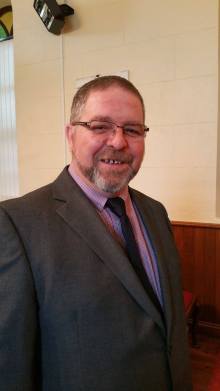
psalm-49-15Paul preached on Psalm 49, a psalm which has a lot to say to the believer but also a worry to the unbeliever. It shows a need to focus on what is important – that which is eternal. The psalm, unlike the majority of psalms, was not written to be sung but it more akin to Ecclesiastes in its style of wisdom literature. Its audience are the inhabitants of the world, it applies to everyone. The nation of Israel contained believers and non-believers – as in the church today. In verse 4 we see that it is going to be made clear what is not obvious: ‘I will incline my ear to a proverb; I will solve my riddle to the music of the lyre.’
There are two themes in the psalm:

  • The mortality of man
  • The value of the soul.

Man’s Mortality:

No-one would deny, unless the Lord comes again, we will all die. Many people seek to leave their mark on the world. It gives some people a sense of meaning. They think their name will endure forever. It gives some sense of immortality. ‘Their graves are their homes forever, their dwelling places to all generations, though they called lands by their own names.’ (v. 11). This is not the only way to seek immortality. Architects want to leave behind a bridge, politicians all want to be fondly remembered with a mention in the history books or a plaque. The hopelessness in this psalm is highlighted in verse 14: ‘Like sheep are appointed for Sheol; death shall be their shepherd, and the upright shall rule over them in the morning. Their form shall be consumed in Sheol, with no place to dwell.’ The majority of people in our country would say death is the end.

The Bible tells us Adam and Eve were intended to live forever. Only when they sinned, death came into the world. Many generations later we sin and we die. Yet we have not got used to the idea of death. By focusing on the immortality of earth, they have eternal death.

The Value of the Soul:

‘But God will redeem my soul from the power of the grave, for He shall receive me.’ (v. 15). It doesn’t matter how rich we become, no-one can redeem his brother or himself. The rich may spend their money on health and diet to stay alive but there is no amount of money that can save us from death. No amount of money can buy you out of hell or into heaven.

The Lord Jesus Christ laid His glory aside. He was the Lord of the universe yet He took humanity. He was born into a carpenter’s family, in an unfashionable town in a conquered country. He lived a humble life among sinners. He offered His life on a cross as a ransom. He took the wrath of God on Himself for our sins. For the first time ever He faced separation from His Father. The redemption of the soul is costly.

How can we apply this psalm? There is hope for a sinner. God says today is the day of salvation. The redemption of the soul is costly but there is no cost to you. Repentance and belief bring you into the family of God. The Lord Jesus Christ says, ‘In My Father’s house are many mansions; if it were not so, I would have told you. I go to prepare a place for you.’ (John 14:2) Arrangements will be made for you. If God is calling you today, don’t trifle with Him.

This psalm is an encouragement to look heaven-ward. Don’t worry what others do well. Some invest everything in the here and now, your investments are long term. Don’t lose your focus.

Psalm 73 begins, ‘Truly God is good to Israel, to such as are pure in heart. But as for me, my feet had almost stumbled; my steps had nearly slipped. For I was envious of the boastful when I saw the prosperity of the wicked.’ Don’t lose your focus on the things which are important. ‘I went into the sanctuary of God, then I understood their end.’ (Psalm 73:17).

Those who live for Christ, make an investment you make now. Offer praise from your heart, give thanks every day that your soul has been ransomed by the precious blood of Christ. God will receive you, ‘But God will redeem my soul from the power of the grave, for He shall receive me.’ (Psalm 49:15). Death for the Christian is to be received by God for His glory into heaven. Be thankful.

15.01. 2017 – Andy Millership

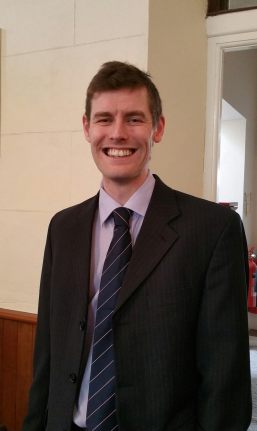
andy-millership-jan-17We welcomed Andy Millership who preached from Esther chapter 8. So few sermons are preached on this chapter, yet it is so wonderful. It is the only scripture where God is not mentioned by name. The conversation in this chapter took place around 473 B.C. between Esther and King Ahasuerus. The King tried to assimilate Greece into his empire but was defeated. This was something new to him and he sought comfort in his harem. His number one wife disobeyed him, so he got rid of her. He then launched a competition to find the world’s most beautiful woman and make her his wife. He found her – Esther. She was a Jew, an exile, in Babylon. Some exiles in Babylon had a deep-rooted racial aggrievance against Jews. Haman hated them with a passion. He was found out and executed. Esther was aware there was an on-going issue. Here, in chapter 8, Esther pleads emotionally with Ahasuerus for her own safety and the safety of her people.
Esther’s first argument was ‘if it pleases the king.’ Ahasuerus was Esther’s husband. The clothes, crown and sceptre signified a great man, the most powerful man on the face of the planet. Kingdoms cowered at his presence. A word from him and borders would be changed. He was a mighty, mighty man. Some criticised Esther for marrying him, yet she had no choice – he was sovereign over all. Esther’s opening argument, ‘If you are willing,’ shows that if Ahasuerus wasn’t willing, then nothing would happen. If he wouldn’t save the people, they were lost.

‘If this thing seems right before the king.’ Esther saw a need for safety today and for future safety. Ahasuerus could be unstable and unpredictable. Esther could not afford to leave the security of her people just for today. Esther pleads for the security of Israel.

Esther shines a light n herself and her own security, ‘If I am pleasing in the King’s eyes.’ She was pleasing in Ahasuerus’ eyes. He had seen her and he had chosen her.

When presented with all these arguments, how could he refuse? The Jews had light and gladness and joy and honour. The security of them as a people was certain, nothing could overturn that.

Why are we here? Why do we gather here in chapel week after week? May be we are reassuring ourselves that we are OK. We are here because we understand we are unable to sort ourselves out, we cannot secure our own future. In order to be saved we need to approach the King. Without His interaction, what hope do we have? What about you? Do you understand? Are you familiar with the light and joy? Are you saved? Do you know a fixed anchor that is immovable in the midst of chaos?
There is joy in knowing a Saviour who loves you and cares for you. The truth of the gospel is what we are here for. We have done nothing to deserve this. If you are to know what it is to be safe and secure, take your plea to the King. He sits enthroned above the circle of the earth. All power and authority is in His hands. Is He willing to save you? ‘For God so loved the world that He gave His only begotten Son that whoever believes in Him should not perish but have everlasting life.’(John 3:16). He gave His own Son on your behalf. It pleased the Lord to bruise Him. Is He willing? More than you can ever imagine!

If we are to approach God and His sovereignty, then what is right and just is our condemnation and for Him to turn His back on us. We need to be careful if we approach God on the grounds of justice. He sees our rebellion, our self-centredness. God cannot brush over anything because He is just. There is nothing pleasing. We have a problem. But remember just how willing He is to save you. There is one who is pleasing in His eyes. Remember, ‘For God so loved the world that He gave His only begotten Son that whoever believes in Him should not perish but have everlasting life.’(John 3:16).  His Son is the one who finds favour in His eyes. In His Son, justice is satisfied. We are lost unless the King Himself wants to save us. There is no hope outside Him. All the willingness of God to save us is seen in His Son Jesus Christ. All the justice was met in His broken body on the cross. Do you know light and gladness and honour? It all rests on Christ. Bring you pleas to the King, you have no other hope. Know He is willing to save you.


8th January 2017: Matthew Maxwell-Carr

The Christian Teaching of Original Sin

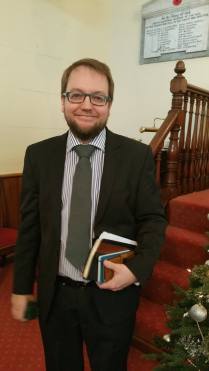
matthew-maxwell-carr-january-17This is a fundamental Christian teaching, anyone who denies it is a heretic. If you don’t believe it, you empty the gospel of all of its power.
What is original sin?
Often Christians will say because Adam sinned we have a corrupt nature. It’s true – we have inherited a fallen nature. It’s why we find it easy to lose our temper, to be jealous. However, you need to go further back. Ultimately, because of what Adam did, we are all counted guilty for his sin before God. God sees the whole human race through Adam – worthy of eternal death. This is why we are still subject to death the moment we come into this world. The human race is counted worthy of death. But in Jesus Christ, God has chosen to view those who believe in Him as righteous, as Jesus Christ is, and not worthy of death but the riches of glory.

God only sees two men in the human race; all humanity hangs from the girdles of these two men – the first Adam or the second Adam. Forget about good works, works of righteousness which you have done. It is all of faith. The big question is whether you are of Adam or Christ.

Is this a teaching of Scripture?
‘But now, Christ is risen from the dead, and has become the firstfruits of those who have fallen asleep. For since by man came death, by Man also came the resurrection of the dead. For as in Adam all die, even so in Christ all shall be made alive.’ (1 Corinthians 15:20-22). Some Corinthians were denying resurrection is possible. Paul says in verse 20, ‘One man brought death into the world, but Christ brought resurrection into the world.’ Are you in Adam or are you in Christ?

‘Therefore, just as through one man sin entered the world, and death through sin, and thus death spread to all men, because all sinned – For until the law sin was in the world, but sin in not imputed when there is no law.’ (Romans 5:12-13). There was a law given to Adam in the Garden of Eden – don’t eat of the fruit or you shall surely die. From the time of Adam until Moses there were no other laws. Adam transgressed that law. Death reigned during that time. (Romans 5:14). Humanity was in big trouble. Humanity is still in trouble. But in Romans 5:15 we read of the free gift God offers the human race – the free gift of righteousness. When we stand before God all our sins are gone. Paul compares this to the trespass of Adam, he compares and contrasts what Adam and Christ have done. Many died through one man’s offence but God has now flooded people’s lives with grace. The free gift of the gospel came after many, many sins had happened. God sent His Son into this world to bring grace and justification. If you’re justified you are guilty of no crime, you are innocent. That’s how God wants to treat us in Jesus Christ, He wants to see us righteous because of what His Son has done. Enter into this by faith alone.

In verse 17 Paul says because of one man’s sin, through his one offence, death reigns. But in Jesus Christ we have salvation. If you receive that abundance of grace, you receive the gift of righteousness. We are all sinners by nature. Ultimately, we are all guilty of Adam’s sin. Jesus was sent into this world so we might have the gift of righteousness.

‘Therefore, as through one man’s offense judgement came to all men, resulting in condemnation, even so through one Man’s righteous act the free gift came to all men, resulting in justification of life.’ (Romans 5:18). Judgement will come to all through one man’s offence. We were born into this world worthy of death. But how gracious God is. He chooses to see us fully righteous. If we enter into Jesus Christ, God won’t see all our sin because of the one righteous act of Jesus.  What was this? The giving of His life on the cross. Adam sinned because of a tree. Christ died on a tree, on the cross, in obedience to His Father. Jesus came into this world as the most astounding teacher, but ultimately He came to die, to undo what Adam did. All our sins are blotted out and we are justified. We are righteous because Christ is righteous. God takes it all out of our hands. The righteous act of Jesus Christ takes us into heaven if we believe in the Lord Jesus. Trust in Him, receive Him.

‘For as by one man’s disobedience many were made sinners, so also by one Man’s obedience many will be made righteous.’ (Romans 5:19). By one man’s disobedience many were breakers of God’s law. We came into this world, we didn’t choose to be guilt of Adam’s sin, but by God’s grace He sent Christ. It doesn’t depend on our works, what we do. Christ has done it all for us. Be saved! What a gracious set up! Believe in Jesus Christ and you will be reckoned to be fully righteous before God. By His mercy He saved us.

 ‘For by grace you have been saved through faith, and not of yourselves; it is the gift of God.’ (Ephesians 2:9). You have to believe. Just get into Christ, look to Him, see Christ crucified for your sins.


New Year’s Day 2017: Ian Middlemist

ianOur New Year’s Day service was led by Ian Middlemist, who preached from John Chapter 13:34- Chapter 14:27. Ian began asking us by saying, ‘Where are we going? Are we heading in the right direction?’. We’ve become very emotionally attached to our homes, which is quite normal, but have we become too attached to the things of this world. In John 14, the disciples were attached to earthly things. Jesus teaches them that he is going and wants them to come with him.
Ian raised three points:

  • Where are you coming from?
  • Do you want to go?
  • How are you going to get there?


Where are you going from?

In John 12:27 Jesus is troubled, He says: “Now my soul is troubled. And what shall I say? Father, save me from this hour? But for this purpose I have come to this hour.” Jesus wasn’t asking for an escape route. He came to glorify God. On the night of all nights, when He needed comfort, He comforted His friends, the disciples, who were confused. His disciples had accepted Jesus, they loved Him, but then comes the total confusion of Jesus’ death. They didn’t want things to come to an end. Jesus tells them He is going to die. It’s very difficult to face change. Are you happy?

In John 14:6 Jesus says “I am the way.” Why must there be a way? Why can’t we just stay where we are? Why aren’t we there by nature? Why don’t people know God naturally? Some people may have looked at Christianity and thought it to be too stressful – turning your back on things you love. The Bible tells us a true and honest assessment of our condition; it is an unpleasant sight to behold – we are unclean and we live in a filthy world. We need to wake up to it, we need to be made clean.

Do you want to go?

You can’t stay in the condition you live in. The penalty of sin will fall away to death itself, under God’s just judgement. Our lives are so short. We need to prepare to have a fixed abode in heaven. Jesus prepares his disciples for the glory to come.  You have to uproot. That is the call of the gospel. We need to understand the seriousness of our situation. Our homes are fading, but we are involved in a rescue effort. There is something awaiting everyone, greater than our present dwelling. Look upwards!

In John 11:48 we read of spiritual blindness. The Jews are all in a panic because they think Jesus will lead people astray, the Roman authorities will come and take their place and nation. They were fixed on their spot of land and didn’t want it taken away. Jesus says he is going to prepare a place for the disciples – their homes in heaven. Do you want to go there?  Heaven is the place where the Father dwells and He is the One we need to know and have His eternal safety and security. Jesus calls us out of the mess of our lives, and into our mansions in the sky. Look to Jesus, acknowledge there is a problem and place yourselves in the loving arms of Jesus Christ.

How are you going to get there?

In some ways every human being is looking for heaven, but what they don’t realise is it’s all about God.  That’s when they have problems; they want God to serve them. Knowing God is glorious. Such low, sinful people as us, cannot reach the highest heaven. But God himself has made a way, Jesus is the way to reach God. Jesus prepares His disciples for His departure. It was always His plan that he was going. He came to go. He had to go to the cross and then He would provide the means of cleansing. Jesus is the way. We place ourselves in His care. Let Him take you to God, to the mansions above. Let Him lead you into His presence. The disciples followed Jesus apart from one who rejected Christ. In Acts, we are told the believers were called the followers of the way. Can this be said of us?


Christmas Day 2016: Rev. Dr. Gareth Edwards

isaiah-9-6Our Christmas morning service was led by Reverend Dr. Gareth Edwards of Hill Park Church, who preached from Isaiah 9. Gareth began by telling us that God has given us the main present – the Lord Himself. We are also told in Romans that God also gives every good gift.

The year of Isaiah 9 is around 735 B.C. Uzziah, King of Judah, had just died. There was a time of stability during his 12 year reign. We read in chapter 7 that Isaiah says a child will be born who will be Imannuel, ‘Therefore, the Lord Himself will give you a sign. Behold, the virgin shall conceive and bear a son, and shall call His name Immanuel.’ (Isaiah 7:14). The two kings who the people dreaded would be wiped from the face of the earth. However, it was not all good news; an even greater enemy would come and destroy them – the Assyrians – the great super-power of the day. God’s message to Judah is that, because of sin, judgement will come at the hands of Sennacherib of Assyria. But Isaiah also speaks about a future day, the coming of another, Immanuel, who will bring salvation. This suffering servant will die for the salvation of His people. Here is chapter 9 Isaiah looks to the future, it’s the day when God will raise up the one who will be the Saviour, and all of the blessings that will come through Him. In Matthew 4 we read that the majority of His three year ministry is spent in Capernaum – a fulfilment of these very words from Isaiah, spoken many centuries before. This will be an invasion not of terror but now of grace and goodness, of the gospel.

Isaiah speaks of 5 blessings:

  • Light takes the place of darkness.

It is the light of hope. We know the light has come, the Saviour has come. We have the hope of eternal life in Him. Our future is better than our past. Everyday our future gets better, every day we experience more of the grace of Jesus Christ. It’s a step nearer. The best is yet to come.

  • Joy:

There will be no more gloom, it will give way to joy; the joy of being restored from the hands of the Assyrians. But Isaiah looks further to the future – the joy of Salvation of the Lord, that eternal life that comes with the Saviour’s birth.

  • The release from the burden of sin.

The message of forgiveness of sin, the message Jesus preached personally, brings release from bondage. The Saviour has come, the joy of salvation is our release from sin, is all because a ‘child is born, a son is given.’

  • Peace with God.

His name, Isaiah tells us, shall be, ‘Wonderful, Counsellor, Mighty God, Everlasting Father, Prince of Peace. Of the increase of His government and of peace there will be no end.’ (Isaiah 9:6). It’s a peace that passes all understanding. There is little peace in Syria today, or in Iraq, or in Pembrokeshire. People in Pembrokeshire don’t face the bloodbath of Syria, but they are oppressed by the cars of this world, but the materialism of this world. There is so little peace. They do not know the peace of God, they are in sin and have rebelled against Him. But a Saviour has come who has taken upon Himself the responsibility of the rebellion and offered Himself for the sacrifice of this sin, for those who take Him to be their Lord. All hostility has ended. They now receive the peace of God and know what it is to face an uncertain world, the anguish and difficulties, but on their own. They know that, ‘All things work together for good to them that love God, to them who are called according to His purpose.’ (Romans 8:28). Through it all, God’s purpose is to bring glory to Him.

  • The kingdom:

Isaiah speaks about a kingdom. The government will be upon the shoulders of the child. There is one empire that is eternal, the empire of God’s grace, in the person of Jesus Christ. This empire is an empire of justice and righteousness. The rule of the Lord Jesus Christ is a rule that is marked with infinite kindness, it is omnibenevolent – all good. He has come and He has conquered our lives and subdued us to His will. In righteousness He leads us and guides us. His loving kindness that fills us day after day in a harsh world, where there is little kindness; we experience His abounding benevolence, day after day.

‘For unto us a child is born, to us a son is given.’ Praise God!