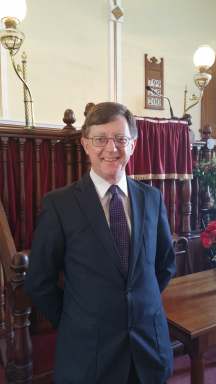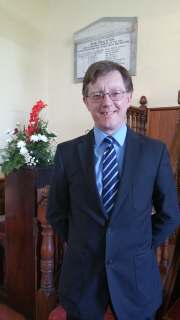
October 7th 2018: Ian Middlemist

Ian Middlemist -Oct18Hebrews 4:11-13

After the writer has been speaking about the fullness of God’s rest, here is an urgent plea to strive – don’t throw away the offer of God’s rest. We are to be diligent to enter God’s rest otherwise we are following the example of the disobedience and obstinacy of the Israelites, wandering in the wilderness because of their rebellion.

Now the focus is on the Word you must believe. We must now allow that Word to fall on deaf ears. The aim of this plea is to enter into God’s rest. It’s the goal of our lives. Our God is the end of the journey. To enter this rest we must believe in Jesus, we must trust in Him. To believe in God, to know what He is saying, you need to hear and read His Word. We need to be diligent. The message is given, we must believe it. Here, by the enabling of the Holy Spirit, is the voice of God.

The Bible is active, living.

God’s Word is living (verse 12). He exists, He is the living God. Because He exists, His Word cannot be separated from Him, therefore His Word is living. In God’s hands, by the Spirit, it is living. It doesn’t need up-dating. It’s eternally relevant. Our job is to communicate its relevance to God’s people. In Isaiah 4 and 5 you can just see how pinpoint accurate it is to our generation. The grass grows, the flower fades but the Word of God lives forever. It imparts new life to dead sinners. Because of sin, because of mankind’s natural rebellion against one another, against God Himself, all of us enter this world dead in trespasses and sins. We’re so dead we can’t even recognise our Creator God. A dead sinner cannot bring himself or herself to life. God is pleased, by His Holy Spirit, to impart new life to dead sinners. Jesus died. Because He rose again by His own will, He brought us forth by the Way of Truth. Jesus is the Christ, the Son of God.

New life for dead sinners:

God’s Word imparts renewed life to His saints – to renew, to revive and to sustain His people. His Word is perfect. His Word is active, it’s effectual, it does something. It changes things. It accomplishes what God intended to do. It is living. We need to seek God’s blessing, to pray that the Word of God will be active and change us.

God’s Word is sharp and piercing:

Psalm 19. We don’t know how to rationalise and distinguish our emotions. The sword of God opens us up. Once the ugly thoughts and rebellion are out in the open we need to humble our stubborn pride and let God’s Word work in us. God’s Word is so sharp it cuts deeply and precisely – not with the purpose of leaving us with scars; but to bring us to healing. Surgical incisions are made in a precise way. Sin a like a cancer growing inside us. Untreated, it will be fatal. Left too long it causes problems. Our sin must be killed. Many people criticize the Bible because it criticizes them. Pray, ‘Instil within our hearts a deep desire to hear your voice.’

The Word of God is revealing.

It reveals the thoughts and intentions of the heart. Anger – which men keep hidden but which God knows. Morally wrong thoughts. It’s not wrong to have a critical friend. God’s Word is able to act as a critic. The work doesn’t begin with our behaviour, it’s begins within us. God’s Word is precise and timely. Pray, ‘God speak to me what I need to hear today.’

God’s Word is powerful.

By His strength we can repent. God sees everything. We cannot hide from God. We stand naked and helpless on the inside with God. He has spoken of the rest offered to God’s people. You can enter God’s rest today. The Word of God exposes your sin. It’s hard. But we have a great High Priest, Jesus. He’s there, He’s completed His work on earth. He will help you. You must come and trust in Him and He will lead you into rest. Strive to enter that rest.

Harvest Service: September 28th 2018 Steffan Jones

Steffan Jones Sept 18

Colossians 1:1-23

We take the vastness of the universe, food and all that it provided for us for granted. It is good to stop once a year and thank God for His sustaining provision of this Earth. There are all sorts of reasons to be thankful – for church and its blessings. But let us go deeper. The blessings of this earth will one day cease. We need to consider spiritual blessings.

In Colossians 1 Paul, in prison, gives thanks to God for the church in Colossae – that they love the saints (Christians) around them, they love the church. Give thanks to God for the people He has given you, the people here in Roch who still acknowledge Him as Lord and give light and hope to a dark world. Praise God there are a people here still clinging to the Word of God.

The church in Colossae loved one another. They didn’t just meet one another, they cared and supported one another in all the trials of life and rejoiced in all the blessings of life. They have all things in common. Paul gives thanks there is a church in Colossae and there is love for one another.

Give thanks for a book – the Word of Truth. Paul gives thanks the people have accepted the Word of Truth, the message of the Bible, the 66 books of the Old and New Testament. It is a book which we can all turn to, to find hope, love and forgiveness. The Word of God speaks to our souls and brings light. It makes us wise for salvation.

Paul gives thanks for a place. He gives thanks that the people realise there is a place beyond this world where God dwells – eternity, heaven. The Bible tells us of a place beyond here and now. Our world is a fallen world; there is drought, famine, poverty, death, disease, our bodies waste away, our time in this world will come to an end. We long for something greater. Paul gives thanks that the people know there is an eternity. There is judgement. They will see God face to face.

The people of Colossae have discovered a person. They have faith in Christ Jesus. Give thanks there is a Saviour. The Christians believe in the facts of Jesus’ life. It’s historically accurate, what Christians of the period believe. Jesus was born, grew up in Nazareth and was a teacher who drew crowds with remarkable things. They believe He was raised from the dead. But there is something deeper. They believe in Him and place their faith in Him, accepting spiritual and supernatural. Christ is the creator who was in the beginning, who created all, who created us. But it goes deeper. We acknowledge we need Jesus in our life. Without Him we are in a hopeless position. Christians know about Jesus Christ, they know the history, they know the creator. But there is even more; we know we are sinners who haven’t given Him the thanks that He deserves. We are sinking and need forgiveness. There is an eternal life – heaven and hell. And so we cry out ‘Help, I know who you are, you came into this world, Immanuel. Help, save me, rescue me.’

 Because we’ve asked Him to be our Saviour we know we’re going to heaven, we cherish His Word and worship Him together. Give thanks to Jesus Christ for forgiveness today and hope for tomorrow. We have so many things to give thanks for. Count your blessings. Give thanks for the church which proclaims Him, the Word of God, heaven and Christ Himself.

September 23rd 2018: Gaius Douglas

Gaius - Sept18Hebrews 12:1-3

Throughout Jesus’ life Satan tried to thwart His plan. Jesus willingly went in obedience to His Father, ‘I have finished the work which you have given Me to do.’ (John 17:4). Isn’t that marvellous! Satan could not slay Him, death could not hold Him, Jesus is risen from the dead.

Hebrews is just like all the books in the Bible, in that we realised what a loving Saviour we have. What does it teach? Quite often we may have our own thoughts and ideas of what we want from the Bible. We don’t change our thoughts to man’s teaching, we look to the Bible. People around Jesus didn’t like the things He said. He did the things the Father told Him to do. We have to stand up for what the Bible teaches.

Hebrews 12:1 begins with ‘Therefore’ indicating something has occurred previously. In the previous chapter we read of great men and women of faith who went out saying, ‘I will go.’ Abraham went, not knowing where he was going to go. He went because God told him to go. God led him (Hebrews 11:38-40).

‘Therefore we also, since we are surrounded by so great a cloud of witnesses, let us lay aside every weight, and the sin which so easily ensnares us, and let us run with endurance the race that is set before us.’ (Hebrews 12:1). We need to be part of this verse, to bring us into a greater nearness to our Saviour. We are surrounded by a great cloud of witnesses – brothers and sisters who have gone before, surround us, encourage us. Those who have gone before us have fought the fight and finished the fight. They saw something so great in Christ, they carried on.

We are to look ahead. It matters not what others are doing, our eyes are fixed on Christ. We are looking at the one who has gone before, who accomplished all, who came in obedience to His Father. Look unto Him, not to Him, unto Him. He humbled Himself. He says He has made it possible for us to reach the goal and we will! We will get there because it is not by our might or power, but by the Holy Spirit. Because He lives, we will live also. Let’s be encouraged. We’re going to get there. The eyes of the Father sees us perfect in Christ, one in Christ.

Let us set aside every weight. The Bible says set aside those things that will hold us back from following the Lord. Focus upon Jesus, the author and finisher of our faith. Sometimes we bring things that become a dead weight – traditions, practices, encumbrances, unprofitable conversations – which hold us back and become a drag. Even though we want to go on, we are held back. These things stop us from following Jesus. So often we miss out. What is stopping you and me, holding us back?

The Lord Jesus Christ went and sat by a well and spoke to a lady no-one else wanted to speak to because He wanted to win her for Christ. Nervousness is a weight which prevents us from speaking about Christ. So often we are not bold for Christ. Let us set aside every weight. Jesus reassures us, “Come to Me, all you who labour and are heavy leaden, and I will give you rest. Take my yoke upon you and learn from Me, for I am gentle and lowly in heart, and you will find rest for your soul. For my yoke is easy and My burden is light.” (Matthew 11:28-30) Jesus willingly laid aside every weight and He spoke for His Father, even in the most extreme circumstances, when His life was threatened.

The Bible says, ‘Their sins and their iniquities will I remember no more.’ (Hebrews 8:12). Sin entangles us and it ties us up in knots. Satan says ‘You can’t go.’ Sin that so easily entangles us, nags at us – Satan is a nagger. You don’t want to go or say something because you remember that sin, it nags us. The Lord Jesus Christ has forgiven us of all sin and He has chosen to forget. Every time Satan brings these things to memory, we should remember this. Do you think there is a sin in your life Jesus Hasn’t forgiven? You cannot lose your salvation. You are safe and secure because the blood of Jesus Christ saves us from all sin, ‘ But if we walk in the light, as He is in the light, we have fellowship on with another, and the blood of Jesus Christ His Son cleanseth us from all sin.’ (1 John 1:7). Sin ties us down and traps us from going on. If sin holds you back, it shouldn’t. Put it behind you because He’s done it already. ‘But one thing I do, forgetting those things which are behind, and reaching forth unto those things which are before, I press toward the mark for the prize of the high calling of God in Christ Jesus.’ (Philippians 3:13-14).

Let us run with patience. It does not come easily. Patience takes us to the foot of the cross. We see the one who was patient in every aspect of His life, the one who went to Calvary’s cross. Time and time again they tried to stop Jesus, yet He waited patiently. Everything happens at the appointed time (John 12).

So often we want to run ahead and do everything our own way. My Saviour has all the energy, all the power, all the might, yet He waited until the appointed time. He could have just said the word but He waited (John 11). He was patient and did everything at the appointed time.

So often we says ‘Let’s go ahead and see what happens,’ and want the Lord to catch up. We strive to be in the position we want to be. We need to be patient. Sometimes we are impatient and go ahead, sometimes the Lord allows it. We then wonder why it goes wrong. ‘Show me thy ways, O Lord; teach me thy paths. Lead me in thy truth, and teach me: for thou art the God of my salvation; on thee do I wait all the day.’ (Psalm 25:4-5). Wait upon Him, learning patience. Patience marked His footsteps. He was the creator, the Word who became flesh, who went to Calvary’s cross, patiently waiting. Be patient. ‘But let patience have her perfect work, that ye may be perfect and entire, wanting nothing.’ (James 1:4)

In the fullness of time Christ died. He will renew our strength and bring us to blessing. Let’s lay aside every weight and wait on Him. What is holding us back? What are the entanglements in our life that stop us from doing what He wants us to do. Let Him lead us into truth.

September 16th 2018: Mike Viccary

Mike Viccary - Sept 16th 2018Revelation 1:9-20

Who is this Jesus, part 2.

Following on from last week’s sermon on the opening verses of Revelation 1, this message focuses on the voice of the Lord (verses 9-10) and the vision of the Son of Man (verses 10-16). John is on the island of Patmos because he loves Christ and has confessed Christ. He is in exile, in prison. One Sunday he was in the Spirit, putting aside the things of this world, to worship Jesus. He has focused his heart and mind. All of a sudden he heard a loud voice, like a megaphone. This is not the first time in Scripture we have the Lord speaking behind someone (Isaiah 30:19-22 – a very pregnant prophecy, Ezekiel 3:12). People are learning from teachers. As we share one another’s lives and share the scripture, we are teaching one another. One who witnesses or testifies to Christ is a martyr. Their testimony of Jesus Christ is the word of God in person. Talk to one another about it, it becomes part of who you are. John heard the loud voice of the Lord Jesus, a megaphone. Sometimes we need a megaphone because we’ve become lethargic. Hebrews 2:1. We have to find time to eat the word of God.

The loud voice here is a declaration stating truth. It is also instructive. The Bible is full of calls to wake, to stand up for your faith. The revelation came to John and then he is told to write it down for you and I, the entire church. This is God’s love letter to you. It alone is the objective truth (Revelation 1:5, Hebrews 1). Each and every one of you ought to have a personal revelation of the Lord Jesus Christ. It’s very easy to come to Bible study and say, ‘That was good.’ But we need to know Him. You may not hear a voice but have a deep conviction. John could only pass on what he received because he witnessed it (Revelation 1:2). You and I must be concerned to witness what you and I have witnessed.

2 Peter 1. God is so powerful. He gives us everything we need to live a godly life through the knowledge of His Son. When you want to seek God, get into scripture and each other. 1 Timothy 1:5. What do I need to change about the way I am living? Be ready to witness for Christ.

The vision of the Son of Man. This is Christ, the risen, conquering King. This is holiness – the whole of Him is holy. We are called to holiness. His eyes see right into our hearts. His feet are on fire, white and hot. The brass symbolises stability. It is an awesome picture of the Lord. The voice is like a trumpet, but also the sound of many waters. God’s Word may be disobeyed now but when the Lord comes we will be speechless. The seven stars are the pastors, leaders of the church. The two edged sword (Hebrews 4:12) cuts right to the chase. It goes forth. Christ’s countenance, His whole being, was radiant in glorious beautiful array.

September 9th 2018: Mike Viccary

Mike Viccary -9thSept18Revelation 1:1-8: Who is this Jesus?

What does the future hold? What will happen to the world in the next decade? What new technologies will change and challenge us? Such questions are being asked continually. What does the future hold?

The Lamb that was slain is on the throne. There’s an appeal to all of us to come to Christ. We need to know Him more today than yesterday. Revelation is also a book of warning to those who choose not to love Christ.

This is the revelation of Jesus Christ. It came from the Father, about the Son. This is different to the book of Genesis. Genesis is a book of history, Revelation is a book of prophecy. It bears a close relationship with the book of Daniel. John was brought into heaven and witnessed these things. This books is a blessing to all those who read it, to those who heed this prophecy.

After the general introduction in verses 1-3 we are then given John’s greeting in verse 4. The greeting is not just from John but comes from the Trinity. How wonderful! The Trinity say to you this morning, ‘Grace, Peace.’

In verses 5-6 we hear a doxology. Every time we read the Word of God we should praise His name. Then, in verse 7 we are given a declarative warning. We look forward to the coming of Jesus Christ, but there’s a warning of judgement.

The opening is about the statement and revelation of God.

Christ Jesus is the second person of the Trinity. The Father is represented first. The seven spirits refers to perfection, completion, the action of the Spirit of God in all He does. The seven churches are representative of the churches in all the world. The order of the Trinity here is not the usual Father, Son and Holy Spirit, but Father, Holy Spirit and Son. The focus is on Jesus Christ.

In verse 5 we see three title given to Jesus Christ:
the faithful witness;
the firstborn of the dead;
the ruler over the kings of the earth.

Jesus Christ is the faithful witness. This is so comforting. We also read this in Revelation 3:14, 19:1, so it is not just a passing reference. He is the Amen. Why? He has given us this revelation. He is before all things. He alone has come from outside creation into creation and He spoke. He is the objective. He is also Alpha and Omega, the first and the last. He encompasses the entire span of history. He stood amongst the seven lampstands. He is here, at the lampstand of Penuel Baptist Chapel. He is walking amongst us. He knows our situation. He can see deep into the heart. He speaks truth. He instructed John to write down what he said so that we might benefit. When God speaks it is written down and preserved.

Christ is the only person to die voluntarily, to rise again and come back to new life in a new spiritual body. No-one has seen God at any time. When we see Jesus we see the Father – that’s how we see God. Only Jesus has seen God in all eternity.

Christ is the firstborn of the dead. He died in our place to pay for all our sins, to provide to us with the righteousness that comes by faith. He is the Lamb slain. He is the firstborn, the one who has the Father’s inheritance. He was prophesied in Psalm 89. In Colossians 1:15 we read He is the heir to all things. Will you share in His inheritance? The meek will (Matthew 19) inherit the earth, life forever (Matthew 25). We read of our inheritance in Ephesians 1:18. In 1 Peter 1:4 Peter writes we come ‘to an inheritance incorruptible and undefiled and that does not fade away, reserved in heaven for you.’ Earthly inheritance doesn’t last but the inheritance we have will never be spoiled – and it’s eternal! We, as joint heirs, will inherit too.

He is from the dead, born into this world of dead (valley of dry bones – Ezekiel).Christ came into that and He lived amongst them. Nothing could harm Him. He had to submit to death but is risen (Revelation 1:18). He alone is the source of life, the author of creation and the new creation. Do we live to God or do we get caught up in the world?

He is the ruler over the kings of the earth. There are two kingdoms – the kingdom of this world (1 John 5:19) and then there are those of the kingdom of the ‘Son of His love.’ (Colossians 1:13) Nothing happens in this world unless God allows it. He always brings good out of things. For our comfort we need to remember He is the ruler of the kingdoms. The responsibility of believers is to demonstrate what it means to ‘Kiss the Son.’ Christ loved us, He actually washes us. As you read the Word of God, know His cleansing experience. He makes us kings and priests in the new kingdom.

In verse 8 we are given a self-revelation of Christ. There is a problem here if you are reading the NIV as there is an omission. The text is pointing us to Christ, Christ is the Alpha and Omega. Jesus is the beginning and end. Don’t worry! Before time began, after time has finished, Jesus is God. The Lord Christ is our faithful witness to salvation, to who God is, to who we are. He is the one who has told us how it is. Are we faithful? When we hear His word, do we say ‘yes?’

September 2nd 2018: Ian Middlemist

Ian Middlesmist-Aug 18Hebrews 4:1-13

What are you seeking, dreaming of? Thomas Moore had the concept of Utopia, a desire to explore the idea of a perfect society. Today, the dream still pervades. This is probably different for each one of us. Perhaps it’s memories of better times, happier days?

What is your greater Sabbath?
We are a restless people. On the seventh day God rested from His creation. Sabbath is the seventh day. God rested from all His work. What does that mean? He put His feet up because He had worked really hard? He had a snooze? Our God could have created a billion universes in one moment if He wanted. We are His interest – men and women. The Lord’s rest was not inactivity. The universe is held by His power. He’s been active ever since. God is intimately involved in creation and our lives. It’s good to rest. Creating men in the image of God was not the end of His work – His purposes were not fully achieved, there was more to be unveiled. The purpose of rest is to point us to the eternal rest. The Saviour was a shadow of the things to come, the reality is found in Christ (Colossians 2).

The promise of rest requires a response (verse 1). The promise of rest for Israel was more than entering the Promised Land. It’s a promise that still stands. Disobedience, grumbling, complaining – refers  to the knowledge God has of our hearts. God knows our heart. He knows if we are believing or unbelieving. He knows some could attend church just to prove a point, He knows if we are not going to listen. He knows some will open the Scriptures but will not listen. In the end God will expose it all.

In verse 2 we are given the reason for the Israelites’ unbelief. Even though the gospel was proclaimed, it was met with unbelief. They perished. The gospel invitation goes out though churches and ministries all the time – to receive rest in Jesus Christ. It is a command of the sovereign Lord, come to Him. Great things have been done. Jesus Christ has come, become man. His miracles proved His deity. All has been done for you to believe. Turn to Him today. Rescue has been demonstrated. Jesus really died and really rose again. He lives! Look to Him. Believe in Him.

Will you believe? The promise is there, the invitation stands. Have you repented, confessed your sins? The time for that response is now – today.

The nature of rest (verse 8). Jesus is compared with Joshua leading the Israelites into rest in the Promised Land. However, this is far inferior to the work of the Jesus. Jesus provides us with eternal rest for our soul. Psalm 95 is quoted again. God’s promised Israelites would come to a land of milk and honey, a land where they were free to worship God. Yet the people go through a time of turmoil because they were not trusting in Jesus but doing what they wanted. David wrote a warning in Psalm 95 as well as a promise – it is possible not to enter God’s rest. The Canaan rest is just a shadow of the promise to come.

The nature of the rest involves ceasing from your own work, trusting in the work that has been done. It is a rest in the Lord, He has done it all. Trust in Him. Rest in His goodness, “Come to me, all you who are weary and burdened, and I will give you rest.” (Matthew 11.28). Ultimately, the promise is of eternal rest.

We are again and again encouraged. He will give us strength ‘I can do all things through Him who strengthens me.’ (Philippians 4:13). The life I live, I live by faith. Learn to function from a position of rest and truth, to avoid burnout. Utopian dreams will fail. Rather, listen to the word of God and obey. Be thankful for the Sabbath rest, remembering Jesus has done it all.

August 26th 2018: Alun Johnson

Alun Johnson - August 18Acts 2:42-47

Acts is a roadmap of the progress of the church, it presents Christianity on the march. Do people outside our churches see us as Christians on the march, or closing ourselves away from the world around us? Perhaps it is a little uncomfortable for us – Christianity on the march suggests action, marching for Christ.

In Jesus’ eyes there is no such thing as Christians not on the march (Acts 1:8). The early chapters of Acts link to the end of the gospels, the disciples being witnesses to the ends of the earth. Yet they stayed in Jerusalem waiting for the gift of the Holy Spirit. This was the key. The promised Holy Spirit came, those ordinary Galilean fishermen stand up for the cause of Christ in front of thousands of Jews to fearlessly to proclaim the gospel. As Peter stands and preaches a wonderful sermon, Christianity begins its wonderful march.

Christianity on the march stands up, has confidence in the Bible, makes much of the death, resurrection, reign and return of Jesus Christ and tells the world to repent.

What does Christianity on the march look like? What does a Spirit-filled church look like?

The early days of the Christian church were the best times. But in chapter 5 behaviour comes into church that you wouldn’t expect. These verse have much to teach us.

  • A Spirit-filled church is a church that learns (verse 42). The early Christians were devoted to the apostles’ teaching. Interesting, their 3,000 new converts had just witnessed a massive supernatural event. Yet, for them, they didn’t want more miracles, they wanted to learn, they were hungry to know more. They were hungry for instruction. Throughout the New Testament believers grow from listening and studying the Bible (2 Timothy 3:14).

The question is, what did the apostles teach and preach? 2 Timothy 1:16, 1 Corinthians 1:23, 1 John 1:1. They taught and preached Jesus Christ – that’s it! The person and work of Jesus Christ as witnessed by them first hand. What about us? Are we devoted to what the apostles taught and preached? Do we spend time devoting ourselves to the Bible? Do we live by this scripture day by day? James 1:22

What is our attitude as we come to church Sunday by Sunday? Do we come with expectation, that the Word will do something in our lives? After the service, what is the nature of our conversation?

  • A Spirit-filled church is a church that loves (verse 42). We use the word ‘fellowship’ a lot. Fellowship comes from the Greek word ‘Koinonia’ which means ‘to have in common.’ What did the early believers have in common? They had God Himself (1 John 1:3, 1 Corinthians 13:14). Our church fellowship is Trinitarian, with the Father, Son and Holy Spirit. What gets us through the hard times is having God as our ‘koinonia.’ The early church believers also had in common what they shared as believers, what they gave as well as what they received. They shared their possessions (verse 45). As modern, Western, affluent Christians these are disturbing words. Do we literally sell all possessions and give everything to the poor, like monastic orders? The answer comes in verse 46 – we can observe that the early Christians still had homes. In verse 45 we can see they gave as they had need. Giving was occasional and met certain needs. Giving was voluntary (Acts 5). But, you can’t avoid reading verses like this and seeing there was a huge generosity among the Christians, particularly with regard to the poor and needy. They early Christians loved in deed and word. They shared and gave, shared and gave. I John 3:17. Are we generous? We have gifts from God to give away. Do we truly care for the needy in our world? James 2:14


  • A Spirit-filled church is a church that worships (verse 42). The early Christians were devoted to the breaking of the bread and to the prayers. They were devoted to corporate worship, they were devoted to the Lord’s Supper and to the prayer meetings. They were devoted to remembering the Lord’s Supper. When we see communion laid out, what’s in our hearts? JC Ryle states, “No wonder that an ordinance was specially appointed to remind us of our Saviour’s death. It is the one thing which poor, weak, sinful man needs to be continually reminded.’ Are we glad of the opportunity to break bread together as a company of God’s people, to have a chance to be bowled over by Him?

The early Christians were also devoted to prayers, the prayer meeting. Isn’t it striking that these new believers weren’t devoted to asking for more miracles but to the prayer meetings? What is my attitude to the prayer meeting? Do we ache to be at our church’s prayer meeting? Daniel was devoted to prayer (Daniel 6:10). He prayed even when it meant the death sentence for him.

What about the style of worship? The style of worship of the early church had to be varied (verse 46). It took place daily in the temple courts as well as in spontaneous meetings. It is a good balance to have.

Observe, their worship together was both joyful and reverent. They broke bread in their homes and had glad and sincere hearts. What do you expect! They were Christians so had every reason to be joyful. They were understandably overjoyed that they were Christians, they were chuffed to bits. Are we amazed to be in this privileged position? Do we meet together in exaltation? John Stott wrote, ‘It is right in public worship to be dignified; it is unforgiveable to be dull.” The early Christians were reverent, filled with awe. They saw God’s holiness, His majesty, His otherness. Do we have that view of God? Isaiah 40.

  • A Spirit-filled church is a church that has an impact on the world around it (verse 47). The climax to this passage, which also should be the climax of our hearts too. The Lord added to the number daily. The early believers had not forgotten the world; they were witnessing. A Spirit-filled church evangelises. The book of Acts shows Christianity on the march. Even persecution doesn’t stop them from witnessing. Acts 8:4. They gossiped the gospel wherever they went. Who is bringing the people to new life? God, the head of the church. That’s why, however we feel about our own witness, we carry on witnessing because it’s out of our hands, it’s in the Lord’s. The witnessing has to be constant, daily.

Let’s pray we show more of the marks of a Spirit-filled church.

August 19th 2018: Alan Davison

Alan Davison - August 18“Not everyone who says to me, ‘Lord, Lord,’ will enter the kingdom of heaven, but the one who does the will of my Father who is in heaven. On that day many will say to me, ‘Lord, Lord, did we not prophesy in your name, and cast out demons in your name, and do many mighty works in your name?’ And then I will declare to them, ‘I never knew you; depart from me, you workers of lawlessness.’
Matthew 7:21-23

The Lordship of Christ

These are strong words from Jesus, looking at those who truly accept Him as Lord and those who don’t. Verse 21 is associated with the parable of the Way. Jesus gives a warning of a merely verbal profession of faith. He is demanding we make an absolute choice. If Christ is not your Lord, you are not saved. There’s only one way to God.

There are contrasts to be seen here. When you go to the wide gate you can carry a lot through – sin. But you need to give this up to go through the narrow gate. We must come to a living faith in the Lord Jesus Christ.

Everyone travelling along the wide path seeks their own way. Those who travel on the narrow path travel in fellowship, it has clearly defined boundaries, God’s word guiding us in how to behave. Jesus’ direction is for our own benefit. Matthew 11:29-30. He will help us.

There’s also a sharp contrast in the destination. The narrow life leads to life, the broad way leads to destruction. The problem is this grates with our culture which likes choice, it doesn’t want to be restricted.

Jesus follows up this parable by warning against false prophets. These are found by the narrow path, preventing people from taking the narrow path. They will likely affirm that they are followers of Jesus, but do not have Jesus as their Lord.

‘Strive for peace with everyone, and for the holiness without which no one will see the Lord (Hebrews 12:14). What is holiness? J. C. Ryle states, “A holy man will follow after purity of heart. He knows his own heart is like tinder, and will diligently keep clear of the sparks of temptation.”

Jesus considers this to be an important issue because He expands in verse 22. He says there will also be people who not only make a verbal profession of faith, but also an intellectual profession. Many even think they are Christians themselves (Simon the sorcerer, Acts 8:9-24).

We see Jesus follows this statement with the parable of the two builders. Why do so many people fill their lives with all sorts of things – possessions, careers? They realise something is missing. They look for a belief system that can accommodate the rest of their lives but Scripture tells us they will be like the foolish man who built his house on sand.

Jesus presents us with a stark choice; build on the rock, Himself, or something else. Both of these men in this parable hear Jesus. Neither is ignorant, but one has decided not to listen. There is a parallel with 2 Corinthians 5:17. To be a new creation means we start again, we are re-born spiritually. Building on a new foundation will mean change. We will have a different perspective. We will look at things in light of scripture.

Foundations are only tested when the storm comes. Both houses are subjected to the same treatment. As Christians we still have troubles but we have Jesus Christ to take us through them. To be a Christian is to acknowledge Jesus as our Lord and Saviour.

Jesus offers Himself. We can depend on His foundation. Every human being faces a stark choice. Jesus is the one who saves us. It will be a difficult path at time but eternity lies at the end. We don’t want an intellectual understanding. We need to out our faith into practice.

We see the crowd’s reaction in verses 28-29. There is no indication here of anyone coming to faith. These people play out the negative side of the parable Jesus has just told. In Matthew 8:1 we see Jesus had many followers. Some may have referred to Him as Lord, but this may be just verbal. His teachings elicited astonishment but they did not put it into practice. They needed to recognise Jesus was God. Even though He made it quite plain – (verse 21, ‘My Father’) – a direct claim to divinity, and again in verse 22, in Jesus’ name, and again in verse 23, He will sit in judgement in the role of God Himself – still they people denied Him as Lord.

See Jesus for who He truly is. Earnestly seek to build holy lives.

August 12th 2018: Ian Jones

Ian Jones-August 18Luke 15:11-24

The beginning of this chapter sets the scene; people gathered to listen to the Lord Jesus Christ. One of the groups who loved to gather were the publicans and sinners. The Lord Jesus spoke to them in a very special way in which they were drawn to listen to Him. Amongst them were the Pharisees and Scribes, who complained because Jesus received sinners and met with them. In response, Jesus spoke three parables: the lost sheep, the lost coin and the lost son. In each, all have the same meaning – to rejoice when something lost is found. This is something which the Pharisees knew nothing of.

This Prodigal Son is probably the best known of all Jesus’ parables. The younger brother represents ourselves, the Father is Himself and the eldest brother the Pharisees. The younger son comes to the Father and says, ‘Give me my inheritance’ (verse 12). He has little respect for his father. He doesn’t say, ‘Please,’ or ‘May I have?’ No, he says, ‘Give me.’ Right fromstart the relationship is revealed between the young man and his father. He wants his money now. In other words, he wants he demands his independence, he wants to live his own life and not be tied down. If ever there was a boy who broke his father’s heart, it would have been this prodigal son. He is saying, ‘I don’t love you, I don’t want to be in your presence anymore.’ He wants his father dead so he can have his inheritance, an inheritance which wouldn’t usually be given until his father had died. It’s an unlikely event. The father is loving, kind and generous but the son days he doesn’t want any more to do with him.

With God, our Father, this is how everyone has reacted. We want to live our lives our own way, the way we want, not to go His way and be in His presence. It speaks volumes about ourselves. We may not be completely like him – he’s extreme – but in some way or other we’re like the prodigal son. It speaks of a time before our conversion, some of us may still have God outside our lives.

The Father responds by dividing the inheritance; one portion to the younger son and two portions to the older son. The younger son received a lot as his father was rich.  Why did the father give him what he wanted? We don’t give everything our children ask for. Why should God allow us to live our lives as we choose today, knowing the lives we would choose would not be good for us? Our lives are not ours. We’ve been created by God. The prodigal son went off and lived as he chose. But there’s a day coming when we have to appear before God.

It didn’t take long for him to pack up and leave (verse 13). He went as far away as possible. That’s what lots of people do today, they don’t want anything to do with God. Most people are in that far off country, enjoying themselves, doing as they please.

It doesn’t take long for the prodigal son to waste all, he has expensive tastes. He just thought about living it up, enjoying himself. His lifestyle was one of excess. During that time friends came and joined him. They were living away from God. Not surprisingly, he lost all. Then there was a severe famine. He began to be in want. His plans hadn’t worked out as he thought, he was now in debt. With the famine, work was hard to find. It was a bad experience. This can happen to us. Something happens, goes wrong in our lives. What are we to do?

The best thing for the prodigal son was to go home. Now all his money was gone he was on his own and had nothing. We see people today who go through all kinds of difficulties, yet they will not turn to God.

The prodigal son stuck to a person of that country (verse 15). He was a foreigner, yet he attached himself to a person who didn’t know him or care for him. Because he didn’t care for him he sent him into the fields to feed the pigs. Jesus, in telling this story to a crowd who didn’t like pigs, who didn’t eat pork, was showing them how terrible it was for this man. He was now found amongst the lowest of the low, in a job a Jew would have found to be the worst of all. The situation became far worse. The famine was so hard there was not enough for the young man to feed himself, he would have gladly filled his stomach with the pigs’ food. He wanted to get amongst the pigs and eat their food. This man had fallen so low, it couldn’t have got any worse.

The heart of this parable is verse 17, ‘He came to himself.’ It came from being in a state of need. It implies he had not been in his right mind, living in a way that wasn’t real, wasn’t reality. He awakes to his situation. He sees himself. This is the work of the Holy Spirit convincing him of his need to return home, to come back to God. He recognises how futile it is to live as he was. Friends, have you come to yourself?

God is merciful. The son rehearses what he will say when he returns to his father (verse 18). He is truly repentant. He arose the next day and went home. He put into practice what he thought.

On his way home, when he was still a great way off, his father saw him. He knew the son couldn’t make it on his own, that his lifestyle had made him weak. He needed his father. It’s a picture of Jesus seeing us when we were a long way off. Jesus died for our sins on that cross. Here is true repentance, seeing yourself as nothing, looking upon the Lord Jesus Christ as your lord and Saviour, the one who died on the cross for us.

The father saw his son and rushed out to meet him. Oh what love! Why would God want us when we’ve turned our backs on him and rebelled? God waits, looks and observes us. The moment we repent He comes to us with His open arms, ready to receive us. The son starts talking but the father spares his humiliation (verse 22). The son was raised up to be the son of the father. He was given the robe of righteousness. When we repent, He delights in us. There is great rejoicing in the child of God who returns to His Father. What joy there is in church when we see people returning to God. Do you know that joy? Have you lived that prodigal life and returned?

August 5th 2018: Ian Middlemist

Ian Middlemist-July18-Hebrews 3:7-19

In Pilgrims Progress John Bunyan names people appropriate to their character. Christian tries to persuade Obstinate that their city is about to experience the wrath of God. The answer to this is the Bible. Obstinate thinks Christian is mentally unbalanced and returns home. Obstinate is hard-hearted, a grumbler. He has a lack of faith and will refuse to turn from his ways. In the Old Testament we read of a whole generation marked by their obstinacy (Hebrews 3:16).

God’s patience with man will one day come to an end. Often, in this life God gives to man what he wants. Today we have the greatest opportunity – to turn, if we will not harden our hearts.

This letter to the Hebrews addresses the problem of apostasy. Believers are reminded of Israel’s failure in the wilderness. We must go on believing day by day, serving, living in the gospel. We must come to the cross,  rely on the cross, day by day. Are we still believing in the gospel?

What is the gospel? To believe in the gospel you believe in Jehovah alone who sent His own Son into this world. He lived a perfect life. We have not lived a perfect life. We have fallen far short of the glory of God. But Jesus died once for all our sins – sins past, present and future – sins are forgiven. We are joined to Him by the powerful working of the Holy Spirit. We would be lost without Him, but Jesus has personally joined Himself to us therefore we must look to Him.

We’ve gone wrong – messed up. But now, because we’re in Christ, we’re where we ought to be – living in Christ. When you’re in Christ, you’re the person you’re meant to be. We must live in Him, joined to Him in faith. That’s how we experience dynamic growth.

In Hebrews 3 we see the reflective working of Psalm 95. This psalm was regularly preached each Sabbath day in the early church. The Sabbath is the day of rest, a day of resting in the Lord, trusting in Him to do it all for you. This Psalm is a reference to those unhappy events of Exodus 17 and Numbers 20. The people forgot their previous deliverance and complained about present difficulties. God was deeply grieved by His people’s doubts and loyalties, so they did not experience the Promised Land. It is a warning. Do not harden your hearts and fail to look to Jesus Christ so that you can enter into rest. Don’t let troubles of this world divert you away from the gospel. Turn afresh to Him now before it’s too late.

There’s a great opportunity. There is a contrast with Moses and Jesus (Hebrews 3:1-6), followed by another contrast, this time between Moses and the Israelites (Hebrews 3:7). The Israelites were not faithful, they wanted things their own way. They had been set free from the bond of the Egyptians, yet this was not their greatest opportunity. They entered the Promised Land – still this was not their greatest opportunity. There is a rest that is coming that is better – rest in Jesus Christ. You can enter God’s rest today. Now!

Opportunities in this life are here just for the moment. Too often we miss out because we are waiting for them to fall into our life whilst they are tapping on our shoulder. Respond to the call to turn and trust in Jesus Christ. The Israelites thought life would have been better in Egypt, but they were living in a fantasy world, not reality. There is nothing better than Jesus Christ. Respond today. Turn to Him today. True rest will be yours.

How do we turn? Hear, believe, obey and share the Word of God.

Hear. Psalm 95 is quoted three times; ‘hear’ the Word. Don’t listen to this world, to sin. Tune into the sounds of heaven. Daily we need to hear the Bible. We need to be people of the Word. We need to spend time daily hearing heaven. Pay less attention to the sounds of this world.

Believe. The person who listens to this world will certainly fall away from the living God (Hebrews 3:12). Believe in what Christ has done.

Obey. Act upon the Word immediately, not tomorrow. We’re under grace, we must obey.

Share the Word. Daily, we need to follow the Lord, exhort one another. It’s a daily exercise. In the New Testament there is nothing of Sunday, only Christianity. Here is a picture of daily exhorting – through visits, meeting up, phone calls, texts, letters, offering practical help. This is to be done daily, urging one another not to be distracted by sin. We think people are OK because they are sitting in the pew. The world is powerful, be aware of the seriousness of sin. Daily encourage and exhort one another. Let’s learn from the Hebrews of old and not harden our hearts. We must turn to Jesus Christ. Let’s encourage one another to turn away from this world and focus on Jesus Christ.