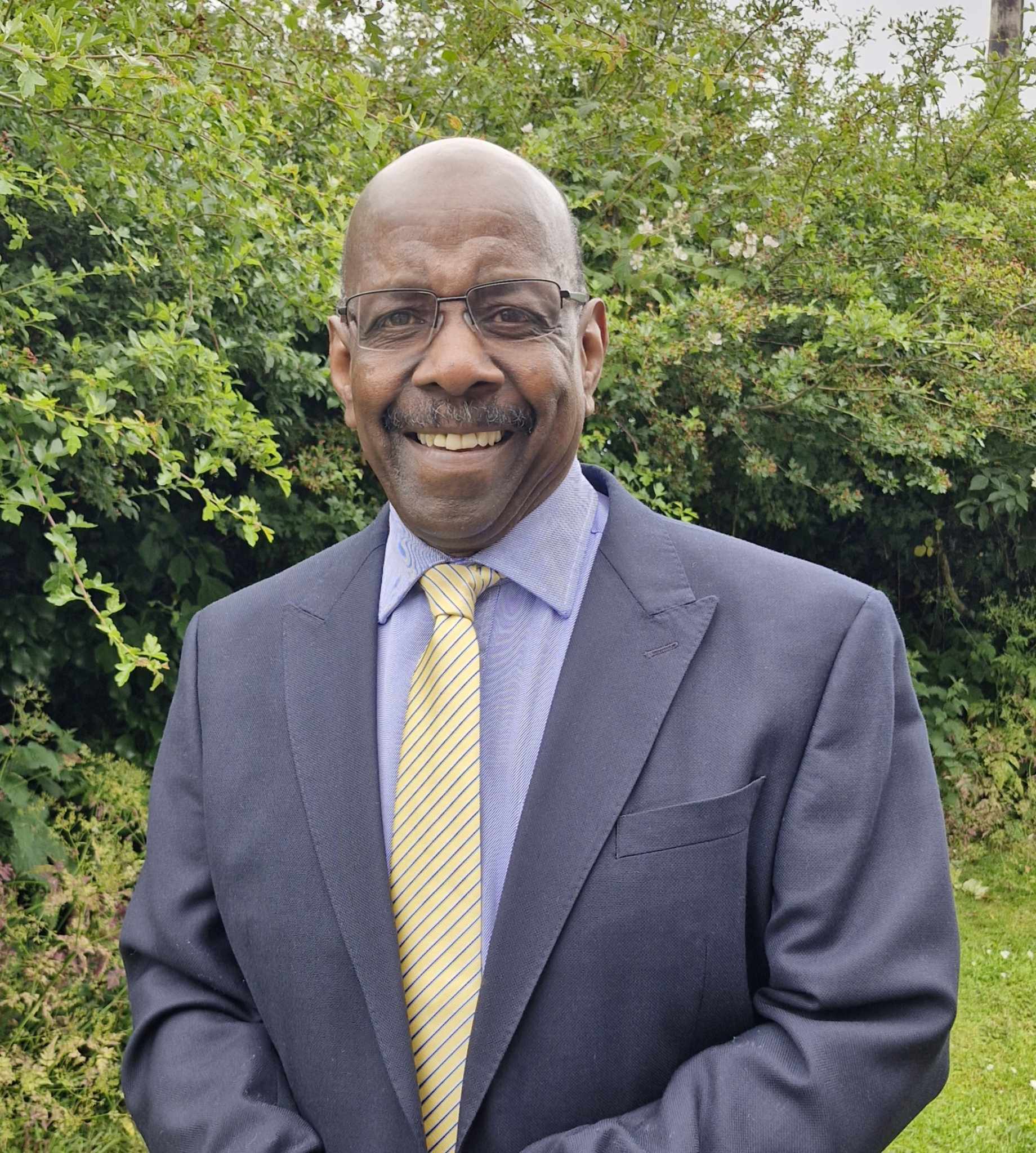
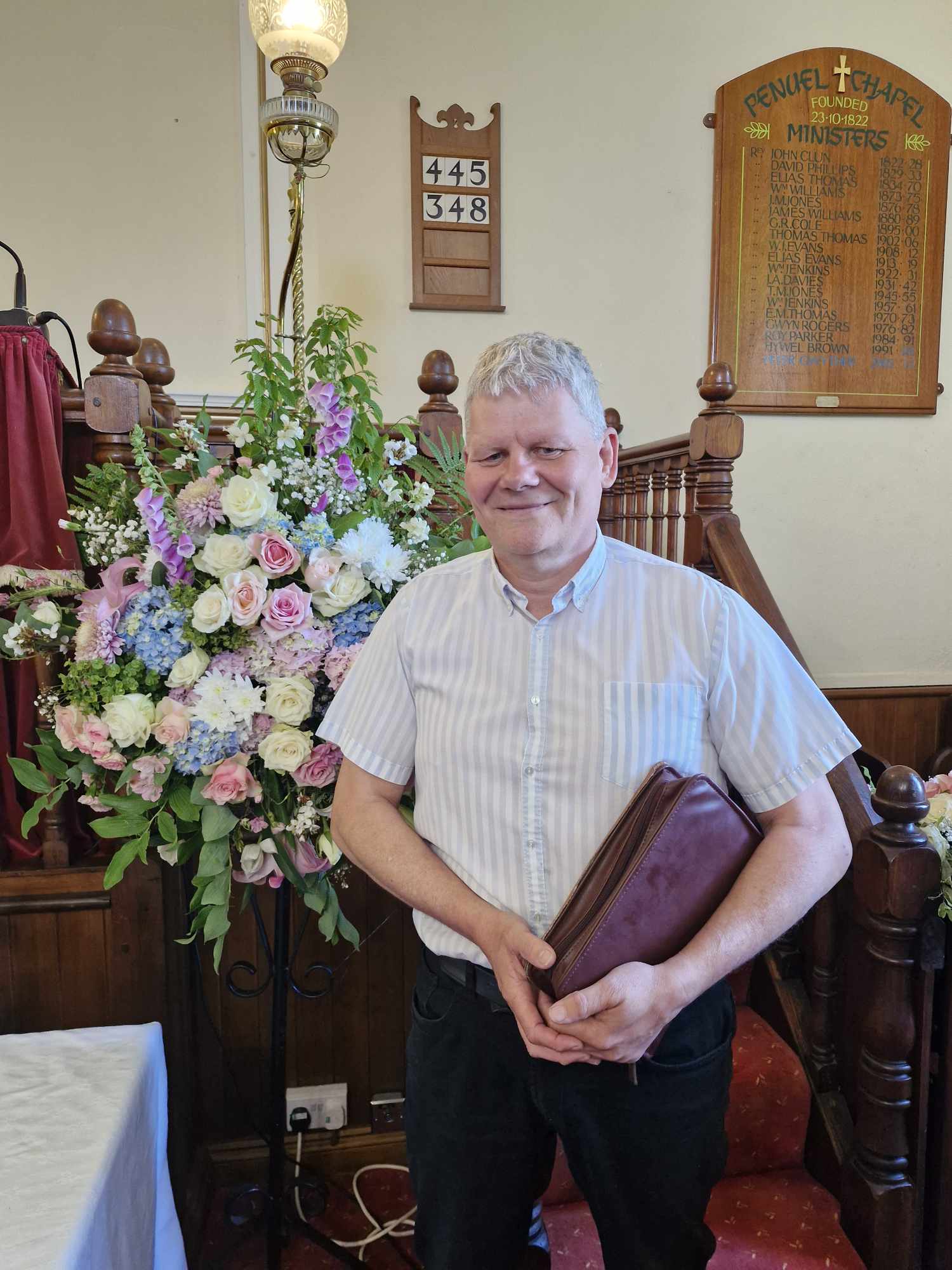
May 19th 2024: Evan Millership

I Samuel chapter 17

I read a newspaper article about Francis Dymoke, the King’s champion, who died in December 2023. The ancient role of the King’s champion was to fight battles and single combat on the King’s behalf. Francis Dymoke was a fairly well-off, old accountant. He was not a man of fighting. The position of a king’s champion has become just a title. In the past, during a King’s coronation, the king’s champion would ride a white horse and raise a defiant cry to those who would deny the sovereign’s status. He would take part in single combat. That is what we see here in this passage of scripture. David versus Goliath.

This event is usually used as an image of a great underdog. This account of David and Goliath is historical fact. Some see it as Jesus conquering sin and death but that is not the complete picture. The original picture cannot mean what it can’t mean to the original readers. They’re reading it to remember how God saved the Israelites from the Philistines. It is an historical event. Read it as history and learn from it. Here we see:

  1. verses 1-19: The champion;
  2. verses 20-39: The challenge accepted;
  3. verses 40-58:   The conquest.

1.The Champion

The champion is introduced. The Philistines prepare for war, march across the border. Saul hears about this and gathers his men. More and more armour and tents. The Philistines set up a base camp on one mountain and the Israelites on another. There are thousands of them. They are a fairly equal force. They are lined up and ready, facing each other. Who will move first? Then, this big spear, taller than the rest, comes through the Philistines. Out strides a giant. 9 foot 9. Huge! To clothe him in armour would have cost a lot. He had been a warrior from his youth. He is ready. He wants a man to fight (v.8).

This has happened before; the Philistines and Israelites are grave enemies. The hundreds of thousands of Israelites were dismayed and terrified. They felt broken, having no hope. Fear in an army of 300,000 is contagious. Then we see David, the little shepherd boy. Here is a drama. David’s other brothers go to Saul; they are older. But David is a small shepherd boy. He is a youth, yet strong enough to later pick up Goliath’s sword. Here we have the arrogant versus the meek, the warrior versus the shepherd. For 40 days Goliath comes to the Israelites.

2. Challenge accepted.

Jesse had no idea his sons are terrified, hiding behind their shields, not fighting. David goes to them. It is morning. It’s hot. The sun is beating down on them. They sweat so much. They eat, they sleep, then do this over and over again. Imagine the grumbles. Whenever the Israelites saw Goliath they fled from him (v.24). Fear took hold of them.

David arrives and goes out to the battle lines. He hears Goliath’s challenge and speaks his mind, “And David said to the men who stood by him, “What shall be done for the man who kills this Philistine and takes away the reproach from Israel? For who is this uncircumcised Philistine, that he should defy the armies of the living God?” (v.26). What is the one word in that sentence that has not been mentioned so far? God. The Israelites are not thinking about God, about being His chosen people. David speaks his mind.

Saul calls David. He wants to see if he has a champion in David. He has no idea who he is, even though he is already in Saul’s service (chapter 16). Saul wants to know why David is saying this. David responds by saying he will go and fight. We see courage.

Why is David so different? Why does he have courage? The Israelites have forgotten God but David is courageous because he knows who God is. In verses 34-37 we see the true extent of David’s courage. He sees the threat and chases after it, “And David said, “The Lord who delivered me from the paw of the lion and from the paw of the bear will deliver me from the hand of this Philistine.” And Saul said to David, “Go, and the Lord be with you!” (v.37).

If you were forced to do something, that is not courage. In David’s case he was willing to front pain and agony because he knows the Lord is with him. Every one of the Israelites was ruled by fear because they lacked faith. David was probably fearful but because God is with him, he goes anyway. He was willing to go despite everyone’s fear.

We want courage like this. What does courage look like to you on a day-to-day basis? C.S. Lewis declared, “Since it is so likely that children will meet cruel enemies, let them at least have heard of brave knights and heroic courage. Otherwise you are making their destiny not brighter but darker.” Every single one of us, day by day, faces some kind of enemy. It is all too easy to say no on a day, a week, a month. Tell your kids stories of courage. This historical account shows God with His people. If you are His people, God goes with you.

There are fears we face as individuals and as a church, but God promises to go with us. Each day, you can wake up and know what’s coming could be awful; it could be colleagues criticising you, bullies in school, problems at home, worries about the war in Ukraine spreading west. Thing is outside of God’s hands. God is with us. Have confidence and do not let your fear rule you.

David puts on the armour he is given but says he cannot go in this as he is not used to it. He knows a battle will come and armour will help, but it is too big. He picks five small calmer smooth stones and went to face Goliath.

3.The Conquest.

Imagine Goliath facing the vast army of Israel, then he sees David in his tunic, staff in his hand and stones in the other. He mocks David. The conversation in verses 43 to 47 is the climax of the story – not the killing of Goliath. David says, Then David said to the Philistine, “You come to me with a sword and with a spear and with a javelin, but I come to you in the name of the Lord of hosts, the God of the armies of Israel, whom you have defied. (v.45). David declares that God has not defied Israel, Goliath has defied Israel. The whole world will know there is a God, including the Israelites. There is a God who protects His people. This is what the whole passage builds towards.

Goliath runs towards David, who runs towards him. David has a sling in his hand. He puts a stone in it. The sling goes faster and faster. The stone hurtles toward and sinks into the forehead of the enemy – while he was wearing a bronze helmet. It punches forward into the enemy. The ranks of Israelites are filled with slingers, yet it was David who stood up to the giant, who faced the enemy.

God triumphed and was glorified through David’s courage. What fears will you face tomorrow? God is with us. God knows your fears. If you don’t know Jesus and want to put yourself in the story, you are part of the Philistines. Because they didn’t trust in God they died. But Jesus died for you. You can trust in Him. Your fears will be conquered. He died on the cross that you might live.

“I lift up my eyes to the hills.
    From where does my help come?
My help comes from the Lord,
    who made heaven and earth.”
Psalm 121:1

Is that your truth?

May 12th 2024: Robert Strivens

2 Peter 3:1-15: Godly living in the light of Christ’s return in glory and for judgement.

Therefore, beloved, since you are waiting for these, be diligent to be found by him without spot or blemish, and at peace.  And count the patience of our Lord as salvation” (v.14-15a).

These verses are a summary of what Peter wants us to learn. We are waiting for these things, and as we wait and look forward, we need to be careful, found in Christ, living in such a way that is holy and godly.

This chapter is first of all telling us that this world will come to an end (v.14). Essentially, Peter wants people to think of the end of the age and the new heavens and new earth (v.13). That is where he wants us to look; when this world, as we know it, will come to an end, and a new heaven and a new earth will take its place.

This is a fairly general letter, comforting people because they are being scoffed at (vs.3-4). People still do this today. Peter was writing to give comfort and assurance. When people laugh at us and don’t believe what we say, as believers, it can be unsettling. People question why this world will come to an end as there is no sign of this. Many doubt if it is really going to happen. Peter addresses this feeling of being unsettled. He reminds us of two vital things:

  1. the past
  2. to look forward

1.The Past

Look back (vs. 5-6). We are reminded that things have not always been like this, as they are today. There has been a beginning of all things; God created all things by His word (Genesis 1). There was a time when there was nothing but God. He created this world out of nothing (Hebrews 3). Peter is saying things had a beginning. We must be clear and not be taken up by evolutionary thought. From the word of God there was creation of this universe. It will keep going until He brings it to an end (v.7).

Things continue as they are because God maintains them by His word (Hebrews 1, Psalm 102). Peter is saying things appear to go on with no sign of judgement. But look, this world is maintained by God. Furthermore, he points out that there has been a great worldwide catastrophe in the past (v.6). Why is he pointing to the Flood? Because you cannot assume things will go on. Look to the past – the judgement for people’s wickedness.

Things had a start, a beginning, there was this great catastrophe. Things don’t continue without interruption. People should not assume things have always been as they are. This world will come to an end. Look back, then look forward (v.4).

2. Look forward.

See the promise of His coming (v.7), when Christ will return in judgement. The end of this world is coming. God is not slow to fulfil this promise (v.9). He gives an explanation, But do not overlook this one fact, beloved, that with the Lord one day is as a thousand years, and a thousand years as one day. (v.8). It is not some philosophical trick. It is a much more solid point. The Lord is patient (v.9). He is waiting. God is merciful and is waiting for all He has chosen to return to Him in repentance.

A time is coming when the Lord will return and judge the world. God is deliberately patient with sinful humanity. He is given opportunity for the church to give witness. He will return suddenly, without warning (v.10). This teaching is so clear in the Bible. We can’t work it out. Then, disaster will come for those who do not know the Lord (v.10). The world will come to an end – not by some man-made event, but by the act of God Himself. It is vital we grasp that.

What does that mean for a Christian today?

Our priorities for living.
 Peter draws conclusions for how we are to live today and every day (vs.12-13). A Christian is characterised by living a holy and godly life. This is the practical outworking of that doctrine. We know when God brings this universe to an end, we will have the home of righteousness. As we look forward to this great future, we should seek to live holy and godly lives. We are expecting to see the Lord in His glory, the return of the Lord Jesus Christ. This will be an extraordinary experience – Christ returning in glory to judge the world, to usher in new heavens and a new earth in which righteousness dwells. This should affect how we live – not just in outward appearance but in heart.

If we are born again of the Holy Spirit, we should walk in Christ’s way, seeking to live lives of holiness and godliness, rooted in the soil of true repentance of the saving grace of Jesus Christ. We should be trusting in what Christ has done on the cross. We contribute nothing at all. It all depends on Christ, who has successfully paid the price in full. That is the foundation. We seek, through the Holy Spirit, to live for Him.

Paul tells us in Colossians 3, “Put to death therefore what is earthly in you: sexual immorality, impurity, passion, evil desire, and covetousness, which is idolatry.” There is a great change in someone who repents. Peter says we are not perfect; we continue to sin and don’t live up to the standards of God. But we seek the Lord’s forgiveness. Sometimes, we backslide. Return to the saviour. Look to Him and ask Him to restore you. Remember what Jesus Himself said, Blessed are those servants whom the master finds awake when he comes. Truly, I say to you, he will dress himself for service and have them recline at table, and he will come and serve them.” (Luke 12:37).

Peter says we are to be actively looking forward to the Lord’s return (v.12). This is not just knowing it is true, but waiting, thinking about it. Are we thinking about it? This should be the major event on our horizon – greater than marriage, greater than the birth of a child, greater than retirement. How often do you reflect on this glorious fact of Christ’s return, of this universe being destroyed and a far better version coming, a time when sin will be no more, when there will be no more lying, theft, deception, adultery, pride, murder. All terrible consequences will be gone. There will be no more famine, ill health, poverty, sadness. All will be abolished. It is not fantasy, it is reality. It is God’s promise.

Is that where your heart is set – the new heavens and the new earth? We enjoy this creation but we are looking for an even better day, when Christ returns in glory. Are you waiting and looking forward? “Therefore, beloved, since you are waiting for these, be diligent to be found by him without spot or blemish, and at peace.(v.14). At peace. We live in a world where there is anything but peace. Do you know the peace of Christ? In this time of waiting, it is a time of salvation, “And count the patience of our Lord as salvation” (v.15a). Seek to witness and testify that others may know the saviour in this day of grace.

May 5th 2024: Andy Pitt

Psalm 107: The God who saves

I pray you can say, ‘The Lord has saved me.’ When I first came to Wales, I walked through the doors of Lonlas Mission in Swansea. On the way in, the man on the door asked me, ‘Are you saved?’ We come to worship a God who saves. Are you saved?

In this psalm, which was written following the Babylonian captivity, we see four groups of people and how God deals with His people. The four groups all have a problem, cry a prayer, God graciously makes provision and this all concludes with praise. There is a problem, prayer, promise and praise.

We are introduced to the first group in verse 4. They have nowhere to live. They find themselves in the desert, in the wilderness. What word springs into your mind when you hear of a wilderness? Dry. It can be an environment where everything is dry. Very little flourishes. A place of dryness is where there is little growth. If you are saved, you have a testimony of God’s saving grace in your life. If you are saved, praise God. But where are you today?

It is possible to be saved yet become spiritually dry. You can be in a place where you are not thriving. When we become dry spiritually, praying becomes hard. It becomes difficult. Reading and studying God’s word becomes hard. Our appetite for the things of God is not what it ought to be. You can say, ‘God has saved me, blessed by His Name,’ but you can be spiritually dry.

The apostle Paul says in his letters, ‘In Christ.’ You have been saved, redeemed, restored by Him. What do we do when we feel spiritually dry? We cry to God. When we find praying hard, pray scripture. Take a psalm, a portion of scripture and say, ‘Lord, this is really my prayer, my longing. This is me.’

In verse 10 we meet the second group who are in the dungeon. They feel bound, as if the freedom that they once enjoyed has gone. God has a word for all our needs and the trials and tribulations we experience. We are all addicts – this is not just referring to drugs and alcohol. We were designed to worship. Before we were saved, we were pursuing something to fill that gap. It might not be drink or drugs, it could be pursuing wealth, power, property – things we embrace and can become addicted to. But when we are saved, God breaks the bondage of sin.

We can be spiritually dry. Other things can replace the pre-eminence of Christ. It could be a person, or something else. Anything that takes the place of Christ is idolatry. There are often times in life when we want to know God’s Will, but when He speaks powerfully in His Word and it doesn’t match our hopes, we spurn the counsel of God.

In verse 17 we meet the third group of people, who are sick, facing death. We can be a Christian but be spiritually sick. This can lead to all sorts of problems. In this psalm, the people cry to God in their trouble (v.19). He delivers them; He pours lily water, by His Spirit, by His Word. He breaks those chains. He delivered them from their distress (v.20). The Lord provides. He continues to provide, even in our foolishness. He does not want us to sin, but He makes provision when we sin. There is a problem, followed by prayer, God’s provision, and praise from His people.

The fourth group of people we meet in verses 23 to 27. Maybe you were at your wits end this morning and no one knows. God knows. This group of people were labouring in the deep, tossed by the angry seas. In life we’re in a storm, going into a storm  or coming out of a storm. ‘With Christ in the vessel, I can smile in the storm.’ When the disciples were in a boat in a storm, Christ was asleep, His head on a pillow. His response to their cries was, ‘Do you still have no faith?’ He didn’t mean they had no faith; they were His disciples. He meant, ‘Why are you responding as if you have no faith?’

Is that you – beginning to doubt the truthfulness of God’s Word? Our answer can be found in the words of the hymn writer,

When Satan tempts me to despair,
And tells me of the guilt within,
Upward I look, and see Him there
Who made an end of all my sin.

Fix your eyes on Jesus. He will never disappoint or turn His back on you. He will say, ‘Come closer.’ Sometimes, there is more theology in a ‘cwtch’ and tears then anything you can say. Jesus knows you. He is with you in the storm and says, ‘Come closer.’

The God who saves has provided for our sin through the death of His Son, the Lord Jesus Christ. He can save you. He is building His Church.

If you are dry, He can provide living water. If you are in bondage, He can break the chains. If you are spiritually sick, He will come and bring restoration. If you are in a storm, He is with you. Don’t respond as if you have no faith. Trust in God. The God who saves provides for our problems, hears our prayers, provides for us, and calls on us to acknowledge His goodness.

“Oh give thanks to the Lord, for he is good,
    for his steadfast love endures forever!”
Psalm 107:1

April 28th 2024: Sam Pritchard

Philippians 4:1-7

Christianity engages your heart and mind. It is what we see in Philippians 4 – the reality and truth of who Jesus is changes our whole being. The power of Christ transforms us. Christianity changes us. In this passage of scripture we read the phrase, ‘In the Lord.’ I have four simple points for this. Christianity Engages all of us. We need to respond with heart and soul:

  1. Stand firm in the Lord.
    “Therefore, my brothers, whom I love and long for, my joy and crown, stand firm thus in the Lord, my beloved.” (Philippians 4:1). Resist the issues, resist the lies, resist the sins of the world. Chapter 4 begins with ‘therefore.’ ‘Therefore’ what? Paul says, “But our citizenship is in heaven, and from it we await a Savior, the Lord Jesus Christ, 21 who will transform our lowly body to be like his glorious body, by the power that enables him even to subject all things to himself.” (Philippians 3:20-21). Verse 1 is in light of that – the power of Jesus Christ, the Saviour who is coming again, who will renew our bodies, the Saviour who has accomplished all at the cross. Stand firm in this Saviour.

People often say Paul is a genius, but a little bit cold, someone who doesn’t engage with his emotions. This is absolutely false. Never let our minds be full of theology and our hearts empty. Paul longs for his brothers (v1). Because of what he knows about Jesus Christ, this has changed the way he thinks of other Christians. We should pray to see more of Jesus and become more like Jesus. Paul is filled with a great love for these people. Paul’s message to those he loves is to stand firm. We too are to stand firm – in work, in schools, in every situation.

There will be resistance to the gospel but stand firm in the gospel, stand firm in the Lord. When the waters of life are raging stand firm in the Lord, in His promises, in His truth, in what He has done. Be rooted in the Lord. Are you standing firm in the Lord?

  •  Agree in the Lord.
    “I entreat Euodia and I entreat Syntyche to agree in the Lord.” (v.2). Paul says we, as Christians, should agree in the Lord. In verse 2 we read of two ladies who clearly had had a disagreement. Paul is aware of this. This disagreement among Christians has become well-known. It is dark and depressing when Christians bear bad witness to the Lord Jesus Christ. Paul urges them to agree in the Lord.

Paul doesn’t take a side, or even address what they’re arguing about. He simply says, ‘Agree in the Lord.’ Reconcile with one another. Paul speaks to address this disunity. Paul is not saying everyone should think the same way or dress the same way. As Christians, we disagree with all sorts, such as what colour the church is painted, theology, baptism, the way the Lord is going to come again. These are secondary issues. We can have different opinions. Paul is seeking to remind these women that what unites them in Jesus Christ is greater than what divides us. Our desire is to be united in the truth of the gospel, in the reality of the deity of Christ. Present the gospel and live for Jesus Christ.

Paul continues to talk about these women, “Yes, I ask you also, true companion, help these women, who have laboured side by side with me in the gospel together with Clement and the rest of my fellow workers, whose names are in the book of life.” (v.3). Although the two women had had such a public disagreement in the church, they are faithful Christians. It shows me as a Christian, I can make mistakes. We can slip, stumble and have disagreements. It is a reminder for all of us to look within. These are not godless women but faithful servants of Jesus Christ, who are not perfect. We all fail. We can say the wrong thing, wish we had been softer in our language.

Paul mentions in verse 3 a man called Clement. Can you imagine what it would be like to be mentioned in the Bible? Have you been mentioned in a book? Clement has made it! But there is a better book Clement has been mentioned in, “Clement and the rest of my fellow workers, whose names are in the book of life.” It doesn’t get better than that! If your name is in there, you are safe, you are kept, you are redeemed, part of His chosen people. Agree in the Lord because we are accepted in the Lord, because we are all in the same book of life.

  • “Rejoice in the Lord always; again I will say, rejoice.” (v4).

This is an incredibly famous verse. Did you know Christians can be joyful! For some Christians the joy is almost lost it is so deep. They have engaged their heads but not necessarily their heart. There is a joy in the Christian faith. When was the last time you rejoiced in the Lord, in who He is?

How are we to ‘rejoice always?’ Jesus wept over Jerusalem. He cried in the Garden of Gethsemane. He was not happy all the time but had joy in the Lord at all times. There is a clear difference. How can I rejoice in great grief? Remember the context Paul is writing in – he was probably in chains, writing to many Jews who had been scattered, who had been persecuted for believing in Jesus Christ. Yet to those people Paul says, ‘Rejoice always.’

If your joy comes from your job and you retire or lose your job, your joy is broken. Our joy is in something imperishable, rooted in the Lord. If your happinesses found in material things, you are in for a hard time. But if your source of joy stems from the fact that you are a child of the King, you have joy forever more. You will always have a rejoicing hope. Rejoice in the Lord because there is always something to praise God for.

  • “Guard your hearts and your minds in Christ Jesus.” (7b)

This is what we ought to do – to engage our heart and head. Both reason and intellect, and emotion must all be guarded. Do not be anxious about anything, but in everything by prayer and supplication with thanksgiving let your requests be made known to God.(v6). Nothing is too small or too big to bring to God. There is a difference in general anxieties in life and clinical anxiety. We, as Christians, worry so much about so little because we have forgotten how big God is. Magnify your view of Jesus Christ, in the light of who He is, in what hope we have. And the peace of God, which surpasses all understanding, will guard your hearts and your minds in Christ Jesus.” (v.7). Go to Him first, turn to Him in everything, whatever you are struggling with. Go to Jesus Christ and pray. You can pray to God about everything. You can request of God. That’s amazing! Turn to him. Pray to God and our God responds.

And the peace of God, which surpasses all understanding, will guard your hearts and your minds in Christ Jesus.” (v.7). Because we are in Jesus Christ we can know and experience the peace of God. You can’t have peace from God if you are not trusting in Jesus. You can know the boundlessness of God’s peace. In the painful moments we can have peace with God. Come to Jesus and you will never have to worry how God sees you, you will never have to worry about what happens when you die. You can have peace. Jesus Christ will keep you safe. Our mind and heart is to be fixed on the Saviour. Do everything in the Lord.

April 21st 2024: Mark Jenkins

Matthew 16:13-28

Who do you say Jesus is?

In Jesus we find meaning and purpose to our lives, but we are only able to recognise who He is because God graciously opens our eyes and hearts to see.

There are many profound questions in life – will you marry me? Is it a boy or a girl?  Why do I matter? The most significant question is, ‘Who do you say Jesus is?’ Ultimately, our future depends on how we answer. Jesus’ identity is at the heart of the gospel we believe and proclaim. In verse 20 Jesus tells His disciples to tell no-one He is the Christ. Why?

Who do you say that Jesus is not only determines our future but our life now. In Jesus we find the purpose of our lives, our identity, where we belong. Here, Peter says, ‘You are the Christ.’ Matthew 16:16 is not included in the other gospels. Under the guidance of the Holy Spirit, Matthew includes these verses to show his theme – that Jesus fulfils Old Testament prophecies, He is the King of Kings. Throughout the Coronation Service of Charles III, we heard that he not king of all, he is to serve. Society today is very unchurched and has a limited understanding of Biblical things. As Jewish people heard the prophecy of the coming Messiah, they did not understand this. Matthew tries to show Jesus is the Messiah.

This passage marks a turning point in Jesus’ ministry. Now Jesus has to prepare His disciples for all He is about to face. From that time Jesus began to show his disciples that he must go to Jerusalem and suffer many things from the elders and chief priests and scribes, and be killed, and on the third day be raised. (v.21).

In this message we will explore:

  1. A timely conversation
  2. A challenging question
  3. An empowering instruction
  4. A surprising command

1. A timely conversation
Jesus knows all He is going to face. His disciples need to know who He is. This conversation is just with His disciples. The people recognised there was something special about Jesus. There were times when Jesus had alluded to His kingship (v.17) but He never used the title ‘Christ,’ He used ‘Son of Man,’ “Who do people say that the Son of Man is? (v.13). Old Testament prophecies use this phrase e.g. Daniel 7.

People recognised He healed, He had power and authority over death, the elements and had outcast demons. On one occasion (Matthew 8) Jesus does not acknowledge where He has the power from. But now, Jesus asks the disciples, “But who do you say that I am?” He wants to get them thinking about who he is.

2. A challenging question

Who do people say the Son of Man is? Why is this important? The disciples had been with Jesus, seen Him performing miracles. When Jesus asks them, they answer, Some say John the Baptist, others say Elijah, and others Jeremiah or one of the prophets.” (v.14). ‘They’ Shows that more than one of them replied. They were talking amongst themselves. The people acknowledged Jesus was a prophet who had some authority, realising His teaching was from God, but not that He was the Son of God. They couldn’t determine who Jesus was.

Jesus then asks His disciples, “But who do you say that I am?” (v.15). The answer is given by Simon Peter, the bold, brash disciple, on behalf of all of them. His answer acknowledges exactly who Jesus is. Peter clearly recognises Jesus is the Messiah, the chosen One. Why were they able to see this and the crowds were not? It was not because they were more spiritual or more educated. They were fishermen. So, how were they able to recognise Jesus was the Messiah? Because God revealed it to them (v.17). There was no possibility that Peter and the other disciples could come to this conclusion themselves. It is the same for us today, we cannot know the things of God because we are ignorant, They are darkened in their understanding, alienated from the life of God because of the ignorance that is in them, due to their hardness of heart. (Ephesians 4:18).

After Jesus had explained this to the disciples, Peter clearly understands. We come to see Him as our Saviour through God’s divine power. He has opened our eyes so that we may see. It is solely God’s work. By His glory, virtue and grace, He opens our hearts and we can see. It is because of all He he has done we can come to Jesus and have salvation. God has given us all things to be right with Him. All we have to do is simply respond. Have you come to Him asking for forgiveness of sins? It is only when you have done this that you will be blessed. To be blessed is to be in a state of spiritual happiness, to have a deep joy of the soul of knowing I am His and He is mine. Being a Christian is the start of our lives with God and for God. All have a part in building up His church. Jesus tells His disciples they have a part in building His church, And I tell you, you are Peter, and on this rock I will build my church, and the gates of hell shall not prevail against it. 19 I will give you the keys of the kingdom of heaven, and whatever you bind on earth shall be bound in heaven, and whatever you loose on earth shall be loosed in heaven.” (v 18-19).

3. An empowering instruction

Verses 18-19 contain metaphors of great encouragement. Christ’s church will last forever. Peter’s declaration is Jesus is the Christ, the solid rock on which our faith stands. Jesus has conquered death and the grave. His Kingdom will be victorious. Jesus will use them and us to bring others into His Kingdom (v.19). In order to enter the Kingdom you have to go through a door – the key – recognising Jesus is the promised One. At the end of verse 19  Jesus tells His disciples, “Whatever you bind on earth shall be bound in heaven, and whatever you loose on earth shall be loosed in heaven.” Matthew is writing to Jews. This is a common Jewish phrase. To bind means it is forbidden. To loose means allowed to enter into heaven. When a person is told who Jesus is and does not believe, they are bound. As we proclaim the gospel, we are fulfilling what God has already planned.

4. A surprising command

 “Then he strictly charged the disciples to tell no one that he was the Christ.” (v.20). Jesus forbids the disciples to tell anyone He is the Christ. Why? Jesus also told others the same thing. It was not the right time. In those days the title Messiah was misunderstood. Peter vehemently rejected Jesus’ prediction, “From that time Jesus began to show his disciples that he must go to Jerusalem and suffer many things from the elders and chief priests and scribes, and be killed, and on the third day be raised. 22 And Peter took him aside and began to rebuke him, saying, “Far be it from you, Lord! This shall never happen to you.” 23 But he turned and said to Peter, “Get behind me, Satan! You are a hindrance to me. For you are not setting your mind on the things of God, but on the things of man.” (verses 21-23).

Peter was looking at the situation the way man would look at it, not God. Jesus was not a military power, He what is stablishing a spiritual Kingdom. Jesus would be a suffering servant (Isaiah 53). Jesus told them to wait until He had been crucified and resurrected.

We need to ensure we understand who Jesus is. What did Jesus come to accomplish as a saviour? What does it mean to those around us? Everyone is facing battles. Many people are looking for hope and escape, someone to rescue them. We need to be careful when we proclaim the gospel that we do not say these difficulties will disappear (Romans 8:35, John 16:33). We will face tribulation but we can know peace if we are in Christ. Jesus wants to deliver us from the punishment we deserve from our sins. When we have peace from God, we have hope and can look forward to the day when we will be with Him in eternity.

Who do you say that Jesus is? Is He your Lord? Praise God if He is!

April 14th 2024: John Williams

April 14th 2024: John Williams

To watch this service please click the link to our YouTube channel: https://youtu.be/q9K74B0WnzQ?si=D1Rfc0VMD_0pjtMS

It was to show his righteousness at the present time, so that he might be just and the justifier of the one who has faith in Jesus.” Romans 3:26

One of the amazing teachings of scripture is that sinners can be right with God. It is essential to have a clear understanding of the truth of justification, of it’s great assurance. To be “Just and the justifier,” may seem an impossibility. We will look at three points:

  1. How can you declare a sinner not guilty? Is it a contradiction, a divine dilemma? No.
  2. How has God demonstrated this great truth of grace, so justice is honoured and love and mercy is dispensed to those in need of it?
  3. Consider the divine declaration – is justification a gradual process or a once and for all event? This can be summed up as:
  1. Divine dilemma?
  2. Divine demonstration.
  3. Divine declaration.

1.Divine Dilemma

How can God to be just and the justifier? God’s justice is something that causes a thoughtful person to tremble. If God is just, it strikes terror into us. His scrupulousness, His thoroughness in not only weighing the acts, the words and the thoughts, produces a sense of anxiety in all of us. He can see to the very bone and marrow in our life. Some focus on the love of God and say God will never send anyone to damnation, that love is stronger than justice.  When God acts justly He is simply acting like Himself. But God is also love. Justice is getting what we deserve. Our case is hopeless. Until you understand you were lost, you cannot understand the gospel. God is never at cross purposes with Himself. None of His attributes conflict with each other.

2.Divine Demonstration

What attributes of God are displayed in the death of the Lord Jesus? You may think of the love of God and you would be right, But God shows his love for us in that while we were still sinners, Christ died for us.” (Romans 5:8). The love of God is demonstrated to us that while we were yet sinners Christ died for us. God does not love us because we have promised to love Him back. In Romans 3:25-26 we also read of another demonstration of God’s justice with regards to the sins of previous times, before the coming of Christ. The Old Testament dispensation and justice at the present time. The present time is a reference to Christ’s earthly life, to deal with the consequences of sin once and for all.

There is a double demonstration: the Old Testament dispensation – the sacrificial system of the Old Testament – and the life of Jesus Christ – His death when the curtain was torn from top to bottom, and entry is gained for all who believe upon the Lord Jesus as their Saviour. Both the love of God and justice of God are fully demonstrated. As a believer you have to hold these two demonstrations in your hand, Romans 5:8 and Romans 3:25-26. Memorise these verses so that you have a clear understanding that justice and love are fully demonstrated at the cross.

Christ was dying in place of sinners. In doing so He diverts the wrath of God away from us. The cross is a place where justice and mercy can be equally displayed.

Paul was a legal man and imposed the idea of justification by faith, “But now the righteousness of God has been manifested apart from the law, although the Law and the Prophets bear witness to it.” (Romans 3:21). He said it is prophesized in the Old Testament and fulfilled in the Lord Jesus Christ.

The Old Testament sacrificial system was established to remind the people of the need of forgiveness and their accountability for sin. It was pointing them forward towards a sacrifice that would be made which would deal with it once and for all. That’s why it was on a daily basis, a weekly basis, a monthly basis, a yearly basis – all pointing towards the sacrifice that would eventually deal with it all, one sacrifice for all (Moses, Leviticus, Isaiah 53:11).

3.Divine Declaration

‘Justify’ is a word from the legal system (Deuteronomy 25:1). The work of santification takes place throughout our life. When a judge condemns someone, he is not making them guilty. The condemnation is based on the evidence. Picture yourself in court. Your life is being judged. The is an object of witness – the law of God. How do you stand up against this? Fail in one part, you fail in all. We become aware of how we have failed.

A subjective witness comes – your conscience. It speaks and confirms your guilt. The witness is against yourself. You speak against yourself. All your life you have defended yourself but at the final judgement you speak against yourself.

A third witness appears, a malicious witness. An accuser. The devil. He will say anything to incriminate us or implicate us.

Then, finally, one comes to give testimony to judge, one who is sinless. He states He has voluntarily stepped into your shoes and paid the penalty. You are declared not guilty. The guilty one goes free. You walk away a free person, yet sins and punishment were yours. What do you think of the one who did this for you? Do you love Him with all your heart? Are you thankful, do you serve Him because He gave His life for you? If that is you, praise the Lord! If it is not, believe in Him now.

April 7th 2024: Hywel George

To watch this service, click ln the link to our YouTube channel: https://youtu.be/QKj5NsBwgG4?si=AVdvz4wxkNGh0MW0

John 2:1-11

Jesus washes away our sins and makes us welcome to His family.

There is going to be a wedding here soon at Penuel. We read of a wedding here in John chapter two. Why is this event recorded? Here, Jesus is turning water into wine. John finishes his gospel by saying, “And there are also many other things that Jesus did, which if they were written one by one, I suppose that even the world itself could not contain the books that would be written. Amen.” (John 21:25). Jesus performed so many miracles that you may believe. That is why these miracles are recorded and you are here this morning – to say, ‘Yes, I believe He is Christ, the Son of the living God, to have life in His name.’

We have a glimpse here of new life the Lord Jesus has given us. Here we read of a wedding. Who was invited first? Maybe Mary, the mother of Jesus (v1). She may have had some role in hosting (v.3,5). During the wedding they ran out of wine. In this culture of 1st century Galilee, it would have been a big deal. Mary turns to Jesus for help. Jesus’ response is, “My hour has not yet come.” This is a strange response, but Mary’s response shows such faith. She goes to the servants and says, ‘Whatever He says, just do it.’

We then have this miracle of Jesus turning water into wine. The disciples believed in Jesus. Just before this event, Jesus had been tempted by Satan in the wilderness. He is committing Himself to a ministry, preaching the gospel of the Kingdom of God, forgiveness of sins, eternal life, salvation from hell. The biggest ministry in the world! Jesus takes time to go to this wedding. He is no kill joy at all. Far from being opposed to these things, He facilitates them. He produces something like 800 bottles of wine for this party. We can talk about how Jesus has miraculous power over all creation, or how He protects the honour of the ashamed, how He redeems hopeless situations.

All those things are good and right to say, but in all of those the miracle goes uninterpreted. It is notoriously difficult to interpret; there are no big, long explanations as in other chapters in the gospel of John. We have to work it out ourselves. We find the purpose of the miracle in verse 11, This beginning of signs Jesus did in Cana of Galilee, and manifested His glory; and His disciples believed in Him.”

What does the miracle mean? How does it reveal Jesus? What does it reveal of His glory? Why does He facilitate a party? Why not heal people? Although there is no explanatory discourse, there are some clues. We are going to explore three clues:

  1. On the third day.

The third day is significant. It is a time stamp. Matthew, Mark, Luke and John rarely give time stamps and when they do it is significant. Timing is important. Throughout the whole Bible, the third day stands for new life (Genesis 22), even life from the dead. The resurrection of Jesus took place on the third day. (1 Corinthians 15). Expect this clue to be about new life, Jesus’ resurrection.

  • Jesus’ hour (v4).

His hour has not come refers to His death. There are many verses all through the gospels about this. Why does Jesus hear a request about more wine and think of His death? It is a strange conversation. Why does He draw that connection – His death and more wine? Jesus said,  I tell you I will not drink again of this fruit of the vine until that day when I drink it new with you in my Father’s kingdom.” (Matthew 26:29). Jesus knows that in His Father’s house there is wine. We go there to drink it with Him through His death. He knows that His crucifixion means wine of celebration for everyone. It means freedom from sin, everlasting life, reconciliation with the Father, an open door into His Father’s house, a party between Him and His people. The Bible describes this as a wedding feast in heaven.

This is what is happening in John 2. At this wedding in Galilee, the Lord Jesus is thinking about that wedding feast in glory, when He and the Church get married. As He sees this wine being poured, drunk and enjoyed, He is thinking about that wine He will pour, drink and enjoy with us one day in glory. He is thinking about His hour, His death, which will win all of that. He is thinking about when it will all be ultimately fulfilled, and what it will cost to bring it about.

He knows it is not time for that hour yet, but here is an opportunity to practice, as it were, before He has to do it for real. It is an opportunity to show what Christ crucified will do for the world. It is showing the significance of His death and what it will do for us – bring us new life, celebration and wine for all of His people who are welcomed into His Father’s house.

  • Water Pots.

In your home, where is your sink? By the front door? Unlikely! When the guests arrive at this marriage feast, the first thing they come across are massive pots of water. They would wash before sitting down and drinking (v.6). Purification of Jews was not just hygiene, it was also a spiritual thing. Moses, through the Old Testament, is teaching how sin makes us unclean. Do you have a squeaky clean past, a squeaky clean mind? Are your priorities right? Do you have scars because of your sin or the sins of others? Guilt, sin and filth sticks to us. We are filthy. These water jars reminded people that they are dirty. The Jews here in the story were constantly reminded of their sinfulness and the need to wash themselves (Psalm 51:5-7).

We need to be washed by God to be clean. On seeing the water pots, people may have wondered if Jesus would baptise people now. Why doesn’t He? Jesus is greater than John the Baptist. In verse four He is thinking of His death, when He is going to wash us with His blood. Through His death He is going to take away our sins, our guilt. On the third day he will rise. He is thinking about His death in which He is going to make us clean of sin and guilt forever. He is thinking of His death when He well wash us once and for all. Jesus did not come to fill washing jars but to fulfil washing jars – to bring them to an end.

Put the clues together. The third day brings new life. Through His death and new life, Jesus replaces for us all the old washings with a new cleanness and rejoicing in Him.

The law came through Moses, grace and truth came from Jesus Christ. This is the theme of chapter 2 through chapter chapter 4 as well. Jesus is replacing the old with the new. No more constant washings. He has come to wash us clean once and for all. Forever. The death of Jesus on the cross finishes ceremonial washing forever. If we believe in Him, He makes us clean for good and washes our sins away forever.

His hour, His death, the third day resurrection, means the end of guilt, the end of sin, the end of washing. Praise His name! The water of purification gives way to the wine of celebration. Constant guilt and scrubbing gives way to rejoicing on the third day.

The guests come to this party. They expect, when they see the big jars of water, another attempt to make themselves clean by washing away the dirt. Another temporary fix. The beginning of another cycle of failure. Before the party is over they will have sinned again and need to be cleansed again. But instead of that, they find the Son of God comes to them and presses into their hands a cup of wine and invites them to sit at His table.

This miracle means that Jesus ends our constant state of guilt before God and replaces it with a happy welcome to a heavenly wedding party through His own death and resurrection. This miracle is pointing us to Jesus, who can take away sin and guilt through His death. He can bury them deep in the grave. He’ll come and show you how to live a new life. The Lord Jesus takes away the water of purification and gives us the wine of celebration.

How much do you think the disciples understood at the time of this event? How much do you understand . . . that He is fully God and fully man? The point of this miracle is not about the disciples and is not about your understanding. This, the first of his signs, Jesus did at Cana in Galilee, and manifested his glory. And his disciples believed in him.(John 2:11). That’s it! They believed in Him. That is what it is for – to see the sign and believe in Jesus. Trust in Jesus, believe in Him, He will make you clean. Through His death and on the third day, the Lord Jesus ends washings. He ends sin and brings us into the wedding feast of heaven.

If you prefer, you can go on sinning, you can go on scrubbing, you can go on failing. Always water, never wine. Always dirty, never clean. But John 2 compels us in a much better direction – to trust in the Lord Jesus Christ because He can clean up your life now and He can save you a glass of wine in heaven.

March 31st Easter Sunday 2024: Gaius Douglas

To watch this service, click on the link to our YouTube channel: https://youtu.be/35K1Pj2dh6o?si=Y1TYxXj21zOxP92R

Psalm 107:9
“For He satisfies the longing soul and the hungry soul with goodness.”

This verse speaks about the people of Israel as they travelled through the wilderness journey, hungry and thirsty. This verse can also apply to spiritual longing in the heart of man – that which can’t be satisfied by anything else in the world. “For He satisfies the longing soul and the hungry soul with goodness.” The things that we have, such as clothes and gifts, only last for a while. We breeze but there will come a time when breath will leave our bodies. Then comes judgement. Today is an opportunity for you to receive Christ as your Saviour.

We say thank you for Easter eggs, but sometimes we don’t give thanks to God. We receive many things, but the greatest thing that’s been given we have rejected – the Lord Jesus Christ. The Bible says there will come a time when we will have to give an account to God if we have rejected His Son, the Lord Jesus Christ.

Those of us who are recipients of this wonderful gift of love, this wonderful gift of grace, can say, “For He satisfies the longing soul and the hungry soul with goodness.” We have received of the Lord’s goodness, his blessing and eternal life. We can rejoice!

In John chapter 4 the Lord Jesus Christ is going to Samaria for a purpose – to meet a lady at a well, drawing water. The Lord meets her. He begins to speak to her. The Lord Jesus Christ knew she had a deep need and had tried many things. The Lord Jesus Christ goes straight to the point. Are you a recipient of that well, that water of life? This living water can satisfy your need.

On another occasion, He went to a town called Bethany. Lazarus was sick. Mary and Martha hoped Jesus would heal him. After two days He went. When the elder sister Martha heard He was coming she ran to meet Him. She was sad, her brother had died. Out of her sadness, you see her faith rising. She says, “Lord, if You had been here, my brother would not have died. 22 But even now I know that whatever You ask of God, God will give You.” (John 11:21-22). There are times when we are down or ill and we can rejoice. Jesus says, “I am the resurrection and the life. He who believes in Me, though he may die, he shall live. 26 And whoever lives and believes in Me shall never die. Do you believe this?” (John 11:25-26). Martha’s eyes were opened. She was overwhelmed and replied, Yes, Lord, I believe that You are the Christ, the Son of God, who is to come into the world.” (John 11:27).

For 3 1/2 years the disciples of the Lord Jesus Christ were spiritually nourished and fed. They saw how He reached out to the lost and how He met the needs of all. He told them clearly He would die and rise again (Luke 9:22). He was arrested, crucified and buried. When the disciples of the Lord Jesus Christ and His followers heard, they had their hopes shattered. Only two stayed the course, John and Peter. The others ran away. They were afraid that they too would be arrested and put to death. Peter denied the Lord Jesus Christ.

Then in the gospel of John, we read of Mary Magdalene. She loved the Lord Jesus Christ so much because He had healed her and cast out seven demons in her. For that, she loved Him. She went and gave up everything to follow Him and serve Him. Anything she had, she gave to the Lord. She fed Him and His disciples. Early that Sunday morning she went to the tomb when it was dark. She noticed the stone was rolled away. She ran back to Peter and John and told them this. You can imagine them running back to the tomb. Something was happening. Peter and John did not see the body and went home. But Mary stayed, weeping. She went inside the tomb. There was nobody but she saw two angels who asked, ‘Why are you crying?’ She replied, “Because they have taken away my Lord, and I do not know where they have laid Him.” She came out of the tomb and no doubt continued to weep. As she came out, there was a man standing in front of her. She thought he was the gardener. He said to her, “Woman, why are you weeping? Whom are you seeking?” She answered, “Sir, if You have carried Him away, tell me where You have laid Him, and I will take Him away.”  (John 20:15b).

Mary came with expectation – not to see a living Christ, but a dead Christ. That’s how much she loved Him. She wanted to demonstrate her love and embalm Him. He spoke her name and she recognised His voice. When was the last time you recognised the voice of the Lord? Mary ran excitedly to the disciples to tell them she had seen the Lord, that He had risen.

The Lord Jesus Christ promised the woman at the well living water. His promise was based on His resurrection from the dead. He said to Martha, “I am the resurrection.” Mary Magdalene, a persistent woman, was rewarded. I encourage you to be persistent. She couldn’t rest until she saw her Saviour. Why are you here this morning? Is the Lord Jesus Christ alive in you? Every word of hope that the Lord Jesus made, every promise, is based on the resurrection (1 Corinthians 15:14). I am not serving an empty faith.

Many people who don’t believe in the resurrection of the dead call themselves Christians. Our faith is based on the resurrection, “And you He made alive, who were dead in trespasses and sins,” (Ephesians 2:1). Knowing Christ, by the power of the Holy Spirit, we have been saved for the glory of God. One day our frail bodies will live, having a body like unto our Lord Jesus Christ.

I love Job; he had periods of being down, then up. He had more downs than ups. He had boils all over his body and was cast out of his city, sitting on a dung heap. But he was able to say, “For I know that my Redeemer lives, And He shall stand at last on the earth,” (Job 19:25). I shall see my saviour. Will you see Him? Are you looking forward to seeing Him?

Heaven is going to be a wonderful place filled with glory and grace. Until that day we are flesh and bones and there is still sin. But the Lord Jesus Christ rose from the dead and said because He lives, we can live. He is the one who is sustaining us. He wants us to live in that resurrection power. What is the power that is at work in you? If you know the Lord Jesus Christ, it is resurrection power. It was in Martha, Mary, His disciples. He wants us to show the power of Christ. He will sustain and keep you. He knows your longing, your pain, your hunger, your anxieties. He loves you and will never let you down.

He destroyed sin, hell, and death. He has overcome the power of Satan so you can rejoice. Draw near to Him and He will draw near to you. Come to Him. He will give you rest. Living that power.

“For He satisfies the longing soul and the hungry soul with goodness.”

March 28th Good Friday 2024: John Scanlon

To watch this service, please click on the link to our YouTube channel: https://youtu.be/Ib4jpsGuwb0?si=6D6x2dnFIhe00bTv

Matthew 27: 29-42

We ponder on the word of God and how it describes this great event that took place so long ago. We picture it in our minds, different people in different ways. You can imagine the big crowd there, watching. In those days, it was probably the only entertainment they had. Attending this execution of the Lord Jesus Christ we have the curious, the crowd followers, the passers-by – so hardened to the suffering of others. Crucifixion was entertainment. They were guilty of saying things amongst the crowd they would not say otherwise. They were guilty of being one of the gang. Passers-by became a mob.

What had changed peaceful citizens into a mob crying for blood? A week earlier they had cried out ‘Hosanna,’ now ‘Crucify Him!’ These people may have had nothing against Christianity, but joined in with the crowd so they didn’t feel left out. We see crowds like this today, for example, at football matches. Were these passers-by responsible for the death of an innocent man? Yes! As we all are. On judgement day you will need to give a personal account, not be part of a crowd.

In His agony Jesus cried out, “My God, my God, why have you forsaken me?” Forsaken by God! Who on earth can understand that? Jesus was crucified at 9:00 a.m., the third hour, the hour of the morning sacrifice. At noon, when the sun burnt so brightly, darkness fell until the 9th hour, 3 p.m. This was the time of the evening sacrifice when the lamb was offered as a daily sacrifice in the temple. This was a foreshadowing of the sacrifice of the Lamb of God, the Lamb slain for the world. During that time of darkness, no sound came from Jesus on the cross. There was absolute silence. When the darkness had passed, that was when Jesus cried out, “My God, my God, why have you forsaken me?”

How can we understand that dramatic scene? How can we express its meaning? We can grasp some of it by examining the following:

  1. The desperation of the cross.

Was there ever a cry so filled with desolation? Many people misunderstood and thought He was calling for Elijah. From childhood He had been misunderstood (Luke 2, John 2:19). The crowd laughed, they mocked and jeered. The religious leaders were quite correct when they said, He saved others; Himself He cannot save. If He is the King of Israel, let Him now come down from the cross, and we will believe Him.” (Matthew 27:42). He saved others but He could not save Himself because He set His heart on saving others. “And according to the law almost all things are purified with blood, and without shedding of blood there is no remission.”(Hebrews 9:22). He came to this world to save you and me, to obtain forgiveness for sinners.

  • Separation from the Father.

This is a mystery. Forsaken – heart rendering. Being forsaken was no new experience for Jesus; all His life He had been forsaken. His own family turned away from Him, His own nation rejected Him, the disciples forsake Him and fled. He knew what it was to be forsaken, yet He was always conscious that He was not alone, for the Father was always with Him.

He told His disciples at the Last Supper in the Upper Room, “Behold the hour cometh, yea, is now come, that ye shall be scattered, every man to his own, and shall leave me alone: and yet I am not alone, because the Father is with me.” (John 16:32).

Yet, now on the cross He cries out, “My God, my God, why have you forsaken me?” Nobody stood by Him. There is no opening of the heavens. There is no voice of God. There was no strengthening angel by His side as it was in Gethsemane. He is completely alone, forsaken by God. But does God ever forsake His own? All history, all human experience, all scripture indicates not. God has promised, ‘I will never leave you or forsake you.’ Yet He forsook Christ at Calvary. What can it mean?

The answer is to be found in the significance of the death of Christ. It wasn’t an eternal separation from God. The divine nature cannot be separated from the human nature. Jesus was eternally God.  The Father couldn’t be separated from the Son in the Godhead. It could not mean that the Father had forsaken the Son in the sense that He no longer loved Him, because God truly was well-pleased with Jesus for sacrificing Himself on the cross on behalf of others, and carrying out God’s will even unto the point of death. It was because all the sin of humanity was placed on Jesus. Therefore, God abandoned His Son; in His holiness He could not look upon sin. Jesus was obedient unto death.

The sins of the world separated the Father from the Son. Sin separates us from God. Jesus was the substitute for our sin, taking our place on the cross. All of the sin and iniquities of the whole world was placed on Him. Think upon on that – all the greed, all the hate, all the lust – Christ bore the sins of the world. Isaiah 53 foretold it. Consequently, all the wrath of God was poured out on Christ. Every nail driven into His body, every stripe on His back, every thorn – all this He endured for us, for our sin.

He stood between a sinful world and a righteous God. He suffered in our place. Christ still said, in spite of His suffering, “My God, my God.” He held strongly to His faith in God. God always stands near to those who can cry out, ‘My God. my God.’ Our Lord Jesus Christ, like Job, was saying, ‘Thou He slay me, yet I will trust in Him.’

It was a cry of victory. Here, Jesus was completing the work He came to carry out. He was accomplishing the will of the Father. This was His supreme moment of triumph. God authenticated it by accepting the sacrifice that was offered. The veil of the temple was torn from top to bottom, as if God was reaching down from heaven to tear it apart and say to mankind, ‘Come to me now through the sacrifice of My Son. You have no need anymore of an earthly priest to intercede for you. Instead, you have an advocate with the Father, Jesus Christ the righteous.

We are told salvation is found in no-one else, for these is no other name under heaven given about men whereby we must be saved. Jesus Christ was born as Saviour. He has accepted the penalty on your behalf. He has suffered for us. We can look to Him and no other, for salvation. Turn to God in repentance and confess your sins and you can be numbered among those for whom Christ died.

A closing thought. On that day there were three men on three different crosses: one not caring about the damage he had caused by his awful life, defiant to the end. One next to him whose death was intended to repair the damage caused by centuries of sin. And one who regretted the life he led and, although he was at the point of death, truly felt sorrow for the sins of his life and wishing he could atone for those sins. He turned to the one who hung next to him, who was truly the Son of God, who was able to tell him not only where he was going, but when, ‘This day thou shalt be with me in paradise.’

That promise is also for us if we truly repent of our sins. We too need to turn to the Saviour, to seek the forgiveness that was purchased for us at such a high price.

March 24th 2024, Palm Sunday: Evan Millership

To view this service, please click on the link to our YouTube channel: https://youtu.be/SUqvXJhy3vQ?si=s_bunqfEA5OPudfv

Luke 19:28-44 Worship to the King

Here, we find a great procession, the beginning of something so much better. The disciples are praising God. They have no idea about what is to happen, but for Jesus the cross is so much bigger now. As He rides into Jerusalem, He knowns His time on earth is about to end. It is a very intense period of a few days. Easter is my favourite holiday because Jesus came to die for me and for you. If you read through the rest of the account of Jesus life on earth and it does not thrill your hearts, it is a wasted week. If it doesn’t thrill your heart that Jesus went to the cross for you, your time is wasted. The worship of the disciples should be an example for us. Jesus should thrill our hearts. It should bring us to worship.


Why worship Jesus? What is the point?

Because:

  1. The King has come.
  2. The King is worthy of praise.
  3. The King cares for you.

What is worship?
As it is my eager expectation and hope that I will not be at all ashamed, but that with full courage now as always Christ will be honoured in my body, whether by life or by death. 21 For to me to live is Christ, and to die is gain. (Philippians 1:20-21). John Piper’s commentary on these verses is very helpful. When we deal with the Bible, words matter. The writer, Paul, does not want to be ashamed, he wants to have courage. He is in prison because he believes in Jesus. He is writing to the Philippians from prison. He wants courage so Christ will be exalted in his body, whether by life or death. To exalt something is to put something higher than yourself. Paul wants to worship Jesus with every ounce of his existence in every interaction he has. Not just in life but in the moment of death, Christ will be exalted. “

For to me to live is Christ, and to die is gain.” (v.21). This verse echoes what Paul has already said. He wants to worship Jesus. To live is Christ. Do you strive like Paul? To die is gain – the desire to see Christ Himself and be with Him in heaven. To pass through death is gain. What is gain? Death and all that it holds is better by far than anything found in the world around us.

So, what is worship? John Piper summarises it by saying, “The inner essence of worship is to experience Christ as a more satisfying treasure than anything found in life and anything found in death.” To live for Christ is to experience Christ as a more satisfying treasure. It matters how we worship and what we think worship is.

Why should we worship?

  1. The King has come (Luke 19:28-36).

Jesus is going towards Jerusalem. He rides on a colt. This is very important. Jesus is about to show that He is the promised King the people have been waiting for. God has seen the trouble of Man, seen our problem and broken world around us, seen our greatest problem – sin. Throughout the Old Testament God promises a Saviour will come – not just to His people, but to the world,

Rejoice greatly, O daughter of Zion!
    Shout aloud, O daughter of Jerusalem!
Behold, your king is coming to you;
    righteous and having salvation is he,
humble and mounted on a donkey,
    on a colt, the foal of a donkey.
10 I will cut off the chariot from Ephraim
    and the war horse from Jerusalem;
and the battle bow shall be cut off,
    and he shall speak peace to the nations;
his rule shall be from sea to sea,
    and from the River to the ends of the earth.
11 As for you also, because of the blood of my covenant with you,
    I will set your prisoners free from the waterless pit.
12 Return to your stronghold, O prisoners of hope;
    today I declare that I will restore to you double.
13 For I have bent Judah as my bow;
    I have made Ephraim its arrow.
I will stir up your sons, O Zion,
    against your sons, O Greece,
    and wield you like a warrior’s sword.
          Zechariah 9:9-13.

Jesus is fulfilling this prophecy, this promise. Zachariah goes on to say that the great enemy, death, will be defeated. Peace will rule. True hope has come at last. Jesus riding on a donkey, people praising His name, shows that the King has come. If you are not trusting in Jesus, death is the final enemy. Jesus has come to die in place of the enemies of God. The King has come!

  • The King is worthy of praise (verses 37-40).

As Jesus goes down the Mount of Olives the disciples joyfully praise God for all the miracles they had seen. The crowd want to see more (v.38 – from Psalm 118). Then the Pharisees come along and say if Jesus is King, that is blasphemy. Jesus answers by saying, “If they keep quiet, the stones will cry out.” You can imagine what they’re response would be. He is saying, ‘You humans are the only ones who can refuse to praise God. But the rest of creation, the trees, the mountains, the clouds, are all there to bring glory to God. Even the pebbles at their feet. Everything was made for the glory of God, everything that is musical, everything that is tasteful, everything that is good in this world is there to portray the goodness of God (Colossians 1:16).

  • The King cares for you (Verse 41-44).

As He approached Jerusalem Jesus wept over it. It matters who Jesus is. We’re not told to worship a rogue dictator, we’re told to worship Jesus. Jesus weeps. The King will come one day. We are meant to be a beacon on a hill. The Jews turned away from God and want nothing to do with Jesus. They did not see the hand that was offered to save them. If you miss the hand of Jesus to save you, there is no other hand. He weeps. He doesn’t want to see people die. He wants people to turn from their evil ways. Turn to Jesus and live.

He is worthy of praise. God himself has come to you. The disciples worshipped him. I want Christ to thrill your heart because He is amazing! Everything points to the cross – what He will do for you and for me. The cross is personal. For those who don’t trust Jesus we see what will happen in verses 42 to 44. Why will you die when Jesus has come to give you life? The King Has come. Jesus thrills His disciples. Will you be thrilled?