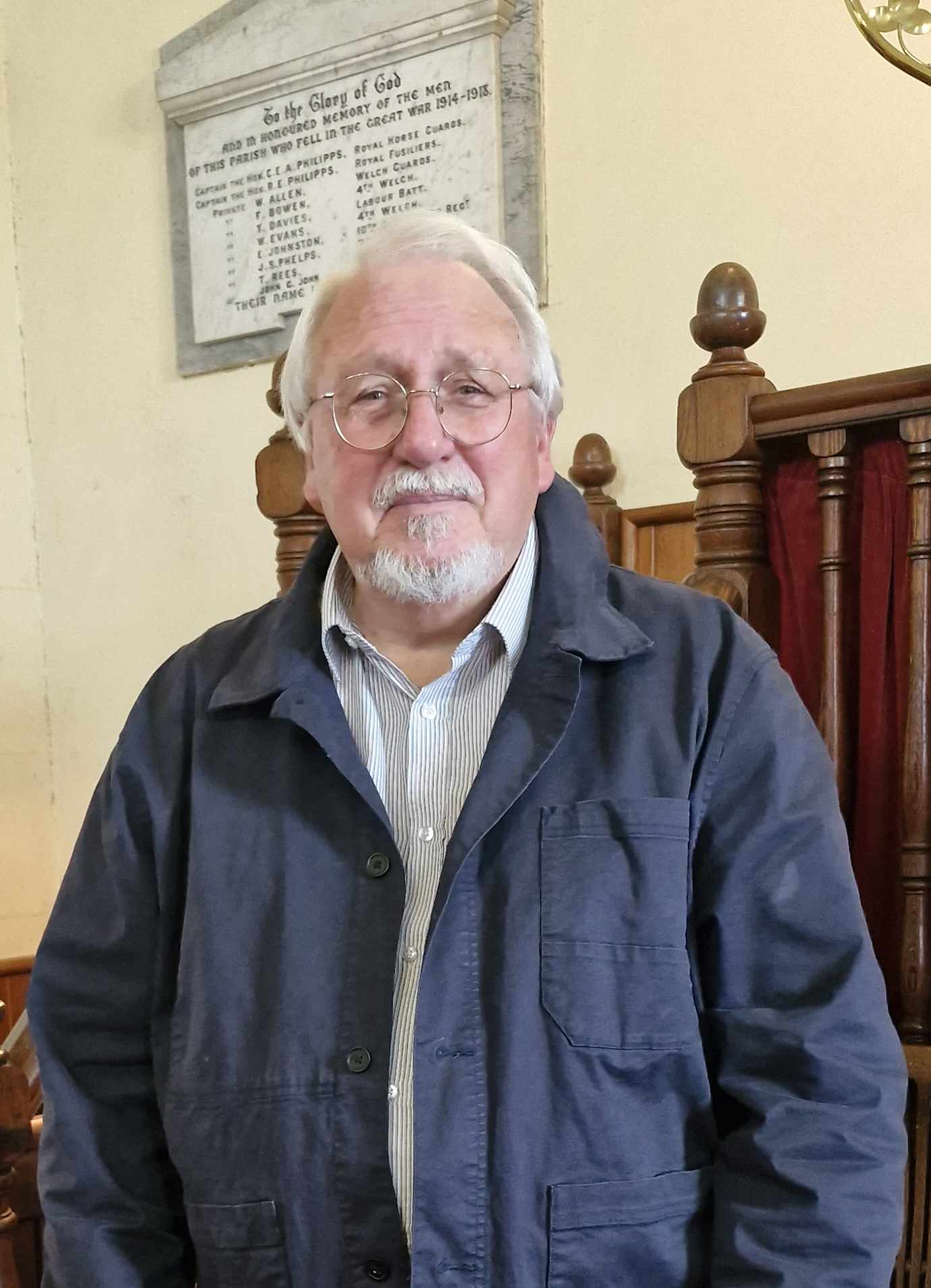
December 15th 2024: Ian Middlemist

Matthew 1:1-17 “Jesus Christ, born in The Likeness of us.”

  1. Human Lineage
  2. 2) the sinless descendant

The genealogy of the Lord Jesus Christ. If you look at your own genealogy, you may be looking for some royal ancestry, but generally there’s something like a skeleton in the cupboard, something sinful. It reminds us that we’re human. The knowledge and experience of God reminds us we are human. It is a solid truth. We have parents, our parents have parents. Some can trace their genealogy back a few generations. We are all descendants of Adam and Eve. We are told that Adam is the son of God, in Luke’s genealogy. God created Adam.

Matthew begins his Christmas story by tracing the lineage of Jesus Christ. This genealogy shows us that the Lord Jesus Christ had a truly human lineage but also that He is the sinless descendant. Jesus Christ was sent to a sinful, needy, week, last, confused, broken, lawless people like you and I.

1.Human Lineage

The human genealogy of the Lord Jesus Christ shows us a broad spectrum of people from all walks of life including kings and commoners. But oddly for the patriarchal Jews of Matthew’s day, there are women in this list – women who were Gentiles. Some of the women and men who were named were notoriously immoral. This list clearly isn’t fabricated. It is as it is. No religious Jew would have put this list together to impress the community to show this great pedigree of the Lord Jesus Christ. Everyone on this list shares one thing in common – every single one is a sinner, in need of a Saviour, in need of forgiveness, in need of restoration, in need of a new life (Romans 1-3).

Every name is important in this genealogy. Because they are descendants of Adam, they are sinners. All are sinners and fall short of the glory of God. Even Mary acknowledged her need of a Saviour (Luke). Let us look at 2 characters to highlight the fact that Jesus Christ is a descendant who is truly human.

Tamar (v3) illustrates that Jesus is the Saviour of sinners. He deliberately associated with sinners, such as tax collectors who were notorious scoundrels. We may think we are not a sinful as Tamer, a prostitute. All of us are in need of a Saviour. In Tamar we see Christ brings salvation to sinners.

We all know what Rahab was famous for! She is known to us as the harlot. Like Tamar, she was a Canaanite – outside of the covenant people of God, ‘not from round here.’ (Joshua 2). Remarkably, she believed in the God of the Hebrews. She had faith. As uncomfortable as she is as a subject, by faith she did not perish. She is an example of faith and works. James makes the point that salvation is by grace through faith. Rahab had faith and expressed her faith through works. Salvation that Christ brings comes to sinners by faith. Tamar and Rahab teaches us that salvation is received by faith.

2. The sinless descendant.

Christ was sinless, fitting to be our Saviour. Jesus Christ was rich beyond all splendour, but for our sake He became poor. He became us. He is associated with us. Christ’s lineage, from these people and from Adam, is a real, meaningful association. Christ became completely human. He was 100% human. There is humanity continuity seen in this lineage.

However, there is something radically different about Jesus – He was completely sinless. His nature was sinless. Christ’s birth was a virgin birth. He was sinless. The Lord Jesus Christ was not guilty in His human life of any actual sin. Never did He utter a word that transgressed the law. Never did His emotions get the better of Him. We witness this as we study His life, His integrity and His honesty. Our Lord and Saviour is the sinless One who teaches us to ask for forgiveness of sin.

There is no sin inherent in Him. In the Lord Jesus Christ, in His very nature, there was no sin, even though He was 100% human. This Christ is the Lamb without blemish or spot (1 Peter 1). Therefore, He was a fitting sacrifice on the cross. This is why the blood that was shed at Calvary was so gloriously precious; There was no sin in Him. None. Our blood cannot atone because we have inherent sin. Christ has no inherent sin whatsoever. His person is pure and holy (Hebrews 7:26).

God sent forth His Son in the likeness of sinful flesh. Christ was in the likeness of our flesh, but without sin. He did not come with sinful flesh. He was made sin for us (2 Corinthians 5:21). He was not made sinful. There is a vital difference. Our sin was transferred to Jesus Christ as the atoning sacrifice. His righteousness was transferred to us.

Christ came, in the likeness of sinful flesh. This means that a just and holy God can now look on Him and pardon me. I can be forgiven, I can be atoned for, I can be saved. Christ has died on the cross. I am justified by His amazing grace as I put my trust in Him (Romans 8:3). He is the sinless Saviour who dies for me.

God sent a Saviour for sinners. Christ associates with sinners. As you begin to contemplate the last year, in your failures, God sent Christ for us. This genealogy invites such as me to come to Jesus and ask for pardon, to be washed and cleansed. Praise His name.

December 1st 2024: Gaius Douglas

Click on the link to watch this service on our YouTube channel: https://youtu.be/9cy-EKKPIS4?si=DgV0AKErFFaXokGx

Luke 1:26-38 God’s Interventions

God intervenes in the affairs of the world all the time. This world is upheld by Him. You and I are here this morning because we are upheld by His gracious hand. Nothing can happen without God ordaining it, without God allowing it. (Jeremiah 23:20). We are constantly surrounded by His divine interventions. He intervenes in a miraculous way. If you know the Lord Jesus Christ as your Saviour, you have made a profession of faith. God has intervened in your life, saving you from darkness into His marvellous light. We give Him the glory.

  1. Divine intervention – He speaks with authority.

We see God’s intervention and authority in the gospels. He says, ‘Go,’ ‘Come unto Me,’ ‘Go into the world,’ ‘Follow Me.’ When judged by Pilate, He says, “You could have no power at all against Me unless it had been given you from above.” (John 19:11). He has intervened in your life. God the Father sent the Son. We see the Spirit of God working and moving in this world, bringing the word of God to our soul. It reveals to us, For God so loved the world that He gave His only begotten Son, that whoever believes in Him should not perish but have everlasting life.” (John 3:16). He gave His begotten Son. Rejoice that our salvation is based on the finished work at Calvary’s cross by the Lord Jesus Christ. Rejoice every day – you have been saved.

Salvation is of the Lord. Appreciate God uses whom He will. We are called for a purpose. He has called us. God has chosen us in Christ, to take the word of God and take it to others. The Spirit of God reveals God’s word. He wants you to take this word to all around us.

  • When God speaks every human being needs to listen.

The angel Gabriel came to a house in Nazareth. He spoke to a young lady. He brought a message that would change this young woman’s life forever. Do we appreciate our lives have been changed forever? We find a wonderful verse in Isaiah 55:11,

So shall My word be that goes forth from My mouth;
It shall not return to Me void,
But it shall accomplish what I please,
And it shall prosper in the thing for which I sent it.”

It will accomplish what He pleases. It will prosper where He sends it. Regardless of what we may do, God continues to work by His Spirit, changing lives. He continues to work in your life, bringing you to a greater appreciation of who God is.

“This is the word of the Lord to Zerubbabel:
‘Not by might nor by power, but by My Spirit,’
Says the Lord of hosts.”

(Zechariah 4:6).

How wonderful!

The angel spoke to Mary. She listened. Are you listening? Mary was engaged. It was a contractual agreement. She was at home, probably thinking of the time when she would be officially married to Joseph, having a new home. Maybe she was a little anxious as well as happy. It is a life-changing situation going into something you have never experienced before. Mary was looking forward to life with Joseph, then the angel intervened. All of a sudden, her world was turned upside down. She considered the greeting from the angel. What an amazing message! All of a sudden, the almighty God was speaking and something was happening in Mary’s heart. The saving of our souls is a miracle of grace. We are bought with a price and now belong to God.

We read of the miracle of Elizabeth’s pregnancy – how she was barren and conceived in her old age. This message would have impacted Mary’s life. “For with God nothing will be impossible.” Are you challenged? Nothing will be impossible? Do you and I believe it?

On hearing this word, Mary willingly agreed and submitted to God. We hear these wonderful words, “Behold the maidservant of the Lord! Let it be to me according to your word.” (Luke 1:38). Mary’s response is an indication that the Spirit of God was at work in her life. We have in us the gift of the Holy Spirit. 1 Corinthians 6:19-20 reminds us that we are the temple of the Holy Spirit. What impact is that having on you each day?

The Holy Spirit has many functions and activities, “And when He has come, He will convict the world of sin, and of righteousness, and of judgment,” (John 16:8). God has given every human being a conscience. Every human has some knowledge of Him. The Spirit of God is moving, convicting the world of sin, of righteousness and judgement. The Spirit of God has convicted us we were sinners and needed salvation. He has called each of us to follow, to leave and follow.

Mary rejoiced. When God speaks, He expect a response from you and me. Will you follow Me? Will you go for Me?

  • When God speaks He expect me to respond.

Mary’s willingness to obey brought the blessing of God’s salvation to all human beings. His song shows a willingness to obey she willingly said, “Behold the maidservant of the Lord! Let it be to me according to your word.”(v.38).

We are called of God, individually. He has been speaking, sharing with you. Will you go for Him?

The angel said, ‘Leave the impossibilities to God.’ Mary said, “My soul [magnifies the Lord.” (v.46). She was not only rejoicing for herself but that God would bring blessings to you and me. She was going to enjoy the food of the land.

“If you are willing and obedient,
You shall eat the good of the land;

Isaiah 1:19).

For 30 years the Lord Jesus Christ lived in her home. She cared for Him and loved Him. She had the enjoyment of the very best of heaven. She and Joseph had responsibility for caring for the Son of God. She was also blessed to be an instrument in Jesus’ first act of public service (Marriage at Cana). When they ran out of wine she knew who to go to. Where do you go to? We see her faith in God, her Saviour. Led by the Spirit of God, she said to the servants, ‘Whatever He says, do.’ That’s faith! That is the authority God has given you and me. We are servants of the living God. He is the Saviour of our souls and has brought us life.

At the foot of the cross we see Mary standing next to John, the disciple Jesus loved. She looked up at God, her Saviour, the one who she nursed and cared for (Isaiah 49). This was her son. But He was more than her son, He was her God and Saviour. She felt the pain, not only as a mother but as a servant of God. She would have remembered when He said, ‘Do you not know I must be about My Father’s business.’

Has your life been changed? God has intervened in your life and mine. He has saved our souls, blessed us with eternal life. I am looking forward to sharing His glory. The same God who spoke to Mary and Joseph is speaking to you, saying, ‘Will you follow me?’ Will you be obedient to His calling? All He wants to hear is, ‘I will go for You.’ May that be your answer today. May God bless you.

November 24th 2024: Peter Robinson

Titus 2:13 – 3:7.

In this passage there is a word that crops up twice (2:13, 3:7). It is the word hope, true hope in a hopeless world. What is it you are hoping for, for the future? What do you hope for, for this world? What do you hope for yourself personally? We are living in a day of hopelessness; there is not a lot of hopeful speech going on in the public domain. Globally, we are told of the terrible effects of global warming and climate change. Internationally, there are conflicts whatever we turn – wars, fighting, potential wars. Close to home, nationally, we see a lack of hope – rising inflation, more crime. There are great moves to overthrow established truths; there is a new bill in Parliament to enable people to be killed. There are a lot of reasons to be discouraged. Perhaps, in our own lives, we have little hope for the future. There may the illness, loss, grief, unemployment. Wherever we turn, there is little to find hope.

The Christian is someone who has hope. One of the chief characteristics of a Christian is hope. Hope is built into their DNA. In spite of what is going on in our world, the Christian is someone who has a real hope, a certain yet not seen hope (Hebrews 11:1). This hope is definite, certain, real, absolute. It is very different from the way the world thinks of hope. For example, ‘I hope you feel better soon.’ This is a sincere wish, but there is nothing certain about it. Christian hope is not simply a positive mental attitude, an optimistic feeling. Everyone has a certain amount of hope for the future. The hope of the world is baseless, lacking in knowledge. It is a hope which has no certainty. The Christian hope is an inner hope which is permanent, solid, changing, empowering.

The foundation for our hope.

There are three essential cornerstones of our hope.

  1. Christian hope is in the life of the Lord Jesus Christ.

Nobody disputes a man called Jesus Christ lived about 2000 years ago in Israel. Not only do we have the accounts of the four gospel historians, but He is referred to in Jewish records and Roman records too. But the reason the Christian has hope is the life of Jesus Christ being seen in the word (John 1:14). In the life of Jesus Christ, we have God walking on the face of the earth and interacting with human beings. God has demonstrated in the life of Jesus Christ, His concern for the people of the world. The greatest evidence of there being God is the life of Jesus Christ. The life of the Lord Jesus Christ shows concern for the life of people. We see His compassion and His love for the marginalised. He was drawn to people others ignored. His compassion was seen in word and action.

We see in the life of the Lord Jesus Christ the very truth the world is searching for. His disciples testified He spoke the words of eternal life. His mind-blowing miracles transformed people as they received power, grace and healing. Everything declares to us God cares for us. Christian hope is God has made Himself known to humanity in time and space, and made known His love for the world.

  • Christian hope can be seen in the death of the Lord Jesus Christ.

Death is the very antithesis of hope, when hope has no more life in it. Death destroys hope, yet the death of Jesus Christ gives certain hope because of why He died. On the surface it appears He died because of the jealousy of religious leaders. But Jesus’ death was the proof positive that God will stop at nothing to save (Mark 10:45).

Can we trace why there is so much destruction in the world? It is not poverty or social injustice. The problems of the world are because of human sinfulness. The cause of every problem can be traced to the rejection of God, our Maker. We have all gone our own way, chosen to please ourselves. We make the rules, we do whatever we want. That’s sin. The human race is suffering from a crippling illness which has made us enemies of God. It cuts us off from God and puts us under the very judgement of Go – all because we have rejected Him.

When Christ Jesus came into the world, and suffered and died on the cross, it was to cure sin. He purposefully died to deliver us from sin and to transform us. The Christian has hope in this world in the death of Jesus Christ because we can be set free from sin.

  • Christian hope is founded on the resurrection of Jesus from the dead.

The resurrection is the guarantee. God made man, living amongst us, rose from the dead. After His resurrection, He spoke with many people. Everything stands or fails from the Resurrection (1 Corinthians 15:17). The reality is you and I must die. There will come a day when we will not be able to defeat death. But the resurrection gives hope that death is not all that there is, we can have eternal life. Our Lord Jesus Christ has conquered death for us (John 11). That is the Christian hope for the future – eternal life which is full, perfect, in the very presence of God.

This world is heading for another climatic conclusion. God designed this world not for destruction but for transformation (2 Peter 3:13). We are to look forward to a new heaven and a new earth. There is an end, but also a beginning when the Lord Jesus comes again. Our ultimate hope is the glory of our Saviour, the Lord Jesus Christ. This world is heading towards that day when Christ will come again. He will bring a new world of righteousness. Jesus comes again for those He loves. We wait for the blessed hope.

Yet, there is a serious warning. For anyone who has not built their hope in the Lord Jesus Christ, Jesus comes to bring judgement to those who have rejected Him. (1 Peter 4:1). Dear friends, it is time for you to give up your sin and receive His forgiveness. He has promised if you do that, He will give you a bright future.

What is your hope and hope for the future? Do you have this hope, this confidence and certainty in the Lord Jesus Christ? He is ready, willing, able to forgive you, to love you and save you.

November 17th 2023: David Norbury

Psalm 23

“The Lord is my shepherd, I shall not want.” This is a remarkable way to start a passage. In a world where enough is never enough, here we’re told, “The Lord is my shepherd, I shall not want.” What does it mean? Does it mean that Christians do not have any problems? No. The truth of the matter is the Bible is telling us ‘we shall not want.’ C.S. Lewis made a point; if you have a friend who dies, then part of you dies. With the Lord Jesus Christ, whatever problems we hit, He will guide us and take us through in a gentle way. We have a Shepherd, someone who meets our every need in the deepest possible way, in the things that really matter in life. He is our all sufficient One. There is nothing that we lack because of Him. Such abundance!

An angel is not our shepherd. The King of Kings and Lord of Lords is our Shepherd. It is difficult for folks outside the faith to understand the Lord is our shepherd. He is the one, there is no one else.

Where is the Shepherd?

“He makes me lie down in green pastures.
He leads me beside still waters.
(v2).

He leads me. He is ahead of me. He is taking me to places I can trust. Sheep trust their shepherd. The Lord Jesus Christ leads us. He takes us to the places He wants us to go. Where are you today? As a Christian, in a place where He has brought you to, leading you step by step, whatever difficulties you have, He is ahead of you, leading you.

Where else is He?

“Even though I walk through the valley of the shadow of death,
I will fear no evil,
for you are with me;
your rod and your staff,
they comfort me.”
(v4).

‘I fear no evil for you are with me.’ If you take the whole Bible and condense it down – it is here – ‘you are with me.’ The great Shepherd of the sheep is with me. The problems I face, the joys I have, are all because He has led me here, even in the darkest times of life. Sometimes, as He leads us into times of difficulty and challenges, in the most wonderful ways we wouldn’t be without those times. He, in His kindness, is with us. The Lord Jesus Christ is the Shepherd who cares for us. He is with us. He will never leave us all forsakes us. He is right by our side.

Throughout this passage we see it is very personal. You can see something changes in the way the psalmist, David, writes. He begins by writing about ‘He’ but then this changes to ‘you.,’ It is a personal statement of great confidence. He is personally ours and we are His.

“Surely goodness and mercy shall follow me
all the days of my life,
and I shall dwell in the house of the Lord
forever.
(v6).

Goodness and mercy. The Lord Jesus is the King of Kings and Lord of Lords. He is abundant in His mercy and kindness. He is the God who wonderfully meets our needs. His goodness and mercy follow us all of the days of our lives. They pursue us. They are for us, all the days of our lives. Isn’t that wonderful! If ever we feel alone, then the reality is we are not alone. He is leading us, pursuing us all the days of our life. What a great Shepherd we have. He loves us; He gave His life for us. What more could we want? He bore our sins. He gives His life for us.

“You prepare a table before me
in the presence of my enemies;
you anoint my head with oil;
my cup overflows.”
(v5).

This is a remarkable statement. There is a feast that the Lord Jesus, this great Shepherd, has prepared. It is a feast for our souls, our lives in heaven. Whatever challenges we face, the Shepherd is ahead of us. He provides for us, even in the presence of the enemies. In all the difficulties, there is a table prepared for you. Our God and heavenly Father, the Lord Jesus Christ, has prepared a table for us in front of our enemies. Remarkable. In our deepest and darkest times, He prepares a table, provides for our needs way beyond.

Sometimes, we can be switched off with our spiritual communication. What does the good Shepherd want me to hear now? Our hearts can be turned off. Switch on your spiritual Internet to call on Him. He is ‘my Shepherd.’ Know that He is the one to help us. He is waiting – even for you, even for me.

November 11th 2024: Ian Middlemist

November 10th 2024: Ian Middlemist

1 John 4:7-21
God is love (v.8, 16). Two great statements that changed the world. Our world needs a change, communities need change, I need a change. It is estimated that more than 100,000000 love songs have been recorded. It is the predominant topic of the music and art world. Most pop music is on a sexual relationship. Between 1960 and 2010, 67.3 lyrics from the top 40 songs refer to relationships and love, including sexual relationships. Love has become a very confusing subject. Our society has a very poor understanding of love.

God is the great definition of love. God is love. It is very profound. These 3 little words ought to fill your heart with fresh hope today. We need to start here if we are to experience anything of real love and how to do it. It must begin with God. ‘God is love’ does not mean ‘love is God.’

“Beloved, let us love one another, for love is from God, and whoever loves has been born of God and knows God. Anyone who does not love does not know God, because God is love.” (v.7-8). God’s love is personal. In John’s great letter, he writes in a wonderful and purposeful way about the love of God. It is a love letter. The mission is love. God is the one who is loved and worshipped. It is the appropriate response to His love. We love Him the more and more we get to know Him. Our hearts get bigger and fuller with a love for Him. We also love Him the more and more He is denied and the more false teaching that is given out. We respond with a holy anger, for example to false teaching in the media, with ‘I love you because you are being so hated.’

It is a false teaching that God is everything. He is not the air that we breathe, this light bulb, this church. He is everywhere, ever present, but He is not the universe. This influences many religions. He is not an object. It is a denial of God and the love of God. The world is full of 3D rich colour. You can see and touch it. God is not some moving object, collection of atoms, some blob. He is not 2D or 3D. He is love. He is glorious. We should be filled with colour. We can know God. He is love, a person who loves.

God love is not just for the masses, for y’all! He loves you and cares about you because His love is personal. He communicates to you, He calls you to Himself. He cares about you. He knows your every need.

God’s love is unique. It is the standard, the pinnacle, the number one. It is where we should go. Other statements in the New Testament tell us of God. God is love is a statement. It tells us something but not everything. Jesus tells the Samaritan woman God is a Spirit. In 1 John 1:5 we read God is light. Light portrays He is a God of knowledge and wisdom, of undiluted beauty and purity. God is holy. He is a consuming fire (Hebrews 12:29).

God is a God of wrath. Love and wrath are not contrary, they are not opposing. Love and holiness are not contradictory. He loves what is defiled. There is no tension in God. God is love. All He does is love. God’s love is a holy love. It is not blind, blind to the sin. Nor is God’s love indulgent. His love acts perfectly. Our love does not. God’s holiness and justice is loving when He punishes sin.

God love is unique in that it is eternal. His love was fixed before the foundation of the world on sinners like you. Before we were looked upon, God loved. He loved you. His love is eternal.

God’s love is free. He loves you because He wants to. He sent His Son to suffer, bleed and die, to experience the wrath of God. That is unique. We tend to love or not love on a whim. That’s not the case with God’s love. God’s love is unique. God’s love is free. It is not dependent on how He is feeling. God’s love is unique in that it is unchangeable. It does not grow through time. It is new for us as we delve into this vast ocean of His love. God’s love is unique. God’s love is personal.

Go to love is central. It is necessary, central for us, In this the love of God was made manifest among us, that God sent his only Son into the world, so that we might live through him. 10 In this is love, not that we have loved God but that he loved us and sent his Son to be the propitiation for our sins.” (v 9-10). God’s love for us has been manifested through the life and death of Jesus. Love can be seen as a verb; it requires action. God is love – that is who He is. God is going to continue loving.

Love must be demonstrated through behaviour. You need to show it. That is where we need a lot of work. We need to preach the gospel – not watering it down, not watering down the wrath of God. Jesus helps people. The gospel is the love of God. It saves sinners from the wrath of God. Don’t just talk about love and compassion. We need to demonstrate it.

Sending Jesus into the world to take upon God’s wrath for all our sin, which would otherwise condemn us to hell, was not a spontaneous decision. It wasn’t a random act of kindness. Jesus’s death wasn’t the result of Jewish hatred. It was the result of a loving God. Jesus chose the nails to demonstrate His love. We need Jesus to save us from the judgement. Our loving God has done that.

John is not speaking of natural love, of marriage. It does not take long before a married couple realise their love has limits. John says there is more. We need to draw from the fountain of divine love and then we can love others as God intends.

Let us turn to the cross of Jesus again. Firstly, we need to love Him. Then we love others. Sin turns us in on ourselves, makes us selfish. But the cross turns us out of ourselves to think about others. It is possible to attend church, prayer meetings and read our bibles but not know the love of God. God loves us. We are nothing but sinners. The beauty of the gospel is His love is personal, unique, pervading, proven. May the Lord direct your heart to His love.

November 3rd 2024: Mark Jenkins

November 3rd 2024: Mark Jenkins

Romans 8: The Christian life, keeping the right perspective.

To watch this service, click on the link to our YouTube channel: https://youtu.be/xexlFQLGkug?si=cd6bddzqg5C_aT_C

If you were watching Family Fortunes and 100 people were asked in church, ‘Which verse do you go to for comfort?’ one of the top answers would be from Romans 8. This chapter is full of so many truths which you can turn to for comfort, for assurance, peace and hope. Why is it such a popular passage of scripture? It reminds us of glorious truths that when God justifies guilty, condemned sinners, by grace alone through faith alone, in the Lord Jesus Christ alone, none can take them from His hands.

We are all different. The full details of our lives are not known by all, but are by God, including things not seen by others. Just as God speaks to us as individuals, He also speaks to us collectively. No matter what we face in life, in our different struggles, we should all approach Him in the same way. There will be times when we suffer and face difficulties, but there will also be times in our lives when things go well. No matter what we face, our perspective in life should always be the same.

The Christian life, keeping the right perspective.

Paul recognises that there are two ways of approaching our lives. There are two different perspectives of living, which he refers to as the present sufferings. For I consider that the sufferings of this present time are not worth comparing with the glory that is to be revealed to us.” (v.18). Paul sees two perspectives – one where we are focused on the sufferings of this world and the other where we focus on the glory that is to come. What are the sufferings he is referring to?

Paul knew what is was to suffer (2 Corinthians 11). The suffering Paul refers to here in Romans 8 is to everything we experience in this present age. Everything is corrupted by sin. Even when we think life is doing very well. All of creation is subjected to the bondage of corruption, marred by sin. But in all Paul experiences, he looks to future glory. He encourages us that we too can live this way.

Do we let the negativity of living in a sinful world get us down? We should be saddened to see the broken world and be comforted. Jesus Himself was saddened by the reality of what He saw, the consequences of what sin had done. (John 11). Never let this sorrow turn to negativity. Why do we become so negative? Because we are focused on the moment.

Think of the word ‘moan.’  M is for the moment. Think of the word ‘groan,’ of the ‘gr’ representing glory revealed. When we focus on the moment we moan, but when we focus on the glory revealed, we groan. We long for that day when everything will be restored to how it should be. We are to acknowledge we are broken people living in a broken world. We are to long for that day when creation will be restored. We are to long for that day when glory will be revealed. Paul writes this letter to challenge us to have the right perspective in life, to live our lives in the right way.

In verses 18-25 Paul explains why life is the way it is, but also explains it is only a temporary thing. One day, God’s glory will be revealed. As believers, we should be looking forward to that day. It is not easy to keep this perspective. The wonderful moments in life can cause us to change our perspective. We should be focused on glory revealed but our attention shifts with distractions. Paul would agree it is not easy to keep this perspective.

Paul has incorporated in this chapter reasons why we are to have this perspective and how we can have this perspective in life. There are four things about how we can look forward to that day when glory will be revealed and why we should be looking forward to that day.

I have four points and truths which make up the acronym LIFE.

L. We as believers live by the Spirit. There are two ways of living this life (v.1-11), walking by the flesh or living in the Spirit. You can live your life by flesh – having a sinful nature in which we gratify ourselves. Paul reminds the readers we are a new creation, not controlled by our sinful nature but by God’s Spirit (v.9). This is what enables us to live every day as His children, to look forward to a day when glory will be revealed (v.9-10). Paul makes it clear the Spirit of God dwells in those who know Christ.

I. We, as believes, are in Christ. Salvation is only available through faith in Jesus Christ, not by works. Paul Knows we so quickly forget we are in Christ. He also knows, all too often we turn to our sinful desires. So, he opens chapter 8 with a great truth – if you put your faith in the Lord Jesus Christ you face no condemnation for your sins.

F. We are free from the bondage of sin. No one likes to be told what to do. To control someone is so debilitating. We are all slaves to sin. Peter, in his second letter, also tells us we are slaves to sin. Jesus also said this. A slave is forced to do what the master wants them to do – sin. Romans 6 teaches and tells us what it means to be slaves to sin. If we are believers we are free from the bondage of sin. We are now slaves of righteousness. ‘Slaves of righteousness’ can be emotive. So why does Paul use this phrase? All the negative confusion we have of slavery is from a human mind. ‘Slaves of righteousness’ is different; the binding here is a binding to God, the holy, mighty, just, gracious, loving God. We can now call Him our loving, heavenly Father.

E. We are embraced by God. When we feel anxious, remind ourselves we are embraced by the living God. It gives such a sense of security. Paul reminds us of why our hope is so secure. He tells us what it means to be embraced by the living God, For I am sure that neither death nor life, nor angels nor rulers, nor things present nor things to come, nor powers, 39 nor height nor depth, nor anything else in all creation, will be able to separate us from the love of God in Christ Jesus our Lord. (38-39).

Despite all sufferings and challenges, Paul could still look to the future and be positive and rejoice in his sufferings. Why? Because he knew his hope for the future was secure. He knew it wasn’t dependent on him or what he did, that it was all dependent on the Lord Jesus Christ and what He had accomplished. Paul knew he had been embraced by God the Father in a way that God the Father would embrace the Lord Jesus Christ, His Son. Nothing could separate Him from God the Father. This is why we can look forward to the day when God’s glory will be revealed.

October 27th 2024: Andrew Bowden

To view this service, click on the link to our YouTube channel: https://youtu.be/MZdHLv3K8Us?si=HeCnGlkPQIKLpM02

“And you shall love the Lord your God with all your heart and with all your soul and with all your mind and with all your strength.’ 31 The second is this: ‘You shall love your neighbour as yourself.’ There is no other commandment greater than these.” Mark 12:30-31.

Our Lord encounters a barrage of questions from the religious establishment. Many are trite, trivial and show shear arrogance and impertinence of men questioning the second person of the Trinity. They have such a sceptical approach. The Bible begins with God questioning man and woman. Adam is asked, ‘Where are you in all this mess?’ There is nothing trivial about the question. We read the Lord will come to seek and save the lost. Christ will be the central figure in the answer, opening up the way in His sacrificial death. That is the gospel. He came to deal decisively with sin.

The second question is to Eve, ‘What is this you have done? Don’t you realise the ramifications?’ The answer from God is what He will do on the cross and Christ will say, “It is finished.”

In the setting here in Mark’s gospel There is formality and hypocrisy before all questions. They lost the essence of the law, which is love. There is a stark contrast of them being so hard-hearted and Jesus reaching out to all. We see grace personified in Jesus. The very one God raised up to be the mediator, in His very demeanour, is so approachable, tender and compassionate. Incredible!

A lawyer steps forward and says to Jesus, ‘Which is the greatest commandment?’ It is like saying, ‘Which of your children do you love the most?’ Jesus comes to the very heart of the law – love is the essence. “Love the Lord your God with all your heart and with all your soul and with all your mind and with all your strength.” We are looking at our love towards God and how we should love God. The word ‘love’ covers so many things. It is a love, first of all, which is personal – ‘love your God.’

The gospel is not about ritual and ceremony, rules, regulations and robes. The gospel is about a loving, living, dynamic relationship with God. God has made us and created us to respond to stimuli: a sunset, a meadow of spring flowers, crashing waves on a shore. We respond to beauty with awe. The whole earth is full of the glory of God. God is behind it all. If the dawn chorus only happened once a year, no one would go to bed! Yet the human heart does not respond to God with all, wonder and love. Yet we know we are made for something more. We are made to know God in a personal way. We should respond to Calvary and the cross. John 3:16. The love of God towards us, is demonstrated in a way which will stand for all eternity as a thing of wonder.

The response on our part is to take God at His word, (Isaac Watts, ‘When I Survey the wondrous cross). We should have a personal response of love and appreciation, where we love God above all. This is the first and greatest of all the commands, with all the intensity of our being. Is there anything greater than love? (1 Corinthians 13).

Love is not legalistic. Marriage can deteriorate to something functional, having all the passion of yesterday morning’s cornflakes! Remember when you first came to know the Lord, when the Lord’s day came round you came with joyful zeal. You had a passion for prayer, excitement of sharing everything with God. But the passion evaporates, There is no real fire. You have lost your first love. Where has it gone? Where is the love? “Love the Lord your God with all your heart and with all your soul and with all your mind and with all your strength.” We are to love with the entirety of our being because God has loved us, given His all for us. The only fitting response is our all – our talent, our time, our gifts, our resources – all used for His glory. Use everything to the glory of God and please Him above all else.

Paul addresses losing heart. The heart is all; it is where your deepest thinking goes on. The Christian life is not something imposed upon us. It is not outward but inward. Work out your salvation. It is God who is at work in you. When something is from the heart it is the driving force. How can anything material satisfy when there is a spiritual appetite for God and His word? Every breath we take is to make known the wonder of His Saviour. I praise my Maker while I have breath.

Live for Him. Breathe for Him with all your mind. Do you realise how heavenly a gift your mind is? Tozer writes, ‘There is an inner beauty in truth and a deliciousness in truth and she invites you, she beckons you into an enchanted world.’

We are so blessed with literature. There is so much available to us. We need to serve the lord with all our mind. Sing psalms and hymns which stretch us and our minds.

Love has another dimension. It is not just something that is vertical, it is horizontal. We are meant to be channels, conduits of the love of God, shown towards others. How can someone who has known such grace not, in turn, be gracious? How can somebody who has known such pardoning, such mercy, not in turn be merciful? How can someone who has come to adore the wonder and kindness of God not be good and kind in relating to others?

If we really love God we are meant to show the love of God. In the early church a people emerged who were wholesome, clean, attractive, principled and pure. That is what impacted the life of the early church. There was a spirit of love, compassion and grace.

October 20th 2024: Gareth Edwards

To view this sermon, click on the link to our YouTube channel: https://youtu.be/7DkcZC4Z5sc?si=XkutTVeIfvK1Dn5x

Luke 18:9-14 The Pharisee and the Tax Collector – which are you?

I want to take you back to school and exams. We looked forward to exam time! Probably not! A favourite way of phrasing a question was ‘compare and contrast.’ That is exactly what Jesus does in this parable; He compares and contrasts a Pharisee and a tax collector. Although it is a parable, it may be based on a real event. Whether it really happened or was a story, we know it is realistic. We have written examples of the prayers of some Pharisees which bear a remarkable resemblance to this Pharisee’s prayer. This is very realistic.

We see two men in the same place – the temple. They are both doing the same thing – praying. But that is as far as the similarity goes. These two men are poles apart. Which of these two men are we like? We may want to say we are not one or the other. But the truth is everyone of us is either one or the other.

First, let us look at the Pharisee. He is full of himself. Standing was a normal posture for prayer. But what is abnormal is the nature of this man’s prayer. He addresses God and initially refers to the Lord. But subsequently, he never refers to the Lord again. The Pharisee is talking to himself about himself. He is congratulating himself. There is no confession of sin, of seeking forgiveness. He stands in the presence of a holy God yet feels no sense of guilt. When Isaiah is in the temple and God’s presence is so real, Isaiah can only confess he is a man of unclean lips (Isaiah 6:1-5). In Luke 5:8 Simon Peter fell to his knees saying, “Depart from me, for I am a sinful man, O Lord.” In the presence of divine power, Peter can only humbly bow, acknowledging his sin.

This Pharisee, in his pride, praises himself for avoiding the vices so prevalent in others. Then he parades how devoted to his religion he is. The Old Testament only required fasting for one day a year, on the day of Atonement. But the Pharisee voluntarily fasted twice a week (Monday and Thursday). The law required certain crops to be tithed (Deuteronomy 14:22). But the Pharisees went further, even tithing the herbs from the garden. This went way beyond what was required and expected, in order to establish their righteousness and to parade their religious devotion. What the Pharisees said was no doubt true, but he does not see the sin in his heart undoes all his deeds. The Pharisee despises the tax collector and many others.

Pride is always a sin and a mistake. It is the deadliest of sins. We live in an age when we are told to love ourselves, we are not to be down on ourselves. That means we are encouraged to compare ourselves favourably to others. That increases our pride. There can be no pride when we compare ourselves to the righteousness of God. When we compare ourselves to the Lord Jesus Christ, to His perfect, sinless life, there can be no pride. There can be no pride in a Christian.

The deadliest form of pride is religious pride. It is the most deceptive lie. It is the cause of many being condemned to eternal damnation in hell. It is the most dangerous thing in the world to think we are acceptable to God because we go to church, we pray, read the bible, do good works and serve him. None of these compensate for the overwhelming sinfulness of our lives. We can never earn our salvation. Being proud is natural, the normal inclination of our hearts.

Let us consider the tax collector. He is also full, but not full of himself – he is full of repentance. This man knows and feels his sin. Whereas the Pharisee despised others, the tax collector despised himself and acknowledged he is a sinner. Tax collectors with doubly hated: They were regarded as collaborators with the Roman authority, and also regarded as thieves. Although despised by others as a traitor, none despised this man more than himself. He is ashamed of himself.

We see in the tax collector three things:

Firstly, He stands at a distance. He goes to the far corner of the temple, far away from the holy of holies, to pray. He does not come close to the presence of God. Secondly, he does not even lift up his eyes to heaven. Thirdly, he continually beats his chest as a demonstration of remorse for his sin. He knows he can do nothing other than hope that God would have pity on him, a sinner, “But the tax collector, standing far off, would not even lift up his eyes to heaven, but beat his breast, saying, ‘God, be merciful to me, a sinner!’”(v.13).

To be merciful is to be propitiated. It’s not a word that is familiar to people today. It is a Bible word which means to remove wrath, for god’s anger to be redirected away onto another. The tax collector knows he cannot escape God’s wrath. He can only hope God will lovingly turn His wrath away from him. He knows he does not deserve mercy but he asks for it anyway.

Have you felt the weight of your sin, the enormity of your rebellion against God? You must come under the conviction of your sin, acknowledge your sin. In Matthew chapter 5 Jesus said, “Blessed are the poor in spirit, for theirs is the kingdom of heaven.” This does not mean poor in material terms – blessed are those who know they are spiritually bankrupt before God. Jesus goes on to say, “Blessed are those who mourn, for they shall be comforted.” This refers to those who mourn deeply for their sin. They know the depths of the corruption that is theirs and they grieve how they have offended a holy God.

We must accept we are Pharisees by nature and justly the object of God’s wrath, that we are the tax collectors and sinners by nature and justly deserve God’s wrath, before we can even begin to hope that He will have mercy on us. We can have mercy because He showed no mercy to His beloved Son, the Lord Jesus Christ. He died in our place on the cross bearing the responsibility for our sin.

Jesus propitiated God’s wrath at Calvary. God’s just wrath against my sin was mercifully turned away from me and consumed Jesus in my place. My sin was paid in full at the Saviour’s death. God’s wrath burnt itself out on Jesus as He was condemned in my place. Our only hope of mercy is found in repenting of our sin and trusting in Jesus Christ alone. There can be no pride, only brokenness.

Jesus said it is the tax collector, not the Pharisee, who returns home from the temple justified – acquitted of all his sin, reckoned to be righteous. He is penitent therefore he is justified. He alone of the two is viewed as if he had never sinned at all. The Pharisee saw himself as being righteous but in fact was full of sinful pride, whilst the tax collector knew he was full of sin but he is declared righteous.

Here is the greatest contrast of all between the two men, a turning of the tables. The proud Pharisee is humbled whilst the humbled tax collector is exalted. That is God’s way. In James 4:6 we read, “God opposes the proud but gives grace to the humble.” God confounds human expectation. It is not the self-confident religious who is saved but the penitent sinner.

It is only safe for you and I to be on our knees, lest the wind of God’s wrath should blow us to eternal damnation. We have to stay on our knees, not just in prayer, but constantly remind ourselves, ‘on your knees.’

Each of us needs to be justified, to be declared righteous. This is only possible if we are clothed in the perfect righteousness of Christ. There is no other way to know forgiveness of sin except to take Jesus Christ as our Saviour. Will you repent of your sin and trust in Jesus Christ for salvation today? Now? Will you be on your knees now? You don’t have to do this physically. Be humbled before God, as you are convicted of your sin, and cry out, ‘God, be merciful to me, a sinner!’ The penitent sinner who humbly seeks God’s mercy will find it because of the life and death of Jesus.

We cannot earn mercy but we can receive it if we humble ourselves, confess our sin and depend totally on Jesus. Have you done so?

The Pharisee or the tax collector – which are you? It is for you and God. Make sure that if you are being a Pharisee, you are a tax collector humbled before God, trusting in Christ for forgiveness. It is the only way. May those of us who have been humbled by God’s grace be like the tax collector. May His continuing grace to us keep lest we stray to be a bit like the Pharisee.

October 13th 2024: Evan Millership

To watch this service, click on the link to our YouTube channel: https://youtu.be/mFtGTSmiAjA?si=hRzgjPisDUiKC27r

Colossians 2:6-15

Christmas is coming! Lights will be lit on trees. People will be busy getting presents for hundreds of family members. Maybe you are looking for offers, for Black Friday discount. Offers are everywhere. Everyone wants a deal. In the passage of scripture we are reading today, Paul is offering Jesus, 100% Jesus. Is 100% of what you need. That is what the whole book of Colossians is about. The church in Colossae was a young church. Some were saying Jesus is good, but we need more. Paul says no! His entire book of Colossians says you need Jesus and nothing else.

In Colossians chapter 2 Paul says that now you have come to the gospel, you need to be full in Jesus. I have 4 points for you: if you are following Jesus, you are: satisfied, set apart, liberated and encouraged.

  1. If you are following Jesus you are satisfied (verses 9-11).

Paul starts strong. He says Jesus is God. All of God is in Jesus. The whole fullness of the deity is in Jesus. That is who He is. Jesus is God made man. He is 100% God, 100% man. This is mind blowing but real. The great ‘I AM’ becomes a man. The one who cast the stars into space and named them – that is Jesus. Incredible! Paul goes on, because Jesus is the fullness of God, if you follow Him you have all you need.

“He is the image of the invisible God, the firstborn of all creation. 16 For by him all things were created, in heaven and on earth, visible and invisible, whether thrones or dominions or rulers or authorities—all things were created through him and for him. 17 And he is before all things, and in him all things hold together. 18 And he is the head of the body, the church. He is the beginning, the firstborn from the dead, that in everything he might be preeminent. 19 For in him all the fullness of God was pleased to dwell, 20 and through him to reconcile to himself all things, whether on earth or in heaven, making peace by the blood of his cross.” (Colossians 1:15-19).

In Colossians 2:9 Paul echoes what he has said in Colossians 1, For in him the whole fullness of deity dwells bodily.” He is the head of every power and authority. Paul says Jesus is above all of them. Why do you need anything else? Nothing compares to Jesus. This is the gospel. We forget about Jesus in our daily living. Jesus needs to be where we go to. Subtle steps lead us away from Jesus. I am a good cook, but the other day I cooked Spaghetti Bolognese and it was just OK. It ruined my evening. If I am really thinking about Jesus, who cares what a Bolognese tastes like when the God of the universe loves me? I was caught up in my pride.

Subtly and slowly our lives move away from God. Jesus is waiting for us to take us back to Him. He wants us to find all we need in Him. Jesus wants to give us Himself because it is the best thing you can find. C.S. Lewis states, “It would seem that Our Lord finds our desires not too strong, but too weak. We are half-hearted creatures, fooling about with drink and sex and ambition when infinite joy is offered us, like an ignorant child who wants to go on making mud pies in a slum because he cannot imagine what is meant by the offer of a holiday at the sea. We are far too easily pleased.” In Jesus we can be satisfied.

  • In Jesus we can be set apart (verse 11-12).

Paul talks about circumcision. To be circumcised means to be set apart. Physical circumcision is a physical sign. Paul says if you follow Jesus, you are also set apart. “Even as he chose us in him before the foundation of the world, that we should be holy and blameless before him.” (Ephesians 1:4). To be set apart for God is to be holy. If you follow Jesus you are set apart, part of a special group. It is not just a status. A Christian is a completely new being. Baptism is a public declaration that I follow Jesus. As you go through the waters of baptism you are killing the old self. Then, as you were raised up, you’re a new person in Jesus. It is a metaphor. Everything I loved before is second now to Jesus. Sometimes, it feels I’ve been baptised, set apart. But sometimes I feel do I have enough strength to get to heaven? Paul appears to hear these questions. He says the very power that raises Jesus from the dead and keeps Him in heaven is the same power that keeps the Christian for heaven.

  • In Jesus you can be liberated (verses 13-15).

When you were dead, God made you alive in Christ. If you do not follow Jesus, you are dead, as was everyone before they followed Jesus. But here, Paul tells us, while you were dead, God made you alive in Jesus. God forgave us all our sins. How? And you, who were dead in your trespasses and the uncircumcision of your flesh, God made alive together with him, having forgiven us all our trespasses, 14 by cancelling the record of debt that stood against us with its legal demands. This he set aside, nailing it to the cross.” (verses 13-14).

How do we live when we were enemies of God? Christ died in our place. Jesus is perfect. He died in my place taking all of the evil I do. Amazing! Every prideful thought, every hateful thought, every sin – past, present and future evil is nailed! Gone! He has taken these. Praise the Lord, oh my soul. Your sins, if you follow Jesus, do not exist! For the Christian, it is as if the God of the universe, the one who is sovereign over everything, has said, “Not guilty,” Because Jesus paid for it Himself. We are freed from our sins.

“He disarmed the rulers and authorities and put them to open shame, by triumphing over them in him.” (verse 15). Paul is writing from Roman times. If a Roman general had done well, he may have been given a triumph – a parade. This was praise for the general. The enemy leader would be dragged behind him in chains. When we apply it to this passage, death is a defeated enemy. He is not coming back.

  • In Jesus we can be encouraged.

Maybe you are thinking, ‘I’ve heard it all before.’ I say, ‘Hear it again.’ It echoes across every page of the Bible. This is the story. See what God has done, is doing, and will do. Look around the world, in the news, at work, in school – everything seems to be falling apart. Do I give up? Jesus is life. He has everything in hand. God is in control. The God who is in control has given Himself for us. He has set us apart and liberated us. If you follow Jesus, He says, ‘Mine.’

2 Corinthians 6 quotes God from the Old Testament. Paul says, “As God has said:

“I will dwell in them
And walk among them.
I will be their God …

“I will be a Father to you,
    and you will be my sons and daughters,
says the Lord Almighty.”


Be at peace, sons and daughters of heaven. Lift your eyes to heaven. Jesus is calling you home. If you don’t follow Jesus now, everything is waiting for you to follow Him. If you follow Him, be encouraged because heaven is waiting.

C.S. Lewis writes, “All their life in this world and all their adventures had only been the cover and the title page: now at last they were beginning Chapter One of the Great Story which no one on earth has read: which goes on for ever: in which every chapter is better than the one before.”

Jesus is all you need. 100%. There is nothing else that you need. Everything will die and pass away, but Jesus will remain. If you are not a Christian today, Jesus is offered to you. In Him you can be satisfied, set apart, liberated and encouraged.

If you are a follower of Jesus today, see that you are satisfied, set apart, liberated and encouraged.

September 29th 2024: Bernard Lewis

To watch this service click on the link to our YouTube channel: https://youtu.be/QdrJah7oGCc?si=l0EKm9Rs6kr4Z8hV

1 Corinthians 1:10 – 2:5 Our Unchanging Message

I want just to focus on our unchanging message. We must never compromise the truth, but there must be a willingness to be all things to all men, “but we preach Christ crucified, a stumbling block to Jews and folly to Gentiles,” (1:23), “For I decided to know nothing among you except Jesus Christ and him crucified.” (2:2).

We live in a world that seems to have lost its moorings. Here in Wales we know the reality of churches closing. Some churches remain closed after Covid. Some men leave the ministry after moral collapse. It seems the foundations are being destroyed. Paul tells us to follow the example of Christ, who does not change. The gospel message does not change. Paul is confident we can go back to the Lord Jesus Christ and the truth of His word. We are not alone. He will never forsake us and will fulfil His purposes.

God’s unchanging purpose is still that lost sinners might be saved, “Where sin increased, grace abounded all the more.” (Romans 5:20b). The church exists for the glory of God and the salvation of sinners. How do we achieve our purpose? By never changing the message, showing there is a Saviour who can take the broken pieces of our lives and use them to His glory.

The unchanging pressure

 “For Jews demand signs and Greeks seek wisdom,” (1:22).

Every culture has its own form of opposing the gospel. Every generation has its own ways of saying, ‘We don’t want that! Do it this way.’ When Paul wrote to the Romans he said, ‘Don’t let the world squeeze you into its mould,’ “Do not be conformed to this world, but be transformed by the renewal of your mind, that by testing you may discern what is the will of God, what is good and acceptable and perfect.” (Romans 12:2). Throughout history God’s prophets have faced the same pressures (Isaiah, Amos). Throughout history people have said, ‘Don’t rock the boat. Don’t cause a disturbance.’ Jesus Himself faced pressure. When He fed 5000 people He began to show that people’s lives had to be changed. We are told in John 6, ‘Many turned away from them.’ Jesus actually said to His disciples, ‘Will you also turn away?’ People are compromising the truth, even within conservative evangelical churches. Are you going to turn away?

People compromise the truth because of the pressure of tolerance. It is not easy. The Christian Institute remind us regularly that there is pressure to ban so-called conversion therapy. If that comes in, in effect every preacher who declares that we are sinners and fallen short of the glory of God, that we need to change our ways, that we need to repent, everyone prepared to do that faces the risk of being arrested. Why? Because it goes against the flow. Friends, it is tough. In our day and age, Christianity is no longer the mainstream. The Christian principles are no longer the undergirding principles. We are supposedly those with hate speech.

How do we respond? With the unchanging message, “but we preach Christ crucified,” (1:23), “For I decided to know nothing among you except Jesus Christ and him crucified.” (2:2). Paul says this is his uncompromising, unchanging commitment. He will do things God’s way. Paul knew that his responsibility was to preach the Lord Jesus Christ. The One he had persecuted was the One he was to honour. He would not go in his own strength. The message was Christ – Christ crucified, dead, buried, risen, ascended into heaven, and the Holy Spirit.

Friends, we must remind ourselves constantly that we worship God in Trinity: Father, Son and Holy Spirit. The Trinity has one purpose – that God will be glorified, and sinners may be saved. God sent His Son. The Son came in obedience to the Father. The Son and the Father have sent the Spirit in order that God’s truth might go into our world. Paul was sent to preach Christ, but he was sent to preach in the power of the Spirit.

We live in a day when people are concerned to preach the word, but there is not that same emphasis in preaching through the Spirit. Without the work of the Spirit we will not understand. Paul and the other apostles knew the pressure of being told to tone it down. Obey the Lord rather than man.

“For I decided to know nothing among you except Jesus Christ and him crucified.” (2:2). Paul made a conscious decision. He faced this pressure. Paul loved his people, the Jews. His heart’s desire for Israel was they would be saved. He was prepared to lose his own salvation so that his own people might be saved. He knows he cannot succumb to pressure.

What is Paul committed to? “For I decided to know nothing among you except Jesus Christ and him crucified.” (2:2). Paul uses his words carefully. He uses the name of Jesus and the title of Christ. He calls Him Jesus because He came to save. “For God did not send his Son into the world to condemn the world, but in order that the world might be saved through him.” (John 3:17). Do you believe this? We have the solution to put this world right. This world will never be perfect until the Lord Jesus Christ returns. But every time there has been revival there has been a restoration of order within the wider culture. Jesus saves immediately, but He saves ultimately. He saves eternally. Therefore, when Paul says, ‘I’m going to preach Jesus Christ and Him crucified,’ he is saying, ‘There is a way to be saved.’

You will never find peace until you find it in the Lord Jesus Christ.

Christ is His title – the One anointed by God, set aside by God. The apostles faced pressure and the judgement the Jewish leaders wanted to out on them. They were told not to preach, but they turned around and said, “And there is salvation in no one else, for there is no other name under heaven given among menby which we must be saved.” (Acts 4:12). There is no other way to be saved but through Christ. He is the one that God has appointed.

The message is not only Jesus is Saviour, the only means of salvation, but it is Jesus Christ and Him crucified. He is the substitute, the only substitute. Writing 700 years before, Isaiah could say,

But he was pierced for our transgressions;
    he was crushed for our iniquities;
upon him was the chastisement that brought us peace,
    and with his wounds we are healed.”
(Isaiah 53:5).

My brothers and sisters in Christ, as the Holy Spirit deals with you, are there times that you feel so horribly filthy and think, ‘How can I call myself a Christian?’ Satan will use your conscience, and he will condemn you. But I want to say to you, ‘Look to the cross.’ Christ is no longer on the cross. He died and was buried. On the third day He arose. Death is conquered. The price has been paid. He ascended into heaven and is now seated at the right hand of God and continues to intercede for His people.

The letter to the Corinthians is a tragic letter. It shows us a church that was in a right mess. Paul deals with the different issues. But before he finishes his letter, as Paul draws things to a summary, he takes the Corinthians back to this glorious truth, “Now I would remind you, brothers, of the gospel I preached to you, which you received, in which you stand, and by which you are being saved, if you hold fast to the word I preached to you—unless you believed in vain. For I delivered to you as of first importance what I also received: that Christ died for our sins in accordance with the Scriptures, that he was buried, that he was raised on the third day in accordance with the Scriptures, and that he appeared to Cephas, then to the twelve.” (1 Corinthians 15).

The message has not changed. He lived in our place. He died for our sins. He bore our sins. He was raised. God in Trinity, Father, Son and Holy Spirit, was active in the resurrection of the Lord Jesus Christ. This is the unchanging message. This is the message 21st century Britain needs to hear.

The people in Corinth had been born into the immorality of Corinth. Corinth had a notorious reputation. Paul lists sins that will keep us out of heaven,  Or do you not know that the unrighteous will not inherit the kingdom of God? Do not be deceived: neither the sexually immoral, nor idolaters, nor adulterers, nor men who practice homosexuality, 10 nor thieves, nor the greedy, nor drunkards, nor revilers, nor swindlers will inherit the kingdom of God.  (1 Corinthians 6:9-10). Sin will keep us out of heaven. Sin will keep us out of the true church of the Lord Jesus Christ. Paul wrote a similar list to the Galatian church. But notice, Paul doesn’t stop there. He says, “And such were some of you.” (1 Corinthians 6:11). He is saying, ‘You were caught up in the immorality of Corinth.’ Today, people are up in the immorality of the 21st century.

Paul preaches the glorious message of the gospel. Do you understand the gospel? My sin, your sin, has been dealt with by the Lord Jesus Christ. You have been made holy, declared not guilty in the presence of God. Why? Because of the Lord Jesus Christ and Holy Spirit. When the Holy Spirit begins His work, He will often make you feel very uncomfortable, ashamed and broken. He is showing you your sin. But when you understand your sin, He will show you that it has been put on Him. He has died in your place.

In the compromise and the pressure of the 21st century, don’t compromise on this. Hold fast to it. Tell Roch, tell Haverfordwest, tell Pembrokeshire, tell the nations of the world that we have peace with God through our Lord Jesus Christ. To Him be all the glory and praise.