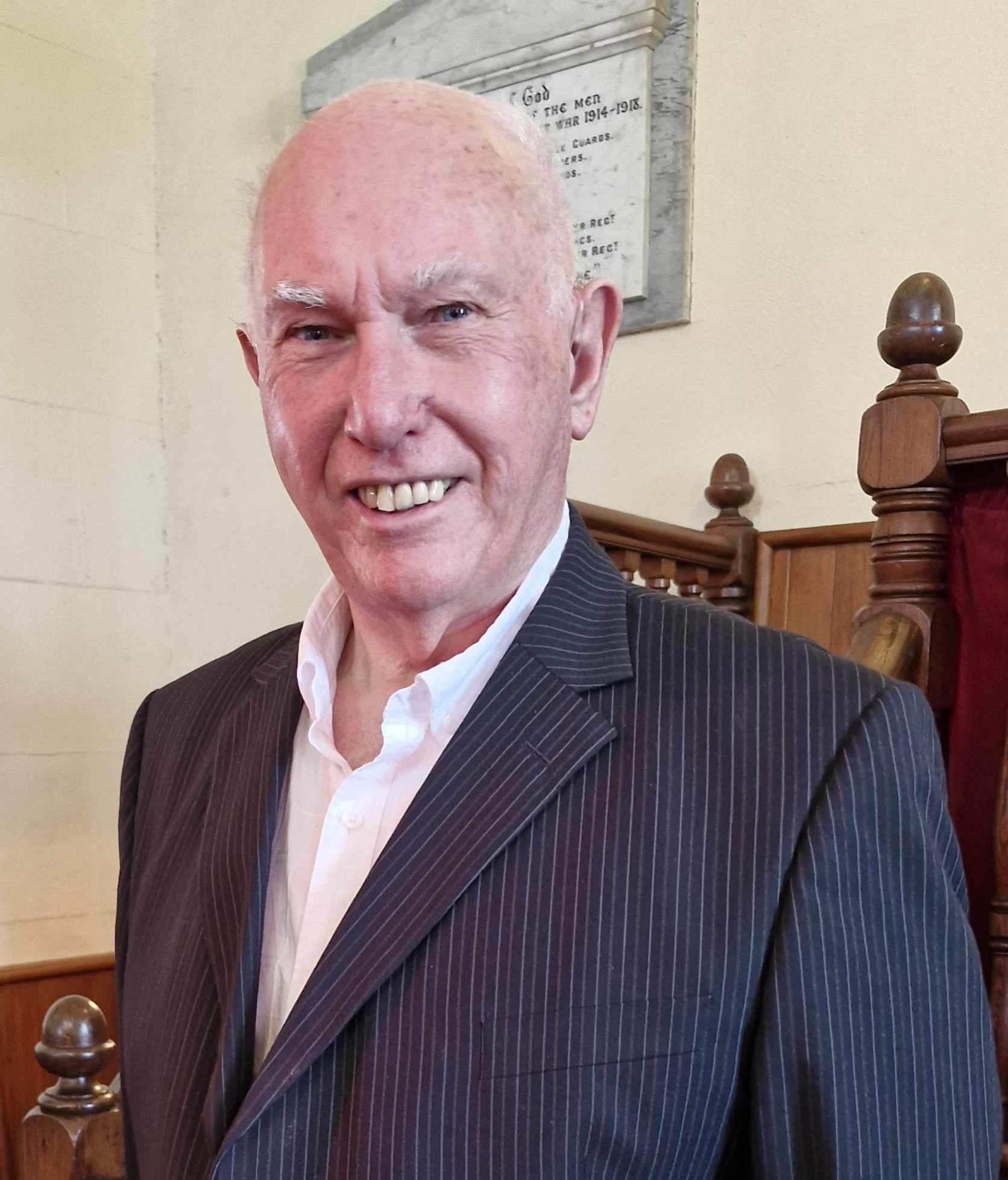
March 30th 2025: Dave Norbury

Philippians 1:1-11

            Philippi was a strategic place in the advance of the gospel. It was the first church formed in Europe. It is impossible to say what might have happened, but imagine if Paul did not manage to establish a church in Europe? Would Europe have been captured for Christ? Obviously, the Lord knew what He was doing. Paul wanted to go to Asia but the Spirit moved then towards Europe (Acts 16:6-10).

            So it was some twenty years after Christ was crucified, risen, and then ascended into heaven when a small band of travellers crossed over to Europe and trekked for about ten miles towards Philippi. What would other travellers have made of this small band who were bringing the gospel to a lost continent? Many would not give them a second look. They would only be in Philippi for a few months.

            Many years after this visit to Philippi, Paul wrote his letter to the Philippians whilst he was in prion (probably in Rome). In this letter he shows how much he loved them. He had only been with them for a short time and yet he could write: “I have you in my heart” (Philippians 1:7), and “I long for you all with the affection of Jesus Christ” (Philippians 1:8). I was in constant prayer for them all (Philippians 1:2,4,9). Paul was thinking not of his struggles in prison – the difficult conditions, the poor food, his jailers and so on, but was moved with compassion for those in Philippi. How is it that Paul could have no thought of his troubles and only expressed his concern and care for the Philippians? It was because he knew that these folk had been born again of the Spirit. He was confident of their faith in Christ. Paul was concerned to give the Philippian Christians a message of confidence in Christ. So our text for this morning is found in verse 6 which states: “being confident of this very thing, that He who has begun a good work in you will complete it until the day of Jesus Christ.” We shall consider this using some questions. Philippi was a strategic location for further advance into Europe, and Roch is also strategic for the advance of the gospel in Pembrokeshire and further north. This is a work of God. So the Lord will build His church (Matthew 16:18), for that which He has started, He will definitely complete.

[1] Who began this work?

            It is God, and God alone who began the work. We are all like lost and helpless sheep. Only the good Shepherd will gather His lost sheep and take care of them. A true believer is one who has been “delivered” from “the power of darkness,” and has been “conveyed into the kingdom of the Son of His love” (Colossians 1:13). None could do this for themselves. God did it. If we truly believe, we have been transferred from one realm to another and there is no going back. The price of transfer (Christ’s death) has been paid in full. In Ephesians we read about our being “dead in trespasses and sins” and about the rich mercy of God who “made us alive together with Christ” (Ephesians 2:1,5). We were lost sheep, we were under the power of darkness, and we were dead in sins, and yet God gathered us, transferred us into His kingdom, and made us newborn creatures!    In Acts 16 we read of two significant conversions in Philippi. First there was a woman called “Lydia” whose mind the Lord opened when she heard Paul speaking (Acts 16:14,15). Then there was the Philippian Jailer who, after the dramatic events of the night when Paul and Silas were imprisoned, called out: “sirs, what must I do to be saved?” to which the reply was: “believe on the Lord Jesus, and you will be saved” (Acts 16:30,31). A person must believe on the Lord Jesus, this is essential, but if a person wants true life then also a person must have their minds opened by the Lord.

[2] How will God continue this work?

            We may feel very vulnerable. How can I carry on? We may feel terribly weak. What will happen and how will I keep walking in faith? But take confidence! If God began the work in you He will most certainly carry it on. But how? Well here are four things to consider;

[a] Because we know He said it!

            A bit later on in Philippians we read an exhortation to “work out” our salvation “with fear and trembling” (Philippians 2:12), but then Paul adds these wonderful words: “for it is God who works in you both to will and to do for His good pleasure” (Philippians 2:13). It is God who is doing this work and He will carry on doing it! God works in those who are humble and contrite. A presumptuous and proud person who claims to have done everything through their own power ought not to expect the Lord’s approval. He gives grace to the humble and resists the proud (James 4:6; 1Peter 5:5). The Lord works though and in our weaknesses. To Paul the Lord spoke these words: “My strength is made perfect in weakness” (2Corinthians 12:9), and so when we are weak, we are strong with the strength God supplies.

[b] Through His word.

            The word of God is effective. Newborn babes are exhorted by Peter to “desire the pure milk of the word” in order that they “may grow thereby” (1Peter 2:2). The night before He died the Lord Jesus prayed to the Father and during His prayer He showed how important the word of God is. He said: “sanctify them by Your truth. Your word is truth” (John 17:17). We are made new by the word (James 1:18; 1Peter 1:23), and our growth and being made holy (sanctification) is effected by means of the word too. How important it is to study and read the Lord’s word!

[c] Through the church.

            The fellowship of godly believers is vital. Each believer has a different gift, and each of these are necessary for the growth of the whole body. C. S. Lewis once said that when you lose someone, something of you dies too, because that friend you have lost brought something out of you that no other could. We need one another for encouragement. But we also need one another to know off the sharp edges too!

[d] Through suffering.

            The life of Joseph is a prime example of how suffering brings about growth and life. But this is simply a preview of the suffering that Christ underwent to bring us life.

We must lean wholly upon God. He is our strength. We must rely completely upon His word, for His counsel is true. We must be a part of the fellowship for the Lord is growing His kingdom. We must bear under the trials and tribulations of life, for these are sent to refine us, and God is sovereign over all.

[3] Will this work ever fail?

            Since it is God’s work the only answer to this question is: NO! Humans may fail and give up. The Lord has promised that He will “not break” the “bruised reed,” and “He will not quench” the “smoking flax” (Isaiah 42:3). The Lord makes it abundantly clear that he will never leave nor forsake His people. We may give up on ourselves but God will never give up.

[4] How will God finish this work?

            Ultimately we do not know in detail. But one thing is clear, He will make us fit for heaven and “we shall be like Him” on that last day (1John 3:2). Could we ever say to the Lord: “I did … and I did …” when He returns? By no means! What we will say (if we are truly His) is something like this: “I am your workmanship which You have created to walk in those things which You prepared beforehand for me to walk in” (Ephesians 2:10).

Let mend with words from 1Thessalonians 5:23,24:

23 Now may the God of peace Himself sanctify you completely; and may your whole spirit, soul, and body be preserved blameless at the coming of our Lord Jesus Christ. 24 He who calls you is faithful, who also will do it.

Amen!
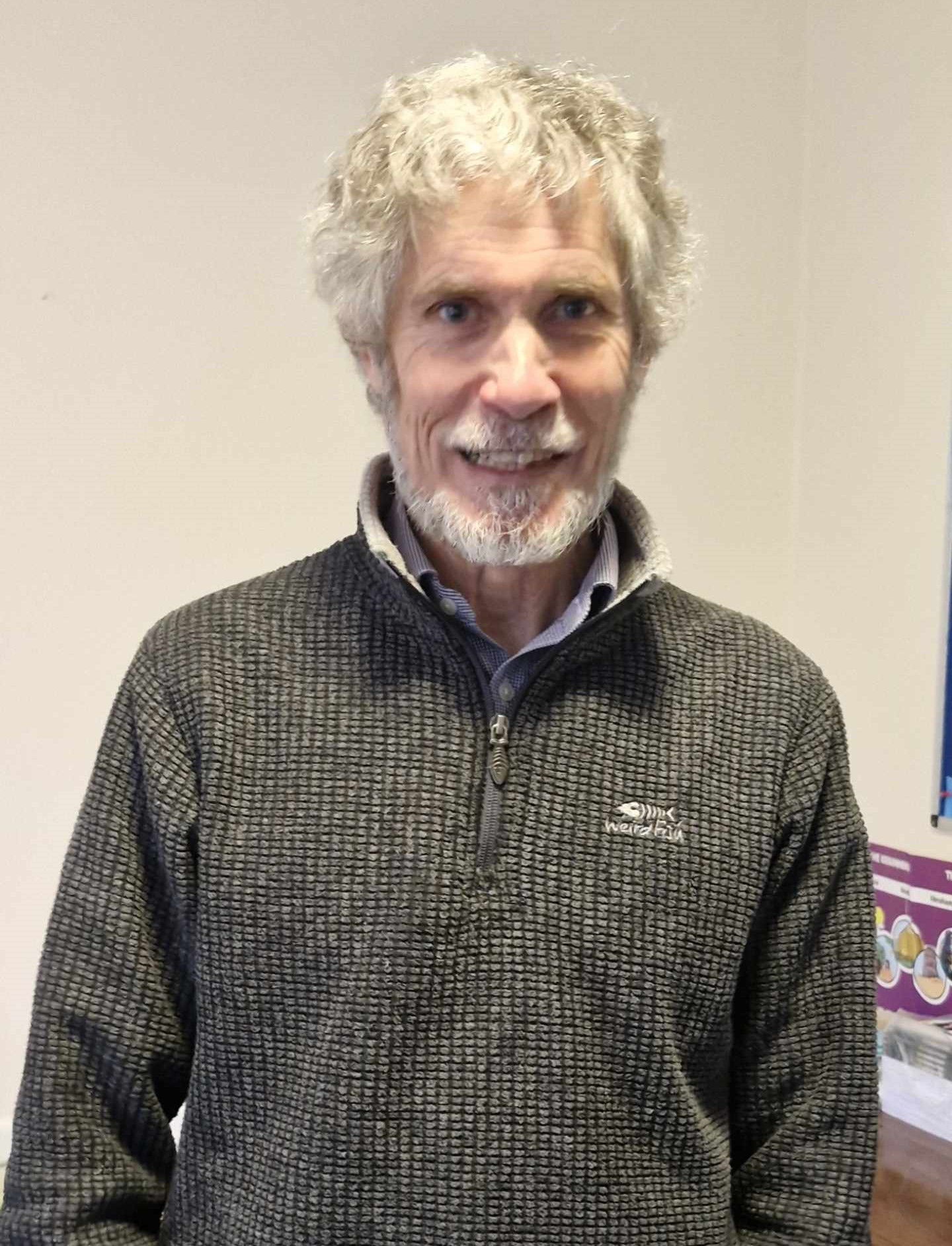
January 21st 2024: Phil Meiring

Acts 16:11-40

Acts 16:30 – the ultimate question – “What must I do to be saved?”

At least forty times in the New Testament, being saved is used to describe someone becoming a Christian. There are other words and phrases used in the Bible which describe other important aspects of someone becoming a Christian, e.g. ‘born again,’ ‘adopted.’ But the word ‘saved’ is particularly fundamental to a right understanding of the message of the cross.

1.      Who can get saved?

This account clearly demonstrates that anyone can get saved. Anyone who recognises they are
a rebel before God. Lost. Come with me to a Roman colony in northern Greece and
let’s meet the three characters in our reading. They lived in a town called Philippi
situated on the chariot way between the Adriatic sea and the Aegean sea. It is
a thriving business centre.

You couldn’t get three more different characters than the three we meet here. Lydia
(Acts 16:14-15). Everything is packed into two verses. A woman, a
businesswoman, a worshipper of God. A non-dramatic conversion, “The Lord opened
her heart.”

A clairvoyant slave girl (Acts 16:16-18). A young slave girl. She knew exactly what the message
was all about, “These men are servants of the Most High God, who are telling
you the way to be saved.” On the street, the girl with the dark powers was
dramatically saved.

The jailor (Acts 16:19 onwards). This man would have looked quite at home outside a nightclub in
Haverfordwest. Arguably, his is the most dramatic conversion story of the
passage. Pagan to believer in a night! We are going to follow this guy’s story
more closely. Let’s climb in through his bedroom window.

v.27. The jailor is fast asleep. The moonlight illuminates the courtyard. It’s been a mad day
with some very odd customers to contend with – banged up but singing out loud
to God and praying – and no booze insight! Suddenly, his bed is shaking
violently. There’s a loud bang. He sits bolt upright in great fear. He rushes
over to the window and looks out across the yard toward the prison block. A
great cloud of dust is settling in the moonlight. He notices the prison door
hanging off its hinges and a heap of masonry.

Suddenly, his blood runs cold. The prisoners – they’ll all be gone. His heart begins
pounding as he leaps out to bed. He stumbles across the courtyard, over the
rubble and enters the prison building. It’s all deathly quiet and dark inside.
They must be gone. He draws his sword . . .

v.28. Some sweet words echo along the corridor, “Don’t harm yourself! We’re all here!”

v.29. The jailer calls his servant for a light. Shaking like a leaf, he stumbles into the cell
of Paul and Silas and falls at their feet. We don’t know, but he must have had
Paul and Silas with tears streaming down his face, thanking them.

v.30. Then, they all emerge into the moonlight. Does the jailer say, “Guys, I owe my life
to you! Tell me guys, what can I do for you?” No! He says, “Sir, what must I do
to be saved?”

Now, that is odd. This man has been saved from a beheading, suicide and an earthquake. What
more could he a man want to be saved from? But something else was surfacing in
his heart. It was deeply troubling him and it had been bothering him ever since
these two religious guys had first hit the town.

The jailer’s question is almost certainly a response to the message that Paul and Silas had
been declaring on the street, and to the unusual events of the night – guys singing
instead of cursing and guys who didn’t even ‘leg-it’ when the earthquake blew
off the jail door!

2.      What are we saved from?

From this chapter alone we cannot provide the answer. Clearly, the slave girl knew there
was something to be saved from and a ‘way to be saved’ (v.27). So, what was it?

A strap line for Paul’s message found in 1 Thessalonians 1:10, “Jesus who rescues us from
the coming wrath.” That’s what it is, “The coming wrath.”

God is not some philosophical concept simply to plug a gap in our consciousness. He is one
who made us, keeps our hearts beating this very minute, and has genuine
emotions toward us. God has feelings too. I put it to you, we need to be saved
from the consequences of the one emotion, wrath, and saved as a consequence of
the other emotion bound in love of God expressed in the Lord Jesus.

The jailor how to become aware that he was a condemned man, even though he had the key to
every cell in the block. The wrath of God was heading his way and God was on
his case. In that moment, the jailor felt his need to be saved.

I have deliberately introduced the idea that God has feelings and so it is important
that I clarify this understanding. Already you might be asking, God, got
emotions? Yes, because He is a person, but it is critical to the glory of God’s
Being that we recognise that His emotions are of an entirely different order to
those that we experience. There is some correspondence, but His responses out
of one who, unlike us, is perfect, holy and just in His character. The one who
is eternally unchangeable in attitude. God doesn’t have ‘mood swings’ like us. Emotions
with Him are not involuntary. He doesn’t ‘fall in love.’ He is love. His
feelings and actions towards His creation are consistent, predictable and
steadfast.

You might be wondering whether God ought to be angry. We sociate anger with someone who is
irritable or flies off the handle. This is not how it is with God. His anger is
a controlled consistent opposition of His holy nature to rebel mankind. It is a
must with God to express His divine justice. He has every right to be angry. Remember
this, there are times when human anger is a just and acceptable emotion to
express e.g. when a marriage relationship is violated or when a war crime is
committed.

The word ‘wrath’ is used 16 times in Paul’s letters and in the accounts of his ministry.
It was a word that galvanised his gospel preaching along with that of ‘love.’ Paul
sensed that not only is the anger of God something awaiting in the future but
it is very much how God feels toward all rebels right now. In his letter to the
Romans Paul says, “The wrath of God is being revealed from heaven against all
the godliness and wickedness of men.” (Romans 1:18). This is how God feels this
very morning about each and every rebel.

3.      How are we saved?

v.31. Paul gave the jailor the answer, “Believe in the Lord Jesus …” In verse 32 he
explains his answer not only to the jailor but to his wife and kids. Then, shortly
after midnight, not only is the jailor saved but all his family. Eternally
safe, never to have to suffer the wrath of God. But what’s more, totally
overjoyed at the experience of believing!

Simple. Turning away from my former life, resting in all that Jesus did at the cross.
Surely, you can’t get saved just like that. Yes, you can! It is simply resting
in what Jesus has done.

“For God so loved the world he gave his only begotten son that whoever believes in him shall not
perish but have everlasting life.” (John 3:16). Jesus and what He did was the
consequences of the extreme love of God. Love of immeasurable dimensions
(Ephesians 3:18).

Do you want to know how extreme the love of God was toward you and I? I’ll tell you.

i). When the eternal Son of God, Jesus, left home and joined us for 33 years. It wasn’t a
state visit. No red carpet. He came as a suffering servant. (Philippians
2:6-8).

ii). The minute He stepped out of heaven, the incarnation arrangement would become
permanent. The second person of the Trinity would take on our humanity and
become wedded to it forever. (1 Corinthians 15:28, 49).

iii). At the cross itself, the Son would face, on behalf of you and I, the fierce anger of
His dearly loved Father. This would be an awful and uniquely distressing event
within the Being of God, as Jesus was counted a sinner on our behalf. (Matthew
26:36, 27, 46).

Our rebellion could not be forgiven (washed away) simply on account of the enormous
and overwhelming love of God. Justice had to be done. His wrath had to be
satisfied. His love put His Son there at the cross and His wrath was poured out
on Him as He was counted the sinner, the rebel in our place. This is how your
penalty was paid. His wrath towards the rebel, rightly arising out of His holy
nature, was satisfied. The wrath and love of God collided at the cross.

Seeker:
“Believe in the Lord Jesus, and you will be saved.” This means turn from your
rebel ways and rest in what He has done for you. At that moment you will be
safe.

Believer: The
love and wrath of God are two wheels on the gospel chariot. If one comes off
there is no telling where the chariot will end up!