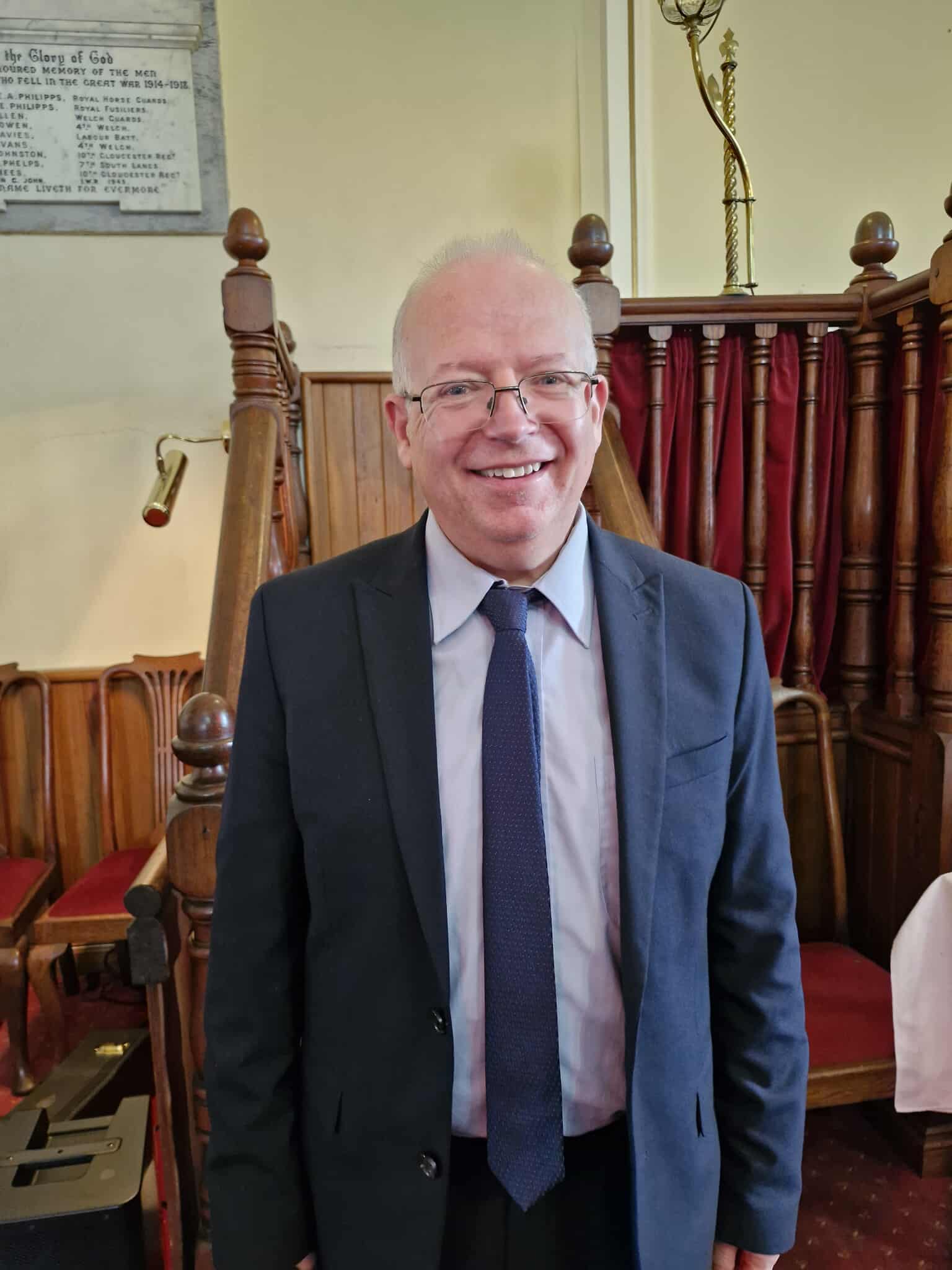
October 12th 2025: Ian Jones

Reading: Joshua 2.
Text: Hebrews 11:31.

to watch this service, click on the link to our YouTube channel: https://youtu.be/o0So2XFgsSM?si=fHUxUerW4XPl45kB
Introduction.

            The story of Rahab’s salvation is set within the context of the Lord’s conquest of Canaan led by Joshua. In Joshua chapter 2 we find two spies are sent out into Jericho. We should remember that many years before this, twelve spies were sent out to spy Canaan by Moses. Why did Joshua need to spend out more spies? He probably had all the intelligence he needed from the more comprehensive exploration done by the twelve spies under Moses. It seems to me that the main point of Joshua chapter two is to show us the salvation of Rahab, the Jerichoite prostitute. We are reminded of Jesus’ visit to see the woman of Samaria at Jacob’s well in John chapter four. He was determined to go north through that region in order to meet with her, rather than go the normal way which would have avoided travelling through Samaritan lands. It is very likely therefore, that the Holy Spirit wants us to know that the reason for the two spies trip to Jericho was (in the main) to effect the salvation of Rahab.

            God had been at work in Rahab’s life. Consider what she confesses, how she helped the spies, and her desire for her family to be saved. Now we shall consider as our text the commentary on Joshua chapter two which we find in Hebrews 11:31.

By faith the harlot Rahab did not perish with those who did not believe, when she had received the spies with peace.

The writer of the letter to the Hebrews wants his readers, (Jewish Christians), to see Rahab’s faith in the midst of great difficulties. See here a woman whose nation and peoples faced imminent death and destruction, but Rahab’s faith saved her! In many ways we too are in the same boat. Jericho was about to be destroyed, but the whole world awaits the coming judgment of God when Christ returns. And here we see Rahab trusting in God. Her faith is very visible. It is not merely an intellectual agreement but something living and active. Now Jericho is the first city that would fall in Canaan, and given what we read of in the opening chapter we might have expected that such would be the focus of chapter two. But what we see instead is the mercy of God! There is no doubt that Jericho deserved God’s judgment, but before we see that we are presented with this historical tale which speaks of God’s grace and mercy! The Lord says in Ezekiel that He has “no pleasure in the death of the wicked, but that the wicked turn from his way and live” (Ezekiel 33:11). And then what is even more remarkable is the object of the Lord’s mercy. Whom would we think of rescuing from such a place about to be destroyed? One with great intellect? Or one who shows great promise for the future? Or maybe one who is greatly wealthy or able to make money? Or perhaps someone who might seem to deserve rescuing? A noble or one of royal birth? What we find though is that it is a prostitute (“harlot”) who is rescued. Oh the mercy of God! None is too much of a sinner that cannot be rescued! But are we willing? Are we like Rahab who had heard about Israel and God and was prepared to go against her own folk and trust in the God who judges sin?

            As a youngster I remember that children’s chorus: ‘wide, wide as the ocean.’

Wide, wide as the ocean, high as the heaven above
Deep, deep as the deepest sea is my Saviour’s love
I, though so unworthy, still am a child of His care
For His Word teaches me that His love reaches me everywhere!

The Lord’s love reaches into everywhere, even into the city doomed to destruction! Why did the Lord save me? Of all the people He could have saved – but I need to remember that there is no depth and no height that He could not reach to. Amazing grace that saved a wretch like me! Salvation is of grace and by no means something we can drum up by self effort or earn. Rahab’s saving faith separated her from the rest who were doomed to destruction.

            Let us look at four features of Rahab’s faith.

[1] By faith.

            Everyone in Jericho knew about Israel’s crossing of the Red Sea, and of the defeat of the two Amorite kings across the other side of the Jordan. Look at what she declares speaking on behalf of all the people of Jericho:

For we have heard how the Lord dried up the water of the Red Sea for you when you came out of Egypt, and what you did to the two kings of the Amorites who were on the other side of the Jordan, Sihon and Og, whom you utterly destroyed. (Joshua 2:10).

She also testified to the great terror and fear that the people felt.

I know that the Lord has given you the land, that the terror of you has fallen on us, and that all the inhabitants of the land are faint hearted because of you. … And as soon as we heard these things, our hearts melted; neither did there remain any more courage in anyone because of you. (Joshua 2:9,11).

Now Rahab believed and had faith in the God of Israel, whereas all the rest of Jericho did not. Perhaps the others in Jericho thought that the Israelites were never likely to be able to cross the Jordan, or perhaps they thought that the walls of Jericho were impregnable, or maybe they thought they had an unbeatable army? But Rahab had true faith. How do we know that she had true faith? Look at which she personally declares:

I know that the Lord has given you the land … for the Lord your God, He is God in heaven above and on earth beneath. (Joshua 2:9,11).

Rahab heard the same news that everyone in Jericho had heard, but the difference between her and the rest was that she believed in the God of the Israelites and the rest did not. Rahab asks the spies for some “true token” that will bring salvation to her and to her family (Joshua 2:12). Rahab knew that Jericho was doomed, but she displays faith in God. Consider the thief on the cross who asked the Lord Jesus to remember him when the Lord came into His kingdom. And the Lord replied: “today you will be with Me in Paradise” (Luke 23:43). Now even today, whoever hears the Lord’s word (as Rahab did) will receive everlasting life (John 3:16,36).

[2] Rahab’s faith is self denying faith.

            Rahab dared to risk her whole life. If it had been found out that she had been hiding the spies, there is no doubt that she (and her own family) would have been executed. The Amorites were a wicked people. James points out that Rahab’s faith is observed by the works that she did:

Likewise, was not Rahab the harlot also justified by works when she received the messengers and sent them out another way? (Joshua 2:25).

Maybe we might think that Rahab should have been loyal to the people of Jericho? But these were a wicked people, and Rahab was prepared to give her loyalty to Israel and Israel’s God. She hid the spies, and she sent the king away on a wild goose chase! Her faith is demonstrated by her actions. Moses forsook the pleasures of Egypt because he saw “Him who is invisible” (i.e. The Lord) (Hebrews 11:24-27). Rahab was not moved by fear of the people or by the king of Jericho. She demonstrated her faith in her actions in keeping the spies safe so that they would return.

[3] Rahab’s faith is a sympathising faith.

            We also see how Rahab was not just concerned for herself, for she asks for mercy for her whole family too:

12 Now therefore, I beg you, swear to me by the Lord, since I have shown you kindness, that you also will show kindness to my father’s house, and give me a true token, 13 and spare my father, my mother, my brothers, my sisters, and all that they have, and deliver our lives from death. (Joshua 2:12,13).

Do we not also want our families to share in the salvation we know? When the Lord opened our eyes and showed us the truth, was it not so wonderful that we wanted our nearest and dearest to come to know it all too? Where true faith is seen, that is, where a person has been brought to true faith, there is also a desire within such a saved person that others might know the same joy of salvation. It is impossible to see the true value of salvation without also wanting others to share in what you have come to know. The gospel accounts show that the Lord Jesus had amazing compassion. Are we not like Him?

            There was no guarantee that any would be safe outside Rahab’s house where the red cord was placed. If they remained within Rahab’s house then they would be safe and their blood would be the responsibility of the Israelites. But if they stepped outside their blood was on their own heads. This meant that each member of the family must come into Rahab’s house. Go out and you face judgment, come in and your life is secure. It was the responsibility of each member of Rahab’s family to come into the house where the scarlet cord was found. That scarlet cord represents the blood of the Saviour. In the Exodus the Israelites had to daub the blood of  lamb on the lintels and doorposts of their doors to escape the judgment from the angel that was passing over. Are we looking to the shed blood of Christ?

[4] Rahab’s faith is a sanctifying faith.

            Scripture refers to Rahab as a harlot. But she was not going to continue in such a profession. Her faith was that which also led to her sanctification. Rahab was given special privilege among Israel after being rescued (Joshua 6:25). And then wonderfully we discover that Rahab becomes mother to Boaz, who married Ruth the Moabitess, from whom came Obed, then Jesse, and then David. Boaz was a godly man as the record in Ruth shows. Where did he gain such godliness? Surely, he would have learned from his mother Rahab who was saved out of Jericho? Rahab features in the genealogy of the Lord Jesus (Matthew 1:5). Rahab, a Gentile prostitute, by faith in the Lord,f comes to feature as an ancestor of the Lord Jesus! How great is our God!

October 13th 2019: Darrin Gilchrist

Darrin Gilchrist-Oct 19 -dThe parable of the Sower – Looking at saving faith.

Often the emphasis of this parable is put on the wrong place. It is not really the parable of the sower but the parable of the soils. We will be looking at the only kind of faith that leads to salvation. Therefore, there is a kind of faith that doesn’t lead to salvation. The end of Matthew chapter 12 and into the beginning of Matthew chapter 13 gives us the background to this parable. Until this point, Christ has been preaching the Kingdom of God is here. He has been preaching about the good news that God has determined to put right the damage sin has caused. As a man, Christ is walking around seeing destruction all around Him. Sin and selfishness has destroyed us. We can’t hide it. It’s ever before us. Christ came into the world and said His Father had sent Him to restore us. How is this restoration to happen? Christ says the way He will do this is to make a new creation. The old creation is destroyed by sin, God will regenerate a new humanity. Through God working salvation and redemption in our lives, one day this world will be folded up and a new heaven and earth will be.

How proud we are by nature. We are glad to see young people in our church but young people are not our hope. If there is genuine restoring in our land of the gospel, we will not be able to say man has done this, only God. The ways God will do this is to redeem us. Matthew, as a writer, does something interesting. The Kingdom Christ has been going around telling people about, He brings to bear. Matthew records a series of miracles, for example the blind man being healed. The man became blind because sin is in this world. Christ has been going around teaching about the power of this kingdom. Christ demonstrates this power in healing, He brings power to bear upon their lives. This power can do far more than physical healing, it can heal the soul. Christ, by entering into this living experience, restores what sin has done. Christ has a series of calls He makes to different people. He brings the power of the Kingdom to bear on people’s lives. He calls them to follow Him. In the midst of doing this, some entrusted their lives to follow Him but others rejected Him and others remained neutral. The question arises, if you saw the things He did, why isn’t the entire world following Him? Christ has to explain to His followers why there are different responses.

‘That same day Jesus went out of the house and sat beside the sea’ (Matthew 13:1). This begs the question, ‘What day was that?’ Why does Matthew record that day? It’s because of what he records in Matthew 12:46, ‘While he was still speaking to the people, behold, his mother and his brothers stood outside, asking to speak to him. But he replied to the man who told him, “Who is my mother, and who are my brothers?” And stretching out his hand toward his disciples, he said, “Here are my mother and my brothers! For whoever does the will of my Father in heaven is my brother and sister and mother.”

Here Jesus was in a house speaking to people. Even those closest to Him were obstacles to what He wanted to do. Jesus says all who follow Him are His closest kin. That same day He went out of the house. He will not be stopped from doing what He wants to do, even obstacles from His closest family. He went out and sat by the sea, then speaks this parable. He is teaching His disciples and followers why different responses are happening. He is preparing them for different responses they will have when He returns to heaven. Just like their Master, they will have different experiences and need to be prepared.

The Parable of the Soils is a very simple parable. Jesus compares different people and their different responses to the proclamation of the gospel, to different types of soil. All of mankind falls under one of these categories.

  • The rock hard soil.“A sower went out to sow. And as he sowed, some seeds fell along the path, and the birds came and devoured them” (Matthew 13:3-4). The path is rock hard, people have walked on it and it is compacted. The birds devour the seeds. This is explained in verse 19, “When anyone hears the word of the kingdom and does not understand it, the evil one comes and snatches away what has been sown in his heart. This is what was sown along the path.”
  • The second soil is shallow soil. The seeds sprang up but because there was no depth to the soil, they had no roots and withered away. “Other seeds fell on rocky ground, where they did not have much soil, and immediately they sprang up, since they had no depth of soil, but when the sun rose they were scorched. And since they had no root, they withered away.”
  • There is a thorn-infested soil, “Other seeds fell among thorns, and the thorns grew up and choked them.” (Matthew 13:6-7).
  • Finally, there is good soil, “Other seeds fell on good soil and produced grain, some a hundredfold, some sixty, some thirty.” (Matthew 13:8).

75% of people who hear the message are not very promising, 25% are. This is what we’re taught to expect. There’s no room for despair. There’s nothing glamorous about us, we represent such a small part of the population. Yet we’re used by God! We’re insignificant but we are to do significant work. All glory to God. There is good soil which produces grain.

We see the kind of faith that leads to salvation. Do we have the kind of faith that leads to salvation? There is a great picture of this in John’s gospel, chapter 2. John says many heard what Jesus said and believed but there is a kind of faith that is not saving. They were interested in what they could get out of Jesus. Have you come to Him?

What is the kind of faith that saves?

  • It is faith that receives the word of God, it takes it in, it is receptive to God’s voice, not just His word. The voice is the power of the Holy Spirit speaking through the Word. Saving faith does not allow the enemy to come to carry it away. There will be a carefulness in how you treat the Word, a desire for the Word and practical application. So much Christianity today allows things just to remain on the surface. Saving faith takes what God says seriously. God is serious, serious joyfulness. Are we receptive to God’s Word, no matter what it says to us? What about when the Word of God comes to you and it goes against the grain? Will you disregard it, and so your faith remains on the surface only? Sarah laughed when she was told she would have a baby beyond child-bearing age. Yet God brought life out of the death of a dead womb. He did the same with Elizabeth. Saving faith receives the Word of God.

  • Saving faith endures. Other seeds fell on rocky ground and didn’t have roots. Unlike the seeds that landed on the hard path, this seed lands on soft soil but it is shallow. Are you a shallow Christian – very promising at first but when heat is applied you are unable to stand the heat? Saving faith is rooted, it endures, it keeps on going. The heart that is able to be penetrated by its seed so it grows. When God’s Word comes it alters everything. There is a constant awareness that what God says is the only thing that matters. It can withstand the heat. Plenty of Christians who respond immediately to the gospel are thrown into the baptismal pool without looking to see if roots have been laid down, or if it is just shallow soil. Saving faith proves itself in time.
  • Saving faith is unobstructed. That is not to say we don’t have challenges. The soil of verse 7 has obstacles and no-one takes time to get rid of them. Are there other things in our life that clutter us? Saving faith isn’t overcrowded by things of this world. Is Jesus the number one, the only one, in an undivided heart? Saving faith is pure. Christ governs and dictates everything in your life. You need pure soil if you’re to have growth. You need to make the soil receptive. You need to plough. Jeremiah is commanded to put the plough to the soil. There needs to be a work that happens if the soil is to be receptive. It’s the kindness of the Lord that leads to repentance. Is Christ your delight or do other things crowd Him out?
  • Saving faith is fruitful (verse 8). It multiplies. There is a fruitfulness. Saving faith will produce saving benefits for others. Saving faith is alive, it’s active, it brings about other graces. When is the last time anyone has been affected by your witness to Christ? Saving faith is to be fruitful no matter how great or small that fruit is to be. Saving faith doesn’t mind if it produces even the smallest fruit. Saving faith is alive and has an impact. It’s fruitful. Do we have a fruitful faith?

Sunday 2nd August – Morning Service

Isaiah53.1

This morning at our 10.30 am service we were blessed with ministry from Matthew Maxwell-Carr. who spoke on Isiah 53 verse 1.

‘Who has believed our message?
And to whom has the arm of the LORD been revealed?’

Below are some thoughts from Matthew regarding this verse.

What kind of belief is Isaiah talking about? He’s talking about saving faith. Faith which saves. A faith which produces a changed life. A life which desires and thirsts for and longs for God and to know more of God’s Son Jesus. This is saving faith. Nothing less.

Look at the next part of this verse: ‘And to whom has the arm of the LORD been revealed?’ Isaiah is saying one thing and then saying it again, in a different way. The Bible often does this. Says something, then says it again using other words to press the point home, to help us grasp what’s being said.

The prophet says, in effect: ‘Who has believed this gospel message? Indeed: who has the LORD revealed His arm to? Who has the LORD worked upon? Whose heart has the LORD touched? Who has really believed my gospel message?’ This is what Isaiah means. He is speaking about the kind of faith which is only produced by the miraculous power of God touching a human soul, changing that soul, changing that person for good and forever. Someone who now walks in resurrection power. Someone who would rather die than deny that Jesus Christ rules and owns all things.

Is that the kind of faith you have? No other faith will do. This is the only way to respond to this gospel message. With that kind of belief. It’s the only way to respond to this message. ‘Who has believed our message’ – believed. Have you believed? Really believed? Do you really believe? Really have faith, really trust in this gospel message as if your life depended on it?

As you think about these words, why not listen to the hymn ‘Amazing Grace’. Think how you will take these thoughts on board and respond to the message.

Amazing grace, How sweet the sound
That saved a wretch like me.
I once was lost, but now am found,
Was blind, but now I see.

‘Twas grace that taught my heart to fear,
And grace my fears relieved.
How precious did that grace appear
The hour I first believed.

We hope these thoughts have blessed you as much as we were during the service.