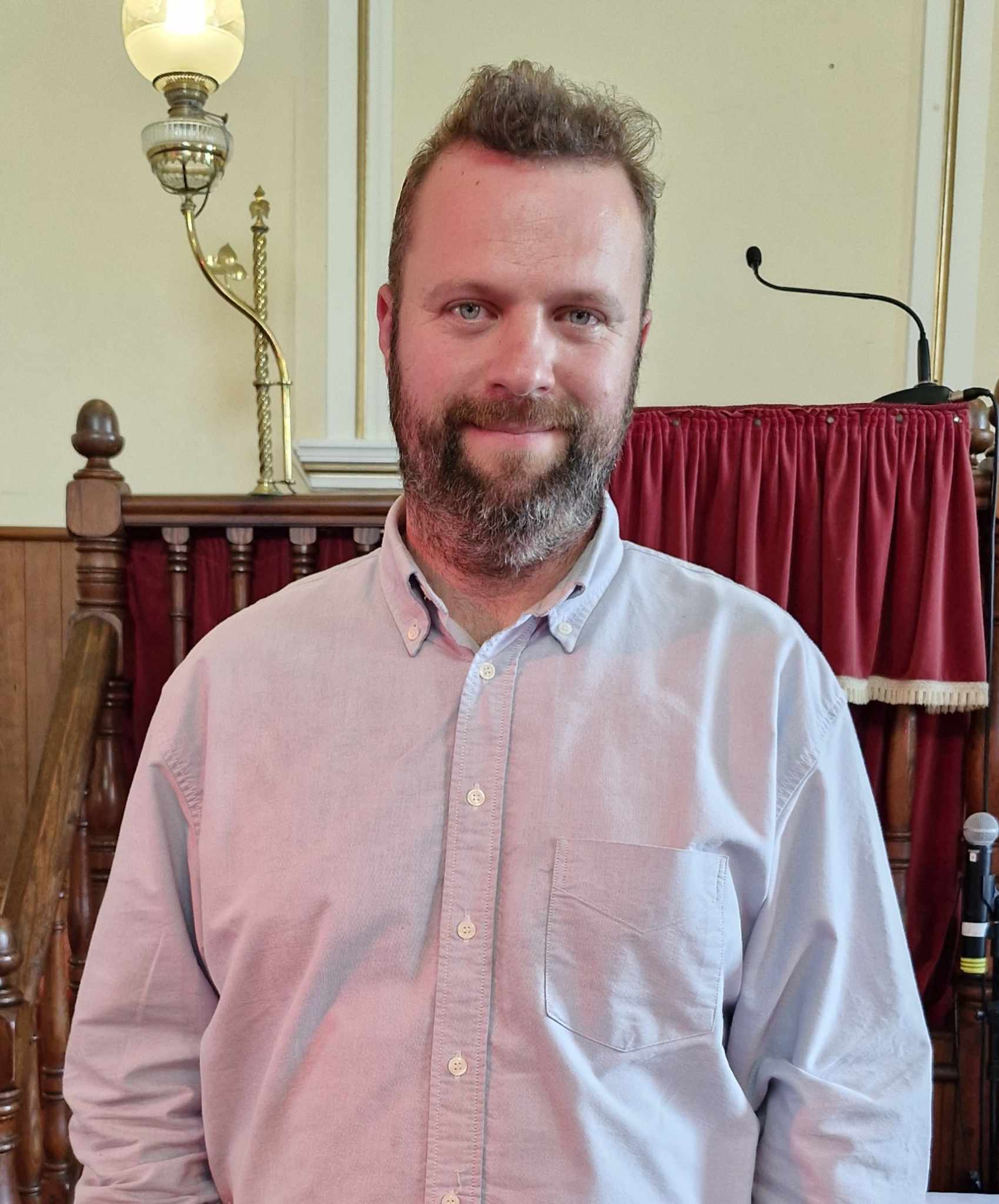
May 4th 2025: Sam Pritchard

Colossians 1:15-20.

            Jesus is king now, tomorrow, and forever more! I want to think about one element from this passage and ask the question: what makes a healthy church? We are not speaking of physical things – getting over illnesses or being fit etc. – for a church which is physically healthy may be spiritually very unhealthy. A church which has lots of activity and ministry, which has many young and lots of folk in its walls may hide many inner problems.

            The church must be Jesus-centred. He must be the centre not just of the church but of each individual member of the church too. We are to never stop delighting in Christ Jesus, and we are to never stop rejoicing in Him! Coming to church fellowship should never be a drudge or a dread. And it would not be if Christ is the centre. Some scholars suggest that Colossians 1:15-20 is a poem or hymn used by the early church. But it contains much deep truth.

[1] Broadcast.

            God is BIG! God is before everything, before creation, before time. God is. No one else can say that! He will always be the eternal Lord. He is radiant, wholly pure, and holly. None are like Him. Whom can compare to Him? Who is like unto Him? None! He is beyond understanding. He is unfathomable. He is higher than our comprehension.

            In verse 15 we read, speaking of Christ, that “He is the image of the invisible God.” In this statement we learn about God being invisible, but this does not simply mean that we cannot see Him. It is much deeper. It is not like the wind which we cannot see but discern its effects. We can (to a degree) explain the wind. The word ‘invisible’ suggests that God is beyond, and that he is not understandable. He is far away from us so that we cannot know Him. We cannot see Him, fathom Him, or imagine what God is really like. He is unknowable. He is so far above us and we are so earth-bound. God is ‘other.’ He is unique, He is uncreated and we are bound by creation. He has unimaginable power. God is invisible, unknowable. But in verse 15 we are taught that the Lord Jesus Christ is “the image of the invisible God, the firstborn over all creation.” So God can be known in the person of the Lord Jesus Christ. How can we know he unknowable God, the invisible God? We can know Him through the Lord Jesus Christ. What a marvel! And what grace!

            I wonder if you have ever looked in the mirror and have been surprised to see your mother or your father in the reflection? We bear likeness to our parents of course. It is a strange experience that you suddenly see not yourself so much as your mum or dad! Is this what Paul is saying here? No! It is not just that the Lord Jesus is somewhat, or a little, like God. He is not just similar. Jesus is God. He is not just similar to the Father, for He is God. There are other Greek words which could be used to indicate the idea of similarity. But the word used here does not indicate mere similarity. The word actually suggests that the Lord Jesus is the ‘very stamp of God.’ The Lord Jesus reveals to us the very likeness of God and there are two thoughts concerning this likeness. First we have the idea of image. He is the very image of God and so is identical to God. Second it speaks of manifestation. Christ Jesus fully and completely reveals or manifests whom God is. Later in Colossians Paul writes: “For in Him dwells all the fullness of the Godhead bodily” (Colossians 2:9). Jesus is the same essence as the Father and therefore can reveal to us the Father. The Father sent the Son to make God known (John 1:18). Why make Jesus the centre of the church and of life? It is because only through Him can we ‘see’ the invisible God. Remarkably, as creatures of dust, we can have a relationship with God.

            God is invisible, far from us, way above us, and nothing like us. But Christ Jesus reveals the Father and we can know God through Him! My title for this first point, ‘broadcast’ was chosen because this news or message that Jesus Christ reveals God must be broadcast far and wide. In John 14 we read about Philip asking the Lord to show the Father (John 14:8). The Lord replied by saying:

“Have I been with you so long, and yet you have not known Me, Philip? He who has seen Me has seen the Father; so how can you say, ‘Show us the Father’? (John 14:9).

But herein lies a great problem. Jesus lived two thousand years ago and we have not seen Him. What hope then is there for us today two thousand years later, for we have not seen Jesus? Well let me encourage you dear friend! You have not seen Jesus physically, but if you are a believer you have seen Him really and truly by faith. You believe that this Jesus came, suffered, died, rose again, ascended, and has opened your eyes. You have seen more of Jesus than those of Jesus’ day. The Pharisees saw Him physically but they did not see Him truly.

            At the end of verse 15 we learn that Christ Jesus is “the firstborn over all creation.” Christ Jesus created and made everything. Jesus was never created. But this phrase actually implies status not origin. He is before all created things. Jesus is supremely, uniquely, different from all of creation, for He has come from the Father.

[2] Body.

            The second reason to keep Jesus Christ as centre, is that we are His body. In verse 18 we read that “He is the head of the body, the church.” Jesus Christ is the Head of the body, the church, because the church belongs to Him. He is the ruler, the source, and the authority. I have one ‘bugbear’ to confess! I do not like seeing churches with notice boards declaring the name “St. Mark’s Church,” or “St. John’s Church.” This is not good. Mark and John, whomever they may be, are long since dead! We are the church of Jesus Christ. It is not the church of a man (be he Mark or John) but the church of the Man who is God, the One who died and is now risen. The church must not be built on tradition, nor on the heritage of any singular person, but on Christ. If our church is named or centred on anything else then in truth we are not a church. Christ alone has authority. He died for sins and no other has or could ever do so, He reveals the Father and none else has done so. Is Christ my Captain, your Head, your King?

            Churches make many decisions. Leaders have much business to deal with. Church meetings are not the place to express personal opinions or to show off what we may know. In our meetings we ought to discern what the Lord Jesus Christ wants us to know and do. We want to know the mind of Christ. He rules the church! John Owen (seventeenth century congregational minister) made the point that it is the duty of the church and of individual believers to inquire diligently into the mind of Christ with a humility and eagerness ready to obey what he reveals. Someone once said:

            Anything without a head is dead, and anything with two heads is a monster.

If Christ is not head of the church, then the church is dead. Christ alone must be the Head. We often hear people say in tricky situations: ‘don’t lose your head’ meaning ‘don’t panic.’ But I say: ‘don’t lose Christ your Head.’ Herman Bavinck, (Dutch reformed theologian) spoke about the church not existing and thriving by dint of our strength and ingenuity, rather she is the body of Christ and without Christ as the Head she is dead, with no life, no authority, and no truth.

[3] Beginning.

            In verse 16 we learn that Christ Jesus is truly the Creator of all things. In John 1 we learn also that Christ made all things and that “without Him nothing was made that was made” (John 1:3). But this term “the beginning” which comes in verse 18 does not speak about creation. I believe the idea is that Christ Jesus is ‘the beginning of the church,’ and this on account of the fact that He might have the pre-eminence. In verse 18 we also read that Christ Jesus is “the firstborn from the dead.” But, lots of people prior to this time were raised from the dead. Lazarus, Jairus’s daughter, the widow of Nain’s son and many others. So we have an apparent problem here. How can the Lord Jesus be called “the firstborn from the dead”? Well  we need to remember that Lazarus (and all the others who were raised) died physically, was then raised to life, but then died again. But the Lord Jesus was raised to new life and never died. His resurrection is very different to that of the others for three reasons:

[i] In all cases of resurrection of people prior to Christ’s the person raised died again. Christ rose and lives forever.

[ii] Christ was raised in a resurrection body – the first in the new creation. Everyone else was raised back into their fallen body.

[iii] Christ’s resurrection is the only one that brings in life for others. Lazarus’ resurrection was good for him and his sisters but for no one else. Christ’s resurrection brings life to all.

Christ’s resurrection not only demonstrated the complete success of His work on Calvary, but ushered in the new creation. The resurrection of Jesus Christ is the hinge of the door upon which all salvation turns. And therefore we can rise with Christ! Since He is alive in resurrection life we have life forever more. Therefore, He is the beginning of the new creation. Now when Christ arose so too do we! Christ is the beginning of His church of the new creation.

[4] Blood.

            There is one very key and vital aspect to this passage of Scripture. We must ask why is Jesus so important for the church? And the answer is because of Christ’s victory which has come from His shed blood on Calvary. In verse 20 we read that Christ “made peace through the blood of His cross.” I do not deserve God. Jesus took what I did deserve upon Himself, namely, the wrath of God and the punishment due for sins. I go free! I am forgiven! When God looks at me He sees the blood of Jesus not my sins. The blood of Jesus Christ purchased the church. The church is made up of all those people that Jesus Christ has won, has saved, has redeemed by His blood shed on Calvary. The blood of Christ brings peace between me and God. We will never know what the wrath of God feels like because God punished Christ in our place. C. H. Spurgeon answers the question of why a church must be centred in Jesus Christ by saying that no church exists except that which is washed in the blood of Christ. The church are a blood bought people and we owe all to Him.
April 27th 2025: Rhodri Brady

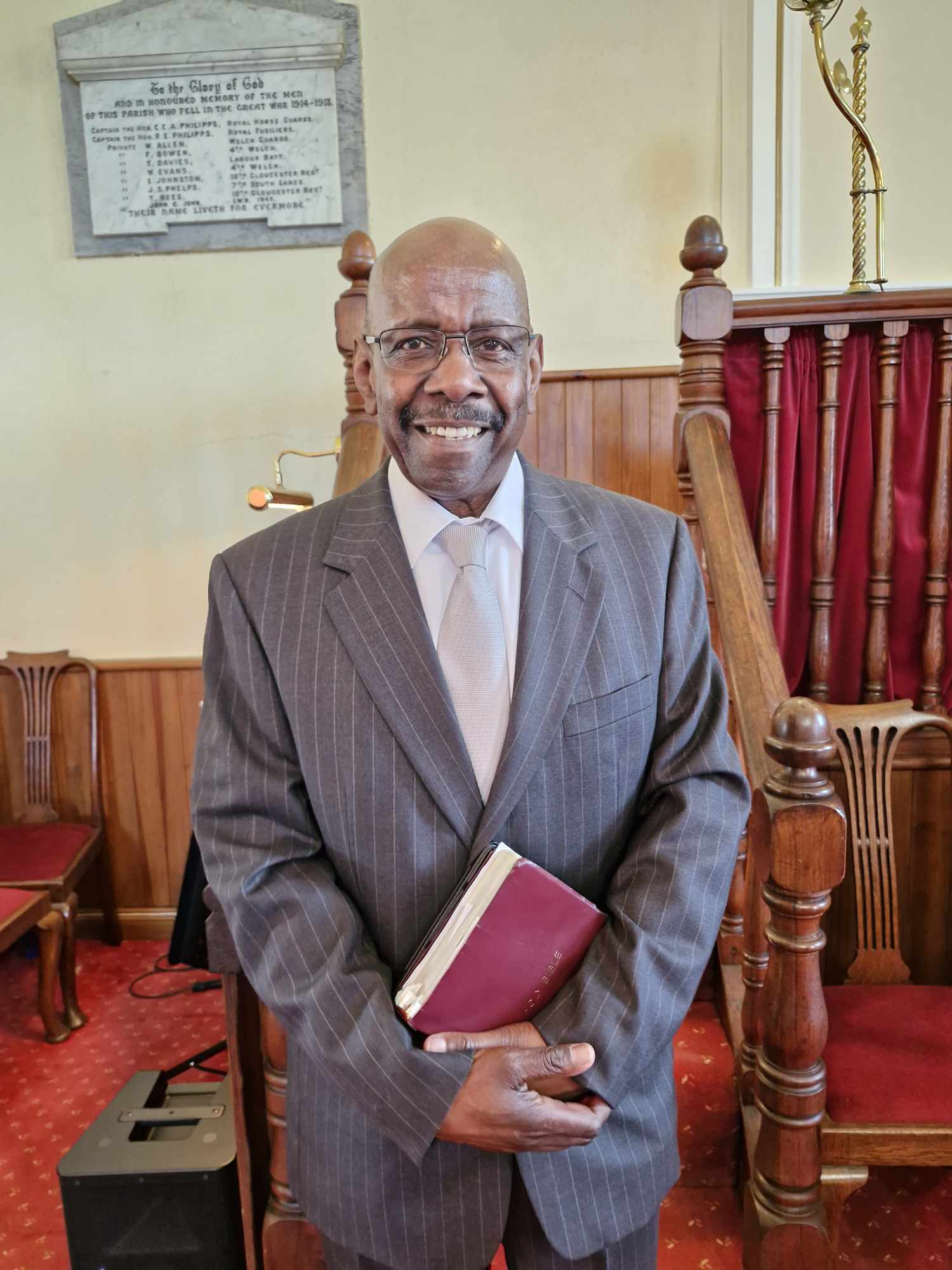
April 27th 2025: Rhodri Brady

Matthew 28:1-10.
The focus for our thoughts today comes in verse 8:

“So they went out quickly from the tomb with fear and great joy, and ran to bring His disciples word.”

The women hurried from the tomb with fear, but also with great joy! The Bible does not present us with false or two-dimensional characters. The Lord shows forth people in all their complexities of character. We have in verse 8 two features which all humans express and which are sometimes set in opposition. The women were afraid, but they also displayed great joy too. The fear they had was only part of what they expressed, for the joy formed the greater part of their emotional experience.

            It is a truism to say that everyone fears. Fear is part of the fallen nature, and part of this fallen world. But what do we do with our fear? Fear is a reality. The Bible does not skate over this aspect of human experience. But it does address this and demonstrates how we should act when afraid. The key point in this event is, of course, the resurrection. How did the resurrection affect and energise these women? Surely the news from the angel caused their joy! How then does the resurrection affect us? These women were left scarred by the arrest, the crucifixion, and the death of the Saviour, but now they were joyful and yet with fear. Our text therefore has these two themes: fear and joy, so let us consider each characteristic in turn.

Fear.

            The resurrection left these women fearful and yet joyful, so let us start by considering their fear. Jesus truly died. He was wrapped in a linen cloth and placed into a newly hewn out tomb. A huge stone was rolled over the entrance to block the way. Nothing happened on the Saturday following Christ being placed in the tomb, but then on the first day of the week there was an earthquake which was not natural, but supernatural. An angel came and rolled back the stone and sat on top of it. The angel’s appearance was “like lightning” and his raiment was “as white as snow” and as a result of this “the guards shook for for fear of him, and became like dead men” (Matthew 28:3,4). The angel then spoke to the women telling them not to be afraid, declaring that Jesus was now risen from the dead, and instructing them to inform the other disciples of this glorious truth (Matthew 28:5-7). From these details recorded in Matthew 28:1-10 we can see a great contrast. Whilst the guards: “shook for fear of him, and became like dead men,” the women, by contrast, “went out quickly from the tomb with fear and great joy, and ran to bring His disciples word” (Matthew 28:4,8). The guards only had fear, but the women had fear and yet “great joy” too.

            We must acknowledge the presence of fear. Both the guards and the women had fear. We are not talking about ‘holy fear’ here but the type of fear which all humans experience as a result of sin and the fall of this world. Matthew uses the same Greek word for fear in speaking of the guards and the women here. We see this type of fear expressed by the Israelites when the Lord came down on the mountain of Sinai in Exodus 20. God is awesome. No doubt His angels are fearful too. We learn this from a number of appearances of angels in the Old Testament. Now when the Lord descended on mount Sinai the people were afraid and distanced themselves from the Lord. But Moses went up into the mountain and into the cloud. What do we do when we are afraid? Do we run away from God and seek to dispel the fear by distractions? Or do we embrace the Lord even though we are fearful?

            In the New Testament, the priest Zacharias was sceptical when he met with Gabriel who announced that Elizabeth would have a son, but Mary accepted the word brought to her by the same angel. Both were, no doubt, afraid, but Zacharias withdrew and Mary embraced that which was spoken to her. In another event we read that Jesus drove out many demons from the man who dwelt among tombs in the region of the Gadarenes, but those who witnessed this amazing event were afraid and asked the Lord to depart from their place (Mark 5:15,17). Fear causes many to withdraw and retreat or to push the Lord away. Some are anxious about coming into a place of Christian worship. Their fear keeps them away. Often, in their fear, people look to sources of comfort other than the Lord, but this is a grave mistake. Some look to drink to quash their fears. But turning to drink leads us ultimately away from the Lord. Others turn to food as a comfort or to exercise, or to work, or to cleaning the house, or even to entertainments. All of these things are distractions to blot out or push away the fear we have. All of these things are fine in and of themselves, but are terrible as means to deal with fear.

            Note that the guards were so afraid that they “became like dead men.” This statement does not just mean that they became immobile and fell to the ground, it suggests their spiritual state too. In our estrangement from God, the apostle Paul describes unbelievers as “dead in trespasses and sins” (Ephesians 2:1,5), and the posture of these guards intimate the state of their hearts. What do we do with our fear and in our fear? We ought to run as fast as we can to the Lord!

Great joy.

            The resurrection left these women fearful and yet joyful, so let us now consider their great joy. The word in Greek is ‘mega’ and the idea is that their joy exceeded their fear. They had ‘mega’ joy! These women would have heard the Lord Jesus preach on many occasions and their hearts would have been greatly warmed. For instance, in the sermon on the mount the Lord said that the ‘poor in spirit’ would be blessed and such would be possessors of the kingdom (Matthew 5:3). These women were probably very ‘poor in spirit’ and so would have been encouraged by such words. Perhaps, also, they would have heard from Peter the events surrounding the great storm on the sea of Galilee. The Lord was asleep in the boat and the storm that arose was fearful and not a natural one. They may have heard Peter tell about his fears in such a perilous situation, and yet Jesus was asleep! And then Peter would have related that this ‘Man’ Jesus spoke to the ‘weather’ and the ‘weather’ obeyed His command. Such, surely, would have elicited much joy among these women? And yet this incredible Man, their Saviour, died!

            The disciples all accepted that Jesus was the fulfilment of the prophecy of Moses concerning the coming prophet, but they had ignored or neglected the prophecies of the Messiah’s death (Psalm 22 and Isaiah 53). They wanted a victorious warrior king, and what kind of king wins by dying? And yet these women now had “great joy” because they had heard that Jesus was now alive.

            Joy is one of the fruits of the Spirit and so is something all Christians must experience. We ought to be possessors of this “great joy,” but we must also recognise that we cannot manufacture this out of thin air. We are utterly dependent upon God who is our joy and our strength (Nehemiah 8:10). If we are lacking in joy the only answer is to seek the Lord in His word. The truths of God invading the heart lead to great joy! He is alive! He who did miracles, taught wonders, and who died, is alive forever more and reigns in heaven! He has reserved a place for us if we believe and He is coming again! Let your joy be full in the Lord.

April 20th 2025: Easter Sunday – Gaius Douglas

1 Corinthians 15: 1-4.

The gospel in a nutshell: “Christ died for our sins” must be the declaration of every believer in the Lord Jesus Christ. Anyone who does not believe this and the facts recorded in our text cannot be called a ‘Christian.’

[1] He died.
At the cross there were four people standing there. These were: Jesus’ mother Mary, Mary’s sister, Mary the wife of Clopas, and Mary Magdalene (John 19:25). As they stood there and watched what was going on, Mary the mother of Jesus might have cast her mind back to what Simeon said in the temple when Jesus was presented at eight days old for circumcision: “a sword will pierce through your own soul” (Luke 2:35). Imagine her feelings at this time. Later on the risen Christ would join two disciples on the road home to Emmaus as recorded in Luke 24. One of these was named “Cleopas” and this was probably the husband of the Mary who is referred to as “the wife of Clopas” in John 19:25.

So we have these two disciples trudging the seven miles home from Jerusalem. They were discussing all that had happened and were trying to ‘work it all out,’ with their reason. At this point the risen Christ (unbeknown to them) came alongside them. In the course of their conversation with the Lord He “expounded to them in all the Scriptures the things concerning Himself” (Luke 24:27). Then after He went to their house for a meal and He revealed Himself in the breaking of bread, we read that “their eyes were opened and they knew Him” (Luke 24:30,31). Jesus then vanished from sight but even though they had travelled the seven miles home, nevertheless we read that “they rose up that very hour and returned to Jerusalem” (Luke 24:33).

It seems clear that being with the risen Christ empowered them to rise up and head straight back to Jerusalem! They had an energy from having their eyes opened and have recognised that Jesus was risen. Christ died for sins. They felt forlorn at His death but now they are excited with strength renewed like the eagles. Paul was led by the Spirit of God to write these words in 1Corinthians 15:1-4. Christ is central to Scripture from Genesis to Revelation. He is the author and finisher of our faith, the altogether lovely one, the alpha and omega, the resurrection and the life. Is He your Saviour? Is He your beloved One?

Christ died for our sins. He willingly sacrificed Himself. He laid down His life for us. No one took the Lord’s life from Him, for He laid it down of His own will (John 10:18). The Lord Jesus came to do the Father’s will. He came not to do His own will but the will of the Father. He willingly went to Calvary and He willingly paid for sins. John 3:16 teaches us that the Father sent the Son so that whosoever believes will never perish.

Christ was buried. He had literally died and He was placed in a tomb as a corpse. All our sins were taken by Him and paid for, and so our sins have been buried too. But death had no power of the Lord Jesus! So on the third day He rose again having fully satisfied all that the Father gave Him to do. In Romans 6:23 we learn that the wages of sin is death and that the free gift of God is eternal life. The Lord Jesus bore our guilt and the penalty of our sins. He paid the debt He did not owe, and He bore my sins on the tree. Now, since He paid in full, sin and death no longer has any grip over Him. So He lives! I am alive eternally because of Him (if I believe truly). The Lord Jesus shared our likeness for the purpose of destroying him who had the power of death (the devil) (Hebrews 2:14). The devil is the enemy of souls. He hates us. He was determined to bring us down to hell. But the Lord Jesus paid the penalty for sins and in the process destroyed the one who had power over death. Death is therefore no more to be feared. The Lord defeated sin, He conquered the devil, and He has overcome the world.

Paul writes a bit later in 1 Corinthians 15 that if Christ is not risen, then faith is of no account and we are still in our sins. But the facts of the matter are clear. Christ did die for sins. He was buried. He did rise. So our faith is true. We believe in Christ for salvation. We believe His death was sufficient to pay for sins. We believe that He was raised from the dead for our justification. These are sure and certain truths. Christ ascended into heaven and is seated at the right hand of the Father, and one day He will return to receive His people into glory.

[2] The vital importance of Scripture.
The Spirit of God stresses here the importance of Scripture. We are told that Christ died for our sins “according to the Scriptures” (1Crinthians 15:3). And we are also told that His burial and resurrection on the third day was “according to the Scriptures” (1Corinthians 15:4). The Scriptures are vital. What Scriptures is Paul speaking of here? It was the Old Testament for much of the New Testament was still to be written. Psalm 22 which records much prophecy of Christ’s work on Calvary was written about a thousand years before His death. In Psalm 16:10 we read a prophecy of Christ’s resurrection. Seven hundred years before the first advent of Christ Isaiah records another detailed prophecy of the Lord’s work on Calvary in Isaiah 53.

We cannot do anything except through Scripture. We must do all “according to the Scriptures.” The word of God is truth. The Scriptures tell us all about Christ. The Scriptures are the very word of God to us. Peter’s first sermon makes use of important Scriptures. Paul quotes the Scriptures in his letters. When Jesus met the two disciples on the road to Emmaus He pointed to the Scriptures. It is not ideology, nor opinion, nor what man has made up. The Scriptures are that which we have “received.” They are not man-made but detail the very words of God.

[3] The importance of the resurrection.
Why is the resurrection so central? Well we have noted already that if Christ is not risen then faith is of no value and we are still in our sins. Without the resurrection we have no good news, no gospel. Christ Jesus is alive! But all other gods, and all other ‘pretenders to truth’ are dead. But what of all those who have died? If Christ is not risen then these have died in vain. If we have a hope only in this life we are of all people to be pitied.

The night before He died, the Lord Jesus told His disciples not to be afraid. He said they were not to be troubled for the Father’s house has many mansions or rooms (John 14:3). He then said that he was going to prepare a place for His disciples and that he would return or come again so that His disciples could be with Him. Because He paid for sins in full, and because He is faithful, the resurrection guarantees the fulfilment of His promises. What about all those who have ‘fallen asleep’? I once knew a pastor who purchased an area in a cemetery for all his congregation so that when the Lord returned they could rise all together!

In 1 Corinthians 15:42 we read that the “body is sown in corruption” and that “it is raised in incorruption.” The Lord said the night before He died: “because I live, you will live also” (John 14:19). In 1Thessalonians 4:13-18 we learn that the dead in Christ will rise first when the Lord returns and that living believers will be caught up in the air to be with the Lord forever. The resurrection proves who Christ is and that he has power to save. The resurrection is a guarantee that the bodies of believers will be raised anew. We will have new resurrected bodies when Christ returns. Christ described Himself as “the resurrection and the life” to Martha Lazarus’ sister (John 11:25). Was He late in coming to Lazarus? Never! He is the resurrection and He is the life.

November 24th 2024: Peter Robinson

Titus 2:13 – 3:7.

In this passage there is a word that crops up twice (2:13, 3:7). It is the word hope, true hope in a hopeless world. What is it you are hoping for, for the future? What do you hope for, for this world? What do you hope for yourself personally? We are living in a day of hopelessness; there is not a lot of hopeful speech going on in the public domain. Globally, we are told of the terrible effects of global warming and climate change. Internationally, there are conflicts whatever we turn – wars, fighting, potential wars. Close to home, nationally, we see a lack of hope – rising inflation, more crime. There are great moves to overthrow established truths; there is a new bill in Parliament to enable people to be killed. There are a lot of reasons to be discouraged. Perhaps, in our own lives, we have little hope for the future. There may the illness, loss, grief, unemployment. Wherever we turn, there is little to find hope.

The Christian is someone who has hope. One of the chief characteristics of a Christian is hope. Hope is built into their DNA. In spite of what is going on in our world, the Christian is someone who has a real hope, a certain yet not seen hope (Hebrews 11:1). This hope is definite, certain, real, absolute. It is very different from the way the world thinks of hope. For example, ‘I hope you feel better soon.’ This is a sincere wish, but there is nothing certain about it. Christian hope is not simply a positive mental attitude, an optimistic feeling. Everyone has a certain amount of hope for the future. The hope of the world is baseless, lacking in knowledge. It is a hope which has no certainty. The Christian hope is an inner hope which is permanent, solid, changing, empowering.

The foundation for our hope.

There are three essential cornerstones of our hope.

  1. Christian hope is in the life of the Lord Jesus Christ.

Nobody disputes a man called Jesus Christ lived about 2000 years ago in Israel. Not only do we have the accounts of the four gospel historians, but He is referred to in Jewish records and Roman records too. But the reason the Christian has hope is the life of Jesus Christ being seen in the word (John 1:14). In the life of Jesus Christ, we have God walking on the face of the earth and interacting with human beings. God has demonstrated in the life of Jesus Christ, His concern for the people of the world. The greatest evidence of there being God is the life of Jesus Christ. The life of the Lord Jesus Christ shows concern for the life of people. We see His compassion and His love for the marginalised. He was drawn to people others ignored. His compassion was seen in word and action.

We see in the life of the Lord Jesus Christ the very truth the world is searching for. His disciples testified He spoke the words of eternal life. His mind-blowing miracles transformed people as they received power, grace and healing. Everything declares to us God cares for us. Christian hope is God has made Himself known to humanity in time and space, and made known His love for the world.

  • Christian hope can be seen in the death of the Lord Jesus Christ.

Death is the very antithesis of hope, when hope has no more life in it. Death destroys hope, yet the death of Jesus Christ gives certain hope because of why He died. On the surface it appears He died because of the jealousy of religious leaders. But Jesus’ death was the proof positive that God will stop at nothing to save (Mark 10:45).

Can we trace why there is so much destruction in the world? It is not poverty or social injustice. The problems of the world are because of human sinfulness. The cause of every problem can be traced to the rejection of God, our Maker. We have all gone our own way, chosen to please ourselves. We make the rules, we do whatever we want. That’s sin. The human race is suffering from a crippling illness which has made us enemies of God. It cuts us off from God and puts us under the very judgement of Go – all because we have rejected Him.

When Christ Jesus came into the world, and suffered and died on the cross, it was to cure sin. He purposefully died to deliver us from sin and to transform us. The Christian has hope in this world in the death of Jesus Christ because we can be set free from sin.

  • Christian hope is founded on the resurrection of Jesus from the dead.

The resurrection is the guarantee. God made man, living amongst us, rose from the dead. After His resurrection, He spoke with many people. Everything stands or fails from the Resurrection (1 Corinthians 15:17). The reality is you and I must die. There will come a day when we will not be able to defeat death. But the resurrection gives hope that death is not all that there is, we can have eternal life. Our Lord Jesus Christ has conquered death for us (John 11). That is the Christian hope for the future – eternal life which is full, perfect, in the very presence of God.

This world is heading for another climatic conclusion. God designed this world not for destruction but for transformation (2 Peter 3:13). We are to look forward to a new heaven and a new earth. There is an end, but also a beginning when the Lord Jesus comes again. Our ultimate hope is the glory of our Saviour, the Lord Jesus Christ. This world is heading towards that day when Christ will come again. He will bring a new world of righteousness. Jesus comes again for those He loves. We wait for the blessed hope.

Yet, there is a serious warning. For anyone who has not built their hope in the Lord Jesus Christ, Jesus comes to bring judgement to those who have rejected Him. (1 Peter 4:1). Dear friends, it is time for you to give up your sin and receive His forgiveness. He has promised if you do that, He will give you a bright future.

What is your hope and hope for the future? Do you have this hope, this confidence and certainty in the Lord Jesus Christ? He is ready, willing, able to forgive you, to love you and save you.

May 28th 2023: Sam Pritchard

To watch this service, click on the link to our YouTube channel: https://youtu.be/ITGIKxGLgOA

1 Thessalonians 4:13-18

In this passage of scripture you can take something normally negative, sad and difficult, and find it’s actually good, that there is hope in the sorrows of life, there is peace and there is comfort. This morning I am going to talk to you about death, to show that even in pain and misery our God remains holy and perfect. He is the One with a plan and a purpose. The point of church is it’s real, practical and alive. We will all experience, in some form, the pain of loss – whether we’re watching a loved one, an accident, or a diagnosis. This is real, lived-out theology.

What is the Christian to do when we respond to the worst thing imaginable? There is a famous saying, ‘There are only two things in life which are inevitable – death and taxes.’ Many people would say they’re terrified of death, which is for them a great unknown. What is it like? What happens? There is confusion. Not knowing about death creates further confusion.

  1. We are informed people.

“But we do not want you to be uninformed, brothers, about those who are asleep, that you may not grieve as others do who have no hope.” (1 Thessalonians 4:13) We are informed people. We are a people who have been revealed by God the truth of death. We don’t face it alone, without understanding. We are informed for a reason and a purpose. Fascinating! Christians have hope. In the midst of the hardest trail we will ever face, we have hope.

Death is the great enemy, the great separator. Christ is greater! One day, there will be no more death. We have spiritual life in Him because He has given it to us. I know who my Saviour is. He is still goodness, the gospel is still true. Even in the worst things imaginable, my Saviour is alive.

“For since we believe that Jesus died and rose again, even so, through Jesus, God will bring with him those who have fallen asleep.” (1 Thessalonians 4:14). This verse explains to us what we believe. Do you believe? Can you say that I believe this Jesus really lived, died, rose and is really coming back? The hope, the peace – it’s only there if you have confidence, truth and belief in Jesus. The root and stem of peace in all circumstances is knowing who Jesus is and believing He has done what He has said He has done.

Jesus rose again. Outside of Jesus, you don’t have peace. Friends, Christ has carved out the way for us. He has already died and risen again. We are not doing this alone, we are following Him in the path He has already walked. Without Him, there is no hope, but with Him, all who call upon the Lord will be saved. “God raised him up, loosing the pangs of death, because it was not possible for him to be held by it.” (Acts 2:24). That’s the power of Jesus Christ. For all those who trust in Jesus’s life, death and resurrection, we have hope.

  • We should declare it.

“For this we declare to you by a word from the Lord, that we who are alive, who are left until the coming of the Lord, will not precede those who have fallen asleep.” (1 Thessalonians 4:15). Because we believe in Jesus, we have something to say. We have an answer, a solution, a hope. We hold onto this verse. The whole of scripture is God inspired. Every word is from Him. There is something unique, Paul says here, “For this we declare to you by a word from the Lord.” Was this the Holy Spirit working in him, from speaking with other believers? I don’t know, but it is important. It is not our thought, it comes from authority from the Lord, from the one who has lived, the one who has died for us.

For those who have already died, before Jesus returns, they will not be forgotten about. Jesus’ power is so mighty that all who are in Him are safe. I encourage you to read the Bible more. When someone dies their body will rot away but their soul immediately returns to God. The second a person passes away, their soul is with God, in the presence of the Saviour who loves them. Those who are in Christ who have passed away are with Him. What a thing to declare. There is hope for everyone who turns to Jesus Christ.

  • The Lord Himself.

“For the Lord himself will descend from heaven with a cry of command, with the voice of an archangel, and with the sound of the trumpet of God. And the dead in Christ will rise first.” (1 Thessalonians 4:16).

The return of Christ cannot be compared to. Our Saviour is coming back. There are so many people working out the mechanics of what it will look like, they forget Jesus is coming back. The one who died for you is coming back. When we see Jesus, what we’ll care most about is we’re with Him! What can be greater than to be in the presence of our Saviour? The Lord Himself will come for His people. What confidence we have!

The great shout, the sound of the trumpet – what will it be like? I don’t know. But the whole point is seeing my Saviour. I can’t imagine what it will be or what it will look like. We don’t understand it or fathom the glory of that day when Jesus returns. What matters is, are we living as if God keeps His promises? We know Jesus is coming. Are you ready to meet Him, for the day when Jesus returns? So many people think they are ready for everything. Are you ready for His return? Are you ready for that great judgement day?

  • When the Lord appears what will happen?

“Then we who are alive, who are left, will be caught up together with them in the clouds to meet the Lord in the air, and so we will always be with the Lord.” (1 Thessalonians 4:17). This is the grand reunion when God reunites us who have sinned, with Himself. He will unite us forever. We will be with Him. The idea of being caught up means He will intentionally come down and bring us to Him.

We will meet Him in the air. Breath-taking! The word ‘meet’ describes the official welcome of honoured guests. When we meet Him it is an intentional meeting. All who believe in Jesus will be with Him. What does this meeting look like, to meet in the air? I have no idea. It will be a once in eternity event. Unique. This is Jesus Christ coming back, God returning to have the final victory. It is the end of human history and the beginning of spiritual eternity. We can’t understand it.

God, in His infinite wisdom, plan and order, is coming back for us. Our feeble minds can’t comprehend it, but one day we will witness it and live it! The risen, resurrected, conquering Lamb, whilst we were still sinners, looked at us in love. We will be overwhelmed by Him.

At the end of verse 17 we see what everything revolves around – we will always be with our Lord. There will never be a moment when we will not be with Him. We’ll be in the presence of the Lord.

  • Encourage one another with the truth.

 “Therefore encourage one another with these words.” (1 Thessalonians 4:18). Those whom Christ died for will never be forgotten but will be with Him forever. Therefore, in the struggles of life, encourage one another with these words. Our God is coming back, and nothing will separate us from the love of God.

April 9th 2023: Easter Sunday – Gaius Douglas

If you would like to watch this service, click on the link to our YouTube channel: https://youtu.be/VLuFxHwsL_M

Luke 24:1-12

We are raised with Him! Death is dead! Love has won! Christ has conquered! It’s a wonderful thing when we read the Bible; we learn the beginning and the end of the world. This book thrills our hearts when we read it. The more we read, the more we know about the One who is on high.

“Then, as they were afraid and bowed their faces to the earth, they said to them, “Why do you seek the living among the dead? He is not here, but is risen! Remember how He spoke to you when He was still in Galilee,” (Luke 24:5-6). I read from Psalm 24, a wonderful chapter which speaks about the One. David wrote a little bit about himself but also about someone else. Throughout the Bible we can see writers God would use to write about someone else – about the future. When we read it we need to see the current situation but also look ahead.

“Who may ascend into the hill of the Lord?
Or who may stand in His holy place?
He who has clean hands and a pure heart,
Who has not lifted up his soul to an idol,
Nor sworn deceitfully.”

Psalm 24: 3-4

When we read the Bible we need to be looking at what the writer says about the current situation, but also looking ahead, to the future. In the above verses from Psalm 24 we read, ‘Who may ascend into the of the Lord?’ The writer speaks about someone who would come – none other than the Lord Jesus Christ. Just think about the different hills He would climb when He came into this world, when He walked this life. He had to climb up a hill of the religious authorities, the arrogant people, the obstinate people, the people who hated Him. Finally, He ascended the hill called Calvary, where He laid down His life for you and for me.

He ascended many hills. Why was He able to do that? Because He had ‘clean hands and a pure heart.’ He did not bow down to idols. He ascended that hill, He died, He gave His life for you and for me. He is no longer dead, no longer buried. He is alive! He had to destroy death in order that he would rise in victory. 2 Corinthians 5:21 confirms the same thought, For He made Him who knew no sin to be sin for us, that we might become the righteousness of God in Him.” He was the only man who ever walked this Earth who was able to do that.

A perfect path of purest grace,
Unblemished and complete,
Was Thine, Thou spotless Nazarite,
Pure, even to the feet.

Wylie McLeod

It’s wonderful, as we celebrate today and everyday of our lives. He is ascended to God, awaiting that day when we’ll come again and receive us to Himself. That is our home, where we’ll one day be because we are raised with Him. We are celebrating a risen Saviour! Even now, in our current situation, we are raised with Him. We should be living with Him. “Looking unto Jesus, the author and finisher of our faith, who for the joy that was set before Him endured the cross, despising the shame, and has sat down at the right hand of the throne of God.” (Hebrews 12:2)

Today, there are those who would say that they are Christians. They may be found in churches and chapels, but they deny that Christ ever rose from the dead. This is nothing new. The Sadducees didn’t believe in the resurrection of the dead. This is what the writer of Corinthians says, “But if there is no resurrection of the dead, then Christ is not risen. 14 And if Christ is not risen, then our preaching is empty and your faith is also empty. 15 Yes, and we are found false witnesses of God, because we have testified of God that He raised up Christ, whom He did not raise up—if in fact the dead do not rise. 16 For if the dead do not rise, then Christ is not risen. 17 And if Christ is not risen, your faith is futile; you are still in your sins!”   (1 Corinthians 15:13-17). If you don’t believe the Lord Jesus Christ has risen from the dead, you are a miserable person. That is what the Bible says.

Those of us who have trusted Him as our Saviour are not just living for this life, we are raised with Him. Christ died for our sins. He was buried and rose again. Because He lives, we should be the happiest people. The Resurrection confirmed that Jesus Christ is Lord, the Son of God. In Acts 2 Peter preached the first gospel message – Christ died for our sins, He bore our own sins. By rising from the dead, we have the proof that He is victorious over death. We see the physical demonstration of God’s power over death, over sin, over Satan.

“Therefore My Father loves Me, because I lay down My life that I may take it again. 18 No one takes it from Me, but I lay it down of Myself. I have power to lay it down, and I have power to take it again. This command I have received from My Father.” (John 10:17-18). The power that has saved you and me, given you life, comes from God Himself. Christ has risen! God’s power is over everything, including death.

“Why do you seek the living among the dead? He is not here, but is risen! (Luke 24: 5b-6a). The scriptures are the infallible word of God, inspired by God. We must believe them. If people who struggle to appreciate Christ see us doubting the word of God, doubting the fact that He is risen from the dead, living as if our life is for this world only, then what are we preaching, what are we teaching, what are we living?

The purpose of the Resurrection is the power over sin and death. The women who followed Jesus Christ cared for Him; the fed and made sure He never went hungry. They went to take spices to embalm His body. The tomb was empty. Today, in Israel, there will be thousands of people visiting a tomb. The tomb is empty! That is evidence that Christ is not there. The angel asked the women, “Why do you seek the living among the dead?” How often we forget what God has said in His word. We forget His promises. The women were so distressed. The religious people knew Jesus had said He would rise again, so they made sure the tomb was sealed. Imagine these women running to tell Peter and them all that Jesus is risen! The dour men thought it was women’s gossip. They did not believe.

Later, we read of two travelling on the Emmaus Road who were sad. Jesus joined them but they did not recognise Him. He took them back into the scriptures. I wonder if He took them back to Psalm 24? He spoke to them. They invited Him into their home. They said, Did not our heart burn within us while He talked with us on the road, and while He opened the Scriptures to us?” (Luke 24:32). Wow! This is exciting. Seven miles, in the dark, on the road to Emmaus, they would run back to Jerusalem to tell the others Christ has risen, risen from the dead. This is proof of the Resurrection.

One of the truths of the Resurrection is the transformation that took place in the life of the disciples and of us today. Are you living? Are you alive? “But God, who is rich in mercy, because of His great love with which He loved us, even when we were dead in trespasses, made us alive together with Christ (by grace you have been saved), and raised us up together, and made us sit together in the heavenly places in Christ Jesus, that in the ages to come He might show the exceeding riches of His grace in His kindness toward us in Christ Jesus.”  (Ephesians 2:4-7)

You are sitting today in Penuel Chapel, but you are also alive in glory. We are raised with Him. We are a testimony of His grace and favour to us. Do we appreciate who we are in Christ? He has resurrected us. The Resurrection power is what has occurred in your life and my life. We were dead in trespasses, in sins. We are raised with Him! He has destroyed the power of Satan. In Christ, God sees us sitting in heavenly places, raised with Him. If that doesn’t excite you, nothing will! We are raised with Him. Wow!

The Lord Jesus Christ travelled to Bethany because He was told his friend Lazarus was dead. The disciples said, ‘When you heard he wasn’t well you didn’t go, but now he’s dead you’re going.’ He met Martha, who was very sad and said, “Lord, if You had been here, my brother would not have died. 22 But even now I know that whatever You ask of God, God will give You.” (John 11:21-22). Jesus replied by saying, I am the resurrection and the life. He who believes in Me, though he may die, he shall live. 26 And whoever lives and believes in Me shall never die. Do you believe this?” (John 11:25-26). Because He lives, I can face tomorrow. Do you believe it? We are raised with Him. Oh, my friends, if only we can grasp that today.

 “I am He who lives, and was dead, and behold, I am alive forevermore. Amen. And I have the keys of Hades and of Death.” (Revelation 1:18). Wow! He is alive and we are raised with Him. If that doesn’t move your heart, nothing will. Knowing Christ is one thing, but living in the power of an endless life, living in Him, relying on Him, living in Him – amazing!  

“Let not your heart be troubled; you believe in God, believe also in Me. In My Father’s house are many mansions; if it were not so, I would have told you. I go to prepare a place for you. And if I go and prepare a place for you, I will come again and receive you to Myself; that where I am, there you may be also.” (John 14:1-3).

Are you ready to go with Him? He may come today.

January 23rd 2022: Dave Evans

To watch this service on our YouTube channel, please click the following link: https://youtu.be/HBqEpbGoUFE

John 20:30-31

Church attendance is in decline. We hear a lot about faith, yet it can often be faith without no outward focus, faith in some unknown force or faith in ourselves. Sometimes it can be faith in a philosophy or in a set of beliefs. Sadly, many who take the name of Christian only have some vague things, with no focus or reality about it. Many seem to think that as long as they have faith, everything will be well. John gives us the answer to where true faith needs to find its focus.

Now Jesus did many other signs in the presence of the disciples, which are not written in this book; but these are written so that you may believe that Jesus is the Christ, the Son of God, and that by believing you may have life in his name.” (John 20:30-31).

John begins his gospel with a great declaration, In the beginning was the Word, and the Word was with God, and the Word was God.” (John 1:1). John then unfolds for us all that it means. Although John has 21 chapters, and chapter 21 is full of Resurrection appearances, he almost seems to come to a climax in the final verses of chapter 20. Thomas wasn’t present when the disciples saw the risen Jesus in the upper room, so refused to believe it and because of that he is known as ‘doubting Thomas.’ Yet that is not where John ends the passage. Thomas is no different from the other disciples when they heard the Resurrection news. Yet John points us to one of the greatest confessions of faith in the New Testament, from Thomas, an assertive statement of Thomas’ faith, ‘My Lord and My God.’

After this, John writes, Now Jesus did many other signs in the presence of the disciples, which are not written in this book; but these are written so that you may believe that Jesus is the Christ, the Son of God, and that by believing you may have life in his name.” (John 20:30-31).

John tells us here what is to be the great foundation of our faith; faith is to be that which is based on this foundation alone – that Jesus is the Christ, and He is the Son of God. The One whose life John has set out in his gospel is no other than the Messiah – the One who would fulfil all His Father’s purposes. He is the One who has been appointed to fill the plan of salvation. This anointed One was the perfect man, the Son of God, equal with the Father. This is John’s great conclusion he wants us to come to. He declares the claims are true. The evidence is overwhelming, even though it’s impossible to write everything Jesus said and did. In spite of that, John is saying, ‘All I have written gives clear evidence that Jesus is the Christ and Son of God.’

What signs have been written? John uses the word ‘sign’ more than any other gospel writer. A sign is a miracle of divine majesty, a declaration of who Jesus is, a signpost to look beyond the miracle to the One who stood before them.

Peter wrote, “Men of Israel, hear these words: Jesus of Nazareth, a man attested to you by God with mighty works and wonders and signs that God did through him in your midst, as you yourselves know,” (Acts 2:22).

As Jesus performs these miracles, He pointed the crowds to the truth beyond the miracle. When Jesus multiplied the loaves and fishes, the people simply wanted their bellies full. But Jesus pointed out it was Him they needed to feed upon.

John 9:35-41, “Jesus heard that they had cast him out, and having found him he said, “Do you believe in the Son of Man?” 36 He answered, “And who is he, sir, that I may believe in him?” 37 Jesus said to him, “You have seen him, and it is he who is speaking to you.” 38 He said, “Lord, I believe,” and he worshiped him. 39 Jesus said, “For judgment I came into this world, that those who do not see may see, and those who see may become blind.” 40 Some of the Pharisees near him heard these things, and said to him, “Are we also blind?” 41 Jesus said to them, “If you were blind, you would have no guilt; but now that you say, ‘We see,’ your guilt remains.”

Jesus here is pointing out to the man and the Jewish leaders that there was a spiritual sight that was needed. The man worships Him. Here is a silent declaration that He is the Son of God.

As Jesus was about to raise Lazarus from the dead, he declared, I am the resurrection and the life. Whoever believes in me, though he die, yet shall he live, 26 and everyone who lives and believes in me shall never die.” (John 11:25-26).

There are many prophecies that John and other gospel writers record to point us to this great truth – that Jesus is the anointed One. John, more than any other writer, points to Jesus as the Messiah. In John 4 we read of Jesus’ meeting with the woman of Samaria, “But the hour is coming, and is now here, when the true worshipers will worship the Father in spirit and truth, for the Father is seeking such people to worship him. 24 God is spirit, and those who worship him must worship in spirit and truth.” 25 The woman said to him, “I know that Messiah is coming (he who is called Christ). When he comes, he will tell us all things.” 26 Jesus said to her, “I who speak to you am he.” (John 4:23-26).

The Lord Jesus Christ, again and again, as He interacted with the Jewish authorities, they saw the realities of His claims, even though they opposed Him and refused to accept Him. In John 5 we have the healing of the man at the pool of Bethesda, after he is healed the Jews challenged the Lord Jesus Christ. They were persecuting Jesus because He was doing these things on the Sabbath. But Jesus answered them, “My Father is working until now, and I am working.” (John 5:17) John writes, “This was why the Jews were seeking all the more to kill him, because not only was he breaking the Sabbath, but he was even calling God his own Father, making himself equal with God.” (John 5:18)

The Jews saw what Jesus was claiming, yet they rejected Him. In these two verses John seems to sum up, the facts speak for themselves, “Now Jesus did many other signs in the presence of the disciples, which are not written in this book; but these are written so that you may believe that Jesus is the Christ, the Son of God, and that by believing you may have life in his name.” (John 20:30-31). There is no greater fact than the fact of the Resurrection. What mere man would make this claim – put me to death and in three days I will rise again. Here is a claim that would make Him or break Him. As we read the gospels, we find the truth shines out from the page, ‘He is not here, He is risen.’

The gospel writers and the apostle Paul made this great claim. A man like Paul was writing when multitudes were still alive who had witnessed these things. Remember what Paul could write, For I delivered to you as of first importance what I also received: that Christ died for our sins in accordance with the Scriptures, that he was buried, that he was raised on the third day in accordance with the Scriptures.” (1 Corinthians 15:3-4).

John says the evidence is clear. So why does John write in this way? “but these are written so that you may believe that Jesus is the Christ, the Son of God, and that by believing you may have life in his name.” (John 20:30-31). John is writing first of all to believers. How often we feel the pressures that come upon us as believers, which challenge our faith. We have to wrestle with our own doubting and unbelieving hearts. We have to confront Satan’s lies and insinuations. We live in a day and age where there is rampant unbelief around us. The pressure is to conform, to fit in with the world’s views, and our faith can be shaken at times. Satan, just as he did in the garden, he whispers in our ear, ‘Did God really say that? Is the gospel really true? Do you really need to make such a stand?’

When we face such problems, when we face such challenges, John’s exhortation to us is to come back to the gospel, come back and read of the life of your Lord and Saviour, consider again the evidence, read the gospel, gaze into the Saviour’s face, and go on believing. See Him again in all His glory and all His majesty. Follow the signs once more which will take you back to the foundation of your faith. It will remind you of the great truth that Paul declared that there is no other foundation than that which has been laid, Jesus Christ. Here is the foundation which will support you through all the different trials and challenges of life. Here is a foundation to rest upon.

Like the disciples, we can be slow to believe at times. But just as the Lord dealt gently with Thomas and the disciples, so He promises to deal gently with us and raise us up again. Why is it so important that we should consider John’s gospel? “these are written so that you may believe that Jesus is the Christ, the Son of God, and that by believing you may have life in his name.” (John 20:30-31).

When we meet with unbelievers, they want to know, ‘Why do you make so much of the Lord Jesus Christ? Why is He so important? Why do you go on about Him?’ Well, it is for this reason: that it is only in Jesus Christ, it is only in this foundation, it is only in His Name – which means all that He is and all that he has done – that you can find peace with God and life everlasting. Here is the source of true love, life everlasting, life with God, life which brings peace with God, life which brings forgiveness of sin and the prospect of heaven rather than hell. So, that’s why we preach the gospel, that’s why we beseech men and women and boys and girls, to come back to this gospel, to this foundation, to consider the evidence.

We pray that God will open blind eyes, as the Saviour opened blind eyes, that we may see the truth of His words, “I am the way, the truth and the life. No man comes to the Father but by Me.” For those of us who are believers, those of us who are in local churches, this is an exhortation to the whole church. Do you want to go on knowing God’s blessing? Do you want to know what it is to continue with a living witness to the Saviour? Then, we must listen to these words written in one of the commentaries I was reading. “When the church continues to accept Jesus as the divinely appointed and qualified one, that is, as the Christ, the fulfilment of all the Old Testament hopes and promises, when it continues to recognise Him as the Son of God, in the most exalted sense of the term, it will then continue to have life, everlasting life in His name.”

History tells us when churches gave up this truth, they died. Here is the reason for so many empty chapels – people cease to believe that Jesus is the Christ, the Son of God, and that by believing we may have life in His Name. God grant that we may be a people who go on believing, who go on proclaiming the greatness of our Saviour and of His word. Amen.

February 16th 2020: Thomas Kitchen

Thomas Kitchen - Feb 2020Luke 24:13-35

This is a great way to start a story – two people walking on a long road to home. It is a blank canvas, anything can happen. The two people are sad, distressed, confused; something terrible has happened and they are wondering how to cope and move on. Then another man enters the scene. This is what really drives the story along. But it is not just a story. It is from the Bible, the words of God on a page, 100% true. Everything is built around verse 26, “Was it not necessary that the Christ should suffer these things and enter into his glory?” The story is hinged around this one sentence.

We know from the start it is Jesus who joins them – the risen Jesus who has conquered death. The two people don’t know. Look at our hope as Christians, if you’re trusting in Christ today.

The two people are Cleopas and another, who is unnamed. It could be his wife or a friend. They are walking to the village of Emmaus, a little, unknown village. Still, even today, we are not sure where it is. Why is it mentioned at all? To give a real historical location – it is a real place with real people. Secondly, it is such a small, irrelevant place and this shows Jesus’ post-resurrection appearance is real. If you were trying to make up a story about Jesus risen from the dead, you’d want to do it in a place people knew to give more credibility. But no, because it is true, it actually occurred in a small, obscure village.

The two disciples were talking intensely. They were distraught, unable to process what had happened. How will Jesus’ death affect them? And someone joins them, but they do not know who it is. “But their eyes were kept from recognizing him.” (Luke 24:16). They were kept from knowing who it is Jesus. This is because Jesus needed to teach them important truths about Himself before they knew who He was. As far as they were concerned, Jesus was dead. We can be disappointed with life and cry out to God, ‘Where are you? Help me make sense of all this!’ To help you know Christ more intently we face trials. We can be spiritually blinded so Christ can be known to us in a more glorious way. Part of the drama of the story is when will the two disciples discover the mystery man is their Saviour?

Jesus asks, “What is this conversation that you are holding with each other as you walk?” And they stood still, looking sad.” (Luke 24:17). This man had obviously overheard the two talking about Jesus yet still asks what and who they are talking about. They stood still, shocked He did not know what had happened. “Concerning Jesus of Nazareth, a man who was a prophet mighty in deed and word before God and all the people, and how our chief priests and rulers delivered him up to be condemned to death, and crucified him. But we had hoped that he was the one to redeem Israel. Yes, and besides all this, it is now the third day since these things happened. Moreover, some women of our company amazed us. They were at the tomb early in the morning, and when they did not find his body, they came back saying that they had even seen a vision of angels, who said that he was alive. Some of those who were with us went to the tomb and found it just as the women had said, but him they did not see.” (Luke 24:19-24).

At first glance their response seems focused; they give a true picture of who Jesus is – a good prophet who did good things, who might have done good things if He had stuck around. ‘Redeemed’ here is linked to a political leader, a victorious ruler on the earth. But that is not why Jesus came. They missed the real ‘why’ of Jesus’ coming. They are clearly very passionate about Jesus but also disappointed. The Messiah had failed in their expectations. They do love Jesus but they don’t understand what is going on. Their hopes have been quashed. Their hopes were in the wrong thing. They lapped up all of Jesus’ teaching but now He had died they have tried to transfer their hope to something else but they couldn’t. They realised Jesus was the answer, but Jesus was dead.

Jesus replies to them with a rebuke, “O foolish ones, and slow of heart to believe all that the prophets have spoken! Was it not necessary that the Christ should suffer these things and enter into his glory?” (Luke 24:25-26). Jesus is disappointed in their understanding. He is saying, ‘You think I’ve come to save you from Rome, but I’ve come to save you from sin.’

Knowing His followers don’t understand why He came, Jesus guides them through the Old Testament. He starts with Moses and the prophets – the entirety of the whole Old Testament – making it clear why He had to die and where His death was prophesied in Scripture. He rips the curtain away to show the full reality of the Messiah coming back to life. Jesus’ main concern is to unpack His suffering, death and resurrection. Without His suffering and dying, Jesus couldn’t come back to life. If He hadn’t conquered death, sin would not have been conquered. Jesus died and powerfully came back to life again to show authority over Satan and sin, so we can trust in Him and crucify and bury our sin (1 Corinthians 15). He lives, He rules and reigns! He rules above all and every other king. Jesus teaches these two disciples the Old Testament in a New Testament era.

Like these two people on the road didn’t understand, we have masses of people who don’t understand. In Christ’s strength we now do what Christ did – open the scriptures and explain who Christ is – a Saviour to be worshipped and who will save them. Jesus begins to open their eyes that had been spiritually closed. We can know everything Jesus did; some people know the Bible far better than Christians, but they don’t know the Lord who walked the Emmaus road. Knowledge is important, to understand the gospel we have to understand it to affect us – but it must go to our hearts.

Ultimately, it is God who works in us. It is the Holy Spirit who convicts, who moves. The Holy Spirit is the comforter – the person of God working in you right now, helping you understand the things in this passage. The Holy Spirit shows us our sin, the wrong things we do each and every day. He is the one convicting you, telling you, you cannot stand before God where you are. As an unbeliever, you are spiritually dead. You need the Spirit to open scripture for you, to show the Cross and what Jesus did for you.

For Christians, believers, brothers and sisters in Christ, we are also walking the road to Emmaus. We doubt. It is easy to trust our Saviour when the sun is shining, but when storms arise you can feel lost. You can lose sight of Him, get angry with Him, wonder why He is doing what He is doing. If so, walk the Emmaus road and ask Him to open up the scriptures to you. Read Jesus’ words in scripture and hear Jesus’ voice. Pray and your relationship with Him will deepen. He has promised to be with us always. We don’t always believe that; we can sometimes think if we can’t feel His presence He is not there. But we need to trust, no matter how hard it is. He is there.

Remember those two people, nobody’s, one we literally don’t know who they were. Jesus first appeared to shepherds. He stoops and humbles Himself to know us. The one who died for us isn’t going to forget us. That is why He died for us – to know Him and love Him more and more. He is a victorious Saviour. He is our hope. We trust in a living, breathing, holy Saviour who has conquered sin and death. He will sustain us. I still sin but Christ deals with it every day. We gather here because we worship a living God. If you’re trusting in Him He is living in you, shaping you to be more like Him. It is not deserved but given to us because God loves us.

The two disciples saw Him in His glorious state at the dinner table. Do you want your eyes opened in a new way? Go home, pray, open you Bible. Trust Him. Trust He is alive and reigning in heaven. Amen.

April 21st 2019: Easter Sunday: Gareth Edwards

gareth-e-sept-2016John 20: 1-10

John, in chapter 19, goes to great lengths to establish Jesus really died. He wants people to know Jesus was dead and buried because there as a theory, a doctrine, which taught that Jesus didn’t really die. So John wants to establish once and for all that Jesus most certainly died and was buried. John does this because he also wants us to know Jesus was raised and alive (chapter 20).

In the opening ten verses of chapter 20 we see John’s insistence that He who was dead is alive. This truth became a cornerstone of the apostles’ teaching. This truth is so important that Paul later says, ‘And if Christ has not been raised, your faith is futile and you are still in your sins.  Then those also who have fallen asleep in Christ have perished. If in Christ we have hope in this life only, we are of all people most to be pitied. But in fact Christ has been raised from the dead, the firstfruits of those who have fallen asleep (1 Corinthians 15:17-20). If the Resurrection is not true, Christianity is untrue. So John takes great care to present conclusive evidence that Jesus rose and is alive. John is like an expert barrister presenting his argument before the jury. His argument is so powerful any counter-argument is simply washed away by the mountain of evidence. The first ten verses describe the initial discovery Jesus was alive. Three points will be made:

  1. This event was unexpected and misunderstood.
    2. John provides us with significant detail that verifies this event.
    3. Belief began to dawn in John’s own heart.


  1. One of the things that lends credence to all 4 gospels is the disciples’ utter surprise. We would have expected the disciples to say Jesus rose from death just as they thought He had taught them He would. It would have been quite expected for them to say, ‘Yes, we were in the know. We were expecting it.’ But that’s not what happened. They admit candidly their unbelief. They were shocked at such an unexpected turn of events and misunderstood what had happened. They misunderstood Old Testament prophecies that predicted the Resurrection. Even arriving at the tomb and seeing it empty, they still didn’t understand. Others in the Upper Room were in grief and disarray, utterly demoralised. For Peter, seeing the grave clothes left behind, the penny didn’t drop. He went home wondering (Luke 24:11). It’s the second disciple, in verse 8, who saw and believed.

We have Mary’s words to Peter and John (verse 2). They reveal she and the others believed Jesus’ body was moved by the authorities. The immediate response to the empty tomb was not to rejoice that Jesus was alive, but that it was a conspiracy by the authorities. There was complete misunderstanding. The evidence is misunderstood. You’d have thought they’d have been rightly able to assess, given what they’d been taught. This reluctance to accept the Resurrection is not due to a lack of evidence but stubborn unbelief. Those who don’t believe do so because they don’t want to believe. It is a natural distrust of the human heart to simply refuse to humble yourself because you will not bow in repentance and faith in Jesus Christ. It is God’s grace which opened our eyes to see that Jesus rose from the dead. We believe in the Resurrection because of the glory not because we are clever and have higher spiritual ability. It is not because we are more religious, brought up in a Christian family, having an insight others lack. It’s simply God in His grace has opened our eyes to see, our ears to hear and our hearts to believe.

We need to pray God would open the hearts of those around us that they would believe as we do. Nothing that we do will produce results, it’s only God who saves.

  1. The significant details John gives us. He does so to authenticate his account. He, the second disciple, the one who Jesus loved, includes an incidental note – he’s faster that Peter, he outran Peter. Other details are more significant. The stone was removed from the tomb, the linen cloths were left lying in their place and the face cloth was folded up. All hint at the nature of the Lord’s Resurrection. When Lazarus emerged from the tomb he was wrapped in clothes (John 11:44-55). In contrast, Jesus’ linen cloths were left in the tomb. Lazarus returned with the same physical limitations, but Jesus’ resurrected body could pass through the clothes, leaving them behind.

Why was the stone moved? It’s evident that the stone wasn’t moved to let Jesus out, but to let the disciples in, so they could see for themselves the evidence. Similarly, the face cloth, being placed in such a way, shows a real presence of a real physical being who could take hold of and fold a cloth. What we see is Jesus rose to life with a real physical body but without the old limitations. He was resurrected to a higher place of physical existence. Lazarus was returned to his former life, Jesus was resurrected to a life of glory. Jesus rose physically, retaining His human nature fully, but He was raised as a glorified man. It marks not only a victory over death but a total elimination. The glorious truth is Jesus has smashed death and rendered it powerless. He rose, never to die again (Revelation 1:18). His resurrection life if glorious. He sets a precedence for those who will trust Him as their Saviour. In His Resurrection, they see the pattern of their resurrection, for all those who trust in Him. This event causes us to rejoice in the hope to eternal life. We have the most exciting prospect – as Jesus was after His Resurrection, so will we be after ours.

As Mary, Peter and John gazed in amazement at the empty tomb we should bow in wonder, love and praise. There is total victory over sin, hell and death. The symbol of His glory is not a cross on jewellery, it is the symbol of the empty tomb. The details John gives us shows the nature of Jesus’ glorious resurrection.


  1. One of the main themes of John’s gospel is the theme of light and darkness. Nicodemus came to Jesus at night (John 3), showing a reference that he was in the dark. Judas betrayed Jesus in darkness. In John 12:35-36 we see the repetition of darkness. John symbolically tells us Mary made her way to the tomb while it was still dark. Other writers say she arrived whilst it was dawn. Dark reflects Mary’s despair and unbelief. But in verse 8 John, speaking of himself, says he saw and believed. The light of faith dawns to dispel the darkness of unbelief. With Jesus’ resurrection a new day of faith dawns in John’s heart. Has the light of faith dawned in your soul as you see the empty tomb? Have you come out of the darkness of your unbelief? If not, why not? You are called to walk in the light.

Dear Christian friend, you have come to the light, then walk in it. Become more and more like the Saviour. Rejoice that He has not left you in the darkness of sin and unbelief. Look forward to the joy of heaven above, the Lamb. In glory we won’t be taken up with the splendour of our surroundings but the glory of our risen Lord. Walk in the fullness of His bright light and never in darkness again (Revelation 21:22). The light of faith dawned in John’s heart. Has it dawned in yours? If it has, know you will never walk in darkness again. Be a light in this world. Know there is a day coming when you will see the inexpressible glory of the Lord Himself. The Resurrection is but the beginning of the journey into light. Praise be to His name, our Resurrected Lord.