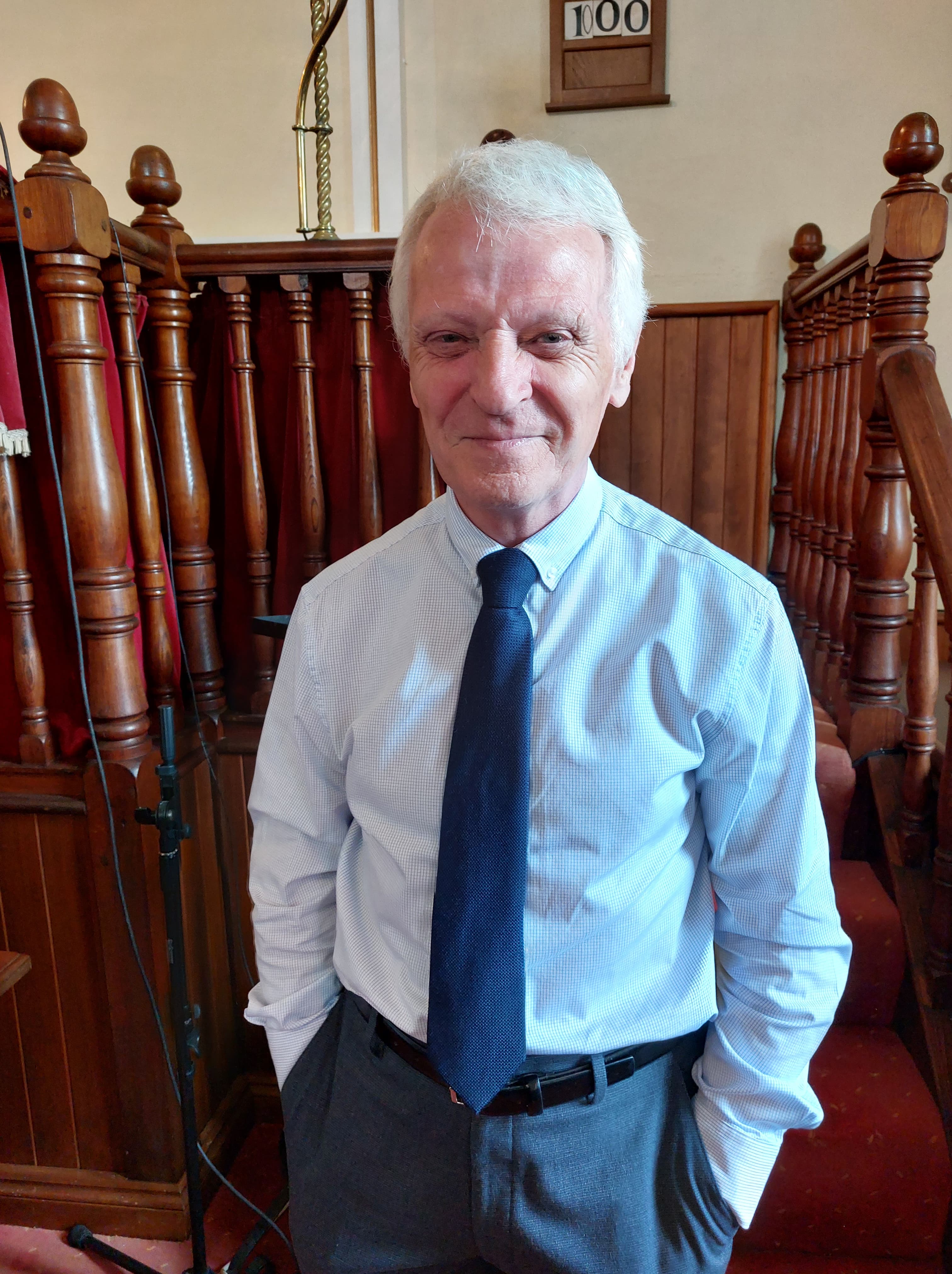
July 30th 2023: Geraint Morse

Exodus 33: 7-23

This is an account of an incredible conversation between the man of God, Moses, and his God. I am struck by this man’s boldness; he came into God’s presence with bold confidence and the assurance that he will be heard. As he comes before God Himself, he makes several requests, in ascending order. They raise the level, one after another.

Moses’ first request is found in verses 12 to 13, “Teach me your ways.” That is what Moses desires. He wants to find favour with God, as a leader. Then, Moses puts in this request, “Remember this nation is your people,” (verse 13). Is that our request this morning, that above all other things, we want to know God’s ways better? Do we want to be a better teacher, a better child, a better believer? We belong to the people of God. We are the people of God through faith in the Lord Jesus Christ, that we may be taught in His ways.

The second request that Moses has is to do with leadership, being led. Moses says there is no point going one step forward unless God is with us. Have you got plans? Are you considering a change of location, a change of occupation, or a change of direction – individually, as a group of people, or as a fellowship of God’s people? May this be a cry from the heart. Unless the Lord is leading you in a situation, there is no point going forward. May you know His way ahead at Penuel.

I get a sense of increased intensity in Moses’ requests. His third request is, “Lord show me your glory.” Was there ever such a request made by any man in the Old Testament? What did Moses expect to see, to happen, to experience? I imagine it was to see and to feel something of the majesty, the glory, the honour, and the holiness of God himself and Moses standing before him.

God answered him, ‘It’s not quite that easy Moses; no man can see my face and live.’ Such is His Holiness. God continued, ‘But I tell you, there’s a rock over there Moses, you’ll hide in that rock and I will pass by. As I pass by, I will shelter you. My hand will protect you from the glory you’ve asked to see. As I pass by, you will see a partial glimpse of my glory.’

If you walk along the Pembrokeshire coast, you will see curves in rocks caused by deep movements within the earth, twisted and lifted up. Faults arise. As winds and rain beat into the rocks, clefts are caused. Sometimes, you will see a split in a rock. Sometimes, you will see just a stack left above. Think of the power that has formed this geological formation. It was in such a cleft that Moses hid. He hid in a cleft in a rock, in a split in the rock. Moses hid, sheltered, and the glory of God passed by. God removed his hand and Moses saw just a glimpse – no more. God gave him as much as he possibly could have. Moses saw something of the glory of God. Is that your desire?

John speaks about the glory of God in Jesus Christ, And the Word became flesh and dwelt among us, and we have seen his glory, glory as of the only Son from the Father, full of grace and truth.” (John 1:14). This story from Exodus 33 is a picture of what God has done for us in the Lord Jesus Christ. It is through Him the glory of God is revealed to us. John, who was with Jesus on the mount of Transfiguration, saw for a moment something of the glory of God as Jesus was transformed in front of his eyes. He saw the glory of God in the face of Jesus. That’s where we see it.

We have all sinned, we have all broken God’s laws, we’re all guilty. We deserve punishment. But the wonder of the gospel is God sent His Son to be an atonement for our sin, so that we might be forgiven. This is the work of Calvary. Through trusting in the merits of the Lord Jesus Christ you can come before God and confess your sins, believing Jesus died for you as you ask for forgiveness, and ask for a new life in him. Jesus is our cleft in the rock. It is hiding in Jesus that we are safe and see the glory of God. Have you believed in His teaching, in His leadership and in His revelation?

We praise God as we believe in Him and as He leads us. As you walk along the coastal path, when you see a rock with a cut in it, just remember the Lord Jesus Christ, broken for us, His blood shed for you and me, that we may have peace with the Father.

June 4th 2023: James Sibley

Numbers 21: 4-9
John 3: 1-21

When I went to America for a trip I notice lot of similar things but also things which were different. When driving, there are big billboards on the sides of the roads. Usually these are of two types – either advertisements for injury lawyers or ones with verses of the Bible. Often the verse is John 3:16, a glorious verse and probably the most well-known verse in the Bible. I’m not going to focus on this verse, instead I am going to focus on the truth of verse 14, “And as Moses lifted up the serpent in the wilderness, so must the Son of Man be lifted up.”

“And as Moses lifted up the serpent in the wilderness, so must the Son of Man be lifted up.” John 3:14.

The teaching that Jesus gives refers back to the Old Testament story (Numbers 21:4-9), back to the people of Israel as they journeyed through the wilderness after God delivered them out of slavery in Egypt. The Lord was guiding His people through the wilderness, but they sinned. They grumbled and grew impatient. It gets to the point where we have a drastic response from the Lord – death and judgement. He has promised He will deliver them, so why this judgement?

We see the severity of the people’s sin; they reject Moses and his leadership and they reject God and His leadership. The people’s complaints weren’t justified. Yes, the people were having trying times, but their complaints were unjustified. They were dissatisfied with God’s provision and with God’s promises.

As the snakes came into the camp and death came in, the Lord was bringing His justice into the situation, as they rebelled against perfect judgement. This happened so they might seek repentance and mercy. God told Moses He was slow to anger and that’s what we see in this passage, “And the people came to Moses and said, “We have sinned, for we have spoken against the Lord and against you. Pray to the Lord, that he take away the serpents from us.” (Numbers 21:7). The people see they have sinned and asked for the snakes to be taken away.

What happens next is interesting. God tells Moses what He is going to do. He doesn’t take away the snakes. What He does instead is even better than that. Sometimes, we make plans but they don’t go as expected, but they turn out even better. There is a lesson here for us, for what we pray. Often our prayers aren’t answered directly or how we’d like, but He works all things for the good for those who are called according to his purpose. We need hearts of faith when things are difficult.

It would have been easy for the Israelites to think that God had abandoned them, as the snakes stayed. The Lord leaves the snakes for a while but makes a way for those who have sinned to simply look and be saved. Moses, following God’s instructions, makes a bronze snake.

In John’s gospel, we see Jesus takes this story as he has a conversation with Nicodemus as He explains that someone needs to be born again to see what He’s done. Jesus says to Nicodemus they people need to be born again from above. Jesus begins to show Nicodemus that every person in this world is dead to sin (Ephesians 2). They need to have spiritual eyes to see and hearts to believe, to be regenerated. To see and believe what? To see what Jesus has done and what He has promised.

Seeing and believing are two things which are integral to these passages. Just as Moses lifted up the snake in the wilderness, so Jesus must be lifted up. Centuries later, King Hezekiah had to destroy this snake as people were worshipping it. Those who did not look clearly had not recognised their sin. Where are we? Have we come to the point where we say we have sinned? There is hope, there are promises: forgiveness and eternal life can be found in Him, “For God so loved the world, that he gave his only Son, that whoever believes in him should not perish but have eternal life.” (John 3:16). We come to Him in faith, turning from our sins and looking to Jesus.

The application. Regeneration is essential. We should see repentance in our life. Repentance is a turning away from sin and turning towards Jesus. There should be grieving over sin which leads to turning to Jesus.

   “Turn to me and be saved,
    all the ends of the earth!
    For I am God, and there is no other.”
         Isaiah 45:22

Faith is believing in Jesus, who He is and what he has done and continues to do. It is a resting in and receiving of Jesus and all that he promises. We believe in Him, rest in Him and He brings forgiveness. How can Jesus bring us forgiveness and eternal life? God brings judgement on people with snakes. It is a picture of the Fall (Genesis 3). It is connected to Satan. The serpents come into the camp. Many were struck were stuck by them and died, until the people repented. Death was then defeated for a time. Jesus says this is a picture, a sign of the truth He brings in His life, death and resurrection. On the cross Jesus removed the power of sin, Satan and death for all who believe in Him.

We might wonder why God told Moses to make a snake and lift it up. Why not a Lamb or other animal? It is because that is what it takes to break the curse. The curse has to be entered into to be broken. Jesus submitted Himself to death. He took the curse of sin and death upon Himself. He became sin and death for us so that we might live, “Christ redeemed us from the curse of the law by becoming a curse for us—for it is written, “Cursed is everyone who is hanged on a tree”— 14 so that in Christ Jesus the blessing of Abraham might come to the Gentiles, so that we might receive the promised Spirit through faith.” (Galatians 3:13-14).

For our sake he made him to be sin who knew no sin, so that in him we might become the righteousness of God.” (2 Corinthians 5:21). Jesus’ cross is at the centre of all things. It is life-giving.

Jesus uses the language ‘lifted up’ in this passage, yet He is talking about His harrowing death. Why is it glorious? As He died in twisted agony, He achieved eternal life for all who believe. Eternal life is knowing Jesus, “And the Word became flesh and dwelt among us, and we have seen his glory, glory as of the only Son from the Father, full of grace and truth.” (John 1:14). We see God and His glory in Jesus, even on the cross. As we look to Him, there we see life. The cross reveals His glory because it highlights His holiness and justice. It highlights His love and mercy.

Remember what Jesus did on the cross. He became a curse for us, He offered Himself for us. Remember what He gave. Himself. Not just then but for all life. We can enjoy the sweetness of a relationship with Him. That’s the gospel.

September 11th 2022: Dave Evans

To watch this service, click in the link to our YouTube channel: https://youtu.be/rx4-7oOjuKk

Psalm 90: The Eternity of God, the Brevity of Man

This is the only psalm we have written by Moses. We have no idea of the context; possibly Moses was contemplating the death of Aaron or Miriam or his own departure. It is a description on the brevity of life.

At the outset, in verses 3-6, Moses is reminding us of how God made us (Genesis 2:7). In describing the brevity of life, Moses uses some vivid picture. In verse 5 he says, “You sweep them away as with a flood.” It is like a tsunami. He goes on, “they are like a dream.” A dream can seem so real, then we awake and in a moment it’s all vanished. Thirdly, Moses speaks of the brevity of life being, “like grass that is renewed in the morning,” a familiar description for those who live in dry, arid lands. The ground can seem so barren, then the rain comes, and a swathe of green appears. But if there is no more rain, the sun rises and quickly burns it off, and the ground it back to where it was before.

Moses says this is what life is like and yet that is not seemingly our experience. We say, as we get older, that time goes faster. We also speak of a life cut short as a shock, a sadness, a surprise. Growing up in the 1950s seems a different era. We can have a long service in church. When the Queen celebrated her Platinum Jubilee, everything was about how long she had served. Now, after her passing this week, we remember her long life of service. Why then does Moses write in this way?

Moses surrounds these words with great truths, which brings these words into focus.

“Before the mountains were brought forth,
    or ever you had formed the earth and the world,
    from everlasting to everlasting you are God.”

Psalm 90:2

These words confront us with the great difference between ourselves and God. The Sovereign, ruler of all things, above all created things, made all things. He has all power and all authority. Greater still, we are reminded this sovereign Lord is the only uncreated being. Before creation, He existed. There is no moment when He was not. The Triune God is the eternal, ever-present God. He needs no help, no support. The power to exist is in Him. At times, you can be overwhelmed the universe we live in, it’s vast size. How small we are. The universe is almost beyond our comprehension, yet it is nothing compared to God. It has a beginning and an end, but God is beyond the vastness of the universe, beyond time itself,

“For a thousand years in your sight
    are but as yesterday when it is past,
    or as a watch in the night.

Psalm 90:4

God is beyond all the constraints of time that we know. Who can grasp it? It’s far beyond human comprehension. He is the self-existent one. In God is the source of all other being. Without God, nothing exists. Moses, perhaps like no other man that has walked this earth, apart from Christ, had such a great sense of God’s greatness and God’s majesty. He saw something of that glory on Mount Sinai, when God met with him, face to face.

Moses writes these words in the light of the great truths of the God we worship, in the one who is from everlasting to everlasting. Moses reminds us that our lives are so frail, so quickly passed, but a vapour, a dream by comparison.

Moses’ contemplations don’t end there. He continues, verses 7-11, with a more fearful comparison – man’s sin and God’s wrath. Moses, author of Genesis, was given that inspiration of God, to record creation and Man’s Fall in the Garden of Eden. When Moses writes these words, he writes them with the full knowledge of Man’s fallenness and the curse of God upon sin (Genesis 3). Moses sees here all the consequences of Adam’s fall in the Garden of Eden. Paul writes, “All have sinned and fall short of the glory of God.” (Romans 3:23). This is the tragedy of mankind; lives are lived fully exposed, in all this rebellion, under the wrath of a holy God.

Had sin not entered the world, Adam and Eve would have lived curse free, joy-filled lives. But because of sin our lives now, as the psalmist tells us here, have been deeply affected.

“For all our days passed away in Your wrath;
We finish our years like a sigh.
The days of lur lives are seventy years;
and if by reason of strength they are eighty years,
Yet their boast is only labour and sorrow;
For it is cut off, and we fly away.”

Psalm 90:9-10

The New Testament reminds us it is appointed unto men to die once, and after that, God’s judgement. Our years are filled with sorrow and trial. Moses comes to this solemn question,

“Who considers the power of your anger,
    and your wrath according to the fear of you?”
Psalm 90:11

By nature, we don’t live in the light of the God’s anger, in the light of the fact that God is angry with sin and will punish it. The brevity of our lives becomes all the more serious when we realise that though our bodies are made of dust and will return to dust, God has breathed into us a living soul. Our soul had a beginning but it will never have an end. We have to give an account to the God of whom we have sinned against. In the light of these truths, we come finally to the enigma.The enigma, the puzzle of this psalm is found in verse 1,

“Lord, you have been our dwelling place
    in all generations.”

How can this be? Moses is not just saying about God as our creator; he is declaring more than that. God has been our refuge in all generations. How can this God, who is angry with our sin, be our refuge?

In verses 12-17 Moses offers various petitions to God.

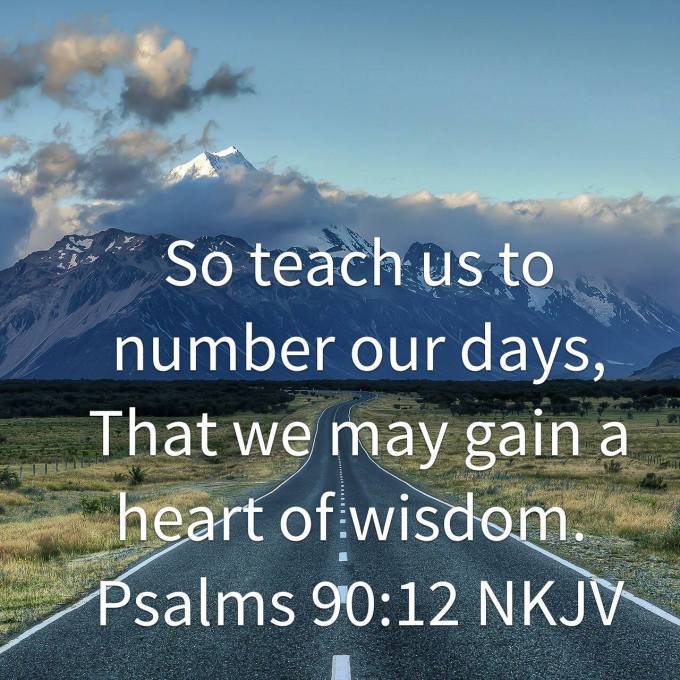
“So teach us to number our days
    that we may get a heart of wisdom.”

Psalm 90:12

A heart of wisdom comes by hearing God’s words and the answer to our deepest needs and problems. True wisdom teaches us to see ourselves and the brevity of our lives as God sees it. Who knows what a day will bring forth? The Queen welcomed a new Prime Minister on Tuesday, yet she was gone on Thursday. It was unexpected. We all need to number our days. The only way we can do that is to live this day as the last, as the day we are going to meet God.

The wisdom of God teaches us to look away from ourselves,

“Satisfy us in the morning with your steadfast love,
    that we may rejoice and be glad all our days.”

Psalm 90:14

It is the love of God we need to look to. We find the fullness of this, His unfailing love, has been displayed in the steadfast love He had in sending His Son into the world. Who can grasp what this means? Jesus Christ came to dwell amongst men and take on a human body. Our God came down into this world and walked amongst men. How can the eternal God come down? Yet, He did. Paul tells us,

Great indeed, we confess, is the mystery of godliness:
He was manifested in the flesh,

    vindicatedby the Spirit,
        seen by angels,
proclaimed among the nations,
    believed on in the world,
        taken up in glory.”

1 Timothy 3:16

When we speak of Christmas, we speak of this great mystery of godliness. God was manifest in the flesh. The Lord of glory took the frailty of our human flesh and He lived amongst us, yet free from sin. He was the only One who didn’t deserve God’s judgement, to deserve the results of the curse and the fall. He was the One who came and stood in our place, the One who became a curse for us, to bear our sin, to suffer God’s wrath in our place.

Here alone is the answer to this puzzle. Where is that refuge in God? Where is that dwelling place for every believer? It is in Jesus Christ. It is in faith in Him. In Him we find this refuge from the storm. We discover Him to be the rock of ages. In Him we have a welcome from God, our Father and the promise of eternal security. This eternal security will last as long as God lasts. God is eternal, so our security is eternal.  

In all generations He has been our dwelling place – past, present and future. Here is the promise of eternal life. In Christ we are anchored in God, safe from all the turmoil of life, until that everlasting home is gained in heaven.

The Old Testament patriarchs believed it (Hebrews 11). Paul proclaimed it,

“So we do not lose heart. Though our outer selfis wasting away, our inner self is being renewed day by day. 17 For this light momentary affliction is preparing for us an eternal weight of glory beyond all comparison, 18 as we look not to the things that are seen but to the things that are unseen. For the things that are seen are transient, but the things that are unseen are eternal.” (2 Corinthians 4:16-18).

But it was the Lord Jesus Christ who obtained it, “I Am the Way, and the Truth, and the Life. “Let not your hearts be troubled. Believe in God; believe also in me.” (John 14:1)


So, the question is, ‘Do you have a heart of wisdom?’ Have you seen your life in the light of God’s eternity and God’s holiness? Have you looked away from yourself to that eternal refuge, which is only found in the Lord Jesus Christ? What fills your desires and your prayers?

The psalm ends with a series of prayers.

Return, O Lord! How long?
    Have pity on your servants!

Psalm 90:13

Do you long daily for a deeper experience of that love? Satisfy us in the morning with your steadfast love, that we may rejoice and be glad all our days.” (Psalm 90:14). Are your prayers filled with great ambition? As Christians, we should be ambitious, “Let your work be shown to your servants, and your glorious power to their children.” (Psalm 90:14). It is your ambition that this generation and the next generation, and the generation after, will know God’s word, will see God’s power poured out? “Let the favour of the beauty of our God be upon us.” Do you daily wake and long to be more like your Saviour? Do you long that the beauty of your Saviour might be more and more reflected in your life?

Finally, not that you will be praised by generations, but do you long that your life will be such a life that the church of God will be benefited, that your life will have established something for the people of God? “Establish the work of our hands upon us; yes, establish the work of our hands!” (Psalm 90:17b).

We’ve gone through a week of great change, but we are reminded our God is unchanging. Because of that, we are reminded that the gospel is unchanging. The gospel today is the same as it was in Paul’s days, and the same as it will be until that great day when Christ returns. The offer today, our Saviour says, is “Come unto me, all who labour and are heavy-laden. And I will give you rest.

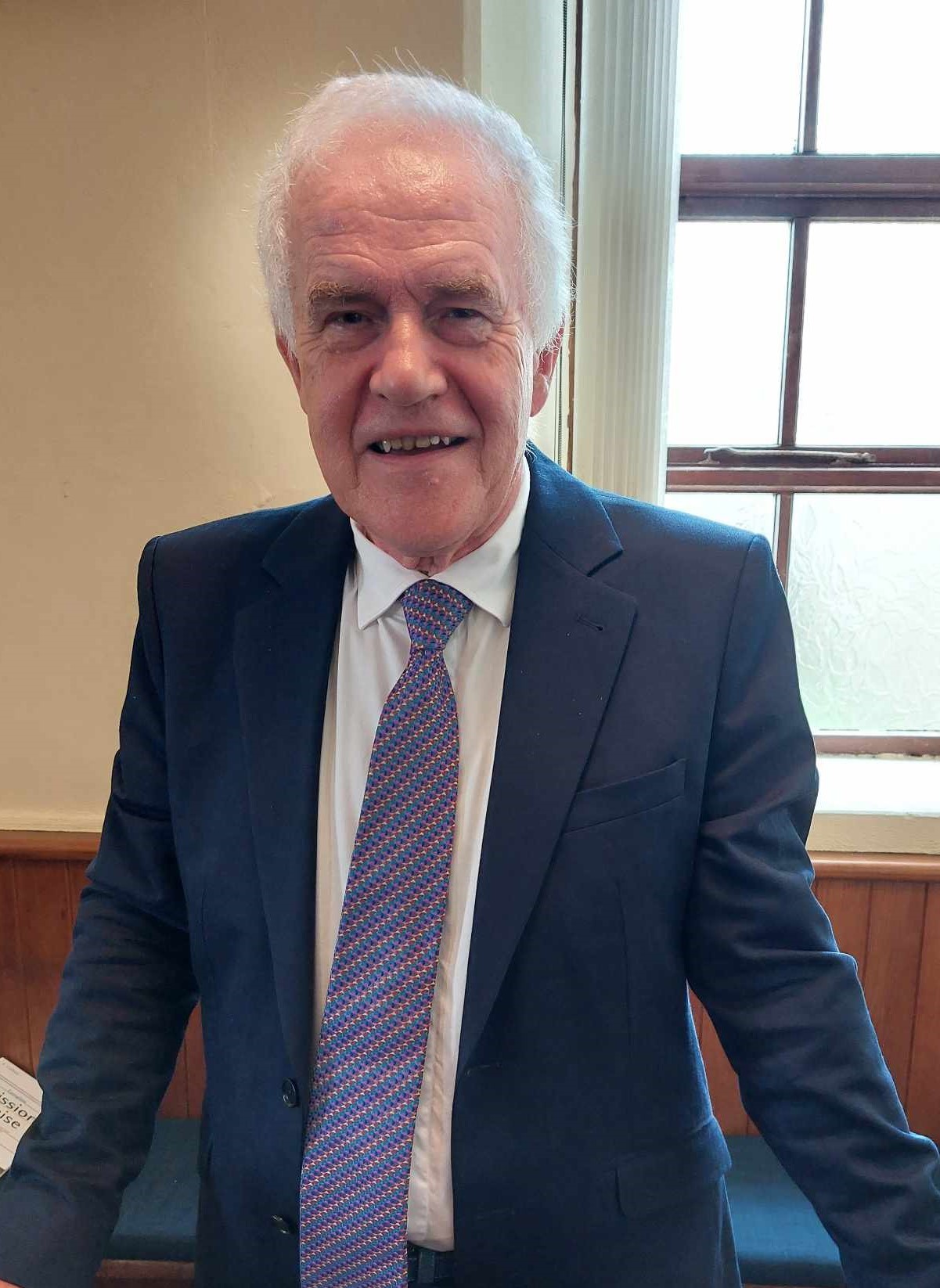
September 4th 2016: Paul David

Our service this morning was led by Paul David of Cosheston Mission Church who preached from Psalm 90. As this is a prayer of Moses, it is probably the oldest psalm. You can find a summary of the life of Moses in Acts chapter 7. He lived to what we would call today a great age – 120 years old. His life was conveniently split into 3 forty year periods. The first forty years he spent in Egypt, but his life changed dramatically in the next forty years when he fled from the palace to the desert of Midian to look after his father’s flock. At the age of eighty God sent a reluctant shepherd to deliver the Hebrews from slavery. Moses saw and did miracles. He struggled with people who rebelled against God. Moses was a man of God, a meek man who knew God face to face. He was a sinner, along with his generation, who were condemned never to enter Canaan.

We live in a culture which values positive attitudes, which likes to portray positive images. In bookshops you can find many self-help books which tell us that the solution to all our problems is inside us; if we think positive things it will turn out all right. It’s always great to meet people with a sunny disposition. However, in verses 3-11 Moses gives us a serious dose of realism. Our life is short, we live under God’s anger because we are sinners. When we are here on earth life is hard. We may begin with hope and optimism but this turns to disappointment. God is fully aware of our sin, it is no secret from God.

Life may be more comfortable for some than others. There will be trouble. Christians will suffer for their faith: John 15 “If they persecuted me, they will also persecute you.”

In this psalm we see a series of requests:

  • “So teach us to number our days,” (Verse 12). Moses considers the brevity of life. We all think we will lead a long life, we put off serious thoughts about the end of our lives, yet we are told, “But Beloved, do not forget this one thing, that with the Lord one day is as a thousand years, and a thousand years as one day. (2 Peter 3:8).

Moses asks for wisdom to see life as God sees it. Wisdom is seeing ourselves as we really are – sinners heading for a meeting with God. We need to see our sinfulness set against God’s purity.

  • “Make me glad” (verse 15). Why? Because there is more to life than can be seen. Moses knew there is spiritual life where spiritual prosperity can live alongside certain hope. This short journey on earth will end in paradise.
  • “Let your work appear to Your servants, And you glory to their children, And let the beauty of the Lord our God be upon us, And establish the work of our hands for us; Yes, establish the work of our hands” (verses 16-17). Moses wants us to work, just as we are encouraged to do so in Philippians 2. God working is us involves us working. He begins the work by saving us and continues the work by sanctifying us. A Christian’s nature is changed. As we grow in grace our lives should reflect Jesus Christ.

Moses never really had a true home, yet he learned an important lesson, “Lord, You have been our dwelling place in all generations.” (verse 1). Our permanent home is where the Lord is.

Paul David - sept 2016.jpg         psalm 90-12