May 5th 2024: Andy Pitt

Psalm 107: The God who saves

I pray you can say, ‘The Lord has saved me.’ When I first came to Wales, I walked through the doors of Lonlas Mission in Swansea. On the way in, the man on the door asked me, ‘Are you saved?’ We come to worship a God who saves. Are you saved?

In this psalm, which was written following the Babylonian captivity, we see four groups of people and how God deals with His people. The four groups all have a problem, cry a prayer, God graciously makes provision and this all concludes with praise. There is a problem, prayer, promise and praise.

We are introduced to the first group in verse 4. They have nowhere to live. They find themselves in the desert, in the wilderness. What word springs into your mind when you hear of a wilderness? Dry. It can be an environment where everything is dry. Very little flourishes. A place of dryness is where there is little growth. If you are saved, you have a testimony of God’s saving grace in your life. If you are saved, praise God. But where are you today?

It is possible to be saved yet become spiritually dry. You can be in a place where you are not thriving. When we become dry spiritually, praying becomes hard. It becomes difficult. Reading and studying God’s word becomes hard. Our appetite for the things of God is not what it ought to be. You can say, ‘God has saved me, blessed by His Name,’ but you can be spiritually dry.

The apostle Paul says in his letters, ‘In Christ.’ You have been saved, redeemed, restored by Him. What do we do when we feel spiritually dry? We cry to God. When we find praying hard, pray scripture. Take a psalm, a portion of scripture and say, ‘Lord, this is really my prayer, my longing. This is me.’

In verse 10 we meet the second group who are in the dungeon. They feel bound, as if the freedom that they once enjoyed has gone. God has a word for all our needs and the trials and tribulations we experience. We are all addicts – this is not just referring to drugs and alcohol. We were designed to worship. Before we were saved, we were pursuing something to fill that gap. It might not be drink or drugs, it could be pursuing wealth, power, property – things we embrace and can become addicted to. But when we are saved, God breaks the bondage of sin.

We can be spiritually dry. Other things can replace the pre-eminence of Christ. It could be a person, or something else. Anything that takes the place of Christ is idolatry. There are often times in life when we want to know God’s Will, but when He speaks powerfully in His Word and it doesn’t match our hopes, we spurn the counsel of God.

In verse 17 we meet the third group of people, who are sick, facing death. We can be a Christian but be spiritually sick. This can lead to all sorts of problems. In this psalm, the people cry to God in their trouble (v.19). He delivers them; He pours lily water, by His Spirit, by His Word. He breaks those chains. He delivered them from their distress (v.20). The Lord provides. He continues to provide, even in our foolishness. He does not want us to sin, but He makes provision when we sin. There is a problem, followed by prayer, God’s provision, and praise from His people.

The fourth group of people we meet in verses 23 to 27. Maybe you were at your wits end this morning and no one knows. God knows. This group of people were labouring in the deep, tossed by the angry seas. In life we’re in a storm, going into a storm  or coming out of a storm. ‘With Christ in the vessel, I can smile in the storm.’ When the disciples were in a boat in a storm, Christ was asleep, His head on a pillow. His response to their cries was, ‘Do you still have no faith?’ He didn’t mean they had no faith; they were His disciples. He meant, ‘Why are you responding as if you have no faith?’

Is that you – beginning to doubt the truthfulness of God’s Word? Our answer can be found in the words of the hymn writer,

When Satan tempts me to despair,
And tells me of the guilt within,
Upward I look, and see Him there
Who made an end of all my sin.

Fix your eyes on Jesus. He will never disappoint or turn His back on you. He will say, ‘Come closer.’ Sometimes, there is more theology in a ‘cwtch’ and tears then anything you can say. Jesus knows you. He is with you in the storm and says, ‘Come closer.’

The God who saves has provided for our sin through the death of His Son, the Lord Jesus Christ. He can save you. He is building His Church.

If you are dry, He can provide living water. If you are in bondage, He can break the chains. If you are spiritually sick, He will come and bring restoration. If you are in a storm, He is with you. Don’t respond as if you have no faith. Trust in God. The God who saves provides for our problems, hears our prayers, provides for us, and calls on us to acknowledge His goodness.

“Oh give thanks to the Lord, for he is good,
    for his steadfast love endures forever!”
Psalm 107:1
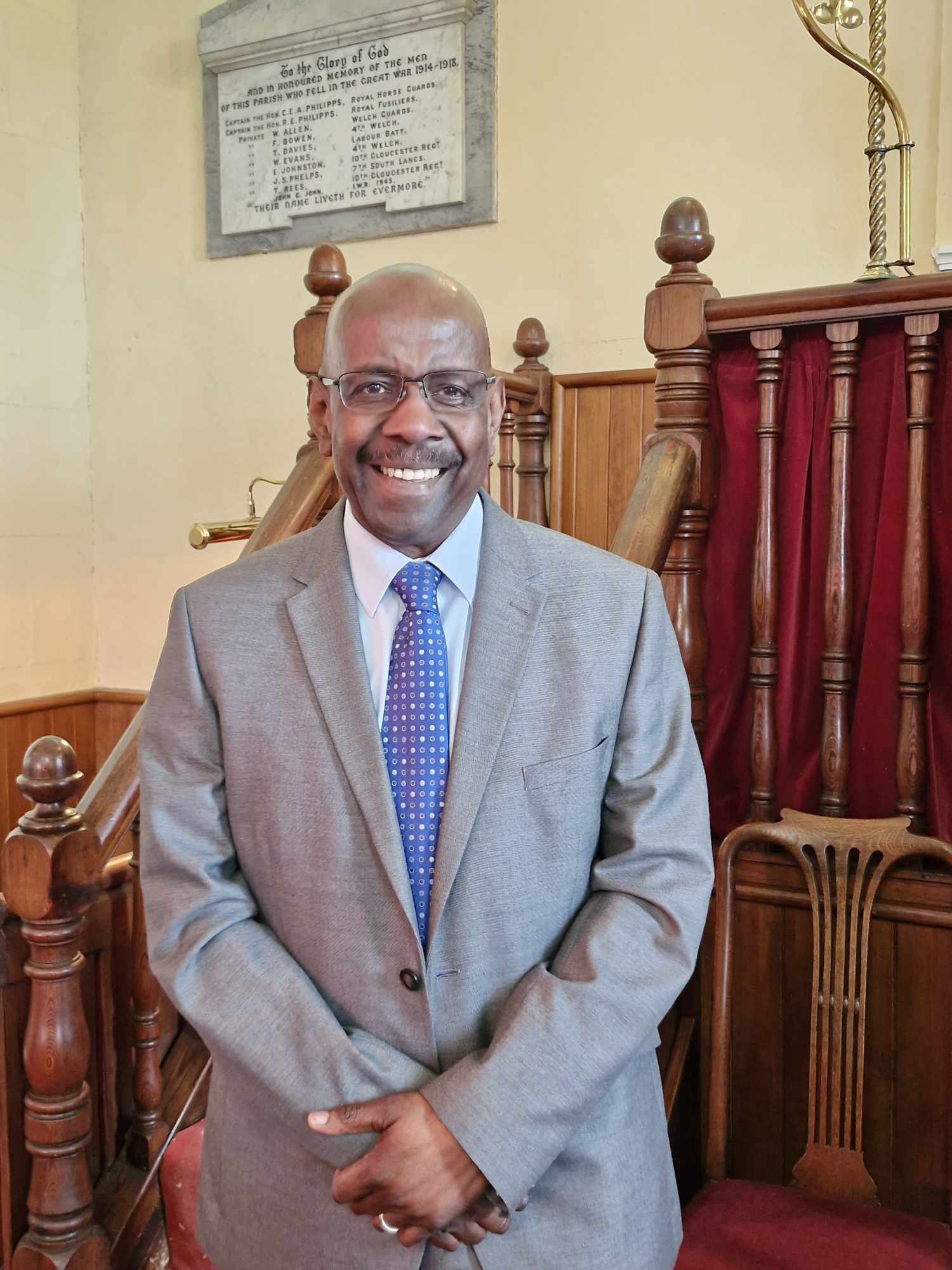
March 31st Easter Sunday 2024: Gaius Douglas

To watch this service, click on the link to our YouTube channel: https://youtu.be/35K1Pj2dh6o?si=Y1TYxXj21zOxP92R

Psalm 107:9
“For He satisfies the longing soul and the hungry soul with goodness.”

This verse speaks about the people of Israel as they travelled through the wilderness journey, hungry and thirsty. This verse can also apply to spiritual longing in the heart of man – that which can’t be satisfied by anything else in the world. “For He satisfies the longing soul and the hungry soul with goodness.” The things that we have, such as clothes and gifts, only last for a while. We breeze but there will come a time when breath will leave our bodies. Then comes judgement. Today is an opportunity for you to receive Christ as your Saviour.

We say thank you for Easter eggs, but sometimes we don’t give thanks to God. We receive many things, but the greatest thing that’s been given we have rejected – the Lord Jesus Christ. The Bible says there will come a time when we will have to give an account to God if we have rejected His Son, the Lord Jesus Christ.

Those of us who are recipients of this wonderful gift of love, this wonderful gift of grace, can say, “For He satisfies the longing soul and the hungry soul with goodness.” We have received of the Lord’s goodness, his blessing and eternal life. We can rejoice!

In John chapter 4 the Lord Jesus Christ is going to Samaria for a purpose – to meet a lady at a well, drawing water. The Lord meets her. He begins to speak to her. The Lord Jesus Christ knew she had a deep need and had tried many things. The Lord Jesus Christ goes straight to the point. Are you a recipient of that well, that water of life? This living water can satisfy your need.

On another occasion, He went to a town called Bethany. Lazarus was sick. Mary and Martha hoped Jesus would heal him. After two days He went. When the elder sister Martha heard He was coming she ran to meet Him. She was sad, her brother had died. Out of her sadness, you see her faith rising. She says, “Lord, if You had been here, my brother would not have died. 22 But even now I know that whatever You ask of God, God will give You.” (John 11:21-22). There are times when we are down or ill and we can rejoice. Jesus says, “I am the resurrection and the life. He who believes in Me, though he may die, he shall live. 26 And whoever lives and believes in Me shall never die. Do you believe this?” (John 11:25-26). Martha’s eyes were opened. She was overwhelmed and replied, Yes, Lord, I believe that You are the Christ, the Son of God, who is to come into the world.” (John 11:27).

For 3 1/2 years the disciples of the Lord Jesus Christ were spiritually nourished and fed. They saw how He reached out to the lost and how He met the needs of all. He told them clearly He would die and rise again (Luke 9:22). He was arrested, crucified and buried. When the disciples of the Lord Jesus Christ and His followers heard, they had their hopes shattered. Only two stayed the course, John and Peter. The others ran away. They were afraid that they too would be arrested and put to death. Peter denied the Lord Jesus Christ.

Then in the gospel of John, we read of Mary Magdalene. She loved the Lord Jesus Christ so much because He had healed her and cast out seven demons in her. For that, she loved Him. She went and gave up everything to follow Him and serve Him. Anything she had, she gave to the Lord. She fed Him and His disciples. Early that Sunday morning she went to the tomb when it was dark. She noticed the stone was rolled away. She ran back to Peter and John and told them this. You can imagine them running back to the tomb. Something was happening. Peter and John did not see the body and went home. But Mary stayed, weeping. She went inside the tomb. There was nobody but she saw two angels who asked, ‘Why are you crying?’ She replied, “Because they have taken away my Lord, and I do not know where they have laid Him.” She came out of the tomb and no doubt continued to weep. As she came out, there was a man standing in front of her. She thought he was the gardener. He said to her, “Woman, why are you weeping? Whom are you seeking?” She answered, “Sir, if You have carried Him away, tell me where You have laid Him, and I will take Him away.”  (John 20:15b).

Mary came with expectation – not to see a living Christ, but a dead Christ. That’s how much she loved Him. She wanted to demonstrate her love and embalm Him. He spoke her name and she recognised His voice. When was the last time you recognised the voice of the Lord? Mary ran excitedly to the disciples to tell them she had seen the Lord, that He had risen.

The Lord Jesus Christ promised the woman at the well living water. His promise was based on His resurrection from the dead. He said to Martha, “I am the resurrection.” Mary Magdalene, a persistent woman, was rewarded. I encourage you to be persistent. She couldn’t rest until she saw her Saviour. Why are you here this morning? Is the Lord Jesus Christ alive in you? Every word of hope that the Lord Jesus made, every promise, is based on the resurrection (1 Corinthians 15:14). I am not serving an empty faith.

Many people who don’t believe in the resurrection of the dead call themselves Christians. Our faith is based on the resurrection, “And you He made alive, who were dead in trespasses and sins,” (Ephesians 2:1). Knowing Christ, by the power of the Holy Spirit, we have been saved for the glory of God. One day our frail bodies will live, having a body like unto our Lord Jesus Christ.

I love Job; he had periods of being down, then up. He had more downs than ups. He had boils all over his body and was cast out of his city, sitting on a dung heap. But he was able to say, “For I know that my Redeemer lives, And He shall stand at last on the earth,” (Job 19:25). I shall see my saviour. Will you see Him? Are you looking forward to seeing Him?

Heaven is going to be a wonderful place filled with glory and grace. Until that day we are flesh and bones and there is still sin. But the Lord Jesus Christ rose from the dead and said because He lives, we can live. He is the one who is sustaining us. He wants us to live in that resurrection power. What is the power that is at work in you? If you know the Lord Jesus Christ, it is resurrection power. It was in Martha, Mary, His disciples. He wants us to show the power of Christ. He will sustain and keep you. He knows your longing, your pain, your hunger, your anxieties. He loves you and will never let you down.

He destroyed sin, hell, and death. He has overcome the power of Satan so you can rejoice. Draw near to Him and He will draw near to you. Come to Him. He will give you rest. Living that power.

“For He satisfies the longing soul and the hungry soul with goodness.”

Morning Service: Sunday 17th July 2016

Ian-Feb16Our morning service was led by Ian Middlemist who preached on John 4: 15-26, Jesus talking with the Samaritan woman.

The opening verses sought to show how this whole encounter seemed to be choreographed, controlled in some way. The Saviour seems to know more about the lady than He seems initially to let on. Everything that takes place in under control and grace of the Lord Jesus Christ.

On the surface the woman seems to be using diversionary tactics. Jesus knew she had had five husbands, but she avoids the issue by changing the subject: ‘Our fathers worshipped in this mountain, but you say that in Jerusalem is the place where men ought to worship,’ Jesus is in control of everything and does not allow the woman to divert the conversation. He sees her with absolute compassion and gentleness. The Saviour knows what He is doing in our lives. Sometimes our circumstances seem out of control but the Saviour knows what is happening.

Look at the progression of the argument:
                   verses 1-15:           He shows her the living water
                   verses 16-19:         He shows her the prophet
                   verses 20-24:       The Saviour who makes true, just worship
                                                possible.
                   verses 25-26:       Jesus is indeed the Messiah.

From her perspective:
In verse 15 the woman sees the water is a gift. She didn’t understand the nature of the water the Saviour speaks of, yet she got the concept that if she wanted the water Jesus had to give it to her. In verse 10 Jesus mentioned it was a gift of God. She now asks for the water. She knew it needed to be given as a gift. Jesus now needs to show her two things: she is a sinner and Jesus is the Saviour of sinners. We need to realise that while the Saviour gives, it is a gift – we can bring nothing at all. Jesus is giving the water of life, we just need to be empty and have open hands.

Understanding the nature of the water. The woman must realise her true thirst. Jesus knows her past. Notice the time of day – the 6th hour, midday. It is not the time anyone would go to get water as it is the hottest time of the day. The woman is alone, possibly an outcast of society. It is a painful daily routine she longs to get over. It is right at this point of pain that Jesus meets with her. Jesus asks her to get her husband but there is no-one who will help her. Jesus is moving into her inner life – and that is what the Gospel must do for you. Behaviour and manners are important aspects but the Gospel is so much more interested in our inner life, our heart. Jesus is fascinated with us, what we fill our hours of the day with. The Word of God is cutting us open, exploring us, but not publicly – the woman is safe. Jesus is going to make her feel secure, to make her whole again, at peace, beautiful. Jesus is forcing her to deal with her inside. Her heart has been locked away for so many years. As we go deeper, the Father in heaven draws her, He is seeking her.

The conversation is then directed towards worship. Let’s be a prayerful people and ask that the Saviour does the same for us. Let’s pray that the searching light of the Gospel would search our life, grow in sanctification. Only Jesus Christ can give living water.

Worship. The woman wants to talk about worship but her she is focused on the location of worship, not worship itself. She has just been offered water that will last forever and forever but all she thinks about is the location of worship. This woman’s life has become a life built on externals – she is dead on the inside.

Are you putting the Saviour first or have we allowed other loves to take His place? The issue is not about where we worship but the direction of our worship. This woman found nothing in her husbands. Many people move in different directions, from church to church, from one person to another. Only drinking from the water of life will fill us. Let’s find our salvation in Him. Jesus showed the woman that the water wasn’t based on externals.

‘Let the one who is thirsty come; let the one who desires take the water of life without price.’ (Revelation 22: 17)