In just 10 verses a lot of theological truth is condensed. Consequently, there is no time to fully explore the depth of all Paul says here. We’re not going to fully exhaust these verses. I trust, by God’s grace, we will be deeply encouraged and challenged. Central to an understanding of this passage is that God has appointed two individuals to represent men. These are our federal heads: Adam and Jesus Christ. All that we ever will be revolves around our relationship with these two men. There is a repeated contrast. Paul mentions the one man, then the many, or all. The action of the one has a profound effect for the all, the many.
By nature, we are in Adam but our future destiny depends if we are also in Christ. Adam was a type of Christ (1 Corinthians 15:45). Paul emphasises the human nature of Jesus. Paul focuses on Jesus being our representative. Just as Adam had been appointed as a federal head, so Jesus is a federal head. Adam and Jesus are similar in that they could be appointed by God to be our representative. However, there is a difference. Adam’s failure brought disaster. Christ brought hope.
Sin and death in Adam. When Adam fell into sin (v12), we all sinned in him. Sin began with Satan (Revelation 12:7-8), with Adam succumbing to Satan’s temptation. Adam had been created by God perfect, with an ability to resist Satan’s temptation. But he did not. He becomes a slave to sin. What is more, because Adam is our representative, when he fell, we fell with him. So, like him, we are sinful creatures under the dominion of sin. As we all sinned in Adam, we are all condemned in Adam (v16, 18). We are justly condemned before the righteousness of God (Ephesians 4:2). This means we are under sentence of death. God warned Adam if he disobeyed Him, he would surely die (Genesis 2:17).
After Adams fall, after his disobedience, God in His mercy did not enforce the sentence of death on Adam immediately in a physical way. But he was cut off from the fellowship with God. This seed of death would consume him to death. The same sin condemns us (1 Corinthians 15:20). Even at this moment, you and I are the walking dead. We are spiritually dead, cut off from God, from the moment we drew our first breath (Romans 6:23). Sin and death in Adam.
‘How can I be held responsible for what Adam did?’ This is what many people say in the West. Yet, other people understand this (reference to village chiefs – where the chief or elder represent their tribe). When God appointed Adam as our federal head He chose the best candidate. Adam was given the ability to resist temptation. None of us would have done any better.
If we object to Adam being our federal head, our representative, we must also object to Jesus Christ be in our federal head, our representative – therefore, removing all possibility of salvation. In that case, we reject men being sons of God. Adam, even before the fall, was but a creature who had a relationship with God. But Adam was not a child of God – for it was only when the Son of God came into this world and became the Son of Man, one with us and through grace being one with Him, then becoming a child of God.
With Adam we are in a desperate situation, justly condemned. Nothing we can do can change this. We are hopelessly lost. That is why we need to look to God for salvation. He alone can save us. Therefore, Paul speaks of grace and life in grace. In His loving kindness, in His mercy, God appoints a second federal head – Jesus Christ Himself. He becomes our Saviour. In His grace (v15) God offers us the free gift of salvation.
This grace is abundant (v15, 17, 20). This grace is not universal; not all men are saved. But neither is this grace rationed, it is for many. Paul emphasises this by drawing a contrast between the judgement that came because of one man’s disobedience, with salvation that comes to a great many people (v16).
How is this salvation secured? By Christ’s obedience (v18-19). Our second head gloriously succeeded. He perfectly obeyed. In His humility, Christ laid aside glory and honour and humbled Himself to come into this sin-sick world, in obedience to the will of God the father. He lived a sinless life. He lived the life of a perfect man which Adam and all of us failed to do. Even more, He offered Himself up to death in our place on the cross. He bought the wages of our sin on the cross. He offered Himself as a sacrifice, as our substitute, dying under the penalty of the law.
Through this obedience Jesus brings us:
i. Justification (v16). We are declared not guilty of our sin because our sin was imputed, credited to Christ. God pronounced the judgement of death on Jesus in our place. As He pays in full our debt before the law, we are justified. It is just as if I have never sinned.
ii. Righteousness (v17, 21). In salvation through His obedience, the Lord Jesus Christ provides for us justification and also righteousness. Our sinfulness is credited to Him. At the same time, His sinlessness is credited to us, as if we lived the perfect life of obedience. Therefore, we are accepted by God. Consequently, those who repent of their sin, having Him as their Saviour, knowing that He is the federal head, are saved. They have received new life, eternal life (v17, 21).
This means restored spiritual life in the soul. A new life floods our souls as fellowship with God is restored. Because there is new life in the soul, there will be restoration of physical life (1 Corinthians 15:22). Here then is hope for the hopeless, in Jesus Christ with all its glorious blessings.
Are you alive in Christ, or still dead in Adam? It is one or the other, there is no in-between. If you are in Adam, the second death is eternal punishment for your sin in hell (Revelation). If you come to Christ in repentance and trust in Christ as your saviour, you will experience spiritual restoration and resurrection joy. Which one will it be for you – alive in Christ or dead in Adam?
Come to Jesus now. It is a free gift, you do not earn it. We are not worthy to receive it, but it is freely given in God’s abundant grace to all who turn from sin and trust in Jesus for forgiveness. Come. Don’t hesitate.
If you are in Christ, remember your salvation is not of your own making. It is by God’s grace, so endlessly praise the Father, Son and Holy Spirit. You can rejoice with thankfulness if you are a child of God in Christ. This is the greatest privilege. It is the source of all blessing. You have great cause to rejoice, to be glad and glorify your Saviour’s name.
“It was to show his righteousness at the present time, so that he might be just and the justifier of the one who has faith in Jesus.” Romans 3:26
One of the amazing teachings of scripture is that sinners can be right with God. It is essential to have a clear understanding of the truth of justification, of it’s great assurance. To be “Just and the justifier,” may seem an impossibility. We will look at three points:
How can you declare a sinner not guilty? Is it a contradiction, a divine dilemma? No.
How has God demonstrated this great truth of grace, so justice is honoured and love and mercy is dispensed to those in need of it?
Consider the divine declaration – is justification a gradual process or a once and for all event? This can be summed up as:
Divine dilemma?
Divine demonstration.
Divine declaration.
1.Divine Dilemma
How can God to be just and the justifier? God’s justice is something that causes a thoughtful person to tremble. If God is just, it strikes terror into us. His scrupulousness, His thoroughness in not only weighing the acts, the words and the thoughts, produces a sense of anxiety in all of us. He can see to the very bone and marrow in our life. Some focus on the love of God and say God will never send anyone to damnation, that love is stronger than justice. When God acts justly He is simply acting like Himself. But God is also love. Justice is getting what we deserve. Our case is hopeless. Until you understand you were lost, you cannot understand the gospel. God is never at cross purposes with Himself. None of His attributes conflict with each other.
2.Divine Demonstration
What attributes of God are displayed in the death of the Lord Jesus? You may think of the love of God and you would be right, “But God shows his love for us in that while we were still sinners, Christ died for us.” (Romans 5:8). The love of God is demonstrated to us that while we were yet sinners Christ died for us. God does not love us because we have promised to love Him back. In Romans 3:25-26 we also read of another demonstration of God’s justice with regards to the sins of previous times, before the coming of Christ. The Old Testament dispensation and justice at the present time. The present time is a reference to Christ’s earthly life, to deal with the consequences of sin once and for all.
There is a double demonstration: the Old Testament dispensation – the sacrificial system of the Old Testament – and the life of Jesus Christ – His death when the curtain was torn from top to bottom, and entry is gained for all who believe upon the Lord Jesus as their Saviour. Both the love of God and justice of God are fully demonstrated. As a believer you have to hold these two demonstrations in your hand, Romans 5:8 and Romans 3:25-26. Memorise these verses so that you have a clear understanding that justice and love are fully demonstrated at the cross.
Christ was dying in place of sinners. In doing so He diverts the wrath of God away from us. The cross is a place where justice and mercy can be equally displayed.
Paul was a legal man and imposed the idea of justification by faith, “But now the righteousness of God has been manifested apart from the law, although the Law and the Prophets bear witness to it.” (Romans 3:21). He said it is prophesized in the Old Testament and fulfilled in the Lord Jesus Christ.
The Old Testament sacrificial system was established to remind the people of the need of forgiveness and their accountability for sin. It was pointing them forward towards a sacrifice that would be made which would deal with it once and for all. That’s why it was on a daily basis, a weekly basis, a monthly basis, a yearly basis – all pointing towards the sacrifice that would eventually deal with it all, one sacrifice for all (Moses, Leviticus, Isaiah 53:11).
3.Divine Declaration
‘Justify’ is a word from the legal system (Deuteronomy 25:1). The work of santification takes place throughout our life. When a judge condemns someone, he is not making them guilty. The condemnation is based on the evidence. Picture yourself in court. Your life is being judged. The is an object of witness – the law of God. How do you stand up against this? Fail in one part, you fail in all. We become aware of how we have failed.
A subjective witness comes – your conscience. It speaks and confirms your guilt. The witness is against yourself. You speak against yourself. All your life you have defended yourself but at the final judgement you speak against yourself.
A third witness appears, a malicious witness. An accuser. The devil. He will say anything to incriminate us or implicate us.
Then, finally, one comes to give testimony to judge, one who is sinless. He states He has voluntarily stepped into your shoes and paid the penalty. You are declared not guilty. The guilty one goes free. You walk away a free person, yet sins and punishment were yours. What do you think of the one who did this for you? Do you love Him with all your heart? Are you thankful, do you serve Him because He gave His life for you? If that is you, praise the Lord! If it is not, believe in Him now.
When I was in Bible college, I was taught that every good preacher does three things: they state their point, then they illustrate it, then they apply it – why is this important to us, how does it apply to lives. So, you state the point, illustrate it and apply it. It seems that the apostle Paul followed this plan. When you read Romans, Paul issues the main theological point of his letter in chapter 3:24, “we are justified by his grace as a gift, through the redemption that is in Christ Jesus.” The main point of this letter is we are justified by His grace. Justified means to be declared not guilty. So, whereas before you stand condemned in the dock, facing condemnation and judgement because of your thoughts, your speech, your behaviour, and attitude to God, now you are declared not guilty. There is no condemnation, you are free. Justified means to stand in a court of law and for the judge to say, ‘Not guilty.’ We are justified freely through the redemption that is in Christ Jesus. It’s a gift of God’s grace.
In chapter 4 Paul illustrates this, giving an example of someone who was justified by faith – someone who was not justified on the basis of keeping the law, that they had lived a good enough life, or that they were circumcised. His example is Abraham. Abraham was someone who was justified, who was declared not guilty, who was considered righteous, perfect in the eyes of God, before the Jewish law had been given, before the ceremonial law had been given. He was justified because God, in His grace, put His hands on him, chose him, called him and considered him righteous. The only thing Abraham had to do was accept that and to believe and trust Him in the word of this gracious and loving God.
I think Paul goes to Abraham because he’s the father of faith. He is the great example of someone who could not be saved through his own efforts or through keeping the law. It would have been impossible for him to keep the Jewish law because it hadn’t been presented or delivered to them. So, it is illustrated. Here is a real-life example of someone justified, someone declared not guilty, someone who is freed and forgiven – not because he is a great person, or that he was immensely religious. No. it is because of the grace of God. God, in His amazing love, calling and choosing. All he had to do was respond in faith.
In chapter 5 we see the application. How does it affect our lives? The headline is in chapter 5. The main line, the most important point is found in verse 1, “Therefore, since we have been justified by faith, wehave peace with God through our Lord Jesus Christ.” Everyone wants peace – peace within warring families, peace when there is division between a husband and wife, peace between nations. We pray for peace in broken communities, when there is division between various groups. People want peace in their hearts. They can’t find peace within them for many reasons: Covid, fear, loneliness.
The peace in this passage of scripture speaks of a deeper peace. I believe if you have this peace, then you have the key to unlocking other types of peace. If you have peace with God, then you can be at peace with yourself. You can know peace in your heart and soul. If you have peace with God, then you can learn how to forgive others and that can lead to peace within our own relationships. I believe if there is revival, then an entire nation is affected. If thousands of people within a community are saved, then that leads to change communities as well and to greater peace. This is the underlying need for every person because it changes our lives today. Even more than that, for all eternity. To have peace with God is our deepest and greatest need.
What are the results of having peace with God? That’s what Paul looks at in the next few verses. So, we have got justification – we are declared not guilty, free ion the eyes of God. Perfect and righteous. You have peace with God. What does that mean? What are the consequences? The first thing is mentioned in verse 2 – we now have grace.
Grace. “Through him we have also obtained access by faith into this grace in which we stand, and we rejoice in hope of the glory of God.” (Romans 5:2) We now have grace in which we stand. Because we have peace with God, we have this grace in which we stand. We think of grace at the beginning of the Christian life, that you become a Christian because of the grace of God. Someone becomes a Christian not because they are especially clever or especially religious. You become a Christian because God, in His grace, places His hands on you and calls you.
But grace is a state, a spiritual condition, in which we continue, so we continue to receive the grace of God not just on the day we become a Christian, but throughout our whole lives. There are two spiritual states: one state is to be under judgement, still in our sin. Without Jesus this is where we are. Without Jesus, God sees our sin and there is no forgiveness because we haven’t repented, we haven’t trusted in the Saviour. That is a dangerous place to be. If we were to die in our sins, without the Lord Jesus, we would face judgement.
But the other condition is to stand in grace, where we are recipients of God’s grace. If you have trusted in Jesus as your Saviour, if you have asked for forgiveness of your sins, if you have received by faith this salvation, by faith you have trusted in Jesus, you have peace with God, you can now receive the grace of God. This means to know that God wants to bless you, to know that God wants to protect you, that God loves you.
Think of all the promises God, “Therefore I tell you, do not be anxious about your life, what you will eat or what you will drink, nor about your body, what you will put on. Is not life more than food, and the body more than clothing?Look at the birds of the air: they neither sow nor reap nor gather into barns, and yet your heavenly Father feeds them. Are you not of more value than they?” (Matthew 6:25-26)
That is what it means to stand in grace. That this heavenly Father, who feeds the creatures and the natural world around us, values you. You receive the grace of God and so you are aware of your sinfulness. God reminds you of His grace. You feel helpless and God, in His love, reminds you of the hope you have. You are aware of your sinfulness but reminded that Jesus died for me. All of the truths come back again and again, in His grace. God, in His grace, protects us and restores us again and again. Even when we do fall and when we find ourselves in foolish situations, He forgives – because He is a God of grace. So, you are a recipient of God’s love continually.
Don’t ever think you’re outside of God’s love, or beyond God’s love. Don’t ever think that God cannot show you grace. His grace is beyond anything we can ask for or imagine. His love overflows for us. For all eternity you will stand, and your faith will not fail because God in His grace will keep you. You will stand in grace, and you will continue to stand.
Hope. We rejoice in the hope of the glory of God. There are no obstacles now. Because we are justified, because we have peace with God, because our sin has been taken away, there are no obstacles between us and God, between us and heaven. On that day of judgement, where the sheep and goats will be divided and separated, because we have peace with God, we can know that on that day we will be received into the presence of the Lord Jesus, into His everlasting, eternal kingdom. We will be with His forever in paradise. We have this eternal hope that we are safe. We will stand in a place where there will be no diseases, no death, no decay. There will be no sorrow, no sadness, no sin. All of those things will have passed away.
We will rejoice in this. Because there is no sin, there is no judgement, we will be immediately ushered into this new heaven. A paradise. But notice what Paul says here; he doesn’t just say we rejoice in the hope of glory, at the thought of going to heaven, to paradise. There is more. We rejoice in the hope of the glory of God. He knows heaven is the home of God. In heaven we will have glorified bodies. We will have glorified eyes to see Jesus as He really is. Can you imagine that? The fullness of the glory of God, seen in the person of Jesus. We will see the glory of Jesus. Because we have been justified, because we have peace with God, this is a real hope. We rejoice in hope.
“Not only that, but we rejoice in our sufferings, knowing that suffering produces endurance, and endurance produces character, and character produces hope,” (Romans 5:3-4). Paul acknowledges there will be suffering, but we can still rejoice because God has greater purposes for us, and we can fix our eyes on heaven. We can know that whatever we face in this world, all suffering will come to an end. One day we will see Jesus, the person you pray to, the person to delight in when reading the Scriptures.
The Holy Spirit. The Holy Spirit, the third person of the Trinity, pours out God’s love into our hearts. “God’s love has been poured into our hearts through the Holy Spirit who has been given to us.” (Romans 5:5). We’ve thought about the doctrine of justification (being set free, not guilty), we’ve thought about heaven, we’ve thought about God’s grace. God wants us to understand these things in our minds. He wants us to know these things are true. He also wants us to feel it, to know this in our hearts as well. The Christian faith is meant to affect not just our minds, not just our wills, but it’s to affect our emotions. He wants us to feel His love and He does this through the Holy Spirit. The Holy Spirit is our teacher, the Holy Spirit is our instructor and guide, the Holy Spirit is the one who convicts us of our sinfulness. He moulds our consciences. The Holy Spirit pours out His love so that we know we are children of God, so that we know we are forgiven.
It is one thing to know this, it is something completely different to understand. I’m becoming more convinced that what we need to remember as people is that God loves us. We have peace with God. There are no obstacles. The Holy Spirit can live and dwell in our hearts and soul and pour out this love. Do you know today that you are loved? Do you know today that God is your Father? Are you aware that the Holy Spirit is in your soul?
When you feel that sense of darkness, or that isolation, pray for the love of God to be poured out like streams of living water into your souls.
Deliverance. “Since, therefore, we have now been justified by his blood, much more shall we be saved by him from the wrath of God.” (Romans 5:9). There is a time coming when we will all have to face the wrath of God – but because of the death of the Lord Jesus we will be safe and delivered. “For while we were still weak, at the right time Christ died for the ungodly. For one will scarcely die for a righteous person—though perhaps for a good person one would dare even to die— but God shows his love for us in that while we were still sinners, Christ died for us.” (Romans 5:6-8).
Because of Jesus’ grace, because of His willingness to go to the cross, because of His obedience to God and His love for Him, He went to the cross. And so, on that day of wrath there will be nothing that we have to face; God will say ‘You are forgiven. You are considered a great and faithful servant.’ And we’ll be about to enter the presence of God.
Some Christians are still worried about that day, thinking ‘Will I be accepted?’ If you trust in the Lord Jesus, you don’t have to say, ‘I hope for the best.’ No. You can say, ‘I know I will be safe. I know that I will go to heaven. I know that I will see the glorious face of Jesus. I know that I won’t face wrath because of Jesus, because He died for me.’
All of these are blessing of being a Christian. To summarize it all – we have been reconciled with God. We are one with God. These are tremendous blessings! At the beginning of 2022, a return to normality would have been good news, to see this Omicron wave pass quickly, that we can return to spending time with loved ones and friends, to go on holidays.
But the greatest news of all is to know that if you trust in Jesus, if you have believed in Him, then you have peace with Him. God is your Father. God is on your side. You are one with Him. You belong to the family of God. That’s how you stand in grace. You are in a safe position, this secure position of someone who can receive the grace of God continually. He will restore you. He will keep you. You have a hope that one day you will be in heaven and see the glory of God in the face of Jesus forever and ever.
You can know the Holy Spirit who pours out the love of God into your heart, so that in the deepest and darkest of times you can know that God loves you. You are delivered from wrath and given life eternal. There is no greater news. There is nothing greater this morning that I could share with you, than to remind you of His profound truths. So, my prayer for you, myself and all of God’s people, and those who don’t know Him yet, that you would find this news and would rejoice in it today and forever.


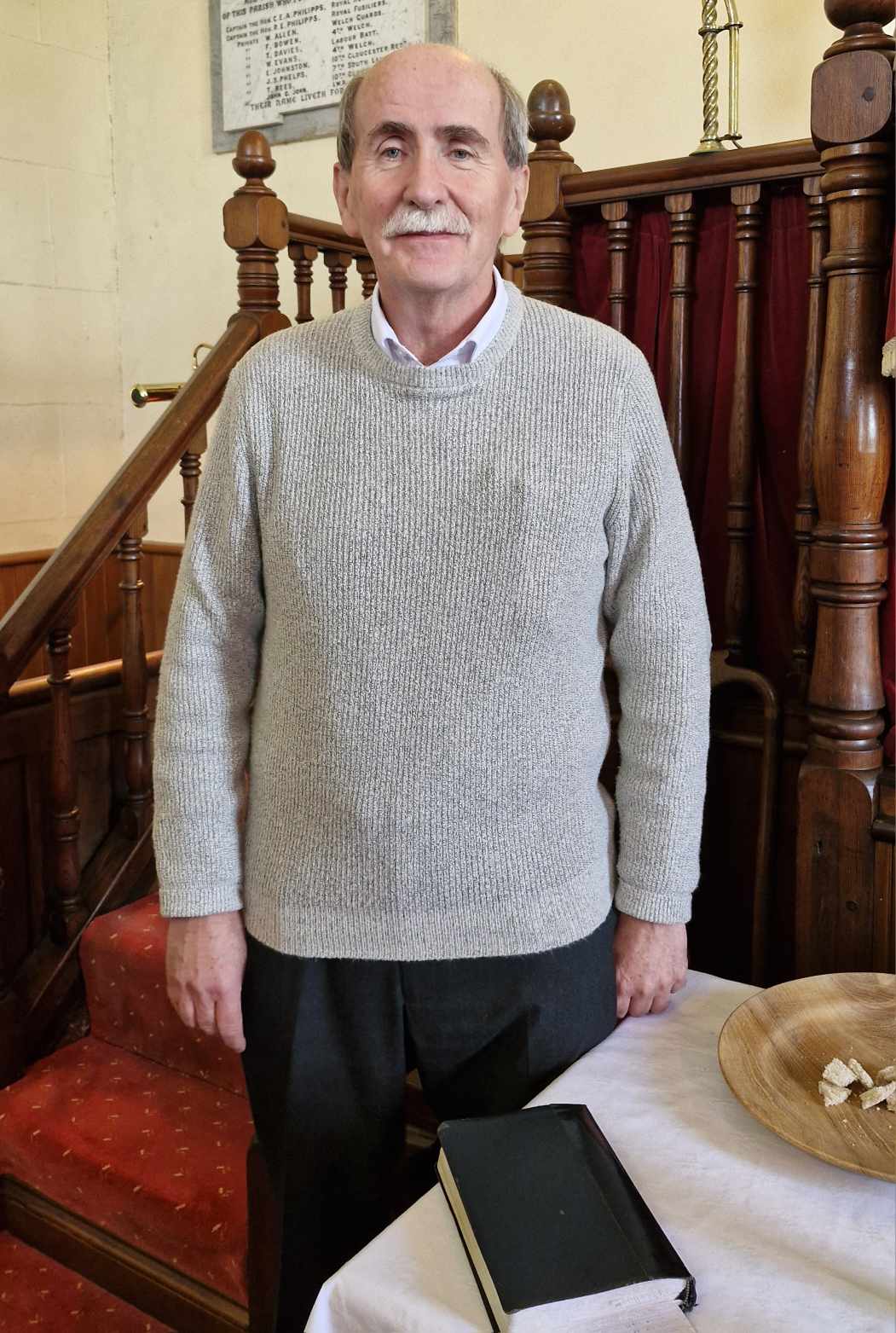

 Penuel Baptist Chapel, Roch