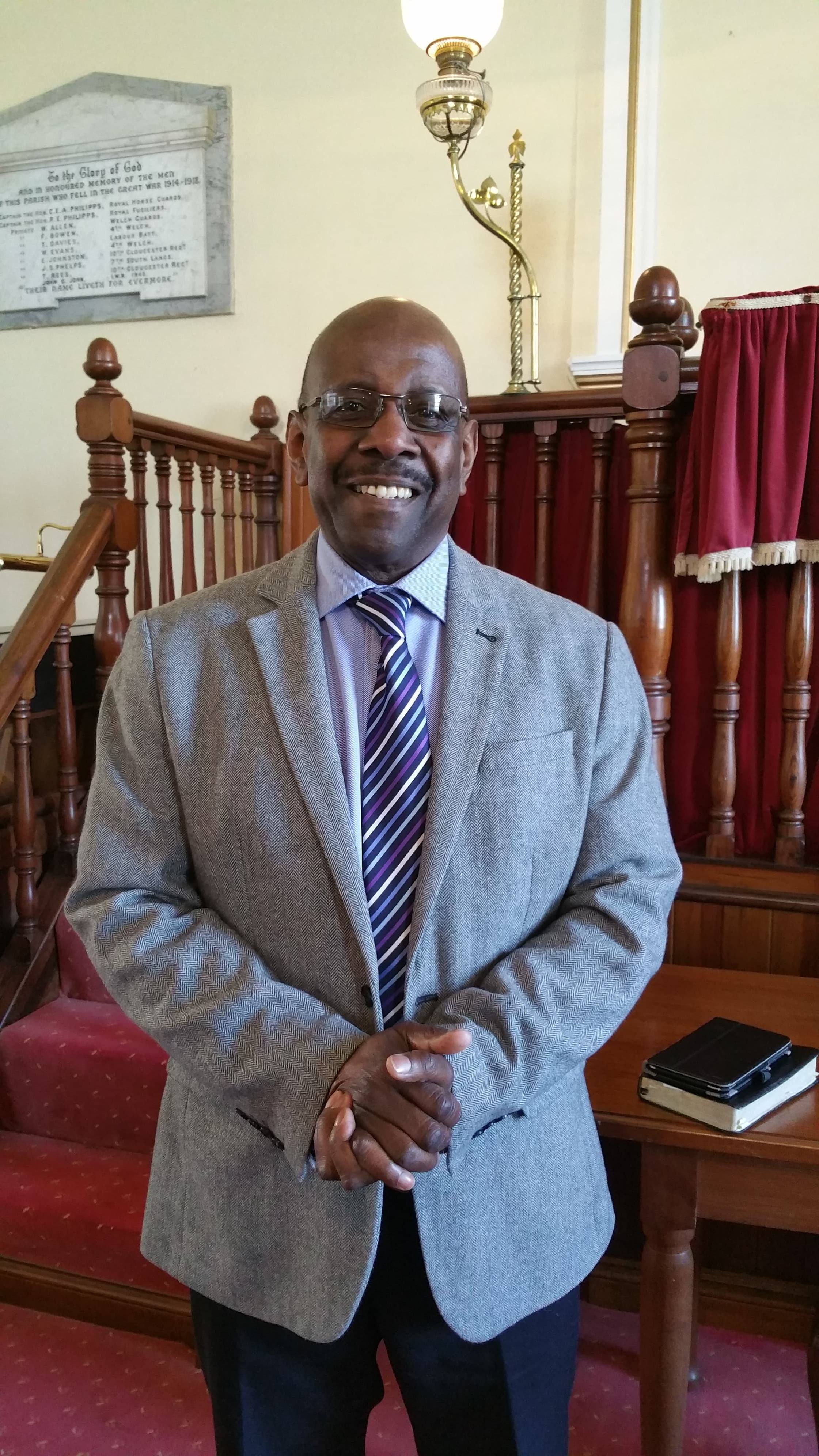
November 7th 2021: Gaius Douglas

2 Timothy 1:8-12

You can view this service on our YouTube channel: https://youtu.be/QAcJNtmLy1w
“Therefore, do not be ashamed of the testimony of our Lord, nor of me,” (2 Timothy 1:8).

The last time I spoke about being a living example of our great Lord and Father, of our Lord Jesus Christ. This morning, the one main question I would like to ask is, ‘What may cause us to be ashamed of the testimony of our Lord Jesus Christ?’ We will explore:

The uncertainty which may cause us to feel ashamed or embarrassed;
the food that will enable us to thrive or fail;
how can I be bold for Christ?

The uncertainty which may cause us to feel ashamed or embarrassed:

The word ashamed means to be embarrassed, to feel guilty about something. Have you ever been embarrassed about the Lord Jesus Christ? There are times in our lives when we’ve experienced it. When I was younger, at about 15, I was already taking Sunday School classes and preaching at youth camps. I began preaching just before I was 21. I remember being invited to preach at a day event in London. In the afternoon I was invited to an open-air outreach at Kew Gardens. I felt nervous at the thought of speaking out in the open, to non-believers, being judged. I was not ashamed but embarrassed to share in public. Giving out tracts was challenging. Then, I was called upon to speak to everyone. I spoke on John 3:16. Over the years I continued to speak at open-air missions, but it was never easy.

Paul is saying to Timothy, ‘Do not be ashamed of the testimony of Jesus Christ, wherever you are, in whatever circumstances. Paul says in Romans 1:16, “For I am not ashamed of the gospel of Christ, for it is the power of God to salvation for everyone who believes, for the Jew first and also for the Greek.” Paul, as soon as he was taken out of prison, began preaching again. If we were told not to preach, what would you do? Continue to preach God’s word because it is the power of God! Because we are in Christ, we have to stand up for God’s word. Paul says, “Do not be ashamed.”

One of the reasons we may be ashamed is our uncertain foundation. We are reminded in Isaiah 28:16, Behold, I lay in Zion a stone for a foundation, a tried stone, a precious cornerstone, a sure foundation; Whoever believes will not act hastily.” We are built on the foundation of Christ, the solid rock, an unshakeable foundation. What an awesome foundation we have – built on Jesus Christ, the rock! Christ is the only one who has changed you and brought you to His salvation. We are saved by grace. We are living stones. How precious! He is the source of your life and my life. He is the strength of your life and mine.

“Fear not, for I am with you;
Be not dismayed, for I am your God.
I will strengthen you,
Yes, I will help you,
I will uphold you with My righteous right hand.”

Isaiah 41:10

How can we be ashamed! What a gospel, what a hope!

“The Lord is my light and my salvation; Whom shall I fear?
The Lord is the strength of my life;
Of whom shall I be afraid?

Psalm 27:1

The Lord is my rock and my fortress and my deliverer;
My God, my strength, in whom I will trust;
My shield and the horn of my salvation, my stronghold.

Psalm 18:2

How blessed we are! We exercise our faith in Him. “For I am not ashamed of the gospel of Christ, for it is the power of God to salvation for everyone who believes, for the Jew first and also for the Greek.” (Romans 1:16). It is important to stand up for Jesus whenever we can.


Food that will either cause our testimony to thrive or hinder

This is really dependent on how we are feeling and with whom we are mixing. The Corinthians were tainted by men’s philosophies and mixing it with the Word of God. They denied the Resurrection. We have to be very careful what we say. We must never deny the power and authority of God, that we do not nod in agreement to things which go against God’s Word. When we start mixing with people who want nothing to do with Christ, don’t be deceived.

What should we do to thrive? Abide in Me, and I in you. As the branch cannot bear fruit of itself, unless it abides in the vine, neither can you, unless you abide in Me. “I am the vine, you are the branches. He who abides in Me, and I in him, bears much fruit; for without Me you can do nothing. (John 15:4-5).

If you want to live for Christ, to glorify Him, to be a living example, you have to abide in Christ, to live for Him, to stay close to Him, to feed upon His word. Abide in Him. “Taste of Him, Oh, taste and see that the Lord is good; Blessed is the man who trusts in Him! (Psalm 34:8).

“Like an apple tree among the trees of the woods,
So is my beloved among the sons.
I sat down in his shade with great delight,
And his fruit was sweet to my taste.”

Song of Songs 2:3

This is where we feed, that we might not be ashamed of the gospel of Christ.

Matt Redmond: Abide in Me https://youtu.be/D1nuDXZrp9k

How can I be bold in Christ?

Because I am abiding in the One who will never let me go, who will never leave me or forsake me, who will never turn away from me, who is the same yesterday, today and forever. That love, that abiding, is based on the finished work of Calvary’s cross, when He took my sin, when He bore my sorrows, when He bore my shame, so that I will not be ashamed of His word.

He now says, ‘Stand firm in the liberty of the Word I have given you, of the gospel of Jesus Christ.’ Paul unashamedly says, I am not ashamed, for I know whom I have believed and am persuaded that He is able to keep what I have committed to Him until that Day.” (2 Timothy 1:12). Very shortly, he was going to be beheaded. You can imagine him saying, unashamedly before Nero, ‘I know whom I have believed and am persuaded that He is able to keep the salvation that He has given to me, to keep the faith that He has given to me, and I will not let Him down.’ And unashamedly he would walk out before Nero, before all those, and he would say to Timothy, ‘Do not be ashamed of the testimony, do not be ashamed of me, do not be ashamed of the gospel of Jesus Christ.’

Let me tell you something, we have got to stand up for the gospel of the Lord Jesus Christ. The world hates the Lord, and it is going to hate us. But the Word is the very power unto salvation to any who believe. If you believe and trust Him, it is the power that upholds you, it is the power that keeps you, it is the power that drives you, it is the power that is going to take you right up to glory.

His love will never let you go. Be assured, if you know and love the Lord Jesus Christ, He is encouraging you to abide in Him, to trust in Him, to feed upon Him, to live in Him.


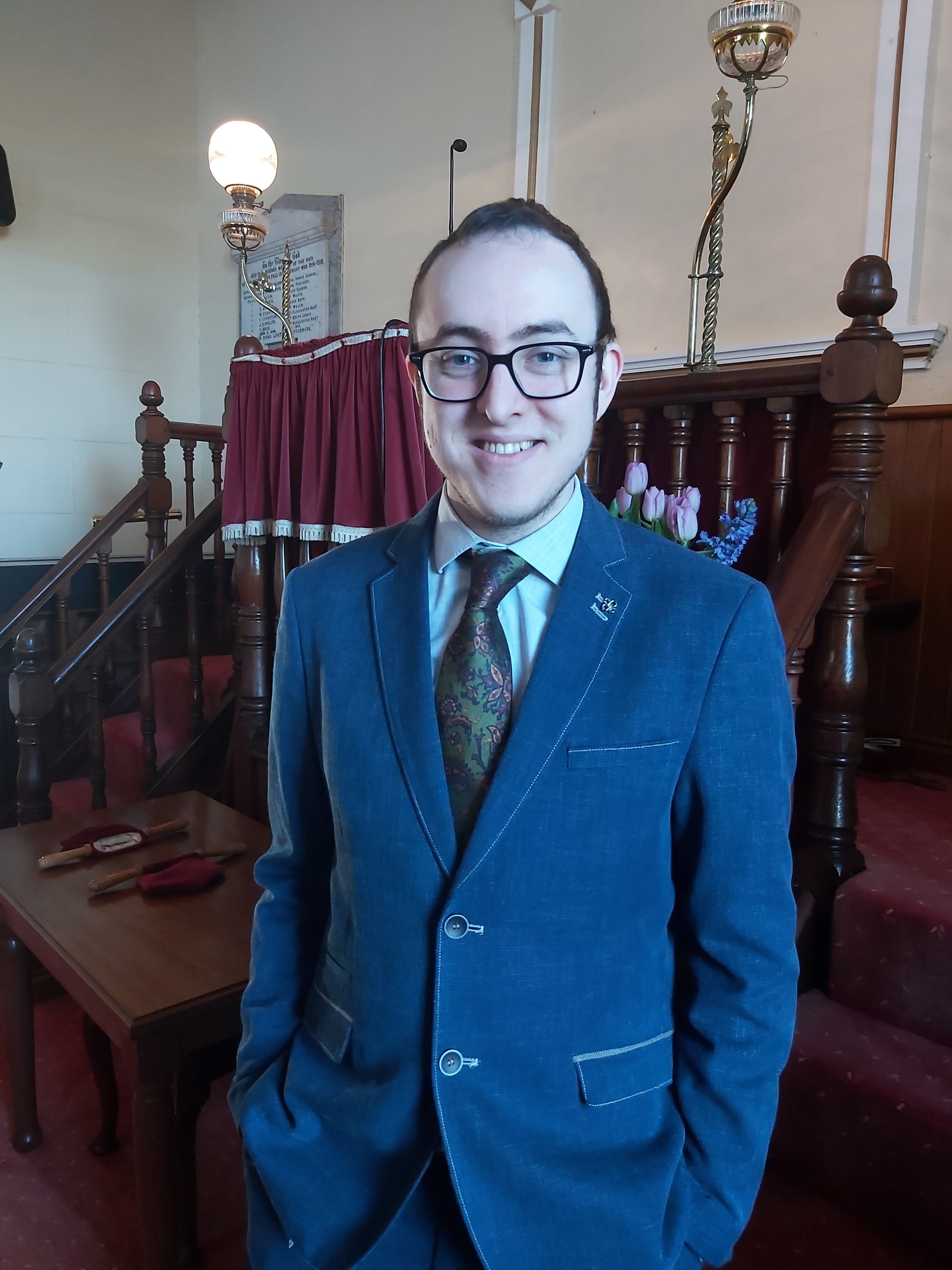
October 24th 2021: Roger Thomas

You may view this service on our YouTube channel: https://youtu.be/88omF4CHocA

2 Kings 5:1-19: The Healing of Naaman

This account happened about 850 years before the birth of Jesus Christ, during the times of the kings of Israel, with Israel in the North and Judah in the South. Naaman was commander of the army of the King of Syria (v1). Syria was to the north-east of Israel. Naaman was highly respected by the king. Why? He had defeated the enemies of Syria. But behind this military success was God. God rules over the nations.

Naaman was a mighty man of valour, strong and brave. However, at some point he caught leprosy, a serious illness, incurable at the time. With time, the body deteriorates, the flesh is eaten away.

During this time, the Syrians had gone out on raids and took captive a young girl who became a servant of Naaman’s wife. Here we see God at work, drawing Naaman into a relationship with Himself. Through these things that had happened, in God’s over-arching providence, He was drawing Naaman to Himself. In verse 3 the young girl says, “Would that my lord were with the prophet who is in Samaria! He would cure him of his leprosy.” Samaria was the northern capital of Israel. This young girl, a prisoner, shows no bitterness. There is love towards her captors. Her faith is very strong. She believes, through Elisha, Naaman could be healed from this disease. She is so gracious and confident.

Naaman’s wife shares this with Naaman, and he, in turn, shares it with the king. The king tells Naaman to go and gives him a letter to give to the king of Israel, saying, “When this letter reaches you, know that I have sent to you Naaman my servant, that you may cure him of his leprosy.” Naaman goes to Samaria, taking the letter. He goes with his chariots and servants. He also takes 340 kg of silver, 68kg of gold – a huge amount, and 10 changes of clothing. This was a substantial gift, telling us how rich Naaman was.

In Samaria, Naaman sees the king, who read the contents of the letter (v6). The response of the king was that Naaman was asking him to do the impossible. Panic set in; he is dealing with a powerful king. Notice, he doesn’t think about Elisha or about God. The prophet Elisha hears the king’s response and sends a message to him, saying, “Why have you torn your clothes? Let him come now to me, that he may know that there is a prophet in Israel.” (v8).

Naaman comes to Elisha in Samaria, the same city. Naaman, a mighty man of valour, stood at the door of Elisha’s house, a very humble house. He stood outside with chariots, servants and gifts. Instead of going out, Elisha sends a messenger (v10), telling Naaman to go and wash in the River Jordan 7 times, and he would be healed. Naaman was a very proud man; success had made him proud. He had expected to see Elisha. Instead of doing what Elisha told him to do, he travelled back to Syria, hundreds of miles away. He despises Israel and wants to wash in the rivers at home. God uses the servant (v13) who knows that because Naaman has been asked to do something so simplistic, he finds it insulting. He encourages him to do as the prophet says.

Naaman then travels to the River Jordan and dips himself 7 times. After the 7th occasion his flesh was restored, like that of a little child (v14). Not only did Naaman have physical cleansing, but he also had spiritual cleansing of his sins. The outward cleansing was pointing to a spiritual cleansing of the heart; his soul had been cleansed of its sins. How do we know? By the spiritual fruit we can see in his life (verses 15-18). He went back to Elisha and notice four things:

  1. He now has faith, “Then he returned to the man of God, he and all his company, and he came and stood before him. And he said, “Behold, I know that there is no God in all the earth but in Israel,” (v.15). He believes the God of Israel is the true and only God. That’s faith!
  2. He wants to give a gift he has brought with him to Elisha. He feels great gratitude to Elisha, “So accept now a present from your servant.” (v.15). But Elisha refuses. He presses upon Elisha to receive the gift, but Elisha continues to refuse.
  3. Naaman wants to worship God and asks Elisha for two mule loads of earth so he can build an altar in Syria to offer burnt offerings, “If not, please let there be given to your servant two mule loads of earth, for from now on your servant will not offer burnt offering or sacrifice to any god but the Lord.” (v17).
  4. Notice there is conviction of sin, “In this matter may the Lord pardon your servant: when my master goes into the house of Rimmon to worship there, leaning on my arm, and I bow myself in the house of Rimmon, when I bow myself in the house of Rimmon, the Lord pardon your servant in this matter.” (v18).

There was a great friendship between Naaman and the king. When the king went to worship Rimmon, the king would lean on him and Naaman would worship Rimmon too. Naaman says when he returns, he will bow down to Rimmon, not to worship, but in respect for the king. He asks Elisha for forgiveness for that, for God’s forgiveness. Elisha says, “Go in peace.”

We see the fruit. Naaman hasn’t just been cleansed physically, but also spiritually. Naaman has come to know God personally. Let’s apply this to ourselves. Have we each come to know God personally, the God of the Bible, the only God? Have we had a spiritual cleansing from God? Each of us needs forgiveness. Before God we are sinful. We need spiritual cleansing.

How do we have our sins washed away? There is a Jordan we need to wash in. We need to immerse ourselves in the Lord Jesus Christ. We need to believe the gospel, the Good News about Jesus Christ, the Son of God. 2,000 years ago, in order that you and I could have spiritual cleansing, God came down to Earth as a man. Jesus Christ lived a perfect life, He never sinned. He kept the commandments of God. On the cross He took all our sins upon Himself. He suffered the punishment of our sin, He suffered our hell, on the cross of Calvary. He shed His blood. He died paying that penalty. He was buried and on the third day God rose Him from the dead. That’s the Good News. That is what God did for me and you in order that we might have our sins cleansed.

But we have a responsibility – we have to believe that message. We have to believe each fact of the gospel – that Jesus is God’s Son, that He was sinless, that He kept the law, that He took our sin upon Himself, that he suffered our penalty, that He died, that he was risen from the dead. We have to believe that message.

We have to ask God to forgive us, to cleanse us, based on the work Jesus Christ did on the cross. When we believe that message, when we believe the gospel, and only then, God will forgive us our sins. God will wash our sins away through the blood of Jesus Christ. When we believe that message we become joined to Christ. We become a child of God and God comes to live in us by the Holy Spirit.  

When we believe this message God cleanses us from our sins. He comes to live in us by the Holy Spirit. We come to know God, become a child of God. The Holy Spirit changes us and makes us more Christ-like, creating fruit in us – worship, praise of God, thanksgiving, conviction of sin and repentance. We don’t want to live the ways we used to live, we want to live the way God wants us to live.

When we leave this world God, through death or when Christ returns, He will take us to be with Him in heaven and with all the saints, for eternity. Have we gone to the Jordan? Have we believed the gospel? Have we believed in Jesus Christ?

October 10th 2021: Norman Gilbert

You may view this service on our YouTube channel: https://youtu.be/F14W2BQOy1w

Philippians 1:3-8 Characteristics of a Christian

In this passage of scripture we see something of the characteristics of what should be seen in a Christian’s life: thankfulness, joy, perseverance in our Christian walk of faith with Christ.

Joy should be evident in the life of a Christian, as well as thankfulness. Paul is saying we are a people who are thankful. Paul’s letter to the Philippians is filled with thanks and joy. Paul is in prison, in terrible conditions. He has people who have been undermining his teaching, yet he wants people to be thankful and full of joy. He is a man of prayer. If people don’t talk to the Father, there is a breakdown in communication. Paul is thankful for the church at Philippi – it displays something of the goodness of God (v3).

Paul was the instrument God used to establish the church at Philippi. He preached and sowed the seed, God gave the increase. He opened the heart of Lydia, the young lady who was possessed by a demon and the prison officer. When Paul ponders and reflects on the church at Philippi he rejoices and gives thanks to God, who works on the heart. God, by His Holy Spirit, begins to work in a person’s heart. God is merciful and gracious.

Paul gives thanks to God for mercies (v3-4). Paul remembers the goodness this church has done for him. He remembers the love they have expressed towards him. They were only displaying the love the Lord Jesus Christ had shown them. James reminds us that, ‘Every good and every perfect gift is from above, and comes down from the Father of lights, with whom there is no variation or shadow of turning.” (James 1:17). Everything which takes places, which shows the mercy of God, is because of the love He bestows on upon people.

Our thanks should always start God-wards. Paul, even in the hardships he has known, he was able to give joyful thanks. He remembers that God has moved these people in Philippi. It does his heart good. When he prays, he prays with thankfulness and joy (verse 4). Here is a man who is joyful, who speaks about a personal God, ‘My God,’ (v.3).

Martin Luther stated, ‘Christianity is a matter of personal pronouns.’ We personally know Jesus Christ died for my sins. Paul, in prison, in horrendous conditions, gives praise and thanks to God. As insignificant as he may seem in prison, he knows the Creator of this world is concerned with him and the church at Philippi. He is in a privileged position. He has a personal God. Right at the start of scripture, in Genesis, God says, “I will be your God and you will be My people.”

We enter into the family of God by personal experience and personal faith in Jesus Christ.  Paul, in this letter, says it is about a personal relationship with Jesus Christ. There should be joy and rejoicing in all our circumstances. Circumstances do not blur our view of Jesus Christ because the joy that God gives us is not a natural joy. It is a fruit of the Spirit, because of what He has done within our hearts.

Paul, when he thinks of the Philippian church, is full of joy and thankfulness. From the first days till now, Paul thanks God for the fellowship – real sharing and partnership, real interaction. Although not a rich church, they supported him and prayed for him. Paul now sees there is perseverance with this church. His confidence is that God, who began a good work, will complete it until the day of Jesus Christ. Paul’s fellowship was in the gospel (v5). God’s work began even before the foundation of this world. This church in Philippi began before the world began.

To encourage us, when we are feeling we are treading on water, remember the work He began, He will complete (v6). Only the grace of God gets us through difficult times. We are going to be kept to the end if we have got faith in Jesus Christ. The work which God began will be complete. We are kept by the power of God. The sheep He calls are the sheep He keeps, “My sheep hear my voice, and I know them, and they follow me.” (John 10:27). We trust Him for today and leave tomorrow in His hands. He keeps us to the day of Jesus Christ. There is a day coming when Jesus Christ will return.

He holds them in His heart (v7). There is a solidarity. They are one in the gospel. Paul says there is one church. He wants to rejoice in the goodness of God to them. Paul longs for them and has a deep affection for them (v8). He says there may be dark days ahead, but God is in control (Philippians 4:6). God knows the future (4:11). Whatever state we are in, God is the preserver and the protector. He is in control. We are not to be anxious about tomorrow.

Paul is writing a personal letter to the church at Roch. This year has been so hard. It has been the hardest time for many of us in our lifetime. Pray we will be those who trust in God, who are able to manifest the joy that can only be found in Jesus Christ – a joy and peace to those who put their faith in Him.

August 29th 2021: Phil Swann

Psalm 121

This is a ‘Song of Ascents,’ one of a group of psalms (psalms 120-134), clustered together. They are short and often extremely heart-warming. Some people say that these are an ascending series of ideas about God, which is an interesting theory. Others have suggested that the songs were written for pilgrims travelling to Jerusalem. Another idea is these psalms were part of temple worship in Jerusalem; a verse would be sung on one step, then they would go up a few more steps and sing another verse and stop, and so on. The truth is, we don’t know. What we do know is there’s truth to enable us to understand who God is, who we are and, most importantly, how we may know Him, and as a result of knowing Him, how we may live.

Psalm 121 is the most well-known psalm of ascent, often used in times of crisis. The word ‘help’ is used throughout. ‘Help’ is a word that needs no explanation; we all know what it means to ask for help. The Psalmist lifts his eyes to the hills as he thinks about the need for help in his life. There is interesting discussion as to what this means. Is it just a poetical phrase that I’m in a situation which is so overwhelming, my human resources have been so exhausted, and I’m looking to bigger things and higher places? Others have suggested that David’s thoughts are turning to Jerusalem. Mountains and Jerusalem often go together. What we certainly know is that David is not in a good place.

Where does my help come from? Maybe you have experienced times when you have asked a similar question. How am I going to get through this? Maybe there are times when you have felt overwhelmed and devastated by what is going on around us in life? This is no lightweight psalm. It is going to the heart of human experience. It is for those times when we are in need and genuinely out of our depth, during deeply unsettling times, having a devastating, horrible experience.

Even asking for help is a humbling experience. To ask for help is to acknowledge our need. There are experiences in life when God, in His providence, allows us to feel completely and totally out of our depth. They are painful experiences. David speaks words of deep testing and pain. Where does my help come from? They are words of desperation. God, in His providence and in His goodness, may allow us to experience such devastation so that we may see who He is more clearly, and experience His help and grace more deeply.

During the Pandemic, where, in the middle of it all, do you turn for help? Incidents of alcohol, smoking and Netflix subscriptions have increased during this time. It seems that these are often the ways of coping as we try to find ways of coping. Let me be bold this morning and ask you personally, ‘Where do you go to for help when you are overwhelmed?’

Wonderfully, this psalm invites us to turn to God for help. In verse 2 David’s testimony in the midst of his distress is that, “My help comes from the Lord, the Maker of heaven and earth.” (Psalm 121:2). This is a wonderful statement. It is always the experience of the Christian, in that whatever difficulty they face, they are always able to turn and seek the help of their heavenly Father. Help is promised here to the Christian, and crucially it is help from the Lord. We care for one another, but here David speaks of specific help coming from the Lord.

This Psalm encourages us to explore who the Lord is. Many of the psalms do this. The very first psalm, which in a way is a template of how we should read the psalms, tells us “But whose delight is in the law of the Lord, and who meditates on his law day and night.” (Psalm 1:2) For David, the phrase ‘The Lord,’ acts as a trigger to think and remember who the Lord is. Here, (Psalm 121:2) the Lord is described as the maker of heaven and earth. This is a recurring theme in many of these psalms of ascendance e.g., Psalm 124 and Psalm 134.

Interestingly, David could have written many things about the Lord, but why home in on this? He wants us to remember our helper is not weak, neither is His help something that we should doubt. We should have confidence in Him that He can help us. He is never threatened by the things that threaten us. He is the maker of heaven and earth. This speaks of His authority and power. The one whom we are invited to trust in is almighty.

If you are not a Christian, how do you discover who God is? When you look at scripture you are pointed to the Lord Jesus Christ. Jesus is both man and God. We see so much in Jesus. He is the one who has all wisdom – what a comfort that is when we are in need. We see in Jesus Christ one who has all compassion and mercy towards us as sinners. It is in Christ we see the reality of the love of God enduring forever as He is patient with us, even in our rebellion. His truth, love and power are seen ultimately in the greatest thing He did for us as sinners, in His death upon the cross and by His resurrection from the dead. We must stress His resurrection. For it is in that wonderful news that he was raised on the morning of the third day, that our confidence to seek help from God is made most clear.

This psalm points us to specific help. What is the help the Lord offers David and which David rejoices in and sings about in this psalm? There’s a word which dominated this psalm, ‘Watch.’ It is found in verses 3,4,5,7 and 8. The Lord continually watches over His people. This may seem a little intimidating; He knows everything about us. But the direction in which this psalm is going is one who is our carer and protector. Here, the news in this psalm is that God sees our lives, our distresses, and concerns, and He is watching over us, committing to us. He is Immanuel, God with us. He has come to us as one of us. He understands. Your life, with your troubles and distresses, as a child of God, matters to God.

If we try to limit God’s interest in us to the times when we mess up, we fail to do justice and we fail to be honest to the wonderful picture that scripture presents us of our Father in heaven (Luke 12, Psalm 17). God loves us and cares for us. This is not because we are special or better than others, it is because the Lord is good. He delights in us. He cares for us. He will not allow your life, as a Christian, to fall into absolute chaos. He is totally committed to you. He is the God who sees us, who will never neglect His care towards us. His commitment to you is total and enthusiastic. We may seek to support one another, but there are times when we fail and get tired. God never slumbers or sleeps. It doesn’t matter what time of day it is, where you are, the Lord is always with you. He will keep you. The things in life we think can harm us most, illustrated here by the sun and the moon, cannot. The Lord sets a limit to which disaster touches our lives. Central to that limit is the news that we will not be overwhelmed.

This psalm, which brings rich encouragement and comfort to Christians over many generations, over many centuries, is offered to us today for our comfort and encouragement. It is a wonderful thing to be a Christian, to know that the maker of heaven and earth is the one from whom our help ultimately comes. It is wonderful to know that He is always with us, He will never forget us and He will watch over our coming and our going, both now and evermore.

A Christian always has somewhere to turn. There is always an ear that is open. There is always a heart that is inclined towards them. There is always help. It’s a wonderful thing to be a Christian, to be found today in Jesus Christ, with access to the help of the maker of heaven and earth.

Are you a Christian? Is this help really your help? This is the help of the Christian. It is the comfort of the Christian. But are you a Christian today? You may be very little, very young, a lot older and a lot bigger, but it makes no difference. The invitation goes out repeatedly from scripture to us all. It is for us to come and put our faith and trust in Jesus Christ, to become a disciple of Christ, a follower of Christ, and in coming to Him, to receive grace and mercy and love from God. Understand, that the one who sees your life, in all of its chaos, in all of its hypocrisy, in all of its needs and its fears and confusion, is the same one who invites you today to forgiveness, to life, to joy and to freedom in Jesus.

Where does your help come from in this uncertain and dangerous world? Do you feel yourself to be overwhelmed by life? Well, there is a God in heaven who is, indeed, the maker of heaven and earth, who cares profoundly and deeply for each one of us. In His Son, Jesus Christ, by His death and resurrection, offers us new life. He invites you and He invites me to come to Him today and to receive His help.

July 18th 2021: Paul Daniel

Acts 5: 12 -42

We are sitting here, on a lovely sunny day in Roch, because two thousand years ago men and women stood and were beaten for the sake of the gospel. It is a privilege to come together, knowing that others before us took a beating so they could share the gospel, and then their sons and daughters could share the gospel, and their sons and daughters could share the gospel, and we have that beautiful privilege of meeting in freedom today.

This passage of scripture is quite challenging. I don’t know how you would respond if you were living at that time, and you were told not to go and tell people about Jesus, or you would be put into jail. What would you do?

The Book of Acts, Luke’s second volume, records for us what the early church was like. Luke’s first volume, his gospel, tells us all that Jesus did and taught. His second volume, Acts, tells us all that the risen Jesus did. So, we see here is Acts of the Apostles, or you could say, Acts of the Risen Jesus. We now look at everything Jesus did through His Spirit. He has ascended into heaven, and He sent His Holy Spirit. His Holy Spirit lives and dwells in His people and they are helping His people live for Him. When you open the book of Acts you realise that there is a small group of people who follow the Lord Jesus Christ. These are the people who turned the world upside down. You and I stand on their shoulders.

Has God’s Spirit changed? Is the Holy Spirit who helped Peter on the day of Pentecost, when he preached to thousands, changed? Has God’s mission changed, to save a people for Himself? Has Jesus Christ changed? Has the cross changed? Is the cross not the same cross that Jesus Christ bled and died on and that is the only means and way of salvation? Has anything really changed? No! Nothing has changed. When Jesus Christ ascended into heaven, the Bible says He is waiting to return. We live in the last days, waiting for Jesus Christ to return. God’s Spirit has not changed and the cross stands still as the only means of salvation. God’s mission has not changed. He desires a people for Himself, even from Roch. The Commission has not changed. God has not changed. Until Jesus returns our mission hasn’t changed – we are called to be His witnesses to the ends of the earth. Take the gospel of our Lord Jesus Christ and share it with others who do not know him.

Pray drives evangelism. The apostles were doing many signs and wonders, and people were being healed. In chapter four, the apostles had already been arrested (4:29-30). They prayed and their prayer was answered. God is the same yesterday, today and forever. If you believe this and have a God-Man who intercedes for you, you can pray to Him. The apostles prayed and were able to do extraordinary things. If you think, ‘Well, I couldn’t do that,’ you would be right. But God can! Christ healed a blind man, the deaf and the lame. God can do all those things because He is God. Evangelism is driven by prayer. God is the one who opens all the doors, who gives us opportunities, the one who answers our prayers. It is ludicrous, as Christians, we don’t pray to the God of heaven, the giver of all things. Pray for an opportunity to witness for the Lord Jesus Christ.

Evangelism is about speaking life. The apostles were arrested because they were preaching and they were healing. They were doing all sorts of wonderful things. But the High Priest didn’t like it, the Sadducees didn’t like it. They arrested them (v.17). They put them in a public prison. But an angel of the Lord brought them out and said, ‘Get on with it! Go and stand in the temple court and speak to the people words of life.’ (v.19). The apostles got together (v.21). Did they have a big discussion whether they should obey the angel? No. An angel of the Lord comes and tells them what to do and they do it. They are obedient and they go. At the Ascension Jesus Christ ascended into heaven and a cloud hid Him from their sight as they were watching. Immediately two angels come down and said, ‘What are you doing looking at the sky? Why are you looking up there when you should be looking all around you and getting on with the task of evangelism?

Evangelism is about speaking life. It is so important that an angel of the Lord comes and breaks them out of prison and tells them, ‘Get on with it.’ My friends, this is not a message about purchasing some goods, what colour paint you should buy, what your homes or gardens should look like. It has got nothing to do with this. This is about the words of life. This is about life that every one of us needs, that we live in a beautiful but broken word, that sin has entered in and the wages of sin is death. We experience sin in our bodies and we get old and we creaky and things fail. Yet Jesus Christ came to deal with the problem of sin and death. The good news about the gospel is not just having your legs healed and about being able to see. There is much more than that. It is about having this new life where you have a relationship with God, where you will know Him now and forever, into eternity. We are called to go out and give the words of life. Jesus Christ is the only way. There is no other way in which men and women, boys and girls can be saved. We need to know what God is calling us to do, what is He calling us to be more urgent about in our speaking to others?

Evangelism is driven by prayer, evangelism is about speaking life, but evangelism is about what God is doing. The apostles go back into the temple courts (v.27) and once again they are brought back to the Council, questioned and told, ‘We strictly told you not to teach in this name, yet you are doing the things we told you not to do!’ And they reply, “We must obey God rather than men,” (v.29). Scripture calls us to obey the authorities. In one sense, they are obeying the authorities. They get arrested and they don’t oppose being arrested. They let themselves be arrested. There is one thing we cannot disobey and that is we must be obedient to the laws. But here they are in Acts chapter 5 saying they must obey God rather than men. Even though they are told not to speak in the name of Jesus, they say,’ No, we must obey God, because here are the words of life that people must hear, for there is no other name.’ That’s what Jesus did, isn’t it? He obeyed the will of His Father, not His own. There, in the Garden of Gethsemane, He was sweating drops of blood, knowing what He would go to, yet He did it, “Not My will but Yours.”

You and I face many dilemmas today, we are faced with complicated situations. We live in a very privileged society, in a very privileged country where there really isn’t that much dilemma about obeying God. We have freedoms, and as we have these freedoms we are not challenged, are we? There is no-one really threatening to put us in prison here in Roch. Don’t get me wrong, there might be cultural variations, there might be regional variations, there might be other variations, maybe a part of a city where it might be more difficult. But it is not about what is happening there, it’s about what is happening here. What is God calling you and me to do?

We have this word of life, and we are living in not difficult days but complex days. With God’s help, we will all know is it that God is calling us to do.

Evangelism is driven by prayer, evangelism is about speaking life, evangelism is about what God is doing in and through us. God is the one who is saving. Finally, the way we live can really help (v 38-39). The apostles are persistent, they are not giving up, they are willing to be put into prison time and time again. If it is from God, God is not going to fail. If this is from God, don’t get in the way or you will be opposing God.

My friends, as you and I live out our lives, as we go about sharing the gospel, the way we live really can help people to hear the gospel. You and I might not have a single conversation with somebody this week, but the way you live really can influence the way people listen to the gospel.

Evangelism is driven by prayer, evangelism is about speaking life, evangelism is about what God is doing in and through us as we are obedient to Him, and the way we live can really help us in our evangelising.

May 23rd 2021: Gareth Edwards

Esther chapter one

The first chapter of Esther is so relevant to our situation today. Hebrew Ahasuerus.  His Hebrew Persian title is Xerxes. For the purpose of this sermon he will be referred to as Xerxes.

This scripture is so relevant to our situation today. Esther is one of two books in the Old Testament that actually never mentions God. The other is the Song of Songs. But it would be wrong to think that this book of Esther is just a book of history. The fact that God’s name is not mentioned is deliberate because the message of the book of Esther is this: behind the scenes of life lies the unseen God whose hand controls the movement of individuals and empires. God is not directly mentioned. Why? Because the message is although God is not acknowledged and is unnamed, He’s clearly there. His will is sovereign, and His will and sovereign purpose is being worked out.

Here we are in an age of pandemic. How many people have thought about God? People believe He’s a God who is not relevant; our trust is in science, in SAGE, the government’s Scientific Advisory Group for Emergencies. The government says we’re following the science, it doesn’t say we’re following God. We live in an age when the church of Christ is struggling in some lands. Perhaps, even as Christians, we are tempted to say, ‘Where is the God of the revivals of Welsh history? Where is the God of times past of salvation of large numbers of people? Perhaps, as individuals, there may be circumstances in our lives when we ask ‘Where are you God, have you abandoned me? I see no evidence of your presence.’ The message of the book of Esther is that God is at work, constantly accomplishing His will and purpose. He’s at work in and through the pandemic, He’s at work in and through the church and He’s at work in and through the life of His people.

The opening two chapters introduce us to the main characters. In chapter two we see Esther, her cousin Mordecai and the ‘baddie’ in the story, Haman. Esther is going to placed on the throne alongside King Xerxes (Ahasuerus) to be the instrument by which God saves His people, the Jews, from annihilation, and therefore assures that the line of the Messiah continues and Jesus is born to be Saviour of the world.

But before chapter two we have a look at chapter one, where the other main character is introduced to us, King Xerxes. Xerxes the First, son of Darius the First, who ruled over the Persian Empire from 486 – 485 B.C. He is presented to us in this chapter as the master of all of the civilised world, as his kingdom stretches from India in the East to modern day Ethiopia in the West, a kingdom that was organised into 127 provinces. He is now in the third year of his reign.

From history, we know that he has just successfully put down a rebellion in Egypt and is now turning his attention to Greece. His ambition is to conquer and subjugate the Greek world. He gathers together his commanders and all of the chief of officials of the various provinces to come to his palace in Susa, the capital, to plan the attack on Greece. The Persians believed in mixing business and pleasure and so the occasion of the planning of the campaign is elongated by many feasts. After about six months the preparations have been made, a plan has been drawn up and so the time is being drawn to a close by a great feast. Herodotus, a Greek historian of the period, says that Xerxes was going to raise the largest naval and land force the world had ever seen, numbering 2.6 million men. A huge, huge military operation. Having planned it all out, there was now this great climatic feast.

It was held in the opulent luxury of Xerxes’ palace, which was tastefully decorated for the occasion. It was a fitting backdrop to this display of his royal liberality. Xerxes provides abundantly for his guests, no expense spared. He is magnanimous; there are people from different cultures, different backgrounds with different attitudes. Protocol would be that if the king drinks everyone else drinks. But Xerxes is not going to force people to drink, he allows them to follow their own customs. Here he is, this great king, commanding a vast army, ruling over the greatest empire, fabulously wealthy, but he’s not going to force people to follow what he does.

The man sits upon the throne with total dominion over many nations, with absolute authority. But we know from history all of this went to his head. One of his royal palaces had this inscription written on its foundation stone, “I am Xerxes, the great King, the only King. The King of all countries that speaks all kinds of languages. The king of this big and far-reaching earth.’ But what Xerxes failed to see is that there is a greater King. There is a greater King who dictates the course of Xerxes’ life and the course of his empire. The great, unseen, almighty God who, for His own purposes, raises up Xerxes. The rulers and leaders of the nations feel themselves important. They have their trappings and power and authority. But it is God who appoints governments of all descriptions (Romans 13:1-2). We are to give due regard to those whom God appoints. But we must also expect them to realise that they are answerable to God. They will have to stand one day before their Creator and give an account of themselves, as all men will.

As we look at this man Xerxes I am reminded of another King who has all power and authority, the one before whom every knee must ultimately bow, the Lord Jesus Christ.  Xerxes felt he was the ultimate power. But ultimate authority is given by God to only one, His beloved Son, the Lord Jesus Christ. He always uses His power for the good of His people. Xerxes could be generous to a point but King Jesus, who has the wealth of all creation, His generosity is boundless. He pours out grace upon grace upon those He loves.

Here is a king who provides a regular banquet, a great and glorious feast. No banquet on earth is like it. Xerxes threw a great banquet, but nothing compares to the great banquet our King regularly provides for us – the Lord’s Supper. Here we feast upon Him. It’s a love feast for pardoned sinners, whatever their status in human society. The bread and the wine are the symbols of His broken body and His outpoured blood, all for the sake of our salvation. This banquet is the foretaste of the great eternal, never-ending banquet in glory to come.

King Jesus eclipses Xerxes. What a blessing it is to be Jesus’s subjects. Nothing compares. We see Xerxes as a powerful king but then we see Xerxes sees as a drunken king, as frail as all men. On the last day of this feast we find him in high spirits from wine. It impairs his judgement. He commands Queen Vashti to appear before him and his men. He wants them to be impressed by her beauty, he wants them to acknowledge that he is the one with the most beautiful wife in the world. He wants his officials to admire her regal beauty.

But such a request was degrading for Vashti. It was an affront. Vashti was also giving a great feast for women because that was the norm. The women and the men did not mix on these occasions. It was regarded as being wrong for women, particularly women of importance, to be involved in these male-only booze-ups. So, when Vashti is commanded to come, she refuses. She is not going to be belittled in this way. She is not going to be subjected to this demeaning behaviour. Whether she was wise to refuse is a matter for debate, but it is wrong that she was commanded.  Here is, perhaps, one of the most telling examples in scripture of drinking to excess. It is said that Joseph Stalin seldom drank himself, but always plied his visitors liberally with alcohol! He knew that when they were drunk they would let slip secrets.

All men are sinful and subject to the same temptations, therefore, all are equally under God’s judgement. All are equally in need of salvation through Jesus Christ, the rich and the poor, the famous and the unknown There is no greater place of equality than before the law of God and the cross of Christ. We are living in an age that speaks of inclusivity and equality. Well, there is inclusivity, there is equality. Not found in the ways the people of our day think, but found before the law of God. We are all included. Everyone. On exactly the same basis, exactly the same level – as sinners. There is no-one righteous, no, not one. That is equality before the Lord of God, for all are condemned. There is wonderful inclusivity in the Lord Jesus Christ. It doesn’t matter what gender, social class or race we are, no one is more saved than anyone else, no one has a greater place in the Kingdom of God than anybody else. Here is true inclusivity. That’s the true meaning of conversion.

The Bible, and the New Testament especially, warns of the dangers of alcohol (Ephesians 5:18). We must never put ourselves in a position where something or someone else has control over us, where we succumb to another influence. We are to be Jesus’ alone.

Finally, we see a furious King. Vashti’s refusal sends Xerxes into a rage. He’s no longer proud of his Queen’s beauty, instead he’s irate. He calls together his seven closest advisors, men who aren’t concerned to see justice done. They think if Vashti gets away with it, what about their wives?  And so they counsel that Vashti be disposed and Xerxes finds another queen. This Xerxes readily does.

Interestingly, at the start of chapter 2, Xerxes begins to regret this, but at this point he’s going to teach her a lesson. He doesn’t acknowledge his own guilt. He would have been better apologising. He sees Vashti’s refusal as an affront, but of course this lays the groundwork for Esther to become queen – Esther the Jewess, the one who at the telling moment is going to announce to Xerxes that it her people that Haman wants to destroy, that she is a Jewess. In that moment God is going to use Esther to overturn Haman’s plan and ensure the safety of the Jews, and therefore of the line of the Messiah, that the Saviour of the world might be born. That doesn’t mean that what Xerxes did was all right. But God worked though Xerxes’ bad temper and drunkenness. God is at work God bringing about the circumstances whereby Esther will be placed in that most significant position.

We’re all like Xerxes; we find it easier to be angry with someone else than acknowledge our own sinful faults. So, we asked that the Lord gives us grace to see our faults first. How thankful we are that our King will never lose His temper, despite our disobedience. He deals patiently with us.

We may deserve to lose our salvation, but we never will because God is faithful. Our king has given us a counsellor who always advises us – the Holy Spirit (John 16:7). He will never flatterer us but will always tell us what we need to know – the truth that sets us free. In Xerxes we see an all-powerful king who seccumbs to drink and a furious rage. But it is God who is at work. God, through all of this, will ensure the great King will come, King Jesus, the one whose rule is righteous and true, the one who rules for the good of His people. His love always ensures they are safe in eternal salvation. He loves them and guides them by the Holy Spirit and ensures they will always be co-heirs in the Kingdom. What a joy to be subjects of King Jesus. What a comfort to know God has ordained all things. May God be praised!

May 16th 2021: Jeremy Bailey

Isaiah 53

Isaiah 53 is a portrait of the Lord Jesus Christ, written by Isaiah 700 years before the very first Good Friday. In Acts we read of an African official who had been in Jerusalem and was on his way home in his chariot back to Africa. He was reading out loud this chapter. The Holy Spirit had already put it into the mind and heart of Philip, the evangelist, to run down to the dessert road in Gaza. We have heard a lot about Gaza this past week, sadly none of it good. However, this was a wonderful occasion. Philip arrived next to that chariot as the Ethiopian official was reading these words from Isaiah. He asked the question, ‘Who is he speaking about, himself or someone else?’ Philip was invited up into the chariot and started with that chapter to tell him the good news of Jesus. We know that this chapter is all about the Lord Jesus. In fact, we can start anywhere in this chapter, any verse, and we will see Jesus there.

We need the Holy Spirit’s help to be able to see Jesus. There are some people who read the whole Bible and don’t see Jesus anywhere. But there are others who read any part of the word of God and they see Jesus there. This chapter, perhaps above all other chapters in the Old Testament, speaks to us of the Lord Jesus Christ. Today, the thing that will do us the most good is to fix our eyes on the Lord Jesus.

In every verse in this chapter, we see the sufferings of the Lord Jesus Christ. We see His physical suffering here. He was a man of sorrows. He was pierced (verse 5) with a crown of thorns, we remember the spear that pierced His side after He had died. He was crushed and bruised. We think of Him being beaten with rods, bruised by the weight of the cross that He was made to carry. We see the physical sufferings, but we know from our own experiences, that physical sufferings are not the only type of suffering that we endure in this world. There’s also injustice. We see here the suffering of injustice (verse 7). He was oppressed and afflicted. There was this pressure upon Him even though He deserved none of it (verse 8). He was arrested, led like a lamb to the slaughter.

We see not only injustice but the agonies of rejection. He was rejected from the very beginning of his life, even as a very young child, “For he grew up before him like a young plant, and like a root out of dry ground, he had no form or majesty that we should look at him, and no beauty that we should desire him.” (Isaiah 53:2). It was spiritually dry ground when Jesus came into the world. There had been 400 years when no word had been heard from God at all. The last word of the Old Testament was 400 years prior to the birth of the Lord Jesus. There was very little to see what God was doing. Then, in that dry land a root appeared.

When Jesus was born, He did not have physical attractiveness that we should desire Him. He wasn’t a physically handsome man. He was despised and rejected by His family and by others when He began His ministry. On that first Good Friday He was left all alone, they all fled. The rejection was complete by those who should have loved Him. He was despised and rejected. On the cross people hurled insults. The people really despised Him. When we read all of that we ask, ‘Why did the Lord Jesus have to suffer so much? Why did a loving God, His Father, allow this His only Son to go through that? The answer is, “Yet it was the will of the Lord to crush him; he has put him to grief; when his soul makes an offering for guilt, he shall see his offspring; he shall prolong his days, (Isaiah 53:10).

Jesus suffered so much because the Father decided He should. It was the will of the Father that it should happen. The Father caused Him to suffer. We need light and understanding from heaven to understand this.

The suffering of the Lord Jesus was the will of God. In some of the earlier versions of the Bible, the NKJV and the KJV, we read, “Yet it pleased the Lord to bruise Him; He has put Him to grief.” (Isaiah 53:10). What a thing to say! Surely the Father won’t be pleased to see His Son suffer? Yet, the same word is used in Isaiah 42:21, “The Lord was pleased, for his righteousness’ sake, to magnify his law and make it glorious.” The Lord was pleased the word of God was going out. It is the same word. So, it pleased the Father. How could it please the Father to see His Son suffer? The Father caused Him to suffer. The cross was a deadly wound inflicted on Christ. What Father would be pleased to see His only son crushed?

Throughout His life on Earth the Father constantly assured His Son He loved Him. We hear His voice at Jesus’ Baptism This is my beloved Son, with whom I am well pleased,” (Matthew 3:17). Then again, when Jesus ascended, we hear the same thing, “This is my beloved Son, with whom I am well pleased; listen to him.” (Matthew 17:5). Yes, the Father loved the Son deeply. There was never a time when the Father did not love the Son.

So how could a loving Father do this? Notice, it doesn’t say Father’ here, it says ‘Lord, “Yet it was the will of the Lord to crush him; he has put him to grief,” (Isaiah 53:10). It reminds us we have a triune God: Father, Son and Holy Spirit. Way before the world was ever created, there was this counsel between the Father and the Son and the Spirit. They determined how sinful, fallen human beings, as they knew they would be, would be saved. The Father would send the Son into the world to be the Saviour of the world. The Son would willingly come, the Son would willingly give His life for the sins of the world. The Holy Spirit would come and make that work of the cross real in people’s hearts. The Son was in agreement, and the Father delighted to send His Son. It was the will of the Son as well. It was the will of the Holy Spirit. It pleased them.

We read the remarkable words of the Lord Jesus in John 10:17, “For this reason the Father loves me, because I lay down my life that I may take it up again.” The Father deeply loves the Son because He is willing to lay down His life. It was the will of the Lord to crush Him. Not because He had some awful delight in inflicting pain upon His Son but because this was part of the great purpose of God and the only way you and I could ever be saved from our sin and forgiven. If there was another way, do you think the Father would have allowed it? This is the whole point of Gethsemane isn’t it? When Jesus said, ‘If it is possible, let this cup pass by.’ In other words, ‘If there is another way, then let’s find that way.’ Do you think that a loving father would have done that if there had been another way? But the fact is that the Father loved the world of sinners lost and ruined by the Fall. And so, Jesus was made a guilt offering.

In the Old Testament there was a guilt offering – a bull, ram or sheep – and hands would be laid symbolically on the head of that animal to transfer the sins onto that animal, transferring the guilt of our sins onto that animal. The animal was then taken and killed and sacrificed to God on the alter. The animal died in the place of the sinner.

And that’s the meaning of verse 6, All we like sheep have gone astray; we have turned — every one — to his own way; and the Lord has laid on him the iniquity of us all (Isaiah 53:6).

Human life and animal life are so different. The Jewish people would have known that really, there was no way that the animal could take away their sins. How wonderful Isaiah was given this vision. Here was the Lamb that could take away the sins of the world. Only a sinless person could take away the sins of the world. There was no other way. The Father was doing this, the Son was willingly going to the cross because this was the way that your sins and my sins can be borne away.

If left undealt with, your sins and my sins would carry us down to an eternal hell and we will be punished forever – and justly so. The Father knew that that would be the consequence if the Son did not go the to the cross. And that is why it delighted the Father to see His Son bearing the sins of others so that they wouldn’t enter that eternal hell but that they would be welcomed into an eternal heaven. Only this one sacrifice for sin would prove the Lord to be just and the one who could justify sinners like us. There was no other good enough to pay the price of sin, He only could unlock the gates of heaven and let us in.

How can a sinner like me, with all my deceitfulness and rebellion in my heart, go into the presence of the holy, pure God? How can I stand before a just God when I have broken His laws? You cannot provide a ransom for your own sins. Your guilt must be taken by someone else, or you will have to bear it yourself. No act that you could ever perform in your life can ever take away the guilt that you have.

Only the pure Son of God Himself could bear your sin and mine. That is why it was the Lord’s will to crush Him. That is why the Father put Him to grief. There was no other way. A loving Father loved His Son so much that He said, ‘Son, you are willing to go there for the sake of these sinners, millions of them, throughout the world and throughout the whole history of the world. If you are prepared to go and give your life and bear all this sufferings for their sins, and take their guilt, then it will delight Me to see you do it.’

All the fruits of salvation came to us through the suffering of Jesus. Some deaths are fruitful in a measure. It always breaks my heart to see families who have lost someone in tragic circumstances, like when a child dies. Families want to make that life significant in some way, they want to make sure it wasn’t in vain. Parents want to remember them and may set up a charity or research in order that some good might come out of the tragedy. There are occasions when there is fruit from tragedy (example of Annie, the life-saving dummy. Because of her death so many have been saved.)

Yet, there is so much more here, “Yet it pleased the Lord to bruise Him; He has put Him to grief.” (Isaiah 53:10). There would be children from Jesus, spiritual children, from the whole of the world, the whole of history – children born again because the death of the Lord Jesus Christ. Death could not hold the Lord Jesus. When He had provided satisfaction for sin, He lives forever. The will of the Lord will prosper in His hands. Salvation would be gained.

You and I can never achieve our salvation, but God the Father provided a way. The challenge to you and me today is, ‘Are you resting in Christ and His sufferings or are you resting in something else?’ Come to Christ and rest only in Him. Rest in Christ alone. That is the will of God. It was the Lord’s will to crush Him.

The second great challenge is ‘Do we want to see the Church prosper in our days?’ Of course we do. Yet the temptation is to try all sorts of gimmicks. The preaching of the death and suffering of the Jesus is the only way the church will prosper. Only the preaching of the crucified and risen Lord will ensure fruit. All of us want to see more fruit. None of us are happy with the size of our churches, none of us are happy that we see few conversions. Cling to the cross. Preach Christ alone for salvation. Rest in Him alone.

Through His death and resurrection, the will of God will prosper. Rejoice in Him because He has done it all. What is there for us to do? Simply repent and believe and put our trust only in a crucified Saviour. And one day, this risen, ascended Jesus will come again in glory. And if we are still here on Earth we will see Him. Even those who pierced Him will see Him. If we have already gone to glory, we shall be enjoying His presence forever more because He bore our sins on the cross of Calvary.

March 1st 2020: Gaius Douglas

Gaius-March19The Steps of a Surrendered Life

“The steps of a good man are ordered by the Lord,
And He delights in his way.”

Psalm 37:23

The steps of a man are established of the lord. Seven steps are identified in studying the scriptures of the surrendered life of the Lord Jesus Christ. Our thoughts are often on ourselves. We are saved by His grace yet so often we go from ourselves to compare to the Lord Jesus Christ, but we should go to the Lord Jesus Christ and see how we measure up to Him.

We see Christ, a surrendered life to the glory of His Father, always living, always abiding in the presence of His Father, God. When we are studying the Word of God, Augustine said, The Old (Testament) is in the New (Testament) revealed.” If the Bible is the only book you ever read, this is all you need to know because the Spirit of God is your teacher. You will know everything you need to know about God. How often Jesus quoted from the Old Testament.

“The steps of a good man are ordered by the Lord, And He delights in his way.” (Psalm 37:23). Who is the man? It is not the unbeliever, it is the believer in Christ, the person who is being established in God. The world hates the believer in Christ. The world has to come to Christ. The Bible says, “I have given them Your word; and the world has hated them because they are not of the world, just as I am not of the world,” (John 17:14).

In everything you do, if you know and love the Lord Jesus Christ, you know God is the one who is in control, directing your ways, “A man’s heart plans his way, But the Lord directs his steps,” (Proverbs 16:9). So often we plan this and that. Afterwards we add the strap line, ‘God willing.’ Shouldn’t we have gone to God first? God allows it. There is a well-known quote, Man proposes but it is God who disposes.‘ God opens the door, but many blessing we ignore because we turn away from His path. We say no and shut the door on God. He is gracious and opens it again, but again we say no. When He opens the door are you willing to walk through it?

We are who we are because of who Jesus is. He is our example, He is the one who has gone before us, who made those first steps. Now He says, ‘Are you going to follow me?’ This man is the Lord Jesus Christ. The Father sent the Son, “And we have seen and testify that the Father has sent the Son as Saviour of the world,” (1 John 4:14). He was the one God used to establish His way. He delighted in His Father’s words and His Father’s ways.

“Then I was beside Him as a master craftsman; And I was daily His delight, Rejoicing always before Him, Rejoicing in His inhabited world, And my delight was with the sons of men (Proverbs 8:30-31).” Who is this man? It speaks of the man Christ Jesus, who delighted in His Father’s thoughts and actions. He was daily His delight. He rejoiced in everything the Father did and said, in every aspect. His delight is you and me, “For God so loved the world that He gave His only begotten Son, that whoever believes in Him should not perish but have everlasting life,” (John 3:16). The Father loves us, gives us the richness of His blessings. Whatever the Father asks Him to do He will do it (Psalm 16). Who enjoys being in the presence of God? None other than the Lord Jesus Christ. There is enjoyment, excitement. The steps of the Lord Jesus Christ followed, He sought His delight in His Father.

He is the one who spoke the world into being, He came from the Father and is one with the Father, “In the beginning was the Word, and the Word was with God, and the Word was God,” (John 1:1). He dwells in the bosom of the Father. Where do you dwell? Where are you living? It’s a challenge to our heart. Where we are dwelling depends on what comes out of our mouth. Our words and actions show where we are dwelling. He was dwelling in the bosom of His Father. He lived in Nazareth, played games and enjoyed life. He associated with you and me so we can’t say ‘You don’t know what it’s like on earth’ because He came! Aged twelve, He was found in a synagogue – a child teaching and debating, doing His Father’s business, dwelling in the bosom of His Father. If the Lord Jesus Christ, who is the Son of God, found it necessary to dwell in the bosom of His Father, what about you and me?

Does it mean no-one else can live this life because it is too high? Surely He allows us to slip here and there? The Lord Jesus Christ never slipped, He never allowed any latitude, “Then Jesus said to them, “When you lift up the Son of Man, then you will know that I am He, and that I do nothing of Myself; but as My Father taught Me, I speak these things.  And He who sent Me is with Me. The Father has not left Me alone, for I always do those things that please Him.” (John 8:28-29). If the Lord Jesus Christ is my Saviour, my Lord, then surely He is able to bring me into the ways of Himself, “Show me Your ways, O Lord; Teach me Your paths. Lead me in Your truth and teach me, For You are the God of my salvation; On You I wait all the day,“ (Psalm 25:4-5). Without Him we can do nothing; we can’t walk one step which is pleasing to the Lord Jesus Christ.

Can we live this life?  “And the Word became flesh and dwelt among us, and we beheld His glory, the glory as of the only begotten of the Father, full of grace and truth,” (John 1:14). The Word became flesh. He identified with people. He wanted to save, to show them how to please His Father. He wants us to be able to call him, ‘My Father.’

So I heard the voice of the Lord, saying: “Whom shall I send, And who will go for Us?” Then I said, “Here am I! Send me.” (Isaiah 6:8). He came, became man, became like you and me  – apart from sin. He walked in this world and says, ‘You can do it because I did it.’

“I can do all things through Christ who strengthens me,” (Philippians 4:13). God says you can do it! You can walk this life because of Jesus Christ. We can look at our failings, our weaknesses, yet ‘I can do all things through Christ. “For you died, and your life is hidden with Christ in God,” (Colossians 3:3).

We can be strengthened by Him. We are learners at His feet. Jesus called Matthew, saying ”Follow Me.” Matthew got up and followed Jesus, “As Jesus passed on from there, He saw a man named Matthew sitting at the tax office. And He said to him, “Follow Me.” So he arose and followed Him,” (Matthew 9:9). We don’t read anything about Matthew’s responsibilities, his family. He got up and followed Jesus. The fishermen left their nets and followed. Peter was married, loved his mother-in-law. He had responsibilities but he left and followed Jesus. James and John were with their father Zebedee but they left all and followed. Jesus says to you, to each of us, “Follow me and I will make you fishers of men,” (Matthew 4:19). He is not just saying, ‘Do your very best.’ He has saved you for His glory, His honour, His blessings. “Blessed be the God and Father of our Lord Jesus Christ, who according to His abundant mercy has begotten us again to a living hope through the resurrection of Jesus Christ from the dead,” (1 Peter 1:3). After Jesus met the woman at the well she preached immediately. She was so full of energy!

“The steps of a man are established by the Lord,” (Psalm 37:23). The Lord Jesus Christ identified with us in coming into this world. He established steps. How can we follow? Remember where He went and how He went. As we come around the Lord’s Table, remember He came down from glory, went lower down to death. In becoming a Christian He is asking us to death. We have to die; there is death to things of the past in exchange for life in Christ. He was baptised into death. “Do you not know that the unrighteous will not inherit the kingdom of God? Do not be deceived. Neither fornicators, nor idolaters, nor adulterers, nor homosexuals, nor sodomites, nor thieves, nor covetous, nor drunkards, nor revilers, nor extortioners will inherit the kingdom of God. And such were some of you. But you were washed, but you were sanctified, but you were justified in the name of the Lord Jesus and by the Spirit of our God,” (1 Corinthians 6:9-11).

We are now washed, sanctified. Christ’s death on Calvary’s Cross has washed and clothed us, made us righteous, a son of God. We are sanctified, set apart, for His glory, honour and praise because Christ has done it. You have been justified. God has declared it so. We are no longer condemned. You are one in Christ. You have everything necessary to follow Him. This is the work of the Holy Spirit. It happens at re-birth, “And you He made alive, who were dead in trespasses and sins,” (Ephesians 2:1).

Jesus wants you to join Him, share in His glory, all the things the Father has given Him.

January 19th 2020: Thomas Kitchen

Thomas Kitchen-Jan2020Great indeed, we confess, is the mystery of godliness:

He was manifested in the flesh,
    vindicated by the Spirit,
        seen by angels,
proclaimed among the nations,
    believed on in the world,
        taken up in glory.

1 Timothy 3:16

There are lots of mysteries in the world, for example the Bermuda Triangle; lots of aircraft have flown into this space only to disappear. The Antikythera was an analogue computer of 100 BC used to determine the position of the stars and planets, yet it is a mystery why it would be about another 1000 years before this technology was found and used again. Turning to this passage to day (1 Timothy 3:14-16) we are going to focus on verse 16. What is the mystery of godliness?

This is a verse short verse yet it is packed with such a lot of truth. The gospel, the good news, is explained here, and the importance of the church is explained.

“He was manifested in the flesh.” This is evidence that Jesus really is God. He didn’t start life as a man, He has always been around, “I am who I am” (Exodus 3:14). It is wonderful to hear this gospel. This wonderful news doesn’t begin with one of us. This is someone who became flesh, this is Jesus, who created everything we see, know, hear, taste and feel.  Jesus comes into this world He created and lives among humans, the ones He created. So many have no idea He is the creator of their own soul and body. He is the one who is above all, God incarnate. We see glimpses of this across the Old Testament – with Adam and Eve. Moses, the prophets. Then Jesus comes, God in the flesh. He showed Himself to us completely. In Isaiah 40:12-15 we see humanity’s worthlessness against the King of Kings.

It is utterly astounding what Christ did for us in coming into the world. There is lots of build-up in the Old Testament, glimpses and clues, but now Jesus has come salvation is put into action, the plan worked out before time itself. Jesus – fully God, fully human.

“He was vindicated by the Spirit.” He was justified by the Spirit. The Spirit is the Holy Spirit – the third person of the Trinity: God the Father, God the Son and God the Holy Spirit. This speaks of Jesus being blessed. God is pleased it is His Son carrying out this work of salvation for us. He is pleased with His Son, who is without sin, who is justified and perfect to carry out this task. It had to be Jesus, the Son of God. He was willing to do His Father’s will even though it was hard for Him. But He knew what it would accomplish – the saving of His people.

“Seen by angels.” This is an odd sentence at first glance. You would have thought it would have been seen by men and women next. But this phrase is important. It is talking about God the Father’s hand in guiding Jesus. Angels were there at His birth, ministered to Him in the wilderness, at the Garden of Gethsemane, when He rose from the dead and went back into heaven. Angels were with Him every step of the way.

Great indeed, we confess, is the mystery of godliness: He was manifested in the flesh, vindicated by the Spirit, seen by angels, proclaimed among the nations, believed on in the world,  taken up in glory (1 Timothy 3:16).

God is there in the entire process, working in us, through us and for us.

“Proclaimed among the nations, believed on in the world.” The nations refer to Gentiles and Jews. The Gentiles are everyone other than Jews. Jews considered themselves to be very different and holier than others. Jesus Himself was Jewish and was brought up with Jewish customs. This matters because Jews considered themselves to be a chosen people which brought them above and beyond other nations. But Jesus wasn’t like that, He knew that no person in the nations was holy. We are all sinful, we are all a drop in the bucket (Isaiah 40:15). But one of the best things about the gospel is it is for all. There are certain blessings in the Old Testament for Jews, but the New Testament is opened up for all. The gospel is proclaimed to all, not just the Jews. It is an invite for all to come to Jesus Christ – and only Jesus Christ. The gospel is for all languages, all peoples, all nations and all tribes. That is how heaven is described.

God had made Jesus Christ salvation for all. This message for us is ‘Come to Jesus Christ.’ He is not just an example for us, He not only bore our sins and we start with a clean slate, He took all our sins and gave us His robe of righteousness. He takes our filthy rags and He gives us our royal robes. One day, if we are trusting in Him, we will be with Him, worshipping Him face to face. We will be perfect, with a new body, eternally with our God. What a day that will be!

“Taken up in glory.” This, of course, refers to Jesus going up into heaven. He rose from the dead, showed Himself to many people, to many witnesses, and ascended into heaven. Jesus was taken up into glory to be at the right hand of His Father where He prays for those who trust in Him. Jesus also had His trials, His difficulties. He can empathise with us. He is now praying to the Father for you. This is the glorious message which can never be destroyed. He gives you the faith you need. God does it all, He is the one who raises us from our deadness in sin, He is the one who opens our blind eyes. It is God who brings us back to life (Ephesians 2:1).

What is the mystery of godliness? Looking back to the original language, the Greek word for mystery is mystírio. This is something that is unknown unless God reveals it. What has been revealed to us? The person of the Lord Jesus Christ – who He is, what He has done on the cross. He has been revealed to us. It is unknowable unless it is revealed by God. We can know Jesus for ourselves because God has revealed this to us through His word, the Bible. Of course, there are mysteries we can’t fully understand – for example our Creator God being nailed to a cross, bleeding and dying. This is fact we can’t understand completely. We know this happened but we have to decide if we are going to submit to Him and worship Him forever.

He was raised to glory. One day He is coming again. Every knee will bow. The mystery of His glory will be revealed. Then it’s heaven or hell. Knowing about the gospel is all well and good but it has to go to our hearts. Knowledge without repentance is just a torch to light you to hell, “Knowledge without repentance will be but a torch to light men to hell” (Thomas Watson). If we know the gospel but do nothing about it, then all that knowledge is lighting our way to hell. There are many reasons why sinners go to hell, but there is only one reason sinners go to heaven – they have been washed by the blood of Jesus.

There are Christians who say they know everything they need to know, but we need to be reminded of the gospel every day. We need to hear God’s word, to pray and to preach to ourselves out loud, on our own, reminding ourselves what the He has done for us, what the gospel has done. Say to yourself, “He was manifested in the flesh, vindicated by the Spirit, seen by angels, proclaimed among the nations, believed on in the world,  taken up in glory,” (1 Timothy 3:16). No matter what happens, that is our hope. Our identity is in Christ. If our identity is in marriage and our marriage breaks down, we lose our identity. If our identity is in our job and we lose our job, we have lost our identity. Preach to yourself and you will be encouraged and helped by the Spirit.

Living, He loved me
Dying, He saved me
Buried, He carried my sins far away
Rising, He justified freely forever
One day He’s coming
Oh glorious day, oh glorious day

January 12th 2020: Chris Benbow

Chris Benbow - Jan 2020Acts 2:38-47

Imagine we are all going to be involved in a group project to build a car. We all get together and different jobs are assigned to acquire a piece of a car and bring it back to the group to assemble together. Simple enough? The roles are delegated. Soon, one person comes back saying, “I have good news. I’ve secured my piece for the car. A wonderful set of magnificent wings.” All agree the wings are wonderful – but not quite what they had in mind! Time passes, another person comes back and says, “I’ve secured a piece for the car. It’s going to be the best bit – a top of the range sail.” Again, it is wonderful but not what was wanted. As we all know, cars don’t have wings or sails. Before getting started on the project, the people should have got together to ask, ‘What is a car? How are we going to build it? Unless we establish that we won’t get very far. We need unity and clarity. It’s a simple example. The question this morning is a little bit different, more important. What is a church?

Over the years both Christians and non-Christians have needed a lot more unity and clarity when it comes to answering ‘What is a church?’ Do we have unity and clarity on this point? It is helpful to consider what a church is not. For some, church is a building, used for an hour on Sunday then left for the rest of the week. That is not the whole picture. It is a traditional picture given by some older people but it does not give the complete story. There is a younger mistake, the complete opposite of the traditional view. It is that the church is believers, no more, no less. Is that it? You get together with other believers in a coffee shop and that is church? Surfing believers gather together, then you get church on the waves? Matthew records, “For where two or three are gathered in my name, there am I among them,” (Matthew 18:20). But that’s not all a church is. Let’s move from the negative to the positive and look at church characteristics.

The over-arching principles of what church is and what activities it is about:

Calvin speaks of the invisible and visible church. The invisible church is all generations, of all times, come together. We see a snapshot of this in Revelation. The visible church is visible in local collections of believers that practice certain things. What does the church do? Repent. Healthy churches hate sin, their own personal sin. That’s the life-cycle of a Christian – repentance, repentance, repentance! Is there a sin we are hating in our lives? The church is to be repentant. But is also to be baptised – full submission baptism, completely taken under water and raised. This is a visible sign, died to sin and raised to Christ. If you’re a Christian, have you been baptised? Are you a Jesus loving, born-again Christian? You need to be baptised in the name of the Lord It’s all about Him. You will receive the gift of the Holy Spirit. That is our security. The Holy Spirit seals us. Every Christian has the Holy Spirit; they are signed and sealed. And Peter said to them, “Repent and be baptized every one of you in the name of Jesus Christ for the forgiveness of your sins, and you will receive the gift of the Holy Spirit,“ (Acts 2:38).

Who is this promise for? Everyone! “For the promise is for you and for your children and for all who are far off, everyone whom the Lord our God calls to himself,” (Acts 2:39). Church groups can do very effective programmes – children’s work, work for senior citizens, but this is not the church. The church is multi-generational. Church programmes are not the church. Church is family and families are diverse. Are you building a church or church programmes? There is a difference.

“And with many other words he bore witness and continued to exhort them, saying, “Save yourselves from this crooked generation.” So those who received his word were baptized, and there were added that day about three thousand souls.” (Acts 2: 40-41). I once went to a church where there was a gifted, intelligent, well-liked guy who was heavily involved in church. He was a holiday club leader, visited people in a pastoral role, involved in lots of activities – a deacon in everything but name. But he wasn’t a member of the church. Was he part of the church or not? For all intents and purposes yes, but actually no. Because when people get saved they join the church. Church membership tends to be unpopular these days.

What is a church? It is local, multi-generational, baptising and has members. It is all about Jesus Christ. The church is characterised by certain things. “And they devoted themselves to the apostles’ teaching and the fellowship, to the breaking of bread and the prayers,” (Acts 2:42). They devoted themselves. Devoted is habitual. They devoted themselves to the apostles’ teaching, the teaching of the scripture. Everything we do should be peppered with the Bible. We should be devoted to the Holy Bible, it is God’s word. The people of the early church devoted themselves to church fellowship. The local church knows each other and spends time with each other.

The church also devotes itself to the breaking of bread, the Lord’s Supper. Communion is central to everything we do. Why not have it every week, every Sunday? The Bible does not give us a template but ‘devoted’ implies constantly.

The teaching, fellowship, breaking of bread and prayers. Prayers make us a listening and speaking community to our heavenly Father. Your heavenly Father does indeed hear you.

“And awe came upon every soul, and many wonders and signs were being done through the apostles,“ (Acts 2:43) This is another controversial point. I don’t know where you stand on Spiritual gifts but are we are expecting God to move? Are we prepared to see what He is doing? What is God going to do next? Is there expectancy?

“And all who believed were together and had all things in common,” (Acts 2:43). How is that worked out in practice? Do you have a statement of faith on your website? Do we declare what we believe so there is unity as a purpose within this? Our statement of faith provides clarity in a generation of confusion.

“And they were selling their possessions and belongings and distributing the proceeds to all, as any had need,“ (Acts 2:45). In the early church they gave as they could, sacrificially, for the church of God. Another mark of the church is giving.

Let’s encourage one another. Let’s all evaluate where we are in the light of scripture. By His strength and grace we can move forward.