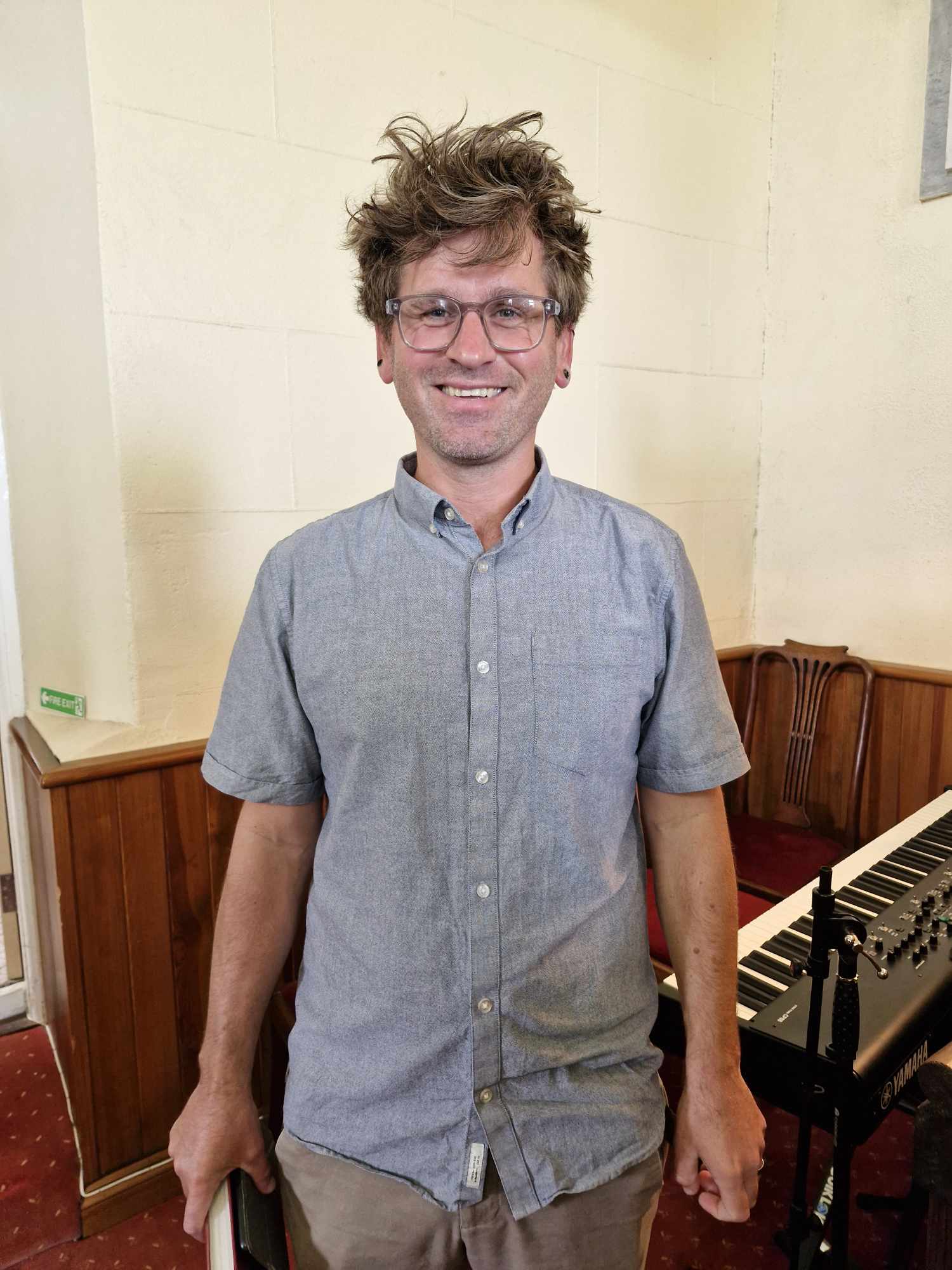
August 25th 2024: Jonny Raine

To watch this service, please click on the link to our YouTube channel: https://youtu.be/yUjwMO4jGIA?si=c7x7JB6JDFNcx2Hq

Isaiah 52:13 – 53
In a town there is a rule that every man must be clean shaven. Everyone who does not shave themselves must be shaved by the barber. There is only one barber in the town who only shaves people who do not shave themselves. This creates a problem for the barber. Who shaves the barber? The barber must be shaved but he cannot shave himself because the barber only shaves people who do not shave themselves. What can he do? The mathematician and philosopher Bertram Russell came up with that paradox.

A paradox is when two things are true but contradict each other, they don’t really go well together. They are against each other, but they are both true, so they have to go together. Sometimes, we find such profound things in the Bible that they fall into this category. The passage that we are looking at has 5 paradoxes – 5 pairs of things that are both true, but also go against each other.

Isaiah is in two halves. Isaiah chapter 40 onwards begins the second half. From chapter 40 onwards a figure is introduced, called the Servant. God’s servant was supposed to be Israel, God’s people in the first half of the Bible. They were supposed to be His servant for the nation, to take God’s blessing to the nations. But they failed in that because of their own sin. So, God is promising through this Servant figure in the second half of Isaiah, that He will send His own Servant who would both bring about the forgiveness for Israel for their own sin, but also bring God’s blessing to the nations. Who is this Servant? Jesus. Only Jesus could do what was needed. Only Jesus could bring about the forgiveness of sin for God’s people, not only to Israel but to all of the nations. Blessings are being included in God’s people through forgiveness. Only Jesus could fit the bill of the Servant of God. How He is going to do that, is what this Servant Song is all about.

In this Servant Song we have 5 contrasting images of this Servant, of Jesus.

  1. He will be elevated through degrading.

To elevate is to make much of. Think of the influencers in our society. When was the last time someone famous was ugly? The ugly ones are rare. Normally, people we lift up are attractive people. The path of elevation for the Servant is through degrading. In chapter 52:13-15 we see He Will be elevated but many will be appalled. He will be injured so much that His appearance will be disfigured. He will be exalted. He will be worshipped. But in order to get there He must go through a path of being beaten so badly that He will be barely recognisable. The paradox is that He will be elevated but it is through being degraded.

  • Power through rejection.

The second image takes this further. There will be power through rejection. We read in chapter 53 this question, “Who has believed our message?” The message is what we have just been told. Who is going to believe that paradox? That just doesn’t happen. This is followed by a parallel question, “To whom is the arm of the Lord being revealed?” In other words, how is God’s strength going to be shown? The arm of the Lord is His strength. Often, our power is in our arms. How is God’s strength going to be revealed through His Servant, because this doesn’t look like power?

If we think about those in our society who are the most powerful – the super wealthy, the tech world and industry, the business leaders in our world – they don’t get to these positions of power through rejection. Normally, they get to positions of power through being the most powerful person. They will have faced rejection at some point in the process, but the actual getting to the position of power requires being the popular person. Politicians have to have the support of the party and the support of the country. They have to be popular with the people in order to lead.

But the means of God’s power being exercised is through the One who will be despised and rejected (v.3). He will experience suffering. That’s how God’s power works. It is not on the surface level of just popularity. It is on a deeper level. There is nothing superficial about God’s power. It is not just about popularity or appearance.

This should help us share the good news about Jesus. It should give us confidence. We don’t have to have the nicest church building, the greatest marketing campaign. God’s power came through rejection – rejection of God’s Son.

  • Serving through substitution.

The Servant Song is like the holy part of Isaiah. Verse 4-6 is the holiest part. How will God save His people? One is going to die in place of another. He took our pain. He took our suffering (v.4). The suffering that Jesus endured was our suffering.

Why did He have to suffer? “He was pierced for our transgressions, he was crushed for our iniquities; the punishment that brough us peace was on him, and by his wounds we are healed.” (v.5). He had no sin, no iniquities, no transgressions. Our sin, our iniquities, our transgressions caused Jesus to suffer. It should have been our suffering. Yet Jesus took our sin upon Himself and suffered in our place.

For sin there is a punishment that is deserved. Only when that punishment is spent can peace with God finally be established. That peace is not brought about by us being punished for our own sin because we could not be punished enough. Jesus was punished on our behalf. Verse 6 explains this further. We have got lost, gone our own way. As we have wandered rebelliously away, that sin was laid on Jesus, the suffering servant. Jesus is our substitute. He stands in place of us and takes the punishment for us. He suffers for us. He pays for our sins because we cannot pay for them ourselves.

We have a choice. We can endure eternal punishment for sin we cannot pay for ourselves, or we can choose to have Jesus pay for our sin on our behalf, our substitute. If you have never made that choice, please, today accept Jesus has died for you so your sin can be forgiven. We can only be saved when we know Jesus died in our place.

  • Atonement through submission

For most people, if you knew you were going to suffer a violent and humiliating death, you would fight for an escape. Death is not good. Ever. But Jesus, as He faced death, did so knowing how painful it would be. But still He went willingly, submitting Himself to the cross.

Verse 7 foretells of Him,
“He was oppressed and afflicted,
 yet he did not open his mouth;
he was led like a lamb to the slaughter,
and as a sheep before its shearers is silent,
so he did not open his mouth.”

(Isaiah 53:7).

Being given over to death was like a lamb being given over to slaughter. We see the theme of sacrifice – the sacrifices that were made in the temple. We see the theme of substitution. For the Israelites in the first half of the Bible they needed a lamb to die for sacrifice in their place. Atonement is when sin is taken away and people are made right with God. Jesus made atonement for us. He was killed and buried, even though He was innocent. He did that willingly. Why? For the transgressions of His people. (8b).

  • Life through death.

According to the plan of the Father, in order to save His people, someone needed to die – one who would then rise again from death. At His ascension, He was lifted up from death to life and glory – all because He was willing to bring about forgiveness. He shares His life with all who will follow Him.

If Jesus has done all of that, how to be respond? We ensure the benefits of what Jesus has secured are for us. Have you truly accepted Jesus has died for you? Have you truly accepted that He bore your sin upon the cross and that you could be forgiven? If you have grown cold in your faith and have doubts, come back to the cross, to see what Jesus did on your behalf. Will you accept Jesus today and make this message your own? Will you come to Him and say, ‘Sorry God, I have done so much wrong. Will you please forgive me for my sins?’

The second response is to have such great joy and delight in your life in what has been done for you, that we let this dwell within our hearts. Are you filled with joy? You should be! Will it overwhelm us? It should do. A willing servant was able to go to the cross and die in our place for our forgiveness. That should fill us with a sense of joy and delight.

May 16th 2021: Jeremy Bailey

Isaiah 53

Isaiah 53 is a portrait of the Lord Jesus Christ, written by Isaiah 700 years before the very first Good Friday. In Acts we read of an African official who had been in Jerusalem and was on his way home in his chariot back to Africa. He was reading out loud this chapter. The Holy Spirit had already put it into the mind and heart of Philip, the evangelist, to run down to the dessert road in Gaza. We have heard a lot about Gaza this past week, sadly none of it good. However, this was a wonderful occasion. Philip arrived next to that chariot as the Ethiopian official was reading these words from Isaiah. He asked the question, ‘Who is he speaking about, himself or someone else?’ Philip was invited up into the chariot and started with that chapter to tell him the good news of Jesus. We know that this chapter is all about the Lord Jesus. In fact, we can start anywhere in this chapter, any verse, and we will see Jesus there.

We need the Holy Spirit’s help to be able to see Jesus. There are some people who read the whole Bible and don’t see Jesus anywhere. But there are others who read any part of the word of God and they see Jesus there. This chapter, perhaps above all other chapters in the Old Testament, speaks to us of the Lord Jesus Christ. Today, the thing that will do us the most good is to fix our eyes on the Lord Jesus.

In every verse in this chapter, we see the sufferings of the Lord Jesus Christ. We see His physical suffering here. He was a man of sorrows. He was pierced (verse 5) with a crown of thorns, we remember the spear that pierced His side after He had died. He was crushed and bruised. We think of Him being beaten with rods, bruised by the weight of the cross that He was made to carry. We see the physical sufferings, but we know from our own experiences, that physical sufferings are not the only type of suffering that we endure in this world. There’s also injustice. We see here the suffering of injustice (verse 7). He was oppressed and afflicted. There was this pressure upon Him even though He deserved none of it (verse 8). He was arrested, led like a lamb to the slaughter.

We see not only injustice but the agonies of rejection. He was rejected from the very beginning of his life, even as a very young child, “For he grew up before him like a young plant, and like a root out of dry ground, he had no form or majesty that we should look at him, and no beauty that we should desire him.” (Isaiah 53:2). It was spiritually dry ground when Jesus came into the world. There had been 400 years when no word had been heard from God at all. The last word of the Old Testament was 400 years prior to the birth of the Lord Jesus. There was very little to see what God was doing. Then, in that dry land a root appeared.

When Jesus was born, He did not have physical attractiveness that we should desire Him. He wasn’t a physically handsome man. He was despised and rejected by His family and by others when He began His ministry. On that first Good Friday He was left all alone, they all fled. The rejection was complete by those who should have loved Him. He was despised and rejected. On the cross people hurled insults. The people really despised Him. When we read all of that we ask, ‘Why did the Lord Jesus have to suffer so much? Why did a loving God, His Father, allow this His only Son to go through that? The answer is, “Yet it was the will of the Lord to crush him; he has put him to grief; when his soul makes an offering for guilt, he shall see his offspring; he shall prolong his days, (Isaiah 53:10).

Jesus suffered so much because the Father decided He should. It was the will of the Father that it should happen. The Father caused Him to suffer. We need light and understanding from heaven to understand this.

The suffering of the Lord Jesus was the will of God. In some of the earlier versions of the Bible, the NKJV and the KJV, we read, “Yet it pleased the Lord to bruise Him; He has put Him to grief.” (Isaiah 53:10). What a thing to say! Surely the Father won’t be pleased to see His Son suffer? Yet, the same word is used in Isaiah 42:21, “The Lord was pleased, for his righteousness’ sake, to magnify his law and make it glorious.” The Lord was pleased the word of God was going out. It is the same word. So, it pleased the Father. How could it please the Father to see His Son suffer? The Father caused Him to suffer. The cross was a deadly wound inflicted on Christ. What Father would be pleased to see His only son crushed?

Throughout His life on Earth the Father constantly assured His Son He loved Him. We hear His voice at Jesus’ Baptism This is my beloved Son, with whom I am well pleased,” (Matthew 3:17). Then again, when Jesus ascended, we hear the same thing, “This is my beloved Son, with whom I am well pleased; listen to him.” (Matthew 17:5). Yes, the Father loved the Son deeply. There was never a time when the Father did not love the Son.

So how could a loving Father do this? Notice, it doesn’t say Father’ here, it says ‘Lord, “Yet it was the will of the Lord to crush him; he has put him to grief,” (Isaiah 53:10). It reminds us we have a triune God: Father, Son and Holy Spirit. Way before the world was ever created, there was this counsel between the Father and the Son and the Spirit. They determined how sinful, fallen human beings, as they knew they would be, would be saved. The Father would send the Son into the world to be the Saviour of the world. The Son would willingly come, the Son would willingly give His life for the sins of the world. The Holy Spirit would come and make that work of the cross real in people’s hearts. The Son was in agreement, and the Father delighted to send His Son. It was the will of the Son as well. It was the will of the Holy Spirit. It pleased them.

We read the remarkable words of the Lord Jesus in John 10:17, “For this reason the Father loves me, because I lay down my life that I may take it up again.” The Father deeply loves the Son because He is willing to lay down His life. It was the will of the Lord to crush Him. Not because He had some awful delight in inflicting pain upon His Son but because this was part of the great purpose of God and the only way you and I could ever be saved from our sin and forgiven. If there was another way, do you think the Father would have allowed it? This is the whole point of Gethsemane isn’t it? When Jesus said, ‘If it is possible, let this cup pass by.’ In other words, ‘If there is another way, then let’s find that way.’ Do you think that a loving father would have done that if there had been another way? But the fact is that the Father loved the world of sinners lost and ruined by the Fall. And so, Jesus was made a guilt offering.

In the Old Testament there was a guilt offering – a bull, ram or sheep – and hands would be laid symbolically on the head of that animal to transfer the sins onto that animal, transferring the guilt of our sins onto that animal. The animal was then taken and killed and sacrificed to God on the alter. The animal died in the place of the sinner.

And that’s the meaning of verse 6, All we like sheep have gone astray; we have turned — every one — to his own way; and the Lord has laid on him the iniquity of us all (Isaiah 53:6).

Human life and animal life are so different. The Jewish people would have known that really, there was no way that the animal could take away their sins. How wonderful Isaiah was given this vision. Here was the Lamb that could take away the sins of the world. Only a sinless person could take away the sins of the world. There was no other way. The Father was doing this, the Son was willingly going to the cross because this was the way that your sins and my sins can be borne away.

If left undealt with, your sins and my sins would carry us down to an eternal hell and we will be punished forever – and justly so. The Father knew that that would be the consequence if the Son did not go the to the cross. And that is why it delighted the Father to see His Son bearing the sins of others so that they wouldn’t enter that eternal hell but that they would be welcomed into an eternal heaven. Only this one sacrifice for sin would prove the Lord to be just and the one who could justify sinners like us. There was no other good enough to pay the price of sin, He only could unlock the gates of heaven and let us in.

How can a sinner like me, with all my deceitfulness and rebellion in my heart, go into the presence of the holy, pure God? How can I stand before a just God when I have broken His laws? You cannot provide a ransom for your own sins. Your guilt must be taken by someone else, or you will have to bear it yourself. No act that you could ever perform in your life can ever take away the guilt that you have.

Only the pure Son of God Himself could bear your sin and mine. That is why it was the Lord’s will to crush Him. That is why the Father put Him to grief. There was no other way. A loving Father loved His Son so much that He said, ‘Son, you are willing to go there for the sake of these sinners, millions of them, throughout the world and throughout the whole history of the world. If you are prepared to go and give your life and bear all this sufferings for their sins, and take their guilt, then it will delight Me to see you do it.’

All the fruits of salvation came to us through the suffering of Jesus. Some deaths are fruitful in a measure. It always breaks my heart to see families who have lost someone in tragic circumstances, like when a child dies. Families want to make that life significant in some way, they want to make sure it wasn’t in vain. Parents want to remember them and may set up a charity or research in order that some good might come out of the tragedy. There are occasions when there is fruit from tragedy (example of Annie, the life-saving dummy. Because of her death so many have been saved.)

Yet, there is so much more here, “Yet it pleased the Lord to bruise Him; He has put Him to grief.” (Isaiah 53:10). There would be children from Jesus, spiritual children, from the whole of the world, the whole of history – children born again because the death of the Lord Jesus Christ. Death could not hold the Lord Jesus. When He had provided satisfaction for sin, He lives forever. The will of the Lord will prosper in His hands. Salvation would be gained.

You and I can never achieve our salvation, but God the Father provided a way. The challenge to you and me today is, ‘Are you resting in Christ and His sufferings or are you resting in something else?’ Come to Christ and rest only in Him. Rest in Christ alone. That is the will of God. It was the Lord’s will to crush Him.

The second great challenge is ‘Do we want to see the Church prosper in our days?’ Of course we do. Yet the temptation is to try all sorts of gimmicks. The preaching of the death and suffering of the Jesus is the only way the church will prosper. Only the preaching of the crucified and risen Lord will ensure fruit. All of us want to see more fruit. None of us are happy with the size of our churches, none of us are happy that we see few conversions. Cling to the cross. Preach Christ alone for salvation. Rest in Him alone.

Through His death and resurrection, the will of God will prosper. Rejoice in Him because He has done it all. What is there for us to do? Simply repent and believe and put our trust only in a crucified Saviour. And one day, this risen, ascended Jesus will come again in glory. And if we are still here on Earth we will see Him. Even those who pierced Him will see Him. If we have already gone to glory, we shall be enjoying His presence forever more because He bore our sins on the cross of Calvary.