
Genesis 6: Dark days with a bright future
To watch this service please click on the link to our YouTube channel:
https://youtu.be/D16P6biBpWE?si=8uUbVx1mOYfvFJ1l

The book of Genesis is essentially a large family tree with breaks in between revealing the history of certain individuals. Genesis 5 begins with a genealogy that stems from Seth, a son of Adam, and then reaches down to Noah, the son of Lamech, so that in Genesis 6 we have the beginning of Noah’s account. We are going to look at Genesis 6 specifically and will concentrate on two features: the darkness of the days, and the bright future shown within these dark days.
But before we begin let me give you an illustration of what I think is going on here. Recently we went to the aquarium in Bristol. And among the many exhibits there were on display, I was particularly struck by the Mexican blind cave fish. It is only small and pretty drab in appearance being mainly translucent. It has no eyes, only eye sockets. It lives in the cave in darkness and has no concept of light or of colour. If you were able to talk to this Mexican blind cave fish you could not really tell them about what you know because it is all outside of their experience. To such a creature, colour and light are meaningless. The Mexican blind cave fish lives within its own dark world and speaking to it about the world outside the cave would be meaningless to it. Unless they were given eyes to see!
Now this picture is something like what we observe within society in the days of Noah. The people of that age thought they had everything they wanted. They could go after forbidden fruit with freedom. They believed themselves to be enlightened. They were thoroughly independent and indulgent. But in truth as the Lord recounts here in Genesis 6 they were in darkness, in chaos, and without God in the world. They despised God, for they ignored Him and what He had to say. He did not fit into their view of life. Now such was true also of the days of Moses, although not in exactly the same details. The mention of giants and men of renown occurs not just here but in the early history of Israel under Moses and beyond. Obviously, these are not the same groups because the flood destroyed the old world. But it is clear that the outcome or fruit of such sinful and God-hating ways is demonstrated by the giant offspring of the pairing between the “sons of God” and the “daughters of men” (Genesis 6:2,4). Now at the time of Jesus the Lord stated clearly that when He would be about to return, the world would be in very much the same way as found in these days of Noah (Matthew 24:37,38). Nothing has changed. Mankind born in sin if left without restraint will always descend into degradation and wickedness. Modern man here in out country thinks of himself as so enlightened and free, and yet is bent on the pursuit of godless wickedness.
Clearly our passage teaches that judgment is about to come and will not delay, for the flood is coming as promised. We live after this time, after the time when the Lord promised never to flood this world again, but judgement by fire is coming as promised (2Peter 3:10f). We are in the same situation as Noah. We live in a sin-sick world bent on running away from God, and judgment is about to come.
Now the great purpose of this passage in Genesis 6 is to call people to life. That is the whole point of God’s revelation to Noah, the provision of an ark within which salvation may be secured. In the book of Genesis we see at least four origins. We see the origin of the world, the origin of man, the origin of sin, and the origin of God’s chosen people and their salvation. In short the Bible is like the story of a messed-up family. It is something like the Jeremy Kyle show where all the dirty laundry of life is aired for all to see. What is the human family like? We are all Adam’s descendants and so born in sin. And yet into this dysfunctional family is born the Lord Jesus Christ, the Saviour of the world. He was born without sin, of course, but he was truly flesh of our flesh and bone of our bone. How wonderful that in the midst of sin and rebellion we get the promise of One who will crush the serpent’s head (Genesis 3:15)! And so within Genesis we also see one family set aside through whom would come the promised Seed (Genesis 12:7). And out of this promise all the families of the earth would be blessed (Genesis 12:3). Scripture always guides our focus to the Lord Jesus Christ. Whereas man was given dominion over the earth but sinned and so earned death, which we see clearly in Genesis 5 where we read repeatedly “and he died,” the Lord Jesus – the promised Seed – has come to bring life by His death. As far as man is concerned his contribution is sin out of which flows death. After Adam and Eve sinned we not only see the promise of Genesis 3:15, but the provision by the Lord of garments (slain animals whose blood was shed) to make covering for sin. And then we read of Cain’s shedding the blood of his brother and the outcome of Cain’s descendants, the pride and wickedness of Lamech of Cain. The blood of Abel cried out from the ground against Cain but the blood of Christ speaks of “better things” (Hebrews 12:24). The promise of hope and of light can be seen in such things as the early part of Genesis 5 where there is a recollection of creation placed there in the hope of new beginning. Then also we read of Enoch walking with God which recalls the days before Genesis 3 and the fall suggestive of the possibility of being right with the Lord. So we have here in Genesis 6 an account of the reality of sin and its dreadful effects, but also of the promise of hope and life once more. Whilst there will always be darkness, there is too the promise of light shining in that darkness, a promise of a bright future.
[1] Dark days.
Genesis 6:5 is stark. The Lord saw that man on earth was extremely wicked. The sentences are laboured. The wickedness of mankind was “great,” all the purposes and inner thoughts of mankind’s heart was exclusively wicked (“only evil” i.e. no good), and it was so “continually.” Now this is the first time that we read of God looking at creation since Genesis 1. In Genesis 1 we read that He “saw” and that it was “good,” and “very good.” But now here in Genesis 6:5 the Lord “saw” something very different indeed. He saw that it was deeply, desperately, depressingly evil and wicked. How so? How had this come to be?
Well, the answer to this question is that man had rejected God and had therefore gone his own way, but the outcome of such an action is always on a downward trend or spiral. I do not want us to be distracted about whom the “sons of God” and the “daughters of men” may be here. This discussion will be for another time. Whichever view you take the problem really is a spiritual one. The key point to note here is that these ‘men’ (or fallen angels or demon possessed men), “saw” the women they desired, they saw that such were desirous to them, and so they “took” of any they wanted. Such language at once reminds us of Eve’s deception by the serpent:
So when the woman saw that the tree was good for food, that it was pleasant to the eyes, and a tree desirable to make one wise, she took of its fruit and ate. (Genesis 3:6a).
Boundaries have been crossed here. Eve should not have listened to the serpent. (Adam was culpable too as he should have told his wife to come away). In Genesis 6 boundaries have been crossed. Whatever our view of these two depictions of men and women may be, there is a choice being made here which is opposite to the good and the consequences are dire. Just as Eve listened to the serpent, there is a spiritual wickedness operating in Genesis 6. These people of Noah’s day were trying to engage in the spiritual realm in wickedness. How do we know this? Well listen to the Lord’s first word to the world of that time: “My Spirit shall not strive with man forever” (Genesis 6:3). The Lord was remonstrating with mankind not to do what they were doing.
But how did the Lord view all of this intense wickedness? In Genesis 6:6 we read that “the Lord was sorry” for having made man on earth and that “He was grieved in His heart.” The Lord who made all good was now grieving on account of man’s terrible state and condition. Do we not see the Lord Jesus expressing similar depths of emotion over sin and wickedness (Matthew 23:37)? Now it is also evident that the Lord was going to bring judgment to bear upon this wicked world. But let us remember that He does not do it as a dispassionate judge who has no personal interest in those whom He rightly judges. IS this not a warning to us? Yes we must preach that judgment is coming, but do we do so out of a deep sense of compassion for those to whom we witness? We must proclaim this grief of God over sin and evil. He is grieved so much that He sent His One and Only Son to bear the judgment! Notice too how grieved He feels about the sin and evil. The only solution is to wash it all away (Genesis 6:17). Mankind had corrupted himself to the point that the only solution was to destroy him completely. The Lord saw the depth of mankind’s corruption and evil and said ‘this cannot be.’ And so He destroyed the corruption by the waters of the flood.
But notice too the great patience of God. He does not react to things like we do but is long suffering and patient towards mankind (2Peter 3:9). Every sin committed deserved bucket loads of the water of judgment but these have come after a long time of patient waiting for man to heed Him and turn from His wickedness.
[2] The hope and promise of a bright future in dark days.
God shines light into the darkest places. Is this not what we see when He created the world in the first place? The darkness of initial creation (Genesis 1:2) was not evil nor chaos, but simply the starting point that God had made from which He constructed our world. He made all in the beginning but such were the raw materials (unformed and not yet filled), and then His first act was to create light. This is our God. He brings light into the darkness. And there are always two responses to that. To many the light exposes their darkness and because they love their darkness they recoil. To others the light illuminates their sight to see the truth about themselves and what the Lord is bringing and they are drawn toward it in faith. Scripture is full of this idea of two peoples and two ways. We see it in the position of the line of Cain to Lamech placed beside the line of Seth to Noah. But there are many other illustrations of this division in humanity into the righteous (who are so only by faith) and the wicked.
Look at how the Holy Spirit puts it in our text. We read about the Lord’s intention to destroy all on account of wickedness in Genesis 6:7, and this was because He was “sorry” that He had made man. And then in Genesis 6:8 we read those wonderful words “but Noah found grace in the eyes of the Lord.” Hebrews 11:7 tells us that it was “by faith” that Noah was enabled to do all that God commanded him. So Noah by faith in God and all that He had revealed received the grace of God and so he “found grace.” Grace is a gift. It is not something we earn. God is gracious. Praise His name! And Noah was enabled by faith to find this grace.
Noah’s father, Lamech thought it might be through his son that the promised Seed would come. And so he called his son “Noah” because this name means ‘rest,’ for he hoped that “this one will comfort us concerning our work and the toil of our hands, because of the ground which the Lord has cursed” (Genesis 5:29). It is through the grace of God that Noah listened to what the Lord had said to the whole world (Genesis 6:3,7) and was thence “divinely warned” to seek God for more and was thence “moved with godly fear” (Hebrews 11:7).
In Genesis 6:9 we read more about Noah. He is described as a “just man, perfect in his generations,” and he is referred to as one who “walked with God.” Noah, and Noah alone is described in such a way. Obviously as a man born of Adam Noah is so by faith as we have said. But the way in which the Holy Spirit has centred our thoughts upon this one man (who was just and blameless) serves to point us towards the truly Righteous One, the Lord Jesus Christ. Noah walked with God just as Enoch had done, but Christ was One with the Father and did all that the Father willed. And so at the end of Genesis 6 we discover that “Noah did; according to all that God commanded him, so he did” (Genesis 6:22). This is set in such a way to remind us that Christ did all that the Father asked of Him so that He could cry out on the cross “it is finished” (John 17:4; 19:30). Now Noah appears in the Genesis account as a type of person that we have not been presented with before. And so in some ways he is presented to us as a new Adam, and in such a way he serves as a pointer to the true second and last Adam Jesus Christ (1Corinthians 15:45,47).
In Genesis 6:18 we have the first mention of the word “covenant” in Scripture (although this is not the first mention of the idea of covenant which we see in Genesis 2:17). But notice also that this is God’s covenant (“My covenant”). At this point Noah is told that He will go into the ark, for this is the provision of God’s covenant. But, although his family also enter the ark and so benefit too, only Noah is described as a “just man.” We are not told about what his family believed at all. But in the account of Genesis 6 it is pointedly clear that Noah stands alone as a “just man.” In this we are pointed again to the Lord Jesus Christ. He alone is righteous and by His one righteous act many are saved. Noah’s family are saved as-it-were on Noah’s coat-tails. We too hang onto Christ and are included in His sacrificial death. And so our entrance into the ark Christ by faith is only on account of the righteousness work of the Lord Jesus. Notice too that this covenant of God’s was already in existence because here we read that He will “establish it” and not ‘make it’ as in other cases (Exodus 24:8; 34:27; Deuteronomy 4:32; 5:2). This is the covenant of grace. There was nothing for Noah and his family to do except hear the Lord call them to come in. This covenant was made in eternity. The Father, the Son, and the Holy Spirit in eternity determined to save a people. The Father initiated this covenant, the Son carried it out, and the Spirit applies it to those who would believe.
The answer to the world’s corruption is complete destruction by the waters of the flood (genesis 6:17). But the answer to the coming destruction (deserved as it was) is the ark (Genesis 6:14)! The ark was a box which was much larger in length than breadth or height. Noah was given precise instructions as to its construction. They were to go into the ark, Noah, his family, and all creatures whom the Lord would call, and inside there would be safety. Outside there will be nothing but destruction, but inside all is safe. There would be trials and difficulties inside the ark, of course. They would hear the rain and feel the effects as they were jostled about, and they were inside with many animals and one another. But they were safe from the outer destruction which was borne by the ark. Note too that all of life was crammed into this giant box. The Lord said that one of the purposes of His coming was to bring life in all its abundance, and in this ark we see the presence of the abundance of life that He has made (John 10:10).
Exhortation.
I leave you with a few words of exhortation. Judgment is surely coming. Just as in Noah’s day the wickedness of the earth could only be blotted out by the judgment of God, so too in our day when wickedness abounds and is on the increase, such is ripe for judgment by fire. If we do not see that judgment is coming we are burying our heads in the sand. I am not talking about climate change and such disasters as the world may be overly concerned about. I am talking of the heavens and the earth (the universe) being destroyed and remade into a new heavens and a new earth. This is far more serious because it involves personal judgement for sin. All will be held to account, life to those who trust in Jesus and all he has done, and eternal death to those who reject Him and all that he has done. So get into the ark, which is Christ. It might not appear that judgement is close at hand, but then the rain did not fall until Noah and his family were safely shut in the ark. The Lord has made this incredible way of getting out of the coming judgment. The Lord calls all who are weary and who are labouring under sin to come to Him to receive rest (Matthew 11:28-30). So get into the ark! Come to Christ who alone brings rest.
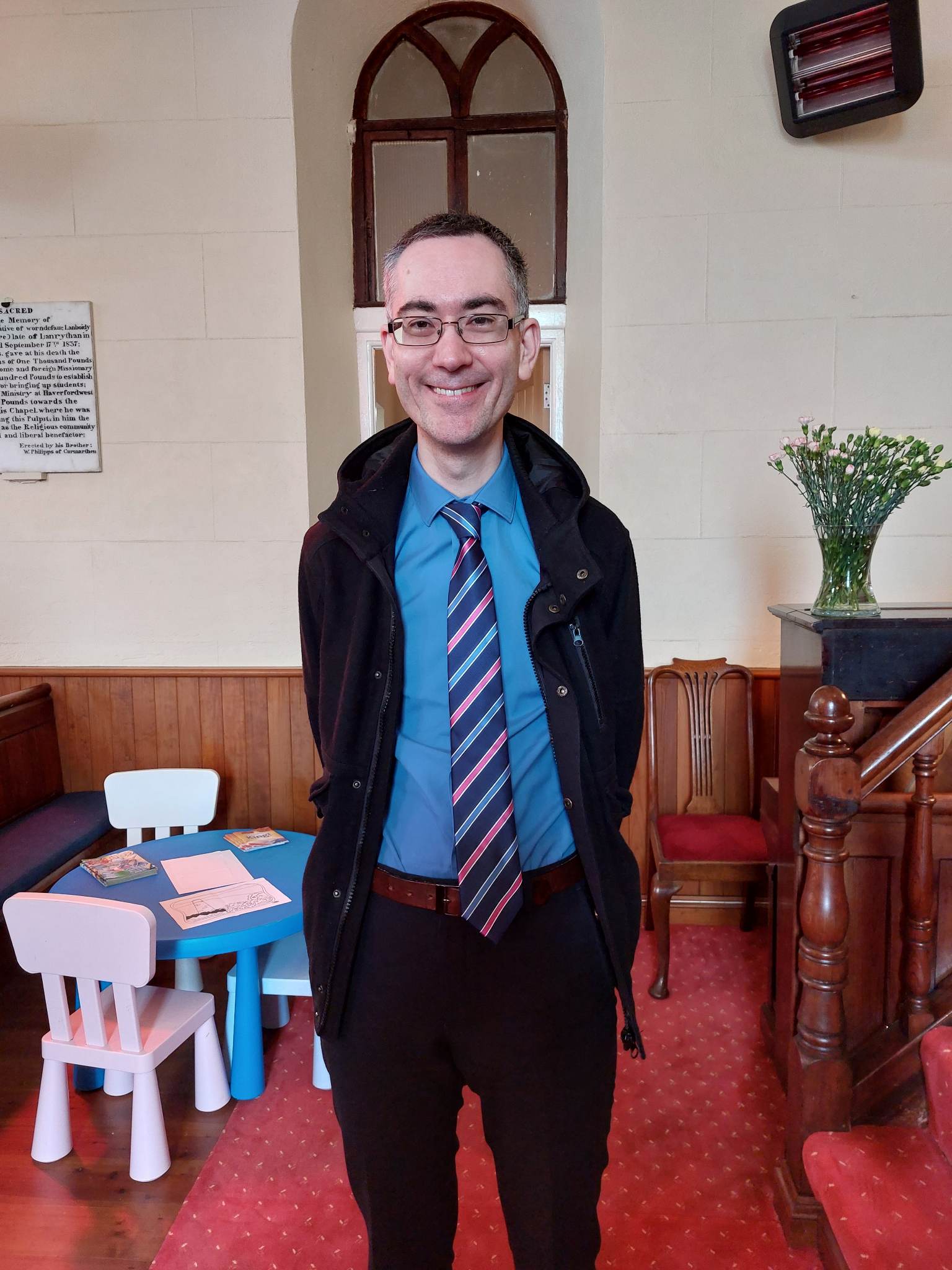
 Penuel Baptist Chapel, Roch