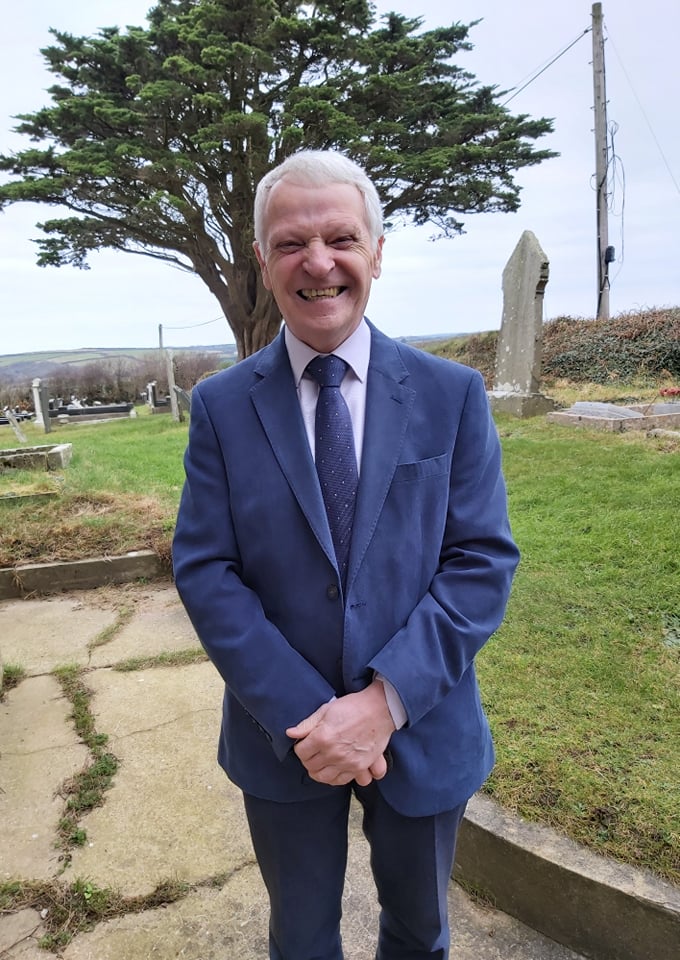
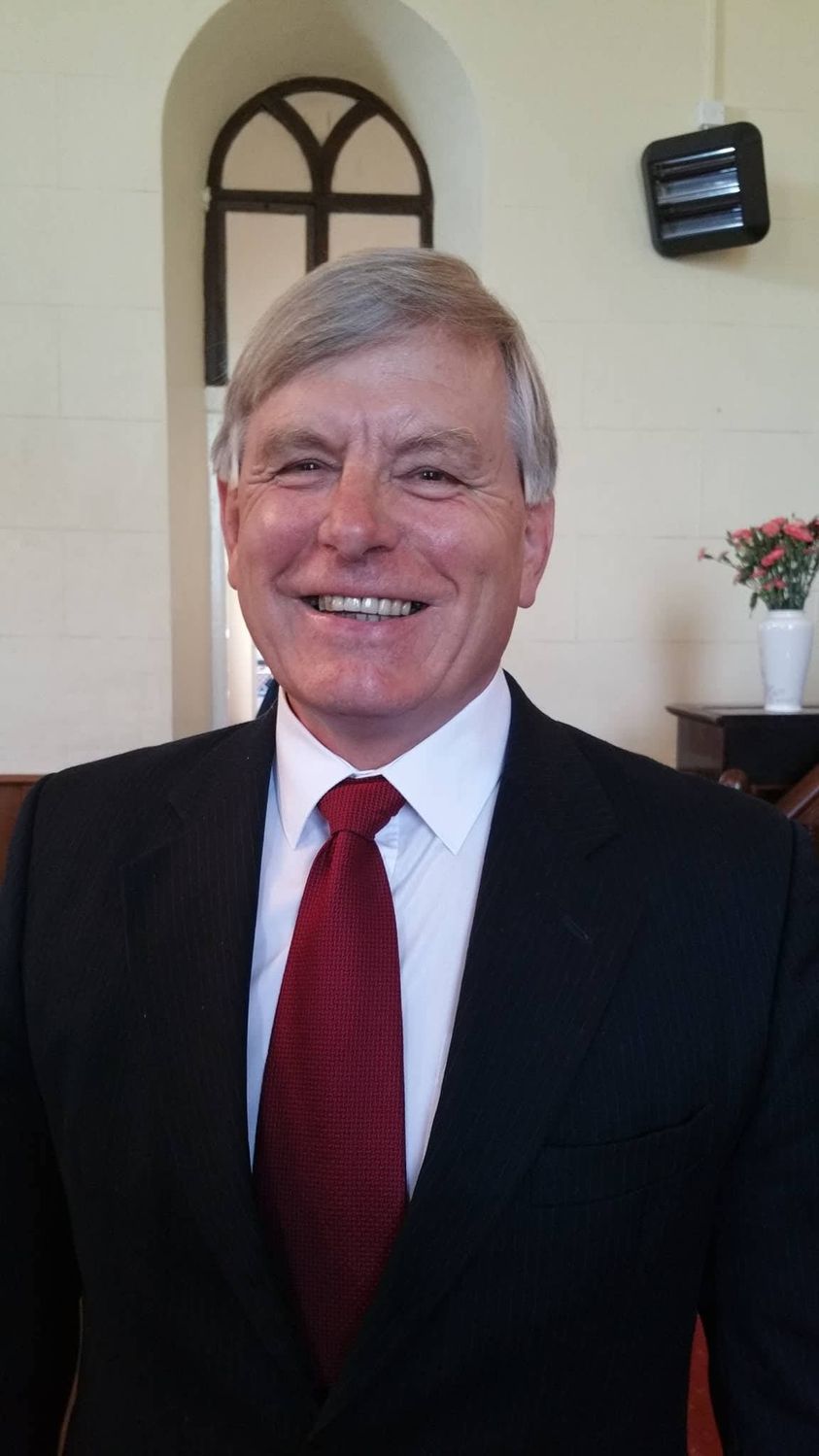
October 12th 2025: Ian Jones

Reading: Joshua 2.
Text: Hebrews 11:31.

to watch this service, click on the link to our YouTube channel: https://youtu.be/o0So2XFgsSM?si=fHUxUerW4XPl45kB

Introduction.

            The story of Rahab’s salvation is set within the context of the Lord’s conquest of Canaan led by Joshua. In Joshua chapter 2 we find two spies are sent out into Jericho. We should remember that many years before this, twelve spies were sent out to spy Canaan by Moses. Why did Joshua need to spend out more spies? He probably had all the intelligence he needed from the more comprehensive exploration done by the twelve spies under Moses. It seems to me that the main point of Joshua chapter two is to show us the salvation of Rahab, the Jerichoite prostitute. We are reminded of Jesus’ visit to see the woman of Samaria at Jacob’s well in John chapter four. He was determined to go north through that region in order to meet with her, rather than go the normal way which would have avoided travelling through Samaritan lands. It is very likely therefore, that the Holy Spirit wants us to know that the reason for the two spies trip to Jericho was (in the main) to effect the salvation of Rahab.

            God had been at work in Rahab’s life. Consider what she confesses, how she helped the spies, and her desire for her family to be saved. Now we shall consider as our text the commentary on Joshua chapter two which we find in Hebrews 11:31.

By faith the harlot Rahab did not perish with those who did not believe, when she had received the spies with peace.

The writer of the letter to the Hebrews wants his readers, (Jewish Christians), to see Rahab’s faith in the midst of great difficulties. See here a woman whose nation and peoples faced imminent death and destruction, but Rahab’s faith saved her! In many ways we too are in the same boat. Jericho was about to be destroyed, but the whole world awaits the coming judgment of God when Christ returns. And here we see Rahab trusting in God. Her faith is very visible. It is not merely an intellectual agreement but something living and active. Now Jericho is the first city that would fall in Canaan, and given what we read of in the opening chapter we might have expected that such would be the focus of chapter two. But what we see instead is the mercy of God! There is no doubt that Jericho deserved God’s judgment, but before we see that we are presented with this historical tale which speaks of God’s grace and mercy! The Lord says in Ezekiel that He has “no pleasure in the death of the wicked, but that the wicked turn from his way and live” (Ezekiel 33:11). And then what is even more remarkable is the object of the Lord’s mercy. Whom would we think of rescuing from such a place about to be destroyed? One with great intellect? Or one who shows great promise for the future? Or maybe one who is greatly wealthy or able to make money? Or perhaps someone who might seem to deserve rescuing? A noble or one of royal birth? What we find though is that it is a prostitute (“harlot”) who is rescued. Oh the mercy of God! None is too much of a sinner that cannot be rescued! But are we willing? Are we like Rahab who had heard about Israel and God and was prepared to go against her own folk and trust in the God who judges sin?

            As a youngster I remember that children’s chorus: ‘wide, wide as the ocean.’

Wide, wide as the ocean, high as the heaven above
Deep, deep as the deepest sea is my Saviour’s love
I, though so unworthy, still am a child of His care
For His Word teaches me that His love reaches me everywhere!

The Lord’s love reaches into everywhere, even into the city doomed to destruction! Why did the Lord save me? Of all the people He could have saved – but I need to remember that there is no depth and no height that He could not reach to. Amazing grace that saved a wretch like me! Salvation is of grace and by no means something we can drum up by self effort or earn. Rahab’s saving faith separated her from the rest who were doomed to destruction.

            Let us look at four features of Rahab’s faith.

[1] By faith.

            Everyone in Jericho knew about Israel’s crossing of the Red Sea, and of the defeat of the two Amorite kings across the other side of the Jordan. Look at what she declares speaking on behalf of all the people of Jericho:

For we have heard how the Lord dried up the water of the Red Sea for you when you came out of Egypt, and what you did to the two kings of the Amorites who were on the other side of the Jordan, Sihon and Og, whom you utterly destroyed. (Joshua 2:10).

She also testified to the great terror and fear that the people felt.

I know that the Lord has given you the land, that the terror of you has fallen on us, and that all the inhabitants of the land are faint hearted because of you. … And as soon as we heard these things, our hearts melted; neither did there remain any more courage in anyone because of you. (Joshua 2:9,11).

Now Rahab believed and had faith in the God of Israel, whereas all the rest of Jericho did not. Perhaps the others in Jericho thought that the Israelites were never likely to be able to cross the Jordan, or perhaps they thought that the walls of Jericho were impregnable, or maybe they thought they had an unbeatable army? But Rahab had true faith. How do we know that she had true faith? Look at which she personally declares:

I know that the Lord has given you the land … for the Lord your God, He is God in heaven above and on earth beneath. (Joshua 2:9,11).

Rahab heard the same news that everyone in Jericho had heard, but the difference between her and the rest was that she believed in the God of the Israelites and the rest did not. Rahab asks the spies for some “true token” that will bring salvation to her and to her family (Joshua 2:12). Rahab knew that Jericho was doomed, but she displays faith in God. Consider the thief on the cross who asked the Lord Jesus to remember him when the Lord came into His kingdom. And the Lord replied: “today you will be with Me in Paradise” (Luke 23:43). Now even today, whoever hears the Lord’s word (as Rahab did) will receive everlasting life (John 3:16,36).

[2] Rahab’s faith is self denying faith.

            Rahab dared to risk her whole life. If it had been found out that she had been hiding the spies, there is no doubt that she (and her own family) would have been executed. The Amorites were a wicked people. James points out that Rahab’s faith is observed by the works that she did:

Likewise, was not Rahab the harlot also justified by works when she received the messengers and sent them out another way? (Joshua 2:25).

Maybe we might think that Rahab should have been loyal to the people of Jericho? But these were a wicked people, and Rahab was prepared to give her loyalty to Israel and Israel’s God. She hid the spies, and she sent the king away on a wild goose chase! Her faith is demonstrated by her actions. Moses forsook the pleasures of Egypt because he saw “Him who is invisible” (i.e. The Lord) (Hebrews 11:24-27). Rahab was not moved by fear of the people or by the king of Jericho. She demonstrated her faith in her actions in keeping the spies safe so that they would return.

[3] Rahab’s faith is a sympathising faith.

            We also see how Rahab was not just concerned for herself, for she asks for mercy for her whole family too:

12 Now therefore, I beg you, swear to me by the Lord, since I have shown you kindness, that you also will show kindness to my father’s house, and give me a true token, 13 and spare my father, my mother, my brothers, my sisters, and all that they have, and deliver our lives from death. (Joshua 2:12,13).

Do we not also want our families to share in the salvation we know? When the Lord opened our eyes and showed us the truth, was it not so wonderful that we wanted our nearest and dearest to come to know it all too? Where true faith is seen, that is, where a person has been brought to true faith, there is also a desire within such a saved person that others might know the same joy of salvation. It is impossible to see the true value of salvation without also wanting others to share in what you have come to know. The gospel accounts show that the Lord Jesus had amazing compassion. Are we not like Him?

            There was no guarantee that any would be safe outside Rahab’s house where the red cord was placed. If they remained within Rahab’s house then they would be safe and their blood would be the responsibility of the Israelites. But if they stepped outside their blood was on their own heads. This meant that each member of the family must come into Rahab’s house. Go out and you face judgment, come in and your life is secure. It was the responsibility of each member of Rahab’s family to come into the house where the scarlet cord was found. That scarlet cord represents the blood of the Saviour. In the Exodus the Israelites had to daub the blood of  lamb on the lintels and doorposts of their doors to escape the judgment from the angel that was passing over. Are we looking to the shed blood of Christ?

[4] Rahab’s faith is a sanctifying faith.

            Scripture refers to Rahab as a harlot. But she was not going to continue in such a profession. Her faith was that which also led to her sanctification. Rahab was given special privilege among Israel after being rescued (Joshua 6:25). And then wonderfully we discover that Rahab becomes mother to Boaz, who married Ruth the Moabitess, from whom came Obed, then Jesse, and then David. Boaz was a godly man as the record in Ruth shows. Where did he gain such godliness? Surely, he would have learned from his mother Rahab who was saved out of Jericho? Rahab features in the genealogy of the Lord Jesus (Matthew 1:5). Rahab, a Gentile prostitute, by faith in the Lord,f comes to feature as an ancestor of the Lord Jesus! How great is our God!

April 20th 2025: Easter Sunday – Gaius Douglas

1 Corinthians 15: 1-4.

The gospel in a nutshell: “Christ died for our sins” must be the declaration of every believer in the Lord Jesus Christ. Anyone who does not believe this and the facts recorded in our text cannot be called a ‘Christian.’

[1] He died.
At the cross there were four people standing there. These were: Jesus’ mother Mary, Mary’s sister, Mary the wife of Clopas, and Mary Magdalene (John 19:25). As they stood there and watched what was going on, Mary the mother of Jesus might have cast her mind back to what Simeon said in the temple when Jesus was presented at eight days old for circumcision: “a sword will pierce through your own soul” (Luke 2:35). Imagine her feelings at this time. Later on the risen Christ would join two disciples on the road home to Emmaus as recorded in Luke 24. One of these was named “Cleopas” and this was probably the husband of the Mary who is referred to as “the wife of Clopas” in John 19:25.

So we have these two disciples trudging the seven miles home from Jerusalem. They were discussing all that had happened and were trying to ‘work it all out,’ with their reason. At this point the risen Christ (unbeknown to them) came alongside them. In the course of their conversation with the Lord He “expounded to them in all the Scriptures the things concerning Himself” (Luke 24:27). Then after He went to their house for a meal and He revealed Himself in the breaking of bread, we read that “their eyes were opened and they knew Him” (Luke 24:30,31). Jesus then vanished from sight but even though they had travelled the seven miles home, nevertheless we read that “they rose up that very hour and returned to Jerusalem” (Luke 24:33).

It seems clear that being with the risen Christ empowered them to rise up and head straight back to Jerusalem! They had an energy from having their eyes opened and have recognised that Jesus was risen. Christ died for sins. They felt forlorn at His death but now they are excited with strength renewed like the eagles. Paul was led by the Spirit of God to write these words in 1Corinthians 15:1-4. Christ is central to Scripture from Genesis to Revelation. He is the author and finisher of our faith, the altogether lovely one, the alpha and omega, the resurrection and the life. Is He your Saviour? Is He your beloved One?

Christ died for our sins. He willingly sacrificed Himself. He laid down His life for us. No one took the Lord’s life from Him, for He laid it down of His own will (John 10:18). The Lord Jesus came to do the Father’s will. He came not to do His own will but the will of the Father. He willingly went to Calvary and He willingly paid for sins. John 3:16 teaches us that the Father sent the Son so that whosoever believes will never perish.

Christ was buried. He had literally died and He was placed in a tomb as a corpse. All our sins were taken by Him and paid for, and so our sins have been buried too. But death had no power of the Lord Jesus! So on the third day He rose again having fully satisfied all that the Father gave Him to do. In Romans 6:23 we learn that the wages of sin is death and that the free gift of God is eternal life. The Lord Jesus bore our guilt and the penalty of our sins. He paid the debt He did not owe, and He bore my sins on the tree. Now, since He paid in full, sin and death no longer has any grip over Him. So He lives! I am alive eternally because of Him (if I believe truly). The Lord Jesus shared our likeness for the purpose of destroying him who had the power of death (the devil) (Hebrews 2:14). The devil is the enemy of souls. He hates us. He was determined to bring us down to hell. But the Lord Jesus paid the penalty for sins and in the process destroyed the one who had power over death. Death is therefore no more to be feared. The Lord defeated sin, He conquered the devil, and He has overcome the world.

Paul writes a bit later in 1 Corinthians 15 that if Christ is not risen, then faith is of no account and we are still in our sins. But the facts of the matter are clear. Christ did die for sins. He was buried. He did rise. So our faith is true. We believe in Christ for salvation. We believe His death was sufficient to pay for sins. We believe that He was raised from the dead for our justification. These are sure and certain truths. Christ ascended into heaven and is seated at the right hand of the Father, and one day He will return to receive His people into glory.

[2] The vital importance of Scripture.
The Spirit of God stresses here the importance of Scripture. We are told that Christ died for our sins “according to the Scriptures” (1Crinthians 15:3). And we are also told that His burial and resurrection on the third day was “according to the Scriptures” (1Corinthians 15:4). The Scriptures are vital. What Scriptures is Paul speaking of here? It was the Old Testament for much of the New Testament was still to be written. Psalm 22 which records much prophecy of Christ’s work on Calvary was written about a thousand years before His death. In Psalm 16:10 we read a prophecy of Christ’s resurrection. Seven hundred years before the first advent of Christ Isaiah records another detailed prophecy of the Lord’s work on Calvary in Isaiah 53.

We cannot do anything except through Scripture. We must do all “according to the Scriptures.” The word of God is truth. The Scriptures tell us all about Christ. The Scriptures are the very word of God to us. Peter’s first sermon makes use of important Scriptures. Paul quotes the Scriptures in his letters. When Jesus met the two disciples on the road to Emmaus He pointed to the Scriptures. It is not ideology, nor opinion, nor what man has made up. The Scriptures are that which we have “received.” They are not man-made but detail the very words of God.

[3] The importance of the resurrection.
Why is the resurrection so central? Well we have noted already that if Christ is not risen then faith is of no value and we are still in our sins. Without the resurrection we have no good news, no gospel. Christ Jesus is alive! But all other gods, and all other ‘pretenders to truth’ are dead. But what of all those who have died? If Christ is not risen then these have died in vain. If we have a hope only in this life we are of all people to be pitied.

The night before He died, the Lord Jesus told His disciples not to be afraid. He said they were not to be troubled for the Father’s house has many mansions or rooms (John 14:3). He then said that he was going to prepare a place for His disciples and that he would return or come again so that His disciples could be with Him. Because He paid for sins in full, and because He is faithful, the resurrection guarantees the fulfilment of His promises. What about all those who have ‘fallen asleep’? I once knew a pastor who purchased an area in a cemetery for all his congregation so that when the Lord returned they could rise all together!

In 1 Corinthians 15:42 we read that the “body is sown in corruption” and that “it is raised in incorruption.” The Lord said the night before He died: “because I live, you will live also” (John 14:19). In 1Thessalonians 4:13-18 we learn that the dead in Christ will rise first when the Lord returns and that living believers will be caught up in the air to be with the Lord forever. The resurrection proves who Christ is and that he has power to save. The resurrection is a guarantee that the bodies of believers will be raised anew. We will have new resurrected bodies when Christ returns. Christ described Himself as “the resurrection and the life” to Martha Lazarus’ sister (John 11:25). Was He late in coming to Lazarus? Never! He is the resurrection and He is the life.

September 15th 2024: John Mann

To watch this service, click on the link to our YouTube channel: https://youtu.be/ME3DlIYJ57A?si=KGP0pLDYEsGPSivD

1 Samuel 21:1-9 Faith in difficult times

Liars need good memories! Having lied once, the second time is easier, the third one easier still. David, God’s chosen king, is finding life difficult. Saul has become very jealous of David and has sought to take David’s life. David is finding the way hard and it is damaging his integrity. Fear is chipping away at David’s principles. His walk with God is compromised.

Sadly, lying is becoming a habit. David is seeking to escape from Saul. As he plans his escape his says to his friend Jonathan, If your father misses me at all, then say, ‘David earnestly asked leave of me to run to Bethlehem his city, for there is a yearly sacrifice there for all the clan.’” (1 Samuel 20:6). It is a blatant lie, a total fabrication. He is concocting a false alibi. In so doing, he makes Jonathan complicit in the deceit as well. The world would say, ‘The end justifies the means. Needs must, a white lie causes no harm.’ But the Bible is very clear – we are to be truthful at all times, even those times when we find the going difficult.

David escapes under rives in the town of Nob, where the Tabernacle has been established and where the priests are there to carry out their daily duties. He arrives not far short of destitute – virtually nothing and no one with him. He hopes to find some assistance in the Tabernacle. Ahimelech is a friend, but he is anxious. He knows Saul is out for David’s blood. It is also the Sabbath day. David would not normally travel alone on this day. David senses Ahimelech’s mind. He is afraid he won’t give him the help he needs so he invents a pack of lies, “The king has charged me with a matter and said to me, ‘Let no one know anything of the matter about which I send you, and with which I have charged you.’ I have made an appointment with the young men for such and such a place. Now then, what do you have on hand? Give me five loaves of bread, or whatever is here.” (v2-3). He says he is on a hush-hush mission. David comes to the priest for support and food.

Fear has lowered his standards. Desperation and deception have overcome his faith and his trust in God. On many occasions God has proved His faithfulness to David: spared him from harm, protected his life. This is the man who took on and defeated Goliath, the ten foot giant. God had appointed Samuel to anoint him to be the king of Israel. You would think David would feel untouchable, knowing that he is under the protection of the sovereign God. But he is suffering from spiritual amnesia. God’s goodness has become a dim and a distant memory. He is depending on own initiative and his own ingenuity to see him through this difficult time. He has decided to go it alone without seeking God’s help. He resorts to deception and lies.

We cannot justify David’s actions, but we are in no position to criticise. We have all felt the heat and burden of the day in our Christian lives. Do I deal with anxiety any better than David when the pressure is on? Does fear and anxiety get to me? Where is my first port of call when things get difficult? Is it the throne of grace?

We can learn from David’s failure. We go through the trials. If we turn to the Lord, we can find Him closer than ever. He is our God. He is faithful, shaping us more into the likeness of the Lord Jesus Christ. Count it all joy, my brothers, when you meet trials of various kinds, for you know that the testing of your faith produces steadfastness. And let steadfastness have its full effect, that you may be perfect and complete, lacking in nothing.” (James 1:2-4). That is God’s invitation as He takes us through difficulties. It is always for our good. When the Lord leads us down difficult paths, it is always for our own good and blessing. There may be torrents of hardship, floods of sadness, but God will always keep our heads above water and be with us. We won’t be completely consumed. If there are hardships that come your way, we need to look to Him, the Father of all mercies and the God of all comfort.

“But the Helper, the Holy Spirit, whom the Father will send in my name, he will teach you all things and bring to your remembrance all that I have said to you. Peace I leave with you; my peace I give to you. Not as the world gives do I give to you. Let not your hearts be troubled, neither let them be afraid.” (John 14:26-27). These are the promises of Jesus Himself. Every promise is a blessing to us, and we should hold onto them.

David’s circumstances were desperate and he had legitimate concerns. He fell into the trap of falling away from the Lord. Thankfully, God never took His eyes from David, or from us. David is hungry but all Ahimelech has is the holy bread of presence. The loaves were renewed every Sabbath day, but they were only to be eaten by Aaron and his sons, the priests. The bread also pointed forward to God’s great provision, that of satisfying our spiritual hunger. Jesus said to them, “I am the bread of life; whoever comes to me shall not hunger, and whoever believes in me shall never thirst. 36 But I said to you that you have seen me and yet do not believe. 37 All that the Father gives me will come to me, and whoever comes to me I will never cast out. 38 For I have come down from heaven, not to do my own will but the will of him who sent me. 39 And this is the will of him who sent me, that I should lose nothing of all that he has given me, but raise it up on the last day. 40 For this is the will of my Father, that everyone who looks on the Son and believes in him should have eternal life, and I will raise him up on the last day.” (John 6:35-40).

In Bible times bread was the staple diet of the people for physical existence and well-being. Without the bread of life, Jesus, there is no possibility of spiritual life. He is fundamental and essential to our eternal existence. If we refuse to feed on Him by faith, then we starve ourselves of life and we will be afflicted, as David was. Are you feeding upon the bread of life, the Lord Jesus Christ? Are you looking to Him for your spiritual and eternal well-being?

David’s need is legitimate; he is suffering from real hardship and is desperate. He requires assistance. God had made provision for such circumstances. Compassion and kindness is more important than the law. The law was an incentive to lead them in God’s ways, but not a set of handcuffs to bind the people. There was no allowance which permitted anyone but Aaron and his sons to eat the bread. But the spirit of the law allows love and compassion.

One Sabbath he was going through the grainfields, and as they made their way, his disciples began to pluck heads of grain. 24 And the Pharisees were saying to him, “Look, why are they doing what is not lawful on the Sabbath?” 25 And he said to them, “Have you never read what David did, when he was in need and was hungry, he and those who were with him: 26 how he entered the house of God, in the time of Abiathar the high priest, and ate the bread of the Presence, which it is not lawful for any but the priests to eat, and also gave it to those who were with him?” 27 And he said to them, “The Sabbath was made for man, not man for the Sabbath. 28 So the Son of Man is lord even of the Sabbath.” (Mark 2:23-28).

The Levitical law gave Jesus the right to pick the grain for those who were hungry and in need. God makes provision for all our needs. He provides that spiritual help and strength in times of difficulty. Jesus came to be the instigator and fulfiller of the new covenant. Praise God the Lord Jesus came and did what we could not do for ourselves. All that the Lord does is to reveal our sin and show us the need for salvation. Jesus came to obey the law for us. It frees us from the condemnation of sin. We are a privileged people. God has drawn us, opened our eyes to see the need for salvation.

For David, in his desperate situation, he was entitled to eat of the bread from the Tabernacle. But, as a result of David’s deceit, if we read on, so much grief and tragedy resulted. For us, as believers, obedience to God’s law is important. But now, it is written on our hearts. Jesus has fulfilled that law. We should have a desire and honour to please Him.

We cannot use grace as an excuse to live our lives as we please. God’s commandments show He wants us to live in accordance to His ways. He wants us to be good ambassadors for the Lord Jesus Christ. We are saved by grace, through faith in the Lord Jesus Christ. We should long to walk in God’s ways. We should have total reliance on the promises of God.

For unbelievers, failing to trust in the Lord Jesus Christ, their situation is even more desperate than David’s. They are eternal souls are in grave danger. God says you are invited, welcome to eat of the bread of life.

Satan is the father of lies. He will whisper deceit into our minds. Don’t believe this nonsense that you can get by on your own. None of us are good enough to come into the presence of a holy, righteous God, unless we are covered in the righteousness of the Lord Jesus Christ. Are you clothed in garments of salvation?

Believe on the Lord Jesus Christ and you shall be saved. Look only to the one who says, “I am the bread of life; whoever comes to me shall not hunger, and whoever believes in me shall never thirst.  If we are children of the living God we have that wonderful, eternal future that lies before us, when we will see Him, our Saviour, face to face.

January 28th 2024: Jonathan Scott

Mark 2

Have you ever thought about what it would be like to be blind? Could you imagine what it would be like doing ordinary, day-to-day activities, perhaps relying on other people.

There was a lady called Helen Keller who was born in 1880 in Alabama in U.S.A. At 18 months old, following an illness, she lost not just her sight but her hearing as well. Imagine living your whole life with these disabilities. However, despite all of this she became a best-selling author and a great example of courage and achievement in the face of adversity. On one occasion she said these words, The only thing worse than being blind is having sight but no vision.”

As an individual or as a church we must take care not to have sight (physical sight) but no vision. You may be saying what does that mean to have vision? To have spiritual vision is different to mission. Mission is the over-arching goal in a church or as an individual which, to me, is simply said by Matthew 28, which is Jesus’ commission to us, “Then Jesus came to them and said, All authority in heaven and on earth has been given to me. Therefore go and make disciples of all nations, baptizing them in the name of the Father and of the Son and of the Holy Spirit, and teaching them to obey everything I have commanded you. And surely I am with you always, to the very end of the age.”

That is our Mission. However, our spiritual vision is our roadmap of what we are doing as a church or as an individual to reach that Goal. Let me put it this way. If you were on a football team and you all had the goal of winning the game (mission) that would be great. But if the coach didn’t tell you that you had to score any goals or what net you had to kick the ball towards and for all the team to work together to reach that goal then you would never, as a team, get anywhere near winning.

This is what Helen Keller is saying, you can have that mission, and everyone knows what that is. But without that vision and clear roadmap as a church to get there, it is worse than being blind. Otherwise, we will go all in different directions and not end up getting to the end goal which is to spread the gospel to all people. It is also spiritual Vision to have faith and listen to Jesus, to be able to allow Him to guide you in what He wants from you as a church or as an individual.

There are many ways in which that vision can be enacted in a church or as an individual. We need God’s help and guidance to know what the vision is through prayer and the Holy Spirit. By listening to this we can find out what this vision is for all of us.

In the passage we just read from Mark 8, Jesus talks to His Disciples and warns them to watch out for the leaven of the Pharisees and the leaven of Herod. Leaven is not merely yeast but a small amount of dough left over from a previous batch of bread which can be added to make new bread. Today, many people still use this way of baking bread, called sourdough starters. This is how bread was leavened in the ancient world, a small lump from the old batch could make a new lump of dough rise and puff up. The work of the leaven in the bread was considered as an illustration of pride and ultimately sin. The presence of a little of the old can corrupt the larger amount of the new.

Take heed, we are in the world but not of the world. A little amount of corruption can affect much, Jesus is warning against this in this passage. These verses are implying that Jesus’ disciples, as well as us, are at risk of the same defiling attitudes that have led the Pharisees and Herod astray. Jesus warns the disciples of this, but they are so caught up on other things they ignore Jesus’ warning.

Mark Chapter 8 verse 17 speaks of the blindness of the Disciples. Jesus asks why they are concentrating on the physical bread and tells them that they have ‘eyes but fail to see and ears but fail to hear’. They were beside Him when He fed the 4,000 and had all that food left over. However, they forgot so quickly and didn’t think to put their trust in the Lord Jesus for all their needs, which He can supply in abundance. Are we sometimes like the disciples, so caught up in day to day things that we don’t take notice of Jesus and what He says?

Jesus says to his disciples in verse 17 ‘Do you not yet perceive or understand?’ He rebukes them as He knew they had the capacity to understand but they hadn’t applied themselves. They were following but not growing. We need to make sure that we are growing in Jesus, not just merely attending on a Sunday. We need to fix our eyes on Him and apply ourselves to grow in grace.

2 Peter 3:18 says, But grow in the grace and knowledge of our Lord and Saviour Jesus Christ. To him be the glory both now and to the day of eternity. Amen.” The disciples couldn’t apply what Jesus was saying spiritually; they only thought about their stomachs. We have all been there. They thought about bread for the stomach not bread for the soul.

But if we did listen and see what He wants us to do, then we can fulfil that. It’s an attitude that we must learn to master. If we listen to Jesus, we can find out exactly what He wants from us as individuals and as a church.

The second verse of the hymn Be Thou My Vision, reads:
‘I ever with thee, and thou with me, Lord;
thou my great Father, and I thy true son;
thou in me dwelling, and I with thee one.’

If we have God with us and dwelling within us, God will guide us on the path He has set out for us for now and evermore.

In Mark Chapter 2, where Jesus heals the Paralytic, I wonder if you noticed the 4 characters? They all had different reactions to Jesus and this miracle.

These Characters were:

  1. Teachers of the Law – thinking Jesus is blaspheming. How can he do that? Forgive Sins? Hes not God! (6-7)
  2. Crowd – Amazed! Never seen anything like this! Praised God (12b)
  3. 4 Friends – Had a huge faith – They Stopped at nothing to get their friend to Jesus. (4)
  4. Paralysed Man – Got up and walked! (12a)

As we look deeper into this passage, let me ask 2 questions:

  1. How did each character respond to Jesus?
  2. Did they have true spiritual vision like we spoke about earlier?

Teachers of the Law— How did they respond to Jesus?

Firstly, they didn’t respond well to Jesus at all. They rejected him and hurled insults at Him. They accused him of ‘blaspheming’. But the major thing to remember here is that these teachers of the law were eyewitnesses of this account. Not that they heard about it and didn’t believe, they were right there in the house. Rhey were firsthand eyewitnesses and yet they still rejected what happened. Were they Blind? Well, the answer to that is simply Yes. They looked but didn’t see! Or didn’t want to see for that matter.

Someone once said to me, ‘The mind is like an umbrella they both work best when they’re ope. These teachers had their minds shut to everything other than what they deemed as important.

So did the teachers of the law display true spiritual vision. Well, the answer is no to this question. They followed traditions and they had put these in the way of their relationship with God.

I think that we have to be careful that tradition doesn’t get in the way of our relationship with God. We should be guided by the Holy Spirit and open our eyes to what the Lord is guiding us to do. We also need to be very careful to not end up in the same trap as the teachers of the law – that we have done things in church for so long, we carry on doing it just because we have always done it. Then we close our eyes to what is actually happening in front of us or to God’s guidance and miss an opportunity to be blessed by God or to spread the gospel.

Crowd — How Did they Respond to Jesus?

They saw this miracle happen right in front of them and rejoiced. They seem to have responded correctly to Jesus and this miracle. They rejoiced and said ’We have never seen anything like this!’

However, under the surface the question still, is whether they actually followed Jesus or if they just liked watching miracles and went along to see it but didn’t go any further. Are we sometimes like this, where we go to Jesus, maybe on a Sunday and say all the right things and worship God, but then don’t do anything else. I know I certainly get this way at times.

So Did the crowd have true spiritual vision? Well, that is questionable. As they praised God, did they have any vision to then go out and spread the gospel amongst all nations. They realised it was something they had never seen before, but I don’t think it went any further than that.

The paralysed Man — How Did He Respond to Jesus?

There is how he responded before the miracle. He responded with faith to Jesus and did everything that was asked. He didn’t question anything, he just did it. Do we do all that Jesus says or asks? What would we do in that situation? What was the reward for doing everything Jesus asked? He was blessed and healed, and I imagine overjoyed. He is no longer paralysed and His sins were forgiven.

Did he display true spiritual vision? Yes, I think when Jesus says In verse 5, ‘When Jesus saw their faith’ He meant all of them. They all persevered and headed towards the goal to get to Jesus.

The Fourth Characters are the Four Friends of the paralysed man. Without his 4 friends having faith, he would have got nowhere close to Jesus.

The 4 friends had loving faith, practising faith, undeniable willingness to go any lengths for the sake of their friend and that their belief was that Jesus was worth every effort. How did they react to Jesus? They reacted to Jesus before the event. Their faith was so strong they let nothing get in their way. Not even a huge crowd that blocked every entrance to where Jesus was in the house. Not even a roof got in the way of getting to Jesus.

So did these friends display true spiritual vision? Definitely. They had a goal (mission) to bring this man to Jesus to be healed. They believed wholeheartedly that Jesus was the only one who could do so. Their vision was to try every way to get to Jesus to get the man healed. However, there was a difference between these friends and the teachers of the Law. They didn’t even need to see the miracle. They believed as they reacted before everything took place. However, the leaders didn’t believe, or didn’t want to believe, even when they saw the miracle. The friends were open-minded and let their faith in God guide them to who can help, the only one who can help – Jesus.

The other thing to say is that there is a cost to following Jesus. The first cost we see is to the person who opened their house to Jesus. We don’t know who this person was. There is one thing for sure, he ended up getting a roof repair after opening his home to Jesus! Do we think of what the cost is opening our home to Jesus?

But is Jesus really worth all that effort that these friends went to? Should we put as much effort in? It does seem like a lot of work. Jesus performed a miracle in front of their eyes and healed their friend. I think that would be well worth it, don’t you?

Jesus Talks about the cost of following Him. He says, ‘Take up your cross and follow me.

Follow me and become fishers of men.” Following Jesus, is not without consequence and certainly requires a lot of effort on our behalf.But think of it this way:Is it worth a man to inherit the world but lose his soul?

So, what to do next? Well first you need to think who are you going to act like? Which one of the 4 characters? Are you going to act like the crowd, where we are rejoicing with seeing the miracle but once it’s over they didn’t go much further, they actually just liked watching miracles.

Are you going to act like the teachers of the law? Reject Jesus, be so caught up with your own agendas that you miss the miracle happening before your very eyes and be completely blind to Jesus.

Or are you going to be more like the 4 friends and the Paralysed Man who broke down every barrier and jumped over every hurdle to get to Jesus.

Remember what Helen Keller said at the beginning?The only thing worse than being blind is having sight but no vision.”

In this case the 4 friends, they had a mission to get this man to Jesus. Although their roadmap (vision) changed, they couldn’t get through the crowd, they thought, ‘So let’s go through the roof.’ They didn’t let things like that get in the way or deter their faith to be guided to Jesus – unlike the teachers of the law who let things get in the way and were spiritually blind. Or the disciples who

were concentrating so hard on the menial day to day things that they were blind and forget what Jesus had done for them. He can do immeasurably more than what we can ask for and provide abundantly for all of our needs.

Let us take the example of the 4 friends and the paralysed man into our lives. Let us trust in the Lord Jesus and have faith in Him that He will lead and guide us in the right ways. Let us not have our own agendas or traditions which get in the way of listening or seeing Gods vision for us as individuals and as a church. There may be speed bumps in the way (just as the 4 friends had), but If we are true to our faith, despite any speed bumps or blockers that are put in the way, and if we have true spiritual vision, the Lord will Guide us in the path ahead and towards the goal of making disciples of all nations and having more people come to know Jesus as their Lord and Saviour. He will be with us always until the very end of the age.

January 14th 2024: John Funnell

To watch this service, click on the link to our YouTube channel: https://youtu.be/ilygBBVmlEM?si=XE4Q2G9b2tTM4b3r

Back to the Future: Mark 3:1-6

Jesus, Son of God, entered the synagogue, meaning He went to church. Jesus went to church – even though He was under attack. The Pharisees were out to destroy him. He went to church. Church was his priority. There was someone in great need, a man with a shrivelled hand. He had a debilitating disease, with no help from the state, no social workers to visit him. We can assume he was actually impoverished – just the kind of person Jesus came for. The Pharisees were there, looking to catch Jesus out (v2). This is rather interesting; they wanted to see if Jesus would heal the man with a withered hand on the Sabbath.

Interestingly, even the Pharisees had faith Jesus could heal this man; they came to church expecting Jesus to heal him. Each week, we come to worship then go home. The box is ticked for another week. But do we come to church expecting the living God will join us here, stand in our midst and do mighty things in this church? Do we come believing that Jesus could work a miracle right here, that Jesus could save the lost in Roch? Are we praying for God to work in us as we gather?

The Pharisees hated Jesus. He was a threat to their authority. Yet, they show more faith than many of us. They came to the meeting expecting great things of Jesus. Do we? Jesus meets the Pharisees expectation. He calls the man with a shrivelled hand to come out in front of everyone and healed him. He healed him publicly.

Christianity is truth. It is well evidenced. We see this pattern right through the gospels. Everything is public. At His birth, shepherds gathered to see Him then ran off and told everyone. His miracles were public events. Jesus was dragged through the streets carrying His cross. He was mocked by the crowds. There were all real, historical events which people saw. True events. He was hoisted up high to die on a cross. He didn’t have the dignity of a private death. He was buried. Again, this was a public event. He even had guards. It was witnessed. Then He rose again and for 40 days He ate and drank with people. When He ascended this was witnessed. Everything He did was witnessed.

Jesus is the way, the truth and the life. Jesus is the Light of the world. In Him the reality of God is utterly exposed. Jesus is God revealed. Everything He did was public so that the truth can be seen for what it really is. There are no secret visions or hidden rituals as in other religions. Everything Jesus did was done in the light so it can be verified, so we can trust Him.

The man with a withered hand stood up. Please notice the change of wording; the man with the withered hand is now addressed as ‘the man.’ Why? Because God had already healed him of his affliction. He was no longer the man with a withered hand. Jesus said to the man, ‘Stretch out your hand.’ This would not have been possible with a weathered hand. The work of healing was already done (v5). The man’s hand had to be healed before he stretched it out.

We live in a broken world. Many of us have so much difficulty in our lives, which can weigh us down. Many of us are struggling with physical ailments. These often overwhelm us and confuse us. We try to overcome them by looking to the future, that one day it will all be fine. We push on and keep going. This is not the gospel. Such plodding on puts all that pressure on you to take the next step, to stretch out our hand to be healed by Jesus. That is not the gospel. It is self-help, relying on you to get yourself sorted. The Bible says He has done it! God came to earth; He took on flesh. Jesus came and lived the life we could not. He exchanged His perfection with our brokenness on the cross. By grace, we can now reach out to Him. We were healed before we even cried out His name. It is all of Jesus.

In Christ, our salvation is complete. All the work is done. We’re good to go. Christianity is not some blind faith of the future. Don’t plod for future hope. Don’t trust in your ability to plod. Christianity rests in the reality of what has already happened. History. Our faith is in the fact of what has already happened – His death and resurrection. Because He lives, I can face tomorrow.

Faith rests in fact, in what has already happened. The most proven fact in ancient history is His death on the cross. There are two Hebrew words in the Old Testament that perfectly describe what we see here in Mark 3. The first word is ‘kethim.’ It means what you can see, everything in front of you. As human beings we are limited in that we cannot see into the future. No-one knows what tomorrow brings. So, in Hebrew, the future is actually understood as what is being behind you, because you can’t see what is behind you. As human beings we have a God-given gift of memory, so that we are able to look back into the past. So, kethim is the word used in Hebrew for what we can see – which is the past. In the Hebrew mindset, the past is in front of us, it is what we can see.

The second Hebrew word is ‘achor,’ which means what we cannot see –which is what is behind us, which is the future. Therefore, the Biblical understanding of life is the past is in front of us because we can see it, and the future is behind us because we cannot see it.

Sadly, many Christians think that faith is all about taking a step forward into the darkness, into what you cannot see. Plodding forward in blind ignorance. That is not the gospel. Nowhere in the Bible are you called to take a step out in blind ignorance. The faith of the Bible is actually taking a step backwards, trusting in the kethim of what we can see before us, trusting in what God has already done for us.

It is like walking backwards on a straight road. In Abersychan there is an old train line. It is just a straight line for miles and miles and miles. I could walk down it backwards, quite comfortably, because I know looking forwards, seeing the line, it’s going to be straight for the next thousand steps. I don’t have to look behind me to see where I’m going. I’ve got all the information I need to walk backwards in front me. It’s even easier when the person who made that road, Jesus, is walking with you, saying, ‘carry on, there’s nothing behind you, keep going on.’

 You take a step back into the future, because you can look back into the past, trusting all that God has done for you to get you this far. The evidence is there, so you can trust Him when you step back.

As Christians our faith is not blind. Our faith is built on evidence of what really happened in history – the perfect life, death and resurrection of Jesus Christ.

In today’s scripture reading, the man’s withered hand was already healed before it was stretched out. He could not have stretched it out otherwise. The work was done. The man’s hand was not healed because he stretched it out, even if it was in obedience to Christ’s command. The man’s obedience was enabled because Christ had already healed him.

In the same way, in all the problems you face today, let me assure you that they are already dealt with. On the cross, Jesus paid the price for it all. Your problems are resolved. All you need to do is simply stretch out your hand to show the world that you have been publicly restored in Christ. By grace you have been saved. It is already done. Will you stretch out your hand in the grace of Jesus Christ?

May 12th 2022: Chris Rees

To watch this service click on the link to our YouTube channel: https://youtu.be/fnQl2eSxmCo

“By faith Abel offered to God a more excellent sacrifice than Cain, through which he obtained witness that he was righteous, God testifying of his gifts; and through it he being dead still speaks.” Hebrews 11:4

I wonder if you’ve ever met someone who just can’t stop speaking? Maybe there have been a number of preachers, over the years, who have come into the pulpit and I know what you’re thinking, ‘Please come to an end! It’s time to wind up, it’s time to finish.’ Some people just don’t know when to stop. I will take you this morning, to one who wasn’t a preacher, who was a Christian and not even death could stop him speaking. Even as we’ve come here today, he has something to say to us.

In our lives, the one thing we soon realise is our life will soon be gone. Our memories will be gone even faster. Some of us can be forgotten even in life. We will certainly be forgotten in death. But what we have here in Hebrews 11 verse 4, is a man who, even when he was dead, the memory of him and what he has taught is for us, even this day.By faith Abel offered to God a more excellent sacrifice than Cain, through which he obtained witness that he was righteous, God testifying of his gifts; and through it he being dead still speaks.” (Hebrews 11:4)

 What we have here is something that perhaps we need to learn – a great lesson:
 
1 – How Abel worshipped God – that is what he still speaks and teaches us this day. He teaches us what we need to know this day.

2 – We are accepted with God and how to be accepted with God.

3 – You can have a life that can be lived which can actually, in some sense, be remembered. What we do by faith is utterly and vitally important.

What happens here in Hebrews is very simple. The letter is written to those who would become Christians. They were Jewish Christians who had learnt about the Lord Jesus. They must have come to a point where they believed that He was the Son of God. We know from the letter they have almost certainly believed and trusted in Him in that moment for their sins to be forgiven.

We know from Hebrews chapter 10, as the writer tells us, that now is a new and living way by which we can come to God –through the veil of His body which was broken on that tree. These people who believed in the Messiah came to know Jesus Christ, believed in a new way of worship – by that blood which was once shed. Remember what Jesus said? ‘I will destroy the temple. In three days, I will build it again.’ They came to know that, and as they came to know that their worship had changed.

But they were beginning to go back to their old worship: the ritual, the religion, the temple, the sacrifice, the priesthood. Now, you know what people say – it doesn’t really matter how we worship – a big thing this day. Well, I have news for you – you can either do it right or you can do it wrong. That’s what you’ve got in this verse. There are those of you this day who will say, ‘Well, it doesn’t really matter because we all worship the same God. In this lesson, first of all, you find it in verse 4, it’s simply this: that “By faith Abel offered to God a more excellent sacrifice.”

Chapter 11 of Hebrews is the great chapter of the Bible that concerns faith and the need of it. There are 39 examples given, of not great men or of great acts, but of what people did in their life by faith. There’s a verse, you know it off by heart, and there’s never a sermon I preach without quoting it!

“For God so loved the world that He gave His only begotten Son, that whoever believes in Him should not perish but have everlasting life.” (John 3:16)

“Most assuredly, I say to you, he who believes in Me has everlasting life.” (John 6:47)

Faith is utterly vital for your Christian life. Abel had it. Cain did not. There’s not much we know about them. We know that Cain was the elder brother and Abel the younger. What happened on this occasion it that they went to worship. I believe that they went to the same place of worship. Can you imagine that? Two people coming to the same place to worship God, two people coming to worship the same God. Yet, one gets it right and the other gets it wrong.

What happens simply is this; Cain offers his first fruits of the ground. I must admit, at one time I felt sorry for Cain. What else was he supposed to bring? He was a tiller of the ground. That was is job. Abel was a keeper of sheep. Perhaps you think that Abel was in a better position than Cain. But listen very carefully. It is not the offering that makes the worshipper accepted, but the worshipper which makes the offering accepted. Here, the difference between them is this – by faith Abel offered his gift.

In the world in which we live, people think they can worship God as they can, in whatever way they can. Yet, I want to show you from Cain’s life that what he did was not adequate because it was lacking this vital ingredient. Faith. People have said, ‘Well, if I was born in the Middle East, I would be a Muslim. It’s only because now I am living in this country that I am now a Christian.’ You can worship God in this world in many different religions, as many people do. But it’s not going to help you one bit, even if you worship God in a Christian country, and you come knowing the good news of the gospel, knowing the good news, “Behold the Lamb of God who takes away the sin of the world.” (John 1:29). People have come being brought up in a place of worship, they’ve heard the gospel, they’ve sung the hymns. Yet unless you do it by faith, you won’t be accepted.

Abel comes in his worship by bringing the first fruit of the first offering of his flock. He was coming in a trusting, obedient way. In Genesis 3, on the day that Adam and Eve fell, God came to them and ministered to them in the garden. God made coverings for them of skins for tunics. At that moment, death enters into the world. A sacrifice had taken place. So it was, when Abel came bringing a lamb from his flock, he did it in the realisation, in the greater need that he had, in the belief, in trusting.

It’s like in the New Testament when the Lord Jesus Christ said, ‘Two men went up to pray. One was a Pharisee who says to God, ‘I thank you that I’m not like other men, I’m not like this man here.’ The other man, a Publican, simply won’t raise his head, and said, ‘Lord, have mercy upon me.’ You see, when Abel was coming with his sacrifice, he came with a heart of trusting and believing. It is the lamb, which from the very beginning, was to point to the sacrifice to come, knowing atonement had to be made, mercy from God. That’s what Abel did.

There are two mistakes people make in how they come to worship. Firstly, they make the mistake of Cain – giving his work to God, worshipping God as Creator, but not as Redeemer. It is all about the things of this earth and creation – the sun and the sea and all the rest of it. Very good. We have to do that. But the reality is, it’s a mistake to think that you could offer to God anything that could be pleasing to Him – your works, your charity, your goodness, your religion, your ritual, offering yourself as if that’s acceptable. A big mistake. You’re trusting in yourself and what you have done.

There is another mistake that people make – there will be those who have known the gospel, actually sung hymns about the cross and about the Lamb of God, spent their life singing about ‘the old rugged cross, the emblem of suffering and shame, and I love that old cross where the dearest and best for a world of lost sinners was slain.’

Then you ask them are they going to heaven, and they don’t know, they hope so. You ask, ‘What’s that about? They take the things of the death of the Lord Jesus Christ, and some today in various places of worship will be doing a ritual. They have not come to worship trusting and believing that at one time, in one place, at Calvary, that there was a Lamb that was slain so that sins could be forgiven.

To have faith is how you worship. Jesus said, ‘You come to me, you come to My Father.’ What you do this morning has great significance and how you do it. What you do, do it in His Name. You’ve offered prayers in Jesus’ name. They’re not great prayers, they’re not good prayers, but you’ve bowed your head and in Jesus’ name you believe that He’s heard you. You’ve confessed your sins before the Lord Jesus Christ, believing that he can forgive you. You’ve opened God’s Word, you’ve heard it, you’ve listened to it. What you’ve done, you’ve done simply by faith. That’s powerful.

What Abel did, even though he’s dead, still speaks. Because he’s shown us this day that there is a way by which you can come and worship God. There’s a right way and a wrong way to worship. You’ve got to have faith. You’ve got to have faith in that blood of our Lord and Saviour Jesus Christ.

Then there is something else which we have to learn: “Through which he obtained witness that he was righteous, God testifying of his gifts.” (Hebrews 11:4b) That’s the second great lesson. If you want to know what the Bible is all about, and you want to know the message that God has for you, it couldn’t be clearer or plainer. This book is telling you the wonderful news about someone like you and me, who is wrong before God but can be right before God. Aren’t you happy that you didn’t have to look very far in God’s word to find it? You’ve only come to the fourth chapter and it’s as clear as crystal on the page. It starts here. What Abel does is the theme which is throughout Scripture itself – how human beings are made right with God. By faith, Abel offered a sacrifice of one of his lambs from the flock. He does it in such a way, as one version puts it, ‘he received approval.’ He obtained witness that he was righteous. That is the great theme of the book.

When you read Romans chapter 1 it says, “For I am not ashamed of the gospel of Christ, for it is the power of God to salvation for everyone who believes, for the Jew first and also for the Greek. For in it the righteousness of God is revealed from faith to faith; as it is written, “The just shall live by faith.” (Romans 1:16-17) In this great message is the news that you and me really need. God had actually given witness to this. What Abel did, God gave him witness. People have said, ‘What is that witness?’ What happened when Abel gave his offering and Cain gave his offering? There’s a tradition that says that when Abel did it that fire came from heaven. We don’t know. We do know of two occasions when fire came down from heaven (when Elijah was on the mountain, and in the temple with Solomon).

But I will tell you this – there is a witness, there really is. Turn to Romans 3:21, “But now the righteousness of God apart from the law is revealed, being witnessed by the Law and the Prophets.”  There is a God who gives witness. You can be right with God. You need to believe God’s Word. God has given witness: by law, by the prophets. It tells us in Isaiah 53.

It’s the teaching of the book. Abel’s offering testifies to that – how one is approved and accepted by God. He was no longer in the bad books with God.

“Therefore, having been justified by faith, we have peace with God through our Lord Jesus Christ.” (Romans 5:1) You could be in this place, where everyone is friendly here at Penuel; you have a cup of tea after and a sandwich, but the reality is maybe you’re not one of them, you feel different, on the outside. You don’t feel accepted. One of the reasons is simply this; it’s not that these people here don’t accept you. It is because you’re not accepted by God. The reason is very simple. You’re lacking a vital ingredient, where, by faith you know that your sins are forgiven. This is utterly vital for one’s life.

Cain was not accepted. In Genesis, Cain was first. Abel was second. Here, in Hebrews chapter 11, verse 4, Abel is first and Cain is second. Cain’s offering was not accepted. God did not respect Cain and his offering. If you don’t know what it is to be right with God, and accepted by God, then listen very carefully because there is a Cain in everyone of us.

You’ve got to come to a place where you accept God’s, ‘No’ on your life. That what you’ve brought, what you’ve done, what you’ve achieved, what you are – there’s a negative to it. Real trouble. Such is our human nature in that everything changes. Have you ever noticed when things begin to change around in your life? Now Abel is first and Cain is not. All that took place – the hatred, the killing – why did that happen? It’s simply because one was accepted, and one was not.

If you don’t accept God’s ‘No’ in your life, there’s big trouble. That is the world we live in, a world of division. If you’re not accepted, that puts a whole load of emotion in your life, that somehow things are not right. In our relationships at work, someone gets a promotion and all of a sudden, they are first. At that particular moment, you’re threatened. You don’t feel as adequate as you once were. You haven’t got an assurance. Instead of seeing them as a friend, you seem them as a threat. You can see it any farm around here. You’ve got one farmer here, next door there is a farmer with a bigger combine harvester, bigger fields. Next thing, he’s not just your neighbour, he’s a threat. Have you ever met someone in life who’s not assured about their position? It’s hard work, isn’t it. They’re not firmly convinced that they’re loved in a family, and they’re not loved at home, they’re not appreciated in their work and their work is not acknowledged. You know what happens! All the undercurrents which take place, all the uncertainties which happen, the troubles and arguments.

There is nothing better than being accepted by God. When you’re accepted by Him, whatever else is taking place is of no significance to you. But beware! Sin lies at the door. What sin was that? An offering. Sin desires to rule over you. Although he is dead, Abel still speaks. It was a great gift that was given to him. He obtained it. He didn’t do it, he just received it as he came asking for the mercy, as he came with a sacrifice for his sins.

Thirdly, there’s something else. It’s very encouraging. “God testifying of his gifts; and through it he being dead still speaks.” (Hebrews 11:4c). So, Abel is still speaking today. And what he’s speaking to us this day is something I find encouraging – because there’s not anything more depressing than realising that your life will soon be forgotten and you’ll be forgotten in a moment. Don’t think for a second whatever you’ve lived for will carry on. Don’t believe any will you’ve written will be followed. All your desired and plans, that moment is gone. It’s depressing. In ten, twenty years, no-one will be thinking about you and me. But this man, even though he’s dead, he still speaks. People ask, ‘How come?’ Well, firstly, his name is written in God’s book and because it’s in God’s book, from the dawn of creation till now, we are hearing of what Abel did. What he did by believing in God is still being spoken about and we’re learning from it.

 Someone else has said it’s because ‘your brother’s blood cries from the ground.’ (Revelation 6). But could it not also be this – because of faith there is something that has taken place that lasts longer than any life which is lived without faith?

It’s really interesting to hear someone speak about someone who has passed away who is a believer. They didn’t just go to church, they didn’t just say their prayers, they were believers! You’ll be surprised of grandparents and great grandparents – there’ll be something recorded of where they went and what they did. It may be very small, but it is remembered.

You have a 200th anniversary. 200 years ago, there were those who came to this spot, and they believed that there was a way to worship God -only one way – by coming and praying, living their lives before Jesus. And you know something? They built this place. And for 200 years there’s people in this community who haven’t got a clue about various things, but they say, ‘There’s a place of worship there.’ There were people who believed God. Their testimony still speaks. Even when you see churches which are closed and derelict in our nation, you can’t help but think of that time when people who worshipped God in Spirit and in truth.

I can see on that wall the giving for the preaching of God’s word. Amazing, isn’t it? People’s names are still there. You can read them. One has given £5. And it says they gave £5 for the preaching of the gospel of the Lord Jesus Christ. What they did then still speaks this morning, 8th May 2022, in this place of the same truth.

I want to encourage you. There’s something that you desperately need to do by faith. Let’s worship God. It was Luther who said, ‘When Abel was alive, he couldn’t teach one person how to worship God by faith. But since he’s dead, he’s been teaching the whole world.’

January 23rd 2022: Dave Evans

To watch this service on our YouTube channel, please click the following link: https://youtu.be/HBqEpbGoUFE

John 20:30-31

Church attendance is in decline. We hear a lot about faith, yet it can often be faith without no outward focus, faith in some unknown force or faith in ourselves. Sometimes it can be faith in a philosophy or in a set of beliefs. Sadly, many who take the name of Christian only have some vague things, with no focus or reality about it. Many seem to think that as long as they have faith, everything will be well. John gives us the answer to where true faith needs to find its focus.

Now Jesus did many other signs in the presence of the disciples, which are not written in this book; but these are written so that you may believe that Jesus is the Christ, the Son of God, and that by believing you may have life in his name.” (John 20:30-31).

John begins his gospel with a great declaration, In the beginning was the Word, and the Word was with God, and the Word was God.” (John 1:1). John then unfolds for us all that it means. Although John has 21 chapters, and chapter 21 is full of Resurrection appearances, he almost seems to come to a climax in the final verses of chapter 20. Thomas wasn’t present when the disciples saw the risen Jesus in the upper room, so refused to believe it and because of that he is known as ‘doubting Thomas.’ Yet that is not where John ends the passage. Thomas is no different from the other disciples when they heard the Resurrection news. Yet John points us to one of the greatest confessions of faith in the New Testament, from Thomas, an assertive statement of Thomas’ faith, ‘My Lord and My God.’

After this, John writes, Now Jesus did many other signs in the presence of the disciples, which are not written in this book; but these are written so that you may believe that Jesus is the Christ, the Son of God, and that by believing you may have life in his name.” (John 20:30-31).

John tells us here what is to be the great foundation of our faith; faith is to be that which is based on this foundation alone – that Jesus is the Christ, and He is the Son of God. The One whose life John has set out in his gospel is no other than the Messiah – the One who would fulfil all His Father’s purposes. He is the One who has been appointed to fill the plan of salvation. This anointed One was the perfect man, the Son of God, equal with the Father. This is John’s great conclusion he wants us to come to. He declares the claims are true. The evidence is overwhelming, even though it’s impossible to write everything Jesus said and did. In spite of that, John is saying, ‘All I have written gives clear evidence that Jesus is the Christ and Son of God.’

What signs have been written? John uses the word ‘sign’ more than any other gospel writer. A sign is a miracle of divine majesty, a declaration of who Jesus is, a signpost to look beyond the miracle to the One who stood before them.

Peter wrote, “Men of Israel, hear these words: Jesus of Nazareth, a man attested to you by God with mighty works and wonders and signs that God did through him in your midst, as you yourselves know,” (Acts 2:22).

As Jesus performs these miracles, He pointed the crowds to the truth beyond the miracle. When Jesus multiplied the loaves and fishes, the people simply wanted their bellies full. But Jesus pointed out it was Him they needed to feed upon.

John 9:35-41, “Jesus heard that they had cast him out, and having found him he said, “Do you believe in the Son of Man?” 36 He answered, “And who is he, sir, that I may believe in him?” 37 Jesus said to him, “You have seen him, and it is he who is speaking to you.” 38 He said, “Lord, I believe,” and he worshiped him. 39 Jesus said, “For judgment I came into this world, that those who do not see may see, and those who see may become blind.” 40 Some of the Pharisees near him heard these things, and said to him, “Are we also blind?” 41 Jesus said to them, “If you were blind, you would have no guilt; but now that you say, ‘We see,’ your guilt remains.”

Jesus here is pointing out to the man and the Jewish leaders that there was a spiritual sight that was needed. The man worships Him. Here is a silent declaration that He is the Son of God.

As Jesus was about to raise Lazarus from the dead, he declared, I am the resurrection and the life. Whoever believes in me, though he die, yet shall he live, 26 and everyone who lives and believes in me shall never die.” (John 11:25-26).

There are many prophecies that John and other gospel writers record to point us to this great truth – that Jesus is the anointed One. John, more than any other writer, points to Jesus as the Messiah. In John 4 we read of Jesus’ meeting with the woman of Samaria, “But the hour is coming, and is now here, when the true worshipers will worship the Father in spirit and truth, for the Father is seeking such people to worship him. 24 God is spirit, and those who worship him must worship in spirit and truth.” 25 The woman said to him, “I know that Messiah is coming (he who is called Christ). When he comes, he will tell us all things.” 26 Jesus said to her, “I who speak to you am he.” (John 4:23-26).

The Lord Jesus Christ, again and again, as He interacted with the Jewish authorities, they saw the realities of His claims, even though they opposed Him and refused to accept Him. In John 5 we have the healing of the man at the pool of Bethesda, after he is healed the Jews challenged the Lord Jesus Christ. They were persecuting Jesus because He was doing these things on the Sabbath. But Jesus answered them, “My Father is working until now, and I am working.” (John 5:17) John writes, “This was why the Jews were seeking all the more to kill him, because not only was he breaking the Sabbath, but he was even calling God his own Father, making himself equal with God.” (John 5:18)

The Jews saw what Jesus was claiming, yet they rejected Him. In these two verses John seems to sum up, the facts speak for themselves, “Now Jesus did many other signs in the presence of the disciples, which are not written in this book; but these are written so that you may believe that Jesus is the Christ, the Son of God, and that by believing you may have life in his name.” (John 20:30-31). There is no greater fact than the fact of the Resurrection. What mere man would make this claim – put me to death and in three days I will rise again. Here is a claim that would make Him or break Him. As we read the gospels, we find the truth shines out from the page, ‘He is not here, He is risen.’

The gospel writers and the apostle Paul made this great claim. A man like Paul was writing when multitudes were still alive who had witnessed these things. Remember what Paul could write, For I delivered to you as of first importance what I also received: that Christ died for our sins in accordance with the Scriptures, that he was buried, that he was raised on the third day in accordance with the Scriptures.” (1 Corinthians 15:3-4).

John says the evidence is clear. So why does John write in this way? “but these are written so that you may believe that Jesus is the Christ, the Son of God, and that by believing you may have life in his name.” (John 20:30-31). John is writing first of all to believers. How often we feel the pressures that come upon us as believers, which challenge our faith. We have to wrestle with our own doubting and unbelieving hearts. We have to confront Satan’s lies and insinuations. We live in a day and age where there is rampant unbelief around us. The pressure is to conform, to fit in with the world’s views, and our faith can be shaken at times. Satan, just as he did in the garden, he whispers in our ear, ‘Did God really say that? Is the gospel really true? Do you really need to make such a stand?’

When we face such problems, when we face such challenges, John’s exhortation to us is to come back to the gospel, come back and read of the life of your Lord and Saviour, consider again the evidence, read the gospel, gaze into the Saviour’s face, and go on believing. See Him again in all His glory and all His majesty. Follow the signs once more which will take you back to the foundation of your faith. It will remind you of the great truth that Paul declared that there is no other foundation than that which has been laid, Jesus Christ. Here is the foundation which will support you through all the different trials and challenges of life. Here is a foundation to rest upon.

Like the disciples, we can be slow to believe at times. But just as the Lord dealt gently with Thomas and the disciples, so He promises to deal gently with us and raise us up again. Why is it so important that we should consider John’s gospel? “these are written so that you may believe that Jesus is the Christ, the Son of God, and that by believing you may have life in his name.” (John 20:30-31).

When we meet with unbelievers, they want to know, ‘Why do you make so much of the Lord Jesus Christ? Why is He so important? Why do you go on about Him?’ Well, it is for this reason: that it is only in Jesus Christ, it is only in this foundation, it is only in His Name – which means all that He is and all that he has done – that you can find peace with God and life everlasting. Here is the source of true love, life everlasting, life with God, life which brings peace with God, life which brings forgiveness of sin and the prospect of heaven rather than hell. So, that’s why we preach the gospel, that’s why we beseech men and women and boys and girls, to come back to this gospel, to this foundation, to consider the evidence.

We pray that God will open blind eyes, as the Saviour opened blind eyes, that we may see the truth of His words, “I am the way, the truth and the life. No man comes to the Father but by Me.” For those of us who are believers, those of us who are in local churches, this is an exhortation to the whole church. Do you want to go on knowing God’s blessing? Do you want to know what it is to continue with a living witness to the Saviour? Then, we must listen to these words written in one of the commentaries I was reading. “When the church continues to accept Jesus as the divinely appointed and qualified one, that is, as the Christ, the fulfilment of all the Old Testament hopes and promises, when it continues to recognise Him as the Son of God, in the most exalted sense of the term, it will then continue to have life, everlasting life in His name.”

History tells us when churches gave up this truth, they died. Here is the reason for so many empty chapels – people cease to believe that Jesus is the Christ, the Son of God, and that by believing we may have life in His Name. God grant that we may be a people who go on believing, who go on proclaiming the greatness of our Saviour and of His word. Amen.

October 10th 2021: Norman Gilbert

You may view this service on our YouTube channel: https://youtu.be/F14W2BQOy1w

Philippians 1:3-8 Characteristics of a Christian

In this passage of scripture we see something of the characteristics of what should be seen in a Christian’s life: thankfulness, joy, perseverance in our Christian walk of faith with Christ.

Joy should be evident in the life of a Christian, as well as thankfulness. Paul is saying we are a people who are thankful. Paul’s letter to the Philippians is filled with thanks and joy. Paul is in prison, in terrible conditions. He has people who have been undermining his teaching, yet he wants people to be thankful and full of joy. He is a man of prayer. If people don’t talk to the Father, there is a breakdown in communication. Paul is thankful for the church at Philippi – it displays something of the goodness of God (v3).

Paul was the instrument God used to establish the church at Philippi. He preached and sowed the seed, God gave the increase. He opened the heart of Lydia, the young lady who was possessed by a demon and the prison officer. When Paul ponders and reflects on the church at Philippi he rejoices and gives thanks to God, who works on the heart. God, by His Holy Spirit, begins to work in a person’s heart. God is merciful and gracious.

Paul gives thanks to God for mercies (v3-4). Paul remembers the goodness this church has done for him. He remembers the love they have expressed towards him. They were only displaying the love the Lord Jesus Christ had shown them. James reminds us that, ‘Every good and every perfect gift is from above, and comes down from the Father of lights, with whom there is no variation or shadow of turning.” (James 1:17). Everything which takes places, which shows the mercy of God, is because of the love He bestows on upon people.

Our thanks should always start God-wards. Paul, even in the hardships he has known, he was able to give joyful thanks. He remembers that God has moved these people in Philippi. It does his heart good. When he prays, he prays with thankfulness and joy (verse 4). Here is a man who is joyful, who speaks about a personal God, ‘My God,’ (v.3).

Martin Luther stated, ‘Christianity is a matter of personal pronouns.’ We personally know Jesus Christ died for my sins. Paul, in prison, in horrendous conditions, gives praise and thanks to God. As insignificant as he may seem in prison, he knows the Creator of this world is concerned with him and the church at Philippi. He is in a privileged position. He has a personal God. Right at the start of scripture, in Genesis, God says, “I will be your God and you will be My people.”

We enter into the family of God by personal experience and personal faith in Jesus Christ.  Paul, in this letter, says it is about a personal relationship with Jesus Christ. There should be joy and rejoicing in all our circumstances. Circumstances do not blur our view of Jesus Christ because the joy that God gives us is not a natural joy. It is a fruit of the Spirit, because of what He has done within our hearts.

Paul, when he thinks of the Philippian church, is full of joy and thankfulness. From the first days till now, Paul thanks God for the fellowship – real sharing and partnership, real interaction. Although not a rich church, they supported him and prayed for him. Paul now sees there is perseverance with this church. His confidence is that God, who began a good work, will complete it until the day of Jesus Christ. Paul’s fellowship was in the gospel (v5). God’s work began even before the foundation of this world. This church in Philippi began before the world began.

To encourage us, when we are feeling we are treading on water, remember the work He began, He will complete (v6). Only the grace of God gets us through difficult times. We are going to be kept to the end if we have got faith in Jesus Christ. The work which God began will be complete. We are kept by the power of God. The sheep He calls are the sheep He keeps, “My sheep hear my voice, and I know them, and they follow me.” (John 10:27). We trust Him for today and leave tomorrow in His hands. He keeps us to the day of Jesus Christ. There is a day coming when Jesus Christ will return.

He holds them in His heart (v7). There is a solidarity. They are one in the gospel. Paul says there is one church. He wants to rejoice in the goodness of God to them. Paul longs for them and has a deep affection for them (v8). He says there may be dark days ahead, but God is in control (Philippians 4:6). God knows the future (4:11). Whatever state we are in, God is the preserver and the protector. He is in control. We are not to be anxious about tomorrow.

Paul is writing a personal letter to the church at Roch. This year has been so hard. It has been the hardest time for many of us in our lifetime. Pray we will be those who trust in God, who are able to manifest the joy that can only be found in Jesus Christ – a joy and peace to those who put their faith in Him.

Sunday Afternoon August 1st 2021: 199th Anniversary Service: John Funnell

Mark 8:22-26 Jesus heals a blind man at Bethsaida

Jesus came to Bethsaida, a small fishing village on the northern shore of the Sea of Galilee, an area where Jesus worked a number of miracles and was well-known. It was no surprise that people came to see Jesus and see this blind man. Notice what Jesus does in verse 23. He gets shown this blind man to heal and takes him out of the village. Jesus is God, author of all creation. He can heal this man there and then, but He didn’t want to cause a spectacle. This man is blind, vulnerable and not for entertainment. Jesus deals with him quietly, lovingly.

How does He heal him? He does it with touch. The word ‘hands’ is used three times. Jesus nurtures and guides him through this ordeal. Jesus uses His saliva (v23) to assist the man. Why spit? To show His love. If you burn your finger in the kitchen or hit it with a hammer, what is the first thing you do? Stick it in your mouth. If your son or daughter is dressed in new school uniform and has chocolate on their cheeks, what do you wipe it off with? Spit? You only use your spit on yourself and your children you love. If I saw toothpaste on your cheek this morning and went to wipe it off, you would think it a bit odd, but you wouldn’t think twice if I did it to one of my children. What we have here is a clear sign of Jesus’ deep-seated love for sinners like you and me –  a love that brought Him down from heaven to this fallen and broken earth, so he could so wonderfully and intimately clean us up. He touched this blind stranger as if he was His own son. Beautiful, isn’t it.

This afternoon, has called you away from your busy lives. He has called you out of the village, away from consumers, away from your worldly distractions and desires. He’s pulled you from your sofa and television to come here, by His grace, to His church. By His Spirit He enters into your heart. He comes to you as if you are the only person in the universe and says, “My child, I love you, and on the cross I gave my all to wash away your sins, so you can see me.”

Jesus takes this man away from the crowd and gives him His undivided attention. He heals him. What does he see? People like trees walking around. Is there any symbolism of walking trees? No. The blind man simply answers Jesus’ question as honestly as possible. Possibly, he saw his friends in the distance. Jesus then restored his sight fully.

The same, unchanging God is asking us to do the same; in the chaos of our busy lives, He is asking us, ‘What do you see when you come to Penuel Church?’ Be honest when you come to answer this question. I’ll tell you what I see. I don’t see trees here at Penuel. I see real people who love Jesus. United, rational, sensible people. People once blind to God but who now see clearly. When I come here, I meet with sincerity and honesty. You are all tangible proof of godly worship.

If you are struggling with your faith, your vision is blurred, look around. You might be small, but you are alive.

“I believe in Christianity as I believe that the sun has risen: not only because I see it, but because by it I see everything else.” CS Lewis quote.

Friends, you are so blessed to be in this church. Look to Jesus. Be honest with Him. Be clear and real with Jesus and He will guide you.