This parable touched me. As Jesus walked through the countryside, He often spoke to people in parables, word pictures.
In verse 9 Jesus warns us. This parable is aimed at people who trust in themselves. The Pharisees were very self-righteous people who distinguishing tassels on their robes, had thousands of rules and were very self-righteous in their ways. Self-righteousness was not just found in the Pharisees but also in many Christians who trust in themselves.
What is self-righteousness? It is something we all know well, a tendency to have too high an opinion of ourselves. The more we think about it, the more we realise that that thought is sin. Sin runs through the whole human race. We all have a desire to flatter ourselves, to look at ourselves in a good light. We see ourselves in a wonderful light, we think God sees us in the same way. Self-righteousness is another word for pride, for selfishness. It is a sin the Lord Jesus Christ warns us about in this parable. We cannot hide this sin from God, although we may hide it from one another. The Lord Jesus Christ came among us and took on the form of a servant. He had no form of flattery. His whole nature was flawless and pure, completely without self-centeredness. He warned us about this sin of self-importance.
In verses 10-12 Jesus condemns the Pharisee’s prayer. Here, two men are praying in a holy place. One is great at praying, very respectable, a model man. He is every man’s idea of what it means to be religious, a man of God. He is standing in a temple where everyone can see him. The prayer is not heard by God. Jews, when they pray, would look at the sky, often raising their hands. They may look to where they think God is. But this Pharisee’s prayer is nothing more than a recitation. You can almost hear the pomp. Five times he refers to ‘I.’ Other people are listening but God is not hearing his prayer. Why not? He has one glaring fault – he has no sense of sin (v11). Never make the mistake of comparing yourself to other people. The Pharisee has no sense of need, no profession of guilt, no sense of shame, no confession of sin. There is no cry for mercy, asking for grace or salvation. He is not standing there knowing that atonement has been made.
If this is the only kind of prayer you can offer, God will have no time for you. Jesus is contradicting every idea of religion. You cannot come to God with a long list of your own merits. This Pharisee is proud of his achievements and has a very low opinion of the tax collector. If you are pleased with yourself you are comparing yourself with others.
Jesus is saying, ‘Can you see what is missing in your life – a sense of God?’ We all fall short of the glory of God in every way. What Jesus does is condemn the Pharisee’s prayer and warns us, but he approves the prayer of the tax collector.
The tax collector would not even raise his eyes to heaven. Here is a man who is not good enough yet he goes home justified, declared righteous, just as if he had never sinned. This man prays, walks out of the temple and Jesus declares him righteous. He commends him to God. The prayer in verse 13 shows how to get right with God.
The prayer of the tax collector is quite short. He asked for himself, praying in a personal way. Then he asks formerly, afar off, when no one can see. He is so ashamed of himself. He asks for mercy. God is perfectly righteousness in punishing the sinner. God stands over him with a sword of righteous anger and this man asks for mercy. He asks for forgiveness because of a sacrifice. That is precisely how sinners come to God. He is beating his breast as he speaks. He is moved in the Spirit and he’s crushed. He sees God, he sees his sin and his only hope is God’s atoning grace and sacrifice. If only the world could learn from this lesson. There is no hope for anyone until they feel the weight of their sins, to know they are lost. Fall on the mercy of God. This is a person who was eternally justified. Salvation is of God alone. It is not of ourselves. Jesus warns us. He condemns the Pharisee’s prayer and approves the tax collector’s prayer. But He doesn’t end there.
In verse 14 we see Jesus underlines a vital living principle. This is the way of God, of the gospel. God deals with us on the principle of verse 14. On thar final day we will see that principle vindicated. Jesus came to earth, took on the form of a lowly servant. He was a sacrifice for the sins of man. If you want the mercy of God for yourself you must humble yourselves, pray and call out for mercy and forgiveness. Jesus has paid the price.
We have been singing about the presence of God being among us. The Lord Jesus promised the disciples that He would be with them always, even to the end of the age (Matthew 28:20). The Lord is wherever His people are, and He will never leave nor forsake them. Do we appreciate this fact that the Lord is here now and present among us? Do we give Him the reverence due His name?
In the Old Testament there are many ‘types’ and ‘shadows’ which show forth truths about the Lord Jesus (Romans 5:14; Colossians 2;17; Hebrews 8:5;10:1). All of these point towards the Lord Jesus Christ. They each tell us something about His person and/or His work. In this message we shall focus upon the lampstand, but all of the elements of the tabernacle point towards Christ Jesus in some way. We should remember that the entire Bible is a testimony to the Lord Jesus. He said as much to the disciples when He rose from the dead (Luke 24:25-27,44-46). In Revelation 19:10 we read these words: “for the testimony of Jesus is the spirit of prophecy.” Such a statement shows us that the essence of all prophecy is actually a testimony of (or about) Christ. No prophecy has come by the will of man but through the action of the Holy Spirit (2Peter 1:20,21), and no man can come to the Father except through Christ Jesus who is “the way, the truth, and the life” (John 14:6). Thus to know God we must come and approach through the Lord Jesus Christ.
But in the Old Testament during the time after the Exodus, approach was made through the tabernacle. In the book of Hebrews we read that: “Christ came as High Priest of the good things to come, with the greater and more perfect tabernacle not made with hands, that is, not of this creation” (Hebrews 9:5). The tabernacle that Moses had built was, in fact, designed by God and He (alone) enabled certain gifted men and women with their God-given abilities and talents to construct the various parts of the tabernacle structure. The Lord gave these select people the wisdom and knowledge in skill to follow the pattern that God revealed to Moses (Hebrews 8:5). The Lord could have given the tabernacle to the congregation ready-made. After all He provided them with the manna in the wilderness. But instead the Lord raised up certain men and women, giving them wisdom by His Spirit, so that they could craft and build the tabernacle. But they had to do it precisely as it was revealed (Exodus 25:40; Hebrews 8:5).
The Lord used people in the construction of the meeting place that He had revealed whereby people could meet with Him. It was His design and His work, but He used people in its formation. In the same way the church, the body of Christ, is His work, but still He uses people in its formation. The church is grounded in Christ who is the foundation stone, and it is overseen and surrounded by God’s care and watchful eye. In 1 Peter 2:9 we read these amazing words:
But you are a chosen generation, a royal priesthood, a holy nation, His own special people, that you may proclaim the praises of Him who called you out of darkness into His marvellous light. (1Peter 2:9).
Even if we think we cannot be of use, that we cannot preach or lead a fellowship, we can be His people and “proclaim the praises of Him who called” us from this world of sin and darkness into His wonderful kingdom of light. No building upon this earth, however incredible its structure and design, can ever surpass nor be as good and as beautiful as the building of the Lord’s church!
In this message, our focus will be upon the lampstand in the tabernacle. But to show what this was like and where it was sited, consider the illustrations below:
The lampstand is also called the “Menorah.” Details of its construction can be found in Exodus 25:31-40. The lampstand was found in the Holy Place where the priests did their work. The Holy of Holies was separated from the Holy Place by a thick veil and could only be entered once a year on the Day of Atonement by the High Priest alone.
We shall consider this part of the tabernacle furniture using the following details of its structure and function:
[1] Pure gold. [2] Of one piece. [3] The only light.
[1] Pure gold.
The ‘Menorah’ or the golden lampstand had seven branches in all. It was made of pure gold. In Scripture gold is put to illustrate divinity. The ark of the covenant was made of acacia wood overlain in gold and it housed the two tablets upon which were written the ten commandments. The wood aspect points to the human nature of the Lord Jesus and the gold to His divine nature. Gold was used in many other parts of the temple built later by Solomon. You may recall that the wise men who visited Christ in the manger brought gold, frankincense, and myrrh. Gold is a bright precious metal that is generally inert and so used mainly to represent the divine nature. Other precious substances such as pearls or other gems and precious stones are made from a combination of things that have undergone some form of transformation, but gold is elemental. Gold is considered a pure substance of great worth and largely uncorrupted. It is found as the native metal in the earth. So in the Old Testament economy (which is much more visual and earth-based), gold is put to point us towards the divine.
But gold can in fact react if it is mixed with a mixture of nitric acid and hydrochloric acid. It serves well as a temporal picture to illustrate divinity in the tabernacle and temple because by-and-large it is pure, unreactive, very shiny, and highly prized. But in the New Testament we find that there are some precious things which are greater than gold. For example, true faith in Christ (that is, a faith which is genuine) is “much more precious than gold that perishes,” and it is even so “though it is tested by fire,” that it “may be found to praise, honour, and glory at the revelation of Jesus Christ” (1Peter 1:7). Then further, our very redemption was purchased with something of much greater value than mere gold. Peter goes on to state in his first letter that we “were not redeemed with corruptible things, like silver or gold” but rather “with the precious blood of Christ, as of a lamb without blemish and without spot” (1Peter 1:18,19). Gold will perish, for it is simply a part of this creation. Even though it is a precious metal and high in value, Christ’s blood is of infinitely greater worth.
The gold of the Menorah points us towards this thought that God in His incredible wisdom and grace has provided us with “precious faith,” towards Christ, and “precious blood” of Christ for our redemption which are of infinitely more value and worth than earthly gold.
[2] Of one piece.
In Exodus 25:31 we are told expressly that the lampstand of gold was made from one piece. It was hammered into shape but from a single lump of the precious metal. We are also told that it was made from “one talent” in weight of pure gold (Exodus 25:39). There is some debate about the exact measure but it is somewhere around 32 to 35 kg. Apparently the average new-born baby weighs around 3.2 kg, so this lampstand is equivalent in mass to ten newborn babies! Quite a substantial size. It was no mere ornamental lamp on a sideboard!
Why this emphasis on it being made from one piece and not being welded or joined in any way? This surely shows us the unique nature of the Lord Jesus. He is described in such unique ways in the New Testament as the following few examples show:
The Holy One and the Just. (Acts 3:14). The Head of the church. (Colossians 1:18). The Apostle and High Priest. (Hebrews 3:1). The Mediator of the new covenant. (Hebrews 9:15; 12:24). The Man, Christ Jesus. (1Timothy 2:5). The Bright and Morning Star. (Revelation 22:16).
But then also He is One with the Father: “I and My Father are one” (John 10:30). When we think of the Lord Jesus Christ we are also to think of the Father too, for as our Lord Himself said: “He who has seen Me has seen the Father” (John 14:9). And we dare not exclude the Holy Spirit who Himself is God too. These three divine persons, Father, Son, and Holy Spirit, are united in the trinity. One God but three distinct Persons. All work in concert and harmony. Where One is there are the others in perfect union.
Now our union with Christ is also apparent too. You will notice that there are six branches to the lampstand, three on either side. In the middle is the main or central branch. The number six is the number which represents man. Our Lord Jesus was the God-man. Fully human (although sinless) and fully God. Here in this menorah (lampstand) we see mankind reflected in perfection for the number seven stands for perfection, or that which is complete. Paul in Colossians tells us that in Christ “dwells all the fullness of the Godhead bodily” (Colossians 2:9), and because of our faith in Him we are united with Him and so Paul continues “and you are complete in Him” (Colossians 2:10). Wonder of wonders, the believer gets to share and partake of this incredible unity within the Godhead. As our Lord said in His prayer the night before He died:
20 “I do not pray for these alone, but also for those who will believe in Me through their word; 21 that they all may be one, as You, Father, are in Me, and I in You; that they also may be one in Us, that the world may believe that You sent Me. 22 And the glory which You gave Me I have given them, that they may be one just as We are one: 23 I in them, and You in Me; that they may be made perfect in one, and that the world may know that You have sent Me, and have loved them as You have loved Me. (John 17:20-23).
So we are “complete in Him,” and this is illustrated by the six branches of the lampstand and the central branch indicating perfection. The union of Christ and the believer is a theme which is spread throughout the New Testament. We have the illustration of the “true vine” and the branches in John 15. There is the illustration of believers as the one body of Christ (1Corinthians 12:13). We are “all one in Christ Jesus,” so that national and ethnic distinctions are all now gone (Galatians 3:28). For those truly saved this unity is eternal! And believers will reign forever with Christ (Revelation 5:10). The last part of Stuart Townend and Keith Getty’s song “See What A Morning” celebrating the resurrection has these words:
And we are raised with Him Death is dead, love has won, Christ has conquered And we shall reign with Him For He lives, Christ is risen from the dead
Christ is risen from the dead
Or what of the hymn “All That Thrills My Soul Is Jesus”? Does the Lord thrill us so? Do we recognise that we shall indeed reign with Him in glory?
[3] The only light.
If you look at the tabernacle again you will notice that the Holy Place and the Holy of Holies are enclosed spaces. These are separated from the outer court by means of curtains. The veil that separated the Holy of Holies from the Holy Place was much thicker than the curtains shielding the entrance into the enclosed space itself. So inside would have been very dark (the materials used to cover the tabernacle were many and quite thick). Thus the only light available within was provided by the lampstand. The priests could enter the Holy Place to carry out various functions, and the High Priest could enter the Holy of Holies once a year for atonement. But work in such enclosed spaces would have been very difficult without the light of the lampstand. Now if we have not the Lord Jesus Christ within (who is the “light of the world” John 8:12; 9:5) you cannot do anything that will bring God pleasure. You will be in darkness. Light brings the ability to function. Without this light in the tabernacle the priests would be fumbling about and unable to perform. Light, therefore, is essential. But man in sin is in darkness. The Lord Jesus Christ is our light. The tabernacle shows us how we can approach God to worship. Without the light we would be stumbled.
Christ ought to be the centre of our very lives. He ought to be the One who guides and illuminates us. After all only in Christ can be found “all the treasures of wisdom and knowledge” (Colossians 2:3). We are therefore encouraged to “set your mind on things above, not on things on the earth” (Colossians 3:2), and we are to be “looking unto Jesus, the author and finisher of our faith, who for the joy that was set before Him endured the cross, despising the shame” (Hebrews 12:2). We are to look to Christ our light, for He is the light of the world.
The world spends billions upon billions of pounds, dollars, and other currencies to figure out what has gone wrong with man. The Bible offers the analysis and the solution for free. The heart of man is deceitful and is full of darkness (Jeremiah 17:9,10), and man is lost in sin, but Christ is the light of the world and “in Him was life, and the life was the light of men,” and this light of Christ which has come “shines in the darkness, and the darkness” cannot overpower it (John 1:4,5). Christ Jesus has come to save us from our sin, and a key part of this is that we may see the truth, and that we see things clearly, as they are, so the light of Christ illumines us. The light of Christ is still shining through those who truly believe, for the Lord said to His disciples who truly believed “you are the light of the world” (Matthew 5:14). The light of Christ shows up our sin, and it also shows up Christ’s true and glorious life. This light is in the believer forever. The Lord has called believers to be the lights of this world. Through the apostle Paul He says that we should “shine as lights in the world” (Philippians 2:15), which we do by “holding fast the word of life” (Philippians 2:16). We were “once darkness” but on account of what the light of the world has done we are now “light in the Lord,” and so we are to “walk as children of light” (Ephesians 5:8). May the Lord shine through us the glory of His Son!
This chapter falls in the centre of three chapters which present the gospel in a wonderful way. It is also preceded by a chapter which ends the section of prophecies for the whole world in which the city of confusion is judged. In these four chapters we see references to two cities:
The earth (universal judgement).
Isaiah 24:1-23.
The city of confusion is broken down; every house is shut up, so that none may go in.
24:10.
In the city desolation is left, and the gate is stricken with destruction.
24:12.
Praise for the Lord’s great work on “this mountain.”
Isaiah 25:1-12.
For You have made a city a ruin, a fortified city a ruin, a palace of foreigners to be a city no more; It will never be rebuilt.
25:2.
Therefore the strong people will glorify You; the city of the terrible nations will fear You.
25:3.
The song of the just and the fate of the wicked.
Isaiah 26:1-21.
In that day this song will be sung in the land of Judah: “We have a strong city; God will appoint salvation for walls and bulwarks.
26:1.
For He brings down those who dwell on high, the lofty city; He lays it low, He lays it low to the ground, He brings it down to the dust.
26:5.
The end of Leviathan!
Isaiah 27:1-13.
Yet the fortified city will be desolate, the habitation forsaken and left like a wilderness; there the calf will feed, and there it will lie down And consume its branches.
27:10.
Isaiah 25 speaks of the great sacrifice on Calvary informing us of the defeat of death and the flesh on “this mountain” in Zion.
Isaiah 27 speaks of the defeat of Satan (leviathan), further information about the gospel age and reference to the end of the age.
In Isaiah 26 we have the two cities contrasted.
What we have in our passage of Isaiah 26:1-11 is description of the entire world of men and their natures or characteristics.
There are 2 cities. One is strong (literally OZ!) the other is lofty (elevated – to lift oneself up – pride).
Scripture really only knows of two distinct types of people – the righteous and the wicked.
The righteous walk the path of the just, whilst the wicked journey on the road of destruction.
These two themes are ones we can see in many places in Scripture. Consider, for example, our Lord’s mention of the “broad” and “narrow” ways (Matthew 7:13).
The first reference to this theme of two types of people can be found in the book of Genesis and is illustrated by the two genealogical lists of Genesis 4 and 5. In one is the line of Cain and the outcome is pure worldliness as exemplified by the offspring of the godless Lamech. In the other is the line of Seth (the substitute for Abel killed by Cain) out of which comes the righteous Noah who would bring rest. Here in our text in Isaiah we have the righteous and just contrasted with the wicked and the ways that each traverse. There is a natural break in the text. Verses 1 to 6 speak of these two cities. Verses 7 to 11 speak of the various inhabitants. We shall consider each city in turn both as to its main characteristics and as to its dwellers.
[1] The strong city. [a] Characteristics of the strong city. [b] The way of the just.
[2] The lofty city. [a] Characteristics of the lofty city. [b] The end of the wicked.
There will be 7 ideas from each heading and sub-heading.
[1] The strong city. Note first that there is only this one description of the city of God in contrast the four descriptions of the city of this world:
The city of confusion (24:10).
The fortified city (25:2; 27:10)
The city of the terrible nations (25:3)
The lofty city (26:5).
[a] Characteristics of the strong city.
There are 7 features to this strong city.
[i] All of grace.
עִיר עָז-לָנוּ Literally: “a city strong unto us”
Literally rendered it should read: “a strong city unto us” – highlights the fact that the strong city is in fact a gift and not something that has become strong by anything done or generated by its inhabitants.
[ii] A place of great joy where songs are sung.
[iii] Identified with God Himself. (Therefore strong).
The last part of verse 1: “God will appoint salvation for walls and bulwarks” is a rendering which seeks to deal with the Hebrew as best it can, but which hides something wonderfully exciting! Ought to be:
Salvation – [He] sets up – walls and ramparts (fortresses/bulwarks)
# יְשׁוּעָה יָשִׁית חוֹמוֹת וָחֵל Literally: Salvation – [He] sets up – walls and ramparts (fortresses/bulwarks)
The word “salvation” is significant. It comes first in this part of the sentence. BUT translators have assumed that God is the main character despite the fact that we do not read His name until verse 4. To make sense of the Hebrew the translators supply “God” at the start (which is why in the NKJV it is in italics suggesting that it is not in the original Hebrew). Salvation then assumed to be the outcome of God’s action in making a strong city with walls/ramparts.
BUT: “salvation” is yeshu’a – very close in sound and meaning to the name “Joshua” (yehoshe’a). We could then consider the word “salvation” as representing the Saviour.
In Isaiah 12:2,3 we have a very closely related statement. God is described directly as “salvation”in Isaiah. So “Salvation” (yeshu’a) is the one who is about to set up walls and ramparts for safety. Here then, we have a reference to the pre-incarnate Christ! The strong city, therefore, is God Himself who is also designated in our passage as Salvation. The city of God where the people of God dwell is none other than the Lord Himself, and this means that our dwelling place is not some visible structure but the invisible God. We are “in Christ” and He is the Head – we are the body (Acts 17:28). See also Psalm 48:12-14 and Psalm 87.
[iv] An open city – but only for the righteous.
The city of God is full of wonder and joy. Its very walls and ramparts are built for salvation. Now because it a safe and secure place it is possible for a “righteous nation” to come home.
Note two things: First, there is only one entrance, exclusively through the Lord Jesus Christ. Faith in Him alone is the only way of entering this strong city. Second, we need to highlight the truth that these gates are open. The way of salvation is open. This is a most wonderful thing because there is ready access. BUT only the “righteous nation” can enter.
How is it that the nation is described as being “righteous”? In verse 4 we shall find that the Lord is the focus for faith. Being “in” the Lord means that no longer do the people have their own life apart from the Lord God. Righteousness is not inherent but imputed. The Lord Himself entered the city by right because His hands were clean and pure (He knew no sin) and so we may enter in after Him as though we are “in Him” because He passes this righteousness onto us (Romans 3:22; 4:11; 5:17; 10:6; 2Corinthians 5:21). The righteous nation (righteous since “in” the Messiah), can come in because they “keep the truth.”
Holding to the truth is an essential part of being righteous.
[v] True to its name – a place of peace.
3 You will keep him in perfect peace, whose mind is stayed on You, because he trusts in You.
It is not just peace but “peace [upon] peace.” That is, a lasting peace. The mind that rests or leans upon the Lord is the one who will experience peace.
[vi] A place where true faith is exercised.
4 Trust in the Lord forever, for in YAH, the Lord, is everlasting strength.
In these verses we have the beginning of this idea of an identity between the city and God’s saving presence. At the very heart of this passage we have the Lord mentioned, highlighting the need for us to make Him central in all we do. But there is more, for here in verse 4 we have the Lord’s name mentioned 3 times indicating the Holy Trinity (“Lord,” “Yah,” “Lord”). Further we have reference to the Lord as the “Rock.” Finally we have a reference to eternity. We are exhorted to trust Him forever, for He is the Rock of eternity (the eternal Rock).
In Isaiah 25 we have a prophecy of Christ’s victory at Calvary over death and over the flesh (Moab).
# Here we are taught repeatedly that in our experience the Lord (“He”) will bring down all that opposes His great goodness. This victory is demonstrated clearly in the NT (Colossians 2:14-15, Hebrews 2:14, 1 John 3:8).
[b] The way of the just.
There are seven key characteristics of the just.
[i] Righteous.
Righteous by faith in Christ alone. They are just because of the justness and righteousness of God who is “Most Upright.” There is no shadow of turning and no variation or alteration in Him whatsoever. James 1:17. He is pure. He is light. Their way is “uprightness.” Holiness is essential. Without it we will never see God in heaven (Hebrews 12:14). These just ones dwell in “the land of uprightness.” That is they have influence and effect on those around them. They are salt and light.
[ii] Trained by Father.
The Lord is vitally involved with us in our life of righteousness. There is Fatherly concern about his child’s growth and development. Psalm 33:15 tells us that God fashions the hearts of people “individually” and that He considers all their works. Thus, God’s path for us is tailor made. We are destined to be more and more like Jesus. Recognise fully that the Lord is sovereign over all and He determines the steps we take.
[iii] Loving the Father.
What excites and energises the just is to know the will of the Lord? They seek to be guided by the Lord in all things.
[iv] Their boast is God, Father, Son, and Holy Spirit.
It is this desire that God be faithfully represented and declared which is uppermost in the heart and mind of the just. The way in which we stand for the glory of the Lord is vital. In Proverbs we learn that wisdom was stationed at the main meeting points of life, at the junctions in the highways, and there wisdom called aloud. We ought to be declaring truths about the Lord openly and publicly that all may see we truly love the Lord (Proverbs 8:1f).
[v] Resting exclusively on the Lord.
The fifth characteristic of the just is to rest and wait on the Lord completely in wholehearted worship and devotion. All our worth, all our treasure, all our sum and substance is to be found in Him. We may have a zeal for the honour of God but we must not strike out in our own strength as Peter did on the night before Christ died, for if we do, we may well be fighting against the very thing the Lord is working towards. Our desire is Christ! It is to know Him.
[vi] Compassion for the lost.
How is it that the Lord’s judgements are in the earth? The only way this can be true is if true believers are in the world demonstrating the fact. They do this by their lives which show how the Lord’s judgements and decisions work in practice. They also do this by speaking about the judgements of the Lord. Thus evangelism is an expression of concern for the lost. We seek to show forth the testimony of Jesus. The Lord Jesus is seated at the right hand of the Father and we are commissioned to be His ambassadors showing to the world what the heavenly Kingdom is like.
NOTE: It is worth pausing for thought here concerning our nation. There have been many times when the gospel was widespread and well known. I do not think that that is the case today. Consider this fact for starters. Did you know that according to the office of national statistics, 697,852 children were born in the year 2015.[1] That amounts to 1,911 children born each day, or 1.3 children born every minute. Will these dear folk know of Christ and His great goodness? Sadly they will not. Their parents may never have heard about Christ so what chance have these new ones? Then also think of the tremendous changes there have been in our population through the later half of the twentieth and on into this century. Perhaps the multitudes who have come to our shores have been sent of the Lord so that they may hear the truth of the gospel? In the thunder and bluster of excessive immigration do we as believers stop to consider that this is a tremendous blessing? The Lord has brought the mission field to our door
[vii] Grace.
The seventh (final) feature of the just is one we may have expected to be put first. Only expressed in our text amongst the statements made concerning the wicked. But we remember that it was the first feature of the strong city for in verse 1 the text reads literally: “a strong city unto us.” It is not earned nor built by us but given. All that the just experience is a work of “grace.” Whatever we have, we have as a gift of God. May it never be that we forget this! We stand ONLY in grace – unmerited favour:
[] this grace in which we stand. (Romans 5:2).
[] the true grace of God in which you stand. (1Peter 5:12).
I sometimes think that it is because we forget our true standing (in grace) that we fail so badly in our witness, our evangelism, our declaration of the great goodness of God and so on.
[2] The lofty city.
[a] Characteristics of the lofty city.
[i] High (for the moment) but only in this world.
These are the ones who live in the safe and secure places as far as this world is concerned – see Isaiah 2
[ii] Only of this earth.
They are ground and dust. Lord: Noah’s day who had thought only about the things of this earth.
[iii] Their progression is from bad to worse.
They start out as “lofty.” They are then laid “low.” Then they are brought “low to the ground.” Finally they are brought “down to the dust.” This downward progression is shown wonderfully in Daniel 2. The image of gold head, silver chest, bronze belly, iron legs, iron and clay feet which is obliterated to dust by the stone cut out without hands which then becomes a vast mountain that covers the whole earth.
Paul speaks about this downward progression in the world:
But evil men and impostors will grow worse and worse, deceiving and being deceived. (2Timothy 3:13).
[iv] They are reaping the wages of sin. Their whole aim and drift is DEATH not LIFE.
The lofty city is earning its wages. The wages of sin is death. To dust (Genesis 3). Downward progression. The cursed life. Life cut off from God. Self-satisfied (Isaiah 2, Romans 1).
They are brought so low that they become one with “the dust.” Idea hints at creation of Adam who was made from the dust of the ground and so suggests an unmaking, or an ‘un-creating’ of the city.
[v] The whole world is indicated by this “lofty city.”
We read that “He” (the Lord):
Brings down those who dwell on high, the lofty city;
Lays it low,
Lays it low to the ground,
Brings it down to the dust.
Four times we are meant to understand this as covering the entire globe – the four corners of the world.
[vi] It is city defeated by the Lord.
He did this at calvary but it will be completed at His return. (See Isaiah 2).
[vii] It is a city over which we have victory.
6 The foot shall tread it down— the feet of the poor and the steps of the needy.”
How do we play a part in this defeat and victory? “The foot” – implying a single foot will tread down pride. “The feet” – implying many together by their steps – walk of life. Whom will do this? “The poor” “The needy.” The Lord humbles the proud.
[b] The end of the wicked .
[i] They are ungodly.
Even though they are shown grace: They “will not learn righteousness.” (Verse 10). They “will deal unjustly.” (Verse 10). They “will not behold the majesty of the Lord.” (Verse 10). The apostle Paul highlights this type of attitude in his letter to the Romans. He declares that the unrighteous suppress the truth.
[ii] They refuse to learn.
This is a problem when we consider the great commission (Matthew 28:18-20). Our main mission is to teach and make disciples. But the wicked will not learn righteousness. So, we need to be praying in earnest. Unless the Lord does a work within those we engage we will have no hope of seeing people saved or of declaring God’s goodness. If you plead for grace and you educate with passion, then if the Lord grants salvation, the result will be a new born believer!
We must teach with prayer – much prayer. We must seek the Lord for His help both to teach and for the saving of the souls we minister to. Let it never be said that teaching is not necessary, I believe that teaching is more vital today than it has been for a century. People (Christian people) do not know their Bibles and in not knowing their Bibles they show poor knowledge of the living God.
[iii] They will deal unjustly.
They will deal unjustly even amongst and in the land of uprightness. Such folk live and breathe with fewer and fewer restraints on their practices. The more the nation throws off the shackles that bind them, the more corrupt the nation and individuals become. A person is only truly “free” and at peace when they are “in Christ” and in obedience to His will/ways. We have been made to be in good and right relationship with the Lord. We need to rely on the Lord completely because we will face opposition from those who reject righteousness, and the task of bringing people in will require much prayer.
[iv] Refusal to see Christ as He is.
Many years ago I was living in an area which had many humanists who were very vocal about their faith and very antagonistic about the Christian faith. I managed to get an article in the local newspaper in which I challenged the humanists to consider something key to their viewpoint. If they wanted to exalt the best in humanity as the ideal that should be followed, then why not start with the greatest human being that has ever lived? There can be no doubt whatsoever that Christ, the second and last Adam, was the greatest human being that ever lived.
[v] Refusal to see the truth/obvious.
The fifth characteristic of the wicked is their refusal to see things when they are plainly shown them. The Hand lifted up speaks of:
Judgement. Both final and temporal.
Christ as the right hand of God on Calvary (John 3:14-16).
When there are judgements or chastisements from the hand of God in the world, the world chooses not to see them for what they are. This is particularly true when it comes to the great flood.
[] A man’s heart plans his way, but the Lord directs his steps.
[] The king’s heart is in the hand of the Lord, like the rivers of water; He turns it wherever He wishes.
[vi] Unsatisfied and envious.
The wicked exhibit envy and great dissatisfaction. Only the way of the just leads to satisfaction and delight. The way of the wicked always leads to envy and dissatisfaction. This stands to reason because if a person rejects the Lord who made them, and chooses some other deity (themselves, a partner, money, fame or whatever), they will always be unhappy. Such ‘gods’ cannot satisfy!
[vii] Shame and destruction.
There will come a day when the wicked will be made to see what they have done and what they have rejected. Our task is to make the wicked (unsaved, lost), see the truth by preaching and living the gospel. However, the day is coming when every eye will see and know what is true and right (Revelation 1:7).
It is a truism that we do not like to be inconvenienced. There are certain things in life which are dramatic and introduce great change. Things like redundancy, bereavement, terminal illness, grief and so on. But what about those things which are simply inconveniences? These irk us. Someone once said that “an itch is worse than a pain.” In many ways this parable that the Lord taught was something of an irritant to the lawyer’s world view. There are some things that are not too great an issue but which nevertheless irritate us and we cannot handle them.
For our purposes we need to consider the whole context of this passage first before we focus on the text of Luke 19:25. In the secular world this parable of the Good Samaritan has come to stand for the act of doing good to others in need in a random fashion, or the doing of good deeds from a desire to be compassionate. But what the Lord was teaching goes much deeper than these basic views.
In Luke 10:25 the lawyer asks the Lord Jesus: “what shall I do to inherit eternal life?” This man was a lawyer in Israel, and so was very much concerned with the Torah, the Law. Now the Lord Jesus sought to point the lawyer back to the Torah (verse 26). And then in response in verse 27 the lawyer quotes two passages, one from Deuteronomy 6:5 and the other from Leviticus 19:18:
You shall love the Lord your God with all your heart, with all your soul, and with all your strength. (Deuteronomy 6:5).
… you shall love your neighbour as yourself: I am the Lord. (Leviticus 19:18b).
The Lord Jesus responded to this by saying “You have answered correctly; do this, and you will live,” (verse 28). Here is a classic statement of the covenant of works. To our minds it looks very much like a salvation by works. Right at the end of the parable the Lord Jesus adds these concluding words: “You go, and do likewise,” (verse 37). These things are impossible for fallen human beings to do. The only one who could keep the law in perfection was the Lord Jesus. So by emphasising the need for obedience to the law, the Lord Jesus was leading the lawyer to the point of realisation that he was incapable of keeping it and needed a Saviour.
But knowing that he could not do these commands, the lawyer sought to “justify himself,” (verse 29), and so asks the question “and who is my neighbour?” (verse 29). He was, in effect, seeking a loophole. Something lower in standard that he could keep. By asking this question he wanted an escape route. If his neighbour could be defined in narrow terms then that would go a long way to him being able to keep these commands.
One thing the lawyer knew well from his recollection of the law was that the two commands, to love the Lord wholeheartedly, and to love one’s neighbour as oneself, were inseparable. He probably thought that he was keeping the first commandment pretty well (i.e. to love God), by his observance of the ceremonial laws. But in order to “justify himself,” he wanted to narrow down the commandment to love his fellow man into something manageable.
Text focus.
Now the text we shall consider is found in verse 25, which reads as follows:
And behold, a lawyer stood up to put him to the test, saying, “Teacher, what shall I do to inherit eternal life?” (Luke 10:25).
For our purposes we shall home in on what the lawyer asks under three headings as follows:
[1] What shall I do?
[2] To inherit.
[3] Eternal life.
[1] What shall I do?
This is the age old problem that mankind faces. What should I do? Well, the Lord made it very plain in the Old Testament, and especially in the Law, that there are certain over-arching rules which must be kept fully always. The book of Deuteronomy stresses this point and repeatedly states that obedience is required for blessing. The Israelites were to keep all the laws, statutes, and precepts, if they wanted to life in the land of promise and be blessed. God’s law is perfect, holy, good, spiritual, and right (see Romans 7). And it is incumbent upon all to do all that God requires (Micah 6:8).
But the great problem is that no one can keep these laws. None have done so. Israel, given so much blessing and advantage by the Lord as His chosen vine failed repeatedly. We know from the New Testament that the law was added as a school master to lead us to Christ (Galatians 3:24,25). Its main purpose was to convict us of sin. By looking at the law, and by trying to keep it, in our failure we are brought to see our great need of mercy from the Lord. For the Christian the law is now a promise. It is no longer “thou shalt” as an imperative, but “thou will” as a promise. Through faith in Christ and His righteousness freely given by grace to us, we are enabled to live as Christ in this world. We are not perfect, but we press on and keep walking by faith in Him (Galatians 2:20). In this way the law is a blessing to the believer, for through it we see Christ, an in it we see how we can live by faith in Him.
The priest and the Levite were very much concerned with keeping the ceremonial law. They were concerned that if they went to the wounded Jew they would become defiled and would no longer be able to minister. Their problem was that they had split the two great commandments into separate parts. They would have been made ceremonially unclean in handling the man, but there was provision in the law for them to become clean again. In treating the man they would have been keeping the second great commandment to love their neighbour. Perhaps they had limited their thoughts to the first great commandment saying ‘God must come first” but the Lord Jesus made it clear elsewhere that these two commandments (to love God and to love our neighbour) were actually inter-twinned and inseparable.
On these two commandments hang all the Law and the Prophets. (Matthew 22:40).
There is no other commandment greater than these. (Mark 12:31).
If we focus on one or the other, we are out of balance. When we love the Lord we ought as a consequence to love our fellow man. No man can truly love God if they hate or ignore their fellow man (1John 4:20). We must always be wary of diluting these commands, of bringing them down to our level so as to keep them in our own strength. Keeping these is only possible for us fallen human beings by faith in Christ and with the aid and power of the Holy Spirit.
Now the priest and the Levite were keen to keep the law as best they could but they were only seeking to follow the letter of the law and not the heart or spirit of it. Samaritans were considered to be ‘mongrels’ by Jews. They were an impure mix of races and not pure Jews of the twelve tribes of Israel. They were also idolaters. Jeroboam I at the division of the kingdom of Israel instituted two false calves for the Israelites in the north to worship. But despite their mixture and their distorted practices, they still had access to the word of God. It is possible that the Lord Jesus was alluding to an incident recorded in 2Chronicles 28. In this chapter Israel had defeated Judah and had taken captive 200,000 “women, sons, and daughters,” together with “much spoil,” and brought them into Samaria (2Chronicles 28:8). These captives were going to be forced into slavery in Samaria. But then all of a sudden we read that a prophet called Oded came and spoke to the people at Samaria (2Chronicles 28:9). He remonstrated with the people at Samaria who had wanted to make these captives into slaves (2Chronicles 28:10). Oded implored the people to return these captives because of the wrath of God which was upon them (2Chronicles 28:11). At this point some of leaders of Ephraim take this advice on board and declared that these captives were no to bring the captives into Samaria to be slaves (2Chronicles 28:12,13). Consequently the armed men (who presumably were guarding the captives) left the captives and the spoil “before the leaders and all the assembly” (2Chronicles 28:14). And then we read these words:
Then the men who were designated by name rose up and took the captives, and from the spoil they clothed all who were naked among them, dressed them and gave them sandals, gave them food and drink, and anointed them; and they let all the feeble ones ride on donkeys. So they brought them to their brethren at Jericho, the city of palm trees. Then they returned to Samaria. (2Chronicles 28:15).
Here we have an account of Samaritans aiding weak and troubled Jews. Just like the Good Samaritan in Jesus’ parable, they clothed them, dressed them, fed them, and even anointed them to tend to their needs. Note here that this action was all as a response to the word of God through the prophet Oded.
It is possible, then, that our Samaritan in the parable was someone who depicted for us as having acted out of response to hearing God’s word. We do not have such in the text of Luke 10, but the text from 2Chronicles 28 leads us to think that the Lord intended this lawyer to think along these lines. It was God who motivated the good Samaritan.
[2] To inherit.
It is interesting that the lawyer does not speak of earning or of gaining eternal life but refers instead to the idea of inheriting it. How does one inherit something? Well, it certainly does not come to a person by right, or through effort, or by means of works. An inheritance is a gift. It is something received and not earned. The key point (generally speaking) is that the one inheriting is somehow related to the donor or benefactor. Now believers inherit on account of their adoption into the family of God. Consider these words from Peter:
3 Blessed be the God and Father of our Lord Jesus Christ, who according to His abundant mercy has begotten us again to a living hope through the resurrection of Jesus Christ from the dead, 4 to an inheritance incorruptible and undefiled and that does not fade away, reserved in heaven for you, 5 who are kept by the power of God through faith for salvation ready to be revealed in the last time. (1Peter 1:3-5).
God the Father has begotten us again and has adopted us into His family to a living hope and to an inheritance described as being “incorruptible,”“undefiled,” which “does not fade away,” and which is “reserved in heaven” for us. It is a sure and certain inheritance. And we also learn too that we are “kept by the power of God through faith” for this inheritance. There is a sure and certain inheritance reserved for believers, and believers are kept or preserved for this too. All of grace!
[3] Eternal life.
In one way or another humanity struggles with its mortality and hankers after eternal life in one form or another. Many in the secular world merely speak about their ‘legacy’ hoping that their name, achievements or fame may live on after they are gone. The Egyptians were keen on immortality and so they built impressive tombs for the afterlife. But the Bible has a very clear definition of eternal life. It is not just a matter of prolonging life on earth, but rather a quality of life. In John 10:10 the Lord speaks about coming to give life in “abundance.” A life that is over and above the norm and the experience of life here on earth. Resurrection life is much more than life perpetuated. New birth is the start of this eternal life. Our Lord and Saviour made reference to this the night before He died:
And this is eternal life, that they may know You, the only true God, and Jesus Christ whom You have sent. (John 17:3).
Now the Samaritan spent some time with the wounded man and then after leaving told the inn keeper that he would return with further payment to cover all that was needed. He sought for the man not only to be tended, but to be healed, and to make a full recovery. Perhaps him telling the inn keeper that he would return was to ensure that the wounded man was properly cared for. It rather reminds us too of the Lord’s promise to return for us at His second coming. In the rescue and recovery of this wounded Jew we can see our salvation. It is noteworthy that the Lord Jesus was actually called a “Samaritan” by some (perhaps just before this parable) (John 8:48).
The new born life is a life in Christ and expressive of Christ’s life (Galatians 2:20; Philippians 1:21). To smile when you have a hard time at work, or to not yell back when someone viciously berates you is of the way of Christ and His righteousness. These attitudes are not self-imposed or drummed up but come from the indwelling Spirit as we feed on Christ. A person who truly knows God and loves Him will live a life of pleasing and beauty. Again it is not by self but through faith in Christ and with the aid and power of the Holy Spirit.
When the Lord concluded His parable He asks the lawyer: “Which of these three, do you think, proved to be a neighbour to the man who fell among the robbers?” (verse 36). The lawyer could not bring himself to say “the Samaritan,” but instead said “the one who showed him mercy” (verse 27). He accepted the parable, but only grudgingly. The Lord Jesus was saying to this lawyer: “you copy this good Samaritan.” Why? Well because he fulfilled the law. He loved God and out of his love for God he cared fully for the wounded man.
Conclusion.
What shall we conclude? Looking at the lawyer and the Samaritan we see two different approaches. Both believed in God. Both wanted to honour the Lord. But the lawyer wanted to operate on his own terms, for he sought to “justify himself.” In contrast, the Samaritan demonstrated the life of God. In like manner we should love God wholeheartedly and show such devotion by loving all mankind and being a good neighbour to all we come across.
What is your deepest desire in life? What is your reason to live and work. What is the one thing you want?
Bartimaeus called out to Jesus when the Lord was passing by one day saying: “Jesus, Son of David, have mercy on me!” (Mark 10:47). Jesus asked him, “What do you want me to do for you?” (Mark 10:51). The blind beggar replied, “That I may receive my sight.” (Mark 10:51). That is surely our wish as believers, that we might see and understand what the Lord has said.
We might ask Leah the same question, what is it that she wanted most? In verse 34 we ‘W’iscover that she was “unloved.” When I asked Google the question, ‘What do people desire most of all?’ the top answer was to be loved or to be valued and accepted by others. Among people we know that there are spouses who have fallen apart, children unloved by parents, parents not reverenced by children and grandparents left isolated. We understand this from the fall of Adam and that all have sinned and fallen short of God’s glory. If we have fallen in our relationship with God, it is not surprising that we fall out amongst one another.
We shall look at the experience of Leah in the passage we read today under four headings:
[1] The unloved woman. [2] The deluded woman. [3] The changed woman. [4] The blessed woman.
[1] The unloved woman.
Jacob had to be sent away from his home by his mother on account of having deceived his brother and father in regard to the inheritance and the birthright. Esau was so angry with Jacob that he wanted to kill him and so Rebekah told Isaac they had to get Jacob away. So, he was sent to relatives in the north. When Jacob approached the region where his relatives lived, he saw Rachel and, we discover a bit later, that he “loved Rachel” and was willing to serve Laban, Rachel’s father (his uncle) for seven years to gain her as his wife (verse 18).
Laban had two daughters, Leah and Rachel who was the younger of the two. We learn that Rachel was “beautiful of form and appearance” but Leah is described in less flattering terms for “Leah’s eyes were delicate.” The term “delicate” really means “weak,” but whether she had squint eyes or was not someone to appeal to the eyes the main point is that Rachel was beautiful and caught Jacon’s eye. Rachel was like Esther of later years – a most beautiful woman in appearance.
Jacob’s love for Rachel is shown clearly by the fact that his service for Laban seemed to pass so quickly, “They seemed only a few days to him because of the love he had for her.” (verse 20). But then we see that Jacob was deceived by Laban because on his wedding night the father gave the unwitting man his older daughter rather than Rachel whom he loved. How Jacob was duped here on his own wedding night is a bit of a puzzle. It was evening (verse 23) and maybe Jacob was a little worse for wear so maybe he did not realise that he had been tricked. Whatever the details we observe that much evil is done under the cover of darkness. When Jacob was aware of the trick Laban had played on him he was indignant and tricked further into serving for another seven years to gain his love Rachel.
Now Jacob is married to both daughters. Life does not often turn out the way expected. Jacob wanted to marry Rachel whom he loved, but now he has two wives. Leah has been given to Jacob without any indication of this in previous verses and now she is wedded to a man alongside her sister. We discover that once Rachel became Jacob’s wife that he, “Loved Rachel more than Leah” (verse 30).
And so Leah is the “unloved” wife (verse31). What then did she do? What then did the Lord do? Well, on seeing that she was “unloved” the Lord enabled her to conceive a son whilst Rachel, who seemed to have all Jacob’s attentions, remained barren (verse 31). Even though Leah was “unloved” by Rachel, God loved her. Despite her circumstances and even on account of her circumstances the Lord showed love to her in giving her a son. We may feel unloved by friends, unloved by our family, unnoticed by our peers, unconsidered by our fellowship and yet the Lord “So loved the world that He gave His only begotten Son, that whoever believes in Him should not perish but have everlasting life” (John 3:16). Furthermore, we learn from John that it is “not that we loved God, but that He loved us and sent His Son to be the propitiation for our sins” (1 John 4:10). God is love and He loves incredibly. He loves the unlovely (Romans 5:8).
In the hardest times, when we have lost loved ones, or when things are so hard and difficult, God still loves.
[2] The deluded woman.
Rachel and Leah have been described for us in a contrasting way. Rachel was beautiful and Leah appears not to have been. But what then did Leah seek to do to address this experience of being “unloved”? God is sovereign. He worked to unlock Leah’s womb so she could bear, but Rachel was left barren. Do we have a problem with God’s sovereign will? Does He not have the right to do as He pleases with those whom He has created? Our problem is that we often think we have the right to determine what is good. We act as though we are on a par with God. But we are not and we are created owing all to our Maker. Do remember, though, that God is good and always does good. Job had this right when after his suffering he declared, “Naked I came from my mother’s womb, and naked shall I return there. The Lord gave, and the Lord has taken away; blessed be the name of the Lord.” (Job 1:20).
The Lod is gracious, loving, compassionate, wise, and righteous. We know this from His word. We know this from His dealings with people in the past. We know this because of the life and death of Christ His Only Begotten Son.
Now Leah was blessed with four sons whilst Rachel had none. Each time Leah gave birth she gave a name to the son which she thought was fitting. Reuben was the first and his name means “behold, a son” and she called him this saying: “The Lord has surely looked on my affliction. Now therefore, my husband will love me” (verse 32). Leah clearly thought that having this son would make Jacob love her. But sadly it did no such thing. So, in the grace of God she conceived again and this time she has a second son whom she named “Simeon,” whose name meant “heard.” Again, she seems to appeal to the fact that the Lord has done this having heard her cry because she was “unloved” by Jacob (verse 33). But having Simeon did not bring her husband to love her any more than the first son. And then she has her third son named “Levi,” whose name means “joined to,” and this name was given to him in the hope that Jacob would “become attached” to her because she had “borne him three sons” (verse 34). Again, this did not seem to bring Jacob any closer to her.
Leah was sadly deluded that in having these three sons Jacob would somehow be moved to love her. In a similar way people are often deluded that if they do something it would make God love them. Leah thought that in having these sons it would bring her husband closer to her but it did not. We think that by doing something like being more kind than we have been, reading Scripture more, praying more, then somehow God will take notice and love us. The truth is that none of these things (or any other thing we may care to think of) will make God love us. God is not mocked. What a man sows he will reap. If we sow good works we will reap condemnation, for all our works are as filthiness and dirty rags. The only thing that will avail is not our good works but Christ’s on our behalf. He died for sins and He lived a righteous life in our place. Through faith in Him and His work in life and death alone, the Lord’s love is showered upon us. Even as Christians we get into thinking that the Lord will love us more if we only did more for Him. This is all wrong because God loves perfectly and completely.
[3] The changed woman.
Now this situation did not continue. Leah did not continue thinking that somehow each new son would end up with her husband loving her. When she has the fourth son (verse 35) her language changes dramatically. This time she calls her son “Judah” and she says, “Now I will praise the Lord.” When Jesus taught the parable of the Prodigal Son a key moment comes when the Prodigal who had squandered everything comes to his senses and returns to his father (“when he came to himself” Luke 15:17). It would appear that Leah came to herself and realised her folly sometime between having Levi and Judah because her language (the naming of her sons) changed. She is now not focused on seeking to gain the love of her husband, and is rather seeking to bring praise to God. She has moved from seeking recognition and love for herself, and has now moved to adoring and praising God. It would appear that she recognises that in God she has all! He has given her these four sons. How we need to move away from seeking to be loved, from seeking recognition and respect from the world and instead focus on God who deserves all our praise because of His great love towards us!
[4] The blessed woman.
We may feel for Leah in her life as an unloved woman but look at the blessings that resulted through her sons. In Jeremiah 29:11 we read that the Lord knows the plans that He has for His people, for their benefit and blessing. Leah may not have known this text which came much later but perhaps she knew how other believers had been blessed, like Abraham, for example. But we in hindsight can see that she was a blessed woman indeed. From Levi would come Moses and the priests in Israel. From Judah would come David and great David’s Greater Son – the Messiah. If she could but see the future how blessed she would be! Contrast this with Rachel. Rachel died having her second son and although both her sons would be part of Israel they would not feature so greatly as Leah’s sons did. Also, Leah was buried in the tomb where Abraham, Sarah, Isaac, and Rebekah were buried and where Jacob would be buried too.
We are privileged to see greater detail than she could. We must recognise the rich blessings we have been given in Christ. How thankful we should be!
I’m going to ask you a political, rhetorical question. Do you like Donald Trump? In my work I travel a lot. I go to America once a year. It’s really interesting listening to people’s views on Donald Trump. Some people say they do not like him. However, if you ask the question after he has become president, sometimes people change their answer. They may change their mind about him because he is now in a position of political power and can do things for them. As I get older, I can be friends with someone, but only for a short time. People in politics have a short term of four or five years. The next person can come into power and change what the previous person has done. Your view on people can often depends on what you can get out of them. However, with Jesus you can have a relationship that goes on into eternity. This is to have an everlasting life, beyond death.
The awesome call of Jesus.
When we look at this story of Matthew being called we see we the awesome call of Jesus. Here is an invitation to be a follower of Jesus, not for now but for all eternity. Before this, Jesus calls a paralytic to follow Him. The gospel is full of Jesus calling people from all different walks of life to follow Him. Here, He calls a tax collector. By his very reputation, the tax collector was doing things people didn’t like. He worked for the Romans, took more money than was due and pocketed the rest for himself. Jesus calls sinners, the unexpected, to be His friend. This is what this passage of scripture is all about.
The Pharisees question why Jesus calls sinners to follow Him. Maybe you can think of people in the world, in your community, who you may not like or get along with. We can sometimes have a Pharisee within us. Where can God call people to be His friend? What background, what environment can Jesus reach? As a Christian, think of people that are very difficult to reach. Yet Jesus can do the impossible. Jesus calls Matthew, a tax collector, to follow Him, to become His disciple. That’s what it means to become a Christian – to become a learner. To spend time with Him, to come and ask questions, to learn what it means to follow God. It means to worship God, to glorify Him, and please Him rather than yourself.
Matthew leaves everything behind. He puts Jesus first. He denies himself. In denying himself he is showing that he puts Jesus first. There is a complete transformation. A tax collector’s life would have been someone who was all out for themselves. What does he do? When Jesus was having a meal in Matthew’s house many tax collectors and sinners came and ate with Jesus and His disciples. Incredible! Here is someone who’s showing that they’ve got a complete transformation in the way they think. Rather than thinking about himself, he is showing hospitality. He is throwing a meal in his house.
There is a challenge for us as Christians in how we follow Jesus. Do you remember when you were first converted, when you were thrilled that God had invited you to follow Him? Your eyes were opened. You were shocked that God would be inviting you, knowing what you will like. Maybe you had hidden, secret sins. You wanted to pray, talk to Him. Yet, sometimes a Christian life starts as a big flame, then other challenges come and you were not so enthusiastic to tell your friends about Jesus, to change the way you live. We need to pray about our discipleship.
The call to follow Jesus is not just to be a convert, it’s about learning. As you start a new year, what would you like to learn more of this year? What would you like to learn more of the Father, Son and Holy Spirit? What you want to know more about Jesus, the author and perfecter of life? How do you want to change in your thinking, in your practise?
Matthew throws a great big party. As you know more about Jesus, it should make our appetite want to follow Him move. The awesome call of Jesus.
The awesome fellowship with Jesus.
What is the point of the call? It is to be with Jesus, to have friendship with Him. The Bible calls it a reconciliation. God calls us back to Him, to be right with Him. He wants to be with us. We have a relationship with Him.
What do the Pharisees, who were so critical, see? They saw a party. Joy. They saw Jesus enjoying being with sinners and them enjoying being with Him. The awesome fellowship with Jesus. We often talk about what it is like to be a Christian. Sometimes, words are not enough. It needs to be seen. People need to see the difference Jesus has made in our lives.
Is our fellowship with Jesus visible? What does it look like to have fellowship with Jesus, to have your sins forgiven, to testify of the work of the Spirit in your life? The Pharisees saw something they didn’t expect – joy, transformation, a tax collector who was not looking out for himself.
Sometimes, we can be really miserable Christians. What do people see when they see us? Do they see that joy, something different? How do we as churches show we are full of joy? We have a challenge to ourselves. Does the world see the party atmosphere? The awesome fellowship with Jesus.
The awesome request from Jesus.
As they have this meal, the Pharisees come, the ones who are full of ritual (v.11). The awesome request is to go and learn (v.13). The Pharisees are incredibly offended. They must be right and Jesus wrong. Fellowship with Jesus offends them. The Pharisees were well- taught but Jesus says, ‘You need to go away and learn what this means,’ “But when he heard it, he said, “Those who are well have no need of a physician, but those who are sick.13 Go and learn what this means: ‘I desire mercy, and not sacrifice.’ For I came not to call the righteous, but sinners.” (v.12-13).
We all need to go away and learn what this means. “For I desire steadfast love and not sacrifice, the knowledge of God rather than burnt offerings.” (Hosea 6:6). What God wants is not just your repeated sacrifices, but mercy. What is mercy? The way of getting into a relationship with God, that God doesn’t treat us as our sin deserves. He shows us mercy and wants us to be merciful. He does not want hypocrisy. He wants a genuine relationship where we want to worship Him, where we want to be with Him, to have fellowship with Him. He wants a genuine heart. He wants a relationship, not sacrifice. He wants a relationship, not rituals.
Jesus says, ‘Go and learn.’ Isn’t that wonderful? Let’s go and learn what it means to have salvation. Our tradition doesn’t give us a relationship with God. Our religion doesn’t give us a relationship with God. Our Christian heritage doesn’t give us a relationship with God. It is mercy.
Sometimes, we have many things we can do as churches, many outreaches. Be careful what we’re asking people to do. We are inviting people to come to Jesus, sharing what it means to come and follow Jesus. What does Jesus want you to do? It is not what I want, but what does Jesus desire from me. We are called to follow Him. Therefore, we are called to learn from Him. We have many friends but He is the most important friend, Jesus friend of sinners. You and I will fail Him. But God, in His wonderful plan, is patient with us. He is full of compassion. He calls us to come and be His friend.
Who here has a problem with sin? Who here, when you sin, feels dirty afterwards? Who gets themselves upset and depressed when they sin? Who enjoys the feeling of shame and guilt after sin?
Today, I am going to teach you a method that will help you stop sinning. I do this because I really love you. I do not want you to have shameful feelings. I pray you will leave here living in the joy of living a holy life.
You won’t be perfect; that will be in heaven. To do this, turn with me to Mark 14:32-42. Jesus prays in Gethsemane. Throughout Mark’s gospel, he likes to make comparisons between extreme examples, to make the point. He pairs significant events – people and places in Jesus’ ministry. For example, he does this with the young woman who died at 12 years of age and the woman who bled for 12 years. There’s a comparison to be made there. We see the same things between the disciples and the Pharisees. They both made mistakes and the point between the comparison is the truth between them. Mark also compares different miracles, healing and feeding, and how Jesus controls the natural world. Mark pairs everything off so we can gain further wisdom from the comparisons.
Today’s comparison is between Jesus Himself and the three disciples, “And he took with him Peter and James and John, and began to be greatly distressed and troubled.” (v.33). Peter, James and John. We know that Jesus is about to be arrested, brutally murdered by the state for the sin of the world. As God, Jesus knew what was going to happen. As a man, Jesus was utterly terrified. Jesus was absolutely terrified about what was coming – the cross. Jesus is actually overwhelmed. What do you do, as a Christian, when you are overwhelmed? Pray. Jesus needed trusted friends to watch – Peter, James and John. Interestingly, these are the same three He chose to watch the Transfiguration. These three had seen the glory of Jesus, where He shone like the sun. Surely these men, who had seen the transfiguration, would stand firm for their Saviour. However, they did not, “Watch and pray that you may not enter into temptation. The spirit indeed is willing, but the flesh is weak.” (v.38). They let their Saviour down – they fell asleep.
Compare this account of the disciples’ failure to what Jesus did: The disciples fell asleep, Jesus stayed awake. Jesus fought temptation. He could have run away, never to be arrested, never to face the cross. But in love, He stayed in Gethsemane to be arrested. He fought the temptation to flee until His flash started to break down. In Luke’s account, chapter 22, Jesus fought to this extent until His capillaries burst, until He sweat drops of blood. Never question His love for you. He left heaven to allow His flesh be broken. What a Saviour! Such love!
This torture was in utter contrast to the disciples, who gave into their sinful flesh and went to sleep, letting their Saviour down. Jesus’ pain, however, was not in His fight against the flesh. As God, Jesus cannot sin. His fight, His torment in the Garden of Gethsemane was caused by His requirement to embrace sin for our atonement. Jesus, the author of creation, eternally one with God the Father and Spirit, in perfect triune holiness, pure love, was about to take unto Himself the sins of the world. Your sin. My sin. On Him. He was about to be treated as if He had committed every act of violence, every act of hate, every act of perversion that every human being has ever done. The vilest thing, the violinist thought you have ever had. In love for you, Jesus said, ‘Give it all to me.’
The consequences of this meant He had to break the eternal bond with the Father as He turned His face away. Jesus’ pain wasn’t fighting against the temptation to sin, it was fighting the temptation, as a holy God, to flee from sin. Jesus, the eternal Son of God, because of your sin and because of my sin, later cried out on the cross, “Eloi, Eloi, lema sabachthani?” which means, “My God, my God, why have you forsaken me?” (15:34). What a thing for Him to have to say. In the greatest act of love, by taking unto Himself our sin, the Son had to receive the wrath of His Father that we and other Christians justly deserve.
The perfect Lamb of God, on Calvary’s hill, took an eternity of wrath. He took the holy fire that purges all evil, for the faithful. Aren’t you grateful to be among the faithful? He took the judgement we deserve so we don’t have to face it. Hallelujah! Can you imagine the holy Lamb of God fighting against His calling to take unto Himself the sins of the world?
What we reach here is not just Jesus praying in the garden, but a divine conflict. Jesus is praying in Gethsemane. ‘Gethsemane’ means ‘olive press,’ the place where olives were crushed, squeezed by opposing forces, so what is inside can be squeezed out to make oil. Under this moment of divine pressure, as Jesus is crushed, we see love being poured out. He pleaded with His Father to let this cup pass, but then He cries out, because He loves us and He loves Hi Father, ‘‘Not my will, but thine be done.’
The cry if the Christian is, ‘Not my will, but thine be done.’ This simple prayer can help you to stop sinning. My dear friends, when you are having your time of prayer as a church, with your bibles open, you are not committing an outward sin. When you are praying, you are not searching for something online you shouldn’t be watching or lying to a loved one. When you are in the presence of God, His holiness makes you so aware of your sinful nature you are less likely to sin. You are less likely to commit outward, public sins. Temptation is a killer. ‘The wages of sin are death.’ When you are tempted, put down immediately what is leading you astray and pray to the Father, ‘Not my will, but thine be done.’
When you say this prayer, be reminded of Jesus’ prayer in Gethsemane. In His fight Against temptation, He took you sins because He loves you. He put it to death. So should you. That sin you are about to commit, He would have taken to the cross. ‘‘Not my will, but thine be done.’
It is not that easy. Life is hard. We live in a world filled with temptation. We can’t just say a few words and all this temptation will go away. It is too hard. Every day we fall into sin. How can we stay awake if the disciples who saw the Transfiguration couldn’t keep watch for even one hour? My answer is quite simple and beautiful. It is grace. Jesus, here in Gethsemane, is being pressed in divine conflict, in mental anguish. His body is breaking down. His only comfort is to plead with His Father. Yet, He breaks this time of prayer to see the disciples are OK, “And he came and found them sleeping, and he said to Peter, “Simon, are you asleep? Could you not watch one hour?” (v.37). Isn’t that profound! Jesus is preparing to go through Hell. Hell for Peter’s sin. Hell for James’ sin. Hell for John’s sin. Yet, He stops His prayer time with His Father to make sure they are O.K.
What a God we serve. As our mediator, He does the same for each of us today. We get the same treatment as Peter, James and John. We too are His disciples. He will wake you up from your sleep. Jesus is unchanging. He breaks time with His Father to see you are OK. In love, He will get you back on track. That is overwhelming. That is grace. What a Saviour we come to worship. ‘Not my will but thine be done.’
“Then all this assembly shall know that the Lord does not save with sword and spear; for the battle is the Lord’s, and He will give you into our hands.” 1 Samuel 17:47
Every Christian is at war. We are seeking the extension of his Kingdom on earth in a hostile environment. If today you do not feel this may be so, it may be because you have not yet enlisted in the armed forces of Jesus, or you have gone AWOL (absent without leave). The gospel is very much about war and peace.
The victorious battles within the Old Testament are there for two reasons. One reason is to teach the art of Christian warfare, and the second reason is to point us to the greatest battle of all time, that was won by Jesus at the cross. Both these aspects are here in the David – Goliath narrative. Is there a Goliath standing in front of you at this present time? That seemingly and surmountable obstacle threatening your spiritual life and most importantly the honour and glory of God.
Get to know your enemy (verses 1-11).
An important rule of war is to fight it on your own terms. That was not happening here. God’s people had been duped into thinking that the battle was all about Goliath (v8). As a consequence, God’s people are dismayed and terrified (v11). Disobedience had led to paralysis. The enemy was dictating the terms. God’s people had forgotten that ‘The battle is the Lord’s.’
The enemy had presented a ferocious gladiator of immense proportions: 9 foot tall, standing in scale chest armour weighing in at 57 kilogrammes. He had the full kit: sword, javelin and spear. His PPE was impressive. He even had a lackey to carry his shield.
What was the deal? Let’s make it a one-to-one, and in that way we can save a lot of bloodshed (v9). One death, not many. This is how the devil often comes to the Christian. Jesus made it clear that to be his disciple is to put your life on the line. There is no death-free path to victory. There must be a cross before a crown (Luke 14:33).
Isn’t it comforting to know that every battle we face ‘Is the Lord’s’ and he is the General who loves his serving men and women. We don’t need to fear his plans. We have a daily prayer, “Lead us not into temptation, but deliver us from the evil one.”
Get to know your Lord.
From where does the mindset come from that causes a young man without any military experience to ask the question of his elders, “Who is this uncircumcised Philistine that he should defy the armies of the living God?” (v26). This was “A man after God’s own heart.” (1 Samuel 13:14). David could see the battle from God’s perspective.
Where was David’s military academy? Where did he get a heart like that? It was the place that his brothers disparagingly described in v.28 with, “A few sheep in the desert.” Let’s visit that desert and see what was happening there.
a) David was feasting on the Word of God (the law and the prophets) and prayerfully worshipping his God. He would be singing his praises with his harp. Battles are won in the solitary place, alone with God in prayer. Mark’s gospel tells us how essential prayer was to the battles that Jesus faced, “Very early in the morning while it was still dark, Jesus got up, left the house and went off to a solitary place, where he prayed.” Where was the final battle to face the cross won? Was it not in the garden of Gethsemane?
b) David was proving God. God was part of his daily work. David’s skills on the battlefield didn’t just come out of the blue. He was learning to trust God in his daily work and be a good shepherd, “The Lord who delivered me from the paw of the lion and the paw off the bear” (v37). David learned to fight effectively using his sling and staff to rescue sheep. He was faithful in the small things.
c) David was waiting on God’s timing for his promotion. The solitary place kept him humble. He had been anointed (1 Samuel 16:13). He had the Spirit of the Lord. He had power to serve but he humbly waited upon Gods say-so. God wanted a humble shepherd to front his deliverance. David knew what it was to keep in step with the Spirit and not run ahead.
3) Get to know great David’s Greater Son.
“So David triumphed over the Philistine with a sling and a stone.” (v50). God fights and rescues his people in unusual ways e.g. Joshua, Gideon. God’s strategy to rescue humanity comes across to many people as extremely odd. But therein lies the wisdom and beauty of the gospel. The wisdom of the cross was God’s wisest ever act.
Remember, Jesus walks the pages of the Old Testament. He is there in many different guises, in lineage, prophecy, pre-incarnate appearances and types (pre-figuring). This story is clearly a type of Christ’s battle with its one-to-one encounter. David, the ‘anointed one,’ goes out alone on behalf of his people. He goes out as a good shepherd, scorned by his brothers into “the valley of the shadow of death.” He runs towards the enemy and puts his life on the line. Can you see the glorious New Testament picture of Jesus emerging? This was the young man who, under the inspiration of the Holy Spirit, was enabled to see into the far distance to “great David’s Greater Son” (Jame Montgomery). His prophetic utterances right there in the lyrics of his songs. Did you realise this, David co-authored the hymn book and prayer book of Jesus?
For each one of us there can be various different Goliath’s throughout life. But there is one we will face one day and his name is Death (the last enemy). Death is a truly menacing giant looming large over all of us. And what is it that makes Death so menacing? Because death is not the end for anyone. For anyone who is not safe in Jesus, death has a nasty sting in its tail. It is not a peaceful release for those outside of Christ but an eternal death.
But here is the good news. Jesus thrashed death at the cross by taking the punishment we deserve onto himself. God punished Jesus instead of you and I. He took the hit and satisfied divine justice. His resurrection proved that he did indeed strike a death blow to Death itself. William Williams Pantycelyn puts it like this, “Death of death, and Hell’s destruction.”
Jesus was able to say these words to his recently bereaved friends, “I am the resurrection and the life. He who believes in me will live, even though he dies.” (John 11:25).
Do you realise that Jesus not only took our penalty at the cross from his father, but he had to fight a lonely battle to get to that cross. He truly went onto the field alone. He had the religious elite to contend with, Satan around the corner, and the unbelief of the common folk like you and I. Jesus didn’t only suffer at the cross, he suffered throughout his life.
But this is the most poignant bit. David had God with him all the way through the clash with Goliath and he didn’t get killed. But with Jesus there came a point when he, “suffered and died alone,” in the darkness. He cried out using the first line of David’s song, “My God, my God, why have you forsaken me?” (Psalm 22). Theologically, we have to stand back, stand in awe and recognise that there was in the darkness a profound distress within the Godhead that we will never understand, all because Jesus was counted the sinner instead of you and I.
Are you able to accept right now that Jesus so loved you that he was prepared to go out onto the field alone, face the cross and gain you peace with God?
If you today, are prepared to crossover from the enemy lines to God’s side and rest in what he did on your behalf, you can know today, “Death of death, and Hell’s destruction.” What is more, God will help you take on all your other Goliath’s as well.
Psalm 98:1-3 God’s power to save, salvation for the nations, redemption of creation.
On this first Sunday of the New Year we’re going to focus our attention on the power of God, the One we look to. We are meeting here this morning in Roch in Pembrokeshire. Pembrokeshire is in Wales, in the continent of Europe. Europe is on the planet called Earth. Planet Earth is orbiting around a star called the Sun. The Sun belongs to a galaxy called the Milky Way, which contains about 100,000 million other stars. Our galaxy is not the only galaxy in this vast universe; it is one of maybe 100,000 million other galaxies. Who is our God? He is the One who made all of that.
If you were to get in a car that could drive on a new intergalactic highway on a journey to the Sun, driving at a constant speed of 150 miles an hour for 24 hours a day for 365 days a year, it would take about 15 years.
If you set off at the same speed to get to the next nearest star, Alpha Centauri, it would take you about 15 million years to get there. Consider the vastness of our universe. God made it all! This psalm begins,
“Oh sing to the Lord a new song, for he has done marvellous things! His right hand and his holy arm have worked salvation for him.” Psalm 98:1
There is a new song because God has done something new. We see that phrase in scripture, “Oh sing to the Lord a new song, for he has done marvellous things! When you trace those verses, that phrase usually refers to something new that has happened. There is a new song because God has done something new. God has done something specific.
People speculate about what was the occasion of this psalm. What was the new thing that God has done? Possibly, this Psalm was written in response to the exiles returning from Babylon to Jerusalem. They had been away for 70 years but the Lord had brought them back from captivity. Perhaps this psalm was written in response to this. They sing a new song for this marvellous thing.
“His right hand and his holy arm have worked salvation for him.”
The sense is that only God could have done this thing that has happened. You will find these words in several places in scripture. They refer to things that only the Lord Himself could have brought about. God’s power is the only explanation.
If the event being remembered is the Exiles returning from Babylon to Jerusalem, certainly only the Lord could have brought that about. Why did the Exiles return from Babylon? It wasn’t because the fought a military campaign.
Ezra 1:1 tells us is this extraordinary thing, “The Lord stirred up the spirit of Cyrus king of Persia, so that he made a proclamation.”Cyrus makes the proclamation. The people could return home to the city, to their temple, and start rebuilding because the Lord stirred up the spirit of Cyrus, the Persian king. He was a pagan king, yet, in Isaiah, God refers to him as, ‘My servant.’
“Who says of Cyrus, ‘He is my shepherd, and he shall fulfill all my purpose’; saying of Jerusalem, ‘She shall be built,’ and of the temple, ‘Your foundation shall be laid.’” (Isaiah 44:28).
The only explanation that the people could return was the Lord’s power at work, His right hand and his holy arm have worked salvation for him.”
Perhaps, this psalm doesn’t remember this event. The Israelites were a people who could trace their history and see the Lord’s hand and see His mighty arm at work. There are several events we could perhaps associate with this psalm. Think of when Israel was captive in Egypt for 400 years. Only the Lord could save them from slavery.
We can think of another deliverance, before exile, when the Assyrian King Sennacherib defeated Israel to the north. Jerusalem was under siege (2 kings 19). The Lord sent word, through Isaiah, that he himself would fight for Israel. Israel is in trouble. The city of Jerusalem is surrounded, but then extraordinary things happen. The deliverance is a deliverance where the Lord is the only explanation.
Maybe, at some point over Christmas, we may have read Luke chapter 1. There are similarities between where Mary sings the Magnificat and Psalm 98. Mary is saying the only explanation of what has been revealed to her is God’s power.
God’s power to save.
Let us be strengthened by the theme of this Psalm. God is doing powerful things for the sake of His people. Can you look at your own salvation and say, ‘He has done wonderful things for me?’ As a Christian, in a secular society, you are quite strange! But the Lord has worked in your life, He has done marvellous things. Why are you here today? God is the only reason. It is the Lord’s power. Who do you look to? It is another year – you may be feeling weak. Perhaps we are discouraged? Look to the Lord. He has saved you.
2. Salvation for the nations.
“The Lord has made known his salvation; he has revealed his righteousness in the sight of the nations.” Psalm 98:2
Think of the various deliverances of Israel. If this is a song that was written in response to the Exiles returning from Babylon, that was done in the sight of the nations. The mighty Persian Empire, the world superpower of the day, bound together by one king, king Cyrus, yet these people get to go home. The nations see it. The nations wonder at it.
Think of the deliverance from slavery in Egypt. Pharaoh pursued the Israelites but he didn’t return home. Where is Pharaoh? Where are the chariots that went out? They had been consumed by the Red Sea. As Israel journeyed to the Promised Land, the other nations heard about what the Lord had done for Israel. The nations feared because of what God had done for Israel.
When the Lord does marvellous things, works salvation in the lives of His people, the nations, the world around us, our community, see it. Do you want the world around you to see you are different? They may not believe the gospel, but they will wonder at it. They will wonder at the strangeness of it.
The Lord Jesus is the friend of sinners. The world sees. The world wonders. Do you want the world to see that you believe in the Lord Jesus Christ? You live in a world of service to Him. The world will notice, “All the ends of the earth have seen the salvation of our God.“ (v.3b).
3. Redemption of Creation
“He has remembered his steadfast love and faithfulness to the house of Israel. All the ends of the earth have seen the salvation of our God.”
Psalm 98:3
The Lord remembers something. We can forget things. God never forgets. He remembers His steadfast love. It is just the language of poetry. He never forgets. He is true to His covenants. If the Lord told people they would return from exile after 70 years, they would return after 70 years.
“He determines the number of the stars; he gives to all of them their names.” Psalm 147:4
However many stars there are, He gives them all names. He knows everything about every star. If that is the case, do you think He well forget His people? Won’t you commit to His care? Won’t you walk in His shelter? What is the problem of our lives? Sin. What is the answer? The Lord Jesus Christ. He came to deal with my sin. He died on the cross for my sin, “He who did not spare his own Son but gave him up for us all, how will he not also with him graciously give us all things?” (Romans 8:32). There is the greatest demonstration of His love for you. If He Has done that, will you doubt He is with you in every circumstance in your life?
We are walking through the gravestones of this world. Life is difficult. The closer we walk with Him, the safer we feel. He cares for His people. Do you trust Him? Are you singing a new song? Are you living out your Christian life in the sight of nations, so that all who see you know that you belong to Him? Are you walking and knowing the joy of walking in His shelter?
One advantage of old age is that I can remember incidents which happened long ago. I can remember my first day at school, Easter 1935, but yesterday’s breakfast, I can’t remember! There is one particular memory that stands out for me – September 29th 1936. We lived in this terraced house, in an area where there was almost 100% unemployment. I was 5 ½ years old and I had been playing out in the backyard with my younger brother Tom. Eventually, father called us in for bed. We were washed and changed in the kitchen and sent straight upstairs to bed. We weren’t allowed in the front room. My mother was ill. My father brought us a single bed downstairs so he could watch over her. In those days doctors and nurses cost money. We usually depended on neighbours for help or we managed on our own. Father had been unemployed for as far back as I can remember. He spent his days looking for work. We lived in a slum. There was no garden so we were unable to grow food. The only grass we saw was on the flagstones between the pavement. Times were hard.
The next morning I got up and I had the biggest surprise ever.my mother was sitting up in bed. Beside her was a brand new baby boy. I had a baby brother! I spent the whole of that morning standing on the front door stop telling everyone who passed by, neighbours and strangers, ‘I’ve got a new baby brother!’ As a 5 year old boy, the street I lived in was my whole world. I spread the news. As my mother was weak and tired, so my father brought the whole thing to a close.
My brother grew up having a normal childhood. 88 years ago I announced the birth of a baby to all concerned. But there was another baby born; His birth was foretold old as far back as Genesis 3:15. Perhaps the most wonderful proclamation of this birth is,
“For unto us a Child is born, Unto us a Son is given; And the government will be upon His shoulder. And His name will be called Wonderful, Counsellor, Mighty God, Everlasting Father, Prince of Peace.” Isaiah 9:6
This baby brought with Him something needed from the dawn of creation, from the fall of grace of Adam and Eve in the garden. He brought salvation. The five names given to him in this prophecy are distinctive. He is named wonderful, showing He is awesome, God in flesh, a miracle worker, full of wonder. Counsellor shows He advises us in all things by the love He has for us. Mighty God reflects He is the divine one. Everlasting father shows He is the provider, protector and disciplinarian. Prince of Peace shows He gives divine peace and calm to all who trust in Him.
On a dark cold night, shepherds were exposed to all kinds of dangers. Then, good news came. The angel of the Lord came upon them and the glory of the Lord shone around them and they were sore afraid. The shepherds were accustomed to a quiet life. They made the journey to where this great event took place. There, an essential part of this nativity scene, they saw the Prince of Peace. When Isaiah uttered this prophecy, about 3000 years ago, the nation was suffering. Yet, Isaiah held hope for the people. This light is Jesus who said, “I am the light of the world.”
The Hebrew word for peace, Shalom, was known well enough and used as a greeting. Finally, on that first Christmas Day, peace came. The shepherds were ceremoniously unclean, the nobodies of their day. Who would believe the testimonies of shepherds, the forgotten of men? But God often uses the forgotten. Just imagine peace- no more war, no more killing. But there was still no more peace. One day a Roman legion came to Bethlehem so that boys aged 2 years and under would be slain. For hundreds of broken, bleeding hearts the cry goes on, ‘The angel was wrong. There is no peace on earth.’ But the peace that Jesus brings is a peace that passes understanding. It is not a political peace, it is peace with God.
Sin separates man and God. Sin is the greatest disturber. It constantly troubles the heart. It is the source of all disorder. Jesus came to restore order to the heart of man. Jesus came to redeem, to save His people from their sins. Not only does Jesus give peace with God but He gives the peace of God. (Philippians 4:7).
How can we find this peace? It doesn’t come through the world of men. Jesus said, “My peace I give unto you, not as the world giveth.” The peace of God is a gift. You need to accept it in humility and in thanksgiving. (Isaiah 26:23). This peace is God’s gift in response to repentance in faith, “For He Himself is our peace, who has made both one, and has broken down the middle wall of separation.” (Ephesians 2:14).
The peace of God is God Himself. The coming of God to this world must never be forgotten. He lived and died for us. The wisdom and love of God is brought home to us and we read His word. He was born and died for us on a Roman cross. The greatest act of love this world has known! This is the good news that needs to be told.

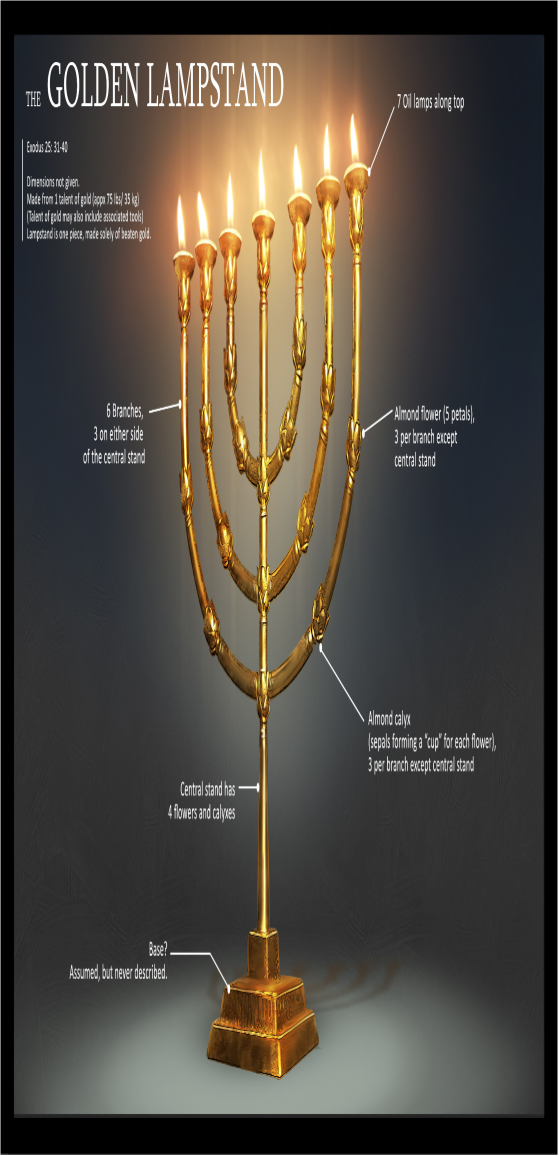
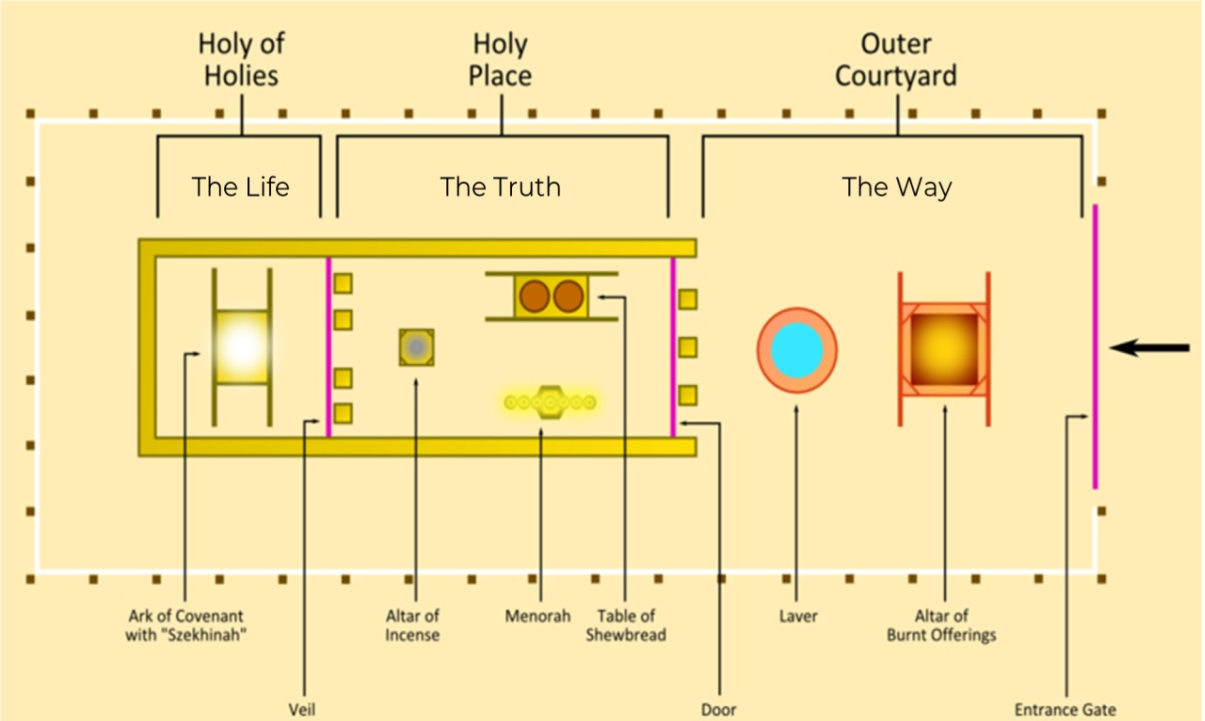


 Penuel Baptist Chapel, Roch