Anniversary Service: August 6th 2017

Dave Norbury - Aug 2017

David Norbury

Penuel Chapel will be holding a mission weekend in October followed by a Mission Week next Easter. The EMW has helped 50 churches in mission weeks and all 50 have churches have said they have been felt blessed. It’s a big thing to reach out and go beyond your comfort zone. That’s what we’ll be doing. Everyday should be like a mission. It is challenging.

volvo


The car manufacturer Volvo was the first to invent safety belts in cars. This invention could have made the company millions. However, they gave away the design and patent to everyone. The reason for this, the chairman explained, was that some things are too important to keep to yourself and somethings are too good not to give away. If it’s good enough for safety belts, it’s good enough for the gospel! You can be safe for eternity.

The woman of Samaria: John 4: 1-42

‘A woman from Samaria came to draw water. Jesus said to her, “Give me a drink.” (John 4:7). When the Lord Jesus was speaking to the woman of Samaria, where were the disciples? Shopping! “For His disciples had gone away into the city to buy food.” (John 4:8). The Lord Jesus draws into conversation with the woman. Even more interesting, the disciples didn’t come back until after the conversation had taken place. When they returned they saw Jesus speaking to a woman – a woman of ill-repute and a Samaritan.

The disciples’ minds were focused on caring for Jesus, ‘Meanwhile the disciples were urging Him, saying, “Rabbi, eat.” (John 4:31). Then He tells them He has other food, “Jesus said to them, “My food is to do the will of Him who sent me and to accomplish His work.” (John 4:34)

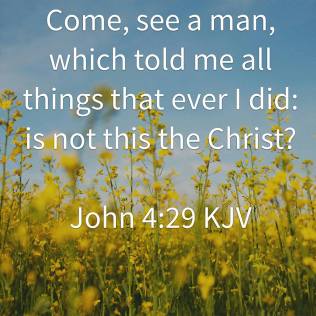
The disciples were not thinking about a Samaritan woman of ill-repute being converted. They couldn’t see the revival happening. Jesus says to them, ‘What are you thinking about? There’s something major happening and you just can’t see it.’ How often have we said, ‘Nothing can happen here.’ God is working in a remarkable way. Sometimes we make excuses – what can one person do? One person is the Samaritan woman and she leads the town! John 4-29 Come see a man

The gospel is the power of God’s salvation. We may say, ‘I’ll speak to someone tomorrow.’ Why not today? We can make excuses, go shopping. We may say, ‘It’s not my gift.’ But we are all gifted with the glorious gospel. 

‘Do you not say, ‘There are yet four months, then comes the harvest’? Look, I tell you, lift up your eyes, and see that the fields are white for harvest.’ (John 4:35).

The Lord Jesus is very clear with the disciples. He understands where they are at. Our God knows what suffering is. He knows our concerns.

Jesus says four things to the disciples:

  • Do not say ‘Not now, in the future…’
    Something is happening today. Do not say Why? What we say is from our hearts. Jesus says, ‘Think differently, change your desire, there’s a harvest out there. Change the way you think.’
  • ‘Look can you see it?’
    You have to start looking in a different direction. The gospel is happening now.
  • ‘Lift your eyes.’
    Change what you see. The Samaritan woman came with all the people.
  • ‘The fields are white for harvest.’
    It’s happening now. The people are coming towards us. Look for God’s blessing.

‘Already the one who reaps is receiving wages and gathering fruit for eternal life, so that sower and reaper may rejoice together.’ (John 4:36). There are wages. Wages are given and fruits are gathered for eternal life. Look at the blessings. In verses 37-38 we see there is a partnership between you, me and the Lord Jesus Christ. We’re not on our own, He is with us. There is a mutual partnership with God.

‘Many Samaritans from that town believed in Him because of the woman’s testimony, “He told me all that I ever did.” After listening to Jesus they declare, ‘We know that this is indeed the Saviour of the world.’ (John 4:42). What a statement! They didn’t see it before, but they do now. The whole town has been converted. A woman of ill-repute has been converted and brought about a remarkable work.

Matthew 9:35-38: People are like sheep without a shepherd. The Lord of the harvest can change our thinking, change the way we see the lost, even those who despise and look down on us. Pray to the Lord of the harvest. ‘Then He said to His disciples, “The harvest is plentiful, but the labourers are few; therefore pray earnestly to the Lord of the harvest to send out labourers into His harvest.”’ (Matthew 9:37-38).

Jesus speaks to the disciples in helpful ways. The Lord Jesus, as He spoke to the woman, did so in a winsome, loving and caring way. He is transcendent in the way He operates. We need to be winsome – full of grace and truth.

In John 4 verses 1-9 what does the Lord Jesus do?

  • He breaks down the cultural barriers. The Jews had no dealings with Samaritans. Who are the people you think you can’t talk to? He challenges us not to out up barriers. The Lord Jesus asks a simple question. He creates questions. Questions are wonderful. Use questions that you might find interesting. Change the way people think. Be winsome, use wisdom, desire to see people saved. Good questions are so useful – questions about eternity, questions about the gospel.
  • After breaking down cultural barriers, Jesus speaks of a spiritual dimension. The Samaritan woman heard something she had never heard before. Jesus steps into a spiritual relationship (John 4:10-11).
  • The Lord Jesus steps into the gospel (John 4: 10-26). He demonstrates the gospel and ends by gloriously declaring that He is the Messiah.
  • The Lord Jesus steps into a challenge – to the woman and her thinking (John 4:21). We should never be afraid of challenges.

This passage is so rich. Pray to the Lord of the harvest to send us to reach out. Take one step to speak to the person across the room. The first step is the hardest. The gospel we have is too good not to give away, too good not to share.

volvo

July 30th 2017: Gerald Tait

Gerald Tait July 2017The Mis-understanding of God’s Love and the reality of it.
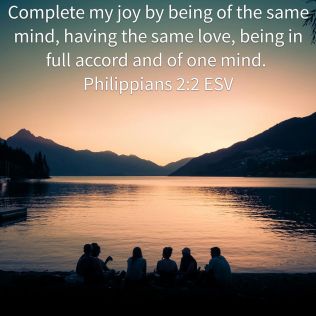

People ask where God’s love is when disasters happen, such as the Grenfell Tower. God’s love is not like human love, which starts and stops, people fall in love, marry and divorce. How sad that picture is – it is nothing like the love of 1 Corinthians 13, which is the exact opposite. Human love looks after itself, looks after number one.

God’s chosen example for His love for us is marriage. In the Old Testament God gives a shocking example of the marriage of Hosea, which describes the way God saw His people. It is a picture of what is happening in our world today. In the Old Testament the Jewish people were described as the adulterous wife of God, in the New Testament they are the Bride of Christ. Satan is trying to destroy the very image God is using to portray His love for us. Satan is at work, working against the church, destroying married life.

The reality of God’s love is demonstrated on the cross of the Lord Jesus. The only way you can understand the love of God is by looking at the cross, it is the starting place. In the event of you are not confident in your faith, if church has become a drudgery, if you’re losing your appetite for God, the place to go is the Easter story.

We have to return the love that is given to us. We love someone for what they do for us. We love the Lord Jesus for what He’s done for us and what He’s still doing for us.

‘And you shall love the LORD your God with all your heart, with all your soul, with all your mind, and with all your strength.’ (Mark 12:30).

‘I will give you a new heart and put a new spirit within you; I will take the heart of stone out of your flesh and give you a heart of flesh.’ (Ezekiel 36:26).

‘Clearly you are an epistle of Christ, ministered by us, written not with ink but by the Spirit of the loving God, not on tablets of stone but on tablets of flesh, that is, of the heart.’ (2 Corinthians 3:3).

Our love comes from within us. God has given those who trust in Him, a new heart. We need to tell Him we love Him. Let’s return the love that has been showered upon us. The cross as a symbol will stand the test of time. God’s love doesn’t start and stop, He doesn’t divorce us. The Prodigal Son is about a father waiting for his son to come home, waiting to embrace him.

Here is love, vast as the ocean,
Loving-kindness as the flood,
When the Prince of Life, our Ransom,
Shed for us His precious blood.
Who His love will not remember?
Who can cease to sing His praise?
He can never be forgotten,
Throughout heav’n’s eternal days.

On the mount of crucifixion,
Fountains opened deep and wide;
Through the floodgates of God’s mercy
Flowed a vast and gracious tide.
Grace and love, like mighty rivers,
Poured incessant from above,
And heav’n’s peace and perfect justice
Kissed a guilty world in love.

William Rees

Tell the Lord how much you love Him. Thank Him for what He has done for you. Let His love become a reality for you.

Philippians 2-2


July 22nd 2017: Alan Davison

alan davision - july 20171 Thessalonians 1: 9-10

1 Thessalonians is generally considered to be one of the first epistles written by Paul. Thessalonica was an important port city, strategically places by the Aegean Sea, therefore a very good trade route. Paul recognised this made the city a very good place to spread the gospel. In Acts 17: 1-9 we read that initially Paul’s message was well received but after three weeks this changed. The frustrations of the people were taken out on Jason, one of the first converts. In the first chapter of 1 Thessalonians Paul continued to think of the Thessalonians with thanks. Their reputation needed no defending. ‘For from you the word of the Lord has sounded forth, not only in Macedonia and Achaia, but also in every place. Your faith toward God has gone out, so that we do not need to say anything.’ (1 Thessalonians 1: 8). The Thessalonians had made good progress in the faith.

What can we learn from the Thessalonians?

First, they turned to God from idols, ‘you turned to God from idols to serve the living and true God.’ (1 Thessalonians 1:9). This is a picture of repentance.

Secondly, the turned away from idols. This tells us they were likely to have been Gentiles. In Greek culture, the twelve main gods were set in gorges in Mount Olympus. Each of the gods would have had a temple. People would have looked to Mount Olympus and would have been reminded of these gods. But the Thessalonians ‘turned away’ from their idols. Every family would have had their own personal idol, something that had been important to them in their past, but now they had turned away from these.

In our society today there are many idols, such as love of money. The Thessalonians had not only turned away from their idols but they had turned to God. They replaced idol worship with worship of the one true God. They had a purpose in their lives. We too need to have a purpose in our lives, a focus for our existence. Following true conversion the Thessalonians acted differently. They found real life comes from the God of the Bible.

The Thessalonians served a living, true God. Slavery was common practice of the day. However, this was not slavery as we think of today. In Greek culture, slaves were cared for by their owners. The slaves did the menial tasks but there was a reciprocal relationship. At the end of their period of service a slave could opt to remain in their master’s service. Whole-hearted service was to serve a master who was so good the slave would want to remain with him. We are in service to a Master who really cares. Ownership came at a great price – Christ’s death for us as He set aside His glory. God’s justice had to be met. Once we are His we are always His. We can never pay back the price. ‘And I give them eternal life, and they shall never perish; neither shall anyone snatch them out of My hand. My Father, who has given them to Me, is greater than all; and no one is able to snatch them out of My Father’s hand.’ (John 10: 28-29).

There are two descriptions of God:  ‘you turned to God from idols to serve the living and true God.’ (1 Thessalonians 1:9). The people serve a living God. This is in contrast to the inanimate idols. We have a relationship with God which deepens over time. Scripture tells us Jesus is the only way we can obtain access to God. We can come to God in different ways; some have a sudden experience, like Paul on the road to Damascus, others have a gradual awareness, like Timothy. We each have an individual relationship with God.

God is also described as ‘true.’ The idols were false gods. Our God is eager to help. It is a liberating experience.

‘Vindicate me, O God, and plead my cause against an ungodly nation; oh deliver me from the deceitful and unjust man!’ (Psalm 47:1) The Psalmist is being taunted and slandered by his enemies but his plea comes in verse 3: ‘Oh, send out Your light and Your truth! Let them lead me; Let them bring me to Your holy hill and to Your tabernacle.’ By appealing to God’s truth, the Psalmist is vindicated. No matter what accusations Satan throws at us, Jesus Christ’s blood vindicates us.

The Thessalonians had a desire to serve God. There’s an internal change. They waited. Doesn’t that grate on our human nature? They waited – not sitting idly around, but waiting expectantly for the return of Jesus Christ. ‘For they themselves declare concerning us what manner of entry we had to you, and how you turned to God from idols to serve the living and true God, and to wait for His Son from heaven, whom He raised from the dead, even Jesus who delivers us from the wrath to come.’ (1 Thessalonians 1:9-10). The term ‘wait’ comes from the Greek ‘perusia,’ awaiting a royal visit. There is great debate about what form the second coming will take. There are even suggestions what some American airlines will not allow two Christian pilots to fly together in case the rapture occurs. Whatever one believes, what is clear is that Christ will return and Christians should eagerly await His return, ‘Even so, come, Lord Jesus!’ (Revelation 22:20).

The second coming also brings with it judgement. We will be judged by what we have done in Jesus’ service (Matthew 25:21). No-one knows when Jesus will return, ‘But of that day and hour no one knows, not even the angels in heaven, nor the Son, but only the Father. Take heed, watch and pray; for you do not know when the time is.’ (Mark 13: 32). We need to live our lives as if Christ would come today, always looking to do God’s Will in our lives, which Wayne Grudem refers to as ‘responsible egesis.’

We know there is a day coming when Jesus will return. Accept the Lord Jesus as your Saviour. ‘Now when these things begin to happen, look up and lift up your heads, because your redemption draws near.’ (Luke 21:28). The Thessalonians were going about the Lord’s business as if He would return at any moment. We should be living as if Jesus is on the point of returning now.

The Thessalonians turned from idols to God, they repented of their sins and looked to the living God. They sought to serve God whole-heartedly. Critically, they lived their lives in the knowledge that Jesus will return again. On that day Christians will be protected from God’s wrath. We need to know Jesus will most certainly return again. Let us all echo the closing prayer of Revelation, ‘Even so, come, Lord Jesus!’ (Revelation 22:20).

Revelation 22-20


July 16th 2017: Ian Jones

Ian Jones-July 17Luke 7:36-50 A Sinful Woman Forgiven

Puzzling questions:

Why did the Pharisee ask Jesus to eat with him?
Normally, there is always a good reason to invite someone to dinner or others to invite us. But here, there seems no reason why Simon, the Pharisee, should invite Jesus, ‘One of the Pharisees asked him to eat with him, and he went into the Pharisee’s house and reclined at table.’ (Luke 7:36). This was not like the occasion when Jesus was invited by Mary and Martha to their home, where Jesus was welcomed. It was not like the occasion when Jesus invited himself to Zaccheus’ home and was warmly welcomed by Zaccheus. In Simon’s home there was no welcome. Jesus says, ‘I entered your house; you gave me no water for my feet, but she has wet my feet with her tears and wiped them with her hair. You gave me no kiss, but from the time I came she has not ceased to kiss my feet. You did not anoint my head with oi, but she has anointed my feet with ointment.’ (Luke 7:44-46). Jesus received none of the customary greetings of the day. So why did Simon ask Jesus to come to his house? Because he was one of those who wanted to discredit Jesus, to prove that Jesus was not a prophet, not the Son of God. Therefore he did not give the normal hospitality to Jesus.

Simon was quick to judge the woman and Jesus. There are many like Simon today; when we meet them they want to discredit Jesus. We even have an example in the apostle Paul, who persecuted Christians until he met with the Lord Jesus on the road to Damascus, He fell to the ground and heard a voice say to him, “Saul, Saul, why do you persecute me?” (Acts 9:4). People want to resist Jesus, to resist the grace of God. Many have come to a meeting to cause havoc but have been struck by the word and come to Jesus. None are too far from the Kingdom of God – Christ’s message is for all, that all might receive Him gladly.

  • Why did this woman enter Simon’s home?
    It would have been easy for the woman to have stayed away, she knew she would not have been welcomed. She came because the Lord was there. The custom of the day was that anyone could come into another one’s home. We would find this difficult today! There, they would have been onlookers – not participating in the meal but standing by the walls, looking at the table and chatting with those around it. Luke tells us, ‘And behold, a woman of the city, who was a sinner, when she learned that he was reclining at table in the Pharisee’s house, brought an alabaster flask of ointment.’ (Luke 7:37). Luke draws out attention to the woman, ‘behold, a woman of the city.’ The men would have recognised her. They classifies her as a sinner. She brought an alabaster flask of oil. It would have been a shock when she entered the house. Possibly she was a prostitute – which would have been even more shocking. She stood behind the Lord Jesus with a costly flask of fragrant oil and began to pour it over his dusty feet. His feet wouldn’t have been washed. Her tears fell onto those feet. She undid her hair, which would have been another shocking thing. She used her crowning glory to wash his hair, and kissed His feet in a loving, respectful way. Ointment was poured. All eyes were on her. Everyone was silent. Watching.

Why did she come to Simon’s house? She wanted to show her love and devotion to the Lord Jesus. The Lord Jesus had obviously changed her life. She was no longer a practising sinner as she had been before. Jesus changed that when He came into her life. Has He has changed our lives? Do we have the same love as she had? Have we come today in that same manner, wanting to express our love?

  • Why did Jesus come into this house, knowing what Simon was like?

Simon was not a seeker, like Mary, Martha and Zaccheus. Why did Jesus go into his home when His time on earth was short? He would have known all about Simon, ‘Now when the Pharisee who had invited him say this, he said to himself, “If this man were a prophet, he would have known who and what sort of woman this is who is touching him, for she is a sinner.”’ (Luke 7:39). Jesus answered him. He knew what Simon was thinking as well as his guests. So why did Jesus come? It was for a very important reason – to teach an important truth. He distinguishes a contrast between Simon and the woman.

Jesus has a parable, a very simple parable: a creditor had two debtors. One owned a lot, one very little. Both couldn’t pay. The creditor freely forgave both. Then Jesus asked a question of His own – which debtor would love the creditor the most? There is any easy answer, but Simon struggled, saying, ‘The one, I suppose, for whom he cancelled the larger debt.’ (Luke 7: 43). We see, as Simon answers, ‘I suppose,’ that he didn’t want to give an answer. Jesus tells him that he has judged rightly (before he had wrongly judges the woman). Then Jesus turns to the woman and says to Simon, ‘Do you see this woman? I entered your house; you gave me no water for my feet, but she has wet my feet with her tears and wiped them with her hair. You gave me no kiss, but from the time I came she has not ceased to kiss my feet. You did not anoint my head with oil, but she has anointed my feet with ointment.’ (Luke 7:44-46). He wanted Simon to focus on the woman. He directed his attention to her. The important truth was, ‘Her sins, which are many, are forgiven – for she loved much. But he who is forgiven little, loves little.’ (Luke 7:47). The reason Jesus came to that house was to declare to Simon and us, the more we recognise our sin, the more we realise we are indebted to our God, the more we love Him. The more we see why Jesus went to the cross and bore our sins, the more we will love Him.

  • Why should we want to come into that house?

If we could go back in time, why would we want to go there? ‘And He said to her, “Your sins are forgiven.”’ (Luke 7:48). Those who sat at the table asked, ‘Who is this, who even forgives sins?’ Do you and I need to do something amazing to have our sins forgiven? The Lord Jesus gives us the answer, ‘And He said to the woman, “Your faith has saved you; go in peace.’ (Luke 7:50). We won’t be saved by our good works or our family connections, but by faith. Salvation is by faith. How do we come by faith? By the word of God. Turn from sin, express your thanks to God. Jesus told the woman, ‘Go in peace.’

Luke 7-50.jpg

No matter how many times we hear the gospel message, we need to be reminded of the truth, that by faith we are saved. When we leave this world and face death, we know we have been saved by faith if we have repented. Faith saved the woman, she can now go in peace. Might we have the peace of God as we know the Lord Jesus.

July 9th 2017: Ian Middlemist

ian-dec-2016Romans 1:18-20

What has been done?
What is expected?
No excuses!

What has been done?
What has God done to render no excuses from man? ‘For what can be known about God is plain to them, because God has shown it to them.’ (Romans 1:19). Some people are glad to hide at the back of a room because of their shyness, others are glad to be conspicuous and wear their heart on their sleeve. God has been pleased to allow Himself to be known to all. He has revealed Himself to mankind and through creation. He is a powerful God. He knows how much men and women need Him. He reveals Himself through creation. We all experience this. ‘The heavens declare the glory of God, and the sky above proclaims His handiwork.’ (Psalm 19:1).

Romans 1-20

This is enough for men, women and children to know Him. When you think about your relationship with unbelieving friends, you have a connection with them, you have all seen creation. The external testimony of creation. God has given man a conscience in which he can understand creation. Children play on beaches, holding the sand in their hands – creation is in their hands. It’s for all. We are His creatures, we must worship Him. Some refuse to act on this knowledge, they do not want to turn to God, they hate Him.

What is expected of us, having been given this knowledge?
God has given creation, knowledge and conscience. We are all under the same judgement. We see the big sin, ‘For the wrath of God is revealed from heaven against all ungodliness and unrighteousness of men, who by their unrighteousness suppress the truth.’ (Romans 1:18). Ungodliness is a religious sin. Unrighteousness is a moral sin. The two go hand in hand. Some may have more of one than the other; some attempt to live good lives but with no repentance to God. Others claim to worship God but live immoral lives. Unrighteousness and godliness is seen in one thing – suppressing the truth. ‘Suppress’ means to put in detention, to lock up. Whilst men and women force the truth of Jesus into the subconscious, all awhile it is there. People push it aside. No-one can destroy what God has done. We need to allow the truth of God to dominate – sing to God new songs of worship. Repent of sins, acknowledge the truth. There is not enough knowledge in creation to save. We need the Holy Spirit, it is God’s work alone. As He comes to us we can repent of our sins.

No excuses!
When we become a Christian all our excuses are nothing but an embarrassment. It’s an embarrassing thing to see someone pleading their innocence when everyone knows they’re guilty. Our desire is everyone comes to humble repentance. There are no excuses we can bring on that last day. The gospel begins with the wrath of God but ends with the mercy of God. You cannot have a gospel without the wrath. Many people are not interested in the gospel, they don’t realise the wrath of God. ‘Wrath’ has to do with a passion. God isn’t simply annoyed with sin, it’s a personal matter. God is passionate in His wrath, it means something to Him. He is passionately filled with holy indignation.

The wrath of God is a fearful thing. A judge sums up a case, sometimes using very emotive language in response to evil. It’s a pointed anger against sin. Everyone is condemned – but there is wonderful news! Jesus Christ was sent to die for us, He gave His life for us. How can we begin to thank God, to thank Jesus, when we have so not deserved His love? Praise Him!

July 2nd 2017: Owen Jones

owen jones - july 2017Genesis 28

This text directs us to the place where it all began, ‘He had a dream in which he saw a stairway resting on the earth, with its top reaching to heaven, and the angels of God were ascending and descending on it.’ (Genesis 28:12). Jacob, the heal-catching surplanter, was encouraged by his mother Rebekah to go to Harran (Syria), several hundred miles away from where he lived. Esau intended to kill him. Rebekah wanted Jacob to marry a non-Canaanite woman. So ‘Jacob left Beersheba and set out for Harran.’ (Genesis 28:10). As the sunset, he laid down to sleep.

Jacob, the man who God changed. The Old Testament gospel. This was a life changing night. It was no dream but a drama. A dramatic change.

Jacob rests his head under the stars. What kind of night will it be? Here are 5 steps to this ladder and the unforgettable night:

Jacob asleep
Jacob awake
Jacob aware
Jacob afraid
Jacob alive

Jacob asleep:
Jacob was on the run, tired and lonely. He was probably missing the comforts of home. What kind of night did he have? He had a dream. Look how it’s described: ‘He had a dream in which he saw a stairway resting on the earth, with its top reaching to heaven, and the angels of God were ascending and descending on it.’ (Genesis 28:12). Before the days of God’s written word, God often showed Himself in dreams (Nebuchadnezzar, Joseph). These were revelatory dreams. Look who was in the dream, ‘There above it stood the LORD.’(Genesis 28:13). God was offering to Jacob the pre-incarnate Jesus at the top of the stairs. This is corroborated by Jesus in John’s Gospel, “Very truly I tell you, you will see ‘heaven open, and the angels of God ascending and descending on’ the Son of Man.” (John 1:51). Jesus bridges the gap between earth and heaven. This is a theophany, a sighting of Christ.

What did he hear? ‘There above it stood the LORD and He said: “I am the LORD, the God of your father Abraham and the God of Isaac. I will give you and your descendants the land on which you are lying. Your descendants will be like the dust of the earth, and you will spread out to the west and to the east, to the north and to the south. All peoples on earth will be blessed through you and your offspring. I am with you and will watch over you wherever you go, and I will bring you back to this land. I will not leave you until I have done what I have promised.”’ (Genesis 28:13-15). He heard Jesus speaking to him. This is the covenant blessing given and received. Jacob’s ultimate offspring was the one speaking to him on that ladder. Will you take that first step on the ladder? Jesus is the only way. The cross of Calvary lets Jesus take you to glory. He is the only way to God, ‘I am the way and the truth and the life. No one comes to the Father except through me. (John 14:6).

Jacob awake:

What type of night did Jacob have? It was the place where God met him. God gave Jacob access to Him and heaven itself. It’s life changing. It was the place of holy ground. ‘He was afraid and said, ‘How awesome is this place! This is none other than the house of God; this is the gate of heaven.’ (Genesis 28:17). God was revealing Jesus to Jacob. ‘Awesome’ means reverential fear. A life-changing spiritual experience is truly awesome. We find God in strange places. Bethel was about 12 miles from Jerusalem. Luz was a wicked place. In verse 18 Jacob set the stone he had used as a pillow and ‘set it up as a pillar and poured oil on top of it.’ In verse 19 we read Jacob ‘called that place Bethel, though the city used to be called Luz.’ God planted a church in the middle of Luz. God plants churches where they are needed. We are in the world, but not of it. God deals with perishing sinners. Spiritual death, as a result of the Fall, is like a sleep, but meeting Jesus is waking up. (Mark 5:39).

Jacob aware:

‘When Jacob awoke from his sleep, he thought, “Surely the LORD is in this place, and I was not aware of it.”’ (Genesis 28:16). What were the things he was unaware of? The presence of God in that place. When we go home we may be asked, “Who was in church this morning?” We list people’s names, but do we mention God? In the gospels Jesus Christ is seen as the Word. For 33 years His own knew Him not. At Calvary, ‘Jesus said, “Father, forgive them, for they do not know what they are doing.”’ (Luke 23.34). We also have been in God’s presence and been unaware of it. When you come to Penuel there are friendly faces, good singing, but are you aware of God in here, or just aware of a man preaching? We can be unaware of where we really are. This is the gate of heaven. When you hear the gospel preached, you are being shown the gate of heaven, the way to peace and glory itself. ‘How awesome is this place! This is none other than the house of God; this is the gate of heaven.’ (Genesis 28:17). In this verse we see the awareness, the entrance and the elevation. Jesus declares, ‘I am the gate; whoever enters through me will be saved.’ (John 10:9). Jesus is both the entrance and the elevation. Jesus is the gate for the sinner. Are you aware you are sitting in front of the gate this morning? Put your foot on the first step of the ladder to glory.

Jacob afraid:

Jacob had a dream. Dreams can be nightmares. How can we explain Jacob was afraid? It was dark. We can often be afraid of the dark. Jacob, from childhood, would have shared his bed with his brother. But it wasn’t the dark that caused this fear in the heart of this man. In the gospel we see 12 grown men in a boat, some seasoned fishermen, terrified. They thought they saw a ghost (Matthew 14:26). They were more afraid of Jesus than the buffeting waves. Coming into the presence of Jesus, initially, can be fearful. ‘It is a dreadful thing to fall into the hands of the living God.’ (Hebrews 10:31). When you are confronted by God, Jesus comes to you as your Saviour, not your judge. He loved you enough to die for you on Calvary. When we come to Christ there may be an initial fear to commit our life to Him. Are you afraid to accept the truth?

Jacob alive:

 ‘He had a dream in which he saw a stairway resting on the earth, with its top reaching to heaven, and the angels of God were ascending and descending on it.’ (Genesis 28:12). From that night on Jacob came alive to God. He made a vow. There was a miraculous change. Jacob believed the promises of God. God promises land, growth, security and much more. The gospel is full of promises, given by a God who cannot lie. Jacob changed, he came alive. The pearl of all promises, ‘For God so loved the world that He gave His one and only Son, that whoever believes in Him shall not perish but have eternal life.’ (John 3:16). He gives us an invitation, ‘Come unto me.’

Jacob need not run away any longer. We need to run to Jesus. ‘My sheep listen to my voice; I know them, and they follow me.’ (John 10:27).  Do you have that security? Will you believe His promises? ‘Then Jacob made a vow saying, “If God will be with me and will watch over me on this journey I am taking and will give me food to eat and clothes to wear, so that I return safely to my father’s household, then the LORD will be my God.”’ (Genesis 28:20-21).

Is this Lord your God or are you looking to other gods? Will you accept Jesus as Jacob did, committing your life to Jesus? This is regeneration – being born again, treading the first rung on the ladder. ‘Whoever has the Son has life: whoever does not have the Son of God does not have life.’ (1 John 5:12). Do you have life this morning? Have you been sleeping this morning? Wake up! A life change has apprehensions but now, do you have the life of God in your soul?


June 25th 2017: Ian Middlemist

Ian-June 2017 John 17: The Highly Priestly Prayer

We are included in this great high priestly prayer of Jesus. We are just like Jesus because of His calling on our lives.

‘And I am no longer on the world, but they are in the world, and I am coming to you. Holy Father, keep them in your name, which you have given me, that they may be one, even as we are one.’ (John 17:4). Jesus was going, but we are staying. Jesus came, the God-man came into the world. The second person of the Trinity entered into this world. He came, but is at home today in heaven. It’s amazing God’s people are still here on earth. The reason for this is that we should be a witness for Jesus Christ in this world. How are Christians to cope in this life? Jesus prayers for them. It is Jesus’ obligation to look after us in this world. This prayer spans all of time. Jesus’ prayers for us today are sufficient to make us stand in this world.

‘They are mot of the world, just as I am not of the world.’ (John 17:16). Just as Jesus is not of this world, so we are not of this world. If you are a Christian, saved by Jesus Christ, you are not of this world. We are different. The Bible defines how we are different. The world has different meanings. The world, also known as the cosmos can mean the universe created by God. It can mean the planet earth itself. If can mean the totality of human existence. Here, in John 17, it means the order of this world, how it thinks in unity against God, alienated from God, opposed to that which is to come – the Kingdom of God. The ruler of this world is the devil, ‘Now is the judgement of this world, now will the ruler of this world be cast out.’ (John 12:31). We should have concern for our neighbours who are living under this dictator’s rule, the devil’s rule. The world is alienated from God, ever since the Fall. The systems of this world are against God.

The world does not want God. But Jesus says we are not of this world. We have been hand-picked out of this world to receive a position in His glorious kingdom. Our whole life is now a compass set towards God. Our direction is set towards God. We will be hated because we have embraced Jesus Christ and the Word of God, ‘I have given them your word, and the world has hated them because they are not of the world, just as I am not of the world.’ (John 17:14). If you have any doubt the world hates God, look at the cross, how Jesus was killed. If you’re a Christian you are not of this world, you make Jesus your delight. He is precious. ‘Behold, I am laying in Zion a stone, a cornerstone chosen and precious, and whoever believes in Him will not be put to shame.’ (1 Peter 2:6).

We will be hated, just as Jesus was despised. You may not want to consider this, but Christians are rejected because we have Christ as our leader. There will be uncomfortable silences when we mention we’re a Christian, or mention the name of Jesus. It is difficult because people don’t want to hear His name. Every time this happens, be encouraged, don’t stop saying His name. Be reassured you are a follower of Jesus Christ.

‘As you sent me into the world, so I have sent them into the world.’ (John 17:18). Just as Christ was sent into the world by His Father, so we are now sent into the world. Jesus did not just appear as an accident, He was sent from heaven. The whole of the Old Testament points to Jesus. He was sent into the world. We know from the words said at His birth He was set apart.

Jesus was sent on a great rescue mission – to achieve our salvation, ‘For God so loved the world, that He gave His only Son, that whoever believes in Him should not perish but have eternal life.’ (John 3:16). Jesus picked us out of the world, He chose us. What a great honour! He washed us. He hung on the cross, He had our names written on His hands. He picked you out to triumph over death and hell. He will work in us that we will defeat sin in His power. In the end He will present us faultless before God. We have been picked out of this world but we are in the world. Some see this as being separated. They see the sinfulness of this world and want to be separated from it. But this denies the truth that there is an inward nature of sin. And what about all the people who need to hear about Jesus? Don’t forget about those around you. Jesus sends us into the world in His power.

Some are happy to compromise with the world. But the church is very different to the world. How can a Christian sing along with songs that are clearly against the church? Or laugh at jokes that are against Christ? They can’t. Psalm 1 reminds us ‘Blessed is the man whom walks not in the counsel of the wicked.’ (Psalm 1:1). We should not compromise. Don’t be ashamed.

‘And for their sake I consecrate myself, that they also may be sanctified in truth.’ (John 17:19). We are set apart. Just as Jesus was consecrated, so are we. We are consecrated and sanctified. To consecrate is to be set apart. Jesus was set apart by God the Father, so He set Himself apart – for death – so He might save us. To be sanctified is to be made holy, joined with Jesus in His consecration. We are set apart for the work of redemption. Jesus is determined to save those He will save. We are involved in the salvation of others too. He delights to use His church to save others by the preaching of the gospel. We can’t save anyone, only Jesus saves. We can’t open blind eyes. That work belongs to Jesus and Jesus alone. But we are called to bring His redemption message. We are:

Hand-picked out of this world;
Citizens of heaven;
Different – we have a heart for God;
Sent into the world.

‘Go therefore and make disciples of all nations, baptising them in the name of the Father and of the Son and of the Holy Spirit, teaching them to observe all that I have commanded you. And behold, I am with you always, to the end of the age.’ (Matthew 28:19-20).

We have a great commission. It is for all who believe. All of us are sent in to the world to share the gospel. It is the truth that sets us apart. We are to live holy lives, devoted to Jesus Christ, in the place He has set us. Our holiness is vital to this mission. We are not to be defiled by sin. Not all of us are called to be evangelists or pastors but let us have confidence in Jesus Christ and work where we have been called. We are to serve Christ. Do you realise your calling – the great privilege you have been given? We are ambassadors for Jesus Christ. Christ prayed His followers would have an attitude of mission. Let’s pray He would give us the heart too.

June 11th 2017: Chris Rees

chris rees - june 17Nehemiah 7:1-5

We read in Revelation that nothing will defy the city of God, the new Jerusalem; there will be no lies, no false pretences. ‘But nothing unclean will ever enter it, nor anyone who does what is detestable or false, but only those who are written in the Lamb’s book of life.’ (Revelation 21:27).

Immigration is a hot topic in our news today. Immigrants come into the country – someone from a Libyan family bombed Manchester. People ask how terrorists of Italian-Morrocan descent were allowed into the country. Questions are asked – who should be and belong in this nation? Emotions arise. There is an undercurrent.

Try and imagine what it must have been like for Nehemiah. The people had come back from Babylon, married and inter-married. As Jerusalem was being rebuilt, who should belong to the city? In chapters 1-6 Nehemiah describes the work of building the walls of Jerusalem. Next he deals with ones who have a rightful place in the city.

If there is one thing we desire, we want God’s house to be filled. However, before this happens, positions need to be filled before God will fill His house.

In Nehemiah 7:1-3 we read that Nehemiah appointed the gatekeepers, singers and the Levites, ‘Now when the wall had been built and I had set up the doors, and the gatekeepers, the singers, and the Levites had been appointed, I gave my brother Hanani and Hananiah the governor of the castle charge over Jerusalem, for he was a more faithful and God-fearing man than many. And I said to them, “Let not the gates of Jerusalem be opened until the sun is hot. And while they are still standing guard, let them shut and bar the doors. Appoint guards from among the inhabitants of Jerusalem, some at their guard posts and some in front of their own homes.”’ (Nehemiah 7:1-3). The book tells us of what God has done. God put into the heart of the Nehemiah to make a register of the people. Nehemiah appoints gatekeepers, singers and faithful leaders. It’s a truth of scripture – before you see God fill a place, things needs to be done in order, put in place. Positions need to be filled. God will never fill a place unless He knows the place will be a place of safety and security. God wants you to have safety and security in your life.

God took faithful people, people who can be relied upon. When Nehemiah comes he appoints faithful men who had the fear of God – not fear as in being scared, but a reverence. The gates needed to be shut, things needed to be guarded. When God calls His lost sheep home, when attacks come, the door needs to be shut. God will not save people into a fellowship where there will be falseness of practice. God will not add to a church until things are in place.

Who are the people who are to be in this city?

‘The city was wide and large, but the people within it were few, and no houses had been rebuilt. Then my God put it into my heart to assemble the nobles and the officials and the people to be enrolled by genealogy. And I found the book of the genealogy of those who came up at the first’ (Nehemiah 7:4-5). The city is large and spacious. There is room. So few enter there. Perhaps we feel that in our country, as Christians, we are few? Places of worship are not bursting at the seams. There is room for people to come and know. There is room with God for all people, no matter what you’ve done. It’s a fantastic, wonderful truth. ‘In my Father’s house are many rooms.’ (John 14:2). With God, there’s room! You may have no room for God; you may be taken up by the concerns of this world, but there’s plenty of room with God.

Who is in this city?

Those who enter this city need to be registered. God put it into the heart of Nehemiah to register people. If your name wasn’t in this book you would be in trouble. You have to be registered in God’s book. You have to be registered as part of the family of God, born in that heavenly city. Psalm 87 speaks of the glorious city of Zion. The Lord Jesus Christ Himself said to His disciples, ‘Rejoice that your names are written in heaven.’ (Luke 10:20). One day the great book will be opened and your name needs to be there. In the book of life is each and every one who has been born of the Spirit, born in heaven.

People filled the city. Lots were cast. ‘Now the leaders of the people lived in Jerusalem. And the rest of the people cast lots to bring one out of ten to live in Jerusalem the holy city, while nine out of ten remained in the other towns.’ (Nehemiah 11:1) Casting lots. It’s a way to fill a church! When they had to have a new apostle, they cast lots. ‘And they cast lots for them, and the lot fell on Matthias, and he was numbered with the eleven disciples.’ (Acts 1:26).

‘For in this way there will be richly provided for you an entrance into the eternal kingdom of our Lord and Saviour Jesus Christ.’ (2 Peter 1:11). God has chosen, out of His loving heart, a chosen people. It’s His house, His home. You have been born from above to enter.

When we look at the culture of the city Nehemiah speaks of, there is a wonderful picture of people giving to the work, ‘Now some of the heads of fathers’ houses gave to the work.’ (Nehemiah 7:70). The city was filled with activity. The people who came knew the love of God and were filled with great ingenuity and work. It was buzzing. We need to work. We are a people of God. ‘Thy kingdom come. Thy will be done on earth, as it is in heaven.’ (Matthew 6:10). Come to this wonderful city, full of giving, full of safety. The chapter begins and ends with the Levites, the gatekeepers and singers. The priests and the Levites – if it doesn’t go right here, it won’t go right in the community. We have a great responsibility. If you’re a follower of Christ, the enemy can’t come in. It’s a place full of song, full of singing, a city of service and security. There is plenty of room! Make your way to the heavenly city, to the glorious Jerusalem.

June 4th 2017: Norman Gilbert

Luke 18:1-8

We are living in a day in which there is much to be despondent about. In this parable of the persistent widow, the Lord shows us two encouragements we really need: we need to pray, we need never to lose heart.

In the previous chapter the Lord has been speaking about the day of judgement and talks of the last days. Believers are living in the last days – we may be in the last of the last days. Jesus is reminding followers we’re living in last days. Now, after 2,000 years, we are closer to that day. When Jesus first came, He came to bring Salvation. His return will bring judgement. He will introduce a new heaven and a new earth. In this particular section Jesus is people to have hope. In Luke 17 everyone was carrying on with life as normal, not preparing for judgement. In the light of the days in which you live, do not lose heart. We need to continue in prayer and not to lose heart.

IN this parable there are two main characters – a judge and a widow. The judge oversees the affairs of a particular city. We are told two things about this man; he had no regard for God and no regard for man. He had no reverence for God, no reverence or concern for fellow man, he was self-centred. The widow lived under the jurisdiction of the judge. She was in a vulnerable position. It was the culture of the day for widows to be taken care of by their family, but she may have had no-one to be concerned for her welfare.

Looking at the context of the parable, the widow needs to address her problems. Her only solution is to go to the judge to seek justice. We are not told what her problem was. Initially, when she sees the judge he had no concern for her problem whatsoever. He was not interested. We then see the true character of the widow. Her complaint was so urgent she kept on coming. She shows great determination. She was tenacious, she wouldn’t be fobbed off. In the modern world, she would probably be continually emailing her complaint, the one resorting to Twitter or holding a placard as she sought justice. The judge then decides he will grant her justice. Why? Not because he had a change of heart because he had pangs of sympathy for her; he wanted to get rid of this nagging woman. She got her result in the end by nagging. Her perseverance won the day, it had nothing to do with the heart of the man.

Looking at the application of the parable we see the purpose of it in verse 1, ‘Then He spoke a parable to them, that men always ought to pray and not lose heart.’ (Luke 18:1). We must always pray and not lose heart. This is the reason for the parable. Jesus’ disciples needed to hear those words; they would go through horrendous times. Throughout history there are times Christians need to be reminded to pray and not to lose heart. We may go through those times when we ask ‘Is there any point in asking God to stem the tide of evil of our days? Is there any point praying for youngsters who are fuelled by credit? We live in a generation of people fuelled by alcohol and drugs, a generation who have been provided for by the previous generation and have become self-centred – people who only know Jesus as a swear word. We have every encouragement to pray for people to find a real purpose and meaning in life, to turn from their old ways and follow Christ, who is all we need.

The parable is a challenge to us to continue to pray, not to lose heart. We don’t need to equate the judge to God. It is a contrast. If a wicked judge can help a widow, how much more will a God who loves His people be concerned for them? God doesn’t always give us what we want. The widow kept on praying. God sometimes has to give us time, give us trials to go through. We need to pray day and night. That’s the requirement. If we don’t pray we have to question where we stand. Prayer is an evidence we are a true believer. It is a time when the Christian communes with their heavenly Father. We have a great advocate who presents our prayers faultless before the Father. Pray at all times, in all situations, in any place. We need to pray at prayer meetings. Some don’t like to pray openly, but God knows our hearts. Prayer is vital for the church of Jesus Christ. The church has to gather together to pray continually, encouraging one another.

But don’t use prayer to twist God’s arm. Pray and then qualify it with ‘Thy will be done.’ Be bold in prayer, but praying that God’s way will be done. Have confidence.

At the end of Luke 17 there is a warning; no-one knows when the end of the world will take place but we need to be ready. At the end of this parable Jesus asks ‘will the Son of Man really find faith on earth?’ The widow did not give up, she continued in faith. True faith endures to the end. We have hard days and easy days. When Jesus returns will He find faith? We must not give in, believing He knows best and leaving everything in His hands. Our God graciously wants to provide for our needs.

May 28th 2017: Jae Hyun

Jae-Hyun - May 17

Many people in the world do not realise they are loved. The main point of the whole Bible is God’s love. ‘Beloved, let us love one another, for love is from God, and whoever loves has been born of God and knows God. Anyone who does not love does not know God, because God is love. (1 John 4:7-8).

1 John 4-16 esv

‘There is no fear in love, but perfect love casts out fear. For fear has to do with punishment, and whoever fears has not been perfected in love.’ (1 John 4:19).

All love is from God. Hosea also speaks of this.

What is the character of God’s love?

  • God’s love is for sinners.

God wanted Hosea to tell Israel how much God loved them. God wants Hosea to marry Gomer, an adulteress, which he did. They had children. However, she left him for another man (Hosea chapter 1).How do we know Gomer left Hosea? We are told Hosea had to ‘Go again’ and bring her back,  ‘And the Lord said to me, “Go again, love a woman who is loved by another man and is an adulteress, even as the LORD loves the children of Israel, though they turn to other gods and love cakes of raisins.’ (Hosea 3:1). The Lord still wanted Hosea to go again to Gomer. Israel repeatedly sinned but God loved them. Gomer gave an opportunity to a lover to love her. She should have resisted temptation. We should resist temptation too, we shouldn’t give any opportunity to Satan.

‘Make every effort to supplement your faith with virtue, and virtue with knowledge, and knowledge with self-control, and self-control with steadfastness, and steadfastness with godliness.’ (2 Peter 1:5-6). There are lots of temptations in our lives. Satan wants us to sin. The enemy, the devil, looks for someone to devour. Eve gave an opportunity to the serpent. Joseph didn’t give in to Potiphar’s wife, that’s why God blessed him. Satan is always offering opportunities to make us sin and depart from God. But God loves us, even though people depart from Him. The Prodigal Son left home but the father did not give up on him and was always waiting for him to return. This is God’s love. This story tells us God never gives up on us. God is unchanging.

  • God is love in action.

Hosea had to buy Gomer as if she was a slave, ‘So I bought her for fifteen shekels of silver and a homer and a lethech of barley.’ (Hosea 3:2). We were all born sinners. When we were slaves of Satan, God sent us His only son, Jesus Christ. He bought us for Himself when He died on the cross to save us. 

1 john 4-9 esv

‘For God so loved the world, that He gave His only Son, that whoever believes in Him should not perish but have eternal life. For God did not send His Son into the world to condemn the world, but in order that the world might be saved through Him’ (John 3:16-17). To save us, God shows us His love in action.

After Hosea bought Gomer back he told her, ‘You must dwell as mine for many days. You shall not play the whore, or belong to another man; so will I also be to you.’ (Hosea 3:3). Just as Hosea married Gomer, a slave, we are sinners too. God commanded Hosea to marry an adulteress to show how much He loves Israel, ‘And I will betroth you to me forever. I will betroth you to me in righteousness and in justice, in steadfast love and in mercy.’ (Hosea 2:19).

Jesus is our bridegroom. All Christians are the bride. To be the bride of Jesus Christ is a great, great blessing. ‘And I saw the holy city, new Jerusalem, coming down out of heaven from God, prepared as a bride adorned for her husband.’ (Revelation 21:2). God’s love never changes. He shows His love by His actions.

  • God’s love is a great grace.

‘For the children of Israel shall dwell many days without king or prince, without sacrifice or pillar, without ephod or household gods. Afterwards the children of Israel shall return and seek the LORD their God, and David their king, and they shall come in fear to the LORD and to His goodness in the latter days.’ (Hosea 3:4-5). The culture will slowly perish as Israel departs from God, but the Israelites will come back to the Lord. How? They knew God will forgive. This is the  great grace of God’s love. We must repent, say sorry to God, of our sins so we can be forgiven because God loves us. God’s love is a steadfast love, a great grace. 

Ephesians 2 8-9 esv

What a difference between other religions and Christianity; in other religions people have to do good things. We do nothing, God does everything for us! God loves us.

God is love. Know it in your heart. Remember, God’s love never ever changes. God is ever with us. No matter what troubles we have, He is with us in all circumstances. Sometimes we forget because we are weak, but as believers we should know God loves us all the time. Right now. We must love God because He loves us. Jesus Christ died on the cross even though He had no sin. God is love in action, God’s love is unchangeable, God’s love is a great grace.