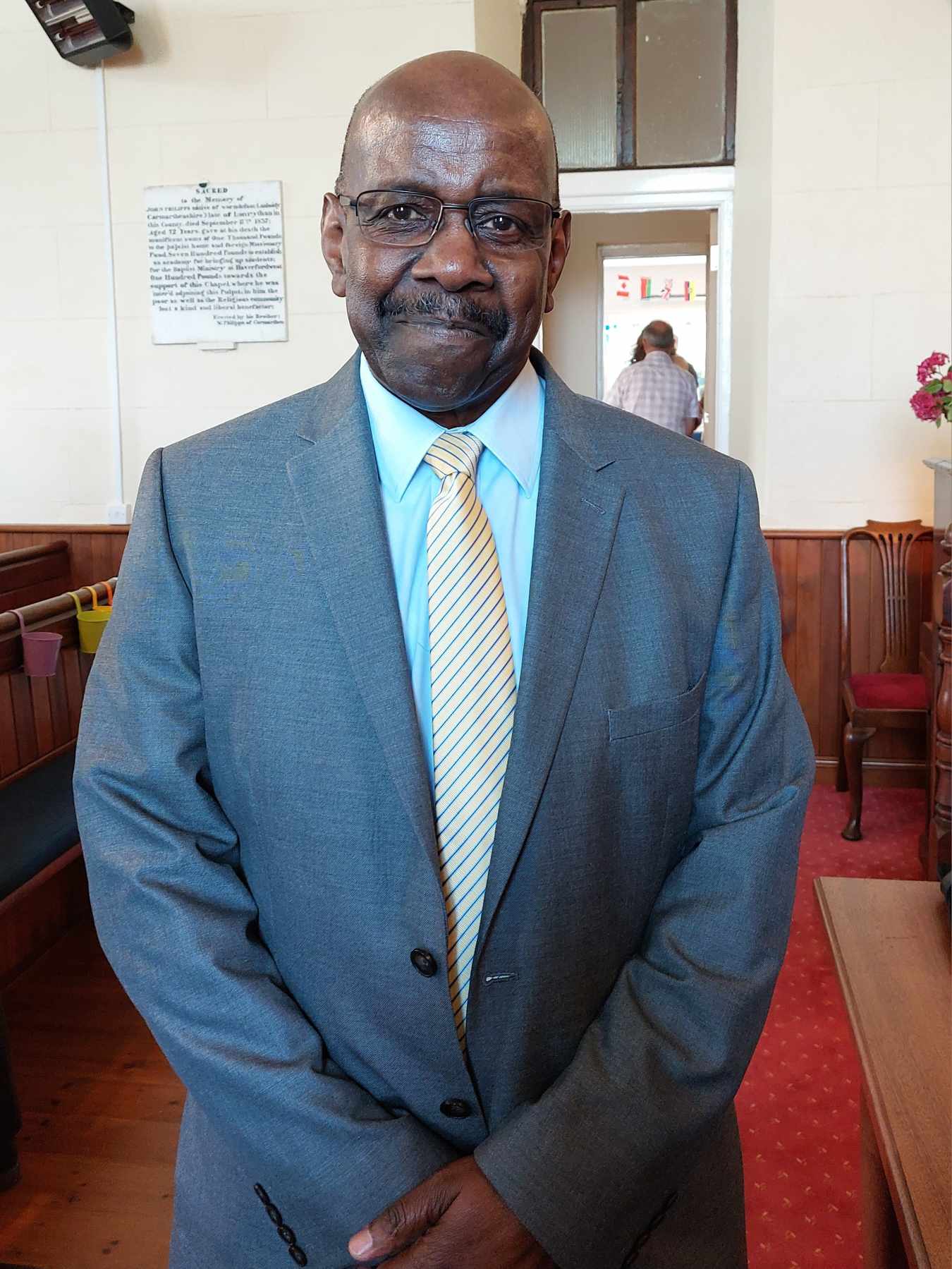
September 29th 2023: Harvest Service Geraint Morse

To watch this service, click on the link to our YouTube channel:
https://youtu.be/PzCR9BVqZbQ?si=BFNfipkjHwGFGPuf

John 12:20-33

As I look back over my life, I’ve seen a great change in farming methods in Pembrokeshire. When I grew up there were small farms of 6 to 8 cows, two churns of milk and people made a living. Unbelievable! I’d hate to imagine how industrial it has all become. The size of equipment has changed. The entrances to fields have changed in size – today they are wide double gates to allow in all the machinery. Yet, there is consistency, there is still a miraculous way God has in providing seed for harvest. The wonder of it all has not changed – a seed falls into the ground and there it germinates and grows. From that dying seed, shoots come and in time there is a harvest. Do you like grapes? Some grapes have seed in them, some don’t. How on earth do you get seedless grapes? Some oranges have pips, some are without pips. How do they do this? The interesting thing is this – when God created all things, the fruit was created with seed in it. They would be planting for a new generation. The same mystery, the same wonder is at work – the seed falling into the ground and from that dying seed, harvest comes.

Jesus speaks about this. This was an interesting time in his ministry, when he was approaching the last week of his life, half of the chapters in John’s gospel are to do with the last week of Jesus life. The emphasis is on the last week, building up to the cross.

We have this incredible statement of seed falling into the ground and dying. The Greeks asked to see Jesus and meet with Him, to know more about Him. “Now among those who went up to worship at the feast were some Greeks. So these came to Philip, who was from Bethsaida in Galilee, and asked him, “Sir, we wish to see Jesus.” (John 12:20-21). This was the request of the Greeks via Philip, who was himself from a Greek background, and Andrew. John doesn’t tell us if they met. Jesus then spoke about Him falling into the ground as a seed, to die. Maybe this was how the harvest would reach the Greek nation and all nations?

 John spoke after about ‘the hour.’ Philip went and told Andrew; Andrew and Philip went and told Jesus. 23 And Jesus answered them, “The hour has come for the Son of Man to be glorified.” (John 12:22-23). At this point in His ministry, Jesus says the hour has come for the Son of Man to be glorified. It was for this purpose that He kept Himself free from sin, to offer Himself as a sacrifice on the cross. The route, the plan, would bring Him to glory and all who believe on him.

So, this background of a Greek request and His hour coming, has a double act application. Firstly, it has to do with Jesus’ own life. He would have to lay down His life, to go to the cross, to be willing to offer Himself as a sacrifice on our behalf. Because He did this, He was raised again. The harvest is being collected. Without this, there would be no harvest. He offered himself as a perfect sacrifice, that we might have peace with God, forgiveness of all sins. He speaks about His own death and harvest.

Secondly, He speaks about you and me and our willingness to die to self, no longer relying on our own good works – which will never manage it. We have to submit to the way God has purposed for us. We need to confess our sins and trust in the one He sent to be the propitiation of sin. We have to daily deny ourselves and follow Him. We need to set aside our own purposes and to seek to lift up His name. Are you seeking Him? Do you know Him as your Lord and saviour? God will honour you for your faithfulness and sacrifices, what you go through for the sake of the Kingdom of God.

Jesus was troubled. Now is my soul troubled. And what shall I say? ‘Father, save me from this hour’? But for this purpose I have come to this hour. (John 12:27). He knew the path to glory was via the way of suffering, of sorrow, of enduring the cross, of the anguish of the cross that lay ahead of Him. He is the God man – fully God, fully man. These were real concerns for Him, what it would mean to be separated from His Father. They had been in perfect unity, but because He bore our sins on the cross, He was separated from His Father. He was punished in our place. This was the anguish. Did He turn away? Certainly not! “But for this purpose I have come to this hour. (John 12:27b).

I don’t know what’s ahead for you, what hardships might come your way, but we have a Father in heaven who will keep us, who will sustain us, and who will bring us to glory, Now is my soul troubled. And what shall I say? ‘Father, save me from this hour’? But for this purpose I have come to this hour. 28 Father, glorify your name.” Then a voice came from heaven: “I have glorified it, and I will glorify it again.” (John 12:27-28).

A voice came from heaven. This reminds us of the baptism of the Lord Jesus Christ. Jesus answered, “This voice has come for your sake, not mine. 31 Now is the judgment of this world; now will the ruler of this world be cast out.” (John 12:30-31). There was a spiritual battle. Jesus was not just working with the antagonism of religious leaders He met, there was spiritual warfare going on. Yet he overcame the evil one, through the death and resurrection of the Lord Jesus Christ. Our struggle is not with flesh and blood but with spiritual forces at work. We need the spiritual armour that God provides. Through faith in Him, we too will be overcomers. These attacks from the evil one are often associated with times of blessing or post blessing. Sometimes, these attacks come before blessing. Struggles and opposition come and through overcoming them, blessings come. ‘Greater is He who is in us than he who is in the world.’

“And I, if I am lifted up from the earth, will draw all peoples to Myself.” (John 12:32). Not every person will be saved. Those who believe, who trust and come the way of the cross, through repentance and faith, will be saved. Through the cross all are saved. “Lifted up from the earth.” What did He mean? The way to glory was through the cross, being lifted up to the cross. The Jews stoned people to death. They knew nothing of crucifixion. The Romans crucified. The crucified one was lifted up. Jesus said this to show the kind of death he was going to die.

Isaiah 53:1-13 is something that you would normally reserve for Good Friday. I see the image of a seed and harvest here,

He shall see the labour of His soul, and be satisfied.
By His knowledge My righteous Servant shall justify many,
For He shall bear their iniquities.”
(Isaiah 53:11).

He will be satisfied seeing the fruit because of the joy that was set before Him He endured the cross.

There is a harvest going on all around us, not just a harvest of the land, but a harvest of people. In other parts of the world that is great reaping. We continue to sow the seed, the seed of the gospel. I pray the Lord will bless you here at Penuel and other churches tonight. May you be encouraged to keep sowing with joy.


September 24th 2023: Dave Norbury

To watch this service, please click on the link to our YouTube channel:
https://youtu.be/vDpxawPfbp4?si=eIjC_IcUPiCNwPaJ

Luke 9:51-62

If you were going on a path and you knew it was dangerous, would you go there? What about the Lord Jesus? What did he do?  Now it came to pass, when the time had come for Him to be received up, that He steadfastly set His face to go to Jerusalem,”(Luke 9:51). Here, we see very clearly the Lord Jesus does something very remarkable. He could have stayed in Galilee, but now He sets his face towards Jerusalem. He is God. He knows the pain and the agony ahead. At the Mount of Olives He prayed was there any other way. He chose to walk on the Calvary Road, knowing what was going to happen – the events, the pain. Jesus sets His face towards Jerusalem.

700 years before, the prophet Isaiah said the same,

“I gave My back to those who struck Me,
And My cheeks to those who plucked out the beard;
I did not hide My face from shame and spitting.

“For the Lord God will help Me;
Therefore I will not be disgraced;
Therefore I have set My face like a flint,
And I know that I will not be ashamed.
He is near who justifies Me;
Who will contend with Me?
Let us stand together.
Who is My adversary?
Let him come near Me.”

(Isaiah 50:6-8)

A flint is a very hard rock. Jesus is not just going to Jerusalem, He sets His face like a flint. He is determined to achieve the task His Father has given Him, whatever the cost. There are hints in this passage in Isaiah what trials are ahead. He will be treated in a terrible, terrible way but His Father will vindicate Him. We see the perfect One will be mocked, made fun of. He will be struck. He will be shamed. He will be spat at. His beard will be plucked out. Yet he had to set His face like a flint.

What would make Jesus do this, to so selflessly give up himself? “Looking unto Jesus, the author and finisher of our faith, who for the joy that was set before Him endured the cross, despising the shame, and has sat down at the right hand of the throne of God.” (Hebrews 12:2). Why? For the joy set before him. When people like you and me become Christians, there’s joy! There is joy in heaven, a celebration. Why should anyone celebrate me? He forgives, He cleanses. It is truly wonderful!

What was Jesus thinking about as He went to the cross? Himself? No, He was thinking about you and thinking about me. He set his face for all, for the joy set before Him. He simply wanted to serve His Father and to rescue me.

What happened to the disciples? As you go through the chapter you will see a lot of interesting things just in this chapter alone. We see the feeding of the 5,000, “When the day began to wear away, the twelve came and said to Him, “Send the multitude away, that they may go into the surrounding towns and country, and lodge and get provisions; for we are in a deserted place here.” 13 But He said to them, “You give them something to eat.” (Luke 9:12-13). Before this, there were miracles after miracles. The disciples had seen all these miracles. Now they say, ‘Our situation is impossible.’ Yet Jesus feeds everyone. The disciples didn’t get Jesus could meet their needs.

It is easy to point at the disciples, but when we do we have three fingers pointing back at us. We can say, ‘My situation is too bad.’ But you know, He is a great and wonderful saviour. The disciples hadn’t put their trust in Him.

In Luke 9:28-32 three disciples saw the most glorious things – two glorious Old Testament Saints with Jesus, yet Peter and those with him were heavy in sleep. Fast asleep, unconscious at what God was doing! Sometimes, we are like that.

We also see the disciples were afraid to show their ignorance, to ask. “And they were all amazed at the majesty of God. But while everyone marvelled at all the things which Jesus did, He said to His disciples, 44 “Let these words sink down into your ears, for the Son of Man is about to be betrayed into the hands of men.” 45 But they did not understand this saying, and it was hidden from them so that they did not perceive it; and they were afraid to ask Him about this saying. (Luke 9:43-45). The disciples were with Jesus, close to Him, yet they are afraid. We can point the finger at them, but we are the same. Fear can make us not seek Jesus and ask about our problems. We can pretend it’s wrong to admit our weaknesses. The church should be the safest place in the world where we can admit we don’t know what to do. Fear can stop us. But the great thing is we can pray to God to give us courage. God dwells with the humble and contrite heart.

“Then a dispute arose among them as to which of them would be greatest. 47 And Jesus, perceiving the thought of their heart, took a little child and set him by Him, 48 and said to them, “Whoever receives this little child in My name receives Me; and whoever receives Me receives Him who sent Me. For he who is least among you all will be great.” (Luke 9:46-48). The Lord Jesus did not give up on his disciples. I would have. What a crew! Jesus never ever gave up on them. Luke wrote the book of Acts, which shows God works through weak people. Yes, Jesus succeeded. He never gave up on them. Jesus won’t give up on you, despite your weaknesses and failures.

What a wonderful truth – the Lord Jesus Christ takes people like you and me, turns us around and helps us to walk on the Calvary Road. Have you set your mind on the Calvary Road, to bring glory to Him? We can’t do it ourselves. The Holy Spirit is able to do what you and I can’t do. He strengthens us. The spirit of God brings glory to the Lord Jesus as He walks the Calvary Road. God is at work. He wants you and I to follow on that Calvary Road. Sometimes, we may think it is too much.

There is a story about a magic penny where a choice has to be made – whether to accept 1 million pounds and walk away or have a magic penny which will double in value for 31 days then it must be given back. If you take the magic penny, after 20 days you may think you haven’t got anywhere with your magic penny, the amounts increase in such small steps. Yet, after 31 days you will have 10 million pounds!

If you are on the Calvary Road, there are small steps. You read the Bible, pray, help folk, live for others. There are lots of small steps. It can be a struggle but in the end all the small steps lead to so much more because we’re going on His journey, with Him helping us on our way. We have Jesus with us every step of the way. He is with us. He is helping us. At times, we will think it is so hard, but amazing things will happen. God will show you His goodness and His kindness. You will see a little glimpse of heaven.

Which road are you walking on – your way or His way? He has loved us, given Himself for us for the joy set before him, so you and I could be forgiven and join him on the Calvary Road.

September 17th 2023: Benjamin Saunders

Matthew 2: 1-12

In this passage we see the seed, the offspring of David come true, which we read about earlier in 2 Samuel 7: 8-9. We come face to face with Christ, coming face to face with the world. God himself came into the world. He came into the world in human flesh, He came into the world He had made. The kings came to worship the one who was born king. He was born King by virtue of who He is. No one needed to anoint Him king, He is King. He came face to face with all kinds of people. Here, He came face to face with shepherds (Luke), even with kings. And now He comes face to face with you. This is how we come to know Him. He meets you. How do you respond?

Here, we see two groups of people and how they respond.

The wise men. How do they respond?

They searched, “Where is he who has been born king of the Jews? For we saw his star when it rose and have come to worship him.” (Mathhew 2:2). They followed a special star, which has now gone, so they go into Jerusalem in order to ask where is the king of the Jews? They sked for help. They Keep searching because they know this is serious business. They have come a long way. It would have cost a lot of money to travel and it would have been very dangerous. They would have come with caravans, people to protect them and food. When they get to Jerusalem, they keep going. It was serious business. They risked their safety, leaving no stone unturned. Do you know it’s serious? Have you come this morning knowing it is serious and important? They undertake take a serious search. They go to the king because they’re really intent on finding this king.

After they searched, they rejoiced. To rejoice is to be very joyful, very glad and to show it. People know when you are rejoicing. Matthew says they rejoiced exceedingly, in a great manner. Matthew makes the point these men were very seriously happy. They were overwhelmed with joy. Why? It was not because they saw Christ, When they saw the star, they rejoiced exceedingly with great joy. (Matthew 2:10). They rejoiced when they saw the star. This might seem strange, but it is the sign that they know they are very nearly there. All the expense, all the time, all of the searching, has nearly come to an end.

Why are they so happy? Not only had they reached the end of their journey, but they know the king of the Jews is very good news for them. Do you know it is very good news for you? You need to rejoice like this. “Behold” (Matthew 2:1), is a very special word. It doesn’t mean to look or see. Here, it tells you something very dramatic is about to happen, to be explained. Behold, wise men from the east came to Jerusalem.” (Matthew 2:1b).

‘Wise men from the East’ is a surprise! They were not in the right group of people, people of Israel. It’s a surprise wise men from the east came. For them it didn’t matter they had been brought up not worshipping God. It is good news for everyone.

Rejoicing is not the end of the story. The wise men came and do what they’ve come to do – they worship Him. The journey, the search they entered undertook, the joy they felt, are all to worship him. They came to worship him. All their actions are all related to this one purpose – to worship the King of the Jews. How strange a situation. Men in caravans come to a small village, go to a home, see a mother and child, and fall on the floor to worship someone they think is a king. The child has no royal mother or father; they weren’t well off. There is nothing to indicate a king lives here, except the star. They trust the prophecy they’ve read is true. They worship Him. They lift up and exalt, while at the same time going down. They fell on the ground, they didn’t kneel. The fell on the ground, flat on a dust floor, to worship. To put ourselves down is to humble ourselves. It is to adore Him. It is to acknowledge the other person is higher than us, to acknowledge He has power over us.

The wise men continue to worship; they open their treasures and give Him very expensive gifts showing status, power and wealth. To offer is to give a sacrifice. That is what worship is – themselves down, Christ high and giving valuable things from their lives. The wise men worship the King and Him only. They give their gifts to the toddler. Nothing is directed at Mary. His kingship is total now, even as a toddler.

Christianity is worship of Christ, following Him only, not Christ and scripture. We worship Christ. All of the worship, all of the adoration, all of the sacrifice is made to the King. This is how you should respond to the King – put yourself low down, acknowledge you are lower than Him, and that He is more than you. You are not to be adored, He is to be adored. You give Him everything, your time your money to support His people – the church. Can you honestly say that you are like the wise men? Come, acknowledging this is serious business. Come happy to be face to face, to worship the King. Are you happy to see chapel? Are you excited when you approach the building? We are here by God’s grace. The building is not important but what goes on is.

The contrast to the response of the wise men is seen in Herod. Are we like Herod and those like him? “When Herod the king heard this, he was troubled, and all Jerusalem with him,” (Matthew 2:3). Herod was troubled. He doesn’t hear a king is born, he hears a threat. Herod hears the news and is troubled. See this contrast between the wise men and Herod. Are you worried about the things you’ll have to give up? Do you worry what being a citizen under this King will do for you?

Herod also searched (verses, 3/4, 7/8).  He brings the chief priests and scribes. He wants to see is the threat real and if so, what can he do to avert the it. He asks the wise men to search diligently (Matthew 2:8). He was desperate to find out, not just after this short period, but he continued to look his whole life. He was persistent in looking for this child and to kill him. What do you search for?

Herod And the wise men had the same information. Herod also had information from the chief priests and scribes. Do you look to and listen for reasons not to change? Herod was very angry when he found he had been tricked. If you are like that, you need to change and be like the wise men, ready to search and worship.

Herod didn’t want the King. He rejected the King and did his best to kill him, Then Herod, when he saw that he had been tricked by the wise men, became furious, and he sent and killed all the male children in Bethlehem and in all that region who were two years old or under, according to the time that he had ascertained from the wise men.” (Matthew 2:16). Before this he was a horrible man, he continued to be a horrible man. Rejection is so total. Herod is happy to have children murdered. That is what rejection is. If you reject the King, you reject him totally. Do you reject the King? You may say, ‘I haven’t had children killed or murdered,’ but you do not have to be angry and active to reject the King. You can be passive and not listen to everything about Jesus – that is rejecting the King.

The King is King whether you believe it or not. If you don’t accept the King, you are in error. This King became so poor that you became so rich. He came to be betrayed. He came to be murdered by people He had made. This King who came to the cross, to take the punishment for sin, came for a single purpose – to get to the cross. Who is your king?

When the King returns all those who reject Him will be killed (Luke 19). In the history of the human race we know, until recently, a traitor would be killed. We might not like that, but this will happen when the Lord Jesus returns. They will be made to bow before they are killed. They will be made to bow down now to this King who died on the cross, the man who came into the world with the express purpose to die for your sins.

If you reject this king, it is your fault. Bow down now. He is worthy. Become a citizen of the Kingdom of heaven. Worship the Lord Jesus Christ.

September 10th 2023: David Hails

Psalm 66

There are many ways to think of dividing up time, such as the way time is divided up into calendars and also the academic year. We are now in September, a new academic year. It is often a time to reflect and think about our lives. Psalm 66 gives us good cause to think about a new year. We’re not told who wrote this song; it could be David. There are certainly parts of this psalm which speak in the way David speaks. It is a song. There are lessons for us as well as a challenge. There are three parts to this psalm:

  1. Shout for joy.
  2. Come and see.
  3. Come and hear.

1.Shout for joy because we have a praiseworthy God (verses 1-4).

There is a challenge right at the start of this psalm, ‘Shout for joy to God.’ As we come together Sunday by Sunday, is your desire to praise God? As you get up each morning is your desire to praise God, to give Him glorious praise? As a British, evangelical church, how do these words make us feel? A little uncomfortable? It is OK to shout on the school playground or the Millennium Stadium, but in church, before God, is shouting for joy what we are supposed to do? The psalmist says so. Has our worship become a bit too formal, distant? Is this something we could be learning? I am not looking for chaos, but do we need to be a bit looser? Have we lost some of the joy of worship? Old Testament worship would have been loud and joyous. Let us be desiring and seeking to know His joy, the feeling of His presence in our worship.

We have many reasons to praise God. There are also reasons that bring fear. In this psalm not everyone will praise God, they are seen as enemies of God (v3). The mighty deeds of God are not good news for everyone. The power of God is such, His enemies cannot triumph. The victory is already won, Therefore God has highly exalted him and bestowed on him the name that is above every name, 10 so that at the name of Jesus every knee should bow, in heaven and on earth and under the earth, 11 and every tongue confess that Jesus Christ is Lord, to the glory of God the Father.” (Philippians 2:9-11).

As we look forward, all will worship God and have to acknowledge the mercy and greatness of God. The call of the psalmist is to do this before it is too late. Come to Him, know Him, trust in the Lord Jesus Christ now. Come and worship the only one through which you can be saved.

2.Come and see because we have a mighty God (verses 5-13).

We have a call to come and see what God has done. He is a mighty God. Within section there are three different parts:

Verses 5-7: a call to those outside of Israel, to come and see what God has done. He is calling on those outside Israel to come, to see, to believe, to worship. The primary reason is to come and see what God has done in bringing His people out of Egypt. It points back to history, to the birth of the nation of Israel. It was many years ago, but they are still here. God brought a people together, out of His mercy. It is from the people of Israel that His greatest gift came, the Saviour of the world. He lived in Israel, He died in Israel. He died for the sins of the whole world. He came from the people of Israel for all the peoples of the world. The Lord Jesus Christ came so that sinful people would be forgiven. He lived the perfect life and died a sacrificial death. He did awesome deeds. How do we react? As a foreigner, a Gentile, outside of Israel, how do we respond? There is only one way – in praise, in adoration and glory.

Verses 8-12. The emphasis changes slightly to ‘our’ God (verses 8-9). The psalm goes from a cry of foreigners to come and see to a national cry, to corporate worship. So, today, we are God’s people. We come together today and worship Him together, to proclaim Him together. Praise God that the God of the past and is the same God we worship today.

Verses 13-15. The call now becomes a personal call. Five times the word ‘I’ is used. It is a reminder that our worship is both corporate and personal. Our faith has to be personal. It has to be me: ‘I come,’ ‘I will worship, ‘I will trust,’ ‘I believe.’ Just being part of a church isn’t enough; our faith in God has to be personal. We must believe personally and trust in the Lord personally. Have you believed and trusted in the Lord?

3. Come and hear because He is a personal God (verses 14-20). God is sovereign, He is mighty, but He is also personal. We cannot be a Christian on our own or by relying on the faith of others. We come to worship one who is here, one who is with us. He dwells within you.

There are more challenges for us (verses 17-18). We are pointed back to a call to worship. But who can praise God? As those who claim to be Christians, do you cherish Him or do you hold tightly to sin, to wrongdoing? Does your wrongdoing bring shame to you or bring the light to your heart? We should not expect God to listen to us if we hold tight to sin.

What right do we have to call on God? We need to truly bend the need to worship Him. If we hold tight to our sins, we won’t be able to speak to God, He won’t listen. If we put to death sin, if we repent and turn back to God, to Jesus the one who died so we could be made right with God, we can call on Him.

If we confess our sin, then we can know comfort, joy, and peace. The Psalm finishes,

“But truly God has listened;
    he has attended to the voice of my prayer.

20 Blessed be God,
    because he has not rejected my prayer
    or removed his steadfast love from me!”

Coming to Jesus in repentance, to seek forgiveness, laying down your sins, He hears you and loves you with a steadfast love, a love that never changes, a love that is everlasting.

He gave, out of love, out of mercy, out of grace, so that we can be forgiven and know His everlasting love. God is almighty but also personal. He knows each one of us.

September 3rd 2023: Phil Swann

Psalm 44

This is a Psalm written by the sons of Korah. They were an interesting group; their ministry was to provide music. The history goes back to a very dark. Korah led a rebellion against Moses, so God struck him down. He spared some of his descendants. In the family history, there are some very dark things indeed. But now? Whole lives are given to encouraging others. This song is a prayer for help but also looks forward to the future as well. The Psalm has a very simple but very helpful framework: it considers things from the past, then reflects on the present, before thoughts are turned to the future.

Verses 1- 8: The Past

The past is always with us. We often think of the past. We need to be careful how we handle the past; it is too easily used to discourage us and depress us in the present. For example, people may say church was always better in the past. We sometimes have rose-tinted views about the past. If we are not careful, as Christians, we may speak well of the Church of the past and give criticism of the present. But here, in Psalm 44, the past is used to encourage those who are struggling in the present. Things are not going well in the present. Israel has become a byword. In the midst of these dark days, led by the sons of Korah, they look to have times of comfort. As Christians, the past can offer hope. Here in Psalm 44 we are reminded we can orientate our thinking to help us.

The Psalmists’ starting point is to recall what God has done in the past, to remember the days of old. (Deuteronomy 32:7). History is important in every culture. No where is this more important than in the Christian life. We read in verse 1,

“We have heard it with our ears, O God;
    our ancestors have told us
what you did in their days,
    in days long ago.”


This is an acknowledgement that they have been obedient in the past. They look to the Lord because of what he’s done in the past. This is very important for us when we go through a dark patch. We can very easily become focused on ourselves and what is going on in our situation. We can be preoccupied and have self-pity. We may focus on people who have hurt us and brought us great pain. Psalm 44 Looks past these things and reminds us of how God has been in the past. This is why the past is good to reflect on and remember what God has done in the past. There is great power in times of reflection.

What had God done in the past?

On verse 2 we read,

“With your hand you drove out the nations
    and planted our ancestors;
you crushed the peoples
    and made our ancestors flourish.”

This verse begins with the awareness of all the blessings received in the past had come from God’s goodness. Abraham was called to leave everything behind and become a nomad. He was given the greatest promise of all, “I will be your God and you will be my people.” God led the Exodus from slavery in Egypt. They were sustained by the Lord’s faithfulness. The reflection of coming into the land is very much in the mind of the writers (verse 3). The reminder is the Lord had done great things. He subdued the enemies (verses 6-7). Despite the great difficulties, remembering brings them to a place of great confidence in the present (verse 8). This should always be our starting point. When trouble comes, we need to remember God’s faithfulness (Psalm 43). If you are discouraged today, remember the days in the past when the Lord sustained you, kept you and blessed you.

Verses 9-22: A reflection on the present.

“But now,” (9a). Things are different. Here comes the realism. To find help in difficult days, we must remember what God has done in the past and face honestly what is the present. We all go through difficulties. Here, we see God is still at work, but at work in judgement,

“But now you have rejected and humbled us;
    you no longer go out with our armies.
10 You made us retreat before the enemy,
    and our adversaries have plundered us.”

God has humbled them and rejected them. The present predicament is the Lord’s work and appears to be judgement – God actively working against His people. This is a hard reality. Verse 24 reflects that,

“Why do you hide your face
    and forget our misery and oppression?”

We may find ourselves thinking, ‘How can this happen? People want a positive, affirming God, who only ever blesses. God desires His people to be holy. Does this mean that if I’m going through a hard time, that God is judging me for my sin? This is not necessarily always the case. Sometimes, God may take us through tough times to strengthen our faith and confidence in Him. There are times when God may withdraw some of His presence, but his intention is to strengthen and develop your confidence in him. We see this in the New Testament. The Apostle Paul three times asked God to remove a thorn in his flesh. He was told, “My grace is sufficient for you, for my power is made perfect in weakness.” Therefore I will boast all the more gladly about my weaknesses, so that Christ’s power may rest on me.” (2 Corinthians 12:9). James wrote that of trying and testing of our faith.

This was not a time in Israel’s history when they had rejected the law.

“All this came upon us,
    though we had not forgotten you;
    we had not been false to your covenant.
18 Our hearts had not turned back;
    our feet had not strayed from your path.”

This seems to be a time of testing to strengthen faith.

Verses 23-26: The Future

Because Israel knows how God has been in the past, they can look past traumas with confidence. As God has been in the past, He will be in the future. He will remain faithful. When we are really discouraged, we know the future can be frightening or seem impossible, but when we have confidence, we can rely on God’s faithfulness. We change, the world changes because of sin, but God never changes. In all the confusion and chaos they can say with boldness,

“Awake, Lord! Why do you sleep?
    Rouse yourself! Do not reject us forever.”

(Psalm 44:23).

There is a particular emphasis, more than God should wake up,

“Rise up and help us;
    rescue us because of your unfailing love.”

(Psalm 44:26)

When God seems far away. This takes us to the in failing love of God. In the New Testament, Psalm 44 is picked up by the Apostle Paul,

“Yet for your sake we face death all day long;
    we are considered as sheep to be slaughtered.”

 (Psalm 44:22)

35 Who shall separate us from the love of Christ? Shall trouble or hardship or persecution or famine or nakedness or danger or sword? 36 As it is written:
“For your sake we face death all day long;
    we are considered as sheep to be slaughtered.”

(Romans 8:35-36)

We see the darkest moments of all in the calamity that has come on Israel. Things are as dark and bleak as they could possibly be. Yet in all these things we are more than conquerors through Him who loved us. Paul writes, For I am convinced that neither death nor life, neither angels nor demons, neither the present nor the future, nor any powers, 39 neither height nor depth, nor anything else in all creation, will be able to separate us from the love of God that is in Christ Jesus our Lord.” (Romans 8:38-39). Paul’s great conclusion, in the midst of problems and testing times, is that nothing can separate us from the love of God that is in Jesus Christ our Lord.

You can always be certain, whether you’ve been overcome by some terrible illness, things haven’t gone your way with family, work, or you have inward struggles of sin, you can always be certain of the unfailing love of God.

“Rise up and help us;
    rescue us because of your unfailing love.”

Psalm 44:26

We fail ourselves, despite our good intentions. We may fail one another. But the love of God towards you as a Christian, never fails.

  1. O love of God, how strong and true,
    eternal and yet ever new,
    uncomprehended and unbought,
    beyond all knowledge and all thought!
    O love of God, how deep and great,
    far deeper than man’s deepest hate;
    self-fed, self-kindled like the light,
    changeless, eternal, infinite.
  2. O heav’nly love, how precious still,
    in days of weariness and ill,
    in nights of pain and helplessness,
    to heal, to comfort, and to bless!
    O wide-embracing, wondrous love!
    We read you in the sky above,
    we read you in the earth below,
    in seas that swell and streams that flow.
  3. O love of God, our shield and stay
    through all the perils of our way!
    Eternal love, in you we rest,
    forever safe, forever blest.
    We will exalt you, God and King,
    and we will ever praise your name;
    we will extol you ev’ry day,
    and evermore your praise proclaim.

We see the unfailing love of God most clearly in Jesus Christ. It is because of His in failing love, there is redemption for us. It may redeem us from the darkest pits in life, the most lonely and self-critical times. Never forget the love of God.

“Rise up and help us;
    rescue us because of your unfailing love.”

Psalm 44:26

Whatever state of soul or mind you are in today, have faith in the unfailing love of God as made manifest in Jesus Christ.

August 6th 2023: 201st Anniversary Service (p.m.) Gaius Douglas

To watch this service, please click on the link to our YouTube channel:
https://youtu.be/ybRwZ_lIQdo?si=DiQTu46EonUjtH6m

John 17:20-26 Unified by God’s Glory

This morning, we looked at the unity that exists through prayer, in the preaching of God’s Word, and in fellowship. Pray underpins all we do for our Saviour. You cannot function without prayer. People may not speak loudly in prayer meetings, but may be great prayer warriors. This scripture in John chapter 17 tells us that Jesus prayed for you and for me. One of the results of this prayer is that we may be unified, “And the glory which You gave Me I have given them, that they may be one just as We are one.” (John 17:22). Christ stresses the importance of oneness.

I see sadness when I see division – sometimes because of little things, sometimes because of big things. Division may occur when someone says, ‘This is my work, you’ve taken over my work.’ This is God’s work. The gospel is God’s work.  Paul would preach and teach that the gospel is the power and unto salvation. Jesus prays we may be one with Him and His father. It is His work, for His glory and His praise. When Jonah was vomited out of the belly of the whale, he declared, “Salvation is of the Lord.” When we read the Bible, serve the Lord with the children, whatever we do, it’s God’s work. We join in the work, wherever that work is, and we can partner the work through prayer.

Lord Jesus Christ says, ‘The glory you have given me, I have given them.’ The Lord Jesus Christ speaks of the present, but also the future. The future is the result of the present. We can enjoy God’s glory, being in His presence and being like Him now. Jesus is now looking forward to the glory that awaits him, “And now, O Father, glorify Me together with Yourself, with the glory which I had with You before the world was.” (John 17:5). He came here, laid aside His glory, and now He was looking forward to being back at the right hand of the Majesty, looking forward to the glory that was His.

He looks forward to bringing us into His glory. “And the glory which You gave Me I have given them, that they may be one just as We are one.” (John 17:22). What an honour! He has already imparted that glory to us, “As You have given Him authority over all flesh, that He should give eternal life to as many as You have given Him.” (John 17:2). That thrills my soul! The greatness is He longs for us to be there much more than we long to be with Him. His love is so deep, His love is so strong, His love is so protective that He will never let us go, Being confident of this very thing, that He who has begun a good work in you will complete it until the day of Jesus Christ.” (Philippians 1:6). This is the assurance He gives to you and me. He has already completed it. It is ours to enjoy. The glory which His disciples experienced when He was with them, grew with them.

We see something of this amazing glory when we look in the first few chapters of the book of Acts, which speaks of the early church. We have gone so far away from that experience. We can do so many things that they could not do, but we have gone so far away, “Now the multitude of those who believed were of one heart and one soul; neither did anyone say that any of the things he possessed was his own, but they had all things in common.” (Acts 4:32).

I don’t know how you look upon another believer, but every believer who has repented of their sins to God and confessed the Lord Jesus Christ as their saviour, is one with every believer in Christ, wherever that believer is. The Lord Jesus Christ prays that they may be one with them, and for us to be one with each other, bringing unity. This unity comes from being unified with Christ. During those 40 days Jesus lived on this earth after He rose from the dead, he told His disciples they would be scattered. They didn’t believe him. Jesus was seen by at least 500, who were expecting the Lord Jesus Christ to be proclaimed king. In those 40 days, I believe Jesus used this time to draw the disciples back to Himself and He did this by showing them His glory.

In John 20 Jesus appeared to Mary Magdalene. When Mary spoke to the risen Lord Jesus He said, “Do not cling to Me, for I have not yet ascended to My Father; but go to My brethren and say to them, ‘I am ascending to My Father and your Father, and to My God and your God.’” (John 20:17). She saw the glory of God, the risen Lord. On the first day of the week, after the crucifixion, the Lord Jesus appeared through shut doors and the Lord appeared and stood in the midst of the disciples. They had never seen that before; they had seen the healing of men and women, miracles such as the water turned into wine, the multiplication of the bread and the fish, but here the doors were shut and Jesus appeared. 8 days later, the doors were shut again, and He appeared again. He told Thomas, who was not there previously, to put his fingers into His scars.

In John 21, several of His disciples with fishing. They did not catch anything. One of them recognised the Lord. What was He doing? Jesus was cooking breakfast. He had bread and He had fish. John writes, “And the Word became flesh and dwelt among us, and we beheld His glory, the glory as of the only begotten of the Father, full of grace and truth.”(John 1:14). Peter writes, “We were eyewitnesses of His majesty.” (2 Peter 1:16). This is often referred to as the transfiguration, but was it also part of the glory of God that they had seen?

The glory empowered the disciples. It’s energised and unified them. They had seen something different in those 40 days which brought them together. But you shall receive power when the Holy Spirit has come upon you; and you shall be witnesses to Me in Jerusalem, and in all Judea and Samaria, and to the end of the earth.” (Acts 1:8). When they saw Jesus go back into heaven, they were empowered.

At Pentecost we see Peter preaching. In chapters 2 to 4 they were unified as one because they had seen something of the glory of God, something they had never seen before. This motivated them, so they continued daily with one accord. They ate their food with gladness and simplicity. They were united, fellowshipping together. They were being renewed with power. Peter and John went to pray. The glory of God brought them together. When they were forbidden to speak and were arrested, they were brought to the high priest. They were released but then preached again! They defied the high priest. This word is powerful.

There is something missing today in my life and maybe yours – the glory of God and the appreciation of it. When Moses asked, ‘Show me your glory,’ oh, that we would ask that. Do we stop praying because the Lord has prayed for us? No! We reach the word and pray, ‘Lord, open my eyes, show me your ways, teach me your path to lead me into your truth.’ The glory of God which empowered and energised the early church is needed today. We need to focus on him. Turn your eyes upon Jesus. Do we enter into the presence of God? Do we have a desire to seek him, to see all the things he would display? Is it a reality that way two or three are gathered, He is in the midst?

If that is a reality, how should we act? For it is the God who commanded light to shine out of darkness, who has shone in our hearts to give the light of the knowledge of the glory of God in the face of Jesus Christ.” (2 Corinthians 4:6). If the Lord Jesus Christ is my saviour and I value the work of Calvary, then surely I would want to keep looking into His face. We can’t do the work if we haven’t seen His glory. When we have lost sight of His glory, we are a disunited bunch. We should long to see more of the Saviour’s glory. This is something we should pray for and long for.

When we studied the book of Job we spoke about the inconsistency of grief in Job’s life. He was more down in the dumps than he was up. But there were times in Job’s life when God would so encourage him. One example is Job 19:25, where Job would rise up above his boils, rise above the dust, the worms that were crawling out of his wounds and sores, and says   “For I know that my Redeemer lives,
And He shall stand at last on the earth.”

This is such an encouragement. Job would rise above. Even in his suffering God would bless him and open his eyes to see something of His glory. Job says,

“Whom I shall see for myself,
And my eyes shall behold, and not another.
How my heart yearns within me!
(Job 19:27)

‘My heart years within me!’ Is your heart yearning to be with my Saviour, as He longs for us to be with him? Do we appreciate him and long for him? Is he your desire? “Father, I desire that they also whom You gave Me may be with Me where I am, that they may behold My glory which You have given Me; for You loved Me before the foundation of the world.” (John 17:24). We see this deep, deep love Jesus has for us. We see the depth of love when He went to Calvary’s cross and died for us, as He prays for us and longs for us to be with Him. The apostle Paul writes may this be our desire, “Not that I have already attained, or am already perfected; but I press on, that I may lay hold of that for which Christ Jesus has also laid hold of me.” (Philippians 3:12).

Peter writes, “Blessed be the God and Father of our Lord Jesus Christ, who according to His abundant mercy has begotten us again to a living hope through the resurrection of Jesus Christ from the dead, to an inheritance incorruptible and undefiled and that does not fade away, reserved in heaven for you.” (1 Peter 1:3-4).

August 20th 2023: Peter Gleave

John 2:1-11

When we go to a wedding we want to record it, to remember it. We take photographs. After a while, they get put away in the loft. They may get forgotten about for generations. The wedding albums are passed on, and people they are passed onto may not even know the names of the those in the photographs.

Today, we’re hearing about a wedding which took place 2000 years ago in Cana, Galilee. We don’t know the names of the people at the wedding, but there were some very important names on the guest list: Jesus’ mum, Jesus and His disciples. This passage shows us that Jesus is OK to have a good time. These weddings would have been held at night. The bridegroom would have been dressed like a king. He would go through the street to collect his bride and bring her back to his home. The bride would be veiled. It would be a very happy procession. The bride would then have her hair done and this would be followed by a benediction. The bright and bridegroom would then be married. The celebrations would last a week!

We are going to visit this wedding feast. As you hear the sound of the music and singing, see the bright colours of dresses and smell exotic food, you will see Jesus and his friends laughing. In the middle of all of this, Mary came to Jesus saying the wine had run out. Mary might have been linked to the family to know this. It was a social gathering, and it would have been a no-no to run out of wine.

  1. A Problem of Insufficiency.

Jesus was told by his mother that there was no more wine. Jesus addresses Mary saying, “Woman.” This would have shown respect. Jesus continues, “Why are you involving me? My time hasn’t come.” His time was the cross. This was a time leading up to it. Mary didn’t actually ask Jesus to do anything, she simply took the problem to Him. Mary knew that running out of wine was a big problem, but she knew Jesus was special and could do something about it.

Have you got a problem of insufficiency in your life? Maybe, a relationship problem, a problem at work or maybe insufficiency of joy? Are you feeling depressed? You may be on holiday but thinking about the work back home. You may be searching the world for meaning and cannot find it because you haven’t met Jesus. What do you do when there’s a problem of insufficiency in your life? Do you take it to Jesus, or try to solve it yourself first because you doubt and lack faith? What do you do if you don’t know Jesus?

  • Jesus was present at the wedding and it made all the difference.

Jesus was right there in the middle of it all. Is Jesus present in your life? Mary told the servants to do whatever Jesus told them to do. Maybe, you’ve taken your insufficiency problem to Jesus, but still worry because it’s so big and you don’t know how you’re going to cope. Then you spiral. What is Jesus saying to you this morning? Ask him to be present in your life. His presence makes all the difference. Give him your burden and leave it with him.

“Jesus said to the servants, “Fill the jars with water.” And they filled them up to the brim.” (John 2:7).   Jesus is now involved. Six stone water jars were used for ceremonial cleansing. They held between 20 and 30 gallons – that’s a lot of water! Jesus told the servants to fill the jars to the brim with water. He then told them to draw some out and bring it to the master of the banquet. The master tastes the wine and doesn’t know where it has come from. It tastes good! He goes to the bridegroom and asks why he has saved the best wine till last. This was the first recorded miracle Jesus did. Jesus willed this to happen.

  • Jesus’ power was at work, unseen by some.

When we come to Jesus with our insufficiency problem and realise Jesus is the answer to our broken relationship with God, His Power is at work. Jesus’ power can change things in a moment. It is a power that can help you with your difficulties. This miracle needed faith, obedience and the unlimited power of Jesus. With it, the problem was solved.

There was some symbolism in this miracle that people wouldn’t understand. The stone jars would have been used for ceremonial washing. The water was transformed into wine. The time would come when Jesus would say that His hour had come. We have symbolism in the shedding of His blood – blood cleansing us from sin.

When we come to Jesus, we can be sure our insufficiency problem will be dealt with, our relationship with God can be put right. We will have Jesus present in our lives. When we face all difficulties, Jesus will be present with us. His power will be present and provide abundance in our life.

  • The purpose for which all of this happened.

This, the first of his signs, Jesus did at Cana in Galilee, and manifested his glory. And his disciples believed in him.” (John 2:11). This was the first recorded miracle of Jesus. It revealed His glory. The purpose is that ultimately, He might be glorified, to realise that Jesus is the King of Kings, the one who was prepared to give up the glory of heaven and show complete humanity. The miracle of turning water into wine shows His divinity. The disciples put their faith in Jesus.

We must be ready to meet face to face with Jesus. Have you got faith, knowing Jesus is present with you in your circumstances? For those of us who put our faith in Jesus, the best is yet to come. We have eternity in the presence of God. Are you ready to meet Him today? Have you put your faith in Him, to allow Him to meet you in your insufficiency problem today?

August 6th 2023: 201st Morning Anniversary Service Gaius Douglas

To watch this service, click on the link to our YouTube channel: https://youtu.be/WhS7A4EiySw

John 17:20-26

We have been brought here today to bring Him the glory and the praise. One day, we will see Him face to face and we will adore Him. Do you appreciate how blessed and privileged you are? If we know the Lord Jesus Christ we can rejoice in Him. This is a most wonderful chapter. The Bible is an amazing book. In 1 Timothy 2:5 we read, “For there is one God and one Mediator between God and men, the Man Christ Jesus.”

This morning, we are looking at the intercessory prayer of the Lord Jesus Christ. The Lord Jesus Christ is the mediator, the go-between between God and man. He stands between two parties where there is a difference. He negotiates to try and reconcile both together. This is what the Lord Jesus Christ has done. We have a problem – sin. Since the garden of Eden, mankind has always had an issue with sin. It has separated man from God and God from man. We read in Psalm 51:5, “Behold, I was brought forth in iniquity, And in sin my mother conceived me.”

The problem of sin stands between God’s relationship between you and me. Sin entered the world through man, death came. “For all have sinned and fall short of the glory of God.” (Romans 3:23). The Lord Jesus Christ came into this world, stood in the gap between man and God, and put away sin being our sin and shame on Calvary’s cross.  For He made Him who knew no sin to be sin for us, that we might become the righteousness of God in Him.” (2 Corinthians 5:21). As He died and was buried, our sins were buried with Him. He had no sin, so he was raised. We’re here because of the resurrecting Jesus Christ. He is risen! Hallelujah!

We have an invitation, “Most assuredly, I say to you, he who hears My word and believes in Him who sent Me has everlasting life, and shall not come into judgment, but has passed from death into life.” (John 5:24). If you know and love the Lord Jesus Christ you have been passed from death to life, living in Jesus Christ. We have the Mediator who has made it possible for each of us to be saved. If you haven’t trusted in the Lord Jesus Christ, Christ will say, ‘Depart from me’ on judgement day. You have no excuse to say you have not heard the invitation. Jesus Christ says He has died for us, laid down His life for us. You can rejoice in the fact of having everlasting life if you place your faith in the Lord Jesus Christ.

In John chapter 17 the Lord Jesus Christ, before going to Calvary’s cross, prayed for you and me. Remarkable! How much time do you spend praying? In our Bible study of Malachi we have learned we are priests. When we pray, we pray for each other. The work we are engaged in is all supported in prayer. Without prayer, there is no work, the words have little impact. The Lord Jesus Christ prayed. “Therefore He is also able to save to the uttermost those who come to God through Him, since He always lives to make intercession for them.” (Hebrews 7:25). Do you know the Lord is interceding for each of us here? Do you appreciate it?

This morning we are going to look at the unity of believers in Christ and unity as a basis in the preaching of the gospel of Jesus Christ.

The unity of believers in Christ

“I do not pray for these alone, but also for those who will believe in Me through their word.” (John 17:20). The Lord Jesus Christ emphasises how important it is to pray. He was speaking from a position where He Himself prayed. He prayed even though He was tired and weary (John 4). Sometimes, I can’t sleep. My mind is buzzing. It is a wonderful opportunity to spend time in prayer. When we come to Luke chapter 18, the Parable of the Persistent Widow, the Lord Jesus starts by saying, “Man ought always to pray and not lose heart.” It is a wonderful thing to pray and not lose heart, to put things into His hands and leave it there.

Jesus went into mountains and prayed. He was the Word who became flesh (John 1:1). He spoke the world into being, yet He still prayed. He knew He needed to pray to His Father. He enters heaven with prayer. Let us therefore come boldly to the throne of grace, that we may obtain mercy and find grace to help in time of need.” (Hebrews 4:16). We can come right into the presence of God and we can pray. Do you have prayer time with the Lord, communicating with him, spending time with him?

This prayer emphasises the interest the Lord Jesus Christ has for every believer. He has given eternal life for every believer (John 17:2 & 20). We will never die! Do you believe that? “My sheep hear My voice, and I know them, and they follow Me. 28 And I give them eternal life, and they shall never perish; neither shall anyone snatch them out of My hand. 29 My Father, who has given them to Me, is greater than all; and no one is able to snatch them out of My Father’s hand. 30 I and My Father are one.” (John 10:27-30). The triple lock!

When we pray the devil trembles. Even the demons believe and tremble. When we pray Satan is scared. We are speaking to our God and Father, He is infusing His life into us. He is giving us the power to go out to serve Him. Jesus prays for those who will believe in Him, through His word. Without prayer, the word has very little meaning. We pray before and after we read, we pray with the word, we pray in the word. We pray together.

Unity as the basis in the gospel of preaching

“That they all may be one, as You, Father, are in Me, and I in You; that they also may be one in Us, that the world may believe that You sent Me.” (John 17:21). In Penuel Chapel, even though we are small in number, the wonderful thing is how people who come here love to speak about the Lord Jesus Christ. They do it because of the reality of Christ in their lives. If Christ is real in your life you will share about Him. Do you love speaking about the Lord?

Jesus Christ is the common denominator in the unity among the people of God from different parts of the world. We have something to talk about. When the Lord Jesus Christ was here, He always spoke about the father. He lifted up the father in His walk, He lifted up the father in his life, He lifted up the father in His prayer. How often we forget about Him. He lifted up his father’s name, He spent His time praying because it was His Father’s glory to hear His voice. He prayed in the midst of people. This unity in the gospel is based very much on prayer and the word of God. What a privilege that we are one in Christ.

The oneness with Christ surpasses all other relationships. We are heirs with Christ. Everything that belongs to Him belongs to you if you know Him. This is the depth of God’s love. He wants us to express that oneness in our lives. We are one in Christ. What a day of rejoicing that will be when we see Jesus, the one who has made me one with Him. We want others to know our saviour. The oneness that’s with him, is with us.

He came to His own, and His own did not receive Him. 12 But as many as received Him, to them He gave the right to become children of God, to those who believe in His name.” (John 1:11-12). Are you a child of God? If you are a child of God, you are one with Him. We have the Spirit of God in us which has bound us with Christ. Do we appreciate who we are in Christ? We are one with Christ therefore you are my brothers and sisters in Christ. I love you because you love Christ. He loves me. That’s all that matters.

All the apostles died for the name of the Lord. Our saviour gave His life a ransom for many, that you may live through Him. You are alive in the power of that endless life.  “And if I go and prepare a place for you, I will come again and receive you to Myself; that where I am, there you may be also.” (John 14:3). I’m heaven bound. My home is heaven. Where is your home? Heaven. Praise the Lord!

Saturday August 5th 2023: 201st Anniversary – Chris Rees

To watch this service, click on the link to our YouTube channel:
https://youtu.be/vrRte9TIJTw

Matthew 7:21-23 I never knew you

21 “Not everyone who says to Me, ‘Lord, Lord,’ shall enter the kingdom of heaven, but he who does the will of My Father in heaven. 22 Many will say to Me in that day, ‘Lord, Lord, have we not prophesied in Your name, cast out demons in Your name, and done many wonders in Your name?’ 23 And then I will declare to them, ‘I never knew you; depart from Me, you who practice lawlessness!’

When you go through the Sermon on the Mount, as beautiful as it is, it’s like walking through a minefield. A bomb goes off and you’re brought to your senses. If you were there, listening to the Lord Jesus Christ, it was like He had grenades in His hands. As you were listening about the flowers in the fields, the lilies and your Father who loves you, all of a sudden one of these great bombs would go off and you’re brought to your senses. Perhaps, never more so, than what you find here in these verses.

The Lord Jesus Christ finishes the sermon with a great anti-climax. You always want to finish on a positive, but it is astounding as He finished, the whole house collapses. These verses startle us, even as Christians. They are a shocking statement. The apostle Paul tells us no-one can call Jesus Lord unless by the Holy Spirit. Yet, you have these verses, which show us there is no such thing as an easy believism.

The Lord Jesus Christ is coming to the end of the Sermon on the Mount. He never let people settle, He never let people think that there were not eternal decisions to make. He makes the great appeal about the broad way and the narrow way. There are many on the broadway. He makes an appeal to enter through the narrow way. Many will make a profession of faith, but you will know them by their fruits, not their words. He wants you to be discerning in your own life and in the life of the church. These verses are not only for non-believers, but also many who have known wondrous things.

“Not everyone who says to Me, ‘Lord, Lord,’ shall enter the kingdom of heaven, but he who does the will of My Father in heaven. (Matthew 7:21). The Bible makes it quite clear that there is no-one who can be saved unless they make the great confessions that Jesus Christ is Lord. The Lord Jesus is not saying anything against the great confession itself, but is saying, “Not everyone who says, ‘Lord, Lord shall enter the Kingdom of heaven.’

There is a name for God – Lord. Jesus refers to Himself as the Lord. When he was born the angels came from heaven and proclaimed Christ the Lord had been born. The kings came to Him and they worshipped Him. There were those who came and bowed before Him. Yet, not everyone who calls him Lord shall enter the Kingdom of heaven. Many will acknowledge the title that Jesus is Lord in their prayers, in their hymns and in their gatherings, but at the end of the day they will have no place in the Kingdom of heaven. Hitler actually acknowledged that Jesus was Lord. He had no problem with giving Him the title. However, He may be Lord on people’s lips, but not Lord in their life.

“Not everyone who says to Me, ‘Lord, Lord.’ There is something significant in that. People may use the title Lord and sing hymns, but they have never addressed Jesus Himself. They have never actually come to Jesus and spoken to him personally. Here though, Jesus says there will be those who will come to Him personally. There were many who came to Him when He was on earth and gave Him this title, gave supplications to Him, pleaded with him, cried to Him and interceded before Him. People can talk about God in the second person then not come and talk to Him in the first person. You can talk to people who pray every day. I used to know one man who prayed every day, ‘Lord Jesus, look after my wife, looked after look after my mother (who was dead), and look after the virgin Mary.’ He prayed for those three women every day. Nothing else!

Some say they pray and call to Jesus, but He says on that day, Many will say to Me in that day, ‘Lord, Lord, have we not prophesied in Your name, cast out demons in Your name, and done many wonders in Your name?’” Notice something else – there’s a little passion within it, “Lord, Lord.” You may have some passion and love, even for Jesus Christ Himself. Well, I have news for you – Jesus is not hard to love! He is the most lovable of all beings. Every Christian has a personal relationship with Him and we love Him. We need more passion and pleading with God.

I ask people in churches, ‘Are you going to heaven?’ Some never know! Jesus is pointing out something – you need to do the will of the Father in heaven. There is only one way people can go to heaven. You may have the doctrinally right statements in your head, you may do the performance of prayer in your life, you may have a passion that loves Jesus in your heart, but you’ll never get there unless you put your trust in Him, have faith in Him and give Him your life. “Not everyone who says to Me, ‘Lord, Lord,’ shall enter the kingdom of heaven, but he who does the will of My Father in heaven. (Matthew 7:21). There is only one way ever to heaven. “ And this is the will of Him who sent Me, that everyone who sees the Son and believes in Him may have everlasting life; and I will raise him up at the last day.” (John 6:40). The Lord Jesus Christ is speaking to all the Pharisees around Him. Again, we read, Jesus answered and said to them, “This is the work of God, that you believe in Him whom He sent.” (John 6:29).

“But as many as received Him, to them He gave the right to become children of God, to those who believe in His name.” (John 1:12). It was the will of the Father to send His Son into this world. It was the will of the Father who made Him keep that cup. It was the will of the Father to send Him to Calvary. It was the will of the Father that He died for our sins. It was the will of the Father that people would come to believe in Him.

People talk about the will of God. It is the will of God working in you. If you have never come to put your trust in Jesus Christ, you’re not even close to the will of God. Many will say to Me in that day, ‘Lord, Lord, have we not prophesied in Your name, cast out demons in Your name, and done many wonders in Your name?’” This verse is incredible. Remarkable. Jesus, born in manger, grew up in Nazareth, a teacher, knows the day is coming, the final day. He says that on that day, many will come and claim what they have done, ‘Lord, Lord, have we not prophesied in Your name, cast out demons in Your name, and done many wonders in Your name?’” The Lord Jesus knows that the day is coming. On that day it is not about Buddha or about Muhammad, it is about Jesus Christ. Everybody will be directing their words to Jesus Christ. He is the judge.

Who could these people be who have prophesized and cast out demons? Popes, bishops, TV evangelists, preachers, missionaries, church workers, translators, church planters, pioneers, exorcists – all who have been working in the Kingdom of God, who have been successful in the Kingdom of God, people who have spoken the very word of God, those who have done great wonders. The punch line in verse 22 is, ‘In your name.’ They have not done it in their own strength but in the name of Jesus. There is power in the name of the Lord Jesus. There is power for you to come before God’s throne. It’s a name which He honours, by which you can approach Him. There are people who have been healed in the name of the Lord Jesus Christ. They have called upon Him and, in His mercy, God has answered them. That’s powerful!

God can give that powerful word and it can change people’s lives. He can use donkeys! There is coming that day when, with a passion, with a love, with some kind of allegiance to Him, Many will say to Me in that day, ‘Lord, Lord, have we not prophesied in Your name, cast out demons in Your name, and done many wonders in Your name?’” Then comes verse 23, the most shocking words you could ever imagine, “And then I will declare to them, ‘I never knew you; depart from Me, you who practice lawlessness!’ Jesus knows everything. He knows the number of hairs on your head, the days before you live them. He knows your thoughts from afar. The reality is He never knew those people in that union, in fellowship and communion, of being part of His body. They never had any place with Him. There was never a time when they did know Him and went away. He says He never knew them! They were never a part of His Kingdom and of His body.

It maybe you’ve been through that stressful period when you’ve been a backslider. But as a backslider; there was a time when you could say, ‘I knew Him.’ You’ll meet the backslider in the street. They’ll tell you about something that happened and now they have back slidden. Backsliders know that if they are ever going to get to heaven, it isn’t going to be for what they’ve done. They know they need Jesus Christ and His mercy. That is what is missing in these people in these verses. Their trust was in themselves – we have done this, we have achieved this.

 “And then I will declare to them, ‘I never knew you; depart from Me, you who practice lawlessness!’ Jesus knew their trust was in themselves. It was different. They never knew Him, they had never came to put their trust in Him. The only way is by faith in Him and faith alone.

When we go our different ways and think about our Christian walk and confusion around us, we need to have a grasp of these verses. You may sit in a pew and think, ‘I wish I could speak as others speak. I wish I could have faith.’ Somehow, we think we need something great. Jesus says, ‘You who practice lawlessness.’ Reading the Sermon on the mount is really interesting; this is what Jesus wants. He wants you to live with your fellow man at peace. He wants you who are married to be faithful. He wants you who are single to be pure. He wants you who are believers not to break a promise. He wants you who have enemies to be lovers. He wants you to give without other people knowing.

People claim Jesus is Lord but advocate every evil practise. In the Christian walk, you can do great and wonderful things, but at the end of the day you are saved by faith alone. You go to hell for many things. The Lord Jesus wants us to discern about our own lives and what is around us. It is vital.

July 30th 2023: Geraint Morse

Exodus 33: 7-23

This is an account of an incredible conversation between the man of God, Moses, and his God. I am struck by this man’s boldness; he came into God’s presence with bold confidence and the assurance that he will be heard. As he comes before God Himself, he makes several requests, in ascending order. They raise the level, one after another.

Moses’ first request is found in verses 12 to 13, “Teach me your ways.” That is what Moses desires. He wants to find favour with God, as a leader. Then, Moses puts in this request, “Remember this nation is your people,” (verse 13). Is that our request this morning, that above all other things, we want to know God’s ways better? Do we want to be a better teacher, a better child, a better believer? We belong to the people of God. We are the people of God through faith in the Lord Jesus Christ, that we may be taught in His ways.

The second request that Moses has is to do with leadership, being led. Moses says there is no point going one step forward unless God is with us. Have you got plans? Are you considering a change of location, a change of occupation, or a change of direction – individually, as a group of people, or as a fellowship of God’s people? May this be a cry from the heart. Unless the Lord is leading you in a situation, there is no point going forward. May you know His way ahead at Penuel.

I get a sense of increased intensity in Moses’ requests. His third request is, “Lord show me your glory.” Was there ever such a request made by any man in the Old Testament? What did Moses expect to see, to happen, to experience? I imagine it was to see and to feel something of the majesty, the glory, the honour, and the holiness of God himself and Moses standing before him.

God answered him, ‘It’s not quite that easy Moses; no man can see my face and live.’ Such is His Holiness. God continued, ‘But I tell you, there’s a rock over there Moses, you’ll hide in that rock and I will pass by. As I pass by, I will shelter you. My hand will protect you from the glory you’ve asked to see. As I pass by, you will see a partial glimpse of my glory.’

If you walk along the Pembrokeshire coast, you will see curves in rocks caused by deep movements within the earth, twisted and lifted up. Faults arise. As winds and rain beat into the rocks, clefts are caused. Sometimes, you will see a split in a rock. Sometimes, you will see just a stack left above. Think of the power that has formed this geological formation. It was in such a cleft that Moses hid. He hid in a cleft in a rock, in a split in the rock. Moses hid, sheltered, and the glory of God passed by. God removed his hand and Moses saw just a glimpse – no more. God gave him as much as he possibly could have. Moses saw something of the glory of God. Is that your desire?

John speaks about the glory of God in Jesus Christ, And the Word became flesh and dwelt among us, and we have seen his glory, glory as of the only Son from the Father, full of grace and truth.” (John 1:14). This story from Exodus 33 is a picture of what God has done for us in the Lord Jesus Christ. It is through Him the glory of God is revealed to us. John, who was with Jesus on the mount of Transfiguration, saw for a moment something of the glory of God as Jesus was transformed in front of his eyes. He saw the glory of God in the face of Jesus. That’s where we see it.

We have all sinned, we have all broken God’s laws, we’re all guilty. We deserve punishment. But the wonder of the gospel is God sent His Son to be an atonement for our sin, so that we might be forgiven. This is the work of Calvary. Through trusting in the merits of the Lord Jesus Christ you can come before God and confess your sins, believing Jesus died for you as you ask for forgiveness, and ask for a new life in him. Jesus is our cleft in the rock. It is hiding in Jesus that we are safe and see the glory of God. Have you believed in His teaching, in His leadership and in His revelation?

We praise God as we believe in Him and as He leads us. As you walk along the coastal path, when you see a rock with a cut in it, just remember the Lord Jesus Christ, broken for us, His blood shed for you and me, that we may have peace with the Father.