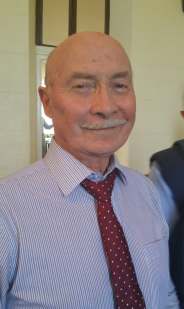
June 3rd 2018: Norman Rees

Norman Rees-May18II Corinthians 12: 1-10

Paul is one of the greatest, dearest men of God, yet he probably suffered more than any other Christian. He suffered for the Lord as He lived for Christ. He was very modest, not even referring to himself by name in this passage, but calling himself ‘a man in Christ.’

The Lord has ways of keeping us humble. Paul had a ‘thorn in the flesh’ (verse 7). He prayed to God three times to have it removed. His prayer is very earnest. We are not told what the thorn in the flesh was, but the Lord did not remove it. Instead, Paul was told, “My grace is sufficient for you, My strength is made perfect in weakness.” (II Corinthians 12:9). The emphasis is on ‘My.’ We have no grace of ourselves. Without the grace of God we wouldn’t be sitting here today, we wouldn’t have the strength to worship Him.

It’s a lovely day. The grace of God brings the weather, the water of the Spirit, the water of the gospel. It is easy to worship when all is well. However, when we go through trials God is in control. When we are not in trouble and trials, when the sun shines, we are not persecuted, our health is well, our bank balance is good, it is easy to be a Christian.

Sometimes Christians can slip into an easier road and can start to doubt what God has done. They may slip back into wordly things. We are in the world but not of the world. We need to glorify God. Jesus prayed, in John 17, we could be of use in the world.

Spurgeon urged us not to pray to be out of our troubles. Our citizenship is in heaven but Christ wants to keep us in the world that, even in times of trials, we can be a witness. His grace is sufficient. Jesus will not lose one of His sheep, bought with His precious blood. He has paid too high a price. He gives us eternal life.

When sickness and difficulties comes we ask, ‘Why is this happening to me?’ Paul asks the same questions. Sometimes, trials are sent to test our faith. We don’t know where to turn, everything seems to be against us. Don’t despair. It is easy to despair when we can’t see an answer to a problem. Jesus knows all our ways (Psalm 139). He knows everything. He understands us.

If we stand before God without Jesus standing with us as our Lord and Saviour, our Lord and advocate, we have no hope. God has brought us to this situation. When the devil brings doubt, look to Christ.

Before the throne of God above
I have a strong, a perfect plea,
a great High Priest, whose name is Love
who ever lives and pleads for me.
My name is graven on His hands,
my name is written on His heart;
I know that while in heav’n He stands
no tongue can bid me thence depart.

When Satan tempts me to despair
and tells me of the guilt within,
upward I look, and see Him there
who made an end of all my sin.
Because the sinless Saviour died,
my sinful soul is counted free,
for God the just is satisfied
to look on Him and pardon me.

Charitie Lees Bancroft

Problems may come. Paul boasts that he could suffer for Christ. He suffered because he simply preached the gospel of God, being beaten 195 times, imprisoned and much more. Yet he could still rely on God’s grace and strength. When you reach the end of your tether, remember God is at the other end, He will never leave or forsake you.

Jesus wants us to be closer to Him. Nothing that makes you pray more earnestly than if you’re suffering. Pray that you may seek His face and know His grace upon you. You’ll pass through your trials (Isaiah 43). He will give you grace to go through. The devil schemes, he will attack, but God’s strength redeems. The Lord allows Satan to go so far, but Jesus defeated the devil. “My grace is sufficient for you, My strength is made perfect in weakness.” (II Corinthians 12:9).

When you’re blessed of God you can seem so full of your own pride. Be full of Christ. We’re sometimes like vessels – full of ourselves. We need to be filled with grace. When we recognise we have nothing of ourselves, it brings us closer to Christ and we walk more closely with the Lord. Seek the Lord and ask Him to show you what He will do. The grace of the God, who made the world, can supply all our needs. If you are struggling, He wants us to recognise we are nothing of ourselves, that His grace is fully sufficient. Don’t worry about the problem, the future. Trust the Lord and you’ll find Him all sufficient. He has ways of sending storms in our life to get rid of what we don’t need. All we will ever need will be given to us by God.
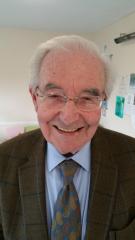
May 27th 2018: Gerald Tait

Gerald Tait January 18The Trinity

Although the word ‘trinity’ is not mentioned in scripture, the Bible is full of God the Father, God the Son and God the Holy Spirit. God is in total control of the three.  An illustration of the trinity could be an orange divided equally into three. Each part will have orange slices, pips and juice. God is equal with the Son and is equal with the Spirit. God is in overall control. When the disciples said to Jesus ‘When will you return?’ He replied, ‘Only the Father knows.’

There are three ways into an earthly family: being born into it naturally, marrying into it or being adopted into it. This happens when you become a believer (John 3:16). We come into a family. The New Testament describes coming into church. In John 1 we are born into the family. When we believe we receive the nature of a son. When we are adopted, we receive the position of a son. Paul says we are adopted by God into the church. God said the church is like a bride – one day, we the church will be the bride.

What is God doing now? All around the world thousands are coming to faith in Jesus today. They are being born into the family. God is actively adopting them and bringing them security. When Jesus finished work on earth He returned to heaven. What is He doing now? In John 17 we read the priestly prayer. Jesus is God’s love gift to the world. Christians are the Father’s love gift to Jesus.

What security we have does not depend on us, it depends on God. God will not allow any of those He has given to Jesus to be lost. What is Jesus’ activity in heaven? He has gone there as a high priest, He is actively being our High Priest right now. Jesus reminds God of the sacrifice He made. Jesus is there not only as a priest, as our solicitor, He is our top advocate. When I mess up, Jesus forgives. Part of our nature is still sinful but Jesus pleads for our security. God is in overall control.

God the Holy Spirit. In the Greek the word ‘spirit’ is ‘pneuma.’ We read of the Holy Spirit in Genesis 1:2. Throughout the Old Testament the Holy Spirit came upon people. They travelled and were good at using stones. Abraham took some rubble and built an altar to worship God and offer sacrifice to God. Jacob set up a stone altar when he wrestled with God. John 1 is a replica of Genesis 1. Jesus gave work to the Holy Spirit to carry on what He had started. The Holy Spirit is our paracelete, the one who comes alongside to help you and keep you safe.

We see the trinity in the grace. Grace in Welsh is ‘cymdeithas’ – the society of the Holy Spirit. Interesting – it’s a building society. The Holy Spirit assists us in the building of God’s church. The Holy Spirit came upon the patriarchs as they built stone altars to worship God. The church is living stones. He takes the rubble of my life and your life and He is dressing the stone and making it fit. How wonderful is that! We are a society of believers, made to fit in that temple. The Holy Spirit is the deposit guaranteeing our inheritance. Jesus is coming back. We’ve been marked with a seal, a deposit (Ephesians 1). We have confidence, assurance, knowing we have security in the trinity.

May 20th 2018: Owen Jones

Owen Jones-May18.jpg‘He put all things under His feet, and gave Him to be head over all things to the church, which is His body, the fullness of Him who fills all in all.’ Ephesians 1:22-23

Here we have an aspect or our union with Christ – organic union – Christ is the head, you and I are the limbs. We read of the mystery of our union with Christ in Ephesians 5. As the Bridegroom, Christ is incomplete without the Bride. John Calvin comments, “This is the highest honour of the church that, unless He is united to us, the Son of God reckons Himself in some measure imperfect. What an encouragement it is for us to hear, that not until He has us as one with Himself is He complete in all His parts, or does He wish to be regarded as whole.” Calvin’s statement is gloriously audacious – but it is right. Jesus is incomplete without us. He is the head in heaven, we’re the limbs on earth. We are joined to Christ now, but it will be seen more evidently on the great, glorious matrimonial day when we meet.

How can we see this organic unison?
1. Christ is head of all things in heaven and on earth
2. Christ is the head and we are the members.
3.  We are joined together in unity and diversity.

1. Christ is head of all things in heaven and on earth.
How is Christ’s headship described? We read in Ephesians 1:15-23 Paul’s prayer that we may bask in confidence in Christ. Are you confident God has called you from darkness to light? Do you know what it us to be born again? I’m not talking about coming to chapel, but coming to Jesus. Are you confident He has called you? Do you know the enlightenment of the eyes of your heart? (Ephesians 1:18). Paul also says in this verse that our inheritance is guaranteed, it can’t be stolen. In verse 19 we read of ‘the exceeding greatness of His power toward us who believe.’ It is like the same power that raised Christ from the dead. Do you know the power of new life in Christ? We should be the most confident people on earth.

In Ephesians 1:20-12 we read that Jesus is seated in glory, power and authority, might and majesty. He has gained the victory. He is far above all, no-one can surpass Him. The holy power of angels, the authority of kings, will never get to where He is and will never rob Him of His divine dignity. God appointed Him. Christ is head, seated in the heavenly realms.

In Ecclesiastes 3 and 4 our Head is described as a means of encouragement. He is your Saviour, your head. Here is Paul’s encouragement to the Church at Ephesus and you and me.

2.Christ is the head and we are the members.
This is the One we are joined to, we are united to. The Church is like a human body. Generally, every human being has one head, two arms, two legs etc. Of course, due to the Fall, there are certain deformities. We need everything we’ve been given. The Psalmist says in Psalm 139, “I am fearfully and wonderfully made.” We started out as dust of the ground being breathed into a body, created in His image.

 In the head is the brain that controls the movement of the members, which respond and react. When the head is severed from the body, life ceases. Sometimes, the church appears as if it has had a stroke and it sometimes can look ugly and dead. The message from the head is not getting to the members and being obeyed. The local church, in disobedience, can appear as if it’s had a stroke and is immobilised. We are to be obedient people.

The body grows in love. Pauls add to his theme; in chapter 4:15-16 we see how we’ve to grow and what makes us grow in love. The love of God. We can hide behind sentimentality. There are times when we show the love of God when firm words and actions are called for. Generally, a local fellowship thrives on agape.

The body feeds and nourishes on everything the head sends it. All things are held together in one head, to bring all things together (Colossians 2:19). How many individuals are running around like headless chickens, having lost connection with the head? Sin cuts us off from the head. Some churches try to do their own thing but we are here to do it God’s way, Christ’s way. Be listeners, obedient, growing with the love of God.

3.We are joined to Jesus in unity and diversity.
The church is one body in conflict – it’s a contradiction. Men give the church different names as if there are different churches. That’s the visible church as the world sees it. There is only one true ecclesia. Satan seeks to segment, fragment and conquer. The more names there are, the better for Satan.

Paul wrote to the Corinthians that the body is one made up of many parts – an innumerable multitude (1 Corinthians 12:12-14). Sometimes the body of Christ can give the impression it consists of only one member – being dominated by one member. Paul says the body is not made up of one part. Sometimes, we are not listening to God. In the local church we need all our members and faculties. God arranges the different parts for different uses (1 Corinthians 12:18). God has arranged the parts of the body. Every true believer needs each other. Some may say, ‘I have no need of you’ (1 Corinthians 12:21), but Paul calls the members of the body to its senses. You cannot do without the different Christians, the body won’t be the same without them (1 Corinthians 12:22). The body of Christ consists of members who wouldn’t be accepted anywhere else in the world. Unity and diversity, equality, one in unity. No division (1 Corinthians 12:25-27).

We can thanks God we’re not lookalikes. Instead, look like Him. There is diversity. How boring if we are all the same type, out of the same mould. Sometimes we feel others are not as important or careful as we are, but here in the body we are equal.

The members suffer and have difficulties but there is unity, equality and mutuality. Christ is the head, we are the members. We are one in unity, joined to Christ.

May 13th 2018: Ian Jones

Ian Jones-May18John 9

This chapter is a continuation of chapter 8. In the last verses of chapter 8 Jesus was about to be stoned. Here, in chapter 9, at the temple gates sat a blind man begging. As Jesus made His way out of the temple He saw this man. If we were escaping for our lives, would we have stopped to help this man?

Jesus ‘saw.’ It wasn’t just a casual glance but an intent look at this individual. However, the disciples saw him merely as an object of their curiosity. Back then, blindness was looked upon as a penalty of sin. They asked, “Rabbi, who sinned, this man or his parents, that he was born blind?” (John 9:1). It was a mystery to them. Was it this man’s fault or the fault of his parents?

Friends, how do we see people’s lives around us? Do we notice them or are we in such a hurry, we don’t notice? How easy is it to pass them by or judge them, lifting ourselves above them? Jesus noticed all those around Him who were suffering – so should we notice those who suffer and be concerned for others who suffer. We need to spend time with them.

Jesus answers the disciples’ question saying, “Neither this man nor his parents sinned, but that the work of God should be revealed in him.” (John 9:3). It was God’s will that this man be born blind and that when Jesus came by He would heal Him and God’s work would be revealed. We have all been created by God in a particular way for His glory and honour.

This is a very important passage. It takes up a whole chapter in John’s gospel. Now is the time for us to work for Christ, to serve Him. Now is the appointed time. Jesus is the light of the world. He saw the world in darkness; only He could bring light into people’s lives. The blind beggar had a miserable life – he could only do very little. But Jesus changed all that, He changed his life. Jesus came to give sight to the blind and heal the broken-hearted.

Why did the Lord heal the blind man in this way? It is very unusual. Very often Jesus just spoke the word or touched the person to heal them. But this time He spat on the ground and made mud out of His saliva and put it on the blind man’s eyelids. He then told the man to wash in the pool of Siloam (John (9:7). Christ did this for a reason. He did this to reveal spiritual truth. Why the mud? It could be to reveal that the healing came from Christ Himself. Mud – sin has blinded us from spiritual truth. The mud / mess had to be removed from the blind man’s face for him to see. It required obedience from the man to wash in the pool of Siloam.

Here we have a wonderful picture of salvation. Those who are spiritually blind do not see themselves as blind. We see this in the Pharisees’ reaction (John 9:40). That’s the problem with spiritual blindness, it is deceptive. The man is the ideal example of one born blind, not knowing Jesus. Having had mud applied to his eyes, he was told to wash. When he heard the word of God he could have argued and asked why he had to go to the pool and wash his face. He could have objected and gone home to wash. Yet he went in obedience.

If we’re to be cleansed from our sin, we must go to the Lord Jesus Christ, to the cross. The blood that was shed for us cleanses our sin.

John translates the pool of Siloam as meaning ‘sent.’ (John 9:7). He takes us back to the days of Jerusalem, to the days of Hezekiah when a tunnel was dug to bring fresh water into the city. This pool received water sent from the outside. Jesus is the one ‘sent’ from God, who is able to wash away our sin.

As the passage goes on, the man becomes closes to the Lord Jesus Christ until he enters full salvation, whereas the Pharisees become increasingly hardened to the Lord Jesus Christ. This happens today – people either draw nearer to the Word of the Lord Jesus Christ as it is spoken or become more hardened.

When the man returned home after washing in the pool of Siloam his neighbours questioned whether or not this was the same person. Some said no, it just looked like him. He made it clear it was him and tells them how he received his sight. He makes it very clear what has taken place. There’s a difference in his life. Jesus made a difference. Yet they find it difficult to understand, it is so unusual, something like this just didn’t happen.

The man was extremely joyful, yet the others cannot enter into it, it is beyond their understanding. When someone is converted there is a complete change of lifestyle – others cannot understand it. The neighbours take him to the Pharisees, the religious leaders. Then we have a kind of trial taking place. We would hope they would have an open mind, find and acknowledge the truth that has taken place. However, they don’t want to give glory to God.

The Pharisees are biased because of their unbelief. They forget the man and what’s been done because it was done on the Sabbath, claiming, “This man is not from God, because He does not keep the Sabbath.” (John 9:16). Others argued He must be from God because the blind man could now see. There was division among them. So they ask the man himself, who explains what Jesus has done. But they don’t want to listen to his testimony so they then ask his parents. They are afraid of the Pharisees, of being cast out of the synagogue, so they respond by saying ask their son because he is of age and can be questioned. As this discussion moves on it moves back to the man. The Pharisees try to put words in his mouth (v.24).

The man’s answer to the questioning is amazing. Right at the start, when his neighbours asked him how he received his sight, he said Jesus had done this. When the Pharisees asked him, he spoke of Jesus as – ‘a prophet.’ (v.17). His understanding of Jesus is increasing. When they say to him again, his answer is, “One thing I do know: that I was blind, now I see.” (John 9:25). They then get into an argument.

We see this man growing in boldness, arguing his case – Jesus is from God. It ends with him being thrown out of the temple, on his own. But he is not on his own for the Lord Jesus came and found him. Jesus asks, “Do you believe in the Son of God?” (John 9:35). He asks who He is. He now wants to believe in Him. Jesus replies, “You have both seen Him and it is He who is talking to you.” (John 9:37). His response, “Lord, I believe! And he worshipped Him.” (John 9:38). The man who was once blind now has full recognition of Jesus, his Lord. We see the process of him drawing closer and closer to the Lord Jesus Christ. We are all seeking to come closer and closer to the Lord Jesus Christ, to tell others about Him, to argue against others who want to put Him down. The Pharisees were on a road further and further away from the Lord.

What path are we on? If it is on the path of the man who received his sight, we will eventually spend all eternity with Christ. Might this passage challenge us and may we rejoice, saying, “One thing I do know: that I was blind, now I see.” (John 9:25).


May 8th 2018: Mike Viccary

Mike Viccary-May18We just don’t want to know Jesus, but for others to know Him too. In Isaiah 58 we read that Jesus came and gave His life for a ransom for many. The Church as a whole represent Christ and preaches the message of salvation.
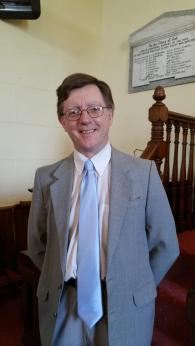
Jonah 2:9 “But I will sacrifice to You with the voice of thanksgiving; I will pay what I have vowed. Salvation is of the LORD.”

At the end of Jonah’s prayer there are three essential components:
            1.         What do we mean by salvation?
            2.         To consider what ‘of the Lord’ means
            3.         Salvation comes from the Lord.

  1. The Nature of Salvation
    1. Jonah 1:7 The mariners only call out to God when things get terrible; there was such a devastating storm. Often, we do not call out to salvation until difficult things happen.
  2. The mariners had no way of delivering themselves. They tried to save Jonah from his fate but they couldn’t. There’s no way you can save yourself.
  3. Jonah 2:5 In order to come to the Lord you really need you really need to jettison the world, discount any rescue that comes from the world.
  4. Salvation would only come to them through Jonah the prophet. They could not do anything except what Jonah asked them to do. The mariners’ lives were dramatically changed, they suddenly became the Lord’s people.
  5. The mariners needed a sacrifice. The storm became calm when Jonah was thrown into the sea.
  6. Salvation came to the mariners when death came. They had to throw Jonah aboard (Jonah 1:14). Jonah wasn’t innocent, he was guilty of not following God.
  7. God makes good things come out of evil. God is remarkable in that He even uses our sin. He is not distracted by our sin.

What do we learn from the story of Jonah?
1.   He confesses his condition (Jonah 2:2-4). This is historical fact. Jesus refers to it. Jonah realised he was guilty, effectively dead. He didn’t actually die although he nearly met his death. He realised he was spiritually dead. Without Christ we are dead. We sin, do what we want, cut off from God.
2.   He calls out to the Lord in prayer. That’s what we need to do (Genesis 4).
3.   All of us are idolaters who pursue ungodly things. We must throw those things away. The mariners threw everything overboard, we must forsake everything.
4.   God is sovereign. It wasn’t actually the mariners who threw Jonah into the sea, it was God. Jonah realised God was sovereign over all the things in his life. He is in charge.
5.   Jonah expresses great confidence in God because He is the only one who can save (Jonah 2:1). Salvation comes to those who recognise they are dead, and seek to trust only what God can do.
6. Salvation includes resurrection (Jonah 2:6).
7. Deliverance can only come from the word of God (Jonah 2:7). God spoke to the fish. Salvation comes at a word – at a word you can be forgiven.

What do we know about the Ninevites?
1.   Jonah 1:2 God knows our deepest thoughts, our sins. Judgement was about to fall on the Ninevites.

2.   Salvation must come from the word of the Lord preached. Salvation came because Jesus came into the world.
3.   You need to believe in the one the Father sent, you will have life.
4.   There’s a deep reliance on God alone.
5.   The removal of God’s anger (Jonah 3:6). God is holy, He must judge sin. When He sees people repenting, judgement must fall, it fell on Jesus.
6.   Jonah confesses.
7.   God shows Jonah He is a compassionate God.

Salvation is a sovereign act of God. It requires deep repentance and turning, an earnest heart that says, ‘I must attend to this.’ Believe God is true. Turn to Him, change. Salvation requires death, to die to self, to take up your cross and disown what this world has offered you.

  1. Salvation is of God.

He is not only duty bound to save anyone (Romans 9). It is God’s gift to give or not to give salvation. God is holy, God is good, God is righteous. Salvation is ‘of the Lord.’ It’s His.

  1. Salvation comes from the Lord.

Salvation comes through the precious blood of Christ. There is nothing more important. Salvation, Paul says, is Christ Himself (1 Peter 2:4). We come to Him, chosen by God, and precious. God will give or not give salvation as He determines.

Salvation is of the Lord. Before even the world was made, the Lord Jesus Christ was ready and willing to be the Lamb slain. The Lord promises the gospel in Genesis 3.

If you’ve been saved, you’ve been saved that others might be blessed. Christ came into the world to save sinners. He is right here this moment. If you’ve never turned to Him, come. God’s heart and mind is to come to you and say. ‘Take hold of me.’ God is close.

God is extravagant (Psalm 18). How many times have you been rescued from tricky situations, even situations you don’t know of? That’s grace. All the ends of the earth have seen the salvation of God. Right from the dawn of creation He offered salvation.

Salvation of God is everlasting. Hunger after God. Psalm 119:41. It’s through hearing the scriptures that Salvation comes.

alan davison - april18April 29th 2018: Alan Davison

Background reading: Ezra 4:1 – 5:3
Sermon: Haggai 2:21-23

The Bible is often seen as a collection of different books which each having a separate entity. However, there is a connection between the books, for example Haggai and Zechariah were contemporaries of Ezra.

In Ezra chapter 4 we are told the temple was being rebuilt and of the opposition to this. At the end of the chapter the building stopped. But in the first two verses of chapter 5 we see a complete reversal of the situation.

The last two verses of the book of Haggai tells us this oracle recorded in Ezra is specifically for Zerubbabel, governor of Judah. Zerubbabel was of royal blood. Zerubbabel is also referred to a ‘My servant’ (Haggai 2:23). This is a Messianic prophecy (see also Isaiah 42:1 and Isaiah 41:8). Zerubbabel was chosen to be God’s means of restoring the temple. He is also seen in a Messianic role, appearing in the genealogy of Christ (Luke 3:27).

The whole of this oracle comes to a climax in Haggai 2:23, ‘“In that day,” declares the Lord Almighty, “I will take you, my servant Zerubbabel son of Shealtiel,”declares the Lord, “and I will make you like my signet ring, for I have chosen you,” declares the Lord Almighty.”’ God will make Zerubbabel His signet ring. This shows God is restoring His favour (see also Jeremiah 22:4).

A signet ring is a mark of authority and authenticity used to seal proclamations. The value of the ring depended on the status and role of its wearer. There are three aspects of Zerubbabel’s status of becoming God’s signet ring, which also apply to us:

  • We are in God’s hands.

This can be a negative thing, “It is a fearful thing to fall into the hands of the living God.” (Hebrews 10:31). This applies to those who woefully sin against God.

To be God’s signet ring is to be under God’s protection. Eternal security is guaranteed by God. “Salvation belongs to the Lord!” (Jonah 2:9). Can we undo what God has done? Can someone fall away? No! Jesus Himself declared, “For I have come down from heaven, not to do my own will but the will of Him who sent me. And this is the will of Him who sent me, that I should lose nothing of all that He has given me, but raise it up on the last day.” (John 6:38-39). You cannot be lost again.

Jesus knows who His sheep are, He gives them eternal life, “My sheep know my voice, and I know them, and they follow me. I give them eternal life, and they will never perish, and no one will snatch them out of my hand. My Father, who has given them to me, is greater than all, and no one is able to snatch them out of the Father’s hand.” (John 10:27-29). No-one can snatch believers out of God’s hands, not even ourselves. See also 1 Peter 1:3-5. We are “being guarded through faith for a salvation” (1 Peter 1:5). God works through our faith – even that has been gifted to us. We are kept, guarded and protected from our own failures. This shows the grace of God. In John chapter 5 Jesus twice states that He does the Father’s will (John 5:19, John 5:30). They are in total unity.

  • To be God’s signet ring is to be highly valued.

We are precious to Him, “Precious in the sight of the Lord is the death of His saints.” (Psalm 116:15). Why are our deaths so precious to God? The death of His saints is the promotion of them to glory. The Lord Jesus Christ was precious to His heavenly Father, ‘And behold, a voice from heaven said, “This is my beloved Son with whom I am well pleased.” (Matthew 3:17). Jesus is not only precious to Him but precious to us as well. God has set His seal on His Son, He has the Father’s seal of approval, “For on Him God the Father has set His seal.” (John 6:27).

Jesus’ tomb was sealed, “So they went and made the tomb secure by sealing the stone and setting a guard.” (Matthew 27:66). Such a seal did not physically close the opening but in order to open it, someone needed authority to do so. “And a stone was brought and laid on the mouth of the den, and the king sealed it with his own signet and with the signet of his lords, that nothing might be changed concerning Daniel.” (Daniel 6:17).

  • To be God’s signet ring is to represent God’s authority.

In our lives we will be represented in lots of different ways, for example, by MPs, sporting teams representing our nation. Spiritually, we share in the glory of the Lord Jesus Christ. If a king trusts someone completely he gives them his ring. In Genesis 41:41-43 Joseph was given the Pharaoh’s signet ring so he could act on Pharaoh’s behalf.

In a sense, any Christian who has received Jesus in their lives is Jesus’ signet ring. “But you will receive power when the Holy Spirit has come upon you, and you will be my witnesses in Jerusalem and in all Judea and Samaria, and to the end of the earth.” (Acts 1:8). Jesus’ final words on earth show we are to act in His name in proclaiming His name to the world. How do we do this has an impact. Every true Christian is in Christ, we are heirs. We too can be used by God as His signet ring, held firmly and safely in His hands. He does this because we are all precious before Him. We are considered legally righteous before God. Jesus Himself said we are His witnesses. We are appointed by Him. The last verse in Haggai states, “For I have chosen you, declares the LORD of hosts.” (Haggai 2:23). God sets His seal of approval on all He has saved, we are all as a signet ring to God.


April 22nd 2018: Dafydd Morris

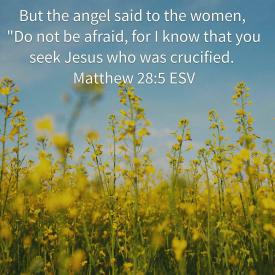
Matthew 28-5

‘But the angel said to the women, “Do not be afraid,
for I know that you seek Jesus who was crucified.”’ (Matthew 28:5)

Even non-Christians are sometimes fascinated with angels. Angels are messengers, unseen ministering spirits. Here the angel was to speak and bring a message. The angel sat on the stone which had been rolled away from the tomb Jesus had been placed in. Jesus now sits at the right hand of God. The angel sitting on the stone replicates the Lord Jesus Christ. If the angel is sitting on the stone, then the stone cannot be rolled back. The angel sits, the angel shines.

The guards were fearful. The bravado of atheists disappears when they come into the presence of angels. The angel speaks to the women telling them, “Do not be afraid.” They had no need to fear the Lord’s body had been stolen, that death had won the day, no need to fear the angel.

The angel then continued, “For I know that you seek Jesus who was crucified.” The angel had knowledge. Could that be said of you and me, that we are seeking the Lord Jesus who was crucified? Or are we seeking an earthly life – pleasure, friends, influence? It is a frightening thing if those are the only things you seek. The Lord might grant this but we are reminded, ‘For what does it profit a man to gain the whole world and forfeit his soul?’ (Mark 8:36). Think what it is to love your soul, that part of you that cannot die, that part, orphaned and empty for all eternity unless you have called upon our Saviour. The Lord Jesus had these in mind in the Sermon on the Mount when He said, “But seek first the kingdom of God and His righteousness, and all these things will be added to you.” (Matthew 6:33)

We may be seeking help with many things, such as an unforgiving spirit or jealousy. We need to know victory. Some might be unsure of their Christian life as they are tempted by the devil. We need to be sure we’re on the way and where we’re going. Our assurance may drain away. Perhaps in our prayer life we have been praying one prayer for years and become weary, wanting answers. Others may be ashamed they don’t know the Bible, how to handle it in the best sense and need to grow in understanding. Some may be very concerned about the lack of power; preachers want the oil of the Holy Spirit to come upon them as they preach. The angel might say to us, “I know what you are seeking.”

In the Old Testament when the allotting of the land of Canaan was being given to the tribes of Israel, there must have been great anticipation as to who would have the most fertile land, but for the Levites, the Lord God of Israel was their inheritance.

If you are already a Christian you may still seek and desire. A seeker is someone who asks questions, who is interested. Over and above all that you desire as a Christian you should seek after Christ, the very best. The women at the tomb were after the very best.

The angel did tell the women where they wouldn’t find Christ – in the grave. We won’t find Him in dead ceremonialism or moral reformation – by being kind, nice, well-mannered. This leads to death. The Lord Jesus Christ is so precious as a Saviour. Find Him in the scripture. The angel said He was not in the grave but in Galilee, that’s where the disciples would meet Him (Matthew 5:7). Galilee was the meeting place. Where is Galilee for you and me? There are three places we might find Galilee:

Search the scriptures. If we are a born-again Christian we don’t want to alter a word of the Bible, we wouldn’t want to part with our Bible for anything. Do we have this single-minded attitude that we are looking for Him? It’s only as we find Him that we will have eternal life. If all you do is read about Him, you need to find yourself with Him, perhaps in the house where He was anointed, or in Zaccheus’ house. The scriptures become your guide. He’s there in the Old Testament – in prophecy, in the pictures, in theophany. We see Him, for example, in Bethel with Jacob. We see Him as the tailor who clothed Adam and Eve in the Garden, a type of justification. When you go to your Bibles, don’t just go looking for guidance, look for Him, seek Him in the word.

The second Galilee is the assembly of God’s people, “For where two or three are gathered in my Name, there am I among them” (Matthew 18:20). Jesus is here, we are in His presence, He is in the midst of us. We don’t make enough of the presence of the Lord Jesus Christ. He’s here in the midst. Glorious! Christ is in our midst. Focus on Him. He must increase, we must decrease.

If you’re a Christian you have Christ in you, the hope of glory. Where is He in you? If you’re a Christian He’s in your thoughts. Train your mind upon Him. Our meditations of Him should be sweet. Think about Him when you’re doing your daily work, on holiday – don’t leave Him behind.

He’s in your affections. If you’re a Christian you will love Him because He first loved you. You’ll be like Peter and want to love Him more. There is love, your hope is in the Lord Jesus Christ. He’s in your will when you make a decision because He lives in you, dwells in you. We see in Psalm 4 we’re bidden to commune with the Lord. He is in our hearts. Have blessed fellowship with Him.

Do you seek Jesus? If not at this time, then may it be true.


April 15th 2018: Paul David

Paul David - April 18Mark 10:13-16

The Lord Jesus Christ uses examples of little children in order to give the disciples important teaching. This passage of scripture was so important it is also recorded in Matthew 19 and Luke 18. There is also a separate incident in Matthew 18, where the disciples asked Jesus. “Who then is the greatest in the kingdom of heaven” (Matthew 18:1) to which Jesus replied, “Assuredly, I say to you, unless you are converted and become as little children, you will by no means enter the kingdom of heaven. Therefore whoever humbles himself as this little child is the greatest in the kingdom of heaven. Whoever receives one little child like this in My name receives Me.” (Matthew 18:3-5).

While we have examples of our Lord teaching us the importance of being childlike, we also have examples of not to be childish – without self-control, without understanding, ‘Brethren, do not be children in understanding; however, in malice be babes, but in understanding be mature’ (1 Corinthians 14:20). Believers are encouraged to be mature, to behave with self-control and put our knowledge and understanding into practice. ‘We should no longer be children, tossed about with every wind of doctrine.’ (Ephesians 4:14).

Little children are mentioned more than once, so clearly something important is being taught which we need to take notice of. The disciples were displeased that children were being brought to Jesus and tried to stop them coming to Him. During the time of His ministry on earth our Lord healed men and women in body and mind. There were times when people flocked to Him to be healed and to hear His teaching. Here, He taught large crowds then was tested by the Pharisees on His teaching, He then had to teach His disciples at home, after this small children were brought to Him. The disciples went into action, thinking it was probably a waste of time of a precious resource; the children were too young and could not benefit from Jesus’ wisdom, so they rebuked the parents. However, the Lord rebuked the disciples and blessed the children.

The text gives explicit teaching, “Let the little children come to Me, and do not forbid them; for of such is the kingdom of God. Assuredly, I say to you, whoever does not receive the kingdom of God as a little child will by no means enter it.” (Mark 10:14-15). There is something for everyone here. For Christians, “For of such is the kingdom of God,” for those who are not Christians, they need to “receive the kingdom of God.”

The kingdom of God is not made up of little children but of those who are childlike. What does it mean to be childlike? Jesus says, “Those who are well have no need of a physician, but those who are sick. I did not come to call the righteous, but sinners, to repentance.” (Mark 2:17). There are a number of characteristics children have:

Humility. In Matthew 18 our Lord used a little child to teach His disciples about humility, “Whoever humbles himself as this little child is the greatest in the kingdom of heaven.” A child’s position in society was humble. He was brought up under the rule of his parents and teachers, not deciding on any family issues. He was brought up being instructed on what was right and wrong. He occupied a humble position in families and society. The Lord Jesus says we need to be like this little child. For an adult to take a low position is an act of humility – not only on the outside but also on the inside. Don’t be blown up with our own importance. We learn in Mark 10 and Matthew 18 that being brought into the kingdom of God requires humility. Nothing we have ever done is good enough to please God, nothing can qualify us to become members of the kingdom of heaven. We have to be completely reliant on God’s mercy, entirely dependent on Him. Anything we do in our own strength is worthless. We need to learn and obey.

Little children receive freely. They are not troubled that they cannot pay back. They receive freely the good that is given to them. We should be happy to work for God, not confusing this with working for our salvation. Pride is always a temptation. We’re encouraged by God to consider everyone else who is in the kingdom of God to be more important than ourselves, ‘Let nothing be done through selfish ambition or conceit, but in lowliness of mind let each esteem others better than himself’ (Philippians 2:3). Christ is the great example of humility.

Another lesson, closely related to being humble, is trust. The children here in this passage were probably babies – Jesus took them in His arms to bless them. Small children and babies completely trust in those who care for them. Our Lord was impressing on His disciples to have complete dependence and trust in Him. We too need to completely trust in the Lord Jesus Christ. Babies don’t know where their next meal comes from, but they are content, knowing they will be fed. Our heavenly Father, the Lord Jesus Christ and the Holy Spirit are caring for us. We increasingly gain confidence in Christ and as we do so we become more mature, we become more child-like. When we are born-again we become new children, trusting our Father completely. He is our refuge and underneath are His everlasting arms. Be humble and trusting.

Children are learners, they are inquisitive. We shouldn’t stay at children’s level of understanding, ‘As newborn babes, desire the pure milk of the word, that you may grow thereby.’ (1 Peter 2:2). Always want to know more. Learn from preaching and the Scriptures.

Be humble, show humility in church. Do not be proud. We haven’t contributed to anything to our salvation. Be humbled but not humiliated. Rely completely on our Lord Jesus Christ. We should increase in Christ and decrease in ourselves. Have trust and confidence – our Father knows all our needs. This is summed up in 1 Peter 5:6-7, ‘Therefore, humble yourselves under the mighty hand of God, that He may exalt you in due time, casting all your care upon Him, for He cares for you.’

Trust is natural for a child. Before becoming a new Christian we may have been self-reliant, but now we have to trust completely in the Lord Jesus Christ. This will improve with time and repetition and should become the most natural thing in the world.

April 8th 2018: Mike Viccary

Mike Viccary-April182 Corinthians 6:14-7:1, Perfecting holiness in the fear of God
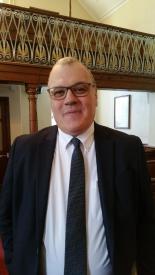
What is wrong with the world? We hear tragic stories, terrible happenings, news that more murders have happened in London so far this year than in New York. The world is the way it is because of you and me. When Adam sinned it shattered everything; every one of us is a sinner. Sin is the matter in the world. The world lacks holiness, the presence of God, ‘Strive for peace with everyone, and for the holiness without which no one will see the Lord’ (Hebrews 12:14).  We need to be a people of peace, a people of holiness.

  • We need to be yoked.
    2 Corinthians 6:14 states, ‘Do not be unequally yoked with unbelievers. For what partnership has righteousness with lawlessness? Or what fellowship has light with darkness?’ (There is also a reference to this in Deuteronomy 22:10). Jesus promises, “Come to me, all who labour and are heavy laden, and I will give you rest. Take my yoke upon you, and learn from me, for I am gentle and lowly in heart, and you will find rest for your souls. For my yoke is easy, and my burden is light.” (Matthew 11:28-30). Who are you yoked to? When you wake up in the morning you may be yoked to an idea or you might be yoked to an ambition. You need to be yoked to Christ. Don’t be yoked with the world. You are either yoked to Christ or something else. Is your life spent serving Christ? Whatever you do, do it all in the name of Jesus, as though you are doing it as Jesus (Colossians 3, 1 Corinthians 10). Do all to the glory of God. Ultimately, if you have an unbelieving boss or spouse, if you love Christ, you will love your unbelieving boss or unbelieving spouse.
  • Meditate on who you are.
    2 Corinthians 6:14-16 gives an incredible description of the kingdom of God. We are in the world but this list of things shows us the kingdom has not yet come in its fullness. If you are yoked to Christ the kingdom is within you – in fellowship, communion, accord, portion and agreement. The Lord has delivered us from the power of darkness and put us with the Son, His love. Everything you think about and do changes when you are in Christ, your whole life is completely changed.

Collectively, we are the temple of God (2 Corinthians 6:16). We are a precisely constructed building with a definite way of doing things. The temple of God is perfect. Peter says we are living stones. Even when you are amongst your friends, at work or with unbelievers, you are a temple of God. Meditate and think often on who you are.

  • We need to cleanse ourselves (2 Corinthians 6:17)

Cleansing ourselves is rooted in scripture (Isaiah 52). We are to forsake the world. We have been adopted into God’s family. Come out from the world’s system. We get so influenced by the world but we still need to be amongst the world to share the gospel (Ephesians 4:17-5:1). Thank God we have so many promises.

It is our responsibility to cleanse ourselves (Isaiah 1:16-17). Holiness is 100% We need to cleanse ourselves of all filthiness. The Old Testament illustrates this in detail in Leviticus 14. The whole of us must be sanctified. This task is impossible for us. Who can cleanse themselves in this way? Cleansing can only come from the blood of Christ, the work of the Holy Spirit. Christ loves the church and washed the church with His speech. Psalm 51 shows us the heart that is so given to Christ, the heart we want to know.

We are to operate in the fear of God. It is not just a question of reading God’s word – to hear is to obey. If you fear God, if you respect Him, you will hate all evil because He is holy. The fear of God spurs us on. 2 Corinthians 5 spurs us on to witness. It is also a key to mission (Acts 2).

How should we receive it? Proverbs 2:1-5. Receive the word of God, treasure it and apply it. Draw back to God. Choose it, seek it. It is the work of the Holy Spirit. Pray, ‘Teach me your way, O LORD, that I may walk in your truth; unite my heart to fear your name.’ (Psalm 86:11).

Remember, we are yoked with Christ. Take great care and diligence with the word of God. To who are you yoked? What is the principle of your life? Do you review and check the principle of your life? Are you taking the opportunity to daily cleanse yourself in the word of Christ? Have you chosen to fear God – to be holy, to be like God, to be so in love with Christ that nothing else matters?


March 30th 2018: Good Friday: Gareth Edwards

Gareth Edwards - March 18“My God, my God, why hast thou forsaken me?” Matthew 27:46

During the Crucifixion Jesus gave seven sayings, which were not merely random words to what was happening. It was a commentary about the meaning and purpose of His death. This saying, the middle of the seven sayings, is perhaps the most revealing. It’s a cry that is awesome. It should fill our souls with a sense of dread. It is power, it is poignant – the cry of dereliction as the Lord suffers the punishment of our sin. It’s a cry that deifies all definition, a moment between God the Father and God the Son, a cry of the Son of God in His human nature as He experiences the wrath of God against our sin.

Sin and Judgement:
The cry tells us the Saviour really suffered at the hand of His fate as he bore the judgement for our sins. Three hours prior to this cry darkness covered the land from noon to 3 p.m. (Matthew 27:45). The sun is normally at its height, yet darkness engulfed Jerusalem. This was prophesied in Amos 8:9 many centuries before, ‘”And on that day,” declares the Lord God, “I will make the sun go down at noon and darken the earth in broad daylight.”’  Darkness is a symbol of judgement (Isaiah 5:30, 60:2, 2 Peter 2:17). The darkness of that day tells us that the wrath of God is being poured out on His Son for our sin. This is the only time ever that God the Father turned His back on His Son for our sins.  The torment of Jesus wasn’t just physical. What no-one else ever endured was the agony of eternal judgement griping the soul and drawing it into the deepest darkness of hellish pain.

The reality of judgement is God loved no-one more than He loved His only begotten Son. Divine love continued when the Son added to His divine nature and became man. God does not hold back on pouring His judgement on His Son. That terror engulfs all who die without faith in Christ. This judgement will be visited upon our sins one way or another. If we have not yet come to know Jesus Christ as our Saviour, then the terror expressed by Jesus is a terror we will know. Sin is a terrible offence. Such is its evil in the sight of God that our sin could not be forgiven until God the Father unleashed all the horror of hell against His Son.

Substitute of Atonement:
Jesus here is our substitute, taking our place, becoming us and taking liability for us. He suffered for us, He died in our place. He became us as He bore our sins. He does not address His Father in His usual way as He now stands in our place, fully identifying with us, as He cries, “My God.” He atones for our sins. He pays the penalty for our wrong doing. We are the perpetrators deserving of God’s judgement. Jesus steps in and bares that judgement. For those dreadful hours God saw Jesus not as His Son, but saw Him as being you and me. He poured out upon Him the punishment for us. Justice is satisfied and mercy is made available to us. He dies specifically taking my punishment in His love for me. It is an illogical love. Why should He love me so? In my sin I am a hideous, deformed creature, deserving nothing but the implementation of God’s wrath against me. Yet, Jesus loved me so and substituted Himself, takes my judgement, atones for my sin. What a price it was! What a payment was made! An infinite payment! We simply cannot begin to understand what it cost the Lord Jesus Christ to hang upon that cross. No words in all the languages can express what it meant. What a Saviour He is. He willingly took our place. That’s why it’s Good Friday.

A cry of hope and joy:
“My God, my God, why hast thou forsaken me?” Although this is a cry of dereliction, it is also a cry of hope and joy. These words were written many centuries before the crucifixion, in Psalm 22, a prophetic psalm which speaks of the sufferings of the coming Messiah. It gives a detailed, graphic description of crucifixion – before crucifixion was perfected by the Romans. It is a psalm that looks forward to the events of Calvary. Jesus uses this psalm as a commentary on His own death. He is now experiencing what Psalm 22 prophesied. But Psalm 22 ends in hope and joy. It is a psalm that speaks of the Messiah not only in suffering but also in triumph. The Saviour confidently knows that He would not be abandoned forever and will triumph and know the joy of resurrection. He knew this as He said, “Father, into your hands I commit my spirit!” (Luke 23:46). He knew He would arise again. He told His disciples this three times. He knows that as He endures the suffering of agony of body and soul, it is the way to triumph, to hope, to joy.

It is a cry of dereliction but it is not a cry of defeat. Here lies hope and joy for each one of us. What hope have you got in the face of death? What joy can there possibly be when confronted with the reality of judgement, what hope is there in death? That Jesus Christ died and paid in full the price for our sin, thereby affording to each one of us forgiveness, allowing us to experience the mercy of God’s love and triumph over death. A sure and certain hope that in Jesus Christ our sins have been forgiven. God the Father, having judged Him, can no longer judge us for that sin. The joy – being reconciled with God if we come and trust in Jesus Christ. There is no other way for us to return to God, to enjoy fellowship with God. The only thing that can bring true joy is knowing God. So it is Good Friday.

“My God, my God, why hast thou forsaken me?” This saying is central to what forgiveness means. It teaches us the reality of our sin and God’s judgement, but it assures us that atonement is made. Jesus, as our substitute, takes our place, bore our guilt so hope and joy is ours. May it be our personal understanding of what it all means and may this fill us with love for Christ and joy in our salvation.